Binance Square

CryptoZeno

Verified Creator on #BinanceSquare #CoinMarketCap and #CryptoQuant | On Chain Research and Market Insights with Smart Trading Signals
Freedom of Moneyホルダー
超高頻度トレーダー
5年
83 フォロー
5.7K+ フォロワー
21.9K+ いいね
1.4K+ 共有
投稿
·
--
記事
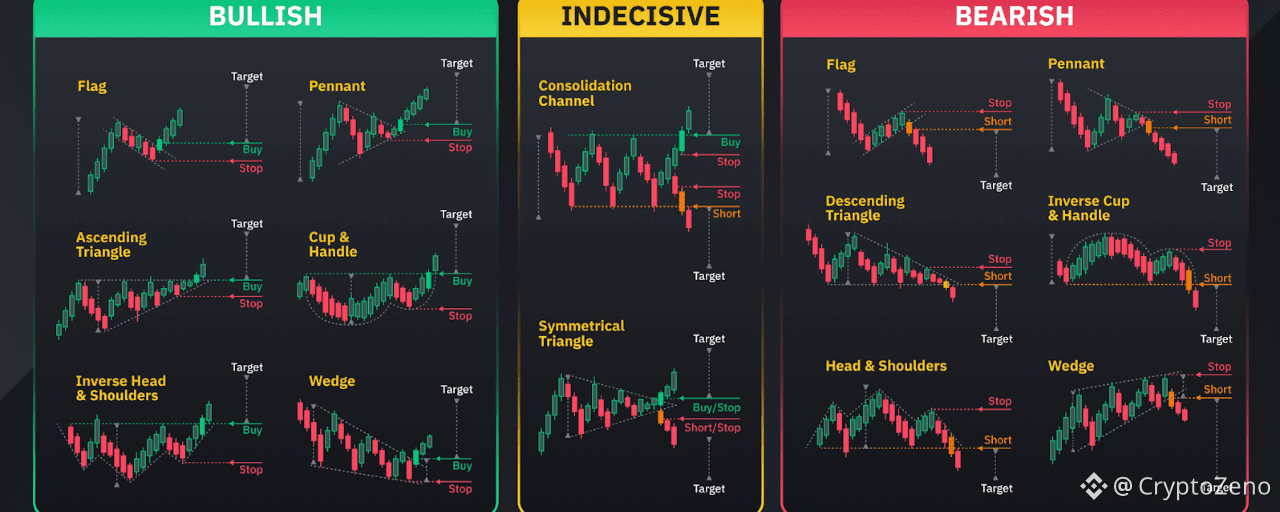
キャンドルスティックパターン: すべてのチャートに隠された秘密の信号キャンドルスティックパターンは、すべての暗号通貨トレーダーの武器庫にある普遍的なツールです。それらを理解し、さまざまな歴史的チャートパターンを知ることが、暗号トレーダーが市場のトレンドを解釈し分析することを可能にし、パターントレーディングの決定を下す助けとなります。これは、利益が出ることを期待しています!技術分析において優れていて経験豊富であればあるほど、強気と弱気のトレンドから最大限の利益を得る確率が有利になります。キャンドルスティックパターンのトレーディングをトレンドラインに基づくトレーディングなどのものと組み合わせることが強く推奨されます。

キャンドルスティックパターン: すべてのチャートに隠された秘密の信号

キャンドルスティックパターンは、すべての暗号通貨トレーダーの武器庫にある普遍的なツールです。それらを理解し、さまざまな歴史的チャートパターンを知ることが、暗号トレーダーが市場のトレンドを解釈し分析することを可能にし、パターントレーディングの決定を下す助けとなります。これは、利益が出ることを期待しています!技術分析において優れていて経験豊富であればあるほど、強気と弱気のトレンドから最大限の利益を得る確率が有利になります。キャンドルスティックパターンのトレーディングをトレンドラインに基づくトレーディングなどのものと組み合わせることが強く推奨されます。
記事
翻訳参照
What the Fear and Greed Index Really Tells You About the Crypto MarketGreed typically leads to upward trends, while fear leads to negative trends. Human psychology is predictable because many individuals tend to react similarly in specific situations. The Fear and Greed Index attempts to address and quantify market sentiment, making it useful and easy to understand for traders. The Fear and Greed Index is one of the most widely used indicators to understand market sentiment. As the name suggests, this index helps you determine whether the market is currently fearful or greedy, allowing you to develop a suitable trading strategy. The Crypto Fear and Greed Index is based on Bitcoin and other major altcoins, combines social signals and market patterns to estimate the overall sentiment of the cryptocurrency market. It's an index because it integrates multiple data sources into a single model. Fear and Greed Index is a indicator to understand market sentiment. This index assigns a score from 0 to 100 to cryptocurrency sentiment, ranging from extreme fear to extreme greed. Many cryptocurrency traders use this index to determine the best times to enter and exit the cryptocurrency market. How is the Fear & Greed Index calculated? To calculate the Fear and Greed Index, we will rely on the following 5 parameters: Voltality: Measured by comparing the current price volatility and maximum price drop of BTC with the corresponding average values ​​of the previous 30 and 90 days.Market Momentum/Volume: Combines the current momentum and trading volume of BTC, then compares it to the average of the previous 30 and 90 days.Social Media: This index is based on social media metrics such as likes, hashtags, what people are talking about, the number of posts, etc. Therefore, if the above indicators increase, it corresponds to a market that is gradually becoming greedy. Currently, it is only measured on Twitter.Dominance: Dominance here refers to BTC, meaning the percentage of market capitalization that BTC currently holds compared to the total cryptocurrency market capitalization, also known as BTC Dominance.Trend: Alternative.me takes Google Trend data for various Bitcoin-related search queries and processes those numbers, particularly changes in search volume as well as other suggested popular searches. Why do Fear and Greed Index matter? The cryptocurrency market is highly susceptible to many factors. When the market is rising, people become greedy, leading to FOMO (fear of missing out). Additionally, people often sell their assets impulsively when they see red numbers, leading to FUD (fear, uncertainty, doubt). The F&G index aims to protect you from these emotional overreactions. Traders often make two simple assumptions: Extreme fear: This indicates that investors are overly anxious. This could be a good time to buy.Extreme greed: When investors are in a state of extreme greed, the market is ripe for a correction. Therefore, the Fear and Greed Index assesses the current state of the Bitcoin market and converts the data into a simple measure from 0 to 100. Why Fear and Greed Index matter? How to use the Fear and Greed Index in Crypto The Crypto Fear and Greed Index can be more effective for short-term research on the cryptocurrency market. Multiple Fear and Greed cycles can occur within a bull or bear market. For trend traders, the Fear and Greed Index is a very beneficial tool when combined with technical analysis tools such as Fibonacci retracements, as well as other market indicators and oscillators. However, this index has been shown to be inaccurate in predicting long-term market reversals or transitions from bull to bear markets and vice versa. How to Use the Fear and Greed Index From left to right: Figure 1: Fear & Greed Index Chart.Figure 2: Fear & Greed Index Values: Current, Yesterday, Last Week, Last Month.Figure 3: Next Fear & Greed Index Update Time. The Fear & Greed Index is a number ranging from 0 to 100: 0-49 represents Fear.51-100 represents Greed.50 corresponds to a neutral market. However, if broken down further, the colors on the chart have the following meanings: 0-24: Extreme Fear (orange).25-49: Fear (yellow).50-74: Greed (light blue).75-100: Extreme Greed (green). Fear means the market is showing negative signs, most asset values ​​are falling, and people tend to sell everything off. Conversely, a greedy market is one where everyone rushes to buy everything due to FOMO (fear of missing out), and asset prices are constantly rising. How accurate is Fear and Greed Index in Crypto? Similar to other indicators, the Fear & Greed Index has high accuracy, but it's not always right. To make trading decisions, analysts often combine it with other indicators such as chart analysis, on-chain data of BTC and ETH to see the overall situation, on-chain data of the asset being traded, etc. How accurate is Fear and Greed index in Crypto? Because the Fear & Greed Index only reflects the general market situation and updates very slowly, this index only provides an overview of the market, suitable for long-term traders. If you are a short-term trader, closing trades within a day or a few days, this index is not necessarily necessary. In addition, there is no data showing what level the index will reach before a market change occurs. This means we all know that when the market is greedy, there will be a period of sharp correction. The question is, at what level will the Fear & Greed Index reach before a correction? That's something we don't know. Therefore, the Fear & Greed Index is not used to help you predict when the market will correct. Furthermore, in a bull or bear market, we sometimes see the indicator leaning in the opposite direction. But that doesn't mean the market has ended its trend and reversed. It could be a small correction to establish a larger, more sustainable uptrend/downtrend. The cryptocurrency fear and greed index is a powerful tool in the trading toolkit, but it needs to be used wisely, combined with a solid trading strategy, consistent discipline, and a continuous learning attitude. By combining all of these, you can increase your chances of success in the exciting yet challenging world of cryptocurrency trading. #CryptoZeno #HighestCPISince2022

What the Fear and Greed Index Really Tells You About the Crypto Market

Greed typically leads to upward trends, while fear leads to negative trends. Human psychology is predictable because many individuals tend to react similarly in specific situations.
The Fear and Greed Index attempts to address and quantify market sentiment, making it useful and easy to understand for traders.
The Fear and Greed Index is one of the most widely used indicators to understand market sentiment. As the name suggests, this index helps you determine whether the market is currently fearful or greedy, allowing you to develop a suitable trading strategy.
The Crypto Fear and Greed Index is based on Bitcoin and other major altcoins, combines social signals and market patterns to estimate the overall sentiment of the cryptocurrency market. It's an index because it integrates multiple data sources into a single model.
Fear and Greed Index is a indicator to understand market sentiment.
This index assigns a score from 0 to 100 to cryptocurrency sentiment, ranging from extreme fear to extreme greed. Many cryptocurrency traders use this index to determine the best times to enter and exit the cryptocurrency market.
How is the Fear & Greed Index calculated?
To calculate the Fear and Greed Index, we will rely on the following 5 parameters:
Voltality: Measured by comparing the current price volatility and maximum price drop of BTC with the corresponding average values ​​of the previous 30 and 90 days.Market Momentum/Volume: Combines the current momentum and trading volume of BTC, then compares it to the average of the previous 30 and 90 days.Social Media: This index is based on social media metrics such as likes, hashtags, what people are talking about, the number of posts, etc. Therefore, if the above indicators increase, it corresponds to a market that is gradually becoming greedy. Currently, it is only measured on Twitter.Dominance: Dominance here refers to BTC, meaning the percentage of market capitalization that BTC currently holds compared to the total cryptocurrency market capitalization, also known as BTC Dominance.Trend: Alternative.me takes Google Trend data for various Bitcoin-related search queries and processes those numbers, particularly changes in search volume as well as other suggested popular searches.
Why do Fear and Greed Index matter?
The cryptocurrency market is highly susceptible to many factors. When the market is rising, people become greedy, leading to FOMO (fear of missing out). Additionally, people often sell their assets impulsively when they see red numbers, leading to FUD (fear, uncertainty, doubt). The F&G index aims to protect you from these emotional overreactions. Traders often make two simple assumptions:
Extreme fear: This indicates that investors are overly anxious. This could be a good time to buy.Extreme greed: When investors are in a state of extreme greed, the market is ripe for a correction.
Therefore, the Fear and Greed Index assesses the current state of the Bitcoin market and converts the data into a simple measure from 0 to 100.
Why Fear and Greed Index matter?
How to use the Fear and Greed Index in Crypto
The Crypto Fear and Greed Index can be more effective for short-term research on the cryptocurrency market. Multiple Fear and Greed cycles can occur within a bull or bear market.
For trend traders, the Fear and Greed Index is a very beneficial tool when combined with technical analysis tools such as Fibonacci retracements, as well as other market indicators and oscillators.
However, this index has been shown to be inaccurate in predicting long-term market reversals or transitions from bull to bear markets and vice versa.
How to Use the Fear and Greed Index
From left to right:
Figure 1: Fear & Greed Index Chart.Figure 2: Fear & Greed Index Values: Current, Yesterday, Last Week, Last Month.Figure 3: Next Fear & Greed Index Update Time.
The Fear & Greed Index is a number ranging from 0 to 100:
0-49 represents Fear.51-100 represents Greed.50 corresponds to a neutral market.
However, if broken down further, the colors on the chart have the following meanings:
0-24: Extreme Fear (orange).25-49: Fear (yellow).50-74: Greed (light blue).75-100: Extreme Greed (green).
Fear means the market is showing negative signs, most asset values ​​are falling, and people tend to sell everything off.
Conversely, a greedy market is one where everyone rushes to buy everything due to FOMO (fear of missing out), and asset prices are constantly rising.
How accurate is Fear and Greed Index in Crypto?
Similar to other indicators, the Fear & Greed Index has high accuracy, but it's not always right. To make trading decisions, analysts often combine it with other indicators such as chart analysis, on-chain data of BTC and ETH to see the overall situation, on-chain data of the asset being traded, etc.
How accurate is Fear and Greed index in Crypto?
Because the Fear & Greed Index only reflects the general market situation and updates very slowly, this index only provides an overview of the market, suitable for long-term traders. If you are a short-term trader, closing trades within a day or a few days, this index is not necessarily necessary.
In addition, there is no data showing what level the index will reach before a market change occurs. This means we all know that when the market is greedy, there will be a period of sharp correction.
The question is, at what level will the Fear & Greed Index reach before a correction? That's something we don't know. Therefore, the Fear & Greed Index is not used to help you predict when the market will correct.
Furthermore, in a bull or bear market, we sometimes see the indicator leaning in the opposite direction. But that doesn't mean the market has ended its trend and reversed. It could be a small correction to establish a larger, more sustainable uptrend/downtrend.
The cryptocurrency fear and greed index is a powerful tool in the trading toolkit, but it needs to be used wisely, combined with a solid trading strategy, consistent discipline, and a continuous learning attitude. By combining all of these, you can increase your chances of success in the exciting yet challenging world of cryptocurrency trading.
#CryptoZeno #HighestCPISince2022
記事
翻訳参照
Awesome Oscillator: The Momentum Indicator That Helps Spot Big Crypto Moves EarlyThe Awesome Oscillator (AO) is a momentum indicator that generates reversal signals for the current trend. The loud name “Amazing Oscillator” does not fully convey the admiration the author tirelessly expresses to his offspring. He says this is the best-ever momentum indicator for the futures and stock markets. Note that the Awesome Oscillator is a universal technical indicator that works equally well in the currency, stock, indices, and crypto markets. What does the Awesome Oscillator measure? The AO indicator was initially designed to measure market momentum. However, many traders apply it to identify trend directions. The Awesome Oscillator Formula Even though you will probably never have to calculate the Awesome Oscillator manually, the mathematical approach behind the indicator may help you see the big picture. The Awesome Oscillator calculation is quite straightforward: the 34-period SMA is subtracted from the 5-period SMA. Our comprehensive guide on Moving Averages mentioned that “the SMA line is calculated based on the closing price of a period.” Indeed, the equation of the SMA derived from the closing price of a candle is one of the most common approaches. Still, in the case of the AO indicator, the used 34-bar and 5-bar SMAs are measured by the arithmetic average of highs and lows for the selected timeframe – a median price in short. MEDIAN PRICE = (HIGH+LOW)/2 Now the Awesome indicator formula goes as follows: AO = SMA(Median Price, 5) – SMA(Median Price, 34) How to Read Awesome Oscillator? Depending on your trading platform, the variation between the two Simple Moving Averages is generally plotted in a colored histogram, which a Zero Line separates. When using the indicator with standard settings, the bars that increase in value are green; when they decrease, they turn red. You can adjust the colors easily in the AO settings. Our trading app is pretty simple and requires no explanation: The histogram bars can oscillate above or below the zero value, depending on whether the fast SMA (5 bars) is above or below the slow SMA (34 bars). The AO will be positive in the first situation since its bars are above the 0 level. The AO indicator will be negative in the second scenario since the bars are below the 0 level. As the trend increases, the moving averages shift more from each other, which triggers the histogram bars to stretch further up or down (suggesting bullish and bearish trends, respectively). The Awesome oscillator is boundless, unlike the Stochastic Oscillator, which oscillates between 0 to 100. Awesome Oscillator Settings It may surprise you, but the AO indicator has fixed parameters (5 SMA & 34 SMA) that cannot be changed. Why so? – No particular reason that we know of. This Awesome Oscillator secret Bill Williams decided to keep to himself. The GoodCrypto trading toolbox allows you only to change the colors used in the histogram and a precision (a setting that helps you adjust the number of decimal digits in the script’s plotted values). Moreover, TradingView – one of the most widely utilized trading platforms among traders and investors – has a built-in AO indicator, the key parameters of which can not be adjusted in any way except the time frame. So, if you were wondering what the Awesome Oscillator’s best settings were, the answer is straightforward – the default ones, for sure! How to Use Awesome Oscillator? Top 5 Trading Strategies Explained The Awesome Oscillator is a promising addition to your technical analysis based on the info above. The only thing we still need to cover is how to use the Awesome Oscillator. Now that we have all the fundamentals of the Awesome Oscillator explained, let’s move on to the five most profitable strategies you can test out using the AO indicator alone. Awesome Oscillator Strategy #1: Zero Line Crossover The easiest way of using the Awesome Oscillator is the Zero Line Crossover strategy. This signal is the simplest and least trustworthy of the five techniques discussed in this article. A Zero Line Crossover demonstrates a shift in the market momentum. A Buy Signal is stated when the AO histogram breaks the zero line from the negative zone (below 0) to the positive zone (above 0). Whereas a Sell Signal is stated when the histogram breaks the zero line from above Zero Line and moves on to the negative zone (below 0). Some of you might think it can be profitable to buy every time it breaks above and sell every time it drops below. In theory, it is, but you should not trust any single AO indicator without confirmation. Awesome Oscillator Strategy #2: Awesome Oscillator Saucer A “saucer” is the title of the second Awesome Oscillator method we will cover. The pattern consists of three continuous bars: extremes almost the same height but taller than the one in between. Bullish saucer conditions (Buy Signal): AO above zero line2 consecutive red bars followed by a green barthe order is placed on the open of the 4th bar of AO The bearish saucer formation implies that the price momentum will shift and that position can be entered. Bearish saucer conditions (Sell Signal): AO below zero line2 consecutive green bars followed by a red barthe order is placed on the open of the 4th bar of AO The bullish saucer pattern, also known as the “inverted saucer,” suggests that the market’s downturn will likely last and is a solid sell signal. Awesome Oscillator Trading Strategy #3: Twin Peaks Awesome Oscillator Twin Peaks is the second strategy that should absolutely be tried out by any trader getting to know the indicator. Two consecutive highs or lows form the Double Awesome Oscillator strategy on the price chart, and the second must be closer to the Zero Line than the first. This histogram pattern demonstrates actual divergence and can only be achieved when both peaks and the trench between them reside in the same zone of the zero level, either positive or negative. The AO indicator suggests a Sell Signal when two consecutive spikes in the positive zone forms. The essential part of this signal is that the second spike (High 2) should be lower than the first one (High 1), and the histogram between these two extremums is above the Zero Line. Otherwise, the signal is canceled. A similar pattern can also be used to open a long position in case of a double bottom and a divergence. The indicator showcases a Buy Signal when building construction of two consecutive bottoms (Low 1 & Low 2) below the Zero Line, the second being closer to the Zero Line. This pattern informs that the trend is about to reverse. Awesome Indicator Strategy #4: Awesome Oscillator Divergence The divergence in day trading occurs when there is a discrepancy between the price direction of an asset and the oscillator. For example, a divergence occurs if the asset’s price rises and the oscillator falls. Conversely, there is a convergence if the price drops and the oscillator increases. The Bill Williams’ Awesome Oscillator can successfully assist in determining divergence as any other oscillator. Notice how in the example below, the price of the BTC/USDT pair is rising while the AO is losing momentum. Day traders may use the Awesome Oscillator Divergence indicator to identify potential trades, as it can be used to spot possible reversals in price trends. For example, bearish divergence suggests a price to most likely balance itself, meaning that long positions should be closed. On the other hand, bullish divergence indicates that a trader should quit any short positions. A Sell Signal occurs when the asset’s price shows Higher Highs, while the Awesome Oscillator makes Lower Highs – this is called a Bearish Divergence.A Buy Signal occurs when the asset’s price forms Lower Lows, while the Awesome Oscillator creates Higher Lows – this is called a Bullish Divergence. Awesome Oscillator Strategy #5: Awesome Oscillator Scalping Strategy Scalping is a trading method that focuses on achieving relatively small profits regularly. It entails initiating and closing a trade many times during the day, generally for a few pips profit. This strategy may be utilized in any time frame, although it is most beneficial in smaller time frames, such as the 1-minute chart. While there is no such thing as “the best time frame for scalping,” the time period between one and fifteen minutes is the most prevalent. As a scalping indicator, the Awesome Oscillator assists in capturing asset momentum, especially when combined with other technical indicators. The Awesome Oscillator scalping method works by detecting areas when the indicator diverges from the price movement, at which point a trader may profit from the price momentum. To maximize gains, traders should initiate the trade inside the range of the divergence and exit a position as soon as the momentum reverses. AO Oscillator With Other Technical Indicators: Difference and Strategies A universal rule in the trading world is to only trust an indicator with confirmation! While traders have a plethora of technical indicators at their disposal, they can occasionally give incorrect signals. So, what can you do to verify that you are following the right indicators? Other technical indications can come in handy! Combinations of any kind help produce more quick and precise signals for a day trader. The Awesome Oscillator is a momentum indicator, and if you combine it with other momentum oscillators like RSI or MACD, you can get a potential confirmation of the trend. Moreover, the AO indicator can be combined with other categories’ indicators – for example, Bollinger Bands volatility indicator or Average Directional Index (ADX) trend indicator. However, there are some specific indicators with which people confuse the Awesome Oscillator. So let’s break down the differences between each pair and learn how they can be incorporated into one strategy. Awesome Indicator vs MACD Similar formula, methodology, and strategies: Awesome Oscillator and MACD may look identical initially. It is no wonder that many traders need clarification on these two indicators. They are indeed alike. However, a few key differences between them are worth mentioning. As was previously mentioned, the AO indicator utilizes the 34-bar and 5-bar SMAs in its formula. On the contrary, the MACD indicator employs 26-period and 12-period EMAs and a 9-period Signal Line. What difference does this make? MACD may respond quicker than the Awesome Oscillator when exponential moving averages are included, making AO a confirmation indicator. Another distinguishing aspect of the AO oscillator is its reliance on the median price to calculate SMAs. On the other hand, MACD calculations, unlike the Awesome Oscillator, are based on the closing price, which is widely regarded as the most reliable. Ultimately, the AO and the MACD are two major technical indicators that may assist traders in identifying trends and possible reversals. Therefore, compare MACD vs. Awesome Oscillator regarding their effectiveness on various timeframes. For example, the AO is more suited to trading on shorter time frames, such as scalping and day trading, whereas the MACD is better suited to trading on more extended time frames, such as swing trading. Awesome Oscillator and MACD Strategy Both the Awesome Oscillator and MACD perfectly complement each other on the chart. AO may be an improved version of the regular MACD. Since the MACD is based on the EMAs, it reacts faster and gives earlier signals than the AO indicator. To verify this statement, we are going to overlay two indicators on one chart: One of the strategies the MACD and AO combination chart can provide is derived from the MACD crossover later confirmed by the AO indicator. We will look at the bullish MACD crossover ahead of the AO entering the positive zone. After the Awesome Oscillator confirms the MACD bullish crossover, we open a trade. The point when AO goes over the MACD histogram shows where the position should be closed if a trader doesn’t want to risk the returns from the deal. So, the MACD and Awesome Oscillator strategy is based on a simple principle: the first produces a signal, and the second confirms it. The signals generated by these indicators are the same, except for the MACD, which is somewhat delayed. So you know, no experienced trader trusts a single indicator without confirmation – the Awesome Oscillator and MACD turned out to be a great duo to give traders more reliable signals. Accelerator Oscillator vs Awesome Oscillator The AC indicator is calculated by subtracting a 5-period simple moving average from the Amazing Oscillator. This indicator was created as a leading indicator to help traders detect early momentum shifts. The Accelerator Oscillator intends to anticipate price fluctuations by assessing the acceleration or deceleration of actual market momentum. The way AC is plotted in the trading chart is identical to the AO indicator – a colored histogram with green bars representing the price going up and red bars representing the price falling. Although both indicators have lots in common, they have essential differences regarding generated signals. For instance, AC Zero Line Crossover is not considered a trading signal but rather indicates a bullish or bearish trend. Trade in Profit with Advanced Trading Tools The Awesome Oscillator and the Accelerator Oscillator can potentially operate together in a quite simple manner – the first one generates a signal, and the last one confirms it. Let’s plot the AC and AO on one chart: We should be looking for a signal from the Accelerator Oscillator and a confirmation from the AO. The AC indicator signals: Two consecutive green bars in the positive zone (above Zero Line) and two consecutive red bars in the negative zone (below Zero Line) can be seen as Buy and Sell signals, respectively. The AO indicator confirmation: A Zero Line Crossover: Buy Signal is generated when the AO histogram breaks the zero line from the negative zone (below 0) to the positive zone (above 0). While Sell Signal is generated when the histogram breaks the zero line from above Zero Line and moves on to the negative zone (below 0). First of all, we can see a Sell Signal made by AC (2 consecutive red bars below Zero Line) that was later confirmed by AO (Zero line crossover from above). The second signal generated by AC was a Buy Signal (2 consecutive green bars above Zero Line) that was later confirmed by AO (Zero line crossover from below). We can conclude that both indicators complement each other in the trading chart. However, according to Williams, there is an even better way to take advantage of the AO and AC. #CryptoZeno #AwesomeOscillator

Awesome Oscillator: The Momentum Indicator That Helps Spot Big Crypto Moves Early

The Awesome Oscillator (AO) is a momentum indicator that generates reversal signals for the current trend.
The loud name “Amazing Oscillator” does not fully convey the admiration the author tirelessly expresses to his offspring. He says this is the best-ever momentum indicator for the futures and stock markets. Note that the Awesome Oscillator is a universal technical indicator that works equally well in the currency, stock, indices, and crypto markets.
What does the Awesome Oscillator measure? The AO indicator was initially designed to measure market momentum. However, many traders apply it to identify trend directions.
The Awesome Oscillator Formula
Even though you will probably never have to calculate the Awesome Oscillator manually, the mathematical approach behind the indicator may help you see the big picture.
The Awesome Oscillator calculation is quite straightforward: the 34-period SMA is subtracted from the 5-period SMA.
Our comprehensive guide on Moving Averages mentioned that “the SMA line is calculated based on the closing price of a period.” Indeed, the equation of the SMA derived from the closing price of a candle is one of the most common approaches. Still, in the case of the AO indicator, the used 34-bar and 5-bar SMAs are measured by the arithmetic average of highs and lows for the selected timeframe – a median price in short.
MEDIAN PRICE = (HIGH+LOW)/2
Now the Awesome indicator formula goes as follows:
AO = SMA(Median Price, 5) – SMA(Median Price, 34)
How to Read Awesome Oscillator?

Depending on your trading platform, the variation between the two Simple Moving Averages is generally plotted in a colored histogram, which a Zero Line separates.
When using the indicator with standard settings, the bars that increase in value are green; when they decrease, they turn red. You can adjust the colors easily in the AO settings. Our trading app is pretty simple and requires no explanation:

The histogram bars can oscillate above or below the zero value, depending on whether the fast SMA (5 bars) is above or below the slow SMA (34 bars). The AO will be positive in the first situation since its bars are above the 0 level. The AO indicator will be negative in the second scenario since the bars are below the 0 level. As the trend increases, the moving averages shift more from each other, which triggers the histogram bars to stretch further up or down (suggesting bullish and bearish trends, respectively).
The Awesome oscillator is boundless, unlike the Stochastic Oscillator, which oscillates between 0 to 100.
Awesome Oscillator Settings
It may surprise you, but the AO indicator has fixed parameters (5 SMA & 34 SMA) that cannot be changed. Why so? – No particular reason that we know of. This Awesome Oscillator secret Bill Williams decided to keep to himself.
The GoodCrypto trading toolbox allows you only to change the colors used in the histogram and a precision (a setting that helps you adjust the number of decimal digits in the script’s plotted values).
Moreover, TradingView – one of the most widely utilized trading platforms among traders and investors – has a built-in AO indicator, the key parameters of which can not be adjusted in any way except the time frame.
So, if you were wondering what the Awesome Oscillator’s best settings were, the answer is straightforward – the default ones, for sure!
How to Use Awesome Oscillator? Top 5 Trading Strategies Explained
The Awesome Oscillator is a promising addition to your technical analysis based on the info above. The only thing we still need to cover is how to use the Awesome Oscillator.
Now that we have all the fundamentals of the Awesome Oscillator explained, let’s move on to the five most profitable strategies you can test out using the AO indicator alone.
Awesome Oscillator Strategy #1: Zero Line Crossover

The easiest way of using the Awesome Oscillator is the Zero Line Crossover strategy. This signal is the simplest and least trustworthy of the five techniques discussed in this article.
A Zero Line Crossover demonstrates a shift in the market momentum. A Buy Signal is stated when the AO histogram breaks the zero line from the negative zone (below 0) to the positive zone (above 0). Whereas a Sell Signal is stated when the histogram breaks the zero line from above Zero Line and moves on to the negative zone (below 0).
Some of you might think it can be profitable to buy every time it breaks above and sell every time it drops below. In theory, it is, but you should not trust any single AO indicator without confirmation.
Awesome Oscillator Strategy #2: Awesome Oscillator Saucer
A “saucer” is the title of the second Awesome Oscillator method we will cover. The pattern consists of three continuous bars: extremes almost the same height but taller than the one in between.

Bullish saucer conditions (Buy Signal):
AO above zero line2 consecutive red bars followed by a green barthe order is placed on the open of the 4th bar of AO
The bearish saucer formation implies that the price momentum will shift and that position can be entered.
Bearish saucer conditions (Sell Signal):
AO below zero line2 consecutive green bars followed by a red barthe order is placed on the open of the 4th bar of AO
The bullish saucer pattern, also known as the “inverted saucer,” suggests that the market’s downturn will likely last and is a solid sell signal.
Awesome Oscillator Trading Strategy #3: Twin Peaks
Awesome Oscillator Twin Peaks is the second strategy that should absolutely be tried out by any trader getting to know the indicator.
Two consecutive highs or lows form the Double Awesome Oscillator strategy on the price chart, and the second must be closer to the Zero Line than the first. This histogram pattern demonstrates actual divergence and can only be achieved when both peaks and the trench between them reside in the same zone of the zero level, either positive or negative.

The AO indicator suggests a Sell Signal when two consecutive spikes in the positive zone forms. The essential part of this signal is that the second spike (High 2) should be lower than the first one (High 1), and the histogram between these two extremums is above the Zero Line. Otherwise, the signal is canceled.
A similar pattern can also be used to open a long position in case of a double bottom and a divergence. The indicator showcases a Buy Signal when building construction of two consecutive bottoms (Low 1 & Low 2) below the Zero Line, the second being closer to the Zero Line. This pattern informs that the trend is about to reverse.
Awesome Indicator Strategy #4: Awesome Oscillator Divergence
The divergence in day trading occurs when there is a discrepancy between the price direction of an asset and the oscillator. For example, a divergence occurs if the asset’s price rises and the oscillator falls. Conversely, there is a convergence if the price drops and the oscillator increases.
The Bill Williams’ Awesome Oscillator can successfully assist in determining divergence as any other oscillator. Notice how in the example below, the price of the BTC/USDT pair is rising while the AO is losing momentum.
Day traders may use the Awesome Oscillator Divergence indicator to identify potential trades, as it can be used to spot possible reversals in price trends. For example, bearish divergence suggests a price to most likely balance itself, meaning that long positions should be closed. On the other hand, bullish divergence indicates that a trader should quit any short positions.

A Sell Signal occurs when the asset’s price shows Higher Highs, while the Awesome Oscillator makes Lower Highs – this is called a Bearish Divergence.A Buy Signal occurs when the asset’s price forms Lower Lows, while the Awesome Oscillator creates Higher Lows – this is called a Bullish Divergence.
Awesome Oscillator Strategy #5: Awesome Oscillator Scalping Strategy
Scalping is a trading method that focuses on achieving relatively small profits regularly. It entails initiating and closing a trade many times during the day, generally for a few pips profit.
This strategy may be utilized in any time frame, although it is most beneficial in smaller time frames, such as the 1-minute chart. While there is no such thing as “the best time frame for scalping,” the time period between one and fifteen minutes is the most prevalent. As a scalping indicator, the Awesome Oscillator assists in capturing asset momentum, especially when combined with other technical indicators.
The Awesome Oscillator scalping method works by detecting areas when the indicator diverges from the price movement, at which point a trader may profit from the price momentum. To maximize gains, traders should initiate the trade inside the range of the divergence and exit a position as soon as the momentum reverses.
AO Oscillator With Other Technical Indicators: Difference and Strategies
A universal rule in the trading world is to only trust an indicator with confirmation!
While traders have a plethora of technical indicators at their disposal, they can occasionally give incorrect signals. So, what can you do to verify that you are following the right indicators?
Other technical indications can come in handy! Combinations of any kind help produce more quick and precise signals for a day trader.
The Awesome Oscillator is a momentum indicator, and if you combine it with other momentum oscillators like RSI or MACD, you can get a potential confirmation of the trend.
Moreover, the AO indicator can be combined with other categories’ indicators – for example, Bollinger Bands volatility indicator or Average Directional Index (ADX) trend indicator.
However, there are some specific indicators with which people confuse the Awesome Oscillator. So let’s break down the differences between each pair and learn how they can be incorporated into one strategy.
Awesome Indicator vs MACD
Similar formula, methodology, and strategies: Awesome Oscillator and MACD may look identical initially. It is no wonder that many traders need clarification on these two indicators. They are indeed alike. However, a few key differences between them are worth mentioning.

As was previously mentioned, the AO indicator utilizes the 34-bar and 5-bar SMAs in its formula. On the contrary, the MACD indicator employs 26-period and 12-period EMAs and a 9-period Signal Line. What difference does this make? MACD may respond quicker than the Awesome Oscillator when exponential moving averages are included, making AO a confirmation indicator.
Another distinguishing aspect of the AO oscillator is its reliance on the median price to calculate SMAs. On the other hand, MACD calculations, unlike the Awesome Oscillator, are based on the closing price, which is widely regarded as the most reliable.
Ultimately, the AO and the MACD are two major technical indicators that may assist traders in identifying trends and possible reversals. Therefore, compare MACD vs. Awesome Oscillator regarding their effectiveness on various timeframes. For example, the AO is more suited to trading on shorter time frames, such as scalping and day trading, whereas the MACD is better suited to trading on more extended time frames, such as swing trading.
Awesome Oscillator and MACD Strategy
Both the Awesome Oscillator and MACD perfectly complement each other on the chart.
AO may be an improved version of the regular MACD. Since the MACD is based on the EMAs, it reacts faster and gives earlier signals than the AO indicator.
To verify this statement, we are going to overlay two indicators on one chart:

One of the strategies the MACD and AO combination chart can provide is derived from the MACD crossover later confirmed by the AO indicator. We will look at the bullish MACD crossover ahead of the AO entering the positive zone. After the Awesome Oscillator confirms the MACD bullish crossover, we open a trade. The point when AO goes over the MACD histogram shows where the position should be closed if a trader doesn’t want to risk the returns from the deal.
So, the MACD and Awesome Oscillator strategy is based on a simple principle: the first produces a signal, and the second confirms it. The signals generated by these indicators are the same, except for the MACD, which is somewhat delayed.
So you know, no experienced trader trusts a single indicator without confirmation – the Awesome Oscillator and MACD turned out to be a great duo to give traders more reliable signals.
Accelerator Oscillator vs Awesome Oscillator
The AC indicator is calculated by subtracting a 5-period simple moving average from the Amazing Oscillator. This indicator was created as a leading indicator to help traders detect early momentum shifts. The Accelerator Oscillator intends to anticipate price fluctuations by assessing the acceleration or deceleration of actual market momentum.
The way AC is plotted in the trading chart is identical to the AO indicator – a colored histogram with green bars representing the price going up and red bars representing the price falling. Although both indicators have lots in common, they have essential differences regarding generated signals.
For instance, AC Zero Line Crossover is not considered a trading signal but rather indicates a bullish or bearish trend.
Trade in Profit with Advanced Trading Tools
The Awesome Oscillator and the Accelerator Oscillator can potentially operate together in a quite simple manner – the first one generates a signal, and the last one confirms it.
Let’s plot the AC and AO on one chart:

We should be looking for a signal from the Accelerator Oscillator and a confirmation from the AO.
The AC indicator signals:
Two consecutive green bars in the positive zone (above Zero Line) and two consecutive red bars in the negative zone (below Zero Line) can be seen as Buy and Sell signals, respectively.
The AO indicator confirmation:
A Zero Line Crossover: Buy Signal is generated when the AO histogram breaks the zero line from the negative zone (below 0) to the positive zone (above 0). While Sell Signal is generated when the histogram breaks the zero line from above Zero Line and moves on to the negative zone (below 0).
First of all, we can see a Sell Signal made by AC (2 consecutive red bars below Zero Line) that was later confirmed by AO (Zero line crossover from above).
The second signal generated by AC was a Buy Signal (2 consecutive green bars above Zero Line) that was later confirmed by AO (Zero line crossover from below).
We can conclude that both indicators complement each other in the trading chart. However, according to Williams, there is an even better way to take advantage of the AO and AC.
#CryptoZeno #AwesomeOscillator
記事
私が大きな動きを捉えるために使用するブレイクアウトトレーディング戦略私は9年間、抵抗をロングし、サポートをショートしてきました…これはすべてのトレーダーが試みることの正確な反対です。 この記事では、私の全戦略を共有しますので、数年のテストと損失をスキップできます。 これはあなたがブックマークしたり、メモを取ったり、考えるための時間を設けたりしたいと思う何かです。 レッスン1: 唯一の2つのトレーディング戦略 良いモメンタムセットアップを特定する前に、モメンタムトレーディングが実際に何であるかを理解する必要があります。 モメンタムと平均回帰は、正反対の仮定に基づく反対の戦略です。

私が大きな動きを捉えるために使用するブレイクアウトトレーディング戦略

私は9年間、抵抗をロングし、サポートをショートしてきました…これはすべてのトレーダーが試みることの正確な反対です。
この記事では、私の全戦略を共有しますので、数年のテストと損失をスキップできます。

これはあなたがブックマークしたり、メモを取ったり、考えるための時間を設けたりしたいと思う何かです。
レッスン1: 唯一の2つのトレーディング戦略
良いモメンタムセットアップを特定する前に、モメンタムトレーディングが実際に何であるかを理解する必要があります。
モメンタムと平均回帰は、正反対の仮定に基づく反対の戦略です。
記事
翻訳参照
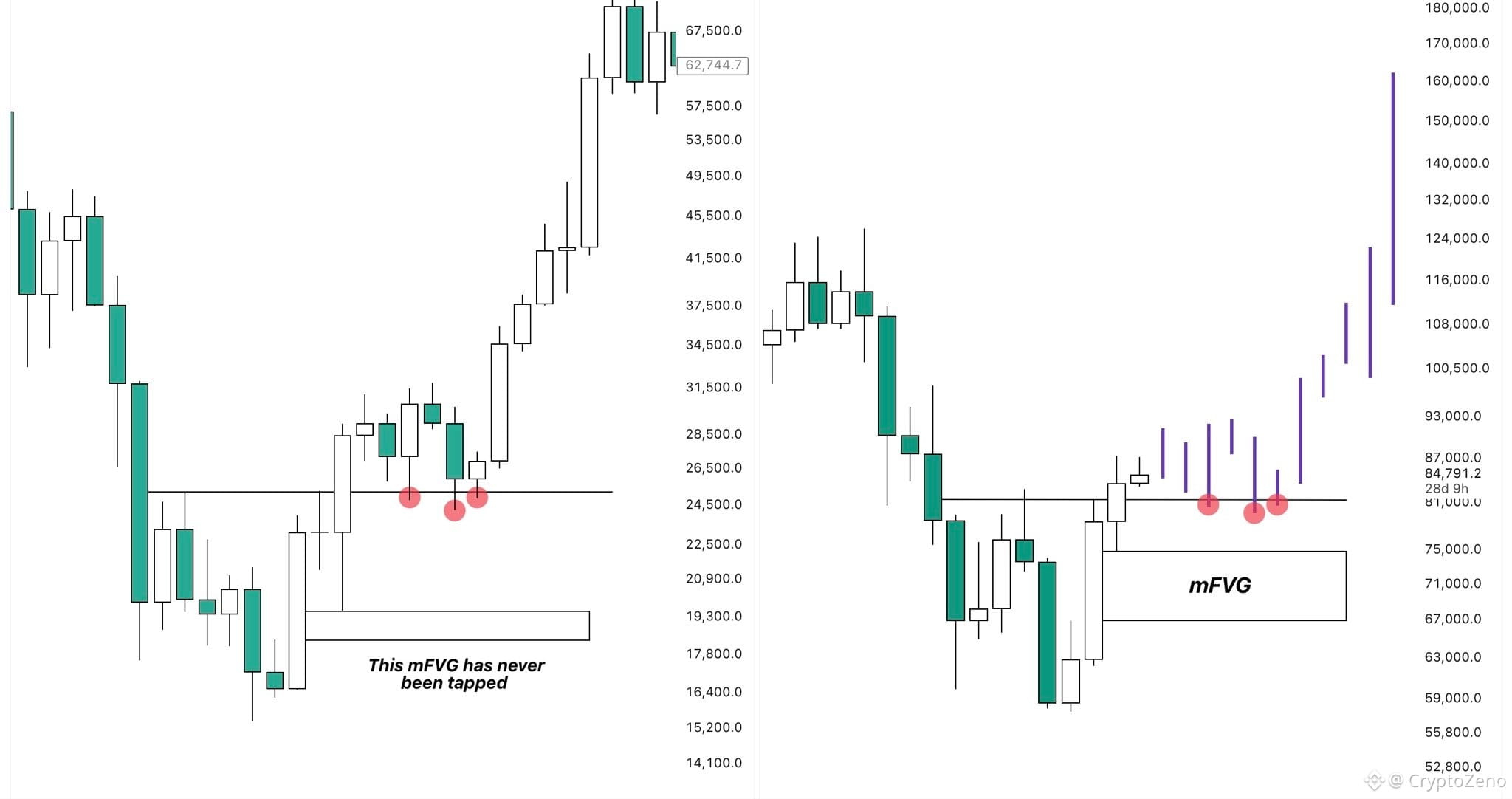
How Market Structure Really Works and What Most Traders Completely MissIn this THREAD I will explain "Market Structure" 1. What is Market Structure? 2. POI 3. Order Block 1. What is Market Structure? Market Structure is a framework used to determine the overall direction and trend of price. There are two main types: - Bullish Structure Price forms higher highs and higher lows, signaling an upward trend. 1.1 What is Market Structure? The other type of Structure is: - Bearish Structure A Bearish Structure is characterized by Lower Lows (LL) and Lower Highs (LH) The structure shifts only when a Higher High (HH) is established. 1.2 What is Market Structure? Minor Structure: Highs and lows formed within a larger swing, seen on lower timeframes (LTF) Major Market Structure: Key structural levels on higher timeframes (HTF) that define the overall trend direction 2. POI Points of Interest (POI) are key levels or zones on a price chart. Where significant trading activity or market reactions are likely to occur. 2.1 POI Common Types of POIs: - FVGs - Order Blocks - Breaker Blocks - Rejection Blocks 2.2 POI The Optimal Trade Entry (OTE) zone lies between the 0.618 and 0.79 retracement levels. When a POI aligns with an OTE level, the likelihood of price reacting significantly increases. 2.3 POI To identify a valid Point of Interest (POI), follow these rules: - The POI must have swept Liquidity before reacting - There should be no remaining liquidity beyond the POI - The level must be untested - Presence of Inducement before the POI 3. Order Block Order Blocks are price zones with a high concentration of pending limit orders, often placed by institutions. Bullish OB: An area with a high concentration of limit buy orders Bearish OB: An area with a high concentration of limit sell orders 3.1 Order Block After an OB forms, the presence of an imbalance is essential. An imbalance reflects strong buying or selling pressure. A sharp move away from the OB confirms the strength and validity of the price action. #CryptoZeno #Marketstructure

How Market Structure Really Works and What Most Traders Completely Miss

In this THREAD I will explain "Market Structure"

1. What is Market Structure?
2. POI
3. Order Block
1. What is Market Structure?

Market Structure is a framework used to determine the overall direction and trend of price.

There are two main types:

- Bullish Structure

Price forms higher highs and higher lows, signaling an upward trend.

1.1 What is Market Structure?

The other type of Structure is:

- Bearish Structure

A Bearish Structure is characterized by Lower Lows (LL) and Lower Highs (LH)

The structure shifts only when a Higher High (HH) is established.

1.2 What is Market Structure?

Minor Structure:

Highs and lows formed within a larger swing, seen on lower timeframes (LTF)

Major Market Structure:

Key structural levels on higher timeframes (HTF) that define the overall trend direction

2. POI

Points of Interest (POI) are key levels or zones on a price chart.

Where significant trading activity or market reactions are likely to occur.

2.1 POI

Common Types of POIs:

- FVGs

- Order Blocks

- Breaker Blocks

- Rejection Blocks

2.2 POI

The Optimal Trade Entry (OTE) zone lies between the 0.618 and 0.79 retracement levels.

When a POI aligns with an OTE level, the likelihood of price reacting significantly increases.

2.3 POI

To identify a valid Point of Interest (POI), follow these rules:

- The POI must have swept Liquidity before reacting

- There should be no remaining liquidity beyond the POI

- The level must be untested

- Presence of Inducement before the POI

3. Order Block

Order Blocks are price zones with a high concentration of pending limit orders, often placed by institutions.

Bullish OB: An area with a high concentration of limit buy orders

Bearish OB: An area with a high concentration of limit sell orders

3.1 Order Block

After an OB forms, the presence of an imbalance is essential.

An imbalance reflects strong buying or selling pressure.

A sharp move away from the OB confirms the strength and validity of the price action.

#CryptoZeno #Marketstructure
記事
翻訳参照
If You’re Starting Crypto With $0, Read This Before You Blow Your First AccountIf you’re just starting in crypto with no capital, no job, and no network, the worst thing you can do is pretend you’re already rich. Most beginners fail because they try to play the same game as people with money, connections, and information advantages. That game is not designed for you. When you have less than fifty thousand dollars, trading like big investors is a losing strategy. They move markets, access private deals, and often act on information you’ll never see in time. You, on the other hand, are left guessing from charts and reacting late. Instead of copying their approach, you need to play a different game altogether. Your edge is not money. Your edge is time, speed, and curiosity. At the beginning, effort matters more than capital. When you don’t have money, you compensate by being early and by going deeper than most people are willing to. That means testing new projects before they are popular, using apps before they officially launch, and exploring areas that are still ignored by the crowd. Many of the biggest opportunities in crypto don’t come from lucky entries, but from people who showed up early and stayed consistent while others weren’t paying attention. Before thinking about investing, the priority should be earning. Trying to turn ten dollars into a million overnight is not strategy, it’s gambling. Real progress starts when you generate income inside the ecosystem. Crypto offers many ways to do this if you’re willing to contribute. Writing, research, community moderation, early user programs, and contributor roles are often overlooked, yet they are how many people fund their first serious investments. Earning first buys you time, and time allows you to make better decisions later. Being early is often mistaken for having secret information. In reality, most “alpha” isn’t hidden, it’s simply ignored. Early users who join testnets, ambassador programs, or governance forums are frequently the ones who benefit the most. While others wait for confirmation on social media, early participants are already positioning themselves before incentives become obvious. As you move forward, focus becomes critical. Crypto is too broad to master everything at once. The fastest way to grow is to pick one area and go deep. That could be a specific blockchain ecosystem, on-chain games, privacy tools, identity solutions, or the intersection of AI and crypto. Immersing yourself in one niche allows you to recognize opportunities faster and build real expertise instead of surface-level knowledge. At some point, you’ll realize that consistency matters more than single wins. This is where building your own crypto system comes in. Before making serious money, you need structure. That includes setting up spaces where you learn and exchange ideas, following people who consistently think ahead of the market, tracking important on-chain activity, and staying aware of emerging narratives. The better your system, the faster and clearer your decisions become. One of the hardest lessons for beginners is learning not to follow the crowd. Most losses come from buying late, holding weak assets for too long, and having no clear exit plan. Survival in crypto is not about catching every move. It’s about managing risk, taking profits when they’re available, and prioritizing setups where the upside clearly outweighs the downside. Time is often the most underestimated asset. Many of the best opportunities require little to no capital. They appear when there is no token yet, when no one is talking about the project, and when participation only costs effort. Early reward programs, new network testing, and on-chain quests have quietly generated thousands of dollars for people who were simply early and consistent. Despite how crowded crypto may feel, it is still early. New cycles bring new narratives. In 2025, areas like AI-powered blockchain tools, real-world assets moving on-chain, crypto-native social platforms, and DePIN models offering real-world rewards are opening fresh opportunities. You don’t need to chase all of them. Pick one, learn faster than others, and commit. If you’re starting from zero, the path is simple but not easy. Choose a niche you genuinely like, join early communities, and contribute before incentives are obvious. Explore testnets, new chains, and early programs. Look for ways to earn through research or content. Reinvest what you make instead of rushing for shortcuts. Stay focused, stay early, and keep learning. Going from zero to one hundred thousand is realistic in crypto, but only for those who understand that the real edge is not capital. It’s being early, being useful, and being consistent when most people are distracted #CryptoZeno

If You’re Starting Crypto With $0, Read This Before You Blow Your First Account

If you’re just starting in crypto with no capital, no job, and no network, the worst thing you can do is pretend you’re already rich. Most beginners fail because they try to play the same game as people with money, connections, and information advantages. That game is not designed for you.
When you have less than fifty thousand dollars, trading like big investors is a losing strategy. They move markets, access private deals, and often act on information you’ll never see in time. You, on the other hand, are left guessing from charts and reacting late. Instead of copying their approach, you need to play a different game altogether. Your edge is not money. Your edge is time, speed, and curiosity.

At the beginning, effort matters more than capital. When you don’t have money, you compensate by being early and by going deeper than most people are willing to. That means testing new projects before they are popular, using apps before they officially launch, and exploring areas that are still ignored by the crowd. Many of the biggest opportunities in crypto don’t come from lucky entries, but from people who showed up early and stayed consistent while others weren’t paying attention.
Before thinking about investing, the priority should be earning. Trying to turn ten dollars into a million overnight is not strategy, it’s gambling. Real progress starts when you generate income inside the ecosystem. Crypto offers many ways to do this if you’re willing to contribute. Writing, research, community moderation, early user programs, and contributor roles are often overlooked, yet they are how many people fund their first serious investments. Earning first buys you time, and time allows you to make better decisions later.

Being early is often mistaken for having secret information. In reality, most “alpha” isn’t hidden, it’s simply ignored. Early users who join testnets, ambassador programs, or governance forums are frequently the ones who benefit the most. While others wait for confirmation on social media, early participants are already positioning themselves before incentives become obvious.
As you move forward, focus becomes critical. Crypto is too broad to master everything at once. The fastest way to grow is to pick one area and go deep. That could be a specific blockchain ecosystem, on-chain games, privacy tools, identity solutions, or the intersection of AI and crypto. Immersing yourself in one niche allows you to recognize opportunities faster and build real expertise instead of surface-level knowledge.

At some point, you’ll realize that consistency matters more than single wins. This is where building your own crypto system comes in. Before making serious money, you need structure. That includes setting up spaces where you learn and exchange ideas, following people who consistently think ahead of the market, tracking important on-chain activity, and staying aware of emerging narratives. The better your system, the faster and clearer your decisions become.

One of the hardest lessons for beginners is learning not to follow the crowd. Most losses come from buying late, holding weak assets for too long, and having no clear exit plan. Survival in crypto is not about catching every move. It’s about managing risk, taking profits when they’re available, and prioritizing setups where the upside clearly outweighs the downside.

Time is often the most underestimated asset. Many of the best opportunities require little to no capital. They appear when there is no token yet, when no one is talking about the project, and when participation only costs effort. Early reward programs, new network testing, and on-chain quests have quietly generated thousands of dollars for people who were simply early and consistent.

Despite how crowded crypto may feel, it is still early. New cycles bring new narratives. In 2025, areas like AI-powered blockchain tools, real-world assets moving on-chain, crypto-native social platforms, and DePIN models offering real-world rewards are opening fresh opportunities. You don’t need to chase all of them. Pick one, learn faster than others, and commit.
If you’re starting from zero, the path is simple but not easy. Choose a niche you genuinely like, join early communities, and contribute before incentives are obvious. Explore testnets, new chains, and early programs. Look for ways to earn through research or content. Reinvest what you make instead of rushing for shortcuts. Stay focused, stay early, and keep learning.

Going from zero to one hundred thousand is realistic in crypto, but only for those who understand that the real edge is not capital. It’s being early, being useful, and being consistent when most people are distracted
#CryptoZeno
記事
ドルコスト平均法 (DCA): 時間をかけて暗号通貨ポジションを構築するための賢い方法ドルコスト平均法の主な利点は、間違ったタイミングで賭けをするリスクを軽減することです。市場のタイミングは、取引や投資に関して最も難しいことの一つです。しばしば、取引アイデアの方向が正しくても、タイミングがずれてしまうことがあります - これが全体の取引を間違ったものにしてしまいます。ドルコスト平均法は、このリスクを軽減するのに役立ちます。 投資を小さなチャンクに分けると、1つの大きなチャンクに同じ金額を投資するよりも、より良い結果を得られる可能性が高くなります。タイミングが悪い購入をすることは驚くほど簡単であり、それは理想的でない結果につながる可能性があります。さらに、意思決定からいくつかの偏見を排除することができます。ドルコスト平均法を採用すると、その戦略があなたのために決定を下します。

ドルコスト平均法 (DCA): 時間をかけて暗号通貨ポジションを構築するための賢い方法

ドルコスト平均法の主な利点は、間違ったタイミングで賭けをするリスクを軽減することです。市場のタイミングは、取引や投資に関して最も難しいことの一つです。しばしば、取引アイデアの方向が正しくても、タイミングがずれてしまうことがあります - これが全体の取引を間違ったものにしてしまいます。ドルコスト平均法は、このリスクを軽減するのに役立ちます。
投資を小さなチャンクに分けると、1つの大きなチャンクに同じ金額を投資するよりも、より良い結果を得られる可能性が高くなります。タイミングが悪い購入をすることは驚くほど簡単であり、それは理想的でない結果につながる可能性があります。さらに、意思決定からいくつかの偏見を排除することができます。ドルコスト平均法を採用すると、その戦略があなたのために決定を下します。
$BTC は、すべての主要なボトムに先立って隠れたサイクルシグナルを繰り返しています #Bitcoin 週次タイムフレームにおける実現市場キャップRSIは、歴史的にサイクルの疲弊を示した同じ構造的ゾーンに再び接近しています。2015年、2019年、2022年のすべての主要なベアマーケットボトムは、この指標が極端な圧縮に達した後、わずか数週間で形成され、ネットワーク全体での深い過小評価を示しています。 このセットアップを爆発的にするのは、タイミングの整合性です。現在のRSI構造は、価格が最終的な流動性スイープの前に実現価値の上でうろうろしていた以前のサイクルを反映しています。通常は4週間のウィンドウ内でです。このフェーズでは、弱い手が退出し、賢いお金が積極的に蓄積し、次の拡張脚の舞台を整えます。 このフラクタルが保持され続ける場合、市場は再蓄積レンジの最終フェーズに入っています。42k - 50kの実現サポートレベルは重要なピボットとなり、それを下回ると、マクロ反転の前の最後のベアトラップとして機能する可能性があります。 歴史は正確には繰り返さないが、精密に韻を踏んでいます。そして今、リズムが危険なほど馴染み深くなっています。 #CryptoZeno #CZonTBPNInterview
$BTC は、すべての主要なボトムに先立って隠れたサイクルシグナルを繰り返しています

#Bitcoin 週次タイムフレームにおける実現市場キャップRSIは、歴史的にサイクルの疲弊を示した同じ構造的ゾーンに再び接近しています。2015年、2019年、2022年のすべての主要なベアマーケットボトムは、この指標が極端な圧縮に達した後、わずか数週間で形成され、ネットワーク全体での深い過小評価を示しています。

このセットアップを爆発的にするのは、タイミングの整合性です。現在のRSI構造は、価格が最終的な流動性スイープの前に実現価値の上でうろうろしていた以前のサイクルを反映しています。通常は4週間のウィンドウ内でです。このフェーズでは、弱い手が退出し、賢いお金が積極的に蓄積し、次の拡張脚の舞台を整えます。

このフラクタルが保持され続ける場合、市場は再蓄積レンジの最終フェーズに入っています。42k - 50kの実現サポートレベルは重要なピボットとなり、それを下回ると、マクロ反転の前の最後のベアトラップとして機能する可能性があります。

歴史は正確には繰り返さないが、精密に韻を踏んでいます。そして今、リズムが危険なほど馴染み深くなっています。
#CryptoZeno #CZonTBPNInterview
記事
Binance AI Proは、ほとんどのトレーダーが間違ったタイミングでエントリーし続ける理由を暴露しますBinanceAIProは、突然あなたを利益に導くものではありませんが、ほとんどのエントリー決定がどれほど欠陥があるかをすぐに明らかにします。<a>c-9</a>に適用されると、その問題は明らかになります。トレーダーがチャートを読むことができないのではなく、彼らは一貫して最悪のタイミングで行動するのです。 私は今回は異なるアプローチを取りました。信号を探すのではなく、タイミングと意図に焦点を当てました。流動性はどこに存在する可能性が高いのか、市場のどの側がターゲットにされているのか、そして本当の動きが始まる前に何が起こる必要があるのか。反応は完璧ではありませんでしたが、価格が反応する可能性が高い領域を一貫して指し示しました。

Binance AI Proは、ほとんどのトレーダーが間違ったタイミングでエントリーし続ける理由を暴露します

BinanceAIProは、突然あなたを利益に導くものではありませんが、ほとんどのエントリー決定がどれほど欠陥があるかをすぐに明らかにします。<a>c-9</a>に適用されると、その問題は明らかになります。トレーダーがチャートを読むことができないのではなく、彼らは一貫して最悪のタイミングで行動するのです。
私は今回は異なるアプローチを取りました。信号を探すのではなく、タイミングと意図に焦点を当てました。流動性はどこに存在する可能性が高いのか、市場のどの側がターゲットにされているのか、そして本当の動きが始まる前に何が起こる必要があるのか。反応は完璧ではありませんでしたが、価格が反応する可能性が高い領域を一貫して指し示しました。
バイナンスAIプロを初めてテストして$XAU 実際の市場条件で 今日は違ったことを試してみました。まずチャートも、インジケーターもなしで。私は直接バイナンスAIプロにアクセスし、XAUについて今本当に重要なことを1つ尋ねました。 答えは驚くほど明確でした。シグナルで圧倒されることはありませんでした。文脈に焦点を合わせていました。モメンタムが減速している場所、流動性が存在する可能性のある場所、価格が特定のゾーンに戻る場合にどのような反応が起こりやすいか。強制されずに、クリーンに感じました。 そして、さらに進めました。自分のトレードアイデアを提供し、それを批評してもらうように頼みました。賛成するのではなく、タイミングや仮定の弱点を指摘しました。それは予想以上に役立ちました。私をスローダウンさせ、セットアップを再考させることになりました。 際立っているのはスピードではなく、明確さです。あなたが依然として決定を下しますが、盲点が少なくなります。そしてAIアカウントの分離により、$XAU アイデアをテストすることは、メインキャピタルに触れることなくよりコントロールされているように感じます。 取引にはリスクが伴います。AI生成の提案は財務アドバイスではありません。過去のパフォーマンスは将来の結果を保証するものではありません。地域の製品の入手可能性を確認してください。 @Binance_Vietnam #BinanceAIPro
バイナンスAIプロを初めてテストして$XAU 実際の市場条件で

今日は違ったことを試してみました。まずチャートも、インジケーターもなしで。私は直接バイナンスAIプロにアクセスし、XAUについて今本当に重要なことを1つ尋ねました。

答えは驚くほど明確でした。シグナルで圧倒されることはありませんでした。文脈に焦点を合わせていました。モメンタムが減速している場所、流動性が存在する可能性のある場所、価格が特定のゾーンに戻る場合にどのような反応が起こりやすいか。強制されずに、クリーンに感じました。

そして、さらに進めました。自分のトレードアイデアを提供し、それを批評してもらうように頼みました。賛成するのではなく、タイミングや仮定の弱点を指摘しました。それは予想以上に役立ちました。私をスローダウンさせ、セットアップを再考させることになりました。

際立っているのはスピードではなく、明確さです。あなたが依然として決定を下しますが、盲点が少なくなります。そしてAIアカウントの分離により、$XAU アイデアをテストすることは、メインキャピタルに触れることなくよりコントロールされているように感じます。

取引にはリスクが伴います。AI生成の提案は財務アドバイスではありません。過去のパフォーマンスは将来の結果を保証するものではありません。地域の製品の入手可能性を確認してください。
@Binance Vietnam #BinanceAIPro
$BTC 過去10回のCPI発表において、市場の行動はまったく同じでした。 数日間、価格はCPIに向かって上昇し、その後すぐに逆転して急落します。 このパターンは1年以上続いているので、今回が特別な理由があるはずはありません。 再び、明日のCPIに向けての上昇が見られますが、今回は進行中の政治的対立と最近の上昇が主にニュース主導であったため、明日のCPIのセットアップはさらに弱気です... ほとんどの流動性が下にあることと、全体の構造が弱気のままであることを考慮すると、価格はすぐにピークに達し、地元の安値をターゲットにすると思います。 {future}(BTCUSDT)
$BTC 過去10回のCPI発表において、市場の行動はまったく同じでした。

数日間、価格はCPIに向かって上昇し、その後すぐに逆転して急落します。

このパターンは1年以上続いているので、今回が特別な理由があるはずはありません。

再び、明日のCPIに向けての上昇が見られますが、今回は進行中の政治的対立と最近の上昇が主にニュース主導であったため、明日のCPIのセットアップはさらに弱気です...

ほとんどの流動性が下にあることと、全体の構造が弱気のままであることを考慮すると、価格はすぐにピークに達し、地元の安値をターゲットにすると思います。
記事
12年の暗号通貨で私が犯した12の残酷な間違い。あなたがそれを難しい方法で学ばなくても済むように私は暗号通貨で12年生き残りました。私は何百万も稼ぎました。私は何百万も失いました。利益は自信を教えてくれます。損失は真実を教えてくれます。これらは私にとって最も大きな代償を伴った間違いです。 1. ポンプを追いかけることは、単に出口の流動性を提供することです。 私がすでに爆発しているコインを購入するたびに、私は勢いが続くと自分に言い聞かせました。ほとんどの場合、私は単に遅れていただけです。何かがどこでもトレンドになっているとき、あなたはめったに早くありません。あなたはしばしば、あなたの前に入ったより賢い誰かのための流動性です。

12年の暗号通貨で私が犯した12の残酷な間違い。あなたがそれを難しい方法で学ばなくても済むように

私は暗号通貨で12年生き残りました。私は何百万も稼ぎました。私は何百万も失いました。利益は自信を教えてくれます。損失は真実を教えてくれます。これらは私にとって最も大きな代償を伴った間違いです。
1. ポンプを追いかけることは、単に出口の流動性を提供することです。
私がすでに爆発しているコインを購入するたびに、私は勢いが続くと自分に言い聞かせました。ほとんどの場合、私は単に遅れていただけです。何かがどこでもトレンドになっているとき、あなたはめったに早くありません。あなたはしばしば、あなたの前に入ったより賢い誰かのための流動性です。
記事
ハードウェアウォレットが防げない唯一の暗号の脅威ほとんどの人々は、ハードウェアウォレットを所有することが暗号セキュリティにおける最終的なステップであると信じています。その仮定は非常に不完全です。Ledgerは、マルウェア、フィッシング、リモート攻撃からあなたを守ることができます。しかし、今日の暗号保有者が直面している最も急速に成長している脅威である物理的強制には何の効果もありません。 Chainalysisによれば、暗号関連の住居侵入や物理的恐喝の事件は2023年以降急増しています。暗号の富がより目に見えるようになり、より集中するにつれて、攻撃者はもはやあなたのデバイスをハッキングする必要がありません。彼らはただあなたが必要です。

ハードウェアウォレットが防げない唯一の暗号の脅威

ほとんどの人々は、ハードウェアウォレットを所有することが暗号セキュリティにおける最終的なステップであると信じています。その仮定は非常に不完全です。Ledgerは、マルウェア、フィッシング、リモート攻撃からあなたを守ることができます。しかし、今日の暗号保有者が直面している最も急速に成長している脅威である物理的強制には何の効果もありません。
Chainalysisによれば、暗号関連の住居侵入や物理的恐喝の事件は2023年以降急増しています。暗号の富がより目に見えるようになり、より集中するにつれて、攻撃者はもはやあなたのデバイスをハッキングする必要がありません。彼らはただあなたが必要です。
記事
Binance AI Proは金取引を精密なゲームに変えますBinance AI Proは、トレーダーが生データを構造化された意思決定に変換することで、どのようにアプローチするかを再定義しています。すべての動きに手動で反応するのではなく、このシステムは、メインバランスから分離された専用のAIアカウントを通じて、インタラクション、分析、さらには戦略の実行を可能にします。その分離だけで、コアファンドに干渉することなくテストおよび運用するためのより安全な環境を作り出します。 金は常に最も欺瞞に満ちた市場の一つです。価格はほとんどきれいに動くことはなく、流動性を掃き、ポジションを捕まえ、そして攻撃的に拡大します。ほとんどのトレーダーは、動きがすでに進行中の後に反応して捕まります。確認が現れる頃には、機会は減少するか完全に消えてしまいます。

Binance AI Proは金取引を精密なゲームに変えます

Binance AI Proは、トレーダーが生データを構造化された意思決定に変換することで、どのようにアプローチするかを再定義しています。すべての動きに手動で反応するのではなく、このシステムは、メインバランスから分離された専用のAIアカウントを通じて、インタラクション、分析、さらには戦略の実行を可能にします。その分離だけで、コアファンドに干渉することなくテストおよび運用するためのより安全な環境を作り出します。
金は常に最も欺瞞に満ちた市場の一つです。価格はほとんどきれいに動くことはなく、流動性を掃き、ポジションを捕まえ、そして攻撃的に拡大します。ほとんどのトレーダーは、動きがすでに進行中の後に反応して捕まります。確認が現れる頃には、機会は減少するか完全に消えてしまいます。
翻訳参照
The AI edge you didn’t know you needed in crypto trading I used to think speed in trading came down to experience and screen time. The more charts you watch, the faster you react. But after testing AI Pro in a real scenario with $XAU , I started to see the gap between reacting fast and understanding faster. Instead of jumping between indicators, I asked AI Pro to break down the current structure. Within seconds, it pointed out key liquidity zones, highlighted where price might react, and gave a clear view of possible short term paths. What surprised me wasn’t just the speed, it was how clean the logic felt. It didn’t feel random or overcomplicated. It felt structured, almost like talking to a disciplined trader who never gets tired. I still ran my own analysis right after. The main levels matched, but AI added timing context I didn’t fully consider, especially around how price could behave before reaching those zones. That small difference can matter a lot when volatility kicks in. What I like most is that it doesn’t replace your thinking. It sharpens it. You still decide, but you’re not starting from zero anymore. In a market where hesitation costs money, having that kind of support changes how you approach every setup. Trading involves risk. AI-generated suggestions are not financial advice. Past performance does not guarantee future results. Please check product availability in your region. @Binance_Vietnam $XAU #BinanceAIPro
The AI edge you didn’t know you needed in crypto trading

I used to think speed in trading came down to experience and screen time. The more charts you watch, the faster you react. But after testing AI Pro in a real scenario with $XAU , I started to see the gap between reacting fast and understanding faster.

Instead of jumping between indicators, I asked AI Pro to break down the current structure. Within seconds, it pointed out key liquidity zones, highlighted where price might react, and gave a clear view of possible short term paths. What surprised me wasn’t just the speed, it was how clean the logic felt. It didn’t feel random or overcomplicated. It felt structured, almost like talking to a disciplined trader who never gets tired.

I still ran my own analysis right after. The main levels matched, but AI added timing context I didn’t fully consider, especially around how price could behave before reaching those zones. That small difference can matter a lot when volatility kicks in.

What I like most is that it doesn’t replace your thinking. It sharpens it. You still decide, but you’re not starting from zero anymore. In a market where hesitation costs money, having that kind of support changes how you approach every setup.

Trading involves risk. AI-generated suggestions are not financial advice. Past performance does not guarantee future results. Please check product availability in your region.
@Binance Vietnam $XAU #BinanceAIPro
記事
恐怖と貪欲の指数は暗号市場について何を教えてくれるのか貪欲は通常、上昇トレンドを引き起こし、恐怖はネガティブなトレンドを引き起こします。人間の心理は予測可能で、多くの個人が特定の状況で似たように反応する傾向があります。 恐怖と貪欲の指数は、市場のセンチメントを評価し定量化しようとしており、トレーダーにとって有用で理解しやすいものとなっています。 恐怖と貪欲の指数は、市場のセンチメントを理解するために最も広く使用されている指標の一つです。名前が示すように、この指数は市場が現在恐れているのか貪欲なのかを判断するのに役立ち、適切な取引戦略を立てることができます。

恐怖と貪欲の指数は暗号市場について何を教えてくれるのか

貪欲は通常、上昇トレンドを引き起こし、恐怖はネガティブなトレンドを引き起こします。人間の心理は予測可能で、多くの個人が特定の状況で似たように反応する傾向があります。
恐怖と貪欲の指数は、市場のセンチメントを評価し定量化しようとしており、トレーダーにとって有用で理解しやすいものとなっています。
恐怖と貪欲の指数は、市場のセンチメントを理解するために最も広く使用されている指標の一つです。名前が示すように、この指数は市場が現在恐れているのか貪欲なのかを判断するのに役立ち、適切な取引戦略を立てることができます。
記事
市場構造が実際にどのように機能し、ほとんどのトレーダーが完全に見落としていることこのスレッドでは「市場構造」について説明します。 市場構造は、価格の全体的な方向とトレンドを決定するために使用されるフレームワークです。 主に二種類があります: - 強気構造 価格は高値と安値を更新し、上昇トレンドを示しています。 1.1 市場構造とは何ですか? 構造のもう一つのタイプは: - 弱気構造 弱気構造は、低い安値(LL)と低い高値(LH)によって特徴付けられます。 構造は、高い高値(HH)が確立されるときのみ変化します。 1.2 市場構造とは何ですか?

市場構造が実際にどのように機能し、ほとんどのトレーダーが完全に見落としていること

このスレッドでは「市場構造」について説明します。
市場構造は、価格の全体的な方向とトレンドを決定するために使用されるフレームワークです。
主に二種類があります:
- 強気構造
価格は高値と安値を更新し、上昇トレンドを示しています。
1.1 市場構造とは何ですか?
構造のもう一つのタイプは:
- 弱気構造
弱気構造は、低い安値(LL)と低い高値(LH)によって特徴付けられます。
構造は、高い高値(HH)が確立されるときのみ変化します。
1.2 市場構造とは何ですか?
翻訳参照
Bitcoin: only 987,181 $BTC left to be mined. Fiat: infinite supply left to be printed.
Bitcoin: only 987,181 $BTC left to be mined.

Fiat: infinite supply left to be printed.
ブータン王国政府は1時間前にさらに319.7 $BTC($22.68M)を移転しました。 2024年10月28日以来、ブータンの$BTC の保有量は13K BTCから3,954 $BTCに減少し、9K BTC ($640M)以上を売却しました。 {future}(BTCUSDT)
ブータン王国政府は1時間前にさらに319.7 $BTC ($22.68M)を移転しました。

2024年10月28日以来、ブータンの$BTC の保有量は13K BTCから3,954 $BTC に減少し、9K BTC ($640M)以上を売却しました。
暗号通貨は、世界の決済システムを飲み込みそうですが、誰もそれについて話していません。 ステーブルコインは月間取引高が7.2兆ドルに達し、ACHとVisaを超え、2035年までに1.5京ドルに達する可能性があります。 これは誤植ではありません、 本当に1.5京ドルです。 Chainalysisは、オンチェーン決済が10年以内にVisaやMastercardに匹敵するようになると予測しています。 Visaは年間13兆ドルを処理し、 Mastercardは約9兆ドル、 合わせて年間22兆ドルです。 ステーブルコインはそれを小さく見せる準備が整っています。 世界の決済システム全体がブロックチェーン上で再構築されており、10年のタイムラインがあります。
暗号通貨は、世界の決済システムを飲み込みそうですが、誰もそれについて話していません。

ステーブルコインは月間取引高が7.2兆ドルに達し、ACHとVisaを超え、2035年までに1.5京ドルに達する可能性があります。

これは誤植ではありません、
本当に1.5京ドルです。

Chainalysisは、オンチェーン決済が10年以内にVisaやMastercardに匹敵するようになると予測しています。

Visaは年間13兆ドルを処理し、
Mastercardは約9兆ドル、
合わせて年間22兆ドルです。

ステーブルコインはそれを小さく見せる準備が整っています。

世界の決済システム全体がブロックチェーン上で再構築されており、10年のタイムラインがあります。
さらにコンテンツを探すには、ログインしてください
Binance Squareで世界の暗号資産トレーダーの仲間入り
⚡️ 暗号資産に関する最新かつ有益な情報が見つかります。
💬 世界最大の暗号資産取引所から信頼されています。
👍 認証を受けたクリエイターから、有益なインサイトを得られます。
メール / 電話番号
サイトマップ
Cookieの設定
プラットフォーム利用規約