

CryptoNova1122
669 投稿

CryptoNova1122
報告
ユーザーをブロック
Crypto lover x. Mr99438👈 💁
96 フォロー
1.0K+ フォロワー
319 いいね
投稿
すべて
引用
ライブ
昨夜、何か奇妙なことが起きました。
バビロンの宇宙(スペース)にたった5分入っただけでした。計画は少し聞いて、それから出ること。
でもその後、時間の感覚を見失ってしまいました。
誰かがマーケットの話をしていて、誰かは自分の最初の暗号通貨での失敗を共有していて、そしてある人は間違ったチェーンにトークンを送ってしまったせいでただ笑っていました。奇妙なことに、誰も彼を嘲笑しませんでした。みんなが「どう直せばいいか」を一緒に考えてくれていました。
私は黙って、ずっとそれを聞いていました。
そして気づいたんです……生き生きするために、すべてのコミュニティがチャートを必要とするわけじゃないのかもしれない、と。
人がいるから、生き続けるコミュニティもあります。
だから、みんなが「どうしてまだ$BABY を持ち続けてるの?」と聞いてくるとき、私は長いトレード理論なんて持っていません。
答えはただこれです:
"ここでは、ユーザーネームを見ているだけじゃない。人間を見ているから。"
明日も価格は上がったり下がったりします。
いつかまた市場はみんなを怖がらせるでしょう。
でも人が一緒に立ち上がれば、前ほど赤いキャンドルが怖く感じないんです。
もしかすると、それがコミュニティと呼ばれるものなのかもしれません。
だから私は今日も@BabylonLabs_ioと一緒にいます。
@babylonlabs_io $BABY #baby
昨夜、何か奇妙なことが起きました。
バビロンの宇宙(スペース)にたった5分入っただけでした。計画は少し聞いて、それから出ること。
でもその後、時間の感覚を見失ってしまいました。
誰かがマーケットの話をしていて、誰かは自分の最初の暗号通貨での失敗を共有していて、そしてある人は間違ったチェーンにトークンを送ってしまったせいでただ笑っていました。奇妙なことに、誰も彼を嘲笑しませんでした。みんなが「どう直せばいいか」を一緒に考えてくれていました。
私は黙って、ずっとそれを聞いていました。
そして気づいたんです……生き生きするために、すべてのコミュニティがチャートを必要とするわけじゃないのかもしれない、と。
人がいるから、生き続けるコミュニティもあります。
だから、みんなが「どうしてまだ$BABY を持ち続けてるの?」と聞いてくるとき、私は長いトレード理論なんて持っていません。
答えはただこれです:
"ここでは、ユーザーネームを見ているだけじゃない。人間を見ているから。"
明日も価格は上がったり下がったりします。
いつかまた市場はみんなを怖がらせるでしょう。
でも人が一緒に立ち上がれば、前ほど赤いキャンドルが怖く感じないんです。
もしかすると、それがコミュニティと呼ばれるものなのかもしれません。
だから私は今日も@BabylonLabs_ioと一緒にいます。
@BabylonLabs_io $BABY #baby
バビロンの宇宙(スペース)にたった5分入っただけでした。計画は少し聞いて、それから出ること。
でもその後、時間の感覚を見失ってしまいました。
誰かがマーケットの話をしていて、誰かは自分の最初の暗号通貨での失敗を共有していて、そしてある人は間違ったチェーンにトークンを送ってしまったせいでただ笑っていました。奇妙なことに、誰も彼を嘲笑しませんでした。みんなが「どう直せばいいか」を一緒に考えてくれていました。
私は黙って、ずっとそれを聞いていました。
そして気づいたんです……生き生きするために、すべてのコミュニティがチャートを必要とするわけじゃないのかもしれない、と。
人がいるから、生き続けるコミュニティもあります。
だから、みんなが「どうしてまだ$BABY を持ち続けてるの?」と聞いてくるとき、私は長いトレード理論なんて持っていません。
答えはただこれです:
"ここでは、ユーザーネームを見ているだけじゃない。人間を見ているから。"
明日も価格は上がったり下がったりします。
いつかまた市場はみんなを怖がらせるでしょう。
でも人が一緒に立ち上がれば、前ほど赤いキャンドルが怖く感じないんです。
もしかすると、それがコミュニティと呼ばれるものなのかもしれません。
だから私は今日も@BabylonLabs_ioと一緒にいます。
@BabylonLabs_io $BABY #baby

86
$XRP は日足チャートで強気の勢いが再燃している状況を示しています。
価格は直近のサポートゾーンを再び上回っており、MACDもプラスのままです。これにより買い手がまだ主導権を握っていることが示唆されます。一方で、RSIは過熱(買われすぎ)領域に近づいているため、現在の値動きを追いかけることにはより高いリスクが伴う可能性があります。
もし$XRP が$1.17を上回って維持し、$1.18付近のスーパー・トレンドのレジスタンスをブレイクできれば、次の上昇局面がより起こりやすくなります。そうでない場合は、短期的な押し戻しでサポートを再テストする動きが見られることは、何らかの継続の前に健全な展開となるでしょう。
ここではFOMOよりも忍耐が重要です。次の週足ではなく日足の新しい足を注意深く見守ってください
#Binance #Write2Earn
$XRP は日足チャートで強気の勢いが再燃している状況を示しています。
価格は直近のサポートゾーンを再び上回っており、MACDもプラスのままです。これにより買い手がまだ主導権を握っていることが示唆されます。一方で、RSIは過熱(買われすぎ)領域に近づいているため、現在の値動きを追いかけることにはより高いリスクが伴う可能性があります。
もし$XRP が$1.17を上回って維持し、$1.18付近のスーパー・トレンドのレジスタンスをブレイクできれば、次の上昇局面がより起こりやすくなります。そうでない場合は、短期的な押し戻しでサポートを再テストする動きが見られることは、何らかの継続の前に健全な展開となるでしょう。
ここではFOMOよりも忍耐が重要です。次の週足ではなく日足の新しい足を注意深く見守ってください
#Binance #Write2Earn
価格は直近のサポートゾーンを再び上回っており、MACDもプラスのままです。これにより買い手がまだ主導権を握っていることが示唆されます。一方で、RSIは過熱(買われすぎ)領域に近づいているため、現在の値動きを追いかけることにはより高いリスクが伴う可能性があります。
もし$XRP が$1.17を上回って維持し、$1.18付近のスーパー・トレンドのレジスタンスをブレイクできれば、次の上昇局面がより起こりやすくなります。そうでない場合は、短期的な押し戻しでサポートを再テストする動きが見られることは、何らかの継続の前に健全な展開となるでしょう。
ここではFOMOよりも忍耐が重要です。次の週足ではなく日足の新しい足を注意深く見守ってください
#Binance #Write2Earn
126
OpenGradientのエコシステムを精査してみて見えてきたことのひとつは、「研究の質」と「本番運用への準備状況」が必ずしも同じではないという点です。
GitHubの活動は活発ですが、より詳しく見ると、コアとなる推論作業の多くは比較的少数の貢献者によって主に推進されているようです。これは必ずしも問題ではありませんが、長期的な開発のレジリエンスや、責任がプロジェクト内でどのように分担されているかについて疑問を投げかけます。
オンチェーンの導入も初期段階にあるようです。日次アクティブウォレットは限られており、コミュニティの議論は技術的な進歩や開発者の採用というより、トークン価格に焦点が当たることが多いです。これは若いプロジェクトではよくあることですが、注意して見守る価値があります。
より大きな論点は、実行セキュリティです。
もしOpenGradientの検証モデルが、チャレンジが解決される前に楽観的な前提に依存しているのだとすると、不正検出のスピードと有効性が極めて重要になります。無効な出力の特定が遅れることは、ネットワーク活動が増えていくにつれて、ユーザーの信頼に影響を与え得ます。
もちろん、これらがすべてを意味するわけではありません。実際、分散型AI推論を目指すビジョンは魅力的です。しかし強いアイデアだけでは、堅牢なインフラは保証されません。
私にとって次のマイルストーンは価格ではなく、より広範な開発者の参加、より強力な検証メカニズム、より実世界での利用の拡大、そして透明性のあるセキュリティ改善です。
それが、OpenGradientが信頼できるインフラへと進化するのか、それとも野心的な実験のままで終わるのかを決めることになるでしょう。
#opg $OPG @OpenGradient
OpenGradientのエコシステムを精査してみて見えてきたことのひとつは、「研究の質」と「本番運用への準備状況」が必ずしも同じではないという点です。
GitHubの活動は活発ですが、より詳しく見ると、コアとなる推論作業の多くは比較的少数の貢献者によって主に推進されているようです。これは必ずしも問題ではありませんが、長期的な開発のレジリエンスや、責任がプロジェクト内でどのように分担されているかについて疑問を投げかけます。
オンチェーンの導入も初期段階にあるようです。日次アクティブウォレットは限られており、コミュニティの議論は技術的な進歩や開発者の採用というより、トークン価格に焦点が当たることが多いです。これは若いプロジェクトではよくあることですが、注意して見守る価値があります。
より大きな論点は、実行セキュリティです。
もしOpenGradientの検証モデルが、チャレンジが解決される前に楽観的な前提に依存しているのだとすると、不正検出のスピードと有効性が極めて重要になります。無効な出力の特定が遅れることは、ネットワーク活動が増えていくにつれて、ユーザーの信頼に影響を与え得ます。
もちろん、これらがすべてを意味するわけではありません。実際、分散型AI推論を目指すビジョンは魅力的です。しかし強いアイデアだけでは、堅牢なインフラは保証されません。
私にとって次のマイルストーンは価格ではなく、より広範な開発者の参加、より強力な検証メカニズム、より実世界での利用の拡大、そして透明性のあるセキュリティ改善です。
それが、OpenGradientが信頼できるインフラへと進化するのか、それとも野心的な実験のままで終わるのかを決めることになるでしょう。
#opg $OPG @OpenGradient
GitHubの活動は活発ですが、より詳しく見ると、コアとなる推論作業の多くは比較的少数の貢献者によって主に推進されているようです。これは必ずしも問題ではありませんが、長期的な開発のレジリエンスや、責任がプロジェクト内でどのように分担されているかについて疑問を投げかけます。
オンチェーンの導入も初期段階にあるようです。日次アクティブウォレットは限られており、コミュニティの議論は技術的な進歩や開発者の採用というより、トークン価格に焦点が当たることが多いです。これは若いプロジェクトではよくあることですが、注意して見守る価値があります。
より大きな論点は、実行セキュリティです。
もしOpenGradientの検証モデルが、チャレンジが解決される前に楽観的な前提に依存しているのだとすると、不正検出のスピードと有効性が極めて重要になります。無効な出力の特定が遅れることは、ネットワーク活動が増えていくにつれて、ユーザーの信頼に影響を与え得ます。
もちろん、これらがすべてを意味するわけではありません。実際、分散型AI推論を目指すビジョンは魅力的です。しかし強いアイデアだけでは、堅牢なインフラは保証されません。
私にとって次のマイルストーンは価格ではなく、より広範な開発者の参加、より強力な検証メカニズム、より実世界での利用の拡大、そして透明性のあるセキュリティ改善です。
それが、OpenGradientが信頼できるインフラへと進化するのか、それとも野心的な実験のままで終わるのかを決めることになるでしょう。
#opg $OPG @OpenGradient
2
2
128
私はしばらくAIプロジェクトを探ってきましたが、ずっと頭に浮かぶ疑問があります。「AIの応答を、本当に信頼できるとどうやって分かるのか?」です。スピードや知性は目を引きますが、透明性がなければ、結局は盲目的な信頼に頼っているのと同じです。
調べれば調べるほど、OpenGradientが別の理由で際立って見えてきました。
すべてのAIプロジェクトが成功するとは期待していませんが、透明性が長期的な勝者とそれ以外を分けると私は信じています。注目を集めるだけでなく信頼を得たプロジェクトこそ、長く価値を生み出す可能性が最も高いのです。
AIをブラックボックスとして扱うのではなく、OpenGradientはユーザーに、推論の裏で何が起きたのかを検証できる力を与えます。どのモデルが応答を生成したのかを確認し、元のプロンプトを確かめ、出力が改ざんされていないことを検証できます。AIが金融、医療、教育、ビジネスの一部になっていく中で、この種の説明責任はますます重要になっていると感じます。
また、私が気に入っているのはネットワークの設計です。OpenGradientはHybrid AI Compute Architecture(HACA)を採用し、AIの実行と証明の検証を分離しています。つまり、ユーザーは高速な応答を受け取りつつ、暗号学的な証明はバックグラウンドでオンチェーンにて確定されます。これは、パフォーマンスと信頼の現実的なバランスです。
OPGトークンにも、エコシステム内で明確な役割があります。AI推論を動かし、ノード運営者への報酬となり、分散型ガバナンスを支えます。Base上で供給が10億トークンに固定されているため、インフレに頼るのではなく、持続可能なネットワークを構築することに重点が置かれています。
長年で学んだことの一つは、技術だけでは信頼は築けないという点です。信頼を生むのは透明性です。だからこそ、検証可能なAIは、次世代の分散型インフラを支える最も重要な構成要素の一つになり得ると私は考えています。
そのため、OpenGradientはこれからも注意深く見守っていくプロジェクトです。
今後数年でより重要になるのは、より賢いAIですか、それともより信頼できるAIでしょうか?
@OpenGradient #opg $OPG
私はしばらくAIプロジェクトを探ってきましたが、ずっと頭に浮かぶ疑問があります。「AIの応答を、本当に信頼できるとどうやって分かるのか?」です。スピードや知性は目を引きますが、透明性がなければ、結局は盲目的な信頼に頼っているのと同じです。
調べれば調べるほど、OpenGradientが別の理由で際立って見えてきました。
すべてのAIプロジェクトが成功するとは期待していませんが、透明性が長期的な勝者とそれ以外を分けると私は信じています。注目を集めるだけでなく信頼を得たプロジェクトこそ、長く価値を生み出す可能性が最も高いのです。
AIをブラックボックスとして扱うのではなく、OpenGradientはユーザーに、推論の裏で何が起きたのかを検証できる力を与えます。どのモデルが応答を生成したのかを確認し、元のプロンプトを確かめ、出力が改ざんされていないことを検証できます。AIが金融、医療、教育、ビジネスの一部になっていく中で、この種の説明責任はますます重要になっていると感じます。
また、私が気に入っているのはネットワークの設計です。OpenGradientはHybrid AI Compute Architecture(HACA)を採用し、AIの実行と証明の検証を分離しています。つまり、ユーザーは高速な応答を受け取りつつ、暗号学的な証明はバックグラウンドでオンチェーンにて確定されます。これは、パフォーマンスと信頼の現実的なバランスです。
OPGトークンにも、エコシステム内で明確な役割があります。AI推論を動かし、ノード運営者への報酬となり、分散型ガバナンスを支えます。Base上で供給が10億トークンに固定されているため、インフレに頼るのではなく、持続可能なネットワークを構築することに重点が置かれています。
長年で学んだことの一つは、技術だけでは信頼は築けないという点です。信頼を生むのは透明性です。だからこそ、検証可能なAIは、次世代の分散型インフラを支える最も重要な構成要素の一つになり得ると私は考えています。
そのため、OpenGradientはこれからも注意深く見守っていくプロジェクトです。
今後数年でより重要になるのは、より賢いAIですか、それともより信頼できるAIでしょうか?
@OpenGradient #opg $OPG
調べれば調べるほど、OpenGradientが別の理由で際立って見えてきました。
すべてのAIプロジェクトが成功するとは期待していませんが、透明性が長期的な勝者とそれ以外を分けると私は信じています。注目を集めるだけでなく信頼を得たプロジェクトこそ、長く価値を生み出す可能性が最も高いのです。
AIをブラックボックスとして扱うのではなく、OpenGradientはユーザーに、推論の裏で何が起きたのかを検証できる力を与えます。どのモデルが応答を生成したのかを確認し、元のプロンプトを確かめ、出力が改ざんされていないことを検証できます。AIが金融、医療、教育、ビジネスの一部になっていく中で、この種の説明責任はますます重要になっていると感じます。
また、私が気に入っているのはネットワークの設計です。OpenGradientはHybrid AI Compute Architecture(HACA)を採用し、AIの実行と証明の検証を分離しています。つまり、ユーザーは高速な応答を受け取りつつ、暗号学的な証明はバックグラウンドでオンチェーンにて確定されます。これは、パフォーマンスと信頼の現実的なバランスです。
OPGトークンにも、エコシステム内で明確な役割があります。AI推論を動かし、ノード運営者への報酬となり、分散型ガバナンスを支えます。Base上で供給が10億トークンに固定されているため、インフレに頼るのではなく、持続可能なネットワークを構築することに重点が置かれています。
長年で学んだことの一つは、技術だけでは信頼は築けないという点です。信頼を生むのは透明性です。だからこそ、検証可能なAIは、次世代の分散型インフラを支える最も重要な構成要素の一つになり得ると私は考えています。
そのため、OpenGradientはこれからも注意深く見守っていくプロジェクトです。
今後数年でより重要になるのは、より賢いAIですか、それともより信頼できるAIでしょうか?
@OpenGradient #opg $OPG
7
2
115
最近、AIに技術ドキュメントを要約させるのに頼っていて、ある回答がそれっぽく見えたんですが、元の情報を自分で確認したら違っていました。取引の順序に関する小さな点が間違っていたのです。何かが壊れたわけではないのに、その後のすべての回答の読み方が変わりました。
OpenGradientを調べていると、良い意味で足を止めさせられる発見がありました。ある結果が、あるノードがそれを出しただけで最終だと扱われるわけではなかったのです。結果はCometBFTのコンセンサスを経て進み、決済はネットワークが合意に到達したときにだけ行われていました。ページを一度リロードして、止まったのかと思いました。でも止まっていませんでした。まだ確認中でした。
EVM対応のCosmos SDKも、調整(コーディネーション)が単一の環境の中で行われるわけではないことを意味していました。画面には特に大げさな動きは見えません。ただの別の確認に見えるだけです。ですが、プロセスのどこかで気づきました。私は最初に目にした出力をそのまま受け入れるのではなく、合意を待っていたのだと。
それでも私は毎日AIを使っています。ただ、最初の回答を信じる前に、ネットワークが何に合意したのかを確認するようになっているだけです。
$OPG #opg @OpenGradient
最近、AIに技術ドキュメントを要約させるのに頼っていて、ある回答がそれっぽく見えたんですが、元の情報を自分で確認したら違っていました。取引の順序に関する小さな点が間違っていたのです。何かが壊れたわけではないのに、その後のすべての回答の読み方が変わりました。
OpenGradientを調べていると、良い意味で足を止めさせられる発見がありました。ある結果が、あるノードがそれを出しただけで最終だと扱われるわけではなかったのです。結果はCometBFTのコンセンサスを経て進み、決済はネットワークが合意に到達したときにだけ行われていました。ページを一度リロードして、止まったのかと思いました。でも止まっていませんでした。まだ確認中でした。
EVM対応のCosmos SDKも、調整(コーディネーション)が単一の環境の中で行われるわけではないことを意味していました。画面には特に大げさな動きは見えません。ただの別の確認に見えるだけです。ですが、プロセスのどこかで気づきました。私は最初に目にした出力をそのまま受け入れるのではなく、合意を待っていたのだと。
それでも私は毎日AIを使っています。ただ、最初の回答を信じる前に、ネットワークが何に合意したのかを確認するようになっているだけです。
$OPG #opg @OpenGradient
OpenGradientを調べていると、良い意味で足を止めさせられる発見がありました。ある結果が、あるノードがそれを出しただけで最終だと扱われるわけではなかったのです。結果はCometBFTのコンセンサスを経て進み、決済はネットワークが合意に到達したときにだけ行われていました。ページを一度リロードして、止まったのかと思いました。でも止まっていませんでした。まだ確認中でした。
EVM対応のCosmos SDKも、調整(コーディネーション)が単一の環境の中で行われるわけではないことを意味していました。画面には特に大げさな動きは見えません。ただの別の確認に見えるだけです。ですが、プロセスのどこかで気づきました。私は最初に目にした出力をそのまま受け入れるのではなく、合意を待っていたのだと。
それでも私は毎日AIを使っています。ただ、最初の回答を信じる前に、ネットワークが何に合意したのかを確認するようになっているだけです。
$OPG #opg @OpenGradient
3
2
101
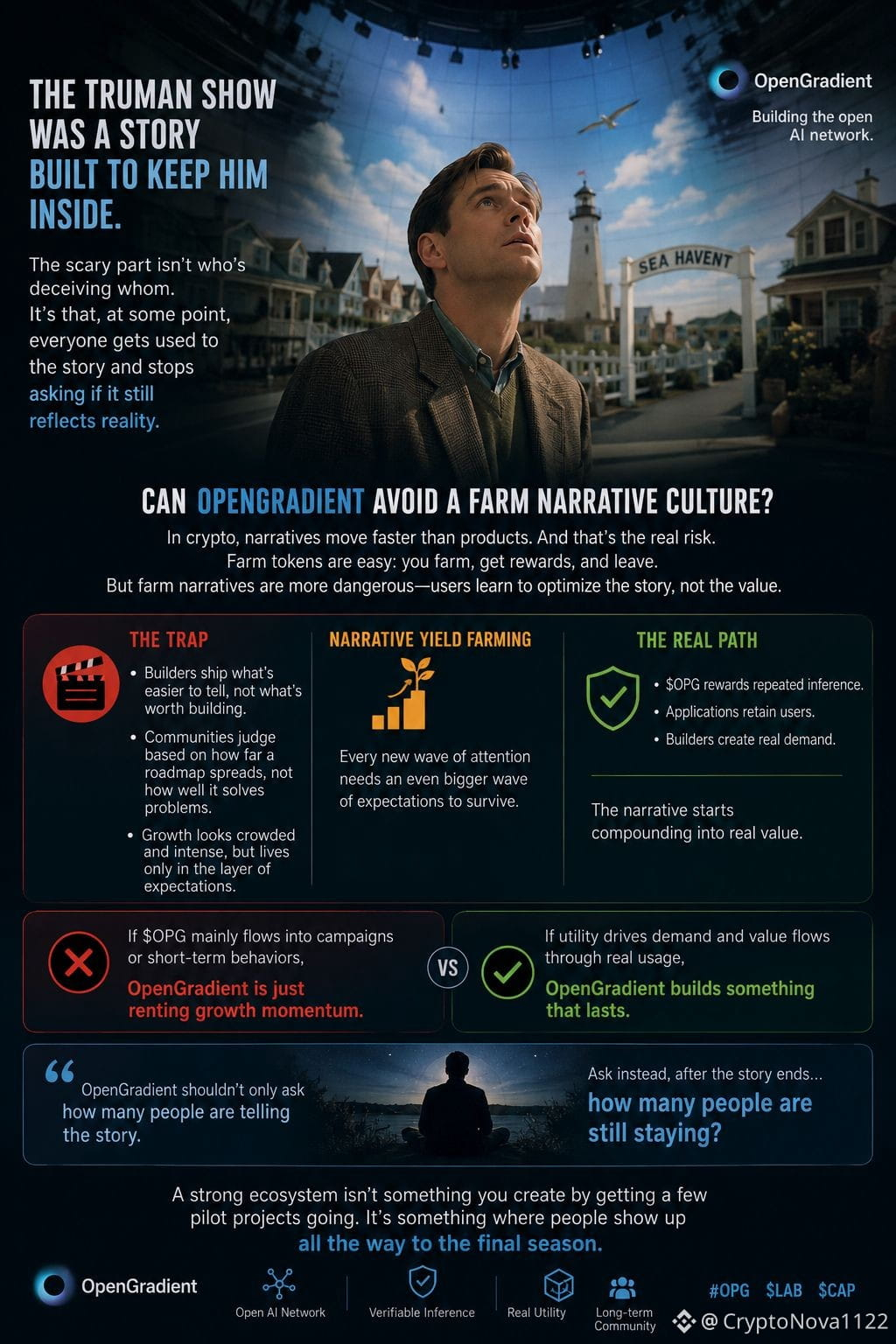
#opg $OPG 『トゥルーマン・ショー』の中に、ずっと私の心に残っている瞬間があります。トゥルーマンは自分が普通の生活を送っていると信じており、周りのすべてが物語の中に閉じ込めるために綿密に設計されていることには気づいていません。不穏なのは、騙していること自体ではなく、やがて誰もが「それでも現実を反映しているのか」を疑うことなく、その物語を受け入れてしまうことです。
それで、OpenGradient について考えます。
OpenGradient は、物語が製品よりもはるかに速く拡散されがちな暗号エコシステムの中で、オープンな AI ネットワークを構築しています。真の難しさは注目を集めることではありません。プロジェクトが「ナラティブ(物語)稼ぎ」に依存してしまわないようにすることです。
トークンを稼ぐことと、ナラティブを稼ぐことには違いがあります。トークン稼ぎは一時的です。ナラティブ稼ぎとは、人々が価値ではなくストーリーを最適化することです。ビルダーは、最も有用なものではなく、最もマーケティングしやすいものを作り始めます。コミュニティは、インパクトではなくエンゲージメントで成功を判断します。成長は、期待の中にしか多くが存在していなくても、見栄えよく見え始めます。
やがて、注目が新たな波として押し寄せるたびに、それを維持するためにはさらに大きな物語が必要になります。
もし OPG が主にキャンペーンや短期的なインセンティブで回るだけなら、OpenGradient は勢いを借りているにすぎません。しかし、トークンが繰り返しの AI 推論を動かし、アプリがユーザーの関心を継続させ、ビルダーが本物の需要を生み出すなら、物語は徐々に「持続する価値」へと変わっていきます。
重要な問いは、「今日 OpenGradient について話している人がどれくらいいるか」ではありません。
興奮が冷めた後でも、どれくらいの人が作り続け、使い続け、そして貢献し続けているか——それが問題です。
強いエコシステムは、いくつかの成功した一瞬を作ることで生まれるのではありません。物語が語り終わった後も、人々がそこに留まる理由を与えることで作られます。
@OpenGradient $LAB $CAP
#opg $OPG 『トゥルーマン・ショー』の中に、ずっと私の心に残っている瞬間があります。トゥルーマンは自分が普通の生活を送っていると信じており、周りのすべてが物語の中に閉じ込めるために綿密に設計されていることには気づいていません。不穏なのは、騙していること自体ではなく、やがて誰もが「それでも現実を反映しているのか」を疑うことなく、その物語を受け入れてしまうことです。
それで、OpenGradient について考えます。
OpenGradient は、物語が製品よりもはるかに速く拡散されがちな暗号エコシステムの中で、オープンな AI ネットワークを構築しています。真の難しさは注目を集めることではありません。プロジェクトが「ナラティブ(物語)稼ぎ」に依存してしまわないようにすることです。
トークンを稼ぐことと、ナラティブを稼ぐことには違いがあります。トークン稼ぎは一時的です。ナラティブ稼ぎとは、人々が価値ではなくストーリーを最適化することです。ビルダーは、最も有用なものではなく、最もマーケティングしやすいものを作り始めます。コミュニティは、インパクトではなくエンゲージメントで成功を判断します。成長は、期待の中にしか多くが存在していなくても、見栄えよく見え始めます。
やがて、注目が新たな波として押し寄せるたびに、それを維持するためにはさらに大きな物語が必要になります。
もし OPG が主にキャンペーンや短期的なインセンティブで回るだけなら、OpenGradient は勢いを借りているにすぎません。しかし、トークンが繰り返しの AI 推論を動かし、アプリがユーザーの関心を継続させ、ビルダーが本物の需要を生み出すなら、物語は徐々に「持続する価値」へと変わっていきます。
重要な問いは、「今日 OpenGradient について話している人がどれくらいいるか」ではありません。
興奮が冷めた後でも、どれくらいの人が作り続け、使い続け、そして貢献し続けているか——それが問題です。
強いエコシステムは、いくつかの成功した一瞬を作ることで生まれるのではありません。物語が語り終わった後も、人々がそこに留まる理由を与えることで作られます。
@OpenGradient $LAB $CAP
それで、OpenGradient について考えます。
OpenGradient は、物語が製品よりもはるかに速く拡散されがちな暗号エコシステムの中で、オープンな AI ネットワークを構築しています。真の難しさは注目を集めることではありません。プロジェクトが「ナラティブ(物語)稼ぎ」に依存してしまわないようにすることです。
トークンを稼ぐことと、ナラティブを稼ぐことには違いがあります。トークン稼ぎは一時的です。ナラティブ稼ぎとは、人々が価値ではなくストーリーを最適化することです。ビルダーは、最も有用なものではなく、最もマーケティングしやすいものを作り始めます。コミュニティは、インパクトではなくエンゲージメントで成功を判断します。成長は、期待の中にしか多くが存在していなくても、見栄えよく見え始めます。
やがて、注目が新たな波として押し寄せるたびに、それを維持するためにはさらに大きな物語が必要になります。
もし OPG が主にキャンペーンや短期的なインセンティブで回るだけなら、OpenGradient は勢いを借りているにすぎません。しかし、トークンが繰り返しの AI 推論を動かし、アプリがユーザーの関心を継続させ、ビルダーが本物の需要を生み出すなら、物語は徐々に「持続する価値」へと変わっていきます。
重要な問いは、「今日 OpenGradient について話している人がどれくらいいるか」ではありません。
興奮が冷めた後でも、どれくらいの人が作り続け、使い続け、そして貢献し続けているか——それが問題です。
強いエコシステムは、いくつかの成功した一瞬を作ることで生まれるのではありません。物語が語り終わった後も、人々がそこに留まる理由を与えることで作られます。
@OpenGradient $LAB $CAP
3
1
754
$HYPE /USDT – ロング取引セットアップ
エントリーゾーン:$64.20 ~ $64.80
利確ターゲット:
TP1:$65.50
TP2:$66.80
TP3:$68.50
損切り:$62.90
$HYPE は主要な移動平均線の上で取引を継続しており、短期トレンドが強気であることを示唆しています。スーパー トレンド指標はまだ買いシグナルを点滅表示しており、価格は$64.00前後の重要なサポートゾーンの上で推移しています。
価格はいま上側ボリンジャーバンドに接近しているため、一時的な押し目が起こる可能性はありますが、全体の構造は依然として良好です。$65.50を明確に上抜けできれば、$66.80および場合によっては$68.50へ向かう動きのきっかけになるかもしれません。
#TradebStocks
$HYPE /USDT – ロング取引セットアップ
エントリーゾーン:$64.20 ~ $64.80
利確ターゲット:
TP1:$65.50
TP2:$66.80
TP3:$68.50
損切り:$62.90
$HYPE は主要な移動平均線の上で取引を継続しており、短期トレンドが強気であることを示唆しています。スーパー トレンド指標はまだ買いシグナルを点滅表示しており、価格は$64.00前後の重要なサポートゾーンの上で推移しています。
価格はいま上側ボリンジャーバンドに接近しているため、一時的な押し目が起こる可能性はありますが、全体の構造は依然として良好です。$65.50を明確に上抜けできれば、$66.80および場合によっては$68.50へ向かう動きのきっかけになるかもしれません。
#TradebStocks
エントリーゾーン:$64.20 ~ $64.80
利確ターゲット:
TP1:$65.50
TP2:$66.80
TP3:$68.50
損切り:$62.90
$HYPE は主要な移動平均線の上で取引を継続しており、短期トレンドが強気であることを示唆しています。スーパー トレンド指標はまだ買いシグナルを点滅表示しており、価格は$64.00前後の重要なサポートゾーンの上で推移しています。
価格はいま上側ボリンジャーバンドに接近しているため、一時的な押し目が起こる可能性はありますが、全体の構造は依然として良好です。$65.50を明確に上抜けできれば、$66.80および場合によっては$68.50へ向かう動きのきっかけになるかもしれません。
#TradebStocks
196
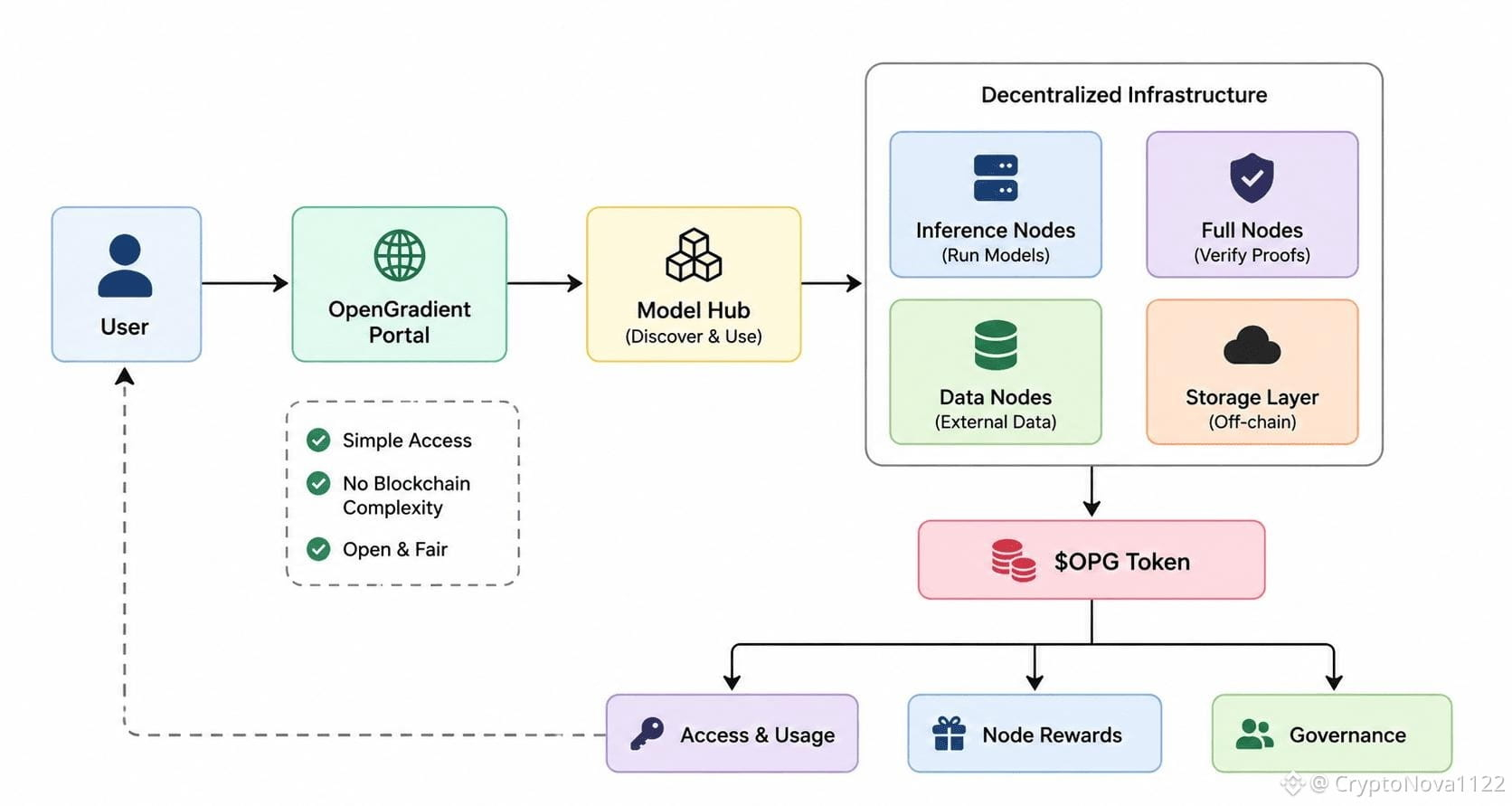
OpenGradientをしばらく追いかけていますが、私の関心を引き続けているのは誇大な宣伝ではなく、AIへのアクセスを簡単にする方法です。Model Hubでは、開発者がブロックチェーンを主役にせずにオープンソースのモデルを見つけて利用できます。ウェブポータルは、典型的なクリプトのインターフェースというより、本物のプロダクトのように感じられます。
また、そこにあるアーキテクチャも評価しています。推論ノードがモデルを実行し、フルノードが結果を検証し、データノードが外部情報を取り込み、ストレージはオフチェーンで扱われます。この分離によってネットワークはよりオープンに感じられ、特定の参加者に依存しにくくなっています。
そして、$OPG の役割も納得できます。目的のない追加トークンを増やすのではなく、アクセス、インセンティブ、ガバナンスを1つのエコシステムとして結び付けているからです。もちろん、長期的な成功は、採用状況、開発者の活動、そして実際の需要に左右されます。
私にとってOpenGradientは、AIを単に分散化しようとしているだけではありません。AIへのアクセスをデフォルトでオープンに感じさせようとしているのです。ビルダーたちが今後もそのアプローチを選び続けるかどうかが、本当の試金石になるでしょう。
#opg $OPG @OpenGradient
OpenGradientをしばらく追いかけていますが、私の関心を引き続けているのは誇大な宣伝ではなく、AIへのアクセスを簡単にする方法です。Model Hubでは、開発者がブロックチェーンを主役にせずにオープンソースのモデルを見つけて利用できます。ウェブポータルは、典型的なクリプトのインターフェースというより、本物のプロダクトのように感じられます。
また、そこにあるアーキテクチャも評価しています。推論ノードがモデルを実行し、フルノードが結果を検証し、データノードが外部情報を取り込み、ストレージはオフチェーンで扱われます。この分離によってネットワークはよりオープンに感じられ、特定の参加者に依存しにくくなっています。
そして、$OPG の役割も納得できます。目的のない追加トークンを増やすのではなく、アクセス、インセンティブ、ガバナンスを1つのエコシステムとして結び付けているからです。もちろん、長期的な成功は、採用状況、開発者の活動、そして実際の需要に左右されます。
私にとってOpenGradientは、AIを単に分散化しようとしているだけではありません。AIへのアクセスをデフォルトでオープンに感じさせようとしているのです。ビルダーたちが今後もそのアプローチを選び続けるかどうかが、本当の試金石になるでしょう。
#opg $OPG @OpenGradient
また、そこにあるアーキテクチャも評価しています。推論ノードがモデルを実行し、フルノードが結果を検証し、データノードが外部情報を取り込み、ストレージはオフチェーンで扱われます。この分離によってネットワークはよりオープンに感じられ、特定の参加者に依存しにくくなっています。
そして、$OPG の役割も納得できます。目的のない追加トークンを増やすのではなく、アクセス、インセンティブ、ガバナンスを1つのエコシステムとして結び付けているからです。もちろん、長期的な成功は、採用状況、開発者の活動、そして実際の需要に左右されます。
私にとってOpenGradientは、AIを単に分散化しようとしているだけではありません。AIへのアクセスをデフォルトでオープンに感じさせようとしているのです。ビルダーたちが今後もそのアプローチを選び続けるかどうかが、本当の試金石になるでしょう。
#opg $OPG @OpenGradient
4
2
120
サプライチェーンのオラクル統合で行き詰まった深夜のデバッグをしているうちに、あることに気づきました。MLモデルが出荷の異常を検知したのですが、どうやってその結論に至ったのかを確認する方法がありませんでした。出力はそこにあるのに、推論の根拠が見えないのです。
これは業界にとって、なかなか不思議な場所です。私たちは何年もかけて、盲目的な信頼を排除するための分散型システムを築いてきました。それなのに、多くの重要な業務フローでは、誰も独立して検証できないクローズドなAIモデルにまだ依存しています。
そこでOpenGradientが会話を変えます。
それは、証人が「発言」だけでなく、どのようにその結論に至ったのかを正確に示す検証可能な証拠まで必ず提示しなければならない法廷のようなものだと考えてください。検証可能な推論とは、AIの判断に暗号学的な証明を伴わせることで、単に結果を受け入れるのではなく、誰もが推論の内容を確認できるようにすることです。
たとえば保証請求のケースを考えてみましょう。現在は、AIが請求を承認するか否認するかを判断することがありますが、モデルを運用している企業がしばしば「プロセス」と「結果」も握っています。これでは明らかに信頼の問題が生じます。検証可能な推論では、すべての判断にそのロジックの背後にある数学的な証明が含まれます。モデルは事後にこっそり改変できず、ユーザーが検出なしに結果を操作することもできません。信頼は評判ではなく、検証から生まれます。
最大のハードルは、技術を作ることではありません。普及に足るだけの信頼を生み出すこと――つまり、いわゆる「鶏が先か卵が先か」という古典的な問題です。
本当のブレイクスルーは、トークンの投機で起こるものではないでしょう。人々の生活に影響するAI判断について、規制当局が透明な監査ログの提出を求め始めたときに起こります。その時点で、検証可能なAIは「面白いコンセプト」から「不可欠なインフラ」へと変わります。
@OpenGradient
#SKHynixADRListing $OPG #opg
サプライチェーンのオラクル統合で行き詰まった深夜のデバッグをしているうちに、あることに気づきました。MLモデルが出荷の異常を検知したのですが、どうやってその結論に至ったのかを確認する方法がありませんでした。出力はそこにあるのに、推論の根拠が見えないのです。
これは業界にとって、なかなか不思議な場所です。私たちは何年もかけて、盲目的な信頼を排除するための分散型システムを築いてきました。それなのに、多くの重要な業務フローでは、誰も独立して検証できないクローズドなAIモデルにまだ依存しています。
そこでOpenGradientが会話を変えます。
それは、証人が「発言」だけでなく、どのようにその結論に至ったのかを正確に示す検証可能な証拠まで必ず提示しなければならない法廷のようなものだと考えてください。検証可能な推論とは、AIの判断に暗号学的な証明を伴わせることで、単に結果を受け入れるのではなく、誰もが推論の内容を確認できるようにすることです。
たとえば保証請求のケースを考えてみましょう。現在は、AIが請求を承認するか否認するかを判断することがありますが、モデルを運用している企業がしばしば「プロセス」と「結果」も握っています。これでは明らかに信頼の問題が生じます。検証可能な推論では、すべての判断にそのロジックの背後にある数学的な証明が含まれます。モデルは事後にこっそり改変できず、ユーザーが検出なしに結果を操作することもできません。信頼は評判ではなく、検証から生まれます。
最大のハードルは、技術を作ることではありません。普及に足るだけの信頼を生み出すこと――つまり、いわゆる「鶏が先か卵が先か」という古典的な問題です。
本当のブレイクスルーは、トークンの投機で起こるものではないでしょう。人々の生活に影響するAI判断について、規制当局が透明な監査ログの提出を求め始めたときに起こります。その時点で、検証可能なAIは「面白いコンセプト」から「不可欠なインフラ」へと変わります。
@OpenGradient
#SKHynixADRListing $OPG #opg
これは業界にとって、なかなか不思議な場所です。私たちは何年もかけて、盲目的な信頼を排除するための分散型システムを築いてきました。それなのに、多くの重要な業務フローでは、誰も独立して検証できないクローズドなAIモデルにまだ依存しています。
そこでOpenGradientが会話を変えます。
それは、証人が「発言」だけでなく、どのようにその結論に至ったのかを正確に示す検証可能な証拠まで必ず提示しなければならない法廷のようなものだと考えてください。検証可能な推論とは、AIの判断に暗号学的な証明を伴わせることで、単に結果を受け入れるのではなく、誰もが推論の内容を確認できるようにすることです。
たとえば保証請求のケースを考えてみましょう。現在は、AIが請求を承認するか否認するかを判断することがありますが、モデルを運用している企業がしばしば「プロセス」と「結果」も握っています。これでは明らかに信頼の問題が生じます。検証可能な推論では、すべての判断にそのロジックの背後にある数学的な証明が含まれます。モデルは事後にこっそり改変できず、ユーザーが検出なしに結果を操作することもできません。信頼は評判ではなく、検証から生まれます。
最大のハードルは、技術を作ることではありません。普及に足るだけの信頼を生み出すこと――つまり、いわゆる「鶏が先か卵が先か」という古典的な問題です。
本当のブレイクスルーは、トークンの投機で起こるものではないでしょう。人々の生活に影響するAI判断について、規制当局が透明な監査ログの提出を求め始めたときに起こります。その時点で、検証可能なAIは「面白いコンセプト」から「不可欠なインフラ」へと変わります。
@OpenGradient
#SKHynixADRListing $OPG #opg
3
2
128
#opg $OPG @OpenGradient
オープンソースは始まりにすぎない
OpenGradientがBitQuantをオープンソース化する決断は、最初に見える以上に重要である可能性が高い出来事のひとつです。
明らかな要点は、AIエージェントが「私のポートフォリオを最適化して」や「私のエクスポージャーをヘッジして」といった指示を、検証可能なオンチェーンのアクションへと変換できるようになったことです。 しかし、より大きな物語は自動化ではありません——透明性です。
エージェント、プロンプトテンプレート、プロトコルコネクタをMITライセンスで公開することで、OpenGradientは多くのチームが避けがちな主張を行っています。つまり、AIが金融上の意思決定に影響を与えるのであれば、その推論が、誰も検査できないインターフェースの裏に隠れたままであるべきではない、ということです。
これは意味のある転換です。
AIが生成する出力がますます影響力を持つような世界では、システムがどのように動作するかを開発者やユーザーが確認できるようにすることは、そのシステムの性能それ自体と同じくらい重要になり得ます。
ですが、この議論にはもう一つの側面があります。
オープンソースが理解を自動的に生み出すわけではありません。
多くの人はコードを読みません。プロンプトのフローを監査する人はさらに少ないです。市場環境が変化する中で、エージェントの前提がまだ成り立っているかを検証する人は、さらに少数でしょう。
透明性は不透明さを減らしますが、複雑さをなくすわけではありません。
だからこそ、私が思う本当の課題は「進化すること」だと思います。
議論は「クローズドなシステムは信頼できるのか?」から「オープンなものに対して、どのように説明責任を作るのか?」へと移っているのです。コードへのアクセスは価値がありますが、意味のある信頼は、ユーザーがエンジニアや定量アナリストにならなくても、意思決定の背後にあるロジックを理解できるかどうかに最終的に左右されるのかもしれません。
AIネイティブな金融が成熟していくにつれ、成功するプロジェクトは、最も賢いエージェントを備えたものとは限らないでしょう。知性を「透明で、かつ理解可能なもの」にすることを両立できるプロジェクトが、そうした可能性を持ちます。
BitQuantは、その未来に向けた初期の一歩になり得ます。
もし金融インテリジェンスがますます自動化され、オープンになっていくなら、より重視されるべきは何でしょうか。コードへのアクセスか、それとも理解へのアクセスか。
$SPCXB
{spot}(SPCXBUSDT)
{future}(OPGUSDT)
$BTC
{future}(BTCUSDT)
#opg $OPG @OpenGradient
オープンソースは始まりにすぎない
OpenGradientがBitQuantをオープンソース化する決断は、最初に見える以上に重要である可能性が高い出来事のひとつです。
明らかな要点は、AIエージェントが「私のポートフォリオを最適化して」や「私のエクスポージャーをヘッジして」といった指示を、検証可能なオンチェーンのアクションへと変換できるようになったことです。 しかし、より大きな物語は自動化ではありません——透明性です。
エージェント、プロンプトテンプレート、プロトコルコネクタをMITライセンスで公開することで、OpenGradientは多くのチームが避けがちな主張を行っています。つまり、AIが金融上の意思決定に影響を与えるのであれば、その推論が、誰も検査できないインターフェースの裏に隠れたままであるべきではない、ということです。
これは意味のある転換です。
AIが生成する出力がますます影響力を持つような世界では、システムがどのように動作するかを開発者やユーザーが確認できるようにすることは、そのシステムの性能それ自体と同じくらい重要になり得ます。
ですが、この議論にはもう一つの側面があります。
オープンソースが理解を自動的に生み出すわけではありません。
多くの人はコードを読みません。プロンプトのフローを監査する人はさらに少ないです。市場環境が変化する中で、エージェントの前提がまだ成り立っているかを検証する人は、さらに少数でしょう。
透明性は不透明さを減らしますが、複雑さをなくすわけではありません。
だからこそ、私が思う本当の課題は「進化すること」だと思います。
議論は「クローズドなシステムは信頼できるのか?」から「オープンなものに対して、どのように説明責任を作るのか?」へと移っているのです。コードへのアクセスは価値がありますが、意味のある信頼は、ユーザーがエンジニアや定量アナリストにならなくても、意思決定の背後にあるロジックを理解できるかどうかに最終的に左右されるのかもしれません。
AIネイティブな金融が成熟していくにつれ、成功するプロジェクトは、最も賢いエージェントを備えたものとは限らないでしょう。知性を「透明で、かつ理解可能なもの」にすることを両立できるプロジェクトが、そうした可能性を持ちます。
BitQuantは、その未来に向けた初期の一歩になり得ます。
もし金融インテリジェンスがますます自動化され、オープンになっていくなら、より重視されるべきは何でしょうか。コードへのアクセスか、それとも理解へのアクセスか。
$SPCXB
$BTC
オープンソースは始まりにすぎない
OpenGradientがBitQuantをオープンソース化する決断は、最初に見える以上に重要である可能性が高い出来事のひとつです。
明らかな要点は、AIエージェントが「私のポートフォリオを最適化して」や「私のエクスポージャーをヘッジして」といった指示を、検証可能なオンチェーンのアクションへと変換できるようになったことです。 しかし、より大きな物語は自動化ではありません——透明性です。
エージェント、プロンプトテンプレート、プロトコルコネクタをMITライセンスで公開することで、OpenGradientは多くのチームが避けがちな主張を行っています。つまり、AIが金融上の意思決定に影響を与えるのであれば、その推論が、誰も検査できないインターフェースの裏に隠れたままであるべきではない、ということです。
これは意味のある転換です。
AIが生成する出力がますます影響力を持つような世界では、システムがどのように動作するかを開発者やユーザーが確認できるようにすることは、そのシステムの性能それ自体と同じくらい重要になり得ます。
ですが、この議論にはもう一つの側面があります。
オープンソースが理解を自動的に生み出すわけではありません。
多くの人はコードを読みません。プロンプトのフローを監査する人はさらに少ないです。市場環境が変化する中で、エージェントの前提がまだ成り立っているかを検証する人は、さらに少数でしょう。
透明性は不透明さを減らしますが、複雑さをなくすわけではありません。
だからこそ、私が思う本当の課題は「進化すること」だと思います。
議論は「クローズドなシステムは信頼できるのか?」から「オープンなものに対して、どのように説明責任を作るのか?」へと移っているのです。コードへのアクセスは価値がありますが、意味のある信頼は、ユーザーがエンジニアや定量アナリストにならなくても、意思決定の背後にあるロジックを理解できるかどうかに最終的に左右されるのかもしれません。
AIネイティブな金融が成熟していくにつれ、成功するプロジェクトは、最も賢いエージェントを備えたものとは限らないでしょう。知性を「透明で、かつ理解可能なもの」にすることを両立できるプロジェクトが、そうした可能性を持ちます。
BitQuantは、その未来に向けた初期の一歩になり得ます。
もし金融インテリジェンスがますます自動化され、オープンになっていくなら、より重視されるべきは何でしょうか。コードへのアクセスか、それとも理解へのアクセスか。
$SPCXB
$BTC
2
2
133
素晴らしい、AIとクリプトのプロダクトのたった一つ
素晴らしい、AIとクリプトのプロダクトのたった一つ

Baby_Crypto
·
--
ここ数年、AIが進化するのを見ていて遅ればせながら気づいたことが一つある。それは、人々が信頼できるシステムを求めていると言う一方で、ほとんど理解していないものを信頼していることが多いということだ。
私たちはランキングの決定方法を知らずに検索エンジンを信頼する。AIがどのように結論を出しているのかを見ずに信頼する。インターネットでは、信頼は理解から築かれることは稀で、むしろ便利さから生まれることが多い。
それは興味深い矛盾を生む。
AIがより能力を持つようになるにつれて、ユーザーと出力の背後にあるプロセスとの距離はますます広がっていく。私たちはより早く答えを受け取るが、その答えがどのように形成されたかを理解することからは遠ざかってしまう。
それが私にとってOpenGradientを興味深いものにしている。
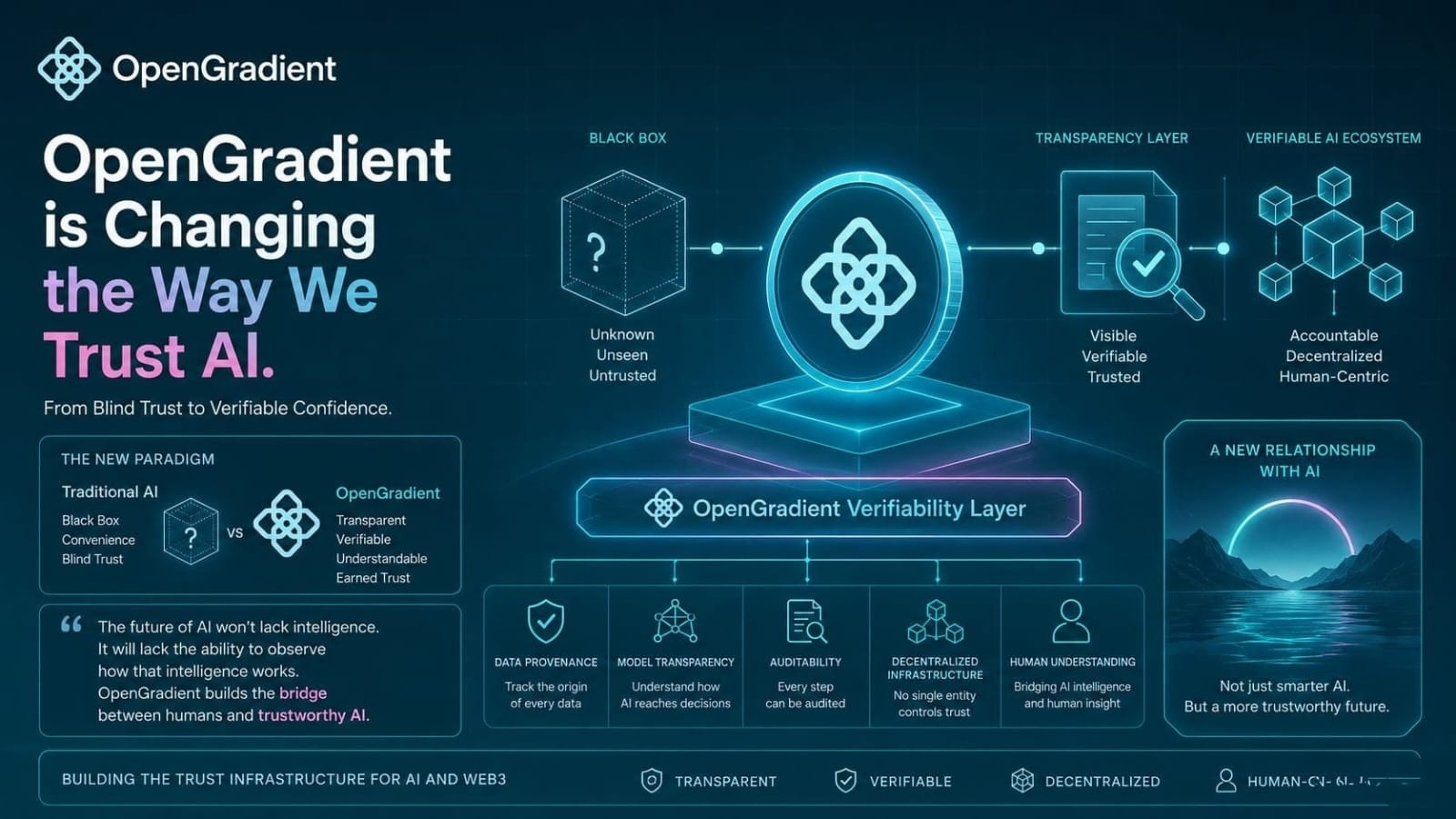
通常のAIやWeb3のストーリーを超えて見ると、より大きなアイデアは知性そのものではないかもしれない。OpenGradientは、未来のAIシステムが能力不足に苦しむのではなく、可視性の欠如に苦しむというアイデアを探求しているようだ。
そして、そこにシフトが起こる。
インターネットは情報の配信を最適化した。AIは結論の配信をますます最適化している。結論にアクセスしやすくなるにつれて、リアルな質問はもはやAIが賢い答えを出すかどうかではなく、人間がそれを信頼する理由を理解できるかどうかになってくるかもしれない。
私の視点から見ると、これは@OpenGradient が静かに探求しているもっと重要な質問の一つのように感じる。それはAI自体を変えることなく、AI主導の世界における人間と信頼の関係を再形成することによってだ。
#opg $OPG
私たちはランキングの決定方法を知らずに検索エンジンを信頼する。AIがどのように結論を出しているのかを見ずに信頼する。インターネットでは、信頼は理解から築かれることは稀で、むしろ便利さから生まれることが多い。
それは興味深い矛盾を生む。
AIがより能力を持つようになるにつれて、ユーザーと出力の背後にあるプロセスとの距離はますます広がっていく。私たちはより早く答えを受け取るが、その答えがどのように形成されたかを理解することからは遠ざかってしまう。
それが私にとってOpenGradientを興味深いものにしている。
通常のAIやWeb3のストーリーを超えて見ると、より大きなアイデアは知性そのものではないかもしれない。OpenGradientは、未来のAIシステムが能力不足に苦しむのではなく、可視性の欠如に苦しむというアイデアを探求しているようだ。
そして、そこにシフトが起こる。
インターネットは情報の配信を最適化した。AIは結論の配信をますます最適化している。結論にアクセスしやすくなるにつれて、リアルな質問はもはやAIが賢い答えを出すかどうかではなく、人間がそれを信頼する理由を理解できるかどうかになってくるかもしれない。
私の視点から見ると、これは@OpenGradient が静かに探求しているもっと重要な質問の一つのように感じる。それはAI自体を変えることなく、AI主導の世界における人間と信頼の関係を再形成することによってだ。
#opg $OPG
1
21
素晴らしいプロジェクト
素晴らしいプロジェクト


Bit_Rase
·
--
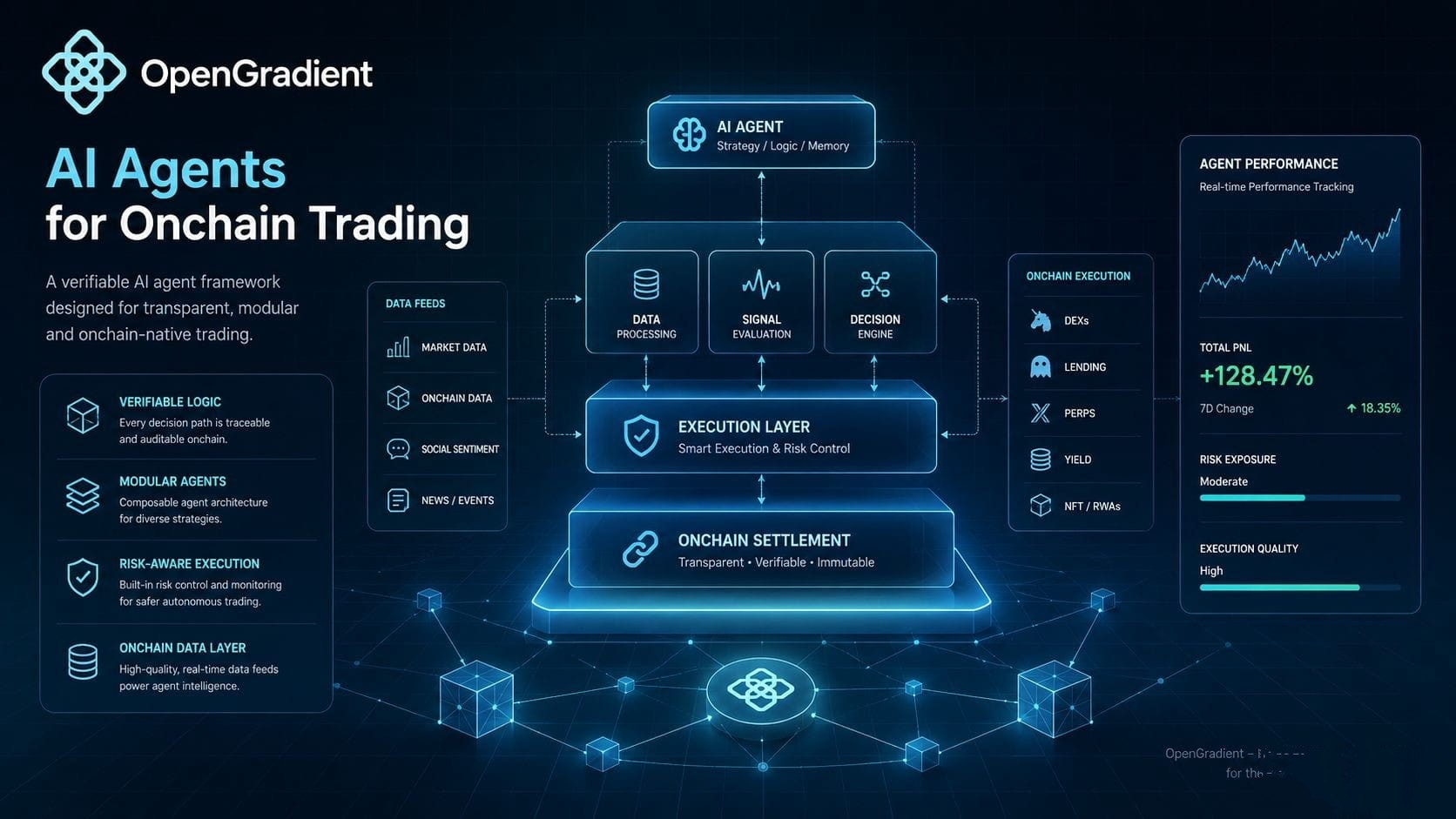
私は少し遅れて、AIが暗号通貨において本当に重要な質問は、エージェントがどれだけ賢くなるかではなく、決定と実行が直接オンチェーンで行われた際に誰が最終的に責任を負うのかということに気付き始めました。
しばらくの間、市場はより速く取引し、より多くのデータを分析し、リターンを最適化できるエージェントの構築に集中しているようでした。しかし、もっと興味深い層は能力ではなく、インセンティブです。自動化が決定と行動の距離を縮めると、ノイズや複雑さが増すようです。
その物語は最初は魅力的に聞こえます。しかし、エージェントが単なるリスクを隠す抽象化レイヤーになってしまったら、実際にはほとんど何も変わりません。課題は実行速度ではなく、どのシグナルが意味があり、どの行動が信頼に値するかを知ることです。
それが私がOpenGradientに注目した理由の一部です。オンチェーンで動作するAIトレーダーのアイデアではなく、そのフレーミングが異なるように見えるからです — エージェントをその状態、データソース、および運用ロジックを露出させて検証できるものとして扱うことです。
それでも、ユーザーが透明性を生のパフォーマンスよりも重視する場合にのみ重要です。市場が便利さと確認をトレードする準備ができているとは思えません。
そして、もしかしたら、より深い質問はAIがトレーダーを置き換えるかどうかではなく、私たちが完全には理解していないシステムに信頼を置くことに慣れているかどうかです。
#opg $OPG @OpenGradient
しばらくの間、市場はより速く取引し、より多くのデータを分析し、リターンを最適化できるエージェントの構築に集中しているようでした。しかし、もっと興味深い層は能力ではなく、インセンティブです。自動化が決定と行動の距離を縮めると、ノイズや複雑さが増すようです。
その物語は最初は魅力的に聞こえます。しかし、エージェントが単なるリスクを隠す抽象化レイヤーになってしまったら、実際にはほとんど何も変わりません。課題は実行速度ではなく、どのシグナルが意味があり、どの行動が信頼に値するかを知ることです。
それが私がOpenGradientに注目した理由の一部です。オンチェーンで動作するAIトレーダーのアイデアではなく、そのフレーミングが異なるように見えるからです — エージェントをその状態、データソース、および運用ロジックを露出させて検証できるものとして扱うことです。
それでも、ユーザーが透明性を生のパフォーマンスよりも重視する場合にのみ重要です。市場が便利さと確認をトレードする準備ができているとは思えません。
そして、もしかしたら、より深い質問はAIがトレーダーを置き換えるかどうかではなく、私たちが完全には理解していないシステムに信頼を置くことに慣れているかどうかです。
#opg $OPG @OpenGradient
1
42
$HYPE 強さを構築しているように見える
私は$HYPE を綿密に観察しており、最近の押し戻しがあったにもかかわらず、全体の構造は依然として健全に見えます。
価格は重要なサポート領域の上で維持され続けており、買い手が自分のポジションを守っていることを示唆しています。投げ売りに走るのではなく、いまは調整(コンソリデーション)の局面が見られており、次の動きが始まるのはまさにこの局面であることが多いです。
もし$HYPE が強い出来高を伴って$70の水準を取り戻すことができれば、より高い目標へ向けた道筋が素早く開ける可能性があります。それまでは、落ち着いて待ち、確認を取るほうが賢明なアプローチに思えます。
エントリーゾーン:$66.00 - $68.00
TP1:$72.00
TP2:$76.00
TP3:$80.00
損切り:$62.00
良いトレードは、あらゆるローソク足を追いかけることではなく、規律から生まれます。リスク管理こそが、どんなセットアップでも最も重要な部分です。
#HYPE #CryptoTrading #Altcoins #BinanceSquare #DYOR
$HYPE 強さを構築しているように見える
私は$HYPE を綿密に観察しており、最近の押し戻しがあったにもかかわらず、全体の構造は依然として健全に見えます。
価格は重要なサポート領域の上で維持され続けており、買い手が自分のポジションを守っていることを示唆しています。投げ売りに走るのではなく、いまは調整(コンソリデーション)の局面が見られており、次の動きが始まるのはまさにこの局面であることが多いです。
もし$HYPE が強い出来高を伴って$70の水準を取り戻すことができれば、より高い目標へ向けた道筋が素早く開ける可能性があります。それまでは、落ち着いて待ち、確認を取るほうが賢明なアプローチに思えます。
エントリーゾーン:$66.00 - $68.00
TP1:$72.00
TP2:$76.00
TP3:$80.00
損切り:$62.00
良いトレードは、あらゆるローソク足を追いかけることではなく、規律から生まれます。リスク管理こそが、どんなセットアップでも最も重要な部分です。
#HYPE #CryptoTrading #Altcoins #BinanceSquare #DYOR
私は$HYPE を綿密に観察しており、最近の押し戻しがあったにもかかわらず、全体の構造は依然として健全に見えます。
価格は重要なサポート領域の上で維持され続けており、買い手が自分のポジションを守っていることを示唆しています。投げ売りに走るのではなく、いまは調整(コンソリデーション)の局面が見られており、次の動きが始まるのはまさにこの局面であることが多いです。
もし$HYPE が強い出来高を伴って$70の水準を取り戻すことができれば、より高い目標へ向けた道筋が素早く開ける可能性があります。それまでは、落ち着いて待ち、確認を取るほうが賢明なアプローチに思えます。
エントリーゾーン:$66.00 - $68.00
TP1:$72.00
TP2:$76.00
TP3:$80.00
損切り:$62.00
良いトレードは、あらゆるローソク足を追いかけることではなく、規律から生まれます。リスク管理こそが、どんなセットアップでも最も重要な部分です。
#HYPE #CryptoTrading #Altcoins #BinanceSquare #DYOR
88
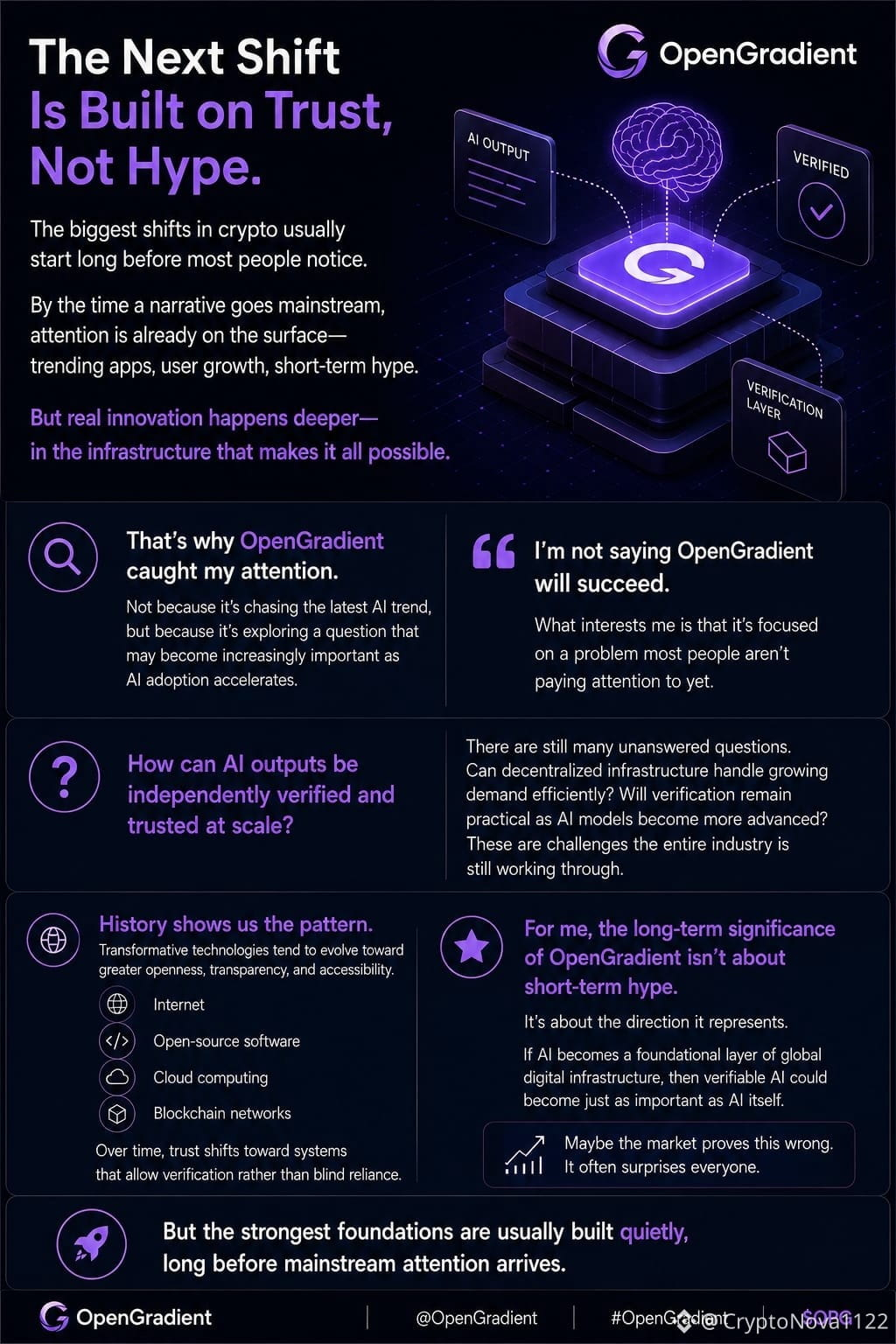
私が複数の暗号資産の相場サイクルを経験して学んだことのひとつは、最も重要な変化は、多くの人が気づくずっと前から始まっていることが多いという点です。
ある物語が主流になるころには、注目は通常、目に見える層――新しいアプリ、ユーザーの成長、バイラルなプロダクト、短期的なトレンド――に向けられています。一方で、本当のイノベーションは、インフラのはるか深いところで進んでいることが少なくありません。
そうした理由で、OpenGradientに惹かれました。最新のAIトレンドを追いかけているからではなく、AIの導入が加速するにつれて、ますます重要になり得る問いを探っているからです。
私はOpenGradientが成功すると言っているわけではありません。興味があるのは、多くの人がまだ注目していない課題に焦点を当てている点です。
AIの出力を、大規模にどのように独立して検証し、信頼できるものにできるのでしょうか?
まだ多くの未解決の質問があります。分散型インフラは、増え続ける需要を効率的に受け止められるのでしょうか?AIモデルがより高度になるにつれて、検証は実用性を保てるのでしょうか?これらの課題は、業界全体が現在進行形で取り組んでいるものです。
歴史は、変革をもたらす技術が、より大きなオープン性、透明性、そしてアクセスしやすさへと進化していく傾向を示してきました。インターネット、オープンソースのソフトウェア、クラウドコンピューティング、そしてブロックチェーン・ネットワークにおいてもそれが見られました。時間が経つにつれて、信頼は「検証可能な仕組み」へと移っていき、盲目的な依存ではなくなることが多いのです。
私にとってOpenGradientの長期的な重要性は、短期的なバズ(誇大広告や流行)にあるのではありません。それが示している方向性にこそあります。AIがグローバルなデジタル・インフラの基盤レイヤーになるなら、検証可能なAIは、AIそのものと同じくらい重要になり得るのです。
もしかすると市場は、この見方を覆すかもしれません。市場はいつも、皆を驚かせます。
しかし、最も強い土台は、主流の注目が集まるずっと前に、静かに築かれることが多いのです。
@OpenGradient #opg $OPG
私が複数の暗号資産の相場サイクルを経験して学んだことのひとつは、最も重要な変化は、多くの人が気づくずっと前から始まっていることが多いという点です。
ある物語が主流になるころには、注目は通常、目に見える層――新しいアプリ、ユーザーの成長、バイラルなプロダクト、短期的なトレンド――に向けられています。一方で、本当のイノベーションは、インフラのはるか深いところで進んでいることが少なくありません。
そうした理由で、OpenGradientに惹かれました。最新のAIトレンドを追いかけているからではなく、AIの導入が加速するにつれて、ますます重要になり得る問いを探っているからです。
私はOpenGradientが成功すると言っているわけではありません。興味があるのは、多くの人がまだ注目していない課題に焦点を当てている点です。
AIの出力を、大規模にどのように独立して検証し、信頼できるものにできるのでしょうか?
まだ多くの未解決の質問があります。分散型インフラは、増え続ける需要を効率的に受け止められるのでしょうか?AIモデルがより高度になるにつれて、検証は実用性を保てるのでしょうか?これらの課題は、業界全体が現在進行形で取り組んでいるものです。
歴史は、変革をもたらす技術が、より大きなオープン性、透明性、そしてアクセスしやすさへと進化していく傾向を示してきました。インターネット、オープンソースのソフトウェア、クラウドコンピューティング、そしてブロックチェーン・ネットワークにおいてもそれが見られました。時間が経つにつれて、信頼は「検証可能な仕組み」へと移っていき、盲目的な依存ではなくなることが多いのです。
私にとってOpenGradientの長期的な重要性は、短期的なバズ(誇大広告や流行)にあるのではありません。それが示している方向性にこそあります。AIがグローバルなデジタル・インフラの基盤レイヤーになるなら、検証可能なAIは、AIそのものと同じくらい重要になり得るのです。
もしかすると市場は、この見方を覆すかもしれません。市場はいつも、皆を驚かせます。
しかし、最も強い土台は、主流の注目が集まるずっと前に、静かに築かれることが多いのです。
@OpenGradient #opg $OPG
ある物語が主流になるころには、注目は通常、目に見える層――新しいアプリ、ユーザーの成長、バイラルなプロダクト、短期的なトレンド――に向けられています。一方で、本当のイノベーションは、インフラのはるか深いところで進んでいることが少なくありません。
そうした理由で、OpenGradientに惹かれました。最新のAIトレンドを追いかけているからではなく、AIの導入が加速するにつれて、ますます重要になり得る問いを探っているからです。
私はOpenGradientが成功すると言っているわけではありません。興味があるのは、多くの人がまだ注目していない課題に焦点を当てている点です。
AIの出力を、大規模にどのように独立して検証し、信頼できるものにできるのでしょうか?
まだ多くの未解決の質問があります。分散型インフラは、増え続ける需要を効率的に受け止められるのでしょうか?AIモデルがより高度になるにつれて、検証は実用性を保てるのでしょうか?これらの課題は、業界全体が現在進行形で取り組んでいるものです。
歴史は、変革をもたらす技術が、より大きなオープン性、透明性、そしてアクセスしやすさへと進化していく傾向を示してきました。インターネット、オープンソースのソフトウェア、クラウドコンピューティング、そしてブロックチェーン・ネットワークにおいてもそれが見られました。時間が経つにつれて、信頼は「検証可能な仕組み」へと移っていき、盲目的な依存ではなくなることが多いのです。
私にとってOpenGradientの長期的な重要性は、短期的なバズ(誇大広告や流行)にあるのではありません。それが示している方向性にこそあります。AIがグローバルなデジタル・インフラの基盤レイヤーになるなら、検証可能なAIは、AIそのものと同じくらい重要になり得るのです。
もしかすると市場は、この見方を覆すかもしれません。市場はいつも、皆を驚かせます。
しかし、最も強い土台は、主流の注目が集まるずっと前に、静かに築かれることが多いのです。
@OpenGradient #opg $OPG
56
$ETH / USDT
イーサリアムは$1,700ゾーンからの強い反発の後、重要なサポートラインを維持しています。価格は$1,737付近でコンソリデーションを行っており、バイヤーがモメンタムを維持できれば、$ETH は最近の高値に向けてもう一度動きを試みる可能性があります。ボリュームはほどほどなので、ブレイクアウトを追いかける前に確認を待つべきです。
トレーディングセットアップ: エントリー: $1,730 - $1,740
TP1: $1,760
TP2: $1,790
ストップロス: $1,710
レジスタンスをクリーンにブレイクすれば、さらなる上昇を促す可能性がありますが、ポジションサイズをきちんと管理することが重要です。
市場はボラタイルなので、自分のリスクを管理する必要があります。
#TrumpSeeks20%MiddleEastOilRevenue
$ETH / USDT
イーサリアムは$1,700ゾーンからの強い反発の後、重要なサポートラインを維持しています。価格は$1,737付近でコンソリデーションを行っており、バイヤーがモメンタムを維持できれば、$ETH は最近の高値に向けてもう一度動きを試みる可能性があります。ボリュームはほどほどなので、ブレイクアウトを追いかける前に確認を待つべきです。
トレーディングセットアップ: エントリー: $1,730 - $1,740
TP1: $1,760
TP2: $1,790
ストップロス: $1,710
レジスタンスをクリーンにブレイクすれば、さらなる上昇を促す可能性がありますが、ポジションサイズをきちんと管理することが重要です。
市場はボラタイルなので、自分のリスクを管理する必要があります。
#TrumpSeeks20%MiddleEastOilRevenue
イーサリアムは$1,700ゾーンからの強い反発の後、重要なサポートラインを維持しています。価格は$1,737付近でコンソリデーションを行っており、バイヤーがモメンタムを維持できれば、$ETH は最近の高値に向けてもう一度動きを試みる可能性があります。ボリュームはほどほどなので、ブレイクアウトを追いかける前に確認を待つべきです。
トレーディングセットアップ: エントリー: $1,730 - $1,740
TP1: $1,760
TP2: $1,790
ストップロス: $1,710
レジスタンスをクリーンにブレイクすれば、さらなる上昇を促す可能性がありますが、ポジションサイズをきちんと管理することが重要です。
市場はボラタイルなので、自分のリスクを管理する必要があります。
#TrumpSeeks20%MiddleEastOilRevenue
1
75
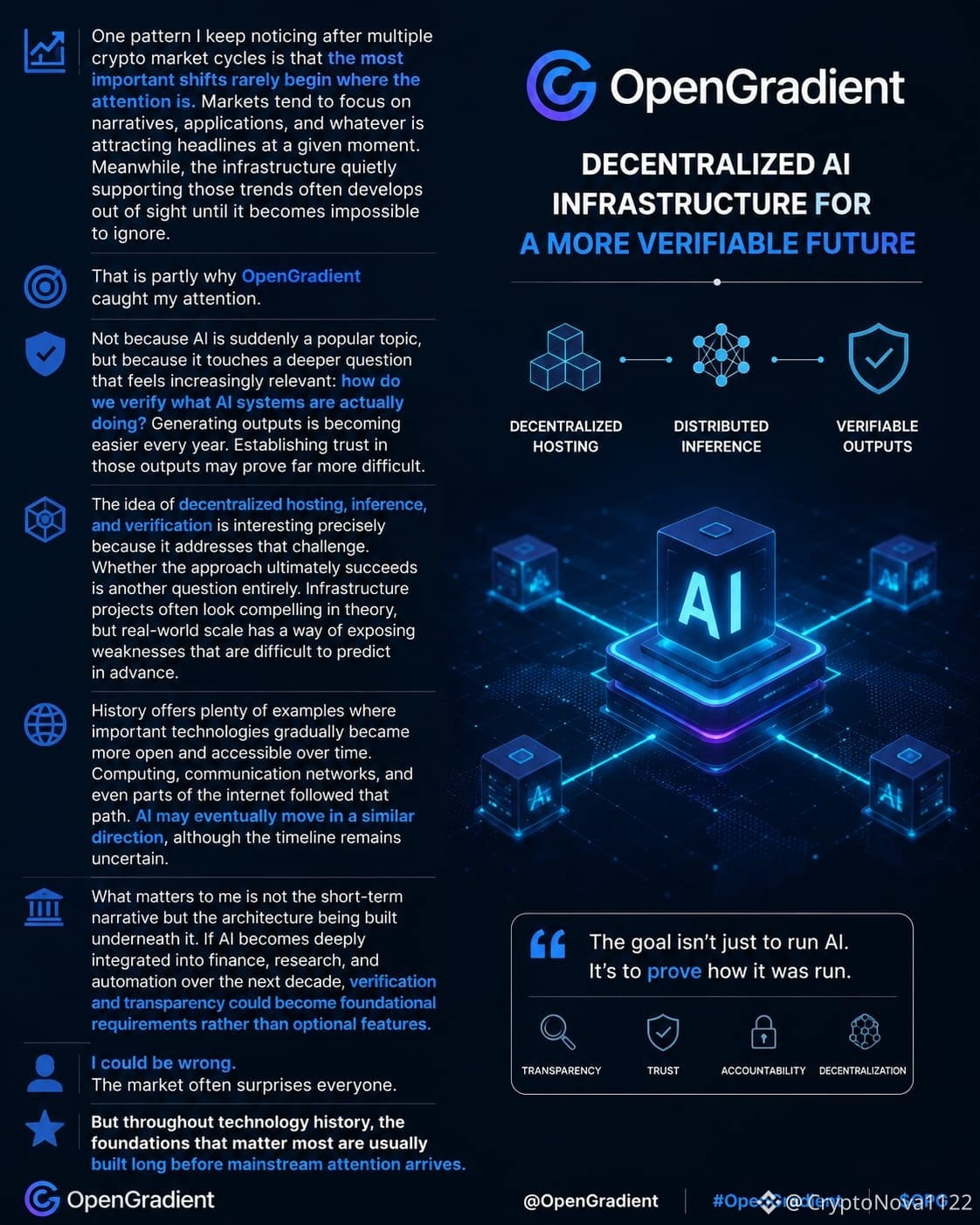
私が複数回の暗号資産市場サイクルを通じて繰り返し気づき続けているのは、最も重要な変化は、その注目が集まる場所から始まることがまれだという点です。市場は、当時の関心を引くもの、すなわちナラティブ(物語)、アプリケーション、そしてその瞬間に見出しを飾っているものに焦点を当てがちです。一方で、それらのトレンドを静かに支えるインフラは、無視できなくなるまで、目に見えないところで発展していくことが多いのです。
それでOpenGradientに注目したのだと思います。
AIが突然ブームになったからではありません。むしろ、ますます切実になっている、より深い問いに触れているからです――「AIシステムが実際に何をしているのか」を、私たちはどのように検証できるのか? 生成される出力は年々ますます簡単になっています。とはいえ、その出力への信頼を確立することは、はるかに難しくなるかもしれません。
分散型のホスティング、推論(インファレンス)、および検証という発想が興味深いのは、まさにこの課題に取り組んでいるからです。最終的にそのアプローチが成功するかどうかは別の問題ですが。
インフラ系のプロジェクトは、理論上は説得力があるように見えることがよくあります。しかし現実の規模感は、事前に予測しにくい弱点をあらわにする力を持っています。
歴史には、重要な技術が時間とともに徐々により開かれ、より利用しやすくなっていった例が数多くあります。コンピューティング、通信ネットワーク、そしてインターネットの一部まで、その道をたどりました。AIも、同様の方向へ進むかもしれませんが、タイムラインは依然として不確かです。
私にとって重要なのは、短期的なナラティブではなく、その下で構築されているアーキテクチャです。今後10年でAIが金融、研究、そして自動化に深く統合されるなら、検証や透明性は「任意の機能」ではなく「土台となる必須要件」になっていく可能性があります。
私の考えは間違っているかもしれません。市場はいつも皆を驚かせます。
しかし技術の歴史を通して見れば、最も重要な土台は、多くの場合、主流の注目が到来するずっと前に築かれています。
@OpenGradient #opg $OPG
私が複数回の暗号資産市場サイクルを通じて繰り返し気づき続けているのは、最も重要な変化は、その注目が集まる場所から始まることがまれだという点です。市場は、当時の関心を引くもの、すなわちナラティブ(物語)、アプリケーション、そしてその瞬間に見出しを飾っているものに焦点を当てがちです。一方で、それらのトレンドを静かに支えるインフラは、無視できなくなるまで、目に見えないところで発展していくことが多いのです。
それでOpenGradientに注目したのだと思います。
AIが突然ブームになったからではありません。むしろ、ますます切実になっている、より深い問いに触れているからです――「AIシステムが実際に何をしているのか」を、私たちはどのように検証できるのか? 生成される出力は年々ますます簡単になっています。とはいえ、その出力への信頼を確立することは、はるかに難しくなるかもしれません。
分散型のホスティング、推論(インファレンス)、および検証という発想が興味深いのは、まさにこの課題に取り組んでいるからです。最終的にそのアプローチが成功するかどうかは別の問題ですが。
インフラ系のプロジェクトは、理論上は説得力があるように見えることがよくあります。しかし現実の規模感は、事前に予測しにくい弱点をあらわにする力を持っています。
歴史には、重要な技術が時間とともに徐々により開かれ、より利用しやすくなっていった例が数多くあります。コンピューティング、通信ネットワーク、そしてインターネットの一部まで、その道をたどりました。AIも、同様の方向へ進むかもしれませんが、タイムラインは依然として不確かです。
私にとって重要なのは、短期的なナラティブではなく、その下で構築されているアーキテクチャです。今後10年でAIが金融、研究、そして自動化に深く統合されるなら、検証や透明性は「任意の機能」ではなく「土台となる必須要件」になっていく可能性があります。
私の考えは間違っているかもしれません。市場はいつも皆を驚かせます。
しかし技術の歴史を通して見れば、最も重要な土台は、多くの場合、主流の注目が到来するずっと前に築かれています。
@OpenGradient #opg $OPG
それでOpenGradientに注目したのだと思います。
AIが突然ブームになったからではありません。むしろ、ますます切実になっている、より深い問いに触れているからです――「AIシステムが実際に何をしているのか」を、私たちはどのように検証できるのか? 生成される出力は年々ますます簡単になっています。とはいえ、その出力への信頼を確立することは、はるかに難しくなるかもしれません。
分散型のホスティング、推論(インファレンス)、および検証という発想が興味深いのは、まさにこの課題に取り組んでいるからです。最終的にそのアプローチが成功するかどうかは別の問題ですが。
インフラ系のプロジェクトは、理論上は説得力があるように見えることがよくあります。しかし現実の規模感は、事前に予測しにくい弱点をあらわにする力を持っています。
歴史には、重要な技術が時間とともに徐々により開かれ、より利用しやすくなっていった例が数多くあります。コンピューティング、通信ネットワーク、そしてインターネットの一部まで、その道をたどりました。AIも、同様の方向へ進むかもしれませんが、タイムラインは依然として不確かです。
私にとって重要なのは、短期的なナラティブではなく、その下で構築されているアーキテクチャです。今後10年でAIが金融、研究、そして自動化に深く統合されるなら、検証や透明性は「任意の機能」ではなく「土台となる必須要件」になっていく可能性があります。
私の考えは間違っているかもしれません。市場はいつも皆を驚かせます。
しかし技術の歴史を通して見れば、最も重要な土台は、多くの場合、主流の注目が到来するずっと前に築かれています。
@OpenGradient #opg $OPG
105
素晴らしいプロジェクトだ、この仲間に加わろう 👌
素晴らしいプロジェクトだ、この仲間に加わろう 👌
Baby_Crypto
·
--
過去において、技術は説得力のあるストーリーを語ることで信頼を得ていた — それがどのように機能し、どのように構築され、なぜ信頼できるのかを説明していた。人々はしばしば、その結果を経験する前に説明を受け入れていた。
AIは違った感触を持っている。
今や、出力が先に届き、その後に説明が続くことが多く、その説明が以前ほどの影響力を持たなくなることもある。
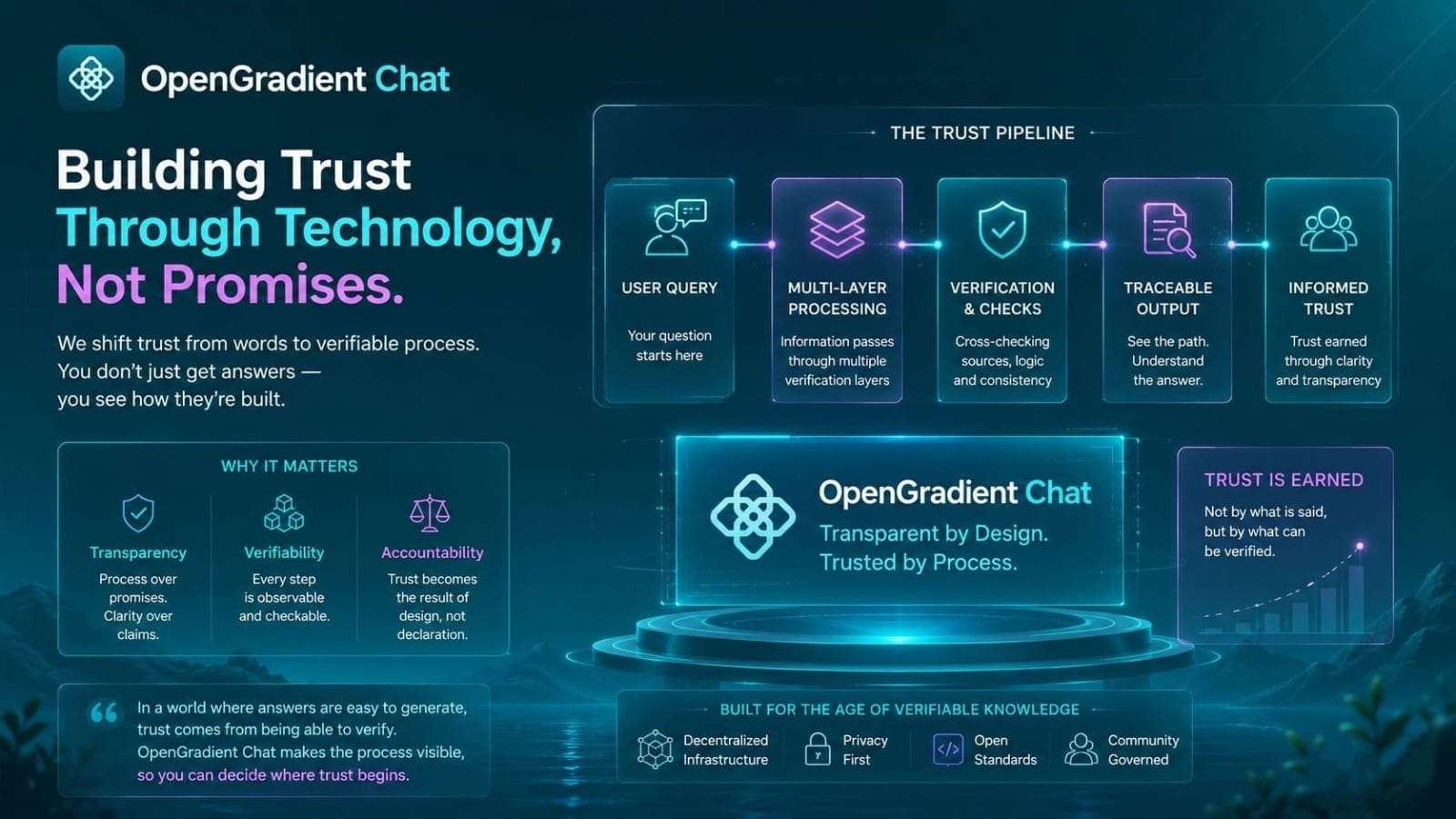
それが私にとってOpenGradient Chatが目立つ理由だった。
ユーザーに「システムが機能する」から単に答えを信じるように求めるのではなく、答えの背後にあるプロセスに信頼を移すように見える。信頼は主張に基づく信念から、情報がどのように動き、処理され、検証されるかを観察することによって築かれる自信へとシフトしている。信頼は物語ではなく、システムデザインの特性となる。
リクエストが複数の処理層を通過する際、ユーザーは最終的な応答だけを受け取るのではなく、その応答がどのように生成されたかの一部を可視化することができる。これは必ずしもシステムを簡単にするわけではないが、説明を通じてではなく、アーキテクチャを通じての透明性という別の形を導入する。
一歩引いて見ると、これはAIだけの問題ではないように思える。知識の複雑さが人間が直感で快適に検証できる範囲を超えたときに現れるようだ。
OpenGradient Chatは、このような環境において、目標はすべてを説明しやすくすることではなく、ユーザーが自分で信頼を判断できるように結果の生成を十分に透明にすることだという前提で動いているようだ。
そのモデルでは懐疑心は消えず、ただ移動するだけだ。そして、より興味深い質問は、技術が信頼を生み出せるかどうかではなく、人々が完全には理解できなくなった時点で何を信頼するかを決めるのはいつなのかということかもしれない。
#opg $OPG @OpenGradient
AIは違った感触を持っている。
今や、出力が先に届き、その後に説明が続くことが多く、その説明が以前ほどの影響力を持たなくなることもある。
それが私にとってOpenGradient Chatが目立つ理由だった。
ユーザーに「システムが機能する」から単に答えを信じるように求めるのではなく、答えの背後にあるプロセスに信頼を移すように見える。信頼は主張に基づく信念から、情報がどのように動き、処理され、検証されるかを観察することによって築かれる自信へとシフトしている。信頼は物語ではなく、システムデザインの特性となる。
リクエストが複数の処理層を通過する際、ユーザーは最終的な応答だけを受け取るのではなく、その応答がどのように生成されたかの一部を可視化することができる。これは必ずしもシステムを簡単にするわけではないが、説明を通じてではなく、アーキテクチャを通じての透明性という別の形を導入する。
一歩引いて見ると、これはAIだけの問題ではないように思える。知識の複雑さが人間が直感で快適に検証できる範囲を超えたときに現れるようだ。
OpenGradient Chatは、このような環境において、目標はすべてを説明しやすくすることではなく、ユーザーが自分で信頼を判断できるように結果の生成を十分に透明にすることだという前提で動いているようだ。
そのモデルでは懐疑心は消えず、ただ移動するだけだ。そして、より興味深い質問は、技術が信頼を生み出せるかどうかではなく、人々が完全には理解できなくなった時点で何を信頼するかを決めるのはいつなのかということかもしれない。
#opg $OPG @OpenGradient
4
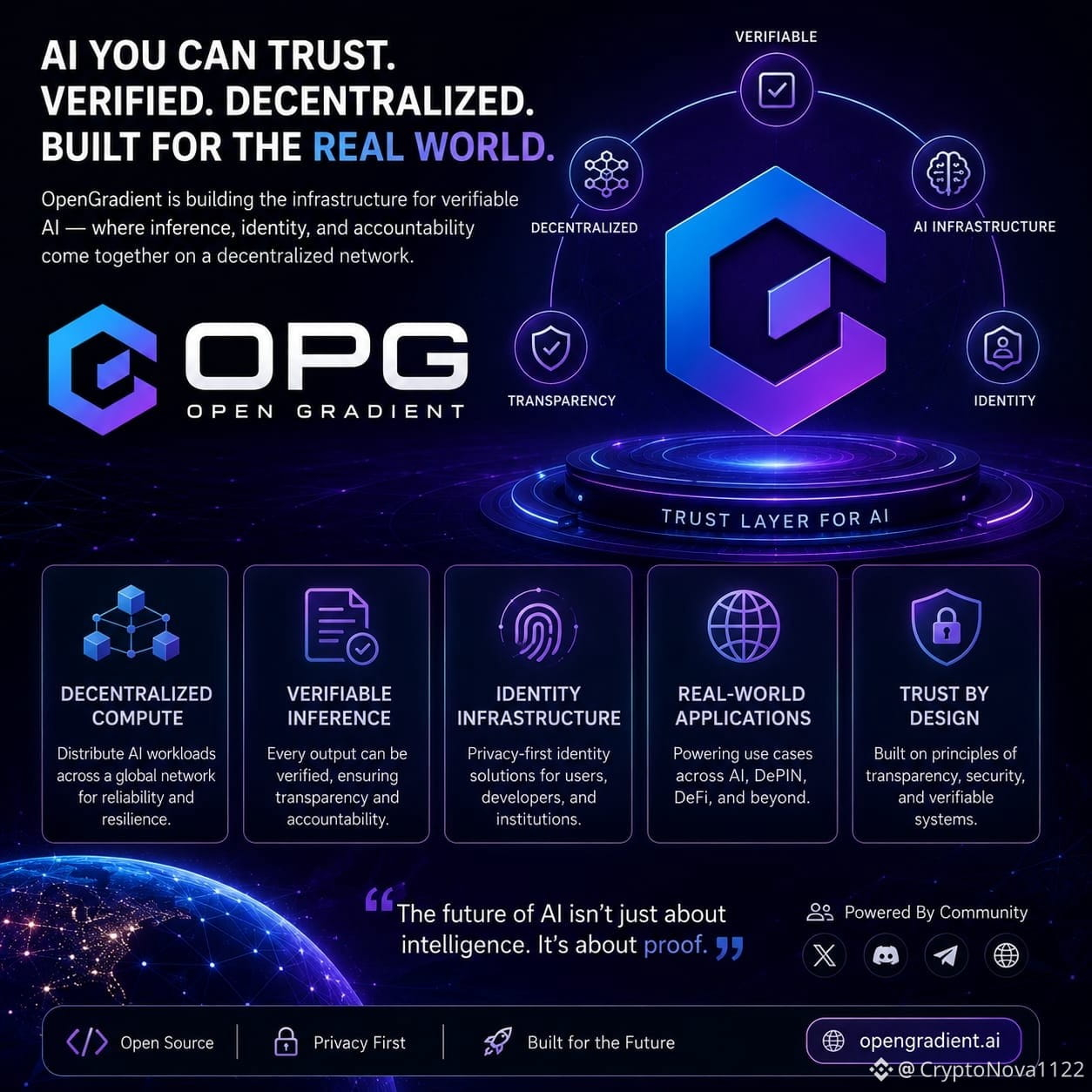
以前は、ほとんどの暗号プロジェクトが同じ方程式に従っていると思っていました。つまり、強いナラティブを作り、注目を集め、ユーティリティは後から来ることを期待する、というものです。そのため、私は「プロジェクトが実際に何を構築しているのか」よりも、チャート、市場心理、値動きばかりを見て過ごしていました。
その見方は、OpenGradientについてもっと学んでから変わり始めました。
私の注意を引いたのは、大きなリターンの約束でも最新のトレンドでもありませんでした。注目したのは、検証可能なAIシステム、アイデンティティ基盤、そして、現実世界のアプリケーションを支えられる可能性のある技術を作ること、といった点です。調べるほど、それは単に興奮を生み出すことではなく、実際的な課題を解決しようとする試みに見えてきました。
この取り組みが違って感じられたのは、信頼への重点でした。暗号の世界では何年もかけて、透明性や検証について語ってきました。OpenGradientは、その同じ原則をAIにどう適用できるのかを探っているようです。人々が、答えをそのまま受け入れるのではなく、出力がどのように生成されたのかの証明を、将来的に求めるかもしれない領域です。
とはいえ、私はまだ疑問があります。
分散型のAIインフラは、高度に集中化されたシステムと比べて、速度や効率で競争できるのでしょうか? また、ユーザーは検証を十分に重視して、習慣を変えるのでしょうか? そして、法的枠組み、プライバシーへの懸念、規制は、時間の経過とともに導入にどのように影響するのでしょうか?
現時点では答えを持っていません。
ただ、この経験から分かったのは、見出しや第一印象の向こう側を見ることがどれほど重要かということです。どのプロジェクトにも、私たちがそれについてどう考えるかを決める前に、より深い調査が必要です。
私の最大の学びは、成長は好奇心を保ち、学び続け、機会とリスクの両方を意識しながらオープンな姿勢を維持するところから生まれる、ということです。
#OPG #opg $OPG @OpenGradient
以前は、ほとんどの暗号プロジェクトが同じ方程式に従っていると思っていました。つまり、強いナラティブを作り、注目を集め、ユーティリティは後から来ることを期待する、というものです。そのため、私は「プロジェクトが実際に何を構築しているのか」よりも、チャート、市場心理、値動きばかりを見て過ごしていました。
その見方は、OpenGradientについてもっと学んでから変わり始めました。
私の注意を引いたのは、大きなリターンの約束でも最新のトレンドでもありませんでした。注目したのは、検証可能なAIシステム、アイデンティティ基盤、そして、現実世界のアプリケーションを支えられる可能性のある技術を作ること、といった点です。調べるほど、それは単に興奮を生み出すことではなく、実際的な課題を解決しようとする試みに見えてきました。
この取り組みが違って感じられたのは、信頼への重点でした。暗号の世界では何年もかけて、透明性や検証について語ってきました。OpenGradientは、その同じ原則をAIにどう適用できるのかを探っているようです。人々が、答えをそのまま受け入れるのではなく、出力がどのように生成されたのかの証明を、将来的に求めるかもしれない領域です。
とはいえ、私はまだ疑問があります。
分散型のAIインフラは、高度に集中化されたシステムと比べて、速度や効率で競争できるのでしょうか? また、ユーザーは検証を十分に重視して、習慣を変えるのでしょうか? そして、法的枠組み、プライバシーへの懸念、規制は、時間の経過とともに導入にどのように影響するのでしょうか?
現時点では答えを持っていません。
ただ、この経験から分かったのは、見出しや第一印象の向こう側を見ることがどれほど重要かということです。どのプロジェクトにも、私たちがそれについてどう考えるかを決める前に、より深い調査が必要です。
私の最大の学びは、成長は好奇心を保ち、学び続け、機会とリスクの両方を意識しながらオープンな姿勢を維持するところから生まれる、ということです。
#OPG #opg $OPG @OpenGradient
その見方は、OpenGradientについてもっと学んでから変わり始めました。
私の注意を引いたのは、大きなリターンの約束でも最新のトレンドでもありませんでした。注目したのは、検証可能なAIシステム、アイデンティティ基盤、そして、現実世界のアプリケーションを支えられる可能性のある技術を作ること、といった点です。調べるほど、それは単に興奮を生み出すことではなく、実際的な課題を解決しようとする試みに見えてきました。
この取り組みが違って感じられたのは、信頼への重点でした。暗号の世界では何年もかけて、透明性や検証について語ってきました。OpenGradientは、その同じ原則をAIにどう適用できるのかを探っているようです。人々が、答えをそのまま受け入れるのではなく、出力がどのように生成されたのかの証明を、将来的に求めるかもしれない領域です。
とはいえ、私はまだ疑問があります。
分散型のAIインフラは、高度に集中化されたシステムと比べて、速度や効率で競争できるのでしょうか? また、ユーザーは検証を十分に重視して、習慣を変えるのでしょうか? そして、法的枠組み、プライバシーへの懸念、規制は、時間の経過とともに導入にどのように影響するのでしょうか?
現時点では答えを持っていません。
ただ、この経験から分かったのは、見出しや第一印象の向こう側を見ることがどれほど重要かということです。どのプロジェクトにも、私たちがそれについてどう考えるかを決める前に、より深い調査が必要です。
私の最大の学びは、成長は好奇心を保ち、学び続け、機会とリスクの両方を意識しながらオープンな姿勢を維持するところから生まれる、ということです。
#OPG #opg $OPG @OpenGradient
1
1
90
🚨 ビットコイン:主要移動平均線を下回る取引
BTCは現在約$63,000近辺で推移しており、日足チャートではMA5、MA10、MA20を下回ったままです。これは、最近の回復を試みているものの、依然として弱気の圧力が残っていることを示唆しています。
戦略は?$64,500〜$65,000のゾーンを取り返せるか注目しましょう。もしビットコインがそれ以上に上抜けできなければ、より低いサポート水準の再テストが再び起こる可能性があります。
この調整局面でビットコインを買い集めていますか?それとも確定したブレイクアウトを待っていますか?
$BTC #Binance #Write2Earn
🚨 ビットコイン:主要移動平均線を下回る取引
BTCは現在約$63,000近辺で推移しており、日足チャートではMA5、MA10、MA20を下回ったままです。これは、最近の回復を試みているものの、依然として弱気の圧力が残っていることを示唆しています。
戦略は?$64,500〜$65,000のゾーンを取り返せるか注目しましょう。もしビットコインがそれ以上に上抜けできなければ、より低いサポート水準の再テストが再び起こる可能性があります。
この調整局面でビットコインを買い集めていますか?それとも確定したブレイクアウトを待っていますか?
$BTC #Binance #Write2Earn
BTCは現在約$63,000近辺で推移しており、日足チャートではMA5、MA10、MA20を下回ったままです。これは、最近の回復を試みているものの、依然として弱気の圧力が残っていることを示唆しています。
戦略は?$64,500〜$65,000のゾーンを取り返せるか注目しましょう。もしビットコインがそれ以上に上抜けできなければ、より低いサポート水準の再テストが再び起こる可能性があります。
この調整局面でビットコインを買い集めていますか?それとも確定したブレイクアウトを待っていますか?
$BTC #Binance #Write2Earn
85
🚨 $UNI /USDT — 回復ラリーを警戒中 📈
価格: 3.052 | -4.80%
モメンタムは直近の2.31の安値から急激に切り替わり、買い手が強く介入し、出来高が拡大しています。価格は重要な移動平均を取り戻し、短期的なセンチメントの改善を示唆しています。
主要な材料
売られ過ぎの状態からの強い反発と、再びDeFiセクターへの関心が高まったことが回復局面を後押ししました。
📊 注目すべき水準
🔹 サポート: 2.90 🔹 ターゲット1: 3.30 🔹 ターゲット2: 3.60
⚠️ リスク注意
直近の急騰によりボラティリティ(変動性)が大幅に増しています。2.90を上回って維持できなければ、以前のサポート・ゾーンに向けてより深い押し戻しが起こる可能性があります。
📈 構造は改善していますが、さらなる上昇の継続には3.30を上回る確認が必要です。
感情ではなく値動きを取引しよう。
#Binance #Write2Earn #Crypto #Trading
🚨 $UNI /USDT — 回復ラリーを警戒中 📈
価格: 3.052 | -4.80%
モメンタムは直近の2.31の安値から急激に切り替わり、買い手が強く介入し、出来高が拡大しています。価格は重要な移動平均を取り戻し、短期的なセンチメントの改善を示唆しています。
主要な材料
売られ過ぎの状態からの強い反発と、再びDeFiセクターへの関心が高まったことが回復局面を後押ししました。
📊 注目すべき水準
🔹 サポート: 2.90 🔹 ターゲット1: 3.30 🔹 ターゲット2: 3.60
⚠️ リスク注意
直近の急騰によりボラティリティ(変動性)が大幅に増しています。2.90を上回って維持できなければ、以前のサポート・ゾーンに向けてより深い押し戻しが起こる可能性があります。
📈 構造は改善していますが、さらなる上昇の継続には3.30を上回る確認が必要です。
感情ではなく値動きを取引しよう。
#Binance #Write2Earn #Crypto #Trading
価格: 3.052 | -4.80%
モメンタムは直近の2.31の安値から急激に切り替わり、買い手が強く介入し、出来高が拡大しています。価格は重要な移動平均を取り戻し、短期的なセンチメントの改善を示唆しています。
主要な材料
売られ過ぎの状態からの強い反発と、再びDeFiセクターへの関心が高まったことが回復局面を後押ししました。
📊 注目すべき水準
🔹 サポート: 2.90 🔹 ターゲット1: 3.30 🔹 ターゲット2: 3.60
⚠️ リスク注意
直近の急騰によりボラティリティ(変動性)が大幅に増しています。2.90を上回って維持できなければ、以前のサポート・ゾーンに向けてより深い押し戻しが起こる可能性があります。
📈 構造は改善していますが、さらなる上昇の継続には3.30を上回る確認が必要です。
感情ではなく値動きを取引しよう。
#Binance #Write2Earn #Crypto #Trading
1
26
ログインして、さらにコンテンツを読む
厳選トピックで世界の暗号資産トレーダーの仲間入り
⚡️ 暗号資産に関する最新かつ有益な情報が見つかります。
💬 世界最大の暗号資産取引所から信頼されています。
👍 認証を受けたクリエイターから、有益なインサイトを得られます。
メール / 電話番号