

CryptonewsCom
11.9k 投稿

CryptonewsCom
 厳選トピック確認済+
報告
ユーザーをブロック
Latest cryptocurrency news from cryptonews.com
0 フォロー
3.8K+ フォロワー
7.5K+ いいね
投稿
記事
翻訳参照
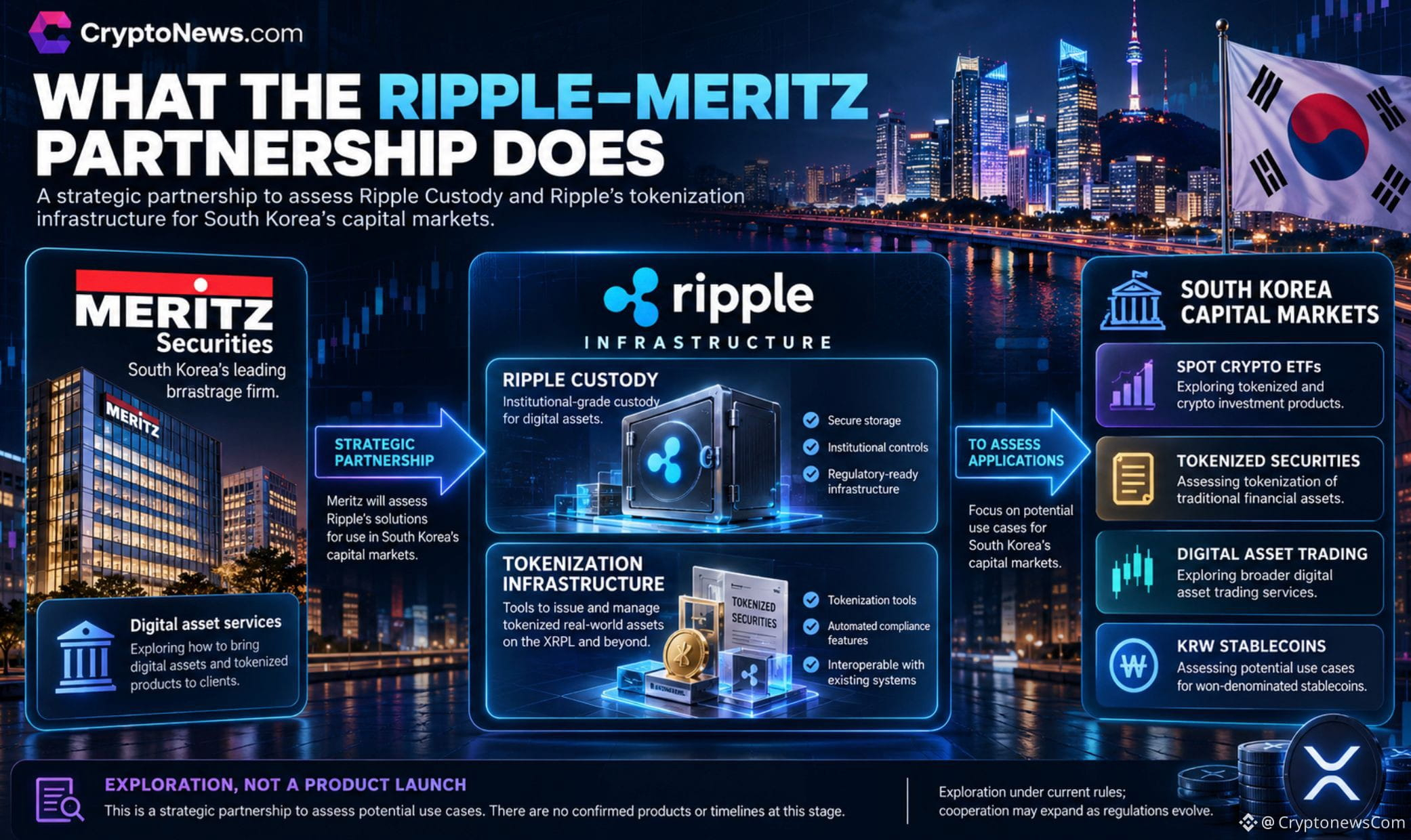
XRP Price Eyes New Catalyst as Ripple Partners With South Korea’s MeritzRipple and South Korean brokerage Meritz Securities have signed a strategic partnership to assess Ripple Custody and Ripple’s tokenization infrastructure for the country’s capital markets. The review comes as digital assets move toward formal regulatory recognition in South Korea, while the XRP price slips below $1.50.
South Korean financial firm Meritz Securities is partnering with Ripple to bring institutional digital asset custody and tokenization to the local market.
The two companies will roll out these new services in stages as South Korea's financial regulations officially embrace… pic.twitter.com/VDEyJfeJqe
— XRP Myth Buster (@XRPMythBuster) October 7, 2026
The companies plan to begin cooperation within the limits of existing securities-business rules and regulations, then consider expanding it in stages as South Korea’s digital-asset framework develops.
Meritz Securities said it is examining possible business lines that could become relevant as digital assets enter the regulated financial system.
This list helps explain why the Ripple tie-up may matter beyond custody: Meritz is assessing how several kinds of digital-asset services could fit its capital-markets business as rules change. But the company has not tied those potential activities to Ripple, nor said that any of them will proceed.
Tokenized securities can represent financial assets on a blockchain, but issuance and investor rights depend on the product and its legal structure; tokenization’s relationship to ownership and liquidity is therefore central to assessing any future offering.
Earn $50 and Enter $300K Prize Draw on EdgeXWhat Does the Ripple Infrastructure Review Cover?
Ripple Custody is described as Ripple’s institutional digital-asset custody solution, while the company’s tokenization infrastructure is intended for use by financial institutions. Both are currently offered to global financial institutions, and Meritz and Ripple will jointly review how they could be brought to the Korean capital market.
The announcement specifies no blockchain network, custody volume, asset-issuance process, customer group, transaction mechanics, or operating model.
For financial institutions, custody and tokenization are related but distinct pieces of infrastructure: custody concerns safeguarding and managing digital assets, while tokenization concerns representing assets in digital form. The partnership does not spell out how those functions would connect in a Korean service.
Institutional custody also involves operational controls and execution requirements beyond simply holding assets, as discussed in the evolution of institutional custody and execution.
Meritz said the arrangement is intended to combine Ripple’s global digital-asset infrastructure with the brokerage’s capital-markets capabilities, and that it plans to prepare digital-asset financial services in stages as domestic rules change.
Ripple Asia-Pacific Managing Director Fiona Murray said the company would explore how digital-asset infrastructure could support the continued development of Korea’s capital markets. Neither statement sets out a delivery milestone or commits either firm to a commercial launch.
Trade XRP on Bybit and Get a Chance to Win Our $1,000 USDT AirdropXRP Price Eyes A Bullish CatalystXrp (XRP)24h7d30d1yAll time
XRP is trading around $1.45, down 4.3% over the past 24 hours and 3.9% over the last seven days, according to CoinGecko. The token has also slipped from around $1.52 during the latest 24-hour range, suggesting sellers still have the upper hand in the near term.
The setup remains cautious, with XRP struggling to hold recent gains despite Ripple’s latest expansion into South Korea’s capital markets. Our prediction-market data puts the $1.40 area as a key downside level, while $1.60 represents the more notable upside target for October. CoinGecko
A sustained move above $1.60 could therefore shift the XRP price outlook toward a stronger recovery, while losing $1.40 could expose the token to deeper downside. For now, XRP appears to be caught between those levels, making the Ripple-Meritz partnership a potential catalyst rather than an immediate price trigger.
Discover: The Best Token Presales
The post XRP Price Eyes New Catalyst as Ripple Partners With South Korea’s Meritz appeared first on Cryptonews.
XRP Price Eyes New Catalyst as Ripple Partners With South Korea’s Meritz
Ripple and South Korean brokerage Meritz Securities have signed a strategic partnership to assess Ripple Custody and Ripple’s tokenization infrastructure for the country’s capital markets. The review comes as digital assets move toward formal regulatory recognition in South Korea, while the XRP price slips below $1.50.
South Korean financial firm Meritz Securities is partnering with Ripple to bring institutional digital asset custody and tokenization to the local market.
The two companies will roll out these new services in stages as South Korea's financial regulations officially embrace… pic.twitter.com/VDEyJfeJqe
— XRP Myth Buster (@XRPMythBuster) October 7, 2026
The companies plan to begin cooperation within the limits of existing securities-business rules and regulations, then consider expanding it in stages as South Korea’s digital-asset framework develops.
Meritz Securities said it is examining possible business lines that could become relevant as digital assets enter the regulated financial system.
This list helps explain why the Ripple tie-up may matter beyond custody: Meritz is assessing how several kinds of digital-asset services could fit its capital-markets business as rules change. But the company has not tied those potential activities to Ripple, nor said that any of them will proceed.
Tokenized securities can represent financial assets on a blockchain, but issuance and investor rights depend on the product and its legal structure; tokenization’s relationship to ownership and liquidity is therefore central to assessing any future offering.
Earn $50 and Enter $300K Prize Draw on EdgeXWhat Does the Ripple Infrastructure Review Cover?
Ripple Custody is described as Ripple’s institutional digital-asset custody solution, while the company’s tokenization infrastructure is intended for use by financial institutions. Both are currently offered to global financial institutions, and Meritz and Ripple will jointly review how they could be brought to the Korean capital market.
The announcement specifies no blockchain network, custody volume, asset-issuance process, customer group, transaction mechanics, or operating model.
For financial institutions, custody and tokenization are related but distinct pieces of infrastructure: custody concerns safeguarding and managing digital assets, while tokenization concerns representing assets in digital form. The partnership does not spell out how those functions would connect in a Korean service.
Institutional custody also involves operational controls and execution requirements beyond simply holding assets, as discussed in the evolution of institutional custody and execution.
Meritz said the arrangement is intended to combine Ripple’s global digital-asset infrastructure with the brokerage’s capital-markets capabilities, and that it plans to prepare digital-asset financial services in stages as domestic rules change.
Ripple Asia-Pacific Managing Director Fiona Murray said the company would explore how digital-asset infrastructure could support the continued development of Korea’s capital markets. Neither statement sets out a delivery milestone or commits either firm to a commercial launch.
Trade XRP on Bybit and Get a Chance to Win Our $1,000 USDT AirdropXRP Price Eyes A Bullish CatalystXrp (XRP)24h7d30d1yAll time
XRP is trading around $1.45, down 4.3% over the past 24 hours and 3.9% over the last seven days, according to CoinGecko. The token has also slipped from around $1.52 during the latest 24-hour range, suggesting sellers still have the upper hand in the near term.
The setup remains cautious, with XRP struggling to hold recent gains despite Ripple’s latest expansion into South Korea’s capital markets. Our prediction-market data puts the $1.40 area as a key downside level, while $1.60 represents the more notable upside target for October. CoinGecko
A sustained move above $1.60 could therefore shift the XRP price outlook toward a stronger recovery, while losing $1.40 could expose the token to deeper downside. For now, XRP appears to be caught between those levels, making the Ripple-Meritz partnership a potential catalyst rather than an immediate price trigger.
Discover: The Best Token Presales
The post XRP Price Eyes New Catalyst as Ripple Partners With South Korea’s Meritz appeared first on Cryptonews.
South Korean financial firm Meritz Securities is partnering with Ripple to bring institutional digital asset custody and tokenization to the local market.
The two companies will roll out these new services in stages as South Korea's financial regulations officially embrace… pic.twitter.com/VDEyJfeJqe
— XRP Myth Buster (@XRPMythBuster) October 7, 2026
The companies plan to begin cooperation within the limits of existing securities-business rules and regulations, then consider expanding it in stages as South Korea’s digital-asset framework develops.
Meritz Securities said it is examining possible business lines that could become relevant as digital assets enter the regulated financial system.
This list helps explain why the Ripple tie-up may matter beyond custody: Meritz is assessing how several kinds of digital-asset services could fit its capital-markets business as rules change. But the company has not tied those potential activities to Ripple, nor said that any of them will proceed.
Tokenized securities can represent financial assets on a blockchain, but issuance and investor rights depend on the product and its legal structure; tokenization’s relationship to ownership and liquidity is therefore central to assessing any future offering.
Earn $50 and Enter $300K Prize Draw on EdgeXWhat Does the Ripple Infrastructure Review Cover?
Ripple Custody is described as Ripple’s institutional digital-asset custody solution, while the company’s tokenization infrastructure is intended for use by financial institutions. Both are currently offered to global financial institutions, and Meritz and Ripple will jointly review how they could be brought to the Korean capital market.
The announcement specifies no blockchain network, custody volume, asset-issuance process, customer group, transaction mechanics, or operating model.
For financial institutions, custody and tokenization are related but distinct pieces of infrastructure: custody concerns safeguarding and managing digital assets, while tokenization concerns representing assets in digital form. The partnership does not spell out how those functions would connect in a Korean service.
Institutional custody also involves operational controls and execution requirements beyond simply holding assets, as discussed in the evolution of institutional custody and execution.
Meritz said the arrangement is intended to combine Ripple’s global digital-asset infrastructure with the brokerage’s capital-markets capabilities, and that it plans to prepare digital-asset financial services in stages as domestic rules change.
Ripple Asia-Pacific Managing Director Fiona Murray said the company would explore how digital-asset infrastructure could support the continued development of Korea’s capital markets. Neither statement sets out a delivery milestone or commits either firm to a commercial launch.
Trade XRP on Bybit and Get a Chance to Win Our $1,000 USDT AirdropXRP Price Eyes A Bullish CatalystXrp (XRP)24h7d30d1yAll time
XRP is trading around $1.45, down 4.3% over the past 24 hours and 3.9% over the last seven days, according to CoinGecko. The token has also slipped from around $1.52 during the latest 24-hour range, suggesting sellers still have the upper hand in the near term.
The setup remains cautious, with XRP struggling to hold recent gains despite Ripple’s latest expansion into South Korea’s capital markets. Our prediction-market data puts the $1.40 area as a key downside level, while $1.60 represents the more notable upside target for October. CoinGecko
A sustained move above $1.60 could therefore shift the XRP price outlook toward a stronger recovery, while losing $1.40 could expose the token to deeper downside. For now, XRP appears to be caught between those levels, making the Ripple-Meritz partnership a potential catalyst rather than an immediate price trigger.
Discover: The Best Token Presales
The post XRP Price Eyes New Catalyst as Ripple Partners With South Korea’s Meritz appeared first on Cryptonews.
5

記事
翻訳参照
Bitcoin Price Prediction: Should You Buy Gold or BTC Before FOMC?Bitcoin is trading at $84,300, down 1.61% over 24 hours, after failing to hold above the $87,000–$87,400 resistance zone. Gold has also pulled back, leaving traders to weigh defensive exposure against a possible BTC recovery ahead of the Federal Reserve’s next policy signals. The immediate question is whether the Bitcoin price support holds long enough for another bullish prediction.
BTC vs XAU, Tradingview
Gold has pulled back toward $4,130 and remains below its key moving averages, while Bitcoin is holding above its 50-day average after a much stronger recent recovery. For investors choosing between the two, Bitcoin appears to have the more constructive momentum setup, while gold looks more defensive after its recent decline.
However, for Bitcoin, ETF demand has been uneven: U.S. spot Bitcoin ETFs recorded $89.8 million in net outflows on October 5, then $118.8 million in net inflows on October 6. Meanwhile, a reported 24,073 BTC left centralized exchanges on October 5, the largest single-day withdrawal since March 1.
The FOMC minutes are coming out today at 2:00 PM ET.
I’ll be paying close attention to how Fed officials viewed inflation, the labour market and the path for interest rates.
With Bitcoin already sitting around $84K after another rejection from $87K, the tone of these minutes… pic.twitter.com/nSmxKfbRLb
— That Martini Guy ₿ (@MartiniGuyYT) October 7, 2026
The FOMC minutes put rates and liquidity back in focus; higher oil prices add to inflation concerns and could reinforce a hawkish Fed stance, pressuring risk assets. The October 27–28 meeting is the next major policy catalyst. For traders comparing macro scenarios, rate-cut expectations provide another read on how inflation and employment data may shape positioning.
Earn $50 and Enter $300K Prize Draw on EdgeXBitcoin Price Prediction: Can BTC Reclaim $87,000 This Week?
At $84,300, BTC is below the $84,500 support level and well short of the $87,000–$87,400 resistance band. BTC is under pressure, and a resistance break without expanding participation can quickly fail.
The near-term structure remains a consolidation or pullback, not a confirmed breakout. If BTC recovers and holds above $84,500, a retest of $87,000 is plausible; a clean break through $87,400 would put $90,000 in view. A weekly close above $84,972 has also been cited as a sign that the pullback may be ending.
Bitcoin (BTC)
24h7d30d1yAll time
The base case is continued range trading until either support or resistance gives way. A break below $84,500 risks a move toward $82,900, with $80,000 a deeper support reference.
What changes the balance? Sustained ETF inflows and a less hawkish Fed tone would help the bull case; renewed outflows or inflation-driven rate concerns would weaken it. For a closer look at the inflation-to-leverage channel, see this analysis of core PCE and Bitcoin levels.
Trade Bitcoin on Bybit and Get a Chance to Win Our $1,000 USDT AirdropBitcoin Hyper Targets Early Mover Upside as Bitcoin Tests Key Levels
BTC’s pullback is a reminder that even a constructive broader setup can leave traders exposed to sharp reversals around macro events. If $84,500 fails, the downside levels are close; if resistance breaks, much of the recovery may already be reflected in price.
The above asymmetry is one reason some investors look beyond established assets, though early-stage projects carry materially different risks.
Precision matters.$HYPER doesn’t miss. https://t.co/VNG0P4GuDo pic.twitter.com/PZAGiAL00T
— Bitcoin Hyper (@BTC_Hyper2) October 5, 2026
Bitcoin Hyper ($HYPER) is a Bitcoin Layer 2 project with SVM integration, positioning itself as the first Bitcoin Layer 2 with that architecture. It aims to bring faster smart contracts and low-cost execution to Bitcoin while preserving Bitcoin’s security and trust.
The project’s current price is at $0.0136873, and the total raised is $33.1 million. It also offers staking at a high 30% APY, just for those who buy in the presale stage. Features include a decentralized canonical bridge for BTC transfers and low-latency Layer 2 processing.
Research Bitcoin Hyper and review the project details before the funding window to buy at the lowest price closes.
Discover: The Best Token Presales and Bitcoin Hyper Alternatives
The post Bitcoin Price Prediction: Should You Buy Gold or BTC Before FOMC? appeared first on Cryptonews.
Bitcoin Price Prediction: Should You Buy Gold or BTC Before FOMC?
Bitcoin is trading at $84,300, down 1.61% over 24 hours, after failing to hold above the $87,000–$87,400 resistance zone. Gold has also pulled back, leaving traders to weigh defensive exposure against a possible BTC recovery ahead of the Federal Reserve’s next policy signals. The immediate question is whether the Bitcoin price support holds long enough for another bullish prediction.
BTC vs XAU, Tradingview
Gold has pulled back toward $4,130 and remains below its key moving averages, while Bitcoin is holding above its 50-day average after a much stronger recent recovery. For investors choosing between the two, Bitcoin appears to have the more constructive momentum setup, while gold looks more defensive after its recent decline.
However, for Bitcoin, ETF demand has been uneven: U.S. spot Bitcoin ETFs recorded $89.8 million in net outflows on October 5, then $118.8 million in net inflows on October 6. Meanwhile, a reported 24,073 BTC left centralized exchanges on October 5, the largest single-day withdrawal since March 1.
The FOMC minutes are coming out today at 2:00 PM ET.
I’ll be paying close attention to how Fed officials viewed inflation, the labour market and the path for interest rates.
With Bitcoin already sitting around $84K after another rejection from $87K, the tone of these minutes… pic.twitter.com/nSmxKfbRLb
— That Martini Guy ₿ (@MartiniGuyYT) October 7, 2026
The FOMC minutes put rates and liquidity back in focus; higher oil prices add to inflation concerns and could reinforce a hawkish Fed stance, pressuring risk assets. The October 27–28 meeting is the next major policy catalyst. For traders comparing macro scenarios, rate-cut expectations provide another read on how inflation and employment data may shape positioning.
Earn $50 and Enter $300K Prize Draw on EdgeXBitcoin Price Prediction: Can BTC Reclaim $87,000 This Week?
At $84,300, BTC is below the $84,500 support level and well short of the $87,000–$87,400 resistance band. BTC is under pressure, and a resistance break without expanding participation can quickly fail.
The near-term structure remains a consolidation or pullback, not a confirmed breakout. If BTC recovers and holds above $84,500, a retest of $87,000 is plausible; a clean break through $87,400 would put $90,000 in view. A weekly close above $84,972 has also been cited as a sign that the pullback may be ending.
Bitcoin (BTC)
24h7d30d1yAll time
The base case is continued range trading until either support or resistance gives way. A break below $84,500 risks a move toward $82,900, with $80,000 a deeper support reference.
What changes the balance? Sustained ETF inflows and a less hawkish Fed tone would help the bull case; renewed outflows or inflation-driven rate concerns would weaken it. For a closer look at the inflation-to-leverage channel, see this analysis of core PCE and Bitcoin levels.
Trade Bitcoin on Bybit and Get a Chance to Win Our $1,000 USDT AirdropBitcoin Hyper Targets Early Mover Upside as Bitcoin Tests Key Levels
BTC’s pullback is a reminder that even a constructive broader setup can leave traders exposed to sharp reversals around macro events. If $84,500 fails, the downside levels are close; if resistance breaks, much of the recovery may already be reflected in price.
The above asymmetry is one reason some investors look beyond established assets, though early-stage projects carry materially different risks.
Precision matters.$HYPER doesn’t miss. https://t.co/VNG0P4GuDo pic.twitter.com/PZAGiAL00T
— Bitcoin Hyper (@BTC_Hyper2) October 5, 2026
Bitcoin Hyper ($HYPER) is a Bitcoin Layer 2 project with SVM integration, positioning itself as the first Bitcoin Layer 2 with that architecture. It aims to bring faster smart contracts and low-cost execution to Bitcoin while preserving Bitcoin’s security and trust.
The project’s current price is at $0.0136873, and the total raised is $33.1 million. It also offers staking at a high 30% APY, just for those who buy in the presale stage. Features include a decentralized canonical bridge for BTC transfers and low-latency Layer 2 processing.
Research Bitcoin Hyper and review the project details before the funding window to buy at the lowest price closes.
Discover: The Best Token Presales and Bitcoin Hyper Alternatives
The post Bitcoin Price Prediction: Should You Buy Gold or BTC Before FOMC? appeared first on Cryptonews.
BTC vs XAU, Tradingview
Gold has pulled back toward $4,130 and remains below its key moving averages, while Bitcoin is holding above its 50-day average after a much stronger recent recovery. For investors choosing between the two, Bitcoin appears to have the more constructive momentum setup, while gold looks more defensive after its recent decline.
However, for Bitcoin, ETF demand has been uneven: U.S. spot Bitcoin ETFs recorded $89.8 million in net outflows on October 5, then $118.8 million in net inflows on October 6. Meanwhile, a reported 24,073 BTC left centralized exchanges on October 5, the largest single-day withdrawal since March 1.
The FOMC minutes are coming out today at 2:00 PM ET.
I’ll be paying close attention to how Fed officials viewed inflation, the labour market and the path for interest rates.
With Bitcoin already sitting around $84K after another rejection from $87K, the tone of these minutes… pic.twitter.com/nSmxKfbRLb
— That Martini Guy ₿ (@MartiniGuyYT) October 7, 2026
The FOMC minutes put rates and liquidity back in focus; higher oil prices add to inflation concerns and could reinforce a hawkish Fed stance, pressuring risk assets. The October 27–28 meeting is the next major policy catalyst. For traders comparing macro scenarios, rate-cut expectations provide another read on how inflation and employment data may shape positioning.
Earn $50 and Enter $300K Prize Draw on EdgeXBitcoin Price Prediction: Can BTC Reclaim $87,000 This Week?
At $84,300, BTC is below the $84,500 support level and well short of the $87,000–$87,400 resistance band. BTC is under pressure, and a resistance break without expanding participation can quickly fail.
The near-term structure remains a consolidation or pullback, not a confirmed breakout. If BTC recovers and holds above $84,500, a retest of $87,000 is plausible; a clean break through $87,400 would put $90,000 in view. A weekly close above $84,972 has also been cited as a sign that the pullback may be ending.
Bitcoin (BTC)
24h7d30d1yAll time
The base case is continued range trading until either support or resistance gives way. A break below $84,500 risks a move toward $82,900, with $80,000 a deeper support reference.
What changes the balance? Sustained ETF inflows and a less hawkish Fed tone would help the bull case; renewed outflows or inflation-driven rate concerns would weaken it. For a closer look at the inflation-to-leverage channel, see this analysis of core PCE and Bitcoin levels.
Trade Bitcoin on Bybit and Get a Chance to Win Our $1,000 USDT AirdropBitcoin Hyper Targets Early Mover Upside as Bitcoin Tests Key Levels
BTC’s pullback is a reminder that even a constructive broader setup can leave traders exposed to sharp reversals around macro events. If $84,500 fails, the downside levels are close; if resistance breaks, much of the recovery may already be reflected in price.
The above asymmetry is one reason some investors look beyond established assets, though early-stage projects carry materially different risks.
Precision matters.$HYPER doesn’t miss. https://t.co/VNG0P4GuDo pic.twitter.com/PZAGiAL00T
— Bitcoin Hyper (@BTC_Hyper2) October 5, 2026
Bitcoin Hyper ($HYPER) is a Bitcoin Layer 2 project with SVM integration, positioning itself as the first Bitcoin Layer 2 with that architecture. It aims to bring faster smart contracts and low-cost execution to Bitcoin while preserving Bitcoin’s security and trust.
The project’s current price is at $0.0136873, and the total raised is $33.1 million. It also offers staking at a high 30% APY, just for those who buy in the presale stage. Features include a decentralized canonical bridge for BTC transfers and low-latency Layer 2 processing.
Research Bitcoin Hyper and review the project details before the funding window to buy at the lowest price closes.
Discover: The Best Token Presales and Bitcoin Hyper Alternatives
The post Bitcoin Price Prediction: Should You Buy Gold or BTC Before FOMC? appeared first on Cryptonews.
21
記事
翻訳参照
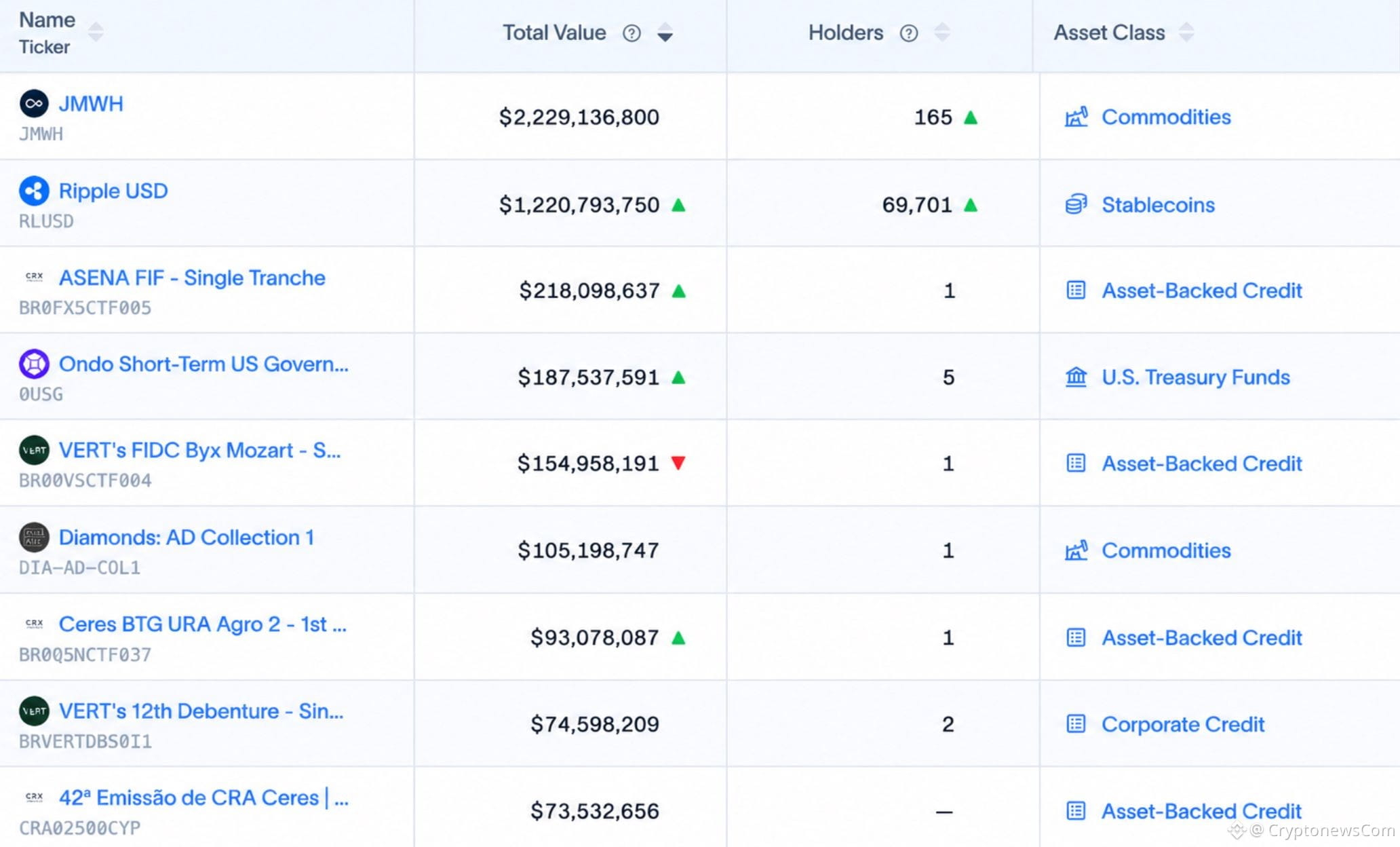
XRP News: XRPL $2.2B Tokenization Depends on Energy TokenIn major XRP news today, XRPL reported lead in tokenized commodities rests heavily on a single Justoken energy token: RWA.xyz lists JMWH at $2.23 billion, or 89% of the ledger’s commodity value.
The RWA.xyz commodities dashboard classifies JMWH as a represented commodity on the XRP Ledger. Its asset page lists a total value of $2.229 billion, 37.15 million tokens, and 165 holders. Those figures place one energy-linked product ahead of the diamond collections that make up most of XRPL’s remaining commodity listings.
XRPL commodities dashboard, RWA.xyz
The largest listed diamond collection, DIA-AD-COL1, is valued at $105.2 million. Other Ctrl Alt collections range from $13.7 million to $46 million, leaving JMWH far larger than any individual listed XRPL commodity apart from itself.
The concentration matters: a chain-level ranking built around one asset says less about the breadth of a commodity market than a similarly sized total spread across multiple issuers and products.
The comparison with Ethereum also depends on the metric. The primary-source account cites about $2.2 billion in annual net commodity inflows for XRPL against $1.6 billion for Ethereum.
Asset value produces a different comparison. RWA.xyz lists Tether Gold at about $2.91 billion across multiple networks, including Ethereum, while Paxos Gold is listed at about $1.79 billion on Ethereum. Tether Gold’s distributed value cannot be assigned exclusively to Ethereum because the dashboard does not publish a per-chain split.
Earn $50 and Enter $300K Prize Draw on EdgeXA Represented Value Vs. Liquid Market
RWA.xyz describes JMWH as a digital asset in which each token represents one real megawatt-hour of energy backed by energy companies. Its stated purpose includes facilitating financial transactions and energy traceability.
RWA.xyz itself lists a $60 net asset value and a supply of 37,152,280 tokens, alongside a total of $2.229 billion. Multiplying the listed supply by the stated NAV yields approximately that total. This arithmetic explains the reported figure.
XRP Legder, RWA.xyz
RWA.xyz reports $4.52 billion in total represented asset value on XRPL and $7.03 billion in monthly RWA transfer volume, but transfers between addresses do not identify unique capital inflows or prove that tokens were bought in open markets. Large transfer totals demonstrate on-ledger movement; they do not, on their own, measure investor demand.
The same separation between tokenized exposure and effective ownership is central to assessing tokenized assets’ ownership and liquidity. A token can represent an underlying contractual claim while offering limited evidence of secondary-market access.
Trade XRP on Bybit and Get a Chance to Win Our $1,000 USDT AirdropDoes This News Create Demand for XRP?
Justoken’s Enertoken launch with YPF Luz provides a concrete energy use case on XRPL. The project’s first phase covered more than $800 million in energy assets. The difference is a question of scope and valuation, not proof that one number is wrong.
Justoken also issues commodity tokens outside XRPL. RWA.xyz lists its soybean and soybean-oil products on Polygon, underscoring that the issuer’s wider tokenization business is multi-chain. The presence of a large Justoken asset on XRPL is meaningful for the ledger’s use-case mix.
Xrp (XRP)
24h7d30d1yAll time
Token issuance news alone implies material buying pressure for XRP. XRPL transactions can involve XRP for fees and account reserves, but the figures cited here do not show how much XRP is held for those purposes, whether JMWH has substantial XRP-pair liquidity, or whether XRP serves as collateral or settlement capital for the energy contracts.
That is the key distinction for the XRP market. New issuance and transfer activity can strengthen the case that XRPL supports real-world financial applications, while XRP’s price response depends on whether those applications create persistent demand for the token itself.
The question of whether XRPL adoption translates into XRP demand cannot be answered by a represented-asset total alone.
Discover: The Best Token Presales This Q4
The post XRP News: XRPL $2.2B Tokenization Depends on Energy Token appeared first on Cryptonews.
XRP News: XRPL $2.2B Tokenization Depends on Energy Token
In major XRP news today, XRPL reported lead in tokenized commodities rests heavily on a single Justoken energy token: RWA.xyz lists JMWH at $2.23 billion, or 89% of the ledger’s commodity value.
The RWA.xyz commodities dashboard classifies JMWH as a represented commodity on the XRP Ledger. Its asset page lists a total value of $2.229 billion, 37.15 million tokens, and 165 holders. Those figures place one energy-linked product ahead of the diamond collections that make up most of XRPL’s remaining commodity listings.
XRPL commodities dashboard, RWA.xyz
The largest listed diamond collection, DIA-AD-COL1, is valued at $105.2 million. Other Ctrl Alt collections range from $13.7 million to $46 million, leaving JMWH far larger than any individual listed XRPL commodity apart from itself.
The concentration matters: a chain-level ranking built around one asset says less about the breadth of a commodity market than a similarly sized total spread across multiple issuers and products.
The comparison with Ethereum also depends on the metric. The primary-source account cites about $2.2 billion in annual net commodity inflows for XRPL against $1.6 billion for Ethereum.
Asset value produces a different comparison. RWA.xyz lists Tether Gold at about $2.91 billion across multiple networks, including Ethereum, while Paxos Gold is listed at about $1.79 billion on Ethereum. Tether Gold’s distributed value cannot be assigned exclusively to Ethereum because the dashboard does not publish a per-chain split.
Earn $50 and Enter $300K Prize Draw on EdgeXA Represented Value Vs. Liquid Market
RWA.xyz describes JMWH as a digital asset in which each token represents one real megawatt-hour of energy backed by energy companies. Its stated purpose includes facilitating financial transactions and energy traceability.
RWA.xyz itself lists a $60 net asset value and a supply of 37,152,280 tokens, alongside a total of $2.229 billion. Multiplying the listed supply by the stated NAV yields approximately that total. This arithmetic explains the reported figure.
XRP Legder, RWA.xyz
RWA.xyz reports $4.52 billion in total represented asset value on XRPL and $7.03 billion in monthly RWA transfer volume, but transfers between addresses do not identify unique capital inflows or prove that tokens were bought in open markets. Large transfer totals demonstrate on-ledger movement; they do not, on their own, measure investor demand.
The same separation between tokenized exposure and effective ownership is central to assessing tokenized assets’ ownership and liquidity. A token can represent an underlying contractual claim while offering limited evidence of secondary-market access.
Trade XRP on Bybit and Get a Chance to Win Our $1,000 USDT AirdropDoes This News Create Demand for XRP?
Justoken’s Enertoken launch with YPF Luz provides a concrete energy use case on XRPL. The project’s first phase covered more than $800 million in energy assets. The difference is a question of scope and valuation, not proof that one number is wrong.
Justoken also issues commodity tokens outside XRPL. RWA.xyz lists its soybean and soybean-oil products on Polygon, underscoring that the issuer’s wider tokenization business is multi-chain. The presence of a large Justoken asset on XRPL is meaningful for the ledger’s use-case mix.
Xrp (XRP)
24h7d30d1yAll time
Token issuance news alone implies material buying pressure for XRP. XRPL transactions can involve XRP for fees and account reserves, but the figures cited here do not show how much XRP is held for those purposes, whether JMWH has substantial XRP-pair liquidity, or whether XRP serves as collateral or settlement capital for the energy contracts.
That is the key distinction for the XRP market. New issuance and transfer activity can strengthen the case that XRPL supports real-world financial applications, while XRP’s price response depends on whether those applications create persistent demand for the token itself.
The question of whether XRPL adoption translates into XRP demand cannot be answered by a represented-asset total alone.
Discover: The Best Token Presales This Q4
The post XRP News: XRPL $2.2B Tokenization Depends on Energy Token appeared first on Cryptonews.
The RWA.xyz commodities dashboard classifies JMWH as a represented commodity on the XRP Ledger. Its asset page lists a total value of $2.229 billion, 37.15 million tokens, and 165 holders. Those figures place one energy-linked product ahead of the diamond collections that make up most of XRPL’s remaining commodity listings.
XRPL commodities dashboard, RWA.xyz
The largest listed diamond collection, DIA-AD-COL1, is valued at $105.2 million. Other Ctrl Alt collections range from $13.7 million to $46 million, leaving JMWH far larger than any individual listed XRPL commodity apart from itself.
The concentration matters: a chain-level ranking built around one asset says less about the breadth of a commodity market than a similarly sized total spread across multiple issuers and products.
The comparison with Ethereum also depends on the metric. The primary-source account cites about $2.2 billion in annual net commodity inflows for XRPL against $1.6 billion for Ethereum.
Asset value produces a different comparison. RWA.xyz lists Tether Gold at about $2.91 billion across multiple networks, including Ethereum, while Paxos Gold is listed at about $1.79 billion on Ethereum. Tether Gold’s distributed value cannot be assigned exclusively to Ethereum because the dashboard does not publish a per-chain split.
Earn $50 and Enter $300K Prize Draw on EdgeXA Represented Value Vs. Liquid Market
RWA.xyz describes JMWH as a digital asset in which each token represents one real megawatt-hour of energy backed by energy companies. Its stated purpose includes facilitating financial transactions and energy traceability.
RWA.xyz itself lists a $60 net asset value and a supply of 37,152,280 tokens, alongside a total of $2.229 billion. Multiplying the listed supply by the stated NAV yields approximately that total. This arithmetic explains the reported figure.
XRP Legder, RWA.xyz
RWA.xyz reports $4.52 billion in total represented asset value on XRPL and $7.03 billion in monthly RWA transfer volume, but transfers between addresses do not identify unique capital inflows or prove that tokens were bought in open markets. Large transfer totals demonstrate on-ledger movement; they do not, on their own, measure investor demand.
The same separation between tokenized exposure and effective ownership is central to assessing tokenized assets’ ownership and liquidity. A token can represent an underlying contractual claim while offering limited evidence of secondary-market access.
Trade XRP on Bybit and Get a Chance to Win Our $1,000 USDT AirdropDoes This News Create Demand for XRP?
Justoken’s Enertoken launch with YPF Luz provides a concrete energy use case on XRPL. The project’s first phase covered more than $800 million in energy assets. The difference is a question of scope and valuation, not proof that one number is wrong.
Justoken also issues commodity tokens outside XRPL. RWA.xyz lists its soybean and soybean-oil products on Polygon, underscoring that the issuer’s wider tokenization business is multi-chain. The presence of a large Justoken asset on XRPL is meaningful for the ledger’s use-case mix.
Xrp (XRP)
24h7d30d1yAll time
Token issuance news alone implies material buying pressure for XRP. XRPL transactions can involve XRP for fees and account reserves, but the figures cited here do not show how much XRP is held for those purposes, whether JMWH has substantial XRP-pair liquidity, or whether XRP serves as collateral or settlement capital for the energy contracts.
That is the key distinction for the XRP market. New issuance and transfer activity can strengthen the case that XRPL supports real-world financial applications, while XRP’s price response depends on whether those applications create persistent demand for the token itself.
The question of whether XRPL adoption translates into XRP demand cannot be answered by a represented-asset total alone.
Discover: The Best Token Presales This Q4
The post XRP News: XRPL $2.2B Tokenization Depends on Energy Token appeared first on Cryptonews.
22

記事
翻訳参照
Bitcoin Price Set for a Boost: Arthur Hayes Bets on an AI Boom BustAs Bitcoin price slid toward $83,800, $4000 million in leveraged crypto longs were liquidated within one hour. This is a sharp reminder of the risk-off phase, which Arthur Hayes believes could precede an AI-credit bailout and eventual liquidity boost for crypto.
The central tension is that a multitrillion-dollar data-center boom could first pressure risk assets and, if it triggers government intervention, create the excess liquidity that Hayes expects Bitcoin to absorb.
The scale of the buildout makes the financing question consequential. Estimates cited in the report put US AI infrastructure costs between $2.8 trillion by 2030 and $10.3 trillion by 2032, while credit platform Atrium estimates developers have already raised at least $1.3 trillion in debt.
Hayes’s concern is not simply that companies are spending heavily. He argues the buildout may leave computing power cheap and plentiful while saddling infrastructure providers with large commitments that depend on AI customers ultimately paying for reserved capacity.
SpaceX, OpenAI, and Anthropic are among the demand sources. Hayes said none makes money, while Columbia economist Stijn van Nieuwerburgh estimated that earning a 10% return on the spending would require $3.7 trillion in annual revenue by 2032.
That gap between infrastructure commitments and customer economics is the hinge in Hayes’s thesis. Providers are expected to test those commitments when capacity is delivered, which he places in late 2027 or 2028; until then, abundant demand for compute does not prove that every project can generate returns sufficient to support its financing.
The potential consequence for Bitcoin liquidity comes later in the chain. Hayes expects a credit crash to prompt a bailout, with the resulting excess liquidity flowing into crypto; that outcome depends on both financial stress materializing and policymakers responding in a way that expands liquidity.
Earn $50 and Enter $300K Prize Draw on EdgeXBitcoin Price and Leverage Shakeout
The report placed Bitcoin about 33% below its October 2025 all-time high of $126,000. The $403.58 million in one-hour-long liquidations as BTC approached $83,800 show how quickly leverage can amplify a decline, but they do not establish a technical floor or predict the scale of any future sell-off.
Bitcoin (BTC)
24h7d30d1yAll time
A credit shock could initially trigger the same kind of broad risk reduction: falling prices, forced position closures, and further liquidation pressure. Bitcoin would not be insulated merely because Hayes sees it as a potential beneficiary of a later bailout. Crypto’s sensitivity to leverage and changing macro expectations is also visible in sell-offs tied to liquidations.
Trade Bitcoin on Bybit and Get a Chance to Win Our $1,000 USDT AirdropHayes’s Test or Market Deadline?
If AI customers can pay for committed compute and infrastructure spending that produces sustainable revenue, the overbuild thesis would be weakened. If customers cannot meet those obligations as new capacity arrives in late 2027 or 2028, Hayes expects credit stress, a crash, and a bailout sequence.
NEW: $15 trillion BlackRock says AI agents may choose to save in #Bitcoin for "long-term value preservation"
"These findings … point to a potential AI-native monetary architecture in which stablecoins serve as transactional money and bitcoin as a store of value." pic.twitter.com/utJHYuTkGJ
— Bitcoin Magazine (@BitcoinMagazine) October 6, 2026
Even in that second case, the Bitcoin thesis has two separate conditions: the downturn must provoke intervention, and the intervention must create liquidity that supports crypto rather than merely stabilizing credit markets.
Federal Reserve expectations and inflation readings can also shift liquidity pricing and risk appetite, adding another variable to the path between policy response and Bitcoin price action.
For now, Hayes’s argument is best read as a macro framework, not a near-term trading signal. The AI credit bubble could become a Bitcoin liquidity catalyst if overbuilding produces financial stress and a liquidity-heavy rescue; until those conditions appear, the immediate implication is more modest: leverage remains vulnerable.
Discover: The Best Token Presales
The post Bitcoin Price Set for a Boost: Arthur Hayes Bets on an AI Boom Bust appeared first on Cryptonews.
Bitcoin Price Set for a Boost: Arthur Hayes Bets on an AI Boom Bust
As Bitcoin price slid toward $83,800, $4000 million in leveraged crypto longs were liquidated within one hour. This is a sharp reminder of the risk-off phase, which Arthur Hayes believes could precede an AI-credit bailout and eventual liquidity boost for crypto.
The central tension is that a multitrillion-dollar data-center boom could first pressure risk assets and, if it triggers government intervention, create the excess liquidity that Hayes expects Bitcoin to absorb.
The scale of the buildout makes the financing question consequential. Estimates cited in the report put US AI infrastructure costs between $2.8 trillion by 2030 and $10.3 trillion by 2032, while credit platform Atrium estimates developers have already raised at least $1.3 trillion in debt.
Hayes’s concern is not simply that companies are spending heavily. He argues the buildout may leave computing power cheap and plentiful while saddling infrastructure providers with large commitments that depend on AI customers ultimately paying for reserved capacity.
SpaceX, OpenAI, and Anthropic are among the demand sources. Hayes said none makes money, while Columbia economist Stijn van Nieuwerburgh estimated that earning a 10% return on the spending would require $3.7 trillion in annual revenue by 2032.
That gap between infrastructure commitments and customer economics is the hinge in Hayes’s thesis. Providers are expected to test those commitments when capacity is delivered, which he places in late 2027 or 2028; until then, abundant demand for compute does not prove that every project can generate returns sufficient to support its financing.
The potential consequence for Bitcoin liquidity comes later in the chain. Hayes expects a credit crash to prompt a bailout, with the resulting excess liquidity flowing into crypto; that outcome depends on both financial stress materializing and policymakers responding in a way that expands liquidity.
Earn $50 and Enter $300K Prize Draw on EdgeXBitcoin Price and Leverage Shakeout
The report placed Bitcoin about 33% below its October 2025 all-time high of $126,000. The $403.58 million in one-hour-long liquidations as BTC approached $83,800 show how quickly leverage can amplify a decline, but they do not establish a technical floor or predict the scale of any future sell-off.
Bitcoin (BTC)
24h7d30d1yAll time
A credit shock could initially trigger the same kind of broad risk reduction: falling prices, forced position closures, and further liquidation pressure. Bitcoin would not be insulated merely because Hayes sees it as a potential beneficiary of a later bailout. Crypto’s sensitivity to leverage and changing macro expectations is also visible in sell-offs tied to liquidations.
Trade Bitcoin on Bybit and Get a Chance to Win Our $1,000 USDT AirdropHayes’s Test or Market Deadline?
If AI customers can pay for committed compute and infrastructure spending that produces sustainable revenue, the overbuild thesis would be weakened. If customers cannot meet those obligations as new capacity arrives in late 2027 or 2028, Hayes expects credit stress, a crash, and a bailout sequence.
NEW: $15 trillion BlackRock says AI agents may choose to save in #Bitcoin for "long-term value preservation"
"These findings … point to a potential AI-native monetary architecture in which stablecoins serve as transactional money and bitcoin as a store of value." pic.twitter.com/utJHYuTkGJ
— Bitcoin Magazine (@BitcoinMagazine) October 6, 2026
Even in that second case, the Bitcoin thesis has two separate conditions: the downturn must provoke intervention, and the intervention must create liquidity that supports crypto rather than merely stabilizing credit markets.
Federal Reserve expectations and inflation readings can also shift liquidity pricing and risk appetite, adding another variable to the path between policy response and Bitcoin price action.
For now, Hayes’s argument is best read as a macro framework, not a near-term trading signal. The AI credit bubble could become a Bitcoin liquidity catalyst if overbuilding produces financial stress and a liquidity-heavy rescue; until those conditions appear, the immediate implication is more modest: leverage remains vulnerable.
Discover: The Best Token Presales
The post Bitcoin Price Set for a Boost: Arthur Hayes Bets on an AI Boom Bust appeared first on Cryptonews.
The central tension is that a multitrillion-dollar data-center boom could first pressure risk assets and, if it triggers government intervention, create the excess liquidity that Hayes expects Bitcoin to absorb.
The scale of the buildout makes the financing question consequential. Estimates cited in the report put US AI infrastructure costs between $2.8 trillion by 2030 and $10.3 trillion by 2032, while credit platform Atrium estimates developers have already raised at least $1.3 trillion in debt.
Hayes’s concern is not simply that companies are spending heavily. He argues the buildout may leave computing power cheap and plentiful while saddling infrastructure providers with large commitments that depend on AI customers ultimately paying for reserved capacity.
SpaceX, OpenAI, and Anthropic are among the demand sources. Hayes said none makes money, while Columbia economist Stijn van Nieuwerburgh estimated that earning a 10% return on the spending would require $3.7 trillion in annual revenue by 2032.
That gap between infrastructure commitments and customer economics is the hinge in Hayes’s thesis. Providers are expected to test those commitments when capacity is delivered, which he places in late 2027 or 2028; until then, abundant demand for compute does not prove that every project can generate returns sufficient to support its financing.
The potential consequence for Bitcoin liquidity comes later in the chain. Hayes expects a credit crash to prompt a bailout, with the resulting excess liquidity flowing into crypto; that outcome depends on both financial stress materializing and policymakers responding in a way that expands liquidity.
Earn $50 and Enter $300K Prize Draw on EdgeXBitcoin Price and Leverage Shakeout
The report placed Bitcoin about 33% below its October 2025 all-time high of $126,000. The $403.58 million in one-hour-long liquidations as BTC approached $83,800 show how quickly leverage can amplify a decline, but they do not establish a technical floor or predict the scale of any future sell-off.
Bitcoin (BTC)
24h7d30d1yAll time
A credit shock could initially trigger the same kind of broad risk reduction: falling prices, forced position closures, and further liquidation pressure. Bitcoin would not be insulated merely because Hayes sees it as a potential beneficiary of a later bailout. Crypto’s sensitivity to leverage and changing macro expectations is also visible in sell-offs tied to liquidations.
Trade Bitcoin on Bybit and Get a Chance to Win Our $1,000 USDT AirdropHayes’s Test or Market Deadline?
If AI customers can pay for committed compute and infrastructure spending that produces sustainable revenue, the overbuild thesis would be weakened. If customers cannot meet those obligations as new capacity arrives in late 2027 or 2028, Hayes expects credit stress, a crash, and a bailout sequence.
NEW: $15 trillion BlackRock says AI agents may choose to save in #Bitcoin for "long-term value preservation"
"These findings … point to a potential AI-native monetary architecture in which stablecoins serve as transactional money and bitcoin as a store of value." pic.twitter.com/utJHYuTkGJ
— Bitcoin Magazine (@BitcoinMagazine) October 6, 2026
Even in that second case, the Bitcoin thesis has two separate conditions: the downturn must provoke intervention, and the intervention must create liquidity that supports crypto rather than merely stabilizing credit markets.
Federal Reserve expectations and inflation readings can also shift liquidity pricing and risk appetite, adding another variable to the path between policy response and Bitcoin price action.
For now, Hayes’s argument is best read as a macro framework, not a near-term trading signal. The AI credit bubble could become a Bitcoin liquidity catalyst if overbuilding produces financial stress and a liquidity-heavy rescue; until those conditions appear, the immediate implication is more modest: leverage remains vulnerable.
Discover: The Best Token Presales
The post Bitcoin Price Set for a Boost: Arthur Hayes Bets on an AI Boom Bust appeared first on Cryptonews.
8
翻訳参照
ZEC Gets a WINK as Winklevoss Files for Nasdaq ETFWinklevoss Asset Services filed an S-1 registration statement with the SEC on Oct. 6, 2026, for a proposed spot Zcash ETF that would hold ZEC directly and list on Nasdaq under the ticker WINK.
The filing is preliminary: the prospectus says its information may change and shares cannot be sold until the registration statement becomes effective.
Winklevoss Just Filed for a Zcash ETF to challenge Grayscale…
Winklevoss Capital formally filed a registration statement with the U.S. Securities and Exchange Commission to list a ZCASH ETF on Nasdaq under the ticker symbol $WINK.
The registration statement notes that the… pic.twitter.com/nmSUJWVDPq
— BSCN (@BSCNews) October 6, 2026
The proposed fund would charge a 0.25% annual sponsor fee, use Gemini Trust Company as custodian, and avoid leverage and derivatives. Winklevoss Capital Fund affiliates have indicated interest in buying up to $100M in shares, but that interest is expressly nonbinding.
This news dropped as ZEC is trading at $1,315, down nearly 3% over the past 24 hours. Daily trading volume sits at $679M, and Zcash is still up +11% over the past 30 days, with investors hoping this WINK ETF news could spark a fresh rally.
WINK Zcash ETF Would Add a Brokerage Route to Direct ZEC Exposure
Zcash (ZEC)
24h7d30d1yAll time
The proposed trust’s objective is to provide exposure to the price of the ZEC it holds, less operating expenses and other liabilities. Its structure would let investors obtain Zcash exposure through a traditional brokerage account without purchasing or custody of the cryptocurrency themselves.
That access route does not change the underlying asset exposure. The fund would own ZEC directly, and the filing says it would not use derivatives or leverage to pursue its objective.
Shareholders would still face ZEC’s price volatility, while shares bought or sold on the exchange could trade at a premium or discount to the trust’s net asset value.
Winklevoss Asset Services would sponsor the trust, with its affiliate Gemini Trust Company holding the ZEC. The proposed 0.25% annual sponsor fee is a central term of the offer, but it does not guarantee that WINK will attract assets or compete successfully with an existing product.
The filing says Winklevoss Capital Fund, through one or more affiliates, has indicated interest in purchasing up to $100 million of shares, either from authorized participants or in the market. That is not committed seed capital or a binding order: the affiliates could ultimately buy more, less, or none of the stated amount.
The proposal enters a US market where Grayscale’s Zcash ETF, ZCSH, is already trading. The primary report said Grayscale had recently announced a 3-for-1 share split.
It also reported that ZEC had gained more than 735% over the prior year and traded at roughly $1,354 on Tuesday, Oct. 6, with a market capitalization of about $23Bn. Those figures describe the market at that point, not a current quote.
Supercharge Your ZCash Trading in 2026 With BloFin AI Trading BotsCustody and the Zcash Structure Define the Product
Zcash uses zero-knowledge proofs to support shielded transactions that can conceal transaction amounts and the identities of senders and recipients. WINK would give brokerage investors exposure to ZEC without requiring them to interact directly with those network features or manage the asset’s custody themselves.
Under the prospectus, Gemini Trust Company would hold all ZEC on the trust’s behalf, while CSC Delaware Trust Company would act as trustee.
The filing also establishes a relationship with Cypherpunk Technologies as a Zcash Ecosystem Partner, with possible services including coinholder polling and guidance on protocol and technical developments.
Institutional crypto products depend on custody arrangements and asset exposure; institutional key custody is therefore part of the product’s structure, not a side detail. Several operational details remain open in the preliminary document.
Earn $50 and Enter $300K Prize Draw on EdgeX
The post ZEC Gets a WINK as Winklevoss Files for Nasdaq ETF appeared first on Cryptonews.
ZEC Gets a WINK as Winklevoss Files for Nasdaq ETF
Winklevoss Asset Services filed an S-1 registration statement with the SEC on Oct. 6, 2026, for a proposed spot Zcash ETF that would hold ZEC directly and list on Nasdaq under the ticker WINK.
The filing is preliminary: the prospectus says its information may change and shares cannot be sold until the registration statement becomes effective.
Winklevoss Just Filed for a Zcash ETF to challenge Grayscale…
Winklevoss Capital formally filed a registration statement with the U.S. Securities and Exchange Commission to list a ZCASH ETF on Nasdaq under the ticker symbol $WINK.
The registration statement notes that the… pic.twitter.com/nmSUJWVDPq
— BSCN (@BSCNews) October 6, 2026
The proposed fund would charge a 0.25% annual sponsor fee, use Gemini Trust Company as custodian, and avoid leverage and derivatives. Winklevoss Capital Fund affiliates have indicated interest in buying up to $100M in shares, but that interest is expressly nonbinding.
This news dropped as ZEC is trading at $1,315, down nearly 3% over the past 24 hours. Daily trading volume sits at $679M, and Zcash is still up +11% over the past 30 days, with investors hoping this WINK ETF news could spark a fresh rally.
WINK Zcash ETF Would Add a Brokerage Route to Direct ZEC Exposure
Zcash (ZEC)
24h7d30d1yAll time
The proposed trust’s objective is to provide exposure to the price of the ZEC it holds, less operating expenses and other liabilities. Its structure would let investors obtain Zcash exposure through a traditional brokerage account without purchasing or custody of the cryptocurrency themselves.
That access route does not change the underlying asset exposure. The fund would own ZEC directly, and the filing says it would not use derivatives or leverage to pursue its objective.
Shareholders would still face ZEC’s price volatility, while shares bought or sold on the exchange could trade at a premium or discount to the trust’s net asset value.
Winklevoss Asset Services would sponsor the trust, with its affiliate Gemini Trust Company holding the ZEC. The proposed 0.25% annual sponsor fee is a central term of the offer, but it does not guarantee that WINK will attract assets or compete successfully with an existing product.
The filing says Winklevoss Capital Fund, through one or more affiliates, has indicated interest in purchasing up to $100 million of shares, either from authorized participants or in the market. That is not committed seed capital or a binding order: the affiliates could ultimately buy more, less, or none of the stated amount.
The proposal enters a US market where Grayscale’s Zcash ETF, ZCSH, is already trading. The primary report said Grayscale had recently announced a 3-for-1 share split.
It also reported that ZEC had gained more than 735% over the prior year and traded at roughly $1,354 on Tuesday, Oct. 6, with a market capitalization of about $23Bn. Those figures describe the market at that point, not a current quote.
Supercharge Your ZCash Trading in 2026 With BloFin AI Trading BotsCustody and the Zcash Structure Define the Product
Zcash uses zero-knowledge proofs to support shielded transactions that can conceal transaction amounts and the identities of senders and recipients. WINK would give brokerage investors exposure to ZEC without requiring them to interact directly with those network features or manage the asset’s custody themselves.
Under the prospectus, Gemini Trust Company would hold all ZEC on the trust’s behalf, while CSC Delaware Trust Company would act as trustee.
The filing also establishes a relationship with Cypherpunk Technologies as a Zcash Ecosystem Partner, with possible services including coinholder polling and guidance on protocol and technical developments.
Institutional crypto products depend on custody arrangements and asset exposure; institutional key custody is therefore part of the product’s structure, not a side detail. Several operational details remain open in the preliminary document.
Earn $50 and Enter $300K Prize Draw on EdgeX
The post ZEC Gets a WINK as Winklevoss Files for Nasdaq ETF appeared first on Cryptonews.
The filing is preliminary: the prospectus says its information may change and shares cannot be sold until the registration statement becomes effective.
Winklevoss Just Filed for a Zcash ETF to challenge Grayscale…
Winklevoss Capital formally filed a registration statement with the U.S. Securities and Exchange Commission to list a ZCASH ETF on Nasdaq under the ticker symbol $WINK.
The registration statement notes that the… pic.twitter.com/nmSUJWVDPq
— BSCN (@BSCNews) October 6, 2026
The proposed fund would charge a 0.25% annual sponsor fee, use Gemini Trust Company as custodian, and avoid leverage and derivatives. Winklevoss Capital Fund affiliates have indicated interest in buying up to $100M in shares, but that interest is expressly nonbinding.
This news dropped as ZEC is trading at $1,315, down nearly 3% over the past 24 hours. Daily trading volume sits at $679M, and Zcash is still up +11% over the past 30 days, with investors hoping this WINK ETF news could spark a fresh rally.
WINK Zcash ETF Would Add a Brokerage Route to Direct ZEC Exposure
Zcash (ZEC)
24h7d30d1yAll time
The proposed trust’s objective is to provide exposure to the price of the ZEC it holds, less operating expenses and other liabilities. Its structure would let investors obtain Zcash exposure through a traditional brokerage account without purchasing or custody of the cryptocurrency themselves.
That access route does not change the underlying asset exposure. The fund would own ZEC directly, and the filing says it would not use derivatives or leverage to pursue its objective.
Shareholders would still face ZEC’s price volatility, while shares bought or sold on the exchange could trade at a premium or discount to the trust’s net asset value.
Winklevoss Asset Services would sponsor the trust, with its affiliate Gemini Trust Company holding the ZEC. The proposed 0.25% annual sponsor fee is a central term of the offer, but it does not guarantee that WINK will attract assets or compete successfully with an existing product.
The filing says Winklevoss Capital Fund, through one or more affiliates, has indicated interest in purchasing up to $100 million of shares, either from authorized participants or in the market. That is not committed seed capital or a binding order: the affiliates could ultimately buy more, less, or none of the stated amount.
The proposal enters a US market where Grayscale’s Zcash ETF, ZCSH, is already trading. The primary report said Grayscale had recently announced a 3-for-1 share split.
It also reported that ZEC had gained more than 735% over the prior year and traded at roughly $1,354 on Tuesday, Oct. 6, with a market capitalization of about $23Bn. Those figures describe the market at that point, not a current quote.
Supercharge Your ZCash Trading in 2026 With BloFin AI Trading BotsCustody and the Zcash Structure Define the Product
Zcash uses zero-knowledge proofs to support shielded transactions that can conceal transaction amounts and the identities of senders and recipients. WINK would give brokerage investors exposure to ZEC without requiring them to interact directly with those network features or manage the asset’s custody themselves.
Under the prospectus, Gemini Trust Company would hold all ZEC on the trust’s behalf, while CSC Delaware Trust Company would act as trustee.
The filing also establishes a relationship with Cypherpunk Technologies as a Zcash Ecosystem Partner, with possible services including coinholder polling and guidance on protocol and technical developments.
Institutional crypto products depend on custody arrangements and asset exposure; institutional key custody is therefore part of the product’s structure, not a side detail. Several operational details remain open in the preliminary document.
Earn $50 and Enter $300K Prize Draw on EdgeX
The post ZEC Gets a WINK as Winklevoss Files for Nasdaq ETF appeared first on Cryptonews.
296

記事
翻訳参照
French President Betting Odds: What Does Le Pen’s 43.3% Snapshot Mean?A previously reported Polymarket snapshot placed Marine Le Pen near 43.3% to win the 2027 France presidential election in the latest French President betting odds, while protests over school conditions drew hundreds of thousands of people on Tuesday, October 6.
The two developments coincide against a tense political backdrop, but they measure different things: one reflects positions in a prediction market, the other public mobilization.
SOURCE: Polymarket French President Betting Odds
Got a Gut Feeling? It Could Pay Out 3.7X on Polymarket
France’s Interior Ministry put the October 6 protest turnout at 256,000; union organizers estimated 450,000. Students had blocked entrances to hundreds of high schools since late September, with teachers and unions joining calls for improved learning conditions.
For traders tracking political risk, the distinction matters. A market price can shift with new information, liquidity, and participant positioning, but a concurrent protest wave is not evidence that traders repriced Le Pen’s chances because of it.
School Grievances Playing a Pivotal Role in French President Betting Odds
French far-right presidential candidate Marine Le Pen said Tuesday that she would implement 140 billion euros ($157 billion) in cost savings by 2032 if elected next year, warning that without change France was "heading towards default" on its debt.
https://t.co/4Onw3gWTkQ pic.twitter.com/eNyMOYzQMO
— AFP News Agency (@AFP) October 6, 2026
The AFP highlights serious issues in schools, including teacher shortages, overcrowded schedules, and inadequate facilities to handle rising temperatures. Widespread protests involving students, educators, and unions pose a significant challenge to the government’s response.
Clashes have resulted in injuries to 215 students and 715 police officers, along with 85 teaching staff, and reports of 24 schools being damaged. While the unrest may increase scrutiny of public services, it doesn’t necessarily indicate increased support for Le Pen or a shift in voter preferences.
Although Le Pen remains high in polls despite a graft conviction, AFP did not provide exact polling numbers or her viability in a potential runoff.
It’s important to distinguish between polls, which gauge electoral preferences, and prediction markets, which reflect a specific outcome under different criteria.
Market movements can be influenced by trading activity rather than political developments alone, similar to how market odds operate in other contexts, like Federal Reserve rate-cut probabilities.
Have Your Say on Who Will be the Next French President on PolymarketFrench President Betting Odds: What Do the Available Figures Show?
The headline juxtaposes Le Pen’s reported market lead with the scale of the French school protests. The evidence supports that both developments were in view at the same time; it does not support a causal account linking the protests to her price.
Those turnout estimates differ because they come from separate sources and should remain attributed rather than collapsed into one definitive count. Likewise, the market percentage lacks the contract-level context needed to assess how much trading activity or liquidity stood behind the snapshot.
The political significance of the protests will depend on how the government handles demands over staffing and facilities, and whether the unrest changes the campaign agenda as France approaches the 2027 election.
For now, the defensible reading is narrower: Le Pen was described as strong in polls, a previously reported prediction-market price put her near 43.3%, and nationwide demonstrations exposed acute pressure on the education system.
Earn $50 and Enter $300K Prize Draw on EdgeX
The post French President Betting Odds: What Does Le Pen’s 43.3% Snapshot Mean? appeared first on Cryptonews.
French President Betting Odds: What Does Le Pen’s 43.3% Snapshot Mean?
A previously reported Polymarket snapshot placed Marine Le Pen near 43.3% to win the 2027 France presidential election in the latest French President betting odds, while protests over school conditions drew hundreds of thousands of people on Tuesday, October 6.
The two developments coincide against a tense political backdrop, but they measure different things: one reflects positions in a prediction market, the other public mobilization.
SOURCE: Polymarket French President Betting Odds
Got a Gut Feeling? It Could Pay Out 3.7X on Polymarket
France’s Interior Ministry put the October 6 protest turnout at 256,000; union organizers estimated 450,000. Students had blocked entrances to hundreds of high schools since late September, with teachers and unions joining calls for improved learning conditions.
For traders tracking political risk, the distinction matters. A market price can shift with new information, liquidity, and participant positioning, but a concurrent protest wave is not evidence that traders repriced Le Pen’s chances because of it.
School Grievances Playing a Pivotal Role in French President Betting Odds
French far-right presidential candidate Marine Le Pen said Tuesday that she would implement 140 billion euros ($157 billion) in cost savings by 2032 if elected next year, warning that without change France was "heading towards default" on its debt.
https://t.co/4Onw3gWTkQ pic.twitter.com/eNyMOYzQMO
— AFP News Agency (@AFP) October 6, 2026
The AFP highlights serious issues in schools, including teacher shortages, overcrowded schedules, and inadequate facilities to handle rising temperatures. Widespread protests involving students, educators, and unions pose a significant challenge to the government’s response.
Clashes have resulted in injuries to 215 students and 715 police officers, along with 85 teaching staff, and reports of 24 schools being damaged. While the unrest may increase scrutiny of public services, it doesn’t necessarily indicate increased support for Le Pen or a shift in voter preferences.
Although Le Pen remains high in polls despite a graft conviction, AFP did not provide exact polling numbers or her viability in a potential runoff.
It’s important to distinguish between polls, which gauge electoral preferences, and prediction markets, which reflect a specific outcome under different criteria.
Market movements can be influenced by trading activity rather than political developments alone, similar to how market odds operate in other contexts, like Federal Reserve rate-cut probabilities.
Have Your Say on Who Will be the Next French President on PolymarketFrench President Betting Odds: What Do the Available Figures Show?
The headline juxtaposes Le Pen’s reported market lead with the scale of the French school protests. The evidence supports that both developments were in view at the same time; it does not support a causal account linking the protests to her price.
Those turnout estimates differ because they come from separate sources and should remain attributed rather than collapsed into one definitive count. Likewise, the market percentage lacks the contract-level context needed to assess how much trading activity or liquidity stood behind the snapshot.
The political significance of the protests will depend on how the government handles demands over staffing and facilities, and whether the unrest changes the campaign agenda as France approaches the 2027 election.
For now, the defensible reading is narrower: Le Pen was described as strong in polls, a previously reported prediction-market price put her near 43.3%, and nationwide demonstrations exposed acute pressure on the education system.
Earn $50 and Enter $300K Prize Draw on EdgeX
The post French President Betting Odds: What Does Le Pen’s 43.3% Snapshot Mean? appeared first on Cryptonews.
The two developments coincide against a tense political backdrop, but they measure different things: one reflects positions in a prediction market, the other public mobilization.
SOURCE: Polymarket French President Betting Odds
Got a Gut Feeling? It Could Pay Out 3.7X on Polymarket
France’s Interior Ministry put the October 6 protest turnout at 256,000; union organizers estimated 450,000. Students had blocked entrances to hundreds of high schools since late September, with teachers and unions joining calls for improved learning conditions.
For traders tracking political risk, the distinction matters. A market price can shift with new information, liquidity, and participant positioning, but a concurrent protest wave is not evidence that traders repriced Le Pen’s chances because of it.
School Grievances Playing a Pivotal Role in French President Betting Odds
French far-right presidential candidate Marine Le Pen said Tuesday that she would implement 140 billion euros ($157 billion) in cost savings by 2032 if elected next year, warning that without change France was "heading towards default" on its debt.
https://t.co/4Onw3gWTkQ pic.twitter.com/eNyMOYzQMO
— AFP News Agency (@AFP) October 6, 2026
The AFP highlights serious issues in schools, including teacher shortages, overcrowded schedules, and inadequate facilities to handle rising temperatures. Widespread protests involving students, educators, and unions pose a significant challenge to the government’s response.
Clashes have resulted in injuries to 215 students and 715 police officers, along with 85 teaching staff, and reports of 24 schools being damaged. While the unrest may increase scrutiny of public services, it doesn’t necessarily indicate increased support for Le Pen or a shift in voter preferences.
Although Le Pen remains high in polls despite a graft conviction, AFP did not provide exact polling numbers or her viability in a potential runoff.
It’s important to distinguish between polls, which gauge electoral preferences, and prediction markets, which reflect a specific outcome under different criteria.
Market movements can be influenced by trading activity rather than political developments alone, similar to how market odds operate in other contexts, like Federal Reserve rate-cut probabilities.
Have Your Say on Who Will be the Next French President on PolymarketFrench President Betting Odds: What Do the Available Figures Show?
The headline juxtaposes Le Pen’s reported market lead with the scale of the French school protests. The evidence supports that both developments were in view at the same time; it does not support a causal account linking the protests to her price.
Those turnout estimates differ because they come from separate sources and should remain attributed rather than collapsed into one definitive count. Likewise, the market percentage lacks the contract-level context needed to assess how much trading activity or liquidity stood behind the snapshot.
The political significance of the protests will depend on how the government handles demands over staffing and facilities, and whether the unrest changes the campaign agenda as France approaches the 2027 election.
For now, the defensible reading is narrower: Le Pen was described as strong in polls, a previously reported prediction-market price put her near 43.3%, and nationwide demonstrations exposed acute pressure on the education system.
Earn $50 and Enter $300K Prize Draw on EdgeX
The post French President Betting Odds: What Does Le Pen’s 43.3% Snapshot Mean? appeared first on Cryptonews.
8

記事
翻訳参照
DJ Khaled Crypto Involvement Deepens as Circle Posts the Rapper in a USDC-Branded Chelsea ShirtCircle’s official USDC account posted DJ Khaled crypto in a Chelsea jersey carrying the stablecoin’s branding on October 5, 2026, prompting backlash over his past undisclosed $50,000 promotion of the Centra ICO.
The reaction revived scrutiny of the SEC settlement that followed, although the posts do not establish a new Circle sponsorship, ambassador role, employment relationship, or payment to DJ Khaled.
@djkhaled welcome to team @USDC https://t.co/O5z2JR3jGn
— Jeremy Allaire (@jerallaire) October 5, 2026
Chelsea’s Separate Partnerships Explain the Apparent Overlap
The image combined two existing Chelsea-related connections. Circle is the club’s official front-of-shirt sponsor, while Khaled appeared in a promotional activation connected to Chelsea’s separate Roc Nation relationship, announced in May.
That context makes a Chelsea jersey bearing Circle’s branding less conclusive than a direct endorsement announcement. Neither the USDC account’s post nor Allaire’s amplification specified a sponsorship, a fee, or a formal role for Khaled, so treating the exchange as a confirmed Circle campaign would go beyond what the posts show.
The distinction matters for a stablecoin issuer whose public image depends in part on trust and compliance. The post was playful; the response showed how quickly a celebrity’s promotional history can turn brand association into a reputational issue, even before a new paid endorsement is established.
Crypto users, including Joseph Schiarizzi and Taylor Monahan, criticized the apparent association by pointing to Khaled’s SEC history. Wazz Crypto made a sarcastic comparison to Kim Kardashian, who separately faced an SEC penalty over an undisclosed token promotion; that case is distinct from Khaled’s.
Don’t Miss Out on Our $1,000 USDT Airdrop on ByBitDJ Khaled Crypto SEC Settlement Reignited Following Chelsea Shirt Post
1⃣ Floyd Mayweather & DJ Khaled
In 2017, both promoted Centra Tech, a crypto project later found to be fraudulent
The founders were arrested and charged with fraud
They had to settle with the SEC and pay fines
No knockouts in this one, just investors KO’d pic.twitter.com/gf9CwwlIS4
— RagerYT (@RagerrrYT) August 4, 2025
The underlying record is specific. In September 2017, Khaled promoted Centra Tech’s debit-card product to an Instagram audience of about 12.4 million followers and urged them to acquire CTR tokens. The SEC said Centra Tech had paid him $50,000 for the promotion and that he did not disclose the compensation.
The $50,000 figure was the payment for the 2017 post; $152,725 was the later settlement total. The SEC and DOJ did not charge Khaled with fraud. Centra Tech’s founders were separately prosecuted over the fraudulent project, and their case should not be conflated with the SEC’s action against the rapper for undisclosed compensation.
Khaled’s expired restriction means the old settlement does not itself bar him from working with a crypto company now. But the distinction between legal eligibility and the appearance of endorsement remains central: Circle’s posts triggered criticism, while the available record does not show that Circle hired or paid him.
Earn $50 and Enter $300K Prize Draw on EdgeX
The post DJ Khaled Crypto Involvement Deepens as Circle Posts the Rapper in a USDC-Branded Chelsea Shirt appeared first on Cryptonews.
DJ Khaled Crypto Involvement Deepens as Circle Posts the Rapper in a USDC-Branded Chelsea Shirt
Circle’s official USDC account posted DJ Khaled crypto in a Chelsea jersey carrying the stablecoin’s branding on October 5, 2026, prompting backlash over his past undisclosed $50,000 promotion of the Centra ICO.
The reaction revived scrutiny of the SEC settlement that followed, although the posts do not establish a new Circle sponsorship, ambassador role, employment relationship, or payment to DJ Khaled.
@djkhaled welcome to team @USDC https://t.co/O5z2JR3jGn
— Jeremy Allaire (@jerallaire) October 5, 2026
Chelsea’s Separate Partnerships Explain the Apparent Overlap
The image combined two existing Chelsea-related connections. Circle is the club’s official front-of-shirt sponsor, while Khaled appeared in a promotional activation connected to Chelsea’s separate Roc Nation relationship, announced in May.
That context makes a Chelsea jersey bearing Circle’s branding less conclusive than a direct endorsement announcement. Neither the USDC account’s post nor Allaire’s amplification specified a sponsorship, a fee, or a formal role for Khaled, so treating the exchange as a confirmed Circle campaign would go beyond what the posts show.
The distinction matters for a stablecoin issuer whose public image depends in part on trust and compliance. The post was playful; the response showed how quickly a celebrity’s promotional history can turn brand association into a reputational issue, even before a new paid endorsement is established.
Crypto users, including Joseph Schiarizzi and Taylor Monahan, criticized the apparent association by pointing to Khaled’s SEC history. Wazz Crypto made a sarcastic comparison to Kim Kardashian, who separately faced an SEC penalty over an undisclosed token promotion; that case is distinct from Khaled’s.
Don’t Miss Out on Our $1,000 USDT Airdrop on ByBitDJ Khaled Crypto SEC Settlement Reignited Following Chelsea Shirt Post
1⃣ Floyd Mayweather & DJ Khaled
In 2017, both promoted Centra Tech, a crypto project later found to be fraudulent
The founders were arrested and charged with fraud
They had to settle with the SEC and pay fines
No knockouts in this one, just investors KO’d pic.twitter.com/gf9CwwlIS4
— RagerYT (@RagerrrYT) August 4, 2025
The underlying record is specific. In September 2017, Khaled promoted Centra Tech’s debit-card product to an Instagram audience of about 12.4 million followers and urged them to acquire CTR tokens. The SEC said Centra Tech had paid him $50,000 for the promotion and that he did not disclose the compensation.
The $50,000 figure was the payment for the 2017 post; $152,725 was the later settlement total. The SEC and DOJ did not charge Khaled with fraud. Centra Tech’s founders were separately prosecuted over the fraudulent project, and their case should not be conflated with the SEC’s action against the rapper for undisclosed compensation.
Khaled’s expired restriction means the old settlement does not itself bar him from working with a crypto company now. But the distinction between legal eligibility and the appearance of endorsement remains central: Circle’s posts triggered criticism, while the available record does not show that Circle hired or paid him.
Earn $50 and Enter $300K Prize Draw on EdgeX
The post DJ Khaled Crypto Involvement Deepens as Circle Posts the Rapper in a USDC-Branded Chelsea Shirt appeared first on Cryptonews.
The reaction revived scrutiny of the SEC settlement that followed, although the posts do not establish a new Circle sponsorship, ambassador role, employment relationship, or payment to DJ Khaled.
@djkhaled welcome to team @USDC https://t.co/O5z2JR3jGn
— Jeremy Allaire (@jerallaire) October 5, 2026
Chelsea’s Separate Partnerships Explain the Apparent Overlap
The image combined two existing Chelsea-related connections. Circle is the club’s official front-of-shirt sponsor, while Khaled appeared in a promotional activation connected to Chelsea’s separate Roc Nation relationship, announced in May.
That context makes a Chelsea jersey bearing Circle’s branding less conclusive than a direct endorsement announcement. Neither the USDC account’s post nor Allaire’s amplification specified a sponsorship, a fee, or a formal role for Khaled, so treating the exchange as a confirmed Circle campaign would go beyond what the posts show.
The distinction matters for a stablecoin issuer whose public image depends in part on trust and compliance. The post was playful; the response showed how quickly a celebrity’s promotional history can turn brand association into a reputational issue, even before a new paid endorsement is established.
Crypto users, including Joseph Schiarizzi and Taylor Monahan, criticized the apparent association by pointing to Khaled’s SEC history. Wazz Crypto made a sarcastic comparison to Kim Kardashian, who separately faced an SEC penalty over an undisclosed token promotion; that case is distinct from Khaled’s.
Don’t Miss Out on Our $1,000 USDT Airdrop on ByBitDJ Khaled Crypto SEC Settlement Reignited Following Chelsea Shirt Post
1⃣ Floyd Mayweather & DJ Khaled
In 2017, both promoted Centra Tech, a crypto project later found to be fraudulent
The founders were arrested and charged with fraud
They had to settle with the SEC and pay fines
No knockouts in this one, just investors KO’d pic.twitter.com/gf9CwwlIS4
— RagerYT (@RagerrrYT) August 4, 2025
The underlying record is specific. In September 2017, Khaled promoted Centra Tech’s debit-card product to an Instagram audience of about 12.4 million followers and urged them to acquire CTR tokens. The SEC said Centra Tech had paid him $50,000 for the promotion and that he did not disclose the compensation.
The $50,000 figure was the payment for the 2017 post; $152,725 was the later settlement total. The SEC and DOJ did not charge Khaled with fraud. Centra Tech’s founders were separately prosecuted over the fraudulent project, and their case should not be conflated with the SEC’s action against the rapper for undisclosed compensation.
Khaled’s expired restriction means the old settlement does not itself bar him from working with a crypto company now. But the distinction between legal eligibility and the appearance of endorsement remains central: Circle’s posts triggered criticism, while the available record does not show that Circle hired or paid him.
Earn $50 and Enter $300K Prize Draw on EdgeX
The post DJ Khaled Crypto Involvement Deepens as Circle Posts the Rapper in a USDC-Branded Chelsea Shirt appeared first on Cryptonews.
243
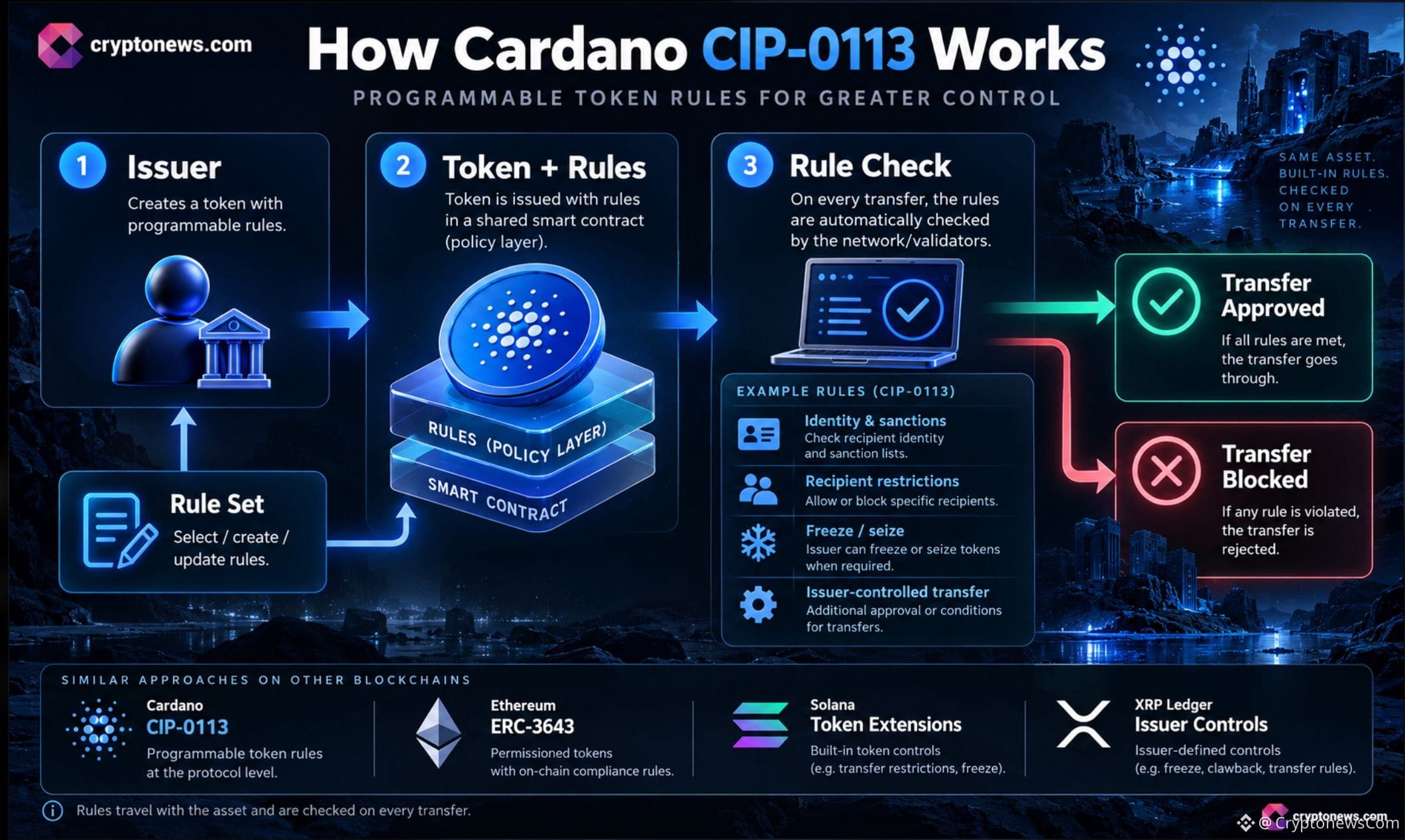
記事
翻訳参照
Cardano News: CIP-0113 Upgrade Could Change ADA FutureGood news coming from The Cardano Foundation as it launched CIP-0113 on mainnet, giving issuers of regulated stablecoins, funds, and bonds a way to embed identity checks, sanctions screening, and transfer controls directly into token logic. These assets can require restrictions that ordinary crypto transfers do not provide.
The standard went live after independent security audits and does not require a hard fork. Its significance for Cardano is institutional tokenization infrastructure, as the network may offer issuers more options.
Cardano’s programmable token standard, CIP-0113, is live on mainnet.
Issuers of stablecoins and other regulated assets can now build compliance rules directly into native Cardano tokens.
Enforced by the network itself. No hard fork required. pic.twitter.com/J6WKo1G6bI
— Cardano Foundation (@Cardano_CF) October 7, 2026
Most crypto tokens can be sent by a holder to any wallet. Banks and fund managers issuing regulated assets onchain may instead need to verify recipients, prevent transfers to sanctioned addresses, and freeze assets when required by a regulator or court.
Under CIP-0113, a fund could reject a transfer to someone who has not passed identity checks, while a stablecoin issuer could block tokens from reaching a sanctioned address. Those restrictions apply as tokens move between holders, including through different wallets or services. That makes token design relevant to both ownership rights and the custody and execution systems institutions use for regulated blockchain assets.
The difference matters for tokenization beyond stablecoins. A token may represent a fund or bond, but the ability to transfer it freely does not by itself settle questions about eligibility, custody, or the rights attached to the underlying asset. Those considerations also shape ownership and liquidity in tokenized assets.
Earn $50 and Enter $300K Prize Draw on EdgeXHow CIP-0113 Applies Rules to Cardano Tokens?
The standard builds issuer-selected rules into the token and checks them before a transfer is accepted. The design keeps tokens in a shared smart contract that controls how they can move, with computers checking transactions, enforcing the selected conditions.
Issuers can select existing rule sets, create their own, and update them as regulations change. Depending on the rules, controls can cover identity and sanctions screening, recipient restrictions, freezing, seizure, and issuer-controlled transfers. Frederik Gregaard, chief executive of the Cardano Foundation, said: “The rules have to travel with the asset and be enforced every time it moves.”
The launch includes Eternl, GeroWallet, CardanoScan, and BloxBean among the tools supporting the standard. That provides a starting point for issuers and users working with the assets, but the existence of supporting tools does not establish how widely tokens will be issued or accepted.
Comparable issuer controls exist elsewhere. Ethereum has permissioned token standards such as ERC-3643; Solana offers transfer controls through token extensions; and the XRP Ledger supports tokens whose issuers can restrict holders and claw back balances. The distinction established by this launch is that Cardano now has CIP-0113 available for regulated stablecoins, funds, and bonds.
Trade ADA on Bybit and Get a Chance to Win Our $1,000 USDT AirdropBeyond Cardano Upgrade News: Issuer Control Creates a Holder and Collateral Trade-Off
Compliance features also give issuers powers that can limit holder autonomy. Depending on the rules, an authorized party could freeze or seize tokens, or move them without the holder’s consent. A token’s transferability, therefore, cannot be assessed separately from the powers its issuer retains.
The technical specification tells lending services to examine those powers before accepting a token as collateral. A token subject to seizure or forced transfers may carry risks that differ from an unrestricted asset, even if it can otherwise be held and transferred through familiar Cardano tools.
The Cardano Foundation also announced recognition under the certification framework of the Capital Markets and Technology Association, a Swiss industry body whose standards are used for issuing tokenized shares. That recognition adds a certification dimension to the launch, but does not establish that CIP-0113 is legally equivalent to another standard.
Cardano (ADA)
24h7d30d1yAll time
CIP-0113 is live on Cardano mainnet following independent audits, with no news on a hard fork. Today, ADA was reported down 4.5% over the preceding 24 hours alongside a broader market decline. Recent Cardano network activity and ADA performance offer market context, but CIP-0113’s direct effect is on the rules available to token issuers.
Discover: The Best Token Presales
The post Cardano News: CIP-0113 Upgrade Could Change ADA Future appeared first on Cryptonews.
Cardano News: CIP-0113 Upgrade Could Change ADA Future
Good news coming from The Cardano Foundation as it launched CIP-0113 on mainnet, giving issuers of regulated stablecoins, funds, and bonds a way to embed identity checks, sanctions screening, and transfer controls directly into token logic. These assets can require restrictions that ordinary crypto transfers do not provide.
The standard went live after independent security audits and does not require a hard fork. Its significance for Cardano is institutional tokenization infrastructure, as the network may offer issuers more options.
Cardano’s programmable token standard, CIP-0113, is live on mainnet.
Issuers of stablecoins and other regulated assets can now build compliance rules directly into native Cardano tokens.
Enforced by the network itself. No hard fork required. pic.twitter.com/J6WKo1G6bI
— Cardano Foundation (@Cardano_CF) October 7, 2026
Most crypto tokens can be sent by a holder to any wallet. Banks and fund managers issuing regulated assets onchain may instead need to verify recipients, prevent transfers to sanctioned addresses, and freeze assets when required by a regulator or court.
Under CIP-0113, a fund could reject a transfer to someone who has not passed identity checks, while a stablecoin issuer could block tokens from reaching a sanctioned address. Those restrictions apply as tokens move between holders, including through different wallets or services. That makes token design relevant to both ownership rights and the custody and execution systems institutions use for regulated blockchain assets.
The difference matters for tokenization beyond stablecoins. A token may represent a fund or bond, but the ability to transfer it freely does not by itself settle questions about eligibility, custody, or the rights attached to the underlying asset. Those considerations also shape ownership and liquidity in tokenized assets.
Earn $50 and Enter $300K Prize Draw on EdgeXHow CIP-0113 Applies Rules to Cardano Tokens?
The standard builds issuer-selected rules into the token and checks them before a transfer is accepted. The design keeps tokens in a shared smart contract that controls how they can move, with computers checking transactions, enforcing the selected conditions.
Issuers can select existing rule sets, create their own, and update them as regulations change. Depending on the rules, controls can cover identity and sanctions screening, recipient restrictions, freezing, seizure, and issuer-controlled transfers. Frederik Gregaard, chief executive of the Cardano Foundation, said: “The rules have to travel with the asset and be enforced every time it moves.”
The launch includes Eternl, GeroWallet, CardanoScan, and BloxBean among the tools supporting the standard. That provides a starting point for issuers and users working with the assets, but the existence of supporting tools does not establish how widely tokens will be issued or accepted.
Comparable issuer controls exist elsewhere. Ethereum has permissioned token standards such as ERC-3643; Solana offers transfer controls through token extensions; and the XRP Ledger supports tokens whose issuers can restrict holders and claw back balances. The distinction established by this launch is that Cardano now has CIP-0113 available for regulated stablecoins, funds, and bonds.
Trade ADA on Bybit and Get a Chance to Win Our $1,000 USDT AirdropBeyond Cardano Upgrade News: Issuer Control Creates a Holder and Collateral Trade-Off
Compliance features also give issuers powers that can limit holder autonomy. Depending on the rules, an authorized party could freeze or seize tokens, or move them without the holder’s consent. A token’s transferability, therefore, cannot be assessed separately from the powers its issuer retains.
The technical specification tells lending services to examine those powers before accepting a token as collateral. A token subject to seizure or forced transfers may carry risks that differ from an unrestricted asset, even if it can otherwise be held and transferred through familiar Cardano tools.
The Cardano Foundation also announced recognition under the certification framework of the Capital Markets and Technology Association, a Swiss industry body whose standards are used for issuing tokenized shares. That recognition adds a certification dimension to the launch, but does not establish that CIP-0113 is legally equivalent to another standard.
Cardano (ADA)
24h7d30d1yAll time
CIP-0113 is live on Cardano mainnet following independent audits, with no news on a hard fork. Today, ADA was reported down 4.5% over the preceding 24 hours alongside a broader market decline. Recent Cardano network activity and ADA performance offer market context, but CIP-0113’s direct effect is on the rules available to token issuers.
Discover: The Best Token Presales
The post Cardano News: CIP-0113 Upgrade Could Change ADA Future appeared first on Cryptonews.
The standard went live after independent security audits and does not require a hard fork. Its significance for Cardano is institutional tokenization infrastructure, as the network may offer issuers more options.
Cardano’s programmable token standard, CIP-0113, is live on mainnet.
Issuers of stablecoins and other regulated assets can now build compliance rules directly into native Cardano tokens.
Enforced by the network itself. No hard fork required. pic.twitter.com/J6WKo1G6bI
— Cardano Foundation (@Cardano_CF) October 7, 2026
Most crypto tokens can be sent by a holder to any wallet. Banks and fund managers issuing regulated assets onchain may instead need to verify recipients, prevent transfers to sanctioned addresses, and freeze assets when required by a regulator or court.
Under CIP-0113, a fund could reject a transfer to someone who has not passed identity checks, while a stablecoin issuer could block tokens from reaching a sanctioned address. Those restrictions apply as tokens move between holders, including through different wallets or services. That makes token design relevant to both ownership rights and the custody and execution systems institutions use for regulated blockchain assets.
The difference matters for tokenization beyond stablecoins. A token may represent a fund or bond, but the ability to transfer it freely does not by itself settle questions about eligibility, custody, or the rights attached to the underlying asset. Those considerations also shape ownership and liquidity in tokenized assets.
Earn $50 and Enter $300K Prize Draw on EdgeXHow CIP-0113 Applies Rules to Cardano Tokens?
The standard builds issuer-selected rules into the token and checks them before a transfer is accepted. The design keeps tokens in a shared smart contract that controls how they can move, with computers checking transactions, enforcing the selected conditions.
Issuers can select existing rule sets, create their own, and update them as regulations change. Depending on the rules, controls can cover identity and sanctions screening, recipient restrictions, freezing, seizure, and issuer-controlled transfers. Frederik Gregaard, chief executive of the Cardano Foundation, said: “The rules have to travel with the asset and be enforced every time it moves.”
The launch includes Eternl, GeroWallet, CardanoScan, and BloxBean among the tools supporting the standard. That provides a starting point for issuers and users working with the assets, but the existence of supporting tools does not establish how widely tokens will be issued or accepted.
Comparable issuer controls exist elsewhere. Ethereum has permissioned token standards such as ERC-3643; Solana offers transfer controls through token extensions; and the XRP Ledger supports tokens whose issuers can restrict holders and claw back balances. The distinction established by this launch is that Cardano now has CIP-0113 available for regulated stablecoins, funds, and bonds.
Trade ADA on Bybit and Get a Chance to Win Our $1,000 USDT AirdropBeyond Cardano Upgrade News: Issuer Control Creates a Holder and Collateral Trade-Off
Compliance features also give issuers powers that can limit holder autonomy. Depending on the rules, an authorized party could freeze or seize tokens, or move them without the holder’s consent. A token’s transferability, therefore, cannot be assessed separately from the powers its issuer retains.
The technical specification tells lending services to examine those powers before accepting a token as collateral. A token subject to seizure or forced transfers may carry risks that differ from an unrestricted asset, even if it can otherwise be held and transferred through familiar Cardano tools.
The Cardano Foundation also announced recognition under the certification framework of the Capital Markets and Technology Association, a Swiss industry body whose standards are used for issuing tokenized shares. That recognition adds a certification dimension to the launch, but does not establish that CIP-0113 is legally equivalent to another standard.
Cardano (ADA)
24h7d30d1yAll time
CIP-0113 is live on Cardano mainnet following independent audits, with no news on a hard fork. Today, ADA was reported down 4.5% over the preceding 24 hours alongside a broader market decline. Recent Cardano network activity and ADA performance offer market context, but CIP-0113’s direct effect is on the rules available to token issuers.
Discover: The Best Token Presales
The post Cardano News: CIP-0113 Upgrade Could Change ADA Future appeared first on Cryptonews.
4

記事
イーロン・マスク氏のGrok AI、ビットコインは2027年までに100万ドルに達する可能性があると予測イーロン・マスク氏のGrok AIは、2026年末までのビットコインの驚くべき価格目標を予測し、本格的な強気相場に画期的な触媒が加われば、BTC/USDは150万ドルに達する可能性があると主張しています。
2026年10月7日時点で、BTCは現在85,200~86,200ドルの間で取引されています。この極端な見通しは、主権国家がビットコインを戦略的準備資産として採用することを原動力とした、2026年後半の力強い強気相場を前提としています。
出典:Grok AI、ビットコインは100万ドルに達する可能性があると予測
米国のような主要経済国がBTCに大規模な投資を行うことに加え、企業による財務資産としての採用が広がり、「ハイパービットコイン化」の機運が高まることなどが考えられます。
イーロン・マスク氏のGrok AI、ビットコインは2027年までに100万ドルに達する可能性があると予測
イーロン・マスク氏のGrok AIは、2026年末までのビットコインの驚くべき価格目標を予測し、本格的な強気相場に画期的な触媒が加われば、BTC/USDは150万ドルに達する可能性があると主張しています。
2026年10月7日時点で、BTCは現在85,200~86,200ドルの間で取引されています。この極端な見通しは、主権国家がビットコインを戦略的準備資産として採用することを原動力とした、2026年後半の力強い強気相場を前提としています。
出典:Grok AI、ビットコインは100万ドルに達する可能性があると予測
米国のような主要経済国がBTCに大規模な投資を行うことに加え、企業による財務資産としての採用が広がり、「ハイパービットコイン化」の機運が高まることなどが考えられます。
2026年10月7日時点で、BTCは現在85,200~86,200ドルの間で取引されています。この極端な見通しは、主権国家がビットコインを戦略的準備資産として採用することを原動力とした、2026年後半の力強い強気相場を前提としています。
出典:Grok AI、ビットコインは100万ドルに達する可能性があると予測
米国のような主要経済国がBTCに大規模な投資を行うことに加え、企業による財務資産としての採用が広がり、「ハイパービットコイン化」の機運が高まることなどが考えられます。
907
記事
Google Gemini AI、Chainlink(LINK)が2027年までに300ドルに達すると予測Google Gemini AIは、本格的な暗号資産の強気相場が再来し、画期的な起爆剤によって勢いを増すことを前提に、LINKが2027年1月1日までに300ドルに達する可能性があると予測しています。
このシナリオでは、2026年後半に強い強気相場が到来するだけでなく、変革をもたらす起爆剤も想定されています。大手の伝統的金融機関、清算機関、そして少なくとも1つの重要な政府機関または規制当局から成るコンソーシアムが、Chainlinkを、大規模なトークン化された実世界資産、オンチェーンの米国債、規制対象の決済システム向けの主要な分散型オラクル兼クロスチェーンデータ検証レイヤーとして正式に指定するというものです。
Google Gemini AI、Chainlink(LINK)が2027年までに300ドルに達すると予測
Google Gemini AIは、本格的な暗号資産の強気相場が再来し、画期的な起爆剤によって勢いを増すことを前提に、LINKが2027年1月1日までに300ドルに達する可能性があると予測しています。
このシナリオでは、2026年後半に強い強気相場が到来するだけでなく、変革をもたらす起爆剤も想定されています。大手の伝統的金融機関、清算機関、そして少なくとも1つの重要な政府機関または規制当局から成るコンソーシアムが、Chainlinkを、大規模なトークン化された実世界資産、オンチェーンの米国債、規制対象の決済システム向けの主要な分散型オラクル兼クロスチェーンデータ検証レイヤーとして正式に指定するというものです。
このシナリオでは、2026年後半に強い強気相場が到来するだけでなく、変革をもたらす起爆剤も想定されています。大手の伝統的金融機関、清算機関、そして少なくとも1つの重要な政府機関または規制当局から成るコンソーシアムが、Chainlinkを、大規模なトークン化された実世界資産、オンチェーンの米国債、規制対象の決済システム向けの主要な分散型オラクル兼クロスチェーンデータ検証レイヤーとして正式に指定するというものです。
211
翻訳参照
XRP Price Chasing Its Tail Despite 3 October CatalystsXRP price trades near $1.50 today as Evernorth’s expected Nasdaq debut under XRPN and two conditional XRP Ledger upgrades approached for October 8-9. Right now, bulls still face resistance around $1.55.
The price action shows little aggressive front-running of the catalyst calendar. A sustained break above $1.55 could put $1.63 in view; without confirmation, $1.45 remains the key downside reference.
Xrp (XRP)
24h7d30d1yAll time
Evernorth’s XRPN Debut and Expanding Access
Armada Acquisition Corp. II shareholders approved the business combination with Evernorth on September 30. The transaction is expected to close on October 7, with the combined company’s Nasdaq trading under ticker XRPN scheduled to begin on October 8.
The Nasdaq building in New York City.
At closing, Evernorth expects to hold 473 million XRP and receive about $300 million in gross cash proceeds. The company has framed the listing as a regulated, transparent route for investors to gain XRP exposure, but that is exposure through company shares, not a direct spot purchase of the token.
That distinction is the market’s key test. XRPN could attract capital and raise Evernorth’s profile without producing equivalent XRP buying, unless the company’s treasury activity or partnerships translate into measurable token demand.
The approved treasury transaction is part of the Evernorth XRP treasury plan, but approval alone does not settle how the public listing will affect spot flows.
Earn $50 and Enter $300K Prize Draw on EdgeXXRP Ledger Upgrade
Two XRP Ledger upgrades could activate around the same window, provided validator support stays above the required threshold. PermissionDelegationV1_1 could activate around October 8, allowing one account to grant another narrowly defined permissions, such as making payments or approving customers, without handing over full control keys.
BatchV1_1 could follow around October 9. It would let users group as many as eight transactions, including all-or-nothing exchanges that could make delivery-versus-payment workflows for tokenized assets more practical. These functions give the XRP Ledger upgrades institutional relevance.
The amendments may improve how financial firms handle permissions and linked transactions on the ledger. They do not, by themselves, establish that banks or asset managers will adopt the features at scale or that adoption will create sustained buying pressure for XRP.
Governance and activation procedures remain part of the market’s assessment of proposed ledger changes, as the XRPL amendment process illustrates.
Trade XRP on Bybit and Get a Chance to Win Our $1,000 USDT AirdropCould Positioning Be the Decisive Factor for the XRP Price?
Large-holder balances changed little over the preceding week, while Binance XRP open interest stood at about $516.6 million. That was above 2026 lows but far below the more than $1.3 billion recorded around October 2025. CryptoQuant analyst R3N characterized the positioning as less leveraged and more cautious.
Lower open interest leaves room for leverage to rebuild if a catalyst draws traders in, but it also confirms that derivatives participants were not aggressively positioned ahead of the dates. The gap between improved infrastructure and confirmed incremental demand for tokens remains unresolved; XRPN shares are not XRP, and a software upgrade is not a flow metric.
On the chart, the immediate hurdle is a sustained break above $1.55. The source’s technical framing places the next potential area near $1.63.
A rejection around $1.53-$1.55 would leave XRP vulnerable to a move back toward $1.45. The October XRP price setup likewise puts resistance and downside levels at the center of the near-term debate, but the catalyst dates alone cannot confirm direction.
The October catalysts create a test, not a guaranteed repricing. A close above $1.55 with follow-through would show buyers responding to the calendar; absent that confirmation, XRP’s muted price and subdued positioning argue against treating institutional access or protocol upgrades as already delivered demand.
Discover: The Best Token Presales
The post XRP Price Chasing Its Tail Despite 3 October Catalysts appeared first on Cryptonews.
XRP Price Chasing Its Tail Despite 3 October Catalysts
XRP price trades near $1.50 today as Evernorth’s expected Nasdaq debut under XRPN and two conditional XRP Ledger upgrades approached for October 8-9. Right now, bulls still face resistance around $1.55.
The price action shows little aggressive front-running of the catalyst calendar. A sustained break above $1.55 could put $1.63 in view; without confirmation, $1.45 remains the key downside reference.
Xrp (XRP)
24h7d30d1yAll time
Evernorth’s XRPN Debut and Expanding Access
Armada Acquisition Corp. II shareholders approved the business combination with Evernorth on September 30. The transaction is expected to close on October 7, with the combined company’s Nasdaq trading under ticker XRPN scheduled to begin on October 8.
The Nasdaq building in New York City.
At closing, Evernorth expects to hold 473 million XRP and receive about $300 million in gross cash proceeds. The company has framed the listing as a regulated, transparent route for investors to gain XRP exposure, but that is exposure through company shares, not a direct spot purchase of the token.
That distinction is the market’s key test. XRPN could attract capital and raise Evernorth’s profile without producing equivalent XRP buying, unless the company’s treasury activity or partnerships translate into measurable token demand.
The approved treasury transaction is part of the Evernorth XRP treasury plan, but approval alone does not settle how the public listing will affect spot flows.
Earn $50 and Enter $300K Prize Draw on EdgeXXRP Ledger Upgrade
Two XRP Ledger upgrades could activate around the same window, provided validator support stays above the required threshold. PermissionDelegationV1_1 could activate around October 8, allowing one account to grant another narrowly defined permissions, such as making payments or approving customers, without handing over full control keys.
BatchV1_1 could follow around October 9. It would let users group as many as eight transactions, including all-or-nothing exchanges that could make delivery-versus-payment workflows for tokenized assets more practical. These functions give the XRP Ledger upgrades institutional relevance.
The amendments may improve how financial firms handle permissions and linked transactions on the ledger. They do not, by themselves, establish that banks or asset managers will adopt the features at scale or that adoption will create sustained buying pressure for XRP.
Governance and activation procedures remain part of the market’s assessment of proposed ledger changes, as the XRPL amendment process illustrates.
Trade XRP on Bybit and Get a Chance to Win Our $1,000 USDT AirdropCould Positioning Be the Decisive Factor for the XRP Price?
Large-holder balances changed little over the preceding week, while Binance XRP open interest stood at about $516.6 million. That was above 2026 lows but far below the more than $1.3 billion recorded around October 2025. CryptoQuant analyst R3N characterized the positioning as less leveraged and more cautious.
Lower open interest leaves room for leverage to rebuild if a catalyst draws traders in, but it also confirms that derivatives participants were not aggressively positioned ahead of the dates. The gap between improved infrastructure and confirmed incremental demand for tokens remains unresolved; XRPN shares are not XRP, and a software upgrade is not a flow metric.
On the chart, the immediate hurdle is a sustained break above $1.55. The source’s technical framing places the next potential area near $1.63.
A rejection around $1.53-$1.55 would leave XRP vulnerable to a move back toward $1.45. The October XRP price setup likewise puts resistance and downside levels at the center of the near-term debate, but the catalyst dates alone cannot confirm direction.
The October catalysts create a test, not a guaranteed repricing. A close above $1.55 with follow-through would show buyers responding to the calendar; absent that confirmation, XRP’s muted price and subdued positioning argue against treating institutional access or protocol upgrades as already delivered demand.
Discover: The Best Token Presales
The post XRP Price Chasing Its Tail Despite 3 October Catalysts appeared first on Cryptonews.
The price action shows little aggressive front-running of the catalyst calendar. A sustained break above $1.55 could put $1.63 in view; without confirmation, $1.45 remains the key downside reference.
Xrp (XRP)
24h7d30d1yAll time
Evernorth’s XRPN Debut and Expanding Access
Armada Acquisition Corp. II shareholders approved the business combination with Evernorth on September 30. The transaction is expected to close on October 7, with the combined company’s Nasdaq trading under ticker XRPN scheduled to begin on October 8.
The Nasdaq building in New York City.
At closing, Evernorth expects to hold 473 million XRP and receive about $300 million in gross cash proceeds. The company has framed the listing as a regulated, transparent route for investors to gain XRP exposure, but that is exposure through company shares, not a direct spot purchase of the token.
That distinction is the market’s key test. XRPN could attract capital and raise Evernorth’s profile without producing equivalent XRP buying, unless the company’s treasury activity or partnerships translate into measurable token demand.
The approved treasury transaction is part of the Evernorth XRP treasury plan, but approval alone does not settle how the public listing will affect spot flows.
Earn $50 and Enter $300K Prize Draw on EdgeXXRP Ledger Upgrade
Two XRP Ledger upgrades could activate around the same window, provided validator support stays above the required threshold. PermissionDelegationV1_1 could activate around October 8, allowing one account to grant another narrowly defined permissions, such as making payments or approving customers, without handing over full control keys.
BatchV1_1 could follow around October 9. It would let users group as many as eight transactions, including all-or-nothing exchanges that could make delivery-versus-payment workflows for tokenized assets more practical. These functions give the XRP Ledger upgrades institutional relevance.
The amendments may improve how financial firms handle permissions and linked transactions on the ledger. They do not, by themselves, establish that banks or asset managers will adopt the features at scale or that adoption will create sustained buying pressure for XRP.
Governance and activation procedures remain part of the market’s assessment of proposed ledger changes, as the XRPL amendment process illustrates.
Trade XRP on Bybit and Get a Chance to Win Our $1,000 USDT AirdropCould Positioning Be the Decisive Factor for the XRP Price?
Large-holder balances changed little over the preceding week, while Binance XRP open interest stood at about $516.6 million. That was above 2026 lows but far below the more than $1.3 billion recorded around October 2025. CryptoQuant analyst R3N characterized the positioning as less leveraged and more cautious.
Lower open interest leaves room for leverage to rebuild if a catalyst draws traders in, but it also confirms that derivatives participants were not aggressively positioned ahead of the dates. The gap between improved infrastructure and confirmed incremental demand for tokens remains unresolved; XRPN shares are not XRP, and a software upgrade is not a flow metric.
On the chart, the immediate hurdle is a sustained break above $1.55. The source’s technical framing places the next potential area near $1.63.
A rejection around $1.53-$1.55 would leave XRP vulnerable to a move back toward $1.45. The October XRP price setup likewise puts resistance and downside levels at the center of the near-term debate, but the catalyst dates alone cannot confirm direction.
The October catalysts create a test, not a guaranteed repricing. A close above $1.55 with follow-through would show buyers responding to the calendar; absent that confirmation, XRP’s muted price and subdued positioning argue against treating institutional access or protocol upgrades as already delivered demand.
Discover: The Best Token Presales
The post XRP Price Chasing Its Tail Despite 3 October Catalysts appeared first on Cryptonews.
5
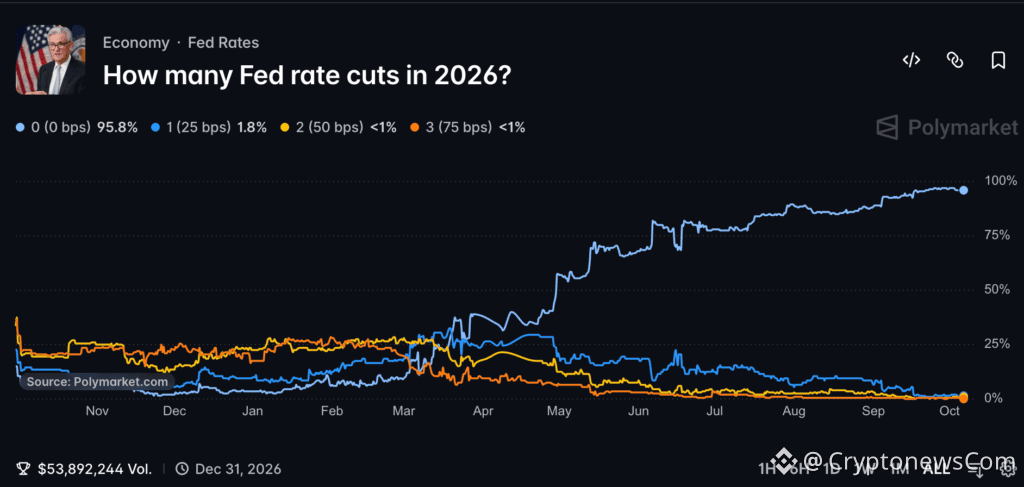
記事
FRBの利下げ予測確率:Polymarketで2026年の利下げゼロが織り込まれる予測市場とアナリストが少なくとももう1回の利上げを引き続き予想するなか、Polymarketでは2026年残りの期間にFRBが利下げをしない確率が95.9%、約96%と織り込まれた。
これは利下げに関する市場の強いシグナルであり、FRBの公式予測ではない。また、別の疑問は未解決のままだ。追加利上げが10月に行われるのか、12月に行われるのか、それとも実施されないのかという点だ。
2026年のFRB利下げに関するPolymarketの契約は、中央銀行が暦年中に何回利下げを実施するかを測るものだ。10月6日のデータ取得時点で、このイベントの総取引高は5,390万ドル、流動性は418万ドルだった。これらの数値が示すのは契約内の取引状況であり、ビットコイン市場の流動性の厚みや暗号資産への資金流入予測ではない。
FRBの利下げ予測確率:Polymarketで2026年の利下げゼロが織り込まれる
予測市場とアナリストが少なくとももう1回の利上げを引き続き予想するなか、Polymarketでは2026年残りの期間にFRBが利下げをしない確率が95.9%、約96%と織り込まれた。
これは利下げに関する市場の強いシグナルであり、FRBの公式予測ではない。また、別の疑問は未解決のままだ。追加利上げが10月に行われるのか、12月に行われるのか、それとも実施されないのかという点だ。
2026年のFRB利下げに関するPolymarketの契約は、中央銀行が暦年中に何回利下げを実施するかを測るものだ。10月6日のデータ取得時点で、このイベントの総取引高は5,390万ドル、流動性は418万ドルだった。これらの数値が示すのは契約内の取引状況であり、ビットコイン市場の流動性の厚みや暗号資産への資金流入予測ではない。
これは利下げに関する市場の強いシグナルであり、FRBの公式予測ではない。また、別の疑問は未解決のままだ。追加利上げが10月に行われるのか、12月に行われるのか、それとも実施されないのかという点だ。
2026年のFRB利下げに関するPolymarketの契約は、中央銀行が暦年中に何回利下げを実施するかを測るものだ。10月6日のデータ取得時点で、このイベントの総取引高は5,390万ドル、流動性は418万ドルだった。これらの数値が示すのは契約内の取引状況であり、ビットコイン市場の流動性の厚みや暗号資産への資金流入予測ではない。
33

記事
XRPニュース:ClearpoolのXRPL移行はRLUSDに注目Clearpoolの保有者は、EthereumベースのCPOOLからXRP LedgerベースのCLEARへの1対1の移行を97%の賛成で承認しました。ニュースが伝わるなか、XRPは約1.50ドルで取引されていました。この投票により、XRPLの機関投資家向けクレジットサービスが強化されます。予定されている融資にはRLUSDが使われ、Clearpoolによるトークン買い戻しはCLEARを支えることを目的としています。
Clearpoolはプライベートクレジットに注力しており、2021年以降、機関投資家向け融資を9億3,000万ドル超仲介してきました。承認された計画では、CPOOLトークン1枚をCLEARトークン1枚と交換し、プロジェクトのトークン活動をEthereumからXRP Ledgerへ移行します。報告書によると、ローンチ時のCLEAR流通量は約11億枚になる見込みです。
XRPニュース:ClearpoolのXRPL移行はRLUSDに注目
Clearpoolの保有者は、EthereumベースのCPOOLからXRP LedgerベースのCLEARへの1対1の移行を97%の賛成で承認しました。ニュースが伝わるなか、XRPは約1.50ドルで取引されていました。この投票により、XRPLの機関投資家向けクレジットサービスが強化されます。予定されている融資にはRLUSDが使われ、Clearpoolによるトークン買い戻しはCLEARを支えることを目的としています。
Clearpoolはプライベートクレジットに注力しており、2021年以降、機関投資家向け融資を9億3,000万ドル超仲介してきました。承認された計画では、CPOOLトークン1枚をCLEARトークン1枚と交換し、プロジェクトのトークン活動をEthereumからXRP Ledgerへ移行します。報告書によると、ローンチ時のCLEAR流通量は約11億枚になる見込みです。
Clearpoolはプライベートクレジットに注力しており、2021年以降、機関投資家向け融資を9億3,000万ドル超仲介してきました。承認された計画では、CPOOLトークン1枚をCLEARトークン1枚と交換し、プロジェクトのトークン活動をEthereumからXRP Ledgerへ移行します。報告書によると、ローンチ時のCLEAR流通量は約11億枚になる見込みです。
11

記事
Enjinの2つのチェーンアップグレード、ガバナンス承認待ち:可決されるか?Enjinの公式変更履歴では、Fort CanningのRelaychainランタイム1.8.0を2026年11月9日、Matrixchainランタイム1.4.1を11月16日に予定しています。いずれもガバナンス投票での可決が条件です。
2026年10月5日付のEnjinブロックチェーン公式変更履歴には、提案されているアップグレードのスケジュールや技術的な変更点を含む詳細な記載があります。
Enjinの今回のアップグレードを前に、ネイティブトークンのENJは0.033ドルで取引されており、週次では依然として+14%上昇しているものの、当日は-1%下落しています。時価総額は6,600万ドルで、2021年に記録した史上最高値の4.82ドルから99%下落している同トークンについて、投資家は今回のアップグレードが上昇のきっかけになることを期待しています。
Enjinの2つのチェーンアップグレード、ガバナンス承認待ち:可決されるか?
Enjinの公式変更履歴では、Fort CanningのRelaychainランタイム1.8.0を2026年11月9日、Matrixchainランタイム1.4.1を11月16日に予定しています。いずれもガバナンス投票での可決が条件です。
2026年10月5日付のEnjinブロックチェーン公式変更履歴には、提案されているアップグレードのスケジュールや技術的な変更点を含む詳細な記載があります。
Enjinの今回のアップグレードを前に、ネイティブトークンのENJは0.033ドルで取引されており、週次では依然として+14%上昇しているものの、当日は-1%下落しています。時価総額は6,600万ドルで、2021年に記録した史上最高値の4.82ドルから99%下落している同トークンについて、投資家は今回のアップグレードが上昇のきっかけになることを期待しています。
2026年10月5日付のEnjinブロックチェーン公式変更履歴には、提案されているアップグレードのスケジュールや技術的な変更点を含む詳細な記載があります。
Enjinの今回のアップグレードを前に、ネイティブトークンのENJは0.033ドルで取引されており、週次では依然として+14%上昇しているものの、当日は-1%下落しています。時価総額は6,600万ドルで、2021年に記録した史上最高値の4.82ドルから99%下落している同トークンについて、投資家は今回のアップグレードが上昇のきっかけになることを期待しています。
296

記事
ニューヨークのApeFestミートアップを前に、ApeCoin価格がサポートを試すApeCoin(APE)は0.161ドルで取引されており、過去24時間で4%を超える下落となっています。市場は、ニューヨークでのコミュニティミートアップと、ApeChainへの需要をめぐるより広範な試練を見極めています。イベント日程だけから想像するほど、状況は単純ではありません。参加者数よりも、流動性、トークン供給量、実際の利用状況が依然として重要です。
ApeCoinとAlchemyは、ApeChain上で開発を進めるチームや、ApeFestに先立って現地入りする参加者を対象に、10月13日にニューヨークでコワーキング・ミートアップを開催します。イベント告知では、開発者やコミュニティとの交流を呼びかけており、埋め込み投稿には参加登録リンクも含まれています。これは認知度向上のきっかけにはなりますが、トークン需要が直接変化した証拠ではありません。
ニューヨークのApeFestミートアップを前に、ApeCoin価格がサポートを試す
ApeCoin(APE)は0.161ドルで取引されており、過去24時間で4%を超える下落となっています。市場は、ニューヨークでのコミュニティミートアップと、ApeChainへの需要をめぐるより広範な試練を見極めています。イベント日程だけから想像するほど、状況は単純ではありません。参加者数よりも、流動性、トークン供給量、実際の利用状況が依然として重要です。
ApeCoinとAlchemyは、ApeChain上で開発を進めるチームや、ApeFestに先立って現地入りする参加者を対象に、10月13日にニューヨークでコワーキング・ミートアップを開催します。イベント告知では、開発者やコミュニティとの交流を呼びかけており、埋め込み投稿には参加登録リンクも含まれています。これは認知度向上のきっかけにはなりますが、トークン需要が直接変化した証拠ではありません。
ApeCoinとAlchemyは、ApeChain上で開発を進めるチームや、ApeFestに先立って現地入りする参加者を対象に、10月13日にニューヨークでコワーキング・ミートアップを開催します。イベント告知では、開発者やコミュニティとの交流を呼びかけており、埋め込み投稿には参加登録リンクも含まれています。これは認知度向上のきっかけにはなりますが、トークン需要が直接変化した証拠ではありません。
2
351

記事
Solanaニュース:DvPがアトミック決済を目指すSolana Foundationは、機関投資家がSolana上でトークン化資産と決済をアトミックに決済できるようにするオープンソース標準「DvP」を発表しました。決済完了までの目標時間は数秒です。従来の証券決済には通常1~2営業日かかり、その間、資本は移動中の状態となり、取引相手はリスクにさらされます。
従来の市場では、資産と現金のそれぞれの移転が完了するまでに、取引は清算機関、証券保管機関、カストディアンを経由します。このプロセスには通常1~2営業日かかります。双方の決済が完了するまで、参加者には元本リスクが生じる可能性があります。つまり、証券が届かないまま支払いが行われたり、支払いがないまま資産が引き渡されたりするおそれがあります。
Solanaニュース:DvPがアトミック決済を目指す
Solana Foundationは、機関投資家がSolana上でトークン化資産と決済をアトミックに決済できるようにするオープンソース標準「DvP」を発表しました。決済完了までの目標時間は数秒です。従来の証券決済には通常1~2営業日かかり、その間、資本は移動中の状態となり、取引相手はリスクにさらされます。
従来の市場では、資産と現金のそれぞれの移転が完了するまでに、取引は清算機関、証券保管機関、カストディアンを経由します。このプロセスには通常1~2営業日かかります。双方の決済が完了するまで、参加者には元本リスクが生じる可能性があります。つまり、証券が届かないまま支払いが行われたり、支払いがないまま資産が引き渡されたりするおそれがあります。
従来の市場では、資産と現金のそれぞれの移転が完了するまでに、取引は清算機関、証券保管機関、カストディアンを経由します。このプロセスには通常1~2営業日かかります。双方の決済が完了するまで、参加者には元本リスクが生じる可能性があります。つまり、証券が届かないまま支払いが行われたり、支払いがないまま資産が引き渡されたりするおそれがあります。
10

記事
ハイテク株に続きビットコイン価格は反落する可能性があるとピーター・シフ氏Strategyは最新の開示で、約2,870万ドルで334 BTCを購入し、1億7,600万ドル分のSTRCを買い戻した。一方、ピーター・シフ氏は、ハイテク株が下落すればビットコイン価格が反落する可能性があると警告した。相反するシグナルを踏まえると、Strategyが買い増しを続けているかどうか以上に、より重要な問いが浮かび上がる。市場のリスク選好が弱まった場合、現在の資金調達の組み合わせで、より大規模な購入を継続できるのだろうか。
Strategyの保有量は848,000 BTCに達し、ビットコイン総供給量の4%をわずかに上回った。ビットコインは約86,000ドルで取引され、7日間で4%超、30日間で8%超上昇したが、前年同期比では依然として30%下落している。
ハイテク株に続きビットコイン価格は反落する可能性があるとピーター・シフ氏
Strategyは最新の開示で、約2,870万ドルで334 BTCを購入し、1億7,600万ドル分のSTRCを買い戻した。一方、ピーター・シフ氏は、ハイテク株が下落すればビットコイン価格が反落する可能性があると警告した。相反するシグナルを踏まえると、Strategyが買い増しを続けているかどうか以上に、より重要な問いが浮かび上がる。市場のリスク選好が弱まった場合、現在の資金調達の組み合わせで、より大規模な購入を継続できるのだろうか。
Strategyの保有量は848,000 BTCに達し、ビットコイン総供給量の4%をわずかに上回った。ビットコインは約86,000ドルで取引され、7日間で4%超、30日間で8%超上昇したが、前年同期比では依然として30%下落している。
Strategyの保有量は848,000 BTCに達し、ビットコイン総供給量の4%をわずかに上回った。ビットコインは約86,000ドルで取引され、7日間で4%超、30日間で8%超上昇したが、前年同期比では依然として30%下落している。
11
TOKEN2049 Singapore、2026年の議題に機関投資家向けDeFiを掲げるTOKEN2049 Singaporeは2026年10月7〜8日に開催予定で、Nasdaq、BlackRock、Franklin Templetonの登壇者に加え、Hyperliquid、Solana、Polygon、Base、Ethereum関連プロジェクトの幹部も登壇することが確定しています。アジェンダからは、機関投資家向けDeFiとオンチェーン市場インフラが中心的なテーマとなることがうかがえます。
公式登壇者リストには、Nasdaqの会長兼CEOであるAdena Friedman氏、BlackRockのデジタル資産担当ディレクターであるNikhil Sharma氏、Franklin TempletonのCEOであるJenny Johnson氏、Morgan Stanleyのデジタル資産戦略責任者であるAmy Oldenburg氏が名を連ねています。各登壇者の役職からは、イベントのプログラムで伝統的な金融機関と暗号資産ネイティブの事業者が直接並ぶ構図が見て取れます。
TOKEN2049 Singapore、2026年の議題に機関投資家向けDeFiを掲げる
TOKEN2049 Singaporeは2026年10月7〜8日に開催予定で、Nasdaq、BlackRock、Franklin Templetonの登壇者に加え、Hyperliquid、Solana、Polygon、Base、Ethereum関連プロジェクトの幹部も登壇することが確定しています。アジェンダからは、機関投資家向けDeFiとオンチェーン市場インフラが中心的なテーマとなることがうかがえます。
公式登壇者リストには、Nasdaqの会長兼CEOであるAdena Friedman氏、BlackRockのデジタル資産担当ディレクターであるNikhil Sharma氏、Franklin TempletonのCEOであるJenny Johnson氏、Morgan Stanleyのデジタル資産戦略責任者であるAmy Oldenburg氏が名を連ねています。各登壇者の役職からは、イベントのプログラムで伝統的な金融機関と暗号資産ネイティブの事業者が直接並ぶ構図が見て取れます。
公式登壇者リストには、Nasdaqの会長兼CEOであるAdena Friedman氏、BlackRockのデジタル資産担当ディレクターであるNikhil Sharma氏、Franklin TempletonのCEOであるJenny Johnson氏、Morgan Stanleyのデジタル資産戦略責任者であるAmy Oldenburg氏が名を連ねています。各登壇者の役職からは、イベントのプログラムで伝統的な金融機関と暗号資産ネイティブの事業者が直接並ぶ構図が見て取れます。
162
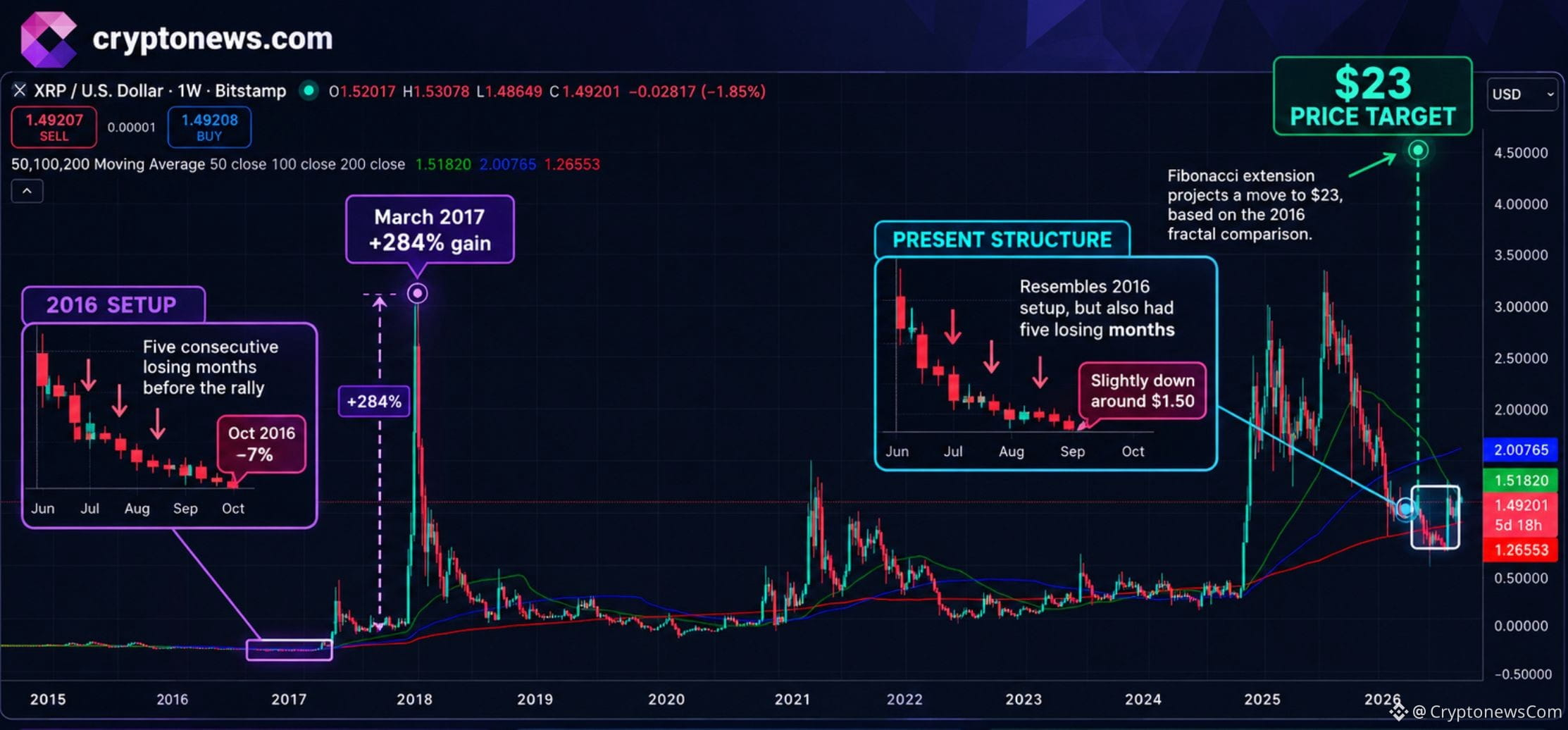
記事
XRP価格予測:2016年のチャートをなぞり、23ドルを目指すXRPは1.50ドル前後で取引され、わずかに下落していますが、長期チャートを比較すると23ドルという予測が示されています。2016年との類似性は際立っていますが、当時の相場は5カ月連続の下落から始まっており、この点が予測のリスク特性を大きく変えます。
アナリストは、XRPの現在の値動きの構造を2016年のチャートに重ね、フィボナッチ・エクステンションを使って目標価格を予測しています。この比較では、長期下落の後、2017年3月に284%上昇した動きが参考にされています。2016年10月にはXRPが7%下落し、その後4カ月連続で値を下げました。
XRP価格予測:2016年のチャートをなぞり、23ドルを目指す
XRPは1.50ドル前後で取引され、わずかに下落していますが、長期チャートを比較すると23ドルという予測が示されています。2016年との類似性は際立っていますが、当時の相場は5カ月連続の下落から始まっており、この点が予測のリスク特性を大きく変えます。
アナリストは、XRPの現在の値動きの構造を2016年のチャートに重ね、フィボナッチ・エクステンションを使って目標価格を予測しています。この比較では、長期下落の後、2017年3月に284%上昇した動きが参考にされています。2016年10月にはXRPが7%下落し、その後4カ月連続で値を下げました。
アナリストは、XRPの現在の値動きの構造を2016年のチャートに重ね、フィボナッチ・エクステンションを使って目標価格を予測しています。この比較では、長期下落の後、2017年3月に284%上昇した動きが参考にされています。2016年10月にはXRPが7%下落し、その後4カ月連続で値を下げました。
11

記事
ビットコイン価格予測:Strategyが第3四半期に210億ドルの利益を計上、Striveは1億6,900万ドル相当のBTCを購入ビットコインは85,500ドルで取引され、過去24時間で0.6%下落。直近では86,000ドルを回復し、87,000ドルを下回る水準を試していたが、価格予測は依然として強気に傾いている。今回の反落により、ブレイクアウトの試みが改めて注目されている。企業による購入は相当な規模だが、まだ目先のレジスタンスを突破できていない。
Strategyは、ビットコイン保有分について第3四半期に推定209億1,000万ドルの利益を計上したと報告。一方、StriveはBTCを2,000枚、1枚あたり平均84,422ドル、総額1億6,900万ドルで購入したと開示した。Striveの提出書類によると、保有総数は29,462 BTCとなった。
ビットコイン価格予測:Strategyが第3四半期に210億ドルの利益を計上、Striveは1億6,900万ドル相当のBTCを購入
ビットコインは85,500ドルで取引され、過去24時間で0.6%下落。直近では86,000ドルを回復し、87,000ドルを下回る水準を試していたが、価格予測は依然として強気に傾いている。今回の反落により、ブレイクアウトの試みが改めて注目されている。企業による購入は相当な規模だが、まだ目先のレジスタンスを突破できていない。
Strategyは、ビットコイン保有分について第3四半期に推定209億1,000万ドルの利益を計上したと報告。一方、StriveはBTCを2,000枚、1枚あたり平均84,422ドル、総額1億6,900万ドルで購入したと開示した。Striveの提出書類によると、保有総数は29,462 BTCとなった。
Strategyは、ビットコイン保有分について第3四半期に推定209億1,000万ドルの利益を計上したと報告。一方、StriveはBTCを2,000枚、1枚あたり平均84,422ドル、総額1億6,900万ドルで購入したと開示した。Striveの提出書類によると、保有総数は29,462 BTCとなった。
8
ログインして、さらにコンテンツを読む
厳選トピックで世界の暗号資産トレーダーの仲間入り
⚡️ 暗号資産に関する最新かつ有益な情報が見つかります。
💬 世界最大の暗号資産取引所から信頼されています。
👍 認証を受けたクリエイターから、有益なインサイトを得られます。
メール / 電話番号
トレンドトピック
FedMinutesFocusOnOctoberPause
閲覧回数 81,656
954人が討論中
🚨 警戒レベル引き上げ ‼️ 次の1時間は無闇に取引しないでください 🚨
皆さん、FOMC議事要旨の発表まで1時間を切りました。
今日すでに大きなボラティリティが見られたことを考えると、発表直前に誰にも無謀な高レバレッジポジションを取ってほしくありません。
私が注目している大きな反応は、ゴールド(XAU)、シルバー(XAG)、BTC、ETHです。さらにSOLのような銘柄や、レバレッジの高い時価総額が中小規模のアルトコインは、BTCの値動きを増幅させる可能性があります。
今夜は特にゴールドとシルバーに注意が必要です。市場はすでに米ドルと米国債利回りに反応しており、両方の貴金属はFRB議事要旨の発表を前に大きな圧力を受けています。
簡単に言うと、
📉タカ派的なFOMC議事要旨 → 米ドル・利回りが上昇する可能性 → BTC、暗号資産、ゴールド、シルバーに下押し圧力
📈ハト派的なFOMC議事要旨 → 米ドル・利回りが落ち着く可能性 → BTC、ゴールド、シルバー、リスク資産が大きく反発する可能性があります。
そして、最初のローソク足が罠になることもあるので忘れないでください。一度急騰してすぐに急落し、両方向で清算が起きてから、本当の方向性が見えてくることもあります。
今はポジションを守り、不要なレバレッジを減らし、最初の値動きにFOMOで飛び乗らないようにしてください。
今夜はまず$XAU 、$XAG 、$BTC を注視しています。これらの動きを見れば、市場がFRBの発表をどう受け止めているか、すぐに分かるでしょう。
時間どおりに皆さんに最新情報をお知らせします。
@Panda Traders をフォローして、今すぐ通知をオンにしてください。
#FedMinutesFocusOnOctoberPause
Panda Traders
·いいね:14件
·閲覧回数 2.7k
BinanceLaunchesBinanceIntelligence
閲覧回数 1M
6,212人が討論中
EvernorthDelaysNasdaqDebutToOct12
閲覧回数 4,568
185人が討論中