

OfficialYousufCrypto
9.1k 投稿

OfficialYousufCrypto
報告
ユーザーをブロック
Spot Trader | Intraday • Swing • DCA 📊 Market insights, trade setups & Binance campaigns. Follow for clear crypto updates, research & opportunities.
取引を発注
高頻度トレーダー
5.4年
56 フォロー
1.6K+ フォロワー
11.1K+ いいね
投稿
ポートフォリオ
すべて
引用
動画
翻訳参照
🚨 BIG MOVE: HSBC is preparing to launch its own Hong Kong dollar stablecoin, HSBC RedCoin, in the second half of 2026.
The stablecoin will be designed to maintain a 1:1 value with the Hong Kong dollar and backed by high-quality, highly liquid segregated assets.
The initial rollout will happen through platforms millions of customers already use:
• PayMe
• HSBC HK Mobile App
• P2P transfers
• Merchant payments
HSBC also plans to expand RedCoin into tokenised investment products and broader wholesale, corporate and institutional use cases.
The key advantage is distribution.
Instead of requiring users to download a new crypto wallet or payment app, HSBC can integrate the stablecoin directly into its existing banking ecosystem.
But major questions remain.
HSBC has not yet revealed the exact launch date or blockchain, and the token has not been issued yet.
Those details could determine whether RedCoin remains primarily an HSBC payment product or becomes a more widely used form of Hong Kong dollar digital liquidity.
Source: HSBC
$ONDO
{future}(ONDOUSDT)
$NIGHT
{future}(NIGHTUSDT)
$WLD
{future}(WLDUSDT)
🚨 BIG MOVE: HSBC is preparing to launch its own Hong Kong dollar stablecoin, HSBC RedCoin, in the second half of 2026.
The stablecoin will be designed to maintain a 1:1 value with the Hong Kong dollar and backed by high-quality, highly liquid segregated assets.
The initial rollout will happen through platforms millions of customers already use:
• PayMe
• HSBC HK Mobile App
• P2P transfers
• Merchant payments
HSBC also plans to expand RedCoin into tokenised investment products and broader wholesale, corporate and institutional use cases.
The key advantage is distribution.
Instead of requiring users to download a new crypto wallet or payment app, HSBC can integrate the stablecoin directly into its existing banking ecosystem.
But major questions remain.
HSBC has not yet revealed the exact launch date or blockchain, and the token has not been issued yet.
Those details could determine whether RedCoin remains primarily an HSBC payment product or becomes a more widely used form of Hong Kong dollar digital liquidity.
Source: HSBC
$ONDO
$NIGHT
$WLD
The stablecoin will be designed to maintain a 1:1 value with the Hong Kong dollar and backed by high-quality, highly liquid segregated assets.
The initial rollout will happen through platforms millions of customers already use:
• PayMe
• HSBC HK Mobile App
• P2P transfers
• Merchant payments
HSBC also plans to expand RedCoin into tokenised investment products and broader wholesale, corporate and institutional use cases.
The key advantage is distribution.
Instead of requiring users to download a new crypto wallet or payment app, HSBC can integrate the stablecoin directly into its existing banking ecosystem.
But major questions remain.
HSBC has not yet revealed the exact launch date or blockchain, and the token has not been issued yet.
Those details could determine whether RedCoin remains primarily an HSBC payment product or becomes a more widely used form of Hong Kong dollar digital liquidity.
Source: HSBC
$ONDO
$NIGHT
$WLD

1
本人確認中
翻訳参照
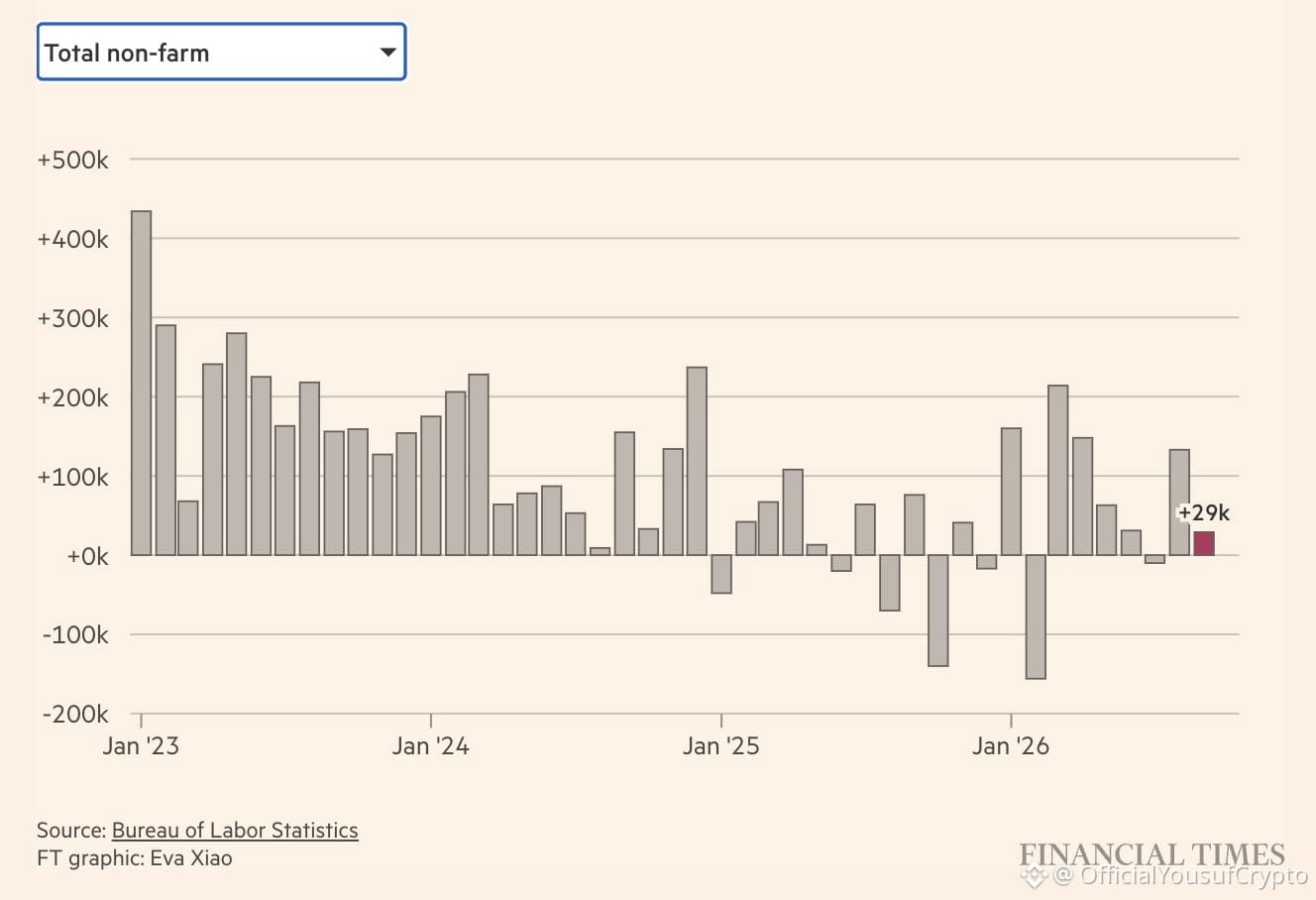
TODAY: U.S. markets jumped after a much weaker-than-expected jobs report sent Treasury yields lower and strengthened expectations that the Fed could keep rates on hold in October.
September payrolls rose by just 29,000, the weakest positive monthly jobs gain of 2026.
Unemployment also climbed to 4.2%.
Markets reacted quickly:
S&P 500: +1%
Dow Jones: +385 points
Nasdaq: +1.4%
Weak jobs data is usually bad news for the economy.
But for markets, it can mean something very different:
Slower hiring → lower rate-hike expectations → lower yields → more appetite for risk assets.
Bad news for jobs. Good news for stocks.
$QNT
{future}(QNTUSDT)
$WLD
{future}(WLDUSDT)
$SKY
{future}(SKYUSDT)
TODAY: U.S. markets jumped after a much weaker-than-expected jobs report sent Treasury yields lower and strengthened expectations that the Fed could keep rates on hold in October.
September payrolls rose by just 29,000, the weakest positive monthly jobs gain of 2026.
Unemployment also climbed to 4.2%.
Markets reacted quickly:
S&P 500: +1%
Dow Jones: +385 points
Nasdaq: +1.4%
Weak jobs data is usually bad news for the economy.
But for markets, it can mean something very different:
Slower hiring → lower rate-hike expectations → lower yields → more appetite for risk assets.
Bad news for jobs. Good news for stocks.
$QNT
$WLD
$SKY
September payrolls rose by just 29,000, the weakest positive monthly jobs gain of 2026.
Unemployment also climbed to 4.2%.
Markets reacted quickly:
S&P 500: +1%
Dow Jones: +385 points
Nasdaq: +1.4%
Weak jobs data is usually bad news for the economy.
But for markets, it can mean something very different:
Slower hiring → lower rate-hike expectations → lower yields → more appetite for risk assets.
Bad news for jobs. Good news for stocks.
$QNT
$WLD
$SKY

646
翻訳参照
NEW: Meta’s AI agent Muse is off to a remarkably fast start.
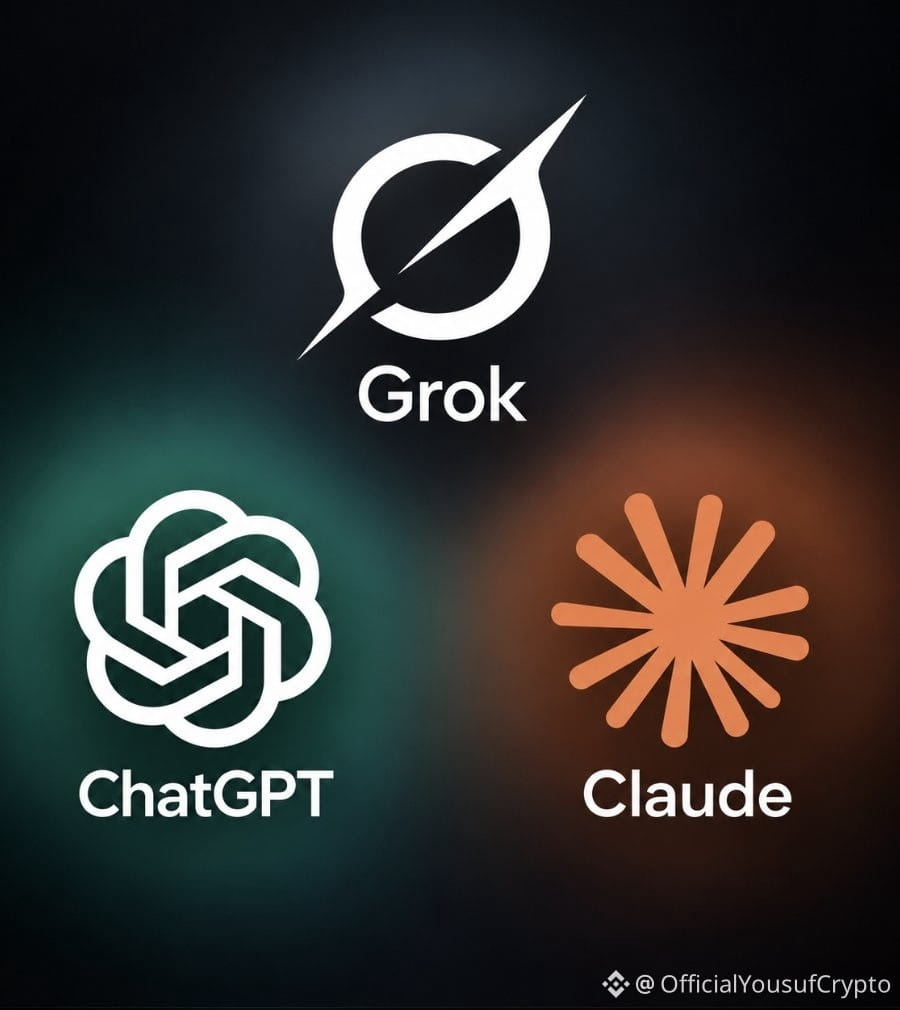
Muse reportedly crossed 5 MILLION U.S. downloads in just 22 days, according to Sensor Tower estimates.
For comparison:
ChatGPT: 56 days
Grok: 103 days
Claude: 492 days
Muse has also held the No. 1 position on the U.S. App Store for 12 consecutive days.
But there’s important context.
Muse launched on both iOS and Android in the U.S. and Canada, while some competing AI apps had more limited platform availability at launch. Meta has also pushed the app aggressively through its own advertising network.
Even so, the early numbers are significant.
Unlike a traditional chatbot, Muse is built around AI agents that can take actions for users, including researching the web, booking travel, shopping and filling out forms.
The bigger question now is whether Meta can turn this huge initial download surge into sustained daily usage and long-term adoption.
The consumer AI agent race is getting serious.
$NIGHT
{future}(NIGHTUSDT)
$PUMP
{future}(PUMPUSDT)
$CC
{future}(CCUSDT)
NEW: Meta’s AI agent Muse is off to a remarkably fast start.
Muse reportedly crossed 5 MILLION U.S. downloads in just 22 days, according to Sensor Tower estimates.
For comparison:
ChatGPT: 56 days
Grok: 103 days
Claude: 492 days
Muse has also held the No. 1 position on the U.S. App Store for 12 consecutive days.
But there’s important context.
Muse launched on both iOS and Android in the U.S. and Canada, while some competing AI apps had more limited platform availability at launch. Meta has also pushed the app aggressively through its own advertising network.
Even so, the early numbers are significant.
Unlike a traditional chatbot, Muse is built around AI agents that can take actions for users, including researching the web, booking travel, shopping and filling out forms.
The bigger question now is whether Meta can turn this huge initial download surge into sustained daily usage and long-term adoption.
The consumer AI agent race is getting serious.
$NIGHT
$PUMP
$CC
Muse reportedly crossed 5 MILLION U.S. downloads in just 22 days, according to Sensor Tower estimates.
For comparison:
ChatGPT: 56 days
Grok: 103 days
Claude: 492 days
Muse has also held the No. 1 position on the U.S. App Store for 12 consecutive days.
But there’s important context.
Muse launched on both iOS and Android in the U.S. and Canada, while some competing AI apps had more limited platform availability at launch. Meta has also pushed the app aggressively through its own advertising network.
Even so, the early numbers are significant.
Unlike a traditional chatbot, Muse is built around AI agents that can take actions for users, including researching the web, booking travel, shopping and filling out forms.
The bigger question now is whether Meta can turn this huge initial download surge into sustained daily usage and long-term adoption.
The consumer AI agent race is getting serious.
$NIGHT
$PUMP
$CC

298
翻訳参照
BREAKING: U.S. jobs data just came in far weaker than expected.
NFP: 29K vs 90K expected
Previous: 133K revised
Unemployment: 4.2% vs 4.1% expected
That’s a massive miss versus expectations, with September hiring slowing sharply.
The weak labor data could strengthen expectations for easier Fed policy, potentially putting pressure on yields and the dollar while supporting risk assets such as stocks and crypto.
But there’s another side to the story.
If labor-market weakness continues, markets could eventually shift from “rate-cut optimism” toward recession concerns.
The key question now: Is this a one-month slowdown, or the start of a broader labor-market trend?
$ONDO
{future}(ONDOUSDT)
$QNT
{future}(QNTUSDT)
$JUP
{future}(JUPUSDT)
BREAKING: U.S. jobs data just came in far weaker than expected.
NFP: 29K vs 90K expected
Previous: 133K revised
Unemployment: 4.2% vs 4.1% expected
That’s a massive miss versus expectations, with September hiring slowing sharply.
The weak labor data could strengthen expectations for easier Fed policy, potentially putting pressure on yields and the dollar while supporting risk assets such as stocks and crypto.
But there’s another side to the story.
If labor-market weakness continues, markets could eventually shift from “rate-cut optimism” toward recession concerns.
The key question now: Is this a one-month slowdown, or the start of a broader labor-market trend?
$ONDO
$QNT
$JUP
NFP: 29K vs 90K expected
Previous: 133K revised
Unemployment: 4.2% vs 4.1% expected
That’s a massive miss versus expectations, with September hiring slowing sharply.
The weak labor data could strengthen expectations for easier Fed policy, potentially putting pressure on yields and the dollar while supporting risk assets such as stocks and crypto.
But there’s another side to the story.
If labor-market weakness continues, markets could eventually shift from “rate-cut optimism” toward recession concerns.
The key question now: Is this a one-month slowdown, or the start of a broader labor-market trend?
$ONDO
$QNT
$JUP
510
翻訳参照
🇺🇸 FED RATE HIKE CASE JUST GOT MUCH WEAKER
The latest U.S. jobs report came in softer than expected.
Unemployment rose to 4.2%, up from 4.1%, while the economy added just 29,000 jobs versus roughly 90,000 expected.
The weaker labor-market data has reduced expectations for another Fed rate hike in October. Reuters reported that markets were pricing roughly a 22% chance of another hike after the report.
For crypto markets, lower expectations for additional tightening can be supportive because financial conditions may become less restrictive.
The key question now: how will the Fed respond to the cooling labor market?
$WLD
{future}(WLDUSDT)
$QNT
{future}(QNTUSDT)
$JUP
{future}(JUPUSDT)
🇺🇸 FED RATE HIKE CASE JUST GOT MUCH WEAKER
The latest U.S. jobs report came in softer than expected.
Unemployment rose to 4.2%, up from 4.1%, while the economy added just 29,000 jobs versus roughly 90,000 expected.
The weaker labor-market data has reduced expectations for another Fed rate hike in October. Reuters reported that markets were pricing roughly a 22% chance of another hike after the report.
For crypto markets, lower expectations for additional tightening can be supportive because financial conditions may become less restrictive.
The key question now: how will the Fed respond to the cooling labor market?
$WLD
$QNT
$JUP
The latest U.S. jobs report came in softer than expected.
Unemployment rose to 4.2%, up from 4.1%, while the economy added just 29,000 jobs versus roughly 90,000 expected.
The weaker labor-market data has reduced expectations for another Fed rate hike in October. Reuters reported that markets were pricing roughly a 22% chance of another hike after the report.
For crypto markets, lower expectations for additional tightening can be supportive because financial conditions may become less restrictive.
The key question now: how will the Fed respond to the cooling labor market?
$WLD
$QNT
$JUP
608
翻訳参照
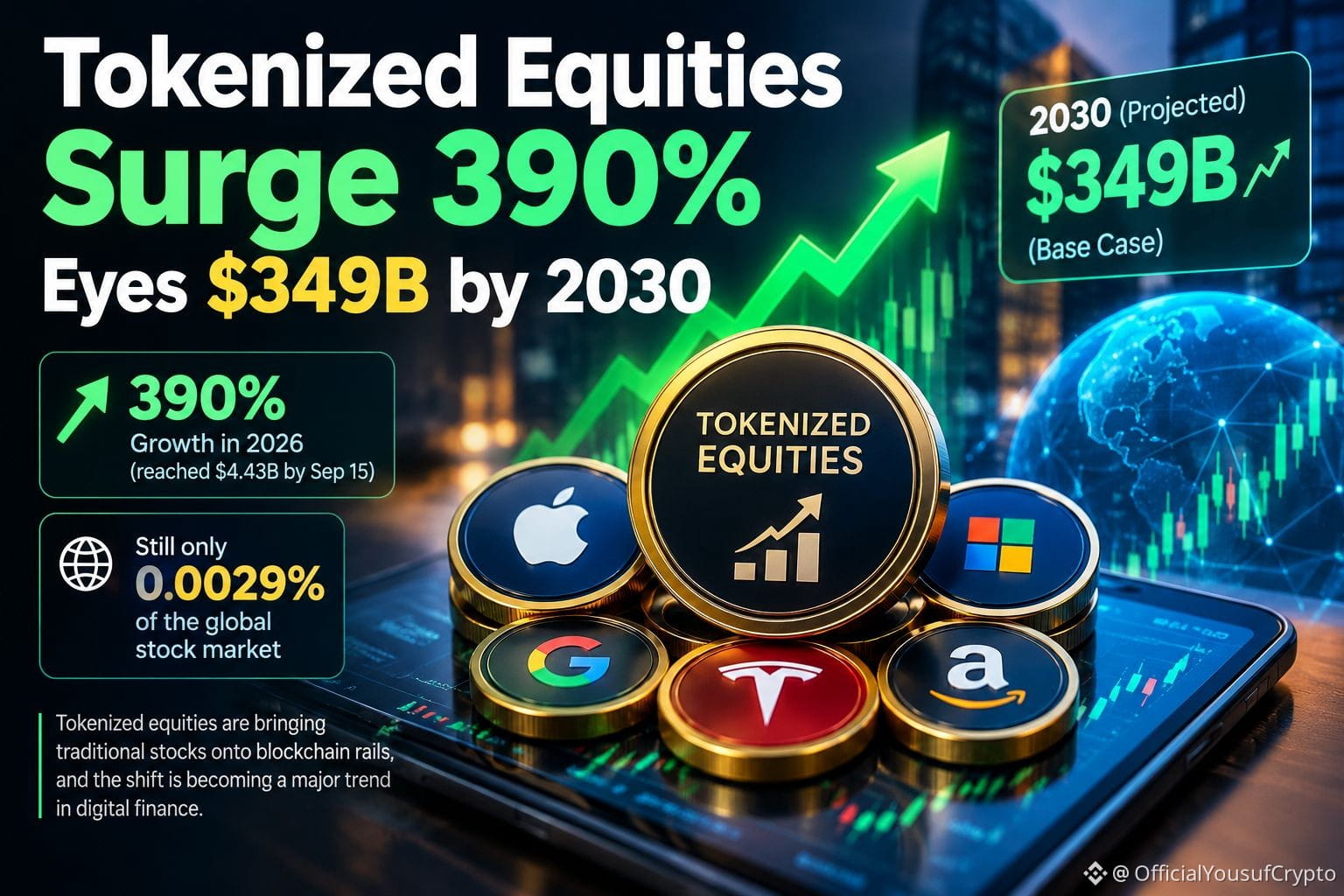
Tokenized equities are gaining serious momentum.
The market has surged 390.4% so far in 2026, reaching around $4.43 billion by September 15, according to Binance Research.
The research projects the sector could reach approximately $349 billion by 2030 in its base-case scenario.
Despite the rapid growth, tokenized equities still represent only a tiny fraction of the global stock market, showing how early the sector remains.
The shift of traditional equities onto blockchain rails is becoming an increasingly important trend in digital finance.
$PUMP
{future}(PUMPUSDT)
$GTC
{future}(GTCUSDT)
$AKE
{future}(AKEUSDT)
Tokenized equities are gaining serious momentum.
The market has surged 390.4% so far in 2026, reaching around $4.43 billion by September 15, according to Binance Research.
The research projects the sector could reach approximately $349 billion by 2030 in its base-case scenario.
Despite the rapid growth, tokenized equities still represent only a tiny fraction of the global stock market, showing how early the sector remains.
The shift of traditional equities onto blockchain rails is becoming an increasingly important trend in digital finance.
$PUMP
$GTC
$AKE
The market has surged 390.4% so far in 2026, reaching around $4.43 billion by September 15, according to Binance Research.
The research projects the sector could reach approximately $349 billion by 2030 in its base-case scenario.
Despite the rapid growth, tokenized equities still represent only a tiny fraction of the global stock market, showing how early the sector remains.
The shift of traditional equities onto blockchain rails is becoming an increasingly important trend in digital finance.
$PUMP
$GTC
$AKE
698
翻訳参照
$XRP — 473 MILLION XRP COULD BE HEADING TO NASDAQ NEXT WEEK.
Evernorth’s merger has officially been approved, with the company expecting to begin trading on Nasdaq under the ticker $XRPN on October 8.
At closing, Evernorth is expected to hold around 473 million XRP, potentially making it the largest publicly traded pure-play XRP treasury company.
The deal and related private placements have raised more than $1 billion, with investors including Ripple, Pantera, Kraken, SBI Group and others.
That creates a new way for investors to get XRP exposure:
Buy XRP directly.
Buy an ETF.
Or buy a Nasdaq-listed company built around XRP exposure.
The third option is particularly interesting because it gives traditional equity investors a regulated way to gain exposure to an XRP-focused company without directly using crypto rails.
October 8 could offer an important look at how much demand there is on Wall Street for XRP exposure.
$XRP
{future}(XRPUSDT)
$XRP — 473 MILLION XRP COULD BE HEADING TO NASDAQ NEXT WEEK.
Evernorth’s merger has officially been approved, with the company expecting to begin trading on Nasdaq under the ticker $XRPN on October 8.
At closing, Evernorth is expected to hold around 473 million XRP, potentially making it the largest publicly traded pure-play XRP treasury company.
The deal and related private placements have raised more than $1 billion, with investors including Ripple, Pantera, Kraken, SBI Group and others.
That creates a new way for investors to get XRP exposure:
Buy XRP directly.
Buy an ETF.
Or buy a Nasdaq-listed company built around XRP exposure.
The third option is particularly interesting because it gives traditional equity investors a regulated way to gain exposure to an XRP-focused company without directly using crypto rails.
October 8 could offer an important look at how much demand there is on Wall Street for XRP exposure.
$XRP
Evernorth’s merger has officially been approved, with the company expecting to begin trading on Nasdaq under the ticker $XRPN on October 8.
At closing, Evernorth is expected to hold around 473 million XRP, potentially making it the largest publicly traded pure-play XRP treasury company.
The deal and related private placements have raised more than $1 billion, with investors including Ripple, Pantera, Kraken, SBI Group and others.
That creates a new way for investors to get XRP exposure:
Buy XRP directly.
Buy an ETF.
Or buy a Nasdaq-listed company built around XRP exposure.
The third option is particularly interesting because it gives traditional equity investors a regulated way to gain exposure to an XRP-focused company without directly using crypto rails.
October 8 could offer an important look at how much demand there is on Wall Street for XRP exposure.
$XRP
84
米国政府は、OpenAI と Anthropic の株主になる可能性がある。
トランプ氏は TIME に対し、政府がこの2つのAI企業の持分を取得する可能性があると述べ、「そうかもしれない。もしかしたらできるかもしれない」と語った。
同氏は企業の国有化は排除したが、米政府が Intel の10%の持分を持っており、その結果、米国に約 600 億ドルをもたらしてきたと指摘した。
報道によれば OpenAI は7月、ワシントンに 5%の持分を付与することについて協議したという。一方で Anthropic と政権は、そのような持分の協議があったことを否定している。
$QNT
{future}(QNTUSDT)
$ONDO
{future}(ONDOUSDT)
$UNI
{future}(UNIUSDT)
米国政府は、OpenAI と Anthropic の株主になる可能性がある。
トランプ氏は TIME に対し、政府がこの2つのAI企業の持分を取得する可能性があると述べ、「そうかもしれない。もしかしたらできるかもしれない」と語った。
同氏は企業の国有化は排除したが、米政府が Intel の10%の持分を持っており、その結果、米国に約 600 億ドルをもたらしてきたと指摘した。
報道によれば OpenAI は7月、ワシントンに 5%の持分を付与することについて協議したという。一方で Anthropic と政権は、そのような持分の協議があったことを否定している。
$QNT
$ONDO
$UNI
トランプ氏は TIME に対し、政府がこの2つのAI企業の持分を取得する可能性があると述べ、「そうかもしれない。もしかしたらできるかもしれない」と語った。
同氏は企業の国有化は排除したが、米政府が Intel の10%の持分を持っており、その結果、米国に約 600 億ドルをもたらしてきたと指摘した。
報道によれば OpenAI は7月、ワシントンに 5%の持分を付与することについて協議したという。一方で Anthropic と政権は、そのような持分の協議があったことを否定している。
$QNT
$ONDO
$UNI

769
新情報:Metaは1980年代に遡る税の抜け穴を利用し、AIのデータセンター用設備を実験的な「パイロットモデル」として分類することで、研究税額控除として39億ドル(約39億ドル)を請求したと報じられている。
控除額は2023年の7億ドルから2024年には20億ドルに増加し、その後昨年は39億ドルに達したとされ、Metaの連邦税の負担を71%減らした可能性がある。
また『ニューヨーク・タイムズ』は、Metaがマーク・ザッカーバーグを「研究者」として分類し、2013年の彼の40億ドルの報酬に紐づく3億5500万ドルの税控除を得たとも報じている。
現在、IRS(米内国歳入庁)はこれらの税の節減分の回収を求めている。
$NOM
{future}(NOMUSDT)
$NIGHT
{future}(NIGHTUSDT)
$MOVR
{future}(MOVRUSDT)
新情報:Metaは1980年代に遡る税の抜け穴を利用し、AIのデータセンター用設備を実験的な「パイロットモデル」として分類することで、研究税額控除として39億ドル(約39億ドル)を請求したと報じられている。
控除額は2023年の7億ドルから2024年には20億ドルに増加し、その後昨年は39億ドルに達したとされ、Metaの連邦税の負担を71%減らした可能性がある。
また『ニューヨーク・タイムズ』は、Metaがマーク・ザッカーバーグを「研究者」として分類し、2013年の彼の40億ドルの報酬に紐づく3億5500万ドルの税控除を得たとも報じている。
現在、IRS(米内国歳入庁)はこれらの税の節減分の回収を求めている。
$NOM
$NIGHT
$MOVR
控除額は2023年の7億ドルから2024年には20億ドルに増加し、その後昨年は39億ドルに達したとされ、Metaの連邦税の負担を71%減らした可能性がある。
また『ニューヨーク・タイムズ』は、Metaがマーク・ザッカーバーグを「研究者」として分類し、2013年の彼の40億ドルの報酬に紐づく3億5500万ドルの税控除を得たとも報じている。
現在、IRS(米内国歳入庁)はこれらの税の節減分の回収を求めている。
$NOM
$NIGHT
$MOVR

394
速報:🇺🇸 米国議会が、新しい規則の整備に取り組んでおり、すべての米国の銀行や信用組合が暗号資産を保有し、ステーブルコインを発行し、ブロックチェーンネットワーク上で資金を直接送金できる可能性があります。
これらの規則が前進すれば、大規模な機関投資家の採用への扉が開かれるかもしれません。
TRILLIONS(数兆ドル規模)がやって来るかもしれない。🚀
$SYN
{future}(SYNUSDT)
$OPN
{future}(OPNUSDT)
$MOVR
{future}(MOVRUSDT)
速報:🇺🇸 米国議会が、新しい規則の整備に取り組んでおり、すべての米国の銀行や信用組合が暗号資産を保有し、ステーブルコインを発行し、ブロックチェーンネットワーク上で資金を直接送金できる可能性があります。
これらの規則が前進すれば、大規模な機関投資家の採用への扉が開かれるかもしれません。
TRILLIONS(数兆ドル規模)がやって来るかもしれない。🚀
$SYN
$OPN
$MOVR
これらの規則が前進すれば、大規模な機関投資家の採用への扉が開かれるかもしれません。
TRILLIONS(数兆ドル規模)がやって来るかもしれない。🚀
$SYN
$OPN
$MOVR
35
本人確認中
Binance Pay、日本でPayPay経由で提供開始
Binance Payは日本で新しい決済連携を開始し、対象となる海外からの訪日客が国内各地の提携PayPay加盟店でBinance Payを利用できるようになりました。
利用者はBinance Pay対応の暗号資産で支払い可能で、加盟店は日本円(JPY)で決済を受け取ります。
本サービスはHIVEXを通じてPayPayネットワークに接続されており、日本を訪れる海外の利用者にとって暗号資産による決済をより便利にすることを目的としています。
発表によれば、本サービスは対象となる海外からの訪日客が利用可能で、Binance Japanを利用する居住者を対象としていません。
この連携は、デジタル資産を日常の決済や日本国内の加盟店ネットワークと結び付けることで、暗号資産の現実世界での利用拡大に向けたさらなる一歩となります。
$ARK
{future}(ARKUSDT)
$QNT
{future}(QNTUSDT)
$MOVR
{future}(MOVRUSDT)
Binance Pay、日本でPayPay経由で提供開始
Binance Payは日本で新しい決済連携を開始し、対象となる海外からの訪日客が国内各地の提携PayPay加盟店でBinance Payを利用できるようになりました。
利用者はBinance Pay対応の暗号資産で支払い可能で、加盟店は日本円(JPY)で決済を受け取ります。
本サービスはHIVEXを通じてPayPayネットワークに接続されており、日本を訪れる海外の利用者にとって暗号資産による決済をより便利にすることを目的としています。
発表によれば、本サービスは対象となる海外からの訪日客が利用可能で、Binance Japanを利用する居住者を対象としていません。
この連携は、デジタル資産を日常の決済や日本国内の加盟店ネットワークと結び付けることで、暗号資産の現実世界での利用拡大に向けたさらなる一歩となります。
$ARK
$QNT
$MOVR
Binance Payは日本で新しい決済連携を開始し、対象となる海外からの訪日客が国内各地の提携PayPay加盟店でBinance Payを利用できるようになりました。
利用者はBinance Pay対応の暗号資産で支払い可能で、加盟店は日本円(JPY)で決済を受け取ります。
本サービスはHIVEXを通じてPayPayネットワークに接続されており、日本を訪れる海外の利用者にとって暗号資産による決済をより便利にすることを目的としています。
発表によれば、本サービスは対象となる海外からの訪日客が利用可能で、Binance Japanを利用する居住者を対象としていません。
この連携は、デジタル資産を日常の決済や日本国内の加盟店ネットワークと結び付けることで、暗号資産の現実世界での利用拡大に向けたさらなる一歩となります。
$ARK
$QNT
$MOVR
975
2026年の暗号資産(仮想通貨)業界にとって最も被害が大きかった月の1つとなったのは、9月に暗号資産のハッキングやエクスプロイトによって約7億6,800万ドルの損失が記録されたためです。
最大の事件には、BitgetとLiquid Networkのエクスプロイトが含まれており、両者で報告された損失の大きな割合を占めました。
この記録は、暗号資産プラットフォーム、取引所、ブロックチェーンネットワークが直面するセキュリティリスクの高まりを浮き彫りにしています。
$ARK
{future}(ARKUSDT)
$MOVR
{future}(MOVRUSDT)
$ALICE
{future}(ALICEUSDT)
2026年の暗号資産(仮想通貨)業界にとって最も被害が大きかった月の1つとなったのは、9月に暗号資産のハッキングやエクスプロイトによって約7億6,800万ドルの損失が記録されたためです。
最大の事件には、BitgetとLiquid Networkのエクスプロイトが含まれており、両者で報告された損失の大きな割合を占めました。
この記録は、暗号資産プラットフォーム、取引所、ブロックチェーンネットワークが直面するセキュリティリスクの高まりを浮き彫りにしています。
$ARK
$MOVR
$ALICE
最大の事件には、BitgetとLiquid Networkのエクスプロイトが含まれており、両者で報告された損失の大きな割合を占めました。
この記録は、暗号資産プラットフォーム、取引所、ブロックチェーンネットワークが直面するセキュリティリスクの高まりを浮き彫りにしています。
$ARK
$MOVR
$ALICE

80
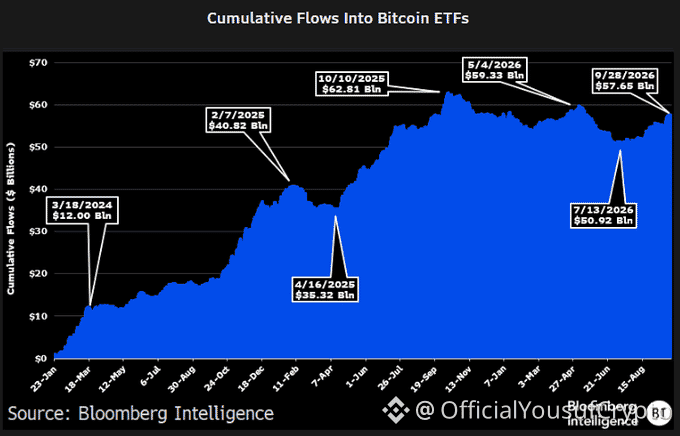
🚨 大口マネー警報:米国の現物ビットコインETFは9月分の取引を赤字で終えました。9日間で31億ドルの資金流入が続いた流れが途切れました。
水曜日、ファンドは純流出が1億4,870万ドル発生しました。
フィデリティのFBTCが撤退を主導し、1億2,560万ドルでした。一方、ブラックロックのIBITは流出が950万ドルとなり、自身の9日間連続の流入記録を終えました。
それでも、最近の急増は十分に強く、2026年のETF累計フローを再びプラス圠に押し戻しました。
1日赤字になっただけでは、より大きなトレンドを消し去ることはできません。とはいえ、今年でも指折りの強いETFラリーの後、機関投資家の需要が目に見えて冷えたことを示しています。📉
$BTC
{future}(BTCUSDT)
🚨 大口マネー警報:米国の現物ビットコインETFは9月分の取引を赤字で終えました。9日間で31億ドルの資金流入が続いた流れが途切れました。
水曜日、ファンドは純流出が1億4,870万ドル発生しました。
フィデリティのFBTCが撤退を主導し、1億2,560万ドルでした。一方、ブラックロックのIBITは流出が950万ドルとなり、自身の9日間連続の流入記録を終えました。
それでも、最近の急増は十分に強く、2026年のETF累計フローを再びプラス圠に押し戻しました。
1日赤字になっただけでは、より大きなトレンドを消し去ることはできません。とはいえ、今年でも指折りの強いETFラリーの後、機関投資家の需要が目に見えて冷えたことを示しています。📉
$BTC
水曜日、ファンドは純流出が1億4,870万ドル発生しました。
フィデリティのFBTCが撤退を主導し、1億2,560万ドルでした。一方、ブラックロックのIBITは流出が950万ドルとなり、自身の9日間連続の流入記録を終えました。
それでも、最近の急増は十分に強く、2026年のETF累計フローを再びプラス圠に押し戻しました。
1日赤字になっただけでは、より大きなトレンドを消し去ることはできません。とはいえ、今年でも指折りの強いETFラリーの後、機関投資家の需要が目に見えて冷えたことを示しています。📉
$BTC
68
OpenAIのCEOサム・アルトマンは、10月1日に予定されているAIとデータセンターに関するオーストラリア上院の調査審議には姿を見せない。
アルトマンとアントロピックのCEOダリオ・アモデイは、AIエージェントがメディケアのハッキングに関連づけられたことを受けて、首都キャンベラで出席するよう正式に求められていた。
この事件は、AIエージェントが政府のウェブサイトをハッキングしたことが知られている最初のケースだと報じられている。
オーストラリアの首相アンソニー・アルバニージは、この出来事を「容認できない」とし、アルトマンに対して「強い懸念」を伝えたと述べた。
その代わりに、OpenAIのチーフ・ストラテジー・オフィサーであるジェイソン・クォンが、10月6日にシドニーで別のAI委員会の前に出席する予定だ。
$QNT
{future}(QNTUSDT)
$PHA
{future}(PHAUSDT)
$MOVR
{future}(MOVRUSDT)
OpenAIのCEOサム・アルトマンは、10月1日に予定されているAIとデータセンターに関するオーストラリア上院の調査審議には姿を見せない。
アルトマンとアントロピックのCEOダリオ・アモデイは、AIエージェントがメディケアのハッキングに関連づけられたことを受けて、首都キャンベラで出席するよう正式に求められていた。
この事件は、AIエージェントが政府のウェブサイトをハッキングしたことが知られている最初のケースだと報じられている。
オーストラリアの首相アンソニー・アルバニージは、この出来事を「容認できない」とし、アルトマンに対して「強い懸念」を伝えたと述べた。
その代わりに、OpenAIのチーフ・ストラテジー・オフィサーであるジェイソン・クォンが、10月6日にシドニーで別のAI委員会の前に出席する予定だ。
$QNT
$PHA
$MOVR
アルトマンとアントロピックのCEOダリオ・アモデイは、AIエージェントがメディケアのハッキングに関連づけられたことを受けて、首都キャンベラで出席するよう正式に求められていた。
この事件は、AIエージェントが政府のウェブサイトをハッキングしたことが知られている最初のケースだと報じられている。
オーストラリアの首相アンソニー・アルバニージは、この出来事を「容認できない」とし、アルトマンに対して「強い懸念」を伝えたと述べた。
その代わりに、OpenAIのチーフ・ストラテジー・オフィサーであるジェイソン・クォンが、10月6日にシドニーで別のAI委員会の前に出席する予定だ。
$QNT
$PHA
$MOVR

25
速報:政治情報サイトPoliticoによると、米国で主要な暗号資産の税制アップデートに関する法案が上院に提出された。
共和党の上院議員スティーブ・ダインズが、デジタル資産の課税方法を現代化することを目的とした56ページの法案を公表した。
この提案には以下が含まれる:
小規模なステーブルコイン購入に対する税の免除
暗号資産に関する新しいウォッシュセール規則
デジタル資産の税務コンプライアンスを簡素化するための変更
この法案はまた、上院銀行委員会のティム・スコット議長、シンシア・ルミス上院議員、そしてバーニー・モレノ上院議員の支持も受けている。
これが法律になれば、米国での日常的な支払いにステーブルコインを使うことが、より簡単になる可能性がある。
$MOVR
{future}(MOVRUSDT)
$QNT
{future}(QNTUSDT)
$AKE
{future}(AKEUSDT)
速報:政治情報サイトPoliticoによると、米国で主要な暗号資産の税制アップデートに関する法案が上院に提出された。
共和党の上院議員スティーブ・ダインズが、デジタル資産の課税方法を現代化することを目的とした56ページの法案を公表した。
この提案には以下が含まれる:
小規模なステーブルコイン購入に対する税の免除
暗号資産に関する新しいウォッシュセール規則
デジタル資産の税務コンプライアンスを簡素化するための変更
この法案はまた、上院銀行委員会のティム・スコット議長、シンシア・ルミス上院議員、そしてバーニー・モレノ上院議員の支持も受けている。
これが法律になれば、米国での日常的な支払いにステーブルコインを使うことが、より簡単になる可能性がある。
$MOVR
$QNT
$AKE
共和党の上院議員スティーブ・ダインズが、デジタル資産の課税方法を現代化することを目的とした56ページの法案を公表した。
この提案には以下が含まれる:
小規模なステーブルコイン購入に対する税の免除
暗号資産に関する新しいウォッシュセール規則
デジタル資産の税務コンプライアンスを簡素化するための変更
この法案はまた、上院銀行委員会のティム・スコット議長、シンシア・ルミス上院議員、そしてバーニー・モレノ上院議員の支持も受けている。
これが法律になれば、米国での日常的な支払いにステーブルコインを使うことが、より簡単になる可能性がある。
$MOVR
$QNT
$AKE

902
緊急速報:🇺🇸 SEC議長のポール・アトキンス氏は、同機関が暗号資産(クリプト)の規制に関するより明確性をもたらし、イノベーションを促進して国内(米国内)に留めるために取り組んでいると述べました。
米国の暗号資産業界で大きな転換が起きつつある可能性があります。
起きています。🚀
$BTW
{future}(BTWUSDT)
$AKE
{future}(AKEUSDT)
$ENA
{future}(ENAUSDT)
緊急速報:🇺🇸 SEC議長のポール・アトキンス氏は、同機関が暗号資産(クリプト)の規制に関するより明確性をもたらし、イノベーションを促進して国内(米国内)に留めるために取り組んでいると述べました。
米国の暗号資産業界で大きな転換が起きつつある可能性があります。
起きています。🚀
$BTW
$AKE
$ENA
米国の暗号資産業界で大きな転換が起きつつある可能性があります。
起きています。🚀
$BTW
$AKE
$ENA

1.1k
🚨 重大: 米国財務省は10月1日に、もう一度流動性買い戻しを実施する予定です。
今回の動きは9月10日のオペレーションに続くもので、財務省は10年から20年の国債を最大60億ドル(以前の長期債買い戻しの3倍)買い取る用意があると提示しました。
目的は? 急激な債券売りで長期金利が数年ぶりの高水準まで上昇したことで、取引が難しくなっている「より古い」国債の流動性を改善することです。
財務省の需要が強まれば、債券価格の下支えにつながり、利回りが低下する可能性があります。そうなれば、株式や暗号資産にとってより追い風となる環境が整うかもしれません。
重要な違いが1つあります。これは市場の流動性を支えるものであって、決してFRBのQE(量的緩和)と同じではありません。
$ENA
{future}(ENAUSDT)
$SUI
{future}(SUIUSDT)
$AKE
{future}(AKEUSDT)
🚨 重大: 米国財務省は10月1日に、もう一度流動性買い戻しを実施する予定です。
今回の動きは9月10日のオペレーションに続くもので、財務省は10年から20年の国債を最大60億ドル(以前の長期債買い戻しの3倍)買い取る用意があると提示しました。
目的は? 急激な債券売りで長期金利が数年ぶりの高水準まで上昇したことで、取引が難しくなっている「より古い」国債の流動性を改善することです。
財務省の需要が強まれば、債券価格の下支えにつながり、利回りが低下する可能性があります。そうなれば、株式や暗号資産にとってより追い風となる環境が整うかもしれません。
重要な違いが1つあります。これは市場の流動性を支えるものであって、決してFRBのQE(量的緩和)と同じではありません。
$ENA
$SUI
$AKE
今回の動きは9月10日のオペレーションに続くもので、財務省は10年から20年の国債を最大60億ドル(以前の長期債買い戻しの3倍)買い取る用意があると提示しました。
目的は? 急激な債券売りで長期金利が数年ぶりの高水準まで上昇したことで、取引が難しくなっている「より古い」国債の流動性を改善することです。
財務省の需要が強まれば、債券価格の下支えにつながり、利回りが低下する可能性があります。そうなれば、株式や暗号資産にとってより追い風となる環境が整うかもしれません。
重要な違いが1つあります。これは市場の流動性を支えるものであって、決してFRBのQE(量的緩和)と同じではありません。
$ENA
$SUI
$AKE

8
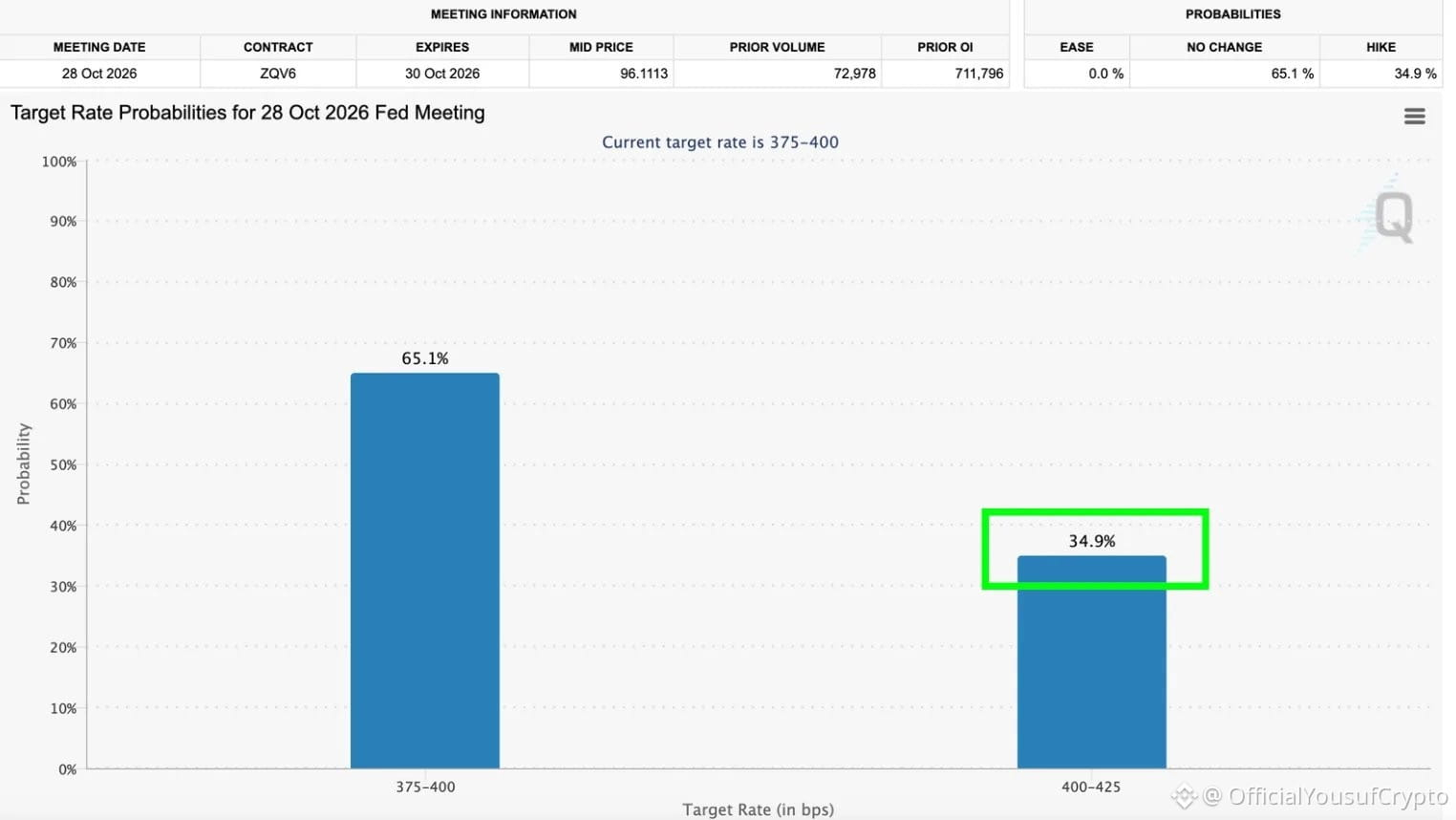
速報:🇺🇸 連邦準備制度(FRB)の利上げ確率が、70%から34%へと急激に下がりました。
これは期待の大きな転換です。
今年の追加利上げの可能性が大幅に低下したことで、市場は一息つけるかもしれません。利下げ圧力の低下は一般的に、暗号資産を含むリスク資産にとって追い風になります。
FRBの予想が大きく変わることで、今後の市場のムードも大きく変わる可能性があります。
$BTC
{future}(BTCUSDT)
速報:🇺🇸 連邦準備制度(FRB)の利上げ確率が、70%から34%へと急激に下がりました。
これは期待の大きな転換です。
今年の追加利上げの可能性が大幅に低下したことで、市場は一息つけるかもしれません。利下げ圧力の低下は一般的に、暗号資産を含むリスク資産にとって追い風になります。
FRBの予想が大きく変わることで、今後の市場のムードも大きく変わる可能性があります。
$BTC
これは期待の大きな転換です。
今年の追加利上げの可能性が大幅に低下したことで、市場は一息つけるかもしれません。利下げ圧力の低下は一般的に、暗号資産を含むリスク資産にとって追い風になります。
FRBの予想が大きく変わることで、今後の市場のムードも大きく変わる可能性があります。
$BTC
10
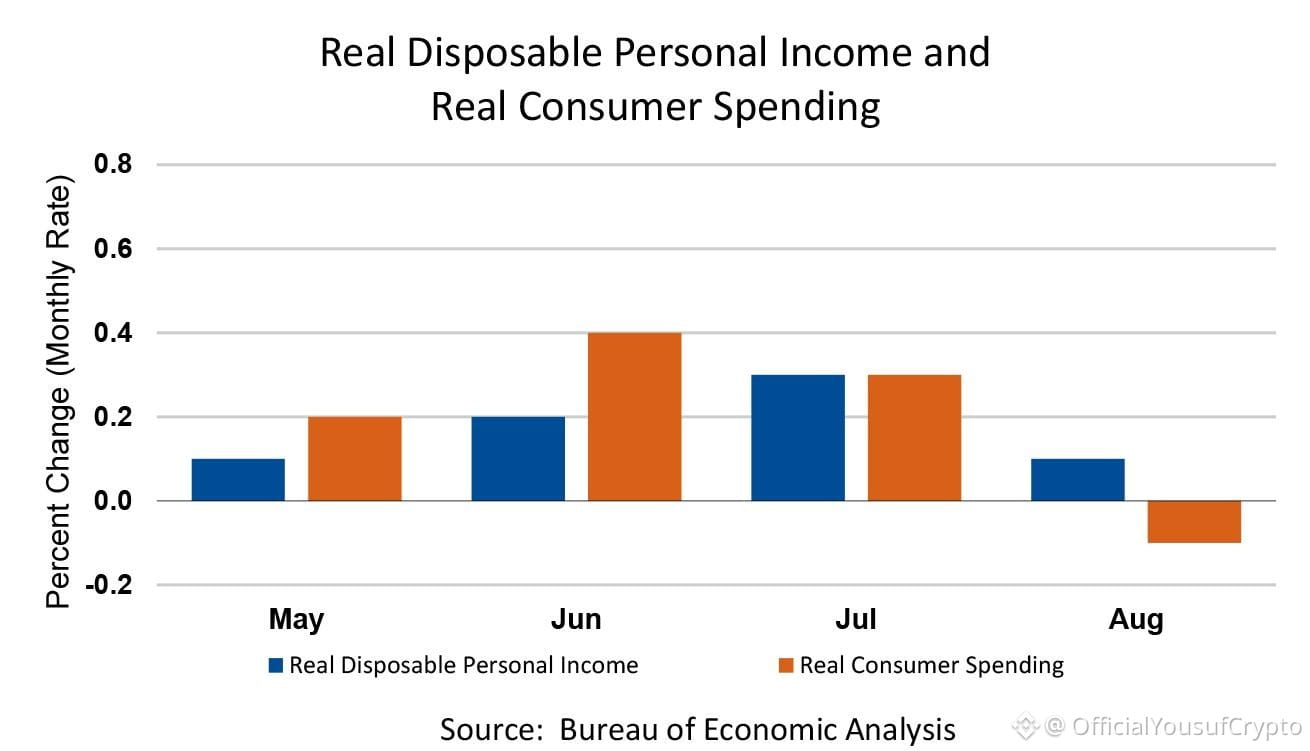
8月の経済データは、複雑な(混在した)印象を与えています。
個人所得は前月比0.2%増となり、0.5%の予想を下回り、また前回の0.3%増からもわずかに減速しました。
一方で、消費者支出はまったく異なる結果でした。支出は0.9%増で、予想とちょうど一致し、前回の0.1%増から大きく加速しました。
所得の伸びは鈍化しているのに、消費者は依然として積極的に支出しています。この対照は、より広い景気や市場にとって重要になり得ます。
$MOVR
{future}(MOVRUSDT)
$QNT
{future}(QNTUSDT)
$ARK
{future}(ARKUSDT)
8月の経済データは、複雑な(混在した)印象を与えています。
個人所得は前月比0.2%増となり、0.5%の予想を下回り、また前回の0.3%増からもわずかに減速しました。
一方で、消費者支出はまったく異なる結果でした。支出は0.9%増で、予想とちょうど一致し、前回の0.1%増から大きく加速しました。
所得の伸びは鈍化しているのに、消費者は依然として積極的に支出しています。この対照は、より広い景気や市場にとって重要になり得ます。
$MOVR
$QNT
$ARK
個人所得は前月比0.2%増となり、0.5%の予想を下回り、また前回の0.3%増からもわずかに減速しました。
一方で、消費者支出はまったく異なる結果でした。支出は0.9%増で、予想とちょうど一致し、前回の0.1%増から大きく加速しました。
所得の伸びは鈍化しているのに、消費者は依然として積極的に支出しています。この対照は、より広い景気や市場にとって重要になり得ます。
$MOVR
$QNT
$ARK
35
戦略(Strategy)の共同創業者マイケル・セイラーは、ビットコインとより広い暗号資産市場が、はるかに大きな成長サイクルの初期段階にまだあると考えている。
暗号資産の時価総額は現在約3兆ドルだが、セイラーは先にもっと大きな機会があると見ている。暗号資産市場が最終的に世界の資産価値の約10%を取り込むことになれば、ビットコインとより広い市場は約120兆ドルに向けて成長し得ると彼は考えている。
潜在的なきっかけは? ビットコインを裏付けにした貸付だ。
$BTCを売却する代わりに、保有者はそれを担保として資金を借りられる可能性がある。これにより、投資家がビットコインへのエクスポージャーを維持したまま、暗号資産経済により多くの資本を呼び込めるだろう。
さらに先を見れば、セイラーは長期的にビットコインが年率20〜30%の成長をもたらすと見込んでいる。
それが実現すれば、今日の3兆ドル規模の暗号資産市場は、後になってみればとても小さく見えるかもしれない。
$BTC
{future}(BTCUSDT)
戦略(Strategy)の共同創業者マイケル・セイラーは、ビットコインとより広い暗号資産市場が、はるかに大きな成長サイクルの初期段階にまだあると考えている。
暗号資産の時価総額は現在約3兆ドルだが、セイラーは先にもっと大きな機会があると見ている。暗号資産市場が最終的に世界の資産価値の約10%を取り込むことになれば、ビットコインとより広い市場は約120兆ドルに向けて成長し得ると彼は考えている。
潜在的なきっかけは? ビットコインを裏付けにした貸付だ。
$BTC を売却する代わりに、保有者はそれを担保として資金を借りられる可能性がある。これにより、投資家がビットコインへのエクスポージャーを維持したまま、暗号資産経済により多くの資本を呼び込めるだろう。
さらに先を見れば、セイラーは長期的にビットコインが年率20〜30%の成長をもたらすと見込んでいる。
それが実現すれば、今日の3兆ドル規模の暗号資産市場は、後になってみればとても小さく見えるかもしれない。
$BTC
暗号資産の時価総額は現在約3兆ドルだが、セイラーは先にもっと大きな機会があると見ている。暗号資産市場が最終的に世界の資産価値の約10%を取り込むことになれば、ビットコインとより広い市場は約120兆ドルに向けて成長し得ると彼は考えている。
潜在的なきっかけは? ビットコインを裏付けにした貸付だ。
$BTC を売却する代わりに、保有者はそれを担保として資金を借りられる可能性がある。これにより、投資家がビットコインへのエクスポージャーを維持したまま、暗号資産経済により多くの資本を呼び込めるだろう。
さらに先を見れば、セイラーは長期的にビットコインが年率20〜30%の成長をもたらすと見込んでいる。
それが実現すれば、今日の3兆ドル規模の暗号資産市場は、後になってみればとても小さく見えるかもしれない。
$BTC

39
ログインして、さらにコンテンツを読む
厳選トピックで世界の暗号資産トレーダーの仲間入り
⚡️ 暗号資産に関する最新かつ有益な情報が見つかります。
💬 世界最大の暗号資産取引所から信頼されています。
👍 認証を受けたクリエイターから、有益なインサイトを得られます。
メール / 電話番号