
Mr Dream X
7.1k 投稿

Mr Dream X
報告
ユーザーをブロック
432 フォロー
20.5K+ フォロワー
10.8K+ いいね
投稿
ポートフォリオ
すべて
引用
·
--
翻訳参照
🔥 The Fed's Coin Flip: Will Friday's CPI Seal a Hike?
August payrolls just printed +162K with unemployment holding at 4.1% — a labor market that refuses to crack. Add in a hot PPI print (+0.4% monthly, +5.4% annual) and you've got the ingredients for a genuinely nervous FOMC walking into their September 15-16 meeting.
The market's still pricing in a hold — funds rate steady at 3.50%-3.75% — but hawkish signals from new Fed Chair Kevin Warsh and a visibly divided committee mean this isn't the slam-dunk "pause" story it was a few months back. If core CPI comes in anywhere near 0.3%+ tomorrow, don't be shocked if hike odds start climbing fast.
My take: I'm leaning cautious-bearish on risk assets into the print, and watching gold as the hedge play if the number runs hot — inflation surprises tend to send safe-haven flows before anyone waits for the Fed to confirm anything.
What's your read — hike, hold, or surprise cut talk? Drop your position below and tag it Not financial advice — just my two cents ahead of a big data day.
#CPIWatch
$TFUEL
{spot}(TFUELUSDT)
$MET
{spot}(METUSDT)
$RAY
{spot}(RAYUSDT)
🔥 The Fed's Coin Flip: Will Friday's CPI Seal a Hike?
August payrolls just printed +162K with unemployment holding at 4.1% — a labor market that refuses to crack. Add in a hot PPI print (+0.4% monthly, +5.4% annual) and you've got the ingredients for a genuinely nervous FOMC walking into their September 15-16 meeting.
The market's still pricing in a hold — funds rate steady at 3.50%-3.75% — but hawkish signals from new Fed Chair Kevin Warsh and a visibly divided committee mean this isn't the slam-dunk "pause" story it was a few months back. If core CPI comes in anywhere near 0.3%+ tomorrow, don't be shocked if hike odds start climbing fast.
My take: I'm leaning cautious-bearish on risk assets into the print, and watching gold as the hedge play if the number runs hot — inflation surprises tend to send safe-haven flows before anyone waits for the Fed to confirm anything.
What's your read — hike, hold, or surprise cut talk? Drop your position below and tag it Not financial advice — just my two cents ahead of a big data day.
#CPIWatch
$TFUEL
$MET
$RAY
August payrolls just printed +162K with unemployment holding at 4.1% — a labor market that refuses to crack. Add in a hot PPI print (+0.4% monthly, +5.4% annual) and you've got the ingredients for a genuinely nervous FOMC walking into their September 15-16 meeting.
The market's still pricing in a hold — funds rate steady at 3.50%-3.75% — but hawkish signals from new Fed Chair Kevin Warsh and a visibly divided committee mean this isn't the slam-dunk "pause" story it was a few months back. If core CPI comes in anywhere near 0.3%+ tomorrow, don't be shocked if hike odds start climbing fast.
My take: I'm leaning cautious-bearish on risk assets into the print, and watching gold as the hedge play if the number runs hot — inflation surprises tend to send safe-haven flows before anyone waits for the Fed to confirm anything.
What's your read — hike, hold, or surprise cut talk? Drop your position below and tag it Not financial advice — just my two cents ahead of a big data day.
#CPIWatch
$TFUEL
$MET
$RAY

4
3
348
·
--
翻訳参照
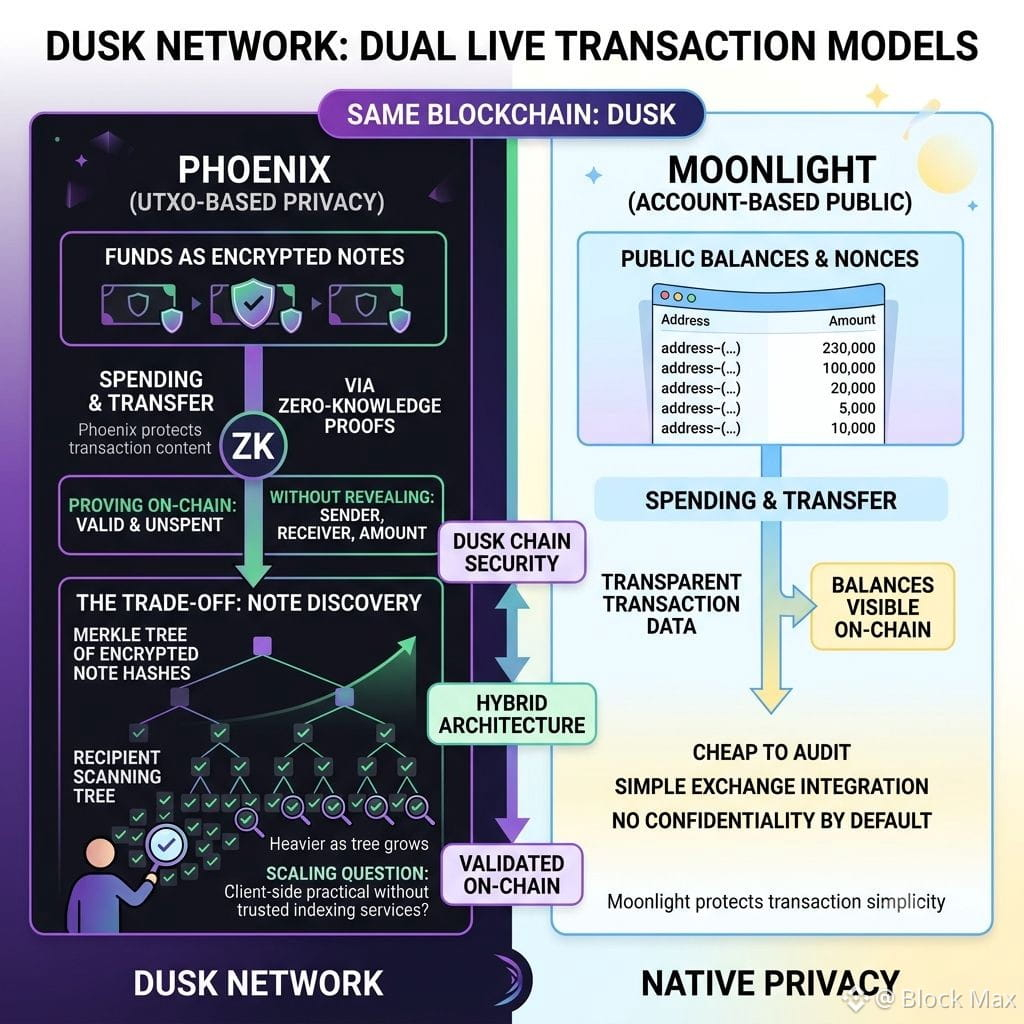
One detail I kept coming back to while studying @Dusk_Foundation is that it runs two live transaction models on the same chain rather than picking one and bolting privacy on later.
Phoenix is UTXO-based: funds exist as encrypted notes, and spending means proving — via zero-knowledge proofs — that a note is valid and unspent, without revealing sender, receiver, or amount on-chain. The trade-off is note discovery: a recipient has to scan the growing Merkle tree of note hashes to find what's theirs, which gets heavier as the tree grows.
Moonlight is account-based and public, closer to Ethereum: balances and nonces sit in the open. It's cheap to audit and simple for exchanges to integrate, but offers no confidentiality by default.
Phoenix protects transaction content, while Moonlight protects transaction simplicity.
Open question: as the note set scales, does client-side scanning stay practical without trusted indexing services quietly becoming a soft dependency for "self-custodial" privacy?
#dusk $DUSK #Dusk #DUSK
{future}(DUSKUSDT)
One detail I kept coming back to while studying @Dusk is that it runs two live transaction models on the same chain rather than picking one and bolting privacy on later.
Phoenix is UTXO-based: funds exist as encrypted notes, and spending means proving — via zero-knowledge proofs — that a note is valid and unspent, without revealing sender, receiver, or amount on-chain. The trade-off is note discovery: a recipient has to scan the growing Merkle tree of note hashes to find what's theirs, which gets heavier as the tree grows.
Moonlight is account-based and public, closer to Ethereum: balances and nonces sit in the open. It's cheap to audit and simple for exchanges to integrate, but offers no confidentiality by default.
Phoenix protects transaction content, while Moonlight protects transaction simplicity.
Open question: as the note set scales, does client-side scanning stay practical without trusted indexing services quietly becoming a soft dependency for "self-custodial" privacy?
#dusk $DUSK #Dusk #DUSK
Phoenix is UTXO-based: funds exist as encrypted notes, and spending means proving — via zero-knowledge proofs — that a note is valid and unspent, without revealing sender, receiver, or amount on-chain. The trade-off is note discovery: a recipient has to scan the growing Merkle tree of note hashes to find what's theirs, which gets heavier as the tree grows.
Moonlight is account-based and public, closer to Ethereum: balances and nonces sit in the open. It's cheap to audit and simple for exchanges to integrate, but offers no confidentiality by default.
Phoenix protects transaction content, while Moonlight protects transaction simplicity.
Open question: as the note set scales, does client-side scanning stay practical without trusted indexing services quietly becoming a soft dependency for "self-custodial" privacy?
#dusk $DUSK #Dusk #DUSK
5
6
132
·
--
翻訳参照
Every transaction you've ever made on a public blockchain is sitting there, forever, for anyone to read. Your salary, your trades, your rent payments — all of it, permanently public. Most people never think about this until someone actually looks.
That's the quiet problem crypto doesn't like to talk about. We call it "decentralized finance," but true finance has always required discretion. Banks don't publish your balance sheet. Businesses don't want competitors reading their treasury moves in real time. Yet most chains force that exact exposure just to get the benefits of decentralization.
This is where Dusk Network ($DUSK) is trying something different. Instead of bolting privacy on as an afterthought, it built the base layer around it — the XSC standard lets smart contracts stay confidential while still being verifiable, which is really the hard part. Anyone can build financial logic without leaking every internal detail to the entire internet.
The deeper thought here: privacy and compliance are usually framed as opposites in crypto. Dusk's whole bet is that they don't have to be — that regulated financial products actually need confidentiality to function on-chain at all, not despite regulation, but because of it.
If real-world finance ever fully moves on-chain, do you think privacy-first chains like this become the standard, or stay a niche?
@Dusk_Foundation #dusk $DUSK
Every transaction you've ever made on a public blockchain is sitting there, forever, for anyone to read. Your salary, your trades, your rent payments — all of it, permanently public. Most people never think about this until someone actually looks.
That's the quiet problem crypto doesn't like to talk about. We call it "decentralized finance," but true finance has always required discretion. Banks don't publish your balance sheet. Businesses don't want competitors reading their treasury moves in real time. Yet most chains force that exact exposure just to get the benefits of decentralization.
This is where Dusk Network ($DUSK ) is trying something different. Instead of bolting privacy on as an afterthought, it built the base layer around it — the XSC standard lets smart contracts stay confidential while still being verifiable, which is really the hard part. Anyone can build financial logic without leaking every internal detail to the entire internet.
The deeper thought here: privacy and compliance are usually framed as opposites in crypto. Dusk's whole bet is that they don't have to be — that regulated financial products actually need confidentiality to function on-chain at all, not despite regulation, but because of it.
If real-world finance ever fully moves on-chain, do you think privacy-first chains like this become the standard, or stay a niche?
@Dusk #dusk $DUSK
That's the quiet problem crypto doesn't like to talk about. We call it "decentralized finance," but true finance has always required discretion. Banks don't publish your balance sheet. Businesses don't want competitors reading their treasury moves in real time. Yet most chains force that exact exposure just to get the benefits of decentralization.
This is where Dusk Network ($DUSK ) is trying something different. Instead of bolting privacy on as an afterthought, it built the base layer around it — the XSC standard lets smart contracts stay confidential while still being verifiable, which is really the hard part. Anyone can build financial logic without leaking every internal detail to the entire internet.
The deeper thought here: privacy and compliance are usually framed as opposites in crypto. Dusk's whole bet is that they don't have to be — that regulated financial products actually need confidentiality to function on-chain at all, not despite regulation, but because of it.
If real-world finance ever fully moves on-chain, do you think privacy-first chains like this become the standard, or stay a niche?
@Dusk #dusk $DUSK
Becomes the standard
0%
Stays a niche
0%
Only for institutions
0%
Too early to tell
0%
0 投票 • 投票は終了しました
2
5
110
·
--
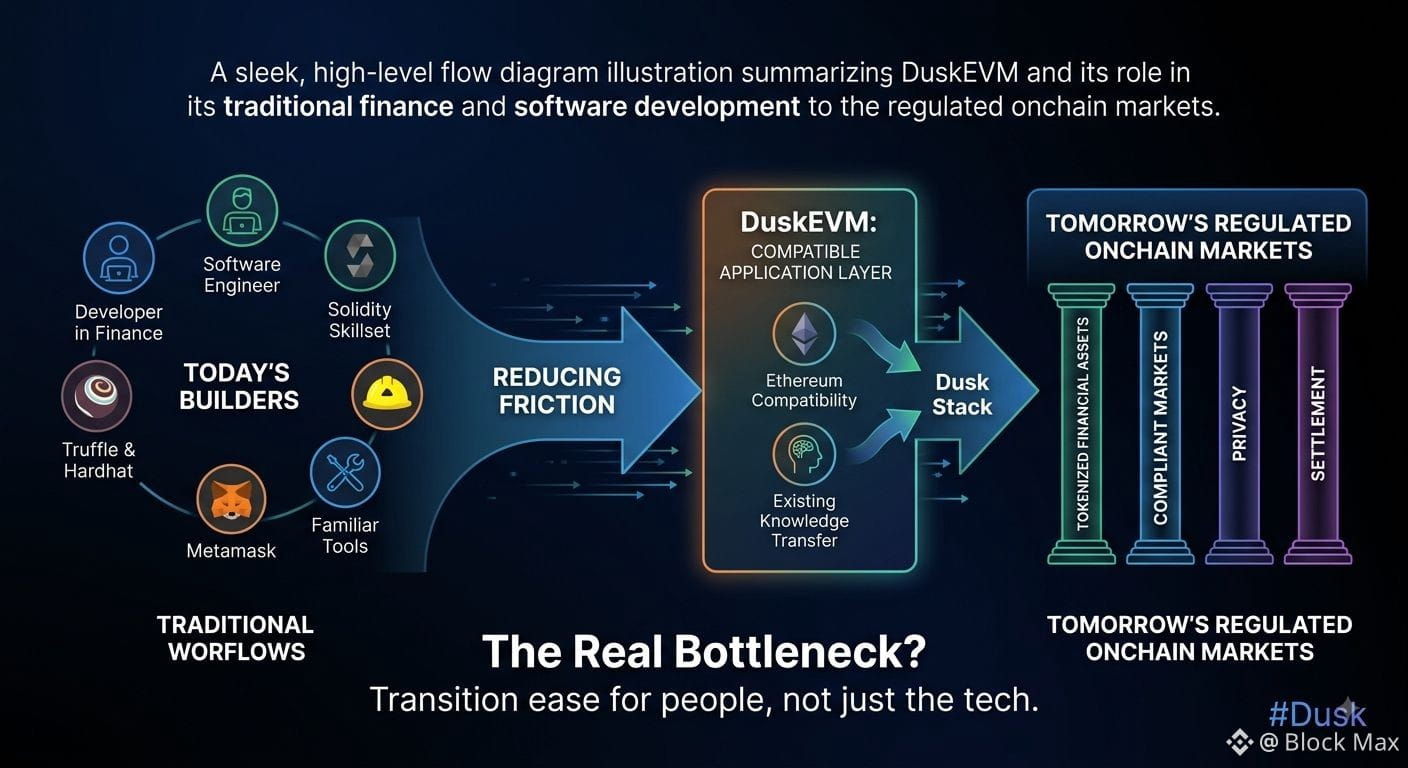
EVMの互換性は、金融ブロックチェーンに実際に取り組む人を見るまで、小さな技術的な詳細のように思えるかもしれません。
しかし、開発者が始めるために馴染みのあるツールを捨てなければならないとなると、良いアイデアでも苦戦することがあります。
だからこそ、Dusk.isは私にとって興味深い存在です。Duskスタックにアプリケーション層を持ち込み、Solidityやビルダーにとってより馴染みのある環境を提供します。
より重要なのは、「DuskがEVMに対応している」という単純なことではありません。
それは摩擦を減らすことです。
金融機関、インフラパートナー、そして規制下の金融アプリケーションを探っている開発者にとって、馴染みやすさは、生のブロックチェーン性能とほぼ同じくらい重要になり得ます。既存の知識、ツール、そして開発の習慣があれば、新しいエコシステムへの移行はずっと容易になります。
そしてDuskは、要件が異なる暗号の領域を狙っています。トークン化された金融資産、準拠した市場、プライバシー、そして決済です。
それは、興味深い緊張関係を生みます。金融インフラは進化する必要がある一方で、それを作る人々が、あらゆる開発ワークフローを最初から作り直したいとは限りません。
もしかすると、真の採用のボトルネックは「ブロックチェーンが金融を扱えるかどうか」ではないのかもしれません。
むしろ、すでに金融やソフトウェアの現場で働いている人々にとって、その移行をどれだけ簡単にできるかです。
EVMの互換性は、今日の開発者と、明日の規制されたオンチェーン市場との間にある、静かな橋の1つになり得るのでしょうか?
@Dusk_Foundation #dusk $DUSK
EVMの互換性は、金融ブロックチェーンに実際に取り組む人を見るまで、小さな技術的な詳細のように思えるかもしれません。
しかし、開発者が始めるために馴染みのあるツールを捨てなければならないとなると、良いアイデアでも苦戦することがあります。
だからこそ、Dusk.isは私にとって興味深い存在です。Duskスタックにアプリケーション層を持ち込み、Solidityやビルダーにとってより馴染みのある環境を提供します。
より重要なのは、「DuskがEVMに対応している」という単純なことではありません。
それは摩擦を減らすことです。
金融機関、インフラパートナー、そして規制下の金融アプリケーションを探っている開発者にとって、馴染みやすさは、生のブロックチェーン性能とほぼ同じくらい重要になり得ます。既存の知識、ツール、そして開発の習慣があれば、新しいエコシステムへの移行はずっと容易になります。
そしてDuskは、要件が異なる暗号の領域を狙っています。トークン化された金融資産、準拠した市場、プライバシー、そして決済です。
それは、興味深い緊張関係を生みます。金融インフラは進化する必要がある一方で、それを作る人々が、あらゆる開発ワークフローを最初から作り直したいとは限りません。
もしかすると、真の採用のボトルネックは「ブロックチェーンが金融を扱えるかどうか」ではないのかもしれません。
むしろ、すでに金融やソフトウェアの現場で働いている人々にとって、その移行をどれだけ簡単にできるかです。
EVMの互換性は、今日の開発者と、明日の規制されたオンチェーン市場との間にある、静かな橋の1つになり得るのでしょうか?
@Dusk #dusk $DUSK
しかし、開発者が始めるために馴染みのあるツールを捨てなければならないとなると、良いアイデアでも苦戦することがあります。
だからこそ、Dusk.isは私にとって興味深い存在です。Duskスタックにアプリケーション層を持ち込み、Solidityやビルダーにとってより馴染みのある環境を提供します。
より重要なのは、「DuskがEVMに対応している」という単純なことではありません。
それは摩擦を減らすことです。
金融機関、インフラパートナー、そして規制下の金融アプリケーションを探っている開発者にとって、馴染みやすさは、生のブロックチェーン性能とほぼ同じくらい重要になり得ます。既存の知識、ツール、そして開発の習慣があれば、新しいエコシステムへの移行はずっと容易になります。
そしてDuskは、要件が異なる暗号の領域を狙っています。トークン化された金融資産、準拠した市場、プライバシー、そして決済です。
それは、興味深い緊張関係を生みます。金融インフラは進化する必要がある一方で、それを作る人々が、あらゆる開発ワークフローを最初から作り直したいとは限りません。
もしかすると、真の採用のボトルネックは「ブロックチェーンが金融を扱えるかどうか」ではないのかもしれません。
むしろ、すでに金融やソフトウェアの現場で働いている人々にとって、その移行をどれだけ簡単にできるかです。
EVMの互換性は、今日の開発者と、明日の規制されたオンチェーン市場との間にある、静かな橋の1つになり得るのでしょうか?
@Dusk #dusk $DUSK
4
4
98
·
--
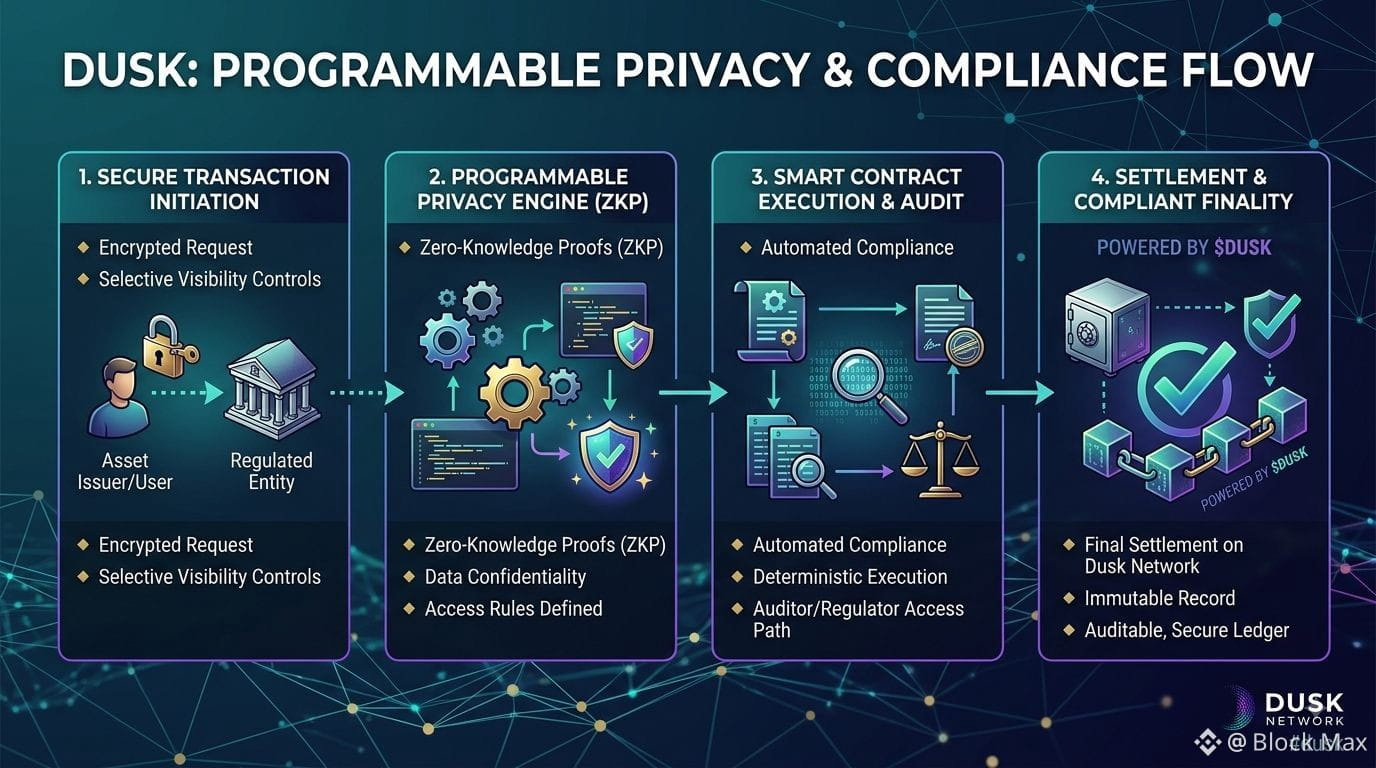
「プライベート」と呼ばれるブロックチェーンって、結局は何かを隠しすぎるか、逆に見せすぎるかのどちらかだと気づいたことはありますか?中間がないことがほとんどです。そして規制のある金融では、その中間は“選択肢”ではなく“要件そのもの”です。
誰でも見ることができるパブリック・レジャー上では、銀行はポジションのサイズを知られずに運用できません。規制当局も、監査可能なものが何もないブラックボックスを受け入れることはできません。現実の金融インフラがその両極の間に存在しなければならない場所があり、多くのチェーンはその緊張関係に対して作られていません。
ここで @Dusk_Foundation は別のアプローチを取ります。プライバシーを「すべてか、ゼロか」として扱うのではなく、Dusk はプログラム可能なものとして捉えます。必要な場面ではプライバシーを、役に立つ場面では透明性を、そして取引をレビューする権限を持つ当事者には選択的開示を行うのです。すべての下で決定論的に決済が行われるため、機密性のために最終確定が犠牲になることはありません。
たとえば債券の発行を考えてみてください。一般の人はすべての保有者のポジションを見る必要はありません。しかし監査人や規制当局は、発行体がシステム全体を作り直してまでアクセス権を与えることなく、要請に応じて必要になるかもしれません。
「暗号化」と「コンプライアンス」の静かな違いがここにあります。多くのプロジェクトは前者の言葉を追いかけがちです。規制された市場が本当に必要としているのは、後者です。
$DUSK は、この設計の下支えとしてネットワークのネイティブ・アセットになっており、チェーン自体がどのように動作するかに結びついています。
オンチェーンの金融は、最初にどこで破綻すると思いますか――プライバシーか、それともコンプライアンスか?
#dusk $DUSK
{spot}(DUSKUSDT)
$PORTAL
{spot}(PORTALUSDT)
「プライベート」と呼ばれるブロックチェーンって、結局は何かを隠しすぎるか、逆に見せすぎるかのどちらかだと気づいたことはありますか?中間がないことがほとんどです。そして規制のある金融では、その中間は“選択肢”ではなく“要件そのもの”です。
誰でも見ることができるパブリック・レジャー上では、銀行はポジションのサイズを知られずに運用できません。規制当局も、監査可能なものが何もないブラックボックスを受け入れることはできません。現実の金融インフラがその両極の間に存在しなければならない場所があり、多くのチェーンはその緊張関係に対して作られていません。
ここで @Dusk は別のアプローチを取ります。プライバシーを「すべてか、ゼロか」として扱うのではなく、Dusk はプログラム可能なものとして捉えます。必要な場面ではプライバシーを、役に立つ場面では透明性を、そして取引をレビューする権限を持つ当事者には選択的開示を行うのです。すべての下で決定論的に決済が行われるため、機密性のために最終確定が犠牲になることはありません。
たとえば債券の発行を考えてみてください。一般の人はすべての保有者のポジションを見る必要はありません。しかし監査人や規制当局は、発行体がシステム全体を作り直してまでアクセス権を与えることなく、要請に応じて必要になるかもしれません。
「暗号化」と「コンプライアンス」の静かな違いがここにあります。多くのプロジェクトは前者の言葉を追いかけがちです。規制された市場が本当に必要としているのは、後者です。
$DUSK は、この設計の下支えとしてネットワークのネイティブ・アセットになっており、チェーン自体がどのように動作するかに結びついています。
オンチェーンの金融は、最初にどこで破綻すると思いますか――プライバシーか、それともコンプライアンスか?
#dusk $DUSK
$PORTAL
誰でも見ることができるパブリック・レジャー上では、銀行はポジションのサイズを知られずに運用できません。規制当局も、監査可能なものが何もないブラックボックスを受け入れることはできません。現実の金融インフラがその両極の間に存在しなければならない場所があり、多くのチェーンはその緊張関係に対して作られていません。
ここで @Dusk は別のアプローチを取ります。プライバシーを「すべてか、ゼロか」として扱うのではなく、Dusk はプログラム可能なものとして捉えます。必要な場面ではプライバシーを、役に立つ場面では透明性を、そして取引をレビューする権限を持つ当事者には選択的開示を行うのです。すべての下で決定論的に決済が行われるため、機密性のために最終確定が犠牲になることはありません。
たとえば債券の発行を考えてみてください。一般の人はすべての保有者のポジションを見る必要はありません。しかし監査人や規制当局は、発行体がシステム全体を作り直してまでアクセス権を与えることなく、要請に応じて必要になるかもしれません。
「暗号化」と「コンプライアンス」の静かな違いがここにあります。多くのプロジェクトは前者の言葉を追いかけがちです。規制された市場が本当に必要としているのは、後者です。
$DUSK は、この設計の下支えとしてネットワークのネイティブ・アセットになっており、チェーン自体がどのように動作するかに結びついています。
オンチェーンの金融は、最初にどこで破綻すると思いますか――プライバシーか、それともコンプライアンスか?
#dusk $DUSK
$PORTAL
13
4
309
·
--
一部該当
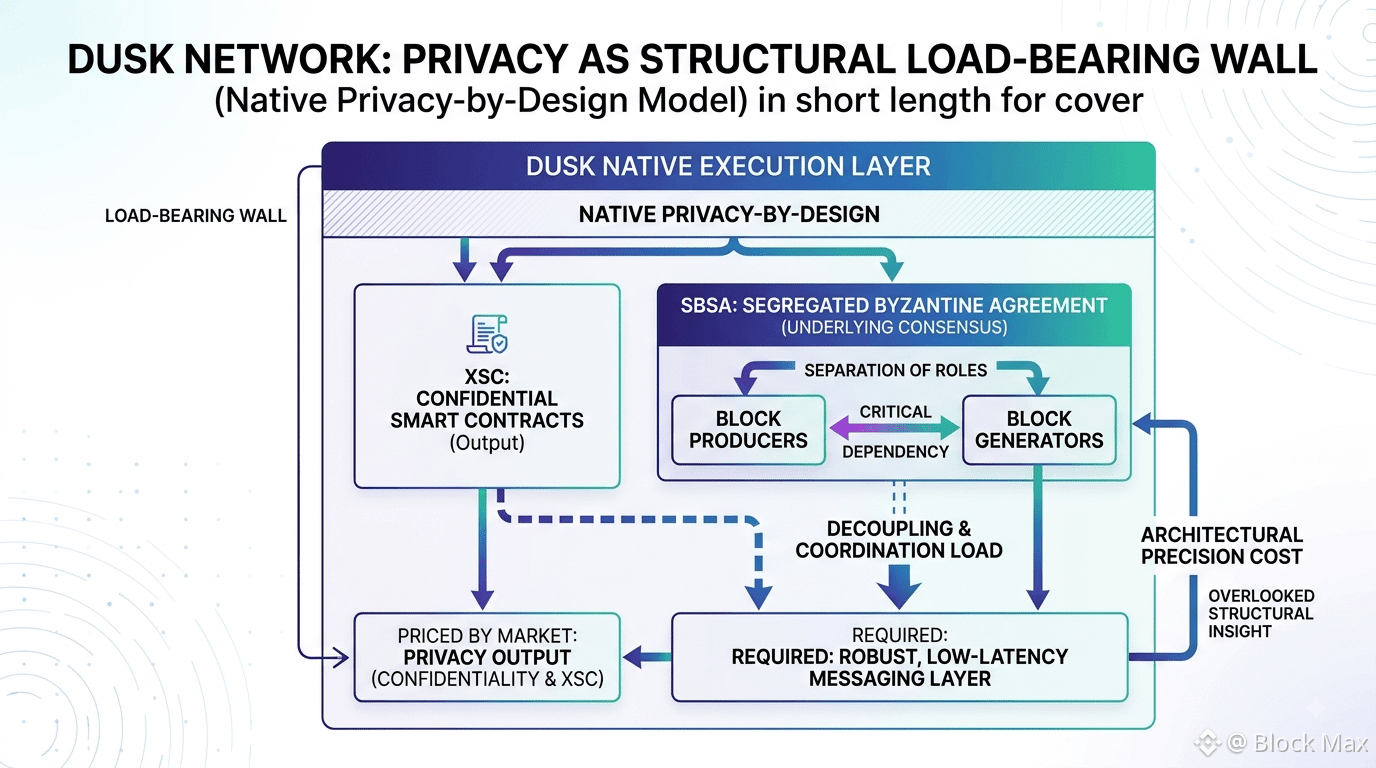
Dusk Networkがネイティブなプライバシー・バイ・デザインのモデルに対してどのように建築的なコミットメントを行っているかが、基本的な実行レイヤーの力学の転換ではなく単なる機能セットとして誤って解釈されているのを見ています。市場は機密スマートコントラクトのためのXSC標準に注目していますが、その根底にあるコンセンサスメカニズムが持つ重要な含意を見落としています。Duskは、ブロック生成者とブロックジェネレーターの役割を分離して、攻撃ベクトルを最小化しつつ機密性を維持する、Segregated Byzantine Agreement(SBSA)と呼ばれるProof-of-Stakeの変種を採用しています。見落とされがちな構造的洞察は、この分離がセキュリティのために設計されている一方で、協調への隠れた依存を生み出していることです。これは、トランザクションの検証をブロックの確定から切り離すことを強制し、そのためには標準的なモノリシックなコンセンサスよりも堅牢で低遅延のメッセージングレイヤーが必要になります。競合が既存の実行環境にプライバシーを後付けすることで、レイテンシと複雑性が増える一方で、Duskはネイティブに統合しているため、その協調レイヤーは本質的により効率的でなければなりません。市場はプライバシーの出力に値付けしますが、それを維持するために必要な建築的な精度のコストを見誤っています。ここでのプライバシーは追加機能ではありません。構造を支える“荷重支持の壁”です。
@Dusk_Foundation #dusk $DUSK
{spot}(DUSKUSDT)
Dusk Networkがネイティブなプライバシー・バイ・デザインのモデルに対してどのように建築的なコミットメントを行っているかが、基本的な実行レイヤーの力学の転換ではなく単なる機能セットとして誤って解釈されているのを見ています。市場は機密スマートコントラクトのためのXSC標準に注目していますが、その根底にあるコンセンサスメカニズムが持つ重要な含意を見落としています。Duskは、ブロック生成者とブロックジェネレーターの役割を分離して、攻撃ベクトルを最小化しつつ機密性を維持する、Segregated Byzantine Agreement(SBSA)と呼ばれるProof-of-Stakeの変種を採用しています。見落とされがちな構造的洞察は、この分離がセキュリティのために設計されている一方で、協調への隠れた依存を生み出していることです。これは、トランザクションの検証をブロックの確定から切り離すことを強制し、そのためには標準的なモノリシックなコンセンサスよりも堅牢で低遅延のメッセージングレイヤーが必要になります。競合が既存の実行環境にプライバシーを後付けすることで、レイテンシと複雑性が増える一方で、Duskはネイティブに統合しているため、その協調レイヤーは本質的により効率的でなければなりません。市場はプライバシーの出力に値付けしますが、それを維持するために必要な建築的な精度のコストを見誤っています。ここでのプライバシーは追加機能ではありません。構造を支える“荷重支持の壁”です。
@Dusk #dusk $DUSK
@Dusk #dusk $DUSK
101
41
10.1k
·
--
本人確認中
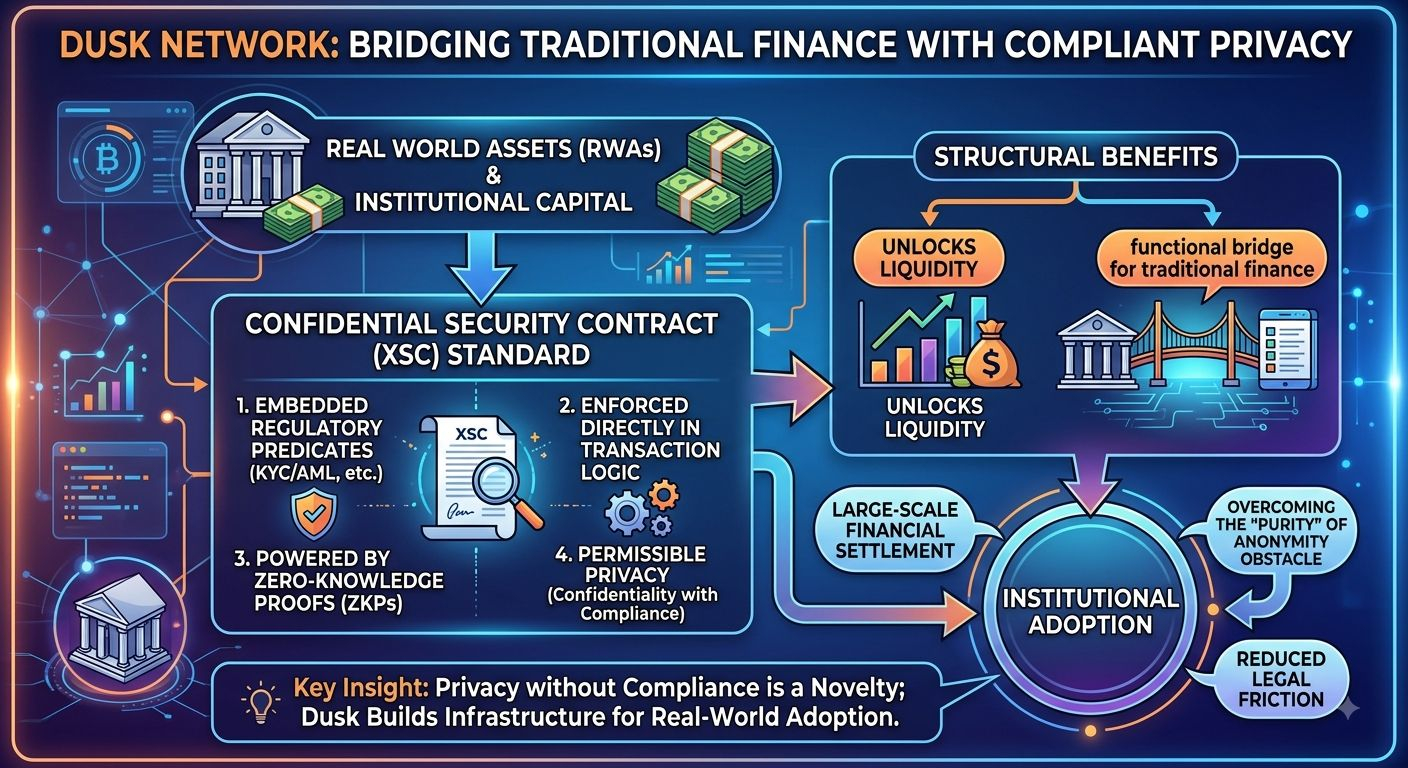
私は Dusk Network を見ているのですが、市場がそのコンプライアンス制約の価値を誤って読み取っています。見落とされている具体的な仕組みは、Confidential Security Contract(XSC)標準です。これは規制上の述語(条件)を取引ロジックの中に直接埋め込み、強制します。規制を外部の敵対者として扱う競合とは異なり、Dusk はゼロ知識証明によって規制をプロトコルに組み込んでいます。この構造的な選択は、流動性を根本的に変えてしまいます。すなわち、匿名チェーン上での運用を機関投資家の資本が現在まで妨げられている法的な摩擦を解消し、実世界資産(RWA)への機能的な架け橋を作ります。市場は「純粋」な匿名性にばかり夢中ですが、大規模な金融決済には、暗号的な秘匿だけでなく、許容されるプライバシーが必要だという点を織り込めていません。これは単なる機能セットではありません。従来の金融をオンボーディングするために不可欠な依存関係です。コンプライアンスのないプライバシーは新奇にすぎません。Dusk は機関投資家の導入に向けたインフラを構築しています。
@Dusk_Foundation #dusk $DUSK
{spot}(DUSKUSDT)
#DUSK
$COW
{spot}(COWUSDT)
私は Dusk Network を見ているのですが、市場がそのコンプライアンス制約の価値を誤って読み取っています。見落とされている具体的な仕組みは、Confidential Security Contract(XSC)標準です。これは規制上の述語(条件)を取引ロジックの中に直接埋め込み、強制します。規制を外部の敵対者として扱う競合とは異なり、Dusk はゼロ知識証明によって規制をプロトコルに組み込んでいます。この構造的な選択は、流動性を根本的に変えてしまいます。すなわち、匿名チェーン上での運用を機関投資家の資本が現在まで妨げられている法的な摩擦を解消し、実世界資産(RWA)への機能的な架け橋を作ります。市場は「純粋」な匿名性にばかり夢中ですが、大規模な金融決済には、暗号的な秘匿だけでなく、許容されるプライバシーが必要だという点を織り込めていません。これは単なる機能セットではありません。従来の金融をオンボーディングするために不可欠な依存関係です。コンプライアンスのないプライバシーは新奇にすぎません。Dusk は機関投資家の導入に向けたインフラを構築しています。
@Dusk #dusk $DUSK
#DUSK
$COW
@Dusk #dusk $DUSK
#DUSK
$COW
48
26
6.3k
·
--
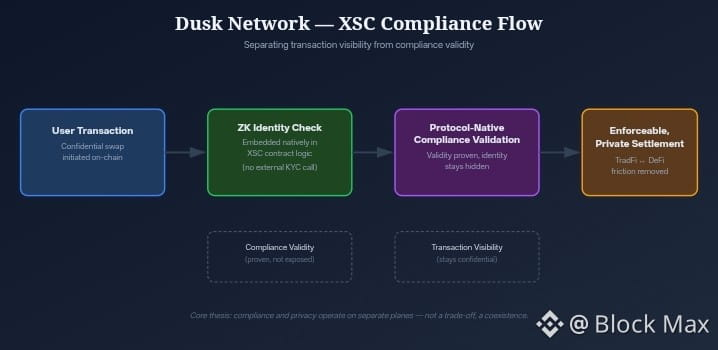
私はDusk Networkを注意深く見ています。ほとんどのプライバシー・プロジェクトが完全な匿名性に焦点を当てる一方で、市場はXSC(Confidential Security Contract)標準の持つ構造的な意味合いを誤って評価しています。Duskは、契約アーキテクチャにゼロ知識のアイデンティティ・チェックを直接埋め込むことで、取引の可視性とコンプライアンスの有効性を切り離します。この設計により、資本市場のインフラ層は根本的に変わります。外部のKYCプロバイダからコンプライアンス検証を、プロトコルのネイティブな実行環境へ移すことで、このチェーンはユーザーのプライバシーを損なうことなく、法的に執行可能なスワップを可能にします。これにより、従来の金融がDeFiと連携できないでいる現在の調整上の摩擦が取り除かれます。市場は、プライバシーと規制は互いに排他的だと前提にしていますが、Duskのアーキテクチャはそれらの共存を強制します。私はDusk Networkを注意深く見ています。ほとんどのプライバシー・プロジェクトが完全な匿名性に焦点を当てる一方で、市場はXSC(Confidential Security Contract)標準の持つ構造的な意味合いを誤って評価しています。Duskは、契約アーキテクチャにゼロ知識のアイデンティティ・チェックを直接埋め込むことで、取引の可視性とコンプライアンスの有効性を切り離します。この設計により、資本市場のインフラ層は根本的に変わります。外部のKYCプロバイダからコンプライアンス検証を、プロトコルのネイティブな実行環境へ移すことで、このチェーンはユーザーのプライバシーを損なうことなく、法的に執行可能なスワップを可能にします。これにより、従来の金融がDeFiと連携できないでいる現在の調整上の摩擦が取り除かれます。市場は、プライバシーと規制は互いに排他的だと前提にしていますが、Duskのアーキテクチャはそれらの共存を強制します。
@Dusk_Foundation #dusk $DUSK
私はDusk Networkを注意深く見ています。ほとんどのプライバシー・プロジェクトが完全な匿名性に焦点を当てる一方で、市場はXSC(Confidential Security Contract)標準の持つ構造的な意味合いを誤って評価しています。Duskは、契約アーキテクチャにゼロ知識のアイデンティティ・チェックを直接埋め込むことで、取引の可視性とコンプライアンスの有効性を切り離します。この設計により、資本市場のインフラ層は根本的に変わります。外部のKYCプロバイダからコンプライアンス検証を、プロトコルのネイティブな実行環境へ移すことで、このチェーンはユーザーのプライバシーを損なうことなく、法的に執行可能なスワップを可能にします。これにより、従来の金融がDeFiと連携できないでいる現在の調整上の摩擦が取り除かれます。市場は、プライバシーと規制は互いに排他的だと前提にしていますが、Duskのアーキテクチャはそれらの共存を強制します。私はDusk Networkを注意深く見ています。ほとんどのプライバシー・プロジェクトが完全な匿名性に焦点を当てる一方で、市場はXSC(Confidential Security Contract)標準の持つ構造的な意味合いを誤って評価しています。Duskは、契約アーキテクチャにゼロ知識のアイデンティティ・チェックを直接埋め込むことで、取引の可視性とコンプライアンスの有効性を切り離します。この設計により、資本市場のインフラ層は根本的に変わります。外部のKYCプロバイダからコンプライアンス検証を、プロトコルのネイティブな実行環境へ移すことで、このチェーンはユーザーのプライバシーを損なうことなく、法的に執行可能なスワップを可能にします。これにより、従来の金融がDeFiと連携できないでいる現在の調整上の摩擦が取り除かれます。市場は、プライバシーと規制は互いに排他的だと前提にしていますが、Duskのアーキテクチャはそれらの共存を強制します。
@Dusk #dusk $DUSK
@Dusk #dusk $DUSK
2
2
92
·
--
本人確認中
私は、Dusk Network が XSC 標準を単なるプライバシー手段ではなく、トークン化された有価証券のための特定のコンプライアンス・エンジンとして位置づけている点を見ています。ほとんどのレイヤー1 は 機密性と規制を対立する力として扱い、機関に対して匿名性と法的遵守のどちらかを選ばせがちです。Dusk のアーキテクチャは、コンプライアンス・チェックをプロトコルに直接組み込むことで、基盤となる取引データを開示せずに KYC および AML の検証を実行できるようにしています。この構造的な設計は、直感に反する下流への影響を生みます。すなわち、投機的な個人売買の出来高を意図的にふるい分け、高い価値を持ち、法的な確実性を求める機関投資家の流動性を優先するのです。市場は現在、Dusk を一般的なプライバシーの代替手段として価格付けしていますが、これは、規制された証券市場のための必須インフラとして自社を位置づけている点を見落としています。トークン化された株式がオンチェーンで動き出すにつれて、規制当局を満たしつつ取引データを保護する決済レールの需要は、任意のものから必須のものへと移行します。市場はプライバシー・コインを価格付けしているように見えますが、実際には、コンプライアンス対応のデジタル資産のための「配管(プランビング)」を買っているのです。
@Dusk_Foundation #dusk $DUSK #DUSK
私は、Dusk Network が XSC 標準を単なるプライバシー手段ではなく、トークン化された有価証券のための特定のコンプライアンス・エンジンとして位置づけている点を見ています。ほとんどのレイヤー1 は 機密性と規制を対立する力として扱い、機関に対して匿名性と法的遵守のどちらかを選ばせがちです。Dusk のアーキテクチャは、コンプライアンス・チェックをプロトコルに直接組み込むことで、基盤となる取引データを開示せずに KYC および AML の検証を実行できるようにしています。この構造的な設計は、直感に反する下流への影響を生みます。すなわち、投機的な個人売買の出来高を意図的にふるい分け、高い価値を持ち、法的な確実性を求める機関投資家の流動性を優先するのです。市場は現在、Dusk を一般的なプライバシーの代替手段として価格付けしていますが、これは、規制された証券市場のための必須インフラとして自社を位置づけている点を見落としています。トークン化された株式がオンチェーンで動き出すにつれて、規制当局を満たしつつ取引データを保護する決済レールの需要は、任意のものから必須のものへと移行します。市場はプライバシー・コインを価格付けしているように見えますが、実際には、コンプライアンス対応のデジタル資産のための「配管(プランビング)」を買っているのです。
@Dusk #dusk $DUSK #DUSK
@Dusk #dusk $DUSK #DUSK
Compliant infrastructure 🏦
0%
Generic privacy coin 🔒
0%
Institutional liquidity play📈
0%
Overhyped, no real demand 📉
0%
0 投票 • 投票は終了しました
12
8
727
·
--
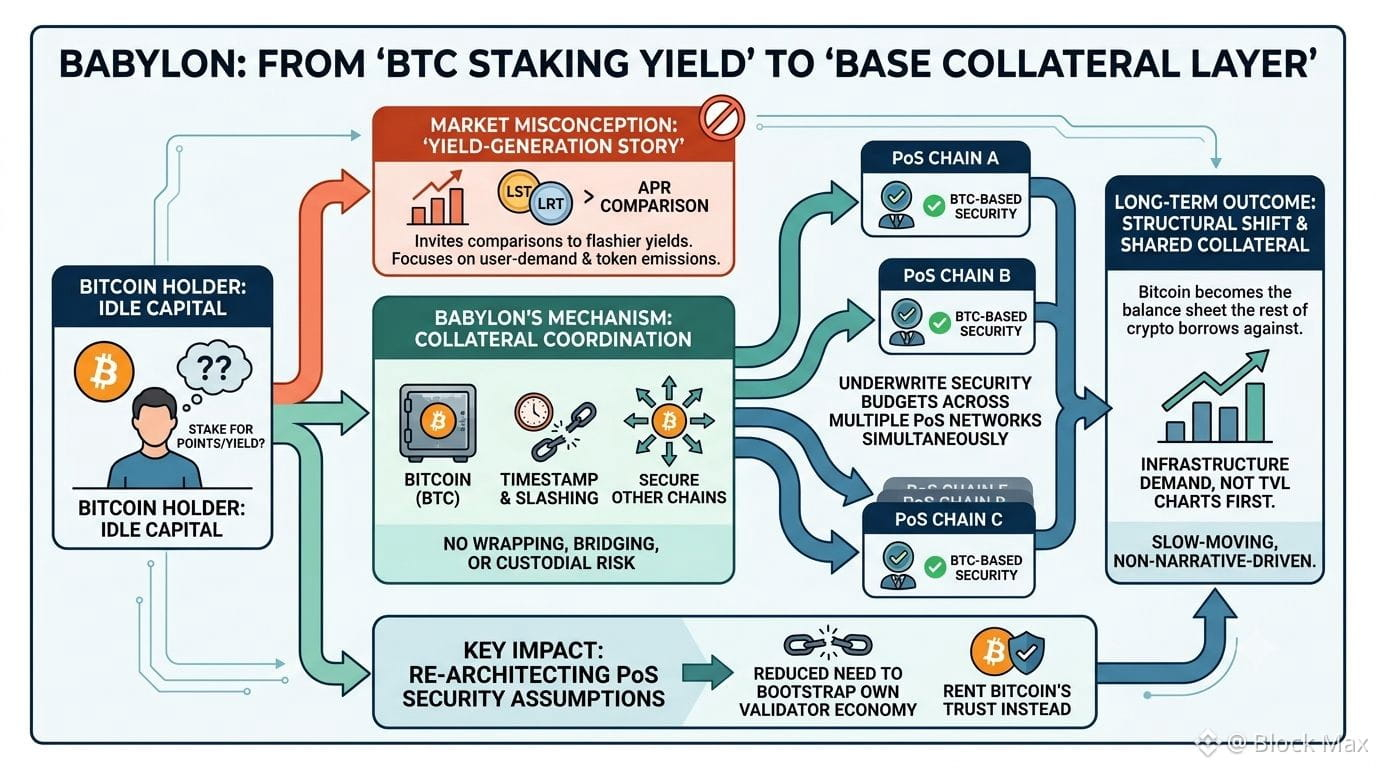
私は「実際の賭け先が見えにくいもの——つまり、ビットコインの遊休資本がPoS世界全体のベースとなる担保レイヤーになり得るか」ではなく、「『ビットコインのステーキング利回り』という演出」でバビロンが値付けされていくのを眺めている。
市場の誤りは、BABYを“利回りを生むストーリー”として扱っていることだ——BTCをステークしてポイントを得て、トークンの放出を待つ。こうした捉え方は、流動型ステーキングトークンやその流通APRとの比較を呼び込み、より派手な数字を提示する何かの隣では、バビロンが平凡に見えてしまう。
しかし本当の仕組みは利回りではない。担保のコーディネーションだ。バビロンは、ビットコイン——最大で、最も信頼され、最も流動性の高い暗号資産——にタイムスタンプとスラッシュを行わせ、ラップ、ブリッジ、あるいはカストディ(預かり)リスクなしで他のチェーンを他のチェーンの安全性のために確保する。これは利回り商品ではない。これは、BTCを“準備資産”として位置づけ、数十もの独立したPoSネットワークに同時にまたがるセキュリティ予算を裏付けようとする試みだ。
実際に影響を受けるのは、ユーザー需要ではなくインフラ需要のほう。成功はまずTVLチャートには表れない——それは、「セキュリティのために自前のトークンが不要になったらどうするか」という前提を、どれだけ多くのチェーンが静かに作り替えていくかとして現れる。これは、時間軸に沿って“伸びる”タイプの物語ではなく、ゆっくり進む構造的な変化だ。ビットコインが共有担保になることで、あらゆるPoSチェーンが「自分たちのバリデータ経済をブートストラップするのか、それともビットコインの信頼を借りるのか」を評価する際の発見レイヤーが変わる。
その主張が成り立つなら、価値は今日のBABYがどれだけ利回りを出すかにはない。むしろ、ビットコインが静かに、残りの暗号資産が借り入れる際のバランスシートの裏付けになるかどうか——そこにある。
#baby $BABY @babylonlabs_io
私は「実際の賭け先が見えにくいもの——つまり、ビットコインの遊休資本がPoS世界全体のベースとなる担保レイヤーになり得るか」ではなく、「『ビットコインのステーキング利回り』という演出」でバビロンが値付けされていくのを眺めている。
市場の誤りは、BABYを“利回りを生むストーリー”として扱っていることだ——BTCをステークしてポイントを得て、トークンの放出を待つ。こうした捉え方は、流動型ステーキングトークンやその流通APRとの比較を呼び込み、より派手な数字を提示する何かの隣では、バビロンが平凡に見えてしまう。
しかし本当の仕組みは利回りではない。担保のコーディネーションだ。バビロンは、ビットコイン——最大で、最も信頼され、最も流動性の高い暗号資産——にタイムスタンプとスラッシュを行わせ、ラップ、ブリッジ、あるいはカストディ(預かり)リスクなしで他のチェーンを他のチェーンの安全性のために確保する。これは利回り商品ではない。これは、BTCを“準備資産”として位置づけ、数十もの独立したPoSネットワークに同時にまたがるセキュリティ予算を裏付けようとする試みだ。
実際に影響を受けるのは、ユーザー需要ではなくインフラ需要のほう。成功はまずTVLチャートには表れない——それは、「セキュリティのために自前のトークンが不要になったらどうするか」という前提を、どれだけ多くのチェーンが静かに作り替えていくかとして現れる。これは、時間軸に沿って“伸びる”タイプの物語ではなく、ゆっくり進む構造的な変化だ。ビットコインが共有担保になることで、あらゆるPoSチェーンが「自分たちのバリデータ経済をブートストラップするのか、それともビットコインの信頼を借りるのか」を評価する際の発見レイヤーが変わる。
その主張が成り立つなら、価値は今日のBABYがどれだけ利回りを出すかにはない。むしろ、ビットコインが静かに、残りの暗号資産が借り入れる際のバランスシートの裏付けになるかどうか——そこにある。
#baby $BABY @BabylonLabs_io
市場の誤りは、BABYを“利回りを生むストーリー”として扱っていることだ——BTCをステークしてポイントを得て、トークンの放出を待つ。こうした捉え方は、流動型ステーキングトークンやその流通APRとの比較を呼び込み、より派手な数字を提示する何かの隣では、バビロンが平凡に見えてしまう。
しかし本当の仕組みは利回りではない。担保のコーディネーションだ。バビロンは、ビットコイン——最大で、最も信頼され、最も流動性の高い暗号資産——にタイムスタンプとスラッシュを行わせ、ラップ、ブリッジ、あるいはカストディ(預かり)リスクなしで他のチェーンを他のチェーンの安全性のために確保する。これは利回り商品ではない。これは、BTCを“準備資産”として位置づけ、数十もの独立したPoSネットワークに同時にまたがるセキュリティ予算を裏付けようとする試みだ。
実際に影響を受けるのは、ユーザー需要ではなくインフラ需要のほう。成功はまずTVLチャートには表れない——それは、「セキュリティのために自前のトークンが不要になったらどうするか」という前提を、どれだけ多くのチェーンが静かに作り替えていくかとして現れる。これは、時間軸に沿って“伸びる”タイプの物語ではなく、ゆっくり進む構造的な変化だ。ビットコインが共有担保になることで、あらゆるPoSチェーンが「自分たちのバリデータ経済をブートストラップするのか、それともビットコインの信頼を借りるのか」を評価する際の発見レイヤーが変わる。
その主張が成り立つなら、価値は今日のBABYがどれだけ利回りを出すかにはない。むしろ、ビットコインが静かに、残りの暗号資産が借り入れる際のバランスシートの裏付けになるかどうか——そこにある。
#baby $BABY @BabylonLabs_io
22
6
225
·
--
私はBABYLONを「“BTCステーキング”の案件」というより、仮想通貨における信頼がどこから供給されるかを静かに作り替えるものとして見ている。
多くの人はBABYを利回り(yield)目線で捉える――「今BTCが稼ぐ」。それが表面上の読みであり、市場がそれを別のリステーキング・トークンとしてAPYの物語を追いかけるように価格づけし続けている理由だ。だが本質的に変わるのは、セキュリティがどこから来るのかである。現在、あらゆるPoSチェーンは自前でバリデータ集合を立ち上げ、ゼロから自らの信用を獲得しなければならない。Babylonは、BTCをラップせず、カストディ(保管)も使わず、資金を抜き取られ得るブリッジも介さずに、ビットコインの経済的な重みを直接借りられる。これは利回り機能ではなく、信頼供給の仕組みだ。
この取り組みが突き刺さるのは、調整(coordination)の層だ。今はセキュリティがサイロ化していて、各チェーンがバリデータや流動性をそれぞれ独立して取り合っている。もしビットコインが、共有される自己管理(self-custodial)のセキュリティ・バックストップになるなら、断片化した信頼ではなくプールされた信頼が生まれる――チェーンは資本の奪い合いをやめ、統合の優先度を競うようになる。
それが将来の需要の見え方を変える。「どれだけのBTCがステーキングされるか」ではなく、「真剣に相手にされるために、ビットコイン級の最終性(finality)が必要なチェーンは何社か」ということになる。その数はまだ織り込まれていない。
市場は利回りプロダクトを評価している。一方でプロトコルは信頼レイヤーを作っている。どちらも別の資産だ。
#baby $BABY @babylonlabs_io
私はBABYLONを「“BTCステーキング”の案件」というより、仮想通貨における信頼がどこから供給されるかを静かに作り替えるものとして見ている。
多くの人はBABYを利回り(yield)目線で捉える――「今BTCが稼ぐ」。それが表面上の読みであり、市場がそれを別のリステーキング・トークンとしてAPYの物語を追いかけるように価格づけし続けている理由だ。だが本質的に変わるのは、セキュリティがどこから来るのかである。現在、あらゆるPoSチェーンは自前でバリデータ集合を立ち上げ、ゼロから自らの信用を獲得しなければならない。Babylonは、BTCをラップせず、カストディ(保管)も使わず、資金を抜き取られ得るブリッジも介さずに、ビットコインの経済的な重みを直接借りられる。これは利回り機能ではなく、信頼供給の仕組みだ。
この取り組みが突き刺さるのは、調整(coordination)の層だ。今はセキュリティがサイロ化していて、各チェーンがバリデータや流動性をそれぞれ独立して取り合っている。もしビットコインが、共有される自己管理(self-custodial)のセキュリティ・バックストップになるなら、断片化した信頼ではなくプールされた信頼が生まれる――チェーンは資本の奪い合いをやめ、統合の優先度を競うようになる。
それが将来の需要の見え方を変える。「どれだけのBTCがステーキングされるか」ではなく、「真剣に相手にされるために、ビットコイン級の最終性(finality)が必要なチェーンは何社か」ということになる。その数はまだ織り込まれていない。
市場は利回りプロダクトを評価している。一方でプロトコルは信頼レイヤーを作っている。どちらも別の資産だ。
#baby $BABY @BabylonLabs_io
多くの人はBABYを利回り(yield)目線で捉える――「今BTCが稼ぐ」。それが表面上の読みであり、市場がそれを別のリステーキング・トークンとしてAPYの物語を追いかけるように価格づけし続けている理由だ。だが本質的に変わるのは、セキュリティがどこから来るのかである。現在、あらゆるPoSチェーンは自前でバリデータ集合を立ち上げ、ゼロから自らの信用を獲得しなければならない。Babylonは、BTCをラップせず、カストディ(保管)も使わず、資金を抜き取られ得るブリッジも介さずに、ビットコインの経済的な重みを直接借りられる。これは利回り機能ではなく、信頼供給の仕組みだ。
この取り組みが突き刺さるのは、調整(coordination)の層だ。今はセキュリティがサイロ化していて、各チェーンがバリデータや流動性をそれぞれ独立して取り合っている。もしビットコインが、共有される自己管理(self-custodial)のセキュリティ・バックストップになるなら、断片化した信頼ではなくプールされた信頼が生まれる――チェーンは資本の奪い合いをやめ、統合の優先度を競うようになる。
それが将来の需要の見え方を変える。「どれだけのBTCがステーキングされるか」ではなく、「真剣に相手にされるために、ビットコイン級の最終性(finality)が必要なチェーンは何社か」ということになる。その数はまだ織り込まれていない。
市場は利回りプロダクトを評価している。一方でプロトコルは信頼レイヤーを作っている。どちらも別の資産だ。
#baby $BABY @BabylonLabs_io
Vision 🚀
0%
People 🤝
0%
Profit 💰
0%
Patience ⌛
0%
0 投票 • 投票は終了しました
5
3
169
·
--
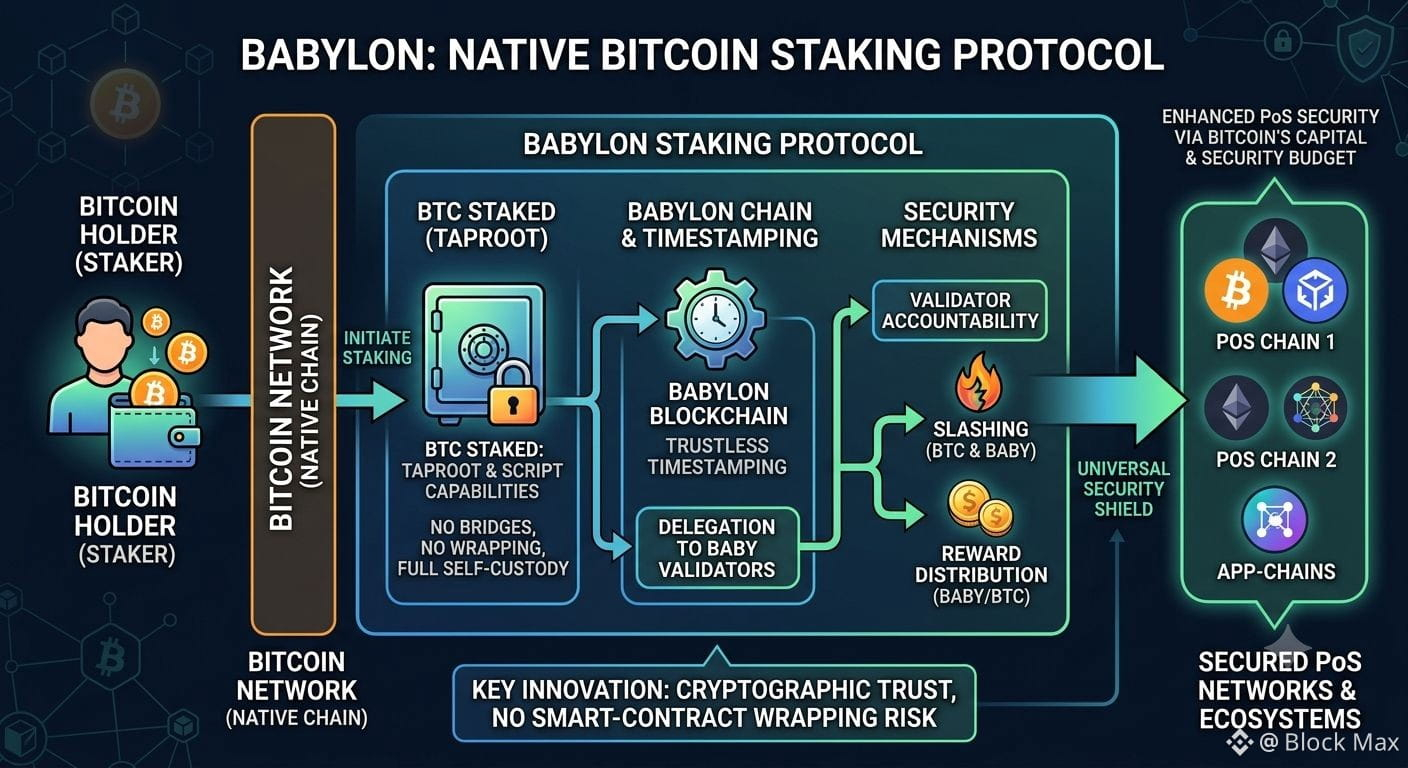
Babylonは、BTC保有者がBTCを直接ステークしてPoSチェーンをセキュアにできるBitcoinステーキング・プロトコルです。ラッピングやブリッジを行わず、常に完全な自己管理(self-custody)を維持します。
Babylonの中核的なブレイクスルーは、ブリッジや合成資産ではなく、Bitcoinスクリプトの能力(Taprootベースの仕組みやタイムスタンプ)に基づく、トラストレスでネイティブなBTCステーキングです。これは、BABYトークンの委任(delegation)によってBitcoinステーキングでセキュア化された最初のL1ネットワークであり、Bitcoinのタイムスタンピングとスラッシング(制裁)メカニズムを用いて、バリデータの説明責任を高めつつネットワークをセキュアにします(Atomic)。BTCがBitcoinチェーンから決して離れないため、スマートコントラクトによるラッピングのリスクがなく、ブリッジのエクスプロイト(攻撃)領域もありません——ステーキングは純粋に暗号学的です。
Bitcoinは暗号資産の中でも最も深い流動性とセキュリティ予算を持っていますが、歴史的には、その資本はアイドル状態だったり、DeFiに入る場合でもカストディアル/ラップド経由(WBTC、ブリッジ)で入ることで、カウンターパーティおよびスマートコントラクトのリスクが再導入されてきました。Babylonはこれを、BTCをPoSエコシステムのトラスト最小化されたセキュリティ層として機能させることで解決します——Bitcoinをユニバーサルなセキュリティシールドとして働かせ、世界最大の暗号資産のユーティリティ(BTCC)を再定義します。規模感の参考として、比較するとラップされたBitcoinの総供給量は約150,000 BTCなので、Babylonがネイティブのステーキング・ボールトでそれの3分の1以上を保有していることは、カストディを伴わないBTCステーキングへの実在の需要を示します。@babylonlabs_io #baby $BABY
Babylonは、BTC保有者がBTCを直接ステークしてPoSチェーンをセキュアにできるBitcoinステーキング・プロトコルです。ラッピングやブリッジを行わず、常に完全な自己管理(self-custody)を維持します。
Babylonの中核的なブレイクスルーは、ブリッジや合成資産ではなく、Bitcoinスクリプトの能力(Taprootベースの仕組みやタイムスタンプ)に基づく、トラストレスでネイティブなBTCステーキングです。これは、BABYトークンの委任(delegation)によってBitcoinステーキングでセキュア化された最初のL1ネットワークであり、Bitcoinのタイムスタンピングとスラッシング(制裁)メカニズムを用いて、バリデータの説明責任を高めつつネットワークをセキュアにします(Atomic)。BTCがBitcoinチェーンから決して離れないため、スマートコントラクトによるラッピングのリスクがなく、ブリッジのエクスプロイト(攻撃)領域もありません——ステーキングは純粋に暗号学的です。
Bitcoinは暗号資産の中でも最も深い流動性とセキュリティ予算を持っていますが、歴史的には、その資本はアイドル状態だったり、DeFiに入る場合でもカストディアル/ラップド経由(WBTC、ブリッジ)で入ることで、カウンターパーティおよびスマートコントラクトのリスクが再導入されてきました。Babylonはこれを、BTCをPoSエコシステムのトラスト最小化されたセキュリティ層として機能させることで解決します——Bitcoinをユニバーサルなセキュリティシールドとして働かせ、世界最大の暗号資産のユーティリティ(BTCC)を再定義します。規模感の参考として、比較するとラップされたBitcoinの総供給量は約150,000 BTCなので、Babylonがネイティブのステーキング・ボールトでそれの3分の1以上を保有していることは、カストディを伴わないBTCステーキングへの実在の需要を示します。@BabylonLabs_io #baby $BABY
Babylonの中核的なブレイクスルーは、ブリッジや合成資産ではなく、Bitcoinスクリプトの能力(Taprootベースの仕組みやタイムスタンプ)に基づく、トラストレスでネイティブなBTCステーキングです。これは、BABYトークンの委任(delegation)によってBitcoinステーキングでセキュア化された最初のL1ネットワークであり、Bitcoinのタイムスタンピングとスラッシング(制裁)メカニズムを用いて、バリデータの説明責任を高めつつネットワークをセキュアにします(Atomic)。BTCがBitcoinチェーンから決して離れないため、スマートコントラクトによるラッピングのリスクがなく、ブリッジのエクスプロイト(攻撃)領域もありません——ステーキングは純粋に暗号学的です。
Bitcoinは暗号資産の中でも最も深い流動性とセキュリティ予算を持っていますが、歴史的には、その資本はアイドル状態だったり、DeFiに入る場合でもカストディアル/ラップド経由(WBTC、ブリッジ)で入ることで、カウンターパーティおよびスマートコントラクトのリスクが再導入されてきました。Babylonはこれを、BTCをPoSエコシステムのトラスト最小化されたセキュリティ層として機能させることで解決します——Bitcoinをユニバーサルなセキュリティシールドとして働かせ、世界最大の暗号資産のユーティリティ(BTCC)を再定義します。規模感の参考として、比較するとラップされたBitcoinの総供給量は約150,000 BTCなので、Babylonがネイティブのステーキング・ボールトでそれの3分の1以上を保有していることは、カストディを伴わないBTCステーキングへの実在の需要を示します。@BabylonLabs_io #baby $BABY
9
8
271
·
--
記事
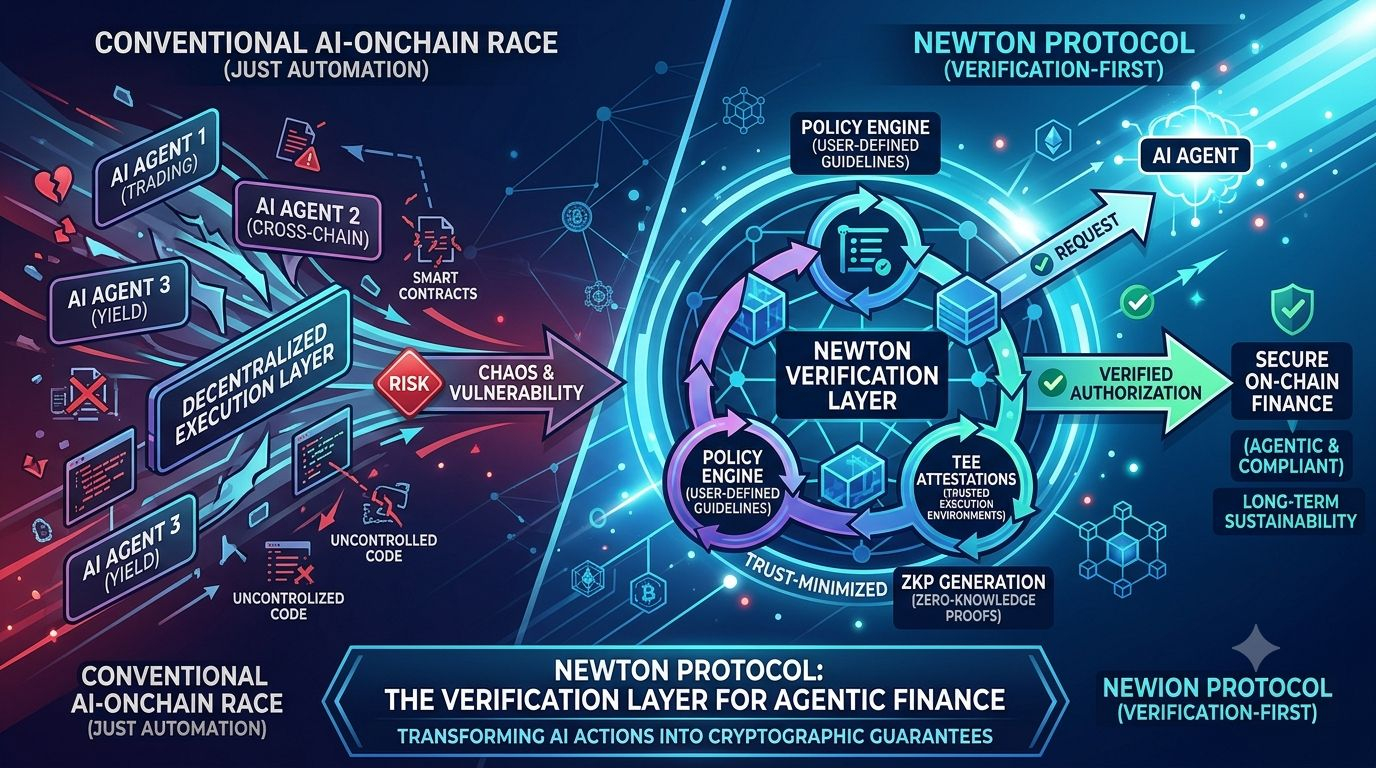
Newton Protocol:自動化だけでなく検証に賭ける――AIオンチェーン競争での勝負最近かなり時間をかけて、より新しいL2やロールアップのプロジェクトをいろいろスクロールしているんですが、どうしても無視できないものがフィードに何度も出てきます――Newton Protocolです。まだ見かけていないなら、要するに「AIエージェントが実際にオンチェーンでお金を管理する世界」のための“配管(プランビング)”を作ろうとしている取り組みです。単にそれっぽいことをチャットで語るだけではなく、現実に動く仕組みを目指している。調べれば調べるほど、これが単なる「ぼんやりした『AI+暗号資産』」系の流行り文句の組み合わせではないことが分かってきました。背後にはちゃんとしたアーキテクチャがあるんです。
少し話を戻します。今期「AI」をホワイトペーパーにベタ付けしたプロジェクトを、私たちはもう何百も見てきました。その多くは、チャットボットのラッパーか、検証できないトレーディングのシグナル生成器にすぎません。Newtonで私が惹かれたのは、AIを“商品”として売っているのではない点です。商品はあくまで検証(verification)で、AIエージェントはその上に乗っかっているユースケースの一つだ、というところにあります。
Newton Protocol:自動化だけでなく検証に賭ける――AIオンチェーン競争での勝負
最近かなり時間をかけて、より新しいL2やロールアップのプロジェクトをいろいろスクロールしているんですが、どうしても無視できないものがフィードに何度も出てきます――Newton Protocolです。まだ見かけていないなら、要するに「AIエージェントが実際にオンチェーンでお金を管理する世界」のための“配管(プランビング)”を作ろうとしている取り組みです。単にそれっぽいことをチャットで語るだけではなく、現実に動く仕組みを目指している。調べれば調べるほど、これが単なる「ぼんやりした『AI+暗号資産』」系の流行り文句の組み合わせではないことが分かってきました。背後にはちゃんとしたアーキテクチャがあるんです。
少し話を戻します。今期「AI」をホワイトペーパーにベタ付けしたプロジェクトを、私たちはもう何百も見てきました。その多くは、チャットボットのラッパーか、検証できないトレーディングのシグナル生成器にすぎません。Newtonで私が惹かれたのは、AIを“商品”として売っているのではない点です。商品はあくまで検証(verification)で、AIエージェントはその上に乗っかっているユースケースの一つだ、というところにあります。
少し話を戻します。今期「AI」をホワイトペーパーにベタ付けしたプロジェクトを、私たちはもう何百も見てきました。その多くは、チャットボットのラッパーか、検証できないトレーディングのシグナル生成器にすぎません。Newtonで私が惹かれたのは、AIを“商品”として売っているのではない点です。商品はあくまで検証(verification)で、AIエージェントはその上に乗っかっているユースケースの一つだ、というところにあります。
5
7
127
·
--
AIエージェントをウォレットに本当に任せていいの?
Newton Protocolを見るたびに、自分にこう問いかけてしまいます。私は毎回「“AI+暗号資産”のプロジェクトは、ボットを売ってきて、それを盲目的に信じろと言ってくる」という現実に直面しています。Newtonはそれをひっくり返します。単に取引を自動化するだけでなく、あなたのAIエージェントが設定したルールに実際に従ったことを証明するロールアップを構築するのです——TEEsとゼロ知識証明を使い、誰でも検証できます。
何が際立っている? Magic Labsによって作られている点です。Magic Labsは、PolymarketやWalletConnectで使われていた初期の組み込みウォレット基盤を手がけたチームです。NEWTは固定の1B供給でインフレなし。ただし70%以上はいまだロックされているため、アンロックが価格のテストを続けることになります。
本当の問いは技術ではありません。普及です。開発者は実際にこのマーケットプレイス上に構築するのでしょうか? 利用はビジョンに追いついてくるのでしょうか?
私は追いかけていません。見ています。あなたは?
@NewtonProtocol #Newt #newt $NEWT
AIエージェントをウォレットに本当に任せていいの?
Newton Protocolを見るたびに、自分にこう問いかけてしまいます。私は毎回「“AI+暗号資産”のプロジェクトは、ボットを売ってきて、それを盲目的に信じろと言ってくる」という現実に直面しています。Newtonはそれをひっくり返します。単に取引を自動化するだけでなく、あなたのAIエージェントが設定したルールに実際に従ったことを証明するロールアップを構築するのです——TEEsとゼロ知識証明を使い、誰でも検証できます。
何が際立っている? Magic Labsによって作られている点です。Magic Labsは、PolymarketやWalletConnectで使われていた初期の組み込みウォレット基盤を手がけたチームです。NEWTは固定の1B供給でインフレなし。ただし70%以上はいまだロックされているため、アンロックが価格のテストを続けることになります。
本当の問いは技術ではありません。普及です。開発者は実際にこのマーケットプレイス上に構築するのでしょうか? 利用はビジョンに追いついてくるのでしょうか?
私は追いかけていません。見ています。あなたは?
@NewtonProtocol #Newt #newt $NEWT
Newton Protocolを見るたびに、自分にこう問いかけてしまいます。私は毎回「“AI+暗号資産”のプロジェクトは、ボットを売ってきて、それを盲目的に信じろと言ってくる」という現実に直面しています。Newtonはそれをひっくり返します。単に取引を自動化するだけでなく、あなたのAIエージェントが設定したルールに実際に従ったことを証明するロールアップを構築するのです——TEEsとゼロ知識証明を使い、誰でも検証できます。
何が際立っている? Magic Labsによって作られている点です。Magic Labsは、PolymarketやWalletConnectで使われていた初期の組み込みウォレット基盤を手がけたチームです。NEWTは固定の1B供給でインフレなし。ただし70%以上はいまだロックされているため、アンロックが価格のテストを続けることになります。
本当の問いは技術ではありません。普及です。開発者は実際にこのマーケットプレイス上に構築するのでしょうか? 利用はビジョンに追いついてくるのでしょうか?
私は追いかけていません。見ています。あなたは?
@NewtonProtocol #Newt #newt $NEWT
🔍 Watching, not chasing
0%
🚀 Adoption before hype
0%
⚠️ Unlocks worry me
0%
🤖 Trust the tech, not agents
0%
0 投票 • 投票は終了しました
8
5
274
·
--
記事
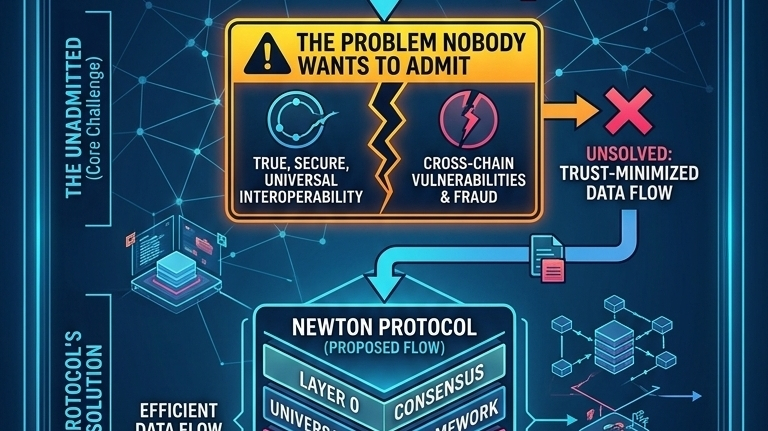
NEWTON PROTOCOL そして 認めたくないのに未解決の問題は今も残っている暗号はまず簡単な問題を最初に解決しました。私はそこに何度も立ち戻ってしまうんです。私たちは実行を信頼不要(トラストレス)にできた。つまり、銀行が間に立つことなく、あるいは取引があなたのリスクモデルに照らして今日それに当てはまるかどうかを誰かの機関が判断してしまうことなく、誰でも他の誰かにお金を送れるようにした。いい。確かに。これは何年も前に解決済みです。けれど、その次の部分——あなたの代わりに誰、あるいは何が行動するのか、そしてあなたが「こうして」と伝えたとおりのことをしていると、どうやって実際に確実に知るのか。勝手に自分で決めたことをやっていないと、どう確かめるのか。そこは、誰も本当に解き切れていない。Newton Protocolが踏み込もうとしているのはまさにそのギャップです。で、正直なところ、周りのブランディングはそれに良い影響を与えていません。AIエージェント、ロールアップ、検証可能だの検証可能だの。スローガンという名のスープみたいに読めてしまう。でも、スープの下には本当の問題がある。人々が思っている以上に、もっと過小評価されている問題だと思う。
NEWTON PROTOCOL そして 認めたくないのに未解決の問題は今も残っている
暗号はまず簡単な問題を最初に解決しました。私はそこに何度も立ち戻ってしまうんです。私たちは実行を信頼不要(トラストレス)にできた。つまり、銀行が間に立つことなく、あるいは取引があなたのリスクモデルに照らして今日それに当てはまるかどうかを誰かの機関が判断してしまうことなく、誰でも他の誰かにお金を送れるようにした。いい。確かに。これは何年も前に解決済みです。けれど、その次の部分——あなたの代わりに誰、あるいは何が行動するのか、そしてあなたが「こうして」と伝えたとおりのことをしていると、どうやって実際に確実に知るのか。勝手に自分で決めたことをやっていないと、どう確かめるのか。そこは、誰も本当に解き切れていない。Newton Protocolが踏み込もうとしているのはまさにそのギャップです。で、正直なところ、周りのブランディングはそれに良い影響を与えていません。AIエージェント、ロールアップ、検証可能だの検証可能だの。スローガンという名のスープみたいに読めてしまう。でも、スープの下には本当の問題がある。人々が思っている以上に、もっと過小評価されている問題だと思う。
7
5
115
·
--
私はニュートン・プロトコル(NEWT)を見ていて、市場はそれを「AIエージェント取引」トークンとして価格づけているが、実際の機能はその1段下にある。
注目の大半はトレーディングボットの物語に向けられている——エージェントがポートフォリオをリバランスし、戦略を実行する。だがニュートンの実際のアーキテクチャは、コンプライアンスをコードとして扱う層であり、ビルダーが定義したポリシーがオンチェーンおよびオフチェーンのデータを用いて、信頼できる実行環境の中で動く分散型オペレーターネットワークにより、取引を承認またはブロックする(CoinMarketCap) 。
それは取引機能ではない。これは許可(パーミッション)を司るプリミティブ——オラクルがデータに対して占めるのと同じカテゴリーだ。そしてパーミッション層は、取引高によって評価されるものではなく、それを統合せざるを得ない「誰か」によって評価される。
明示されたターゲットは、金融機関、ステーブルコイン発行者、そしてRWAプラットフォームであり、透明性を失わずにリアルタイムの強制(エンフォースメント)が必要だ(CoinMarketCap) 。
それは協調の賭けだ。規制された資本が、そもそもオンチェーンの自動化に触れるために検証可能なルール確認を必要とするのなら、NEWTは物語需要ではなくインフラ需要になる——反射的ではなく粘着性のある需要だ。
市場は依然として、アンロック主導のボラティリティとしてこれを価格づけている。2026年1月24日に1億3960万トークンのアンロックがあり、吸収(コンテンション)を上回ってしまう恐れがある(CoinMarketCap)——供給の物語。だが本当の問いは需要の物語だ。その供給が到来する前に、コンプライアンスをコード化したものがデフォルトのレールになるのか?
私はエージェントを見ているのではない。動くために許可を求めなければならない「相手」を見ている。
#newt $NEWT @NewtonProtocol
私はニュートン・プロトコル(NEWT)を見ていて、市場はそれを「AIエージェント取引」トークンとして価格づけているが、実際の機能はその1段下にある。
注目の大半はトレーディングボットの物語に向けられている——エージェントがポートフォリオをリバランスし、戦略を実行する。だがニュートンの実際のアーキテクチャは、コンプライアンスをコードとして扱う層であり、ビルダーが定義したポリシーがオンチェーンおよびオフチェーンのデータを用いて、信頼できる実行環境の中で動く分散型オペレーターネットワークにより、取引を承認またはブロックする(CoinMarketCap) 。
それは取引機能ではない。これは許可(パーミッション)を司るプリミティブ——オラクルがデータに対して占めるのと同じカテゴリーだ。そしてパーミッション層は、取引高によって評価されるものではなく、それを統合せざるを得ない「誰か」によって評価される。
明示されたターゲットは、金融機関、ステーブルコイン発行者、そしてRWAプラットフォームであり、透明性を失わずにリアルタイムの強制(エンフォースメント)が必要だ(CoinMarketCap) 。
それは協調の賭けだ。規制された資本が、そもそもオンチェーンの自動化に触れるために検証可能なルール確認を必要とするのなら、NEWTは物語需要ではなくインフラ需要になる——反射的ではなく粘着性のある需要だ。
市場は依然として、アンロック主導のボラティリティとしてこれを価格づけている。2026年1月24日に1億3960万トークンのアンロックがあり、吸収(コンテンション)を上回ってしまう恐れがある(CoinMarketCap)——供給の物語。だが本当の問いは需要の物語だ。その供給が到来する前に、コンプライアンスをコード化したものがデフォルトのレールになるのか?
私はエージェントを見ているのではない。動くために許可を求めなければならない「相手」を見ている。
#newt $NEWT @NewtonProtocol
注目の大半はトレーディングボットの物語に向けられている——エージェントがポートフォリオをリバランスし、戦略を実行する。だがニュートンの実際のアーキテクチャは、コンプライアンスをコードとして扱う層であり、ビルダーが定義したポリシーがオンチェーンおよびオフチェーンのデータを用いて、信頼できる実行環境の中で動く分散型オペレーターネットワークにより、取引を承認またはブロックする(CoinMarketCap) 。
それは取引機能ではない。これは許可(パーミッション)を司るプリミティブ——オラクルがデータに対して占めるのと同じカテゴリーだ。そしてパーミッション層は、取引高によって評価されるものではなく、それを統合せざるを得ない「誰か」によって評価される。
明示されたターゲットは、金融機関、ステーブルコイン発行者、そしてRWAプラットフォームであり、透明性を失わずにリアルタイムの強制(エンフォースメント)が必要だ(CoinMarketCap) 。
それは協調の賭けだ。規制された資本が、そもそもオンチェーンの自動化に触れるために検証可能なルール確認を必要とするのなら、NEWTは物語需要ではなくインフラ需要になる——反射的ではなく粘着性のある需要だ。
市場は依然として、アンロック主導のボラティリティとしてこれを価格づけている。2026年1月24日に1億3960万トークンのアンロックがあり、吸収(コンテンション)を上回ってしまう恐れがある(CoinMarketCap)——供給の物語。だが本当の問いは需要の物語だ。その供給が到来する前に、コンプライアンスをコード化したものがデフォルトのレールになるのか?
私はエージェントを見ているのではない。動くために許可を求めなければならない「相手」を見ている。
#newt $NEWT @NewtonProtocol
Infrastructure play
100%
Hype-driven AI coin
0%
Unlocks outweigh demand
0%
Too early to call
0%
1 投票 • 投票は終了しました
5
4
148
·
--
記事
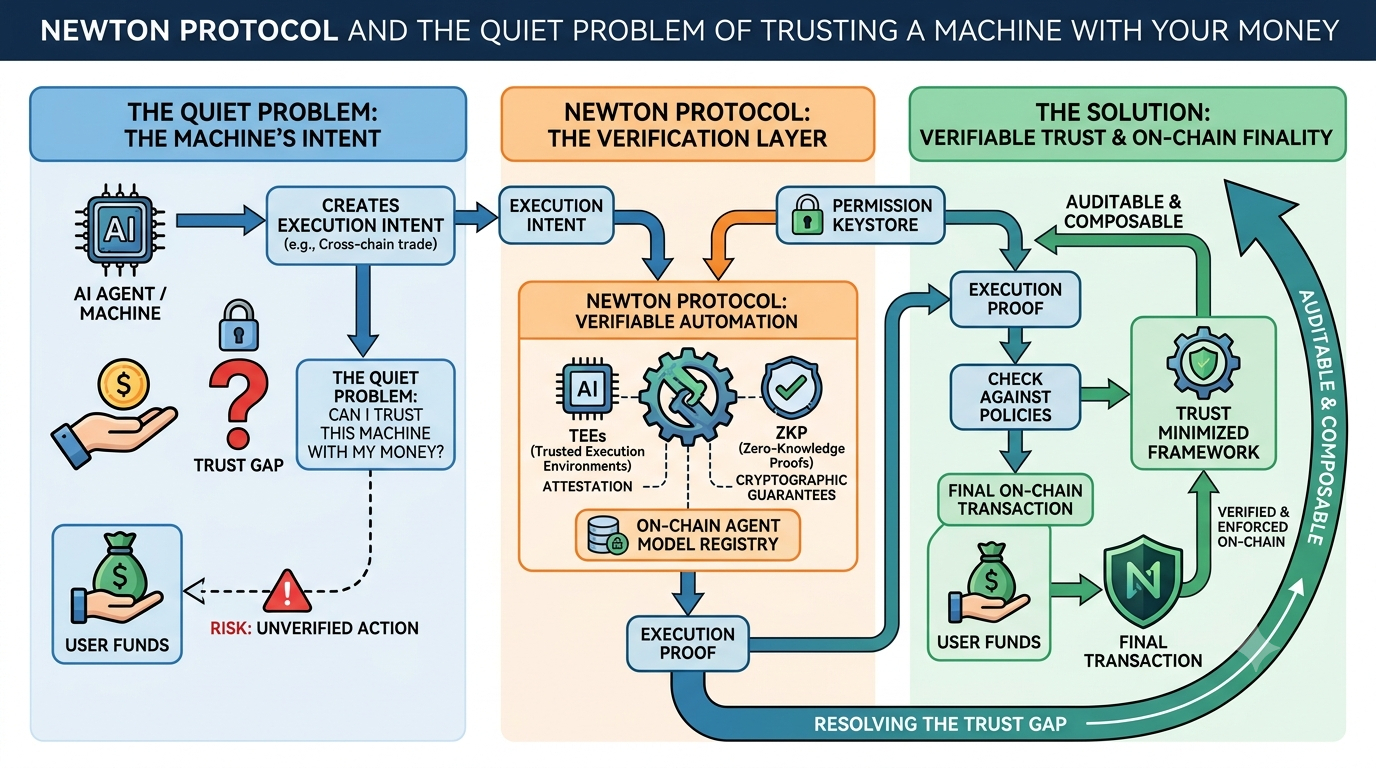
NEWTON PROTOCOL と、お金を機械に預けることにまつわる静かな問題"信頼不要な自動化。" そのフレーズを何度も読みすぎて、もはやほとんど意識に引っかからないほどになっています。でも、ちょっと立ち止まって考えてみると、ちゃんと意味があるんです。ニュートン・プロトコルは、ここで一度「いったい何の問題を解こうとしているのか」を考えさせてくれるタイプのプロジェクトです。なぜなら、紙の上では、この2年のあいだに出てきた他のほとんどすべての「AI×暗号」の売り込みと同じように読めてしまうからです。エージェント。ロールアップ。マーケットプレイス。言葉がだんだんぼやけていく。そう言うのは、こうしたデッキをかなり多く読んできたからで、正直なところ、「今週の“AI搭載オンチェーン”」というタグラインを5回目あたりでうんざりが忍び寄ってくるのも認めざるを得ません。
NEWTON PROTOCOL と、お金を機械に預けることにまつわる静かな問題
"信頼不要な自動化。" そのフレーズを何度も読みすぎて、もはやほとんど意識に引っかからないほどになっています。でも、ちょっと立ち止まって考えてみると、ちゃんと意味があるんです。ニュートン・プロトコルは、ここで一度「いったい何の問題を解こうとしているのか」を考えさせてくれるタイプのプロジェクトです。なぜなら、紙の上では、この2年のあいだに出てきた他のほとんどすべての「AI×暗号」の売り込みと同じように読めてしまうからです。エージェント。ロールアップ。マーケットプレイス。言葉がだんだんぼやけていく。そう言うのは、こうしたデッキをかなり多く読んできたからで、正直なところ、「今週の“AI搭載オンチェーン”」というタグラインを5回目あたりでうんざりが忍び寄ってくるのも認めざるを得ません。
16
6
320
·
--
私はニュートン・プロトコルを見ていて、市場はそれを「別のAIエージェント取引トークン」として価格づけしているように見えます――自動化の物語に乗り、アンロックのスケジュールと出来高で判断している。でもその見立ては、NEWTがその下で実際に何を作っているかを見落としています。
本当のプロダクトはエージェントではありません。誰かが自律エージェントに実資本を触らせる前に必要になる検証レイヤーです。ニュートンのポリシーレイヤー、オペレーター・ネットワーク、オラクル・アダプターが、定義されたルールに照らしてすべての取引をチェックし、その確認が正しく実施されたことを裏づける暗号学的な証明を生成します(CoinMarketCap)。さらにTEEのアテステーションにより、オフチェーンの判断がユーザー指示と整合していることが示され、ゼロ知識証明によって、各自動化ステップがプライベート情報を公開せずに検証可能であることが保証されます(CryptoSlate)。
これは取引機能ではありません。協調のためのインフラ――つまり、機関投資家、ステーブルコイン発行者、RWAプラットフォームが、監査可能性を手放さずにコードへ実行を委任できるようにする層です。金融機関、ステーブルコイン発行者、RWAプラットフォーム、そしてAIエージェントは、透明性・プライバシー・分散性を失うことなく、取引の時点で変化する規制要件に直接対応できます(CoinMarketCap)。
大半の個人トレーダーには、そんなものを価格化できません。「検証可能な信頼」のためのダッシュボードなどないからです。市場は見える指標――アンロック、出来高、上場――にデフォルトで頼り、ニュートンがより時間をかけて粘り強い形の需要に向けて勝負していることを見逃しています。つまり、許可(パーミッション)レイヤーが本番で証明されるまで表に出てこない、機関投資家の自動化フローです。
トークンのアンロックによる上値圧力の懸念は現実です。しかしより深い問いは「供給」ではありません。コンプライアンスをコードとして実装することが、誰かが最初にそれを作り上げる前に、エージェントが走るデフォルトのレールになるかどうかです。
私はチャートを見ているのではありません。物語より先に信頼レイヤーが出荷されるかどうかを見ています。
#newt $NEWT @NewtonProtocol
私はニュートン・プロトコルを見ていて、市場はそれを「別のAIエージェント取引トークン」として価格づけしているように見えます――自動化の物語に乗り、アンロックのスケジュールと出来高で判断している。でもその見立ては、NEWTがその下で実際に何を作っているかを見落としています。
本当のプロダクトはエージェントではありません。誰かが自律エージェントに実資本を触らせる前に必要になる検証レイヤーです。ニュートンのポリシーレイヤー、オペレーター・ネットワーク、オラクル・アダプターが、定義されたルールに照らしてすべての取引をチェックし、その確認が正しく実施されたことを裏づける暗号学的な証明を生成します(CoinMarketCap)。さらにTEEのアテステーションにより、オフチェーンの判断がユーザー指示と整合していることが示され、ゼロ知識証明によって、各自動化ステップがプライベート情報を公開せずに検証可能であることが保証されます(CryptoSlate)。
これは取引機能ではありません。協調のためのインフラ――つまり、機関投資家、ステーブルコイン発行者、RWAプラットフォームが、監査可能性を手放さずにコードへ実行を委任できるようにする層です。金融機関、ステーブルコイン発行者、RWAプラットフォーム、そしてAIエージェントは、透明性・プライバシー・分散性を失うことなく、取引の時点で変化する規制要件に直接対応できます(CoinMarketCap)。
大半の個人トレーダーには、そんなものを価格化できません。「検証可能な信頼」のためのダッシュボードなどないからです。市場は見える指標――アンロック、出来高、上場――にデフォルトで頼り、ニュートンがより時間をかけて粘り強い形の需要に向けて勝負していることを見逃しています。つまり、許可(パーミッション)レイヤーが本番で証明されるまで表に出てこない、機関投資家の自動化フローです。
トークンのアンロックによる上値圧力の懸念は現実です。しかしより深い問いは「供給」ではありません。コンプライアンスをコードとして実装することが、誰かが最初にそれを作り上げる前に、エージェントが走るデフォルトのレールになるかどうかです。
私はチャートを見ているのではありません。物語より先に信頼レイヤーが出荷されるかどうかを見ています。
#newt $NEWT @NewtonProtocol
本当のプロダクトはエージェントではありません。誰かが自律エージェントに実資本を触らせる前に必要になる検証レイヤーです。ニュートンのポリシーレイヤー、オペレーター・ネットワーク、オラクル・アダプターが、定義されたルールに照らしてすべての取引をチェックし、その確認が正しく実施されたことを裏づける暗号学的な証明を生成します(CoinMarketCap)。さらにTEEのアテステーションにより、オフチェーンの判断がユーザー指示と整合していることが示され、ゼロ知識証明によって、各自動化ステップがプライベート情報を公開せずに検証可能であることが保証されます(CryptoSlate)。
これは取引機能ではありません。協調のためのインフラ――つまり、機関投資家、ステーブルコイン発行者、RWAプラットフォームが、監査可能性を手放さずにコードへ実行を委任できるようにする層です。金融機関、ステーブルコイン発行者、RWAプラットフォーム、そしてAIエージェントは、透明性・プライバシー・分散性を失うことなく、取引の時点で変化する規制要件に直接対応できます(CoinMarketCap)。
大半の個人トレーダーには、そんなものを価格化できません。「検証可能な信頼」のためのダッシュボードなどないからです。市場は見える指標――アンロック、出来高、上場――にデフォルトで頼り、ニュートンがより時間をかけて粘り強い形の需要に向けて勝負していることを見逃しています。つまり、許可(パーミッション)レイヤーが本番で証明されるまで表に出てこない、機関投資家の自動化フローです。
トークンのアンロックによる上値圧力の懸念は現実です。しかしより深い問いは「供給」ではありません。コンプライアンスをコードとして実装することが、誰かが最初にそれを作り上げる前に、エージェントが走るデフォルトのレールになるかどうかです。
私はチャートを見ているのではありません。物語より先に信頼レイヤーが出荷されるかどうかを見ています。
#newt $NEWT @NewtonProtocol
Trust layer ships first
0%
Narrative wins first
0%
Unlocks overshadow tech
0%
Institutions adopt it
0%
0 投票 • 投票は終了しました
7
1
87
·
--
記事
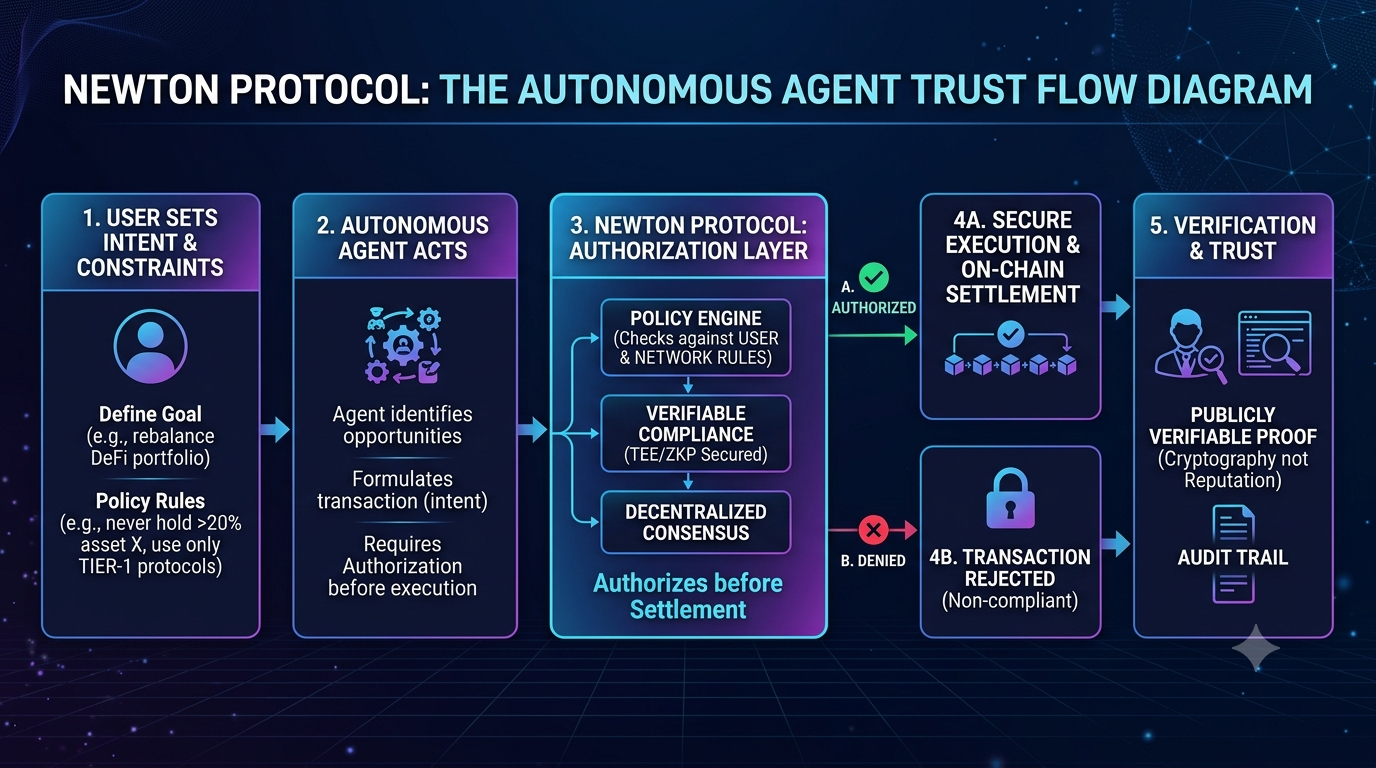
NEWTON PROTOCOLと、あなたの代わりに動くものを信頼する問題暗号資産は、信頼不要の“お金”を10年かけて解決してきた。そこは、基本的にはもう済んだ。次に立ちはだかっているのは、もっと難しい「信頼不要の“行動”」だ。あるウォレットから別のウォレットへトークンを送る?簡単だ。もちろん、それを作るのに何年もかかったけれど、考え方自体はシンプルだ。あなたの代わりに何かを動かす――スクリプト、モデル、エージェント、なんでもいいけど――それは別物なんだ。眠っている間に、コントロールを手放してしまう。しかも必要なのは「たぶん安全」ではなく、「実際に安全」であること。そのギャップを埋めようとしているのが、Newton Protocolだ。興奮したり懐疑的になったりする前に、そもそもなぜそのギャップを埋めるのがこんなに難しいのか、その理由をじっくり考えたい。
NEWTON PROTOCOLと、あなたの代わりに動くものを信頼する問題
暗号資産は、信頼不要の“お金”を10年かけて解決してきた。そこは、基本的にはもう済んだ。次に立ちはだかっているのは、もっと難しい「信頼不要の“行動”」だ。あるウォレットから別のウォレットへトークンを送る?簡単だ。もちろん、それを作るのに何年もかかったけれど、考え方自体はシンプルだ。あなたの代わりに何かを動かす――スクリプト、モデル、エージェント、なんでもいいけど――それは別物なんだ。眠っている間に、コントロールを手放してしまう。しかも必要なのは「たぶん安全」ではなく、「実際に安全」であること。そのギャップを埋めようとしているのが、Newton Protocolだ。興奮したり懐疑的になったりする前に、そもそもなぜそのギャップを埋めるのがこんなに難しいのか、その理由をじっくり考えたい。
9
3
111
·
--
私はニュートン・プロトコルが、AIエージェントのトレーディングアプリとして値付けされているのを見ています。ですが本当の勝負は、ほとんどのトレーダーがまったく考えない「許可(permissioning)」にあります。
オンチェーン上のすべてのAIエージェント取引は、同じ未解決の問題に直面します——ユーザーは、完全な管理(フル・カストディ)を渡すことなく、またブラックボックスを信頼することなく、どのように自律システムに行動する権利を付与できるのでしょうか。ニュートンのキーストア・ロールアップ、ZKプルーフ、TEEアテステーションは、単なるトレーディングに後付けされた機能ではありません。それらは、そもそもエージェントが委任された権限を得て稼ぐことを可能にするための調整レイヤーです。
つまりここが誤価格です。市場はNEWTを「AIトレーディング需要」へのエクスポージャーとして扱っており、その物語はバズ(熱狂)サイクルに合わせて上がったり下がったりします。しかし実際の価値の蓄積は、その1段下——検証可能な許可(permissioning)が、エージェント、DAO、機関投資家が自律的に資本を動かす前に必ず通らなければならない料金所になる——にあります。取引量はニュートン自身のエージェントから来る必要はありません。どこかのエージェントが検証可能な認可を必要とするだけで十分です。
自律実行が信頼インフラよりも速くスケールするなら、許可(permissioning)がボトルネックになります。そしてボトルネック——アプリではなく——こそが、持続的な需要が集中する場所です。
#newt $NEWT @NewtonProtocol
{future}(NEWTUSDT)
私はニュートン・プロトコルが、AIエージェントのトレーディングアプリとして値付けされているのを見ています。ですが本当の勝負は、ほとんどのトレーダーがまったく考えない「許可(permissioning)」にあります。
オンチェーン上のすべてのAIエージェント取引は、同じ未解決の問題に直面します——ユーザーは、完全な管理(フル・カストディ)を渡すことなく、またブラックボックスを信頼することなく、どのように自律システムに行動する権利を付与できるのでしょうか。ニュートンのキーストア・ロールアップ、ZKプルーフ、TEEアテステーションは、単なるトレーディングに後付けされた機能ではありません。それらは、そもそもエージェントが委任された権限を得て稼ぐことを可能にするための調整レイヤーです。
つまりここが誤価格です。市場はNEWTを「AIトレーディング需要」へのエクスポージャーとして扱っており、その物語はバズ(熱狂)サイクルに合わせて上がったり下がったりします。しかし実際の価値の蓄積は、その1段下——検証可能な許可(permissioning)が、エージェント、DAO、機関投資家が自律的に資本を動かす前に必ず通らなければならない料金所になる——にあります。取引量はニュートン自身のエージェントから来る必要はありません。どこかのエージェントが検証可能な認可を必要とするだけで十分です。
自律実行が信頼インフラよりも速くスケールするなら、許可(permissioning)がボトルネックになります。そしてボトルネック——アプリではなく——こそが、持続的な需要が集中する場所です。
#newt $NEWT @NewtonProtocol
オンチェーン上のすべてのAIエージェント取引は、同じ未解決の問題に直面します——ユーザーは、完全な管理(フル・カストディ)を渡すことなく、またブラックボックスを信頼することなく、どのように自律システムに行動する権利を付与できるのでしょうか。ニュートンのキーストア・ロールアップ、ZKプルーフ、TEEアテステーションは、単なるトレーディングに後付けされた機能ではありません。それらは、そもそもエージェントが委任された権限を得て稼ぐことを可能にするための調整レイヤーです。
つまりここが誤価格です。市場はNEWTを「AIトレーディング需要」へのエクスポージャーとして扱っており、その物語はバズ(熱狂)サイクルに合わせて上がったり下がったりします。しかし実際の価値の蓄積は、その1段下——検証可能な許可(permissioning)が、エージェント、DAO、機関投資家が自律的に資本を動かす前に必ず通らなければならない料金所になる——にあります。取引量はニュートン自身のエージェントから来る必要はありません。どこかのエージェントが検証可能な認可を必要とするだけで十分です。
自律実行が信頼インフラよりも速くスケールするなら、許可(permissioning)がボトルネックになります。そしてボトルネック——アプリではなく——こそが、持続的な需要が集中する場所です。
#newt $NEWT @NewtonProtocol
Verifiable permissioning
100%
Agent trading volume
0%
Institutional adoption
0%
Speculative hype
0%
1 投票 • 投票は終了しました
4
3
105
ログインして、さらにコンテンツを読む
厳選トピックで世界の暗号資産トレーダーの仲間入り
⚡️ 暗号資産に関する最新かつ有益な情報が見つかります。
💬 世界最大の暗号資産取引所から信頼されています。
👍 認証を受けたクリエイターから、有益なインサイトを得られます。
メール / 電話番号
トレンドトピック
NEARRisesNearly80%InAWeek
閲覧回数 468
113人が討論中
#nearrisesnearly80%inaweek
NEAR Protocolは今週絶好調だ—何がこの急騰を生んでいるのか 🔥
NEARにとって素晴らしい1週間! 🚀 わずか7日で約80%の上昇を記録したのは運だけではありません。NEARのチェーン抽象化構想とAI統合を軸に、大きな勢いが構築されていることを示しています。テックの効率性と小売(トレンド)の熱狂が結びつくと、まさにこうした値動きが見られるのです。
あなたはNEARを長期で保有していますか?それともこの水準で利益確定しますか?下に戦略を教えてください! 👇
$NEAR
#BitcoinHits$85K #Near #crypto
Lily星星
·いいね:1件
·閲覧回数 1.5k
MultiversXPlansHardForkRecovery
閲覧回数 1,266
165人が討論中
CircleLaunchesInstitutionalBTCBackedBorrowing
閲覧回数 3,767
319人が討論中