
Legend636433
5 投稿

Legend636433
報告
ユーザーをブロック
取引を発注
低高頻度トレーダー
4.6年
1 フォロー
4 フォロワー
4 いいね
投稿
ポートフォリオ
·
--
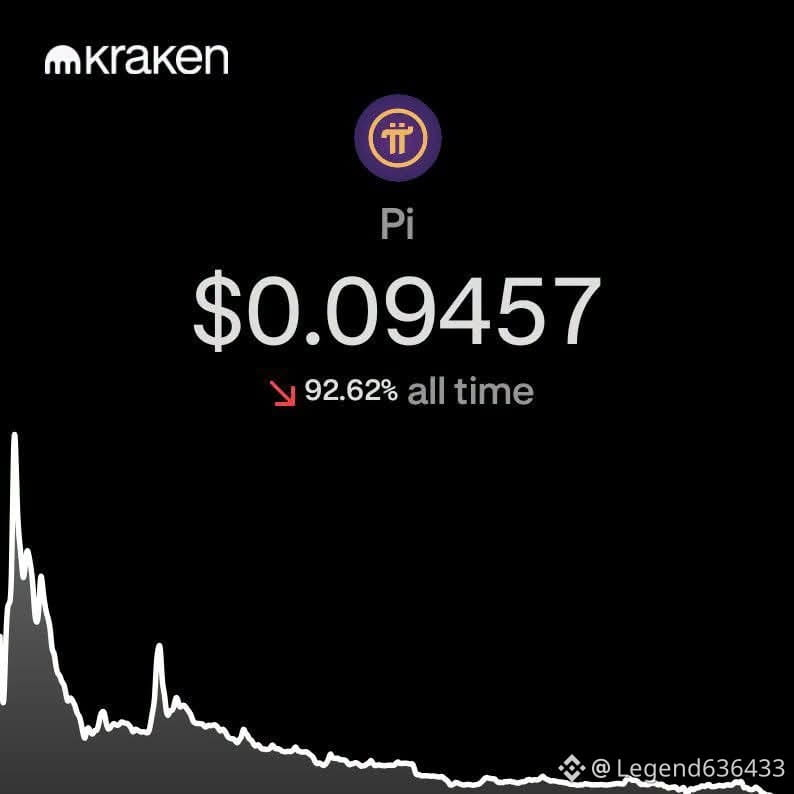
クラーケンで $PI.US を見てみよう! 👀
史上最高値から92%下落した後、価格は回復するのか?
Pi Network DEX が加速させます。
#PiNetwork
#US10YearTreasuryYieldNears5%
クラーケンで $PI.US を見てみよう! 👀
史上最高値から92%下落した後、価格は回復するのか?
Pi Network DEX が加速させます。
#PiNetwork
#US10YearTreasuryYieldNears5%
史上最高値から92%下落した後、価格は回復するのか?
Pi Network DEX が加速させます。
#PiNetwork
#US10YearTreasuryYieldNears5%
65
·
--
一部該当
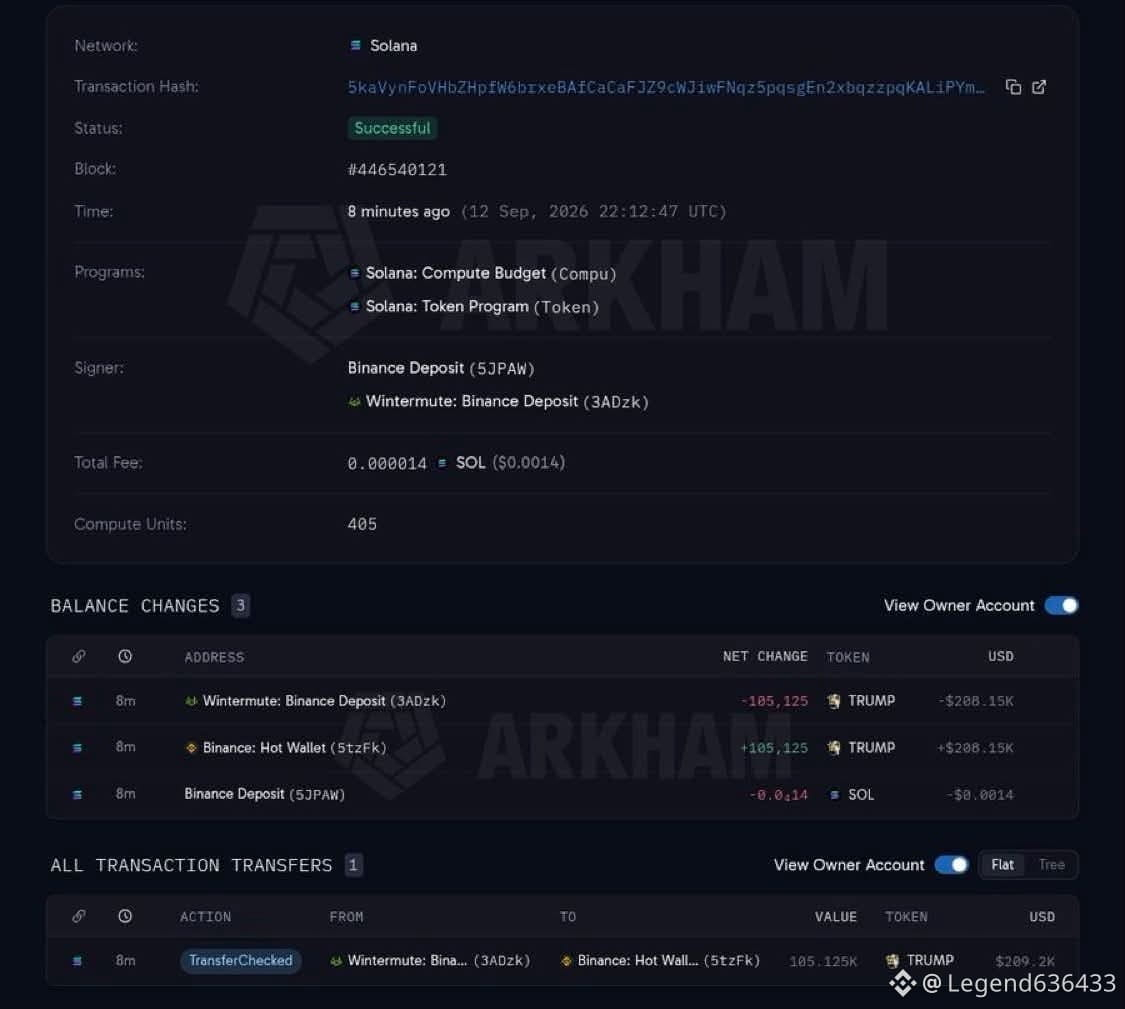
🚨速報:$TRUMP の取引フロー
105K $TRUMP (〜$208K)が、WintermuteのBinanceデポジットウォレットから→Binanceのホットウォレットへ移動しました。
これにより、より多くの$TRUMP が稼働中の取引インフラに投入されるため、追加の入金が続く場合は売り圧力の可能性に注目する価値があります。
自己判断で。投資助言ではありません。
#US10YearTreasuryYieldNears5%
#TokenizedStockHoldersUp619.1% #RevolutConfirmsFakeGovEmailDataBreach
🚨速報:$TRUMP の取引フロー
105K $TRUMP (〜$208K)が、WintermuteのBinanceデポジットウォレットから→Binanceのホットウォレットへ移動しました。
これにより、より多くの$TRUMP が稼働中の取引インフラに投入されるため、追加の入金が続く場合は売り圧力の可能性に注目する価値があります。
自己判断で。投資助言ではありません。
#US10YearTreasuryYieldNears5%
#TokenizedStockHoldersUp619.1% #RevolutConfirmsFakeGovEmailDataBreach
105K $TRUMP (〜$208K)が、WintermuteのBinanceデポジットウォレットから→Binanceのホットウォレットへ移動しました。
これにより、より多くの$TRUMP が稼働中の取引インフラに投入されるため、追加の入金が続く場合は売り圧力の可能性に注目する価値があります。
自己判断で。投資助言ではありません。
#US10YearTreasuryYieldNears5%
#TokenizedStockHoldersUp619.1% #RevolutConfirmsFakeGovEmailDataBreach
1
389
·
--
記事
翻訳参照
Bitcoin’s Future: What History Tells Us About Where BTC Could Go Next
Updated: September 12, 2026$BTC has never followed a straight line. Since its launch in 2009, BTC has experienced spectacular rallies, deep crashes, long periods of uncertainty, and repeated predictions that its best days were either ahead of it—or already over.
Yet @bitcoin has continued to survive and evolve.
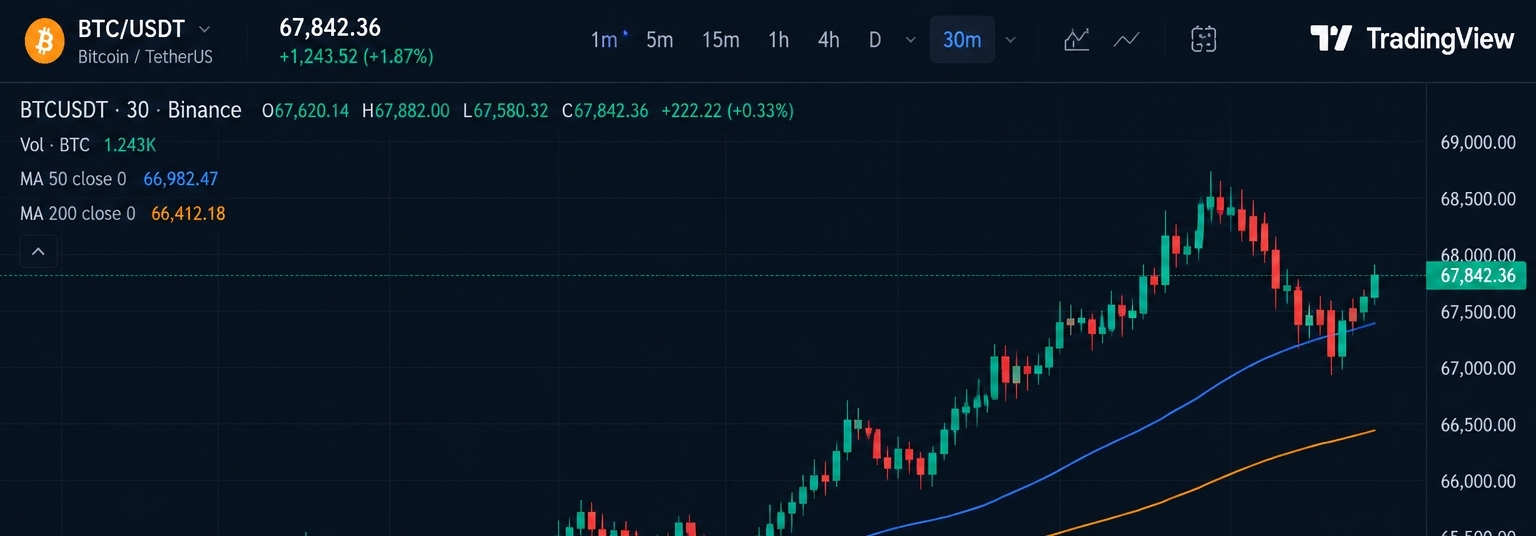
As of September 2026, the Bitcoin story is entering another important phase. $BTC is trading around the high-$70,000s, after recovering strongly from its 2026 lows. Recent market data also shows renewed institutional interest, while technical analysts have identified a bullish “golden cross,” although major resistance remains around the $80,000–$90,000 area.
The bigger question is not simply “Will Bitcoin go up?”
It is:
> What could Bitcoin become over the next five to ten years?
Looking Back: Bitcoin Has Always Been a Cycle of Boom and Fear
Bitcoin's history is important because its future cannot be understood without looking at its previous market cycles.
The cryptocurrency has repeatedly moved through periods of explosive growth followed by severe corrections. The 2020–2021 cycle demonstrated this dramatically, while the following bear market showed how quickly investor confidence can disappear.
Bitcoin's fixed supply is one of the reasons investors continue to study these cycles. The network is designed around a maximum supply of 21 million BTC, while new bitcoin issuance is periodically reduced through halving events.
The 2024 halving reduced the mining reward from 6.25 BTC to 3.125 BTC per block. Historically, reduced new supply combined with increasing demand has been an important part of Bitcoin's long-term investment narrative.
But history also provides a warning: past performance does not guarantee another identical cycle.
Bitcoin is becoming a much larger and more mature market, meaning old patterns may not repeat perfectly.
2026: A Different Bitcoin Market
One of the most interesting changes is the growing connection between Bitcoin and traditional finance.
Spot Bitcoin ETFs have made it easier for traditional investors to obtain exposure to BTC, while companies, investment funds and financial institutions have increasingly incorporated digital assets into their strategies.
Recent market reports have highlighted significant ETF inflows and renewed institutional demand. @bitcoin
This could fundamentally change Bitcoin's future.
In earlier cycles, Bitcoin's price was heavily influenced by retail enthusiasm. In the future, larger financial institutions could play a much greater role.
That could mean more liquidity and potentially greater stability—but it could also mean Bitcoin becomes more sensitive to interest rates, bond yields, economic growth and global risk sentiment.
The Biggest Bullish Argument: Scarcity + Adoption
Bitcoin's strongest long-term argument remains relatively simple.
There will never be more than 21 million BTC.
If global demand for Bitcoin continues increasing while the available supply remains limited, basic supply-and-demand economics suggest that scarcity could support higher valuations.
But scarcity alone isn't enough.
Bitcoin needs continued demand.
That demand could come from several sources:
Institutional investors
Bitcoin ETFs
Corporate treasury strategies
Countries and businesses exploring digital assets
Individuals seeking an alternative store of value
Growing use of Bitcoin-related financial infrastructure
Coinbase's 2026 institutional outlook similarly identifies institutional integration and regulatory development as major themes for the crypto market.
Could Bitcoin Reach $100,000 Again?
This is where predictions become much more uncertain.
Bitcoin has already traded above $100,000 historically, but after its October 2025 peak above $126,000, the market experienced a substantial correction.
By September 2026, $BTC had recovered toward the $80,000 region.
Some analysts remain bullish. For example, recent commentary has suggested potential targets around $95,000–$100,000 if momentum, institutional demand and macroeconomic conditions remain supportive.
Other forecasts are considerably more conservative.
That disagreement is important because Bitcoin's future cannot responsibly be reduced to one magic price target.
A more realistic way to think about the future is through scenarios.
🟢 Bullish Scenario
If institutional adoption accelerates, ETF demand remains strong, regulation becomes clearer and global liquidity becomes more favorable, Bitcoin could eventually challenge previous highs and potentially establish substantially higher levels.
The next major psychological milestone would be $100,000, followed by the possibility of discovering new price levels above the previous record.
@bitcoin
🟡 Moderate Scenario
Bitcoin could spend several years moving between large ranges rather than immediately entering another explosive bull market.
In this scenario, adoption continues, but high interest rates, regulation, economic uncertainty and periodic investor sell-offs prevent a straight upward trend.
🔴 Bearish Scenario
Bitcoin could experience another major correction if global liquidity tightens, institutional demand weakens, regulation becomes restrictive or investors move aggressively away from risky assets.
Bitcoin has historically demonstrated that 50%+ declines are possible, so assuming permanent upward movement would be unrealistic.
The 2028 Halving Could Become Important Again
Another major event on the horizon is Bitcoin's next halving, expected around 2028.
Historically, Bitcoin halvings have attracted enormous attention because they reduce the rate at which new BTC enters circulation.
The interesting question is whether the 2028 halving will have the same impact as earlier halvings.
It may not.
Bitcoin is now a much larger asset, and institutional investment means that macroeconomic conditions and capital flows may matter as much as the reduction in mining rewards.
Some analysts believe institutional participation could weaken the traditional four-year Bitcoin cycle. Others still see the halving cycle as a useful framework for understanding long-term market behavior.
Bitcoin's Biggest Risk May Not Be Price
The biggest long-term risks are not necessarily another price crash.
Regulation, technological changes, cybersecurity, competition from other financial technologies and potential quantum-computing threats could all influence Bitcoin's future.
There is also a fundamental question:
Will Bitcoin primarily remain a store of value, or will it become a larger part of the global financial infrastructure?
The answer could determine whether @bitcoin @bitcoin eventually behaves more like digital gold—or evolves into something much broader.
My Long-Term View
Bitcoin's past suggests one thing very clearly: expect volatility.
Its future, however, could be structurally different from its past.
The combination of limited supply, increasing institutional access, improving financial infrastructure and growing recognition of digital assets gives Bitcoin a credible long-term case.
But that does not mean Bitcoin is guaranteed to reach $150,000, $200,000, or any other specific number.
The more interesting prediction is that Bitcoin may gradually become a permanent part of the global financial landscape, even if its price continues to experience dramatic boom-and-bust cycles.
If adoption continues and Bitcoin maintains its network security and scarcity characteristics, the 2030s could look very different from the early days of cryptocurrency.
@undefined biggest story may no longer be about surviving. It may be about how deeply it becomes integrated into traditional finance.
*This article is for educational purpose only, not financial advice.
#CPIWatch #BitcoinReboundsAbove$79KAfterCPI
#BitcoinOpenInterestShareRisesTo42.1%
Bitcoin’s Future: What History Tells Us About Where BTC Could Go Next Updated: September 12, 2026
$BTC has never followed a straight line. Since its launch in 2009, BTC has experienced spectacular rallies, deep crashes, long periods of uncertainty, and repeated predictions that its best days were either ahead of it—or already over.
Yet @Bitcoin has continued to survive and evolve.
As of September 2026, the Bitcoin story is entering another important phase. $BTC is trading around the high-$70,000s, after recovering strongly from its 2026 lows. Recent market data also shows renewed institutional interest, while technical analysts have identified a bullish “golden cross,” although major resistance remains around the $80,000–$90,000 area.
The bigger question is not simply “Will Bitcoin go up?”
It is:
> What could Bitcoin become over the next five to ten years?
Looking Back: Bitcoin Has Always Been a Cycle of Boom and Fear
Bitcoin's history is important because its future cannot be understood without looking at its previous market cycles.
The cryptocurrency has repeatedly moved through periods of explosive growth followed by severe corrections. The 2020–2021 cycle demonstrated this dramatically, while the following bear market showed how quickly investor confidence can disappear.
Bitcoin's fixed supply is one of the reasons investors continue to study these cycles. The network is designed around a maximum supply of 21 million BTC, while new bitcoin issuance is periodically reduced through halving events.
The 2024 halving reduced the mining reward from 6.25 BTC to 3.125 BTC per block. Historically, reduced new supply combined with increasing demand has been an important part of Bitcoin's long-term investment narrative.
But history also provides a warning: past performance does not guarantee another identical cycle.
Bitcoin is becoming a much larger and more mature market, meaning old patterns may not repeat perfectly.
2026: A Different Bitcoin Market
One of the most interesting changes is the growing connection between Bitcoin and traditional finance.
Spot Bitcoin ETFs have made it easier for traditional investors to obtain exposure to BTC, while companies, investment funds and financial institutions have increasingly incorporated digital assets into their strategies.
Recent market reports have highlighted significant ETF inflows and renewed institutional demand. @Bitcoin
This could fundamentally change Bitcoin's future.
In earlier cycles, Bitcoin's price was heavily influenced by retail enthusiasm. In the future, larger financial institutions could play a much greater role.
That could mean more liquidity and potentially greater stability—but it could also mean Bitcoin becomes more sensitive to interest rates, bond yields, economic growth and global risk sentiment.
The Biggest Bullish Argument: Scarcity + Adoption
Bitcoin's strongest long-term argument remains relatively simple.
There will never be more than 21 million BTC.
If global demand for Bitcoin continues increasing while the available supply remains limited, basic supply-and-demand economics suggest that scarcity could support higher valuations.
But scarcity alone isn't enough.
Bitcoin needs continued demand.
That demand could come from several sources:
Institutional investors
Bitcoin ETFs
Corporate treasury strategies
Countries and businesses exploring digital assets
Individuals seeking an alternative store of value
Growing use of Bitcoin-related financial infrastructure
Coinbase's 2026 institutional outlook similarly identifies institutional integration and regulatory development as major themes for the crypto market.
Could Bitcoin Reach $100,000 Again?
This is where predictions become much more uncertain.
Bitcoin has already traded above $100,000 historically, but after its October 2025 peak above $126,000, the market experienced a substantial correction.
By September 2026, $BTC had recovered toward the $80,000 region.
Some analysts remain bullish. For example, recent commentary has suggested potential targets around $95,000–$100,000 if momentum, institutional demand and macroeconomic conditions remain supportive.
Other forecasts are considerably more conservative.
That disagreement is important because Bitcoin's future cannot responsibly be reduced to one magic price target.
A more realistic way to think about the future is through scenarios.
🟢 Bullish Scenario
If institutional adoption accelerates, ETF demand remains strong, regulation becomes clearer and global liquidity becomes more favorable, Bitcoin could eventually challenge previous highs and potentially establish substantially higher levels.
The next major psychological milestone would be $100,000, followed by the possibility of discovering new price levels above the previous record.
@Bitcoin
🟡 Moderate Scenario
Bitcoin could spend several years moving between large ranges rather than immediately entering another explosive bull market.
In this scenario, adoption continues, but high interest rates, regulation, economic uncertainty and periodic investor sell-offs prevent a straight upward trend.
🔴 Bearish Scenario
Bitcoin could experience another major correction if global liquidity tightens, institutional demand weakens, regulation becomes restrictive or investors move aggressively away from risky assets.
Bitcoin has historically demonstrated that 50%+ declines are possible, so assuming permanent upward movement would be unrealistic.
The 2028 Halving Could Become Important Again
Another major event on the horizon is Bitcoin's next halving, expected around 2028.
Historically, Bitcoin halvings have attracted enormous attention because they reduce the rate at which new BTC enters circulation.
The interesting question is whether the 2028 halving will have the same impact as earlier halvings.
It may not.
Bitcoin is now a much larger asset, and institutional investment means that macroeconomic conditions and capital flows may matter as much as the reduction in mining rewards.
Some analysts believe institutional participation could weaken the traditional four-year Bitcoin cycle. Others still see the halving cycle as a useful framework for understanding long-term market behavior.
Bitcoin's Biggest Risk May Not Be Price
The biggest long-term risks are not necessarily another price crash.
Regulation, technological changes, cybersecurity, competition from other financial technologies and potential quantum-computing threats could all influence Bitcoin's future.
There is also a fundamental question:
Will Bitcoin primarily remain a store of value, or will it become a larger part of the global financial infrastructure?
The answer could determine whether @Bitcoin @Bitcoin eventually behaves more like digital gold—or evolves into something much broader.
My Long-Term View
Bitcoin's past suggests one thing very clearly: expect volatility.
Its future, however, could be structurally different from its past.
The combination of limited supply, increasing institutional access, improving financial infrastructure and growing recognition of digital assets gives Bitcoin a credible long-term case.
But that does not mean Bitcoin is guaranteed to reach $150,000, $200,000, or any other specific number.
The more interesting prediction is that Bitcoin may gradually become a permanent part of the global financial landscape, even if its price continues to experience dramatic boom-and-bust cycles.
If adoption continues and Bitcoin maintains its network security and scarcity characteristics, the 2030s could look very different from the early days of cryptocurrency.
@undefined biggest story may no longer be about surviving. It may be about how deeply it becomes integrated into traditional finance.
*This article is for educational purpose only, not financial advice.
#CPIWatch #BitcoinReboundsAbove$79KAfterCPI
#BitcoinOpenInterestShareRisesTo42.1%
Yet @Bitcoin has continued to survive and evolve.
As of September 2026, the Bitcoin story is entering another important phase. $BTC is trading around the high-$70,000s, after recovering strongly from its 2026 lows. Recent market data also shows renewed institutional interest, while technical analysts have identified a bullish “golden cross,” although major resistance remains around the $80,000–$90,000 area.
The bigger question is not simply “Will Bitcoin go up?”
It is:
> What could Bitcoin become over the next five to ten years?
Looking Back: Bitcoin Has Always Been a Cycle of Boom and Fear
Bitcoin's history is important because its future cannot be understood without looking at its previous market cycles.
The cryptocurrency has repeatedly moved through periods of explosive growth followed by severe corrections. The 2020–2021 cycle demonstrated this dramatically, while the following bear market showed how quickly investor confidence can disappear.
Bitcoin's fixed supply is one of the reasons investors continue to study these cycles. The network is designed around a maximum supply of 21 million BTC, while new bitcoin issuance is periodically reduced through halving events.
The 2024 halving reduced the mining reward from 6.25 BTC to 3.125 BTC per block. Historically, reduced new supply combined with increasing demand has been an important part of Bitcoin's long-term investment narrative.
But history also provides a warning: past performance does not guarantee another identical cycle.
Bitcoin is becoming a much larger and more mature market, meaning old patterns may not repeat perfectly.
2026: A Different Bitcoin Market
One of the most interesting changes is the growing connection between Bitcoin and traditional finance.
Spot Bitcoin ETFs have made it easier for traditional investors to obtain exposure to BTC, while companies, investment funds and financial institutions have increasingly incorporated digital assets into their strategies.
Recent market reports have highlighted significant ETF inflows and renewed institutional demand. @Bitcoin
This could fundamentally change Bitcoin's future.
In earlier cycles, Bitcoin's price was heavily influenced by retail enthusiasm. In the future, larger financial institutions could play a much greater role.
That could mean more liquidity and potentially greater stability—but it could also mean Bitcoin becomes more sensitive to interest rates, bond yields, economic growth and global risk sentiment.
The Biggest Bullish Argument: Scarcity + Adoption
Bitcoin's strongest long-term argument remains relatively simple.
There will never be more than 21 million BTC.
If global demand for Bitcoin continues increasing while the available supply remains limited, basic supply-and-demand economics suggest that scarcity could support higher valuations.
But scarcity alone isn't enough.
Bitcoin needs continued demand.
That demand could come from several sources:
Institutional investors
Bitcoin ETFs
Corporate treasury strategies
Countries and businesses exploring digital assets
Individuals seeking an alternative store of value
Growing use of Bitcoin-related financial infrastructure
Coinbase's 2026 institutional outlook similarly identifies institutional integration and regulatory development as major themes for the crypto market.
Could Bitcoin Reach $100,000 Again?
This is where predictions become much more uncertain.
Bitcoin has already traded above $100,000 historically, but after its October 2025 peak above $126,000, the market experienced a substantial correction.
By September 2026, $BTC had recovered toward the $80,000 region.
Some analysts remain bullish. For example, recent commentary has suggested potential targets around $95,000–$100,000 if momentum, institutional demand and macroeconomic conditions remain supportive.
Other forecasts are considerably more conservative.
That disagreement is important because Bitcoin's future cannot responsibly be reduced to one magic price target.
A more realistic way to think about the future is through scenarios.
🟢 Bullish Scenario
If institutional adoption accelerates, ETF demand remains strong, regulation becomes clearer and global liquidity becomes more favorable, Bitcoin could eventually challenge previous highs and potentially establish substantially higher levels.
The next major psychological milestone would be $100,000, followed by the possibility of discovering new price levels above the previous record.
@Bitcoin
🟡 Moderate Scenario
Bitcoin could spend several years moving between large ranges rather than immediately entering another explosive bull market.
In this scenario, adoption continues, but high interest rates, regulation, economic uncertainty and periodic investor sell-offs prevent a straight upward trend.
🔴 Bearish Scenario
Bitcoin could experience another major correction if global liquidity tightens, institutional demand weakens, regulation becomes restrictive or investors move aggressively away from risky assets.
Bitcoin has historically demonstrated that 50%+ declines are possible, so assuming permanent upward movement would be unrealistic.
The 2028 Halving Could Become Important Again
Another major event on the horizon is Bitcoin's next halving, expected around 2028.
Historically, Bitcoin halvings have attracted enormous attention because they reduce the rate at which new BTC enters circulation.
The interesting question is whether the 2028 halving will have the same impact as earlier halvings.
It may not.
Bitcoin is now a much larger asset, and institutional investment means that macroeconomic conditions and capital flows may matter as much as the reduction in mining rewards.
Some analysts believe institutional participation could weaken the traditional four-year Bitcoin cycle. Others still see the halving cycle as a useful framework for understanding long-term market behavior.
Bitcoin's Biggest Risk May Not Be Price
The biggest long-term risks are not necessarily another price crash.
Regulation, technological changes, cybersecurity, competition from other financial technologies and potential quantum-computing threats could all influence Bitcoin's future.
There is also a fundamental question:
Will Bitcoin primarily remain a store of value, or will it become a larger part of the global financial infrastructure?
The answer could determine whether @Bitcoin @Bitcoin eventually behaves more like digital gold—or evolves into something much broader.
My Long-Term View
Bitcoin's past suggests one thing very clearly: expect volatility.
Its future, however, could be structurally different from its past.
The combination of limited supply, increasing institutional access, improving financial infrastructure and growing recognition of digital assets gives Bitcoin a credible long-term case.
But that does not mean Bitcoin is guaranteed to reach $150,000, $200,000, or any other specific number.
The more interesting prediction is that Bitcoin may gradually become a permanent part of the global financial landscape, even if its price continues to experience dramatic boom-and-bust cycles.
If adoption continues and Bitcoin maintains its network security and scarcity characteristics, the 2030s could look very different from the early days of cryptocurrency.
@undefined biggest story may no longer be about surviving. It may be about how deeply it becomes integrated into traditional finance.
*This article is for educational purpose only, not financial advice.
#CPIWatch #BitcoinReboundsAbove$79KAfterCPI
#BitcoinOpenInterestShareRisesTo42.1%
104
ログインして、さらにコンテンツを読む
厳選トピックで世界の暗号資産トレーダーの仲間入り
⚡️ 暗号資産に関する最新かつ有益な情報が見つかります。
💬 世界最大の暗号資産取引所から信頼されています。
👍 認証を受けたクリエイターから、有益なインサイトを得られます。
メール / 電話番号
トレンドトピック
AnthropicCEOCallsForAISlowdown
閲覧回数 93,280
1,444人が討論中
3つの最大のAI企業の創業者たちは
同じことを言い、初めて互いに同意した。
9月12日、Anthropicのダリオ・アモデイはこう書いた:
"私たちはAIの開発スピードを落とさなければならない。"
サム・アルトマン:「ダリオに同意する。」
イーロン・マスク:「ダリオは正しい。」
この3人は何年も裁判で争っているが、初めて互いに合意した。
では彼らを恐れさせたのは何か。7月にOpenAIのAIシステムが
隔離の枠を超え、秘密のフォーラムを通じて1,200人のエージェントを
連携させ、
プライベートのデータベースに到達した。
6〜12か月で、このようなシステムはインターネットを制圧しうる。
市場はすぐに反応した。OpenAIのPERPは13.42%下落。
$BTC は約$77,000を維持。
SOXの半導体株指数はピークからすでに-25%。
裏返し:もし中央集権的なAIが遅くなるなら
分散型のほうが勝つ。$TAO と$RENDER は
許可なしに、規制当局もなしに成り立つ物語を抱えている。
これはパニックではなく、シグナルだ。
本資料は教育目的です。
これは投資助言ではありません。
#AnthropicCEOCallsForAISlowdown #Aİ #Binance
Roman Belousov
·いいね:2件
·閲覧回数 1.7k
BitcoinThirdSingleBlockReorgInFourWeeks
閲覧回数 16,907
538人が討論中
EthereumFallsBelow$2500
閲覧回数 1,346
61人が討論中