

Cointelegraph
37.2k 投稿

Cointelegraph
 厳選トピック確認済+
報告
ユーザーをブロック
Cointelegraph covers fintech, blockchain and Bitcoin, bringing you the latest news and analyses on the future of money.
2 フォロー
186.3K+ フォロワー
567.1K+ いいね
1 バッジ
投稿
記事
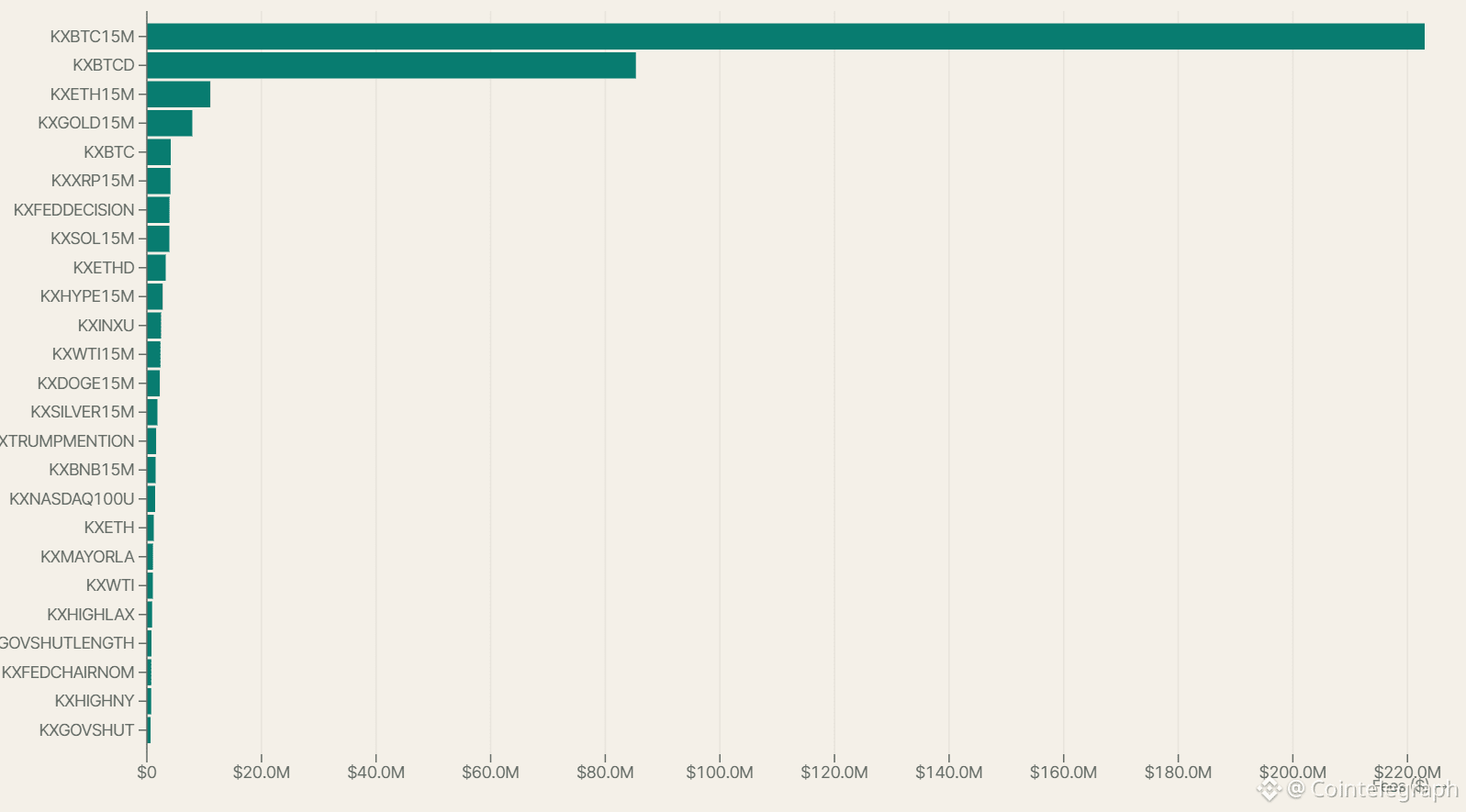
Kalshiの15分単位の金市場、開始からわずか数週間でイーサを上回るKalshiの15分単位の金市場は、8月の開始からわずか数週間後の9月、同等のイーサ市場の推定取引手数料のほぼ2倍を生み出した。
トレーダーが15分ごとに金価格の上昇または下落を予想してポジションを取る金契約は、Predict Chartsによると、同月に約500万ドルの推定手数料を生み出した。イーサ契約は260万ドルだった。ビットコインは引き続き最大の市場で、推定手数料は6,040万ドルに達した。
短期の金市場が成長しているのは、Kalshiのコモディティ事業全体が拡大する中でのことだ。同社は9月、コモディティ取引高が7カ月で4億ドルに達し、同じ時点で暗号資産市場が記録していた取引高の4倍を超えたと発表した。
Kalshiの15分単位の金市場、開始からわずか数週間でイーサを上回る
Kalshiの15分単位の金市場は、8月の開始からわずか数週間後の9月、同等のイーサ市場の推定取引手数料のほぼ2倍を生み出した。
トレーダーが15分ごとに金価格の上昇または下落を予想してポジションを取る金契約は、Predict Chartsによると、同月に約500万ドルの推定手数料を生み出した。イーサ契約は260万ドルだった。ビットコインは引き続き最大の市場で、推定手数料は6,040万ドルに達した。
短期の金市場が成長しているのは、Kalshiのコモディティ事業全体が拡大する中でのことだ。同社は9月、コモディティ取引高が7カ月で4億ドルに達し、同じ時点で暗号資産市場が記録していた取引高の4倍を超えたと発表した。
トレーダーが15分ごとに金価格の上昇または下落を予想してポジションを取る金契約は、Predict Chartsによると、同月に約500万ドルの推定手数料を生み出した。イーサ契約は260万ドルだった。ビットコインは引き続き最大の市場で、推定手数料は6,040万ドルに達した。
短期の金市場が成長しているのは、Kalshiのコモディティ事業全体が拡大する中でのことだ。同社は9月、コモディティ取引高が7カ月で4億ドルに達し、同じ時点で暗号資産市場が記録していた取引高の4倍を超えたと発表した。
458
ドイツ規制当局がMiCA申請を拒否、Bitcoin.deの取引停止続くBitcoin Group SEは、ドイツ連邦金融監督庁(BaFin)が子会社futurum bank AGによる暗号資産市場規則(MiCA)に基づく暗号資産サービスプロバイダーとしての認可申請を拒否したことを受け、bitcoin.deプラットフォームの代替運営モデルを模索していると発表した。
同社は10月6日の発表で、BaFinの決定は後退を意味するものの、申請が拒否される可能性に備えていたと述べた。現在、決定を精査しており、異議を申し立てるか、将来、新たな申請を提出する機会があるという。
ドイツ規制当局がMiCA申請を拒否、Bitcoin.deの取引停止続く
Bitcoin Group SEは、ドイツ連邦金融監督庁(BaFin)が子会社futurum bank AGによる暗号資産市場規則(MiCA)に基づく暗号資産サービスプロバイダーとしての認可申請を拒否したことを受け、bitcoin.deプラットフォームの代替運営モデルを模索していると発表した。
同社は10月6日の発表で、BaFinの決定は後退を意味するものの、申請が拒否される可能性に備えていたと述べた。現在、決定を精査しており、異議を申し立てるか、将来、新たな申請を提出する機会があるという。
同社は10月6日の発表で、BaFinの決定は後退を意味するものの、申請が拒否される可能性に備えていたと述べた。現在、決定を精査しており、異議を申し立てるか、将来、新たな申請を提出する機会があるという。
457
本人確認中
Pudgy Penguins支援のAbstract、数千万ドル規模の損失を受けて終了へPudgy Penguinsの親会社であるIgloo Inc.が支援する、消費者向けのイーサリアム・レイヤー2ブロックチェーン「Abstract」は火曜日、事業拡大とプロダクト・マーケット・フィットの実現に苦戦した末、今年中にサービスを終了すると発表した。
Xへの投稿でAbstractは、「消費者向け暗号資産」に注力することは、最終的に持続可能なビジネスモデルではないと判明したと述べた。Abstractは2025年1月にメインネットを立ち上げ、主流のエンターテインメントを対象に、消費者による暗号資産の利用拡大を目指していた。ユーザーにとっては、従来のブロックチェーンに伴う複雑さの多くを取り除くことを目指していた。
Pudgy Penguins支援のAbstract、数千万ドル規模の損失を受けて終了へ
Pudgy Penguinsの親会社であるIgloo Inc.が支援する、消費者向けのイーサリアム・レイヤー2ブロックチェーン「Abstract」は火曜日、事業拡大とプロダクト・マーケット・フィットの実現に苦戦した末、今年中にサービスを終了すると発表した。
Xへの投稿でAbstractは、「消費者向け暗号資産」に注力することは、最終的に持続可能なビジネスモデルではないと判明したと述べた。Abstractは2025年1月にメインネットを立ち上げ、主流のエンターテインメントを対象に、消費者による暗号資産の利用拡大を目指していた。ユーザーにとっては、従来のブロックチェーンに伴う複雑さの多くを取り除くことを目指していた。
Xへの投稿でAbstractは、「消費者向け暗号資産」に注力することは、最終的に持続可能なビジネスモデルではないと判明したと述べた。Abstractは2025年1月にメインネットを立ち上げ、主流のエンターテインメントを対象に、消費者による暗号資産の利用拡大を目指していた。ユーザーにとっては、従来のブロックチェーンに伴う複雑さの多くを取り除くことを目指していた。
583
記事
AIから暗号資産へ資金が戻り始めている:ラウル・パル米ドル安は、暗号資産市場に「青信号」をもたらし、業界の上昇相場をさらに押し上げる可能性があると、Real Vision創業者のラウル・パル氏は述べている。
同氏は『Trade Secrets』の最新エピソードでCointelegraphに対し、債券利回りの上昇とドル高により、流動性が自由に流れ込むのが妨げられていると語った。
「ドル安に誘導できれば、暗号資産市場がさらに動き出す青信号になります」と彼は言う。「あまり期待しすぎたくないので、すべてに青信号が出たとはまだ考えていません」
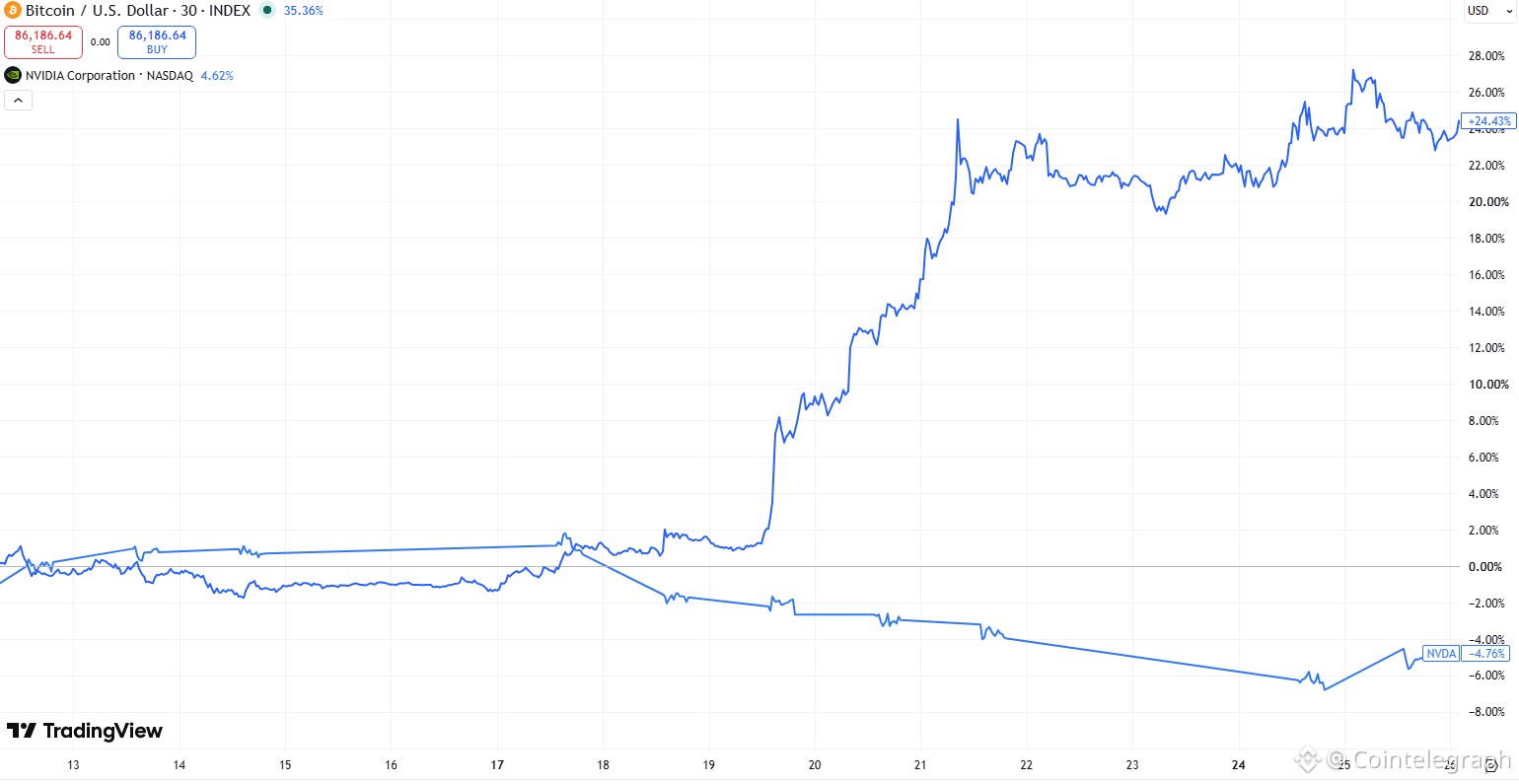
米ドル指数は年初来の最高水準で推移している。出典:TradingView
AIから暗号資産へ資金が戻り始めている:ラウル・パル
米ドル安は、暗号資産市場に「青信号」をもたらし、業界の上昇相場をさらに押し上げる可能性があると、Real Vision創業者のラウル・パル氏は述べている。
同氏は『Trade Secrets』の最新エピソードでCointelegraphに対し、債券利回りの上昇とドル高により、流動性が自由に流れ込むのが妨げられていると語った。
「ドル安に誘導できれば、暗号資産市場がさらに動き出す青信号になります」と彼は言う。「あまり期待しすぎたくないので、すべてに青信号が出たとはまだ考えていません」
米ドル指数は年初来の最高水準で推移している。出典:TradingView
同氏は『Trade Secrets』の最新エピソードでCointelegraphに対し、債券利回りの上昇とドル高により、流動性が自由に流れ込むのが妨げられていると語った。
「ドル安に誘導できれば、暗号資産市場がさらに動き出す青信号になります」と彼は言う。「あまり期待しすぎたくないので、すべてに青信号が出たとはまだ考えていません」
米ドル指数は年初来の最高水準で推移している。出典:TradingView
234
Conduit、説明なしに280万ドルを凍結したとしてTetherを提訴クロスボーダー決済プラットフォームのConduit Technologyは、ステーブルコイン発行元のTetherが2025年9月、説明なしに276万ドル相当のUSDt(USDT)を凍結したと申し立てた。
月曜日にニューヨーク南部地区連邦地方裁判所に提出された訴状で、Conduitは、Tetherが「法的な権利」も「請求権」もない同社の資金を凍結したと述べた。同社によると、2025年5月にデジタル財務ウォレットの一部としてUSDtの保有を開始したが、Tetherは9月に「正当な理由」なくステーブルコインの全額にあたる276万ドルを凍結したという。Conduitはこの措置が「事業に重大な影響を及ぼした」と主張した。
Conduit、説明なしに280万ドルを凍結したとしてTetherを提訴
クロスボーダー決済プラットフォームのConduit Technologyは、ステーブルコイン発行元のTetherが2025年9月、説明なしに276万ドル相当のUSDt(USDT)を凍結したと申し立てた。
月曜日にニューヨーク南部地区連邦地方裁判所に提出された訴状で、Conduitは、Tetherが「法的な権利」も「請求権」もない同社の資金を凍結したと述べた。同社によると、2025年5月にデジタル財務ウォレットの一部としてUSDtの保有を開始したが、Tetherは9月に「正当な理由」なくステーブルコインの全額にあたる276万ドルを凍結したという。Conduitはこの措置が「事業に重大な影響を及ぼした」と主張した。
月曜日にニューヨーク南部地区連邦地方裁判所に提出された訴状で、Conduitは、Tetherが「法的な権利」も「請求権」もない同社の資金を凍結したと述べた。同社によると、2025年5月にデジタル財務ウォレットの一部としてUSDtの保有を開始したが、Tetherは9月に「正当な理由」なくステーブルコインの全額にあたる276万ドルを凍結したという。Conduitはこの措置が「事業に重大な影響を及ぼした」と主張した。
106
記事
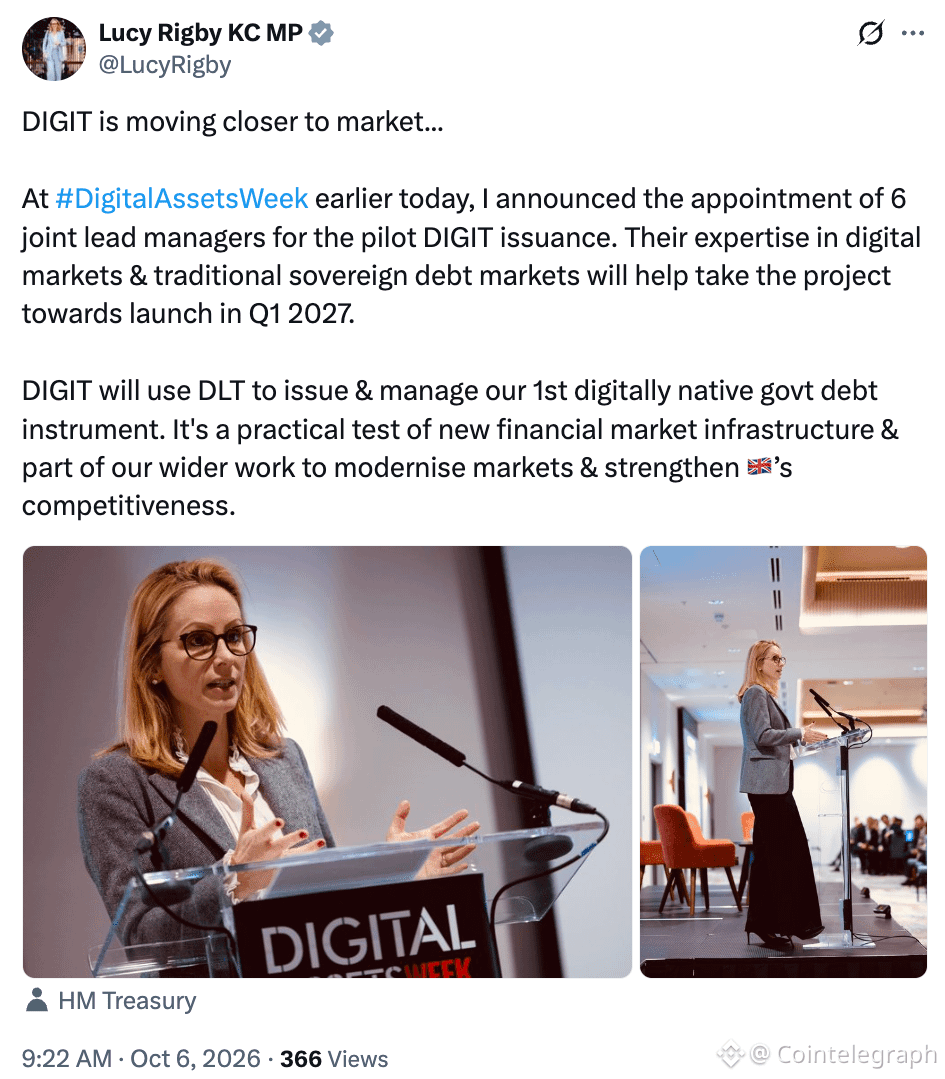
英国、初のデジタルネイティブ国債発行を主導する銀行6行を選定英国政府は、同国初となるデジタルネイティブ国債の発行を主導する大手銀行6行を選定した。パイロット発行は2027年第1四半期までに実施される見通しだ。
バークレイズ、HSBC、ロイズ、モルガン・スタンレー、ナットウエスト、RBCキャピタル・マーケッツが、競争入札を経て、デジタル・ギルト証券(DIGIT)の共同主幹事に選ばれた。財務省の経済担当政務次官ルーシー・リグビー氏が火曜日、UKデジタル資産ウィークでの基調講演中に起用を発表した。
各銀行は、パイロット発行に向けて、引受、投資家対応、販売の各サービスを提供する。
英国、初のデジタルネイティブ国債発行を主導する銀行6行を選定
英国政府は、同国初となるデジタルネイティブ国債の発行を主導する大手銀行6行を選定した。パイロット発行は2027年第1四半期までに実施される見通しだ。
バークレイズ、HSBC、ロイズ、モルガン・スタンレー、ナットウエスト、RBCキャピタル・マーケッツが、競争入札を経て、デジタル・ギルト証券(DIGIT)の共同主幹事に選ばれた。財務省の経済担当政務次官ルーシー・リグビー氏が火曜日、UKデジタル資産ウィークでの基調講演中に起用を発表した。
各銀行は、パイロット発行に向けて、引受、投資家対応、販売の各サービスを提供する。
バークレイズ、HSBC、ロイズ、モルガン・スタンレー、ナットウエスト、RBCキャピタル・マーケッツが、競争入札を経て、デジタル・ギルト証券(DIGIT)の共同主幹事に選ばれた。財務省の経済担当政務次官ルーシー・リグビー氏が火曜日、UKデジタル資産ウィークでの基調講演中に起用を発表した。
各銀行は、パイロット発行に向けて、引受、投資家対応、販売の各サービスを提供する。
147
本人確認中
ロシアのデジタルルーブル口座、初月に22万超 中央銀行の予測の約4倍ロシア中央銀行デジタル通貨(デジタルルーブル)は導入初期の利用が予測を大幅に上回り、最初の1カ月で22万を超える口座が開設された。これは、CBDCが試験運用の枠を超え、実社会で普及するかどうかを見極める初期的な試金石となる。
ロイターが火曜日に報じたところによると、ロシア中央銀行のズルフィヤ・カフルマノワ副総裁は、この数字はCBDCの9月1日の導入後に当局が予想していた約6万口座を大幅に上回ったと述べた。
この導入は、ロシア、中国、インドを含む主要新興国の枠組みであるBRICSが、国境を越えた決済に向けて加盟国のCBDCを連携させる方法を模索する中で行われている。ロイターの報道によると、ロシアはウクライナでの戦争を受けて科された西側諸国の制裁により、世界の金融システムの一部から切り離され、中国やインドを含む主要貿易相手国との決済も複雑化したことを受け、デジタルルーブルの開発を加速させた。
ロシアのデジタルルーブル口座、初月に22万超 中央銀行の予測の約4倍
ロシア中央銀行デジタル通貨(デジタルルーブル)は導入初期の利用が予測を大幅に上回り、最初の1カ月で22万を超える口座が開設された。これは、CBDCが試験運用の枠を超え、実社会で普及するかどうかを見極める初期的な試金石となる。
ロイターが火曜日に報じたところによると、ロシア中央銀行のズルフィヤ・カフルマノワ副総裁は、この数字はCBDCの9月1日の導入後に当局が予想していた約6万口座を大幅に上回ったと述べた。
この導入は、ロシア、中国、インドを含む主要新興国の枠組みであるBRICSが、国境を越えた決済に向けて加盟国のCBDCを連携させる方法を模索する中で行われている。ロイターの報道によると、ロシアはウクライナでの戦争を受けて科された西側諸国の制裁により、世界の金融システムの一部から切り離され、中国やインドを含む主要貿易相手国との決済も複雑化したことを受け、デジタルルーブルの開発を加速させた。
ロイターが火曜日に報じたところによると、ロシア中央銀行のズルフィヤ・カフルマノワ副総裁は、この数字はCBDCの9月1日の導入後に当局が予想していた約6万口座を大幅に上回ったと述べた。
この導入は、ロシア、中国、インドを含む主要新興国の枠組みであるBRICSが、国境を越えた決済に向けて加盟国のCBDCを連携させる方法を模索する中で行われている。ロイターの報道によると、ロシアはウクライナでの戦争を受けて科された西側諸国の制裁により、世界の金融システムの一部から切り離され、中国やインドを含む主要貿易相手国との決済も複雑化したことを受け、デジタルルーブルの開発を加速させた。
1
260
中間選挙を前に、米議員が自らの選挙に賭けることを禁じる法案ノースカロライナ州の議員が、政治家が予測市場プラットフォームを利用して自らの選挙で利益を得る可能性を阻止することを目的とした法案を提出した。
月曜日、ドン・デイビス下院議員は「自分の選挙への賭け禁止法案」を提出した。この法案は、連邦議会選挙の候補者本人、その選挙運動陣営、配偶者および子どもが、自身の選挙に関連する契約を「購入、売却、取得、処分、または保有」することを禁じるものだ。デイビス氏は、市場への介入やインサイダー取引を防ぎ、議員が選挙で「利益を得る」ことを阻止するための法案だと説明した。違反1件につき1万ドル、または得られた可能性のある金銭的利益の3倍に相当する民事制裁金が科される案となっている。
中間選挙を前に、米議員が自らの選挙に賭けることを禁じる法案
ノースカロライナ州の議員が、政治家が予測市場プラットフォームを利用して自らの選挙で利益を得る可能性を阻止することを目的とした法案を提出した。
月曜日、ドン・デイビス下院議員は「自分の選挙への賭け禁止法案」を提出した。この法案は、連邦議会選挙の候補者本人、その選挙運動陣営、配偶者および子どもが、自身の選挙に関連する契約を「購入、売却、取得、処分、または保有」することを禁じるものだ。デイビス氏は、市場への介入やインサイダー取引を防ぎ、議員が選挙で「利益を得る」ことを阻止するための法案だと説明した。違反1件につき1万ドル、または得られた可能性のある金銭的利益の3倍に相当する民事制裁金が科される案となっている。
月曜日、ドン・デイビス下院議員は「自分の選挙への賭け禁止法案」を提出した。この法案は、連邦議会選挙の候補者本人、その選挙運動陣営、配偶者および子どもが、自身の選挙に関連する契約を「購入、売却、取得、処分、または保有」することを禁じるものだ。デイビス氏は、市場への介入やインサイダー取引を防ぎ、議員が選挙で「利益を得る」ことを阻止するための法案だと説明した。違反1件につき1万ドル、または得られた可能性のある金銭的利益の3倍に相当する民事制裁金が科される案となっている。
104
記事
翻訳参照
Affluent investors seen boosting crypto exposure: SurveyA majority of affluent investors across seven of the biggest economies hold digital assets, with crypto accounting for around 10% of their portfolios on average, according to a new CoinShares survey.
The survey covered 2,230 investors with at least $500,000 in investable assets across the US, UK, France, Germany, Italy, Sweden and Switzerland. Digital asset ownership ranged from 54% in Sweden to about 70% in the US, UK, Germany and Switzerland.
At least 85% of current digital asset investors in five of the seven countries said they planned to increase their exposure in 2026, with as much as 91% in the US, UK and Germany.
CoinShares survey of affluent investors across seven countries. Source: CoinShares
The February 2026 crypto market downturn did little to dampen that appetite. In all seven countries, more respondents said the sell-off made them more likely to invest in digital assets than less likely.
That resilience appears to reflect a longer-term view of the asset class. Long-term appreciation and diversification were the leading reasons respondents gave for investing in crypto, while speculation ranked last. Just 6% identified primarily as short-term traders.
Bitcoin (BTC) remained the most widely held digital asset, owned by 80% of digital asset investors on average, though 89% of BTC investors also held other digital assets. Meanwhile, 77% of respondents believed BTC would play a significant role in the future global financial system, while 79% supported increased regulation of digital asset markets.
Crypto exposure was particularly high among younger investors. That cohort allocated more to digital assets than older investors in all seven countries and roughly twice as much in four of them.
Advisers lag crypto investors
The survey also found signs of a disconnect between affluent investors and their financial advisers. Roughly four in 10 respondents in Switzerland, France, the US and Germany who worked with an adviser said they found them overly cautious about digital assets.
The respondents’ view on advisers was echoed by Ric Edelman, founder of the Digital Assets Council of Financial Professionals and Edelman Financial Engines.
Edelman told Cointelegraph that financial advisers remain slow adopters of digital assets, with many lacking the knowledge or incentive to learn about the asset class. He said:
Advisors are busy; they are already operating a successful practice filled with happy clients — so why bother learning something new? — and most are getting little to no encouragement from their firms.
He added that some firms prohibit advisers from discussing crypto or offering crypto-related investments to clients. As a result, he said advisers may not know which of their clients own crypto and could be missing opportunities to provide tax, estate-planning and philanthropic services around those holdings.
How much crypto should investors hold?
Edelman challenged CoinShares’ finding that crypto allocations among affluent investors average around 10%, saying his own research suggests allocations of 2% to 5% are far more common.
Despite questioning the survey’s figure, Edelman recommends allocations ranging from 10% to 40%, depending on risk tolerance. He recommends 10% for conservative portfolios, 25% for moderate portfolios and 40% for aggressive portfolios.
“As the asset class matures, 10% allocations or higher will become the norm,” Edelman said. “The sooner people do that, the better off they will be.”
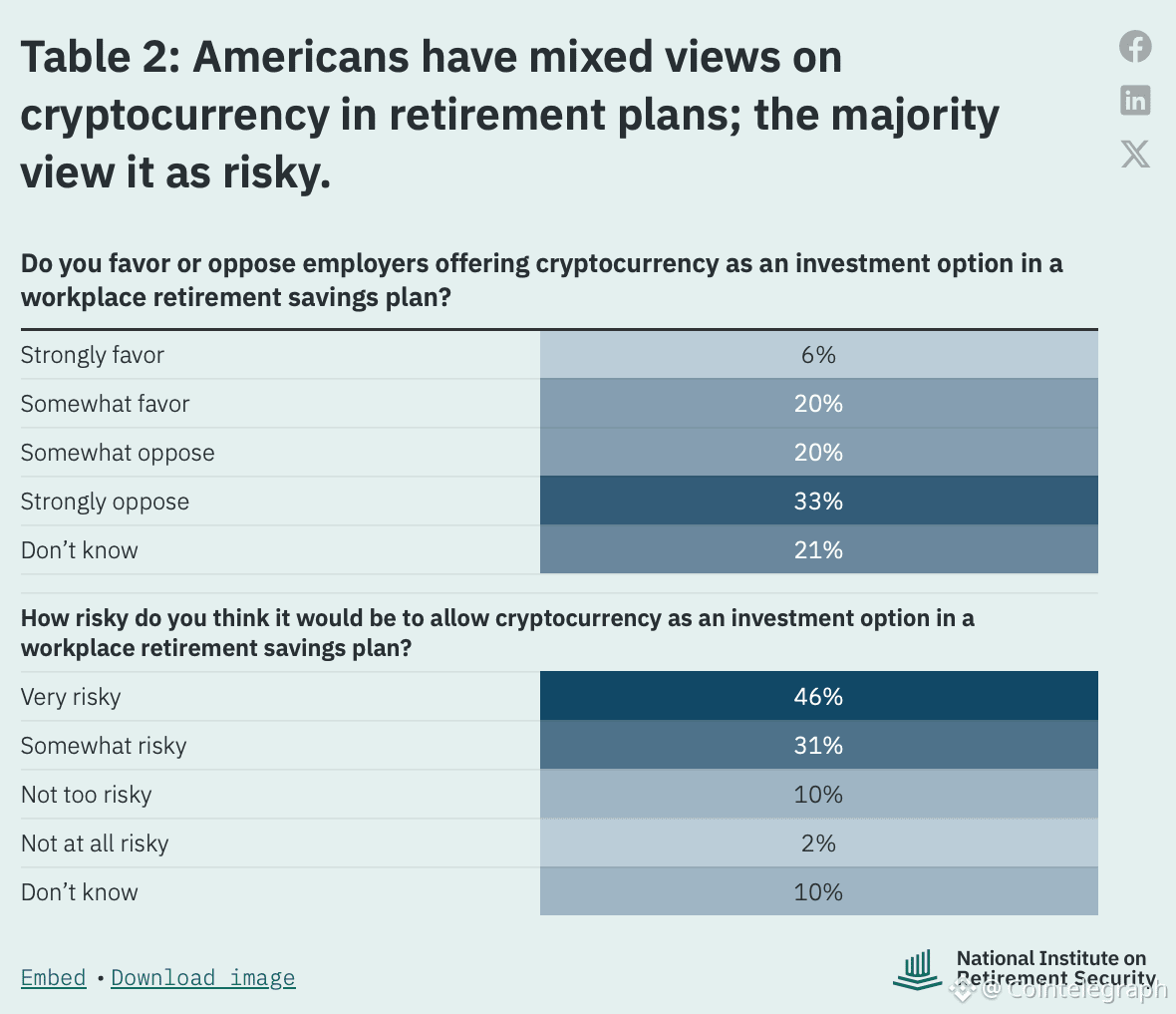
Edelman’s recommended allocations stand in contrast to broader skepticism about using crypto for retirement savings. An August survey from the National Institute on Retirement Security found that 77% of Americans considered cryptocurrency in workplace retirement plans risky, including 46% who viewed it as very risky.
Americans view of crypto in retirement plans. Source: National Institute of Retirement Security
Magazine: Peter Brandt says Bitcoin may hit $600K by 2029, calls XRP a ‘fool coin’
Affluent investors seen boosting crypto exposure: Survey
A majority of affluent investors across seven of the biggest economies hold digital assets, with crypto accounting for around 10% of their portfolios on average, according to a new CoinShares survey.
The survey covered 2,230 investors with at least $500,000 in investable assets across the US, UK, France, Germany, Italy, Sweden and Switzerland. Digital asset ownership ranged from 54% in Sweden to about 70% in the US, UK, Germany and Switzerland.
At least 85% of current digital asset investors in five of the seven countries said they planned to increase their exposure in 2026, with as much as 91% in the US, UK and Germany.
CoinShares survey of affluent investors across seven countries. Source: CoinShares
The February 2026 crypto market downturn did little to dampen that appetite. In all seven countries, more respondents said the sell-off made them more likely to invest in digital assets than less likely.
That resilience appears to reflect a longer-term view of the asset class. Long-term appreciation and diversification were the leading reasons respondents gave for investing in crypto, while speculation ranked last. Just 6% identified primarily as short-term traders.
Bitcoin (BTC) remained the most widely held digital asset, owned by 80% of digital asset investors on average, though 89% of BTC investors also held other digital assets. Meanwhile, 77% of respondents believed BTC would play a significant role in the future global financial system, while 79% supported increased regulation of digital asset markets.
Crypto exposure was particularly high among younger investors. That cohort allocated more to digital assets than older investors in all seven countries and roughly twice as much in four of them.
Advisers lag crypto investors
The survey also found signs of a disconnect between affluent investors and their financial advisers. Roughly four in 10 respondents in Switzerland, France, the US and Germany who worked with an adviser said they found them overly cautious about digital assets.
The respondents’ view on advisers was echoed by Ric Edelman, founder of the Digital Assets Council of Financial Professionals and Edelman Financial Engines.
Edelman told Cointelegraph that financial advisers remain slow adopters of digital assets, with many lacking the knowledge or incentive to learn about the asset class. He said:
Advisors are busy; they are already operating a successful practice filled with happy clients — so why bother learning something new? — and most are getting little to no encouragement from their firms.
He added that some firms prohibit advisers from discussing crypto or offering crypto-related investments to clients. As a result, he said advisers may not know which of their clients own crypto and could be missing opportunities to provide tax, estate-planning and philanthropic services around those holdings.
How much crypto should investors hold?
Edelman challenged CoinShares’ finding that crypto allocations among affluent investors average around 10%, saying his own research suggests allocations of 2% to 5% are far more common.
Despite questioning the survey’s figure, Edelman recommends allocations ranging from 10% to 40%, depending on risk tolerance. He recommends 10% for conservative portfolios, 25% for moderate portfolios and 40% for aggressive portfolios.
“As the asset class matures, 10% allocations or higher will become the norm,” Edelman said. “The sooner people do that, the better off they will be.”
Edelman’s recommended allocations stand in contrast to broader skepticism about using crypto for retirement savings. An August survey from the National Institute on Retirement Security found that 77% of Americans considered cryptocurrency in workplace retirement plans risky, including 46% who viewed it as very risky.
Americans view of crypto in retirement plans. Source: National Institute of Retirement Security
Magazine: Peter Brandt says Bitcoin may hit $600K by 2029, calls XRP a ‘fool coin’
The survey covered 2,230 investors with at least $500,000 in investable assets across the US, UK, France, Germany, Italy, Sweden and Switzerland. Digital asset ownership ranged from 54% in Sweden to about 70% in the US, UK, Germany and Switzerland.
At least 85% of current digital asset investors in five of the seven countries said they planned to increase their exposure in 2026, with as much as 91% in the US, UK and Germany.
CoinShares survey of affluent investors across seven countries. Source: CoinShares
The February 2026 crypto market downturn did little to dampen that appetite. In all seven countries, more respondents said the sell-off made them more likely to invest in digital assets than less likely.
That resilience appears to reflect a longer-term view of the asset class. Long-term appreciation and diversification were the leading reasons respondents gave for investing in crypto, while speculation ranked last. Just 6% identified primarily as short-term traders.
Bitcoin (BTC) remained the most widely held digital asset, owned by 80% of digital asset investors on average, though 89% of BTC investors also held other digital assets. Meanwhile, 77% of respondents believed BTC would play a significant role in the future global financial system, while 79% supported increased regulation of digital asset markets.
Crypto exposure was particularly high among younger investors. That cohort allocated more to digital assets than older investors in all seven countries and roughly twice as much in four of them.
Advisers lag crypto investors
The survey also found signs of a disconnect between affluent investors and their financial advisers. Roughly four in 10 respondents in Switzerland, France, the US and Germany who worked with an adviser said they found them overly cautious about digital assets.
The respondents’ view on advisers was echoed by Ric Edelman, founder of the Digital Assets Council of Financial Professionals and Edelman Financial Engines.
Edelman told Cointelegraph that financial advisers remain slow adopters of digital assets, with many lacking the knowledge or incentive to learn about the asset class. He said:
Advisors are busy; they are already operating a successful practice filled with happy clients — so why bother learning something new? — and most are getting little to no encouragement from their firms.
He added that some firms prohibit advisers from discussing crypto or offering crypto-related investments to clients. As a result, he said advisers may not know which of their clients own crypto and could be missing opportunities to provide tax, estate-planning and philanthropic services around those holdings.
How much crypto should investors hold?
Edelman challenged CoinShares’ finding that crypto allocations among affluent investors average around 10%, saying his own research suggests allocations of 2% to 5% are far more common.
Despite questioning the survey’s figure, Edelman recommends allocations ranging from 10% to 40%, depending on risk tolerance. He recommends 10% for conservative portfolios, 25% for moderate portfolios and 40% for aggressive portfolios.
“As the asset class matures, 10% allocations or higher will become the norm,” Edelman said. “The sooner people do that, the better off they will be.”
Edelman’s recommended allocations stand in contrast to broader skepticism about using crypto for retirement savings. An August survey from the National Institute on Retirement Security found that 77% of Americans considered cryptocurrency in workplace retirement plans risky, including 46% who viewed it as very risky.
Americans view of crypto in retirement plans. Source: National Institute of Retirement Security
Magazine: Peter Brandt says Bitcoin may hit $600K by 2029, calls XRP a ‘fool coin’
1
150
記事
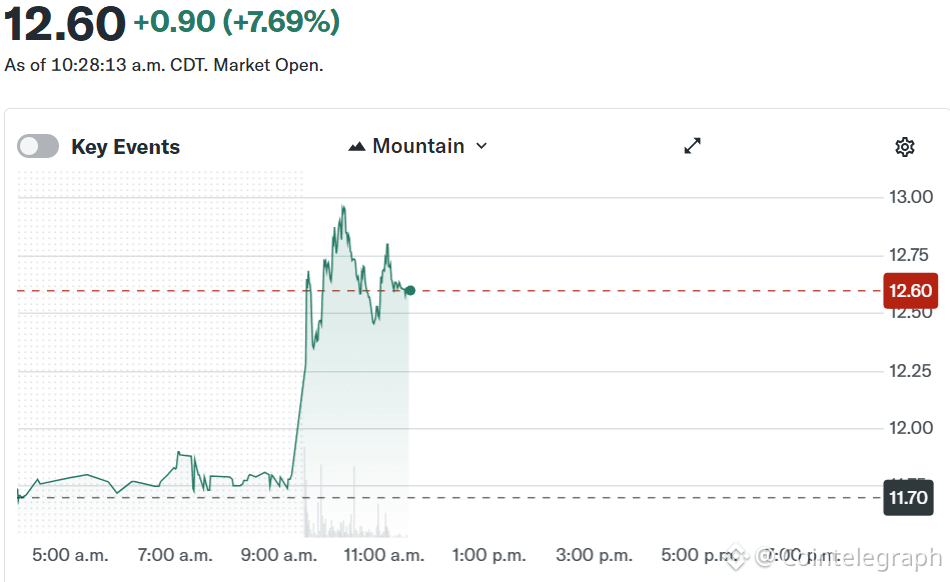
韓国のトークン化推進を受け、Securitize株が8%急騰トークン化プラットフォームを運営するSecuritizeの株価は火曜日、韓国がトークン化証券の新たな枠組みの導入を準備するなか、韓国のテクノロジー企業LG CNSとの提携を発表し、大幅に上昇した。
Securitize(SECZ)の株価は火曜日の取引開始直後に約8%上昇して12.60ドル前後となり、暗号資産関連の主要銘柄の大半を上回ったが、午前中の後半には反落した。同社は特別買収目的会社Cantor Equity Partners IIとの合併を完了し、7月にニューヨーク証券取引所で取引を開始した。
韓国のトークン化推進を受け、Securitize株が8%急騰
トークン化プラットフォームを運営するSecuritizeの株価は火曜日、韓国がトークン化証券の新たな枠組みの導入を準備するなか、韓国のテクノロジー企業LG CNSとの提携を発表し、大幅に上昇した。
Securitize(SECZ)の株価は火曜日の取引開始直後に約8%上昇して12.60ドル前後となり、暗号資産関連の主要銘柄の大半を上回ったが、午前中の後半には反落した。同社は特別買収目的会社Cantor Equity Partners IIとの合併を完了し、7月にニューヨーク証券取引所で取引を開始した。
Securitize(SECZ)の株価は火曜日の取引開始直後に約8%上昇して12.60ドル前後となり、暗号資産関連の主要銘柄の大半を上回ったが、午前中の後半には反落した。同社は特別買収目的会社Cantor Equity Partners IIとの合併を完了し、7月にニューヨーク証券取引所で取引を開始した。
124
翻訳参照
ECB policymaker warns of fragmentation without digital euroA member of the European Central Bank’s (ECB) executive board has warned that other entities could provide alternatives without the central bank’s introduction of a digital euro, potentially weakening Europe’s “resilience and monetary sovereignty.”
ECB executive board member Piero Cipollone said on a Monday MNI Connect Webcast that without a “pan-European digital payment solution that caters to every type of day-to-day transaction,” the potential for fragmentation could increase across tokenization platforms. He said that the central bank’s goal should be to create a digital euro exchangeable across banks for day-to-day transactions.
“Our objective is not to take over the role of banks,” said Cipollone. “On the contrary, the digital euro would equip banks with the infrastructure they need to compete in the digital age and help them expand the reach and use cases of their own solutions.”
According to Cipollone, the ECB has not decided whether to issue a digital euro, but plans to conclude the legislative process by the end of 2026. Should the central bank move forward with the project, it will run a 12-month pilot program starting in the second half of 2027, with the potential for issuance in 2029.
The ECB first proposed introducing a digital euro in October 2020 as a central bank digital currency (CBDC) to complement cash as a digital payment option. Critics of the CBDC argue that the digital currency could give EU officials the means to surveil and potentially control bloc residents’ spending.
Cipollone said in September 2025 that “the digital euro will ensure that all Europeans can pay at all times with a free, universally accepted digital means of payment, even in case of major disruptions.”
ECB policymaker warns of fragmentation without digital euro
A member of the European Central Bank’s (ECB) executive board has warned that other entities could provide alternatives without the central bank’s introduction of a digital euro, potentially weakening Europe’s “resilience and monetary sovereignty.”
ECB executive board member Piero Cipollone said on a Monday MNI Connect Webcast that without a “pan-European digital payment solution that caters to every type of day-to-day transaction,” the potential for fragmentation could increase across tokenization platforms. He said that the central bank’s goal should be to create a digital euro exchangeable across banks for day-to-day transactions.
“Our objective is not to take over the role of banks,” said Cipollone. “On the contrary, the digital euro would equip banks with the infrastructure they need to compete in the digital age and help them expand the reach and use cases of their own solutions.”
According to Cipollone, the ECB has not decided whether to issue a digital euro, but plans to conclude the legislative process by the end of 2026. Should the central bank move forward with the project, it will run a 12-month pilot program starting in the second half of 2027, with the potential for issuance in 2029.
The ECB first proposed introducing a digital euro in October 2020 as a central bank digital currency (CBDC) to complement cash as a digital payment option. Critics of the CBDC argue that the digital currency could give EU officials the means to surveil and potentially control bloc residents’ spending.
Cipollone said in September 2025 that “the digital euro will ensure that all Europeans can pay at all times with a free, universally accepted digital means of payment, even in case of major disruptions.”
ECB executive board member Piero Cipollone said on a Monday MNI Connect Webcast that without a “pan-European digital payment solution that caters to every type of day-to-day transaction,” the potential for fragmentation could increase across tokenization platforms. He said that the central bank’s goal should be to create a digital euro exchangeable across banks for day-to-day transactions.
“Our objective is not to take over the role of banks,” said Cipollone. “On the contrary, the digital euro would equip banks with the infrastructure they need to compete in the digital age and help them expand the reach and use cases of their own solutions.”
According to Cipollone, the ECB has not decided whether to issue a digital euro, but plans to conclude the legislative process by the end of 2026. Should the central bank move forward with the project, it will run a 12-month pilot program starting in the second half of 2027, with the potential for issuance in 2029.
The ECB first proposed introducing a digital euro in October 2020 as a central bank digital currency (CBDC) to complement cash as a digital payment option. Critics of the CBDC argue that the digital currency could give EU officials the means to surveil and potentially control bloc residents’ spending.
Cipollone said in September 2025 that “the digital euro will ensure that all Europeans can pay at all times with a free, universally accepted digital means of payment, even in case of major disruptions.”
104
Ripple、プライムブローカレッジサービスでBrevan Howardとの契約を拡大Ripple Primeは、運用資産約350億ドルを擁するグローバル投資運用会社Brevan Howardが運用するファンドに、マルチアセットのプライムブローカレッジ、清算、資金調達サービスを提供します。
火曜日の発表によると、拡大された契約のもと、Brevan Howardは従来型資産市場とデジタル資産市場の双方でRipple Primeのサービスを利用できるようになります。
今回の契約は、両社の既存の関係をさらに発展させるものです。Brevan Howard関連のファンドは2025年、Rippleの評価額を400億ドルとする5億ドルの投資に参加しました。
Ripple、プライムブローカレッジサービスでBrevan Howardとの契約を拡大
Ripple Primeは、運用資産約350億ドルを擁するグローバル投資運用会社Brevan Howardが運用するファンドに、マルチアセットのプライムブローカレッジ、清算、資金調達サービスを提供します。
火曜日の発表によると、拡大された契約のもと、Brevan Howardは従来型資産市場とデジタル資産市場の双方でRipple Primeのサービスを利用できるようになります。
今回の契約は、両社の既存の関係をさらに発展させるものです。Brevan Howard関連のファンドは2025年、Rippleの評価額を400億ドルとする5億ドルの投資に参加しました。
火曜日の発表によると、拡大された契約のもと、Brevan Howardは従来型資産市場とデジタル資産市場の双方でRipple Primeのサービスを利用できるようになります。
今回の契約は、両社の既存の関係をさらに発展させるものです。Brevan Howard関連のファンドは2025年、Rippleの評価額を400億ドルとする5億ドルの投資に参加しました。
111
OKX、企業評価額250億ドルで新たな資金を調達暗号資産取引所のOKXは、既存のパートナーや投資家から、企業評価額250億ドルで非公開の金額を調達した。
OKXが火曜日にCointelegraphと共有したプレスリリースによると、この資金調達ラウンドには、スタンダードチャータードの投資部門SC Ventures、Qube Research & Technologies、Ripple、そしてステーブルコイン発行企業のCircleが参加した。
OKXは資金調達ラウンドの規模を明らかにしなかった。
今回の資金調達は、3月に発表された資金調達ラウンドの延長にあたる。このときOKXは、ニューヨーク証券取引所の親会社であるインターコンチネンタル取引所(ICE)から、同じ企業評価額で2億ドルを調達した。
OKX、企業評価額250億ドルで新たな資金を調達
暗号資産取引所のOKXは、既存のパートナーや投資家から、企業評価額250億ドルで非公開の金額を調達した。
OKXが火曜日にCointelegraphと共有したプレスリリースによると、この資金調達ラウンドには、スタンダードチャータードの投資部門SC Ventures、Qube Research & Technologies、Ripple、そしてステーブルコイン発行企業のCircleが参加した。
OKXは資金調達ラウンドの規模を明らかにしなかった。
今回の資金調達は、3月に発表された資金調達ラウンドの延長にあたる。このときOKXは、ニューヨーク証券取引所の親会社であるインターコンチネンタル取引所(ICE)から、同じ企業評価額で2億ドルを調達した。
OKXが火曜日にCointelegraphと共有したプレスリリースによると、この資金調達ラウンドには、スタンダードチャータードの投資部門SC Ventures、Qube Research & Technologies、Ripple、そしてステーブルコイン発行企業のCircleが参加した。
OKXは資金調達ラウンドの規模を明らかにしなかった。
今回の資金調達は、3月に発表された資金調達ラウンドの延長にあたる。このときOKXは、ニューヨーク証券取引所の親会社であるインターコンチネンタル取引所(ICE)から、同じ企業評価額で2億ドルを調達した。
1
182
記事
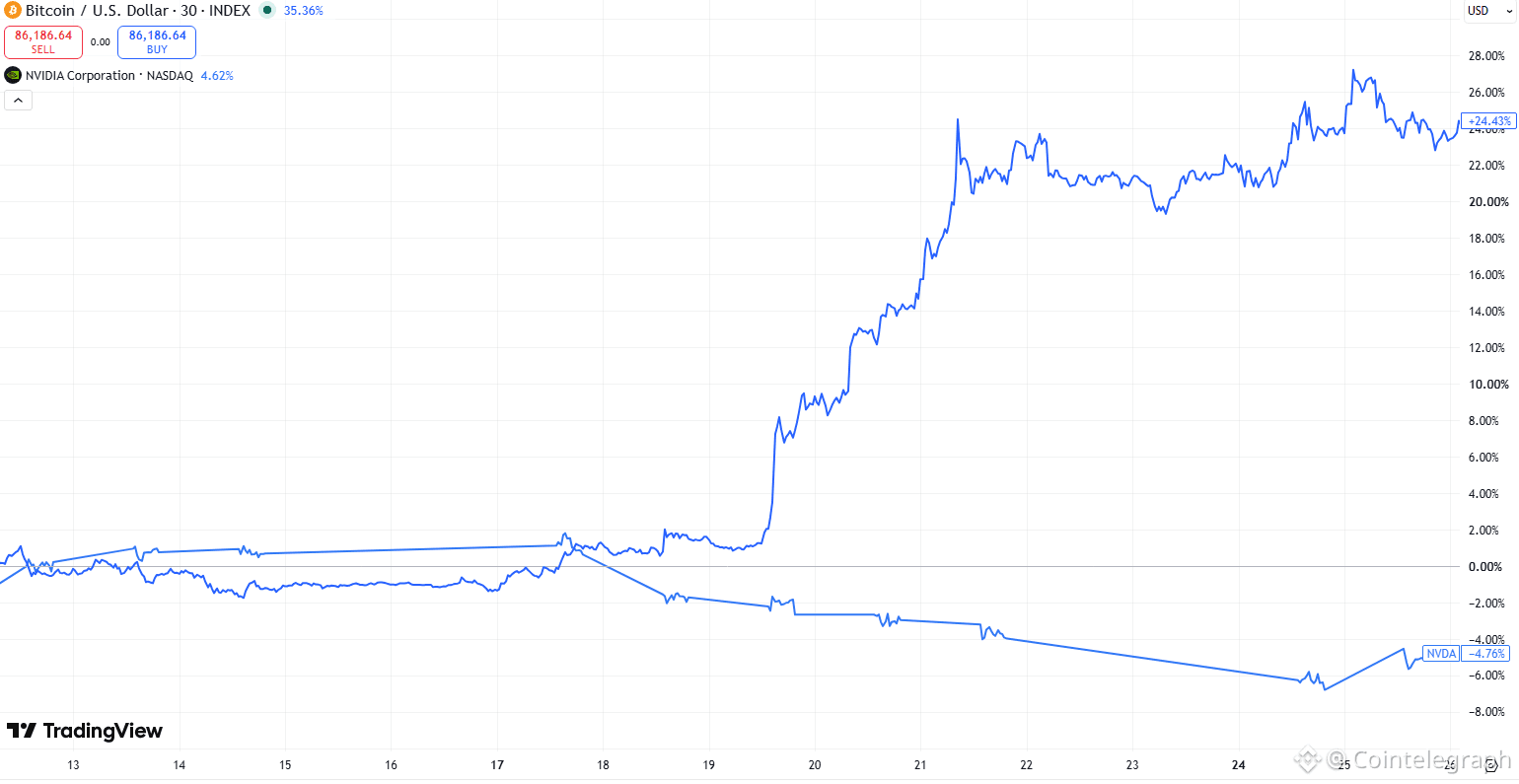
AIから仮想通貨へ資金が戻り始めている:ラウル・パル米ドル安が進めば、仮想通貨市場に「青信号」が灯り、業界の上昇相場が続く可能性があると、Real Visionの創設者ラウル・パル氏は述べている。
同氏は「Trade Secrets」の最新エピソードでCointelegraphに対し、国債利回りの上昇とドル高により、流動性が自由に流れ込めずにいると語った。
「ドル安を実現できれば、仮想通貨市場のさらなる上昇に青信号が灯る」と同氏は語る。「あまり期待しすぎたくはないので、すべてに青信号が出たとは考えていない」
米ドル指数は年初来の最高水準で推移している。出典:TradingView
AIから仮想通貨へ資金が戻り始めている:ラウル・パル
米ドル安が進めば、仮想通貨市場に「青信号」が灯り、業界の上昇相場が続く可能性があると、Real Visionの創設者ラウル・パル氏は述べている。
同氏は「Trade Secrets」の最新エピソードでCointelegraphに対し、国債利回りの上昇とドル高により、流動性が自由に流れ込めずにいると語った。
「ドル安を実現できれば、仮想通貨市場のさらなる上昇に青信号が灯る」と同氏は語る。「あまり期待しすぎたくはないので、すべてに青信号が出たとは考えていない」
米ドル指数は年初来の最高水準で推移している。出典:TradingView
同氏は「Trade Secrets」の最新エピソードでCointelegraphに対し、国債利回りの上昇とドル高により、流動性が自由に流れ込めずにいると語った。
「ドル安を実現できれば、仮想通貨市場のさらなる上昇に青信号が灯る」と同氏は語る。「あまり期待しすぎたくはないので、すべてに青信号が出たとは考えていない」
米ドル指数は年初来の最高水準で推移している。出典:TradingView
237
記事
翻訳参照
US crypto rules need to survive the next electionOpinion by Andrew M. Cuomo, former governor of New York
The digital asset revolution is here, and it’s already transforming our financial system.
We’re no longer questioning if it will continue to develop. It will. The issue is whether the United States will establish clear, durable rules for it to develop here.
Right now, the answer is no.
The CLARITY Act was intended to solve this problem. It would have provided a national framework for digital assets, clarified the roles of federal agencies including the Securities and Exchange Commission (SEC) and the Commodity Futures Trading Commission (CFTC), and given businesses, investors and consumers a clear understanding of the rules.
The House passed the CLARITY Act in 2025, but Congress has yet to send a bill to the president. The Senate failed to advance the Act in September, leaving most to wonder: what happens now?
Those same federal agencies have rushed in with new regulations that significantly restructure the market. Both the SEC and CFTC have been hyper-aggressive in promulgating new rules, filling the void left by Congress, proposing a new federal framework for crypto trading platforms and a bespoke regulatory regime for certain crypto assets.
In the short term, this is great, and we’ll see many new market opportunities as a result. But the reality is that these rules have been adopted in the absence of a market structure law enacted by Congress and rely on agencies’ existing statutory authority, lacking the durability of a new law.
More poignantly from the Democrats’ point of view, they were adopted despite congressional opposition. That means the rules are politically vulnerable from the start.
And hell hath no fury like a Congress scorned.
The next election could upend the rules
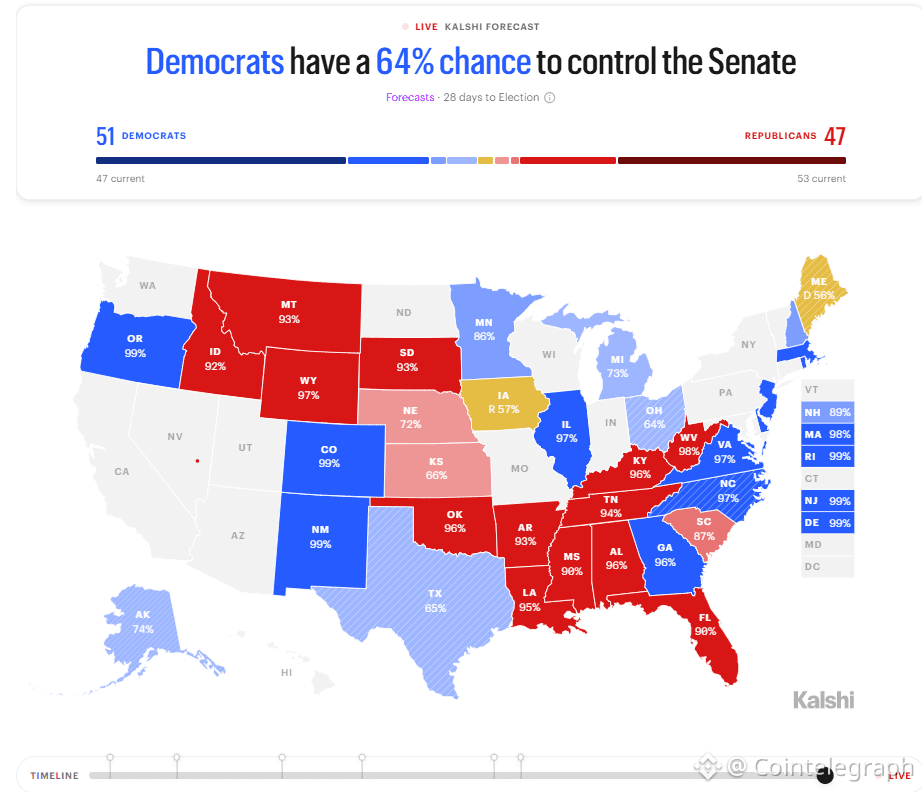
If prediction markets and current electoral trends are to be believed, Democrats will control one, if not both, houses of Congress after the midterms. And the power of Congress to derail and disrupt agency action should never be underestimated.
Democrats have a 64% chance of controlling the Senate. Source: Kalshi
I lived this dynamic when I was in the Clinton administration at the Department of Housing and Urban Development (HUD). The 1994 midterm elections swept Republicans into control of the House and Senate. The department’s power was greatly impeded. Oversight intensified, funding became leverage, and Congress used every tool at its disposal to challenge and constrain the administration. It’s what Congress does when it believes the executive branch has gone too far.
Democrats will be looking to prove their claims that the Trump administration was corrupt and that agency actions were designed to benefit individuals personally and political donors collectively. Whether those claims are fair or not, they will drive the politics. And the politics will drive the oversight.
The legislature has many tools at its disposal. Agencies must submit new rules and regulations before they take effect, allowing lawmakers to weigh in. They can limit funding for agency programs, pass legislation overriding agency actions, or use the Congressional Review Act to repeal certain regulations. Congress also has the power to investigate and issue subpoenas that can wreak havoc when coupled with public hearings. Just ask Anthony Fauci and Jack Smith!
Congress must put politics aside
The overall challenge is that private sector technological innovation must be reconciled and aligned with intelligent government regulation. When the CLARITY Act failed, ambiguity prevailed. It’s bad for business, bad for investors, bad for consumers and bad for America.
Companies should not have to guess whether the rules in place today will survive the next election. They should not have to decide whether to build and invest in the United States based on which party controls Washington. They should know what is legal, what is prohibited, who regulates what and how the rules will be enforced.
America deserves a system that encourages innovation while protecting consumers and investors. It deserves rules that prevent illicit activity and protect market integrity. It deserves a framework that companies can rely on when they choose where to hire, invest and build.
Other countries understand this. They are establishing their frameworks, like Europe’s Markets in Crypto Assets (MiCA) regulation or Singapore’s Payment Services Act, providing regulatory certainty and setting standards. The United States cannot afford to let political gridlock determine the future of financial innovation.
It is essential that a top priority for the next Congress is to put politics aside — even for a moment — and pass bipartisan legislation authorizing digital asset activities, so that companies can invest safely and intelligently in the US.
About the author: Andrew M. Cuomo served as governor of New York from 2011 to 2021 and previously served as New York attorney general and US secretary of Housing and Urban Development. He currently serves on the board of OKX and co-chairs OKXICE, a joint venture between OKX and Intercontinental Exchange focused on tokenized and digitally native financial products.
Opinion: A single market worth protecting: Getting the MiCA review right
US crypto rules need to survive the next election
Opinion by Andrew M. Cuomo, former governor of New York
The digital asset revolution is here, and it’s already transforming our financial system.
We’re no longer questioning if it will continue to develop. It will. The issue is whether the United States will establish clear, durable rules for it to develop here.
Right now, the answer is no.
The CLARITY Act was intended to solve this problem. It would have provided a national framework for digital assets, clarified the roles of federal agencies including the Securities and Exchange Commission (SEC) and the Commodity Futures Trading Commission (CFTC), and given businesses, investors and consumers a clear understanding of the rules.
The House passed the CLARITY Act in 2025, but Congress has yet to send a bill to the president. The Senate failed to advance the Act in September, leaving most to wonder: what happens now?
Those same federal agencies have rushed in with new regulations that significantly restructure the market. Both the SEC and CFTC have been hyper-aggressive in promulgating new rules, filling the void left by Congress, proposing a new federal framework for crypto trading platforms and a bespoke regulatory regime for certain crypto assets.
In the short term, this is great, and we’ll see many new market opportunities as a result. But the reality is that these rules have been adopted in the absence of a market structure law enacted by Congress and rely on agencies’ existing statutory authority, lacking the durability of a new law.
More poignantly from the Democrats’ point of view, they were adopted despite congressional opposition. That means the rules are politically vulnerable from the start.
And hell hath no fury like a Congress scorned.
The next election could upend the rules
If prediction markets and current electoral trends are to be believed, Democrats will control one, if not both, houses of Congress after the midterms. And the power of Congress to derail and disrupt agency action should never be underestimated.
Democrats have a 64% chance of controlling the Senate. Source: Kalshi
I lived this dynamic when I was in the Clinton administration at the Department of Housing and Urban Development (HUD). The 1994 midterm elections swept Republicans into control of the House and Senate. The department’s power was greatly impeded. Oversight intensified, funding became leverage, and Congress used every tool at its disposal to challenge and constrain the administration. It’s what Congress does when it believes the executive branch has gone too far.
Democrats will be looking to prove their claims that the Trump administration was corrupt and that agency actions were designed to benefit individuals personally and political donors collectively. Whether those claims are fair or not, they will drive the politics. And the politics will drive the oversight.
The legislature has many tools at its disposal. Agencies must submit new rules and regulations before they take effect, allowing lawmakers to weigh in. They can limit funding for agency programs, pass legislation overriding agency actions, or use the Congressional Review Act to repeal certain regulations. Congress also has the power to investigate and issue subpoenas that can wreak havoc when coupled with public hearings. Just ask Anthony Fauci and Jack Smith!
Congress must put politics aside
The overall challenge is that private sector technological innovation must be reconciled and aligned with intelligent government regulation. When the CLARITY Act failed, ambiguity prevailed. It’s bad for business, bad for investors, bad for consumers and bad for America.
Companies should not have to guess whether the rules in place today will survive the next election. They should not have to decide whether to build and invest in the United States based on which party controls Washington. They should know what is legal, what is prohibited, who regulates what and how the rules will be enforced.
America deserves a system that encourages innovation while protecting consumers and investors. It deserves rules that prevent illicit activity and protect market integrity. It deserves a framework that companies can rely on when they choose where to hire, invest and build.
Other countries understand this. They are establishing their frameworks, like Europe’s Markets in Crypto Assets (MiCA) regulation or Singapore’s Payment Services Act, providing regulatory certainty and setting standards. The United States cannot afford to let political gridlock determine the future of financial innovation.
It is essential that a top priority for the next Congress is to put politics aside — even for a moment — and pass bipartisan legislation authorizing digital asset activities, so that companies can invest safely and intelligently in the US.
About the author: Andrew M. Cuomo served as governor of New York from 2011 to 2021 and previously served as New York attorney general and US secretary of Housing and Urban Development. He currently serves on the board of OKX and co-chairs OKXICE, a joint venture between OKX and Intercontinental Exchange focused on tokenized and digitally native financial products.
Opinion: A single market worth protecting: Getting the MiCA review right
The digital asset revolution is here, and it’s already transforming our financial system.
We’re no longer questioning if it will continue to develop. It will. The issue is whether the United States will establish clear, durable rules for it to develop here.
Right now, the answer is no.
The CLARITY Act was intended to solve this problem. It would have provided a national framework for digital assets, clarified the roles of federal agencies including the Securities and Exchange Commission (SEC) and the Commodity Futures Trading Commission (CFTC), and given businesses, investors and consumers a clear understanding of the rules.
The House passed the CLARITY Act in 2025, but Congress has yet to send a bill to the president. The Senate failed to advance the Act in September, leaving most to wonder: what happens now?
Those same federal agencies have rushed in with new regulations that significantly restructure the market. Both the SEC and CFTC have been hyper-aggressive in promulgating new rules, filling the void left by Congress, proposing a new federal framework for crypto trading platforms and a bespoke regulatory regime for certain crypto assets.
In the short term, this is great, and we’ll see many new market opportunities as a result. But the reality is that these rules have been adopted in the absence of a market structure law enacted by Congress and rely on agencies’ existing statutory authority, lacking the durability of a new law.
More poignantly from the Democrats’ point of view, they were adopted despite congressional opposition. That means the rules are politically vulnerable from the start.
And hell hath no fury like a Congress scorned.
The next election could upend the rules
If prediction markets and current electoral trends are to be believed, Democrats will control one, if not both, houses of Congress after the midterms. And the power of Congress to derail and disrupt agency action should never be underestimated.
Democrats have a 64% chance of controlling the Senate. Source: Kalshi
I lived this dynamic when I was in the Clinton administration at the Department of Housing and Urban Development (HUD). The 1994 midterm elections swept Republicans into control of the House and Senate. The department’s power was greatly impeded. Oversight intensified, funding became leverage, and Congress used every tool at its disposal to challenge and constrain the administration. It’s what Congress does when it believes the executive branch has gone too far.
Democrats will be looking to prove their claims that the Trump administration was corrupt and that agency actions were designed to benefit individuals personally and political donors collectively. Whether those claims are fair or not, they will drive the politics. And the politics will drive the oversight.
The legislature has many tools at its disposal. Agencies must submit new rules and regulations before they take effect, allowing lawmakers to weigh in. They can limit funding for agency programs, pass legislation overriding agency actions, or use the Congressional Review Act to repeal certain regulations. Congress also has the power to investigate and issue subpoenas that can wreak havoc when coupled with public hearings. Just ask Anthony Fauci and Jack Smith!
Congress must put politics aside
The overall challenge is that private sector technological innovation must be reconciled and aligned with intelligent government regulation. When the CLARITY Act failed, ambiguity prevailed. It’s bad for business, bad for investors, bad for consumers and bad for America.
Companies should not have to guess whether the rules in place today will survive the next election. They should not have to decide whether to build and invest in the United States based on which party controls Washington. They should know what is legal, what is prohibited, who regulates what and how the rules will be enforced.
America deserves a system that encourages innovation while protecting consumers and investors. It deserves rules that prevent illicit activity and protect market integrity. It deserves a framework that companies can rely on when they choose where to hire, invest and build.
Other countries understand this. They are establishing their frameworks, like Europe’s Markets in Crypto Assets (MiCA) regulation or Singapore’s Payment Services Act, providing regulatory certainty and setting standards. The United States cannot afford to let political gridlock determine the future of financial innovation.
It is essential that a top priority for the next Congress is to put politics aside — even for a moment — and pass bipartisan legislation authorizing digital asset activities, so that companies can invest safely and intelligently in the US.
About the author: Andrew M. Cuomo served as governor of New York from 2011 to 2021 and previously served as New York attorney general and US secretary of Housing and Urban Development. He currently serves on the board of OKX and co-chairs OKXICE, a joint venture between OKX and Intercontinental Exchange focused on tokenized and digitally native financial products.
Opinion: A single market worth protecting: Getting the MiCA review right
2
140
Polymarket、新たなProtocol V2の展開でスマートコントラクトを刷新予測市場プラットフォームのPolymarketは、スマートコントラクトの基盤を再構築しており、新たな市場機能の追加や、Polygon以外への展開の可能性に向けた土台を整えています。
同社のプロトコル責任者Rajath Alex氏がXに投稿した内容によると、Polymarketは月曜日、単一の取引所を通じてさまざまな種類の市場に対応する新しいスマートコントラクトシステムを導入するProtocol V2の展開を開始しました。
プラットフォームは10月30日まで、限られた数の実稼働市場でシステムをテストしており、新規市場をV2に切り替える目標日は暫定的に11月2日としています。
Polymarket、新たなProtocol V2の展開でスマートコントラクトを刷新
予測市場プラットフォームのPolymarketは、スマートコントラクトの基盤を再構築しており、新たな市場機能の追加や、Polygon以外への展開の可能性に向けた土台を整えています。
同社のプロトコル責任者Rajath Alex氏がXに投稿した内容によると、Polymarketは月曜日、単一の取引所を通じてさまざまな種類の市場に対応する新しいスマートコントラクトシステムを導入するProtocol V2の展開を開始しました。
プラットフォームは10月30日まで、限られた数の実稼働市場でシステムをテストしており、新規市場をV2に切り替える目標日は暫定的に11月2日としています。
同社のプロトコル責任者Rajath Alex氏がXに投稿した内容によると、Polymarketは月曜日、単一の取引所を通じてさまざまな種類の市場に対応する新しいスマートコントラクトシステムを導入するProtocol V2の展開を開始しました。
プラットフォームは10月30日まで、限られた数の実稼働市場でシステムをテストしており、新規市場をV2に切り替える目標日は暫定的に11月2日としています。
2
144
翻訳参照
Hong Kong officials double down on end-2026 deadline for crypto licensing billThe Hong Kong government reaffirmed its plans to submit an amendment bill before the end of 2026 to establish licensing regimes for digital asset trading, custody, advisory and management services as part of its broader crypto licensing bill.
Secretary for Financial Services and the Treasury of Hong Kong, Christopher Hui, told a Monday policy briefing that the government will submit an amendment bill “within this year” to establish a broader framework for digital asset activities, according to a statement released by the Hong Kong government.
The secretary said the amendment bill covering the four categories will come in response to the “innovative developments” in financial technology.
In January, Hui revealed that regulators planned to submit a draft proposal related to crypto asset regulation before the end of 2026. He also said that the Hong Kong Monetary Authority (HKMA) had begun processing license applications for stablecoin issuers.
In April, the HKMA granted its first stablecoin issuer licenses to Anchorpoint Financial and the Hongkong and Shanghai Banking Corporation.
Hong Kong officials double down on end-2026 deadline for crypto licensing bill
The Hong Kong government reaffirmed its plans to submit an amendment bill before the end of 2026 to establish licensing regimes for digital asset trading, custody, advisory and management services as part of its broader crypto licensing bill.
Secretary for Financial Services and the Treasury of Hong Kong, Christopher Hui, told a Monday policy briefing that the government will submit an amendment bill “within this year” to establish a broader framework for digital asset activities, according to a statement released by the Hong Kong government.
The secretary said the amendment bill covering the four categories will come in response to the “innovative developments” in financial technology.
In January, Hui revealed that regulators planned to submit a draft proposal related to crypto asset regulation before the end of 2026. He also said that the Hong Kong Monetary Authority (HKMA) had begun processing license applications for stablecoin issuers.
In April, the HKMA granted its first stablecoin issuer licenses to Anchorpoint Financial and the Hongkong and Shanghai Banking Corporation.
Secretary for Financial Services and the Treasury of Hong Kong, Christopher Hui, told a Monday policy briefing that the government will submit an amendment bill “within this year” to establish a broader framework for digital asset activities, according to a statement released by the Hong Kong government.
The secretary said the amendment bill covering the four categories will come in response to the “innovative developments” in financial technology.
In January, Hui revealed that regulators planned to submit a draft proposal related to crypto asset regulation before the end of 2026. He also said that the Hong Kong Monetary Authority (HKMA) had begun processing license applications for stablecoin issuers.
In April, the HKMA granted its first stablecoin issuer licenses to Anchorpoint Financial and the Hongkong and Shanghai Banking Corporation.
2
151
記事
BinanceからのBTC流出、クジラのステーブルコイン預け入れを背景に2023年半ば以来の高水準に新たな分析によると、9月下旬、最大手暗号資産取引所Binanceからのビットコイン(BTC)流出額が数年来の記録を更新した。
要点:
9月第4週、Binanceからのビットコイン純流出額が23,000 BTCを超え、3年以上ぶりの高水準となった。
CryptoQuantの分析では、その結果、BTC/USDが現在のレンジを上抜ける可能性が高まったとみられる。
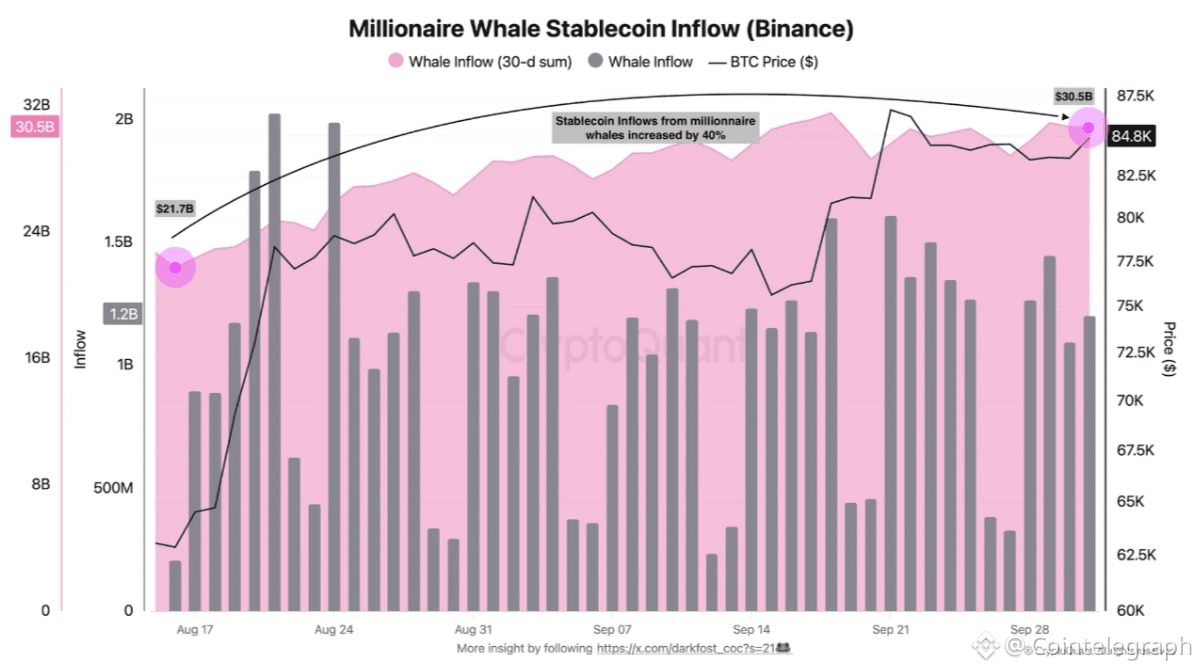
クジラによるBinanceへのステーブルコイン流入は、8月半ば以降40%増加した。
Binanceのビットコイン準備高、9月20日以降に約4万BTC減少
オンチェーン分析プラットフォームCryptoQuantのデータによると、9月27日までの7日間でBinanceの純流出額は23,137 BTCに達した。
BinanceからのBTC流出、クジラのステーブルコイン預け入れを背景に2023年半ば以来の高水準に
新たな分析によると、9月下旬、最大手暗号資産取引所Binanceからのビットコイン(BTC)流出額が数年来の記録を更新した。
要点:
9月第4週、Binanceからのビットコイン純流出額が23,000 BTCを超え、3年以上ぶりの高水準となった。
CryptoQuantの分析では、その結果、BTC/USDが現在のレンジを上抜ける可能性が高まったとみられる。
クジラによるBinanceへのステーブルコイン流入は、8月半ば以降40%増加した。
Binanceのビットコイン準備高、9月20日以降に約4万BTC減少
オンチェーン分析プラットフォームCryptoQuantのデータによると、9月27日までの7日間でBinanceの純流出額は23,137 BTCに達した。
要点:
9月第4週、Binanceからのビットコイン純流出額が23,000 BTCを超え、3年以上ぶりの高水準となった。
CryptoQuantの分析では、その結果、BTC/USDが現在のレンジを上抜ける可能性が高まったとみられる。
クジラによるBinanceへのステーブルコイン流入は、8月半ば以降40%増加した。
Binanceのビットコイン準備高、9月20日以降に約4万BTC減少
オンチェーン分析プラットフォームCryptoQuantのデータによると、9月27日までの7日間でBinanceの純流出額は23,137 BTCに達した。
164
Ondo、IPO前のAI企業へのトークン化エクスポージャーでプライベート市場に参入現実資産のトークン化プラットフォームであるOndo Financeは、社名非公開のIPO前の人工知能企業へのトークン化エクスポージャーを提供し、プライベート市場に事業を拡大している。
同プラットフォームは「Ondo Private Markets」を立ち上げ、適格な流動性イベントが発生した際に、対象企業の普通株1株当たりの実現価値に連動する支払いを提供するトークン化ノートを扱う。このノートにより、企業の株式を直接保有することなく、経済的なエクスポージャーを得られる。
対象となる投資家は、ノートを自己管理型ウォレットで保有したり、24時間いつでも流通市場で取引したりできる。Ondoによると、最初のノートは今週中に取引開始となる見込みで、ロボティクス、サイバーセキュリティ、バイオテクノロジー、インフラなどの分野の企業に連動する商品も続く予定だ。
Ondo、IPO前のAI企業へのトークン化エクスポージャーでプライベート市場に参入
現実資産のトークン化プラットフォームであるOndo Financeは、社名非公開のIPO前の人工知能企業へのトークン化エクスポージャーを提供し、プライベート市場に事業を拡大している。
同プラットフォームは「Ondo Private Markets」を立ち上げ、適格な流動性イベントが発生した際に、対象企業の普通株1株当たりの実現価値に連動する支払いを提供するトークン化ノートを扱う。このノートにより、企業の株式を直接保有することなく、経済的なエクスポージャーを得られる。
対象となる投資家は、ノートを自己管理型ウォレットで保有したり、24時間いつでも流通市場で取引したりできる。Ondoによると、最初のノートは今週中に取引開始となる見込みで、ロボティクス、サイバーセキュリティ、バイオテクノロジー、インフラなどの分野の企業に連動する商品も続く予定だ。
同プラットフォームは「Ondo Private Markets」を立ち上げ、適格な流動性イベントが発生した際に、対象企業の普通株1株当たりの実現価値に連動する支払いを提供するトークン化ノートを扱う。このノートにより、企業の株式を直接保有することなく、経済的なエクスポージャーを得られる。
対象となる投資家は、ノートを自己管理型ウォレットで保有したり、24時間いつでも流通市場で取引したりできる。Ondoによると、最初のノートは今週中に取引開始となる見込みで、ロボティクス、サイバーセキュリティ、バイオテクノロジー、インフラなどの分野の企業に連動する商品も続く予定だ。
2
499
Solana Foundation、DvP開始で決済を数秒に短縮へSolana Foundationは火曜日、決済時間の短縮を目指す金融機関向けのオープンソース決済プログラム「Solana DvP」の提供開始を発表しました。
Solana DvPは、Solana上で受渡し対価決済(DvP)を行うためのオープンソースのアプリケーション・プログラミング・インターフェースを提供します。
Solana Foundationはプレスリリースで、このプログラムは資産と代金を単一の取引で移転することで、証券の決済期間を1~2日から数秒に短縮することを目指すと述べました。この取引は全て完了するか、効力を生じないかのいずれかです。また、金融機関がカスタムのスマートコントラクトに代わる再利用可能な選択肢として利用できるよう設計されています。
Solana Foundation、DvP開始で決済を数秒に短縮へ
Solana Foundationは火曜日、決済時間の短縮を目指す金融機関向けのオープンソース決済プログラム「Solana DvP」の提供開始を発表しました。
Solana DvPは、Solana上で受渡し対価決済(DvP)を行うためのオープンソースのアプリケーション・プログラミング・インターフェースを提供します。
Solana Foundationはプレスリリースで、このプログラムは資産と代金を単一の取引で移転することで、証券の決済期間を1~2日から数秒に短縮することを目指すと述べました。この取引は全て完了するか、効力を生じないかのいずれかです。また、金融機関がカスタムのスマートコントラクトに代わる再利用可能な選択肢として利用できるよう設計されています。
Solana DvPは、Solana上で受渡し対価決済(DvP)を行うためのオープンソースのアプリケーション・プログラミング・インターフェースを提供します。
Solana Foundationはプレスリリースで、このプログラムは資産と代金を単一の取引で移転することで、証券の決済期間を1~2日から数秒に短縮することを目指すと述べました。この取引は全て完了するか、効力を生じないかのいずれかです。また、金融機関がカスタムのスマートコントラクトに代わる再利用可能な選択肢として利用できるよう設計されています。
213
ログインして、さらにコンテンツを読む
厳選トピックで世界の暗号資産トレーダーの仲間入り
⚡️ 暗号資産に関する最新かつ有益な情報が見つかります。
💬 世界最大の暗号資産取引所から信頼されています。
👍 認証を受けたクリエイターから、有益なインサイトを得られます。
メール / 電話番号