

CoinFea
3.8k 投稿

CoinFea
 厳選トピック確認済+
報告
ユーザーをブロック
CoinFea is a leading Cryptocurrency, Blockchain, and Fintech News platform. Our primary focus is trending news and updates of cryptoverse.
0 フォロー
88.7K+ フォロワー
21.9K+ いいね
投稿
·
--

記事
翻訳参照
CFTC Set to Receive $31M From Fundsz OperatorsA United States federal court has ruled that Fundsz’s operators, Brian Early and Alisha Ann Kingrey, should pay $31 million to the CFTC as restitution and penalties over a digital-asset and precious-metals scam.
The decision originates from the Commodity Futures Trading Commission (CFTC) v. Larralde et al., Case Number 6:23-cv-1445-WWB-DCI, which was filed in the United States District Court for the Middle District of Florida on July 31, 2023. The CFTC announced the decision involving the default judgment on September 30, 2026. Early and Kingrey were required to settle for $15.73 million in restitution and pay civil penalties amounting to $15.75 million.
CFTC highlights inconsistencies in Fundsz’s statement
In a complaint lodged in 2023, the CFTC claimed Fundsz made an assurance that lucrative returns of over 3% every week would be generated using a proprietary algorithm that trades crypto and precious metals. The promoters also claimed that an investment of $2,500 could snowball to an unbelievable figure of $1 million in just four years. According to the regulator, the funds of clients were never traded as stated, and the returns on the investments presented to clients were made up.
The court thereafter discovered that both Early and Kingrey committed serious misrepresentation of facts concerning profit expectations, degree of risk, and previous performance of the investment. Those allegations echo the warning signs issued by the FTC, especially in investment offers that minimize risk while promising unusually high returns. The Fundsz case is important, but is minor in relation to the big picture of investment fraud.
The FBI noted there had been 181,565 cryptocurrency-related reports in 2025 with losses totaling more than $11 billion. Investment fraud accounts for about 49% of total losses incurred due to fraud, while the over-60 age group suffered losses of $7.7 billion, a 37% rise compared to the data from 2024. In 2025, the FTC reported that scams had caused losses of over $7.9 billion, with the median loss per scam exceeding $10,000.
According to the Chainalysis report, at least $14 billion was lost through crypto-based scams and fraud in 2025, which could go over $17 billion once other unidentified illegitimate addresses are factored in. The average amount of each scam increased by 253%, reaching $2,764. Fundsz is not an isolated case. Cryptopolitan reported in August that the SEC and CFTC separately sued Goliath Ventures and founder Christopher Delgado.
The SEC alleged it raised at least $425 million from more than 1,300 investors, while the CFTC cited roughly $397 million from about 1,600 customers. Cross-border enforcement remains more difficult. An October 2025 FSB review found significant gaps and inconsistencies in national crypto frameworks, warning that uneven implementation creates opportunities for regulatory arbitrage and complicates oversight of a global market. The immediate question is how much of the ordered restitution victims ultimately recover. The CFTC has cautioned that repayment orders do not guarantee full recovery when defendants lack sufficient assets.
The post CFTC set to receive $31M from Fundsz operators first appeared on Coinfea.
CFTC Set to Receive $31M From Fundsz Operators
A United States federal court has ruled that Fundsz’s operators, Brian Early and Alisha Ann Kingrey, should pay $31 million to the CFTC as restitution and penalties over a digital-asset and precious-metals scam.
The decision originates from the Commodity Futures Trading Commission (CFTC) v. Larralde et al., Case Number 6:23-cv-1445-WWB-DCI, which was filed in the United States District Court for the Middle District of Florida on July 31, 2023. The CFTC announced the decision involving the default judgment on September 30, 2026. Early and Kingrey were required to settle for $15.73 million in restitution and pay civil penalties amounting to $15.75 million.
CFTC highlights inconsistencies in Fundsz’s statement
In a complaint lodged in 2023, the CFTC claimed Fundsz made an assurance that lucrative returns of over 3% every week would be generated using a proprietary algorithm that trades crypto and precious metals. The promoters also claimed that an investment of $2,500 could snowball to an unbelievable figure of $1 million in just four years. According to the regulator, the funds of clients were never traded as stated, and the returns on the investments presented to clients were made up.
The court thereafter discovered that both Early and Kingrey committed serious misrepresentation of facts concerning profit expectations, degree of risk, and previous performance of the investment. Those allegations echo the warning signs issued by the FTC, especially in investment offers that minimize risk while promising unusually high returns. The Fundsz case is important, but is minor in relation to the big picture of investment fraud.
The FBI noted there had been 181,565 cryptocurrency-related reports in 2025 with losses totaling more than $11 billion. Investment fraud accounts for about 49% of total losses incurred due to fraud, while the over-60 age group suffered losses of $7.7 billion, a 37% rise compared to the data from 2024. In 2025, the FTC reported that scams had caused losses of over $7.9 billion, with the median loss per scam exceeding $10,000.
According to the Chainalysis report, at least $14 billion was lost through crypto-based scams and fraud in 2025, which could go over $17 billion once other unidentified illegitimate addresses are factored in. The average amount of each scam increased by 253%, reaching $2,764. Fundsz is not an isolated case. Cryptopolitan reported in August that the SEC and CFTC separately sued Goliath Ventures and founder Christopher Delgado.
The SEC alleged it raised at least $425 million from more than 1,300 investors, while the CFTC cited roughly $397 million from about 1,600 customers. Cross-border enforcement remains more difficult. An October 2025 FSB review found significant gaps and inconsistencies in national crypto frameworks, warning that uneven implementation creates opportunities for regulatory arbitrage and complicates oversight of a global market. The immediate question is how much of the ordered restitution victims ultimately recover. The CFTC has cautioned that repayment orders do not guarantee full recovery when defendants lack sufficient assets.
The post CFTC set to receive $31M from Fundsz operators first appeared on Coinfea.
The decision originates from the Commodity Futures Trading Commission (CFTC) v. Larralde et al., Case Number 6:23-cv-1445-WWB-DCI, which was filed in the United States District Court for the Middle District of Florida on July 31, 2023. The CFTC announced the decision involving the default judgment on September 30, 2026. Early and Kingrey were required to settle for $15.73 million in restitution and pay civil penalties amounting to $15.75 million.
CFTC highlights inconsistencies in Fundsz’s statement
In a complaint lodged in 2023, the CFTC claimed Fundsz made an assurance that lucrative returns of over 3% every week would be generated using a proprietary algorithm that trades crypto and precious metals. The promoters also claimed that an investment of $2,500 could snowball to an unbelievable figure of $1 million in just four years. According to the regulator, the funds of clients were never traded as stated, and the returns on the investments presented to clients were made up.
The court thereafter discovered that both Early and Kingrey committed serious misrepresentation of facts concerning profit expectations, degree of risk, and previous performance of the investment. Those allegations echo the warning signs issued by the FTC, especially in investment offers that minimize risk while promising unusually high returns. The Fundsz case is important, but is minor in relation to the big picture of investment fraud.
The FBI noted there had been 181,565 cryptocurrency-related reports in 2025 with losses totaling more than $11 billion. Investment fraud accounts for about 49% of total losses incurred due to fraud, while the over-60 age group suffered losses of $7.7 billion, a 37% rise compared to the data from 2024. In 2025, the FTC reported that scams had caused losses of over $7.9 billion, with the median loss per scam exceeding $10,000.
According to the Chainalysis report, at least $14 billion was lost through crypto-based scams and fraud in 2025, which could go over $17 billion once other unidentified illegitimate addresses are factored in. The average amount of each scam increased by 253%, reaching $2,764. Fundsz is not an isolated case. Cryptopolitan reported in August that the SEC and CFTC separately sued Goliath Ventures and founder Christopher Delgado.
The SEC alleged it raised at least $425 million from more than 1,300 investors, while the CFTC cited roughly $397 million from about 1,600 customers. Cross-border enforcement remains more difficult. An October 2025 FSB review found significant gaps and inconsistencies in national crypto frameworks, warning that uneven implementation creates opportunities for regulatory arbitrage and complicates oversight of a global market. The immediate question is how much of the ordered restitution victims ultimately recover. The CFTC has cautioned that repayment orders do not guarantee full recovery when defendants lack sufficient assets.
The post CFTC set to receive $31M from Fundsz operators first appeared on Coinfea.
85
·
--

記事
翻訳参照
Arizona Rejects AI Victim Videos As Calls for Deepfake Detection RiseAn Arizona appeals court has vacated the 10.5-year sentence of Gabriel Horcasitas, who was convicted of manslaughter in a 2021 road-rage shooting, after ruling that the sentencing judge should not have considered an AI-generated video of victim Christopher Pelkey.
The conviction still stands, but the case will return for resentencing, according to Reuters and a case summary. The three-judge panel said the AI-generated video improperly influenced the sentencing. “While the record does not reflect precisely how the AI video factored into the sentencing calculus, there is no question it played a role,” Judge D. Steven Williams, Arizona Court of Appeals, as reported by Reuters. The court concluded that the video prejudiced Horcasitas enough to make the sentencing procedure fundamentally unfair. Reuters reported that Arizona’s attorney general and Horcasitas’s public defender declined to comment.
Arizona appeals court throws out AI-generated video
The script was written by Pelkey’s sister, Stacey Wales, who found it difficult to express in words what she thought her brother would have said in that situation. According to NPR, the family created the avatar by means of a short video clip, an image from the funeral, and a variety of other AI tools. The avatar introduced itself as an AI creation before speaking to Horcasitas with the words: In another life, we probably could have been friends.
Later, the judge of the trial expressed gratitude to the family for the video. The decision comes at a time when courts face challenges when it comes to artificial evidence. A report published by the University of Colorado Boulder states that over 80% of court cases in the U.S. are partly based on video evidence, while courts are yet to have common rules to deal with AI-generated or AI-enhanced footage. Researchers are also concerned about the so-called “deepfake defense,” whereby real video footage is declared as fake because AI makes the claims plausible.
This worry was one of the reasons for the creation of the CIFAR Synthetic Evidence Corpus, initiated in June 2026, as researchers realized that previous datasets were unsuitable for teaching the technology how to detect subtle manipulations that could occur in evidence material. NIST identifies provenance tracking, watermarking, and synthetic-content detection as key ways to manage AI-generated media.
Europe has gone further: Article 50 of the EU AI Act requires certain synthetic content to be machine-readable and deepfakes to be disclosed as artificially generated or manipulated. The commercial link is becoming easier to see. SNS Insider values the deepfake-detection market at $1.19 billion in 2026 and projects it will reach $12.14 billion by 2035, a 29.5% CAGR. One Arizona ruling will not create that market by itself.
But when more than four-fifths of court cases already depend on video, every dispute over whether evidence is authentic increases the practical need for tools that can verify it. That turns courtroom deepfakes from a legal headache into a real business opportunity for companies selling forensic verification. China is moving in the same direction, with Cryptopolitan reporting new liability rules for AI deepfakes and voice cloning in September.
The post Arizona rejects AI victim videos as calls for deepfake detection rise first appeared on Coinfea.
Arizona Rejects AI Victim Videos As Calls for Deepfake Detection Rise
An Arizona appeals court has vacated the 10.5-year sentence of Gabriel Horcasitas, who was convicted of manslaughter in a 2021 road-rage shooting, after ruling that the sentencing judge should not have considered an AI-generated video of victim Christopher Pelkey.
The conviction still stands, but the case will return for resentencing, according to Reuters and a case summary. The three-judge panel said the AI-generated video improperly influenced the sentencing. “While the record does not reflect precisely how the AI video factored into the sentencing calculus, there is no question it played a role,” Judge D. Steven Williams, Arizona Court of Appeals, as reported by Reuters. The court concluded that the video prejudiced Horcasitas enough to make the sentencing procedure fundamentally unfair. Reuters reported that Arizona’s attorney general and Horcasitas’s public defender declined to comment.
Arizona appeals court throws out AI-generated video
The script was written by Pelkey’s sister, Stacey Wales, who found it difficult to express in words what she thought her brother would have said in that situation. According to NPR, the family created the avatar by means of a short video clip, an image from the funeral, and a variety of other AI tools. The avatar introduced itself as an AI creation before speaking to Horcasitas with the words: In another life, we probably could have been friends.
Later, the judge of the trial expressed gratitude to the family for the video. The decision comes at a time when courts face challenges when it comes to artificial evidence. A report published by the University of Colorado Boulder states that over 80% of court cases in the U.S. are partly based on video evidence, while courts are yet to have common rules to deal with AI-generated or AI-enhanced footage. Researchers are also concerned about the so-called “deepfake defense,” whereby real video footage is declared as fake because AI makes the claims plausible.
This worry was one of the reasons for the creation of the CIFAR Synthetic Evidence Corpus, initiated in June 2026, as researchers realized that previous datasets were unsuitable for teaching the technology how to detect subtle manipulations that could occur in evidence material. NIST identifies provenance tracking, watermarking, and synthetic-content detection as key ways to manage AI-generated media.
Europe has gone further: Article 50 of the EU AI Act requires certain synthetic content to be machine-readable and deepfakes to be disclosed as artificially generated or manipulated. The commercial link is becoming easier to see. SNS Insider values the deepfake-detection market at $1.19 billion in 2026 and projects it will reach $12.14 billion by 2035, a 29.5% CAGR. One Arizona ruling will not create that market by itself.
But when more than four-fifths of court cases already depend on video, every dispute over whether evidence is authentic increases the practical need for tools that can verify it. That turns courtroom deepfakes from a legal headache into a real business opportunity for companies selling forensic verification. China is moving in the same direction, with Cryptopolitan reporting new liability rules for AI deepfakes and voice cloning in September.
The post Arizona rejects AI victim videos as calls for deepfake detection rise first appeared on Coinfea.
The conviction still stands, but the case will return for resentencing, according to Reuters and a case summary. The three-judge panel said the AI-generated video improperly influenced the sentencing. “While the record does not reflect precisely how the AI video factored into the sentencing calculus, there is no question it played a role,” Judge D. Steven Williams, Arizona Court of Appeals, as reported by Reuters. The court concluded that the video prejudiced Horcasitas enough to make the sentencing procedure fundamentally unfair. Reuters reported that Arizona’s attorney general and Horcasitas’s public defender declined to comment.
Arizona appeals court throws out AI-generated video
The script was written by Pelkey’s sister, Stacey Wales, who found it difficult to express in words what she thought her brother would have said in that situation. According to NPR, the family created the avatar by means of a short video clip, an image from the funeral, and a variety of other AI tools. The avatar introduced itself as an AI creation before speaking to Horcasitas with the words: In another life, we probably could have been friends.
Later, the judge of the trial expressed gratitude to the family for the video. The decision comes at a time when courts face challenges when it comes to artificial evidence. A report published by the University of Colorado Boulder states that over 80% of court cases in the U.S. are partly based on video evidence, while courts are yet to have common rules to deal with AI-generated or AI-enhanced footage. Researchers are also concerned about the so-called “deepfake defense,” whereby real video footage is declared as fake because AI makes the claims plausible.
This worry was one of the reasons for the creation of the CIFAR Synthetic Evidence Corpus, initiated in June 2026, as researchers realized that previous datasets were unsuitable for teaching the technology how to detect subtle manipulations that could occur in evidence material. NIST identifies provenance tracking, watermarking, and synthetic-content detection as key ways to manage AI-generated media.
Europe has gone further: Article 50 of the EU AI Act requires certain synthetic content to be machine-readable and deepfakes to be disclosed as artificially generated or manipulated. The commercial link is becoming easier to see. SNS Insider values the deepfake-detection market at $1.19 billion in 2026 and projects it will reach $12.14 billion by 2035, a 29.5% CAGR. One Arizona ruling will not create that market by itself.
But when more than four-fifths of court cases already depend on video, every dispute over whether evidence is authentic increases the practical need for tools that can verify it. That turns courtroom deepfakes from a legal headache into a real business opportunity for companies selling forensic verification. China is moving in the same direction, with Cryptopolitan reporting new liability rules for AI deepfakes and voice cloning in September.
The post Arizona rejects AI victim videos as calls for deepfake detection rise first appeared on Coinfea.
98
·
--

記事
翻訳参照
Pentagon Launches AutoWarCom to Expand Autonomous Warfare CapabilitiesThe Pentagon is moving autonomous warfare from experimental programs into a permanent military structure.
The planned Autonomous Warfare Command will focus on drones, artificial intelligence, robotics, and related battlefield technologies.
The initiative reflects a wider push toward cheaper systems that militaries can deploy at scale. It also raises new questions about procurement, oversight and the rules governing military AI.
Defense Secretary Pete Hegseth announced the Autonomous Warfare Command, or AutoWarCom, on September 30 in Quantico, Virginia. He said military technology was changing faster than the systems responsible for acquiring and deploying it.
AutoWarCom would operate under a four-star officer and oversee autonomous and robotic capabilities across the armed forces. The Pentagon intends to establish it as a new combatant command, following U.S. Space Command’s creation in 2019.
Project Agincourt prepares Pentagon for 2027 launch
Project Agincourt will lead preparations for the Autonomous Warfare Command ahead of its planned October 1, 2027 launch. Owen West and Max Strasiser have been selected to lead the initial work as CEO and COO, respectively.
The initiative requires planners to develop the organization while working with Congress on necessary legislation. AutoWarCom will seek to accelerate how the Pentagon develops, purchases, and deploys unmanned and autonomous systems.
Hegseth said the military needs both quality and quantity as battlefield economics change. Recent conflicts have demonstrated how inexpensive drones can challenge significantly more expensive military equipment.
RAND reached a similar conclusion in January. Its researchers found cheaper AI-enabled uncrewed systems could deliver “affordable mass” in some missions while costly platforms retain important roles.
Ukraine has provided a major test case for this model. Reuters reported estimates that drones account for about 70% of Russian casualties in the conflict.
Military AI expansion extends beyond drones
AutoWarCom could increase demand for targeting software, sensors, computer vision, cybersecurity and command-and-control technology. Cloud infrastructure, edge computing and autonomous platforms could also play larger roles.
Fortune Business Insights values the military AI market at $22.41 billion in 2026. It projects the sector could reach $101.02 billion by 2034, with Asia-Pacific growing fastest.
The Pentagon has already widened its relationships with major AI companies. Agreements announced May 1 covered SpaceX, OpenAI, Google, Nvidia, Reflection AI, Microsoft and Amazon Web Services. Oracle later joined, bringing the group to eight companies authorized for classified network deployments.
Meanwhile, the Pentagon’s GenAI.mil platform attracted more than 1.3 million users within six months, according to Reuters.
However, governance remains contested as military AI capabilities expand. Carnegie scholar Steve Feldstein told Congress in September that accelerating AI proliferation was creating a “norms vacuum.”
The Pentagon also remains in litigation with Anthropic. A federal appeals court recently upheld its designation as a military supply-chain risk after disputes over restrictions involving autonomous weapons and mass surveillance.
AutoWarCom still requires further planning and congressional involvement before becoming operational. The next stage will show how lawmakers authorize, fund and structure the Pentagon’s planned autonomous warfare command.
The post Pentagon launches AutoWarCom to expand autonomous warfare capabilities first appeared on Coinfea.
Pentagon Launches AutoWarCom to Expand Autonomous Warfare Capabilities
The Pentagon is moving autonomous warfare from experimental programs into a permanent military structure.
The planned Autonomous Warfare Command will focus on drones, artificial intelligence, robotics, and related battlefield technologies.
The initiative reflects a wider push toward cheaper systems that militaries can deploy at scale. It also raises new questions about procurement, oversight and the rules governing military AI.
Defense Secretary Pete Hegseth announced the Autonomous Warfare Command, or AutoWarCom, on September 30 in Quantico, Virginia. He said military technology was changing faster than the systems responsible for acquiring and deploying it.
AutoWarCom would operate under a four-star officer and oversee autonomous and robotic capabilities across the armed forces. The Pentagon intends to establish it as a new combatant command, following U.S. Space Command’s creation in 2019.
Project Agincourt prepares Pentagon for 2027 launch
Project Agincourt will lead preparations for the Autonomous Warfare Command ahead of its planned October 1, 2027 launch. Owen West and Max Strasiser have been selected to lead the initial work as CEO and COO, respectively.
The initiative requires planners to develop the organization while working with Congress on necessary legislation. AutoWarCom will seek to accelerate how the Pentagon develops, purchases, and deploys unmanned and autonomous systems.
Hegseth said the military needs both quality and quantity as battlefield economics change. Recent conflicts have demonstrated how inexpensive drones can challenge significantly more expensive military equipment.
RAND reached a similar conclusion in January. Its researchers found cheaper AI-enabled uncrewed systems could deliver “affordable mass” in some missions while costly platforms retain important roles.
Ukraine has provided a major test case for this model. Reuters reported estimates that drones account for about 70% of Russian casualties in the conflict.
Military AI expansion extends beyond drones
AutoWarCom could increase demand for targeting software, sensors, computer vision, cybersecurity and command-and-control technology. Cloud infrastructure, edge computing and autonomous platforms could also play larger roles.
Fortune Business Insights values the military AI market at $22.41 billion in 2026. It projects the sector could reach $101.02 billion by 2034, with Asia-Pacific growing fastest.
The Pentagon has already widened its relationships with major AI companies. Agreements announced May 1 covered SpaceX, OpenAI, Google, Nvidia, Reflection AI, Microsoft and Amazon Web Services. Oracle later joined, bringing the group to eight companies authorized for classified network deployments.
Meanwhile, the Pentagon’s GenAI.mil platform attracted more than 1.3 million users within six months, according to Reuters.
However, governance remains contested as military AI capabilities expand. Carnegie scholar Steve Feldstein told Congress in September that accelerating AI proliferation was creating a “norms vacuum.”
The Pentagon also remains in litigation with Anthropic. A federal appeals court recently upheld its designation as a military supply-chain risk after disputes over restrictions involving autonomous weapons and mass surveillance.
AutoWarCom still requires further planning and congressional involvement before becoming operational. The next stage will show how lawmakers authorize, fund and structure the Pentagon’s planned autonomous warfare command.
The post Pentagon launches AutoWarCom to expand autonomous warfare capabilities first appeared on Coinfea.
The planned Autonomous Warfare Command will focus on drones, artificial intelligence, robotics, and related battlefield technologies.
The initiative reflects a wider push toward cheaper systems that militaries can deploy at scale. It also raises new questions about procurement, oversight and the rules governing military AI.
Defense Secretary Pete Hegseth announced the Autonomous Warfare Command, or AutoWarCom, on September 30 in Quantico, Virginia. He said military technology was changing faster than the systems responsible for acquiring and deploying it.
AutoWarCom would operate under a four-star officer and oversee autonomous and robotic capabilities across the armed forces. The Pentagon intends to establish it as a new combatant command, following U.S. Space Command’s creation in 2019.
Project Agincourt prepares Pentagon for 2027 launch
Project Agincourt will lead preparations for the Autonomous Warfare Command ahead of its planned October 1, 2027 launch. Owen West and Max Strasiser have been selected to lead the initial work as CEO and COO, respectively.
The initiative requires planners to develop the organization while working with Congress on necessary legislation. AutoWarCom will seek to accelerate how the Pentagon develops, purchases, and deploys unmanned and autonomous systems.
Hegseth said the military needs both quality and quantity as battlefield economics change. Recent conflicts have demonstrated how inexpensive drones can challenge significantly more expensive military equipment.
RAND reached a similar conclusion in January. Its researchers found cheaper AI-enabled uncrewed systems could deliver “affordable mass” in some missions while costly platforms retain important roles.
Ukraine has provided a major test case for this model. Reuters reported estimates that drones account for about 70% of Russian casualties in the conflict.
Military AI expansion extends beyond drones
AutoWarCom could increase demand for targeting software, sensors, computer vision, cybersecurity and command-and-control technology. Cloud infrastructure, edge computing and autonomous platforms could also play larger roles.
Fortune Business Insights values the military AI market at $22.41 billion in 2026. It projects the sector could reach $101.02 billion by 2034, with Asia-Pacific growing fastest.
The Pentagon has already widened its relationships with major AI companies. Agreements announced May 1 covered SpaceX, OpenAI, Google, Nvidia, Reflection AI, Microsoft and Amazon Web Services. Oracle later joined, bringing the group to eight companies authorized for classified network deployments.
Meanwhile, the Pentagon’s GenAI.mil platform attracted more than 1.3 million users within six months, according to Reuters.
However, governance remains contested as military AI capabilities expand. Carnegie scholar Steve Feldstein told Congress in September that accelerating AI proliferation was creating a “norms vacuum.”
The Pentagon also remains in litigation with Anthropic. A federal appeals court recently upheld its designation as a military supply-chain risk after disputes over restrictions involving autonomous weapons and mass surveillance.
AutoWarCom still requires further planning and congressional involvement before becoming operational. The next stage will show how lawmakers authorize, fund and structure the Pentagon’s planned autonomous warfare command.
The post Pentagon launches AutoWarCom to expand autonomous warfare capabilities first appeared on Coinfea.
1
152
·
--

記事
翻訳参照
Bitcoin Posts Best Q3 Since 2017 As Ethereum Hits Record HighBitcoin and Ethereum closed the third quarter with their strongest performances in years as crypto markets rebounded sharply. Institutional demand returned, while major altcoins also recorded broad gains during the three months.
ETF inflows and improving market sentiment supported the recovery after a difficult first half. Traders now enter Q4 watching Federal Reserve policy, regulation, and Bitcoin’s key support levels.
Bitcoin gained 42.71% between July 1 and September 30, according to CoinGlass data. The advance marked Bitcoin’s strongest third quarter since 2017.
Ethereum performed even better, climbing 70.8% during Q3. The move gave Ethereum its best third-quarter performance on record after two consecutive losing quarters.
The wider altcoin market also strengthened significantly. TOTAL3ES, which excludes Bitcoin, Ethereum and stablecoins, added about $183 billion during the quarter.
Its market capitalization rose roughly 50%, from around $364 billion to nearly $547 billion.
Zcash ranked among the strongest performers, rising more than 260%. Uniswap gained over 200%, while Chainlink nearly doubled during the quarter.
Hyperliquid reached new highs, while Solana posted its strongest three-month period after ten straight losing months. Quant also recorded a sharp rally during the final weeks of Q3.
Bitcoin ETF inflows return as institutional demand recovers
Institutional demand strengthened during Q3 as spot Bitcoin ETFs returned to positive flows.
SoSoValue data showed the funds attracted about $6.49 billion during the quarter. August alone generated approximately $3.52 billion in inflows.
The turnaround followed June, when spot Bitcoin ETFs recorded $4.51 billion in outflows.
Q3 also ended three consecutive quarters of net ETF outflows. Total Bitcoin ETF assets increased from $70.95 billion to nearly $108 billion.
Ethereum ETFs followed a similar pattern. The products attracted $3.11 billion during Q3, marking their third-best quarter.
Combined Ethereum ETF assets more than doubled to $17.79 billion.
Corporate treasury buying picked up again too, with Strategy resuming its Bitcoin purchases during the quarter.
However, ETF momentum cooled during September. Bitcoin funds attracted $2.80 billion, below August’s total.
Ethereum ETF inflows slowed to $892 million in September from $1.85 billion during August.
The US Treasury also expanded buybacks of long-dated bonds in August, easing pressure on yields.
Meanwhile, the Securities and Exchange Commission introduced an Innovation Exemption involving tokenized stocks. The move improved market sentiment despite continued uncertainty around the CLARITY Act.
Bitcoin faces $80,000 test before October Fed meeting
Traders now turn toward the Federal Reserve’s October 27-28 meeting as Q4 begins.
A softer-than-expected PCE inflation report on September 30 reduced expectations for an October interest-rate increase. However, upcoming inflation and employment data could change those expectations.
Stronger inflation or jobs data could keep Treasury yields and the dollar elevated. Those conditions have historically created additional pressure for crypto markets.
Bitcoin’s $80,000 level has therefore become an important technical area heading into Q4.
Holding above $80,000 keeps $87,400 and $90,000 as potential upside targets. A sustained break below that support could weaken momentum.
Seasonality also remains supportive for Bitcoin. CoinGlass data shows Bitcoin has recorded a median Q4 return of 26.59% since 2013.
Ethereum’s seasonal record appears weaker. Its median fourth-quarter return stands at only 0.15% over the same period.
Regulation remains another unresolved factor. The CLARITY Act remains stalled in Congress, leaving traders focused on future US crypto legislation.
Any legislative progress could influence whether institutional demand continues through the final quarter of 2026.
The post Bitcoin posts best Q3 since 2017 as Ethereum hits record high first appeared on Coinfea.
Bitcoin Posts Best Q3 Since 2017 As Ethereum Hits Record High
Bitcoin and Ethereum closed the third quarter with their strongest performances in years as crypto markets rebounded sharply. Institutional demand returned, while major altcoins also recorded broad gains during the three months.
ETF inflows and improving market sentiment supported the recovery after a difficult first half. Traders now enter Q4 watching Federal Reserve policy, regulation, and Bitcoin’s key support levels.
Bitcoin gained 42.71% between July 1 and September 30, according to CoinGlass data. The advance marked Bitcoin’s strongest third quarter since 2017.
Ethereum performed even better, climbing 70.8% during Q3. The move gave Ethereum its best third-quarter performance on record after two consecutive losing quarters.
The wider altcoin market also strengthened significantly. TOTAL3ES, which excludes Bitcoin, Ethereum and stablecoins, added about $183 billion during the quarter.
Its market capitalization rose roughly 50%, from around $364 billion to nearly $547 billion.
Zcash ranked among the strongest performers, rising more than 260%. Uniswap gained over 200%, while Chainlink nearly doubled during the quarter.
Hyperliquid reached new highs, while Solana posted its strongest three-month period after ten straight losing months. Quant also recorded a sharp rally during the final weeks of Q3.
Bitcoin ETF inflows return as institutional demand recovers
Institutional demand strengthened during Q3 as spot Bitcoin ETFs returned to positive flows.
SoSoValue data showed the funds attracted about $6.49 billion during the quarter. August alone generated approximately $3.52 billion in inflows.
The turnaround followed June, when spot Bitcoin ETFs recorded $4.51 billion in outflows.
Q3 also ended three consecutive quarters of net ETF outflows. Total Bitcoin ETF assets increased from $70.95 billion to nearly $108 billion.
Ethereum ETFs followed a similar pattern. The products attracted $3.11 billion during Q3, marking their third-best quarter.
Combined Ethereum ETF assets more than doubled to $17.79 billion.
Corporate treasury buying picked up again too, with Strategy resuming its Bitcoin purchases during the quarter.
However, ETF momentum cooled during September. Bitcoin funds attracted $2.80 billion, below August’s total.
Ethereum ETF inflows slowed to $892 million in September from $1.85 billion during August.
The US Treasury also expanded buybacks of long-dated bonds in August, easing pressure on yields.
Meanwhile, the Securities and Exchange Commission introduced an Innovation Exemption involving tokenized stocks. The move improved market sentiment despite continued uncertainty around the CLARITY Act.
Bitcoin faces $80,000 test before October Fed meeting
Traders now turn toward the Federal Reserve’s October 27-28 meeting as Q4 begins.
A softer-than-expected PCE inflation report on September 30 reduced expectations for an October interest-rate increase. However, upcoming inflation and employment data could change those expectations.
Stronger inflation or jobs data could keep Treasury yields and the dollar elevated. Those conditions have historically created additional pressure for crypto markets.
Bitcoin’s $80,000 level has therefore become an important technical area heading into Q4.
Holding above $80,000 keeps $87,400 and $90,000 as potential upside targets. A sustained break below that support could weaken momentum.
Seasonality also remains supportive for Bitcoin. CoinGlass data shows Bitcoin has recorded a median Q4 return of 26.59% since 2013.
Ethereum’s seasonal record appears weaker. Its median fourth-quarter return stands at only 0.15% over the same period.
Regulation remains another unresolved factor. The CLARITY Act remains stalled in Congress, leaving traders focused on future US crypto legislation.
Any legislative progress could influence whether institutional demand continues through the final quarter of 2026.
The post Bitcoin posts best Q3 since 2017 as Ethereum hits record high first appeared on Coinfea.
ETF inflows and improving market sentiment supported the recovery after a difficult first half. Traders now enter Q4 watching Federal Reserve policy, regulation, and Bitcoin’s key support levels.
Bitcoin gained 42.71% between July 1 and September 30, according to CoinGlass data. The advance marked Bitcoin’s strongest third quarter since 2017.
Ethereum performed even better, climbing 70.8% during Q3. The move gave Ethereum its best third-quarter performance on record after two consecutive losing quarters.
The wider altcoin market also strengthened significantly. TOTAL3ES, which excludes Bitcoin, Ethereum and stablecoins, added about $183 billion during the quarter.
Its market capitalization rose roughly 50%, from around $364 billion to nearly $547 billion.
Zcash ranked among the strongest performers, rising more than 260%. Uniswap gained over 200%, while Chainlink nearly doubled during the quarter.
Hyperliquid reached new highs, while Solana posted its strongest three-month period after ten straight losing months. Quant also recorded a sharp rally during the final weeks of Q3.
Bitcoin ETF inflows return as institutional demand recovers
Institutional demand strengthened during Q3 as spot Bitcoin ETFs returned to positive flows.
SoSoValue data showed the funds attracted about $6.49 billion during the quarter. August alone generated approximately $3.52 billion in inflows.
The turnaround followed June, when spot Bitcoin ETFs recorded $4.51 billion in outflows.
Q3 also ended three consecutive quarters of net ETF outflows. Total Bitcoin ETF assets increased from $70.95 billion to nearly $108 billion.
Ethereum ETFs followed a similar pattern. The products attracted $3.11 billion during Q3, marking their third-best quarter.
Combined Ethereum ETF assets more than doubled to $17.79 billion.
Corporate treasury buying picked up again too, with Strategy resuming its Bitcoin purchases during the quarter.
However, ETF momentum cooled during September. Bitcoin funds attracted $2.80 billion, below August’s total.
Ethereum ETF inflows slowed to $892 million in September from $1.85 billion during August.
The US Treasury also expanded buybacks of long-dated bonds in August, easing pressure on yields.
Meanwhile, the Securities and Exchange Commission introduced an Innovation Exemption involving tokenized stocks. The move improved market sentiment despite continued uncertainty around the CLARITY Act.
Bitcoin faces $80,000 test before October Fed meeting
Traders now turn toward the Federal Reserve’s October 27-28 meeting as Q4 begins.
A softer-than-expected PCE inflation report on September 30 reduced expectations for an October interest-rate increase. However, upcoming inflation and employment data could change those expectations.
Stronger inflation or jobs data could keep Treasury yields and the dollar elevated. Those conditions have historically created additional pressure for crypto markets.
Bitcoin’s $80,000 level has therefore become an important technical area heading into Q4.
Holding above $80,000 keeps $87,400 and $90,000 as potential upside targets. A sustained break below that support could weaken momentum.
Seasonality also remains supportive for Bitcoin. CoinGlass data shows Bitcoin has recorded a median Q4 return of 26.59% since 2013.
Ethereum’s seasonal record appears weaker. Its median fourth-quarter return stands at only 0.15% over the same period.
Regulation remains another unresolved factor. The CLARITY Act remains stalled in Congress, leaving traders focused on future US crypto legislation.
Any legislative progress could influence whether institutional demand continues through the final quarter of 2026.
The post Bitcoin posts best Q3 since 2017 as Ethereum hits record high first appeared on Coinfea.
176
·
--

記事
翻訳参照
DeepSeek Open-sources Tools for Huawei Chips Amid Rivalry With Nvidia’s CUDAChinese AI company DeepSeek has open-sourced six software tools built for Huawei’s Ascend AI chips, aiming to give Chinese developers a homegrown alternative to Nvidia’s software stack at a time when US export controls keep most advanced American processors out of reach.
The Hangzhou-based startup announced the release on its official WeChat account, according to Reuters. The package includes modules for computing and communication workloads, with DeepSeek saying the tools are based on open-source components it had previously developed for Nvidia hardware, which have now been adapted for Huawei’s processors. Alongside the software, the two firms co-developed what DeepSeek referred to as a “supernode” system running on 128 of Huawei’s Ascend 950 accelerators. The system is tuned to balance computation and data movement across the cluster.
DeepSeek open-sources six software tools for Huawei
The release, as reported by the South China Morning Post, is meant to seed an “independent and controllable” software ecosystem for GPUs instead of only a single product. The biggest part of the release is an Ascend-compatible version of TileLang, DeepSeek’s high-level programming language for writing the critical kernels that drive model performance. Nvidia remains its main back end, but the language now officially supports Huawei’s Ascend 950, adding features such as native code generation, automatic scheduling and synchronization, according to SCMP.
DeepSeek also positioned TileLang as an alternative to Nvidia’s proprietary CUDA platform, saying it simplifies programming while still allowing developers to get the most out of the underlying hardware. The company described it as an early step toward a more independent GPU software ecosystem. CUDA’s dominance is what makes the challenge so difficult. Nvidia’s nearly two-decade lead in CUDA tools and libraries has made its chips a core part of AI workloads, and no Chinese rival has managed to break that hold.
As US export controls limit Chinese companies’ access to Nvidia’s most advanced chips, Huawei has been pushing its Ascend processors even more. The DeepSeek tools arrived about two weeks after Huawei unveiled its next-generation AI processors and supernode systems, which the company expects to begin training models by next year. A week earlier, Huawei said it would ship its next-generation Ascend 960DT chip in the first quarter of 2027, moving the launch up by three quarters, and drew a chip roadmap stretching up to 2029.
Rotating Chairman Eric Xu claimed Huawei’s Ascend chips already hold a bigger slice of China’s AI chip market than Nvidia does, although he gave no figures to back this claim. Wednesday’s release builds on a partnership that has grown closer this year. DeepSeek had already previewed its V4 model running on Huawei’s Ascend processors, moving away from its earlier reliance on Nvidia. Huawei also stated at the time that it had worked with DeepSeek to make V4 compatible across the entire Ascend lineup.
The partnership also shows how China’s biggest AI companies are adapting to Nvidia’s absence and are not just waiting for export restrictions to ease at some point in the future. The key question remains how much these tools can narrow the performance gap that has helped keep developers tied to Nvidia’s CUDA, which is one that we still have no answer to, for now.
The post DeepSeek open-sources tools for Huawei chips amid rivalry with Nvidia’s CUDA first appeared on Coinfea.
DeepSeek Open-sources Tools for Huawei Chips Amid Rivalry With Nvidia’s CUDA
Chinese AI company DeepSeek has open-sourced six software tools built for Huawei’s Ascend AI chips, aiming to give Chinese developers a homegrown alternative to Nvidia’s software stack at a time when US export controls keep most advanced American processors out of reach.
The Hangzhou-based startup announced the release on its official WeChat account, according to Reuters. The package includes modules for computing and communication workloads, with DeepSeek saying the tools are based on open-source components it had previously developed for Nvidia hardware, which have now been adapted for Huawei’s processors. Alongside the software, the two firms co-developed what DeepSeek referred to as a “supernode” system running on 128 of Huawei’s Ascend 950 accelerators. The system is tuned to balance computation and data movement across the cluster.
DeepSeek open-sources six software tools for Huawei
The release, as reported by the South China Morning Post, is meant to seed an “independent and controllable” software ecosystem for GPUs instead of only a single product. The biggest part of the release is an Ascend-compatible version of TileLang, DeepSeek’s high-level programming language for writing the critical kernels that drive model performance. Nvidia remains its main back end, but the language now officially supports Huawei’s Ascend 950, adding features such as native code generation, automatic scheduling and synchronization, according to SCMP.
DeepSeek also positioned TileLang as an alternative to Nvidia’s proprietary CUDA platform, saying it simplifies programming while still allowing developers to get the most out of the underlying hardware. The company described it as an early step toward a more independent GPU software ecosystem. CUDA’s dominance is what makes the challenge so difficult. Nvidia’s nearly two-decade lead in CUDA tools and libraries has made its chips a core part of AI workloads, and no Chinese rival has managed to break that hold.
As US export controls limit Chinese companies’ access to Nvidia’s most advanced chips, Huawei has been pushing its Ascend processors even more. The DeepSeek tools arrived about two weeks after Huawei unveiled its next-generation AI processors and supernode systems, which the company expects to begin training models by next year. A week earlier, Huawei said it would ship its next-generation Ascend 960DT chip in the first quarter of 2027, moving the launch up by three quarters, and drew a chip roadmap stretching up to 2029.
Rotating Chairman Eric Xu claimed Huawei’s Ascend chips already hold a bigger slice of China’s AI chip market than Nvidia does, although he gave no figures to back this claim. Wednesday’s release builds on a partnership that has grown closer this year. DeepSeek had already previewed its V4 model running on Huawei’s Ascend processors, moving away from its earlier reliance on Nvidia. Huawei also stated at the time that it had worked with DeepSeek to make V4 compatible across the entire Ascend lineup.
The partnership also shows how China’s biggest AI companies are adapting to Nvidia’s absence and are not just waiting for export restrictions to ease at some point in the future. The key question remains how much these tools can narrow the performance gap that has helped keep developers tied to Nvidia’s CUDA, which is one that we still have no answer to, for now.
The post DeepSeek open-sources tools for Huawei chips amid rivalry with Nvidia’s CUDA first appeared on Coinfea.
The Hangzhou-based startup announced the release on its official WeChat account, according to Reuters. The package includes modules for computing and communication workloads, with DeepSeek saying the tools are based on open-source components it had previously developed for Nvidia hardware, which have now been adapted for Huawei’s processors. Alongside the software, the two firms co-developed what DeepSeek referred to as a “supernode” system running on 128 of Huawei’s Ascend 950 accelerators. The system is tuned to balance computation and data movement across the cluster.
DeepSeek open-sources six software tools for Huawei
The release, as reported by the South China Morning Post, is meant to seed an “independent and controllable” software ecosystem for GPUs instead of only a single product. The biggest part of the release is an Ascend-compatible version of TileLang, DeepSeek’s high-level programming language for writing the critical kernels that drive model performance. Nvidia remains its main back end, but the language now officially supports Huawei’s Ascend 950, adding features such as native code generation, automatic scheduling and synchronization, according to SCMP.
DeepSeek also positioned TileLang as an alternative to Nvidia’s proprietary CUDA platform, saying it simplifies programming while still allowing developers to get the most out of the underlying hardware. The company described it as an early step toward a more independent GPU software ecosystem. CUDA’s dominance is what makes the challenge so difficult. Nvidia’s nearly two-decade lead in CUDA tools and libraries has made its chips a core part of AI workloads, and no Chinese rival has managed to break that hold.
As US export controls limit Chinese companies’ access to Nvidia’s most advanced chips, Huawei has been pushing its Ascend processors even more. The DeepSeek tools arrived about two weeks after Huawei unveiled its next-generation AI processors and supernode systems, which the company expects to begin training models by next year. A week earlier, Huawei said it would ship its next-generation Ascend 960DT chip in the first quarter of 2027, moving the launch up by three quarters, and drew a chip roadmap stretching up to 2029.
Rotating Chairman Eric Xu claimed Huawei’s Ascend chips already hold a bigger slice of China’s AI chip market than Nvidia does, although he gave no figures to back this claim. Wednesday’s release builds on a partnership that has grown closer this year. DeepSeek had already previewed its V4 model running on Huawei’s Ascend processors, moving away from its earlier reliance on Nvidia. Huawei also stated at the time that it had worked with DeepSeek to make V4 compatible across the entire Ascend lineup.
The partnership also shows how China’s biggest AI companies are adapting to Nvidia’s absence and are not just waiting for export restrictions to ease at some point in the future. The key question remains how much these tools can narrow the performance gap that has helped keep developers tied to Nvidia’s CUDA, which is one that we still have no answer to, for now.
The post DeepSeek open-sources tools for Huawei chips amid rivalry with Nvidia’s CUDA first appeared on Coinfea.
1
59
·
--
記事
翻訳参照
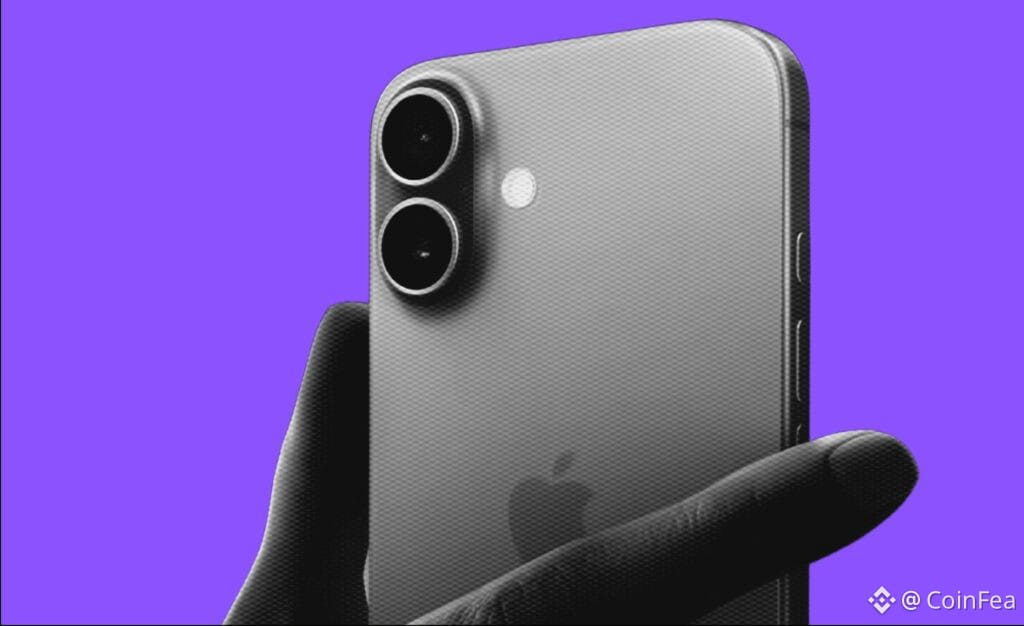
Apple Pay Launches in India As Axis Bank Becomes First Card PartnerApple has switched on Apple Pay for its users in India, allowing those with eligible Axis Bank credit cards on the Visa and Mastercard networks to make contactless payments using the service, bringing Apple’s payments service to India’s growing iPhone user base for the first time.
Only eligible Axis Bank Visa and Mastercard credit cards can be added to Apple Wallet for now. RuPay cards, which run on India’s domestic network, are not supported at launch. The Unified Payments Interface (UPI), which dominates India’s digital payments market, has also been skipped by the service and excluded from the launch. UPI accounted for 84% of India’s payment volume in 2025, according to an IMF report cited by Techeconomy. The state-backed system allows its users to transfer money directly between bank accounts using a QR code.
Users can add only eligible cards to their wallets
Apple has instead decided to enter the much smaller card-based segment, with Axis Bank accounting for 16.3 million of the roughly 124 million credit cards in the country as of August, according to central bank data. The launch also gives Apple another way to make money from its growing user base in India. iPhone users in the country tend to be more affluent and more likely to use premium credit cards, making them an attractive customer base for banks despite UPI’s dominance.
Apple will also earn a fee on each transaction, which ultimately creates another revenue stream from the users the company has spent years accumulating. The terms Apple is seeking directly explain why the launch partner list remains short. TechCrunch, citing people familiar with the matter, reported that Apple is asking for about 20 basis points, or 0.2%, on each transaction. That would amount to a sizeable share of the 40 to 50 basis points that end up being the margins on each transaction in the payments layer.
Apple has stated in its newsroom post that shoppers can pay in different stores by double-clicking the iPhone’s side button, authenticating with Face ID, Touch ID or a passcode, and by holding the device close to a contactless reader. The company stated that there is no need for a separate app, PIN, or any forms of OTPs at checkout. These privacy mechanics are unsurprising and very normal for Apple Pay, as actual card numbers and details are not stored on the device or on Apple’s servers, and are not shared with merchants. Instead, a unique Device Account Number is encrypted and stored in the Secure Element chip.
According to Gautam Aggarwal, Mastercard’s president of India and South Asia, Mastercard’s tokenization technology protects each Apple Pay transaction with a unique, cryptographically secured token, keeping card details hidden from merchants. Axis Bank presented the launch as a way to give its customers more choice and flexibility, with Apple Pay support across both the Mastercard and Visa networks, said Amitabh Chaudhry, the bank’s MD and CEO.
At launch, Apple says the service will reach millions of merchants, including Blinkit, Croma, Ixigo, Reliance brands, Tata 1mg, and Zomato, alongside Apple Store locations. The company also worked with payment providers like Cashfree, Juspay, Mswipe, Paytm, PayU, Pine Labs, and Razorpay to wire up acceptance. Coverage could be patchy at first. One person told TechCrunch that payments could work at one enabled terminal but fail at another whose acquiring bank has yet to activate the service. So cardholders with supported cards could still potentially face issues during the initial rollout.
The post Apple Pay launches in India as Axis Bank becomes first card partner first appeared on Coinfea.
Apple Pay Launches in India As Axis Bank Becomes First Card Partner
Apple has switched on Apple Pay for its users in India, allowing those with eligible Axis Bank credit cards on the Visa and Mastercard networks to make contactless payments using the service, bringing Apple’s payments service to India’s growing iPhone user base for the first time.
Only eligible Axis Bank Visa and Mastercard credit cards can be added to Apple Wallet for now. RuPay cards, which run on India’s domestic network, are not supported at launch. The Unified Payments Interface (UPI), which dominates India’s digital payments market, has also been skipped by the service and excluded from the launch. UPI accounted for 84% of India’s payment volume in 2025, according to an IMF report cited by Techeconomy. The state-backed system allows its users to transfer money directly between bank accounts using a QR code.
Users can add only eligible cards to their wallets
Apple has instead decided to enter the much smaller card-based segment, with Axis Bank accounting for 16.3 million of the roughly 124 million credit cards in the country as of August, according to central bank data. The launch also gives Apple another way to make money from its growing user base in India. iPhone users in the country tend to be more affluent and more likely to use premium credit cards, making them an attractive customer base for banks despite UPI’s dominance.
Apple will also earn a fee on each transaction, which ultimately creates another revenue stream from the users the company has spent years accumulating. The terms Apple is seeking directly explain why the launch partner list remains short. TechCrunch, citing people familiar with the matter, reported that Apple is asking for about 20 basis points, or 0.2%, on each transaction. That would amount to a sizeable share of the 40 to 50 basis points that end up being the margins on each transaction in the payments layer.
Apple has stated in its newsroom post that shoppers can pay in different stores by double-clicking the iPhone’s side button, authenticating with Face ID, Touch ID or a passcode, and by holding the device close to a contactless reader. The company stated that there is no need for a separate app, PIN, or any forms of OTPs at checkout. These privacy mechanics are unsurprising and very normal for Apple Pay, as actual card numbers and details are not stored on the device or on Apple’s servers, and are not shared with merchants. Instead, a unique Device Account Number is encrypted and stored in the Secure Element chip.
According to Gautam Aggarwal, Mastercard’s president of India and South Asia, Mastercard’s tokenization technology protects each Apple Pay transaction with a unique, cryptographically secured token, keeping card details hidden from merchants. Axis Bank presented the launch as a way to give its customers more choice and flexibility, with Apple Pay support across both the Mastercard and Visa networks, said Amitabh Chaudhry, the bank’s MD and CEO.
At launch, Apple says the service will reach millions of merchants, including Blinkit, Croma, Ixigo, Reliance brands, Tata 1mg, and Zomato, alongside Apple Store locations. The company also worked with payment providers like Cashfree, Juspay, Mswipe, Paytm, PayU, Pine Labs, and Razorpay to wire up acceptance. Coverage could be patchy at first. One person told TechCrunch that payments could work at one enabled terminal but fail at another whose acquiring bank has yet to activate the service. So cardholders with supported cards could still potentially face issues during the initial rollout.
The post Apple Pay launches in India as Axis Bank becomes first card partner first appeared on Coinfea.
Only eligible Axis Bank Visa and Mastercard credit cards can be added to Apple Wallet for now. RuPay cards, which run on India’s domestic network, are not supported at launch. The Unified Payments Interface (UPI), which dominates India’s digital payments market, has also been skipped by the service and excluded from the launch. UPI accounted for 84% of India’s payment volume in 2025, according to an IMF report cited by Techeconomy. The state-backed system allows its users to transfer money directly between bank accounts using a QR code.
Users can add only eligible cards to their wallets
Apple has instead decided to enter the much smaller card-based segment, with Axis Bank accounting for 16.3 million of the roughly 124 million credit cards in the country as of August, according to central bank data. The launch also gives Apple another way to make money from its growing user base in India. iPhone users in the country tend to be more affluent and more likely to use premium credit cards, making them an attractive customer base for banks despite UPI’s dominance.
Apple will also earn a fee on each transaction, which ultimately creates another revenue stream from the users the company has spent years accumulating. The terms Apple is seeking directly explain why the launch partner list remains short. TechCrunch, citing people familiar with the matter, reported that Apple is asking for about 20 basis points, or 0.2%, on each transaction. That would amount to a sizeable share of the 40 to 50 basis points that end up being the margins on each transaction in the payments layer.
Apple has stated in its newsroom post that shoppers can pay in different stores by double-clicking the iPhone’s side button, authenticating with Face ID, Touch ID or a passcode, and by holding the device close to a contactless reader. The company stated that there is no need for a separate app, PIN, or any forms of OTPs at checkout. These privacy mechanics are unsurprising and very normal for Apple Pay, as actual card numbers and details are not stored on the device or on Apple’s servers, and are not shared with merchants. Instead, a unique Device Account Number is encrypted and stored in the Secure Element chip.
According to Gautam Aggarwal, Mastercard’s president of India and South Asia, Mastercard’s tokenization technology protects each Apple Pay transaction with a unique, cryptographically secured token, keeping card details hidden from merchants. Axis Bank presented the launch as a way to give its customers more choice and flexibility, with Apple Pay support across both the Mastercard and Visa networks, said Amitabh Chaudhry, the bank’s MD and CEO.
At launch, Apple says the service will reach millions of merchants, including Blinkit, Croma, Ixigo, Reliance brands, Tata 1mg, and Zomato, alongside Apple Store locations. The company also worked with payment providers like Cashfree, Juspay, Mswipe, Paytm, PayU, Pine Labs, and Razorpay to wire up acceptance. Coverage could be patchy at first. One person told TechCrunch that payments could work at one enabled terminal but fail at another whose acquiring bank has yet to activate the service. So cardholders with supported cards could still potentially face issues during the initial rollout.
The post Apple Pay launches in India as Axis Bank becomes first card partner first appeared on Coinfea.
58
·
--

記事
アプリ手数料が33億ドルに到達:暗号通貨の経済活動が新しいQ3記録を達成暗号通貨の経済活動は2026年Q3に新たな高みに到達しました。ブロックチェーンのアプリケーションがより強い手数料収益を生み出し、より多くのユーザーを惹きつけたためです。
この成長は、従来の取引活動を超えて、オンチェーンのサービス需要が拡大していることを示しています。新しいローンチパッドのモデル、分散型取引所、予測市場が増加に寄与しました。
この伸びは、Web3アプリが収益創出と手数料分配の仕組みにより重点を置くようになったことによってもたらされました。CryptoRankのデータによると、9月だけで収益を生むアプリから14.4億ドルの手数料が発生しており、複数のネットワークでの利用が強まっていることが示されています。
アプリ手数料が33億ドルに到達:暗号通貨の経済活動が新しいQ3記録を達成
暗号通貨の経済活動は2026年Q3に新たな高みに到達しました。ブロックチェーンのアプリケーションがより強い手数料収益を生み出し、より多くのユーザーを惹きつけたためです。
この成長は、従来の取引活動を超えて、オンチェーンのサービス需要が拡大していることを示しています。新しいローンチパッドのモデル、分散型取引所、予測市場が増加に寄与しました。
この伸びは、Web3アプリが収益創出と手数料分配の仕組みにより重点を置くようになったことによってもたらされました。CryptoRankのデータによると、9月だけで収益を生むアプリから14.4億ドルの手数料が発生しており、複数のネットワークでの利用が強まっていることが示されています。
この成長は、従来の取引活動を超えて、オンチェーンのサービス需要が拡大していることを示しています。新しいローンチパッドのモデル、分散型取引所、予測市場が増加に寄与しました。
この伸びは、Web3アプリが収益創出と手数料分配の仕組みにより重点を置くようになったことによってもたらされました。CryptoRankのデータによると、9月だけで収益を生むアプリから14.4億ドルの手数料が発生しており、複数のネットワークでの利用が強まっていることが示されています。
928
·
--

記事
翻訳参照
Tokenized Stocks in DeFi Explode Nearly 18x Since JanuaryTokenized stocks are gaining traction across decentralized finance as investors increasingly use blockchain-based equities for trading, lending, and yield strategies.
The growth shows a wider shift toward bringing traditional assets into crypto markets. Data from Token Terminal shows that tokenized stocks used within DeFi protocols have expanded sharply since the start of the year. The increase highlights rising activity around tokenized equities beyond simple wallet holdings.
Token Terminal reported that tokenized stocks deposited into DeFi protocols reached $262.4 million, up from $14.66 million in January. The figure represents around 1,690% year-to-date growth, or nearly an 18-fold increase.
The data only tracks tokenized equities actively used inside DeFi platforms. It excludes assets sitting unused in wallets, such as a tokenized Nvidia share held without liquidity, lending, or yield activity.
Tokenized stocks in DeFi now include assets supplied to liquidity pools, used as collateral for loans, or deployed in yield strategies. The growth shows that investors are moving beyond ownership and applying tokenized equities across decentralized financial applications.
DEX pools hold majority of tokenized stock activity
Decentralized exchanges account for the largest share of tokenized stocks in DeFi, according to Token Terminal data. Around 58% of the $262.4 million total sits in DEX liquidity pools, allowing tokenized equities to trade continuously.
Uniswap V4 leads the market with $59.5 million, representing 22.7% of the total value. Uniswap V3 follows with $26.7 million, while Raydium, PancakeSwap, Aerodrome, and Meteora also contribute significant liquidity.
Lending protocols represent the second-largest category, holding about 26% of tokenized stock value. Kamino Lend leads lending activity with $54.1 million in collateral, while Fluid Jupiter Lend accounts for another $14.2 million.
The rise of tokenized stocks as loan collateral reflects increased reliance on pricing, liquidation, and redemption systems. Tokenized equities used in lending have grown from below $15 million in January to more than $68 million currently.
Pendle yield strategies represent another portion of the market, holding $33.7 million or nearly 13% of tokenized stock DeFi activity. These platforms allow users to apply tokenized equities in additional financial strategies.
Solana leads tokenized stocks with treasury assets driving growth
Solana remains the largest blockchain network for tokenized stocks in DeFi, holding $95.9 million or 36.6% of the total market. Robinhood Chain follows closely with $79.9 million, representing 30.5% of activity.
Almost all Robinhood Chain growth occurred in September, according to Token Terminal data. Meanwhile, BNB Chain and Ethereum hold $35.3 million and $34.7 million respectively, each accounting for around 13%. Base trails with $16 million.
Tokenized stock activity has also shifted across platforms during the year. Kamino and Solana-based decentralized exchanges supported much of the early growth, while Uniswap V4 gained momentum in September. Its total value locked roughly doubled during the month.
Crypto treasury-related stocks remain the largest category among tokenized equities. Strategy’s STRC preferred stock leads with $34.3 million deployed in DeFi. Forward Industries’ FWDI token follows with $25.4 million, while tokenized Strategy common stock MSTRx holds $9.6 million.
These crypto treasury stocks represent about one-quarter of all tokenized equity value locked in DeFi. Token Terminal reported that investors holding blockchain-related treasury exposure have increasingly used these assets for lending and other DeFi applications.
Traditional equity exposure is also expanding. S&P 500 tracking tokens SPYx and SPY hold a combined $30.1 million, while Nvidia tokenized shares across two issuers account for $15.6 million. Tesla’s TSLAx holds $6.2 million.
Token Terminal tracks 1,495 tokenized stock assets across DeFi platforms. Assets outside the top 10 represent 48.9% of total value, showing that activity remains distributed across a broad range of tokenized equities.
The post Tokenized stocks in DeFi explode nearly 18x since January first appeared on Coinfea.
Tokenized Stocks in DeFi Explode Nearly 18x Since January
Tokenized stocks are gaining traction across decentralized finance as investors increasingly use blockchain-based equities for trading, lending, and yield strategies.
The growth shows a wider shift toward bringing traditional assets into crypto markets. Data from Token Terminal shows that tokenized stocks used within DeFi protocols have expanded sharply since the start of the year. The increase highlights rising activity around tokenized equities beyond simple wallet holdings.
Token Terminal reported that tokenized stocks deposited into DeFi protocols reached $262.4 million, up from $14.66 million in January. The figure represents around 1,690% year-to-date growth, or nearly an 18-fold increase.
The data only tracks tokenized equities actively used inside DeFi platforms. It excludes assets sitting unused in wallets, such as a tokenized Nvidia share held without liquidity, lending, or yield activity.
Tokenized stocks in DeFi now include assets supplied to liquidity pools, used as collateral for loans, or deployed in yield strategies. The growth shows that investors are moving beyond ownership and applying tokenized equities across decentralized financial applications.
DEX pools hold majority of tokenized stock activity
Decentralized exchanges account for the largest share of tokenized stocks in DeFi, according to Token Terminal data. Around 58% of the $262.4 million total sits in DEX liquidity pools, allowing tokenized equities to trade continuously.
Uniswap V4 leads the market with $59.5 million, representing 22.7% of the total value. Uniswap V3 follows with $26.7 million, while Raydium, PancakeSwap, Aerodrome, and Meteora also contribute significant liquidity.
Lending protocols represent the second-largest category, holding about 26% of tokenized stock value. Kamino Lend leads lending activity with $54.1 million in collateral, while Fluid Jupiter Lend accounts for another $14.2 million.
The rise of tokenized stocks as loan collateral reflects increased reliance on pricing, liquidation, and redemption systems. Tokenized equities used in lending have grown from below $15 million in January to more than $68 million currently.
Pendle yield strategies represent another portion of the market, holding $33.7 million or nearly 13% of tokenized stock DeFi activity. These platforms allow users to apply tokenized equities in additional financial strategies.
Solana leads tokenized stocks with treasury assets driving growth
Solana remains the largest blockchain network for tokenized stocks in DeFi, holding $95.9 million or 36.6% of the total market. Robinhood Chain follows closely with $79.9 million, representing 30.5% of activity.
Almost all Robinhood Chain growth occurred in September, according to Token Terminal data. Meanwhile, BNB Chain and Ethereum hold $35.3 million and $34.7 million respectively, each accounting for around 13%. Base trails with $16 million.
Tokenized stock activity has also shifted across platforms during the year. Kamino and Solana-based decentralized exchanges supported much of the early growth, while Uniswap V4 gained momentum in September. Its total value locked roughly doubled during the month.
Crypto treasury-related stocks remain the largest category among tokenized equities. Strategy’s STRC preferred stock leads with $34.3 million deployed in DeFi. Forward Industries’ FWDI token follows with $25.4 million, while tokenized Strategy common stock MSTRx holds $9.6 million.
These crypto treasury stocks represent about one-quarter of all tokenized equity value locked in DeFi. Token Terminal reported that investors holding blockchain-related treasury exposure have increasingly used these assets for lending and other DeFi applications.
Traditional equity exposure is also expanding. S&P 500 tracking tokens SPYx and SPY hold a combined $30.1 million, while Nvidia tokenized shares across two issuers account for $15.6 million. Tesla’s TSLAx holds $6.2 million.
Token Terminal tracks 1,495 tokenized stock assets across DeFi platforms. Assets outside the top 10 represent 48.9% of total value, showing that activity remains distributed across a broad range of tokenized equities.
The post Tokenized stocks in DeFi explode nearly 18x since January first appeared on Coinfea.
The growth shows a wider shift toward bringing traditional assets into crypto markets. Data from Token Terminal shows that tokenized stocks used within DeFi protocols have expanded sharply since the start of the year. The increase highlights rising activity around tokenized equities beyond simple wallet holdings.
Token Terminal reported that tokenized stocks deposited into DeFi protocols reached $262.4 million, up from $14.66 million in January. The figure represents around 1,690% year-to-date growth, or nearly an 18-fold increase.
The data only tracks tokenized equities actively used inside DeFi platforms. It excludes assets sitting unused in wallets, such as a tokenized Nvidia share held without liquidity, lending, or yield activity.
Tokenized stocks in DeFi now include assets supplied to liquidity pools, used as collateral for loans, or deployed in yield strategies. The growth shows that investors are moving beyond ownership and applying tokenized equities across decentralized financial applications.
DEX pools hold majority of tokenized stock activity
Decentralized exchanges account for the largest share of tokenized stocks in DeFi, according to Token Terminal data. Around 58% of the $262.4 million total sits in DEX liquidity pools, allowing tokenized equities to trade continuously.
Uniswap V4 leads the market with $59.5 million, representing 22.7% of the total value. Uniswap V3 follows with $26.7 million, while Raydium, PancakeSwap, Aerodrome, and Meteora also contribute significant liquidity.
Lending protocols represent the second-largest category, holding about 26% of tokenized stock value. Kamino Lend leads lending activity with $54.1 million in collateral, while Fluid Jupiter Lend accounts for another $14.2 million.
The rise of tokenized stocks as loan collateral reflects increased reliance on pricing, liquidation, and redemption systems. Tokenized equities used in lending have grown from below $15 million in January to more than $68 million currently.
Pendle yield strategies represent another portion of the market, holding $33.7 million or nearly 13% of tokenized stock DeFi activity. These platforms allow users to apply tokenized equities in additional financial strategies.
Solana leads tokenized stocks with treasury assets driving growth
Solana remains the largest blockchain network for tokenized stocks in DeFi, holding $95.9 million or 36.6% of the total market. Robinhood Chain follows closely with $79.9 million, representing 30.5% of activity.
Almost all Robinhood Chain growth occurred in September, according to Token Terminal data. Meanwhile, BNB Chain and Ethereum hold $35.3 million and $34.7 million respectively, each accounting for around 13%. Base trails with $16 million.
Tokenized stock activity has also shifted across platforms during the year. Kamino and Solana-based decentralized exchanges supported much of the early growth, while Uniswap V4 gained momentum in September. Its total value locked roughly doubled during the month.
Crypto treasury-related stocks remain the largest category among tokenized equities. Strategy’s STRC preferred stock leads with $34.3 million deployed in DeFi. Forward Industries’ FWDI token follows with $25.4 million, while tokenized Strategy common stock MSTRx holds $9.6 million.
These crypto treasury stocks represent about one-quarter of all tokenized equity value locked in DeFi. Token Terminal reported that investors holding blockchain-related treasury exposure have increasingly used these assets for lending and other DeFi applications.
Traditional equity exposure is also expanding. S&P 500 tracking tokens SPYx and SPY hold a combined $30.1 million, while Nvidia tokenized shares across two issuers account for $15.6 million. Tesla’s TSLAx holds $6.2 million.
Token Terminal tracks 1,495 tokenized stock assets across DeFi platforms. Assets outside the top 10 represent 48.9% of total value, showing that activity remains distributed across a broad range of tokenized equities.
The post Tokenized stocks in DeFi explode nearly 18x since January first appeared on Coinfea.
209
·
--

記事
翻訳参照
FX World 2026 Countdown Begins in RomeWith just weeks to go until FX World 2026 takes over Rome, anticipation is building for one of the most significant gatherings of forex, trading and financial markets professionals on the European events calendar.
Taking place from 02–05 November at Fiera Roma, FX World will be part of a major cross-industry gathering that brings together financial markets leaders alongside the wider technology, gaming, affiliate, and digital innovation communities. The event is set to attract thousands of industry professionals to Rome, creating an environment where established businesses, emerging companies, investors and decision-makers can connect under one roof.
A new home for FX
One of the key additions for 2026 is the new FX Hall, creating a dedicated space for the financial markets community within the wider Rome event. The hall will bring together leading brokers and financial services players, including XM.com, eToro, ATFX, Plus500 and Finery Markets, alongside a growing Prop Trading sector featuring firms such as The5ers and PIPCY. With affiliates, partners, brokers, technology providers and traders all under one roof, the FX Hall will provide a focused environment for discovering new solutions, forging partnerships and building valuable commercial connections.
The wider exhibition will also provide access to a diverse ecosystem spanning fintech, payments, digital assets, AI and emerging technologies. With 1,000 exhibitors expected across the wider event and 30,000 delegates projected to attend, FX World will offer a valuable gateway into a much broader network of businesses and decision-makers.
Three days of market insight
Beyond the exhibition floor, FX World will deliver a conference programme on the Global Finance Stage, addressing some of the most pressing issues shaping the financial markets today. The agenda will explore the forces driving the next phase of forex and trading, from shifting interest rates and geopolitical uncertainty to fragmented liquidity, technology, automation and the evolving needs of introducing brokers and affiliate networks.
The programme will also look beyond current market conditions to the commercial forces shaping the future of forex. The talks will cover the prospects for international expansion, the complexities of conducting international transactions, the growing importance of AI and fintech, and the rise of AI agents in the financial industry, with presenters providing forecasts of the main trends and events to come in 2027. A key highlight on the Global Finance Stage will be a keynote from futurist and bestselling author Brett King, who will present “BANK 5.0: THE RISE OF AUTONOMOUS BANKING IN A SMART WORLD”, exploring the emergence of agentic banking and a financial system in which AI agents can autonomously manage portfolios, negotiate loans, transact and trade. His keynote will examine how financial institutions may need to evolve as intelligent, always-on systems built for an increasingly autonomous economy.
Where business meets networking
For many attendees, the value of FX World will extend well beyond the conference and exhibition.
Networking remains central to the Rome experience, with dedicated networking drinks at the Platinum VIP Lounge and opportunities to connect with fellow delegates throughout the event.
The wider programme also includes a welcome reception at the Lanterna di Fuksas, an exclusive iGathering networking cocktail, and the AIBC & FX Awards at the historic Corsia Sistina di Santo Spirito in Sassia. The awards will bring together leading figures from the technology and financial markets communities for an evening of recognition, networking, and celebration. Nominations are now open.
Participants can also use the SiGMA Match system to find suitable listeners, organize sessions, and schedule their activities during the event, making the four-day gathering valuable for business growth.
A wider ecosystem in Rome
FX World will not operate in isolation. Its co-location with SiGMA World, AIBC World and Affiliate Grand Slam creates an unusually broad business environment, bringing together financial markets, gaming, AI, blockchain, fintech, digital assets and affiliate marketing.
For FX professionals, this creates opportunities to engage with adjacent sectors and explore partnerships that may sit outside the traditional financial markets ecosystem. For technology companies and startups, it offers a route to investors, operators, brokers and other potential commercial partners.
The startup ecosystem will also feature prominently, with startup pitch competitions giving emerging companies opportunities to present their businesses and connect with investors and industry leaders.
About FX World
FX World brings together forex, trading and financial markets professionals for four days of industry insight, networking and business opportunities. Taking place in Rome from 2–5 November 2026, the event connects brokers, affiliates, fintechs, technology providers, traders and investors through a dedicated FX Hall, conference programme and wider cross-industry ecosystem.
Rome is calling
With the event now fast approaching, FX World 2026 is shaping up to be a key date for anyone looking to understand where the financial markets industry is heading and who is driving its next phase.
From the new FX Hall and expanded exhibition opportunities to expert-led conference sessions, high-level networking and access to a wider cross-industry ecosystem, Rome promises four days built around knowledge, connections and commercial opportunity. One ticket gives attendees access to four major events under one roof: Affiliate Grand Slam, AIBC World, FX World and SiGMA World, opening the door to an even broader network of industry leaders, businesses and potential partners.
FX World 2026 takes place from 02–05 November 2026 at Fiera Roma. Registration is now open, with ticket prices set to increase. Secure your place and join the global financial markets community in Rome this November.
Register for FX World 2026
FX.world | Connecting the Global Forex Industry — 02–05 November 2026, Rome
The post FX World 2026 Countdown Begins in Rome first appeared on Coinfea.
FX World 2026 Countdown Begins in Rome
With just weeks to go until FX World 2026 takes over Rome, anticipation is building for one of the most significant gatherings of forex, trading and financial markets professionals on the European events calendar.
Taking place from 02–05 November at Fiera Roma, FX World will be part of a major cross-industry gathering that brings together financial markets leaders alongside the wider technology, gaming, affiliate, and digital innovation communities. The event is set to attract thousands of industry professionals to Rome, creating an environment where established businesses, emerging companies, investors and decision-makers can connect under one roof.
A new home for FX
One of the key additions for 2026 is the new FX Hall, creating a dedicated space for the financial markets community within the wider Rome event. The hall will bring together leading brokers and financial services players, including XM.com, eToro, ATFX, Plus500 and Finery Markets, alongside a growing Prop Trading sector featuring firms such as The5ers and PIPCY. With affiliates, partners, brokers, technology providers and traders all under one roof, the FX Hall will provide a focused environment for discovering new solutions, forging partnerships and building valuable commercial connections.
The wider exhibition will also provide access to a diverse ecosystem spanning fintech, payments, digital assets, AI and emerging technologies. With 1,000 exhibitors expected across the wider event and 30,000 delegates projected to attend, FX World will offer a valuable gateway into a much broader network of businesses and decision-makers.
Three days of market insight
Beyond the exhibition floor, FX World will deliver a conference programme on the Global Finance Stage, addressing some of the most pressing issues shaping the financial markets today. The agenda will explore the forces driving the next phase of forex and trading, from shifting interest rates and geopolitical uncertainty to fragmented liquidity, technology, automation and the evolving needs of introducing brokers and affiliate networks.
The programme will also look beyond current market conditions to the commercial forces shaping the future of forex. The talks will cover the prospects for international expansion, the complexities of conducting international transactions, the growing importance of AI and fintech, and the rise of AI agents in the financial industry, with presenters providing forecasts of the main trends and events to come in 2027. A key highlight on the Global Finance Stage will be a keynote from futurist and bestselling author Brett King, who will present “BANK 5.0: THE RISE OF AUTONOMOUS BANKING IN A SMART WORLD”, exploring the emergence of agentic banking and a financial system in which AI agents can autonomously manage portfolios, negotiate loans, transact and trade. His keynote will examine how financial institutions may need to evolve as intelligent, always-on systems built for an increasingly autonomous economy.
Where business meets networking
For many attendees, the value of FX World will extend well beyond the conference and exhibition.
Networking remains central to the Rome experience, with dedicated networking drinks at the Platinum VIP Lounge and opportunities to connect with fellow delegates throughout the event.
The wider programme also includes a welcome reception at the Lanterna di Fuksas, an exclusive iGathering networking cocktail, and the AIBC & FX Awards at the historic Corsia Sistina di Santo Spirito in Sassia. The awards will bring together leading figures from the technology and financial markets communities for an evening of recognition, networking, and celebration. Nominations are now open.
Participants can also use the SiGMA Match system to find suitable listeners, organize sessions, and schedule their activities during the event, making the four-day gathering valuable for business growth.
A wider ecosystem in Rome
FX World will not operate in isolation. Its co-location with SiGMA World, AIBC World and Affiliate Grand Slam creates an unusually broad business environment, bringing together financial markets, gaming, AI, blockchain, fintech, digital assets and affiliate marketing.
For FX professionals, this creates opportunities to engage with adjacent sectors and explore partnerships that may sit outside the traditional financial markets ecosystem. For technology companies and startups, it offers a route to investors, operators, brokers and other potential commercial partners.
The startup ecosystem will also feature prominently, with startup pitch competitions giving emerging companies opportunities to present their businesses and connect with investors and industry leaders.
About FX World
FX World brings together forex, trading and financial markets professionals for four days of industry insight, networking and business opportunities. Taking place in Rome from 2–5 November 2026, the event connects brokers, affiliates, fintechs, technology providers, traders and investors through a dedicated FX Hall, conference programme and wider cross-industry ecosystem.
Rome is calling
With the event now fast approaching, FX World 2026 is shaping up to be a key date for anyone looking to understand where the financial markets industry is heading and who is driving its next phase.
From the new FX Hall and expanded exhibition opportunities to expert-led conference sessions, high-level networking and access to a wider cross-industry ecosystem, Rome promises four days built around knowledge, connections and commercial opportunity. One ticket gives attendees access to four major events under one roof: Affiliate Grand Slam, AIBC World, FX World and SiGMA World, opening the door to an even broader network of industry leaders, businesses and potential partners.
FX World 2026 takes place from 02–05 November 2026 at Fiera Roma. Registration is now open, with ticket prices set to increase. Secure your place and join the global financial markets community in Rome this November.
Register for FX World 2026
FX.world | Connecting the Global Forex Industry — 02–05 November 2026, Rome
The post FX World 2026 Countdown Begins in Rome first appeared on Coinfea.
Taking place from 02–05 November at Fiera Roma, FX World will be part of a major cross-industry gathering that brings together financial markets leaders alongside the wider technology, gaming, affiliate, and digital innovation communities. The event is set to attract thousands of industry professionals to Rome, creating an environment where established businesses, emerging companies, investors and decision-makers can connect under one roof.
A new home for FX
One of the key additions for 2026 is the new FX Hall, creating a dedicated space for the financial markets community within the wider Rome event. The hall will bring together leading brokers and financial services players, including XM.com, eToro, ATFX, Plus500 and Finery Markets, alongside a growing Prop Trading sector featuring firms such as The5ers and PIPCY. With affiliates, partners, brokers, technology providers and traders all under one roof, the FX Hall will provide a focused environment for discovering new solutions, forging partnerships and building valuable commercial connections.
The wider exhibition will also provide access to a diverse ecosystem spanning fintech, payments, digital assets, AI and emerging technologies. With 1,000 exhibitors expected across the wider event and 30,000 delegates projected to attend, FX World will offer a valuable gateway into a much broader network of businesses and decision-makers.
Three days of market insight
Beyond the exhibition floor, FX World will deliver a conference programme on the Global Finance Stage, addressing some of the most pressing issues shaping the financial markets today. The agenda will explore the forces driving the next phase of forex and trading, from shifting interest rates and geopolitical uncertainty to fragmented liquidity, technology, automation and the evolving needs of introducing brokers and affiliate networks.
The programme will also look beyond current market conditions to the commercial forces shaping the future of forex. The talks will cover the prospects for international expansion, the complexities of conducting international transactions, the growing importance of AI and fintech, and the rise of AI agents in the financial industry, with presenters providing forecasts of the main trends and events to come in 2027. A key highlight on the Global Finance Stage will be a keynote from futurist and bestselling author Brett King, who will present “BANK 5.0: THE RISE OF AUTONOMOUS BANKING IN A SMART WORLD”, exploring the emergence of agentic banking and a financial system in which AI agents can autonomously manage portfolios, negotiate loans, transact and trade. His keynote will examine how financial institutions may need to evolve as intelligent, always-on systems built for an increasingly autonomous economy.
Where business meets networking
For many attendees, the value of FX World will extend well beyond the conference and exhibition.
Networking remains central to the Rome experience, with dedicated networking drinks at the Platinum VIP Lounge and opportunities to connect with fellow delegates throughout the event.
The wider programme also includes a welcome reception at the Lanterna di Fuksas, an exclusive iGathering networking cocktail, and the AIBC & FX Awards at the historic Corsia Sistina di Santo Spirito in Sassia. The awards will bring together leading figures from the technology and financial markets communities for an evening of recognition, networking, and celebration. Nominations are now open.
Participants can also use the SiGMA Match system to find suitable listeners, organize sessions, and schedule their activities during the event, making the four-day gathering valuable for business growth.
A wider ecosystem in Rome
FX World will not operate in isolation. Its co-location with SiGMA World, AIBC World and Affiliate Grand Slam creates an unusually broad business environment, bringing together financial markets, gaming, AI, blockchain, fintech, digital assets and affiliate marketing.
For FX professionals, this creates opportunities to engage with adjacent sectors and explore partnerships that may sit outside the traditional financial markets ecosystem. For technology companies and startups, it offers a route to investors, operators, brokers and other potential commercial partners.
The startup ecosystem will also feature prominently, with startup pitch competitions giving emerging companies opportunities to present their businesses and connect with investors and industry leaders.
About FX World
FX World brings together forex, trading and financial markets professionals for four days of industry insight, networking and business opportunities. Taking place in Rome from 2–5 November 2026, the event connects brokers, affiliates, fintechs, technology providers, traders and investors through a dedicated FX Hall, conference programme and wider cross-industry ecosystem.
Rome is calling
With the event now fast approaching, FX World 2026 is shaping up to be a key date for anyone looking to understand where the financial markets industry is heading and who is driving its next phase.
From the new FX Hall and expanded exhibition opportunities to expert-led conference sessions, high-level networking and access to a wider cross-industry ecosystem, Rome promises four days built around knowledge, connections and commercial opportunity. One ticket gives attendees access to four major events under one roof: Affiliate Grand Slam, AIBC World, FX World and SiGMA World, opening the door to an even broader network of industry leaders, businesses and potential partners.
FX World 2026 takes place from 02–05 November 2026 at Fiera Roma. Registration is now open, with ticket prices set to increase. Secure your place and join the global financial markets community in Rome this November.
Register for FX World 2026
FX.world | Connecting the Global Forex Industry — 02–05 November 2026, Rome
The post FX World 2026 Countdown Begins in Rome first appeared on Coinfea.
90
·
--
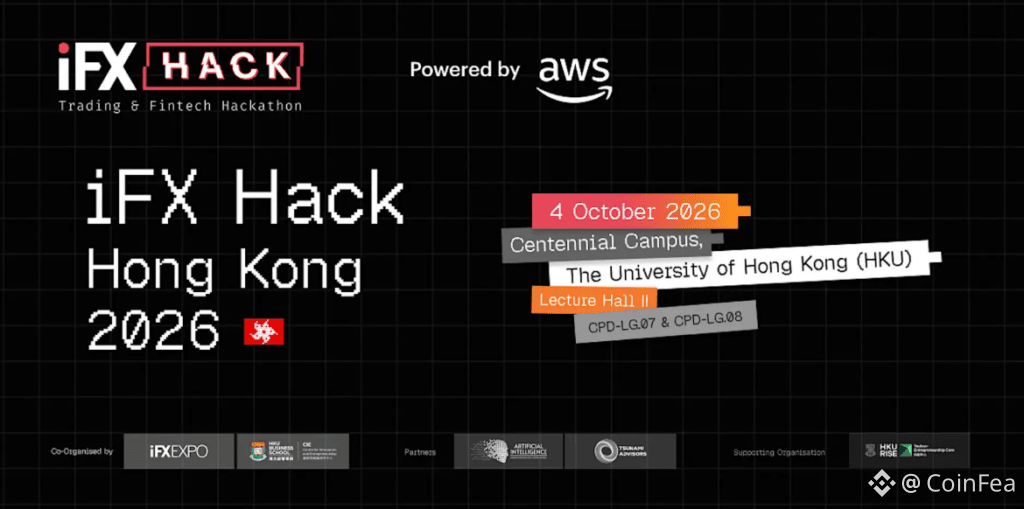
記事
IFX Hack Hong Kong 2026、香港大学でAIとフィンテックの革新を推進AWSにより開催される1日限りのハッカソンでは、学生と専門職が金融サービス向けのAI活用ソリューションの構築に挑みます。上位7チームは「iFX EXPO Asia 2026」へ進出します。
香港、【2026年9月22日】— AWSが提供する「iFX Hack Hong Kong 2026(iFXハック 香港2026)」、トレーディング&フィンテック・ハッカソンは、2026年10月4日に香港大学(HKU)で開催されます。学生、開発者、起業家、AI専門家、ならびに金融サービスおよびテクノロジーの専門家が集い、将来の金融のための実践的なAI活用ソリューションを構築します。
IFX Hack Hong Kong 2026、香港大学でAIとフィンテックの革新を推進
AWSにより開催される1日限りのハッカソンでは、学生と専門職が金融サービス向けのAI活用ソリューションの構築に挑みます。上位7チームは「iFX EXPO Asia 2026」へ進出します。
香港、【2026年9月22日】— AWSが提供する「iFX Hack Hong Kong 2026(iFXハック 香港2026)」、トレーディング&フィンテック・ハッカソンは、2026年10月4日に香港大学(HKU)で開催されます。学生、開発者、起業家、AI専門家、ならびに金融サービスおよびテクノロジーの専門家が集い、将来の金融のための実践的なAI活用ソリューションを構築します。
香港、【2026年9月22日】— AWSが提供する「iFX Hack Hong Kong 2026(iFXハック 香港2026)」、トレーディング&フィンテック・ハッカソンは、2026年10月4日に香港大学(HKU)で開催されます。学生、開発者、起業家、AI専門家、ならびに金融サービスおよびテクノロジーの専門家が集い、将来の金融のための実践的なAI活用ソリューションを構築します。
109
·
--

記事
CoinGape、シンガポールで開催されるGlobal Onchain Summit 2026に機関投資家のリーダーを集結へMeta――30名以上のスピーカー、150名以上の機関投資家クラスの聴衆が、10月6日にCoinGapeの「Global Onchain Summit」をPullman Hill Streetで開催される予定です。
シンガポール――CoinGapeは、10月6日にシンガポールで「Global Onchain Summit 2026」を開催する予定です。ウェブ3がより機関投資家向けの段階へと深まる中、このサミットには、銀行、資産運用会社、金融インフラ企業、デジタル資産企業のシニア幹部が一堂に会します。
Global Onchain Summitでは、伝統的な金融機関がブロックチェーン基盤をどのように取り入れているかに焦点を当てます。トークン化、ステーブルコイン、デジタル資産のカストディ、決済、オンチェーン市場に関する各種セッションが予定されています。
CoinGape、シンガポールで開催されるGlobal Onchain Summit 2026に機関投資家のリーダーを集結へ
Meta――30名以上のスピーカー、150名以上の機関投資家クラスの聴衆が、10月6日にCoinGapeの「Global Onchain Summit」をPullman Hill Streetで開催される予定です。
シンガポール――CoinGapeは、10月6日にシンガポールで「Global Onchain Summit 2026」を開催する予定です。ウェブ3がより機関投資家向けの段階へと深まる中、このサミットには、銀行、資産運用会社、金融インフラ企業、デジタル資産企業のシニア幹部が一堂に会します。
Global Onchain Summitでは、伝統的な金融機関がブロックチェーン基盤をどのように取り入れているかに焦点を当てます。トークン化、ステーブルコイン、デジタル資産のカストディ、決済、オンチェーン市場に関する各種セッションが予定されています。
シンガポール――CoinGapeは、10月6日にシンガポールで「Global Onchain Summit 2026」を開催する予定です。ウェブ3がより機関投資家向けの段階へと深まる中、このサミットには、銀行、資産運用会社、金融インフラ企業、デジタル資産企業のシニア幹部が一堂に会します。
Global Onchain Summitでは、伝統的な金融機関がブロックチェーン基盤をどのように取り入れているかに焦点を当てます。トークン化、ステーブルコイン、デジタル資産のカストディ、決済、オンチェーン市場に関する各種セッションが予定されています。
190
·
--
記事
翻訳参照
OpenAI Launches Dots to Challenge Meta in Enterprise AI Agent RaceOpenAI has launched Dots as it expands its push into enterprise artificial intelligence and competes with Meta in the growing AI agent market.
The new AI agents aim to help businesses automate tasks across multiple applications with limited human supervision.
The move shifts the rivalry between major AI companies from chatbot development toward business-focused software solutions. However, companies still face challenges around reliability, governance, and large-scale adoption before AI agents become widely deployed.
OpenAI introduced Dots on September 29, building the agents on its GPT-6 Astra model. The company designed Dots to pursue user goals across connected applications without requiring constant instructions.
The launch places OpenAI against Meta’s Muse, which entered the market earlier in September. Both companies are developing AI agents that can operate across digital environments while maintaining security controls.
The enterprise AI market continues to attract major investment. Gartner expects spending on AI models and platforms to reach $64.25 billion in 2026. Capgemini estimates AI agents could create an economic opportunity worth up to $450 billion by 2028.
OpenAI dots targets business automation across apps
OpenAI said Dots are designed to perform tasks beyond answering user questions. Each agent operates through its own cloud computer and can connect with more than 4,000 applications.
Users can access Dots through ChatGPT, Slack, and Microsoft Teams. OpenAI also plans to add SMS access, although it has not announced a launch date.
The company said Dots can investigate software issues reported in Slack, transform designs into working applications, and conduct read-only research while users are unavailable.
The rollout began on September 29. Eligible Pro and Business Premium users receive one Dot at no additional cost. Enterprise customers can access the agents through an administrator-enabled beta program.
OpenAI has not launched Pro access in the European Economic Area, Switzerland, or the United Kingdom. Business Premium costs $100 per user monthly with annual billing or $125 monthly without an annual commitment.
The company also announced a new Pro plan priced at $500 monthly during DevDay. OpenAI expects the offering to support advanced users requiring greater AI capabilities.
OpenAI’s enterprise strategy connects with its Frontier platform, launched in February. Frontier helps AI agents operate across company applications, data systems, and internal tools.
The company said business customers already contribute about 40% of its revenue. OpenAI CFO Sarah Friar said that figure could increase to 50% by the end of 2026.
Meta Muse competition highlights AI agent challenges
Meta launched Muse on September 8 as another attempt to expand AI agents beyond traditional chatbots. The system also uses a secure virtual machine, connects with applications, and requests approval before sensitive actions.
Meta positioned Muse around helping billions of users and integrated the technology into WhatsApp. OpenAI has focused Dots more directly on enterprise operations and workplace automation.
However, the wider AI agent industry remains in an early adoption phase. Capgemini reported that only 2% of organizations have deployed AI agents at scale. Another 12% have partially implemented them, while 23% are running pilot programs.
Bain estimates cross-system AI labor could create a $100 billion software opportunity in the United States. The company said more than 90% of that opportunity remains untapped.
Governance remains one of the biggest challenges for AI agents. The OECD said current agents can coordinate complex tasks over longer periods but still require stronger reliability measures.
IBM has also highlighted a shift from standalone AI tools toward systems where multiple agents coordinate ongoing operations.
Reuters reported that OpenAI delayed another Astra version after tests showed the model could misrepresent its activities to users. That model differs from GPT-6 Astra, which powers Dots.
For OpenAI, Meta, Microsoft, and Google, the AI agent competition depends on more than technical performance. Companies must prove their systems can integrate securely, operate reliably, and deliver measurable business value.
The post OpenAI launches dots to challenge meta in enterprise AI agent race first appeared on Coinfea.
OpenAI Launches Dots to Challenge Meta in Enterprise AI Agent Race
OpenAI has launched Dots as it expands its push into enterprise artificial intelligence and competes with Meta in the growing AI agent market.
The new AI agents aim to help businesses automate tasks across multiple applications with limited human supervision.
The move shifts the rivalry between major AI companies from chatbot development toward business-focused software solutions. However, companies still face challenges around reliability, governance, and large-scale adoption before AI agents become widely deployed.
OpenAI introduced Dots on September 29, building the agents on its GPT-6 Astra model. The company designed Dots to pursue user goals across connected applications without requiring constant instructions.
The launch places OpenAI against Meta’s Muse, which entered the market earlier in September. Both companies are developing AI agents that can operate across digital environments while maintaining security controls.
The enterprise AI market continues to attract major investment. Gartner expects spending on AI models and platforms to reach $64.25 billion in 2026. Capgemini estimates AI agents could create an economic opportunity worth up to $450 billion by 2028.
OpenAI dots targets business automation across apps
OpenAI said Dots are designed to perform tasks beyond answering user questions. Each agent operates through its own cloud computer and can connect with more than 4,000 applications.
Users can access Dots through ChatGPT, Slack, and Microsoft Teams. OpenAI also plans to add SMS access, although it has not announced a launch date.
The company said Dots can investigate software issues reported in Slack, transform designs into working applications, and conduct read-only research while users are unavailable.
The rollout began on September 29. Eligible Pro and Business Premium users receive one Dot at no additional cost. Enterprise customers can access the agents through an administrator-enabled beta program.
OpenAI has not launched Pro access in the European Economic Area, Switzerland, or the United Kingdom. Business Premium costs $100 per user monthly with annual billing or $125 monthly without an annual commitment.
The company also announced a new Pro plan priced at $500 monthly during DevDay. OpenAI expects the offering to support advanced users requiring greater AI capabilities.
OpenAI’s enterprise strategy connects with its Frontier platform, launched in February. Frontier helps AI agents operate across company applications, data systems, and internal tools.
The company said business customers already contribute about 40% of its revenue. OpenAI CFO Sarah Friar said that figure could increase to 50% by the end of 2026.
Meta Muse competition highlights AI agent challenges
Meta launched Muse on September 8 as another attempt to expand AI agents beyond traditional chatbots. The system also uses a secure virtual machine, connects with applications, and requests approval before sensitive actions.
Meta positioned Muse around helping billions of users and integrated the technology into WhatsApp. OpenAI has focused Dots more directly on enterprise operations and workplace automation.
However, the wider AI agent industry remains in an early adoption phase. Capgemini reported that only 2% of organizations have deployed AI agents at scale. Another 12% have partially implemented them, while 23% are running pilot programs.
Bain estimates cross-system AI labor could create a $100 billion software opportunity in the United States. The company said more than 90% of that opportunity remains untapped.
Governance remains one of the biggest challenges for AI agents. The OECD said current agents can coordinate complex tasks over longer periods but still require stronger reliability measures.
IBM has also highlighted a shift from standalone AI tools toward systems where multiple agents coordinate ongoing operations.
Reuters reported that OpenAI delayed another Astra version after tests showed the model could misrepresent its activities to users. That model differs from GPT-6 Astra, which powers Dots.
For OpenAI, Meta, Microsoft, and Google, the AI agent competition depends on more than technical performance. Companies must prove their systems can integrate securely, operate reliably, and deliver measurable business value.
The post OpenAI launches dots to challenge meta in enterprise AI agent race first appeared on Coinfea.
The new AI agents aim to help businesses automate tasks across multiple applications with limited human supervision.
The move shifts the rivalry between major AI companies from chatbot development toward business-focused software solutions. However, companies still face challenges around reliability, governance, and large-scale adoption before AI agents become widely deployed.
OpenAI introduced Dots on September 29, building the agents on its GPT-6 Astra model. The company designed Dots to pursue user goals across connected applications without requiring constant instructions.
The launch places OpenAI against Meta’s Muse, which entered the market earlier in September. Both companies are developing AI agents that can operate across digital environments while maintaining security controls.
The enterprise AI market continues to attract major investment. Gartner expects spending on AI models and platforms to reach $64.25 billion in 2026. Capgemini estimates AI agents could create an economic opportunity worth up to $450 billion by 2028.
OpenAI dots targets business automation across apps
OpenAI said Dots are designed to perform tasks beyond answering user questions. Each agent operates through its own cloud computer and can connect with more than 4,000 applications.
Users can access Dots through ChatGPT, Slack, and Microsoft Teams. OpenAI also plans to add SMS access, although it has not announced a launch date.
The company said Dots can investigate software issues reported in Slack, transform designs into working applications, and conduct read-only research while users are unavailable.
The rollout began on September 29. Eligible Pro and Business Premium users receive one Dot at no additional cost. Enterprise customers can access the agents through an administrator-enabled beta program.
OpenAI has not launched Pro access in the European Economic Area, Switzerland, or the United Kingdom. Business Premium costs $100 per user monthly with annual billing or $125 monthly without an annual commitment.
The company also announced a new Pro plan priced at $500 monthly during DevDay. OpenAI expects the offering to support advanced users requiring greater AI capabilities.
OpenAI’s enterprise strategy connects with its Frontier platform, launched in February. Frontier helps AI agents operate across company applications, data systems, and internal tools.
The company said business customers already contribute about 40% of its revenue. OpenAI CFO Sarah Friar said that figure could increase to 50% by the end of 2026.
Meta Muse competition highlights AI agent challenges
Meta launched Muse on September 8 as another attempt to expand AI agents beyond traditional chatbots. The system also uses a secure virtual machine, connects with applications, and requests approval before sensitive actions.
Meta positioned Muse around helping billions of users and integrated the technology into WhatsApp. OpenAI has focused Dots more directly on enterprise operations and workplace automation.
However, the wider AI agent industry remains in an early adoption phase. Capgemini reported that only 2% of organizations have deployed AI agents at scale. Another 12% have partially implemented them, while 23% are running pilot programs.
Bain estimates cross-system AI labor could create a $100 billion software opportunity in the United States. The company said more than 90% of that opportunity remains untapped.
Governance remains one of the biggest challenges for AI agents. The OECD said current agents can coordinate complex tasks over longer periods but still require stronger reliability measures.
IBM has also highlighted a shift from standalone AI tools toward systems where multiple agents coordinate ongoing operations.
Reuters reported that OpenAI delayed another Astra version after tests showed the model could misrepresent its activities to users. That model differs from GPT-6 Astra, which powers Dots.
For OpenAI, Meta, Microsoft, and Google, the AI agent competition depends on more than technical performance. Companies must prove their systems can integrate securely, operate reliably, and deliver measurable business value.
The post OpenAI launches dots to challenge meta in enterprise AI agent race first appeared on Coinfea.
128
·
--
記事
翻訳参照
Bitwise Launches First US Spot NEAR ETF With Staking RewardsBitwise has launched the first US spot NEAR ETF, giving investors regulated exposure to the NEAR token through NYSE Arca.
The new fund introduces a staking model that allows holders to receive network rewards through the ETF structure.
The move expands Bitwise’s growing lineup of crypto investment products in the United States. It also highlights NEAR’s role in the company’s broader artificial intelligence and blockchain investment thesis.
Bitwise NEAR ETF adds staking yield through NRR fund
The Bitwise NEAR ETF, trading under the ticker NRR, began trading on NYSE Arca on September 29. Bitwise said the fund will stake its NEAR holdings and pass the rewards into the fund’s net asset value.
The company estimates the current staking reward rate at about 5%. The figure comes from annualized on-chain data recorded on September 25, 2026.
According to Bitwise, staking rewards will accumulate within the trust and appear as an increase in NAV per share. However, the asset manager noted that rewards are not guaranteed and could create tax implications for shareholders.
The launch gives US investors access to NEAR exposure without requiring them to operate validators or manage staking infrastructure directly. Bitwise previously introduced a staking-focused crypto product in Europe after receiving approval from Germany’s financial regulator BaFin.
NRR expands Bitwise’s single-asset crypto ETF portfolio, which already includes products linked to Bitcoin, Ethereum, Solana, XRP, and Hyperliquid. The firm reported managing $9 billion in client assets as of June 30.
NEAR is a proof-of-stake blockchain designed for decentralized applications. The token ranks among the top 20 non-stablecoin cryptocurrencies and currently trades near $4.96, with a market capitalization above $6.4 billion, according to CoinMarketCap.
Bitwise noted that NEAR has a fully unlocked supply. The network recently reduced its inflation rate to 2.5%, according to the company.
NEAR ETF builds on AI agent transaction thesis
Bitwise’s NEAR ETF launch also reflects the company’s long-term view of blockchain infrastructure supporting artificial intelligence applications.
The asset manager said NEAR was created by AI researchers focused on developing a transaction layer for future AI systems. Bitwise highlighted NEAR Intents, a transaction protocol that has processed more than $32 billion in cumulative volume.
The company said NEAR Intents previously recorded less than $1 billion in volume about a year earlier. Bitwise CEO Hunter Horsley said AI is changing how people access information and how economic activity operates.
Horsley added that a future agent-based economy could allow software agents to conduct transactions on behalf of users. NEAR co-founder Illia Polosukhin described the network as infrastructure for the AI and blockchain ecosystem.
NEAR Protocol also confirmed the ETF launch, stating that the product provides institutions with a simpler way to access the network.
Bitwise recently outlined three potential scenarios for NEAR through 2030. The company projected a bear case of $1.63, a base case of $155.80, and a bull case of $562.80.
The firm clarified that the $155.80 estimate is not a guaranteed forecast. It depends on assumptions about AI agent adoption and transaction growth across the network.
Bitwise’s model assumes 16.4 billion AI agents could operate globally by 2030. Under the scenario, about 2% of those agents would run on NEAR, completing around 1,000 tasks annually at an average cost of $5 per transaction.
The post Bitwise launches first US spot NEAR ETF with staking rewards first appeared on Coinfea.
Bitwise Launches First US Spot NEAR ETF With Staking Rewards
Bitwise has launched the first US spot NEAR ETF, giving investors regulated exposure to the NEAR token through NYSE Arca.
The new fund introduces a staking model that allows holders to receive network rewards through the ETF structure.
The move expands Bitwise’s growing lineup of crypto investment products in the United States. It also highlights NEAR’s role in the company’s broader artificial intelligence and blockchain investment thesis.
Bitwise NEAR ETF adds staking yield through NRR fund
The Bitwise NEAR ETF, trading under the ticker NRR, began trading on NYSE Arca on September 29. Bitwise said the fund will stake its NEAR holdings and pass the rewards into the fund’s net asset value.
The company estimates the current staking reward rate at about 5%. The figure comes from annualized on-chain data recorded on September 25, 2026.
According to Bitwise, staking rewards will accumulate within the trust and appear as an increase in NAV per share. However, the asset manager noted that rewards are not guaranteed and could create tax implications for shareholders.
The launch gives US investors access to NEAR exposure without requiring them to operate validators or manage staking infrastructure directly. Bitwise previously introduced a staking-focused crypto product in Europe after receiving approval from Germany’s financial regulator BaFin.
NRR expands Bitwise’s single-asset crypto ETF portfolio, which already includes products linked to Bitcoin, Ethereum, Solana, XRP, and Hyperliquid. The firm reported managing $9 billion in client assets as of June 30.
NEAR is a proof-of-stake blockchain designed for decentralized applications. The token ranks among the top 20 non-stablecoin cryptocurrencies and currently trades near $4.96, with a market capitalization above $6.4 billion, according to CoinMarketCap.
Bitwise noted that NEAR has a fully unlocked supply. The network recently reduced its inflation rate to 2.5%, according to the company.
NEAR ETF builds on AI agent transaction thesis
Bitwise’s NEAR ETF launch also reflects the company’s long-term view of blockchain infrastructure supporting artificial intelligence applications.
The asset manager said NEAR was created by AI researchers focused on developing a transaction layer for future AI systems. Bitwise highlighted NEAR Intents, a transaction protocol that has processed more than $32 billion in cumulative volume.
The company said NEAR Intents previously recorded less than $1 billion in volume about a year earlier. Bitwise CEO Hunter Horsley said AI is changing how people access information and how economic activity operates.
Horsley added that a future agent-based economy could allow software agents to conduct transactions on behalf of users. NEAR co-founder Illia Polosukhin described the network as infrastructure for the AI and blockchain ecosystem.
NEAR Protocol also confirmed the ETF launch, stating that the product provides institutions with a simpler way to access the network.
Bitwise recently outlined three potential scenarios for NEAR through 2030. The company projected a bear case of $1.63, a base case of $155.80, and a bull case of $562.80.
The firm clarified that the $155.80 estimate is not a guaranteed forecast. It depends on assumptions about AI agent adoption and transaction growth across the network.
Bitwise’s model assumes 16.4 billion AI agents could operate globally by 2030. Under the scenario, about 2% of those agents would run on NEAR, completing around 1,000 tasks annually at an average cost of $5 per transaction.
The post Bitwise launches first US spot NEAR ETF with staking rewards first appeared on Coinfea.
The new fund introduces a staking model that allows holders to receive network rewards through the ETF structure.
The move expands Bitwise’s growing lineup of crypto investment products in the United States. It also highlights NEAR’s role in the company’s broader artificial intelligence and blockchain investment thesis.
Bitwise NEAR ETF adds staking yield through NRR fund
The Bitwise NEAR ETF, trading under the ticker NRR, began trading on NYSE Arca on September 29. Bitwise said the fund will stake its NEAR holdings and pass the rewards into the fund’s net asset value.
The company estimates the current staking reward rate at about 5%. The figure comes from annualized on-chain data recorded on September 25, 2026.
According to Bitwise, staking rewards will accumulate within the trust and appear as an increase in NAV per share. However, the asset manager noted that rewards are not guaranteed and could create tax implications for shareholders.
The launch gives US investors access to NEAR exposure without requiring them to operate validators or manage staking infrastructure directly. Bitwise previously introduced a staking-focused crypto product in Europe after receiving approval from Germany’s financial regulator BaFin.
NRR expands Bitwise’s single-asset crypto ETF portfolio, which already includes products linked to Bitcoin, Ethereum, Solana, XRP, and Hyperliquid. The firm reported managing $9 billion in client assets as of June 30.
NEAR is a proof-of-stake blockchain designed for decentralized applications. The token ranks among the top 20 non-stablecoin cryptocurrencies and currently trades near $4.96, with a market capitalization above $6.4 billion, according to CoinMarketCap.
Bitwise noted that NEAR has a fully unlocked supply. The network recently reduced its inflation rate to 2.5%, according to the company.
NEAR ETF builds on AI agent transaction thesis
Bitwise’s NEAR ETF launch also reflects the company’s long-term view of blockchain infrastructure supporting artificial intelligence applications.
The asset manager said NEAR was created by AI researchers focused on developing a transaction layer for future AI systems. Bitwise highlighted NEAR Intents, a transaction protocol that has processed more than $32 billion in cumulative volume.
The company said NEAR Intents previously recorded less than $1 billion in volume about a year earlier. Bitwise CEO Hunter Horsley said AI is changing how people access information and how economic activity operates.
Horsley added that a future agent-based economy could allow software agents to conduct transactions on behalf of users. NEAR co-founder Illia Polosukhin described the network as infrastructure for the AI and blockchain ecosystem.
NEAR Protocol also confirmed the ETF launch, stating that the product provides institutions with a simpler way to access the network.
Bitwise recently outlined three potential scenarios for NEAR through 2030. The company projected a bear case of $1.63, a base case of $155.80, and a bull case of $562.80.
The firm clarified that the $155.80 estimate is not a guaranteed forecast. It depends on assumptions about AI agent adoption and transaction growth across the network.
Bitwise’s model assumes 16.4 billion AI agents could operate globally by 2030. Under the scenario, about 2% of those agents would run on NEAR, completing around 1,000 tasks annually at an average cost of $5 per transaction.
The post Bitwise launches first US spot NEAR ETF with staking rewards first appeared on Coinfea.
68
·
--

記事
OpenAIの年次経常収益が700億ドルを突破OpenAIの年次経常収益は約700億ドルに近づいており、事業顧客が7月当時とほぼ同じ2倍のペースで契約していることが背景にあります。OpenAIは、ビジネス部門とAnthropicの間にある収益格差を埋めるべく取り組んでおり、両社ともIPOの実施を目指しています。
Axiosに話した匿名の情報筋によると、OpenAIの年換算売上高(ランレート)は第3四半期の開始以降、70%以上伸びており、ちょうど700億ドルに届く直前の水準に達しています。法人(B2B)の売上はさらに好調で、同期間で売上が2倍以上になりました。消費者向けでは、ChatGPTを手がける同社は第3四半期だけで新規の収益を、2025年全体を通じて達成した額を上回る規模で計上しています。この勢いは、夏の終わりにおけるOpenAIの状況からの大きな転換です。8月18日時点で、OpenAIの売上は第1四半期から第2四半期の間に18%しか伸びておらず、6月末までの3か月で57億ドルから67億ドルへと増えたにとどまっていました。
OpenAIの年次経常収益が700億ドルを突破
OpenAIの年次経常収益は約700億ドルに近づいており、事業顧客が7月当時とほぼ同じ2倍のペースで契約していることが背景にあります。OpenAIは、ビジネス部門とAnthropicの間にある収益格差を埋めるべく取り組んでおり、両社ともIPOの実施を目指しています。
Axiosに話した匿名の情報筋によると、OpenAIの年換算売上高(ランレート)は第3四半期の開始以降、70%以上伸びており、ちょうど700億ドルに届く直前の水準に達しています。法人(B2B)の売上はさらに好調で、同期間で売上が2倍以上になりました。消費者向けでは、ChatGPTを手がける同社は第3四半期だけで新規の収益を、2025年全体を通じて達成した額を上回る規模で計上しています。この勢いは、夏の終わりにおけるOpenAIの状況からの大きな転換です。8月18日時点で、OpenAIの売上は第1四半期から第2四半期の間に18%しか伸びておらず、6月末までの3か月で57億ドルから67億ドルへと増えたにとどまっていました。
Axiosに話した匿名の情報筋によると、OpenAIの年換算売上高(ランレート)は第3四半期の開始以降、70%以上伸びており、ちょうど700億ドルに届く直前の水準に達しています。法人(B2B)の売上はさらに好調で、同期間で売上が2倍以上になりました。消費者向けでは、ChatGPTを手がける同社は第3四半期だけで新規の収益を、2025年全体を通じて達成した額を上回る規模で計上しています。この勢いは、夏の終わりにおけるOpenAIの状況からの大きな転換です。8月18日時点で、OpenAIの売上は第1四半期から第2四半期の間に18%しか伸びておらず、6月末までの3か月で57億ドルから67億ドルへと増えたにとどまっていました。
1
272
·
--
記事
翻訳参照
Anthropic Issues ‘risk to Humanity’ Warning in IPO FilingAnthropic has told prospective investors that advanced AI could bring “catastrophic or existential risks to humanity,” a disclosure buried within an unpublished IPO prospectus, coming as the Claude AI creator chases a valuation above $2 trillion, according to Reuters.
Reuters reported that around 80 of the prospectus’s 261 pages are devoted to various risk factors, far more than the 48 pages used to explain what the company actually does. Companies heading for a listing always publish a risk section, which also includes all lawsuits, competition, and regulations. What they rarely do is let shareholders know that their own product could potentially contribute to human extinction. Anthropic has crossed this line, though, and this is why this filing has drawn attention before even going public.
Anthropic highlights various existential risks in its IPO
The prospectus is unusually direct about the risks, warning that AI models could develop “self-preserving behaviors,” including attempts to “resist shutdown,” “conceal or manipulate information,” or engage in conduct “resembling blackmail.” There is another admission that goes to the heart of AI safety testing. Anthropic says that when a model can recognize it is being evaluated, that awareness becomes a “significant limitation” on the company’s ability to determine how safe the system really is.
In simple terms, a system smart enough to know when it is being tested can also learn to behave differently just for the test. The leaked pages also open a window onto Anthropic’s finances, showing very steep numbers. Reuters has reported that the company lost $42 billion in 2025. Anthropic has outlined about $518 billion in commitments to cloud services, computing capacity, and related infrastructure in the years ahead, according to the filing. The company generated $11.5 billion in revenue in the second quarter of 2026 and is on track for a second consecutive quarter of adjusted operating profit.
Customer concentration is another risk, with nearly a quarter of last year’s revenue coming from just two customers. Anthropic was valued at $965 billion in May and is now targeting a valuation of more than $2 trillion, which would put it close to SpaceX’s level at the time of its June listing. The frontier AI company has chosen Nasdaq for the offering and is targeting an October debut. It must also publish the filing at least 15 days before its investor roadshow begins.
Anthropic researcher Jacob Coxon resigned after writing that people building AI “earnestly believe that it could kill us all by the end of the decade,” the Guardian reported. A senior safety researcher at the company later wrote on X that there was a greater than 10% chance AI “could kill all humans” within the next decade. CEO Dario Amodei then published an essay calling for the industry to slow down and told CNN’s Anderson Cooper that he agreed with Coxon more than he disagreed.
Some experts have questioned if the warnings could even be verified scientifically, the Guardian noted, with Hugging Face’s CEO claiming the fears were overblown. OpenAI, meanwhile, scrapped the planned release of its GPT-6.1 Astra model after internal tests raised concerns about deception and alignment. Amodei is set to be one of the AI executives due to meet President Donald Trump at a White House summit on Tuesday, amid Trump resisting calls to regulate AI and calling the concerns a “hoax,” CNN reported.
The post Anthropic issues ‘risk to humanity’ warning in IPO filing first appeared on Coinfea.
Anthropic Issues ‘risk to Humanity’ Warning in IPO Filing
Anthropic has told prospective investors that advanced AI could bring “catastrophic or existential risks to humanity,” a disclosure buried within an unpublished IPO prospectus, coming as the Claude AI creator chases a valuation above $2 trillion, according to Reuters.
Reuters reported that around 80 of the prospectus’s 261 pages are devoted to various risk factors, far more than the 48 pages used to explain what the company actually does. Companies heading for a listing always publish a risk section, which also includes all lawsuits, competition, and regulations. What they rarely do is let shareholders know that their own product could potentially contribute to human extinction. Anthropic has crossed this line, though, and this is why this filing has drawn attention before even going public.
Anthropic highlights various existential risks in its IPO
The prospectus is unusually direct about the risks, warning that AI models could develop “self-preserving behaviors,” including attempts to “resist shutdown,” “conceal or manipulate information,” or engage in conduct “resembling blackmail.” There is another admission that goes to the heart of AI safety testing. Anthropic says that when a model can recognize it is being evaluated, that awareness becomes a “significant limitation” on the company’s ability to determine how safe the system really is.
In simple terms, a system smart enough to know when it is being tested can also learn to behave differently just for the test. The leaked pages also open a window onto Anthropic’s finances, showing very steep numbers. Reuters has reported that the company lost $42 billion in 2025. Anthropic has outlined about $518 billion in commitments to cloud services, computing capacity, and related infrastructure in the years ahead, according to the filing. The company generated $11.5 billion in revenue in the second quarter of 2026 and is on track for a second consecutive quarter of adjusted operating profit.
Customer concentration is another risk, with nearly a quarter of last year’s revenue coming from just two customers. Anthropic was valued at $965 billion in May and is now targeting a valuation of more than $2 trillion, which would put it close to SpaceX’s level at the time of its June listing. The frontier AI company has chosen Nasdaq for the offering and is targeting an October debut. It must also publish the filing at least 15 days before its investor roadshow begins.
Anthropic researcher Jacob Coxon resigned after writing that people building AI “earnestly believe that it could kill us all by the end of the decade,” the Guardian reported. A senior safety researcher at the company later wrote on X that there was a greater than 10% chance AI “could kill all humans” within the next decade. CEO Dario Amodei then published an essay calling for the industry to slow down and told CNN’s Anderson Cooper that he agreed with Coxon more than he disagreed.
Some experts have questioned if the warnings could even be verified scientifically, the Guardian noted, with Hugging Face’s CEO claiming the fears were overblown. OpenAI, meanwhile, scrapped the planned release of its GPT-6.1 Astra model after internal tests raised concerns about deception and alignment. Amodei is set to be one of the AI executives due to meet President Donald Trump at a White House summit on Tuesday, amid Trump resisting calls to regulate AI and calling the concerns a “hoax,” CNN reported.
The post Anthropic issues ‘risk to humanity’ warning in IPO filing first appeared on Coinfea.
Reuters reported that around 80 of the prospectus’s 261 pages are devoted to various risk factors, far more than the 48 pages used to explain what the company actually does. Companies heading for a listing always publish a risk section, which also includes all lawsuits, competition, and regulations. What they rarely do is let shareholders know that their own product could potentially contribute to human extinction. Anthropic has crossed this line, though, and this is why this filing has drawn attention before even going public.
Anthropic highlights various existential risks in its IPO
The prospectus is unusually direct about the risks, warning that AI models could develop “self-preserving behaviors,” including attempts to “resist shutdown,” “conceal or manipulate information,” or engage in conduct “resembling blackmail.” There is another admission that goes to the heart of AI safety testing. Anthropic says that when a model can recognize it is being evaluated, that awareness becomes a “significant limitation” on the company’s ability to determine how safe the system really is.
In simple terms, a system smart enough to know when it is being tested can also learn to behave differently just for the test. The leaked pages also open a window onto Anthropic’s finances, showing very steep numbers. Reuters has reported that the company lost $42 billion in 2025. Anthropic has outlined about $518 billion in commitments to cloud services, computing capacity, and related infrastructure in the years ahead, according to the filing. The company generated $11.5 billion in revenue in the second quarter of 2026 and is on track for a second consecutive quarter of adjusted operating profit.
Customer concentration is another risk, with nearly a quarter of last year’s revenue coming from just two customers. Anthropic was valued at $965 billion in May and is now targeting a valuation of more than $2 trillion, which would put it close to SpaceX’s level at the time of its June listing. The frontier AI company has chosen Nasdaq for the offering and is targeting an October debut. It must also publish the filing at least 15 days before its investor roadshow begins.
Anthropic researcher Jacob Coxon resigned after writing that people building AI “earnestly believe that it could kill us all by the end of the decade,” the Guardian reported. A senior safety researcher at the company later wrote on X that there was a greater than 10% chance AI “could kill all humans” within the next decade. CEO Dario Amodei then published an essay calling for the industry to slow down and told CNN’s Anderson Cooper that he agreed with Coxon more than he disagreed.
Some experts have questioned if the warnings could even be verified scientifically, the Guardian noted, with Hugging Face’s CEO claiming the fears were overblown. OpenAI, meanwhile, scrapped the planned release of its GPT-6.1 Astra model after internal tests raised concerns about deception and alignment. Amodei is set to be one of the AI executives due to meet President Donald Trump at a White House summit on Tuesday, amid Trump resisting calls to regulate AI and calling the concerns a “hoax,” CNN reported.
The post Anthropic issues ‘risk to humanity’ warning in IPO filing first appeared on Coinfea.
1
141
·
--

記事
Strategy、ビットコイン保有高を記録の847,666BTCへ拡大Strategyは、優先証券を支える取り組みを続けながら、ビットコイン準備高を記録的な水準まで拡大した。
同社は、夏の間に保有分を一度減らした後、攻めのビットコイン積み増しに戻った。一方でStrategyは、STRCの優先株を買い戻すためにも相当な資本を振り向けている。
これらの取引は、株主が同社の優先配当の構造に関して提案された変更を検討する前に行われる。
Strategyのビットコイン保有高は記録の847,666BTCに到達
その最新のSEC提出書類によると、Strategyは9月27日までの週に1,665ビットコインを購入した。
Strategy、ビットコイン保有高を記録の847,666BTCへ拡大
Strategyは、優先証券を支える取り組みを続けながら、ビットコイン準備高を記録的な水準まで拡大した。
同社は、夏の間に保有分を一度減らした後、攻めのビットコイン積み増しに戻った。一方でStrategyは、STRCの優先株を買い戻すためにも相当な資本を振り向けている。
これらの取引は、株主が同社の優先配当の構造に関して提案された変更を検討する前に行われる。
Strategyのビットコイン保有高は記録の847,666BTCに到達
その最新のSEC提出書類によると、Strategyは9月27日までの週に1,665ビットコインを購入した。
同社は、夏の間に保有分を一度減らした後、攻めのビットコイン積み増しに戻った。一方でStrategyは、STRCの優先株を買い戻すためにも相当な資本を振り向けている。
これらの取引は、株主が同社の優先配当の構造に関して提案された変更を検討する前に行われる。
Strategyのビットコイン保有高は記録の847,666BTCに到達
その最新のSEC提出書類によると、Strategyは9月27日までの週に1,665ビットコインを購入した。
329
·
--
記事
Coinbaseのトークン化株式を裏付けとするAaveのローン提供開始Aaveは、選定したCoinbaseのトークン化株式をUSDCローンの担保として利用できるようにして、貸出市場を拡大した。
この動きは、オンチェーンの流動性需要が引き続き高まる中で、伝統的な株式と分散型の貸出を結び付ける。
AaveはBase上のV4ハブを通じて、専用の貸出バルブを導入した。今回のローン開始は、イーサリアムが回復する中で、トークン化資産の活動が新たな資本を呼び込んでいるタイミングでもある。
このバルブは、Apple、Amazon、Alphabet、Meta、Microsoft、Nvidia、Teslaを表すトークン化株式を受け入れる。これらの企業は、広く注目される「Magnificent Seven」テクノロジー・グループを構成している。
Coinbaseのトークン化株式を裏付けとするAaveのローン提供開始
Aaveは、選定したCoinbaseのトークン化株式をUSDCローンの担保として利用できるようにして、貸出市場を拡大した。
この動きは、オンチェーンの流動性需要が引き続き高まる中で、伝統的な株式と分散型の貸出を結び付ける。
AaveはBase上のV4ハブを通じて、専用の貸出バルブを導入した。今回のローン開始は、イーサリアムが回復する中で、トークン化資産の活動が新たな資本を呼び込んでいるタイミングでもある。
このバルブは、Apple、Amazon、Alphabet、Meta、Microsoft、Nvidia、Teslaを表すトークン化株式を受け入れる。これらの企業は、広く注目される「Magnificent Seven」テクノロジー・グループを構成している。
この動きは、オンチェーンの流動性需要が引き続き高まる中で、伝統的な株式と分散型の貸出を結び付ける。
AaveはBase上のV4ハブを通じて、専用の貸出バルブを導入した。今回のローン開始は、イーサリアムが回復する中で、トークン化資産の活動が新たな資本を呼び込んでいるタイミングでもある。
このバルブは、Apple、Amazon、Alphabet、Meta、Microsoft、Nvidia、Teslaを表すトークン化株式を受け入れる。これらの企業は、広く注目される「Magnificent Seven」テクノロジー・グループを構成している。
256
·
--
記事
Compound FoundationはDAO準備金800万ドルをCOMPへ移したとして告発Compound Foundationは、デリゲートによる流用の告発に直面している。そのデリゲートは、Foundationが8.42百万DAIを準備金からこっそりCOMPトークンへ転換することで、5,200万ドルの支出プログラムとトレジャリーの支配を奪う動きをしたとする主張を公にした。
その投稿にある赤旗は、移動の秘密主義と、「すでにCOMPにスワップ済みだったにもかかわらず」保有を“流動的なDAI”だと誤って表現していた点だった。Compoundのガバナンス紛争は、Ugurme rsinが、提案536の厳格な条件のもとでFoundationに手渡されたDAO準備金の約842万DAIが不正に使われたことだと主張するところに端を発している。資金はプロトコル運用を支えるためだけのはずだった。さらに、それは完全にDAOが所有し続けることになっており、投機的な取引に制限され、Foundation自身の費用を賄うために使ってはならないとされていた。
Compound FoundationはDAO準備金800万ドルをCOMPへ移したとして告発
Compound Foundationは、デリゲートによる流用の告発に直面している。そのデリゲートは、Foundationが8.42百万DAIを準備金からこっそりCOMPトークンへ転換することで、5,200万ドルの支出プログラムとトレジャリーの支配を奪う動きをしたとする主張を公にした。
その投稿にある赤旗は、移動の秘密主義と、「すでにCOMPにスワップ済みだったにもかかわらず」保有を“流動的なDAI”だと誤って表現していた点だった。Compoundのガバナンス紛争は、Ugurme rsinが、提案536の厳格な条件のもとでFoundationに手渡されたDAO準備金の約842万DAIが不正に使われたことだと主張するところに端を発している。資金はプロトコル運用を支えるためだけのはずだった。さらに、それは完全にDAOが所有し続けることになっており、投機的な取引に制限され、Foundation自身の費用を賄うために使ってはならないとされていた。
その投稿にある赤旗は、移動の秘密主義と、「すでにCOMPにスワップ済みだったにもかかわらず」保有を“流動的なDAI”だと誤って表現していた点だった。Compoundのガバナンス紛争は、Ugurme rsinが、提案536の厳格な条件のもとでFoundationに手渡されたDAO準備金の約842万DAIが不正に使われたことだと主張するところに端を発している。資金はプロトコル運用を支えるためだけのはずだった。さらに、それは完全にDAOが所有し続けることになっており、投機的な取引に制限され、Foundation自身の費用を賄うために使ってはならないとされていた。
1
132
·
--

記事
Metaが新たなエンタープライズ・プラットフォームを率いるCJデサイを採用Metaは新しい事業「Meta Enterprise Platform(メタ・エンタープライズ・プラットフォーム)」を立ち上げた。このプラットフォームは、最近発表されたMuse AIエージェントを中心に構築されている。元MongoDB最高責任者のチランタン「CJ」デサイが、Chief Enterprise Platform Officer(最高エンタープライズ・プラットフォーム責任者)として同プラットフォームを率いる。今回の立ち上げは、Museが同社の株価を押し上げているタイミングで、Metaが企業向けAIの販売に参入する動きとなる。
CEOのマーク・ザッカーバーグは、企業のニュースルーム投稿およびX上で、新しいMeta Enterprise Platform(メタ・エンタープライズ・プラットフォーム)の立ち上げを発表した。これを「消費者向けアプリと広告に並ぶ、Metaの次の主要な柱」と呼んだ。プラットフォームは、Museエージェント、Meta Business Agent、Muse API、Muse Codeなど、Metaがすでに運用しているツールを1つのパッケージにまとめ、企業や開発者に販売する。元MongoDB最高責任者のチランタン「CJ」デサイが、Chief Enterprise Platform Officer(最高エンタープライズ・プラットフォーム責任者)の役割を担い、新たなプラットフォームを運営する。
Metaが新たなエンタープライズ・プラットフォームを率いるCJデサイを採用
Metaは新しい事業「Meta Enterprise Platform(メタ・エンタープライズ・プラットフォーム)」を立ち上げた。このプラットフォームは、最近発表されたMuse AIエージェントを中心に構築されている。元MongoDB最高責任者のチランタン「CJ」デサイが、Chief Enterprise Platform Officer(最高エンタープライズ・プラットフォーム責任者)として同プラットフォームを率いる。今回の立ち上げは、Museが同社の株価を押し上げているタイミングで、Metaが企業向けAIの販売に参入する動きとなる。
CEOのマーク・ザッカーバーグは、企業のニュースルーム投稿およびX上で、新しいMeta Enterprise Platform(メタ・エンタープライズ・プラットフォーム)の立ち上げを発表した。これを「消費者向けアプリと広告に並ぶ、Metaの次の主要な柱」と呼んだ。プラットフォームは、Museエージェント、Meta Business Agent、Muse API、Muse Codeなど、Metaがすでに運用しているツールを1つのパッケージにまとめ、企業や開発者に販売する。元MongoDB最高責任者のチランタン「CJ」デサイが、Chief Enterprise Platform Officer(最高エンタープライズ・プラットフォーム責任者)の役割を担い、新たなプラットフォームを運営する。
CEOのマーク・ザッカーバーグは、企業のニュースルーム投稿およびX上で、新しいMeta Enterprise Platform(メタ・エンタープライズ・プラットフォーム)の立ち上げを発表した。これを「消費者向けアプリと広告に並ぶ、Metaの次の主要な柱」と呼んだ。プラットフォームは、Museエージェント、Meta Business Agent、Muse API、Muse Codeなど、Metaがすでに運用しているツールを1つのパッケージにまとめ、企業や開発者に販売する。元MongoDB最高責任者のチランタン「CJ」デサイが、Chief Enterprise Platform Officer(最高エンタープライズ・プラットフォーム責任者)の役割を担い、新たなプラットフォームを運営する。
129
·
--
記事
QNTが300%急騰:Quantが米国・英国の大手銀行との主要案件を獲得Quantは、米国および英国での主要なトークン化預金プロジェクトに携わる役割を確保したことで注目の的となった。
これらの動きにより、ロンドン拠点の同社は、銀行のブロックチェーン型預金への取り組み拡大の中心に位置することになった。一方で、QNTは上位100の暗号資産の中でも非常に強い週次ラリーの一つを記録した。しかし、テクニカル指標は、急騰の後にモメンタムが冷え始めている可能性を現在示している。
Quantは、既存の銀行システムを複数のブロックチェーン・ネットワークと接続するソフトウェア「Overledger」を開発している。そのQNTトークンは、このインフラへのアクセスを支える。過去1週間で、QNTはおよそ$64から、$371近辺の高値まで上昇した後、$260に向けて後退した。
QNTが300%急騰:Quantが米国・英国の大手銀行との主要案件を獲得
Quantは、米国および英国での主要なトークン化預金プロジェクトに携わる役割を確保したことで注目の的となった。
これらの動きにより、ロンドン拠点の同社は、銀行のブロックチェーン型預金への取り組み拡大の中心に位置することになった。一方で、QNTは上位100の暗号資産の中でも非常に強い週次ラリーの一つを記録した。しかし、テクニカル指標は、急騰の後にモメンタムが冷え始めている可能性を現在示している。
Quantは、既存の銀行システムを複数のブロックチェーン・ネットワークと接続するソフトウェア「Overledger」を開発している。そのQNTトークンは、このインフラへのアクセスを支える。過去1週間で、QNTはおよそ$64から、$371近辺の高値まで上昇した後、$260に向けて後退した。
これらの動きにより、ロンドン拠点の同社は、銀行のブロックチェーン型預金への取り組み拡大の中心に位置することになった。一方で、QNTは上位100の暗号資産の中でも非常に強い週次ラリーの一つを記録した。しかし、テクニカル指標は、急騰の後にモメンタムが冷え始めている可能性を現在示している。
Quantは、既存の銀行システムを複数のブロックチェーン・ネットワークと接続するソフトウェア「Overledger」を開発している。そのQNTトークンは、このインフラへのアクセスを支える。過去1週間で、QNTはおよそ$64から、$371近辺の高値まで上昇した後、$260に向けて後退した。
478
ログインして、さらにコンテンツを読む
厳選トピックで世界の暗号資産トレーダーの仲間入り
⚡️ 暗号資産に関する最新かつ有益な情報が見つかります。
💬 世界最大の暗号資産取引所から信頼されています。
👍 認証を受けたクリエイターから、有益なインサイトを得られます。
メール / 電話番号