
Flux I Decentralized Cloud Re-poster
350 投稿

Flux I Decentralized Cloud Re-poster
報告
ユーザーをブロック
Empowering innovation through secure, decentralized cloud solutions, fostering a future of limitless connectivity and data freedom: https://t.co/oY3uehWW2d
0 フォロー
95 フォロワー
57 いいね
投稿
すべて
動画
翻訳参照
FluxOS version 8.24 has officially rolled out. With this release, incoming applications on Flux gain a dedicated gateway, ensuring that all app registrations as well as modifications proceed through authenticated connections between ArcaneOS nodes. Before any application is registered, a quorum must give its approval. In addition, each node now compiles its chain index using an accelerated process. This milestone arrives just one week after version 8.23 introduced on-chain recording for node migrations.
FluxOS version 8.24 has officially rolled out. With this release, incoming applications on Flux gain a dedicated gateway, ensuring that all app registrations as well as modifications proceed through authenticated connections between ArcaneOS nodes. Before any application is registered, a quorum must give its approval. In addition, each node now compiles its chain index using an accelerated process. This milestone arrives just one week after version 8.23 introduced on-chain recording for node migrations.
70
各バージョンのリリースノートは、誰でも自由に閲覧できます。FluxOS v8.23.1以降、エンタープライズアプリケーションの仕様は暗号化された状態で保存され、認証済みの所有者だけがロックを解除できます。お客様の処理が他者の所有するハードウェア上で実行される場合でも、ホスティングノードや処理ノードがファイルを開くことはできないため、ワークロードの根幹となる記述は厳密にお客様の手元に保たれます。
各バージョンのリリースノートは、誰でも自由に閲覧できます。FluxOS v8.23.1以降、エンタープライズアプリケーションの仕様は暗号化された状態で保存され、認証済みの所有者だけがロックを解除できます。お客様の処理が他者の所有するハードウェア上で実行される場合でも、ホスティングノードや処理ノードがファイルを開くことはできないため、ワークロードの根幹となる記述は厳密にお客様の手元に保たれます。
64
翻訳参照
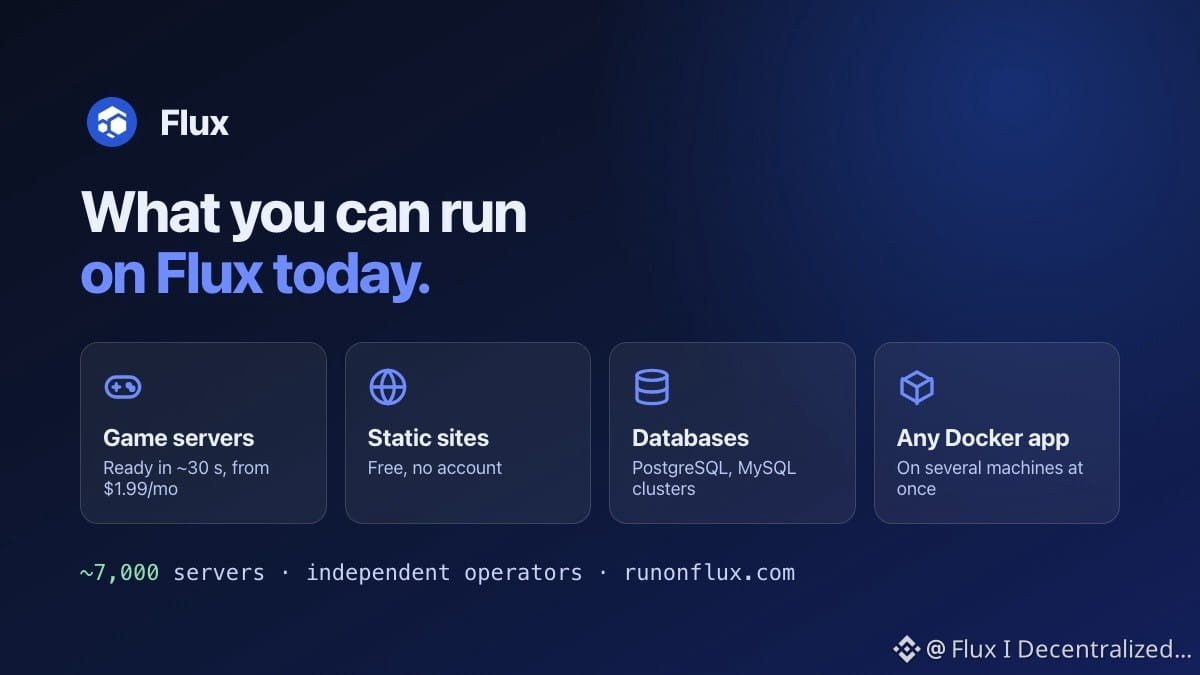
Powered by a global network of nearly 7,000 servers managed by independent operators, Flux offers a versatile environment for your hosting needs today. You can quickly launch a game server in roughly 30 seconds with pricing beginning at $1.99 per month. If you are looking to publish a static website without creating an account, you can do so completely free at http://drop.app.runonflux.io. Additionally, the network easily handles MySQL or PostgreSQL clusters, alongside any Docker application deployed redundantly across multiple machines at the same time to ensure constant uptime. Discover the possibilities at http://runonflux.com
Powered by a global network of nearly 7,000 servers managed by independent operators, Flux offers a versatile environment for your hosting needs today. You can quickly launch a game server in roughly 30 seconds with pricing beginning at $1.99 per month. If you are looking to publish a static website without creating an account, you can do so completely free at http://drop.app.runonflux.io. Additionally, the network easily handles MySQL or PostgreSQL clusters, alongside any Docker application deployed redundantly across multiple machines at the same time to ensure constant uptime. Discover the possibilities at http://runonflux.com
70
翻訳参照
FluxOS v8.23.0 officially launched on November 6, introducing several practical updates that node operators will want to note.
To start, tracking node relocations now relies directly on the blockchain's own ledger, with block height serving as the benchmark for evaluating any holds related to IP modifications. Resource management has also been strengthened, as component CPU restrictions are now strictly mandated instead of just requested. Alongside this, application storage volumes leverage direct I/O, ensuring that a single app cannot overwhelm the entire disk with traffic. Transparency sees an upgrade as well, with kernel taint flags being actively recorded so that an affected kernel cannot be mistaken for an untainted one. Finally, the software handles Bitcoin message signing without relying on bitcoinjs-message, removing an unnecessary dependency from the architecture.
You can explore the remaining details and technical documentation directly on the official release tag.
91
翻訳参照
Even on a standard Tuesday, over 6,900 active game servers operate smoothly across 56 countries, ensuring thousands of virtual worlds stay live while their owners attend to their daily work.
This milestone comes just twelve days after the previous update, marking continued growth for the games hub. The catalog now stands at 37 titles, featuring comprehensive sections dedicated to Killing Floor 2 and Icarus.
Every single server is powered by independent nodes and provides convenient in-browser management, including direct file access, backups, system restarts, and an integrated terminal.
63
翻訳参照
Following a security review completed in October, the newest release is now live for both mobile devices and web browsers.
At its core, authentic approval means being able to clearly read what is presented on your display, since accepting a mere hash leaves you signing blindly. SSP 2.2 resolves this by presenting the entire request prior to any signature. Through Wallet 2.2 and Key 2.2 from @SSPWallet_io, typed data appears comprehensively on the screens of both your wallet and your key. This setup allows you to inspect each transaction directly against your personal keys, while establishing pairing authentication using six words.
Additionally, outgoing Zcash transactions now adhere to the v5 format, satisfying the requirement introduced by NU7 on Nov 5.
78
翻訳参照
The release of FluxOS 8.23.1 brings important updates to node maintenance and data privacy. Because unencrypted plain text remains vulnerable to exposure at any transit point, enterprise application specifications in this version completely eliminate plain text transmission. In addition, routine cleanup is streamlined across legacy nodes. If a node currently hosts an enterprise app that is not registered, the system will autonomously clear it out. Operators do not need to take any manual intervention beyond applying the update, as the purge process executes on its own.
The release of FluxOS 8.23.1 brings important updates to node maintenance and data privacy. Because unencrypted plain text remains vulnerable to exposure at any transit point, enterprise application specifications in this version completely eliminate plain text transmission. In addition, routine cleanup is streamlined across legacy nodes. If a node currently hosts an enterprise app that is not registered, the system will autonomously clear it out. Operators do not need to take any manual intervention beyond applying the update, as the purge process executes on its own.
67
Fluxノードを管理している場合は、直接バージョン8.23.1にアップグレードしてください。
11月6日にFluxOS v8.23.0が初回リリースされた後、わずか数時間でバージョン8.23.1がリリースされました。8.23.1のビルドでは、エンタープライズアプリケーションの仕様に平文が一切含まれないため、保存時に仕様が完全に読み取れない状態になります。さらに、レガシーノードでは、未登録のエンタープライズアプリケーションが維持されなくなります。
Fluxノードを管理している場合は、直接バージョン8.23.1にアップグレードしてください。
11月6日にFluxOS v8.23.0が初回リリースされた後、わずか数時間でバージョン8.23.1がリリースされました。8.23.1のビルドでは、エンタープライズアプリケーションの仕様に平文が一切含まれないため、保存時に仕様が完全に読み取れない状態になります。さらに、レガシーノードでは、未登録のエンタープライズアプリケーションが維持されなくなります。
11月6日にFluxOS v8.23.0が初回リリースされた後、わずか数時間でバージョン8.23.1がリリースされました。8.23.1のビルドでは、エンタープライズアプリケーションの仕様に平文が一切含まれないため、保存時に仕様が完全に読み取れない状態になります。さらに、レガシーノードでは、未登録のエンタープライズアプリケーションが維持されなくなります。
1
94
Flux Gamesは、Killing Floor 2の専用サーバーホスティングが正式に利用可能になったことをお知らせします。6人チーム向けに設計された、緊迫感あふれる協力型ウェーブサバイバルに挑戦したり、Versus Survivalモードで戦場を12人まで拡大したりできます。
SSHコマンドは一切不要で、ゲーム環境を手間なく管理できます。すべての設定項目に使いやすいデジタルフォームからアクセスできるほか、専用のマップサイクルエディター、リアルタイムのコンソール監視、自動バックアップ、プレイヤーを即座にキックまたは禁止できるワンクリックツールも備えています。
メインのホストがログアウトしてもサーバーはオンライン状態を保つため、グループで毎晩途切れなくプレイを楽しめます。お好みの難易度、厳選したマップローテーション、チームがすでにダウンロードしたSteam Workshopのマップも確実に保持されます。メンテナンスが必要な場合も、サーバーが完全に空になるまでアップデートは延期されます。Killing Floor 2ではセーブファイルを使用しないため、再起動が必要になっても、失われるのは進行中のウェーブだけです。
サブスクリプションは月額5.49ドルから。新規のお客様は最初の1週間を無料でお試しいただけます。
78
FluxOS バージョン v8.23.0 が正式にリリースされました。オペレーター向けに、4つの重要な改善が盛り込まれています。
アプリケーションボリュームでダイレクトI/Oを利用するようになり、ストレージ性能が大幅に向上しました。読み書きを物理ディスクに直接行うことで、高負荷時でも安定した応答性を維持できます。
ネットワークの安定性も向上しました。ルーターのUPnPリースが更新されても、ノードの接続が中断されることはありません。
ネットワーク全体で一貫したタイミングを保つため、IP変更時の保留時間はブロック高に基づいて直接決定されるようになりました。ブロック高は、すべてのノードで共有される単一の分散型クロックとして機能します。
さらに、ハードウェアの移転はオンチェーンで認証されるため、物理機器を移設する際も認証状態が安全に保たれます。
ぜひ本日、ノードをアップデートしてください。
113
新たに3つのサバイバルゲームが加わり、Fluxのゲームハブで利用できるゲームは合計35タイトルになりました。プレイヤーは、統合ダッシュボードからバックアップ、サーバーの再起動、設定を簡単に管理できます。
今回のアップデートでは、SCUMのサーバー設定437項目すべてを、ウェブブラウザーからアクセスできる1つのフォームにまとめました。The Forestでは5つのセーブスロットを利用でき、以前のワールドをそのまま残したまま、新たな冒険を始められます。また、Abiotic FactorはPC、PlayStation、Xbox間のクロスプラットフォームに対応しています。
新たに3つのサバイバルゲームが加わり、Fluxのゲームハブで利用できるゲームは合計35タイトルになりました。プレイヤーは、統合ダッシュボードからバックアップ、サーバーの再起動、設定を簡単に管理できます。
今回のアップデートでは、SCUMのサーバー設定437項目すべてを、ウェブブラウザーからアクセスできる1つのフォームにまとめました。The Forestでは5つのセーブスロットを利用でき、以前のワールドをそのまま残したまま、新たな冒険を始められます。また、Abiotic FactorはPC、PlayStation、Xbox間のクロスプラットフォームに対応しています。
今回のアップデートでは、SCUMのサーバー設定437項目すべてを、ウェブブラウザーからアクセスできる1つのフォームにまとめました。The Forestでは5つのセーブスロットを利用でき、以前のワールドをそのまま残したまま、新たな冒険を始められます。また、Abiotic FactorはPC、PlayStation、Xbox間のクロスプラットフォームに対応しています。
45
シンプルなテキスト文書が今、ウェブ全体に広がる新たな認可標準を形作りつつあります。ウェブサイトの管理者は、robots.txt内でIETFのポリシートークンを使い、データ収集に関する希望を標準化された一か所で宣言できます。OpenAI、Anthropic、Google、Microsoftはこれを尊重することで合意しています。しかし、この同意の枠組みが登場したのは、自動スクレイピングがすでに広く行われるようになった後です。特に、MicrosoftとGoogleが採用するのは2027年以降となることを考えると、その遅れは明らかです。
許可を前提とするシステムが最もよく機能するのは、参加が完全に任意である場合です。Fluxは、初日から完全なオプトイン方式を通じて、この原則を取り入れてきました。その分散型インフラは、50か国以上に分散した独立ノードに支えられており、すべてのシステムが所有者の意思によって積極的かつ意図的に接続されています。
許可を前提とするシステムが最もよく機能するのは、参加が完全に任意である場合です。Fluxは、初日から完全なオプトイン方式を通じて、この原則を取り入れてきました。その分散型インフラは、50か国以上に分散した独立ノードに支えられており、すべてのシステムが所有者の意思によって積極的かつ意図的に接続されています。
67
Flux、FluxCloud、@zelcore_io、@SSPWallet_io の改善案があれば、実現した際に私たちと共有することで報酬を獲得できます。
参加するには、Flux Discordにアクセスし、#feature-requests チャンネルにアイデアを投稿してください。投稿1件につき提案は1つに絞り、目指す目標と、現時点で妨げとなっている課題を詳しく説明してください。コミュニティメンバーは気に入った提案に投票でき、チームは毎月、最も多くの票を集めたアイデアを評価します。
提案された機能が正式にリリースされると、最初に提案した人には「Idea Shipped」ロールが付与され、正式なリリース告知で紹介されます。また、翌月の初めに25 FLUXが配布されます。なお、個人が受け取れる報酬は月あたり最大500 FLUXです。また、社内スタッフおよび契約社員は報酬の対象外です。
あなたなら、どの改善に今すぐ取り組みますか?

105
過去2日間で、10月のセキュリティレビューで特定された問題への対策を実装するため、3つのソフトウェアアップデートを個別にリリースしました。
モバイルとデスクトップの両プラットフォームで、@zelcore_io の Zelcore 8.40.1 により、すべてのスワップおよび送金トランザクションのステータスが、ネットワーク確認済みの単一のステータスに統一されました。
デバイスレベルの保護として、SSP Key v2.2.1 は署名を実行する前に、ハードウェア上でダイジェストをローカルに再計算します。
さらに、@SSPWallet_io のバージョン2.2.1では、dAppからのリクエストを一度に1件ずつ順番に処理し、2件目以降の試行には BUSY を返すようになりました。これにより、署名処理中のリクエストとの重複を防ぎます。
リリースノート:
52
Flux Gamesは、Icarusのサーバーホスティング対応を開始しました。
開拓地の建設は大仕事です。前哨基地や採掘ルートの確立から、過酷な嵐に耐えられる基地の強化まで、さまざまな作業が必要になります。従来のピアツーピアプレイでは、ワールドは1台のコンピューター上でローカルにホストされ、そのプレイヤーがログアウトするとすぐに終了します。専用のIcarusサーバーなら、セッションは最大8人の開拓者が参加できる状態で24時間稼働し続けるため、チームの誰もが都合のよいときに参加できます。
SSHやSteamCMDに触れることなく、約30秒で環境を稼働させられます。管理者は、わかりやすいフォームからすべてのサーバーパラメーターを管理でき、アップロードとダウンロードの両方に対応した機能で開拓地を自由に切り替え、SteamIDを使って管理者権限を付与できます。さらに、バックアップとゲームアップデートも完全に自動化されています。
ホスティングは50か国以上で利用でき、月額料金は8.49ドルからです。また、新規ユーザーは最初の1週間を無料で利用できます。
今すぐご利用ください:
40
エージェントがどこで稼働するかによって、プロンプト、ログ、重要なキーの管理者が最終的に決まります。人工知能のランキングが変動しても、その基盤となる環境が重要であることに変わりはありません。先週だけでも、2つの主要な最先端モデルが2日間のうちに発表されました。Gemini 4 CarbonはArtificial Analysis Intelligence Indexで1位を獲得し、MistralのLe Chonkはオープンウェイトモデルの中で5位に入りました。こうしたランキングは、きっとまたすぐに変わるでしょう。今週の要件に最適なモデルを自由に使い、アップデートが登場したらいつでも別のモデルに切り替え、エージェントの中核は構築した場所にそのまま置いておけます。
分散型ホスティングはすでに着実に広がっています。11月の調査では、Fluxノード上で200以上のセルフホスト型エージェントが稼働しており、その内訳はOpenClawが179インスタンス、Hermesが31インスタンスでした。
独自の環境を構築するのは簡単です。
エージェントをアプリケーションとしてパッケージ化し、ネットワークへの登録を完了します。
FluxOSが、50か国以上で稼働する自律型ノードへの配置を処理します。
FluxOS v8.18で利用できるアプリケーションのライブログを使って、リアルタイムの稼働状況を確認します。
モデルキーは自分のアプリ設定内に厳重に保持されるため、認証情報のプライバシーを完全に保てます。
今日使いたいエンジンを選び、別の選択肢が登場したら切り替えましょう。エージェントは、配置した場所で引き続き安定して稼働します。
Fluxエコシステム全体(Zelcore @zelcore_io、SSP @SSPWallet_io、FluxCloud、その他のFlux製品を含む)の問題特定にご協力いただくと、FLUX報酬を獲得できます。報告した問題が修正されると、報酬としてFLUXを受け取れます。
参加するには、Flux公式Discordのbug-reportsチャンネルに移動し、問題ごとに専用の投稿を作成してください。報告には、対象製品とそのバージョン、使用したハードウェア機器、実行した操作の正確な手順、期待される結果と実際の動作の違い、スクリーンショットを添付してください。プライバシー保護のため、画像内のウォレットアドレスやアカウント残高は必ずぼかしてください。
報酬とBug Hunterロールは、チームが修正したバグを最初に報告した方にのみ付与されます。報酬額は深刻度に応じて設定されており、軽微な問題は10 FLUX、通常の問題は25 FLUX、重大な問題は100 FLUXです。報酬は修正のデプロイ後、翌月中に支払われます。なお、投稿者1人あたりの月間報酬上限は500 FLUXです。また、このプログラムの対象から公式チームメンバーと請負業者は除外されます。
セキュリティ関連の脆弱性については、公開チャンネルで詳細を共有しないでください。別途実施しているセキュリティバグ報奨金プログラム(最大10,000 FLUX)で審査するため、security@runonflux.com まで直接メールでご報告ください。
重要なセキュリティ上の注意として、Fluxチームのメンバーがパスワード、秘密鍵、またはシードフレーズを尋ねることは決してありません。
84
初のブロック報酬削減が実施されたまさにその月、Fluxエコシステムはあらゆる面で目覚ましい稼働実績を記録しました。11月の調査によると、現在Flux上で稼働しているアクティブなアプリケーションは2,298件で、10月から20%増加し、9月のホワイトペーパーに記載された数のおよそ2倍となっています。
インフラの成長も同様に堅調で、すべてのティアで増加し、ノード数は6,912に達しました。さらに、プライベートインフラは現在、ネットワーク全体の58%を占めています。
ネットワークのアクティビティの大部分はゲームによるもので、1,219台のゲームサーバーが稼働中のアプリケーション全体の53%を占めています。このカテゴリでは、Dragonwildsだけで692台のサーバーを運用しています。また、このプラットフォームでは分散型インテリジェンスの導入も進んでおり、現在、200を超えるセルフホスト型AIエージェントをホストしています。その内訳はOpenClawインスタンスが179件、Hermesのデプロイが31件です。

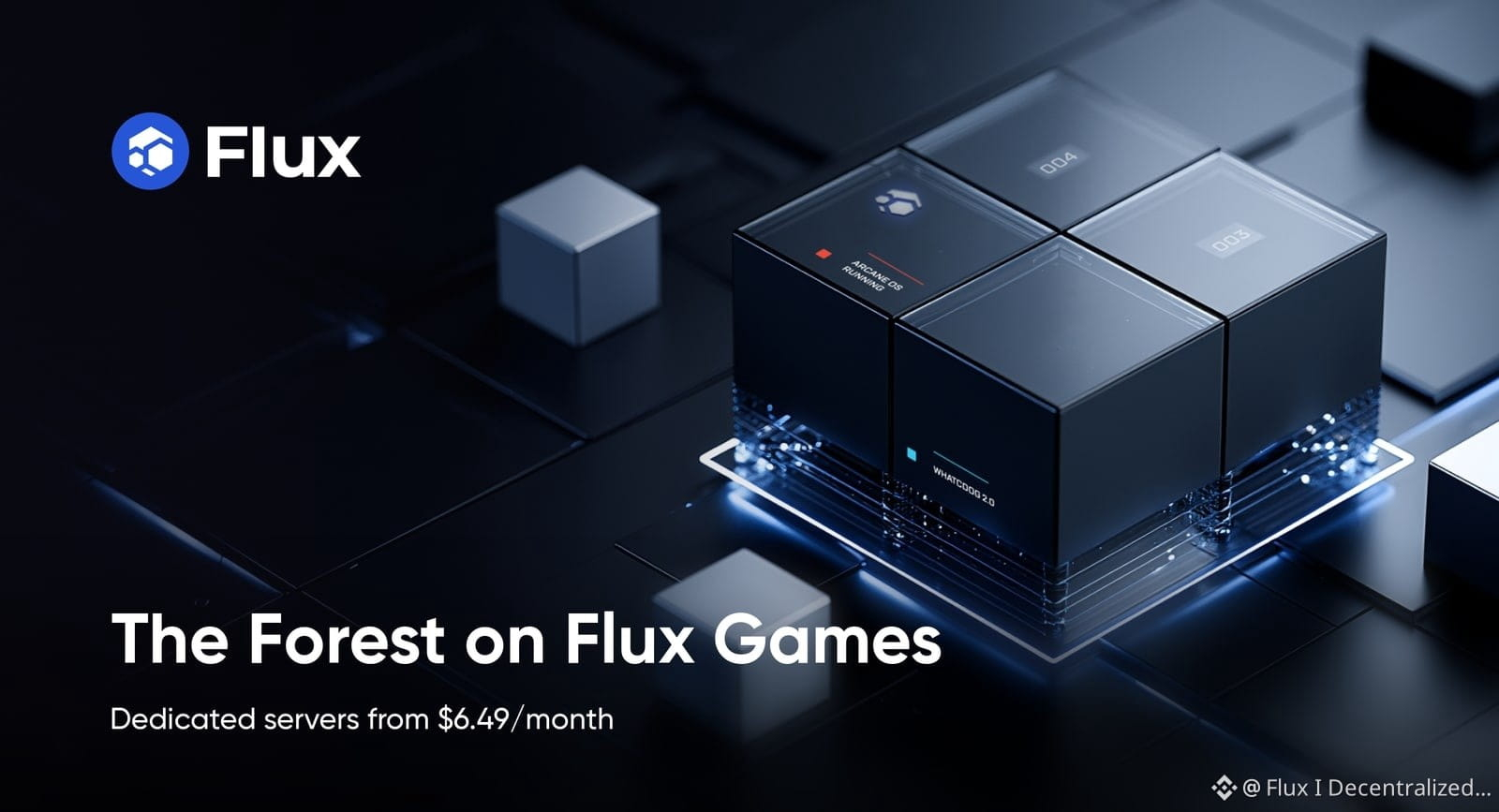
Flux Gamesは現在、The Forestの公式ホスティングを提供しています。通常の協力プレイでは、ゲームのワールドはホストのコンピューター上に保存され、その人がログアウトした瞬間に完全に停止します。一方、専用サーバーを利用すれば、誰がオンラインかにかかわらず、島は常に稼働し、グループ全員がアクセスできます。
料金は4~8人用で月額6.49ドルからで、プレイヤー数の上限はいつでも増やせます。さらに、新規ユーザーは最初の1週間を完全無料で利用できます。セットアップは非常に迅速で、サーバーの構築には約30秒しかかかりません。
冒険を管理するために、5つのセーブスロットが用意されています。これにより、任意の難易度で新しいワールドを作成したり、既存の協力プレイの進行状況をシームレスにアップロードしたりできます。サーバー管理は使いやすさを重視して設計されており、すべての設定をウェブブラウザーのフォームから直接行えるため、SSHやSteamCMDを使う必要はありません。
管理者パスワードを使うと、/kick、/ban、/saveなどの重要なコマンドを利用できます。また、自動バックアップ、毎日の再起動、包括的なDDoS対策、50か国以上に設置されたノードによるグローバルな利用環境も備えています。ゲームを常に最新の状態に保つため、システムは30分ごとにSteamを確認し、新しいビルドがある場合は、サーバーが空になるとすぐに自動で再起動して適用します。
44
Dropが一般公開されました。アカウント登録やメールアドレスの入力なしで、Fluxを利用した無料の静的ホスティングをお楽しみいただけます。
ホストされたコンテンツは完全に隔離され、信頼性を確保するために複数のFluxノード間で安全に複製されます。このプラットフォームでは、最大サイズ50 MiB、または最大5,000個のファイルをアップロードできます。特定のウェブページを非公開にしたい場合は、パスワードを設定するだけで簡単にアクセスを制限できます。
サイトをオンラインにするのはとても簡単です。ZIPアーカイブ、フォルダー全体、または単一のHTMLファイルをページにドラッグするだけで、http://drop.app.runonflux.io にある公開リンクがすぐに発行されます。
作成したリンクは、最初は7日間有効です。ページを引き続き利用できるようにするには、リンクを取得するだけです。

76
ログインして、さらにコンテンツを読む
厳選トピックで世界の暗号資産トレーダーの仲間入り
⚡️ 暗号資産に関する最新かつ有益な情報が見つかります。
💬 世界最大の暗号資産取引所から信頼されています。
👍 認証を受けたクリエイターから、有益なインサイトを得られます。
メール / 電話番号