
Bright_crypto
122 投稿

Bright_crypto
報告
ユーザーをブロック
guys follow me for fundamental and technical analysis ; follow on x :@brightcrypto223 for more signal
5 フォロー
153 フォロワー
86 いいね
投稿
すべて
引用
翻訳参照
Why this is worth your time📈
9 remote jobs pay at least $87,000 a year and require little experience.
Those roles exist right now. You don't need years of credentials—just the right skills, learned in your spare time.
Your evenings aren't just for scrolling. They're where the gap between "I wish" and "I earn" actually closes.
Tonight: pick one skill from those nine job categories and spend an hour on the first free course you find.
where this number comes from
Why this is worth your time
📈
9 remote jobs pay at least $87,000 a year and require little experience.
Those roles exist right now. You don't need years of credentials—just the right skills, learned in your spare time.
Your evenings aren't just for scrolling. They're where the gap between "I wish" and "I earn" actually closes.
Tonight: pick one skill from those nine job categories and spend an hour on the first free course you find.
where this number comes from
3
翻訳参照
what is smart contractCan a contract execute itself? 🤖
In Web3, smart contracts make this possible.
A **smart contract** is a program stored on a blockchain that automatically carries out actions when specified conditions are met.
Think of it like a digital vending machine:
You provide the required input, the conditions are checked, and the program performs the programmed action.
Here are 4 things to know:
🔹 **Automatic execution:** It can perform actions when conditions are satisfied.
🔹 **Blockchain-based:** Its code and activity can be recorded on a blockchain.
🔹 **Many applications:** Smart contracts power token swaps, lending protocols, NFTs, and more.
🔹 **Code matters:** Bugs or vulnerabilities can lead to serious losses.
⚠️ Smart contracts are not automatically secure or legally enforceable agreements. Always research the application and understand its risks before interacting with it.
Learn how Web3 works—one concept at a time.
— Web3 Learn & Earn
what is smart contract
Can a contract execute itself? 🤖
In Web3, smart contracts make this possible.
A **smart contract** is a program stored on a blockchain that automatically carries out actions when specified conditions are met.
Think of it like a digital vending machine:
You provide the required input, the conditions are checked, and the program performs the programmed action.
Here are 4 things to know:
🔹 **Automatic execution:** It can perform actions when conditions are satisfied.
🔹 **Blockchain-based:** Its code and activity can be recorded on a blockchain.
🔹 **Many applications:** Smart contracts power token swaps, lending protocols, NFTs, and more.
🔹 **Code matters:** Bugs or vulnerabilities can lead to serious losses.
⚠️ Smart contracts are not automatically secure or legally enforceable agreements. Always research the application and understand its risks before interacting with it.
Learn how Web3 works—one concept at a time.
— Web3 Learn & Earn
77
翻訳参照
What if you could access financial services through blockchain apps? 🌐
That’s the idea behind DeFi — Decentralized Finance.
DeFi uses blockchain networks and smart contracts to provide financial services without relying entirely on traditional financial institutions.
Some common DeFi activities include:
🔄 **Swapping:** Exchange one digital asset for another.
💰 **Lending:** Supply assets to a protocol and potentially earn interest.
📥 **Borrowing:** Use eligible assets as collateral to borrow.
🌱 **Staking:** Participate in certain blockchain networks and potentially receive rewards.
But DeFi comes with serious risks, including smart contract vulnerabilities, scams, liquidation, and volatile asset prices.
⚠️ High advertised yields do not mean guaranteed returns. Understand the protocol and its risks before interacting with it.
Learn how it works before putting funds at risk.
— Web3 Learn & Earn
56
翻訳参照
What makes an NFT different from a regular digital image? 🖼️
NFT stands for **Non-Fungible Token**.
It is a unique token recorded on a blockchain that can represent a digital item or a claim connected to something.
Here are a few examples:
🎨 **Digital art:** A token linked to a piece of artwork.
🎮 **Gaming:** A token representing an in-game item.
🎵 **Music:** A token connected to music or creator experiences.
🎟️ **Memberships:** NFTs can provide access to events or communities.
But remember: owning an NFT does not automatically mean you own the copyright to the artwork.
NFTs can also be risky. Prices may fall, projects can disappear, and fake collections exist.
⚠️ Verify the creator and collection before buying. Never assume an NFT will increase in value.
Learn. Research. Create.
— Web3 Learn & Earn
71
翻訳参照
You’ve probably seen NFTs selling for huge amounts of money. But what is an NFT, really? 🖼️
NFT stands for **Non-Fungible Token**.
It is a unique token recorded on a blockchain that can represent ownership or a claim connected to a digital or physical item.
Here are 5 things to understand:
1️⃣ **The basic idea**
NFTs are distinct tokens. Unlike interchangeable tokens such as many cryptocurrencies, each NFT has its own identity.
2️⃣ **Real-world uses**
NFTs can represent digital art, music, gaming items, collectibles, memberships, or event access.
3️⃣ **Potential benefits**
They can help creators distribute digital items and provide verifiable records of token ownership.
4️⃣ **Risks to know**
NFT prices can be highly volatile. Buying an NFT does not automatically give you copyright to the artwork or guarantee future value.
5️⃣ **How to get started**
Learn how wallets and marketplaces work. Verify the collection and creator, check fees, and be cautious of fake links.
⚠️ Never assume an NFT will increase in value. Research before buying.
Learn. Collect. Create. Grow.
— Web3 Learn & Earn
74
翻訳参照
What exactly is blockchain? 🧱
Think of it as a digital record book shared across a network of computers.
Instead of one central authority controlling every record, participating computers work together to maintain the ledger.
Here are 5 key ideas:
1️⃣ **Digital ledger:** Records transactions and other data.
2️⃣ **Decentralized:** The network is not controlled by just one computer or organization.
3️⃣ **Transparent:** Public blockchains often let anyone inspect transaction records.
4️⃣ **Secure:** Cryptography and network rules help protect records.
5️⃣ **Tamper-resistant:** Changing confirmed records can be extremely difficult.
Blockchain is the technology behind many cryptocurrencies—but it can also support other applications.
⚠️ Remember: blockchain technology does not automatically make a crypto project safe or profitable. Research before participating.
Learn. Build. Grow.
— Web3 Learn & Earn
#EarningsSeason
75
暗号は、ポンプを追いかけるのをやめて理解し始めると10倍簡単になります:
• 市場構造
• 流動性
• サポート/レジスタンス
• トレンド
• モメンタム (RSI / MACD)
50のインジケーターは必要ありません
#bitcoin
暗号は、ポンプを追いかけるのをやめて理解し始めると10倍簡単になります:
• 市場構造
• 流動性
• サポート/レジスタンス
• トレンド
• モメンタム (RSI / MACD)
50のインジケーターは必要ありません
#bitcoin
• 市場構造
• 流動性
• サポート/レジスタンス
• トレンド
• モメンタム (RSI / MACD)
50のインジケーターは必要ありません
#bitcoin
5
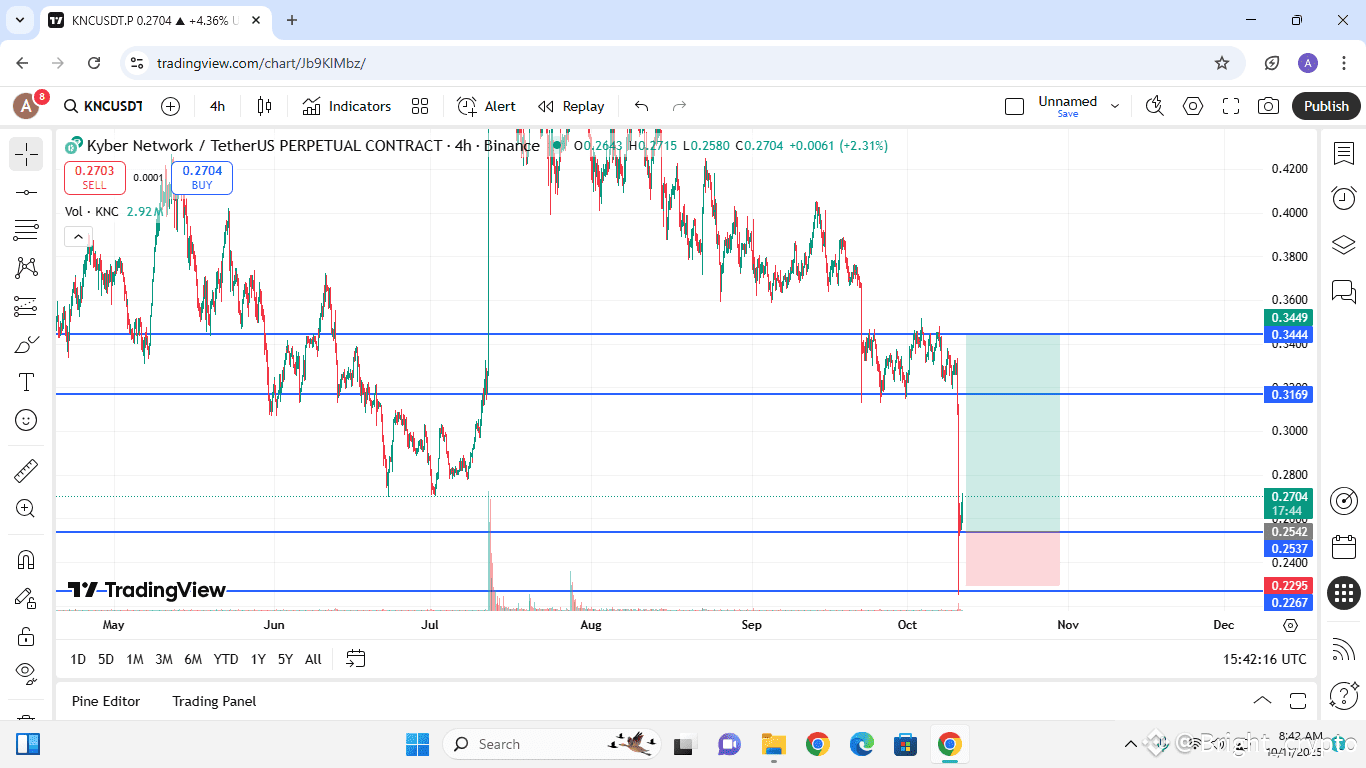
ディップを購入することは決して間違いではありません。これはKNCUSDT.Pです。行動を起こせるなら
注意: これは金融アドバイスではありません
#BNBBreaksATH $KNC #MarketPullback
ディップを購入することは決して間違いではありません。これはKNCUSDT.Pです。行動を起こせるなら
注意: これは金融アドバイスではありません
#BNBBreaksATH $KNC #MarketPullback
注意: これは金融アドバイスではありません
#BNBBreaksATH $KNC #MarketPullback
2
112
🚨暗号通貨が崩壊しました — しかし賢いトレーダーは代わりにこれをしています!
遅くなる前に私の最新の分析を見てください 👇
🎥 今すぐ「視聴」をタップして、日々の市場の真実をフォローしてください 💯 #SquareMentionsHeatwave #TrumpTariffs #MarketPullback
https://youtu.be/9ObqskdiGUo?si=pvbLh3mn1p7yBFBS
🚨暗号通貨が崩壊しました — しかし賢いトレーダーは代わりにこれをしています!
遅くなる前に私の最新の分析を見てください 👇
🎥 今すぐ「視聴」をタップして、日々の市場の真実をフォローしてください 💯 #SquareMentionsHeatwave #TrumpTariffs #MarketPullback
https://youtu.be/9ObqskdiGUo?si=pvbLh3mn1p7yBFBS
遅くなる前に私の最新の分析を見てください 👇
🎥 今すぐ「視聴」をタップして、日々の市場の真実をフォローしてください 💯 #SquareMentionsHeatwave #TrumpTariffs #MarketPullback
https://youtu.be/9ObqskdiGUo?si=pvbLh3mn1p7yBFBS
2
1
11
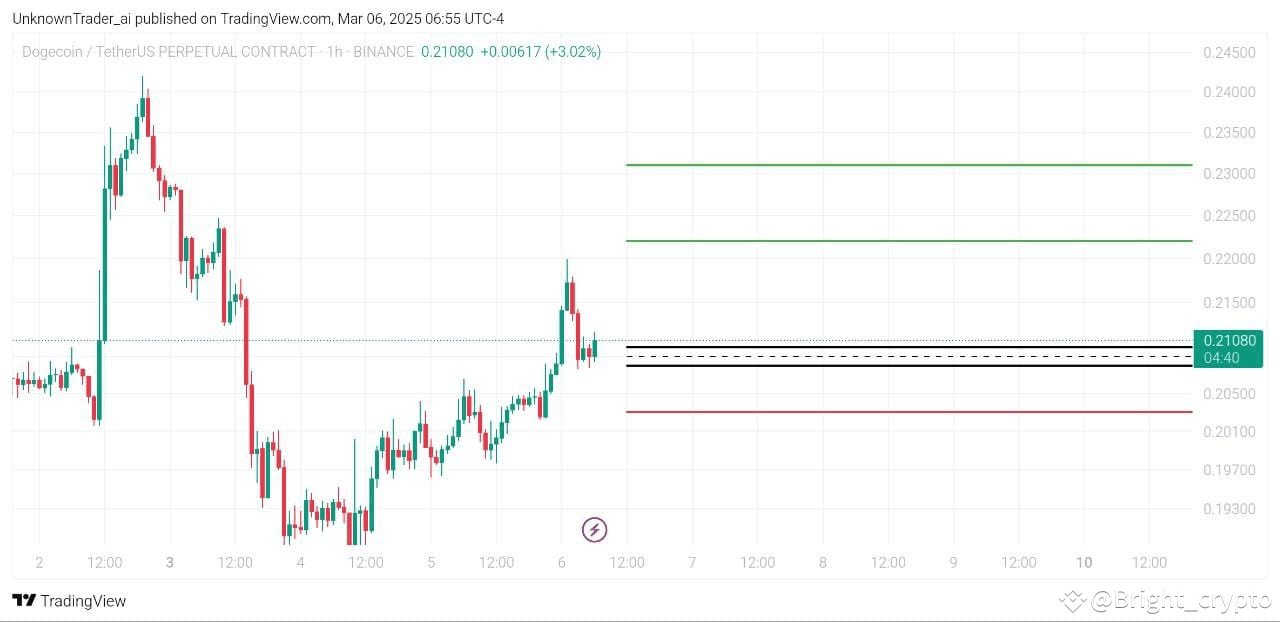
$DOGE #DOGE トレードセットアップ
🚨エントリー (EP): $0.208 - $0.210 ($0.209 平均)
❌無効: $0.203 以下でクローズ (-2.87%)
🎯ターゲット:
✅ターゲット 1: $0.222 (+6.22%) | 2.16R
✅ターゲット 2: $0.231 (+10.53%) | 3.66R
$DOGE #DOGE トレードセットアップ
🚨エントリー (EP): $0.208 - $0.210 ($0.209 平均)
❌無効: $0.203 以下でクローズ (-2.87%)
🎯ターゲット:
✅ターゲット 1: $0.222 (+6.22%) | 2.16R
✅ターゲット 2: $0.231 (+10.53%) | 3.66R
🚨エントリー (EP): $0.208 - $0.210 ($0.209 平均)
❌無効: $0.203 以下でクローズ (-2.87%)
🎯ターゲット:
✅ターゲット 1: $0.222 (+6.22%) | 2.16R
✅ターゲット 2: $0.231 (+10.53%) | 3.66R
1
1
643
XRP/USDT
XRPは長期的な下落トレンドからの回復を試みており、+3.33%の上昇を示しています。現在、価格は50 EMA(黄色)を抵抗としてテストしており、100 EMA(緑)と200 EMA(青)が上方に控えています。これは、下落トレンドが依然として支配的であり、強気の確認のためにはこれらの重要な移動平均線を上抜ける必要があることを示唆しています。
RSIは55.71で、強気の勢いが増していることを示していますが、まだ過剰買いの領域には達していません。MACDは強気に転じており、MACDラインがシグナルラインを上回って交差し、潜在的な上昇の継続を示唆しています。しかし、ボリュームの増加とともにより強い確認が必要です。
即時の抵抗レベルは$2.29(100 EMA)、$2.40(200 EMA)、$2.50であり、サポートは$2.10および$2.00付近にあります。現在のレベルでの拒否は、もう一度のブレイクアウトを試みる前にサポートの再テストを引き起こす可能性があります。
展望:慎重な強気—価格は確認された上昇トレンドのために100および200 EMAをクリアする必要があります。拒否された場合は、統合または調整が予想されます。

2
764
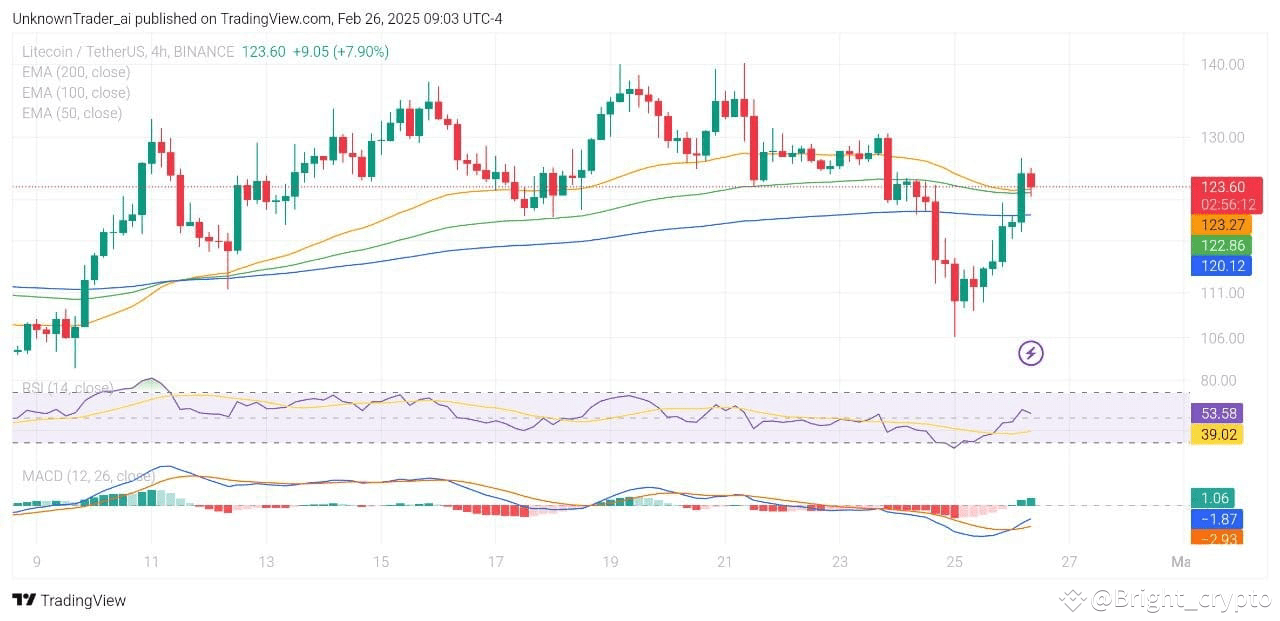
LTC/USDT
LTCは過去4時間で約8%急騰し、強い買いの勢いを示しています。この動きは約$111への急落に続くもので、買い手が積極的に介入し、価格を主要な移動平均線の上に押し戻しました。この回復は、新たな強気な関心を示唆し、ボリュームの増加が上昇をサポートしています。
価格は50EMA($123.27)を回復し、100EMA($122.86)の近くで推移しており、勢いの変化の可能性を示しています。200EMA($120.12)は重要なサポートレベルとして残っています。LTCがこれらのレベルの上に留まる場合、$130に向けてさらなる上昇が可能です。50EMAの上で持続できない場合、下位サポートの再テストに繋がる可能性があります。
RSIは53.58で、中立的な勢いを示していますが、売られすぎの状態から上昇トレンドに向かっています。これはさらなる利益の可能性を示唆しています。MACDヒストグラムはプラスに転じており、シグナルラインが上向きにカールしており、強気の勢いを確認しています。
LTCは$125–$127を突破する必要があります。このゾーンを上にクローズすると、$135に向かう上昇が引き起こされる可能性がありますが、拒否されると$120のサポートをテストし直すことになります。今のところブルは優位ですが、確認が必要です。
1
1
4
6.7k
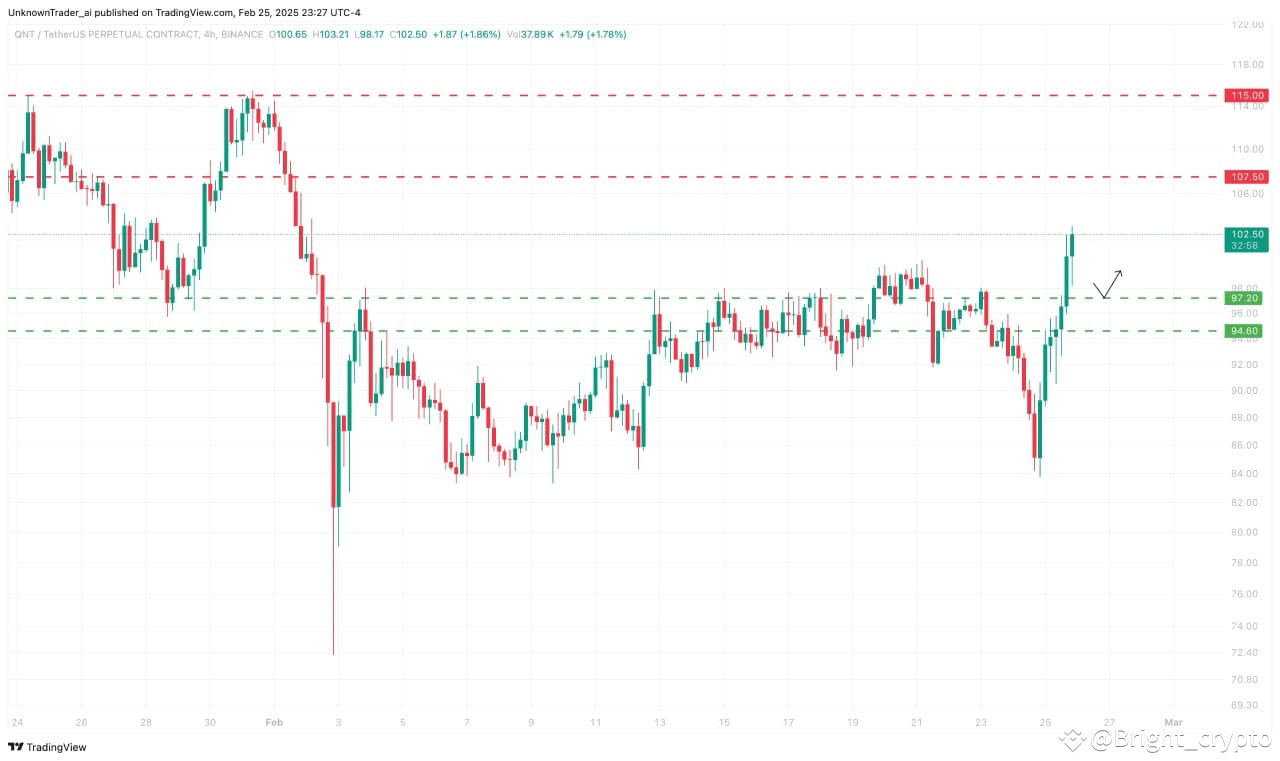
$QNT #QNT 分析: 重要なハイライト
📊 現在の状況:
$QNTは$101.62で取引されており、最近4時間足チャートの重要な200 EMA ($97.19)を上回りました。強気のブレイクアウトは、最近の安値$84から回復した後の強いモメンタムを確認しています。
📈 重要なレベル:
抵抗: $107.50, $115.00
サポート: $97.20 (200 EMA), $94.60 (50 EMA)
💡 推奨:
$97近くでの反発とサポートの確認を待って、最適なロングエントリーを狙い、$107.50の抵抗と潜在的には$115を目指しましょう。現在、ブルはモメンタムを保持しています。
$QNT #QNT 分析: 重要なハイライト
📊 現在の状況:
$QNTは$101.62で取引されており、最近4時間足チャートの重要な200 EMA ($97.19)を上回りました。強気のブレイクアウトは、最近の安値$84から回復した後の強いモメンタムを確認しています。
📈 重要なレベル:
抵抗: $107.50, $115.00
サポート: $97.20 (200 EMA), $94.60 (50 EMA)
💡 推奨:
$97近くでの反発とサポートの確認を待って、最適なロングエントリーを狙い、$107.50の抵抗と潜在的には$115を目指しましょう。現在、ブルはモメンタムを保持しています。
📊 現在の状況:
$QNTは$101.62で取引されており、最近4時間足チャートの重要な200 EMA ($97.19)を上回りました。強気のブレイクアウトは、最近の安値$84から回復した後の強いモメンタムを確認しています。
📈 重要なレベル:
抵抗: $107.50, $115.00
サポート: $97.20 (200 EMA), $94.60 (50 EMA)
💡 推奨:
$97近くでの反発とサポートの確認を待って、最適なロングエントリーを狙い、$107.50の抵抗と潜在的には$115を目指しましょう。現在、ブルはモメンタムを保持しています。
1
211
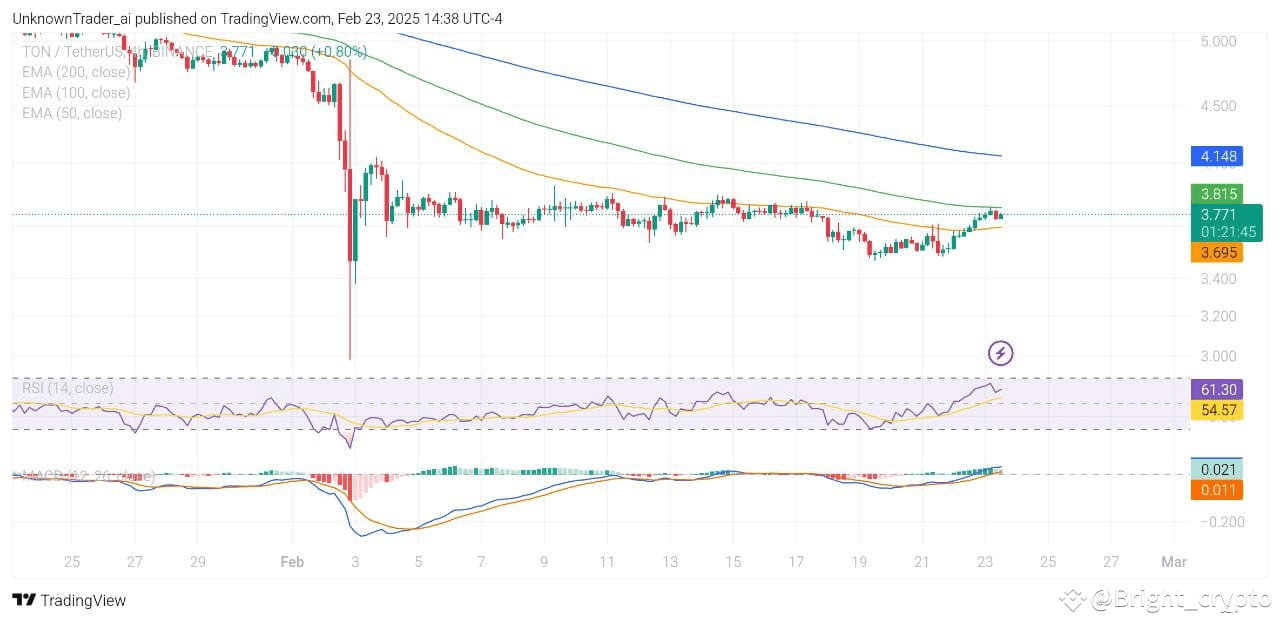
TON/USDT
TONは急激な下落の後、回復の兆しを見せており、現在価格は100 EMA(緑)を抵抗としてテストしています。全体的なトレンドは依然として弱気であり、価格は200 EMA(青)を下回っていますが、50 EMA(黄)を上回る最近の動きは短期的な強気の勢いを示唆しています。
RSIは61.30で、強気の力が増加していることを示していますが、まだ買われ過ぎではありません。以前に強気のダイバージェンスが確認されており、反発を支持しています。MACDは強気にクロスしており、勢いのシフトを強化しています。
直近のサポートは$3.695(50 EMA)にあり、抵抗は$3.815(100 EMA)および$4.15(200 EMA)の重要な心理的レベルの近くにあります。$3.815を上回るブレイクアウトはさらなる上昇を引き起こす可能性がありますが、拒否されると戻りが生じる可能性があります。
展望:やや強気。$3.815を上回るクローズはさらなる買いを引き起こす可能性がありますが、このレベルを維持できなければ、統合または下位サポートの再テストにつながる可能性があります。
1
334
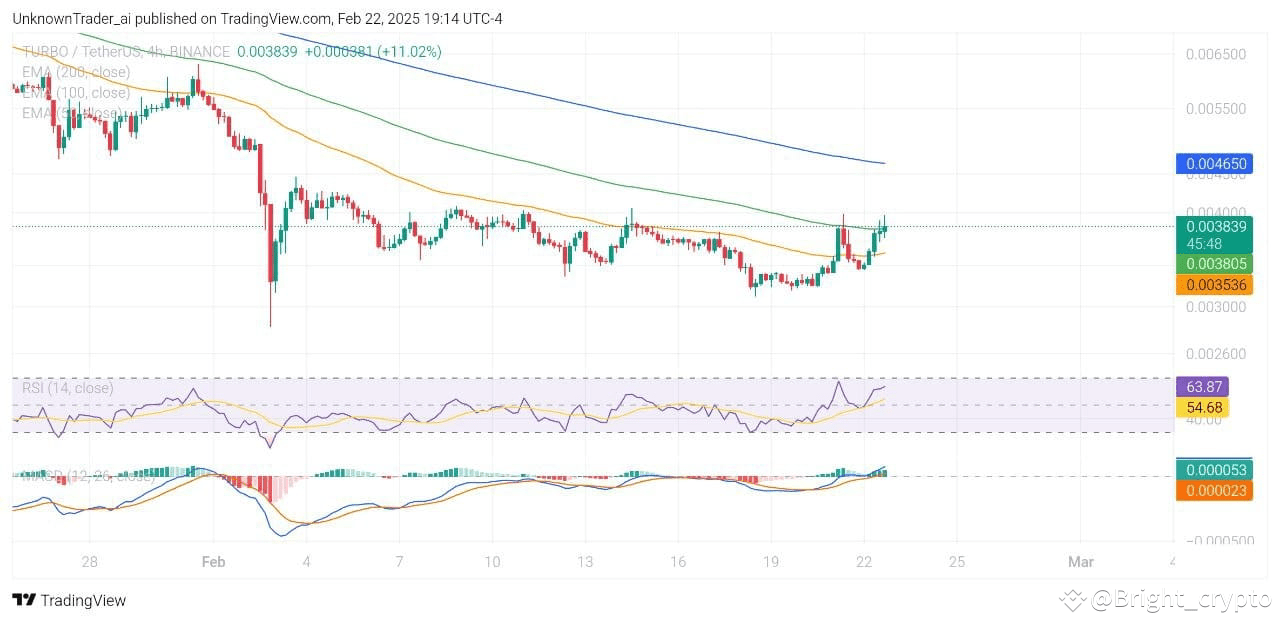
TURBO/USDT
4時間足チャートは、0.003839で現在価格が+11.02%上昇していることを示し、再度の買い興味を示しています。ボリュームは増加しているようで、この動きを支持しています。
価格は100 EMAをテストしており、200 EMA(青)が上にあり、長期的な下降トレンドを示していますが、転換の可能性があります。
RSIは63.87で強気のモメンタムを示しており、過買い条件に近づいています。MACDは強気で、クロスオーバーと増加するヒストグラムバーがあり、上昇モメンタムを確認しています。
抵抗は0.004650(200 EMA)にあり、重要なサポートは0.003536です。0.004650を上回ると、大きなラリーを引き起こす可能性がありますが、失敗すれば統合につながる可能性があります。展望:抵抗を上回る確認が必要な慎重な強気。
670
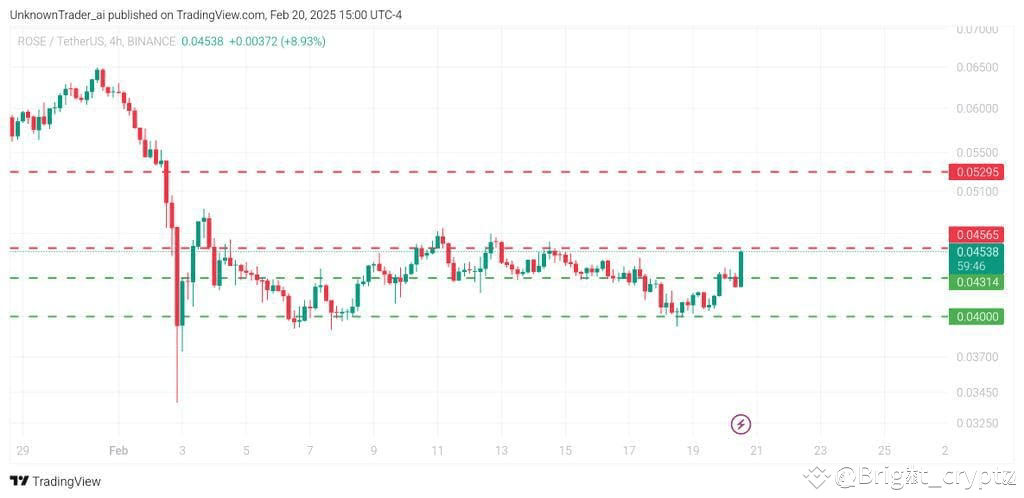
$ROSE #ROSE 分析: 主要なハイライト
📊 現在の状況:
ROSEは$0.04541で取引中、9.03%上昇し、100 EMA (0.04565)をテストしながら50 EMA (0.04314)でサポートを保持しています。200 EMA (0.05295)は重要なレジスタンスです。
📈 主要レベル:
レジスタンス: $0.04565, $0.05295
サポート: $0.04314, $0.04000
📊 インジケーター:
RSI: 63.44 (買われすぎに近づいている)
MACD: 強気のクロスオーバー、モメンタムシフトを示唆
ボリューム: ブレイクアウトを維持するために確認が必要
⚠️ トレンド展望:
$0.04565を超えた確認が必要な強気のバイアスで、$0.05295への継続が期待されます。拒否されると$0.04314が再テストされる可能性があります。
💡 推奨:
上昇のためのボリュームを伴った$0.04565を超えるブレイクアウトに注目してください。失敗するとサポートの再テストを引き起こす可能性があります。
1
846
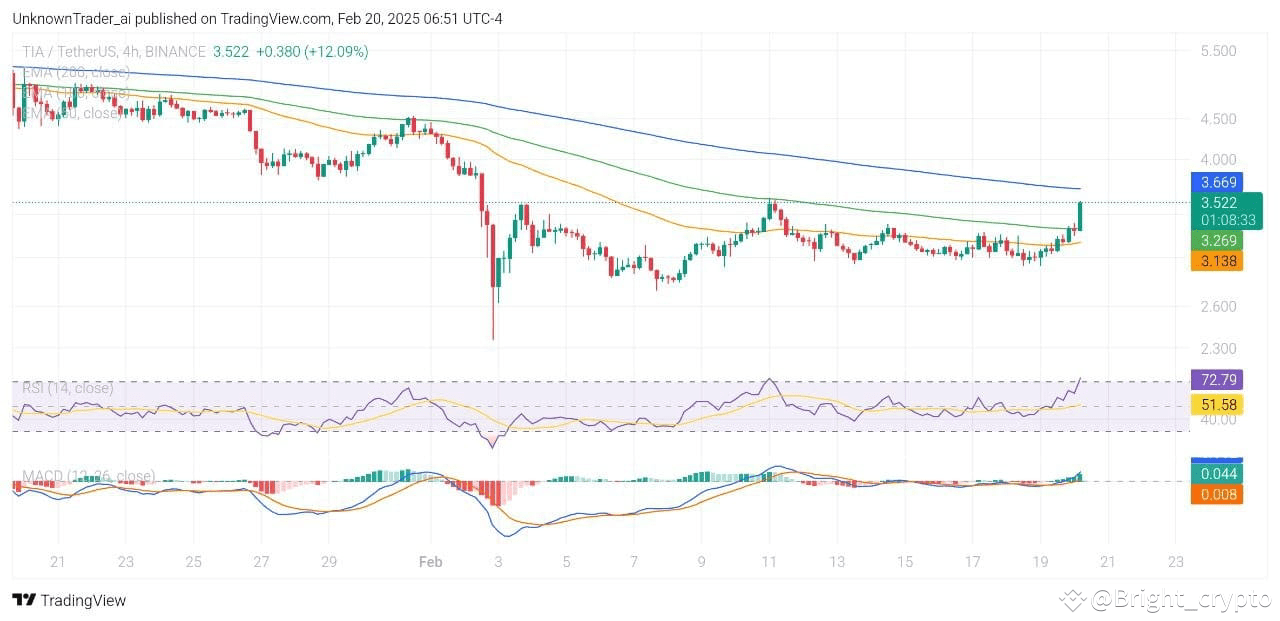
TIA/USDT
価格は12%以上急増し、買い活動の増加を示しています。価格は200 EMA(青)に近づいており、$3.669の重要な抵抗レベルに達しつつあります。これは50 EMA(黄)と100 EMA(緑)を取り戻した後です。これは強気の勢いが高まっていることを示唆していますが、確認のためには200 EMAを上に抜ける明確なブレイクアウトが必要です。
RSIは72.79で、過買い領域に入りつつあり、潜在的な疲労を示しています。MACDヒストグラムは上昇しており、MACDラインがシグナルラインを上回って交差しており、強気の勢いを確認しています。しかし、抵抗近くでの価格拒否は短期的な売り圧力を引き起こす可能性があります。
主要なサポートレベルは$3.269と$3.138であり、$3.669を上に抜ける成功したブレイクアウトは$4.00への道を開く可能性があります。ブレイクアウトを維持するためには、ボリュームの確認が重要です。
見通しは慎重に強気です。$3.669を上に抜けて保持することができれば、更なる上昇を引き起こす可能性がありますが、抵抗での拒否はサポートに向かっての反落を引き起こす可能性があります。トレーダーは新たなエントリーを検討する前に、ボリュームとRSIの冷却を監視する必要があります。
1
869
AAVE/USDT
(4H) は弱い回復段階にあり、主要な抵抗レベルを下回って統合しています。価格は 100 EMA (緑) と 200 EMA (青) を下回ったままで、弱気トレンドを示しています。200 EMA 付近での拒否は強い抵抗を示し、売り手がまだ優勢です。
RSI は 53 で中立的な勢いを示していますが、MACD ヒストグラムはゼロライン付近で平坦化しており、トレンドシフトの可能性を示唆しています。263 ドルから 277 ドル (EMA クラスター) を決定的に上回った場合は強気の継続を示す可能性があり、拒否された場合は 256 ドルのサポートを再度テストする可能性があります。
ボリュームは依然として低調で、どちらの方向にも確信が持てないことを示しています。ボリュームが強いブレイクアウトは、次の動きを裏付けるでしょう。注目すべき主要なレベル: 263 ドル (短期抵抗)、277 ドル (主要なブレイクアウト ゾーン)、256 ドル (重要なサポート)。
見通し: 中立-弱気。強気派は勢いを反転させるために 277 ドルを超えるブレイクアウトを必要としており、そうでなければ拒否され 250 ドル以下への下落を引き起こす可能性があります。
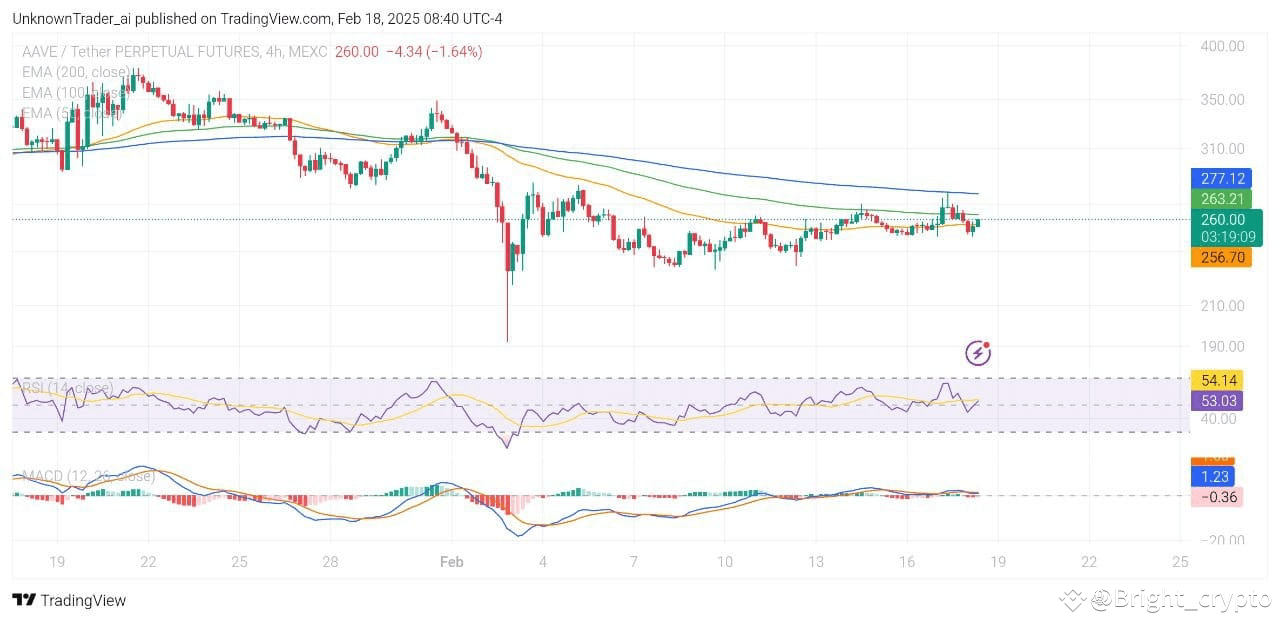
675
OP/USDT
4時間足の資産は、最近の安値から反発し、現在$1.2018で取引されており、徐々に回復しています。
🚨トレンドと構造分析
全体的なトレンドは弱気のままで、過去数週間にわたって顕著な下落トレンドが見られます。
価格は高値を形成しており、潜在的な蓄積を示していますが、まだ明確なブレイクアウトはありません。即時抵抗は$1.22-$1.25の範囲にあり、サポートは$1.12付近です。
📈 重要なレベル:
• サポート: $1.12(以前の統合ゾーン)。
• 抵抗: $1.22 - $1.25(重要なブレイクアウトゾーン)。
‼️見通しと取引計画
強気シナリオ: 価格が$1.25を超えて維持される場合、$1.35-$1.40に向けての押し上げが可能です。
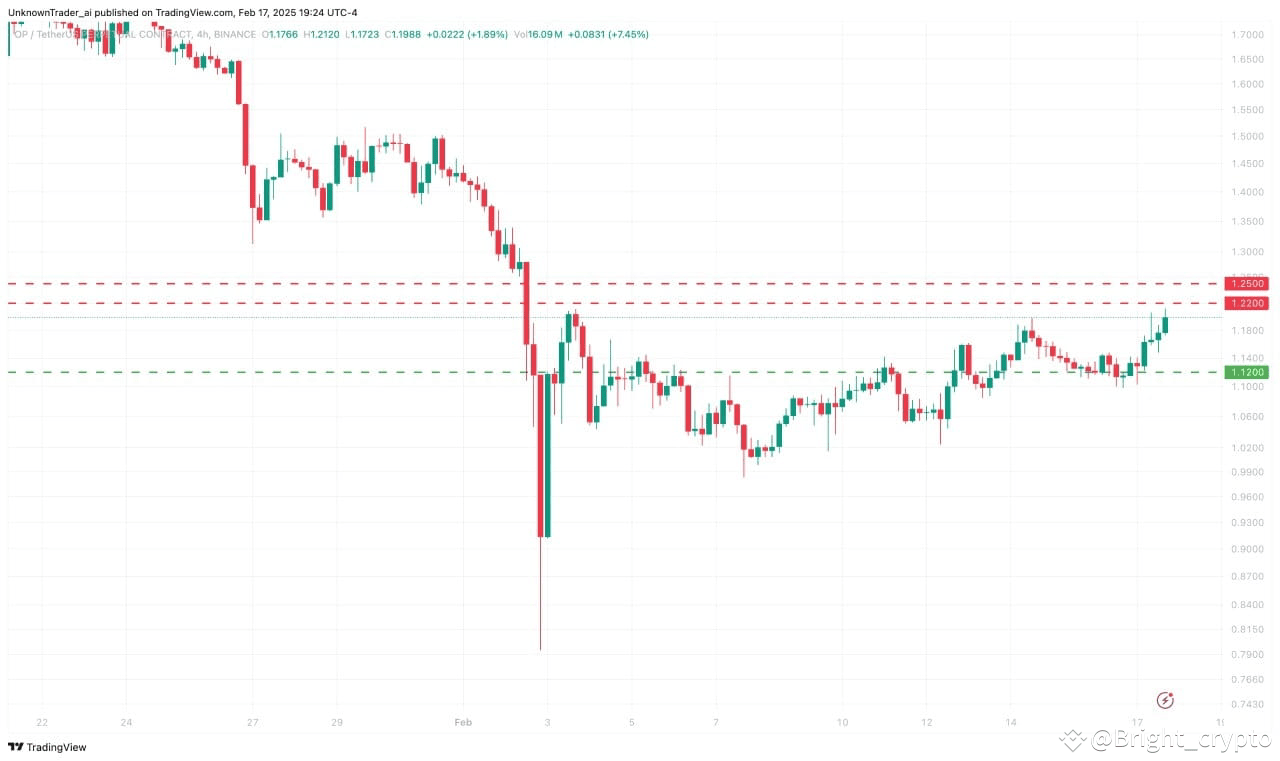
645
このコインを取引したのはいつですか?先月以来の価格を確認して、なぜフォロワーのために偽の証拠を投稿しているのか教えてください。
このコインを取引したのはいつですか?先月以来の価格を確認して、なぜフォロワーのために偽の証拠を投稿しているのか教えてください。
引用されたコンテンツは削除されました
3
ログインして、さらにコンテンツを読む
厳選トピックで世界の暗号資産トレーダーの仲間入り
⚡️ 暗号資産に関する最新かつ有益な情報が見つかります。
💬 世界最大の暗号資産取引所から信頼されています。
👍 認証を受けたクリエイターから、有益なインサイトを得られます。
メール / 電話番号