

AMLBot
7 投稿
AMLBot
報告
ユーザーをブロック
0 フォロー
1 フォロワー
2 いいね
投稿
·
--
翻訳参照
$387 MILLION STOLEN.
4 BLOCKCHAINS.
20+ HOURS OF MANUAL WORK — REDUCED TO UNDER 10 MINUTES.
(According to Chainalysis, AI-powered automation helped investigators trace assets following the September 24, 2026 Bitget theft.)
Think about that for a moment.
Money can disappear in seconds. It can move across blockchains, pass through multiple protocols, and become increasingly difficult to trace.
But the real challenge is not simply tracking transactions. It is connecting the dots, identifying suspicious activity, and understanding where the money goes.
According to Chainalysis (October 1, 2026), AI significantly accelerated cross-chain analysis in this investigation, reducing more than 20 hours of manual reconciliation to under 10 minutes in one example.
This is where blockchain intelligence becomes critical.
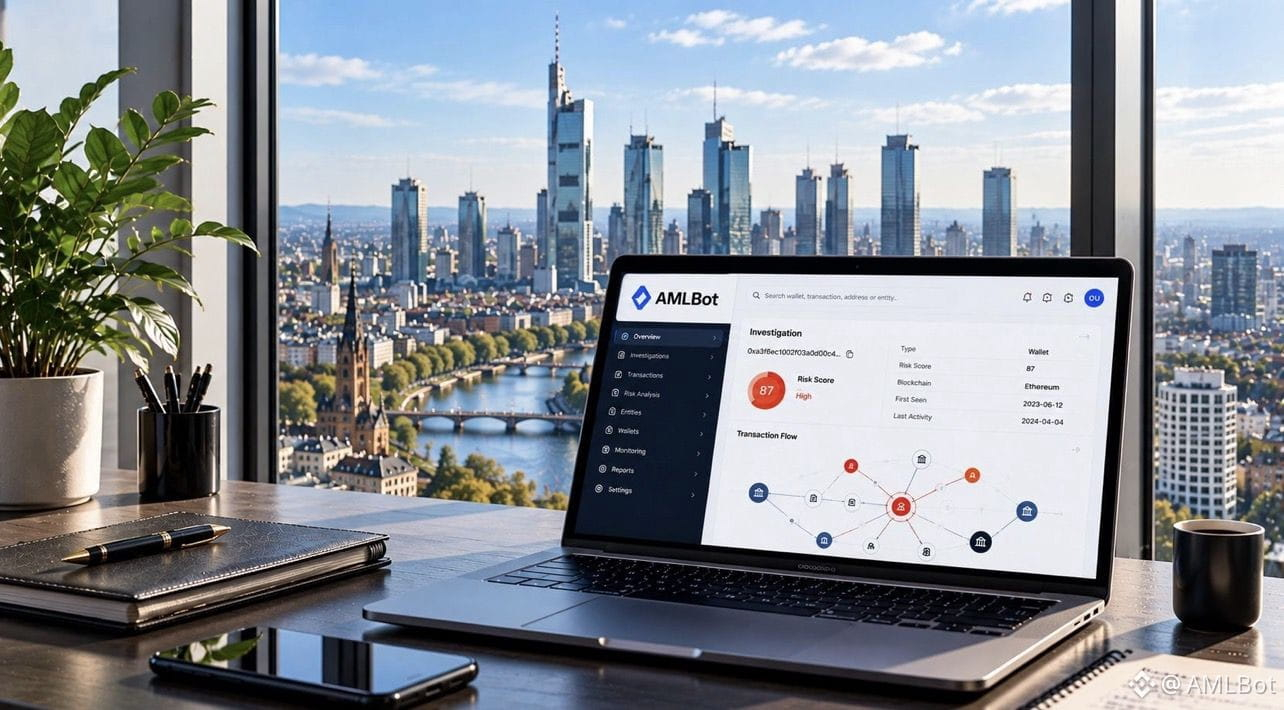
Solutions such as AMLBot help businesses assess wallet risk, identify suspicious transactions, and strengthen their approach to digital-asset compliance.
Because in a world where money moves at the speed of technology, financial intelligence must evolve just as quickly.
The criminals exploit complexity. The question is whether our ability to understand the blockchain can evolve faster.
#BlockchainIntelligence #CryptoCrime #Aİ #compliance #DigitalAssets
39
·
--
わずか94秒で約100万ドルが盗まれた。
Bitqueryによるブロックチェーン調査によると、攻撃者はTelegram上のBloom取引ボットを利用していた9人のトレーダーが所有する48個のウォレットから、約95万3,000ドル相当の9,408 SOLを抜き取った。
しかし、最も憂慮すべき点はここだ。被害を受けたウォレットの一部は、2025年前半以降、ボットで利用されていなかった。
攻撃者はウォレットを調べて標的を特定し、連携した一連の操作で資金を抜き取った。盗まれたSOLのほぼすべては、1つのウォレットに集められた。
Bloomは、このインシデントの原因はサードパーティ製モジュールのリモートコード実行の脆弱性にあるとし、被害を受けたユーザー全員に全額を補償すると約束した。攻撃の正確な仕組みについては、現在も調査が続いている。
このインシデントから何がわかるだろうか?
🔹 古いつながりが新たなリスクを生むことがある。サービスの利用をやめても、以前に接続したウォレットに関連するリスクが必ずなくなるとは限らない。
🔹 スピードが犯罪の経済性を変える。自動化された攻撃では、被害者が対応する前に、多額のデジタル資産を移動できる。
🔹 追跡が重要だ。ブロックチェーンの分析により、取引の流れを再構築し、関連する送金を結び付け、盗まれた資産の移動先を捜査機関が特定する助けとなる。
重要なのは、侵害をどう防ぐかだけではなくなった。不審な動きをどれだけ迅速に検知し、調査し、対処できるかも問われている。
デジタル金融では、一秒一秒が重要だ。
#AMLBot #BlockchainIntelligence #AML #CryptoCompliance #暗号資産取引所

1
2.5k
·
--

記事
翻訳参照
Australia’s Digital Finance Revolution: Why Blockchain Intelligence Matters🇦🇺 Australia is building the foundations for the next generation of digital finance. But infrastructure alone is not enough.
Three developments are worth watching.
🔷 The Reserve Bank of Australia is advancing work on tokenised financial markets through Project Acacia, exploring how stablecoins, tokenised bank deposits and other forms of digital money could support institutional settlement.
🔷 Australia’s updated AML/CTF framework, effective for the expanded virtual asset services regime since 31 March 2026, is bringing additional digital asset activities within the regulatory perimeter.
🔷 ASIC’s October 2026 proposals are shaping the implementation of a new licensing framework for digital asset and tokenised custody platforms, with the new regime scheduled to commence in April 2027.
Together, these developments point to a broader shift: digital assets are becoming an increasingly important part of the financial system, while expectations around risk management, governance and transparency continue to evolve.
For crypto exchanges, stablecoin issuers, digital asset custodians and fintech companies building blockchain-based payment infrastructure, this raises a fundamental question:
How do you scale digital finance while maintaining visibility into the risks moving across blockchain networks?
Knowing who your customer is remains essential. But understanding the transactions, wallet exposures and flow of funds connected to that customer is another critical layer of risk management.
Blockchain intelligence and transaction monitoring can help businesses identify high-risk exposure, investigate suspicious activity and strengthen their existing AML controls.
The objective is not simply to meet regulatory requirements. It is to build financial infrastructure that institutions, partners and customers can trust.
As Australia moves towards more integrated digital asset markets, blockchain intelligence is becoming an increasingly important capability for responsible growth.
The next stage of digital finance will require more than innovation. It will require visibility, accountability and trust.
#Australia #FinTech #DigitalAssets #BlockchainIntelligence #AML #CryptoCompliance #Stablecoins #CryptoExchanges #AUSTRAC #RegTech
Australia’s Digital Finance Revolution: Why Blockchain Intelligence Matters
🇦🇺 Australia is building the foundations for the next generation of digital finance. But infrastructure alone is not enough.
Three developments are worth watching.
🔷 The Reserve Bank of Australia is advancing work on tokenised financial markets through Project Acacia, exploring how stablecoins, tokenised bank deposits and other forms of digital money could support institutional settlement.
🔷 Australia’s updated AML/CTF framework, effective for the expanded virtual asset services regime since 31 March 2026, is bringing additional digital asset activities within the regulatory perimeter.
🔷 ASIC’s October 2026 proposals are shaping the implementation of a new licensing framework for digital asset and tokenised custody platforms, with the new regime scheduled to commence in April 2027.
Together, these developments point to a broader shift: digital assets are becoming an increasingly important part of the financial system, while expectations around risk management, governance and transparency continue to evolve.
For crypto exchanges, stablecoin issuers, digital asset custodians and fintech companies building blockchain-based payment infrastructure, this raises a fundamental question:
How do you scale digital finance while maintaining visibility into the risks moving across blockchain networks?
Knowing who your customer is remains essential. But understanding the transactions, wallet exposures and flow of funds connected to that customer is another critical layer of risk management.
Blockchain intelligence and transaction monitoring can help businesses identify high-risk exposure, investigate suspicious activity and strengthen their existing AML controls.
The objective is not simply to meet regulatory requirements. It is to build financial infrastructure that institutions, partners and customers can trust.
As Australia moves towards more integrated digital asset markets, blockchain intelligence is becoming an increasingly important capability for responsible growth.
The next stage of digital finance will require more than innovation. It will require visibility, accountability and trust.
#Australia #FinTech #DigitalAssets #BlockchainIntelligence #AML #CryptoCompliance #Stablecoins #CryptoExchanges #AUSTRAC #RegTech
54
·
--
🇸🇬 シンガポールの街は眠らない。そして、サイバー犯罪者も眠らない。
街の明かりが夜を照らす一方で、デジタルの世界では別の戦いが繰り広げられています。たった1台のデバイスが侵害されるだけで、何百万人もの人々が危険にさらされる可能性があります。
🚨 報道によると、被害額は350万シンガポールドル。2件の事案。重大な警告です。
2026年10月28日、シンガポール警察は、改ざんされたLedgerのハードウェアウォレットが関与する暗号資産の窃盗について注意喚起を発表しました。9月10日以降、少なくとも2件の事案が報告されており、初期調査では、ユーザーの秘密鍵またはリカバリーフレーズを危険にさらした可能性のある悪意ある部品が関与したとみられています。
捜査は現在も続いています。
警告は明確です。デジタル資産を守るために設計されたデバイスであっても、脆弱性の原因になり得ます。
🔐 ハードウェアウォレットは、信頼できる正規の販売経路からのみ購入してください。リカバリーフレーズや秘密鍵は決して共有しないでください。デバイスが侵害された疑いがある場合は使用を中止し、メーカーの公式サポート窓口に連絡してください。
眠らない世界では、警戒を怠るわけにはいきません。
出典:シンガポール警察

1
560
·
--
翻訳参照
BEHIND THE BILLIONS: THE POWER OF BLOCKCHAIN INTELLIGENCE
Following the Binance incident, Viacheslav Demchuk, CEO and Co-founder of AMLBot, brought together the company’s analytical minds for an internal discussion and deep-dive analysis.
The objective was to examine the incident, explore the techniques and attack methods behind it, exchange expertise, and identify insights that could strengthen AMLBot’s analytical capabilities.
The discussion focused on some critical questions:
— How do attackers move funds across complex blockchain networks?
— How can connections between wallets and transactions reveal the bigger picture?
— What techniques are used to obscure the movement of digital assets?
— Which signals can help identify suspicious activity earlier?
— How can these insights improve monitoring and risk detection?
This is where blockchain intelligence becomes essential.
Our analysts work to connect fragmented information, identify hidden relationships, understand transaction patterns, and turn complex blockchain data into actionable intelligence.
For AMLBot, every major incident is an opportunity to challenge assumptions, exchange knowledge, sharpen analytical thinking, and strengthen the tools used to identify emerging threats.
Because understanding an attack is one of the first steps toward preventing the next one.
The future of digital finance will depend not only on technology, but on the people capable of understanding what happens behind the data.
AMLBot | Blockchain Intelligence
#BlockchainIntelligence #CryptoSecurity #AML #DigitalAssets #FinancialCrime #BlockchainAnalytics

84
ログインして、さらにコンテンツを読む
厳選トピックで世界の暗号資産トレーダーの仲間入り
⚡️ 暗号資産に関する最新かつ有益な情報が見つかります。
💬 世界最大の暗号資産取引所から信頼されています。
👍 認証を受けたクリエイターから、有益なインサイトを得られます。
メール / 電話番号