Binance Square
BESBAS_PRO
12 投稿

BESBAS_PRO

Understand the markets before predicting them.Seeking meaning behind the movement.not noise
超高頻度トレーダー
4.2年
38 フォロー
36 フォロワー
9 いいね
投稿
·
--
記事
翻訳参照
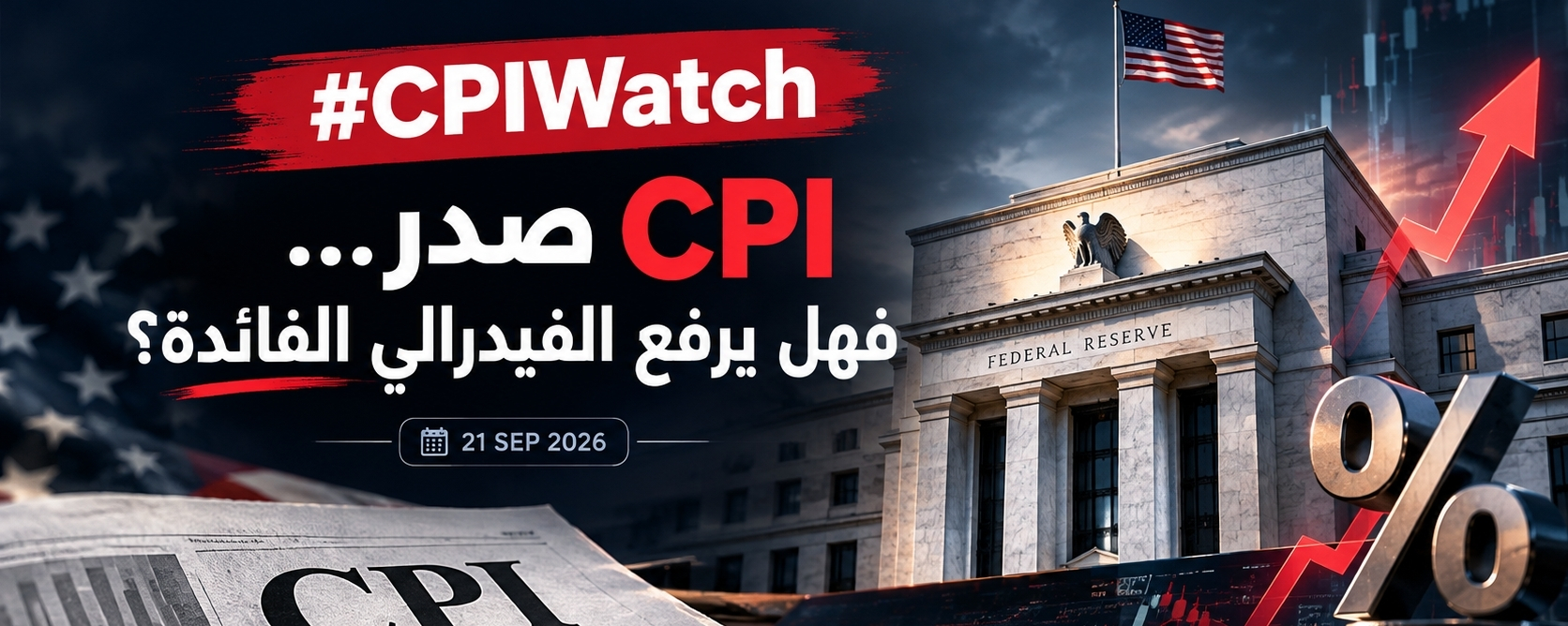
هل يكرر البتكوين التاريخ بعد كأس العالم 2026؟أم أن السوق يقف أمام مرحلة مختلفة؟؟في الأسواق المالية، أخطر ما يمكن أن يفعله المستثمر هو أن يعتقد أن الماضي انتهى. فالتاريخ لا يعود بالنسخة نفسها، لكنه يترك بصماته في كل دورة جديدة. وبينما ينشغل مليارات الأشخاص بمتابعة كأس العالم 2026، يراقب المستثمرون حدثًا آخر أكثر هدوءًا، لكنه قد يكون أكثر تأثيرًا: كيف سيتصرف البيتكوين بعد البطولة؟ قد يبدو الربط بين بطولة كرة قدم وسوق العملات الرقمية غريبًا للوهلة الأولى، لكن الأسواق لا تتحرك بالأخبار وحدها، بل تتأثر أيضًا بالدورات الاقتصادية، وتدفقات السيولة، والحالة النفسية للمستثمرين. وعندما ننظر إلى البيانات التاريخية، نجد أن تزامن كأس العالم مع مراحل مفصلية في دورة البيتكوين ليس مجرد تفصيل عابر. بعد كأس العالم 2014، كان البيتكوين يتداول بالقرب من 600 دولار، وسط حالة من الشك بعد انهيار منصة Mt. Gox. حينها اعتقد كثيرون أن القصة انتهت، لكن السوق كان يستعد بصمت لواحدة من أقوى موجات الصعود في تاريخه، انتهت بوصول السعر إلى ما يقارب 20 ألف دولار في نهاية 2017. ثم جاءت نسخة 2018. في ذلك الوقت، كانت العملات الرقمية تعيش واحدة من أكثر فتراتها قسوة، بعدما فقد البيتكوين أكثر من 80% من قيمته مقارنة بقمته السابقة. بدت الثقة مفقودة، وغادر عدد كبير من المستثمرين السوق، لكن تلك المرحلة نفسها كانت بداية تكوين القاعدة التي انطلقت منها الدورة الصاعدة التالية، والتي أوصلت البيتكوين إلى قرابة 69 ألف دولار في عام 2021. أما كأس العالم 2022، فقد جاء والسوق يعيش أزمة غير مسبوقة. انهيار FTX، وإفلاس شركات كبرى، وتشديد السياسات النقدية، كلها عوامل دفعت كثيرين إلى الاعتقاد بأن سوق العملات الرقمية دخل مرحلة طويلة من الانكماش. لكن الأسواق، كما اعتادت دائمًا، كانت تكتب قصة مختلفة. فما بدا نهايةً للكثيرين، تحول لاحقًا إلى نقطة انطلاق نحو قمم تاريخية جديدة. وهنا يظهر السؤال الذي يستحق التفكير: هل كانت هذه مجرد مصادفات، أم أن هناك نمطًا يتكرر؟ الإجابة ليست بهذه البساطة. كأس العالم لا يدفع البيتكوين إلى الصعود أو الهبوط، لكنه يتزامن في أكثر من مرة مع مراحل انتقالية داخل الدورة الاقتصادية. ففي تلك الفترات، تتغير السيولة، وتتبدل شهية المستثمرين للمخاطرة، وتبدأ الأسواق بإعادة تسعير توقعاتها للمستقبل. لذلك، قد يكون الحدث الرياضي مجرد نقطة على الخط الزمني، بينما تكمن القصة الحقيقية في المرحلة الاقتصادية التي يأتي خلالها. لكن دورة 2026 تختلف عن كل ما سبق. لأول مرة، يدخل البيتكوين كأس العالم وهو أصل مالي تتنافس عليه المؤسسات الكبرى، بعد إطلاق صناديق التداول الفورية (Spot Bitcoin ETFs)، وازدياد مشاركة مديري الأصول، وارتفاع مستوى التنظيم في كثير من الأسواق. هذا يعني أن حركة البيتكوين لم تعد تعتمد فقط على المستثمر الفردي، بل أصبحت مرتبطة أيضًا بتدفقات رؤوس الأموال المؤسسية، وقرارات البنوك المركزية، وأسعار الفائدة، والسياسات الاقتصادية العالمية. وهنا يصبح تكرار الماضي بالحرف الواحد احتمالًا ضعيفًا. لكن تجاهل الماضي بالكامل قد يكون خطأ أكبر. فالأسواق لا تكرر الأحداث... بل تكرر سلوك البشر. الخوف، والطمع، والمبالغة في التفاؤل، والبيع بدافع الذعر، كلها مشاعر تظهر في كل دورة، مهما تغيرت الأدوات والظروف. ولهذا السبب، لا يدرس المحللون التاريخ بحثًا عن نسخة مطابقة للمستقبل، بل بحثًا عن الأنماط التي تتكرر عندما يواجه المستثمرون الظروف نفسها. ربما لن يعيد البيتكوين السيناريو نفسه بعد كأس العالم 2026، وربما يفاجئ الجميع بمسار مختلف تمامًا. لكن المؤكد أن المرحلة المقبلة ستكون من أكثر المراحل حساسية في تاريخ السوق، لأنها ستكشف ما إذا كانت العملات الرقمية لا تزال تتحرك وفق دوراتها التقليدية، أم أنها بدأت بالفعل عصرًا جديدًا تقوده المؤسسات والاستثمارات الضخمة. ويبقى السؤال الذي سيجيب عنه السوق، لا التوقعات: هل سيكون كأس العالم 2026 بداية فصل جديد في رحلة البيتكوين، أم مجرد محطة أخرى في دورة أكبر لم تكتمل فصولها بعد؟ شاركنا رأيك في التعليقات. هل تؤمن بأن التاريخ يميل إلى تكرار نفسه، أم أن هذه المرة مختلفة فعلًا؟ #BTC #FIFA🏆 #cup #crypto #FifaSeasion2026

هل يكرر البتكوين التاريخ بعد كأس العالم 2026؟أم أن السوق يقف أمام مرحلة مختلفة؟؟

في الأسواق المالية، أخطر ما يمكن أن يفعله المستثمر هو أن يعتقد أن الماضي انتهى. فالتاريخ لا يعود بالنسخة نفسها، لكنه يترك بصماته في كل دورة جديدة. وبينما ينشغل مليارات الأشخاص بمتابعة كأس العالم 2026، يراقب المستثمرون حدثًا آخر أكثر هدوءًا، لكنه قد يكون أكثر تأثيرًا: كيف سيتصرف البيتكوين بعد البطولة؟
قد يبدو الربط بين بطولة كرة قدم وسوق العملات الرقمية غريبًا للوهلة الأولى، لكن الأسواق لا تتحرك بالأخبار وحدها، بل تتأثر أيضًا بالدورات الاقتصادية، وتدفقات السيولة، والحالة النفسية للمستثمرين. وعندما ننظر إلى البيانات التاريخية، نجد أن تزامن كأس العالم مع مراحل مفصلية في دورة البيتكوين ليس مجرد تفصيل عابر.
بعد كأس العالم 2014، كان البيتكوين يتداول بالقرب من 600 دولار، وسط حالة من الشك بعد انهيار منصة Mt. Gox. حينها اعتقد كثيرون أن القصة انتهت، لكن السوق كان يستعد بصمت لواحدة من أقوى موجات الصعود في تاريخه، انتهت بوصول السعر إلى ما يقارب 20 ألف دولار في نهاية 2017.
ثم جاءت نسخة 2018. في ذلك الوقت، كانت العملات الرقمية تعيش واحدة من أكثر فتراتها قسوة، بعدما فقد البيتكوين أكثر من 80% من قيمته مقارنة بقمته السابقة. بدت الثقة مفقودة، وغادر عدد كبير من المستثمرين السوق، لكن تلك المرحلة نفسها كانت بداية تكوين القاعدة التي انطلقت منها الدورة الصاعدة التالية، والتي أوصلت البيتكوين إلى قرابة 69 ألف دولار في عام 2021.
أما كأس العالم 2022، فقد جاء والسوق يعيش أزمة غير مسبوقة. انهيار FTX، وإفلاس شركات كبرى، وتشديد السياسات النقدية، كلها عوامل دفعت كثيرين إلى الاعتقاد بأن سوق العملات الرقمية دخل مرحلة طويلة من الانكماش. لكن الأسواق، كما اعتادت دائمًا، كانت تكتب قصة مختلفة. فما بدا نهايةً للكثيرين، تحول لاحقًا إلى نقطة انطلاق نحو قمم تاريخية جديدة.
وهنا يظهر السؤال الذي يستحق التفكير: هل كانت هذه مجرد مصادفات، أم أن هناك نمطًا يتكرر؟
الإجابة ليست بهذه البساطة.
كأس العالم لا يدفع البيتكوين إلى الصعود أو الهبوط، لكنه يتزامن في أكثر من مرة مع مراحل انتقالية داخل الدورة الاقتصادية. ففي تلك الفترات، تتغير السيولة، وتتبدل شهية المستثمرين للمخاطرة، وتبدأ الأسواق بإعادة تسعير توقعاتها للمستقبل. لذلك، قد يكون الحدث الرياضي مجرد نقطة على الخط الزمني، بينما تكمن القصة الحقيقية في المرحلة الاقتصادية التي يأتي خلالها.
لكن دورة 2026 تختلف عن كل ما سبق.
لأول مرة، يدخل البيتكوين كأس العالم وهو أصل مالي تتنافس عليه المؤسسات الكبرى، بعد إطلاق صناديق التداول الفورية (Spot Bitcoin ETFs)، وازدياد مشاركة مديري الأصول، وارتفاع مستوى التنظيم في كثير من الأسواق. هذا يعني أن حركة البيتكوين لم تعد تعتمد فقط على المستثمر الفردي، بل أصبحت مرتبطة أيضًا بتدفقات رؤوس الأموال المؤسسية، وقرارات البنوك المركزية، وأسعار الفائدة، والسياسات الاقتصادية العالمية.
وهنا يصبح تكرار الماضي بالحرف الواحد احتمالًا ضعيفًا.
لكن تجاهل الماضي بالكامل قد يكون خطأ أكبر.
فالأسواق لا تكرر الأحداث... بل تكرر سلوك البشر. الخوف، والطمع، والمبالغة في التفاؤل، والبيع بدافع الذعر، كلها مشاعر تظهر في كل دورة، مهما تغيرت الأدوات والظروف. ولهذا السبب، لا يدرس المحللون التاريخ بحثًا عن نسخة مطابقة للمستقبل، بل بحثًا عن الأنماط التي تتكرر عندما يواجه المستثمرون الظروف نفسها.
ربما لن يعيد البيتكوين السيناريو نفسه بعد كأس العالم 2026، وربما يفاجئ الجميع بمسار مختلف تمامًا. لكن المؤكد أن المرحلة المقبلة ستكون من أكثر المراحل حساسية في تاريخ السوق، لأنها ستكشف ما إذا كانت العملات الرقمية لا تزال تتحرك وفق دوراتها التقليدية، أم أنها بدأت بالفعل عصرًا جديدًا تقوده المؤسسات والاستثمارات الضخمة.
ويبقى السؤال الذي سيجيب عنه السوق، لا التوقعات:
هل سيكون كأس العالم 2026 بداية فصل جديد في رحلة البيتكوين، أم مجرد محطة أخرى في دورة أكبر لم تكتمل فصولها بعد؟
شاركنا رأيك في التعليقات. هل تؤمن بأن التاريخ يميل إلى تكرار نفسه، أم أن هذه المرة مختلفة فعلًا؟
#BTC #FIFA🏆 #cup #crypto #FifaSeasion2026
記事
翻訳参照
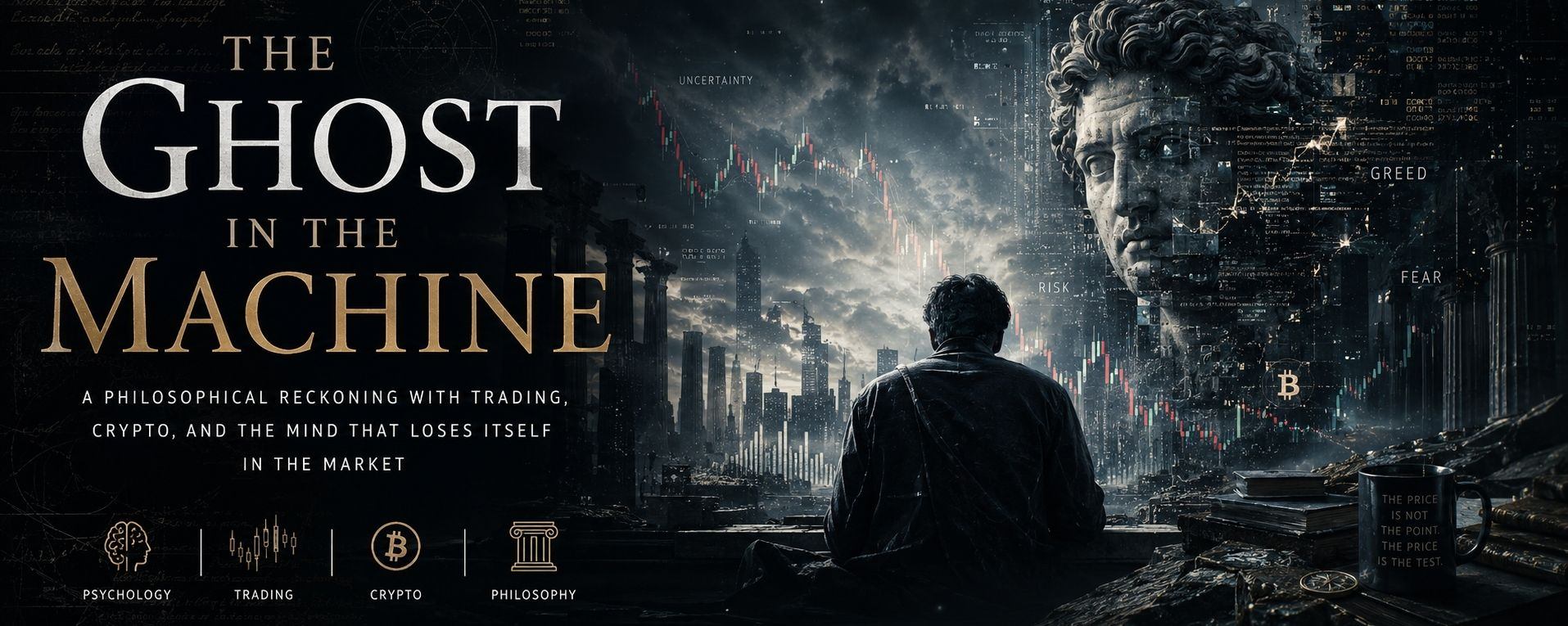
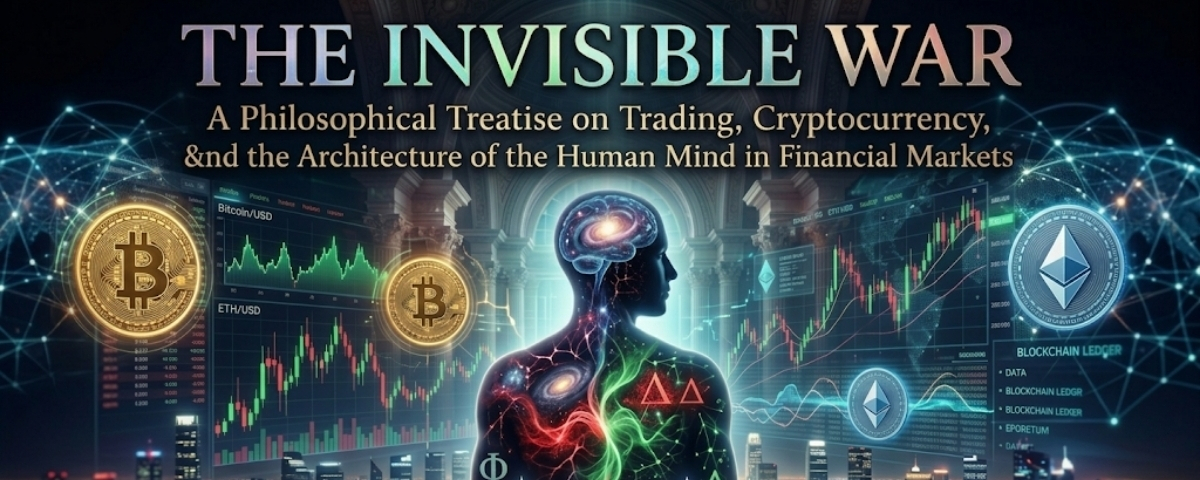
THE GHOST IN THE MACHINE Trading • Psychology • Crypto • PhilosophyThere is a particular madness that comes over a person the first time a candlestick chart begins to look like language. The green and red bars, the wicks reaching up and down like antennae searching the air — they stop being data and start being *speech*. The market appears to be saying something. And in that moment of apparent revelation, the trader is already lost. This is where philosophy must begin: not with technical analysis, not with blockchain architecture, not with liquidity pools or order flow — but with the terrifying fact that **human beings are meaning-making creatures thrown into a system that generates no meaning whatsoever.** The market does not speak. And yet we cannot stop listening. --- ## I. The Ontology of Price What *is* a price? Most people assume it is a measurement — an objective reading of value, like a thermometer reads temperature. This is perhaps the most dangerous intellectual error a trader can commit. A price is not a measurement. A price is a **negotiated hallucination** — the momentary consensus of thousands of competing intentions, fears, algorithms, and misunderstandings, compressed into a single number that will be obsolete in the next second. It measures nothing except the temporary outcome of a psychological tug-of-war. In traditional markets, this was always true. But in cryptocurrency markets, the hallucination becomes almost visible to the naked eye. Bitcoin has no factory. Ethereum has no board of directors. There are no quarterly earnings to anchor sentiment to reality. Price in crypto is *pure psychology*, occasionally interrupted by genuine technological developments. This is not a weakness of crypto markets. It is an extreme clarification of what all markets fundamentally are. Friedrich Nietzsche wrote that what we call "truth" is "a mobile army of metaphors." A price is similar: a mobile army of beliefs. And like beliefs, it can be correct or catastrophically wrong, and there is often no way to know which until long after the moment of commitment. --- ## II. The Market Maker and the Invisible Hand Behind every trade, there is an entity most retail participants prefer not to think about: the **market maker**. The market maker is the philosophical inverse of the gambler. Where the retail trader prays for direction — *up or down, please, just give me direction* — the market maker is indifferent to direction. The market maker profits from the *spread*, from the *friction* of other people's urgency. The more desperately you need to enter or exit a position, the more the market maker extracts from your desperation. This is not villainy. It is a structural truth about how liquidity is created and priced. But it carries a profound moral dimension that most trading education carefully avoids. The market maker exists because **impatience has a price**. Every person who cannot wait — who *must* buy now, who *must* sell before the close — pays a tax to those willing to stand on the other side and absorb their urgency. In this sense, the entire architecture of financial markets is a massive, automated transfer of wealth from the impatient to the patient, from the emotional to the cold, from those who *need* certainty to those who are comfortable in ambiguity. In cryptocurrency, market makers operate with particular efficiency. The 24-hour, seven-day nature of crypto means human emotional cycles — fear spikes at 3 AM, euphoria on Sunday afternoon — are fully exploitable. Algorithmic market makers never sleep. They never panic. They have no 3 AM. They sit, patient and indifferent as stone, ready to buy your panic and sell you your greed. The first philosophical lesson of trading: **your emotional experience of the market is your primary liability.** --- ## III. The Trader's Psychology: A Study in Constructed Suffering Carl Jung said that until we make the unconscious conscious, it will direct our life and we will call it fate. There is no domain where this is more brutally true than trading. The average retail trader does not lose money because of bad analysis. They lose money because of **correct analysis executed with catastrophic timing**, driven by emotions they are not aware of having. Consider the phenomenology of a losing trade. The position goes against you. There is discomfort — a tightening in the chest, a narrowing of perception. The mind begins to bargain: *it will come back. I just need to wait.* The stop-loss that seemed reasonable when you placed the trade now feels arbitrary, even cruel. You move it. Or you remove it entirely. You add to the losing position. You turn a planned trade into an unplanned investment. You turn a loss into a catastrophe. What happened? You experienced what behavioral economists call **loss aversion** — the documented human tendency to feel losses approximately twice as intensely as equivalent gains. But loss aversion is not a cognitive error. It is an ancient survival mechanism. For our ancestors on the savanna, losing resources was often fatal in a way that failing to gain resources was not. The problem is that the savanna is not the market. And the brain does not update its operating system just because the environment has changed. Cryptocurrency amplifies this dynamic to its logical extreme because **crypto moves faster than the nervous system was designed to process**. A 20% drawdown in a stock might occur over three months, giving the psyche time to adapt. A 20% drawdown in Bitcoin can occur in forty minutes. The gap between the speed of markets and the speed of human emotional processing is where fortunes are destroyed. The trader who survives is not the one who eliminates emotion — that is impossible, and the aspiration itself is a form of self-deception. The trader who survives is the one who **creates enough structural distance between feeling and action** that the feeling cannot directly command the hand. This is why the greatest trading rules are almost laughably simple: define your risk before you enter. Never move a stop against your position. Do not increase size after a loss. Know why you are in a trade, and know in advance what will tell you that you were wrong. Simple. And almost no one follows them. Because following them requires something more difficult than intelligence: it requires *self-knowledge*, and self-knowledge requires the willingness to see yourself accurately, which requires a kind of courage that the market brutally tests every single day. --- ## IV. The Paradox of Certainty In crypto, certainty often disguises itself as intelligence. The trader who says "I know" usually stops learning. The trader who says "I might be wrong" remains adaptive. Markets reward flexibility far more often than conviction. Here is the deepest philosophical trap in trading, the one that destroys technically sophisticated participants just as readily as naive ones: **The more certain you feel about a trade, the more dangerous the position becomes.** Certainty is not a function of reality. Certainty is a function of how much confirming information you have sought and found. And in an era of infinite information — crypto Twitter, Discord channels, Telegram groups, TradingView comment sections — you can build an ironclad case for almost any position. The information ecosystem around any given asset is essentially an **echo chamber generation machine**. You will find the confirmation you are looking for, because you are looking for it. The philosopher Karl Popper taught that the strength of a hypothesis is not measured by how much evidence supports it, but by **how easily it can be falsified**. The strongest scientific theories are the ones that make specific, testable predictions that could be proven wrong. Most traders operate by the opposite principle. They construct theses that are unfalsifiable — when the price goes up, it confirms the thesis; when it goes down, it is "manipulation" or "a shakeout before the real move." The thesis can never be wrong because it has been designed, unconsciously, to survive contact with any evidence. This is not stupidity. This is the ordinary human mind doing what it evolved to do: protect its beliefs from revision, because in ancestral environments, having a coherent worldview was more important than having an accurate one. In markets, this tendency is fatal. The professional's relationship with uncertainty is almost counterintuitive: **they are most cautious when most confident, and most alert when least certain.** They know that peak conviction is often the signature of peak exposure to a narrative that the market is about to ruthlessly dismantle. --- ## V. Blockchain as Mirror There is something philosophically remarkable about what cryptocurrency actually is, when you strip away the noise of price and speculation. The blockchain is an **immutable record of human agreements**. Every transaction on a public ledger is a permanently recorded act of exchange — a moment when two or more parties, often strangers, reached agreement about value and transferred it without requiring a third party to authorize or witness the act. The blockchain does not trust anyone. It requires no trust. It makes trust *unnecessary* by making deception *impossible*. This is not merely a technical achievement. It is a philosophical one. Across human history, the creation of trust has required institutions — courts, banks, governments, contracts, reputation systems. These institutions are powerful, but they are also corruptible. They are run by human beings who have interests, biases, and the capacity for self-dealing. The blockchain proposes something unprecedented: **trust as a mathematical property rather than a social one**. Whether this proposition ultimately succeeds — whether it scales to the complexity of global commerce, whether its energy demands are sustainable, whether it can survive regulatory capture — remains genuinely uncertain. But the *ambition* is philosophically serious in a way that its critics often fail to engage with. Crypto is not, at its core, a get-rich scheme. At its core, it is an attempt to solve one of the oldest problems in human civilization: **how do strangers cooperate at scale without surrendering their autonomy to an authority they must trust blindly?** The price action is noise. That question is the signal. --- ## VI. The Ethics of the Arena Let us be honest about something that trading literature rarely addresses directly: **the market is not a neutral game**. It is not chess, where both players begin with equal resources and equal information. It is closer to poker played on a table where some players can see several cards that others cannot, and where the house takes a cut from every pot. Institutional traders have advantages in execution speed, information access, research capacity, and capital that retail participants cannot match and cannot close. Market makers have structural advantages built into the architecture of markets. In crypto, early participants and insiders often hold enormous token supplies acquired at prices the public will never see. To trade with awareness of this reality is not paranoia — it is **basic epistemic hygiene**. The question is not whether the game is fair. It is not. The question is whether, understanding that it is not fair, you can still identify edges — genuine, repeatable edges — that allow you to extract value in the long run. Some can. Most cannot. The ones who can share certain qualities: they are honest about their failures, relentlessly honest about what they do not know, intellectually humble enough to revise their models when the market contradicts them, and psychologically resilient enough to continue functioning after periods of significant loss. These are not financial skills. They are **virtues** in the classical sense — stable dispositions of character that allow a person to function well in difficult conditions. The market, in this sense, is not just an economic mechanism. It is a **character-revealing machine**. It will find every weakness you have — every bias, every emotional blind spot, every failure of discipline — and it will extract a price from each one. This is why serious traders speak of the market with something approaching reverence. Not because it is wise, or just, or meaningful — it is none of these things. But because **it does not lie**. It does not tell you what you want to hear. Your P&L is a mirror held up to the quality of your thinking, the accuracy of your models, and the integrity of your psychological self-management. In a world saturated with comfortable narratives and convenient fictions, there is something almost purifying about that. --- ## Conclusion: The Practice Philosophy without practice is performance. So let this end with what the preceding analysis actually demands of anyone who engages with markets seriously. **Know yourself first.** Before you know the market, know your relationship with uncertainty, with loss, with being wrong in public. The market will probe these relationships without mercy. **Hold your convictions lightly.** The strongest thesis should carry the loosest grip. Know in advance what evidence would change your mind, and honor that evidence when it arrives. **Respect the structure of the game.** You are not playing against the chart. You are playing against every other participant, including many who are faster, better-informed, and better-capitalized. Your edge, if you have one, will be found in the psychology and discipline they lack — not in the information they possess and you do not. **Treat the blockchain seriously.** Beneath the speculation and the noise, there is a genuine technological and philosophical experiment unfolding in real time. Understanding what it is actually trying to do will make you a better participant in the market it has generated. And finally: **understand that the market will not complete you**. The fantasy of the life-changing trade, the one score that solves everything, is perhaps the most dangerous fiction in the entire ecosystem. The market will not provide meaning. It will not provide identity. It will not fill whatever void preceded your arrival at the trading terminal. What it will do, if you approach it with honesty and rigor, is teach you — at considerable cost — a great deal about the nature of probability, the limits of knowledge, and the exact contours of your own mind. That education, at least, is worth something. --- *The price is not the point. The price is the test.* #america1776 # ##philosophy • #trading #Psychology • #crypto

THE GHOST IN THE MACHINE Trading • Psychology • Crypto • Philosophy

There is a particular madness that comes over a person the first time a candlestick chart begins to look like language. The green and red bars, the wicks reaching up and down like antennae searching the air — they stop being data and start being *speech*. The market appears to be saying something. And in that moment of apparent revelation, the trader is already lost.
This is where philosophy must begin: not with technical analysis, not with blockchain architecture, not with liquidity pools or order flow — but with the terrifying fact that **human beings are meaning-making creatures thrown into a system that generates no meaning whatsoever.**
The market does not speak. And yet we cannot stop listening.
---
## I. The Ontology of Price
What *is* a price?
Most people assume it is a measurement — an objective reading of value, like a thermometer reads temperature. This is perhaps the most dangerous intellectual error a trader can commit.
A price is not a measurement. A price is a **negotiated hallucination** — the momentary consensus of thousands of competing intentions, fears, algorithms, and misunderstandings, compressed into a single number that will be obsolete in the next second. It measures nothing except the temporary outcome of a psychological tug-of-war.
In traditional markets, this was always true. But in cryptocurrency markets, the hallucination becomes almost visible to the naked eye. Bitcoin has no factory. Ethereum has no board of directors. There are no quarterly earnings to anchor sentiment to reality. Price in crypto is *pure psychology*, occasionally interrupted by genuine technological developments.
This is not a weakness of crypto markets. It is an extreme clarification of what all markets fundamentally are.
Friedrich Nietzsche wrote that what we call "truth" is "a mobile army of metaphors." A price is similar: a mobile army of beliefs. And like beliefs, it can be correct or catastrophically wrong, and there is often no way to know which until long after the moment of commitment.
---
## II. The Market Maker and the Invisible Hand
Behind every trade, there is an entity most retail participants prefer not to think about: the **market maker**.
The market maker is the philosophical inverse of the gambler. Where the retail trader prays for direction — *up or down, please, just give me direction* — the market maker is indifferent to direction. The market maker profits from the *spread*, from the *friction* of other people's urgency. The more desperately you need to enter or exit a position, the more the market maker extracts from your desperation.
This is not villainy. It is a structural truth about how liquidity is created and priced. But it carries a profound moral dimension that most trading education carefully avoids.
The market maker exists because **impatience has a price**. Every person who cannot wait — who *must* buy now, who *must* sell before the close — pays a tax to those willing to stand on the other side and absorb their urgency. In this sense, the entire architecture of financial markets is a massive, automated transfer of wealth from the impatient to the patient, from the emotional to the cold, from those who *need* certainty to those who are comfortable in ambiguity.
In cryptocurrency, market makers operate with particular efficiency. The 24-hour, seven-day nature of crypto means human emotional cycles — fear spikes at 3 AM, euphoria on Sunday afternoon — are fully exploitable. Algorithmic market makers never sleep. They never panic. They have no 3 AM. They sit, patient and indifferent as stone, ready to buy your panic and sell you your greed.
The first philosophical lesson of trading: **your emotional experience of the market is your primary liability.**
---
## III. The Trader's Psychology: A Study in Constructed Suffering
Carl Jung said that until we make the unconscious conscious, it will direct our life and we will call it fate. There is no domain where this is more brutally true than trading.
The average retail trader does not lose money because of bad analysis. They lose money because of **correct analysis executed with catastrophic timing**, driven by emotions they are not aware of having.
Consider the phenomenology of a losing trade. The position goes against you. There is discomfort — a tightening in the chest, a narrowing of perception. The mind begins to bargain: *it will come back. I just need to wait.* The stop-loss that seemed reasonable when you placed the trade now feels arbitrary, even cruel. You move it. Or you remove it entirely. You add to the losing position. You turn a planned trade into an unplanned investment. You turn a loss into a catastrophe.
What happened? You experienced what behavioral economists call **loss aversion** — the documented human tendency to feel losses approximately twice as intensely as equivalent gains. But loss aversion is not a cognitive error. It is an ancient survival mechanism. For our ancestors on the savanna, losing resources was often fatal in a way that failing to gain resources was not.
The problem is that the savanna is not the market. And the brain does not update its operating system just because the environment has changed.
Cryptocurrency amplifies this dynamic to its logical extreme because **crypto moves faster than the nervous system was designed to process**. A 20% drawdown in a stock might occur over three months, giving the psyche time to adapt. A 20% drawdown in Bitcoin can occur in forty minutes. The gap between the speed of markets and the speed of human emotional processing is where fortunes are destroyed.
The trader who survives is not the one who eliminates emotion — that is impossible, and the aspiration itself is a form of self-deception. The trader who survives is the one who **creates enough structural distance between feeling and action** that the feeling cannot directly command the hand.
This is why the greatest trading rules are almost laughably simple: define your risk before you enter. Never move a stop against your position. Do not increase size after a loss. Know why you are in a trade, and know in advance what will tell you that you were wrong.
Simple. And almost no one follows them.
Because following them requires something more difficult than intelligence: it requires *self-knowledge*, and self-knowledge requires the willingness to see yourself accurately, which requires a kind of courage that the market brutally tests every single day.
---
## IV. The Paradox of Certainty
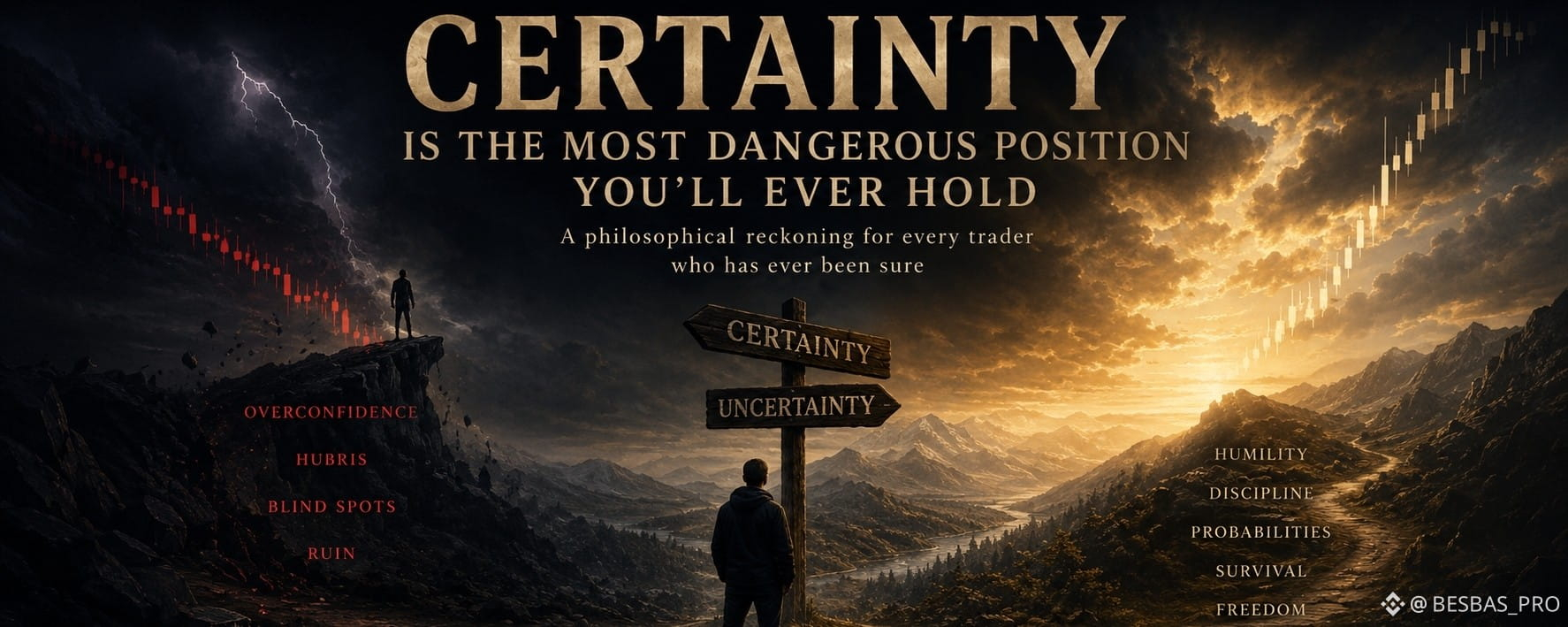
In crypto, certainty often disguises itself as intelligence.
The trader who says "I know" usually stops learning.
The trader who says "I might be wrong" remains adaptive.
Markets reward flexibility far more often than conviction.
Here is the deepest philosophical trap in trading, the one that destroys technically sophisticated participants just as readily as naive ones:
**The more certain you feel about a trade, the more dangerous the position becomes.**
Certainty is not a function of reality. Certainty is a function of how much confirming information you have sought and found. And in an era of infinite information — crypto Twitter, Discord channels, Telegram groups, TradingView comment sections — you can build an ironclad case for almost any position. The information ecosystem around any given asset is essentially an **echo chamber generation machine**. You will find the confirmation you are looking for, because you are looking for it.
The philosopher Karl Popper taught that the strength of a hypothesis is not measured by how much evidence supports it, but by **how easily it can be falsified**. The strongest scientific theories are the ones that make specific, testable predictions that could be proven wrong.
Most traders operate by the opposite principle. They construct theses that are unfalsifiable — when the price goes up, it confirms the thesis; when it goes down, it is "manipulation" or "a shakeout before the real move." The thesis can never be wrong because it has been designed, unconsciously, to survive contact with any evidence.
This is not stupidity. This is the ordinary human mind doing what it evolved to do: protect its beliefs from revision, because in ancestral environments, having a coherent worldview was more important than having an accurate one.
In markets, this tendency is fatal.
The professional's relationship with uncertainty is almost counterintuitive: **they are most cautious when most confident, and most alert when least certain.** They know that peak conviction is often the signature of peak exposure to a narrative that the market is about to ruthlessly dismantle.
---
## V. Blockchain as Mirror
There is something philosophically remarkable about what cryptocurrency actually is, when you strip away the noise of price and speculation.
The blockchain is an **immutable record of human agreements**.
Every transaction on a public ledger is a permanently recorded act of exchange — a moment when two or more parties, often strangers, reached agreement about value and transferred it without requiring a third party to authorize or witness the act. The blockchain does not trust anyone. It requires no trust. It makes trust *unnecessary* by making deception *impossible*.
This is not merely a technical achievement. It is a philosophical one. Across human history, the creation of trust has required institutions — courts, banks, governments, contracts, reputation systems. These institutions are powerful, but they are also corruptible. They are run by human beings who have interests, biases, and the capacity for self-dealing.
The blockchain proposes something unprecedented: **trust as a mathematical property rather than a social one**.
Whether this proposition ultimately succeeds — whether it scales to the complexity of global commerce, whether its energy demands are sustainable, whether it can survive regulatory capture — remains genuinely uncertain. But the *ambition* is philosophically serious in a way that its critics often fail to engage with.
Crypto is not, at its core, a get-rich scheme. At its core, it is an attempt to solve one of the oldest problems in human civilization: **how do strangers cooperate at scale without surrendering their autonomy to an authority they must trust blindly?**
The price action is noise. That question is the signal.
---
## VI. The Ethics of the Arena
Let us be honest about something that trading literature rarely addresses directly: **the market is not a neutral game**. It is not chess, where both players begin with equal resources and equal information. It is closer to poker played on a table where some players can see several cards that others cannot, and where the house takes a cut from every pot.
Institutional traders have advantages in execution speed, information access, research capacity, and capital that retail participants cannot match and cannot close. Market makers have structural advantages built into the architecture of markets. In crypto, early participants and insiders often hold enormous token supplies acquired at prices the public will never see.
To trade with awareness of this reality is not paranoia — it is **basic epistemic hygiene**. The question is not whether the game is fair. It is not. The question is whether, understanding that it is not fair, you can still identify edges — genuine, repeatable edges — that allow you to extract value in the long run.
Some can. Most cannot.
The ones who can share certain qualities: they are honest about their failures, relentlessly honest about what they do not know, intellectually humble enough to revise their models when the market contradicts them, and psychologically resilient enough to continue functioning after periods of significant loss.
These are not financial skills. They are **virtues** in the classical sense — stable dispositions of character that allow a person to function well in difficult conditions.
The market, in this sense, is not just an economic mechanism. It is a **character-revealing machine**. It will find every weakness you have — every bias, every emotional blind spot, every failure of discipline — and it will extract a price from each one.
This is why serious traders speak of the market with something approaching reverence. Not because it is wise, or just, or meaningful — it is none of these things. But because **it does not lie**. It does not tell you what you want to hear. Your P&L is a mirror held up to the quality of your thinking, the accuracy of your models, and the integrity of your psychological self-management.
In a world saturated with comfortable narratives and convenient fictions, there is something almost purifying about that.
---
## Conclusion: The Practice
Philosophy without practice is performance. So let this end with what the preceding analysis actually demands of anyone who engages with markets seriously.
**Know yourself first.** Before you know the market, know your relationship with uncertainty, with loss, with being wrong in public. The market will probe these relationships without mercy.
**Hold your convictions lightly.** The strongest thesis should carry the loosest grip. Know in advance what evidence would change your mind, and honor that evidence when it arrives.
**Respect the structure of the game.** You are not playing against the chart. You are playing against every other participant, including many who are faster, better-informed, and better-capitalized. Your edge, if you have one, will be found in the psychology and discipline they lack — not in the information they possess and you do not.
**Treat the blockchain seriously.** Beneath the speculation and the noise, there is a genuine technological and philosophical experiment unfolding in real time. Understanding what it is actually trying to do will make you a better participant in the market it has generated.
And finally: **understand that the market will not complete you**. The fantasy of the life-changing trade, the one score that solves everything, is perhaps the most dangerous fiction in the entire ecosystem. The market will not provide meaning. It will not provide identity. It will not fill whatever void preceded your arrival at the trading terminal.
What it will do, if you approach it with honesty and rigor, is teach you — at considerable cost — a great deal about the nature of probability, the limits of knowledge, and the exact contours of your own mind.
That education, at least, is worth something.
---
*The price is not the point. The price is the test.*
#america1776 # ##philosophy • #trading #Psychology • #crypto
記事
翻訳参照
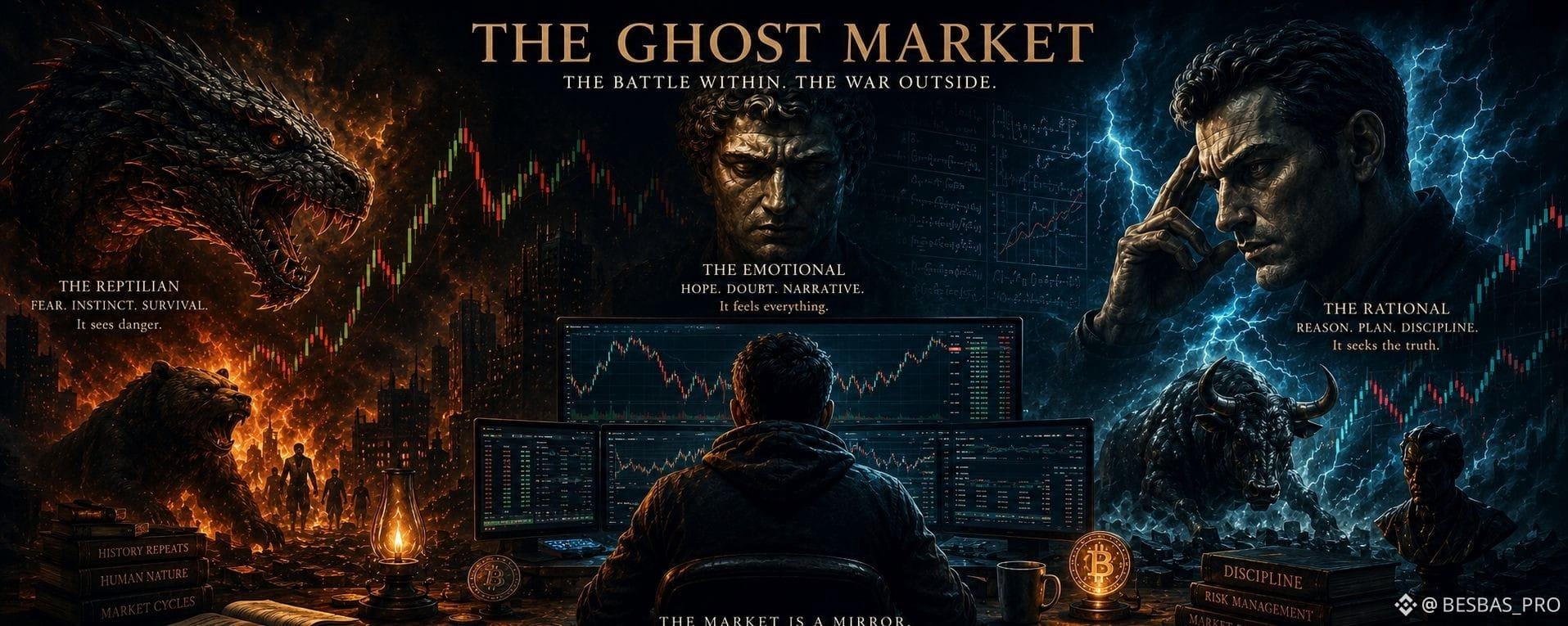
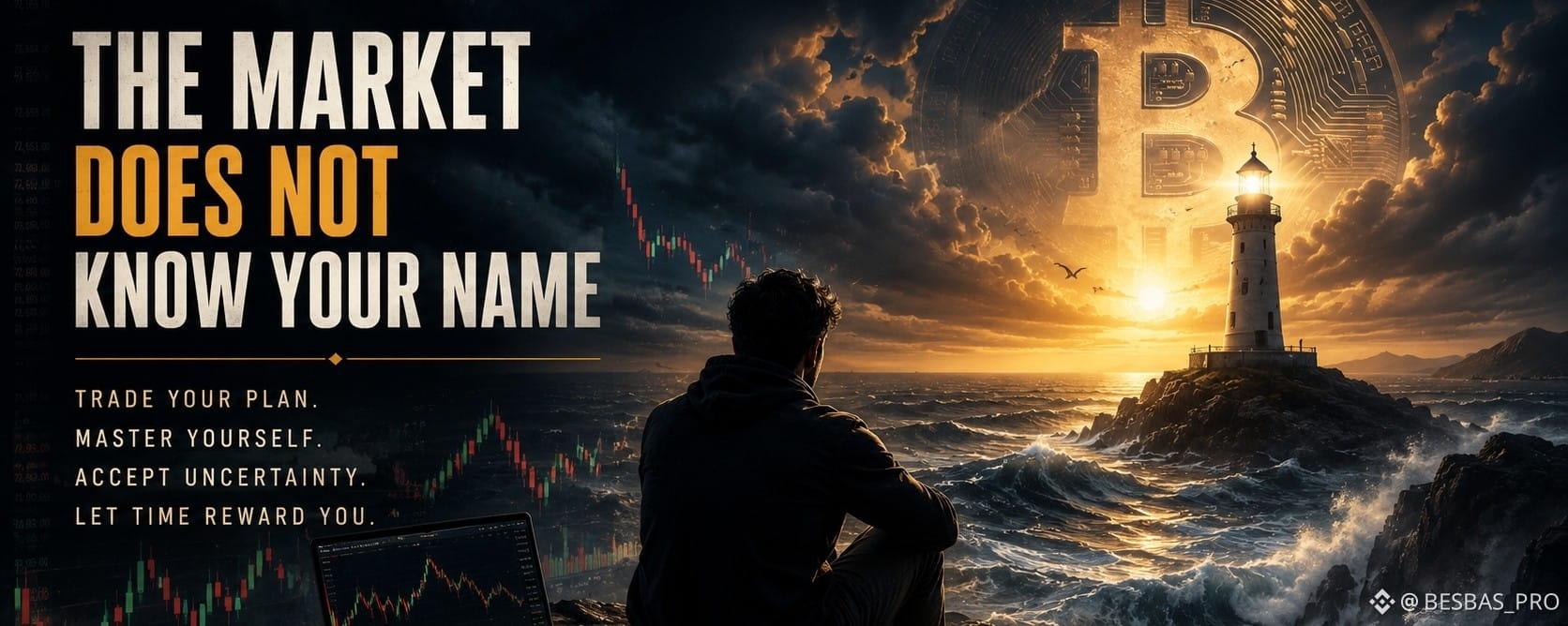
# The Ghost Market: Consciousness, Capital, and the War Inside the Trader*A philosophical inquiry into the soul of digital markets* --- ## I. The Market Is Not a Place. It Is a Mirror. There is a seductive lie embedded in the language of financial markets — that the chart is a record of the world's economy, a faithful transcript of human productivity and value. It is not. The chart is a record of *belief*. It is a real-time rendering of collective psychology, a social hallucination given numerical form, and nowhere is this truer than in the realm of cryptocurrency, where the underlying asset is often nothing more tangible than consensus itself. Bitcoin has no factory. Ethereum has no headquarters with a postal address. A memecoin has no product. What they have — what gives them any price at all — is *faith*: the distributed conviction of millions of minds that the number represents something worth holding. Remove the belief and you remove the price. This is not a weakness unique to crypto; it is the naked truth of all markets, stripped of the comfortable illusion that stocks represent factories and bonds represent solemn promises. In crypto, the veil is thinner. The emperor's clothes are more obviously optional. This is the first philosophical confrontation a serious trader must survive: the market is not objective reality. It is a **collective dream**, and you are one of the dreamers. The moment you enter a trade, you are not observing the dream — you are inside it, and your perception is altered. --- ## II. The Three Minds at War in Every Trade Classical economics imagined the market participant as *Homo economicus* — rational, informed, self-interested, and coolly calculating. Behavioral economics spent fifty years dismantling this fiction. What actually sits behind the screen placing orders is not a calculator but a battlefield, and on that battlefield, three distinct psychological systems wage constant war. In markets, certainty is often indistinguishable from ego. The trader who becomes certain stops observing. The trader who stops observing becomes blind. Markets do not punish ignorance immediately; they punish certainty eventually. **The Reptilian System** speaks first and loudest. It is ancient, fast, and binary. It recognizes threat and reward in milliseconds, flooding the body with cortisol or dopamine before a single conscious thought forms. When Bitcoin drops 15% in an hour, the reptilian brain does not calculate expected value — it *screams*. It interprets the red candle as a predator. Panic-selling is not irrationality; it is an extremely rational response to perceived mortal danger, executed by a system that evolved when the danger was a lion, not a liquidation wick. **The Emotional System** arrives a fraction of a second later, coloring the reptile's signal with narrative. This is the system that transforms a loss into a *personal affront*, that manufactures hope out of a dead trade to avoid the shame of admitting a mistake, that falls in love with a position — with the *story* of a coin — long after the story has ended. The emotional system is the author of confirmation bias, of bag-holding, of the ruinous tendency to take profits early and let losses run. It feels true. It speaks in the first person. It says *I* when it means *fear*. **The Prefrontal Cortex** — the rational, planning, rule-following mind — is the last to speak and the first to be overruled when stress rises past a threshold. Trading psychology research consistently shows that under conditions of financial stress, cognitive function degrades in measurable ways: working memory contracts, risk assessment distorts, time horizons collapse toward the immediate. The trader who designed their strategy in a calm, rational state on Sunday afternoon is not the same neurological organism sitting at the screen on Tuesday as their position bleeds. They share a body. They do not share a mind. The professional trader's primary discipline is not technical analysis. It is the ongoing, exhausting management of this internal war — learning to hear all three voices without being enslaved by any one of them. --- ## III. The Market Maker and the Architecture of Illusion To understand markets at depth, one must understand the figure who rarely appears in the romantic mythology of trading: the **market maker**. While the retail trader imagines the market as a coliseum in which participants of equal standing compete by skill and information, the market maker understands it as something far more architectural. The market maker does not predict direction. They manufacture liquidity. They sit simultaneously on both sides of the order book, profiting from the spread between the bid and the ask, the narrow margin between what buyers will pay and what sellers will accept. Their interest is not in where the price goes but in *how much price moves through them*. Volume is their oxygen. Volatility is their weather — sometimes favorable, sometimes hostile. But the sophisticated market maker also understands something profound about human psychology: **retail traders cluster their orders at predictable locations**. They place stop-losses just below obvious support. They enter breakouts at round numbers. They are predictable, not because they are stupid, but because they are human, and humans share cognitive heuristics. The market maker, by virtue of seeing the order book, can see where the pain is. They can see the stops. This has given rise to one of the most consequential phenomena in crypto markets: the **liquidity hunt**, colloquially called a "stop hunt" or "liquidity grab." In this maneuver, price is briefly driven through a zone of clustered stop-losses, triggering those orders, absorbing liquidity, and then reversing sharply in the original direction. To the retail trader watching their position liquidate, this feels like conspiracy. It is not. It is the inevitable interaction between a system designed to profit from flow and a population of participants with predictable behavior. The philosophical implication is stark: **the map is being read by those who profit from your navigation errors.** In crypto markets especially, where wash trading remains prevalent and order book manipulation is a documented practice rather than a theoretical concern, the retail participant must internalize that the visible data is not always a neutral representation of supply and demand. Sometimes it is a theatrical set, constructed to produce a particular emotional response. --- ## IV. Volatility Is Not the Enemy. Confusion Is. Cryptocurrency markets are violent. A 40% drawdown in a week is not an extraordinary event — it is a characteristic of the asset class. Bitcoin has experienced more than a dozen drawdowns exceeding 50% in its history. Ethereum has been erased by 90% and reborn. This volatility terrifies those who approach it with frameworks built for equities, where a 10% correction is treated as crisis. But volatility is not the enemy of the serious trader. **Confusion is.** Volatility is simply rapid price discovery in a market with thin consensus and evolving fundamentals. It creates opportunity on both sides of the ledger. The trader who can remain psychologically stable during a violent move — who can distinguish between *meaningful price action* and *noise dressed as signal* — has an enormous structural advantage over the majority who cannot. What generates confusion is the architecture of modern information flow: social media, Telegram groups, influential accounts with misaligned incentives, news cycles calibrated to emotion rather than information. Crypto markets are uniquely vulnerable to narrative-driven volatility because the underlying assets are, in many cases, *primarily* narrative. A tweet from an influential figure can move the price of a token more than any fundamental development because the token's value was never derived from fundamentals in the traditional sense — it was derived from attention. This creates a peculiar epistemological challenge. The trader must simultaneously evaluate: What is the technical structure of the price? What is the macro liquidity environment? What is the on-chain data indicating about holder behavior? What is the social sentiment doing, and is that sentiment being manufactured or organic? In which phase of the four-year cycle — accumulation, markup, distribution, markdown — does this market currently reside? These layers are not equally weighted, and they change in relevance depending on market conditions. The discipline is not collecting more information. It is knowing **which signal to weight** in which context. --- ## V. The Paradox of Control and the Discipline of Submission Here is a truth that breaks traders who have built their identity on competence and intelligence: **you cannot control the market, and the desire to do so is lethal.** The trader who enters a position convinced they are *right* has already made a category error. Markets do not reward being right. They reward being right *while properly managing the cost of being wrong*. The difference between a brilliant trader and a ruined trader is often not the accuracy of their analysis but the quality of their risk management — the willingness to define, in advance, exactly how much they are prepared to lose before acknowledging that the thesis has failed. This requires a form of philosophical submission that conflicts directly with the traits that often drive people toward trading: competitiveness, conviction, intellectual confidence. The market asks you to say, repeatedly and without shame: *I was wrong. I will close this position and return capital for another opportunity.* Most people cannot do this without suffering a wound to their ego that impairs their next decision. The loss is no longer just financial — it is existential. They become attached not to the capital but to being *seen* as having been right. The professional resolves this paradox by decoupling identity from outcome. They define themselves not by their win rate but by the quality of their process. A good process that produces a loss is superior to a bad process that produces a profit, because the bad process will eventually revert to its true expectation. The professional is playing an infinite game. They are optimizing not for any single trade but for the aggregate performance across hundreds of decisions, most of which they will never remember individually. This is the deepest secret of trading, hidden in plain sight: **the game is not about money. It is about the management of the self under conditions of radical uncertainty.** Money is the scoreboard, but the game is psychological, philosophical, and ultimately, spiritual in the broadest sense — it is about learning to act decisively without the comfort of certainty. --- ## VI. The Digital Frontier and the Philosophy of New Wealth Cryptocurrency represents something historically unprecedented: a financial system that is **open by default, permissionless by design, and global by architecture**. For the first time in the history of capital, an individual in a nation with a collapsing currency, a broken banking system, or an authoritarian monetary policy can participate in a global store of value without the permission of any institution. This is not merely a technological achievement. It is a philosophical one. It asserts — through code rather than constitution — that access to financial sovereignty is not a privilege to be granted by states but a right to be protected by mathematics. Whether this assertion ultimately succeeds in transforming the global financial architecture is a question history will answer. But the assertion itself is remarkable. For the trader operating in this space, this philosophical dimension matters not as ideology but as context. Crypto markets do not move purely on technical patterns or even macroeconomic cycles. They move on **the expansion and contraction of a global narrative** about whether decentralized systems will challenge or be absorbed by the institutional order. The bull markets are episodes of expanding belief. The bear markets are periods of doubt and purge. Understanding which phase you inhabit — not just from price data but from the depth of the underlying philosophical consensus — is one of the highest-order skills available to the serious participant. --- ## VII. Becoming the Calm at the Center of the Storm The final philosophical task is integration. The trader who has survived long enough — who has been euphoric and ruined and rebuilt — eventually arrives at a paradoxical kind of peace. They have learned that the market will always be larger than their understanding of it. They have learned that certainty is an illusion that costs more than it provides. They have learned that the only durable edge is a stable character: patient, curious, rigorously honest, and genuinely indifferent to what they cannot control. The Stoics called this *apatheia* — not the absence of feeling, but the refusal to be enslaved by feeling. Marcus Aurelius commanded armies and administered an empire while practicing it. The trader at the screen in the small hours, watching a position move against them, practices it in their own register. Markets will continue. Volatility will continue. New assets will emerge, new narratives will ignite, new cycles of greed and despair will rotate through the consciousness of millions of participants. The trader who survives and compounds over decades is not the most brilliant analyst in the room. They are the person who has done the philosophical work — who knows themselves, manages themselves, and has made peace with uncertainty as the permanent condition of their craft. The market is a mirror. What it shows you is not a price. It is And the longer you survive in the market, the less you trade against price—and the more you trade against your own illusions. --- *The battle is not between bulls and bears. It is between who you are and who you must become to endure.* #Bitcoin #philosopher #philosophy #Crypto

# The Ghost Market: Consciousness, Capital, and the War Inside the Trader

*A philosophical inquiry into the soul of digital markets*
---
## I. The Market Is Not a Place. It Is a Mirror.
There is a seductive lie embedded in the language of financial markets — that the chart is a record of the world's economy, a faithful transcript of human productivity and value. It is not. The chart is a record of *belief*. It is a real-time rendering of collective psychology, a social hallucination given numerical form, and nowhere is this truer than in the realm of cryptocurrency, where the underlying asset is often nothing more tangible than consensus itself.
Bitcoin has no factory. Ethereum has no headquarters with a postal address. A memecoin has no product. What they have — what gives them any price at all — is *faith*: the distributed conviction of millions of minds that the number represents something worth holding. Remove the belief and you remove the price. This is not a weakness unique to crypto; it is the naked truth of all markets, stripped of the comfortable illusion that stocks represent factories and bonds represent solemn promises. In crypto, the veil is thinner. The emperor's clothes are more obviously optional.
This is the first philosophical confrontation a serious trader must survive: the market is not objective reality. It is a **collective dream**, and you are one of the dreamers. The moment you enter a trade, you are not observing the dream — you are inside it, and your perception is altered.
---
## II. The Three Minds at War in Every Trade
Classical economics imagined the market participant as *Homo economicus* — rational, informed, self-interested, and coolly calculating. Behavioral economics spent fifty years dismantling this fiction. What actually sits behind the screen placing orders is not a calculator but a battlefield, and on that battlefield, three distinct psychological systems wage constant war.
In markets, certainty is often indistinguishable from ego. The trader who becomes certain stops observing. The trader who stops observing becomes blind. Markets do not punish ignorance immediately; they punish certainty eventually.
**The Reptilian System** speaks first and loudest. It is ancient, fast, and binary. It recognizes threat and reward in milliseconds, flooding the body with cortisol or dopamine before a single conscious thought forms. When Bitcoin drops 15% in an hour, the reptilian brain does not calculate expected value — it *screams*. It interprets the red candle as a predator. Panic-selling is not irrationality; it is an extremely rational response to perceived mortal danger, executed by a system that evolved when the danger was a lion, not a liquidation wick.
**The Emotional System** arrives a fraction of a second later, coloring the reptile's signal with narrative. This is the system that transforms a loss into a *personal affront*, that manufactures hope out of a dead trade to avoid the shame of admitting a mistake, that falls in love with a position — with the *story* of a coin — long after the story has ended. The emotional system is the author of confirmation bias, of bag-holding, of the ruinous tendency to take profits early and let losses run. It feels true. It speaks in the first person. It says *I* when it means *fear*.
**The Prefrontal Cortex** — the rational, planning, rule-following mind — is the last to speak and the first to be overruled when stress rises past a threshold. Trading psychology research consistently shows that under conditions of financial stress, cognitive function degrades in measurable ways: working memory contracts, risk assessment distorts, time horizons collapse toward the immediate. The trader who designed their strategy in a calm, rational state on Sunday afternoon is not the same neurological organism sitting at the screen on Tuesday as their position bleeds. They share a body. They do not share a mind.
The professional trader's primary discipline is not technical analysis. It is the ongoing, exhausting management of this internal war — learning to hear all three voices without being enslaved by any one of them.
---
## III. The Market Maker and the Architecture of Illusion
To understand markets at depth, one must understand the figure who rarely appears in the romantic mythology of trading: the **market maker**. While the retail trader imagines the market as a coliseum in which participants of equal standing compete by skill and information, the market maker understands it as something far more architectural.
The market maker does not predict direction. They manufacture liquidity. They sit simultaneously on both sides of the order book, profiting from the spread between the bid and the ask, the narrow margin between what buyers will pay and what sellers will accept. Their interest is not in where the price goes but in *how much price moves through them*. Volume is their oxygen. Volatility is their weather — sometimes favorable, sometimes hostile.
But the sophisticated market maker also understands something profound about human psychology: **retail traders cluster their orders at predictable locations**. They place stop-losses just below obvious support. They enter breakouts at round numbers. They are predictable, not because they are stupid, but because they are human, and humans share cognitive heuristics. The market maker, by virtue of seeing the order book, can see where the pain is. They can see the stops.
This has given rise to one of the most consequential phenomena in crypto markets: the **liquidity hunt**, colloquially called a "stop hunt" or "liquidity grab." In this maneuver, price is briefly driven through a zone of clustered stop-losses, triggering those orders, absorbing liquidity, and then reversing sharply in the original direction. To the retail trader watching their position liquidate, this feels like conspiracy. It is not. It is the inevitable interaction between a system designed to profit from flow and a population of participants with predictable behavior.
The philosophical implication is stark: **the map is being read by those who profit from your navigation errors.** In crypto markets especially, where wash trading remains prevalent and order book manipulation is a documented practice rather than a theoretical concern, the retail participant must internalize that the visible data is not always a neutral representation of supply and demand. Sometimes it is a theatrical set, constructed to produce a particular emotional response.
---
## IV. Volatility Is Not the Enemy. Confusion Is.
Cryptocurrency markets are violent. A 40% drawdown in a week is not an extraordinary event — it is a characteristic of the asset class. Bitcoin has experienced more than a dozen drawdowns exceeding 50% in its history. Ethereum has been erased by 90% and reborn. This volatility terrifies those who approach it with frameworks built for equities, where a 10% correction is treated as crisis.
But volatility is not the enemy of the serious trader. **Confusion is.**
Volatility is simply rapid price discovery in a market with thin consensus and evolving fundamentals. It creates opportunity on both sides of the ledger. The trader who can remain psychologically stable during a violent move — who can distinguish between *meaningful price action* and *noise dressed as signal* — has an enormous structural advantage over the majority who cannot.
What generates confusion is the architecture of modern information flow: social media, Telegram groups, influential accounts with misaligned incentives, news cycles calibrated to emotion rather than information. Crypto markets are uniquely vulnerable to narrative-driven volatility because the underlying assets are, in many cases, *primarily* narrative. A tweet from an influential figure can move the price of a token more than any fundamental development because the token's value was never derived from fundamentals in the traditional sense — it was derived from attention.
This creates a peculiar epistemological challenge. The trader must simultaneously evaluate: What is the technical structure of the price? What is the macro liquidity environment? What is the on-chain data indicating about holder behavior? What is the social sentiment doing, and is that sentiment being manufactured or organic? In which phase of the four-year cycle — accumulation, markup, distribution, markdown — does this market currently reside?
These layers are not equally weighted, and they change in relevance depending on market conditions. The discipline is not collecting more information. It is knowing **which signal to weight** in which context.
---
## V. The Paradox of Control and the Discipline of Submission
Here is a truth that breaks traders who have built their identity on competence and intelligence: **you cannot control the market, and the desire to do so is lethal.**
The trader who enters a position convinced they are *right* has already made a category error. Markets do not reward being right. They reward being right *while properly managing the cost of being wrong*. The difference between a brilliant trader and a ruined trader is often not the accuracy of their analysis but the quality of their risk management — the willingness to define, in advance, exactly how much they are prepared to lose before acknowledging that the thesis has failed.
This requires a form of philosophical submission that conflicts directly with the traits that often drive people toward trading: competitiveness, conviction, intellectual confidence. The market asks you to say, repeatedly and without shame: *I was wrong. I will close this position and return capital for another opportunity.* Most people cannot do this without suffering a wound to their ego that impairs their next decision. The loss is no longer just financial — it is existential. They become attached not to the capital but to being *seen* as having been right.
The professional resolves this paradox by decoupling identity from outcome. They define themselves not by their win rate but by the quality of their process. A good process that produces a loss is superior to a bad process that produces a profit, because the bad process will eventually revert to its true expectation. The professional is playing an infinite game. They are optimizing not for any single trade but for the aggregate performance across hundreds of decisions, most of which they will never remember individually.
This is the deepest secret of trading, hidden in plain sight: **the game is not about money. It is about the management of the self under conditions of radical uncertainty.** Money is the scoreboard, but the game is psychological, philosophical, and ultimately, spiritual in the broadest sense — it is about learning to act decisively without the comfort of certainty.
---
## VI. The Digital Frontier and the Philosophy of New Wealth
Cryptocurrency represents something historically unprecedented: a financial system that is **open by default, permissionless by design, and global by architecture**. For the first time in the history of capital, an individual in a nation with a collapsing currency, a broken banking system, or an authoritarian monetary policy can participate in a global store of value without the permission of any institution.
This is not merely a technological achievement. It is a philosophical one. It asserts — through code rather than constitution — that access to financial sovereignty is not a privilege to be granted by states but a right to be protected by mathematics. Whether this assertion ultimately succeeds in transforming the global financial architecture is a question history will answer. But the assertion itself is remarkable.
For the trader operating in this space, this philosophical dimension matters not as ideology but as context. Crypto markets do not move purely on technical patterns or even macroeconomic cycles. They move on **the expansion and contraction of a global narrative** about whether decentralized systems will challenge or be absorbed by the institutional order. The bull markets are episodes of expanding belief. The bear markets are periods of doubt and purge. Understanding which phase you inhabit — not just from price data but from the depth of the underlying philosophical consensus — is one of the highest-order skills available to the serious participant.
---
## VII. Becoming the Calm at the Center of the Storm
The final philosophical task is integration. The trader who has survived long enough — who has been euphoric and ruined and rebuilt — eventually arrives at a paradoxical kind of peace. They have learned that the market will always be larger than their understanding of it. They have learned that certainty is an illusion that costs more than it provides. They have learned that the only durable edge is a stable character: patient, curious, rigorously honest, and genuinely indifferent to what they cannot control.
The Stoics called this *apatheia* — not the absence of feeling, but the refusal to be enslaved by feeling. Marcus Aurelius commanded armies and administered an empire while practicing it. The trader at the screen in the small hours, watching a position move against them, practices it in their own register.
Markets will continue. Volatility will continue. New assets will emerge, new narratives will ignite, new cycles of greed and despair will rotate through the consciousness of millions of participants. The trader who survives and compounds over decades is not the most brilliant analyst in the room. They are the person who has done the philosophical work — who knows themselves, manages themselves, and has made peace with uncertainty as the permanent condition of their craft.
The market is a mirror. What it shows you is not a price. It is And the longer you survive in the market, the less you trade against price—and the more you trade against your own illusions.
---
*The battle is not between bulls and bears. It is between who you are and who you must become to endure.*
#Bitcoin #philosopher #philosophy #Crypto
記事
翻訳参照
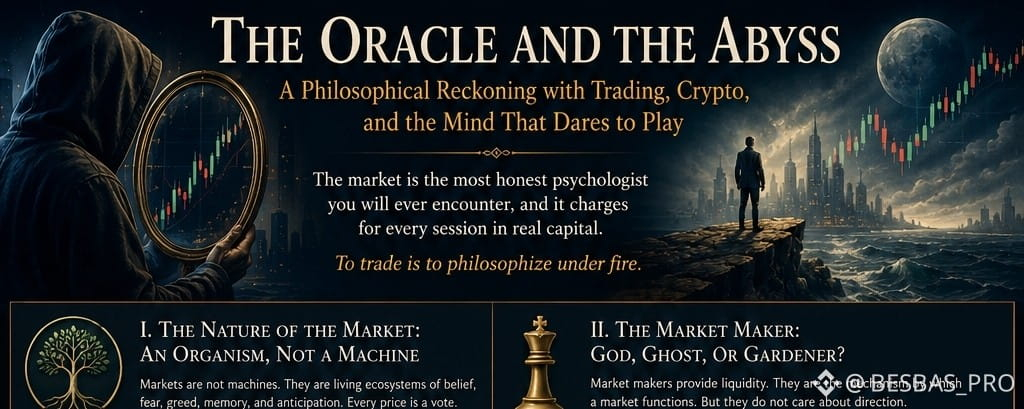
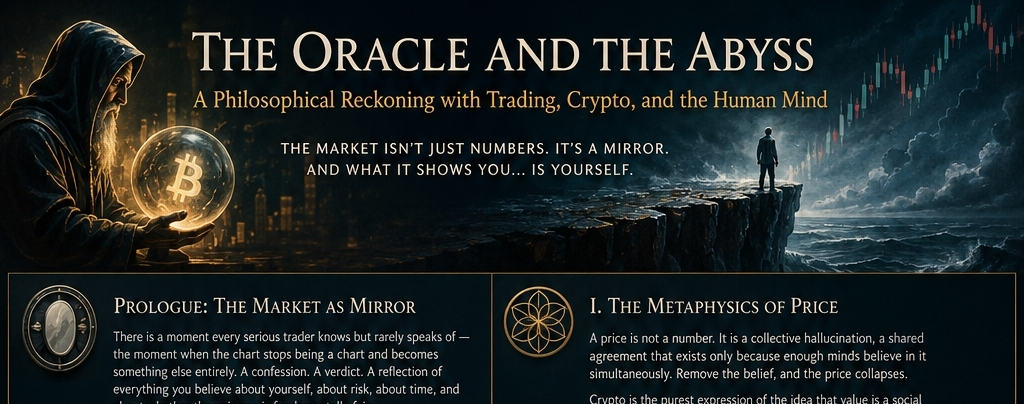
The Oracle and the Abyss Philosophical Reckoning with Trading Crypto,and the Mind That Dares to PlayThere is a moment — every serious trader knows it — when the chart stops being a chart. The candlesticks blur, the indicators dissolve, and what remains is something far more disturbing: a reflection. The market, in that instant, is not showing you price. It is showing you yourself. This is the truth that technical analysis manuals omit and trading courses dare not sell: the market is the most honest psychologist you will ever encounter, and it charges for every session in real capital. To trade is to philosophize under fire. --- ## I. The Nature of the Market: An Organism, Not a Machine Most retail participants approach financial markets — and cryptocurrency markets in particular — as though they were mechanical systems: feed in the right inputs, receive the right outputs. Buy low. Sell high. Follow the signal. This is perhaps the most expensive misunderstanding in the history of human commerce. Markets are not machines. They are living ecosystems of belief, fear, greed, memory, and anticipation. Every price — whether of Bitcoin, Ethereum, or a micro-cap altcoin traded at 3 a.m. in a timezone no one tracks — is not a fact. It is a *vote*. A collective referendum on what the future is worth today. This distinction carries enormous philosophical weight. A machine can be mastered. An organism must be understood, respected, and ultimately — humbled before. The ancient Stoics had a concept: *logos* — the rational principle underlying all things. In markets, logos does not manifest as predictability. It manifests as structure beneath apparent chaos. The market is neither random nor deterministic. It is *complex*. And complexity, as modern science confirms, produces emergence: patterns that arise from the interaction of parts, patterns no single part intended and no single observer can fully decode. The cryptocurrency market takes this complexity and amplifies it to an almost metaphysical level. Unlike equities markets with centuries of behavioral data, crypto is a market born of ideology, coded into existence by anonymous architects, populated by a strange coalition of libertarian idealists, institutional predators, retail dreamers, and algorithmic ghosts. To trade it is to step into a colosseum where the rules are written in invisible ink and change with the season. --- ## II. The Market Maker: God, Ghost, or Gardener? No philosophical examination of trading is complete without confronting the entity that most retail traders prefer not to think about: the market maker. The market maker is the unseen hand. Not in the conspiratorial sense — though conspiracy thinking thrives wherever power is opaque — but in a structural, almost architectural sense. Market makers provide liquidity. They stand on both sides of every trade, posting bids and asks, absorbing the desperate sells of the panicking and the reckless buys of the euphoric. They are the mechanism by which a market *functions*. But here is the philosophical vertigo: the market maker does not care about direction. He does not need the price to go up. He does not need it to go down. He needs it to *move*. Volatility is his oxygen. Your conviction is, quite literally, his inventory. In cryptocurrency markets, where order book depth is thin and capital flows are concentrated, the market maker's influence becomes almost gravitational. Price gravitates toward liquidity — toward the pools of stop-loss orders clustered just below support, toward the liquidation levels of over-leveraged long positions, toward the zones where retail psychology has predictably placed its bets. This is not manipulation in the sinister Hollywood sense. It is, in fact, the coldest and most rational form of commerce: knowing where your counterparty has placed his pain, and walking the price there to collect it. The great Nietzsche wrote that power does not justify itself — it simply *is*. The market maker embodies this. He does not ask permission. He does not moralize. He reads the order flow the way a master chess player reads the board: not for what it is, but for what it *forces*. For the retail trader, understanding this is not cause for despair. It is cause for liberation. Once you accept that the market is not a neutral arena but a structured game with asymmetric information and asymmetric capital, you stop playing by naive rules and begin asking the only question that matters: *Where am I in this game, and what edge do I actually possess?* --- ## III. The Psychology of the Trader: A Study in Self-Deception The trader's greatest enemy does not live in the market. It lives in the six inches between his ears. Psychology distinguishes between two cognitive systems: System 1, the fast, intuitive, emotional processor, and System 2, the slow, deliberate, rational one. Trading demands System 2. The market, through fear and greed, perpetually hijacks System 1. This is the central tragedy of the average trading career. Consider the anatomy of a bad trade. It rarely begins with ignorance. It begins with *certainty*. The trader sees a setup. He has backtested it. It has worked before. He enters with conviction. Then the position moves against him — not dramatically at first, just enough to create discomfort. Here, at this moment of mild loss, is where the philosophical crisis begins. The rational response is simple: honor the stop loss. Exit. Preserve capital for the next opportunity. But the ego — that insidious architect of self-narrative — cannot accept being wrong. The loss, if realized, becomes a *fact*. An unrealized loss is merely an opinion. And so the trader holds. He rationalizes. He searches for confirming data. He zooms out to a timeframe where the trade looks better. He finds an analyst online who agrees with his thesis. He doubles down. This is not stupidity. It is humanity. Every one of these behaviors — confirmation bias, loss aversion, the endowment effect, the sunk cost fallacy — is deeply wired into the human brain. They were adaptive on the savannah. They are catastrophic in leveraged crypto markets. The Stoic philosopher Epictetus drew a stark distinction between what is *up to us* and what is *not*. The market's movement is not up to us. Our entry is not up to us, once placed. The only things genuinely within our control are the size of our position, the placement of our stop, and the discipline of our exit. A trader who masters these three things and surrenders everything else — who achieves what the Buddhists call *non-attachment* to outcomes — has accomplished something rarer than any profitable system: he has mastered himself. And self-mastery, in trading as in life, is worth more than any edge. --- ## IV. Cryptocurrency: The Ideology Beneath the Price Bitcoin was not born as a financial instrument. It was born as a *manifesto*. The whitepaper Satoshi Nakamoto published in 2008 was not primarily about money. It was about trust — or rather, the elimination of the need for it. A peer-to-peer electronic cash system that required no bank, no government, no custodian of faith. A system where mathematics replaced institutions and cryptographic proof replaced human promise. This ideological foundation matters enormously for anyone trying to understand crypto market behavior. Unlike equities, where prices are ultimately anchored (however loosely) to earnings, cash flows, and tangible assets, cryptocurrency prices are anchored primarily to *belief* — belief in the technology, belief in the narrative, belief in the community, and crucially, belief in what other believers will do. This creates a market psychology unlike any other. When belief is strong, fundamentals are irrelevant and prices move parabolically. When belief collapses, no technical analysis holds the floor and prices fall through levels that seemed architecturally impossible. The crypto market is the purest expression of Keynesian beauty contest economics ever constructed: you are not buying what you think is valuable, you are buying what you think *others will think is valuable*. This is why so many intelligent people — economists, engineers, mathematicians — consistently mistime crypto markets. Intelligence is not the variable. The variable is social psychology, narrative momentum, and the peculiar human capacity for collective mania followed by collective despair. The trader who understands this stops asking "Is Bitcoin worth $100,000?" and starts asking "Are the conditions present for people to *believe* it is worth $100,000?" These are different questions. The first is philosophical. The second is profitable. --- ## V. The Discipline of Uncertainty: Toward a Trading Philosophy If there is a single principle that separates those who survive in markets from those who don't, it is this: *the acceptance of uncertainty as the ground condition of all engagement*. Most people enter trading hoping to find certainty — a system that works, an indicator that doesn't lie, a guru who has decoded the code. What they discover, if they last long enough, is that certainty is not available. Not in trading. Not in life. The market is a probability engine, and every trade is a wager, not a claim. This is not nihilism. It is liberation. When you stop demanding that the market confirm your beliefs and start working with probabilities, something profound shifts. Losses become data rather than verdicts. Wins become outcomes rather than validations. The ego disengages from the position, and the analyst — clear-eyed, systematic, emotionally regulated — can finally do his work. The greatest traders in history — Livermore, Lynch, Soros, Druckenmiller — did not win because they were always right. They won because when they were wrong, they were *small*, and when they were right, they were *large*. Asymmetry of outcome is the foundation of every durable trading career. This requires not genius, but philosophy: a genuine reckoning with the impermanence of any position, the humility to reverse course, and the courage to press when the evidence is clear. In cryptocurrency, where asymmetric outcomes are dramatically amplified — where a position can double in a week or fall seventy percent in a month — this philosophy is not optional. It is the price of admission to longevity. --- ## Epilogue: The Trader Who Knows Himself Socrates said that the unexamined life is not worth living. The unexamined trade, one might add, is not worth taking. The market will never run out of ways to humble you. New instruments will emerge. New narratives will capture the crowd. New technologies will reshape what is possible and who captures its value. The only constant is the human being sitting in front of the screen — breathing, hoping, fearing, deciding. The philosopher-trader is not the one who has eliminated emotion. That is a fantasy, and a dangerous one. The philosopher-trader is the one who has built a *relationship* with his emotion — who knows when fear is signal and when it is noise, when conviction is earned and when it is ego, when the market is speaking and when it is only his own voice echoing back at him from the chart. The abyss that Nietzsche warned us about — the one that gazes back when you stare too long — is real in trading. Markets have broken brilliant minds and bankrupt fortunes. But the abyss has also forged extraordinary human beings: disciplined, humble, resilient, and wise in ways that no classroom can manufacture. To trade is to undertake a philosophical practice disguised as a financial one. The chart is the text. The loss is the lesson. The profit, when it comes, is not the goal — it is the evidence that you have, at least for now, understood something true about the intersection of human nature, collective psychology, and the magnificent, merciless engine we call the market. The oracle does not speak in certainties. She speaks in probabilities, whispered to those patient enough to listen. The market will open again tomorrow. The question is not whether the chart will move. The question is whether you have moved with it. Because after enough years in the market, one truth becomes impossible to ignore: The chart was never the thing being tested. You were. #Bitcoin #Crypto #Philosophical

The Oracle and the Abyss Philosophical Reckoning with Trading Crypto,and the Mind That Dares to Play

There is a moment — every serious trader knows it — when the chart stops being a chart. The candlesticks blur, the indicators dissolve, and what remains is something far more disturbing: a reflection. The market, in that instant, is not showing you price. It is showing you yourself.
This is the truth that technical analysis manuals omit and trading courses dare not sell: the market is the most honest psychologist you will ever encounter, and it charges for every session in real capital.
To trade is to philosophize under fire.
---
## I. The Nature of the Market: An Organism, Not a Machine
Most retail participants approach financial markets — and cryptocurrency markets in particular — as though they were mechanical systems: feed in the right inputs, receive the right outputs. Buy low. Sell high. Follow the signal. This is perhaps the most expensive misunderstanding in the history of human commerce.
Markets are not machines. They are living ecosystems of belief, fear, greed, memory, and anticipation. Every price — whether of Bitcoin, Ethereum, or a micro-cap altcoin traded at 3 a.m. in a timezone no one tracks — is not a fact. It is a *vote*. A collective referendum on what the future is worth today.
This distinction carries enormous philosophical weight. A machine can be mastered. An organism must be understood, respected, and ultimately — humbled before.
The ancient Stoics had a concept: *logos* — the rational principle underlying all things. In markets, logos does not manifest as predictability. It manifests as structure beneath apparent chaos. The market is neither random nor deterministic. It is *complex*. And complexity, as modern science confirms, produces emergence: patterns that arise from the interaction of parts, patterns no single part intended and no single observer can fully decode.
The cryptocurrency market takes this complexity and amplifies it to an almost metaphysical level. Unlike equities markets with centuries of behavioral data, crypto is a market born of ideology, coded into existence by anonymous architects, populated by a strange coalition of libertarian idealists, institutional predators, retail dreamers, and algorithmic ghosts. To trade it is to step into a colosseum where the rules are written in invisible ink and change with the season.
---
## II. The Market Maker: God, Ghost, or Gardener?
No philosophical examination of trading is complete without confronting the entity that most retail traders prefer not to think about: the market maker.
The market maker is the unseen hand. Not in the conspiratorial sense — though conspiracy thinking thrives wherever power is opaque — but in a structural, almost architectural sense. Market makers provide liquidity. They stand on both sides of every trade, posting bids and asks, absorbing the desperate sells of the panicking and the reckless buys of the euphoric. They are the mechanism by which a market *functions*.
But here is the philosophical vertigo: the market maker does not care about direction. He does not need the price to go up. He does not need it to go down. He needs it to *move*. Volatility is his oxygen. Your conviction is, quite literally, his inventory.
In cryptocurrency markets, where order book depth is thin and capital flows are concentrated, the market maker's influence becomes almost gravitational. Price gravitates toward liquidity — toward the pools of stop-loss orders clustered just below support, toward the liquidation levels of over-leveraged long positions, toward the zones where retail psychology has predictably placed its bets. This is not manipulation in the sinister Hollywood sense. It is, in fact, the coldest and most rational form of commerce: knowing where your counterparty has placed his pain, and walking the price there to collect it.
The great Nietzsche wrote that power does not justify itself — it simply *is*. The market maker embodies this. He does not ask permission. He does not moralize. He reads the order flow the way a master chess player reads the board: not for what it is, but for what it *forces*.
For the retail trader, understanding this is not cause for despair. It is cause for liberation. Once you accept that the market is not a neutral arena but a structured game with asymmetric information and asymmetric capital, you stop playing by naive rules and begin asking the only question that matters: *Where am I in this game, and what edge do I actually possess?*
---
## III. The Psychology of the Trader: A Study in Self-Deception
The trader's greatest enemy does not live in the market. It lives in the six inches between his ears.
Psychology distinguishes between two cognitive systems: System 1, the fast, intuitive, emotional processor, and System 2, the slow, deliberate, rational one. Trading demands System 2. The market, through fear and greed, perpetually hijacks System 1. This is the central tragedy of the average trading career.
Consider the anatomy of a bad trade. It rarely begins with ignorance. It begins with *certainty*. The trader sees a setup. He has backtested it. It has worked before. He enters with conviction. Then the position moves against him — not dramatically at first, just enough to create discomfort. Here, at this moment of mild loss, is where the philosophical crisis begins.
The rational response is simple: honor the stop loss. Exit. Preserve capital for the next opportunity. But the ego — that insidious architect of self-narrative — cannot accept being wrong. The loss, if realized, becomes a *fact*. An unrealized loss is merely an opinion. And so the trader holds. He rationalizes. He searches for confirming data. He zooms out to a timeframe where the trade looks better. He finds an analyst online who agrees with his thesis. He doubles down.
This is not stupidity. It is humanity. Every one of these behaviors — confirmation bias, loss aversion, the endowment effect, the sunk cost fallacy — is deeply wired into the human brain. They were adaptive on the savannah. They are catastrophic in leveraged crypto markets.
The Stoic philosopher Epictetus drew a stark distinction between what is *up to us* and what is *not*. The market's movement is not up to us. Our entry is not up to us, once placed. The only things genuinely within our control are the size of our position, the placement of our stop, and the discipline of our exit. A trader who masters these three things and surrenders everything else — who achieves what the Buddhists call *non-attachment* to outcomes — has accomplished something rarer than any profitable system: he has mastered himself.
And self-mastery, in trading as in life, is worth more than any edge.
---
## IV. Cryptocurrency: The Ideology Beneath the Price
Bitcoin was not born as a financial instrument. It was born as a *manifesto*.
The whitepaper Satoshi Nakamoto published in 2008 was not primarily about money. It was about trust — or rather, the elimination of the need for it. A peer-to-peer electronic cash system that required no bank, no government, no custodian of faith. A system where mathematics replaced institutions and cryptographic proof replaced human promise.
This ideological foundation matters enormously for anyone trying to understand crypto market behavior. Unlike equities, where prices are ultimately anchored (however loosely) to earnings, cash flows, and tangible assets, cryptocurrency prices are anchored primarily to *belief* — belief in the technology, belief in the narrative, belief in the community, and crucially, belief in what other believers will do.
This creates a market psychology unlike any other. When belief is strong, fundamentals are irrelevant and prices move parabolically. When belief collapses, no technical analysis holds the floor and prices fall through levels that seemed architecturally impossible. The crypto market is the purest expression of Keynesian beauty contest economics ever constructed: you are not buying what you think is valuable, you are buying what you think *others will think is valuable*.
This is why so many intelligent people — economists, engineers, mathematicians — consistently mistime crypto markets. Intelligence is not the variable. The variable is social psychology, narrative momentum, and the peculiar human capacity for collective mania followed by collective despair.
The trader who understands this stops asking "Is Bitcoin worth $100,000?" and starts asking "Are the conditions present for people to *believe* it is worth $100,000?" These are different questions. The first is philosophical. The second is profitable.
---
## V. The Discipline of Uncertainty: Toward a Trading Philosophy
If there is a single principle that separates those who survive in markets from those who don't, it is this: *the acceptance of uncertainty as the ground condition of all engagement*.
Most people enter trading hoping to find certainty — a system that works, an indicator that doesn't lie, a guru who has decoded the code. What they discover, if they last long enough, is that certainty is not available. Not in trading. Not in life. The market is a probability engine, and every trade is a wager, not a claim.
This is not nihilism. It is liberation.
When you stop demanding that the market confirm your beliefs and start working with probabilities, something profound shifts. Losses become data rather than verdicts. Wins become outcomes rather than validations. The ego disengages from the position, and the analyst — clear-eyed, systematic, emotionally regulated — can finally do his work.
The greatest traders in history — Livermore, Lynch, Soros, Druckenmiller — did not win because they were always right. They won because when they were wrong, they were *small*, and when they were right, they were *large*. Asymmetry of outcome is the foundation of every durable trading career. This requires not genius, but philosophy: a genuine reckoning with the impermanence of any position, the humility to reverse course, and the courage to press when the evidence is clear.
In cryptocurrency, where asymmetric outcomes are dramatically amplified — where a position can double in a week or fall seventy percent in a month — this philosophy is not optional. It is the price of admission to longevity.
---
## Epilogue: The Trader Who Knows Himself
Socrates said that the unexamined life is not worth living. The unexamined trade, one might add, is not worth taking.
The market will never run out of ways to humble you. New instruments will emerge. New narratives will capture the crowd. New technologies will reshape what is possible and who captures its value. The only constant is the human being sitting in front of the screen — breathing, hoping, fearing, deciding.
The philosopher-trader is not the one who has eliminated emotion. That is a fantasy, and a dangerous one. The philosopher-trader is the one who has built a *relationship* with his emotion — who knows when fear is signal and when it is noise, when conviction is earned and when it is ego, when the market is speaking and when it is only his own voice echoing back at him from the chart.
The abyss that Nietzsche warned us about — the one that gazes back when you stare too long — is real in trading. Markets have broken brilliant minds and bankrupt fortunes. But the abyss has also forged extraordinary human beings: disciplined, humble, resilient, and wise in ways that no classroom can manufacture.
To trade is to undertake a philosophical practice disguised as a financial one. The chart is the text. The loss is the lesson. The profit, when it comes, is not the goal — it is the evidence that you have, at least for now, understood something true about the intersection of human nature, collective psychology, and the magnificent, merciless engine we call the market.
The oracle does not speak in certainties. She speaks in probabilities, whispered to those patient enough to listen.
The market will open again tomorrow.
The question is not whether the chart will move.
The question is whether you have moved with it.
Because after enough years in the market, one truth becomes impossible to ignore:
The chart was never the thing being tested.
You were.
#Bitcoin #Crypto #Philosophical
翻訳参照
The market will open again tomorrow. The question is not whether the chart will move. The question is whether you have moved with it. Because after enough years in the market, one truth becomes impossible to ignore: The chart was never the thing being tested. You were.#TradebStocks
The market will open again tomorrow.
The question is not whether the chart will move.
The question is whether you have moved with it.
Because after enough years in the market, one truth becomes impossible to ignore:
The chart was never the thing being tested.
You were.#TradebStocks
記事
翻訳参照
# The Oracle and the Abyss: A Philosophical Reckoning with Trading, Crypto, and the Human Mind## Prologue: The Market as Mirror There is a moment every serious trader knows but rarely speaks of — the moment when the chart stops being a chart and becomes something else entirely. A confession. A verdict. A reflection of everything you believe about yourself, about risk, about time, and about whether the universe is fundamentally fair. Markets are not economic instruments. They are philosophical ones. And nowhere is this more naked, more brutal, and more revelatory than in the world of digital currencies, where the architecture of money itself has been dismantled and rebuilt by anonymous architects, where fortunes materialize and dissolve between midnight and dawn, and where the psychological warfare between participant and price is waged without mercy or pause. This article is not a guide to trading. It is a reckoning with what trading *is* — at its philosophical core, in its psychological depths, and in its civilizational implications. --- ## I. The Metaphysics of Price What *is* a price? The naïve answer is that it's a number — the intersection of supply and demand, a signal of consensus value. But this is too shallow. A price is a *collective hallucination*, a shared agreement that exists only because enough minds believe in it simultaneously. Remove the belief, and the price collapses. This is not a flaw in the system. It is the system's most fundamental truth. In traditional markets, this hallucination is stabilized by institutional inertia — central banks, earnings reports, regulatory frameworks, decades of corporate history. In cryptocurrency, that scaffolding is largely absent. Bitcoin has no earnings. Ethereum has no headquarters. A meme coin has no underlying reality whatsoever beyond the collective fever dream of its holders. This is not a criticism. It is a philosophical observation of extraordinary importance: **crypto is the purest expression of the idea that value is a social contract, not a metaphysical fact.** The ancient philosophers debated the nature of value — whether it was intrinsic, like Aristotle's use-value, or relational, emerging between things and persons. Cryptocurrency does not resolve this debate. It demolishes the premise. In a world where a token created as a joke can reach a market capitalization exceeding that of legacy corporations, we are forced to confront that value is neither intrinsic nor even relational in the classical sense. It is *performative*. It exists because people perform belief in it — loudly, publicly, with capital. This is not madness. This is the logical endpoint of financialization: the moment when the map becomes the territory. --- ## II. The Psychology of the Trader: A Portrait of Controlled Irrationality The trader believes they are rational. This is their first and most dangerous delusion. Daniel Kahneman's distinction between System 1 and System 2 thinking has been cited so often in trading literature that it has become wallpaper. But the observation remains devastatingly true: human beings are not reasoning machines with occasional emotional glitches. We are emotional machines with occasional rational interventions — and markets are designed, whether intentionally or emergently, to exploit this at every level. Consider what happens when a trader enters a position. Immediately, something psychological occurs that has no name in economics textbooks but every trader knows viscerally: **the position becomes part of the self.** The asset is no longer external. It is now a referendum on your intelligence, your timing, your worth. To close a losing trade is not merely to accept a financial loss. It is to accept that you were *wrong* — and the ego, that ancient survival mechanism, will manufacture extraordinary rationalizations to avoid this verdict. This is why traders hold losers too long. Not because they are stupid. Because they are human. But there is a deeper psychological layer still. The trader's relationship with uncertainty is not merely cognitive — it is existential. Every open position is a confrontation with the fundamental unknowability of the future. The market does not care about your analysis. It does not care about your narrative. It moves according to the aggregate decisions of millions of participants, each with their own incomplete information, their own emotional states, their own hidden agendas. Trading, in this sense, is a daily practice in tolerating radical uncertainty — and most people are constitutionally unprepared for it. The traders who survive long-term are not those with the best analysis. They are those who have achieved a peculiar form of psychological mastery: the ability to hold conviction and doubt simultaneously, to commit capital and remain emotionally detached from the outcome, to lose and feel nothing except the quiet registration of data. This is not indifference. It is a form of discipline so refined it resembles wisdom. --- ## III. The Market Maker: The God Who Sets the Stage If the trader is the protagonist of market drama, the market maker is its author — and unlike the protagonist, the author does not suffer the consequences of the plot. Market makers are entities — firms, algorithms, occasionally individuals with institutional capital — who provide liquidity by simultaneously posting buy and sell orders. They profit from the spread between these prices, the thin margin between what buyers pay and what sellers receive. In traditional markets, this role is regulated, visible, and bound by rules of fair dealing. In cryptocurrency, the concept of market making exists on a spectrum from the legitimate to the predatory — and the line between them is often invisible to retail participants. Consider the mechanics: a market maker with sufficient capital can *shape* price action without technically manipulating it. By placing and withdrawing large limit orders, by executing wash trades through multiple wallets, by timing large market orders to trigger stop-losses cascades in leveraged positions, sophisticated actors can create price movements that appear organic but are in fact choreographed. The market, to the uninitiated, looks like it is discovering price. It is, in fact, being performed. This is not a conspiracy theory. It is a structural reality of markets with thin liquidity, pseudonymous participants, and minimal regulatory oversight. And it raises a genuinely disturbing philosophical question: **if the price you trade is partly manufactured by a powerful actor with information and capital advantages you cannot access, are you trading the market — or are you the product?** The answer, for most retail crypto traders, is devastating: they are, in the aggregate, liquidity. They are the exit for those who entered earlier. They are the fuel. This is not because they are foolish. It is because they are playing a game whose rules were written by people with resources they do not have, in a casino where the house is not a building but a distributed network of sophisticated actors whose interests are structurally opposed to theirs. --- ## IV. Leverage: The Philosophical Accelerant Nothing in trading compresses the human experience of time, hope, and destruction quite like leverage. Leverage is the ability to control a position larger than your capital would otherwise permit — to borrow power from the future and wield it in the present. In crypto markets, leverage of 10x, 50x, even 100x is routinely available. This means a 1% move against your position eliminates your capital entirely. A 1% move in your favor doubles it. What leverage does philosophically is remarkable: it converts time into space. Developments that would take months in an unleveraged portfolio can happen in minutes under leverage. And this compression does something to the mind. It intensifies everything — the euphoria of winning, the anguish of losing, the desperate scrambling of the ego to maintain its narrative against incoming evidence. Stoic philosophy held that virtue was the practice of facing fate with equanimity — that the wise person was neither elevated by fortune nor crushed by misfortune. Leverage is the laboratory where this philosophy is tested to destruction. It is almost impossible to maintain equanimity when your life savings are disappearing at 1% per minute. The Stoic ideal cracks. What emerges from that crack reveals who you truly are. This is why leverage is simultaneously the most educational and the most destructive force in trading. Those who survive it — who learn from it without being annihilated by it — come out the other side with a self-knowledge that is almost impossible to acquire through any other means. Those who do not survive it are simply gone. --- ## V. The Cycle: Mania, Despair, and the Eternal Return Every market cycle in crypto follows a pattern so consistent it approaches mythological status: accumulation, ascent, mania, collapse, despair, and slow accumulation once more. Each phase has its own psychological signature. During accumulation, price moves sideways. The participants are quiet, patient, uncelebrated. These are the people who understand what they hold and are content to wait. There is a monastic quality to accumulation — a faith not in price but in value. During ascent, the narrative catches fire. Articles are written. Influencers appear. The language shifts from technical to evangelical. New participants enter, each one arriving slightly later, each one paying slightly more, each one less informed than those who preceded them. The market is a conveyor belt moving toward the exit, and most people cannot see the exit until they are already past it. During mania, reason exits the building. Prices detach from any anchor to fundamentals, network activity, or addressable market. Valuations that would be absurd in any other context are rationalized through increasingly baroque logic. The most dangerous belief in mania is the one that seems most sensible: *this time is different.* It never is. The collapse is not merely financial. For many participants, it is existential. People who redefined their identities around portfolios find themselves suddenly undefined. This is the aspect of trading psychology that receives insufficient philosophical attention: **the market does not just take your money. When you have made it part of yourself, it takes a piece of your identity.** Recovery — from the market, from the psychological wreckage — requires something close to philosophical reconstruction. A rebuilding of the self on foundations that cannot be liquidated. --- ## VI. What Crypto Has Actually Changed Strip away the speculation, the scams, the mania, and the mythology, and something genuine remains. Cryptocurrency is the first serious challenge to the monopoly of the nation-state over the issuance and control of money. Whatever its current limitations — volatility, scalability, regulatory uncertainty — Bitcoin represents a proof of concept for a form of value storage and transfer that is beyond the reach of any single government's debasement. For billions of people living under hyperinflation, capital controls, or authoritarian financial systems, this is not a speculative asset. It is a lifeline. The blockchain, as a technology, offers something philosophically significant: *trustless coordination at scale*. For the first time in human history, two strangers can transact without requiring a trusted third party — a bank, a government, a clearinghouse — to validate their agreement. This is a genuinely new capability, and its implications extend far beyond finance into governance, contracts, identity, and the architecture of social trust itself. These possibilities do not justify the irrationality of every market cycle, nor excuse the predatory practices that flourish in under-regulated spaces. But they do suggest that beneath the noise of trading, beneath the psychology and the manipulation and the mania, something real is being built — slowly, imperfectly, with enormous human cost along the way. --- ## Epilogue: The Examined Trade Socrates held that the unexamined life was not worth living. The corollary for traders might be: the unexamined trade is not worth making. The greatest traders are not those who have mastered markets. They are those who have mastered themselves. They know their biases, their triggers, their blindspots. They know when they are trading the market and when they are trading their own ego. They know the difference between conviction and stubbornness, between patience and avoidance, between risk tolerance and denial. Markets, and crypto markets especially, are among the most rigorous mirrors human civilization has ever constructed. They do not flatter. They do not lie. They simply reflect, with devastating precision, the aggregate of human belief, fear, greed, and hope. To trade them seriously — not as a gambler, not as a speculator, but as a student of both price and self — is to undertake one of the oldest philosophical projects there is: to know yourself, under pressure, in real time, with real consequences. The oracle does not answer your questions about the market. "The Final Paradox" The ultimate irony of trading is that most people enter the market seeking financial freedom and discover something far more uncomfortable: themselves. Profit and loss are merely the language. The real transaction is psychological. Every trade is an exchange between who you are and who you believe yourself to be. The market keeps no memory of your victories or failures. But you do. And that memory becomes the trader. The oracle *is* the market. And what it is showing you, always, is yourself. --- *Written with full philosophical and analytical intention. All positions described are educational in nature and do not constitute financial advice.*

# The Oracle and the Abyss: A Philosophical Reckoning with Trading, Crypto, and the Human Mind

## Prologue: The Market as Mirror
There is a moment every serious trader knows but rarely speaks of — the moment when the chart stops being a chart and becomes something else entirely. A confession. A verdict. A reflection of everything you believe about yourself, about risk, about time, and about whether the universe is fundamentally fair.
Markets are not economic instruments. They are philosophical ones. And nowhere is this more naked, more brutal, and more revelatory than in the world of digital currencies, where the architecture of money itself has been dismantled and rebuilt by anonymous architects, where fortunes materialize and dissolve between midnight and dawn, and where the psychological warfare between participant and price is waged without mercy or pause.
This article is not a guide to trading. It is a reckoning with what trading *is* — at its philosophical core, in its psychological depths, and in its civilizational implications.
---
## I. The Metaphysics of Price
What *is* a price?
The naïve answer is that it's a number — the intersection of supply and demand, a signal of consensus value. But this is too shallow. A price is a *collective hallucination*, a shared agreement that exists only because enough minds believe in it simultaneously. Remove the belief, and the price collapses. This is not a flaw in the system. It is the system's most fundamental truth.
In traditional markets, this hallucination is stabilized by institutional inertia — central banks, earnings reports, regulatory frameworks, decades of corporate history. In cryptocurrency, that scaffolding is largely absent. Bitcoin has no earnings. Ethereum has no headquarters. A meme coin has no underlying reality whatsoever beyond the collective fever dream of its holders.
This is not a criticism. It is a philosophical observation of extraordinary importance: **crypto is the purest expression of the idea that value is a social contract, not a metaphysical fact.**
The ancient philosophers debated the nature of value — whether it was intrinsic, like Aristotle's use-value, or relational, emerging between things and persons. Cryptocurrency does not resolve this debate. It demolishes the premise. In a world where a token created as a joke can reach a market capitalization exceeding that of legacy corporations, we are forced to confront that value is neither intrinsic nor even relational in the classical sense. It is *performative*. It exists because people perform belief in it — loudly, publicly, with capital.
This is not madness. This is the logical endpoint of financialization: the moment when the map becomes the territory.
---
## II. The Psychology of the Trader: A Portrait of Controlled Irrationality
The trader believes they are rational. This is their first and most dangerous delusion.
Daniel Kahneman's distinction between System 1 and System 2 thinking has been cited so often in trading literature that it has become wallpaper. But the observation remains devastatingly true: human beings are not reasoning machines with occasional emotional glitches. We are emotional machines with occasional rational interventions — and markets are designed, whether intentionally or emergently, to exploit this at every level.
Consider what happens when a trader enters a position. Immediately, something psychological occurs that has no name in economics textbooks but every trader knows viscerally: **the position becomes part of the self.** The asset is no longer external. It is now a referendum on your intelligence, your timing, your worth. To close a losing trade is not merely to accept a financial loss. It is to accept that you were *wrong* — and the ego, that ancient survival mechanism, will manufacture extraordinary rationalizations to avoid this verdict.
This is why traders hold losers too long. Not because they are stupid. Because they are human.
But there is a deeper psychological layer still. The trader's relationship with uncertainty is not merely cognitive — it is existential. Every open position is a confrontation with the fundamental unknowability of the future. The market does not care about your analysis. It does not care about your narrative. It moves according to the aggregate decisions of millions of participants, each with their own incomplete information, their own emotional states, their own hidden agendas. Trading, in this sense, is a daily practice in tolerating radical uncertainty — and most people are constitutionally unprepared for it.
The traders who survive long-term are not those with the best analysis. They are those who have achieved a peculiar form of psychological mastery: the ability to hold conviction and doubt simultaneously, to commit capital and remain emotionally detached from the outcome, to lose and feel nothing except the quiet registration of data.
This is not indifference. It is a form of discipline so refined it resembles wisdom.
---
## III. The Market Maker: The God Who Sets the Stage
If the trader is the protagonist of market drama, the market maker is its author — and unlike the protagonist, the author does not suffer the consequences of the plot.
Market makers are entities — firms, algorithms, occasionally individuals with institutional capital — who provide liquidity by simultaneously posting buy and sell orders. They profit from the spread between these prices, the thin margin between what buyers pay and what sellers receive. In traditional markets, this role is regulated, visible, and bound by rules of fair dealing.
In cryptocurrency, the concept of market making exists on a spectrum from the legitimate to the predatory — and the line between them is often invisible to retail participants.
Consider the mechanics: a market maker with sufficient capital can *shape* price action without technically manipulating it. By placing and withdrawing large limit orders, by executing wash trades through multiple wallets, by timing large market orders to trigger stop-losses cascades in leveraged positions, sophisticated actors can create price movements that appear organic but are in fact choreographed. The market, to the uninitiated, looks like it is discovering price. It is, in fact, being performed.
This is not a conspiracy theory. It is a structural reality of markets with thin liquidity, pseudonymous participants, and minimal regulatory oversight. And it raises a genuinely disturbing philosophical question: **if the price you trade is partly manufactured by a powerful actor with information and capital advantages you cannot access, are you trading the market — or are you the product?**
The answer, for most retail crypto traders, is devastating: they are, in the aggregate, liquidity. They are the exit for those who entered earlier. They are the fuel. This is not because they are foolish. It is because they are playing a game whose rules were written by people with resources they do not have, in a casino where the house is not a building but a distributed network of sophisticated actors whose interests are structurally opposed to theirs.
---
## IV. Leverage: The Philosophical Accelerant
Nothing in trading compresses the human experience of time, hope, and destruction quite like leverage.
Leverage is the ability to control a position larger than your capital would otherwise permit — to borrow power from the future and wield it in the present. In crypto markets, leverage of 10x, 50x, even 100x is routinely available. This means a 1% move against your position eliminates your capital entirely. A 1% move in your favor doubles it.
What leverage does philosophically is remarkable: it converts time into space. Developments that would take months in an unleveraged portfolio can happen in minutes under leverage. And this compression does something to the mind. It intensifies everything — the euphoria of winning, the anguish of losing, the desperate scrambling of the ego to maintain its narrative against incoming evidence.
Stoic philosophy held that virtue was the practice of facing fate with equanimity — that the wise person was neither elevated by fortune nor crushed by misfortune. Leverage is the laboratory where this philosophy is tested to destruction. It is almost impossible to maintain equanimity when your life savings are disappearing at 1% per minute. The Stoic ideal cracks. What emerges from that crack reveals who you truly are.
This is why leverage is simultaneously the most educational and the most destructive force in trading. Those who survive it — who learn from it without being annihilated by it — come out the other side with a self-knowledge that is almost impossible to acquire through any other means. Those who do not survive it are simply gone.
---
## V. The Cycle: Mania, Despair, and the Eternal Return
Every market cycle in crypto follows a pattern so consistent it approaches mythological status: accumulation, ascent, mania, collapse, despair, and slow accumulation once more. Each phase has its own psychological signature.
During accumulation, price moves sideways. The participants are quiet, patient, uncelebrated. These are the people who understand what they hold and are content to wait. There is a monastic quality to accumulation — a faith not in price but in value.
During ascent, the narrative catches fire. Articles are written. Influencers appear. The language shifts from technical to evangelical. New participants enter, each one arriving slightly later, each one paying slightly more, each one less informed than those who preceded them. The market is a conveyor belt moving toward the exit, and most people cannot see the exit until they are already past it.
During mania, reason exits the building. Prices detach from any anchor to fundamentals, network activity, or addressable market. Valuations that would be absurd in any other context are rationalized through increasingly baroque logic. The most dangerous belief in mania is the one that seems most sensible: *this time is different.*
It never is.
The collapse is not merely financial. For many participants, it is existential. People who redefined their identities around portfolios find themselves suddenly undefined. This is the aspect of trading psychology that receives insufficient philosophical attention: **the market does not just take your money. When you have made it part of yourself, it takes a piece of your identity.**
Recovery — from the market, from the psychological wreckage — requires something close to philosophical reconstruction. A rebuilding of the self on foundations that cannot be liquidated.
---
## VI. What Crypto Has Actually Changed
Strip away the speculation, the scams, the mania, and the mythology, and something genuine remains.
Cryptocurrency is the first serious challenge to the monopoly of the nation-state over the issuance and control of money. Whatever its current limitations — volatility, scalability, regulatory uncertainty — Bitcoin represents a proof of concept for a form of value storage and transfer that is beyond the reach of any single government's debasement. For billions of people living under hyperinflation, capital controls, or authoritarian financial systems, this is not a speculative asset. It is a lifeline.
The blockchain, as a technology, offers something philosophically significant: *trustless coordination at scale*. For the first time in human history, two strangers can transact without requiring a trusted third party — a bank, a government, a clearinghouse — to validate their agreement. This is a genuinely new capability, and its implications extend far beyond finance into governance, contracts, identity, and the architecture of social trust itself.
These possibilities do not justify the irrationality of every market cycle, nor excuse the predatory practices that flourish in under-regulated spaces. But they do suggest that beneath the noise of trading, beneath the psychology and the manipulation and the mania, something real is being built — slowly, imperfectly, with enormous human cost along the way.
---
## Epilogue: The Examined Trade
Socrates held that the unexamined life was not worth living. The corollary for traders might be: the unexamined trade is not worth making.
The greatest traders are not those who have mastered markets. They are those who have mastered themselves. They know their biases, their triggers, their blindspots. They know when they are trading the market and when they are trading their own ego. They know the difference between conviction and stubbornness, between patience and avoidance, between risk tolerance and denial.
Markets, and crypto markets especially, are among the most rigorous mirrors human civilization has ever constructed. They do not flatter. They do not lie. They simply reflect, with devastating precision, the aggregate of human belief, fear, greed, and hope.
To trade them seriously — not as a gambler, not as a speculator, but as a student of both price and self — is to undertake one of the oldest philosophical projects there is: to know yourself, under pressure, in real time, with real consequences.
The oracle does not answer your questions about the market.
"The Final Paradox"
The ultimate irony of trading is that most people enter the market seeking financial freedom and discover something far more uncomfortable: themselves. Profit and loss are merely the language. The real transaction is psychological. Every trade is an exchange between who you are and who you believe yourself to be. The market keeps no memory of your victories or failures. But you do. And that memory becomes the trader.
The oracle *is* the market.
And what it is showing you, always, is yourself.
---
*Written with full philosophical and analytical intention. All positions described are educational in nature and do not constitute financial advice.*
記事
# 見えない戦争: 取引、暗号通貨、そして市場の構造に関する哲学的論考*"市場は、せっかちな人から忍耐強い人へお金を移すための装置である。"* — ウォーレン・バフェット *"短期的には市場は投票機だが、長期的には計量機である。"* — ベンジャミン・グレアム --- ## プロローグ: 壁のないアリーナ 私たちの現代世界には、他のどの人類の歴史にも類を見ないアリーナが存在する — 物理的な境界も、目に見える壁も、レフェリーも、そして容赦もない。これは、24時間、週7日、年365日動き続ける。眠ることも、悲しむことも、祝うこともない。ただただ動き続ける — 終わりのない、無関心な、そして哲学的な境地に迫る残酷な優雅さをもって。

# 見えない戦争: 取引、暗号通貨、そして市場の構造に関する哲学的論考

*"市場は、せっかちな人から忍耐強い人へお金を移すための装置である。"*
— ウォーレン・バフェット
*"短期的には市場は投票機だが、長期的には計量機である。"*
— ベンジャミン・グレアム
---
## プロローグ: 壁のないアリーナ
私たちの現代世界には、他のどの人類の歴史にも類を見ないアリーナが存在する — 物理的な境界も、目に見える壁も、レフェリーも、そして容赦もない。これは、24時間、週7日、年365日動き続ける。眠ることも、悲しむことも、祝うこともない。ただただ動き続ける — 終わりのない、無関心な、そして哲学的な境地に迫る残酷な優雅さをもって。
記事
# 確信はあなたが持つ中で最も危険なポジション### すべてのトレーダーにとっての哲学的な再考、確信を持ったことがある人々のために --- 破綻したアカウントに続く特有の沈黙がある。 平和の沈黙でも、休息の沈黙でもない。これは、もはや自分に何も返さない画面を見つめながら一人で座っている人の沈黙であり、彼らが完全に、危険なほどに*確信*していた瞬間を再生している。 彼らはブレイクアウトが維持されることを確信していた。 彼らはディップが反転することを確信していた。 彼らは*今回は*違うと確信していた。 そして市場は—無関心で、急がず、ほとんど退屈そうに—彼らを最も高くつく方法で間違っていることを証明した。

# 確信はあなたが持つ中で最も危険なポジション

### すべてのトレーダーにとっての哲学的な再考、確信を持ったことがある人々のために
---
破綻したアカウントに続く特有の沈黙がある。
平和の沈黙でも、休息の沈黙でもない。これは、もはや自分に何も返さない画面を見つめながら一人で座っている人の沈黙であり、彼らが完全に、危険なほどに*確信*していた瞬間を再生している。
彼らはブレイクアウトが維持されることを確信していた。
彼らはディップが反転することを確信していた。
彼らは*今回は*違うと確信していた。
そして市場は—無関心で、急がず、ほとんど退屈そうに—彼らを最も高くつく方法で間違っていることを証明した。
記事
# 市場はあなたの名前を知らない### トレーディング、時間、確実性の本質についての哲学的な瞑想 --- すべてのトレーダーが知っている瞬間がある — チャートが開かれ、カーソルがホバーし、全世界が一つの質問に収束する:*今か、それともまだ?* その静けさの中で、何か古代のものが動き始める。それは興奮でもなく、恐れでもない。それは両方よりも古いものであり、未知との対峙である。 トレーディングは、その本質において、金融活動ではない。それは哲学的なものであり、人類が不確実性との最も誠実な議論をする場である — そして不確実性は、私たちのブローカーとは異なり、決して私たちに嘘をつかない。

# 市場はあなたの名前を知らない

### トレーディング、時間、確実性の本質についての哲学的な瞑想
---
すべてのトレーダーが知っている瞬間がある — チャートが開かれ、カーソルがホバーし、全世界が一つの質問に収束する:*今か、それともまだ?*
その静けさの中で、何か古代のものが動き始める。それは興奮でもなく、恐れでもない。それは両方よりも古いものであり、未知との対峙である。
トレーディングは、その本質において、金融活動ではない。それは哲学的なものであり、人類が不確実性との最も誠実な議論をする場である — そして不確実性は、私たちのブローカーとは異なり、決して私たちに嘘をつかない。
記事
市場はノイズを追いかける者を報いることはない… 旅を理解する者を報いる。 📈市場は単なる数字の上昇と下降ではなく、人間の心理の鏡である:恐れ、欲、希望、そして忍耐。 すべてのキャンドルが閉じるとき、同時に何千人もの人々が下した決断の痕跡を持っている… すべての市場サイクルは、富は急がずに意識を持って築かれることを思い出させてくれる。 "市場では、ノイズを追いかける者は視界を失う… 知識を築く者が道を作る。"

市場はノイズを追いかける者を報いることはない… 旅を理解する者を報いる。 📈

市場は単なる数字の上昇と下降ではなく、人間の心理の鏡である:恐れ、欲、希望、そして忍耐。
すべてのキャンドルが閉じるとき、同時に何千人もの人々が下した決断の痕跡を持っている…
すべての市場サイクルは、富は急がずに意識を持って築かれることを思い出させてくれる。
"市場では、ノイズを追いかける者は視界を失う… 知識を築く者が道を作る。"
記事
🛑 この市場では…あなたが愚かだからではなく…「人間」だから損をする。ハルドは素人ではなく、優れたエンジニアで、数字とテクニカル分析を神聖視していた。彼は「キャンドルスティック」と「RSI」指標の研究に数ヶ月を費やした。彼には鉄のような計画があった:「高いレバレッジで入らず、グリーンキャンドルを追いかけるな。」 🟢 上昇の瞬間:『自我』がささやく時 夏の夜、(X)コインが爆発的に上昇し始めた。20%上昇し、次に40%上昇。ハルドは冷静に見守り、「今は入るな、価格が膨張している」と計画を立てた。しかし突然、ツイッターの「トレンド」とバイナンスのプラットフォームがトレーダーの利益の画像で溢れた。

🛑 この市場では…あなたが愚かだからではなく…「人間」だから損をする。

ハルドは素人ではなく、優れたエンジニアで、数字とテクニカル分析を神聖視していた。彼は「キャンドルスティック」と「RSI」指標の研究に数ヶ月を費やした。彼には鉄のような計画があった:「高いレバレッジで入らず、グリーンキャンドルを追いかけるな。」
🟢 上昇の瞬間:『自我』がささやく時
夏の夜、(X)コインが爆発的に上昇し始めた。20%上昇し、次に40%上昇。ハルドは冷静に見守り、「今は入るな、価格が膨張している」と計画を立てた。しかし突然、ツイッターの「トレンド」とバイナンスのプラットフォームがトレーダーの利益の画像で溢れた。
ログインして、さらにコンテンツを読む
厳選トピックで世界の暗号資産トレーダーの仲間入り
⚡️ 暗号資産に関する最新かつ有益な情報が見つかります。
💬 世界最大の暗号資産取引所から信頼されています。
👍 認証を受けたクリエイターから、有益なインサイトを得られます。
メール / 電話番号
サイトマップ
Cookieの設定
プラットフォーム利用規約