
I F U R E
323 投稿

I F U R E
報告
ユーザーをブロック
Community Growth Manager • Content Creator • Brand Ambassador • Mod
0 フォロー
23 フォロワー
53 いいね
投稿
·
--
翻訳参照
$CCD AI agents are becoming better at taking real actions, but there’s still a trust gap: who is actually behind the agent? An agent can send money, sign agreements, or place orders, yet the other party may have no clear way to verify who authorized those actions. Concordium addresses this by giving agents a verifiable connection to the human or entity behind them without exposing unnecessary personal data. That identity layer becomes increasingly important as AI agents start acting on our behalf.
$CCD AI agents are becoming better at taking real actions, but there’s still a trust gap: who is actually behind the agent? An agent can send money, sign agreements, or place orders, yet the other party may have no clear way to verify who authorized those actions. Concordium addresses this by giving agents a verifiable connection to the human or entity behind them without exposing unnecessary personal data. That identity layer becomes increasingly important as AI agents start acting on our behalf.

62
·
--
翻訳参照
$CCD What stands out to me about Concordium is that identity isn’t treated as decoration. The network verifies credentials on each transaction, while fees help cover the work validators do to keep the chain running. For AI agents, the Verified by Concordium badge adds another useful layer: counterparties can check whether a verified owner stands behind an agent before doing business with it. Identity → verification → transaction. That’s a much more interesting model than simply collecting partner logos.
$CCD What stands out to me about Concordium is that identity isn’t treated as decoration. The network verifies credentials on each transaction, while fees help cover the work validators do to keep the chain running. For AI agents, the Verified by Concordium badge adds another useful layer: counterparties can check whether a verified owner stands behind an agent before doing business with it. Identity → verification → transaction. That’s a much more interesting model than simply collecting partner logos.

58
·
--
翻訳参照
$CCD As machines and AI agents start making payments themselves, the real challenge shifts from “can it pay?” to “who authorized the payment?” Think about a vehicle paying for charging, tolls, or maintenance automatically. The transaction may happen in seconds, but accountability still matters. That’s the part of Concordium I find especially interesting: building identity and accountability into infrastructure for a world where not every transaction starts with a human.
$CCD As machines and AI agents start making payments themselves, the real challenge shifts from “can it pay?” to “who authorized the payment?” Think about a vehicle paying for charging, tolls, or maintenance automatically. The transaction may happen in seconds, but accountability still matters. That’s the part of Concordium I find especially interesting: building identity and accountability into infrastructure for a world where not every transaction starts with a human.

89
·
--
$CCD AIエージェントは、質問に答えるだけから実際に行動を起こす段階へと進んでいます。そうなると、アイデンティティと説明責任がこれまで以上に重要になります。Concordiumのエージェント・レジストリは、個人情報を非公開に保ちながら、検証済みの人または企業にエージェントを紐づけます。この検証は、Ethereum、Solana、Fetch.aiなどの異なるエコシステムをまたいで機能することもできます。面白いのは、エージェントが何をできるかを知ることだけではありません。誰がその背後にいるのかを知ることなのです。
$CCD AIエージェントは、質問に答えるだけから実際に行動を起こす段階へと進んでいます。そうなると、アイデンティティと説明責任がこれまで以上に重要になります。Concordiumのエージェント・レジストリは、個人情報を非公開に保ちながら、検証済みの人または企業にエージェントを紐づけます。この検証は、Ethereum、Solana、Fetch.aiなどの異なるエコシステムをまたいで機能することもできます。面白いのは、エージェントが何をできるかを知ることだけではありません。誰がその背後にいるのかを知ることなのです。

54
·
--
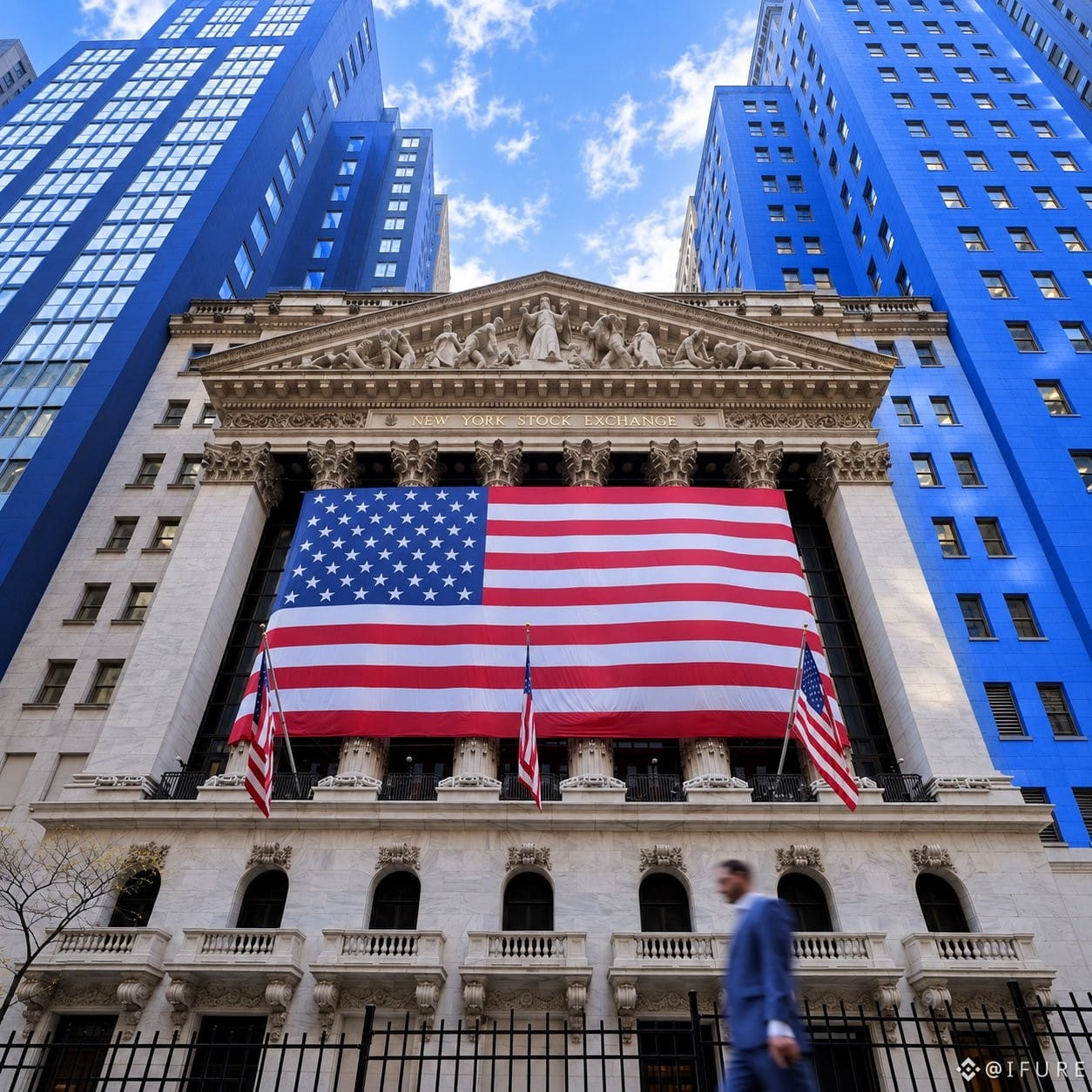
FOMCウィークだけど、BTC以上に注目してる。トークン化された米国債はオンチェーンで150億ドルを超え、RWAsに対してFRBの利上げ判断がますます重要になっている。オンド(Ondo)は、自社のプロダクト全体で米国債関連のTVLが20億ドル超に達したと報告している。$ONDO は間違いなく注目すべき銘柄だ。 #BingX #ONDO
FOMCウィークだけど、BTC以上に注目してる。トークン化された米国債はオンチェーンで150億ドルを超え、RWAsに対してFRBの利上げ判断がますます重要になっている。オンド(Ondo)は、自社のプロダクト全体で米国債関連のTVLが20億ドル超に達したと報告している。$ONDO は間違いなく注目すべき銘柄だ。 #BingX #ONDO
56
·
--
BingXのチャートを確認しながら、CLARITY法案の採決を見ていました。上院は法案の前進を見送り、その反応は$BTCと暗号資産関連株にまで反映されました。1つの政治ヘッドライン→複数の市場がリアルタイムに反応。暗号資産と株を同じプラットフォームで扱えることの中で、私が面白いと感じるのはまさにそこです。 #CLARITYAct #Bitcoin
BingXのチャートを確認しながら、CLARITY法案の採決を見ていました。上院は法案の前進を見送り、その反応は$BTCと暗号資産関連株にまで反映されました。1つの政治ヘッドライン→複数の市場がリアルタイムに反応。暗号資産と株を同じプラットフォームで扱えることの中で、私が面白いと感じるのはまさにそこです。 #CLARITYAct #Bitcoin

·
--
翻訳参照
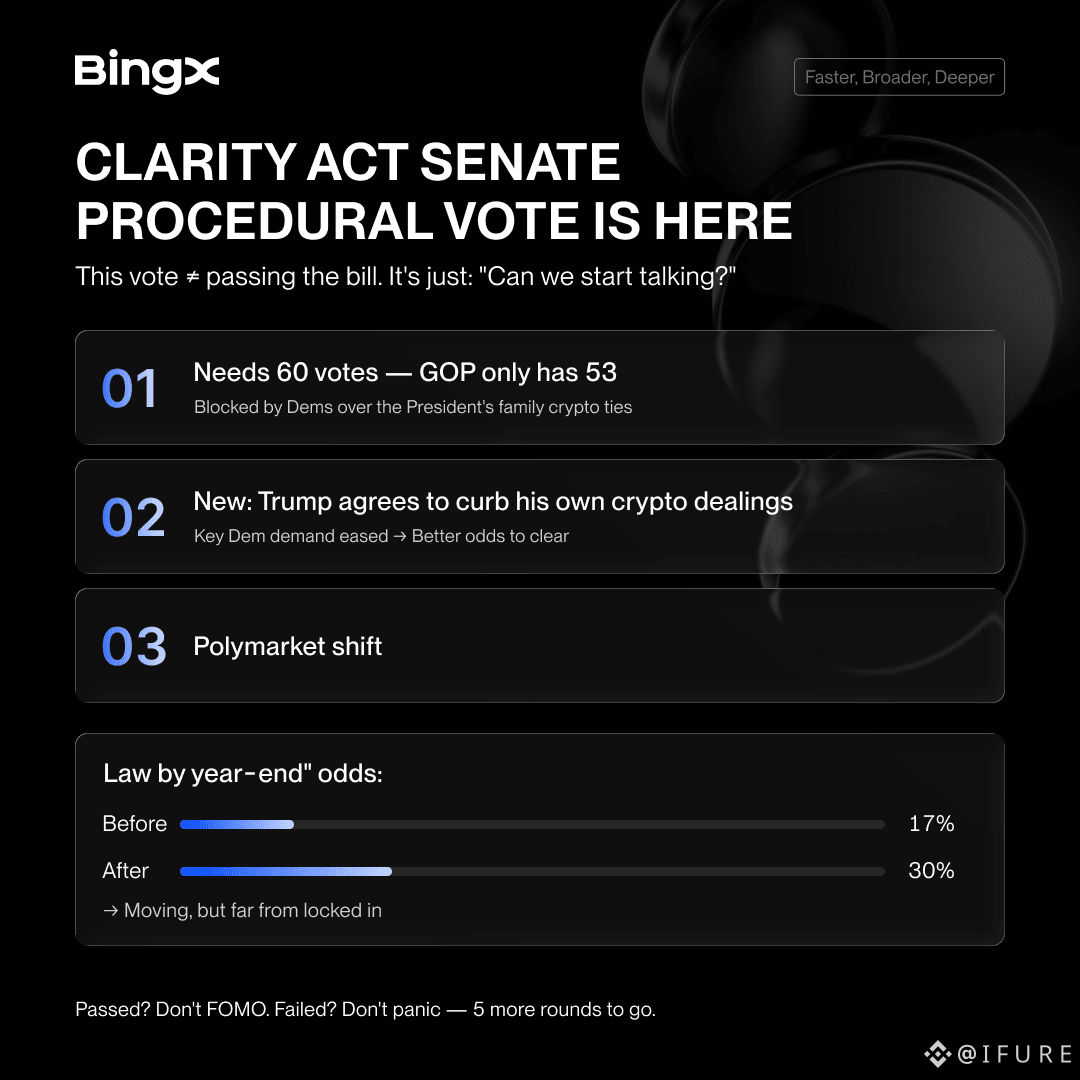
The CLARITY Act faces a key Senate procedural vote. 60 votes are needed, but Republicans hold 53 seats, meaning bipartisan support is necessary. A successful vote only moves the bill forward, it doesn’t mean final passage. For crypto, $BTC m is worth watching, while $ETH and $SOL could see bigger moves if the bill advances. #CLARITYAct #Bitcoin
The CLARITY Act faces a key Senate procedural vote. 60 votes are needed, but Republicans hold 53 seats, meaning bipartisan support is necessary. A successful vote only moves the bill forward, it doesn’t mean final passage. For crypto, $BTC m is worth watching, while $ETH and $SOL could see bigger moves if the bill advances. #CLARITYAct #Bitcoin
56
·
--
$CCD コンコルディウムを見れば見るほど、そのアイデンティティ層がいかに実用的かを実感します。アイデンティティ確認、アクセス許可、または支払いはすべてオンチェーン上のトランザクションであり、$CCDがネットワークを支えています。手数料は低く安定しており、ユーロに連動して約1セント程度なので、企業はエージェントの活動コストをより正確に見積もれます。私がもう一つ気に入っている点は、企業がトランザクションをスポンサーできること。つまり、ユーザーやAIエージェントが必ずしも自分で$CCDを保有している必要はありません。ネットワークのレベルでは、バリデータと委任者がすべてを安全に支えるために$CCDをステークします。単なる“アイデンティティのためのアイデンティティ”ではありません。アイデンティティ、アクセス、支払い、そしてネットワークセキュリティを1つのシステムに統合しています。
$CCD コンコルディウムを見れば見るほど、そのアイデンティティ層がいかに実用的かを実感します。アイデンティティ確認、アクセス許可、または支払いはすべてオンチェーン上のトランザクションであり、$CCDがネットワークを支えています。手数料は低く安定しており、ユーロに連動して約1セント程度なので、企業はエージェントの活動コストをより正確に見積もれます。私がもう一つ気に入っている点は、企業がトランザクションをスポンサーできること。つまり、ユーザーやAIエージェントが必ずしも自分で$CCDを保有している必要はありません。ネットワークのレベルでは、バリデータと委任者がすべてを安全に支えるために$CCDをステークします。単なる“アイデンティティのためのアイデンティティ”ではありません。アイデンティティ、アクセス、支払い、そしてネットワークセキュリティを1つのシステムに統合しています。
71
·
--
翻訳参照
$CCD AI agents are getting smarter. The next question is: who stands behind them? Concordium’s Agent Registry gives agents verifiable on-chain identities linked to verified humans or businesses, without exposing their personal data. It also supports external chains like Ethereum and Solana. Simple idea, but important: know the agent, know who’s behind it. Explore the Agent Registryhttps://agent-registry.concordium.com/?utm_source=chatgpt.com
$CCD AI agents are getting smarter. The next question is: who stands behind them? Concordium’s Agent Registry gives agents verifiable on-chain identities linked to verified humans or businesses, without exposing their personal data. It also supports external chains like Ethereum and Solana. Simple idea, but important: know the agent, know who’s behind it. Explore the Agent Registryhttps://agent-registry.concordium.com/?utm_source=chatgpt.com
59
·
--
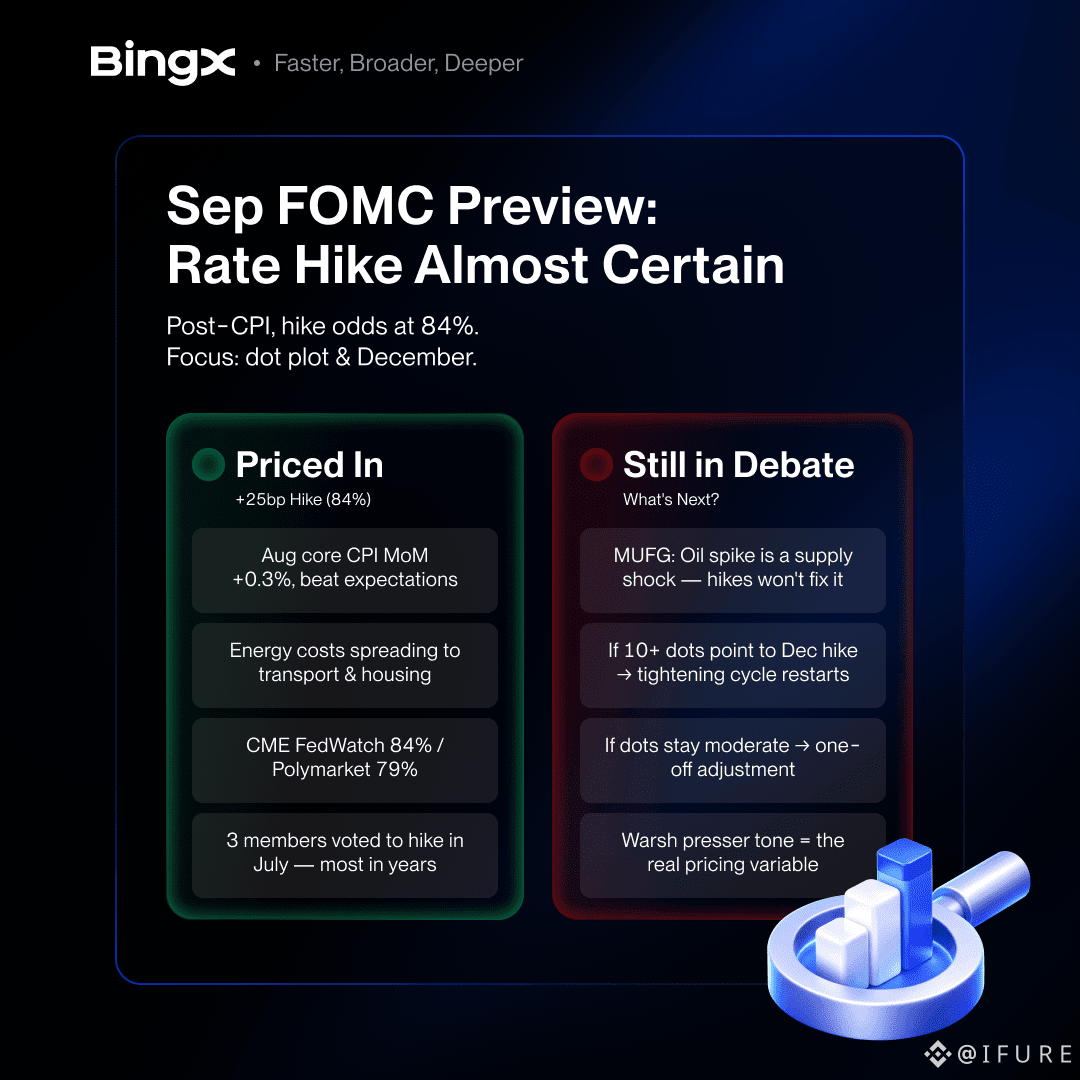
9月のFOMCは、私が特に注目しているマクロイベントです。利上げの確率は約84%で、1か月前の約40%から上昇しているため、25bpの動きはすでにかなり織り込まれています。私にとってより大きな論点はドットプロットです。10人以上の当局者が12月にも追加利上げを示唆すれば、より強いドルと、$BTC、株式、そして金への一段の圧力が見られるかもしれません。FRBのガイダンスは、利上げそのもの以上に重要になる可能性があります。BingX TradFihttps://bingx.com/tradfi/overview?ch=bm_pr&utm_source=chatgpt.com #FOMC #BingX
9月のFOMCは、私が特に注目しているマクロイベントです。利上げの確率は約84%で、1か月前の約40%から上昇しているため、25bpの動きはすでにかなり織り込まれています。私にとってより大きな論点はドットプロットです。10人以上の当局者が12月にも追加利上げを示唆すれば、より強いドルと、$BTC、株式、そして金への一段の圧力が見られるかもしれません。FRBのガイダンスは、利上げそのもの以上に重要になる可能性があります。BingX TradFihttps://bingx.com/tradfi/overview?ch=bm_pr&utm_source=chatgpt.com #FOMC #BingX
·
--
$CCD 私がコンコルディウムのアプローチで特に気に入っている点の1つは、コンコルディウム上のネイティブエージェントは、プロトコルのアイデンティティ層を通じてすでに検証を継承しているため、バッジは不要だということです。 **Verified by Concordium(コンコルディウムによって検証済み)** のバッジは、イーサリアムやその他の外部チェーン上で動作するエージェントのために用意されています。 このバッジにより、それらのエージェントの背後に、検証済みの人または企業がいることを示す、視覚的な認定マークが付与されます。 エージェントは作られた場所に留まります。 検証は移動する必要がありません。 この違いは、多チェーンのエージェント経済にとって非常に理にかなっています。 #Concordium #AI
$CCD 私がコンコルディウムのアプローチで特に気に入っている点の1つは、コンコルディウム上のネイティブエージェントは、プロトコルのアイデンティティ層を通じてすでに検証を継承しているため、バッジは不要だということです。 **Verified by Concordium(コンコルディウムによって検証済み)** のバッジは、イーサリアムやその他の外部チェーン上で動作するエージェントのために用意されています。 このバッジにより、それらのエージェントの背後に、検証済みの人または企業がいることを示す、視覚的な認定マークが付与されます。 エージェントは作られた場所に留まります。 検証は移動する必要がありません。 この違いは、多チェーンのエージェント経済にとって非常に理にかなっています。 #Concordium #AI

58
·
--
翻訳参照
$CCD This is the part of Concordium’s Agent Registry I find most compelling. An AI agent doesn’t need to leave Ethereum or migrate to another chain just to establish accountability. The Verified by Concordium Badge can travel with the agent, showing that a verified human or business stands behind it without exposing their personal data. It’s similar to a certification mark: the product can operate anywhere, while the mark tells you that specific criteria have been verified. For AI agents, that distinction could become very important.
$CCD This is the part of Concordium’s Agent Registry I find most compelling. An AI agent doesn’t need to leave Ethereum or migrate to another chain just to establish accountability. The Verified by Concordium Badge can travel with the agent, showing that a verified human or business stands behind it without exposing their personal data. It’s similar to a certification mark: the product can operate anywhere, while the mark tells you that specific criteria have been verified. For AI agents, that distinction could become very important.
48
·
--
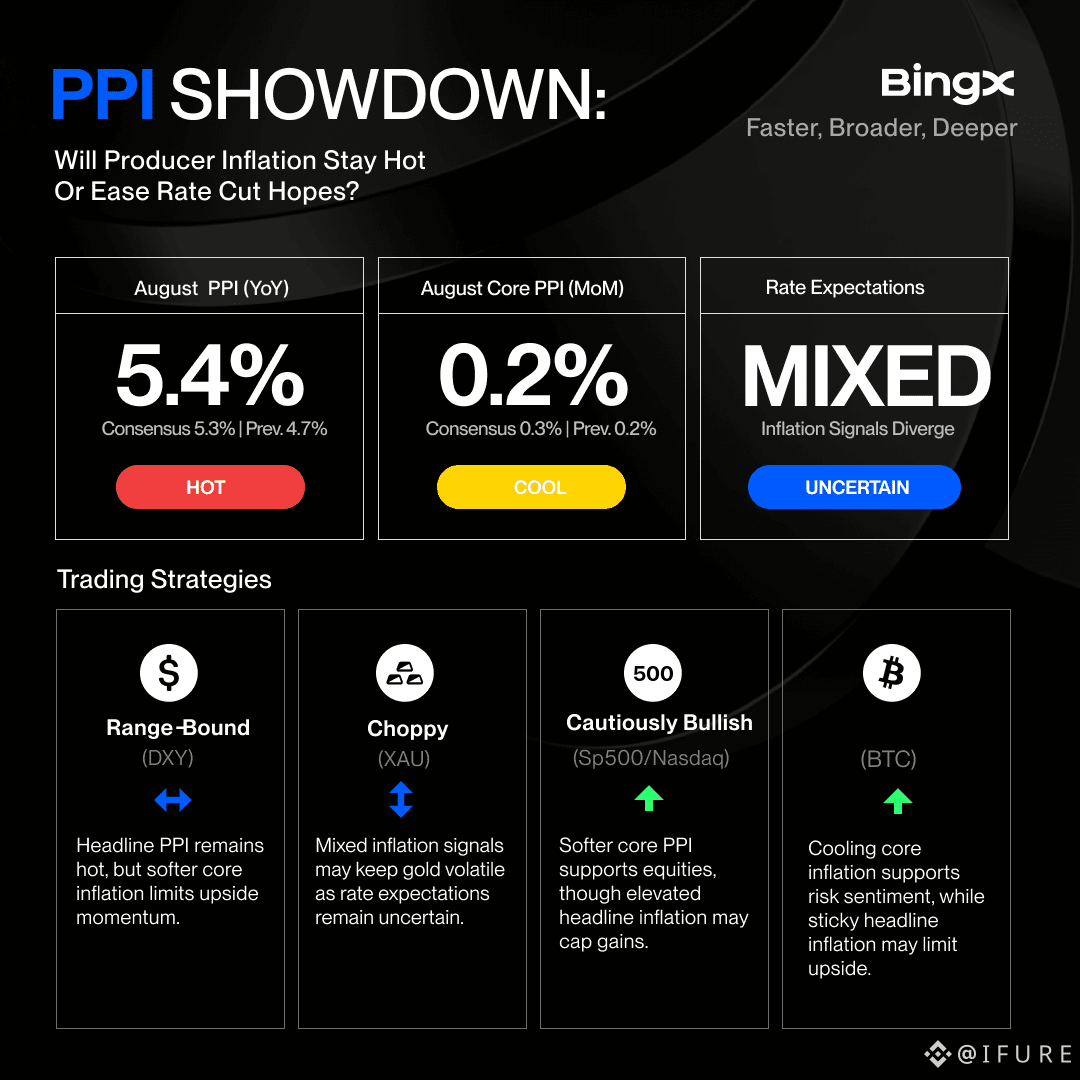
8月のPPIはトレーダーに複雑な見通しをもたらした。ヘッドラインのPPIは前年比5.4%と上昇し、7月の4.8%から改善した。一方でコアPPIは、市場予想よりも弱く、前月比0.2%となり、0.3%を下回った。エネルギーが大きな要因で、最終需要のエネルギー価格は4.2%上昇した。これにより、FRBの金利見通しは不透明なままだ。コアインフレが弱含みでリスク選好を支えるなら、$BTC やSP500は慎重に強気を維持する可能性があるが、金は市場が金利を見直す中で値動きが荒くなり得る。データを消化する中で、BingX上でSP500やその他の従来型金融(TradFi)資産を注視している。 #PPI #BingX
8月のPPIはトレーダーに複雑な見通しをもたらした。ヘッドラインのPPIは前年比5.4%と上昇し、7月の4.8%から改善した。一方でコアPPIは、市場予想よりも弱く、前月比0.2%となり、0.3%を下回った。エネルギーが大きな要因で、最終需要のエネルギー価格は4.2%上昇した。これにより、FRBの金利見通しは不透明なままだ。コアインフレが弱含みでリスク選好を支えるなら、$BTC やSP500は慎重に強気を維持する可能性があるが、金は市場が金利を見直す中で値動きが荒くなり得る。データを消化する中で、BingX上でSP500やその他の従来型金融(TradFi)資産を注視している。 #PPI #BingX
74
·
--
翻訳参照
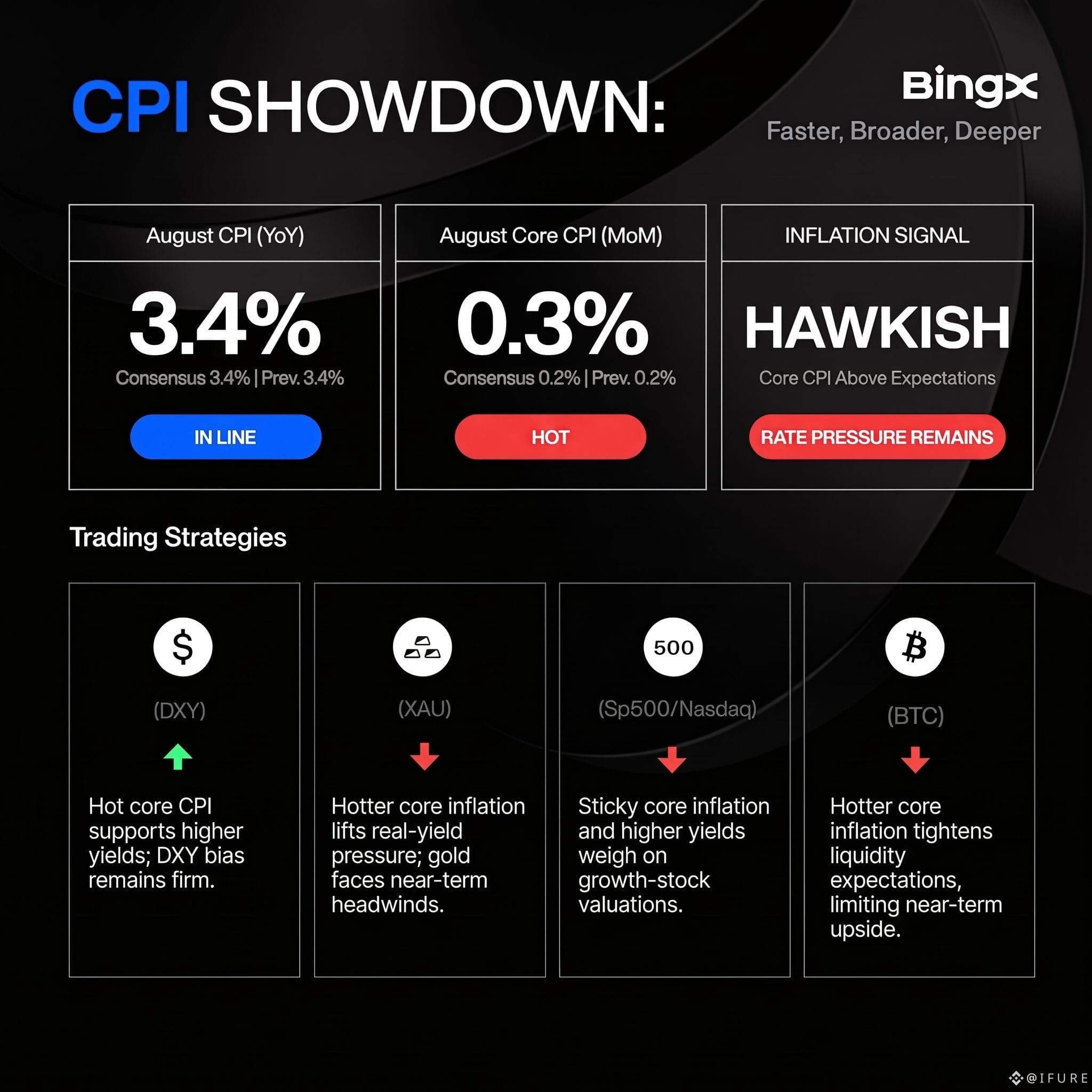
August CPI came in at 3.4% YoY as expected, but core CPI surprised at 0.3% MoM vs 0.2%. That sticky reading keeps rate expectations in focus. DXY could stay firm while $BTC and gold face near-term pressure if yields remain high. Watching the market reaction on BingX TradFi. #CPI #BingX
August CPI came in at 3.4% YoY as expected, but core CPI surprised at 0.3% MoM vs 0.2%. That sticky reading keeps rate expectations in focus. DXY could stay firm while $BTC and gold face near-term pressure if yields remain high. Watching the market reaction on BingX TradFi. #CPI #BingX
·
--
翻訳参照
$CCD AI agents getting smarter is one thing. Knowing who is actually behind them is another. That’s why Concordium’s Agent Registry caught my attention. Each agent gets a `did:ccd` tied to a verified human or business, while ZKPs keep the underlying identity private. Add wallet addresses, MCP endpoints and capability data, and the agent becomes much easier to verify before interacting with it. Simple idea, but a very important one for the agent economy. #Concordium #AI
$CCD AI agents getting smarter is one thing. Knowing who is actually behind them is another. That’s why Concordium’s Agent Registry caught my attention. Each agent gets a `did:ccd` tied to a verified human or business, while ZKPs keep the underlying identity private. Add wallet addresses, MCP endpoints and capability data, and the agent becomes much easier to verify before interacting with it. Simple idea, but a very important one for the agent economy. #Concordium #AI

50
·
--
翻訳参照
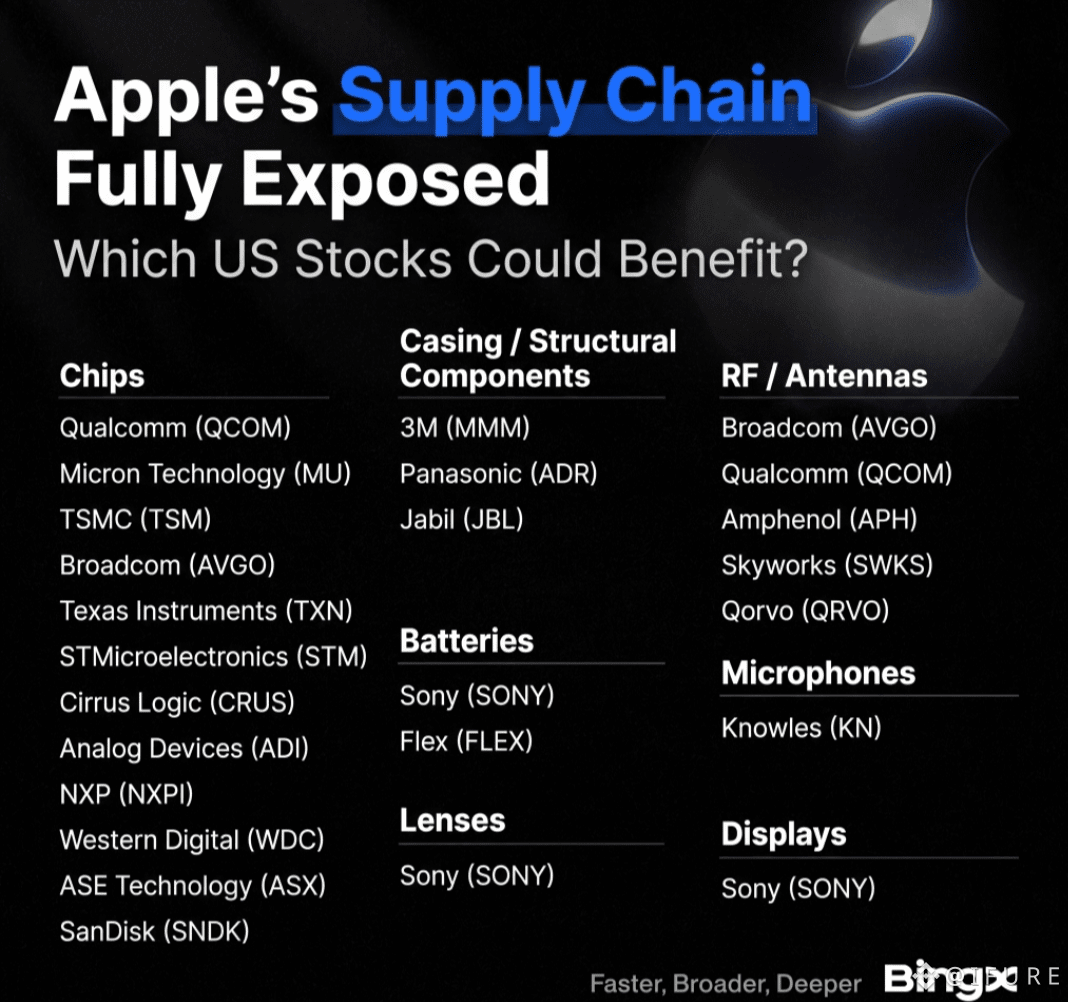
Apple’s supply chain is bigger than most people realize. From TSMC, Qualcomm and Broadcom to Sony, Micron, SanDisk, Skyworks and 20+ other companies, there are players across chips, batteries, lenses, displays, RF components and structural parts. That means Apple’s product demand can impact much more than AAPL itself. I’ve been watching some of these names through BingX TradFi, including $SNDK / $USDT , to see which parts of the supply chain are getting attention. #Apple #TradFi
Apple’s supply chain is bigger than most people realize. From TSMC, Qualcomm and Broadcom to Sony, Micron, SanDisk, Skyworks and 20+ other companies, there are players across chips, batteries, lenses, displays, RF components and structural parts. That means Apple’s product demand can impact much more than AAPL itself. I’ve been watching some of these names through BingX TradFi, including $SNDK / $USDT , to see which parts of the supply chain are getting attention. #Apple #TradFi
65
·
--
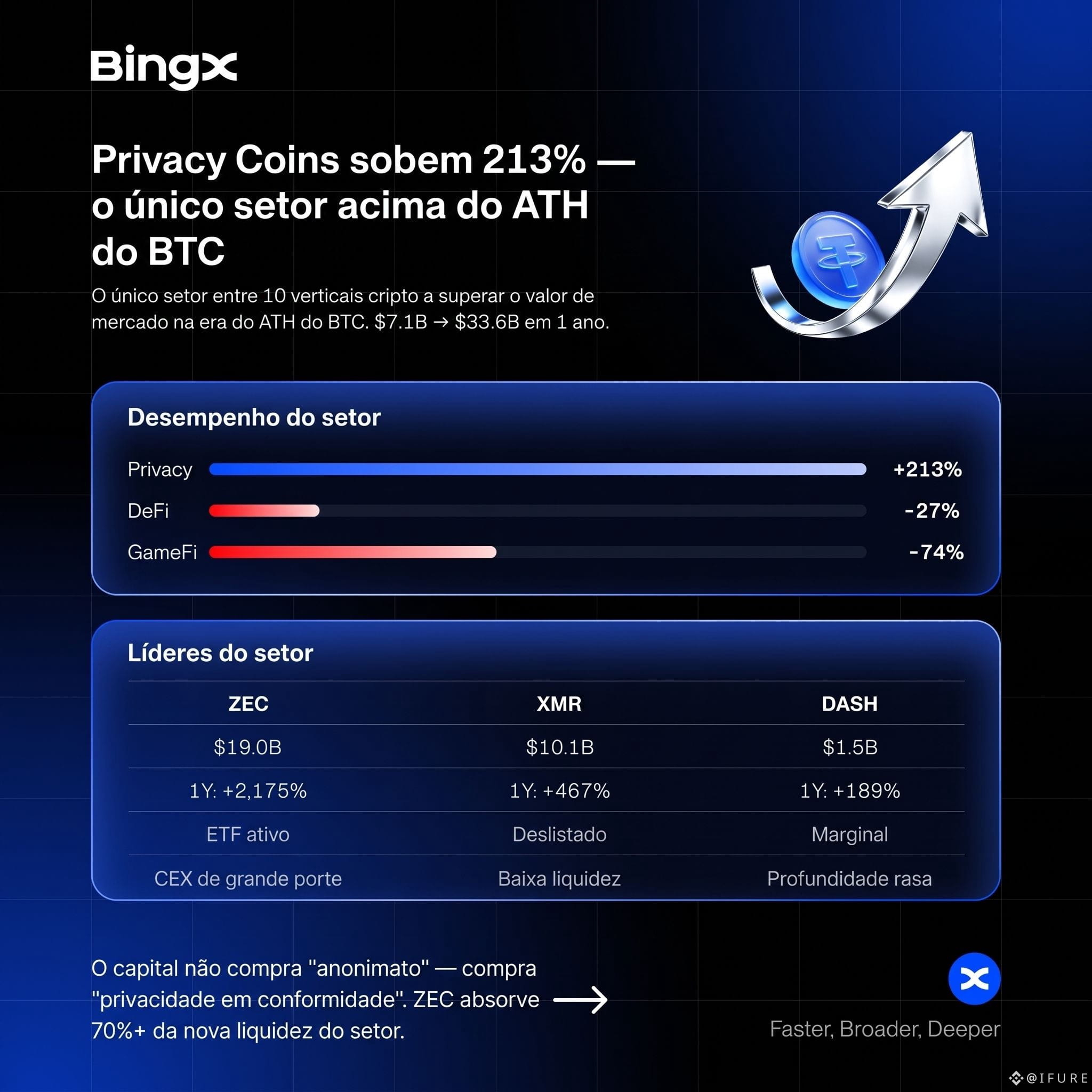
#PrivacyCoins プライバシーコインが再び注目を集めています。👀 このセクターは約213%上昇しており、ZECが報じられている年初来1年で+2,000%超の上昇率で先頭に立っています。市場規模は約190億ドル($19B)です。アクティブな$ZEC ETFがあり、供給がロックされていることもあって、BingXで私が注目しているのは$ZEC / $USDTです。$XMR と $DASH も見逃せません。プライバシー重視の物語が、明らかに再び注目を集めています。 #ZEC #PrivacyCoins
#PrivacyCoins プライバシーコインが再び注目を集めています。👀 このセクターは約213%上昇しており、ZECが報じられている年初来1年で+2,000%超の上昇率で先頭に立っています。市場規模は約190億ドル($19B)です。アクティブな$ZEC ETFがあり、供給がロックされていることもあって、BingXで私が注目しているのは$ZEC / $USDTです。$XMR と $DASH も見逃せません。プライバシー重視の物語が、明らかに再び注目を集めています。 #ZEC #PrivacyCoins
2
·
--
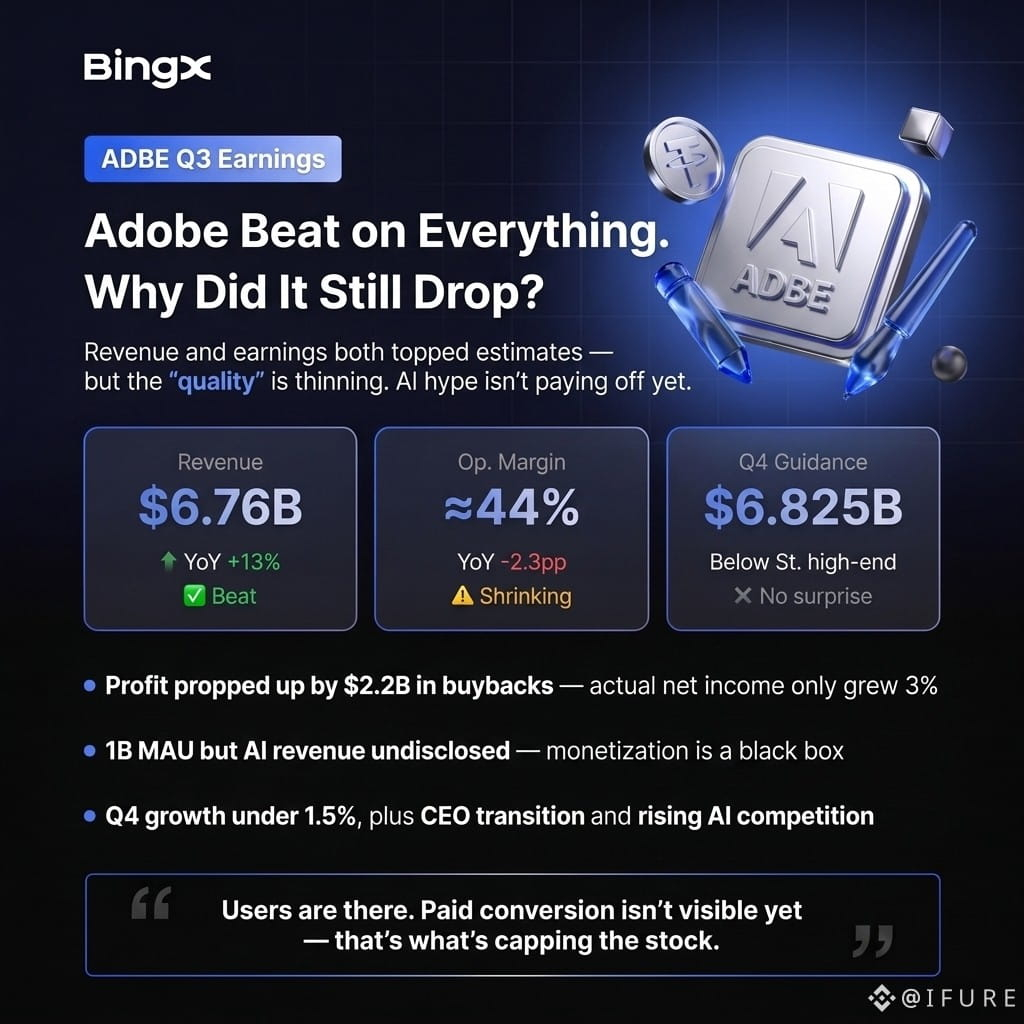
アドビの数字は決して悪くありませんでした。市場が求めていたのは、もう一歩でした。 2026年度第3四半期の売上高:67.6億ドル、前年比+13% 調整後EPS:6.13ドル AI-first ARR:前年比150%超 月間アクティブユーザー:10億人超 しかし、第4四半期のガイダンス(売上高)である68.0億ドル~68.5億ドルは、アナリスト予想である68.5億ドルをわずかに下回るミッドポイントで出てきました。 これで再び焦点はAIの収益化に戻ります。アドビはAI製品により多くのユーザーを取り込んでいますが、投資家は、そのユーザーがどれだけ効果的に持続可能な収益へつながっているかを見たいのです。 今後のCEO交代も加わります。アニル・チャクラヴァルティ氏が12月1日にCEOに就任する予定で、市場が消化すべき材料はまだまだたくさんあります。 $ADBE はBingXのTradFiで利用可能です。 #ADBE #AI
アドビの数字は決して悪くありませんでした。市場が求めていたのは、もう一歩でした。 2026年度第3四半期の売上高:67.6億ドル、前年比+13% 調整後EPS:6.13ドル AI-first ARR:前年比150%超 月間アクティブユーザー:10億人超 しかし、第4四半期のガイダンス(売上高)である68.0億ドル~68.5億ドルは、アナリスト予想である68.5億ドルをわずかに下回るミッドポイントで出てきました。 これで再び焦点はAIの収益化に戻ります。アドビはAI製品により多くのユーザーを取り込んでいますが、投資家は、そのユーザーがどれだけ効果的に持続可能な収益へつながっているかを見たいのです。 今後のCEO交代も加わります。アニル・チャクラヴァルティ氏が12月1日にCEOに就任する予定で、市場が消化すべき材料はまだまだたくさんあります。 $ADBE はBingXのTradFiで利用可能です。 #ADBE #AI
·
--
$CCD AIエージェントは賢くなってきていますが、それでも信頼は大きな課題です。では、実際にエージェントの背後に誰がいるのでしょうか?Concordiumのアプローチは興味深いです。アイデンティティ層が最初に構築されたからです。同社のAgent Registryには、検証済みの所有権を持つ登録済みエージェントが1,600件以上あります。企業は、会社の書類を公開することなく、所有権を証明できます。こここそが、AIインフラが本当に面白くなるところです。
$CCD AIエージェントは賢くなってきていますが、それでも信頼は大きな課題です。では、実際にエージェントの背後に誰がいるのでしょうか?Concordiumのアプローチは興味深いです。アイデンティティ層が最初に構築されたからです。同社のAgent Registryには、検証済みの所有権を持つ登録済みエージェントが1,600件以上あります。企業は、会社の書類を公開することなく、所有権を証明できます。こここそが、AIインフラが本当に面白くなるところです。

64
·
--
この難しさにしよう😂 では、次の1年間は「1つの資産」しか売買できません。 $BTC ? $ETH ? 金?原油?S&P 500?株?FX?それとも「とんでもないことが起きる」と信じているあのアルト? BingXでいろんな市場を見ていて、「マルチアセット」はこの挑戦を格段に難しくすると気づきました。 1つだけ選んでください。切り替えはなし。あなたの選択は何で、なぜですか?
この難しさにしよう😂 では、次の1年間は「1つの資産」しか売買できません。 $BTC ? $ETH ? 金?原油?S&P 500?株?FX?それとも「とんでもないことが起きる」と信じているあのアルト? BingXでいろんな市場を見ていて、「マルチアセット」はこの挑戦を格段に難しくすると気づきました。 1つだけ選んでください。切り替えはなし。あなたの選択は何で、なぜですか?

2
ログインして、さらにコンテンツを読む
厳選トピックで世界の暗号資産トレーダーの仲間入り
⚡️ 暗号資産に関する最新かつ有益な情報が見つかります。
💬 世界最大の暗号資産取引所から信頼されています。
👍 認証を受けたクリエイターから、有益なインサイトを得られます。
メール / 電話番号
トレンドトピック
BOJRaisesRatesTo31YearHigh
閲覧回数 124,421
1,947人が討論中
#BOJRaisesRatesTo31YearHigh
#BOJRaisesRatesTo31YearHigh 🇯🇵📈
日本銀行は、31年ぶりの高水準となる利上げを実施し、さらなる重要な一手を打ったことで、世界の市場に警戒が広がっています。この決定は、日本が長年続けてきた極めて緩い金融政策からの継続的な転換を示すものです。日本の金利が高まれば円が強くなる可能性があり、世界の国債利回りに影響を与え、さらに金融市場全体での資金フローにも波及するおそれがあります。暗号資産やリスク資産も、投資家が流動性やリスクへのエクスポージャーを見直すことで反応するかもしれません。トレーダーは今、今後の利上げ判断に関する手がかりを得るために、日銀の次の発言を注視しています。市場が政策変更とその潜在的な世界的影響を消化するにつれて、ボラティリティ(変動性)が高まる可能性があります。 #BOJ #Japan #Crypto #Markets #InterestRates $NVDAB
maqsoodahmed1
·いいね:1件
·閲覧回数 106
BuffettStepsDownAsBerkshireChairman
閲覧回数 58,705
959人が討論中
XRPExchangeReservesHitSevenYearLow
閲覧回数 62,577
900人が討論中