
Ali Baba Trade X
3.2k 投稿

Ali Baba Trade X
報告
ユーザーをブロック
CoNTeNT CrEaToR | CrYpTo InSiGhTs | TeChNiCaL AnAlYsIs | ShOrT AnD LoNg IdEaS |
取引を発注
低高頻度トレーダー
9.8か月
109 フォロー
12.7K+ フォロワー
2.7K+ いいね
投稿
ポートフォリオ
すべて
引用
ライブ
·
--
ブリッシュ
翻訳参照
Impressed 👍
Impressed 👍

赫拉迪耶什
·
--
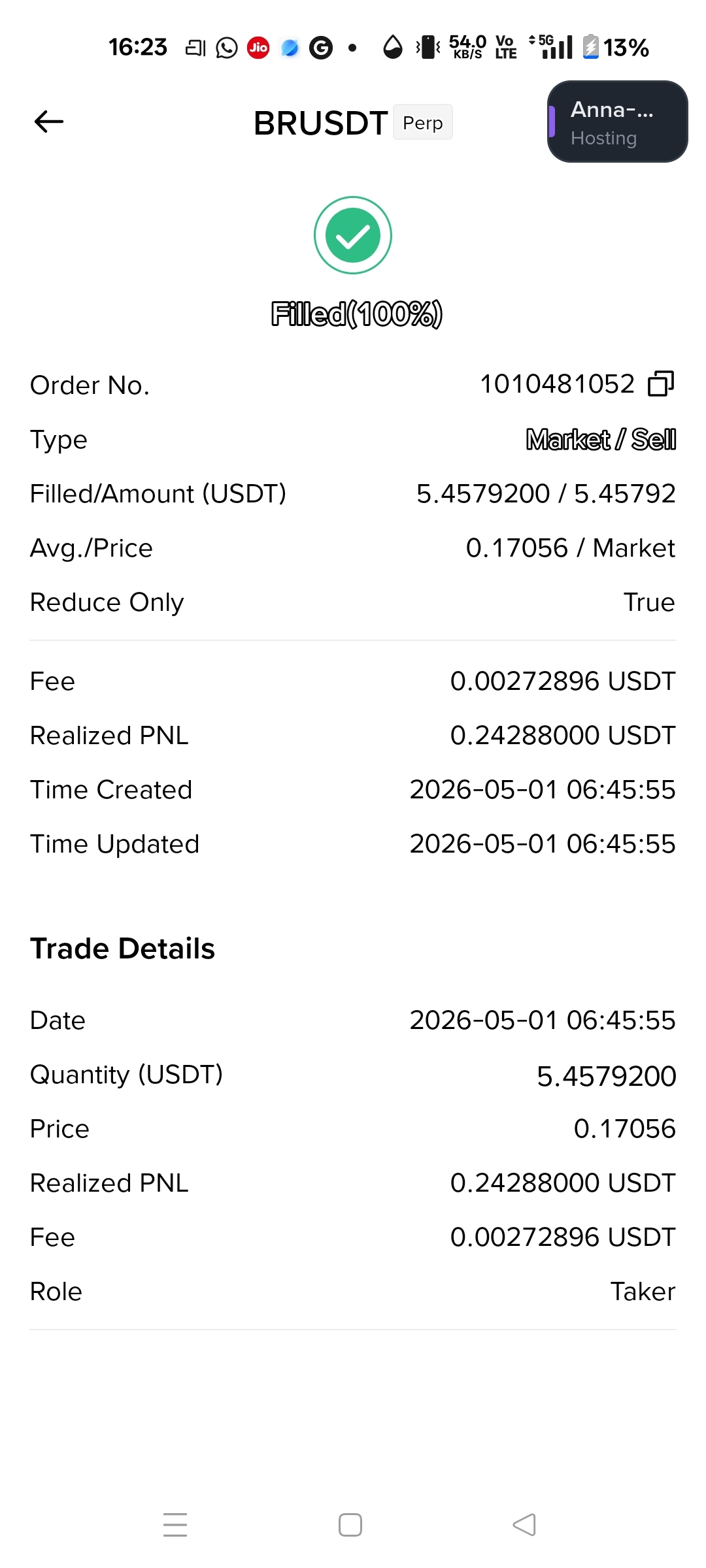
ブリッシュ🚀 BRUSDT Pumping: Riding the 90% ROI Wave!
The market never sleeps, and neither does the momentum on $BR! 📈
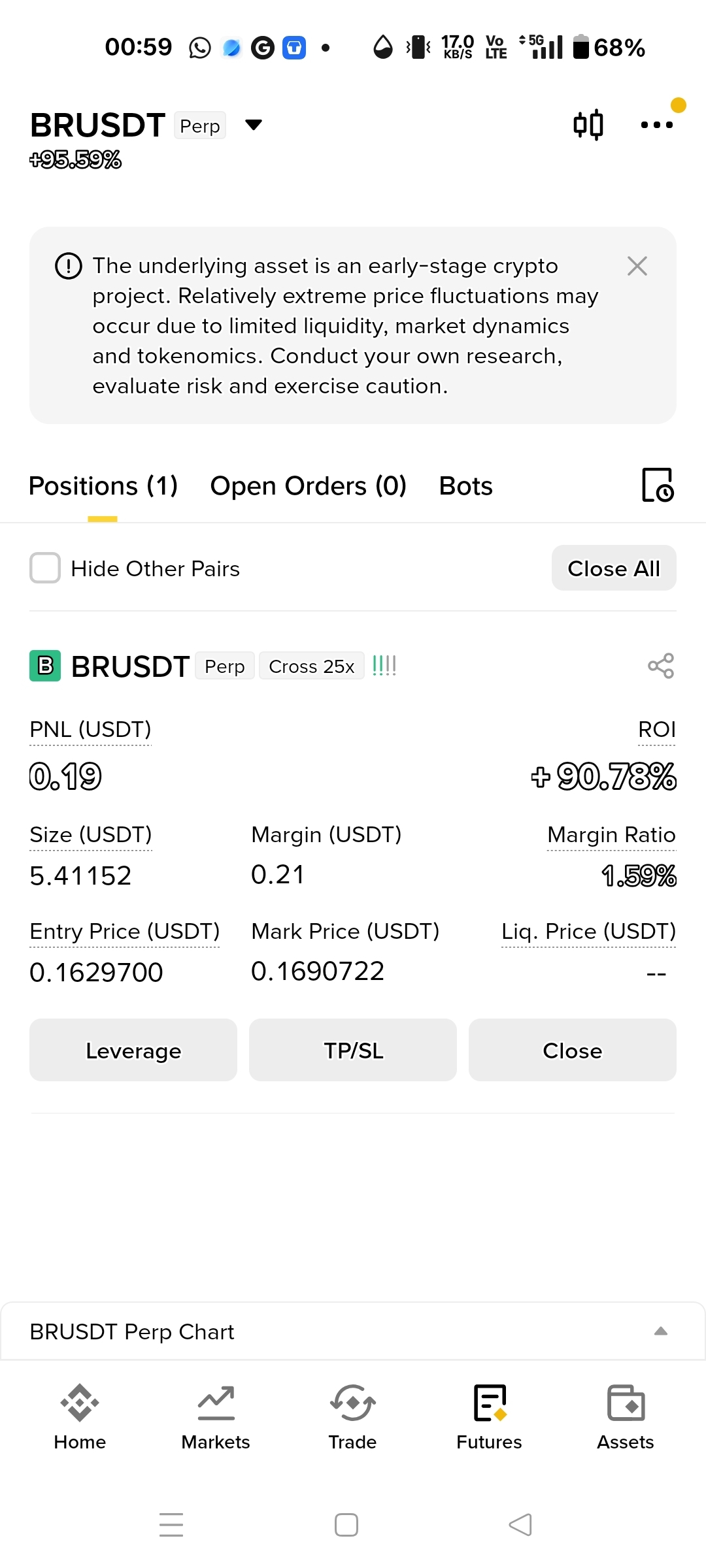
Looking at my current position, the BRUSDT Perpetual is showing a solid +90.78% ROI using a disciplined 25x Cross Leverage strategy. Despite the "early-stage project" volatility warnings, the price action from the entry of 0.16297 up to the mark price of 0.16907 shows strong buyer conviction.
🔍 Key Takeaways from this Trade:
Precision Entry: Entering near the support level allowed for a high-reward setup.
Leverage Management: Using 25x leverage requires a sharp eye on the Margin Ratio (currently 1.59%) to avoid liquidation risks in volatile "early-stage" assets.
Patience over FOMO: Waiting for the trend confirmation before scaling into the position.
Is this the start of a massive breakout for $BR, or are we looking at a local top? The low margin usage here shows that even small, calculated moves can yield significant percentage gains if your timing is right.
What’s your take on $BR? Are you holding long, or looking for a short entry as liquidity shifts? Let's discuss in the comments! 👇
#BinanceSquare #writetoearn #TradingStrategy #BRUSDT
#FutureTradingTips
$brusdt
"Disclaimer: This is for educational purposes only and not financial advice. Crypto trading involves high risk."
The market never sleeps, and neither does the momentum on $BR! 📈
Looking at my current position, the BRUSDT Perpetual is showing a solid +90.78% ROI using a disciplined 25x Cross Leverage strategy. Despite the "early-stage project" volatility warnings, the price action from the entry of 0.16297 up to the mark price of 0.16907 shows strong buyer conviction.
🔍 Key Takeaways from this Trade:
Precision Entry: Entering near the support level allowed for a high-reward setup.
Leverage Management: Using 25x leverage requires a sharp eye on the Margin Ratio (currently 1.59%) to avoid liquidation risks in volatile "early-stage" assets.
Patience over FOMO: Waiting for the trend confirmation before scaling into the position.
Is this the start of a massive breakout for $BR, or are we looking at a local top? The low margin usage here shows that even small, calculated moves can yield significant percentage gains if your timing is right.
What’s your take on $BR? Are you holding long, or looking for a short entry as liquidity shifts? Let's discuss in the comments! 👇
#BinanceSquare #writetoearn #TradingStrategy #BRUSDT
#FutureTradingTips
$brusdt
"Disclaimer: This is for educational purposes only and not financial advice. Crypto trading involves high risk."
翻訳参照
Pixels and the Quiet Evolution of Digital OwnershipThere is something deeply interesting happening inside the world of blockchain gaming, and it is not loud or chaotic in the way early trends often are, instead it feels gradual, almost patient, as if a new kind of digital life is being shaped carefully rather than rushed, and when I look at Pixels, I’m not just seeing a game, I’m seeing a reflection of where this entire space might be heading if it continues to mature with intention and discipline.
Pixels presents itself as a simple, social, open world built around farming, exploration, and creation, yet beneath that simplicity there is a layered system that has been designed with a clear understanding of both human behavior and technological limitations, and that combination is rare, because many projects either overengineer the technology or oversimplify the experience, while Pixels tries to balance both in a way that feels natural.
Understanding the Core Idea Behind Pixels
At its heart, Pixels is built on the belief that digital worlds should feel alive, and that players should not just pass through them but actually contribute to them, shape them, and benefit from them over time, and this idea becomes more powerful when you realize that ownership in this world is not symbolic, it is functional, meaning that actions taken inside the game carry value that extends beyond temporary progress.
They’re creating an environment where time spent inside the game can translate into something meaningful, and If that system holds its balance, it creates a loop where players feel motivated not because they are chasing rewards blindly, but because they are building something that feels like it belongs to them.
This is where Pixels separates itself from earlier experiments, because instead of focusing only on financial incentives, it focuses on experience first, allowing value to emerge naturally from participation rather than forcing it artificially into the system.
Why the Ronin Infrastructure Matters So Much
The decision to build on Ronin is not just a technical choice, it is a strategic one that directly shapes how users experience the game, because in blockchain environments, friction can quietly destroy even the most promising ideas, and Pixels seems to understand that every second of delay or every unnecessary cost can break immersion.
By operating on a network designed for high throughput and low transaction costs, the game ensures that actions feel smooth and immediate, which is essential for a farming and exploration based experience where interactions happen frequently and continuously.
I’m seeing a deliberate effort to make blockchain invisible without removing its benefits, and that is important, because the future of this space does not depend on users understanding the technology, it depends on users enjoying what the technology enables.
The Economic System and Its Real Purpose
The PIXEL token plays a central role, but it is not positioned as the sole reason for engagement, instead it acts as a connector between different layers of activity inside the game, linking farming, crafting, trading, and progression into a unified economic cycle.
Players earn through participation, and It becomes clear that the system is designed to reward consistency rather than speculation, which creates a more stable environment where value is tied to contribution rather than hype.
However, this type of economy is delicate, because If rewards are too high, inflation can quickly reduce the significance of earnings, and If rewards are too low, motivation begins to fade, so maintaining balance requires constant monitoring and adjustment, and from what can be observed, Pixels is actively evolving its systems rather than leaving them static.
We’re seeing a model where the economy is treated as a living organism, one that reacts to user behavior and adapts over time, which is essential for long term sustainability.
The Human Layer That Defines Retention
What truly gives Pixels its depth is not just its mechanics, but its social dimension, because games that last are rarely built on systems alone, they are built on relationships, shared experiences, and a sense of belonging.
Players interact, collaborate, and observe each other’s progress, and this creates a subtle but powerful network effect where the presence of others enhances the experience rather than competing with it.
They’re building more than a game, they are building a community space where identity forms gradually, and that identity becomes part of why users return, not just for rewards, but for connection.
Metrics That Reveal the Truth
When evaluating Pixels from a serious research perspective, it becomes necessary to look beyond surface level indicators and focus on deeper signals such as user retention, engagement duration, and economic activity within the ecosystem.
If players continue to return daily, spend meaningful time inside the world, and actively participate in its economy, then the foundation is strong, because these metrics reflect genuine interest rather than temporary excitement.
Token performance alone does not define success, because without sustained engagement, any economic value becomes unstable, and Pixels appears to be aligning itself with metrics that reflect real usage rather than short term speculation.
Risks That Could Shape Its Future
No project exists without risk, and Pixels faces several challenges that could influence its trajectory, especially as it grows and attracts a broader audience with different expectations.
One major challenge lies in balancing the interests of traditional gamers and blockchain users, because these groups often approach value differently, and aligning their expectations requires careful design and communication.
There is also the risk of economic imbalance, where excessive rewards or insufficient sinks could distort the system, and this is an area that requires continuous attention and adjustment.
External market conditions add another layer of uncertainty, because broader shifts in the crypto environment can impact user sentiment and participation regardless of the project’s internal strength.
Adapting Under Pressure
What stands out about Pixels is its ability to adapt, because instead of treating its design as final, it evolves based on real user behavior and feedback, and this flexibility is critical in a space where conditions change rapidly.
If engagement patterns shift, adjustments are made, If economic imbalances appear, they are addressed, and If new opportunities emerge, the system expands to accommodate them, which shows a level of responsiveness that many projects struggle to achieve.
It becomes evident that Pixels is not trying to predict the future perfectly, but rather to remain flexible enough to navigate it effectively.
Looking Toward the Long Term
The long term potential of Pixels depends on its ability to maintain its balance while expanding its depth, because growth without stability can create fragility, and stability without growth can lead to stagnation.
If it continues to refine its gameplay, strengthen its economy, and nurture its community, it has the potential to become a lasting digital environment rather than a temporary trend.
We’re seeing early signs of a model where digital worlds function as persistent ecosystems rather than isolated experiences, and Pixels is contributing to that shift in a way that feels grounded and intentional.
Final Reflection
Pixels does not rely on noise to make its presence known, instead it builds quietly, layer by layer, shaping an experience that feels accessible yet meaningful, simple yet deep, and familiar yet forward looking.
I’m seeing a project that understands patience, that respects its users, and that focuses on creating something that can endure rather than something that fades quickly.
If it continues on this path, Pixels may not just be remembered as a successful game, but as part of a turning point where digital ownership finally began to feel real, and where virtual worlds started to carry the weight of genuine human experience.
And that is something worth paying attention to, because it reminds us that the future is not always built loudly, sometimes it grows steadily, with purpose, until one day it simply becomes undeniable.
@pixels #pixel $PIXEL
Pixels and the Quiet Evolution of Digital Ownership
There is something deeply interesting happening inside the world of blockchain gaming, and it is not loud or chaotic in the way early trends often are, instead it feels gradual, almost patient, as if a new kind of digital life is being shaped carefully rather than rushed, and when I look at Pixels, I’m not just seeing a game, I’m seeing a reflection of where this entire space might be heading if it continues to mature with intention and discipline.
Pixels presents itself as a simple, social, open world built around farming, exploration, and creation, yet beneath that simplicity there is a layered system that has been designed with a clear understanding of both human behavior and technological limitations, and that combination is rare, because many projects either overengineer the technology or oversimplify the experience, while Pixels tries to balance both in a way that feels natural.
Understanding the Core Idea Behind Pixels
At its heart, Pixels is built on the belief that digital worlds should feel alive, and that players should not just pass through them but actually contribute to them, shape them, and benefit from them over time, and this idea becomes more powerful when you realize that ownership in this world is not symbolic, it is functional, meaning that actions taken inside the game carry value that extends beyond temporary progress.
They’re creating an environment where time spent inside the game can translate into something meaningful, and If that system holds its balance, it creates a loop where players feel motivated not because they are chasing rewards blindly, but because they are building something that feels like it belongs to them.
This is where Pixels separates itself from earlier experiments, because instead of focusing only on financial incentives, it focuses on experience first, allowing value to emerge naturally from participation rather than forcing it artificially into the system.
Why the Ronin Infrastructure Matters So Much
The decision to build on Ronin is not just a technical choice, it is a strategic one that directly shapes how users experience the game, because in blockchain environments, friction can quietly destroy even the most promising ideas, and Pixels seems to understand that every second of delay or every unnecessary cost can break immersion.
By operating on a network designed for high throughput and low transaction costs, the game ensures that actions feel smooth and immediate, which is essential for a farming and exploration based experience where interactions happen frequently and continuously.
I’m seeing a deliberate effort to make blockchain invisible without removing its benefits, and that is important, because the future of this space does not depend on users understanding the technology, it depends on users enjoying what the technology enables.
The Economic System and Its Real Purpose
The PIXEL token plays a central role, but it is not positioned as the sole reason for engagement, instead it acts as a connector between different layers of activity inside the game, linking farming, crafting, trading, and progression into a unified economic cycle.
Players earn through participation, and It becomes clear that the system is designed to reward consistency rather than speculation, which creates a more stable environment where value is tied to contribution rather than hype.
However, this type of economy is delicate, because If rewards are too high, inflation can quickly reduce the significance of earnings, and If rewards are too low, motivation begins to fade, so maintaining balance requires constant monitoring and adjustment, and from what can be observed, Pixels is actively evolving its systems rather than leaving them static.
We’re seeing a model where the economy is treated as a living organism, one that reacts to user behavior and adapts over time, which is essential for long term sustainability.
The Human Layer That Defines Retention
What truly gives Pixels its depth is not just its mechanics, but its social dimension, because games that last are rarely built on systems alone, they are built on relationships, shared experiences, and a sense of belonging.
Players interact, collaborate, and observe each other’s progress, and this creates a subtle but powerful network effect where the presence of others enhances the experience rather than competing with it.
They’re building more than a game, they are building a community space where identity forms gradually, and that identity becomes part of why users return, not just for rewards, but for connection.
Metrics That Reveal the Truth
When evaluating Pixels from a serious research perspective, it becomes necessary to look beyond surface level indicators and focus on deeper signals such as user retention, engagement duration, and economic activity within the ecosystem.
If players continue to return daily, spend meaningful time inside the world, and actively participate in its economy, then the foundation is strong, because these metrics reflect genuine interest rather than temporary excitement.
Token performance alone does not define success, because without sustained engagement, any economic value becomes unstable, and Pixels appears to be aligning itself with metrics that reflect real usage rather than short term speculation.
Risks That Could Shape Its Future
No project exists without risk, and Pixels faces several challenges that could influence its trajectory, especially as it grows and attracts a broader audience with different expectations.
One major challenge lies in balancing the interests of traditional gamers and blockchain users, because these groups often approach value differently, and aligning their expectations requires careful design and communication.
There is also the risk of economic imbalance, where excessive rewards or insufficient sinks could distort the system, and this is an area that requires continuous attention and adjustment.
External market conditions add another layer of uncertainty, because broader shifts in the crypto environment can impact user sentiment and participation regardless of the project’s internal strength.
Adapting Under Pressure
What stands out about Pixels is its ability to adapt, because instead of treating its design as final, it evolves based on real user behavior and feedback, and this flexibility is critical in a space where conditions change rapidly.
If engagement patterns shift, adjustments are made, If economic imbalances appear, they are addressed, and If new opportunities emerge, the system expands to accommodate them, which shows a level of responsiveness that many projects struggle to achieve.
It becomes evident that Pixels is not trying to predict the future perfectly, but rather to remain flexible enough to navigate it effectively.
Looking Toward the Long Term
The long term potential of Pixels depends on its ability to maintain its balance while expanding its depth, because growth without stability can create fragility, and stability without growth can lead to stagnation.
If it continues to refine its gameplay, strengthen its economy, and nurture its community, it has the potential to become a lasting digital environment rather than a temporary trend.
We’re seeing early signs of a model where digital worlds function as persistent ecosystems rather than isolated experiences, and Pixels is contributing to that shift in a way that feels grounded and intentional.
Final Reflection
Pixels does not rely on noise to make its presence known, instead it builds quietly, layer by layer, shaping an experience that feels accessible yet meaningful, simple yet deep, and familiar yet forward looking.
I’m seeing a project that understands patience, that respects its users, and that focuses on creating something that can endure rather than something that fades quickly.
If it continues on this path, Pixels may not just be remembered as a successful game, but as part of a turning point where digital ownership finally began to feel real, and where virtual worlds started to carry the weight of genuine human experience.
And that is something worth paying attention to, because it reminds us that the future is not always built loudly, sometimes it grows steadily, with purpose, until one day it simply becomes undeniable.
@Pixels #pixel $PIXEL
Pixels presents itself as a simple, social, open world built around farming, exploration, and creation, yet beneath that simplicity there is a layered system that has been designed with a clear understanding of both human behavior and technological limitations, and that combination is rare, because many projects either overengineer the technology or oversimplify the experience, while Pixels tries to balance both in a way that feels natural.
Understanding the Core Idea Behind Pixels
At its heart, Pixels is built on the belief that digital worlds should feel alive, and that players should not just pass through them but actually contribute to them, shape them, and benefit from them over time, and this idea becomes more powerful when you realize that ownership in this world is not symbolic, it is functional, meaning that actions taken inside the game carry value that extends beyond temporary progress.
They’re creating an environment where time spent inside the game can translate into something meaningful, and If that system holds its balance, it creates a loop where players feel motivated not because they are chasing rewards blindly, but because they are building something that feels like it belongs to them.
This is where Pixels separates itself from earlier experiments, because instead of focusing only on financial incentives, it focuses on experience first, allowing value to emerge naturally from participation rather than forcing it artificially into the system.
Why the Ronin Infrastructure Matters So Much
The decision to build on Ronin is not just a technical choice, it is a strategic one that directly shapes how users experience the game, because in blockchain environments, friction can quietly destroy even the most promising ideas, and Pixels seems to understand that every second of delay or every unnecessary cost can break immersion.
By operating on a network designed for high throughput and low transaction costs, the game ensures that actions feel smooth and immediate, which is essential for a farming and exploration based experience where interactions happen frequently and continuously.
I’m seeing a deliberate effort to make blockchain invisible without removing its benefits, and that is important, because the future of this space does not depend on users understanding the technology, it depends on users enjoying what the technology enables.
The Economic System and Its Real Purpose
The PIXEL token plays a central role, but it is not positioned as the sole reason for engagement, instead it acts as a connector between different layers of activity inside the game, linking farming, crafting, trading, and progression into a unified economic cycle.
Players earn through participation, and It becomes clear that the system is designed to reward consistency rather than speculation, which creates a more stable environment where value is tied to contribution rather than hype.
However, this type of economy is delicate, because If rewards are too high, inflation can quickly reduce the significance of earnings, and If rewards are too low, motivation begins to fade, so maintaining balance requires constant monitoring and adjustment, and from what can be observed, Pixels is actively evolving its systems rather than leaving them static.
We’re seeing a model where the economy is treated as a living organism, one that reacts to user behavior and adapts over time, which is essential for long term sustainability.
The Human Layer That Defines Retention
What truly gives Pixels its depth is not just its mechanics, but its social dimension, because games that last are rarely built on systems alone, they are built on relationships, shared experiences, and a sense of belonging.
Players interact, collaborate, and observe each other’s progress, and this creates a subtle but powerful network effect where the presence of others enhances the experience rather than competing with it.
They’re building more than a game, they are building a community space where identity forms gradually, and that identity becomes part of why users return, not just for rewards, but for connection.
Metrics That Reveal the Truth
When evaluating Pixels from a serious research perspective, it becomes necessary to look beyond surface level indicators and focus on deeper signals such as user retention, engagement duration, and economic activity within the ecosystem.
If players continue to return daily, spend meaningful time inside the world, and actively participate in its economy, then the foundation is strong, because these metrics reflect genuine interest rather than temporary excitement.
Token performance alone does not define success, because without sustained engagement, any economic value becomes unstable, and Pixels appears to be aligning itself with metrics that reflect real usage rather than short term speculation.
Risks That Could Shape Its Future
No project exists without risk, and Pixels faces several challenges that could influence its trajectory, especially as it grows and attracts a broader audience with different expectations.
One major challenge lies in balancing the interests of traditional gamers and blockchain users, because these groups often approach value differently, and aligning their expectations requires careful design and communication.
There is also the risk of economic imbalance, where excessive rewards or insufficient sinks could distort the system, and this is an area that requires continuous attention and adjustment.
External market conditions add another layer of uncertainty, because broader shifts in the crypto environment can impact user sentiment and participation regardless of the project’s internal strength.
Adapting Under Pressure
What stands out about Pixels is its ability to adapt, because instead of treating its design as final, it evolves based on real user behavior and feedback, and this flexibility is critical in a space where conditions change rapidly.
If engagement patterns shift, adjustments are made, If economic imbalances appear, they are addressed, and If new opportunities emerge, the system expands to accommodate them, which shows a level of responsiveness that many projects struggle to achieve.
It becomes evident that Pixels is not trying to predict the future perfectly, but rather to remain flexible enough to navigate it effectively.
Looking Toward the Long Term
The long term potential of Pixels depends on its ability to maintain its balance while expanding its depth, because growth without stability can create fragility, and stability without growth can lead to stagnation.
If it continues to refine its gameplay, strengthen its economy, and nurture its community, it has the potential to become a lasting digital environment rather than a temporary trend.
We’re seeing early signs of a model where digital worlds function as persistent ecosystems rather than isolated experiences, and Pixels is contributing to that shift in a way that feels grounded and intentional.
Final Reflection
Pixels does not rely on noise to make its presence known, instead it builds quietly, layer by layer, shaping an experience that feels accessible yet meaningful, simple yet deep, and familiar yet forward looking.
I’m seeing a project that understands patience, that respects its users, and that focuses on creating something that can endure rather than something that fades quickly.
If it continues on this path, Pixels may not just be remembered as a successful game, but as part of a turning point where digital ownership finally began to feel real, and where virtual worlds started to carry the weight of genuine human experience.
And that is something worth paying attention to, because it reminds us that the future is not always built loudly, sometimes it grows steadily, with purpose, until one day it simply becomes undeniable.
@Pixels #pixel $PIXEL
·
--
ブリッシュ
翻訳参照
#pixel $PIXEL Pixels stands out because it understands something many Web3 projects still miss. People do not stay for promises alone, they stay for value that feels real, useful, and enjoyable. That is why its relevance matters so much. It brings together gaming, ownership, and community in a way that feels easy to understand, while still carrying the depth that serious users look for.
From a professional point of view, the project works because it does not try to force complexity into the experience. Instead, it lets the product speak through simple actions like farming, exploring, and building. That creates trust, because users can see how the world works without needing a technical background. When a project can be both approachable and structured, it becomes easier to believe in its long term future.
What makes Pixels creative is the way it turns ordinary gameplay into something memorable. It does not just offer a digital space, it offers a feeling of progress, identity, and participation. That emotional layer matters more than many people realize, because strong communities are usually built on experiences that feel personal. In a market full of noise, that kind of clear, human design feels refreshing.
Pixels reminds us that the best projects are not only smart, they are meaningful. Well done and truly promising.$PIXEL
#pixel $PIXEL Pixels stands out because it understands something many Web3 projects still miss. People do not stay for promises alone, they stay for value that feels real, useful, and enjoyable. That is why its relevance matters so much. It brings together gaming, ownership, and community in a way that feels easy to understand, while still carrying the depth that serious users look for.
From a professional point of view, the project works because it does not try to force complexity into the experience. Instead, it lets the product speak through simple actions like farming, exploring, and building. That creates trust, because users can see how the world works without needing a technical background. When a project can be both approachable and structured, it becomes easier to believe in its long term future.
What makes Pixels creative is the way it turns ordinary gameplay into something memorable. It does not just offer a digital space, it offers a feeling of progress, identity, and participation. That emotional layer matters more than many people realize, because strong communities are usually built on experiences that feel personal. In a market full of noise, that kind of clear, human design feels refreshing.
Pixels reminds us that the best projects are not only smart, they are meaningful. Well done and truly promising.$PIXEL
From a professional point of view, the project works because it does not try to force complexity into the experience. Instead, it lets the product speak through simple actions like farming, exploring, and building. That creates trust, because users can see how the world works without needing a technical background. When a project can be both approachable and structured, it becomes easier to believe in its long term future.
What makes Pixels creative is the way it turns ordinary gameplay into something memorable. It does not just offer a digital space, it offers a feeling of progress, identity, and participation. That emotional layer matters more than many people realize, because strong communities are usually built on experiences that feel personal. In a market full of noise, that kind of clear, human design feels refreshing.
Pixels reminds us that the best projects are not only smart, they are meaningful. Well done and truly promising.$PIXEL
1
1
1
翻訳参照
A Quiet Shift Toward Private UtilityI’m looking at Midnight Network the same way I’ve learned to look at many projects over the years, with patience rather than excitement. At first glance, it sits inside a familiar narrative about privacy, but the deeper story feels more grounded. They’re not trying to replace everything or compete on speed alone. What stands out is a more careful attempt to solve a problem that has followed blockchain since the beginning, which is how to make systems useful in the real world without exposing everything about the people using them. We’re seeing more teams acknowledge that transparency, while powerful, can also become a limitation when it collides with real human needs like confidentiality, identity, and ownership.
How the System Actually Tries to Work
Midnight Network leans heavily on zero knowledge proofs, but not in a way that feels abstract or purely academic. The idea is simple to say but difficult to build. You can prove something is true without revealing the underlying data. In practice, this means a transaction or interaction can be verified by the network without exposing sensitive details. If this is done correctly, it becomes possible to build applications where users remain in control of their information while still benefiting from decentralized infrastructure.
What matters here is not just the cryptography, but how it is integrated into the system’s architecture. Privacy cannot feel like an extra feature layered on top. It has to be part of the foundation. Midnight seems to be moving in that direction by designing around selective disclosure, where users decide what to reveal and when. That subtle shift changes how applications are built. Instead of broadcasting everything, systems become more intentional, more aligned with how real institutions and individuals operate outside of blockchain.
Why This Design Choice Matters
Over time, I’ve noticed that many blockchain systems struggle when they try to move from theory into real usage. Public transparency is excellent for simple transfers or open financial systems, but it becomes complicated when dealing with contracts, identity, or any form of sensitive data. They’re attempting to bridge that gap by allowing privacy and compliance to coexist rather than compete.
If this balance is achieved, it becomes easier for developers to build applications that resemble real-world services, whether that involves finance, data sharing, or enterprise use cases. It also reduces the friction for users who are uncomfortable exposing every detail of their activity. We’re seeing a slow realization across the space that usability and privacy are not luxuries, they are requirements for broader adoption.
What Actually Signals Progress
When I think about how to measure something like Midnight Network, I’m less interested in surface level metrics and more focused on deeper signals. The quality of developer tools matters more than the number of announcements. The way the system handles edge cases tells more than a polished demo. I pay attention to whether developers can build without constantly working around limitations, and whether users can interact without needing to understand the underlying complexity.
Another signal is how the network behaves under pressure. Privacy systems often look strong in controlled environments, but stress reveals weaknesses. If transaction costs rise too quickly or verification becomes too heavy, the experience can break down. That is where many promising designs start to show their limits.
Where Things Could Struggle
It would be unrealistic to ignore the challenges. Zero knowledge systems are powerful, but they are also complex and resource intensive. If performance does not scale alongside privacy, adoption can slow down. There is also the question of how much trust users place in the system’s implementation. Privacy is not just about theory, it depends heavily on execution, and small flaws can have large consequences.
There is also a more subtle risk around perception. If users do not clearly understand what is private and what is not, confidence can weaken. Clarity becomes just as important as capability. They’re building something that requires both technical precision and careful communication, and maintaining that balance is not easy.
How Uncertainty Is Being Carried
What I find interesting is how projects like this exist in a space where uncertainty is constant. There is no final version of privacy infrastructure, only iterations that get closer to something usable. Midnight Network seems to be positioning itself as part of that longer journey rather than claiming to have solved everything at once.
If they continue to refine both performance and usability, the system gradually becomes more relevant. If they struggle to simplify the experience or maintain efficiency, progress could stall. The path forward is not dramatic, it is incremental, shaped by real usage and quiet improvements.
Looking Ahead Without Illusions
When I think about the long term, I try to separate what is possible from what is likely. Midnight Network has the ingredients to become meaningful infrastructure, especially in areas where privacy and compliance intersect. If the technology matures and developers find it reliable, it becomes part of the foundation for a different kind of decentralized application layer.
If things do not align, it may remain a well designed system that never fully reaches adoption. That outcome is more common than many expect. The difference often comes down to execution, timing, and how well the system adapts to real world demands rather than ideal conditions.
Grounded Perspective
I’m not looking at Midnight Network as a breakthrough that changes everything overnight. I’m seeing it as a careful attempt to solve a problem that genuinely matters. They’re working in a space where progress is slow but meaningful, and where success is measured in quiet adoption rather than noise.
We’re seeing the early shape of a shift toward more thoughtful blockchain design, where privacy is not an afterthought but a core principle. If that direction continues, systems like this will play a role in shaping what comes next. And if nothing else, it reminds us that the future of this space is not just about openness, but about giving people control over what they choose to share.
@MidnightNetwork #night $NIGHT
A Quiet Shift Toward Private Utility
I’m looking at Midnight Network the same way I’ve learned to look at many projects over the years, with patience rather than excitement. At first glance, it sits inside a familiar narrative about privacy, but the deeper story feels more grounded. They’re not trying to replace everything or compete on speed alone. What stands out is a more careful attempt to solve a problem that has followed blockchain since the beginning, which is how to make systems useful in the real world without exposing everything about the people using them. We’re seeing more teams acknowledge that transparency, while powerful, can also become a limitation when it collides with real human needs like confidentiality, identity, and ownership.
How the System Actually Tries to Work
Midnight Network leans heavily on zero knowledge proofs, but not in a way that feels abstract or purely academic. The idea is simple to say but difficult to build. You can prove something is true without revealing the underlying data. In practice, this means a transaction or interaction can be verified by the network without exposing sensitive details. If this is done correctly, it becomes possible to build applications where users remain in control of their information while still benefiting from decentralized infrastructure.
What matters here is not just the cryptography, but how it is integrated into the system’s architecture. Privacy cannot feel like an extra feature layered on top. It has to be part of the foundation. Midnight seems to be moving in that direction by designing around selective disclosure, where users decide what to reveal and when. That subtle shift changes how applications are built. Instead of broadcasting everything, systems become more intentional, more aligned with how real institutions and individuals operate outside of blockchain.
Why This Design Choice Matters
Over time, I’ve noticed that many blockchain systems struggle when they try to move from theory into real usage. Public transparency is excellent for simple transfers or open financial systems, but it becomes complicated when dealing with contracts, identity, or any form of sensitive data. They’re attempting to bridge that gap by allowing privacy and compliance to coexist rather than compete.
If this balance is achieved, it becomes easier for developers to build applications that resemble real-world services, whether that involves finance, data sharing, or enterprise use cases. It also reduces the friction for users who are uncomfortable exposing every detail of their activity. We’re seeing a slow realization across the space that usability and privacy are not luxuries, they are requirements for broader adoption.
What Actually Signals Progress
When I think about how to measure something like Midnight Network, I’m less interested in surface level metrics and more focused on deeper signals. The quality of developer tools matters more than the number of announcements. The way the system handles edge cases tells more than a polished demo. I pay attention to whether developers can build without constantly working around limitations, and whether users can interact without needing to understand the underlying complexity.
Another signal is how the network behaves under pressure. Privacy systems often look strong in controlled environments, but stress reveals weaknesses. If transaction costs rise too quickly or verification becomes too heavy, the experience can break down. That is where many promising designs start to show their limits.
Where Things Could Struggle
It would be unrealistic to ignore the challenges. Zero knowledge systems are powerful, but they are also complex and resource intensive. If performance does not scale alongside privacy, adoption can slow down. There is also the question of how much trust users place in the system’s implementation. Privacy is not just about theory, it depends heavily on execution, and small flaws can have large consequences.
There is also a more subtle risk around perception. If users do not clearly understand what is private and what is not, confidence can weaken. Clarity becomes just as important as capability. They’re building something that requires both technical precision and careful communication, and maintaining that balance is not easy.
How Uncertainty Is Being Carried
What I find interesting is how projects like this exist in a space where uncertainty is constant. There is no final version of privacy infrastructure, only iterations that get closer to something usable. Midnight Network seems to be positioning itself as part of that longer journey rather than claiming to have solved everything at once.
If they continue to refine both performance and usability, the system gradually becomes more relevant. If they struggle to simplify the experience or maintain efficiency, progress could stall. The path forward is not dramatic, it is incremental, shaped by real usage and quiet improvements.
Looking Ahead Without Illusions
When I think about the long term, I try to separate what is possible from what is likely. Midnight Network has the ingredients to become meaningful infrastructure, especially in areas where privacy and compliance intersect. If the technology matures and developers find it reliable, it becomes part of the foundation for a different kind of decentralized application layer.
If things do not align, it may remain a well designed system that never fully reaches adoption. That outcome is more common than many expect. The difference often comes down to execution, timing, and how well the system adapts to real world demands rather than ideal conditions.
Grounded Perspective
I’m not looking at Midnight Network as a breakthrough that changes everything overnight. I’m seeing it as a careful attempt to solve a problem that genuinely matters. They’re working in a space where progress is slow but meaningful, and where success is measured in quiet adoption rather than noise.
We’re seeing the early shape of a shift toward more thoughtful blockchain design, where privacy is not an afterthought but a core principle. If that direction continues, systems like this will play a role in shaping what comes next. And if nothing else, it reminds us that the future of this space is not just about openness, but about giving people control over what they choose to share.
@MidnightNetwork #night $NIGHT
How the System Actually Tries to Work
Midnight Network leans heavily on zero knowledge proofs, but not in a way that feels abstract or purely academic. The idea is simple to say but difficult to build. You can prove something is true without revealing the underlying data. In practice, this means a transaction or interaction can be verified by the network without exposing sensitive details. If this is done correctly, it becomes possible to build applications where users remain in control of their information while still benefiting from decentralized infrastructure.
What matters here is not just the cryptography, but how it is integrated into the system’s architecture. Privacy cannot feel like an extra feature layered on top. It has to be part of the foundation. Midnight seems to be moving in that direction by designing around selective disclosure, where users decide what to reveal and when. That subtle shift changes how applications are built. Instead of broadcasting everything, systems become more intentional, more aligned with how real institutions and individuals operate outside of blockchain.
Why This Design Choice Matters
Over time, I’ve noticed that many blockchain systems struggle when they try to move from theory into real usage. Public transparency is excellent for simple transfers or open financial systems, but it becomes complicated when dealing with contracts, identity, or any form of sensitive data. They’re attempting to bridge that gap by allowing privacy and compliance to coexist rather than compete.
If this balance is achieved, it becomes easier for developers to build applications that resemble real-world services, whether that involves finance, data sharing, or enterprise use cases. It also reduces the friction for users who are uncomfortable exposing every detail of their activity. We’re seeing a slow realization across the space that usability and privacy are not luxuries, they are requirements for broader adoption.
What Actually Signals Progress
When I think about how to measure something like Midnight Network, I’m less interested in surface level metrics and more focused on deeper signals. The quality of developer tools matters more than the number of announcements. The way the system handles edge cases tells more than a polished demo. I pay attention to whether developers can build without constantly working around limitations, and whether users can interact without needing to understand the underlying complexity.
Another signal is how the network behaves under pressure. Privacy systems often look strong in controlled environments, but stress reveals weaknesses. If transaction costs rise too quickly or verification becomes too heavy, the experience can break down. That is where many promising designs start to show their limits.
Where Things Could Struggle
It would be unrealistic to ignore the challenges. Zero knowledge systems are powerful, but they are also complex and resource intensive. If performance does not scale alongside privacy, adoption can slow down. There is also the question of how much trust users place in the system’s implementation. Privacy is not just about theory, it depends heavily on execution, and small flaws can have large consequences.
There is also a more subtle risk around perception. If users do not clearly understand what is private and what is not, confidence can weaken. Clarity becomes just as important as capability. They’re building something that requires both technical precision and careful communication, and maintaining that balance is not easy.
How Uncertainty Is Being Carried
What I find interesting is how projects like this exist in a space where uncertainty is constant. There is no final version of privacy infrastructure, only iterations that get closer to something usable. Midnight Network seems to be positioning itself as part of that longer journey rather than claiming to have solved everything at once.
If they continue to refine both performance and usability, the system gradually becomes more relevant. If they struggle to simplify the experience or maintain efficiency, progress could stall. The path forward is not dramatic, it is incremental, shaped by real usage and quiet improvements.
Looking Ahead Without Illusions
When I think about the long term, I try to separate what is possible from what is likely. Midnight Network has the ingredients to become meaningful infrastructure, especially in areas where privacy and compliance intersect. If the technology matures and developers find it reliable, it becomes part of the foundation for a different kind of decentralized application layer.
If things do not align, it may remain a well designed system that never fully reaches adoption. That outcome is more common than many expect. The difference often comes down to execution, timing, and how well the system adapts to real world demands rather than ideal conditions.
Grounded Perspective
I’m not looking at Midnight Network as a breakthrough that changes everything overnight. I’m seeing it as a careful attempt to solve a problem that genuinely matters. They’re working in a space where progress is slow but meaningful, and where success is measured in quiet adoption rather than noise.
We’re seeing the early shape of a shift toward more thoughtful blockchain design, where privacy is not an afterthought but a core principle. If that direction continues, systems like this will play a role in shaping what comes next. And if nothing else, it reminds us that the future of this space is not just about openness, but about giving people control over what they choose to share.
@MidnightNetwork #night $NIGHT
1
1
·
--
ブリッシュ
翻訳参照
#night $NIGHT I’m paying close attention to Midnight Network because it’s tackling one of the biggest gaps in blockchain today, real data privacy without losing control or ownership. They’re using zero knowledge technology in a way that feels practical, not just theoretical, allowing users to interact on chain while keeping sensitive information protected. If this approach scales well, it becomes a strong foundation for applications that need both transparency and confidentiality. We’re seeing a shift where privacy is no longer optional but essential, and Midnight Network is positioning itself right at that intersection. This is the kind of infrastructure that quietly shapes the future.
@MidnightNetwork
#night $NIGHT I’m paying close attention to Midnight Network because it’s tackling one of the biggest gaps in blockchain today, real data privacy without losing control or ownership. They’re using zero knowledge technology in a way that feels practical, not just theoretical, allowing users to interact on chain while keeping sensitive information protected. If this approach scales well, it becomes a strong foundation for applications that need both transparency and confidentiality. We’re seeing a shift where privacy is no longer optional but essential, and Midnight Network is positioning itself right at that intersection. This is the kind of infrastructure that quietly shapes the future.
@MidnightNetwork
@MidnightNetwork
Mira Networkと検証可能な知能の未来人工知能は驚くほど短い時間で好奇心からインフラストラクチャーへと移行しました。そして、能力が革命的に感じられる一方で、その背後にある信頼の基盤は依然として脆弱で不完全であることを常に思い知らされています。なぜなら、システムが部分的に誤っているか微妙に偏った説得力のある回答を生成できる場合、その結果は理論的なものではなく、現実的であり、時には不可逆的だからです。私たちは、AIモデルが法的議論をドラフトし、医療研究を支援し、財務決定に影響を与え、自律システムを導くのを目の当たりにしていますが、業界は依然として幻覚、隠れたバイアス、完全な自律的展開を危険にさらす矛盾に苦しんでいます。AIが重要なシステムに深く組み込まれるのであれば、信頼は後回しにできず、コアアーキテクチャに組み込まれなければなりません。そして、これがまさにMira Networkが対処するために構築された課題です。
Mira Networkと検証可能な知能の未来
人工知能は驚くほど短い時間で好奇心からインフラストラクチャーへと移行しました。そして、能力が革命的に感じられる一方で、その背後にある信頼の基盤は依然として脆弱で不完全であることを常に思い知らされています。なぜなら、システムが部分的に誤っているか微妙に偏った説得力のある回答を生成できる場合、その結果は理論的なものではなく、現実的であり、時には不可逆的だからです。私たちは、AIモデルが法的議論をドラフトし、医療研究を支援し、財務決定に影響を与え、自律システムを導くのを目の当たりにしていますが、業界は依然として幻覚、隠れたバイアス、完全な自律的展開を危険にさらす矛盾に苦しんでいます。AIが重要なシステムに深く組み込まれるのであれば、信頼は後回しにできず、コアアーキテクチャに組み込まれなければなりません。そして、これがまさにMira Networkが対処するために構築された課題です。
2
2
#mira $MIRA 私はAIの進化の速さを見守っていますが、一つの問題が繰り返し浮上しています。それは信頼です。強力なモデルは驚くべき洞察を生成できますが、出力が信頼できない場合、現実の意思決定にはリスクが伴います。そこでMira Networkが実用的な解決策を提供します。
彼らはAIの応答を暗号的に検証された情報に変える分散型検証レイヤーを構築しています。単一のモデルに依存するのではなく、複雑な出力を検証可能な主張に分解し、ブロックチェーンのコンセンサスを通じて独立したAIシステム間でチェックします。私たちは、アルゴリズムへの盲目的な信頼から構造化されたインセンティブ駆動の検証への移行を目の当たりにしています。
これは単なるよりスマートなAI以上のものになります。それは責任あるAIになります。経済的インセンティブを正確性と整合させることで、Miraは中央集権的な管理に依存せず、重要な産業で自律型システムをサポートできるインフラを構築しています。
これはAIが自信を持って前進するために必要な基盤です。
@mira_network
#mira $MIRA 私はAIの進化の速さを見守っていますが、一つの問題が繰り返し浮上しています。それは信頼です。強力なモデルは驚くべき洞察を生成できますが、出力が信頼できない場合、現実の意思決定にはリスクが伴います。そこでMira Networkが実用的な解決策を提供します。
彼らはAIの応答を暗号的に検証された情報に変える分散型検証レイヤーを構築しています。単一のモデルに依存するのではなく、複雑な出力を検証可能な主張に分解し、ブロックチェーンのコンセンサスを通じて独立したAIシステム間でチェックします。私たちは、アルゴリズムへの盲目的な信頼から構造化されたインセンティブ駆動の検証への移行を目の当たりにしています。
これは単なるよりスマートなAI以上のものになります。それは責任あるAIになります。経済的インセンティブを正確性と整合させることで、Miraは中央集権的な管理に依存せず、重要な産業で自律型システムをサポートできるインフラを構築しています。
これはAIが自信を持って前進するために必要な基盤です。
@Mira - Trust Layer of AI
彼らはAIの応答を暗号的に検証された情報に変える分散型検証レイヤーを構築しています。単一のモデルに依存するのではなく、複雑な出力を検証可能な主張に分解し、ブロックチェーンのコンセンサスを通じて独立したAIシステム間でチェックします。私たちは、アルゴリズムへの盲目的な信頼から構造化されたインセンティブ駆動の検証への移行を目の当たりにしています。
これは単なるよりスマートなAI以上のものになります。それは責任あるAIになります。経済的インセンティブを正確性と整合させることで、Miraは中央集権的な管理に依存せず、重要な産業で自律型システムをサポートできるインフラを構築しています。
これはAIが自信を持って前進するために必要な基盤です。
@Mira - Trust Layer of AI

記事
MIRA 信頼性のあるインテリジェンスのための新しいアーキテクチャ—
このプロトコルの背後にあるホワイトボードレベルの思考に初めて飛び込んだ瞬間から、私はその野心がいかに人間的であるかに衝撃を受けました。なぜなら、その核心には、私たちの重要な決定を機械に委ねるときに感じる問題を解決しようとしているからです。それは、もっともらしい答えと検証可能な真実との間にある不安なギャップであり、その不安は、単に生成するだけでなく、出力が信頼できる理由を示すシステムへの要求となります。そして、このプロジェクトは、壊れやすい単一ソースのAI出力を、厳密な審査と現実の結果に耐えうる暗号的に検証可能な声明に変換することを目指しています。
MIRA 信頼性のあるインテリジェンスのための新しいアーキテクチャ
—
このプロトコルの背後にあるホワイトボードレベルの思考に初めて飛び込んだ瞬間から、私はその野心がいかに人間的であるかに衝撃を受けました。なぜなら、その核心には、私たちの重要な決定を機械に委ねるときに感じる問題を解決しようとしているからです。それは、もっともらしい答えと検証可能な真実との間にある不安なギャップであり、その不安は、単に生成するだけでなく、出力が信頼できる理由を示すシステムへの要求となります。そして、このプロジェクトは、壊れやすい単一ソースのAI出力を、厳密な審査と現実の結果に耐えうる暗号的に検証可能な声明に変換することを目指しています。
このプロトコルの背後にあるホワイトボードレベルの思考に初めて飛び込んだ瞬間から、私はその野心がいかに人間的であるかに衝撃を受けました。なぜなら、その核心には、私たちの重要な決定を機械に委ねるときに感じる問題を解決しようとしているからです。それは、もっともらしい答えと検証可能な真実との間にある不安なギャップであり、その不安は、単に生成するだけでなく、出力が信頼できる理由を示すシステムへの要求となります。そして、このプロジェクトは、壊れやすい単一ソースのAI出力を、厳密な審査と現実の結果に耐えうる暗号的に検証可能な声明に変換することを目指しています。
2
2
·
--
ブリッシュ
#mira $MIRA 私はMiraに興奮している。なぜなら、彼らは今日のAIにおける最も大きな課題の1つに取り組んでいるからだ。重要な決定にAIを頼る場合、エラーやバイアスは深刻な結果をもたらす可能性がある。信頼と検証が不可欠であることは明らかだ。Miraはブロックチェーンと独立したAIモデルを使用してAIの出力を検証された信頼できる情報に変換するため、結果はコンセンサスと実際のインセンティブによって検証される。私たちは、AIが自信と責任を持って運用できる未来を見ており、Miraはその基盤を築いている。これが技術を真に信頼できるものにする革新の形だ。
@mira_network
#mira $MIRA 私はMiraに興奮している。なぜなら、彼らは今日のAIにおける最も大きな課題の1つに取り組んでいるからだ。重要な決定にAIを頼る場合、エラーやバイアスは深刻な結果をもたらす可能性がある。信頼と検証が不可欠であることは明らかだ。Miraはブロックチェーンと独立したAIモデルを使用してAIの出力を検証された信頼できる情報に変換するため、結果はコンセンサスと実際のインセンティブによって検証される。私たちは、AIが自信と責任を持って運用できる未来を見ており、Miraはその基盤を築いている。これが技術を真に信頼できるものにする革新の形だ。
@Mira - Trust Layer of AI
@Mira - Trust Layer of AI

2
2
Mira Networkと検証可能な知能の未来私たちは、人工知能が革命的でありながら同時に不確実に感じられる瞬間に生きています。なぜなら、その能力は息をのむような速さで拡大している一方で、信頼性はまだ脆弱なままであり、これは深く不快な方法で、真剣な決定のためにそれに依存したいと考える機関、開発者、日常のユーザーにとって問題です。この力と信頼の間の緊張は、私たちの時代における最も重要な技術的課題の一つであると私は確信しており、まさにそこにMira Networkが明確さと意図を持って位置づけられています。
Mira Networkと検証可能な知能の未来
私たちは、人工知能が革命的でありながら同時に不確実に感じられる瞬間に生きています。なぜなら、その能力は息をのむような速さで拡大している一方で、信頼性はまだ脆弱なままであり、これは深く不快な方法で、真剣な決定のためにそれに依存したいと考える機関、開発者、日常のユーザーにとって問題です。この力と信頼の間の緊張は、私たちの時代における最も重要な技術的課題の一つであると私は確信しており、まさにそこにMira Networkが明確さと意図を持って位置づけられています。
4
4
·
--
ブリッシュ
#mira $MIRA 私はMira Networkが構築しているものに本当に感心しています。AIが強力な洞察を生成できる世界で、まだ幻覚や隠れたバイアスに苦しんでいる中で、信頼が本当の課題になります。我々は人工知能が深刻で高い影響を持つ環境に移行するのを見ており、出力が検証できなければ、実際の採用は遅れます。
Mira Networkはそのダイナミクスを変えます。彼らはAIの応答を暗号的に検証された主張に変え、独立したモデル全体にわたって検証を分散させ、チェーン上で合意を確保します。それは単なる別のAIツール以上のものになり、結果が盲目的な信頼の代わりに経済的インセンティブによって支えられる信頼性の層になります。
AIが次世代のデジタルシステムを動かすのであれば、検証が最初に来なければなりません。Miraは、その基盤を静かに真剣に構築しており、そこに長期的な価値が生まれます。
@mira_network
#mira $MIRA 私はMira Networkが構築しているものに本当に感心しています。AIが強力な洞察を生成できる世界で、まだ幻覚や隠れたバイアスに苦しんでいる中で、信頼が本当の課題になります。我々は人工知能が深刻で高い影響を持つ環境に移行するのを見ており、出力が検証できなければ、実際の採用は遅れます。
Mira Networkはそのダイナミクスを変えます。彼らはAIの応答を暗号的に検証された主張に変え、独立したモデル全体にわたって検証を分散させ、チェーン上で合意を確保します。それは単なる別のAIツール以上のものになり、結果が盲目的な信頼の代わりに経済的インセンティブによって支えられる信頼性の層になります。
AIが次世代のデジタルシステムを動かすのであれば、検証が最初に来なければなりません。Miraは、その基盤を静かに真剣に構築しており、そこに長期的な価値が生まれます。
@Mira - Trust Layer of AI
Mira Networkはそのダイナミクスを変えます。彼らはAIの応答を暗号的に検証された主張に変え、独立したモデル全体にわたって検証を分散させ、チェーン上で合意を確保します。それは単なる別のAIツール以上のものになり、結果が盲目的な信頼の代わりに経済的インセンティブによって支えられる信頼性の層になります。
AIが次世代のデジタルシステムを動かすのであれば、検証が最初に来なければなりません。Miraは、その基盤を静かに真剣に構築しており、そこに長期的な価値が生まれます。
@Mira - Trust Layer of AI
ミラネットワーク人工知能が奇跡的でありながら脆弱さを感じる瞬間に、私は信頼性を見せつける前に置くインフラの物語に惹かれます。そして、これは不確実な出力を永遠に疑問視されるべき主張ではなく、責任ある事実に変えようとするこのプロジェクトの根底にある約束です。ネットワークはAIの作業を再構成し、主張が単に受け入れられたり却下されたりするのではなく、測定可能な信頼を招く方法で示され、検討され、記録されるようにします。
ミラネットワーク
人工知能が奇跡的でありながら脆弱さを感じる瞬間に、私は信頼性を見せつける前に置くインフラの物語に惹かれます。そして、これは不確実な出力を永遠に疑問視されるべき主張ではなく、責任ある事実に変えようとするこのプロジェクトの根底にある約束です。ネットワークはAIの作業を再構成し、主張が単に受け入れられたり却下されたりするのではなく、測定可能な信頼を招く方法で示され、検討され、記録されるようにします。
3
3
·
--
ブリッシュ
#mira $MIRA はAIの最大の問題の1つ、信頼性に取り組んでいます。現代のシステムは依然としてエラーやバイアスを生成し、AIが重要なタスクを実行する場合、信頼が内蔵される必要があります。
私は、彼らがAIの出力をブロックチェーンの合意を通じて暗号的に検証された主張に変えている様子を見ています。盲目的な信頼の代わりに、検証は独立したモデルと経済的インセンティブから来ます。それは単なる生成されたテキストではなく、説明責任のあるインテリジェンスになります。
私たちは、設計によって信頼できるAIの初期の基盤を見ています。ミラは、検証がインテリジェンスに出会う場所を構築しており、それが重要です。
@mira_network
#mira $MIRA はAIの最大の問題の1つ、信頼性に取り組んでいます。現代のシステムは依然としてエラーやバイアスを生成し、AIが重要なタスクを実行する場合、信頼が内蔵される必要があります。
私は、彼らがAIの出力をブロックチェーンの合意を通じて暗号的に検証された主張に変えている様子を見ています。盲目的な信頼の代わりに、検証は独立したモデルと経済的インセンティブから来ます。それは単なる生成されたテキストではなく、説明責任のあるインテリジェンスになります。
私たちは、設計によって信頼できるAIの初期の基盤を見ています。ミラは、検証がインテリジェンスに出会う場所を構築しており、それが重要です。
@Mira - Trust Layer of AI
私は、彼らがAIの出力をブロックチェーンの合意を通じて暗号的に検証された主張に変えている様子を見ています。盲目的な信頼の代わりに、検証は独立したモデルと経済的インセンティブから来ます。それは単なる生成されたテキストではなく、説明責任のあるインテリジェンスになります。
私たちは、設計によって信頼できるAIの初期の基盤を見ています。ミラは、検証がインテリジェンスに出会う場所を構築しており、それが重要です。
@Mira - Trust Layer of AI

記事
Fogo: オンチェーン取引を再定義することを目指す高性能ブロックチェーンの人間的視点私は、どれだけ多くのブロックチェーンプロジェクトが世界を変えると約束しているかを意識していますが、技術的にも人間的にも共鳴する真に差別化されたものを提供するのはごくわずかです。Fogoを見ると、チームが構築しようとしているものと、それが分散型金融の進化に関心を持つ誰にとっても重要である理由について、真の明確さを感じます。彼らは流行や表面的なベンチマークを追い求めているわけではありません。代わりに、彼らはコアユーティリティ、真のパフォーマンス、そして妥協のない最も要求の厳しい金融アプリケーションをサポートできるブロックチェーンの未来に焦点を当てています。
Fogo: オンチェーン取引を再定義することを目指す高性能ブロックチェーンの人間的視点
私は、どれだけ多くのブロックチェーンプロジェクトが世界を変えると約束しているかを意識していますが、技術的にも人間的にも共鳴する真に差別化されたものを提供するのはごくわずかです。Fogoを見ると、チームが構築しようとしているものと、それが分散型金融の進化に関心を持つ誰にとっても重要である理由について、真の明確さを感じます。彼らは流行や表面的なベンチマークを追い求めているわけではありません。代わりに、彼らはコアユーティリティ、真のパフォーマンス、そして妥協のない最も要求の厳しい金融アプリケーションをサポートできるブロックチェーンの未来に焦点を当てています。
2
2
·
--
ブリッシュ
#fogo $FOGO 私はFogoに本当に感心しています。彼らはSolana仮想マシン上で動作する高性能のL1を構築しており、開発者が実世界のアプリケーションを作成するのを容易かつ迅速にしています。実際のユーティリティとブロックチェーンの採用を拡大する明確なビジョンを持つプロジェクトを探しているなら、Fogoに対する関心が高まっている理由が明らかになります。それは単にスピードのためだけでなく、暗号スペースにおける意義ある影響のために設計されたプラットフォームです。Fogoは、分散技術の未来を形作る中で注目すべき存在です。@fogo
#fogo $FOGO 私はFogoに本当に感心しています。彼らはSolana仮想マシン上で動作する高性能のL1を構築しており、開発者が実世界のアプリケーションを作成するのを容易かつ迅速にしています。実際のユーティリティとブロックチェーンの採用を拡大する明確なビジョンを持つプロジェクトを探しているなら、Fogoに対する関心が高まっている理由が明らかになります。それは単にスピードのためだけでなく、暗号スペースにおける意義ある影響のために設計されたプラットフォームです。Fogoは、分散技術の未来を形作る中で注目すべき存在です。@Fogo Official

3
3
Vanar Chainと実用的なWeb3のインフラ実際の採用を中心に構築されたビジョン
過去10年間のブロックチェーンネットワークの進化を研究する際、明確なパターンが浮かび上がります。それは、多くのプロジェクトが最初に技術的な実験から生まれ、後になってから現実のユースケースに適合しようとしたのに対し、Vanar Chainは、ゲーム、エンターテインメント、ブランド、人工知能、デジタル消費者エコシステムに意味のある形でサービスを提供できるかという、より具体的な質問から始めることで、そのプロセスを逆転させたように見えます。彼らは、単に抽象的なスループット数値で競争するLayer Oneの一つとして自らを位置づけるのではなく、主流の採用に意味を持たせるために設計された目的駆動型インフラとして位置づけています。その出発点の哲学の変化は、アーキテクチャの決定からエコシステム戦略に至るまで、すべてに影響を与えます。
Vanar Chainと実用的なWeb3のインフラ
実際の採用を中心に構築されたビジョン
過去10年間のブロックチェーンネットワークの進化を研究する際、明確なパターンが浮かび上がります。それは、多くのプロジェクトが最初に技術的な実験から生まれ、後になってから現実のユースケースに適合しようとしたのに対し、Vanar Chainは、ゲーム、エンターテインメント、ブランド、人工知能、デジタル消費者エコシステムに意味のある形でサービスを提供できるかという、より具体的な質問から始めることで、そのプロセスを逆転させたように見えます。彼らは、単に抽象的なスループット数値で競争するLayer Oneの一つとして自らを位置づけるのではなく、主流の採用に意味を持たせるために設計された目的駆動型インフラとして位置づけています。その出発点の哲学の変化は、アーキテクチャの決定からエコシステム戦略に至るまで、すべてに影響を与えます。
過去10年間のブロックチェーンネットワークの進化を研究する際、明確なパターンが浮かび上がります。それは、多くのプロジェクトが最初に技術的な実験から生まれ、後になってから現実のユースケースに適合しようとしたのに対し、Vanar Chainは、ゲーム、エンターテインメント、ブランド、人工知能、デジタル消費者エコシステムに意味のある形でサービスを提供できるかという、より具体的な質問から始めることで、そのプロセスを逆転させたように見えます。彼らは、単に抽象的なスループット数値で競争するLayer Oneの一つとして自らを位置づけるのではなく、主流の採用に意味を持たせるために設計された目的駆動型インフラとして位置づけています。その出発点の哲学の変化は、アーキテクチャの決定からエコシステム戦略に至るまで、すべてに影響を与えます。
2
2
#vanar $VANRY @Vanar
私はVanar Chainの実用的なアプローチに感銘を受けています。これは、ゲーム、メタバース、AI、ブランドソリューションにまたがる実際のユーティリティと製品を通じて、主流のユーザーをWeb3に引き込むものです。彼らは、VANRYトークンによって支えられるVirtua MetaverseとVGNゲームネットワークを構築し、エンターテインメントとゲームにおける深い経験を持つチームです。もし採用がシンプルで役に立つ体験に従うなら、多くの障壁が取り除かれます。それは、暗号に新しい何百万もの人々にとって実用的な架け橋となります。そして、私たちはその変化の初期の兆しを見ています。注目すべきプロジェクトです。
#vanar $VANRY @Vanarchain
私はVanar Chainの実用的なアプローチに感銘を受けています。これは、ゲーム、メタバース、AI、ブランドソリューションにまたがる実際のユーティリティと製品を通じて、主流のユーザーをWeb3に引き込むものです。彼らは、VANRYトークンによって支えられるVirtua MetaverseとVGNゲームネットワークを構築し、エンターテインメントとゲームにおける深い経験を持つチームです。もし採用がシンプルで役に立つ体験に従うなら、多くの障壁が取り除かれます。それは、暗号に新しい何百万もの人々にとって実用的な架け橋となります。そして、私たちはその変化の初期の兆しを見ています。注目すべきプロジェクトです。
私はVanar Chainの実用的なアプローチに感銘を受けています。これは、ゲーム、メタバース、AI、ブランドソリューションにまたがる実際のユーティリティと製品を通じて、主流のユーザーをWeb3に引き込むものです。彼らは、VANRYトークンによって支えられるVirtua MetaverseとVGNゲームネットワークを構築し、エンターテインメントとゲームにおける深い経験を持つチームです。もし採用がシンプルで役に立つ体験に従うなら、多くの障壁が取り除かれます。それは、暗号に新しい何百万もの人々にとって実用的な架け橋となります。そして、私たちはその変化の初期の兆しを見ています。注目すべきプロジェクトです。
2
2

記事
バナーチェーン:ゲーム、ブランド、そして現実世界のユーティリティのための採用ファーストLayer 1を構築するバナーチェーンは、ほとんどのブロックチェーンが人々を後回しに扱うことへの明確なフラストレーションから生まれたプロジェクトのように聞こえ、そのフラストレーションが物語のあらゆる部分、製品設計から経済的枠組みまで非常に意図的に感じられることに驚かされます。彼らは、このチェーンをAIネイティブなLayer 1として位置付けており、ブロックチェーンのインタラクションを主流ユーザーにとって馴染みのあるものにしつつ、分散システムを価値あるものにするコアプロパティを保持したいと考えています。そして、その前提に少し座ってみると、チームがゲーム、メタバースのショールーム、およびブランド統合を最初の現実世界のプレイブックとして選んだ理由が明らかになります。
バナーチェーン:ゲーム、ブランド、そして現実世界のユーティリティのための採用ファーストLayer 1を構築する
バナーチェーンは、ほとんどのブロックチェーンが人々を後回しに扱うことへの明確なフラストレーションから生まれたプロジェクトのように聞こえ、そのフラストレーションが物語のあらゆる部分、製品設計から経済的枠組みまで非常に意図的に感じられることに驚かされます。彼らは、このチェーンをAIネイティブなLayer 1として位置付けており、ブロックチェーンのインタラクションを主流ユーザーにとって馴染みのあるものにしつつ、分散システムを価値あるものにするコアプロパティを保持したいと考えています。そして、その前提に少し座ってみると、チームがゲーム、メタバースのショールーム、およびブランド統合を最初の現実世界のプレイブックとして選んだ理由が明らかになります。
#vanar $VANRY ヴァナー・チェーンは、開発者だけでなく、実際のユーザーを念頭に置いて構築されています。彼らがすでに日常生活に触れているゲーム、エンターテインメント、ブランドに焦点を当てていることに惹かれています。もしブロックチェーンが投機を超えて重要になるなら、それはスムーズな体験と実際のユーティリティに関するものになります。彼らは、強力でありながらも親しみやすく感じるインフラを作り出しています。私たちは、摩擦なしで何百万もの人々をWeb3に引き込むための明確な道を見ています。これは長期的な信頼を築く基盤のようなものです。
@Vanar
#vanar $VANRY ヴァナー・チェーンは、開発者だけでなく、実際のユーザーを念頭に置いて構築されています。彼らがすでに日常生活に触れているゲーム、エンターテインメント、ブランドに焦点を当てていることに惹かれています。もしブロックチェーンが投機を超えて重要になるなら、それはスムーズな体験と実際のユーティリティに関するものになります。彼らは、強力でありながらも親しみやすく感じるインフラを作り出しています。私たちは、摩擦なしで何百万もの人々をWeb3に引き込むための明確な道を見ています。これは長期的な信頼を築く基盤のようなものです。
@Vanarchain
@Vanarchain
1
1
ログインして、さらにコンテンツを読む
厳選トピックで世界の暗号資産トレーダーの仲間入り
⚡️ 暗号資産に関する最新かつ有益な情報が見つかります。
💬 世界最大の暗号資産取引所から信頼されています。
👍 認証を受けたクリエイターから、有益なインサイトを得られます。
メール / 電話番号
トレンドトピック
BitcoinOpenInterestFallsToTwoMonthLow
閲覧回数 4,151
328人が討論中
#bitcoinopeninterestfallstotwomonthlow
ビットコインのオープン・インタレストが2カ月ぶりの安値を更新していることは、主要な暗号資産取引所全体で目立つレバレッジの巻き戻し(ワイプアウト)が起きていることを示唆します。オープン・インタレストが大きく減少し、価格がもみ合っている場合には、通常レバレッジの低下、強制清算リスクの縮小、そして市場全体の健全なリセットを反映しています。
注目すべき取引可能なアルトコイン上位3つ:
Bitcoin ($BTC )
主要な流動性の支え。O Iの低下は、レバレッジのスクイーズというより、スポット主導の上昇を裏付けます。
スイング・ロング:レバレッジがリセットされる局面で、重要な構造的サポートの再テスト時のエントリーを狙います。
Ethereum ($ETH )
機関投資家によるETFの関心の強さに加え、市場全体のスポット需要も追い風。
ブレイクアウト / プルバック:重要なサポート・レンジ付近の下落局面で買い集めます。
Binance Coin ($BNB )
高いネットワーク利用率と、安定したエコシステムのバーン/ローンチパッドの仕組み。
レンジ・トレード:重要なサポートでの反発を軸に、To align these setups with your specific strategy, what timeframes (e.g., 4H swing or 1D position) or risk management parameters are you targeting?BTCペアの安定性。
#BinanceSquare
Axiom AlphA
·いいね:1件
·閲覧回数 783
BitcoinRises23.6%Weekly
閲覧回数 8,712
397人が討論中
AIHardwareStocksFallPreMarketAAOIDown11.66%
閲覧回数 891
90人が討論中