Binance Square

Andrew Smithh

Binance Kol || Web3 Guru || Crypto Mentor || X: @Crypto_Advis0r ||
192 フォロー
17.4K+ フォロワー
50.9K+ いいね
7.2K+ 共有
投稿
PINNED
·
--
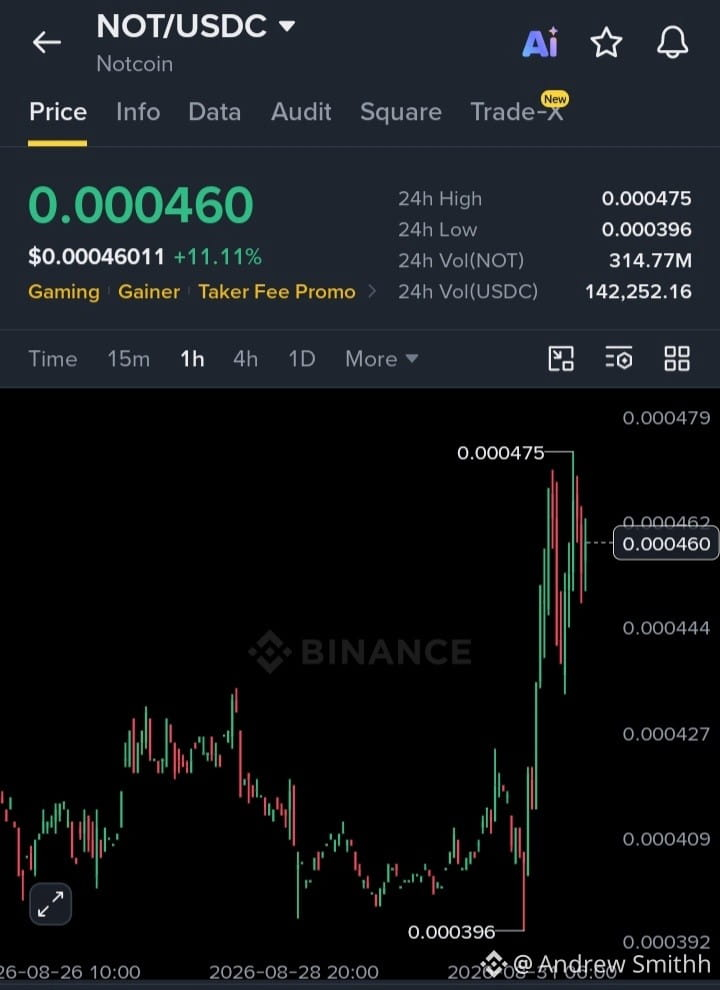
残りわずか9時間! $NOT上場のニュースが火のようにあちこちに広まっています🔥。 シートベルトを締めてください。$NOTは明日12:00 UTCにBinanceに上場します。 2000倍以上を獲得したい場合は、ライブイベントに参加して、暗号通貨の世界で爆発的なプロジェクトに参加しましょう。 明日はNotCoinの日です🚀。 @thenotcoin @Binance #BinanceLaunchpool #PEPEATH
残りわずか9時間!

$NOT上場のニュースが火のようにあちこちに広まっています🔥。

シートベルトを締めてください。$NOTは明日12:00 UTCにBinanceに上場します。

2000倍以上を獲得したい場合は、ライブイベントに参加して、暗号通貨の世界で爆発的なプロジェクトに参加しましょう。

明日はNotCoinの日です🚀。

@Daily Notcoin @Binance

#BinanceLaunchpool #PEPEATH
翻訳参照
Why Reliable Time, Not Raw Speed, Defines Fogo’s Real Advantage@fogo is often introduced through headlines celebrating blistering throughput, yet its true innovation goes beyond raw performance metrics. Traders, builders, and liquidity providers ultimately care less about isolated speed records and more about whether blockchain time feels dependable during chaotic market conditions. This article explores how reliable timing transforms user confidence, reshapes execution expectations, and quietly becomes Fogo’s strongest competitive advantage for applications demanding consistency instead of occasional performance spikes that vanish when network congestion suddenly challenges conventional blockchain infrastructure across global trading communities seeking dependable settlement every single minute worldwide today without unexpected latency shocks hurting active participants everywhere. Most blockchain conversations still treat speed as a marketing slogan, assuming faster block times automatically solve user frustrations surrounding delays, congestion, and execution uncertainty during volatile trading periods. Reality, however, shows latency variation matters more than peak performance numbers displayed during controlled benchmark tests disconnected from unpredictable real market stress. Fogo approaches infrastructure differently, engineering networks where confirmation timing stays stable despite usage spikes triggered by liquidations, token launches, and rapid capital rotations across decentralized finance ecosystems worldwide, protecting traders from unpredictable settlement delays that typically erode confidence across emerging onchain financial environments serving millions entering digital asset markets daily. Reliability begins with acknowledging physical constraints shaping distributed consensus networks operating across continents using machines with uneven hardware performance profiles. Fogo designs consensus zones reducing communication distance required for validators reaching agreement under heavy transaction loads, minimizing jitter introduced when messages travel unpredictable network routes during peak traffic conditions. Combined with optimized validator coordination, this structure produces smoother block delivery cycles traders can model while planning execution strategies across derivatives, spot, and automated liquidity provisioning environments supporting continuous market operations spanning timezones without sacrificing predictable settlement guarantees required by professional participants managing significant digital capital exposure across evolving blockchain economies. Another layer strengthening timing consistency comes from architecture inspired by Firedancer engineering principles emphasizing efficiency across networking, execution, and memory operations inside validator machines. Reduced processing variance means fewer surprise delays when workloads surge beyond normal expectations during major announcements or liquidation cascades hitting leveraged markets simultaneously worldwide. For developers, predictable processing translates into applications capable of delivering stable user experiences even when transaction demand suddenly multiplies across decentralized trading platforms hosting increasingly sophisticated financial strategies serving institutional and retail participants navigating volatile digital asset environments seeking dependable execution under unpredictable crossmarket stress events impacting liquidity flows globally every hour. Consistent timing reshapes trader psychology because participants stop fearing invisible execution risks hiding between transaction submission and final confirmation moments. When latency fluctuates, strategies depending on arbitrage, liquidations, or rapid hedging become vulnerable to unexpected slippage destroying otherwise profitable opportunities. Fogo’s predictable block rhythm allows algorithmic traders and discretionary participants alike to price risk accurately while deploying capital across decentralized venues competing with centralized exchanges offering traditionally faster settlement guarantees attracting volume away from slower blockchain ecosystems previously struggling supporting professional execution requirements demanded by advanced trading firms expanding deeper into digital asset infrastructure supporting global participation without reliability compromises. Developers equally benefit because applications thrive when infrastructure behaves predictably under pressure rather than collapsing during viral adoption waves overwhelming transaction processing pipelines. Fogo supports environments where teams build trading interfaces, payment solutions, and gaming economies without constantly redesigning systems around unpredictable congestion scenarios common across earlier generation blockchains. Reliable confirmation cycles allow product managers forecasting user experiences confidently while scaling services serving communities expecting uninterrupted interactions across decentralized applications operating continuously beyond regional infrastructure constraints shaping legacy financial service availability worldwide supporting digital commerce growth across emerging markets demanding faster financial coordination tools supporting inclusive economic participation worldwide today. Liquidity providers also notice improvements when predictable execution reduces impermanent loss risks linked with delayed price synchronization across decentralized markets operating simultaneously on shared infrastructure. Fogo creates environments where automated market makers rebalance positions efficiently without constantly overcompensating for settlement uncertainty typically forcing wider spreads protecting liquidity against unpredictable confirmation timing disruptions. Tighter spreads attract additional volume, generating deeper liquidity pools benefiting traders executing large positions without dramatic price impact across decentralized exchanges competing increasingly with centralized trading venues dominating global cryptocurrency transaction flows serving both professional institutions and retail participants seeking efficient decentralized alternatives supporting continuous liquidity across markets. Institutional participants evaluating onchain trading infrastructure increasingly examine timing reliability before allocating serious capital toward decentralized financial strategies competing with traditional prime brokerage systems. Fogo’s infrastructure narrative resonates because predictable settlement reduces operational uncertainty discouraging compliance teams worried about unpredictable execution discrepancies affecting reporting requirements across jurisdictions enforcing strict oversight governing digital asset custody and transaction transparency standards shaping institutional adoption decisions worldwide as regulated funds cautiously explore decentralized liquidity opportunities promising competitive yield generation beyond conventional financial instruments previously dominating institutional portfolio allocation strategies across global capital markets undergoing rapid digital transformation reshaping investment flows across interconnected financial ecosystems. Another overlooked advantage emerges when reliable timing simplifies crosschain coordination supporting bridges, liquidity routing, and interoperability frameworks connecting fragmented blockchain ecosystems serving diverse communities worldwide. When one network introduces unpredictable confirmation delays, synchronized settlement across networks becomes fragile, increasing settlement risk discouraging capital movement between ecosystems seeking optimal yield opportunities. Fogo’s dependable block production allows interoperability protocols coordinating transfers with higher confidence, reducing friction slowing decentralized capital efficiency across evolving multi-chain financial architectures supporting collaborative innovation across distributed developer communities advancing blockchain adoption across mainstream financial infrastructures worldwide demanding scalable digital settlement alternatives supporting future economic coordination beyond geographical limitations. Market narratives frequently chase flashy performance milestones, yet sustainable adoption usually rewards infrastructure quietly solving invisible coordination challenges affecting everyday users interacting with decentralized financial services globally. Fogo succeeds because it reframes performance discussions around reliability, encouraging builders designing platforms where users trust execution outcomes without questioning hidden settlement risks influencing transactional confidence during volatile periods shaping digital asset investment decisions worldwide impacting liquidity availability across decentralized markets competing for global trading attention amid rapidly expanding cryptocurrency adoption trends transforming economic participation models supporting borderless commerce across digitally connected societies embracing decentralized financial innovation accelerating worldwide beyond experimental technology communities. Ultimately, making time feel reliable unlocks broader behavioral shifts across decentralized finance where participants gradually abandon centralized platforms previously trusted for consistent execution guarantees. Fogo’s strategy aligns infrastructure engineering with market psychology, recognizing adoption accelerates when systems quietly remove friction discouraging professional capital deployment across blockchain environments historically criticized for unpredictable settlement experiences harming user confidence during critical market stress moments influencing long-term platform loyalty across competitive decentralized trading ecosystems attracting liquidity providers supporting healthier market structures benefiting global participants navigating increasingly complex digital asset investment landscapes demanding dependable infrastructure supporting scalable financial coordination across emerging decentralized economic networks worldwide. As blockchain competition intensifies, networks promising momentary speed advantages will struggle retaining users unless execution experiences remain consistently trustworthy under unpredictable global demand conditions. Fogo demonstrates future infrastructure success depends less on theoretical throughput and more on delivering dependable transactional timing empowering traders, developers, and institutions coordinating capital efficiently across decentralized markets shaping tomorrow’s borderless financial systems where reliable time becomes invisible infrastructure powering seamless economic interaction worldwide, unlocking opportunities previously limited by slow settlement frameworks restricting innovation across digital commerce ecosystems embracing scalable decentralized coordination supporting inclusive global economic participation beyond legacy financial limitations facing societies everywhere today. $FOGO #fogo

Why Reliable Time, Not Raw Speed, Defines Fogo’s Real Advantage

@Fogo Official is often introduced through headlines celebrating blistering throughput, yet its true innovation goes beyond raw performance metrics. Traders, builders, and liquidity providers ultimately care less about isolated speed records and more about whether blockchain time feels dependable during chaotic market conditions. This article explores how reliable timing transforms user confidence, reshapes execution expectations, and quietly becomes Fogo’s strongest competitive advantage for applications demanding consistency instead of occasional performance spikes that vanish when network congestion suddenly challenges conventional blockchain infrastructure across global trading communities seeking dependable settlement every single minute worldwide today without unexpected latency shocks hurting active participants everywhere.
Most blockchain conversations still treat speed as a marketing slogan, assuming faster block times automatically solve user frustrations surrounding delays, congestion, and execution uncertainty during volatile trading periods. Reality, however, shows latency variation matters more than peak performance numbers displayed during controlled benchmark tests disconnected from unpredictable real market stress. Fogo approaches infrastructure differently, engineering networks where confirmation timing stays stable despite usage spikes triggered by liquidations, token launches, and rapid capital rotations across decentralized finance ecosystems worldwide, protecting traders from unpredictable settlement delays that typically erode confidence across emerging onchain financial environments serving millions entering digital asset markets daily.
Reliability begins with acknowledging physical constraints shaping distributed consensus networks operating across continents using machines with uneven hardware performance profiles. Fogo designs consensus zones reducing communication distance required for validators reaching agreement under heavy transaction loads, minimizing jitter introduced when messages travel unpredictable network routes during peak traffic conditions. Combined with optimized validator coordination, this structure produces smoother block delivery cycles traders can model while planning execution strategies across derivatives, spot, and automated liquidity provisioning environments supporting continuous market operations spanning timezones without sacrificing predictable settlement guarantees required by professional participants managing significant digital capital exposure across evolving blockchain economies.
Another layer strengthening timing consistency comes from architecture inspired by Firedancer engineering principles emphasizing efficiency across networking, execution, and memory operations inside validator machines. Reduced processing variance means fewer surprise delays when workloads surge beyond normal expectations during major announcements or liquidation cascades hitting leveraged markets simultaneously worldwide. For developers, predictable processing translates into applications capable of delivering stable user experiences even when transaction demand suddenly multiplies across decentralized trading platforms hosting increasingly sophisticated financial strategies serving institutional and retail participants navigating volatile digital asset environments seeking dependable execution under unpredictable crossmarket stress events impacting liquidity flows globally every hour.
Consistent timing reshapes trader psychology because participants stop fearing invisible execution risks hiding between transaction submission and final confirmation moments. When latency fluctuates, strategies depending on arbitrage, liquidations, or rapid hedging become vulnerable to unexpected slippage destroying otherwise profitable opportunities. Fogo’s predictable block rhythm allows algorithmic traders and discretionary participants alike to price risk accurately while deploying capital across decentralized venues competing with centralized exchanges offering traditionally faster settlement guarantees attracting volume away from slower blockchain ecosystems previously struggling supporting professional execution requirements demanded by advanced trading firms expanding deeper into digital asset infrastructure supporting global participation without reliability compromises.
Developers equally benefit because applications thrive when infrastructure behaves predictably under pressure rather than collapsing during viral adoption waves overwhelming transaction processing pipelines. Fogo supports environments where teams build trading interfaces, payment solutions, and gaming economies without constantly redesigning systems around unpredictable congestion scenarios common across earlier generation blockchains. Reliable confirmation cycles allow product managers forecasting user experiences confidently while scaling services serving communities expecting uninterrupted interactions across decentralized applications operating continuously beyond regional infrastructure constraints shaping legacy financial service availability worldwide supporting digital commerce growth across emerging markets demanding faster financial coordination tools supporting inclusive economic participation worldwide today.
Liquidity providers also notice improvements when predictable execution reduces impermanent loss risks linked with delayed price synchronization across decentralized markets operating simultaneously on shared infrastructure. Fogo creates environments where automated market makers rebalance positions efficiently without constantly overcompensating for settlement uncertainty typically forcing wider spreads protecting liquidity against unpredictable confirmation timing disruptions. Tighter spreads attract additional volume, generating deeper liquidity pools benefiting traders executing large positions without dramatic price impact across decentralized exchanges competing increasingly with centralized trading venues dominating global cryptocurrency transaction flows serving both professional institutions and retail participants seeking efficient decentralized alternatives supporting continuous liquidity across markets.
Institutional participants evaluating onchain trading infrastructure increasingly examine timing reliability before allocating serious capital toward decentralized financial strategies competing with traditional prime brokerage systems. Fogo’s infrastructure narrative resonates because predictable settlement reduces operational uncertainty discouraging compliance teams worried about unpredictable execution discrepancies affecting reporting requirements across jurisdictions enforcing strict oversight governing digital asset custody and transaction transparency standards shaping institutional adoption decisions worldwide as regulated funds cautiously explore decentralized liquidity opportunities promising competitive yield generation beyond conventional financial instruments previously dominating institutional portfolio allocation strategies across global capital markets undergoing rapid digital transformation reshaping investment flows across interconnected financial ecosystems.
Another overlooked advantage emerges when reliable timing simplifies crosschain coordination supporting bridges, liquidity routing, and interoperability frameworks connecting fragmented blockchain ecosystems serving diverse communities worldwide. When one network introduces unpredictable confirmation delays, synchronized settlement across networks becomes fragile, increasing settlement risk discouraging capital movement between ecosystems seeking optimal yield opportunities. Fogo’s dependable block production allows interoperability protocols coordinating transfers with higher confidence, reducing friction slowing decentralized capital efficiency across evolving multi-chain financial architectures supporting collaborative innovation across distributed developer communities advancing blockchain adoption across mainstream financial infrastructures worldwide demanding scalable digital settlement alternatives supporting future economic coordination beyond geographical limitations.
Market narratives frequently chase flashy performance milestones, yet sustainable adoption usually rewards infrastructure quietly solving invisible coordination challenges affecting everyday users interacting with decentralized financial services globally. Fogo succeeds because it reframes performance discussions around reliability, encouraging builders designing platforms where users trust execution outcomes without questioning hidden settlement risks influencing transactional confidence during volatile periods shaping digital asset investment decisions worldwide impacting liquidity availability across decentralized markets competing for global trading attention amid rapidly expanding cryptocurrency adoption trends transforming economic participation models supporting borderless commerce across digitally connected societies embracing decentralized financial innovation accelerating worldwide beyond experimental technology communities.
Ultimately, making time feel reliable unlocks broader behavioral shifts across decentralized finance where participants gradually abandon centralized platforms previously trusted for consistent execution guarantees. Fogo’s strategy aligns infrastructure engineering with market psychology, recognizing adoption accelerates when systems quietly remove friction discouraging professional capital deployment across blockchain environments historically criticized for unpredictable settlement experiences harming user confidence during critical market stress moments influencing long-term platform loyalty across competitive decentralized trading ecosystems attracting liquidity providers supporting healthier market structures benefiting global participants navigating increasingly complex digital asset investment landscapes demanding dependable infrastructure supporting scalable financial coordination across emerging decentralized economic networks worldwide.
As blockchain competition intensifies, networks promising momentary speed advantages will struggle retaining users unless execution experiences remain consistently trustworthy under unpredictable global demand conditions. Fogo demonstrates future infrastructure success depends less on theoretical throughput and more on delivering dependable transactional timing empowering traders, developers, and institutions coordinating capital efficiently across decentralized markets shaping tomorrow’s borderless financial systems where reliable time becomes invisible infrastructure powering seamless economic interaction worldwide, unlocking opportunities previously limited by slow settlement frameworks restricting innovation across digital commerce ecosystems embracing scalable decentralized coordination supporting inclusive global economic participation beyond legacy financial limitations facing societies everywhere today.

$FOGO #fogo
·
--
ブリッシュ
翻訳参照
$FOGO showing strong recovery on the 4H chart, reclaiming key support near $0.022 and pushing toward resistance around $0.024. Higher lows and rising volume hint at bullish continuation. A clean break above $0.024 could open moves to $0.026–0.028 as momentum builds and buyers regain control. Eyes on breakout. Stay tuned now. @fogo $FOGO #fogo
$FOGO showing strong recovery on the 4H chart, reclaiming key support near $0.022 and pushing toward resistance around $0.024.

Higher lows and rising volume hint at bullish continuation.

A clean break above $0.024 could open moves to $0.026–0.028 as momentum builds and buyers regain control.

Eyes on breakout. Stay tuned now.

@Fogo Official $FOGO #fogo
翻訳参照
$ETH showing dip-buy signals near $1,930–1,960 support after sharp selloff. Wicks rejecting lows, volume stabilizing, and structure forming higher lows on lower timeframes. If $2,000 reclaims, momentum could target $2,050–2,100 next. Risk managed entries favored while sentiment stays cautious. now #Trading #Binance
$ETH showing dip-buy signals near $1,930–1,960 support after sharp selloff.

Wicks rejecting lows, volume stabilizing, and structure forming higher lows on lower timeframes.

If $2,000 reclaims, momentum could target $2,050–2,100 next.

Risk managed entries favored while sentiment stays cautious. now

#Trading #Binance
翻訳参照
$DOGE pulling back toward key support near $0.10 after rejection at $0.117. Volume is cooling and sell pressure fading while price starts forming higher lows on lower timeframes classic buy-the-dip signals. A reclaim of $0.105–0.108 could open momentum toward $0.115+. Risk-managed entries favored. #Trading #Binance
$DOGE pulling back toward key support near $0.10 after rejection at $0.117.

Volume is cooling and sell pressure fading while price starts forming higher lows on lower timeframes classic buy-the-dip signals.

A reclaim of $0.105–0.108 could open momentum toward $0.115+.

Risk-managed entries favored.

#Trading #Binance
翻訳参照
$BNB holding key support near $605–610 after a sharp pullback from $630 highs. Buyers stepping in on lower wicks signal dip demand. As long as $600 holds, buy-the-dip setups remain valid targeting $620 then $635. Watch volume expansion for confirmation and manage risk below support. Trade smart and stay patient. #Trading #Binance
$BNB holding key support near $605–610 after a sharp pullback from $630 highs.

Buyers stepping in on lower wicks signal dip demand.

As long as $600 holds, buy-the-dip setups remain valid targeting $620 then $635.

Watch volume expansion for confirmation and manage risk below support.

Trade smart and stay patient.

#Trading #Binance
翻訳参照
$BTC pulls back after rejection near 70K, flushing late longs and tapping intraday support around 67.2K. Volume spike plus fast wick recovery hint dip buyers stepping in. If price reclaims 68.5K, momentum could flip bullish. Watching higher lows for a classic buy-the-dip continuation setup. Manage risk. #Trading #Binance
$BTC pulls back after rejection near 70K, flushing late longs and tapping intraday support around 67.2K.

Volume spike plus fast wick recovery hint dip buyers stepping in.

If price reclaims 68.5K, momentum could flip bullish.

Watching higher lows for a classic buy-the-dip continuation setup. Manage risk.

#Trading #Binance
·
--
ブリッシュ
翻訳参照
$FOGO is consolidating around $0.023 with an $85M+ market cap while daily volume ranges between $14M and $22M. This steady range forms as Flames Season 2 drives on-chain activity, showing ecosystem usage still expands even after price cooled from its rally. Instead of panic selling, the market absorbs supply after a 60%+ pullback from ATH, often a phase where stronger hands accumulate while volatility compresses. Fundamentals remain central. Sub-40ms block speeds, reliable performance, and active DeFi participation show builders continue shipping despite quieter price action. Liquidity rotation appears orderly, with holders repositioning rather than exiting, allowing demand to rebuild without speculation dominating flows. Key technical levels remain clear. Support sits near $0.021 where buyers defend structure, while resistance between $0.024 and $0.026 caps upside attempts. A breakout above this zone could expose $0.032–$0.040, the next liquidity region from prior distribution. So the question becomes: early accumulation or extended consolidation? Current data suggests development and user engagement continue rising, indicating ecosystem growth has not stalled. For patient participants, such periods often separate hype traders from long-term conviction as infrastructure strengthens while price stabilizes. Watching volume expansion and on-chain growth will help signal when FOGO transitions from range trading into its next momentum phase. very soon now @fogo $FOGO #fogo
$FOGO is consolidating around $0.023 with an $85M+ market cap while daily volume ranges between $14M and $22M. This steady range forms as Flames Season 2 drives on-chain activity, showing ecosystem usage still expands even after price cooled from its rally. Instead of panic selling, the market absorbs supply after a 60%+ pullback from ATH, often a phase where stronger hands accumulate while volatility compresses.

Fundamentals remain central. Sub-40ms block speeds, reliable performance, and active DeFi participation show builders continue shipping despite quieter price action. Liquidity rotation appears orderly, with holders repositioning rather than exiting, allowing demand to rebuild without speculation dominating flows.

Key technical levels remain clear. Support sits near $0.021 where buyers defend structure, while resistance between $0.024 and $0.026 caps upside attempts. A breakout above this zone could expose $0.032–$0.040, the next liquidity region from prior distribution.

So the question becomes: early accumulation or extended consolidation? Current data suggests development and user engagement continue rising, indicating ecosystem growth has not stalled. For patient participants, such periods often separate hype traders from long-term conviction as infrastructure strengthens while price stabilizes.

Watching volume expansion and on-chain growth will help signal when FOGO transitions from range trading into its next momentum phase. very soon now

@Fogo Official $FOGO #fogo
翻訳参照
Fogo Deep Dive: Why $FOGO Is Quietly Becoming One of 2026’s Most Talked-About Trading Blockchains@fogo $FOGO #fogo What’s up fam. Today we’re diving into a project that has been making serious moves behind the scenes while much of the market has been distracted by short-term narratives and meme rotations. If you’ve been active in crypto spaces recently, chances are you’ve heard the name Fogo pop up in debates, Twitter threads, and trading chats. Some people are bullish, some skeptical, and many simply curious. So let’s break everything down in plain language, like friends talking markets over coffee. No corporate pitch, no robotic breakdown just a real conversation about what Fogo is building, why people are paying attention, and what it could mean moving forward. This article covers the essentials: the mainnet launch, technical innovations, ecosystem growth, tokenomics changes, liquidity access, trading use cases, community sentiment, and where things might head next. Whether you’re already holding $FOGO or just researching, this overview should help you see the bigger picture. Understanding What Fogo Is Trying to Build Fogo isn’t trying to become another “do everything” blockchain. Instead, it focuses on one major problem: making decentralized trading feel fast enough for professional market participants. Most blockchains today struggle with speed, congestion, or unpredictable execution delays. That makes serious on-chain trading difficult. Fogo was built specifically to solve this by prioritizing ultra-low latency and high throughput. The network runs using the Solana Virtual Machine, allowing developers already familiar with Solana tools to migrate or build easily. However, Fogo isn’t simply copying Solana. The team has implemented performance upgrades tailored toward trading environments where milliseconds matter. In simple terms, Fogo wants decentralized trading to feel as smooth as centralized exchange execution, but without giving up decentralization and custody control. Mainnet Arrival and Early Market Reaction January 2026 marked Fogo’s biggest milestone so far: the official launch of its mainnet. That moment transformed the project from a testing environment into a live network processing real transactions and hosting applications. A major advantage at launch was immediate support for cross-chain transfers through the Wormhole bridge. Users could bring assets like ETH, SOL, and stablecoins directly onto Fogo without relying on centralized exchanges. That significantly lowered friction for new users. Price action, however, followed a familiar crypto pattern. After months of anticipation, the token saw selling pressure once the network went live. Many early participants took profits in what traders often call a “sell the news” event. But price fluctuations aside, the critical takeaway is simple: the infrastructure is live. Fogo moved from concept to functioning network, and that separates it from projects that remain stuck in testnet cycles. The Technology Behind the Performance Let’s translate the technical side into everyday language. A big part of Fogo’s performance comes from its customized version of the Firedancer validator client, originally developed to optimize Solana’s execution efficiency. Fogo engineers expanded on that architecture to further reduce latency and execution variance. What does this mean practically? Block times average around forty milliseconds, enabling transactions to move through the network extremely quickly. Finality, or the point where transactions are irreversible, typically arrives within roughly one second. For traders, that speed changes what strategies are possible on-chain. Execution consistency is another benefit. Systems built on Fogo can expect predictable timing, which is crucial for automated trading tools, arbitrage systems, and market-making operations. These aren’t marketing claims alone; they are reflected in live network performance metrics and observable on-chain activity. For developers focused on financial applications, those improvements matter enormously. Ecosystem Activity from Day One A blockchain alone isn’t enough. It needs applications and users. Fogo launched with more than infrastructure. Multiple decentralized exchanges, liquidity tools, and lending platforms went live alongside mainnet activation. That ensured users had immediate ways to interact with the network. Too often, chains launch and then wait months for meaningful ecosystem growth. Fogo avoided that trap by coordinating application readiness with network deployment. This early ecosystem presence signals preparation rather than hype. Builders had tools ready, and activity began almost immediately, giving the network real usage instead of speculative anticipation. Adoption is still in early stages, but initial momentum matters when shaping long-term perception. Tokenomics Reset and Distribution Approach One interesting move before mainnet launch was Fogo’s tokenomics restructuring. Instead of sticking with an early distribution model, the team adjusted allocations to improve long-term sustainability. More tokens were directed toward community participants, ecosystem incentives, and developer growth rather than concentrating supply among early insiders. Vesting structures were also designed to reduce sudden sell pressure from unlock events. Airdrops rewarded early supporters while reserving supply for multi-year ecosystem expansion. That encourages continued participation rather than short-term speculation. Tokenomics alone don’t guarantee success, but thoughtful distribution can help stabilize communities and align incentives over time. For holders, this signals that the project aims to grow usage rather than rely solely on hype cycles. Liquidity Access Through Cross-Chain Integration Liquidity is a critical challenge for any new blockchain. Without capital flowing in, applications struggle to attract users. By integrating Wormhole at launch, Fogo instantly connected itself to dozens of existing networks. Users can bridge assets directly without centralized exchange involvement, making onboarding easier. This decision saved time and development resources while leveraging an already battle-tested bridge solution. Liquidity access doesn’t solve everything, but it removes one of the biggest early obstacles for network growth. As decentralized applications mature on Fogo, this liquidity pathway becomes even more important. Trading Applications and Real Use Cases Perhaps the most compelling aspect of Fogo is its clear use-case focus: trading infrastructure. High-frequency trading, decentralized derivatives, automated market strategies, and professional liquidity provision all require speed and reliability. Many blockchains struggle under heavy load, but Fogo’s architecture targets precisely those scenarios. Several decentralized exchanges launching on the network aim to leverage these strengths, enabling faster order matching and execution compared to slower chains. This creates opportunities not just for retail traders, but also for professional market participants exploring on-chain strategies that previously felt impractical. Real adoption will depend on application quality, but the infrastructure appears purpose-built for these demands. Market Sentiment and Ongoing Debate Crypto communities rarely agree on anything, and Fogo is no exception. Price volatility after launch, combined with discussions around derivatives market adjustments on certain exchanges, created mixed sentiment. Some traders grew cautious, while others viewed the pullback as a typical post-launch shakeout. Community debate often signals that a project is entering a real market phase where speculation meets execution. Weak projects disappear quickly under scrutiny, while stronger ones continue building through volatility. So far, Fogo’s development activity and ecosystem expansion continue despite market noise, suggesting ongoing commitment from the team. Putting Everything Into Perspective It’s important to remember how early this project still is. Mainnet went live only weeks ago in blockchain time. Yet several building blocks are already present: a functioning network, cross-chain asset access, initial ecosystem applications, improved tokenomics, and growing developer participation. That combination means Fogo is not waiting to start it has already begun its next stage. The coming months will reveal whether applications scale and users stick around, but the foundation appears solid compared to many competitors still promising future delivery. Final Thoughts: Why This Moment Matters Let’s end this conversation on a grounded note. Yes, price matters. Everyone watches charts, and volatility is part of crypto life. But infrastructure milestones matter more when evaluating long-term potential. Fogo delivered a working network instead of endless promises. That alone places it ahead of many projects that never move beyond marketing phases. Whether you are trading, building, or simply observing market evolution, Fogo represents an attempt to close the gap between centralized exchange performance and decentralized execution. And right now, we’re watching the earliest chapters of that story unfold. Whatever side of the $FOGO trade you’re on, one thing seems clear: this journey is only getting started. Stay curious, keep learning, and as always, build smart.

Fogo Deep Dive: Why $FOGO Is Quietly Becoming One of 2026’s Most Talked-About Trading Blockchains

@Fogo Official $FOGO #fogo

What’s up fam. Today we’re diving into a project that has been making serious moves behind the scenes while much of the market has been distracted by short-term narratives and meme rotations. If you’ve been active in crypto spaces recently, chances are you’ve heard the name Fogo pop up in debates, Twitter threads, and trading chats. Some people are bullish, some skeptical, and many simply curious.
So let’s break everything down in plain language, like friends talking markets over coffee. No corporate pitch, no robotic breakdown just a real conversation about what Fogo is building, why people are paying attention, and what it could mean moving forward.
This article covers the essentials: the mainnet launch, technical innovations, ecosystem growth, tokenomics changes, liquidity access, trading use cases, community sentiment, and where things might head next. Whether you’re already holding $FOGO or just researching, this overview should help you see the bigger picture.
Understanding What Fogo Is Trying to Build
Fogo isn’t trying to become another “do everything” blockchain. Instead, it focuses on one major problem: making decentralized trading feel fast enough for professional market participants.
Most blockchains today struggle with speed, congestion, or unpredictable execution delays. That makes serious on-chain trading difficult. Fogo was built specifically to solve this by prioritizing ultra-low latency and high throughput.
The network runs using the Solana Virtual Machine, allowing developers already familiar with Solana tools to migrate or build easily. However, Fogo isn’t simply copying Solana. The team has implemented performance upgrades tailored toward trading environments where milliseconds matter.
In simple terms, Fogo wants decentralized trading to feel as smooth as centralized exchange execution, but without giving up decentralization and custody control.
Mainnet Arrival and Early Market Reaction
January 2026 marked Fogo’s biggest milestone so far: the official launch of its mainnet. That moment transformed the project from a testing environment into a live network processing real transactions and hosting applications.
A major advantage at launch was immediate support for cross-chain transfers through the Wormhole bridge. Users could bring assets like ETH, SOL, and stablecoins directly onto Fogo without relying on centralized exchanges. That significantly lowered friction for new users.
Price action, however, followed a familiar crypto pattern. After months of anticipation, the token saw selling pressure once the network went live. Many early participants took profits in what traders often call a “sell the news” event.
But price fluctuations aside, the critical takeaway is simple: the infrastructure is live. Fogo moved from concept to functioning network, and that separates it from projects that remain stuck in testnet cycles.
The Technology Behind the Performance
Let’s translate the technical side into everyday language.
A big part of Fogo’s performance comes from its customized version of the Firedancer validator client, originally developed to optimize Solana’s execution efficiency. Fogo engineers expanded on that architecture to further reduce latency and execution variance.
What does this mean practically?
Block times average around forty milliseconds, enabling transactions to move through the network extremely quickly. Finality, or the point where transactions are irreversible, typically arrives within roughly one second. For traders, that speed changes what strategies are possible on-chain.
Execution consistency is another benefit. Systems built on Fogo can expect predictable timing, which is crucial for automated trading tools, arbitrage systems, and market-making operations.
These aren’t marketing claims alone; they are reflected in live network performance metrics and observable on-chain activity. For developers focused on financial applications, those improvements matter enormously.
Ecosystem Activity from Day One
A blockchain alone isn’t enough. It needs applications and users.
Fogo launched with more than infrastructure. Multiple decentralized exchanges, liquidity tools, and lending platforms went live alongside mainnet activation. That ensured users had immediate ways to interact with the network.
Too often, chains launch and then wait months for meaningful ecosystem growth. Fogo avoided that trap by coordinating application readiness with network deployment.
This early ecosystem presence signals preparation rather than hype. Builders had tools ready, and activity began almost immediately, giving the network real usage instead of speculative anticipation.
Adoption is still in early stages, but initial momentum matters when shaping long-term perception.
Tokenomics Reset and Distribution Approach
One interesting move before mainnet launch was Fogo’s tokenomics restructuring. Instead of sticking with an early distribution model, the team adjusted allocations to improve long-term sustainability.
More tokens were directed toward community participants, ecosystem incentives, and developer growth rather than concentrating supply among early insiders. Vesting structures were also designed to reduce sudden sell pressure from unlock events.
Airdrops rewarded early supporters while reserving supply for multi-year ecosystem expansion. That encourages continued participation rather than short-term speculation.
Tokenomics alone don’t guarantee success, but thoughtful distribution can help stabilize communities and align incentives over time.
For holders, this signals that the project aims to grow usage rather than rely solely on hype cycles.
Liquidity Access Through Cross-Chain Integration
Liquidity is a critical challenge for any new blockchain. Without capital flowing in, applications struggle to attract users.
By integrating Wormhole at launch, Fogo instantly connected itself to dozens of existing networks. Users can bridge assets directly without centralized exchange involvement, making onboarding easier.
This decision saved time and development resources while leveraging an already battle-tested bridge solution.
Liquidity access doesn’t solve everything, but it removes one of the biggest early obstacles for network growth.
As decentralized applications mature on Fogo, this liquidity pathway becomes even more important.
Trading Applications and Real Use Cases
Perhaps the most compelling aspect of Fogo is its clear use-case focus: trading infrastructure.
High-frequency trading, decentralized derivatives, automated market strategies, and professional liquidity provision all require speed and reliability. Many blockchains struggle under heavy load, but Fogo’s architecture targets precisely those scenarios.
Several decentralized exchanges launching on the network aim to leverage these strengths, enabling faster order matching and execution compared to slower chains.
This creates opportunities not just for retail traders, but also for professional market participants exploring on-chain strategies that previously felt impractical.
Real adoption will depend on application quality, but the infrastructure appears purpose-built for these demands.
Market Sentiment and Ongoing Debate
Crypto communities rarely agree on anything, and Fogo is no exception.
Price volatility after launch, combined with discussions around derivatives market adjustments on certain exchanges, created mixed sentiment. Some traders grew cautious, while others viewed the pullback as a typical post-launch shakeout.
Community debate often signals that a project is entering a real market phase where speculation meets execution. Weak projects disappear quickly under scrutiny, while stronger ones continue building through volatility.
So far, Fogo’s development activity and ecosystem expansion continue despite market noise, suggesting ongoing commitment from the team.
Putting Everything Into Perspective
It’s important to remember how early this project still is. Mainnet went live only weeks ago in blockchain time.
Yet several building blocks are already present: a functioning network, cross-chain asset access, initial ecosystem applications, improved tokenomics, and growing developer participation.
That combination means Fogo is not waiting to start it has already begun its next stage.
The coming months will reveal whether applications scale and users stick around, but the foundation appears solid compared to many competitors still promising future delivery.
Final Thoughts: Why This Moment Matters
Let’s end this conversation on a grounded note.
Yes, price matters. Everyone watches charts, and volatility is part of crypto life. But infrastructure milestones matter more when evaluating long-term potential.
Fogo delivered a working network instead of endless promises. That alone places it ahead of many projects that never move beyond marketing phases.
Whether you are trading, building, or simply observing market evolution, Fogo represents an attempt to close the gap between centralized exchange performance and decentralized execution.
And right now, we’re watching the earliest chapters of that story unfold.
Whatever side of the $FOGO trade you’re on, one thing seems clear: this journey is only getting started. Stay curious, keep learning, and as always, build smart.
·
--
ブリッシュ
翻訳参照
$PEPE showing recovery after sharp run and healthy pullback. Price holding key support while volume stays active. A break above resistance could trigger next momentum wave, targeting fresh highs, while failure risks another retest. Traders watch volatility as meme momentum prepares for the next big move. soon! #Trading #Binance
$PEPE showing recovery after sharp run and healthy pullback.

Price holding key support while volume stays active.

A break above resistance could trigger next momentum wave, targeting fresh highs, while failure risks another retest.

Traders watch volatility as meme momentum prepares for the next big move. soon!

#Trading #Binance
·
--
ブリッシュ
$XRP は急激な反発の後、$1.50以上を保持しており、バイヤーがまだ活発であることを示しています。 価格が$1.60の抵抗線を取り戻すと、勢いは次に$1.70〜$1.75に向かう可能性があります。 $1.48のサポートを失うと、$1.42付近でのより深い再テストが引き起こされる可能性があります。 ボラティリティが上昇しているため、トレーダーは次のブレイクアウトムーブのためにボリュームに注意を払うべきです。 #Trading #Binance
$XRP は急激な反発の後、$1.50以上を保持しており、バイヤーがまだ活発であることを示しています。

価格が$1.60の抵抗線を取り戻すと、勢いは次に$1.70〜$1.75に向かう可能性があります。

$1.48のサポートを失うと、$1.42付近でのより深い再テストが引き起こされる可能性があります。

ボラティリティが上昇しているため、トレーダーは次のブレイクアウトムーブのためにボリュームに注意を払うべきです。

#Trading #Binance
·
--
ブリッシュ
翻訳参照
Why Real Blockchain Speed Starts With Physics, Not Hype Many blockchains promote TPS numbers, yet few ask the real question: what actually limits performance in the real world? True scalability isn’t just about faster code it’s about designing systems around physical distance, network latency, and the variability of validator hardware. Fogo approaches performance from first principles. By recognizing that consensus slows as messages travel across the globe, it introduces zoned consensus to shorten how far agreement must propagate. At the same time, its Firedancer-based architecture reduces execution jitter, creating more consistent performance rather than occasional bursts of speed. For developers, compatibility also matters. SVM support means builders can deploy with familiar tooling, lowering friction and accelerating ecosystem growth. On the user side, Sessions reduce constant signature prompts and enable fee abstraction, making applications smoother and more intuitive for traders and everyday users alike. This isn’t performance marketed through peak benchmarks. It’s performance engineered so applications can forecast costs, latency, and execution outcomes with confidence. As institutional and larger capital flows move onchain, predictability and stability will matter far more than isolated speed records. Fogo’s approach suggests the future of high-performance chains will belong to networks that engineer reliability first and let speed follow naturally. @fogo $FOGO #FOGO
Why Real Blockchain Speed Starts With Physics, Not Hype

Many blockchains promote TPS numbers, yet few ask the real question: what actually limits performance in the real world? True scalability isn’t just about faster code it’s about designing systems around physical distance, network latency, and the variability of validator hardware.

Fogo approaches performance from first principles. By recognizing that consensus slows as messages travel across the globe, it introduces zoned consensus to shorten how far agreement must propagate. At the same time, its Firedancer-based architecture reduces execution jitter, creating more consistent performance rather than occasional bursts of speed.

For developers, compatibility also matters. SVM support means builders can deploy with familiar tooling, lowering friction and accelerating ecosystem growth. On the user side, Sessions reduce constant signature prompts and enable fee abstraction, making applications smoother and more intuitive for traders and everyday users alike.

This isn’t performance marketed through peak benchmarks. It’s performance engineered so applications can forecast costs, latency, and execution outcomes with confidence. As institutional and larger capital flows move onchain, predictability and stability will matter far more than isolated speed records.
Fogo’s approach suggests the future of high-performance chains will belong to networks that engineer reliability first and let speed follow naturally.

@Fogo Official $FOGO #FOGO
翻訳参照
Speed Mispriced: How FOGO’s Ultra-Fast Finality Creates a Market Inefficiency OpportunityIn financial markets, mispricing occurs when the value of an asset fails to reflect its true utility, growth potential, or technological advantage. This phenomenon is common in emerging sectors where innovation moves faster than investor understanding. In the blockchain industry, a similar situation is unfolding and FOGO Network appears to sit at the center of it. Despite offering a breakthrough technical architecture capable of delivering 40-millisecond block times, FOGO is currently valued in line with slower, less scalable blockchain projects. This disconnect has created what many analysts now describe as a “speed discount”a situation where a network built for high-frequency, real-time on-chain trading is priced like infrastructure designed for a slower era of decentralized finance. Understanding why this gap exists and why it may not last requires looking at how blockchain performance affects real economic activity. Why Speed Matters More Than Ever Blockchain infrastructure originally focused on decentralization and security, often sacrificing performance in the process. Bitcoin and early smart contract networks proved that decentralized consensus could work, but their design never aimed to support high-frequency financial markets. Today, the landscape has changed. Decentralized finance, on-chain trading, and tokenized real-world assets require execution speeds comparable to traditional financial infrastructure. Markets no longer tolerate delays measured in seconds, let alone minutes. Consider how modern trading works: • Market makers update quotes constantly • Arbitrage bots execute in milliseconds • Traders rely on instant confirmations • Liquidations must occur without delay • Derivatives require rapid price synchronization When block confirmation takes several seconds, pricing gaps and execution ineffatches occur. These inefficiencies increase risk, discourage liquidity providers, and ultimately limit capital participation. FOGO’s architecture attempts to solve this issue by reducing block production to approximately 40 milliseconds pushing blockchain performance into a new category. The Meaning of a 40ms Block Time To put this into perspective, many widely used blockchains operate with block times ranging from 400 milliseconds to several seconds. Even high-performance chains struggle to consistently deliver sub-second finality under heavy network load. FOGO’s approach aims to deliver consistent ultra-low latency while maintaining decentralized wconsensus and network stability. At 40 milliseconds per block: • Orders can execute almost instantly • Price feeds update in near real time • Liquidity providers face reduced execution risk • Arbitrage becomes more efficient • On-chain markets behave more like centralized exchanges This performance shifts blockchain from a slow settlement layer into an environment capable of hosting real-time financial applications. However, markets have not fully priced this shift yet. Why the Market Applies a Speed Discount There are several reasons why FOGO’s valuation still resembles that of early-stage or slower networks. First, investors tend to lag behind technical innovation. Blockchain valuation cycles often reward narratives before rewarding infrastructure. Hype around new tokens, memes, or AI integrations frequently overshadows foundational improvements in scalability. Second, many investors do not yet understand how deeply execution speed impacts economic activity. A faster network does not simply mean quicker transactions it unlocks entirely new classes of applications, from on-chain derivatives to institutional-grade trading. Third, liquidity migration takes time. Traders and developers move gradually, testing infrastructure reliability before committing capital. Markets often wait for adoption metrics before repricing networks. Finally, risk perception plays a role. Faster chains must prove they can maintain security, decentralization, and uptime under pressure. Until performance is battle-tested, investors hesitate to assign premium valuations. This hesitation creates opportunity. Lessons from Previous Infrastructure Repricing Technology markets repeatedly demonstrate how infrastructure leaders are undervalued early on. Cloud computing companies, for instance, were once valued conservatively because investors failed to grasp how dominant cloud infrastructure would become. Later, as adoption exploded, valuations rapidly adjusted. Similarly, high-speed trading infrastructure companies in traditional finance saw explosive growth once low-latency execution proved profitable. Blockchain may now be entering a comparable phase, where speed and performance become primary drivers of capital allocation. FOGO’s positioning suggests it could benefit from this eventual repricing. Trading Needs Real-Time Infrastructure One of the strongest arguments for high-speed blockchains is the evolution of on-chain trading. Centralized exchanges currently dominate because they offer instant execution and deep liquidity. Traders prefer environments where price discovery happens quickly and orders fill without delay. But centralized platforms carry risks custody issues, regulatory exposure, and potential operational failures. On-chain trading promises transparency and self-custody but suffers from slower execution speeds on many networks. FOGO’s model aims to close this gap, allowing decentralized markets to approach centralized exchange performance. If successful, this could shift trading volume back on-chain over time, strengthening networks capable of supporting real-time activity. And networks that attract volume eventually attract liquidity, developers, and institutional interest. Developer Migration and Ecosystem Growth Another factor markets often underestimate is developer behavior. Developers build where infrastructure enables innovation. When a network offers faster confirmation, lower latency, and scalable throughput, new application categories become feasible. Potential outcomes include: • On-chain derivatives platforms • High-frequency decentralized exchanges • Real-time gaming economies • Prediction markets • Tokenized asset trading platforms As applications grow, ecosystems strengthen, increasing token demand and network utility. This feedback loop often drives long-term valuation shifts. Institutional Interest and Infrastructure Readiness Institutional participants require reliable infrastructure before entering new markets. Execution quality, uptime guarantees, and scalability matter as much as regulatory clarity. If decentralized finance infrastructure begins to match traditional financial performance standards, institutions may become more comfortable engaging with on-chain markets. FOGO’s performance orientation suggests alignment with these needs, positioning it well if institutional adoption accelerates. Markets often reprice assets quickly once institutional interest becomes visible. Risks Still Exist Of course, no opportunity is risk-free. Ultra-fast block times introduce engineering challenges, including network synchronization, validator coordination, and potential centralization pressures. Performance gains must not come at the expense of decentralization or security. Additionally, competition remains intense. Many networks are racing toward similar performance goals, and success depends not only on technology but ecosystem execution. Market timing also matters. Adoption cycles can take longer than expected, and early investors may need patience. Still, risk often accompanies early opportunity. Why Mispricing May Not Last Markets eventually align valuation with utility. As developers deploy applications requiring high-speed execution, and traders migrate toward efficient networks, performance becomes economically visible. When volume grows, liquidity follows. When liquidity increases, token demand rises. And when adoption becomes measurable, market sentiment shifts rapidly. FOGO’s current valuation appears to reflect skepticism or early-stage caution rather than technological limitation. If adoption trends validate the network’s speed advantage, the existing discount may narrow. Final Thoughts: Infrastructure Before Narrative Crypto markets frequently reward stories before fundamentals, but long-term value tends to accumulate around infrastructure that supports real economic activity. FOGO’s 40ms block time positions it for a future where decentralized markets operate at real-time speeds. Yet today, the network trades closer to experimental projects than performance leaders. For observers watching infrastructure evolution, this discrepancy highlights a potential inefficiency. Whether FOGO ultimately captures significant market share remains uncertain. But one thing is clear: networks capable of enabling real-time on-chain activity will play a central role in the next phase of decentralized finance. And when markets recognize that speed is not a luxury but a requirement, today’s speed discount may disappear. Until then, FOGO remains an example of how technological progress sometimes arrives before valuation catches up creating rare moments where infrastructure outpaces market perception. @fogo $FOGO #fogo

Speed Mispriced: How FOGO’s Ultra-Fast Finality Creates a Market Inefficiency Opportunity

In financial markets, mispricing occurs when the value of an asset fails to reflect its true utility, growth potential, or technological advantage. This phenomenon is common in emerging sectors where innovation moves faster than investor understanding. In the blockchain industry, a similar situation is unfolding and FOGO Network appears to sit at the center of it.
Despite offering a breakthrough technical architecture capable of delivering 40-millisecond block times, FOGO is currently valued in line with slower, less scalable blockchain projects. This disconnect has created what many analysts now describe as a “speed discount”a situation where a network built for high-frequency, real-time on-chain trading is priced like infrastructure designed for a slower era of decentralized finance.
Understanding why this gap exists and why it may not last requires looking at how blockchain performance affects real economic activity.
Why Speed Matters More Than Ever
Blockchain infrastructure originally focused on decentralization and security, often sacrificing performance in the process. Bitcoin and early smart contract networks proved that decentralized consensus could work, but their design never aimed to support high-frequency financial markets.
Today, the landscape has changed. Decentralized finance, on-chain trading, and tokenized real-world assets require execution speeds comparable to traditional financial infrastructure. Markets no longer tolerate delays measured in seconds, let alone minutes.
Consider how modern trading works:
• Market makers update quotes constantly
• Arbitrage bots execute in milliseconds
• Traders rely on instant confirmations
• Liquidations must occur without delay
• Derivatives require rapid price synchronization
When block confirmation takes several seconds, pricing gaps and execution ineffatches occur. These inefficiencies increase risk, discourage liquidity providers, and ultimately limit capital participation.
FOGO’s architecture attempts to solve this issue by reducing block production to approximately 40 milliseconds pushing blockchain performance into a new category.
The Meaning of a 40ms Block Time
To put this into perspective, many widely used blockchains operate with block times ranging from 400 milliseconds to several seconds. Even high-performance chains struggle to consistently deliver sub-second finality under heavy network load.
FOGO’s approach aims to deliver consistent ultra-low latency while maintaining decentralized wconsensus and network stability.
At 40 milliseconds per block:
• Orders can execute almost instantly
• Price feeds update in near real time
• Liquidity providers face reduced execution risk
• Arbitrage becomes more efficient
• On-chain markets behave more like centralized exchanges
This performance shifts blockchain from a slow settlement layer into an environment capable of hosting real-time financial applications.
However, markets have not fully priced this shift yet.
Why the Market Applies a Speed Discount
There are several reasons why FOGO’s valuation still resembles that of early-stage or slower networks.
First, investors tend to lag behind technical innovation. Blockchain valuation cycles often reward narratives before rewarding infrastructure. Hype around new tokens, memes, or AI integrations frequently overshadows foundational improvements in scalability.
Second, many investors do not yet understand how deeply execution speed impacts economic activity. A faster network does not simply mean quicker transactions it unlocks entirely new classes of applications, from on-chain derivatives to institutional-grade trading.
Third, liquidity migration takes time. Traders and developers move gradually, testing infrastructure reliability before committing capital. Markets often wait for adoption metrics before repricing networks.
Finally, risk perception plays a role. Faster chains must prove they can maintain security, decentralization, and uptime under pressure. Until performance is battle-tested, investors hesitate to assign premium valuations.
This hesitation creates opportunity.
Lessons from Previous Infrastructure Repricing
Technology markets repeatedly demonstrate how infrastructure leaders are undervalued early on.
Cloud computing companies, for instance, were once valued conservatively because investors failed to grasp how dominant cloud infrastructure would become. Later, as adoption exploded, valuations rapidly adjusted.
Similarly, high-speed trading infrastructure companies in traditional finance saw explosive growth once low-latency execution proved profitable.
Blockchain may now be entering a comparable phase, where speed and performance become primary drivers of capital allocation.
FOGO’s positioning suggests it could benefit from this eventual repricing.
Trading Needs Real-Time Infrastructure
One of the strongest arguments for high-speed blockchains is the evolution of on-chain trading.
Centralized exchanges currently dominate because they offer instant execution and deep liquidity. Traders prefer environments where price discovery happens quickly and orders fill without delay.
But centralized platforms carry risks custody issues, regulatory exposure, and potential operational failures.
On-chain trading promises transparency and self-custody but suffers from slower execution speeds on many networks.
FOGO’s model aims to close this gap, allowing decentralized markets to approach centralized exchange performance.
If successful, this could shift trading volume back on-chain over time, strengthening networks capable of supporting real-time activity.
And networks that attract volume eventually attract liquidity, developers, and institutional interest.
Developer Migration and Ecosystem Growth
Another factor markets often underestimate is developer behavior.
Developers build where infrastructure enables innovation. When a network offers faster confirmation, lower latency, and scalable throughput, new application categories become feasible.
Potential outcomes include:
• On-chain derivatives platforms
• High-frequency decentralized exchanges
• Real-time gaming economies
• Prediction markets
• Tokenized asset trading platforms
As applications grow, ecosystems strengthen, increasing token demand and network utility.
This feedback loop often drives long-term valuation shifts.
Institutional Interest and Infrastructure Readiness
Institutional participants require reliable infrastructure before entering new markets. Execution quality, uptime guarantees, and scalability matter as much as regulatory clarity.
If decentralized finance infrastructure begins to match traditional financial performance standards, institutions may become more comfortable engaging with on-chain markets.
FOGO’s performance orientation suggests alignment with these needs, positioning it well if institutional adoption accelerates.
Markets often reprice assets quickly once institutional interest becomes visible.
Risks Still Exist
Of course, no opportunity is risk-free.
Ultra-fast block times introduce engineering challenges, including network synchronization, validator coordination, and potential centralization pressures. Performance gains must not come at the expense of decentralization or security.
Additionally, competition remains intense. Many networks are racing toward similar performance goals, and success depends not only on technology but ecosystem execution.
Market timing also matters. Adoption cycles can take longer than expected, and early investors may need patience.
Still, risk often accompanies early opportunity.
Why Mispricing May Not Last
Markets eventually align valuation with utility. As developers deploy applications requiring high-speed execution, and traders migrate toward efficient networks, performance becomes economically visible.
When volume grows, liquidity follows. When liquidity increases, token demand rises. And when adoption becomes measurable, market sentiment shifts rapidly.
FOGO’s current valuation appears to reflect skepticism or early-stage caution rather than technological limitation.
If adoption trends validate the network’s speed advantage, the existing discount may narrow.
Final Thoughts: Infrastructure Before Narrative
Crypto markets frequently reward stories before fundamentals, but long-term value tends to accumulate around infrastructure that supports real economic activity.
FOGO’s 40ms block time positions it for a future where decentralized markets operate at real-time speeds. Yet today, the network trades closer to experimental projects than performance leaders.
For observers watching infrastructure evolution, this discrepancy highlights a potential inefficiency.
Whether FOGO ultimately captures significant market share remains uncertain. But one thing is clear: networks capable of enabling real-time on-chain activity will play a central role in the next phase of decentralized finance.
And when markets recognize that speed is not a luxury but a requirement, today’s speed discount may disappear.
Until then, FOGO remains an example of how technological progress sometimes arrives before valuation catches up creating rare moments where infrastructure outpaces market perception.

@Fogo Official $FOGO #fogo
翻訳参照
Fogo Network: Igniting the Next Generation of High-Performance Layer 1 for Real-Time On-Chain TradinIntoroduction: Why Trading Infrastructure Needs a Reset Blockchain technology has transformed finance, ownership, and digital coordination, but one sector continues to push infrastructure to its absolute limits: real-time trading. Crypto markets operate 24/7, liquidity shifts in milliseconds, and traders demand execution speeds comparable to traditional financial exchanges. Yet most blockchains were not built for this level of performance. Even leading Layer 1 networks struggle with congestion, unpredictable fees, latency spikes, and inconsistent execution during peak trading activity. Decentralized exchanges often lag behind centralized platforms in execution quality, making professional traders reluctant to move entirely on-chain. This gap has created demand for a new generation of infrastructure networks purpose-built for speed, scalability, and real-time execution. Fogo Network emerges in this context, aiming to build a high-performance Layer 1 blockchain optimized for real-time on-chain trading while preserving decentralization, composability, and permissionless innovation. This article explores: Why existing blockchains struggle with trading workloads What makes real-time on-chain trading difficult How Fogo approaches Layer 1 design differently Architectural innovations powering Fogo Ecosystem implications for DeFi and trading Potential impact on liquidity migration Developer and user benefits Challenges ahead Long-term outlook for high-performance trading chains Let’s dive into why Fogo matters. The Current Problem: Blockchains vs Real-Time Markets Crypto trading volume rivals traditional financial markets, but infrastructure lags behind. 1. Latency Issues Most Layer 1 networks finalize transactions in seconds, not milliseconds. For trading, seconds are an eternity. Price can change multiple times during that delay. 2. Network Congestion Popular chains often face congestion during market volatility, NFT launches, or DeFi activity, leading to: Slow confirmations High gas fees Failed transactions Slippage and execution uncertainty 3. MEV & Execution Inefficiencies Miner/Validator Extractable Value (MEV) introduces front-running and transaction ordering issues that harm traders and distort markets. 4. Fragmented Liquidity Liquidity is split across many networks and applications, reducing efficiency and increasing arbitrage complexity. 5. Centralized Exchange Dependence Because on-chain execution is slower, many traders remain dependent on centralized exchanges, sacrificing custody and transparency. The industry needs infrastructure that makes decentralized trading competitive with centralized platforms. This is where Fogo positions itself. What is Fogo Network? Fogo is a high-performance Layer 1 blockchain designed specifically to enable real-time, on-chain trading applications. Rather than retrofitting general-purpose chains for trading, Fogo’s architecture is optimized from the ground up for: Low-latency execution High transaction throughput Deterministic performance Trading-focused infrastructure Liquidity-heavy applications Fogo aims to become the settlement and execution layer for: Decentralized exchanges Perpetual futures platforms Options markets On-chain market makers Institutional trading infrastructure High-frequency trading applications Its mission is simple: Make on-chain trading as fast and reliable as centralized exchanges — without sacrificing decentralization. Why Real-Time On-Chain Trading is Hard To understand Fogo’s approach, we need to examine why blockchain trading infrastructure struggles today. 1. Blockchains Prioritize Security Over Speed Most Layer 1s optimize for decentralization and security, which often increases latency. 2. Global Consensus is Slow Nodes distributed worldwide must agree on transaction ordering, which takes time. 3. Sequential Processing Limits Throughput Many chains process transactions sequentially, limiting parallel execution. 4. Smart Contract Complexity Trading applications require complex logic: Order matching Margin calculation Liquidations Funding rates Risk engines Executing these computations on-chain at scale is demanding. 5. Network Variability Performance fluctuates depending on usage, harming reliability. Professional traders need predictable execution. Fogo’s architecture targets these problems directly. Fogo’s Core Design Philosophy Fogo is built around five key principles: 1. Performance First The chain is optimized for high throughput and low latency execution. 2. Deterministic Execution Users and developers can predict execution behavior without network surprises. 3. Liquidity Optimization Infrastructure prioritizes liquidity-heavy use cases. 4. Scalability for Trading Workloads Parallel processing and optimized execution allow scaling with trading demand. 5. Developer-Friendly Infrastructure Building trading apps should be easier, not harder. Architectural Innovations Behind Fogo Fogo introduces several design decisions enabling performance gains. High-Speed Consensus Mechanism Consensus protocols determine how quickly blocks are finalized. Fogo focuses on minimizing consensus latency while maintaining validator security assumptions. Faster consensus reduces: Confirmation times Price execution delays Trading uncertainty Parallel Transaction Execution Rather than executing transactions strictly in sequence, Fogo supports parallel processing when transactions do not conflict. Benefits include: Increased throughput Reduced bottlenecks Faster settlement This is critical during market spikes. Trading-Optimized Block Design Instead of generic transaction packaging, Fogo structures blocks to efficiently handle trading operations. Trading transactions often involve predictable data flows, enabling optimization. Low-Latency Networking Layer Network communication between validators is optimized to reduce propagation delays. Faster data transmission leads to faster confirmations. Efficient State Management Managing blockchain state is expensive. Fogo aims to minimize state overhead, enabling faster reads and writes needed for order books and positions. Impact on Decentralized Exchanges DEXs often struggle to compete with centralized exchanges. Fogo’s infrastructure could enable: Faster order execution Reduced slippage Higher liquidity density Real-time matching engines Advanced derivatives markets This makes on-chain trading viable for professional traders. On-Chain Order Books vs AMMs Most decentralized exchanges rely on Automated Market Makers (AMMs). AMMs work well but introduce inefficiencies: Impermanent loss Slippage on large trades Capital inefficiency With faster infrastructure, on-chain order books become feasible again, allowing: Central-limit-order-book functionality Better price discovery More efficient liquidity usage Fogo aims to make this practical. Institutional Adoption Potential Institutions require: Predictable performance Transparent settlement Reliable execution Compliance-ready infrastructure If Fogo delivers high performance with decentralization, institutions may increasingly deploy on-chain strategies. Liquidity Migration Dynamics Liquidity flows toward: Best execution Lowest friction Highest efficiency If traders receive superior execution on Fogo-based platforms, liquidity may migrate organically. This migration could reshape DeFi ecosystems. Developer Benefits Developers building trading applications need: Reliable execution environments Scalable infrastructure Lower operational complexity Fogo provides: Performance-focused infrastructure Tools for trading app development Scalable network resources This reduces engineering burden. User Experience Improvements Users could experience: Faster trade confirmations Lower failed transaction rates Better execution prices Reduced fees Improved reliability Trading becomes smoother and more predictable. MEV and Fair Execution Considerations MEV remains a challenge across networks. Fogo may implement mechanisms to: Improve transaction ordering fairness Reduce harmful MEV Protect traders Fair execution encourages user trust. Composability and DeFi Innovation Fast infrastructure unlocks new DeFi primitives: Real-time derivatives Complex automated strategies Cross-protocol liquidity coordination Advanced risk engines Fogo could become a hub for high-performance DeFi innovation. Challenges Facing Fogo No network launches without challenges. Bootstrapping Liquidity Liquidity attracts liquidity, but initial migration is difficult. Ecosystem Development Apps must build before users arrive. Security Guarantees High performance must not compromise security. Decentralization Balance Performance gains should not centralize validator power. Competition Landscape Other networks also pursue performance improvements. Competition pushes innovation, but differentiation will depend on: Developer adoption Trading volume capture Infrastructure reliability Ecosystem growth Execution quality ultimately determines winners. Future Outlook: On-Chain Trading Evolution Over the next decade: Trading increasingly moves on-chain Centralized exchange dominance weakens DeFi infrastructure matures Institutional participation grows Performance-focused networks like Fogo could become core settlement layers. Long-Term Vision for Fogo If successful, Fogo may power: Global decentralized trading infrastructure Institutional on-chain markets Real-time financial coordination Cross-chain liquidity settlement It aims to become a backbone for decentralized finance. Conclusion: Why Fogo Matters Now Crypto markets are entering a maturity phase. Speculation alone no longer drives value — infrastructure quality does. The next generation of blockchains must support real economic activity, including trading at global scale. Fogo Network represents an effort to build Layer 1 infrastructure purpose-built for real-time trading, bridging the gap between decentralized systems and professional market demands. If the network delivers on performance, fairness, and developer usability, it could play a major role in shaping the next era of on-chain finance. The fire has been lit now the ecosystem watches to see how fast Fogo spreads across the decentralized trading landscape. @Square-Creator-314107690foh $FOGO #fogo {future}(FOGOUSDT)

Fogo Network: Igniting the Next Generation of High-Performance Layer 1 for Real-Time On-Chain Tradin

Intoroduction: Why Trading Infrastructure Needs a Reset
Blockchain technology has transformed finance, ownership, and digital coordination, but one sector continues to push infrastructure to its absolute limits: real-time trading. Crypto markets operate 24/7, liquidity shifts in milliseconds, and traders demand execution speeds comparable to traditional financial exchanges.
Yet most blockchains were not built for this level of performance.
Even leading Layer 1 networks struggle with congestion, unpredictable fees, latency spikes, and inconsistent execution during peak trading activity. Decentralized exchanges often lag behind centralized platforms in execution quality, making professional traders reluctant to move entirely on-chain.
This gap has created demand for a new generation of infrastructure networks purpose-built for speed, scalability, and real-time execution.
Fogo Network emerges in this context, aiming to build a high-performance Layer 1 blockchain optimized for real-time on-chain trading while preserving decentralization, composability, and permissionless innovation.
This article explores:
Why existing blockchains struggle with trading workloads
What makes real-time on-chain trading difficult
How Fogo approaches Layer 1 design differently
Architectural innovations powering Fogo
Ecosystem implications for DeFi and trading
Potential impact on liquidity migration
Developer and user benefits
Challenges ahead
Long-term outlook for high-performance trading chains
Let’s dive into why Fogo matters.
The Current Problem: Blockchains vs Real-Time Markets
Crypto trading volume rivals traditional financial markets, but infrastructure lags behind.
1. Latency Issues
Most Layer 1 networks finalize transactions in seconds, not milliseconds. For trading, seconds are an eternity.
Price can change multiple times during that delay.
2. Network Congestion
Popular chains often face congestion during market volatility, NFT launches, or DeFi activity, leading to:
Slow confirmations
High gas fees
Failed transactions
Slippage and execution uncertainty
3. MEV & Execution Inefficiencies
Miner/Validator Extractable Value (MEV) introduces front-running and transaction ordering issues that harm traders and distort markets.
4. Fragmented Liquidity
Liquidity is split across many networks and applications, reducing efficiency and increasing arbitrage complexity.
5. Centralized Exchange Dependence
Because on-chain execution is slower, many traders remain dependent on centralized exchanges, sacrificing custody and transparency.
The industry needs infrastructure that makes decentralized trading competitive with centralized platforms.
This is where Fogo positions itself.
What is Fogo Network?
Fogo is a high-performance Layer 1 blockchain designed specifically to enable real-time, on-chain trading applications.
Rather than retrofitting general-purpose chains for trading, Fogo’s architecture is optimized from the ground up for:
Low-latency execution
High transaction throughput
Deterministic performance
Trading-focused infrastructure
Liquidity-heavy applications
Fogo aims to become the settlement and execution layer for:
Decentralized exchanges
Perpetual futures platforms
Options markets
On-chain market makers
Institutional trading infrastructure
High-frequency trading applications
Its mission is simple:
Make on-chain trading as fast and reliable as centralized exchanges — without sacrificing decentralization.
Why Real-Time On-Chain Trading is Hard
To understand Fogo’s approach, we need to examine why blockchain trading infrastructure struggles today.
1. Blockchains Prioritize Security Over Speed
Most Layer 1s optimize for decentralization and security, which often increases latency.
2. Global Consensus is Slow
Nodes distributed worldwide must agree on transaction ordering, which takes time.
3. Sequential Processing Limits Throughput
Many chains process transactions sequentially, limiting parallel execution.
4. Smart Contract Complexity
Trading applications require complex logic:
Order matching
Margin calculation
Liquidations
Funding rates
Risk engines
Executing these computations on-chain at scale is demanding.
5. Network Variability
Performance fluctuates depending on usage, harming reliability.
Professional traders need predictable execution.
Fogo’s architecture targets these problems directly.
Fogo’s Core Design Philosophy
Fogo is built around five key principles:
1. Performance First
The chain is optimized for high throughput and low latency execution.
2. Deterministic Execution
Users and developers can predict execution behavior without network surprises.
3. Liquidity Optimization
Infrastructure prioritizes liquidity-heavy use cases.
4. Scalability for Trading Workloads
Parallel processing and optimized execution allow scaling with trading demand.
5. Developer-Friendly Infrastructure
Building trading apps should be easier, not harder.
Architectural Innovations Behind Fogo
Fogo introduces several design decisions enabling performance gains.
High-Speed Consensus Mechanism
Consensus protocols determine how quickly blocks are finalized.
Fogo focuses on minimizing consensus latency while maintaining validator security assumptions.
Faster consensus reduces:
Confirmation times
Price execution delays
Trading uncertainty
Parallel Transaction Execution
Rather than executing transactions strictly in sequence, Fogo supports parallel processing when transactions do not conflict.
Benefits include:
Increased throughput
Reduced bottlenecks
Faster settlement
This is critical during market spikes.
Trading-Optimized Block Design
Instead of generic transaction packaging, Fogo structures blocks to efficiently handle trading operations.
Trading transactions often involve predictable data flows, enabling optimization.
Low-Latency Networking Layer
Network communication between validators is optimized to reduce propagation delays.
Faster data transmission leads to faster confirmations.
Efficient State Management
Managing blockchain state is expensive.
Fogo aims to minimize state overhead, enabling faster reads and writes needed for order books and positions.
Impact on Decentralized Exchanges
DEXs often struggle to compete with centralized exchanges.
Fogo’s infrastructure could enable:
Faster order execution
Reduced slippage
Higher liquidity density
Real-time matching engines
Advanced derivatives markets
This makes on-chain trading viable for professional traders.
On-Chain Order Books vs AMMs
Most decentralized exchanges rely on Automated Market Makers (AMMs).
AMMs work well but introduce inefficiencies:
Impermanent loss
Slippage on large trades
Capital inefficiency
With faster infrastructure, on-chain order books become feasible again, allowing:
Central-limit-order-book functionality
Better price discovery
More efficient liquidity usage
Fogo aims to make this practical.
Institutional Adoption Potential
Institutions require:
Predictable performance
Transparent settlement
Reliable execution
Compliance-ready infrastructure
If Fogo delivers high performance with decentralization, institutions may increasingly deploy on-chain strategies.
Liquidity Migration Dynamics
Liquidity flows toward:
Best execution
Lowest friction
Highest efficiency
If traders receive superior execution on Fogo-based platforms, liquidity may migrate organically.
This migration could reshape DeFi ecosystems.
Developer Benefits
Developers building trading applications need:
Reliable execution environments
Scalable infrastructure
Lower operational complexity
Fogo provides:
Performance-focused infrastructure
Tools for trading app development
Scalable network resources
This reduces engineering burden.
User Experience Improvements
Users could experience:
Faster trade confirmations
Lower failed transaction rates
Better execution prices
Reduced fees
Improved reliability
Trading becomes smoother and more predictable.
MEV and Fair Execution Considerations
MEV remains a challenge across networks.
Fogo may implement mechanisms to:
Improve transaction ordering fairness
Reduce harmful MEV
Protect traders
Fair execution encourages user trust.
Composability and DeFi Innovation
Fast infrastructure unlocks new DeFi primitives:
Real-time derivatives
Complex automated strategies
Cross-protocol liquidity coordination
Advanced risk engines
Fogo could become a hub for high-performance DeFi innovation.
Challenges Facing Fogo
No network launches without challenges.
Bootstrapping Liquidity
Liquidity attracts liquidity, but initial migration is difficult.
Ecosystem Development
Apps must build before users arrive.
Security Guarantees
High performance must not compromise security.
Decentralization Balance
Performance gains should not centralize validator power.
Competition Landscape
Other networks also pursue performance improvements.
Competition pushes innovation, but differentiation will depend on:
Developer adoption
Trading volume capture
Infrastructure reliability
Ecosystem growth
Execution quality ultimately determines winners.
Future Outlook: On-Chain Trading Evolution
Over the next decade:
Trading increasingly moves on-chain
Centralized exchange dominance weakens
DeFi infrastructure matures
Institutional participation grows
Performance-focused networks like Fogo could become core settlement layers.
Long-Term Vision for Fogo
If successful, Fogo may power:
Global decentralized trading infrastructure
Institutional on-chain markets
Real-time financial coordination
Cross-chain liquidity settlement
It aims to become a backbone for decentralized finance.
Conclusion: Why Fogo Matters Now
Crypto markets are entering a maturity phase.
Speculation alone no longer drives value — infrastructure quality does.
The next generation of blockchains must support real economic activity, including trading at global scale.
Fogo Network represents an effort to build Layer 1 infrastructure purpose-built for real-time trading, bridging the gap between decentralized systems and professional market demands.
If the network delivers on performance, fairness, and developer usability, it could play a major role in shaping the next era of on-chain finance.
The fire has been lit now the ecosystem watches to see how fast Fogo spreads across the decentralized trading landscape.

@FOGO $FOGO #fogo
翻訳参照
impressive
impressive
Autumn Riley
·
--
Fogo: リアルタイムオンチェーントレーディングのための高性能レイヤー1を構築する
ブロックチェーンの分野はスケーラビリティだけでなく、正確性、速度、予測可能性も必要です。公式資料を確認した結果、Fogoは誰にでも合うものになろうとしているわけではないことが明らかです。代わりに、リアルタイムのオンチェーントレーディングのために特別に設計された高性能インフラストラクチャレイヤーになることに専念しています。
パフォーマンスファーストアーキテクチャ

FogoはSolana仮想マシン(SVM)を中心に構築されており、開発者は既存のSolanaツールを活用しながら、パフォーマンスが最適化されたネットワーク設計から利益を得ることができます。この互換性は、ビルダーにとっての摩擦を減らし、先進的なトレーディングアプリケーションが馴染みのある環境で展開できるようにします。
·
--
ブリッシュ
翻訳参照
$BERA delivered a powerful breakout with massive volatility, hitting 1.60 before sharp profit-taking. Price now consolidating near 0.75 as market absorbs supply. If bulls reclaim 0.83, momentum could push toward 1.10 next. Holding 0.70 support keeps next big move in buyers’ control. Watch volume closely. #Trading #Binance
$BERA delivered a powerful breakout with massive volatility, hitting 1.60 before sharp profit-taking.

Price now consolidating near 0.75 as market absorbs supply.

If bulls reclaim 0.83, momentum could push toward 1.10 next.

Holding 0.70 support keeps next big move in buyers’ control. Watch volume closely.

#Trading #Binance
·
--
ブリッシュ
$MOVE 急激なボラティリティを示し、急なブレイクアウトの後に迅速な利益確定が続いています。 価格は現在0.024の周辺で安定しており、買い手がモメンタムを守っています。 0.028を取り戻すことができれば、0.033–0.039に向けた継続が引き起こされる可能性があります。 サポートが維持されれば、次の大きな動きは再びボリュームが増すにつれて速く来るかもしれません。注意を続けてください。 #Trading #Binance
$MOVE 急激なボラティリティを示し、急なブレイクアウトの後に迅速な利益確定が続いています。

価格は現在0.024の周辺で安定しており、買い手がモメンタムを守っています。

0.028を取り戻すことができれば、0.033–0.039に向けた継続が引き起こされる可能性があります。

サポートが維持されれば、次の大きな動きは再びボリュームが増すにつれて速く来るかもしれません。注意を続けてください。

#Trading #Binance
·
--
ブリッシュ
翻訳参照
$TNSR showing strong momentum after breakout with volume expansion. Bulls defending 0.051 zone while price consolidates near 0.054. If buyers reclaim 0.058, next targets sit at 0.062 and 0.068. Pullbacks remain buyable while structure holds. Next big move brewing as liquidity builds. Watch closely!! #Trading #Binance
$TNSR showing strong momentum after breakout with volume expansion.

Bulls defending 0.051 zone while price consolidates near 0.054.

If buyers reclaim 0.058, next targets sit at 0.062 and 0.068.

Pullbacks remain buyable while structure holds.

Next big move brewing as liquidity builds. Watch closely!!

#Trading #Binance
·
--
ブリッシュ
翻訳参照
$MANTA showing recovery after reclaiming support near 0.076 with buyers stepping back in. Momentum building as volume rises and structure forms higher lows. Break above 0.081 could trigger the next expansion toward 0.09. Traders watching continuation as market gears up for the next big move. #Trading #Binance
$MANTA showing recovery after reclaiming support near 0.076 with buyers stepping back in.

Momentum building as volume rises and structure forms higher lows.

Break above 0.081 could trigger the next expansion toward 0.09.

Traders watching continuation as market gears up for the next big move.

#Trading #Binance
·
--
ブリッシュ
$BNB キーサポートを$615付近で保持しており、急激な修正の後に低い時間枠での統合の兆候を示しています。 モメンタムが再構築されており、$635–650を超えるブレイクが$700以上への次の大きな動きを引き起こす可能性があります。 トレーダーは確認のためにボリュームの拡大を注視しています。 次のセッションは決定的に見えます。 #Trading #Binance
$BNB キーサポートを$615付近で保持しており、急激な修正の後に低い時間枠での統合の兆候を示しています。

モメンタムが再構築されており、$635–650を超えるブレイクが$700以上への次の大きな動きを引き起こす可能性があります。

トレーダーは確認のためにボリュームの拡大を注視しています。

次のセッションは決定的に見えます。

#Trading #Binance
さらにコンテンツを探すには、ログインしてください
暗号資産関連最新ニュース総まとめ
⚡️ 暗号資産に関する最新のディスカッションに参加
💬 お気に入りのクリエイターと交流
👍 興味のあるコンテンツがきっと見つかります
メール / 電話番号
サイトマップ
Cookieの設定
プラットフォーム利用規約