
abdurrazzak9295
32 投稿

abdurrazzak9295
取引を発注
低高頻度トレーダー
4.9年
38 フォロー
17 フォロワー
24 いいね
投稿
ポートフォリオ
すべて
引用
翻訳参照
@TermMax fixed maturity keeps coming up as the main selling point, but I kept wondering what actually happens on the day a loan matures.
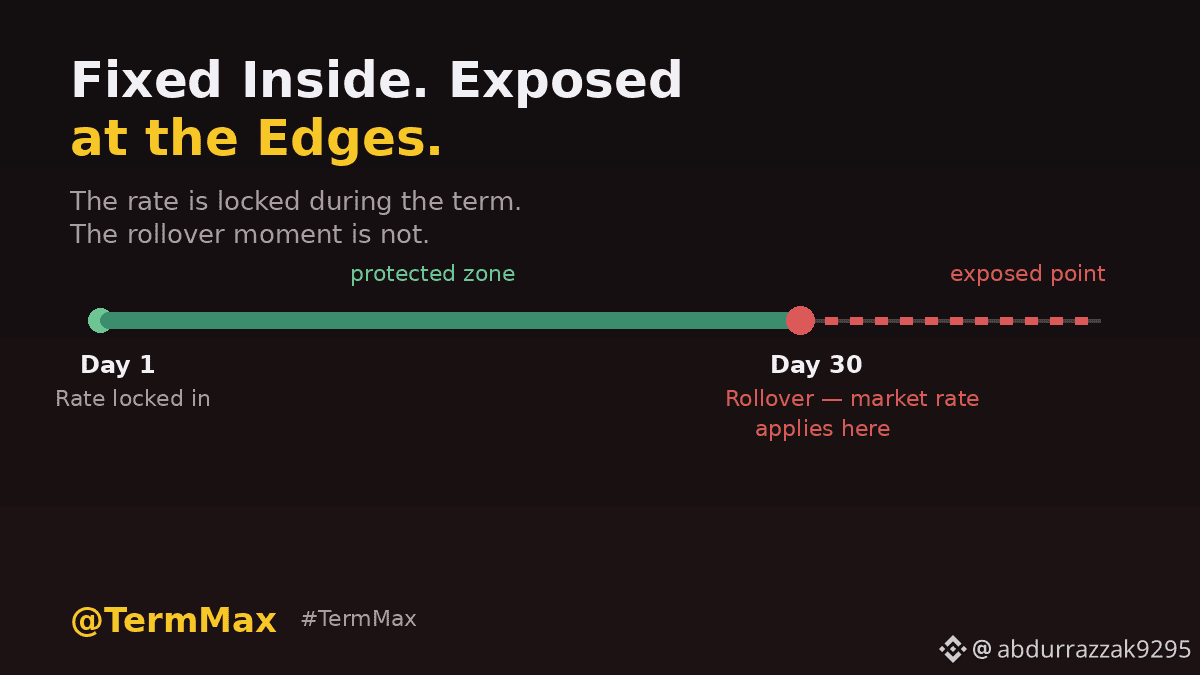
Say you open a 30-day fixed position. On day 30, the loan is due, whether the market is calm or crashing. If you want to keep the position open, you have to roll it into a new term manually, and that rollover happens at whatever rate the market offers at that exact moment, not the rate you originally locked in. So the "fixed" part only protects you during the term, not at the edges of it.
That changes how I think about the risk here. It's not really about the rate itself, it's about timing. A trader who forgets a rollover date, or tries to roll during a volatile hour, could end up paying a very different cost than expected, purely because of when the term ends rather than what they borrowed.
This feels like a tradeoff most people don't talk about. Fixed-rate lending removes uncertainty inside the term, but shifts that same uncertainty to a single point in time instead of spreading it out.
So the real question is: does TermMax give users enough warning or automation around rollovers, or is that risk still fully on the borrower to manage manually? #TermMax
Say you open a 30-day fixed position. On day 30, the loan is due, whether the market is calm or crashing. If you want to keep the position open, you have to roll it into a new term manually, and that rollover happens at whatever rate the market offers at that exact moment, not the rate you originally locked in. So the "fixed" part only protects you during the term, not at the edges of it.
That changes how I think about the risk here. It's not really about the rate itself, it's about timing. A trader who forgets a rollover date, or tries to roll during a volatile hour, could end up paying a very different cost than expected, purely because of when the term ends rather than what they borrowed.
This feels like a tradeoff most people don't talk about. Fixed-rate lending removes uncertainty inside the term, but shifts that same uncertainty to a single point in time instead of spreading it out.
So the real question is: does TermMax give users enough warning or automation around rollovers, or is that risk still fully on the borrower to manage manually? #TermMax
翻訳参照
good project


grvt_io
·
--
シーズン2は公式に完了しました。最終ポイントは配分されました。残るマイルストーンは1つです。
$GRVTは今月(7月)にローンチします。正確な日程は、今後数日で発表されます。
ご意見は受け止めています。もうすぐです。続報をお待ちください。
$GRVTは今月(7月)にローンチします。正確な日程は、今後数日で発表されます。
ご意見は受け止めています。もうすぐです。続報をお待ちください。
翻訳参照
JUST IN: 🇺🇸 SEC Chair Paul Atkins says the US is a decade behind on crypto and catching up is "job one" for the agency.
@WatcherGuru
@WatcherGuru
https://zealy.io/cw/opengpunetwork/invite/IEqQY9Fo4p2NIg7kGmHOm

ログインして、さらにコンテンツを読む