

Shah G Web3
203 投稿

Shah G Web3
報告
ユーザーをブロック
Crypto and Binance enthusiast with a strong understanding of trading, market trends, and risk management. Passionate about digital assets, blockchain technology
35 フォロー
158 フォロワー
433 いいね
投稿
·
--
「Bitcoinレベルのセキュリティ」という言葉がバビロンについてやたらと使われているのを見かけていて、ようやく座って実際にその意味を機械的に確認してみました。すると、そのフレーズが示唆するよりもずっと狭い意味だと分かりました。
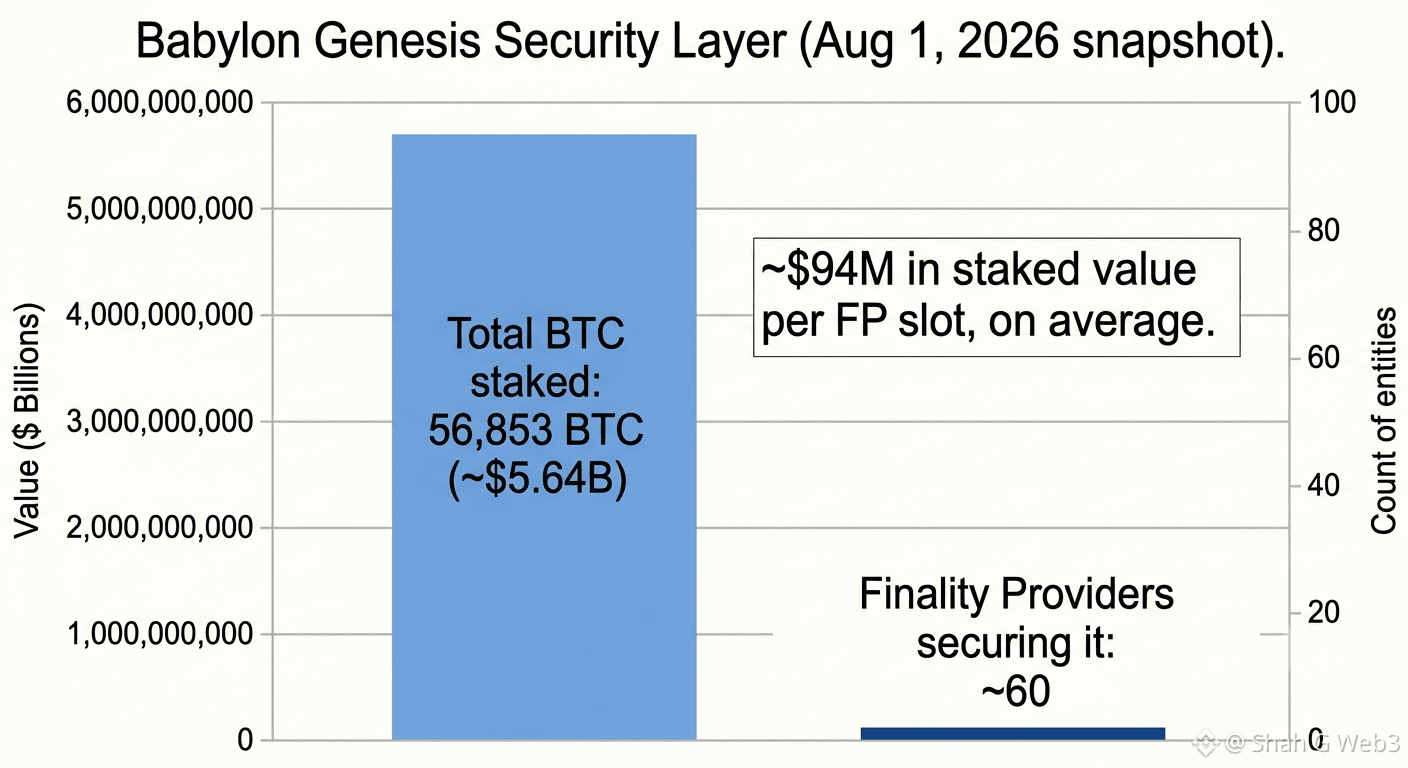
CoinMarketCapの8月1日のスナップショットによれば、@babylonlabs_io のプロトコルは56,853 BTCをステーキングして保有しており、ちょうど約56,853 BTC=約56.4億ドルです。大きな数字ですね。しかしバビロン自身のドキュメントでは、ジェネシスのセキュリティはデュアル・クォーラムに由来すると明確に説明されています。すなわち「100のCometBFTバリデータ」+「実際に最終性の署名を行うのは、約60のBitcoinステーキングされたファイナリティ・プロバイダ(Finality Providers)」の組み合わせです。以上です。署名には、その60の主体が、経済的な重みとして56.4億ドルを担っている。
概算して、しばらくそこに座り込んでしまいました—平均すると、各FP枠でステーキングされたBTCが約9,400万ドル分乗っていることになります。$BABY 人のデレゲータがプロバイダを選び、二重署名しないでくれることを信頼します。もし二重署名が起これば、EOTSのスラッシングが発動するでしょう。ですが、「Bitcoinがこれを守る」という言い方は、静かに「60人のオペレーターが、Bitcoinのインセンティブ設計に裏打ちされてこれを守る」という言い方に変わってしまう。同じ文章ではありません。
間違っていると言いたいわけではありません。PoSのセキュリティは常にどこかに集中します。ただ、マーケティング上の言い回しからすると、これほど具体的で、しかもこれほど小さい“集中点”になるとは思いませんでした。あの60枠が実際にどう分配されているか追跡している人っていますか?
#baby
「Bitcoinレベルのセキュリティ」という言葉がバビロンについてやたらと使われているのを見かけていて、ようやく座って実際にその意味を機械的に確認してみました。すると、そのフレーズが示唆するよりもずっと狭い意味だと分かりました。
CoinMarketCapの8月1日のスナップショットによれば、@BabylonLabs_io のプロトコルは56,853 BTCをステーキングして保有しており、ちょうど約56,853 BTC=約56.4億ドルです。大きな数字ですね。しかしバビロン自身のドキュメントでは、ジェネシスのセキュリティはデュアル・クォーラムに由来すると明確に説明されています。すなわち「100のCometBFTバリデータ」+「実際に最終性の署名を行うのは、約60のBitcoinステーキングされたファイナリティ・プロバイダ(Finality Providers)」の組み合わせです。以上です。署名には、その60の主体が、経済的な重みとして56.4億ドルを担っている。
概算して、しばらくそこに座り込んでしまいました—平均すると、各FP枠でステーキングされたBTCが約9,400万ドル分乗っていることになります。$BABY 人のデレゲータがプロバイダを選び、二重署名しないでくれることを信頼します。もし二重署名が起これば、EOTSのスラッシングが発動するでしょう。ですが、「Bitcoinがこれを守る」という言い方は、静かに「60人のオペレーターが、Bitcoinのインセンティブ設計に裏打ちされてこれを守る」という言い方に変わってしまう。同じ文章ではありません。
間違っていると言いたいわけではありません。PoSのセキュリティは常にどこかに集中します。ただ、マーケティング上の言い回しからすると、これほど具体的で、しかもこれほど小さい“集中点”になるとは思いませんでした。あの60枠が実際にどう分配されているか追跡している人っていますか?
#baby
CoinMarketCapの8月1日のスナップショットによれば、@BabylonLabs_io のプロトコルは56,853 BTCをステーキングして保有しており、ちょうど約56,853 BTC=約56.4億ドルです。大きな数字ですね。しかしバビロン自身のドキュメントでは、ジェネシスのセキュリティはデュアル・クォーラムに由来すると明確に説明されています。すなわち「100のCometBFTバリデータ」+「実際に最終性の署名を行うのは、約60のBitcoinステーキングされたファイナリティ・プロバイダ(Finality Providers)」の組み合わせです。以上です。署名には、その60の主体が、経済的な重みとして56.4億ドルを担っている。
概算して、しばらくそこに座り込んでしまいました—平均すると、各FP枠でステーキングされたBTCが約9,400万ドル分乗っていることになります。$BABY 人のデレゲータがプロバイダを選び、二重署名しないでくれることを信頼します。もし二重署名が起これば、EOTSのスラッシングが発動するでしょう。ですが、「Bitcoinがこれを守る」という言い方は、静かに「60人のオペレーターが、Bitcoinのインセンティブ設計に裏打ちされてこれを守る」という言い方に変わってしまう。同じ文章ではありません。
間違っていると言いたいわけではありません。PoSのセキュリティは常にどこかに集中します。ただ、マーケティング上の言い回しからすると、これほど具体的で、しかもこれほど小さい“集中点”になるとは思いませんでした。あの60枠が実際にどう分配されているか追跡している人っていますか?
#baby
9
4
141
·
--
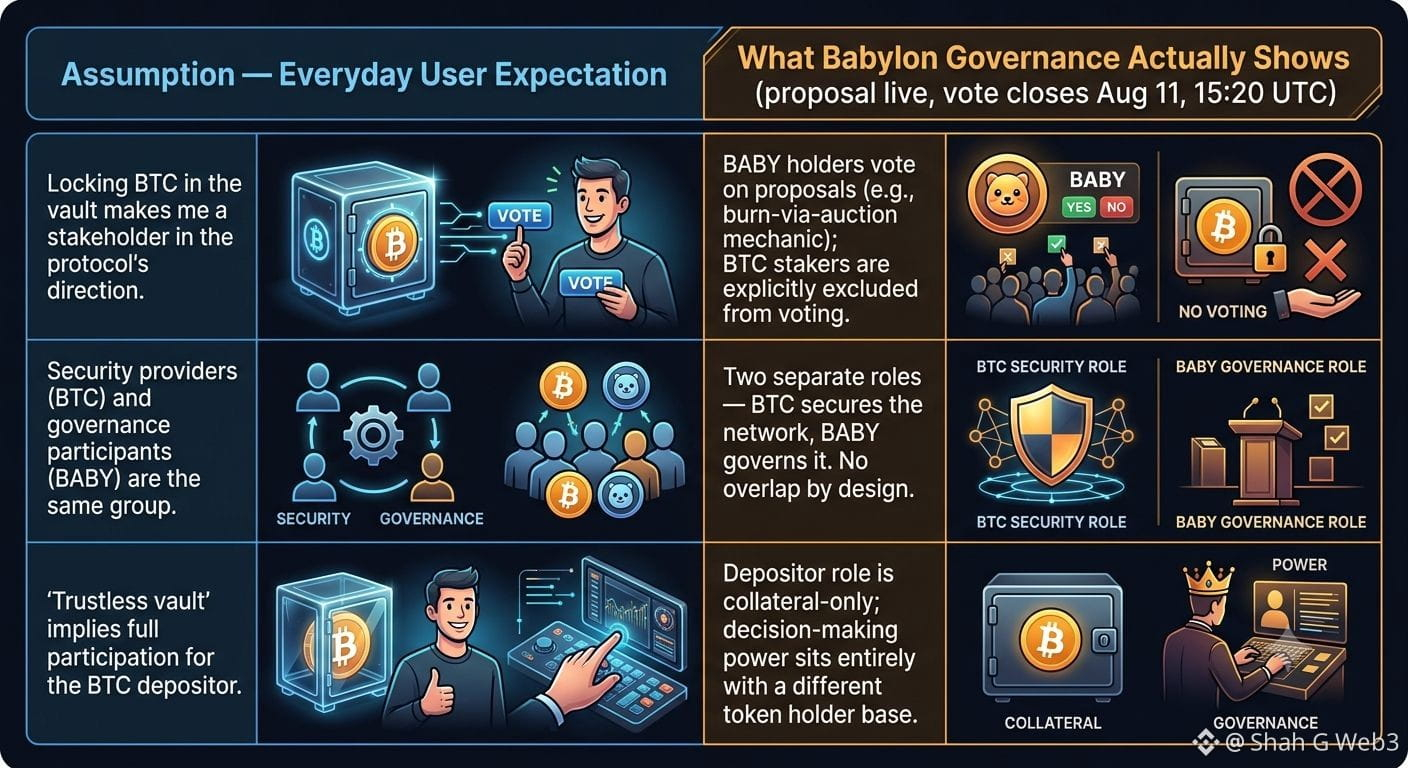
BABYのガバナンス提案がいまライブ中 — オークションでBSNリワードシェアを使って$BABY をバーン。投票締切は月曜の8月11日15:20 UTCです。技術的なパラメータ調整が入るものだと思って確認したんですが、これはただのトークノミクスの意思決定でした。バーンするか、ステーカーに配るか——そしてBABYホルダーが決めます。
ただ、ここで一度止まったのは、私のBTCです。バルト(金庫)にロックされた状態で、このシステム全体のセキュリティの重みを支えているのに、投票には参加できない。投票するのはBABYステーカーのみです。$BABY @babylonlabs_io
私は「トラストレス・バルト」なら、システムがどう進化していくかに関して自分は一級の参加者だと信じてBTCをロックしました。実際には私は“担保”であって、“有権者集団”ではない。プロトコルの手数料メカニクスを決めるトークンは、私が保有しているかどうかも分からない別の資産です。
誰が投票するのかを読み違えていないか確かめるために、提案文を2回読み返しました。やはり、BTCステーカーは設計上、明確にガバナンスのループの外側に置かれています。バグではなく……最初期に誰かが選んだ方針で、あまり告知されていなかっただけです。
ここに「日常的なユーザー」がビットコインをロックする場合——私たちは預託者(デポジター)なのでしょうか、それとも席のない流動性提供者なのでしょうか?
#baby
BABYのガバナンス提案がいまライブ中 — オークションでBSNリワードシェアを使って$BABY をバーン。投票締切は月曜の8月11日15:20 UTCです。技術的なパラメータ調整が入るものだと思って確認したんですが、これはただのトークノミクスの意思決定でした。バーンするか、ステーカーに配るか——そしてBABYホルダーが決めます。
ただ、ここで一度止まったのは、私のBTCです。バルト(金庫)にロックされた状態で、このシステム全体のセキュリティの重みを支えているのに、投票には参加できない。投票するのはBABYステーカーのみです。$BABY @BabylonLabs_io
私は「トラストレス・バルト」なら、システムがどう進化していくかに関して自分は一級の参加者だと信じてBTCをロックしました。実際には私は“担保”であって、“有権者集団”ではない。プロトコルの手数料メカニクスを決めるトークンは、私が保有しているかどうかも分からない別の資産です。
誰が投票するのかを読み違えていないか確かめるために、提案文を2回読み返しました。やはり、BTCステーカーは設計上、明確にガバナンスのループの外側に置かれています。バグではなく……最初期に誰かが選んだ方針で、あまり告知されていなかっただけです。
ここに「日常的なユーザー」がビットコインをロックする場合——私たちは預託者(デポジター)なのでしょうか、それとも席のない流動性提供者なのでしょうか?
#baby
ただ、ここで一度止まったのは、私のBTCです。バルト(金庫)にロックされた状態で、このシステム全体のセキュリティの重みを支えているのに、投票には参加できない。投票するのはBABYステーカーのみです。$BABY @BabylonLabs_io
私は「トラストレス・バルト」なら、システムがどう進化していくかに関して自分は一級の参加者だと信じてBTCをロックしました。実際には私は“担保”であって、“有権者集団”ではない。プロトコルの手数料メカニクスを決めるトークンは、私が保有しているかどうかも分からない別の資産です。
誰が投票するのかを読み違えていないか確かめるために、提案文を2回読み返しました。やはり、BTCステーカーは設計上、明確にガバナンスのループの外側に置かれています。バグではなく……最初期に誰かが選んだ方針で、あまり告知されていなかっただけです。
ここに「日常的なユーザー」がビットコインをロックする場合——私たちは預託者(デポジター)なのでしょうか、それとも席のない流動性提供者なのでしょうか?
#baby
6
4
110
·
--
今日は、Babylon の ($BABY) BitVM3 ベースのトラストレス・ビットコイン・ボールト(Trustless Bitcoin Vaults)を掘り下げていたんだけど、#Babylon @babylonlabs_io の話をスクロールしている最中に、ちょっとした違和感に引っかかった。
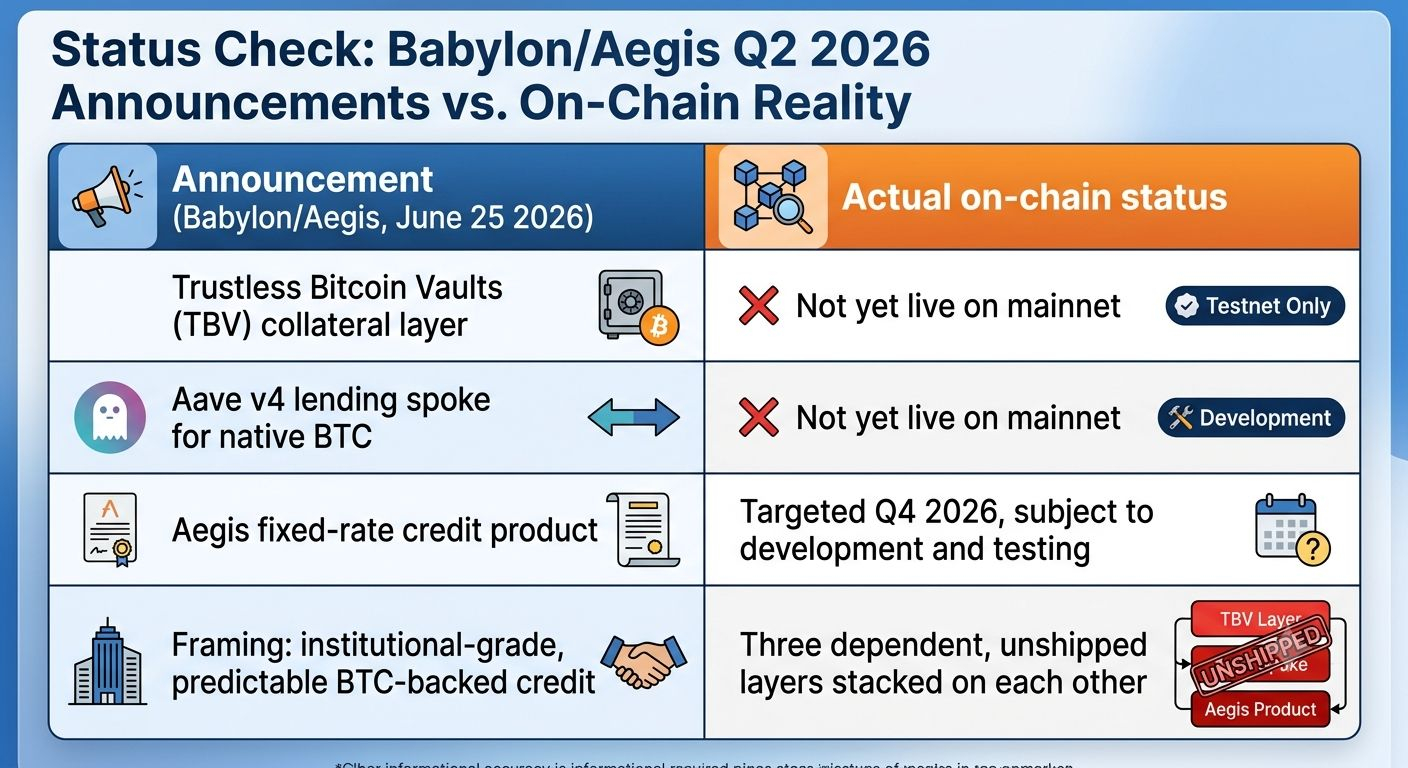
Babylon は Aegis との提携を発表した(Aegis のブログ上で 2026 年 6 月 25 日の投稿)— 固定金利での借り入れで、Trustless Bitcoin Vaults の上に構築され、さらに Aave v4 のレンディング・スポークが組み合わさる。しっかりした話に聞こえる。機関投資家向けの、予測可能な資金コスト…という売り文句まで揃っている。ところが実際に依存関係の連鎖を追ってみたら……待って、3 つのレイヤー全部、まだ稼働していない。
TBV のメインネットはまだ提供されていない。Aave v4 の統合もまだ提供されていない。Aegis の固定金利エンジンは「開発とテスト次第で、2026 年第 4 四半期に見込まれる」。つまり、完成したプロダクト同士の提携発表というより、未完成の別プロダクト 2 つの上に成り立つ“未来の製品”の提携発表だ。
そこが引っかかった。マーケティング文言はもう完全に出来上がっている。「自己管理(self-custody)」「ラッピング不要(no wrapping)」「予測可能な資本コスト」— これらが、メインネット上で実際の土台(配管)がまだ存在しない数か月前から出てきている。
自分でも「Babylon は固定金利クレジットへ進出」と書きそうになった。もちろんそれは厳密には間違っていない。でも今あるのは、稼働中のプロダクトが 1 つではなく、将来の約束が 3 段重なっている状態であって、単一の“稼働中製品”ではない。
これがバズワード(vaporware)だと言いたいわけではない。複雑な DeFi インフラの順番立てには時間がかかる。でも、疑問に思う—現在のレイヤーが出荷される前に次のレイヤーを発表することが、ここで人々が実際にリスクをどう価格付けするかに、どの時点から影響し始めるのだろう?
@babylonlabs_io #baby $BABY
今日は、Babylon の ($BABY ) BitVM3 ベースのトラストレス・ビットコイン・ボールト(Trustless Bitcoin Vaults)を掘り下げていたんだけど、#Babylon @BabylonLabs_io の話をスクロールしている最中に、ちょっとした違和感に引っかかった。
Babylon は Aegis との提携を発表した(Aegis のブログ上で 2026 年 6 月 25 日の投稿)— 固定金利での借り入れで、Trustless Bitcoin Vaults の上に構築され、さらに Aave v4 のレンディング・スポークが組み合わさる。しっかりした話に聞こえる。機関投資家向けの、予測可能な資金コスト…という売り文句まで揃っている。ところが実際に依存関係の連鎖を追ってみたら……待って、3 つのレイヤー全部、まだ稼働していない。
TBV のメインネットはまだ提供されていない。Aave v4 の統合もまだ提供されていない。Aegis の固定金利エンジンは「開発とテスト次第で、2026 年第 4 四半期に見込まれる」。つまり、完成したプロダクト同士の提携発表というより、未完成の別プロダクト 2 つの上に成り立つ“未来の製品”の提携発表だ。
そこが引っかかった。マーケティング文言はもう完全に出来上がっている。「自己管理(self-custody)」「ラッピング不要(no wrapping)」「予測可能な資本コスト」— これらが、メインネット上で実際の土台(配管)がまだ存在しない数か月前から出てきている。
自分でも「Babylon は固定金利クレジットへ進出」と書きそうになった。もちろんそれは厳密には間違っていない。でも今あるのは、稼働中のプロダクトが 1 つではなく、将来の約束が 3 段重なっている状態であって、単一の“稼働中製品”ではない。
これがバズワード(vaporware)だと言いたいわけではない。複雑な DeFi インフラの順番立てには時間がかかる。でも、疑問に思う—現在のレイヤーが出荷される前に次のレイヤーを発表することが、ここで人々が実際にリスクをどう価格付けするかに、どの時点から影響し始めるのだろう?
@BabylonLabs_io #baby $BABY
Babylon は Aegis との提携を発表した(Aegis のブログ上で 2026 年 6 月 25 日の投稿)— 固定金利での借り入れで、Trustless Bitcoin Vaults の上に構築され、さらに Aave v4 のレンディング・スポークが組み合わさる。しっかりした話に聞こえる。機関投資家向けの、予測可能な資金コスト…という売り文句まで揃っている。ところが実際に依存関係の連鎖を追ってみたら……待って、3 つのレイヤー全部、まだ稼働していない。
TBV のメインネットはまだ提供されていない。Aave v4 の統合もまだ提供されていない。Aegis の固定金利エンジンは「開発とテスト次第で、2026 年第 4 四半期に見込まれる」。つまり、完成したプロダクト同士の提携発表というより、未完成の別プロダクト 2 つの上に成り立つ“未来の製品”の提携発表だ。
そこが引っかかった。マーケティング文言はもう完全に出来上がっている。「自己管理(self-custody)」「ラッピング不要(no wrapping)」「予測可能な資本コスト」— これらが、メインネット上で実際の土台(配管)がまだ存在しない数か月前から出てきている。
自分でも「Babylon は固定金利クレジットへ進出」と書きそうになった。もちろんそれは厳密には間違っていない。でも今あるのは、稼働中のプロダクトが 1 つではなく、将来の約束が 3 段重なっている状態であって、単一の“稼働中製品”ではない。
これがバズワード(vaporware)だと言いたいわけではない。複雑な DeFi インフラの順番立てには時間がかかる。でも、疑問に思う—現在のレイヤーが出荷される前に次のレイヤーを発表することが、ここで人々が実際にリスクをどう価格付けするかに、どの時点から影響し始めるのだろう?
@BabylonLabs_io #baby $BABY
18
9
392
·
--
一部該当
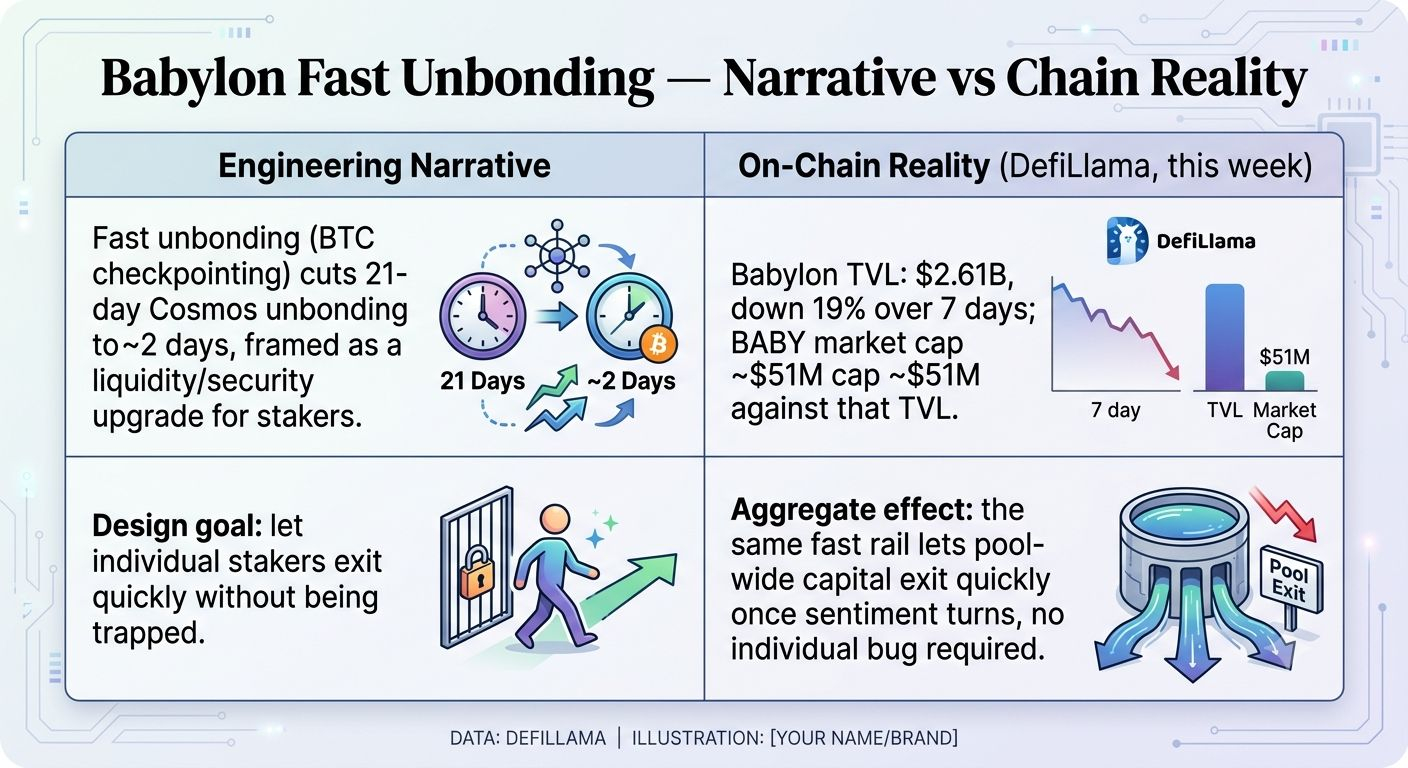
私は自分のBTCをBabylonの金庫にロックし、提案されているのは信託不要(トラストレス)のカストディ——会社が鍵を握るのではなく、暗号学的な条件です。いいですね。ですが、今週私が本当に引っかかったのは、カストディの仕組みではなく出口メカニズムでした。$BABY #Babylon @babylonlabs_io は「高速アンボンディング(fast unbonding)」を組み込んだ——BTCのチェックポイント処理によって、標準の21日間のCosmosのアンボンディング期間が、約2日まで圧縮されます。心から良いエンジニアリングです。
しかし私は今日DefiLlamaを開いてみたら、TVLが26.1億ドルで、直近7日で19%下がっているのが目に入りました。時価総額はそれに対して約5100万ドルです。ふむ——必要なときに流動性を引き出すために私を素早く退出させるための同じレールが、センチメントが変わると1週間でプールの5分の1を抜けさせるレールでもある。誰もそれを「バグ」だとしては作っていない。設計どおりに機能しているだけで、マーケティングがほとんど触れない方向へ動いているだけです。
スナック休憩。まだあのアンボンディングの数字を見つめています。2日というのは印象的な暗号技術です。でも、それは両側に開くドアでもあって、多くの人が気づくより速く、実際に起きているのを見て初めて理解されるタイプのものなんです。
高速アンボンディングはセキュリティ保証なのか、それともフライト(離脱)リスクのメカニズムなのか——そしてその答えは、今週その部屋がどちらに傾いているかに結局は左右されるのでしょうか?
$BABY #baby @babylonlabs_io
私は自分のBTCをBabylonの金庫にロックし、提案されているのは信託不要(トラストレス)のカストディ——会社が鍵を握るのではなく、暗号学的な条件です。いいですね。ですが、今週私が本当に引っかかったのは、カストディの仕組みではなく出口メカニズムでした。$BABY #Babylon @BabylonLabs_io は「高速アンボンディング(fast unbonding)」を組み込んだ——BTCのチェックポイント処理によって、標準の21日間のCosmosのアンボンディング期間が、約2日まで圧縮されます。心から良いエンジニアリングです。
しかし私は今日DefiLlamaを開いてみたら、TVLが26.1億ドルで、直近7日で19%下がっているのが目に入りました。時価総額はそれに対して約5100万ドルです。ふむ——必要なときに流動性を引き出すために私を素早く退出させるための同じレールが、センチメントが変わると1週間でプールの5分の1を抜けさせるレールでもある。誰もそれを「バグ」だとしては作っていない。設計どおりに機能しているだけで、マーケティングがほとんど触れない方向へ動いているだけです。
スナック休憩。まだあのアンボンディングの数字を見つめています。2日というのは印象的な暗号技術です。でも、それは両側に開くドアでもあって、多くの人が気づくより速く、実際に起きているのを見て初めて理解されるタイプのものなんです。
高速アンボンディングはセキュリティ保証なのか、それともフライト(離脱)リスクのメカニズムなのか——そしてその答えは、今週その部屋がどちらに傾いているかに結局は左右されるのでしょうか?
$BABY #baby @BabylonLabs_io
しかし私は今日DefiLlamaを開いてみたら、TVLが26.1億ドルで、直近7日で19%下がっているのが目に入りました。時価総額はそれに対して約5100万ドルです。ふむ——必要なときに流動性を引き出すために私を素早く退出させるための同じレールが、センチメントが変わると1週間でプールの5分の1を抜けさせるレールでもある。誰もそれを「バグ」だとしては作っていない。設計どおりに機能しているだけで、マーケティングがほとんど触れない方向へ動いているだけです。
スナック休憩。まだあのアンボンディングの数字を見つめています。2日というのは印象的な暗号技術です。でも、それは両側に開くドアでもあって、多くの人が気づくより速く、実際に起きているのを見て初めて理解されるタイプのものなんです。
高速アンボンディングはセキュリティ保証なのか、それともフライト(離脱)リスクのメカニズムなのか——そしてその答えは、今週その部屋がどちらに傾いているかに結局は左右されるのでしょうか?
$BABY #baby @BabylonLabs_io
14
11
337
·
--
本人確認中
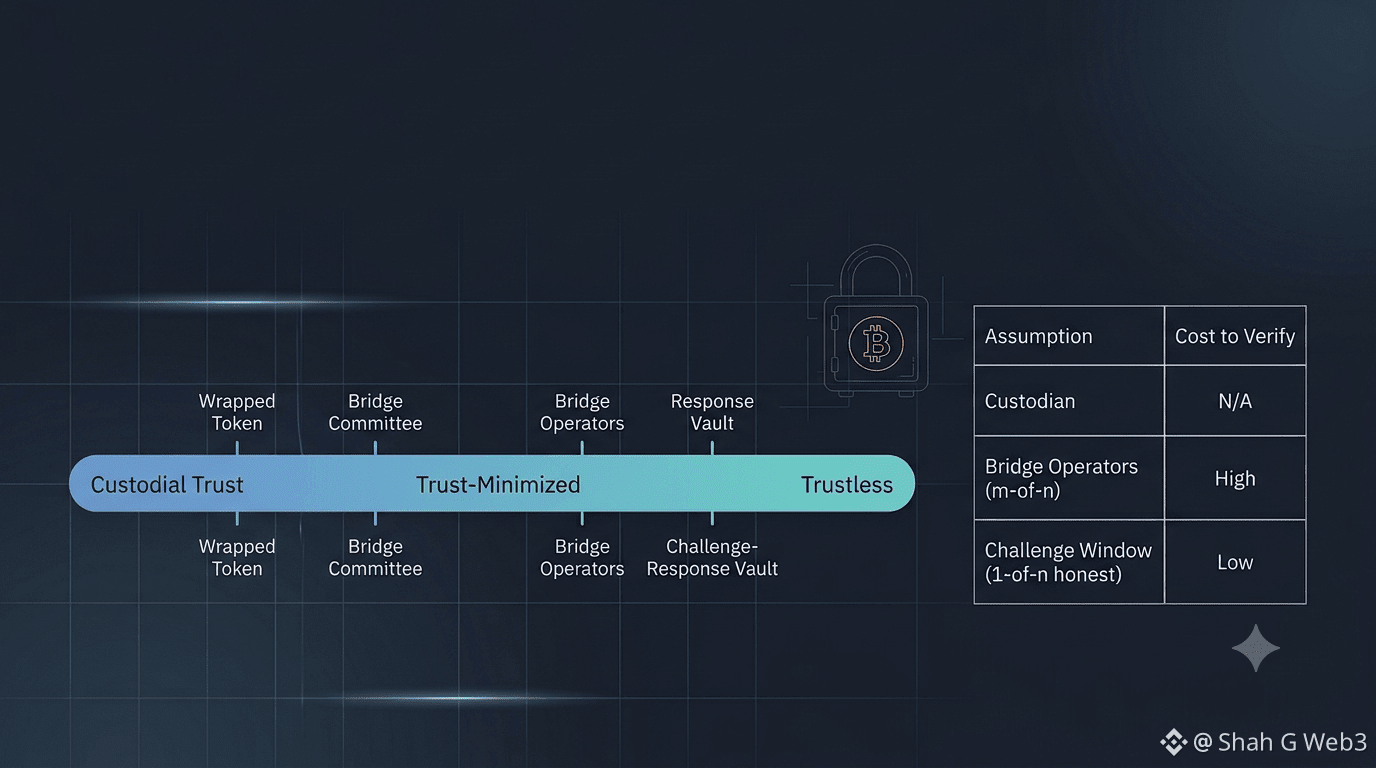
Babylon Labsは、Ethereumメインネット上でネイティブBTCに対してUSDCを借り入れることで2025年を締めくくりました(Morpho経由)。テストネットのデモではなく、実在するビットコインに対する実ローンで、ラッピングはありません。@babylonlabs_io は、基盤となる仕組みを「信託レス(trustless)」なバルート(vault)と呼んでおり、技術的達成は本物です。BitVM3は、異議申し立て(challenge)付きの引き出しにおけるオンチェーンの証明コストを、概ね15,000ドルから100ドル未満へ、さらに標準ケースでは数ドルまで引き下げました。
しかし、「trustless」が実際に何に依存しているのか、よく見てみましょう。バルートの安全性は、チャレンジ期間内に不正な引き出しを試みたことに対して、少なくとも1人の誠実な参加者が現れて異議を唱えることに依然として依存しています。これはゼロトラストではありません。少数派の誠実さに関する前提であり、BitVMがブリッジするモデルやDLCベースのシステムが使う同系統のモデルです。ただし、小さな委員会で済み、強制(enforcement)もより安価です。
Babylon自身の比較資料では、Trustless Bitcoin Vaultsは、ラップドBTCより上、また古いブリッジ設計よりも上位にランク付けされています。これは二択ではなくグラデーションです。WBTCは、カストディアンを全面的に信頼する必要があります。一方、バルートは「どこかで誰かが監視していて、異議申し立てできるだけの余力がある」ことを信頼する必要があります。
より安価なチャレンジは、その前提を満たしやすくします。前提そのものを消し去るわけではありません。
セキュリティが「どのように経済的にインセンティブがあるか、チェーンを監視する人がいるか」に本当に左右されるのなら、Babylonのバルートは、パーミッションレスなブリッジと意味のあるほど違うのでしょうか?それとも、同じ信頼モデルの資金が厚いだけのバージョンにすぎないのでしょうか?
BabylonのBitVM3バルートは、本当に新しい信頼プリミティブなのでしょうか?それとも、ブリッジやDLCがすでに依存している少数派の誠実さ前提の、より安価なバリアント(亜種)にすぎないのでしょうか?
$BABY #baby
Babylon Labsは、Ethereumメインネット上でネイティブBTCに対してUSDCを借り入れることで2025年を締めくくりました(Morpho経由)。テストネットのデモではなく、実在するビットコインに対する実ローンで、ラッピングはありません。@BabylonLabs_io は、基盤となる仕組みを「信託レス(trustless)」なバルート(vault)と呼んでおり、技術的達成は本物です。BitVM3は、異議申し立て(challenge)付きの引き出しにおけるオンチェーンの証明コストを、概ね15,000ドルから100ドル未満へ、さらに標準ケースでは数ドルまで引き下げました。
しかし、「trustless」が実際に何に依存しているのか、よく見てみましょう。バルートの安全性は、チャレンジ期間内に不正な引き出しを試みたことに対して、少なくとも1人の誠実な参加者が現れて異議を唱えることに依然として依存しています。これはゼロトラストではありません。少数派の誠実さに関する前提であり、BitVMがブリッジするモデルやDLCベースのシステムが使う同系統のモデルです。ただし、小さな委員会で済み、強制(enforcement)もより安価です。
Babylon自身の比較資料では、Trustless Bitcoin Vaultsは、ラップドBTCより上、また古いブリッジ設計よりも上位にランク付けされています。これは二択ではなくグラデーションです。WBTCは、カストディアンを全面的に信頼する必要があります。一方、バルートは「どこかで誰かが監視していて、異議申し立てできるだけの余力がある」ことを信頼する必要があります。
より安価なチャレンジは、その前提を満たしやすくします。前提そのものを消し去るわけではありません。
セキュリティが「どのように経済的にインセンティブがあるか、チェーンを監視する人がいるか」に本当に左右されるのなら、Babylonのバルートは、パーミッションレスなブリッジと意味のあるほど違うのでしょうか?それとも、同じ信頼モデルの資金が厚いだけのバージョンにすぎないのでしょうか?
BabylonのBitVM3バルートは、本当に新しい信頼プリミティブなのでしょうか?それとも、ブリッジやDLCがすでに依存している少数派の誠実さ前提の、より安価なバリアント(亜種)にすぎないのでしょうか?
$BABY #baby
しかし、「trustless」が実際に何に依存しているのか、よく見てみましょう。バルートの安全性は、チャレンジ期間内に不正な引き出しを試みたことに対して、少なくとも1人の誠実な参加者が現れて異議を唱えることに依然として依存しています。これはゼロトラストではありません。少数派の誠実さに関する前提であり、BitVMがブリッジするモデルやDLCベースのシステムが使う同系統のモデルです。ただし、小さな委員会で済み、強制(enforcement)もより安価です。
Babylon自身の比較資料では、Trustless Bitcoin Vaultsは、ラップドBTCより上、また古いブリッジ設計よりも上位にランク付けされています。これは二択ではなくグラデーションです。WBTCは、カストディアンを全面的に信頼する必要があります。一方、バルートは「どこかで誰かが監視していて、異議申し立てできるだけの余力がある」ことを信頼する必要があります。
より安価なチャレンジは、その前提を満たしやすくします。前提そのものを消し去るわけではありません。
セキュリティが「どのように経済的にインセンティブがあるか、チェーンを監視する人がいるか」に本当に左右されるのなら、Babylonのバルートは、パーミッションレスなブリッジと意味のあるほど違うのでしょうか?それとも、同じ信頼モデルの資金が厚いだけのバージョンにすぎないのでしょうか?
BabylonのBitVM3バルートは、本当に新しい信頼プリミティブなのでしょうか?それとも、ブリッジやDLCがすでに依存している少数派の誠実さ前提の、より安価なバリアント(亜種)にすぎないのでしょうか?
$BABY #baby
10
12
941
·
--
午後ずっと@babylonlabs_io のトラストレスなビットコイン・ボールト(金庫)を掘り返していたら、ある数字がどうしても引っかかる。
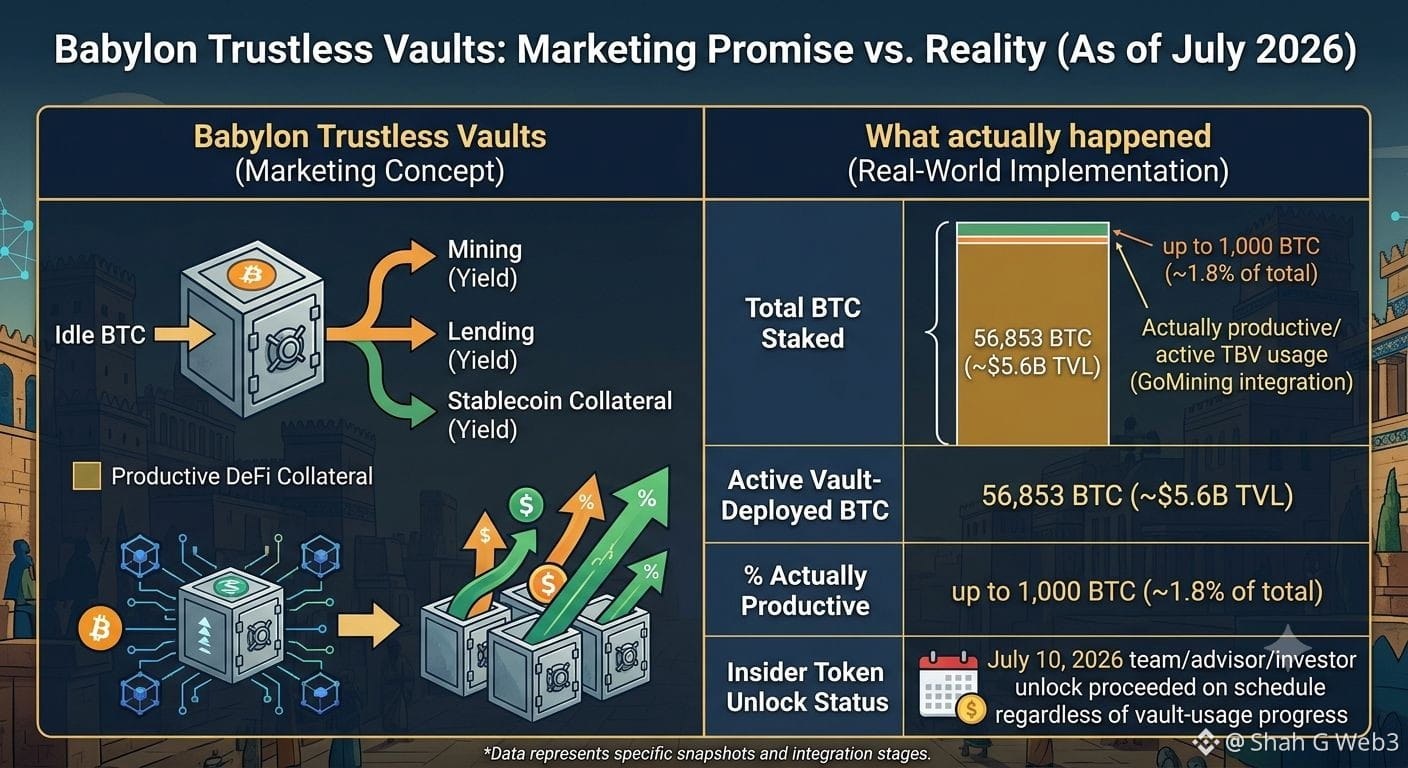
バビロンはステーキング・ボールトに56,853 BTCを預けている――現時点で最大級のBTCステーキング・プロトコルだ。異論はない。だが、実際の「生産的な資本(productive capital)」の部分、つまり、BTCが“ただ座っている”のではなく「働ける」ことを示すはずのGoMining TBV統合はどうなのか? 初期ロールアウトの上限は最大1,000 BTC。これは、ロックされている総量の約1.8%に相当する。その他はただ……ステーキングされているだけ。受動的に。バリデータ報酬を待っている。
一方で、7月10日のチーム/アドバイザー/投資家のアンロック・クリフは、ベスティング契約どおりスケジュールどおりにきっちり発動した――ボールトの“ユーティリティ物語”の進捗がどうであれ、インサイダーにはトークンが放出される。タイミング的にちょっと面白い。あ、笑えないタイプの面白さだね。「アンロックの時計は、あなたのプロダクト・ロードマップなんて気にしない」という意味で。
これがどれだけ重要なのか、考えが行ったり来たりしている。たぶん1,000 BTCは慎重な最初のコホートに過ぎず、すぐに拡大するのかもしれない。あるいは「生産的な担保としてのビットコイン」という語りは、今のところ主に“紙の上”で、実態としては、BTCの98%がただそこに座って基本の利回りを稼いでいるだけで、ボールトの仕組みはその一回の見せ場として統合が行われるにとどまっているのかもしれない。
TBVの対象になり得るBTCのうち、実際にアクティブなボールトへ移動する割合を、誰か追跡しているのかな?
$BABY #baby
午後ずっと@BabylonLabs_io のトラストレスなビットコイン・ボールト(金庫)を掘り返していたら、ある数字がどうしても引っかかる。
バビロンはステーキング・ボールトに56,853 BTCを預けている――現時点で最大級のBTCステーキング・プロトコルだ。異論はない。だが、実際の「生産的な資本(productive capital)」の部分、つまり、BTCが“ただ座っている”のではなく「働ける」ことを示すはずのGoMining TBV統合はどうなのか? 初期ロールアウトの上限は最大1,000 BTC。これは、ロックされている総量の約1.8%に相当する。その他はただ……ステーキングされているだけ。受動的に。バリデータ報酬を待っている。
一方で、7月10日のチーム/アドバイザー/投資家のアンロック・クリフは、ベスティング契約どおりスケジュールどおりにきっちり発動した――ボールトの“ユーティリティ物語”の進捗がどうであれ、インサイダーにはトークンが放出される。タイミング的にちょっと面白い。あ、笑えないタイプの面白さだね。「アンロックの時計は、あなたのプロダクト・ロードマップなんて気にしない」という意味で。
これがどれだけ重要なのか、考えが行ったり来たりしている。たぶん1,000 BTCは慎重な最初のコホートに過ぎず、すぐに拡大するのかもしれない。あるいは「生産的な担保としてのビットコイン」という語りは、今のところ主に“紙の上”で、実態としては、BTCの98%がただそこに座って基本の利回りを稼いでいるだけで、ボールトの仕組みはその一回の見せ場として統合が行われるにとどまっているのかもしれない。
TBVの対象になり得るBTCのうち、実際にアクティブなボールトへ移動する割合を、誰か追跡しているのかな?
$BABY #baby
バビロンはステーキング・ボールトに56,853 BTCを預けている――現時点で最大級のBTCステーキング・プロトコルだ。異論はない。だが、実際の「生産的な資本(productive capital)」の部分、つまり、BTCが“ただ座っている”のではなく「働ける」ことを示すはずのGoMining TBV統合はどうなのか? 初期ロールアウトの上限は最大1,000 BTC。これは、ロックされている総量の約1.8%に相当する。その他はただ……ステーキングされているだけ。受動的に。バリデータ報酬を待っている。
一方で、7月10日のチーム/アドバイザー/投資家のアンロック・クリフは、ベスティング契約どおりスケジュールどおりにきっちり発動した――ボールトの“ユーティリティ物語”の進捗がどうであれ、インサイダーにはトークンが放出される。タイミング的にちょっと面白い。あ、笑えないタイプの面白さだね。「アンロックの時計は、あなたのプロダクト・ロードマップなんて気にしない」という意味で。
これがどれだけ重要なのか、考えが行ったり来たりしている。たぶん1,000 BTCは慎重な最初のコホートに過ぎず、すぐに拡大するのかもしれない。あるいは「生産的な担保としてのビットコイン」という語りは、今のところ主に“紙の上”で、実態としては、BTCの98%がただそこに座って基本の利回りを稼いでいるだけで、ボールトの仕組みはその一回の見せ場として統合が行われるにとどまっているのかもしれない。
TBVの対象になり得るBTCのうち、実際にアクティブなボールトへ移動する割合を、誰か追跡しているのかな?
$BABY #baby
9
9
122
·
--
記事
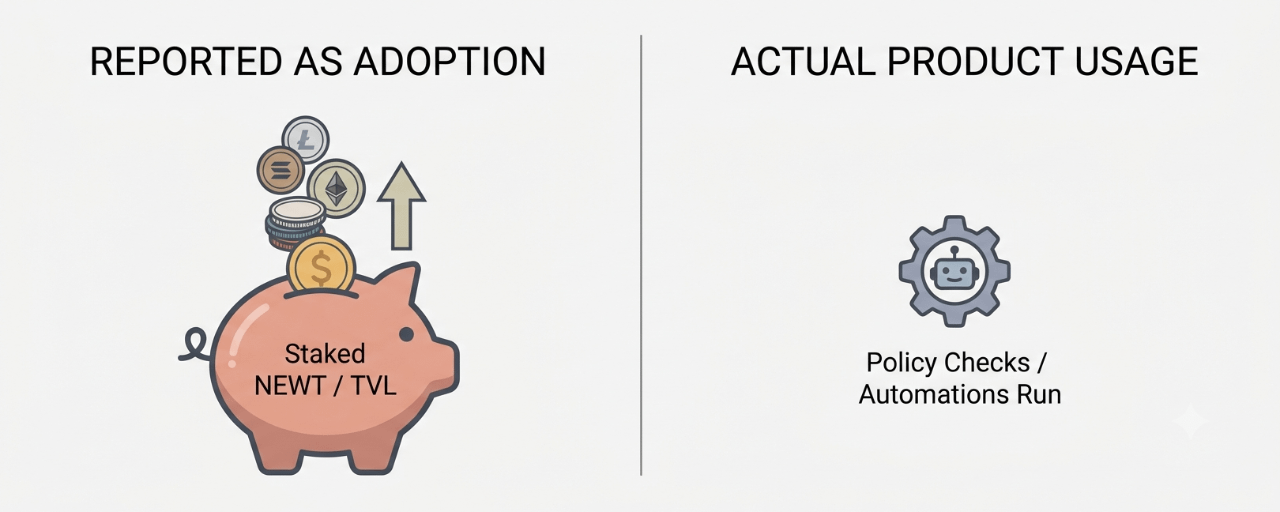
Newton Protocol:誇大宣伝を超えて、真の導入へ午前中は、関係ないことをしていました——自分のQ2の取引をまとめたスプレッドシートを整理する作業です。正直退屈な仕事で、頭があちこちに逸れ始めるようなやつ。そんな合間に、最近AI×クリプト系プロジェクトでよく見かける「リアルな導入(real adoption)へ向かう」といった言葉のことを考え始めました。特にNewton Protocolです。ここ数週間ずっと気になっていて、見て回っているところなので。
そこで、彼らの透明性レポートをまた開きました。主に、いま彼らが「導入(adoption)」として何を数えているのかを確かめるためです。前回ざっと読んだときは、指標(metrics)のセクションをあまりよく見ていませんでした。今回はちゃんと見ました。
Newton Protocol:誇大宣伝を超えて、真の導入へ
午前中は、関係ないことをしていました——自分のQ2の取引をまとめたスプレッドシートを整理する作業です。正直退屈な仕事で、頭があちこちに逸れ始めるようなやつ。そんな合間に、最近AI×クリプト系プロジェクトでよく見かける「リアルな導入(real adoption)へ向かう」といった言葉のことを考え始めました。特にNewton Protocolです。ここ数週間ずっと気になっていて、見て回っているところなので。
そこで、彼らの透明性レポートをまた開きました。主に、いま彼らが「導入(adoption)」として何を数えているのかを確かめるためです。前回ざっと読んだときは、指標(metrics)のセクションをあまりよく見ていませんでした。今回はちゃんと見ました。
そこで、彼らの透明性レポートをまた開きました。主に、いま彼らが「導入(adoption)」として何を数えているのかを確かめるためです。前回ざっと読んだときは、指標(metrics)のセクションをあまりよく見ていませんでした。今回はちゃんと見ました。
8
6
92
·
--
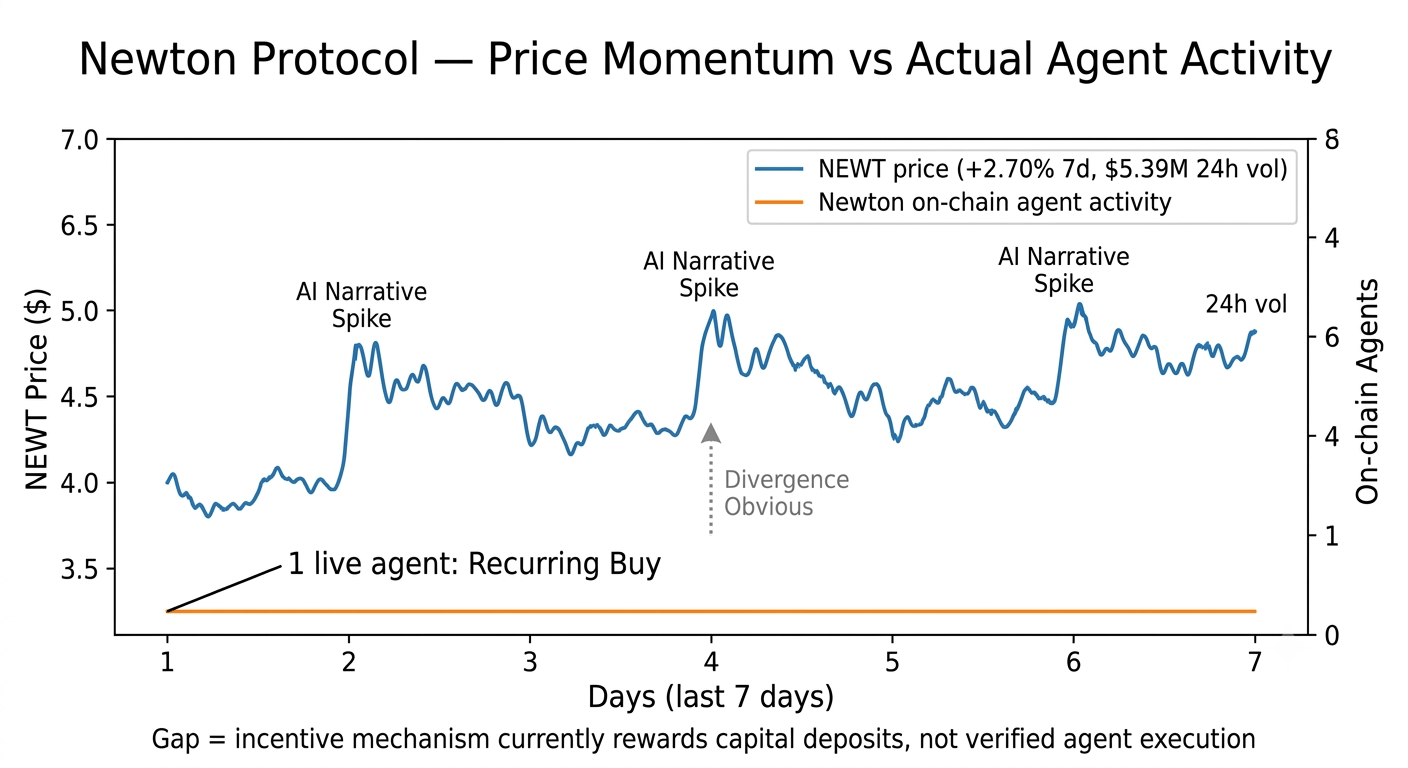
Newton Protocolの$NEWT upは7日で2.70%上昇し、$0.04953付近で推移しており、24時間の出来高は$5.39M…そして私は、価格が実際のプロトコル日よりもAIのナラティブ日によく動くことに気づき続けています。
なので今日はチャートではなく、先週のアクティビティを遡って見てみました。オンチェーンでは大げさな変化はありません——新しいエージェントもなく、新しいコントラクトのデプロイもなし、いつものポリシーチェックのトラフィックだけです。それでも、「Newton自身とは無関係に」「オンチェーンでのAIエージェント」がどこかでトレンドすると、そのトークンには買いが入るんです。そこが私を立ち止まらせました。
価格は本当にNewton自身の利用曲線を追っているわけではなく、Newtonがたまたま属しているカテゴリをめぐるセンチメントを追っているんです。
うーん——自分が読みすぎているだけかもと思って、実際に二重チェックしました。稼働中のエージェントは今も1つだけ(Recurring Buy)で、先週と同じです。オンチェーン上のエージェント数に変化はないのに、市場時価総額は何かが出荷されたかのように動きました。
こういう状況に身を置くのは、ちょっと不思議です。このトークンは、自分が完全にはコントロールできないセクターネラティブの一部で価格が付いている。だからAI-クリプトのムードが冷めると、Newton自身のロードマップが順調に進んでいても引きずられて下がる可能性があり、逆もまたあり得ます。
ここでは「プロジェクトの勢い」と「カテゴリの勢い」をどう分ければいいのか、まだ分かりません。引き続き考え中です。
@NewtonProtocol #Newt $NEWT
Newton Protocolの$NEWT upは7日で2.70%上昇し、$0.04953付近で推移しており、24時間の出来高は$5.39M…そして私は、価格が実際のプロトコル日よりもAIのナラティブ日によく動くことに気づき続けています。
なので今日はチャートではなく、先週のアクティビティを遡って見てみました。オンチェーンでは大げさな変化はありません——新しいエージェントもなく、新しいコントラクトのデプロイもなし、いつものポリシーチェックのトラフィックだけです。それでも、「Newton自身とは無関係に」「オンチェーンでのAIエージェント」がどこかでトレンドすると、そのトークンには買いが入るんです。そこが私を立ち止まらせました。
価格は本当にNewton自身の利用曲線を追っているわけではなく、Newtonがたまたま属しているカテゴリをめぐるセンチメントを追っているんです。
うーん——自分が読みすぎているだけかもと思って、実際に二重チェックしました。稼働中のエージェントは今も1つだけ(Recurring Buy)で、先週と同じです。オンチェーン上のエージェント数に変化はないのに、市場時価総額は何かが出荷されたかのように動きました。
こういう状況に身を置くのは、ちょっと不思議です。このトークンは、自分が完全にはコントロールできないセクターネラティブの一部で価格が付いている。だからAI-クリプトのムードが冷めると、Newton自身のロードマップが順調に進んでいても引きずられて下がる可能性があり、逆もまたあり得ます。
ここでは「プロジェクトの勢い」と「カテゴリの勢い」をどう分ければいいのか、まだ分かりません。引き続き考え中です。
@NewtonProtocol #Newt $NEWT
なので今日はチャートではなく、先週のアクティビティを遡って見てみました。オンチェーンでは大げさな変化はありません——新しいエージェントもなく、新しいコントラクトのデプロイもなし、いつものポリシーチェックのトラフィックだけです。それでも、「Newton自身とは無関係に」「オンチェーンでのAIエージェント」がどこかでトレンドすると、そのトークンには買いが入るんです。そこが私を立ち止まらせました。
価格は本当にNewton自身の利用曲線を追っているわけではなく、Newtonがたまたま属しているカテゴリをめぐるセンチメントを追っているんです。
うーん——自分が読みすぎているだけかもと思って、実際に二重チェックしました。稼働中のエージェントは今も1つだけ(Recurring Buy)で、先週と同じです。オンチェーン上のエージェント数に変化はないのに、市場時価総額は何かが出荷されたかのように動きました。
こういう状況に身を置くのは、ちょっと不思議です。このトークンは、自分が完全にはコントロールできないセクターネラティブの一部で価格が付いている。だからAI-クリプトのムードが冷めると、Newton自身のロードマップが順調に進んでいても引きずられて下がる可能性があり、逆もまたあり得ます。
ここでは「プロジェクトの勢い」と「カテゴリの勢い」をどう分ければいいのか、まだ分かりません。引き続き考え中です。
@NewtonProtocol #Newt $NEWT
1
2
129
·
--
記事
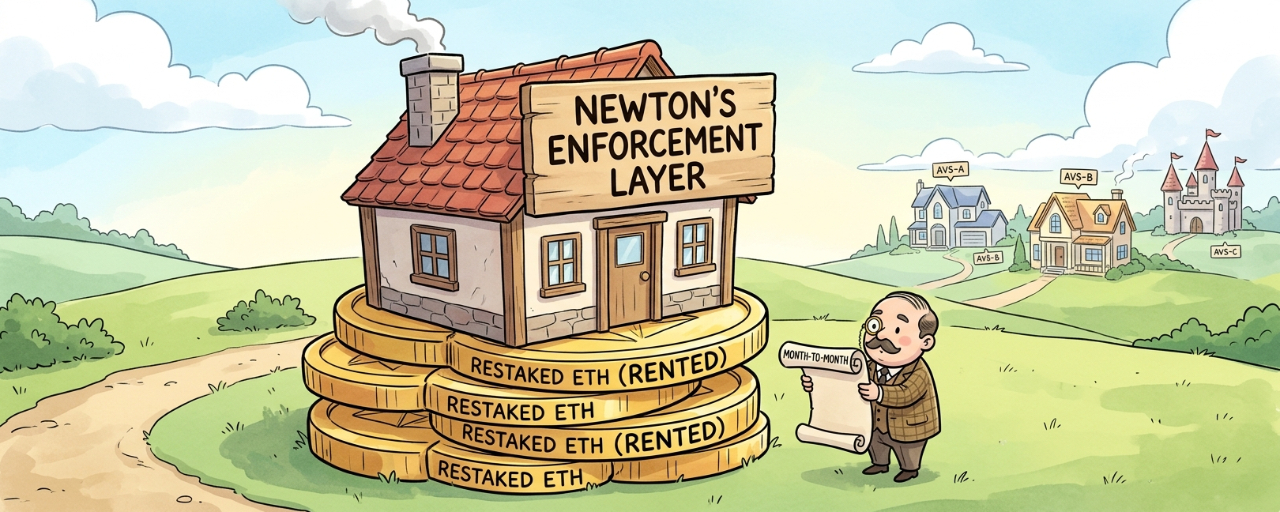
Newton Protocol:自律型インターネットを築くためのレース午前中、ETHのリステーキング利回りについての配信を半分聞き流していて——「最小限の手間で、追加の利回りが3〜6%」みたいなやつ——正直、それを何か別のものと結びつけるつもりはなかったんです。けれど後で、好奇心でたまたまNewton Protocolのドキュメントをまた開きました。というのも、「自律型インターネット」という枠組みがフィードに何度も出てきて、実際にはその中身が何なのか確かめたくなったからです。
そしてそのリステーキングの動画が、そこへ私をついて回るようにしてきたんですよね。厄介です。もう重なりが見えてしまって、今さら目をそらせない。
Newton Protocol:自律型インターネットを築くためのレース
午前中、ETHのリステーキング利回りについての配信を半分聞き流していて——「最小限の手間で、追加の利回りが3〜6%」みたいなやつ——正直、それを何か別のものと結びつけるつもりはなかったんです。けれど後で、好奇心でたまたまNewton Protocolのドキュメントをまた開きました。というのも、「自律型インターネット」という枠組みがフィードに何度も出てきて、実際にはその中身が何なのか確かめたくなったからです。
そしてそのリステーキングの動画が、そこへ私をついて回るようにしてきたんですよね。厄介です。もう重なりが見えてしまって、今さら目をそらせない。
そしてそのリステーキングの動画が、そこへ私をついて回るようにしてきたんですよね。厄介です。もう重なりが見えてしまって、今さら目をそらせない。
7
2
158
·
--
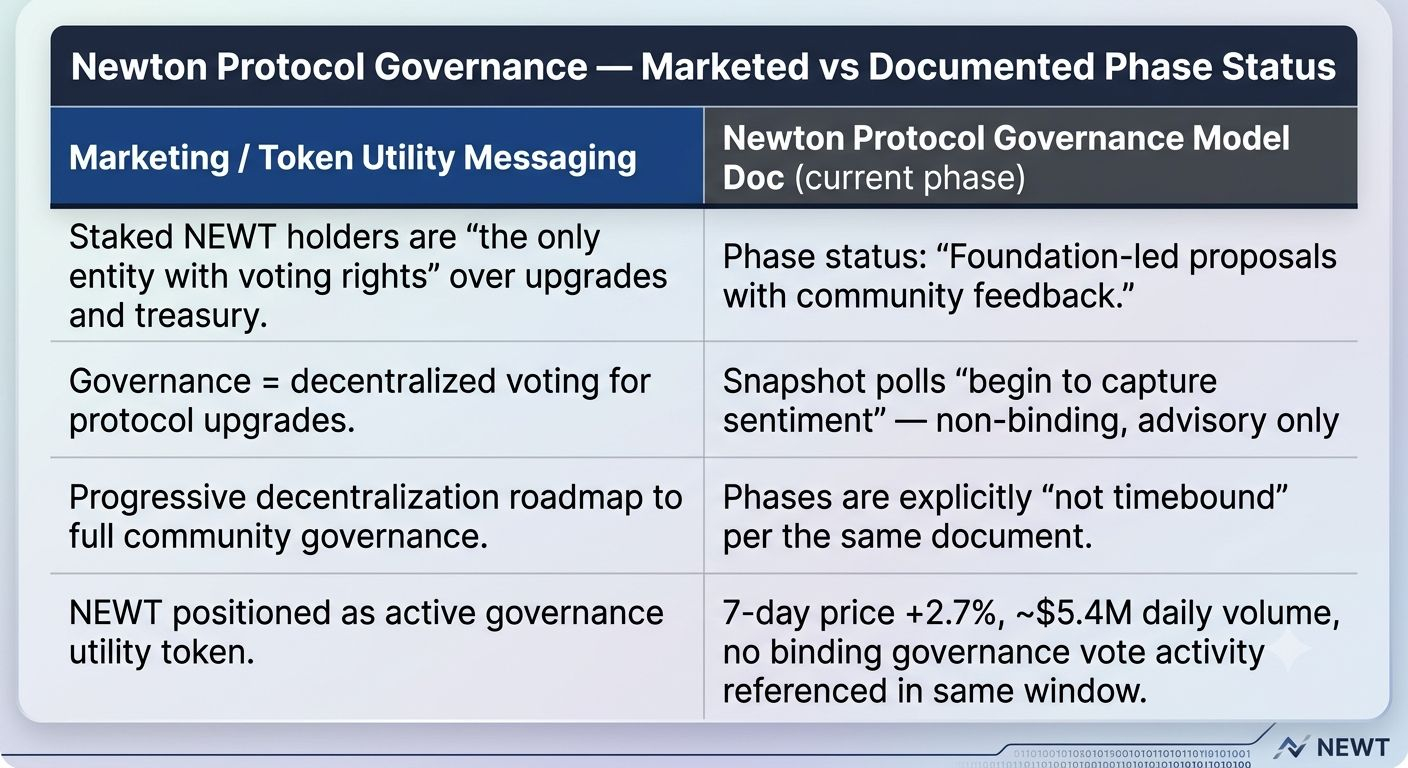
NEWTは直近24時間で3.6%下落したものの、7日間では依然として約2.7%上昇しており、日次出来高は約540万ドルで推移しています――大した理由もなく、ただ習慣で午後遅めに確認しただけです。Newton Protocolでは、ステークされたNEWT保有者が「アップグレードやトレジャリー移転に関して、“投票権を持つ唯一の主体”」となるレイヤーとして、ガバナンスを位置づけています。ですが、ピッチデックではなく実際のガバナンス・モデルのドキュメントを掘ってみたところ、うーん――現在のフェーズは「Foundation-led proposals continue(基盤組織主導の提案は継続)」と素直に書かれていて、Snapshotの投票は、何かを決めるというより、ちょうど「感情(センチメント)を把握し始めたばかり」とされています。
つまり、彼ら自身のドキュメントの中に、そのまま穴が空いているんです。トークンのユーティリティのスライドではガバナンスを謳っています。フェーズ・トラッカーでは、アドバイザリーとしてのセンチメント収集、基盤組織がペンを持ち続けているとされています。隠してはいない、と言えば公平かもしれません――「バグ」ではなく「フェーズ」としてラベル付けされている。でもフェーズには時間的な区切り(timebound)がないので、その点もまた静かな重要なディテールです。
Snackはもう終わったのに、まだこれを反芻しています――「プライマリー投票主体」がまだ投票を始めていないのは、マーケティングページが示唆するものとは別物です。ではこの「センチメント収集」は、何カ月(あるいはどれくらい)の期間続いて、拘束力のあるものに変わるのでしょうか?あるいはそもそも、その予定すらあるのでしょうか。
@NewtonProtocol #Newt $NEWT
NEWTは直近24時間で3.6%下落したものの、7日間では依然として約2.7%上昇しており、日次出来高は約540万ドルで推移しています――大した理由もなく、ただ習慣で午後遅めに確認しただけです。Newton Protocolでは、ステークされたNEWT保有者が「アップグレードやトレジャリー移転に関して、“投票権を持つ唯一の主体”」となるレイヤーとして、ガバナンスを位置づけています。ですが、ピッチデックではなく実際のガバナンス・モデルのドキュメントを掘ってみたところ、うーん――現在のフェーズは「Foundation-led proposals continue(基盤組織主導の提案は継続)」と素直に書かれていて、Snapshotの投票は、何かを決めるというより、ちょうど「感情(センチメント)を把握し始めたばかり」とされています。
つまり、彼ら自身のドキュメントの中に、そのまま穴が空いているんです。トークンのユーティリティのスライドではガバナンスを謳っています。フェーズ・トラッカーでは、アドバイザリーとしてのセンチメント収集、基盤組織がペンを持ち続けているとされています。隠してはいない、と言えば公平かもしれません――「バグ」ではなく「フェーズ」としてラベル付けされている。でもフェーズには時間的な区切り(timebound)がないので、その点もまた静かな重要なディテールです。
Snackはもう終わったのに、まだこれを反芻しています――「プライマリー投票主体」がまだ投票を始めていないのは、マーケティングページが示唆するものとは別物です。ではこの「センチメント収集」は、何カ月(あるいはどれくらい)の期間続いて、拘束力のあるものに変わるのでしょうか?あるいはそもそも、その予定すらあるのでしょうか。
@NewtonProtocol #Newt $NEWT
つまり、彼ら自身のドキュメントの中に、そのまま穴が空いているんです。トークンのユーティリティのスライドではガバナンスを謳っています。フェーズ・トラッカーでは、アドバイザリーとしてのセンチメント収集、基盤組織がペンを持ち続けているとされています。隠してはいない、と言えば公平かもしれません――「バグ」ではなく「フェーズ」としてラベル付けされている。でもフェーズには時間的な区切り(timebound)がないので、その点もまた静かな重要なディテールです。
Snackはもう終わったのに、まだこれを反芻しています――「プライマリー投票主体」がまだ投票を始めていないのは、マーケティングページが示唆するものとは別物です。ではこの「センチメント収集」は、何カ月(あるいはどれくらい)の期間続いて、拘束力のあるものに変わるのでしょうか?あるいはそもそも、その予定すらあるのでしょうか。
@NewtonProtocol #Newt $NEWT
7
4
144
·
--
午後、$NEWT のBEP-20側をいじくり回していると、何か小さな違和感がずっと気になって仕方なかった。
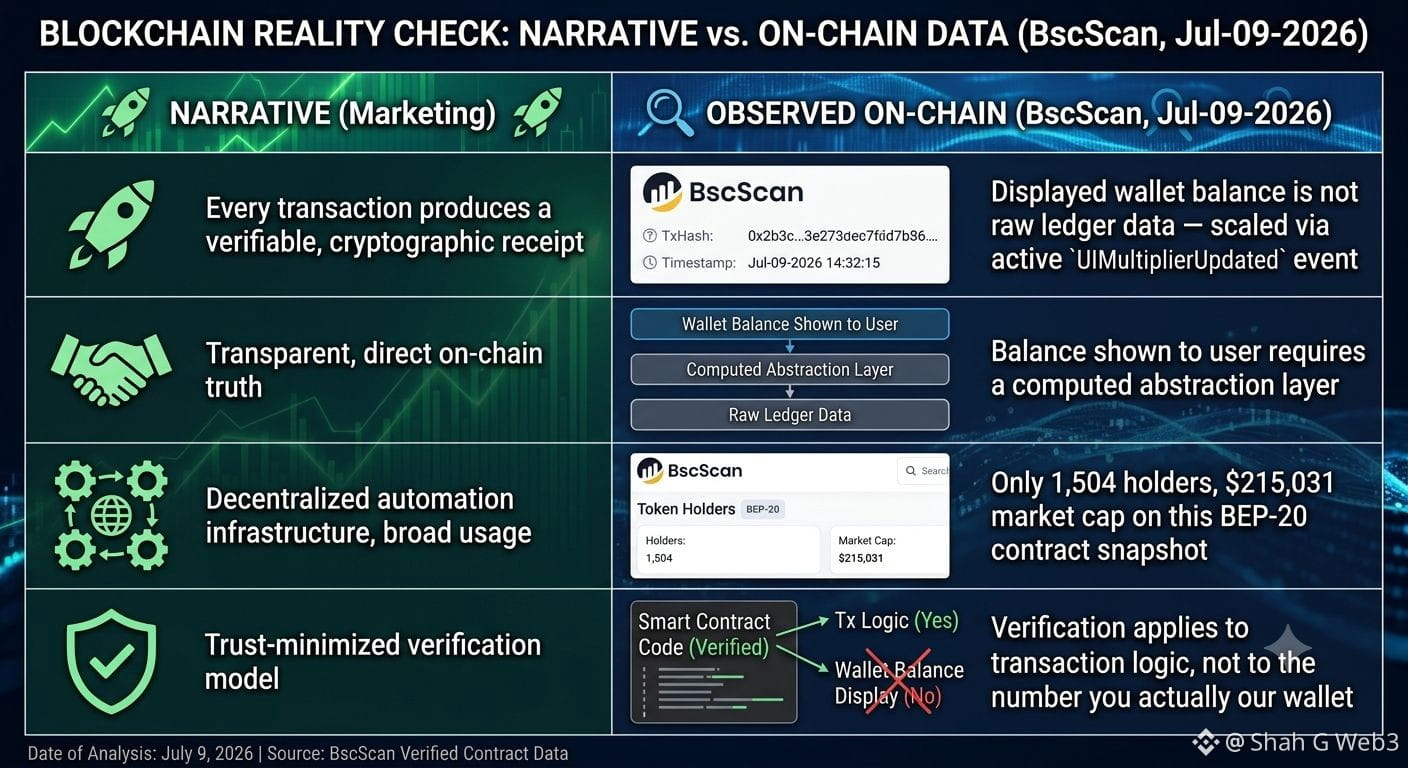
2026年7月09日 12:22:52 UTCのトークン契約スナップショットを確認したところ、価格は$0.0463、時価総額はわずか$215K。さらに、その特定のブリッジ版では保有者は1,504人のみ。ラップ資産ならまあ想定の範囲だ。けれど次に、コントラクトのフラグに「UI Multiplier changes(UIMultiplierUpdatedイベントに基づく)」とあるのを見つけた。つまり、ウォレットで見えている金額は“生の台帳残高”ではない。アクティブなマルチプライヤーによって、その場でスケーリングされ、計算されている。
ちょっと待って。暗号によるアテステーション、検証可能なレシート、 「信じるけど全部検証する」 が売りのプロトコルにしては、トークン自身のコントラクトページの片隅で静かにこれを見つけるのは不自然だ。ウォレットの数字は技術的には正しい。ただ……直接的ではない。何が起きたかと、あなたに見せているものの間に層がある。
怪しいと言い切りたいわけじゃない。リベース風のマルチプライヤーが正当な理由で使われることもある。でも、マーケティング文句の「すべての取引が検証可能な証明を生成する」と、「残高表示そのものに抽象化レイヤーが必要だ」という静かな現実が、どうにも噛み合っていない気がしてならない。たった1つの自社トークン契約の中で。
UIの細部を読み過ぎなのかもしれない。あるいは、検証重視のブランディングと、表示レイヤーの抽象化が、ドキュメントが言うほど綺麗に同居できていないのかもしれない。とはいえ、まだその件を咀嚼中だ。
@NewtonProtocol #Newt
午後、$NEWT のBEP-20側をいじくり回していると、何か小さな違和感がずっと気になって仕方なかった。
2026年7月09日 12:22:52 UTCのトークン契約スナップショットを確認したところ、価格は$0.0463、時価総額はわずか$215K。さらに、その特定のブリッジ版では保有者は1,504人のみ。ラップ資産ならまあ想定の範囲だ。けれど次に、コントラクトのフラグに「UI Multiplier changes(UIMultiplierUpdatedイベントに基づく)」とあるのを見つけた。つまり、ウォレットで見えている金額は“生の台帳残高”ではない。アクティブなマルチプライヤーによって、その場でスケーリングされ、計算されている。
ちょっと待って。暗号によるアテステーション、検証可能なレシート、 「信じるけど全部検証する」 が売りのプロトコルにしては、トークン自身のコントラクトページの片隅で静かにこれを見つけるのは不自然だ。ウォレットの数字は技術的には正しい。ただ……直接的ではない。何が起きたかと、あなたに見せているものの間に層がある。
怪しいと言い切りたいわけじゃない。リベース風のマルチプライヤーが正当な理由で使われることもある。でも、マーケティング文句の「すべての取引が検証可能な証明を生成する」と、「残高表示そのものに抽象化レイヤーが必要だ」という静かな現実が、どうにも噛み合っていない気がしてならない。たった1つの自社トークン契約の中で。
UIの細部を読み過ぎなのかもしれない。あるいは、検証重視のブランディングと、表示レイヤーの抽象化が、ドキュメントが言うほど綺麗に同居できていないのかもしれない。とはいえ、まだその件を咀嚼中だ。
@NewtonProtocol #Newt
2026年7月09日 12:22:52 UTCのトークン契約スナップショットを確認したところ、価格は$0.0463、時価総額はわずか$215K。さらに、その特定のブリッジ版では保有者は1,504人のみ。ラップ資産ならまあ想定の範囲だ。けれど次に、コントラクトのフラグに「UI Multiplier changes(UIMultiplierUpdatedイベントに基づく)」とあるのを見つけた。つまり、ウォレットで見えている金額は“生の台帳残高”ではない。アクティブなマルチプライヤーによって、その場でスケーリングされ、計算されている。
ちょっと待って。暗号によるアテステーション、検証可能なレシート、 「信じるけど全部検証する」 が売りのプロトコルにしては、トークン自身のコントラクトページの片隅で静かにこれを見つけるのは不自然だ。ウォレットの数字は技術的には正しい。ただ……直接的ではない。何が起きたかと、あなたに見せているものの間に層がある。
怪しいと言い切りたいわけじゃない。リベース風のマルチプライヤーが正当な理由で使われることもある。でも、マーケティング文句の「すべての取引が検証可能な証明を生成する」と、「残高表示そのものに抽象化レイヤーが必要だ」という静かな現実が、どうにも噛み合っていない気がしてならない。たった1つの自社トークン契約の中で。
UIの細部を読み過ぎなのかもしれない。あるいは、検証重視のブランディングと、表示レイヤーの抽象化が、ドキュメントが言うほど綺麗に同居できていないのかもしれない。とはいえ、まだその件を咀嚼中だ。
@NewtonProtocol #Newt
13
5
77
·
--
記事
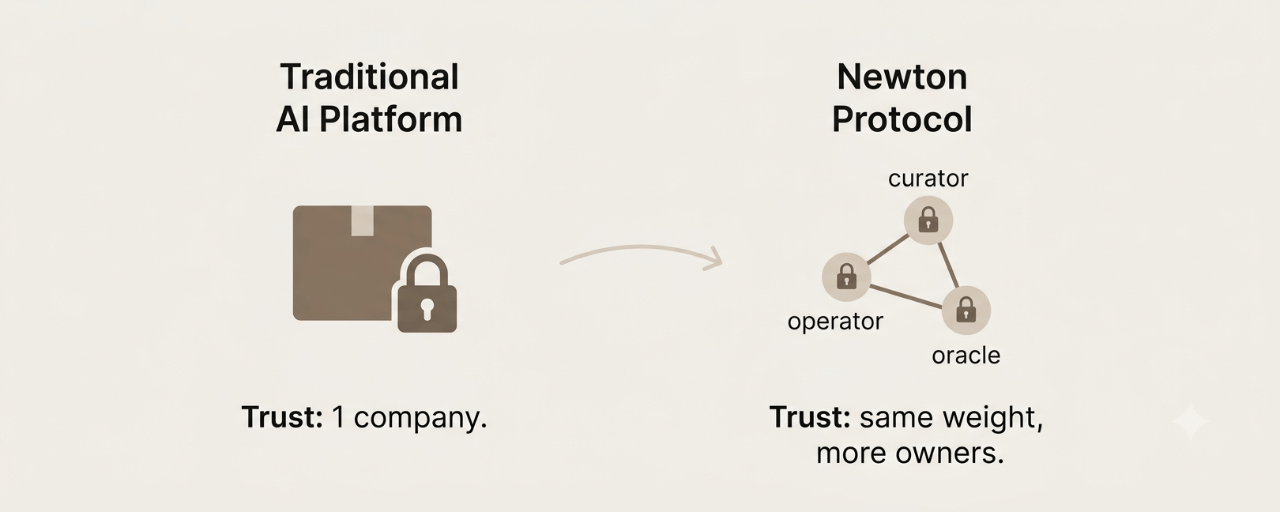
Newton Protocol の比較:従来型のAIプラットフォームとどう違うかマーケットはここ3日ほど横ばいです。習慣でチャートを更新してしまうような、あのうっとうしい横ばいで、実際の関心というより“ただ見ている”感じでした。なのでタブを閉じて、代わりに別の迷宮へ潜りました――人々は Newton Protocol を「中間業者なしのAI」として、つまり典型的な OpenAI 風の閉じた庭とは違う、分散型推論だと勧め続けています。私はその比較を、うなずくだけで終わらせずに、ちゃんと腰を据えて考えてみたかったんです。
そこで私は、「ここでいう“従来型のAIプラットフォームとは何が違うのか”」が、実際にはどういう意味なのかを分解して考え始めました。好奇心から、VaultKit と Rego のポリシーエンジンがリクエストをどのようにルーティングしているのかを、たとえば中央集権型のAPI呼び出しがどう動くのかと比べて辿り直しました。そしてその途中で、たいてい語られる形のままでは、その比較が私にはしっくりこなくなってきたのです。
Newton Protocol の比較:従来型のAIプラットフォームとどう違うか
マーケットはここ3日ほど横ばいです。習慣でチャートを更新してしまうような、あのうっとうしい横ばいで、実際の関心というより“ただ見ている”感じでした。なのでタブを閉じて、代わりに別の迷宮へ潜りました――人々は Newton Protocol を「中間業者なしのAI」として、つまり典型的な OpenAI 風の閉じた庭とは違う、分散型推論だと勧め続けています。私はその比較を、うなずくだけで終わらせずに、ちゃんと腰を据えて考えてみたかったんです。
そこで私は、「ここでいう“従来型のAIプラットフォームとは何が違うのか”」が、実際にはどういう意味なのかを分解して考え始めました。好奇心から、VaultKit と Rego のポリシーエンジンがリクエストをどのようにルーティングしているのかを、たとえば中央集権型のAPI呼び出しがどう動くのかと比べて辿り直しました。そしてその途中で、たいてい語られる形のままでは、その比較が私にはしっくりこなくなってきたのです。
そこで私は、「ここでいう“従来型のAIプラットフォームとは何が違うのか”」が、実際にはどういう意味なのかを分解して考え始めました。好奇心から、VaultKit と Rego のポリシーエンジンがリクエストをどのようにルーティングしているのかを、たとえば中央集権型のAPI呼び出しがどう動くのかと比べて辿り直しました。そしてその途中で、たいてい語られる形のままでは、その比較が私にはしっくりこなくなってきたのです。
5
2
82
·
--
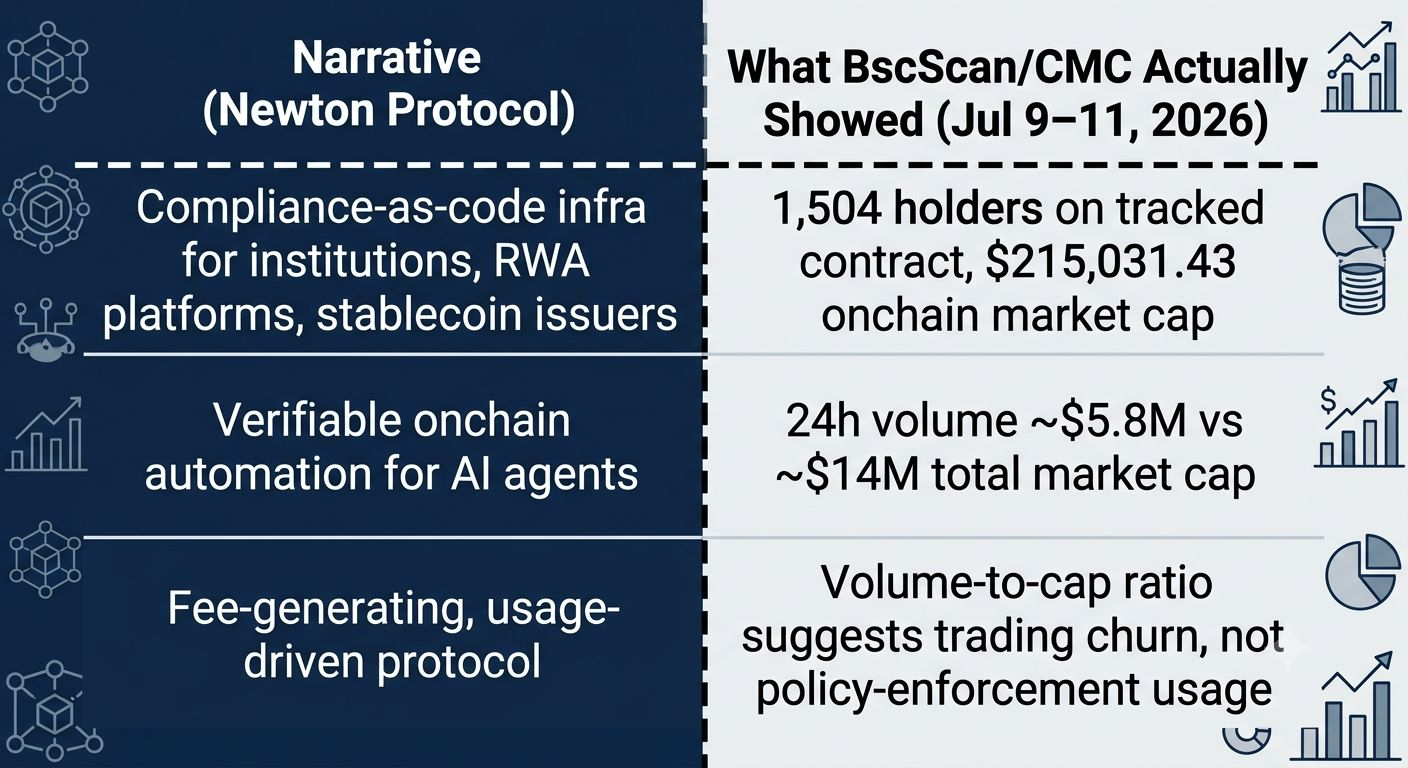
コーヒーブレイク中にNewton ProtocolのBscScanのページを流し見してたんだ。特に何かを探していたわけじゃないのに、ホルダー数がふと目に留まって——そのコントラクトのウォレット数は1,504件。オンチェーンの時価総額表示は$215,031.43で、スナップショットは7月09日付。小さい。本気で。機関向けだのRWAプラットフォームだの、順守をコード化するレイヤーとしてやるべき“金融オートメーションの土台”だのって売り文句のわりに、あまりにも小さい。$NEWT #Newton @newton_xyz
それからCMCに切り替えて見たら、24時間の出来高がだいたい$5.8Mで、時価総額合計は$14M前後。待って——キャップの約40%が、たった1日で取引所を通って回転してる計算になるのに、実際のオンチェーン上のホルダーベースはほぼ4桁しかない。これは利用のパターンじゃない。取引のパターンだ。
じゃあ本当のシグナルはどっち?——政策の強制、検証可能なアテステーション(証明)のインフラという物語なのか、それとも、出来高の急増で薄い保有者のマイクロキャップがいつも通り“回される”みたいに振る舞っているだけなのか。メインネットのベータはまだ稼働して数週間しかないから、憶測が先行している初期段階の姿として、これが“そう見えるだけ”という可能性もある。
正直、数字は2回確認した。最初に違和感があったままだ。ギャップが埋まっていくのか、それともそのまま永続的な形になってしまうのか、まだ確信が持てない。
@NewtonProtocol #Newt $NEWT
コーヒーブレイク中にNewton ProtocolのBscScanのページを流し見してたんだ。特に何かを探していたわけじゃないのに、ホルダー数がふと目に留まって——そのコントラクトのウォレット数は1,504件。オンチェーンの時価総額表示は$215,031.43で、スナップショットは7月09日付。小さい。本気で。機関向けだのRWAプラットフォームだの、順守をコード化するレイヤーとしてやるべき“金融オートメーションの土台”だのって売り文句のわりに、あまりにも小さい。$NEWT #Newton @newton_xyz
それからCMCに切り替えて見たら、24時間の出来高がだいたい$5.8Mで、時価総額合計は$14M前後。待って——キャップの約40%が、たった1日で取引所を通って回転してる計算になるのに、実際のオンチェーン上のホルダーベースはほぼ4桁しかない。これは利用のパターンじゃない。取引のパターンだ。
じゃあ本当のシグナルはどっち?——政策の強制、検証可能なアテステーション(証明)のインフラという物語なのか、それとも、出来高の急増で薄い保有者のマイクロキャップがいつも通り“回される”みたいに振る舞っているだけなのか。メインネットのベータはまだ稼働して数週間しかないから、憶測が先行している初期段階の姿として、これが“そう見えるだけ”という可能性もある。
正直、数字は2回確認した。最初に違和感があったままだ。ギャップが埋まっていくのか、それともそのまま永続的な形になってしまうのか、まだ確信が持てない。
@NewtonProtocol #Newt $NEWT
それからCMCに切り替えて見たら、24時間の出来高がだいたい$5.8Mで、時価総額合計は$14M前後。待って——キャップの約40%が、たった1日で取引所を通って回転してる計算になるのに、実際のオンチェーン上のホルダーベースはほぼ4桁しかない。これは利用のパターンじゃない。取引のパターンだ。
じゃあ本当のシグナルはどっち?——政策の強制、検証可能なアテステーション(証明)のインフラという物語なのか、それとも、出来高の急増で薄い保有者のマイクロキャップがいつも通り“回される”みたいに振る舞っているだけなのか。メインネットのベータはまだ稼働して数週間しかないから、憶測が先行している初期段階の姿として、これが“そう見えるだけ”という可能性もある。
正直、数字は2回確認した。最初に違和感があったままだ。ギャップが埋まっていくのか、それともそのまま永続的な形になってしまうのか、まだ確信が持てない。
@NewtonProtocol #Newt $NEWT
7
4
75
·
--
記事
Newton Protocol: Why Utility Will Decide AI Crypto Winners前にDEXアグリゲーターを見ていたんですが、先延ばしにしていたスワップでスリップが改善しているか確認したくて。そこで、どの「AIクリプト」プロジェクトに「本当のユーティリティ」があるのか、という議論のスレッドを読んでしまって気が散りました。みんな、議論を決着させたみたいに使用量のグラフを持ち出してきます。正直、そのタブはすぐ閉じました。
好奇心で、ニュートン・プロトコルのオンチェーンの活動を自分で追いかけてみました。誰かのTwitterのグラフではなく、実データの数字として「ユーティリティ」が実際にどう見えるのかを確かめたかったからです。
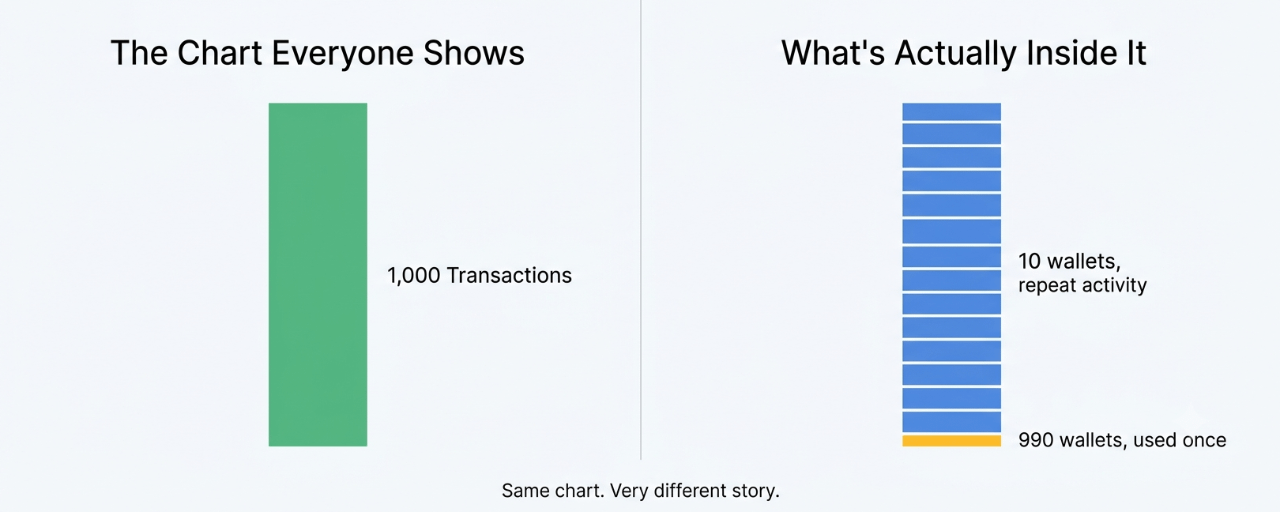
想定していなかったことが起きて、何かが「カチッ」とはまったように見えました――取引件数は健全そうで、確かに。ですが、そのボリュームを生み出しているのがどのアドレスなのかを調べ始めると、見出しの数字が示唆するよりも、ずっと小さい範囲のウォレット群でした。偽物でも空でもない。ただ……集中しているんです。少数のアドレスが繰り返し大量の活動をしていて、プロトコルに一度触れて二度と戻ってこないアドレスの長い裾野が続いています。
Newton Protocol: Why Utility Will Decide AI Crypto Winners
前にDEXアグリゲーターを見ていたんですが、先延ばしにしていたスワップでスリップが改善しているか確認したくて。そこで、どの「AIクリプト」プロジェクトに「本当のユーティリティ」があるのか、という議論のスレッドを読んでしまって気が散りました。みんな、議論を決着させたみたいに使用量のグラフを持ち出してきます。正直、そのタブはすぐ閉じました。
好奇心で、ニュートン・プロトコルのオンチェーンの活動を自分で追いかけてみました。誰かのTwitterのグラフではなく、実データの数字として「ユーティリティ」が実際にどう見えるのかを確かめたかったからです。
想定していなかったことが起きて、何かが「カチッ」とはまったように見えました――取引件数は健全そうで、確かに。ですが、そのボリュームを生み出しているのがどのアドレスなのかを調べ始めると、見出しの数字が示唆するよりも、ずっと小さい範囲のウォレット群でした。偽物でも空でもない。ただ……集中しているんです。少数のアドレスが繰り返し大量の活動をしていて、プロトコルに一度触れて二度と戻ってこないアドレスの長い裾野が続いています。
好奇心で、ニュートン・プロトコルのオンチェーンの活動を自分で追いかけてみました。誰かのTwitterのグラフではなく、実データの数字として「ユーティリティ」が実際にどう見えるのかを確かめたかったからです。
想定していなかったことが起きて、何かが「カチッ」とはまったように見えました――取引件数は健全そうで、確かに。ですが、そのボリュームを生み出しているのがどのアドレスなのかを調べ始めると、見出しの数字が示唆するよりも、ずっと小さい範囲のウォレット群でした。偽物でも空でもない。ただ……集中しているんです。少数のアドレスが繰り返し大量の活動をしていて、プロトコルに一度触れて二度と戻ってこないアドレスの長い裾野が続いています。
3
3
49
·
--
@NewtonProtocol
今週この件に3回目の取り組みをしていて、今回私をつまずかせたのは「より小さな」点、つまりオラクル・アダプター層でした。ニュートンの「AI meets Web3」という全体の枠組みは、オペレーターがチェーン解析(Chainalysis)、RedStone、Credora、Webacy といったライブのオフチェーン・データを政策チェック(ポリシーチェック)に取り込み、トランザクションがイーサリアムまたはBaseに確定する前にそれを確認することに依存しています。そこが“架け橋”だとされています。エージェントが行動したい→ポリシーエンジンが現実世界のデータに照らして確認→それで初めてクリア、という流れ。
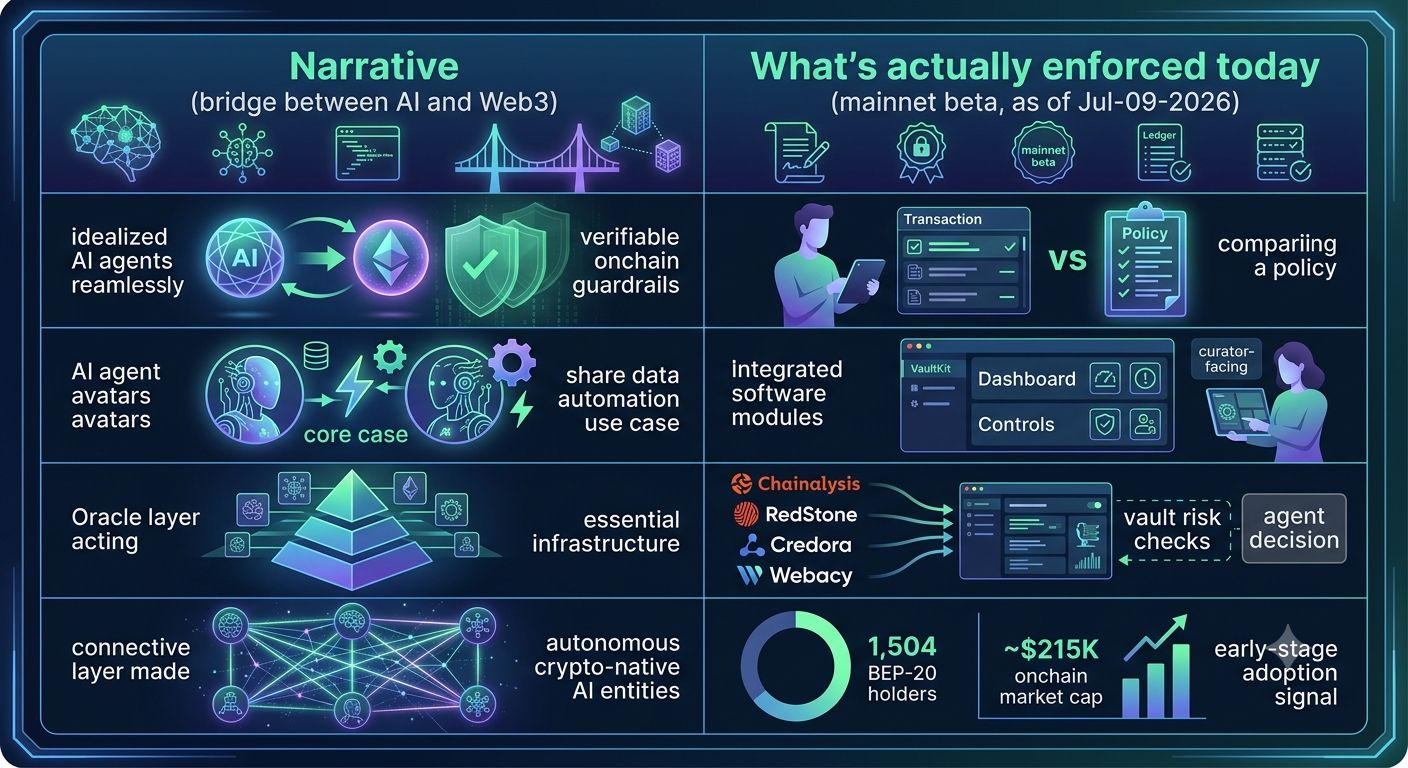
ただし――ちょっと待ってください。実際に辿ってみると、「AIエージェント」の部分は、現状ではほとんどが願望に近いです。今日稼働していて強制されているのは、主に「ヴォルト・キュレーター(vault curator)」のアクションです。人が運用するヴォルト、人がキュレーターを行い、リスクやコンプライアンスのポリシーに照らしてチェックされる。エージェント同士のやり取り、つまり自律実行のレイヤーは、まだ提案段階であって、実際の利用とは言いにくい。私がずっと立ち返ってしまうのと同じBscScanの記録で、2024-07-09 12:22 UTC 時点で 1,504 のホルダーがいることを示していますが、これも似た話をしています――普及の前にインフラが先行し、そしてここでは“その名前の通りの用途”に対しても、さらにインフラが先にある。
批判というわけではありません。ただ…順番に気づいただけです。コンプライアンスのレールは先に作られて、エージェントは後からつながれる。たぶん。運用上は筋が通っています。とはいえ、いまのところ「AI」のほうは、橋というより設計図に近い気がします。
実際のところ、どちらが先に来るのでしょう――エージェントがガードレールを見つけるのか、それともガードレールがエージェントを見つけるのか。
#Newt $NEWT
@NewtonProtocol
今週この件に3回目の取り組みをしていて、今回私をつまずかせたのは「より小さな」点、つまりオラクル・アダプター層でした。ニュートンの「AI meets Web3」という全体の枠組みは、オペレーターがチェーン解析(Chainalysis)、RedStone、Credora、Webacy といったライブのオフチェーン・データを政策チェック(ポリシーチェック)に取り込み、トランザクションがイーサリアムまたはBaseに確定する前にそれを確認することに依存しています。そこが“架け橋”だとされています。エージェントが行動したい→ポリシーエンジンが現実世界のデータに照らして確認→それで初めてクリア、という流れ。
ただし――ちょっと待ってください。実際に辿ってみると、「AIエージェント」の部分は、現状ではほとんどが願望に近いです。今日稼働していて強制されているのは、主に「ヴォルト・キュレーター(vault curator)」のアクションです。人が運用するヴォルト、人がキュレーターを行い、リスクやコンプライアンスのポリシーに照らしてチェックされる。エージェント同士のやり取り、つまり自律実行のレイヤーは、まだ提案段階であって、実際の利用とは言いにくい。私がずっと立ち返ってしまうのと同じBscScanの記録で、2024-07-09 12:22 UTC 時点で 1,504 のホルダーがいることを示していますが、これも似た話をしています――普及の前にインフラが先行し、そしてここでは“その名前の通りの用途”に対しても、さらにインフラが先にある。
批判というわけではありません。ただ…順番に気づいただけです。コンプライアンスのレールは先に作られて、エージェントは後からつながれる。たぶん。運用上は筋が通っています。とはいえ、いまのところ「AI」のほうは、橋というより設計図に近い気がします。
実際のところ、どちらが先に来るのでしょう――エージェントがガードレールを見つけるのか、それともガードレールがエージェントを見つけるのか。
#Newt $NEWT
今週この件に3回目の取り組みをしていて、今回私をつまずかせたのは「より小さな」点、つまりオラクル・アダプター層でした。ニュートンの「AI meets Web3」という全体の枠組みは、オペレーターがチェーン解析(Chainalysis)、RedStone、Credora、Webacy といったライブのオフチェーン・データを政策チェック(ポリシーチェック)に取り込み、トランザクションがイーサリアムまたはBaseに確定する前にそれを確認することに依存しています。そこが“架け橋”だとされています。エージェントが行動したい→ポリシーエンジンが現実世界のデータに照らして確認→それで初めてクリア、という流れ。
ただし――ちょっと待ってください。実際に辿ってみると、「AIエージェント」の部分は、現状ではほとんどが願望に近いです。今日稼働していて強制されているのは、主に「ヴォルト・キュレーター(vault curator)」のアクションです。人が運用するヴォルト、人がキュレーターを行い、リスクやコンプライアンスのポリシーに照らしてチェックされる。エージェント同士のやり取り、つまり自律実行のレイヤーは、まだ提案段階であって、実際の利用とは言いにくい。私がずっと立ち返ってしまうのと同じBscScanの記録で、2024-07-09 12:22 UTC 時点で 1,504 のホルダーがいることを示していますが、これも似た話をしています――普及の前にインフラが先行し、そしてここでは“その名前の通りの用途”に対しても、さらにインフラが先にある。
批判というわけではありません。ただ…順番に気づいただけです。コンプライアンスのレールは先に作られて、エージェントは後からつながれる。たぶん。運用上は筋が通っています。とはいえ、いまのところ「AI」のほうは、橋というより設計図に近い気がします。
実際のところ、どちらが先に来るのでしょう――エージェントがガードレールを見つけるのか、それともガードレールがエージェントを見つけるのか。
#Newt $NEWT
4
3
47
·
--
記事
Newton Protocol:エコシステム内部における価値フローの理解マクロ系の話題についての配信を半分だけ観ていて、Fedのドットプロットいつもの不安と陰鬱さ……みたいなやつで、あまりちゃんと見ていなかったんだ。結局、代わりにアンロックカレンダーを確認しようとタブを切り替えた。これは前から身につけた癖で、なかなか抜けない—ろうそくを見つめるより不思議と落ち着く。
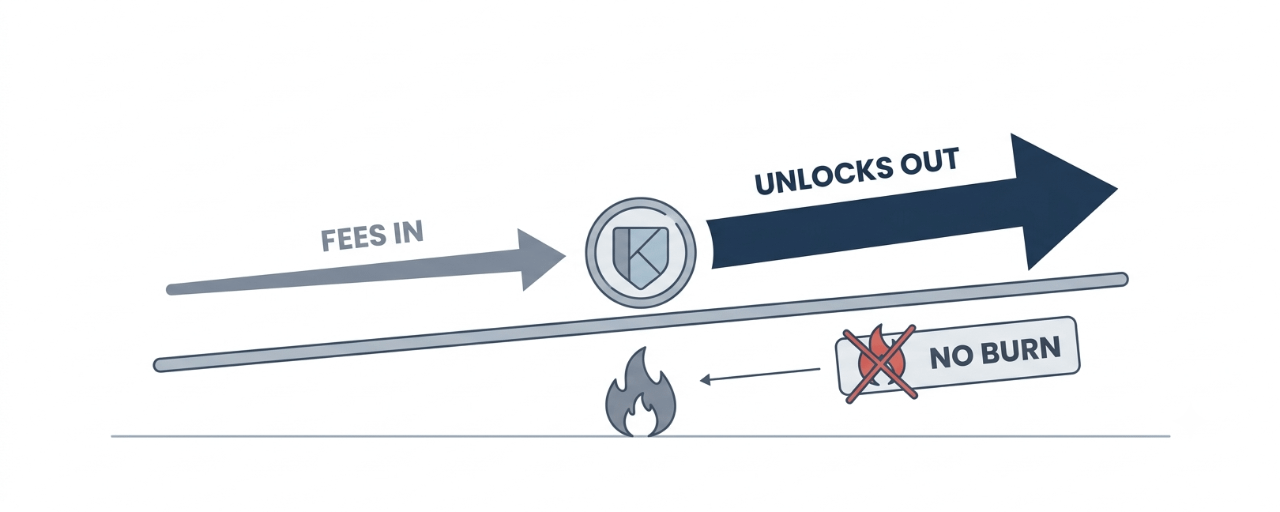
実はそういう流れでニュートンに戻り着いた。NEWTには6月下旬に予定された大きなリリースがあって、単一の崖のようなタイミングで一億トークン以上、当時の流通供給の3分の1以上を占めるもので、主にコア寄与者への割り当てだった。特に探していたわけじゃないのに、リストの上のほうにそのまま出てきた。
Newton Protocol:エコシステム内部における価値フローの理解
マクロ系の話題についての配信を半分だけ観ていて、Fedのドットプロットいつもの不安と陰鬱さ……みたいなやつで、あまりちゃんと見ていなかったんだ。結局、代わりにアンロックカレンダーを確認しようとタブを切り替えた。これは前から身につけた癖で、なかなか抜けない—ろうそくを見つめるより不思議と落ち着く。
実はそういう流れでニュートンに戻り着いた。NEWTには6月下旬に予定された大きなリリースがあって、単一の崖のようなタイミングで一億トークン以上、当時の流通供給の3分の1以上を占めるもので、主にコア寄与者への割り当てだった。特に探していたわけじゃないのに、リストの上のほうにそのまま出てきた。
実はそういう流れでニュートンに戻り着いた。NEWTには6月下旬に予定された大きなリリースがあって、単一の崖のようなタイミングで一億トークン以上、当時の流通供給の3分の1以上を占めるもので、主にコア寄与者への割り当てだった。特に探していたわけじゃないのに、リストの上のほうにそのまま出てきた。
3
3
109
·
--
ニュートン・エクスプローラーをこの1時間ずっと見つめていて、何か引っかかるんだ。
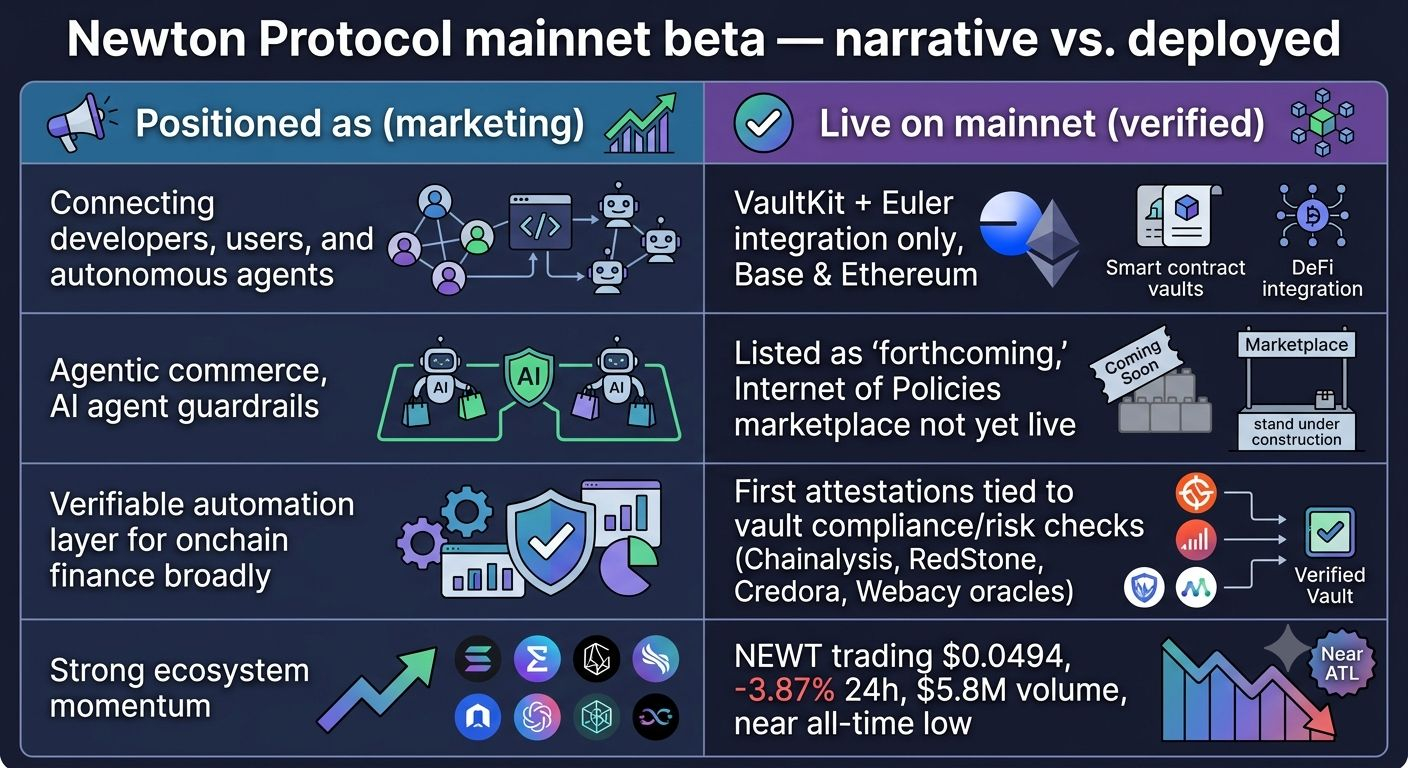
Base と Ethereum 上で「Newton Protocol($NEWT)」のメインネットベータがローンチされ、VaultKit も同梱されて提供されました。そこに最初の連携として Euler が入り、Chainalysis、RedStone、Credora、Webacy などのオラクル・パートナーも、リアルタイムのアテステーションのためにすでに接続済みです。…一方で、NEWT 自体は $0.0494。24時間で約4%下げていて、出来高はわずか $5.8M。数週間前の安値(史上最安値)にぴったり寄り添う形です。うーん。
目立ったのはここです。#Newton @newton_xyz の売り文句は「開発者、ユーザー、自律エージェントをつなぐ」— 椅子の3本脚みたいなもの。 でも、実際にオンチェーン上でポリシーを強制しているのは、いまは「ヴォールト(vault)・コンプライアンス」です。キュレーター、預金者(depositors)、オラクルのデータ。肝心のエージェントの部分は?「forthcoming(続報予定)」の扱いのままで、メインネット上にはまだ存在しない「Internet of Policies marketplace(ポリシーのインターネット市場)」の中に組み込まれている段階です。
つまり、開発者とユーザーはライブ製品を手にします。エージェントはロードマップのスライドだけ。これは悪い話じゃありません。ヴォールトは始める場所としては合理的で、そこにあるTVLは急速に伸びてきましたし、ガードレールも必要だった。けれど、もし NEWT を「エージェント型ファイナンス(agentic-finance)」のテーゼで保有しているなら、まだメインネットに触れていない“脚”の価値を織り込んで買っていることになります。
「エージェント向け検証可能なオートメーション」という物語のうち、どれだけが“ヴォールト優先の順番”がうまく機能することに実際には依存しているのか。あるいは、エージェントはただ次のリリースへ先送りされ続けているだけなのか…そんなことを考えさせられます。
@NewtonProtocol #Newt $NEWT
ニュートン・エクスプローラーをこの1時間ずっと見つめていて、何か引っかかるんだ。
Base と Ethereum 上で「Newton Protocol($NEWT )」のメインネットベータがローンチされ、VaultKit も同梱されて提供されました。そこに最初の連携として Euler が入り、Chainalysis、RedStone、Credora、Webacy などのオラクル・パートナーも、リアルタイムのアテステーションのためにすでに接続済みです。…一方で、NEWT 自体は $0.0494。24時間で約4%下げていて、出来高はわずか $5.8M。数週間前の安値(史上最安値)にぴったり寄り添う形です。うーん。
目立ったのはここです。#Newton @newton_xyz の売り文句は「開発者、ユーザー、自律エージェントをつなぐ」— 椅子の3本脚みたいなもの。 でも、実際にオンチェーン上でポリシーを強制しているのは、いまは「ヴォールト(vault)・コンプライアンス」です。キュレーター、預金者(depositors)、オラクルのデータ。肝心のエージェントの部分は?「forthcoming(続報予定)」の扱いのままで、メインネット上にはまだ存在しない「Internet of Policies marketplace(ポリシーのインターネット市場)」の中に組み込まれている段階です。
つまり、開発者とユーザーはライブ製品を手にします。エージェントはロードマップのスライドだけ。これは悪い話じゃありません。ヴォールトは始める場所としては合理的で、そこにあるTVLは急速に伸びてきましたし、ガードレールも必要だった。けれど、もし NEWT を「エージェント型ファイナンス(agentic-finance)」のテーゼで保有しているなら、まだメインネットに触れていない“脚”の価値を織り込んで買っていることになります。
「エージェント向け検証可能なオートメーション」という物語のうち、どれだけが“ヴォールト優先の順番”がうまく機能することに実際には依存しているのか。あるいは、エージェントはただ次のリリースへ先送りされ続けているだけなのか…そんなことを考えさせられます。
@NewtonProtocol #Newt $NEWT
Base と Ethereum 上で「Newton Protocol($NEWT )」のメインネットベータがローンチされ、VaultKit も同梱されて提供されました。そこに最初の連携として Euler が入り、Chainalysis、RedStone、Credora、Webacy などのオラクル・パートナーも、リアルタイムのアテステーションのためにすでに接続済みです。…一方で、NEWT 自体は $0.0494。24時間で約4%下げていて、出来高はわずか $5.8M。数週間前の安値(史上最安値)にぴったり寄り添う形です。うーん。
目立ったのはここです。#Newton @newton_xyz の売り文句は「開発者、ユーザー、自律エージェントをつなぐ」— 椅子の3本脚みたいなもの。 でも、実際にオンチェーン上でポリシーを強制しているのは、いまは「ヴォールト(vault)・コンプライアンス」です。キュレーター、預金者(depositors)、オラクルのデータ。肝心のエージェントの部分は?「forthcoming(続報予定)」の扱いのままで、メインネット上にはまだ存在しない「Internet of Policies marketplace(ポリシーのインターネット市場)」の中に組み込まれている段階です。
つまり、開発者とユーザーはライブ製品を手にします。エージェントはロードマップのスライドだけ。これは悪い話じゃありません。ヴォールトは始める場所としては合理的で、そこにあるTVLは急速に伸びてきましたし、ガードレールも必要だった。けれど、もし NEWT を「エージェント型ファイナンス(agentic-finance)」のテーゼで保有しているなら、まだメインネットに触れていない“脚”の価値を織り込んで買っていることになります。
「エージェント向け検証可能なオートメーション」という物語のうち、どれだけが“ヴォールト優先の順番”がうまく機能することに実際には依存しているのか。あるいは、エージェントはただ次のリリースへ先送りされ続けているだけなのか…そんなことを考えさせられます。
@NewtonProtocol #Newt $NEWT
5
3
51
·
--
記事
Newton Protocol Utility Explained: Beyond Token Speculation午前中は、どこにも進まない緑のローソク足を半分見て過ごした。そういう日で、どのアルトも2%幅のレンジでただ揉み合うだけで、実際にトレードせずにあれこれクリックし始める。結局またNEWTに戻ったんだけど、今回はエクスプローラーじゃなくて——トークノミクスのページで。退屈しのぎで。
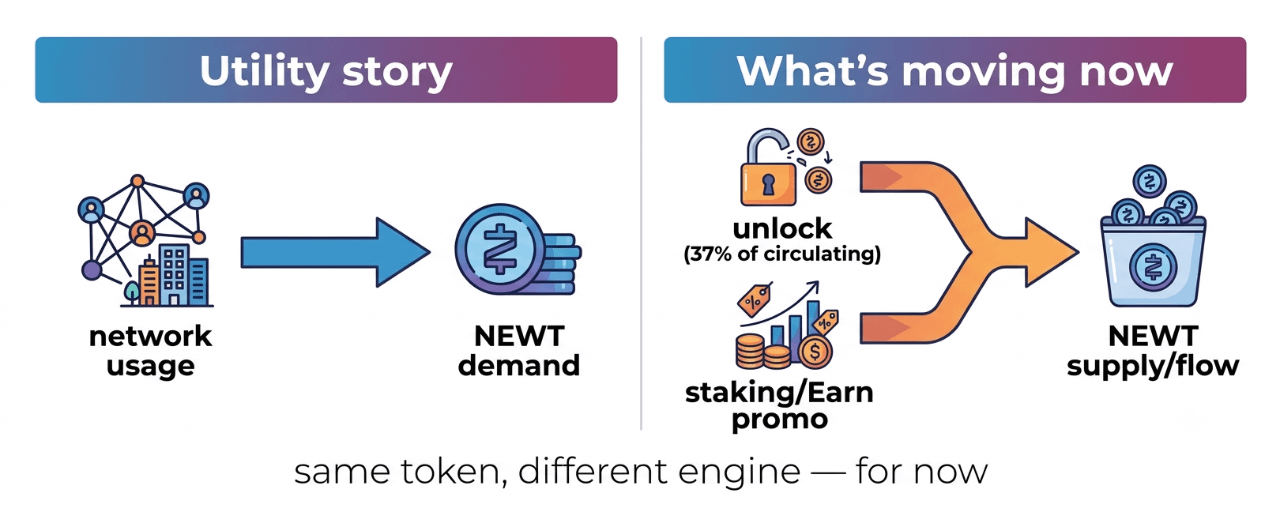
それで最近のアンロックデータを引っ張り出して、何か供給について間違ったことを言う前にタイミングだけ確認してみたんだ。そしたら——6月22日のアンロックが出てきた。139 million NEWTで、およそ7.55Mドル。それが当時の流通供給量の約37%に相当してた。これは普通のドリップ(少しずつの放出)じゃない。取引されているものの3分の1以上が、一度にまとめて追加されている。
Newton Protocol Utility Explained: Beyond Token Speculation
午前中は、どこにも進まない緑のローソク足を半分見て過ごした。そういう日で、どのアルトも2%幅のレンジでただ揉み合うだけで、実際にトレードせずにあれこれクリックし始める。結局またNEWTに戻ったんだけど、今回はエクスプローラーじゃなくて——トークノミクスのページで。退屈しのぎで。
それで最近のアンロックデータを引っ張り出して、何か供給について間違ったことを言う前にタイミングだけ確認してみたんだ。そしたら——6月22日のアンロックが出てきた。139 million NEWTで、およそ7.55Mドル。それが当時の流通供給量の約37%に相当してた。これは普通のドリップ(少しずつの放出)じゃない。取引されているものの3分の1以上が、一度にまとめて追加されている。
それで最近のアンロックデータを引っ張り出して、何か供給について間違ったことを言う前にタイミングだけ確認してみたんだ。そしたら——6月22日のアンロックが出てきた。139 million NEWTで、およそ7.55Mドル。それが当時の流通供給量の約37%に相当してた。これは普通のドリップ(少しずつの放出)じゃない。取引されているものの3分の1以上が、一度にまとめて追加されている。
4
3
46
·
--
Newton Protocol:スマートエージェントがDeFiのオペレーションを変革できるかもしれない方法午前中は、行き先のない緑のキャンドルを半分見てるみたいな感じで、4時間くらい費やしました。退屈になってチャートを閉じて、またニュートンのドキュメントに戻っちゃったんです—今度は先週読んでたセキュリティ周りじゃなくて、オペレーター/実行側のほうです。
で、「スマートエージェント」って実際には、マーケティングページを過ぎた先で何を意味してるのか調べ始めました。みんなそれを、「エージェントが外で呼び出しをしてくれる」みたいに使ってるんですよね。ポジションのリバランスをしたり、いつ手仕舞いするか決めたり、リアルタイムで状況に反応したり。そういうイメージです。「DeFiのオペレーションを変革する」とは、そういう意味のはずです。
Newton Protocol:スマートエージェントがDeFiのオペレーションを変革できるかもしれない方法
午前中は、行き先のない緑のキャンドルを半分見てるみたいな感じで、4時間くらい費やしました。退屈になってチャートを閉じて、またニュートンのドキュメントに戻っちゃったんです—今度は先週読んでたセキュリティ周りじゃなくて、オペレーター/実行側のほうです。
で、「スマートエージェント」って実際には、マーケティングページを過ぎた先で何を意味してるのか調べ始めました。みんなそれを、「エージェントが外で呼び出しをしてくれる」みたいに使ってるんですよね。ポジションのリバランスをしたり、いつ手仕舞いするか決めたり、リアルタイムで状況に反応したり。そういうイメージです。「DeFiのオペレーションを変革する」とは、そういう意味のはずです。
で、「スマートエージェント」って実際には、マーケティングページを過ぎた先で何を意味してるのか調べ始めました。みんなそれを、「エージェントが外で呼び出しをしてくれる」みたいに使ってるんですよね。ポジションのリバランスをしたり、いつ手仕舞いするか決めたり、リアルタイムで状況に反応したり。そういうイメージです。「DeFiのオペレーションを変革する」とは、そういう意味のはずです。
7
3
46
·
--
ニュートン・プロトコルが7月1日の「認可レイヤーが実際にどう動いているか」についての解説を書き下ろしました——決済の後ではなく、決済の前に何が起きるのかを説明する記事です。1時間ずっとそのページを眺めていました。$NEWT @NewtonProtocol
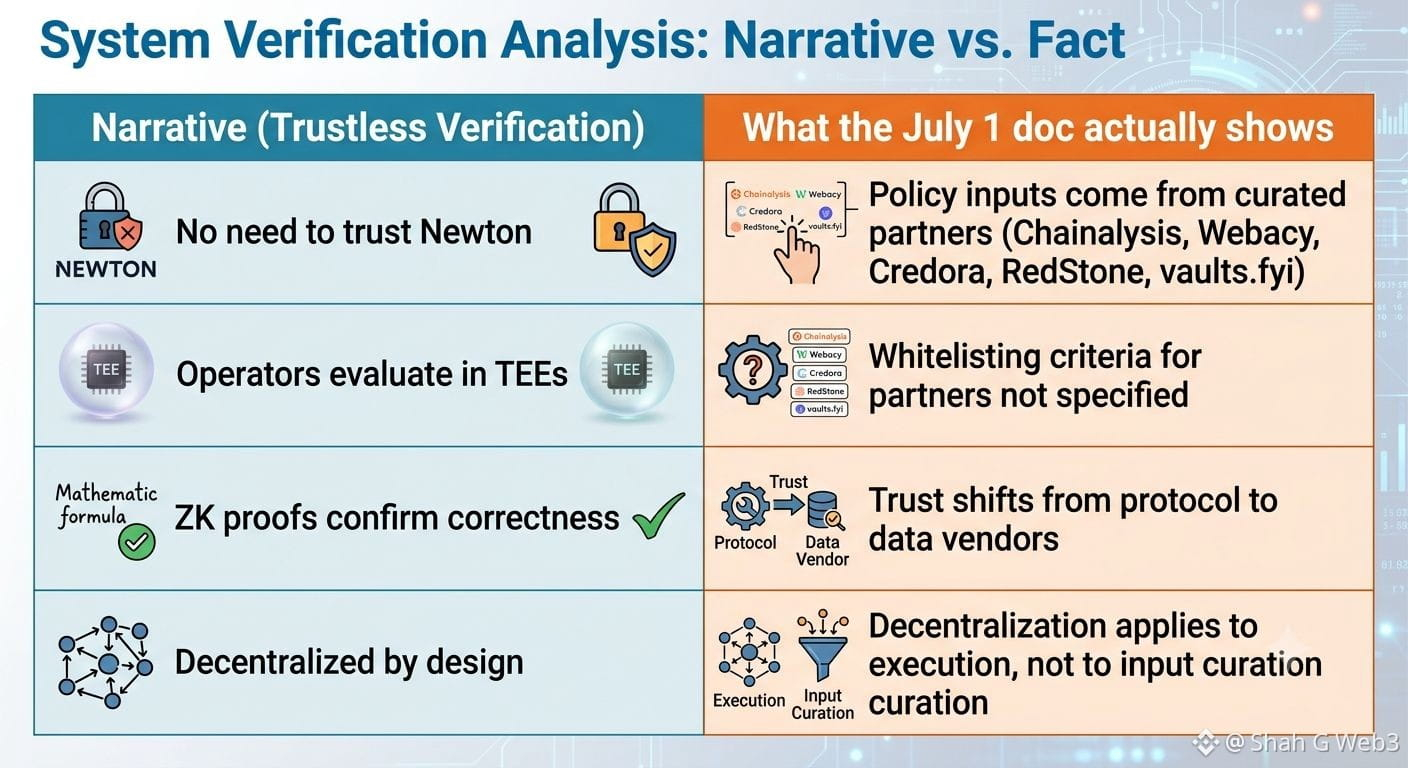
そこで引っかかったのは——全体の売り文句が「トラストレス」と「暗号的に検証可能」だという点です。技術的には確かにそうで、オペレーターはTEEsで動き、ZKプルーフが正しい評価を裏付けます。ですが、実際のポリシー入力、つまり合否を決める材料は、オンボードされたパートナーの短いリストから来ています。制裁対応にはChainalysis。ウォレットの評判にはWebacy。リスク評価にはCredora。価格フィードにはRedStone。これは「ゼロではない」どころか……ただ、種類の違う信頼なんです。あなたはニュートンを信じているわけではないとしても、そのパートナー・リストをキュレーションした“誰か”を信じていることになります。
読んでいて自分の小さな「待てよ」瞬間もありました——この文書が、どのオラクルをポリシーにホワイトリスト登録するかを誰が決めるのかに触れるのを期待していたのですが、そこには踏み込んでいません。もしかするとガバナンスの論点は後で扱われるのかもしれないし、あるいは自分がまだ見つけられていないどこかで既に答えが出ているのかもしれません。
では「より安全なAIエージェント」と言うとき、その安全性は暗号から来るのか、それとも良いデータ提供者を選ぶことから来るのか? それらは同じ言葉を着た、かなり別物の主張に見えます。
#Newt
ニュートン・プロトコルが7月1日の「認可レイヤーが実際にどう動いているか」についての解説を書き下ろしました——決済の後ではなく、決済の前に何が起きるのかを説明する記事です。1時間ずっとそのページを眺めていました。$NEWT @NewtonProtocol
そこで引っかかったのは——全体の売り文句が「トラストレス」と「暗号的に検証可能」だという点です。技術的には確かにそうで、オペレーターはTEEsで動き、ZKプルーフが正しい評価を裏付けます。ですが、実際のポリシー入力、つまり合否を決める材料は、オンボードされたパートナーの短いリストから来ています。制裁対応にはChainalysis。ウォレットの評判にはWebacy。リスク評価にはCredora。価格フィードにはRedStone。これは「ゼロではない」どころか……ただ、種類の違う信頼なんです。あなたはニュートンを信じているわけではないとしても、そのパートナー・リストをキュレーションした“誰か”を信じていることになります。
読んでいて自分の小さな「待てよ」瞬間もありました——この文書が、どのオラクルをポリシーにホワイトリスト登録するかを誰が決めるのかに触れるのを期待していたのですが、そこには踏み込んでいません。もしかするとガバナンスの論点は後で扱われるのかもしれないし、あるいは自分がまだ見つけられていないどこかで既に答えが出ているのかもしれません。
では「より安全なAIエージェント」と言うとき、その安全性は暗号から来るのか、それとも良いデータ提供者を選ぶことから来るのか? それらは同じ言葉を着た、かなり別物の主張に見えます。
#Newt
そこで引っかかったのは——全体の売り文句が「トラストレス」と「暗号的に検証可能」だという点です。技術的には確かにそうで、オペレーターはTEEsで動き、ZKプルーフが正しい評価を裏付けます。ですが、実際のポリシー入力、つまり合否を決める材料は、オンボードされたパートナーの短いリストから来ています。制裁対応にはChainalysis。ウォレットの評判にはWebacy。リスク評価にはCredora。価格フィードにはRedStone。これは「ゼロではない」どころか……ただ、種類の違う信頼なんです。あなたはニュートンを信じているわけではないとしても、そのパートナー・リストをキュレーションした“誰か”を信じていることになります。
読んでいて自分の小さな「待てよ」瞬間もありました——この文書が、どのオラクルをポリシーにホワイトリスト登録するかを誰が決めるのかに触れるのを期待していたのですが、そこには踏み込んでいません。もしかするとガバナンスの論点は後で扱われるのかもしれないし、あるいは自分がまだ見つけられていないどこかで既に答えが出ているのかもしれません。
では「より安全なAIエージェント」と言うとき、その安全性は暗号から来るのか、それとも良いデータ提供者を選ぶことから来るのか? それらは同じ言葉を着た、かなり別物の主張に見えます。
#Newt
5
1
138
ログインして、さらにコンテンツを読む
厳選トピックで世界の暗号資産トレーダーの仲間入り
⚡️ 暗号資産に関する最新かつ有益な情報が見つかります。
💬 世界最大の暗号資産取引所から信頼されています。
👍 認証を受けたクリエイターから、有益なインサイトを得られます。
メール / 電話番号