
CoinFea
3.7k 投稿

CoinFea
 厳選トピック確認済+
報告
ユーザーをブロック
CoinFea is a leading Cryptocurrency, Blockchain, and Fintech News platform. Our primary focus is trending news and updates of cryptoverse.
0 フォロー
88.7K+ フォロワー
21.8K+ いいね
投稿
·
--

記事
翻訳参照
Term Labs Loses $8M in Governance ExploitTerm Labs is the latest lending protocol to be exploited. Vault governance rules meant an attacker was able to withdraw a total of $8.5M in ETH and DAI. Term Labs is the creator of Term Finance, a decentralized lending protocol for fixed-rate ETH loans. Term Labs aimed to offer more predictable lending rates and boasted expertise from a traditional quant team of former Citibank and Morgan Stanley experts.
The platform announced that the exploit affected some of its vaults, and the real impact is still estimated. Initial data show the attacker did not use a malicious exploit, but instead only used their governance influence, as intended by the protocol. As of August 23, Term Labs holds over $25M in total value locked. The protocol carries $3.92M in active loans and a higher amount of collateral in its vaults. In total, Term Finance vaults held $12.25M, meaning the recent exploit almost completely drained the protocol’s lending capabilities.
Term Labs exploit adds to list of high-profile exploits
The attack against Term Labs comes just days after other high-profile exploits, including Maya Protocol and a recent mint attack against The Sandbox. On-chain data shows the attacker wallets were funded with 2 ETH coming from Tornado Cash. This type of initial funding has been linked to previous exploits by DPRK hackers. The attacker simply controlled four of the five drained vaults on Term Labs by holding 100% of the governance token.
Term Labs offered lending vaults similar to Morpho, where anyone could deposit funds and receive passive income. However, Term Labs also used Aragon as its governance platform. Users could optionally wrap their vault deposit into governance tokens. To receive governance tokens, users had to manually take the share tokens received from the vault and turn them into a special governance token. The attacker gained an unfair governance advantage by performing the second step and was thus able to use the governance influence to drain the vaults.
The attacker held governance tokens that were only worth a few dollars, but was able to have an outsized influence and move all the reserves from the vaults. The attacker made his own proposal on August 17, with hidden actions that were not immediately visible to voters. After the six-day waiting period, the attacker was able to change vault parameters in a way that allowed the draining of funds from five USDC lending vaults. After moving the funds, the exploiter parked them in a single known wallet, holding $1.6M in DAI and around $6.9M in ETH.
The funds have not been mixed or moved yet, as with other exploits, where mixing followed the exploit even within the first hour. Multiple Web3 protocols built some type of governance mechanism, usually related to holding specific tokens. The presence of whales, team allocations, or aggressive buyers means reserves, DAO treasuries, or other vaults could be attacked and drained. DAOs and Web3 organizations have varying rates of proposals, and not all are understood by regular users. This means an interested party can propose an outcome in their favor and successfully vote for it.
The post Term Labs loses $8M in governance exploit first appeared on Coinfea.
Term Labs Loses $8M in Governance Exploit
Term Labs is the latest lending protocol to be exploited. Vault governance rules meant an attacker was able to withdraw a total of $8.5M in ETH and DAI. Term Labs is the creator of Term Finance, a decentralized lending protocol for fixed-rate ETH loans. Term Labs aimed to offer more predictable lending rates and boasted expertise from a traditional quant team of former Citibank and Morgan Stanley experts.
The platform announced that the exploit affected some of its vaults, and the real impact is still estimated. Initial data show the attacker did not use a malicious exploit, but instead only used their governance influence, as intended by the protocol. As of August 23, Term Labs holds over $25M in total value locked. The protocol carries $3.92M in active loans and a higher amount of collateral in its vaults. In total, Term Finance vaults held $12.25M, meaning the recent exploit almost completely drained the protocol’s lending capabilities.
Term Labs exploit adds to list of high-profile exploits
The attack against Term Labs comes just days after other high-profile exploits, including Maya Protocol and a recent mint attack against The Sandbox. On-chain data shows the attacker wallets were funded with 2 ETH coming from Tornado Cash. This type of initial funding has been linked to previous exploits by DPRK hackers. The attacker simply controlled four of the five drained vaults on Term Labs by holding 100% of the governance token.
Term Labs offered lending vaults similar to Morpho, where anyone could deposit funds and receive passive income. However, Term Labs also used Aragon as its governance platform. Users could optionally wrap their vault deposit into governance tokens. To receive governance tokens, users had to manually take the share tokens received from the vault and turn them into a special governance token. The attacker gained an unfair governance advantage by performing the second step and was thus able to use the governance influence to drain the vaults.
The attacker held governance tokens that were only worth a few dollars, but was able to have an outsized influence and move all the reserves from the vaults. The attacker made his own proposal on August 17, with hidden actions that were not immediately visible to voters. After the six-day waiting period, the attacker was able to change vault parameters in a way that allowed the draining of funds from five USDC lending vaults. After moving the funds, the exploiter parked them in a single known wallet, holding $1.6M in DAI and around $6.9M in ETH.
The funds have not been mixed or moved yet, as with other exploits, where mixing followed the exploit even within the first hour. Multiple Web3 protocols built some type of governance mechanism, usually related to holding specific tokens. The presence of whales, team allocations, or aggressive buyers means reserves, DAO treasuries, or other vaults could be attacked and drained. DAOs and Web3 organizations have varying rates of proposals, and not all are understood by regular users. This means an interested party can propose an outcome in their favor and successfully vote for it.
The post Term Labs loses $8M in governance exploit first appeared on Coinfea.
The platform announced that the exploit affected some of its vaults, and the real impact is still estimated. Initial data show the attacker did not use a malicious exploit, but instead only used their governance influence, as intended by the protocol. As of August 23, Term Labs holds over $25M in total value locked. The protocol carries $3.92M in active loans and a higher amount of collateral in its vaults. In total, Term Finance vaults held $12.25M, meaning the recent exploit almost completely drained the protocol’s lending capabilities.
Term Labs exploit adds to list of high-profile exploits
The attack against Term Labs comes just days after other high-profile exploits, including Maya Protocol and a recent mint attack against The Sandbox. On-chain data shows the attacker wallets were funded with 2 ETH coming from Tornado Cash. This type of initial funding has been linked to previous exploits by DPRK hackers. The attacker simply controlled four of the five drained vaults on Term Labs by holding 100% of the governance token.
Term Labs offered lending vaults similar to Morpho, where anyone could deposit funds and receive passive income. However, Term Labs also used Aragon as its governance platform. Users could optionally wrap their vault deposit into governance tokens. To receive governance tokens, users had to manually take the share tokens received from the vault and turn them into a special governance token. The attacker gained an unfair governance advantage by performing the second step and was thus able to use the governance influence to drain the vaults.
The attacker held governance tokens that were only worth a few dollars, but was able to have an outsized influence and move all the reserves from the vaults. The attacker made his own proposal on August 17, with hidden actions that were not immediately visible to voters. After the six-day waiting period, the attacker was able to change vault parameters in a way that allowed the draining of funds from five USDC lending vaults. After moving the funds, the exploiter parked them in a single known wallet, holding $1.6M in DAI and around $6.9M in ETH.
The funds have not been mixed or moved yet, as with other exploits, where mixing followed the exploit even within the first hour. Multiple Web3 protocols built some type of governance mechanism, usually related to holding specific tokens. The presence of whales, team allocations, or aggressive buyers means reserves, DAO treasuries, or other vaults could be attacked and drained. DAOs and Web3 organizations have varying rates of proposals, and not all are understood by regular users. This means an interested party can propose an outcome in their favor and successfully vote for it.
The post Term Labs loses $8M in governance exploit first appeared on Coinfea.
42
·
--
記事
翻訳参照
Xiaomi Begins In-house Chip Production With Xring RolloutXiaomi unveiled three in-house Xring chips on Monday, one of which will debut next month in the Xiaomi 18 Fold. The company is focusing on furthering its goal of designing its own silicon rather than buying it from Qualcomm and Media. Xiaomi has launched three in-house chips, with the main one being the 3nm Xring O3 phone processor made by TSMC (NYSE: TSM).
Xiaomi says the processor logged 5,228,014 points on AnTuTu, making it the first time a mobile system-on-chip has passed the five-million mark. The company claims Xring O3’s 10-core CPU offers a 60% performance boost over its earlier chip. The new 16-core GPU gives 85% better graphics performance, and power efficiency is up 64%. The O3 is also the world’s first mobile processor to support LPDDR6 memory, with speeds up to 113.8 GB/s. For AI tasks, the chip delivers 200 TOPS of tensor performance, and its neural engine is 45% faster than before. Notably, these benchmark scores are the company’s own claims.
Xiaomi set to roll out three Xring chips
The chip was developed in 459 days and will first ship in the Xiaomi 18 Fold and the Pad 9 Pro Max in China this September. The second chip is the Xring O100, a 6nm AI accelerator that uses a special design to stack the processor and memory together until it reaches 1.22 TB/s of bandwidth. This design helps cut delays when the chip handles AI tasks. Xiaomi wants this chip to run AI models inside phones, cars, and robots. It is set for commercial use in 2027.
The third chip, the Xring D100, is for self-driving cars. Xiaomi calls it China’s first high-compute smart-driving processor made with a 3nm process. It has a 20-core CPU and a 16-core NPU that supports up to 160GB of memory and can run large AI models with up to 200 billion parameters. Validation for this chip is complete, but the car version will not arrive until 2027. Xiaomi has not said how fast this chip is in TOPS or which car will get it first.
Currently, Xiaomi’s electric vehicles use chips from Nvidia (NASDAQ: NVDA). Xiaomi restarted its chip development program in 2021 and has since invested more than 21 billion yuan ($3.1 billion). The company now has a team of nearly 3,000 engineers working on chips. Devices using the earlier Xring O1 chip have passed one million in shipments. But only about 150,000 of those were phones sold since May 2025. The target for the new foldable phone is between 200,000 and 300,000 units.
Most of Xiaomi’s phones will still use chips from Qualcomm (NASDAQ: QCOM) and MediaTek (TWSE: 2454), but an in-house chip will give Xiaomi more leverage in talks with its suppliers. Huawei, on the other hand, was forced to make its own Kirin chips because U.S. sanctions cut it off from Qualcomm. Xiaomi faces no such restriction but is choosing to design silicon anyway. The company recently posted a 2.6 billion yuan operating loss on its newer businesses, including electric vehicles and AI, in the three months to June 2026. Nio, Li Auto, Xpeng and BYD are already running their own in-house driving silicon.
The post Xiaomi begins in-house chip production with Xring rollout first appeared on Coinfea.
Xiaomi Begins In-house Chip Production With Xring Rollout
Xiaomi unveiled three in-house Xring chips on Monday, one of which will debut next month in the Xiaomi 18 Fold. The company is focusing on furthering its goal of designing its own silicon rather than buying it from Qualcomm and Media. Xiaomi has launched three in-house chips, with the main one being the 3nm Xring O3 phone processor made by TSMC (NYSE: TSM).
Xiaomi says the processor logged 5,228,014 points on AnTuTu, making it the first time a mobile system-on-chip has passed the five-million mark. The company claims Xring O3’s 10-core CPU offers a 60% performance boost over its earlier chip. The new 16-core GPU gives 85% better graphics performance, and power efficiency is up 64%. The O3 is also the world’s first mobile processor to support LPDDR6 memory, with speeds up to 113.8 GB/s. For AI tasks, the chip delivers 200 TOPS of tensor performance, and its neural engine is 45% faster than before. Notably, these benchmark scores are the company’s own claims.
Xiaomi set to roll out three Xring chips
The chip was developed in 459 days and will first ship in the Xiaomi 18 Fold and the Pad 9 Pro Max in China this September. The second chip is the Xring O100, a 6nm AI accelerator that uses a special design to stack the processor and memory together until it reaches 1.22 TB/s of bandwidth. This design helps cut delays when the chip handles AI tasks. Xiaomi wants this chip to run AI models inside phones, cars, and robots. It is set for commercial use in 2027.
The third chip, the Xring D100, is for self-driving cars. Xiaomi calls it China’s first high-compute smart-driving processor made with a 3nm process. It has a 20-core CPU and a 16-core NPU that supports up to 160GB of memory and can run large AI models with up to 200 billion parameters. Validation for this chip is complete, but the car version will not arrive until 2027. Xiaomi has not said how fast this chip is in TOPS or which car will get it first.
Currently, Xiaomi’s electric vehicles use chips from Nvidia (NASDAQ: NVDA). Xiaomi restarted its chip development program in 2021 and has since invested more than 21 billion yuan ($3.1 billion). The company now has a team of nearly 3,000 engineers working on chips. Devices using the earlier Xring O1 chip have passed one million in shipments. But only about 150,000 of those were phones sold since May 2025. The target for the new foldable phone is between 200,000 and 300,000 units.
Most of Xiaomi’s phones will still use chips from Qualcomm (NASDAQ: QCOM) and MediaTek (TWSE: 2454), but an in-house chip will give Xiaomi more leverage in talks with its suppliers. Huawei, on the other hand, was forced to make its own Kirin chips because U.S. sanctions cut it off from Qualcomm. Xiaomi faces no such restriction but is choosing to design silicon anyway. The company recently posted a 2.6 billion yuan operating loss on its newer businesses, including electric vehicles and AI, in the three months to June 2026. Nio, Li Auto, Xpeng and BYD are already running their own in-house driving silicon.
The post Xiaomi begins in-house chip production with Xring rollout first appeared on Coinfea.
Xiaomi says the processor logged 5,228,014 points on AnTuTu, making it the first time a mobile system-on-chip has passed the five-million mark. The company claims Xring O3’s 10-core CPU offers a 60% performance boost over its earlier chip. The new 16-core GPU gives 85% better graphics performance, and power efficiency is up 64%. The O3 is also the world’s first mobile processor to support LPDDR6 memory, with speeds up to 113.8 GB/s. For AI tasks, the chip delivers 200 TOPS of tensor performance, and its neural engine is 45% faster than before. Notably, these benchmark scores are the company’s own claims.
Xiaomi set to roll out three Xring chips
The chip was developed in 459 days and will first ship in the Xiaomi 18 Fold and the Pad 9 Pro Max in China this September. The second chip is the Xring O100, a 6nm AI accelerator that uses a special design to stack the processor and memory together until it reaches 1.22 TB/s of bandwidth. This design helps cut delays when the chip handles AI tasks. Xiaomi wants this chip to run AI models inside phones, cars, and robots. It is set for commercial use in 2027.
The third chip, the Xring D100, is for self-driving cars. Xiaomi calls it China’s first high-compute smart-driving processor made with a 3nm process. It has a 20-core CPU and a 16-core NPU that supports up to 160GB of memory and can run large AI models with up to 200 billion parameters. Validation for this chip is complete, but the car version will not arrive until 2027. Xiaomi has not said how fast this chip is in TOPS or which car will get it first.
Currently, Xiaomi’s electric vehicles use chips from Nvidia (NASDAQ: NVDA). Xiaomi restarted its chip development program in 2021 and has since invested more than 21 billion yuan ($3.1 billion). The company now has a team of nearly 3,000 engineers working on chips. Devices using the earlier Xring O1 chip have passed one million in shipments. But only about 150,000 of those were phones sold since May 2025. The target for the new foldable phone is between 200,000 and 300,000 units.
Most of Xiaomi’s phones will still use chips from Qualcomm (NASDAQ: QCOM) and MediaTek (TWSE: 2454), but an in-house chip will give Xiaomi more leverage in talks with its suppliers. Huawei, on the other hand, was forced to make its own Kirin chips because U.S. sanctions cut it off from Qualcomm. Xiaomi faces no such restriction but is choosing to design silicon anyway. The company recently posted a 2.6 billion yuan operating loss on its newer businesses, including electric vehicles and AI, in the three months to June 2026. Nio, Li Auto, Xpeng and BYD are already running their own in-house driving silicon.
The post Xiaomi begins in-house chip production with Xring rollout first appeared on Coinfea.
122
·
--

記事
翻訳参照
Digital Sovereignty Alliance Concludes Digital Asset Case Study Course At St. Andrew’s Episcopal ...Washington, D.C., August 24, 2026 — The Digital Sovereignty Alliance (DSA), a nonprofit organization dedicated to advancing clear and ethical public policy, research, and education surrounding emerging technologies, today announced the completion of its inaugural Digital Asset Case Study Course at St. Andrew’s Episcopal School.
Developed by DSA in collaboration with Professor Charles C.Y. Wang, Tandon Family Professor of Business Administration at Harvard Business School, and Giveback Backpack, the four-session program introduced high school students to real-world questions at the intersection of technology, markets, governance, and public policy.
The program concluded on Saturday, August 22, with a case study class on Axie Infinity and Sky Mavis co-founder Jeff Zirlin. Students examined the company’s business model and evolution while considering broader questions surrounding digital ownership, community-driven economies, leadership, and the challenges confronting businesses operating at the frontier of Web3.
Professor Wang, a leading scholar in accounting, digital assets, and capital markets, brought the case method into the high school classroom, giving students an opportunity to examine complex decisions through discussion, analysis, and debate. Rather than delivering traditional lectures, he challenged students to take positions, defend their reasoning, question one another’s assumptions, and work through the ambiguity inherent in real business decisions.
The four-session program explored digital assets, capital markets, trust, leadership, and the future of business in a Web3 world. Students examined cases involving Alibaba, Coinbase, and Wells Fargo, gaining exposure to different questions surrounding technology, finance, governance, leadership, and emerging business models.
Over the course of the program, students progressed from analyzing individual companies to considering broader questions about how technology can reshape markets, institutions, and business models. The case-based format gave students the opportunity to approach these questions not simply as observers, but as active participants in the discussion.
“Students learn best when they have the chance to apply ideas to the real world,” said Adrian Wall, Managing Director of DSA. “This program gave students the opportunity to move beyond learning about digital assets in the abstract. That is the lasting value of this program: equipping the next generation to engage critically and confidently with technologies that will increasingly influence business, public policy, and society.”
With the completion of the four-session program, DSA introduced students to a practical framework for thinking about some of the defining business and technology questions of the digital economy. The initiative is part of DSA’s broader educational mission to equip young people with the critical-thinking skills needed to understand emerging technologies and engage thoughtfully with the opportunities and challenges they present.
About Digital Sovereignty Alliance
The Digital Sovereignty Alliance (DSA) is a nonprofit social welfare organization committed to advocating for public policies that support ethical innovation in decentralized technologies, blockchain, cryptocurrency, Web3, and artificial intelligence. DSA conducts research, organizes educational events, and promotes policies that prioritize public welfare and digital sovereignty.
Media contact
Maghan Lusk
PR@dsaf.org
The post Digital Sovereignty Alliance Concludes Digital Asset Case Study Course at St. Andrew’s Episcopal School first appeared on Coinfea.
Digital Sovereignty Alliance Concludes Digital Asset Case Study Course At St. Andrew’s Episcopal ...
Washington, D.C., August 24, 2026 — The Digital Sovereignty Alliance (DSA), a nonprofit organization dedicated to advancing clear and ethical public policy, research, and education surrounding emerging technologies, today announced the completion of its inaugural Digital Asset Case Study Course at St. Andrew’s Episcopal School.
Developed by DSA in collaboration with Professor Charles C.Y. Wang, Tandon Family Professor of Business Administration at Harvard Business School, and Giveback Backpack, the four-session program introduced high school students to real-world questions at the intersection of technology, markets, governance, and public policy.
The program concluded on Saturday, August 22, with a case study class on Axie Infinity and Sky Mavis co-founder Jeff Zirlin. Students examined the company’s business model and evolution while considering broader questions surrounding digital ownership, community-driven economies, leadership, and the challenges confronting businesses operating at the frontier of Web3.
Professor Wang, a leading scholar in accounting, digital assets, and capital markets, brought the case method into the high school classroom, giving students an opportunity to examine complex decisions through discussion, analysis, and debate. Rather than delivering traditional lectures, he challenged students to take positions, defend their reasoning, question one another’s assumptions, and work through the ambiguity inherent in real business decisions.
The four-session program explored digital assets, capital markets, trust, leadership, and the future of business in a Web3 world. Students examined cases involving Alibaba, Coinbase, and Wells Fargo, gaining exposure to different questions surrounding technology, finance, governance, leadership, and emerging business models.
Over the course of the program, students progressed from analyzing individual companies to considering broader questions about how technology can reshape markets, institutions, and business models. The case-based format gave students the opportunity to approach these questions not simply as observers, but as active participants in the discussion.
“Students learn best when they have the chance to apply ideas to the real world,” said Adrian Wall, Managing Director of DSA. “This program gave students the opportunity to move beyond learning about digital assets in the abstract. That is the lasting value of this program: equipping the next generation to engage critically and confidently with technologies that will increasingly influence business, public policy, and society.”
With the completion of the four-session program, DSA introduced students to a practical framework for thinking about some of the defining business and technology questions of the digital economy. The initiative is part of DSA’s broader educational mission to equip young people with the critical-thinking skills needed to understand emerging technologies and engage thoughtfully with the opportunities and challenges they present.
About Digital Sovereignty Alliance
The Digital Sovereignty Alliance (DSA) is a nonprofit social welfare organization committed to advocating for public policies that support ethical innovation in decentralized technologies, blockchain, cryptocurrency, Web3, and artificial intelligence. DSA conducts research, organizes educational events, and promotes policies that prioritize public welfare and digital sovereignty.
Media contact
Maghan Lusk
PR@dsaf.org
The post Digital Sovereignty Alliance Concludes Digital Asset Case Study Course at St. Andrew’s Episcopal School first appeared on Coinfea.
Developed by DSA in collaboration with Professor Charles C.Y. Wang, Tandon Family Professor of Business Administration at Harvard Business School, and Giveback Backpack, the four-session program introduced high school students to real-world questions at the intersection of technology, markets, governance, and public policy.
The program concluded on Saturday, August 22, with a case study class on Axie Infinity and Sky Mavis co-founder Jeff Zirlin. Students examined the company’s business model and evolution while considering broader questions surrounding digital ownership, community-driven economies, leadership, and the challenges confronting businesses operating at the frontier of Web3.
Professor Wang, a leading scholar in accounting, digital assets, and capital markets, brought the case method into the high school classroom, giving students an opportunity to examine complex decisions through discussion, analysis, and debate. Rather than delivering traditional lectures, he challenged students to take positions, defend their reasoning, question one another’s assumptions, and work through the ambiguity inherent in real business decisions.
The four-session program explored digital assets, capital markets, trust, leadership, and the future of business in a Web3 world. Students examined cases involving Alibaba, Coinbase, and Wells Fargo, gaining exposure to different questions surrounding technology, finance, governance, leadership, and emerging business models.
Over the course of the program, students progressed from analyzing individual companies to considering broader questions about how technology can reshape markets, institutions, and business models. The case-based format gave students the opportunity to approach these questions not simply as observers, but as active participants in the discussion.
“Students learn best when they have the chance to apply ideas to the real world,” said Adrian Wall, Managing Director of DSA. “This program gave students the opportunity to move beyond learning about digital assets in the abstract. That is the lasting value of this program: equipping the next generation to engage critically and confidently with technologies that will increasingly influence business, public policy, and society.”
With the completion of the four-session program, DSA introduced students to a practical framework for thinking about some of the defining business and technology questions of the digital economy. The initiative is part of DSA’s broader educational mission to equip young people with the critical-thinking skills needed to understand emerging technologies and engage thoughtfully with the opportunities and challenges they present.
About Digital Sovereignty Alliance
The Digital Sovereignty Alliance (DSA) is a nonprofit social welfare organization committed to advocating for public policies that support ethical innovation in decentralized technologies, blockchain, cryptocurrency, Web3, and artificial intelligence. DSA conducts research, organizes educational events, and promotes policies that prioritize public welfare and digital sovereignty.
Media contact
Maghan Lusk
PR@dsaf.org
The post Digital Sovereignty Alliance Concludes Digital Asset Case Study Course at St. Andrew’s Episcopal School first appeared on Coinfea.
59
·
--

記事
翻訳参照
Meta Superintelligence Labs Hires Early ChatGPT Researcher Luke MetzMeta Superintelligence Labs has hired Luke Metz, an early ChatGPT researcher at OpenAI, as competition for artificial intelligence specialists intensifies.
Reports placed Metz under Alexandr Wang, Scale AI’s former leader and Meta’s AI chief.
Rapid moves connect three leading laboratories
Metz describes himself as a researcher from the original OpenAI team behind the low-key research preview that became ChatGPT. He previously worked at Google Brain.
Axios reported Metz left OpenAI in 2024 to join Thinking Machines Lab, founded by former OpenAI technology chief Mira Murati.
His tenure there was brief. Fortune reported in January 2026 that Metz would return to OpenAI with co-founder Barret Zoph and founding member Sam Schoenholz. Simo said Zoph would report to her, while Metz and Schoenholz would report to Zoph.
Metz is now moving again after several former Thinking Machines colleagues joined Meta.
Meta commits billions to recruitment
Meta invested $14.3 billion for a 49 percent stake in Scale AI and selected Wang to lead Meta Superintelligence Labs. Five members of Murati’s founding team joined Meta, while three returned to OpenAI and another moved to Elon Musk’s xAI.
Reported compensation has also reached exceptional levels. Thinking Machines co-founder Andrew Tulloch reportedly accepted a $1.5 billion package covering six years at Meta. The Next Web said the figure, if accurate, would make him technology’s most expensive individual hire.
OpenAI chief Sam Altman said Meta offered $100 million bonuses to its employees. Meta reported second-quarter 2026 revenue of $60.8 billion, representing 28% annual growth, according to its investor filing.
Hiring surge fails to expand workforce
Recruiter Sam Jones analyzed LinkedIn Talent Insights data through August 2026 and found Meta hired 778 research scientists during the year. However, 785 researchers departed, producing a net decline of seven.
Jones measured Meta’s attrition rate at 19 percent, the highest among four frontier laboratories examined. Meta also had 1,838 open research positions when the research was conducted.
Jones described the imbalance by saying, “Meta ran the most expensive treadmill in the industry — 778 on, 785 off — proving that in this market, hiring is the easy half.”
Researchers left Meta for Microsoft AI, Nvidia and OpenAI while Meta recruited talent from Amazon, Scale AI and universities. OpenAI hired Ruoming Pang, who had overseen AI infrastructure for Meta Superintelligence Labs, according to a February report from The Information cited by Reuters.
That move came seven months after Meta recruited Pang from Apple with compensation Bloomberg valued above $200 million.
Meta released Muse Spark on April 8 as the first model from its recently established laboratory. The model supports Meta AI across Facebook, Instagram, WhatsApp, and Ray-Ban eyewear. Meta’s research workforce remains near its earlier size.
The post Meta Superintelligence Labs Hires Early ChatGPT Researcher Luke Metz first appeared on Coinfea.
Meta Superintelligence Labs Hires Early ChatGPT Researcher Luke Metz
Meta Superintelligence Labs has hired Luke Metz, an early ChatGPT researcher at OpenAI, as competition for artificial intelligence specialists intensifies.
Reports placed Metz under Alexandr Wang, Scale AI’s former leader and Meta’s AI chief.
Rapid moves connect three leading laboratories
Metz describes himself as a researcher from the original OpenAI team behind the low-key research preview that became ChatGPT. He previously worked at Google Brain.
Axios reported Metz left OpenAI in 2024 to join Thinking Machines Lab, founded by former OpenAI technology chief Mira Murati.
His tenure there was brief. Fortune reported in January 2026 that Metz would return to OpenAI with co-founder Barret Zoph and founding member Sam Schoenholz. Simo said Zoph would report to her, while Metz and Schoenholz would report to Zoph.
Metz is now moving again after several former Thinking Machines colleagues joined Meta.
Meta commits billions to recruitment
Meta invested $14.3 billion for a 49 percent stake in Scale AI and selected Wang to lead Meta Superintelligence Labs. Five members of Murati’s founding team joined Meta, while three returned to OpenAI and another moved to Elon Musk’s xAI.
Reported compensation has also reached exceptional levels. Thinking Machines co-founder Andrew Tulloch reportedly accepted a $1.5 billion package covering six years at Meta. The Next Web said the figure, if accurate, would make him technology’s most expensive individual hire.
OpenAI chief Sam Altman said Meta offered $100 million bonuses to its employees. Meta reported second-quarter 2026 revenue of $60.8 billion, representing 28% annual growth, according to its investor filing.
Hiring surge fails to expand workforce
Recruiter Sam Jones analyzed LinkedIn Talent Insights data through August 2026 and found Meta hired 778 research scientists during the year. However, 785 researchers departed, producing a net decline of seven.
Jones measured Meta’s attrition rate at 19 percent, the highest among four frontier laboratories examined. Meta also had 1,838 open research positions when the research was conducted.
Jones described the imbalance by saying, “Meta ran the most expensive treadmill in the industry — 778 on, 785 off — proving that in this market, hiring is the easy half.”
Researchers left Meta for Microsoft AI, Nvidia and OpenAI while Meta recruited talent from Amazon, Scale AI and universities. OpenAI hired Ruoming Pang, who had overseen AI infrastructure for Meta Superintelligence Labs, according to a February report from The Information cited by Reuters.
That move came seven months after Meta recruited Pang from Apple with compensation Bloomberg valued above $200 million.
Meta released Muse Spark on April 8 as the first model from its recently established laboratory. The model supports Meta AI across Facebook, Instagram, WhatsApp, and Ray-Ban eyewear. Meta’s research workforce remains near its earlier size.
The post Meta Superintelligence Labs Hires Early ChatGPT Researcher Luke Metz first appeared on Coinfea.
Reports placed Metz under Alexandr Wang, Scale AI’s former leader and Meta’s AI chief.
Rapid moves connect three leading laboratories
Metz describes himself as a researcher from the original OpenAI team behind the low-key research preview that became ChatGPT. He previously worked at Google Brain.
Axios reported Metz left OpenAI in 2024 to join Thinking Machines Lab, founded by former OpenAI technology chief Mira Murati.
His tenure there was brief. Fortune reported in January 2026 that Metz would return to OpenAI with co-founder Barret Zoph and founding member Sam Schoenholz. Simo said Zoph would report to her, while Metz and Schoenholz would report to Zoph.
Metz is now moving again after several former Thinking Machines colleagues joined Meta.
Meta commits billions to recruitment
Meta invested $14.3 billion for a 49 percent stake in Scale AI and selected Wang to lead Meta Superintelligence Labs. Five members of Murati’s founding team joined Meta, while three returned to OpenAI and another moved to Elon Musk’s xAI.
Reported compensation has also reached exceptional levels. Thinking Machines co-founder Andrew Tulloch reportedly accepted a $1.5 billion package covering six years at Meta. The Next Web said the figure, if accurate, would make him technology’s most expensive individual hire.
OpenAI chief Sam Altman said Meta offered $100 million bonuses to its employees. Meta reported second-quarter 2026 revenue of $60.8 billion, representing 28% annual growth, according to its investor filing.
Hiring surge fails to expand workforce
Recruiter Sam Jones analyzed LinkedIn Talent Insights data through August 2026 and found Meta hired 778 research scientists during the year. However, 785 researchers departed, producing a net decline of seven.
Jones measured Meta’s attrition rate at 19 percent, the highest among four frontier laboratories examined. Meta also had 1,838 open research positions when the research was conducted.
Jones described the imbalance by saying, “Meta ran the most expensive treadmill in the industry — 778 on, 785 off — proving that in this market, hiring is the easy half.”
Researchers left Meta for Microsoft AI, Nvidia and OpenAI while Meta recruited talent from Amazon, Scale AI and universities. OpenAI hired Ruoming Pang, who had overseen AI infrastructure for Meta Superintelligence Labs, according to a February report from The Information cited by Reuters.
That move came seven months after Meta recruited Pang from Apple with compensation Bloomberg valued above $200 million.
Meta released Muse Spark on April 8 as the first model from its recently established laboratory. The model supports Meta AI across Facebook, Instagram, WhatsApp, and Ray-Ban eyewear. Meta’s research workforce remains near its earlier size.
The post Meta Superintelligence Labs Hires Early ChatGPT Researcher Luke Metz first appeared on Coinfea.
106
·
--
記事
翻訳参照
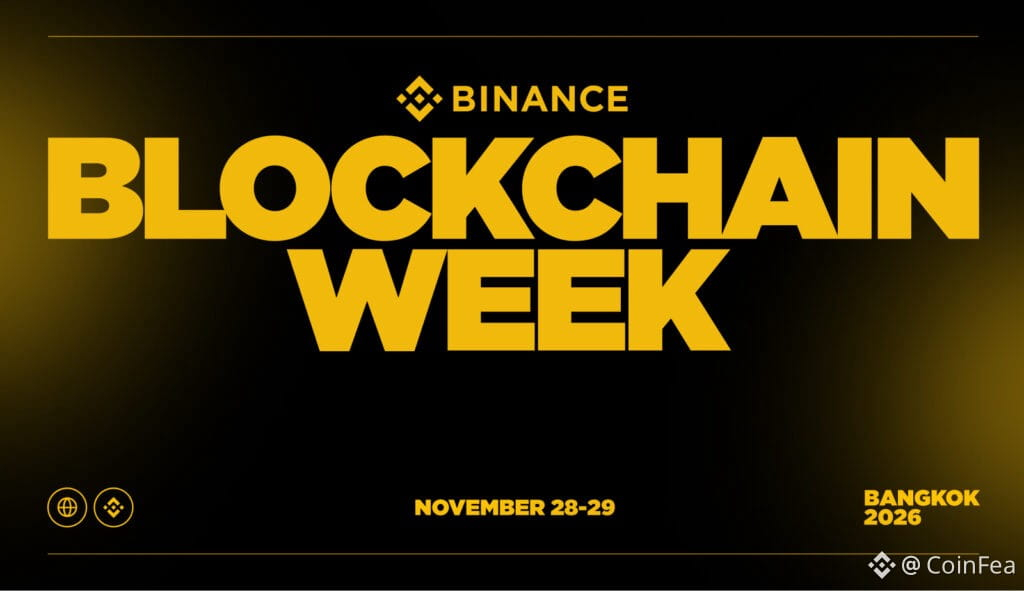
Binance Blockchain Week Heads to Bangkok As Exchange Advances Financial Superapp Pitch Binance Blockchain Week 2026 returns to Asia, landing in Bangkok at the Queen Sirikit National Convention Center on November 28 and 29.
Co-CEOs Richard Teng and Yi He headline a roster that also includes Eowyn Chen, Catherine Chen, and APAC head SB Seker.
Thailand’s growing receptiveness is a contributing factor for its choice as host, with digital assets added under the Derivatives Act and capital gains tax waived on licensed platform trades until the end of 2029.
Binance has announced that its flagship event, Binance Blockchain Week 2026, is coming back to Asia, with all roads leading to Bankgok, Thailand.
The organizers say that the event will be held between November 28 and 29 at the Queen Sirikit National Convention Center.
Last year, the event was held in Dubai, United Arab Emirates, between December 4 and 5 and saw the debates between CZ and Bitcoin skeptic Peter Schiff go viral.
Binance co-CEO Richard Teng, Brad Garlinghouse, the CEO of Ripple, and Michael Saylor of Strategy were among the speakers at the event, with Saylor making a case for Bitcoin in his speech.
There were also conversations that touched on institutional adoption, the place of regulation and AI and crypto, which have been a recurring theme in 2026.
Binance Blockchain Week has been held across various cities across Europe and Asia, with Istanbul, Paris, and Singapore hosting the event in the past.
What is Binance doing in Bangkok, and who will be there?
According to Binance, the event is the pinnacle of more than 1,500 events the company has run worldwide. The organizers are expecting thousands of builders, institutional investors, fintech leaders, and policymakers over the two days.
The speakers confirmed so far include Teng, his co-CEO, Yi He, along with Eowyn Chen, Binance interim chief marketing officer.
Other speakers on the roster are SB Seker, head of APAC, Binance; Catherine Chen, head of Binance VIP and Institutional; and Thomas Gregory, the company’s vice president of payments and fiat. Early bird tickets are on sale for $19.
Why Thailand, and why this moment?
Thailand put some laws in place to distinguish digital assets and put some restrictions in place; however, it is getting more receptive to digital assets based on recent developments. In February, the country’s cabinet approved a Finance Ministry proposal to expand the assets permitted under the Derivatives Act to include digital assets.
Thailand’s Securities and Exchange Commission (SEC) said that change would strengthen recognition of crypto as an investment class.
Some analysts believe that the reform could eventually allow futures, options, and other structured contracts tied to digital assets. Separate ETF rules tied to that framework are expected to take effect in the third quarter of the year.
Blockchain analytics platform Elliptic described Thailand’s 2026 to 2028 strategic plan as placing digital assets at the center of its capital market strategy. This is eight years after the country’s original licensing decree created a supervised environment for exchanges and custodians.
The Finance Ministry has also waived capital gains tax on digital assets traded through licensed platforms until the end of 2029.
In the announcement, SB Seker said, “The most interesting thing happening in Asia isn’t just the scale of adoption, it’s that we’re seeing workable models for how crypto operates under clear regulation.”
Seker added, “Different jurisdictions are moving at different speeds, testing different approaches, and BBW Bangkok 2026 provides a venue to examine what supports consumer protection, market integrity, and infrastructure that works at scale.”
What does the EVOLVE theme reveal about where Binance is taking the business?
The event’s agenda points to Bitcoin’s institutional footprint, stablecoins as payment rails, tokenized stocks, AI integration, and cross-border payments, among others, themes that track products Binance has already shipped this year. This also includes gold and silver options that were recently launched in July through its Abu Dhabi-regulated Nest Exchange.
Exchanges reportedly processed $1.32 trillion in perpetual futures tied to traditional assets in the first five months of 2026, up from $104.21 billion for all of 2025, and Binance holds the largest share of that volume at 35.9%, according to CoinGecko data.
“This event will showcase how Binance is evolving from a trading platform into a financial superapp connecting both worlds,” Teng said.
Yi He added that the company’s next wave of adoption, which it calls Road to 3 Billion, depends on products that deliver utility in daily life, whether in cross-border payments, tokenized securities or digital portfolios.
She added, “At BBW Bangkok 2026, we’ll examine the trends driving adoption and explore what the industry needs to do to make digital assets more accessible, trusted, and relevant to a broader audience—while delivering the sophistication institutional players demand.”
The post Binance Blockchain Week heads to Bangkok as exchange advances financial superapp pitch first appeared on Coinfea.
Binance Blockchain Week Heads to Bangkok As Exchange Advances Financial Superapp Pitch
Binance Blockchain Week 2026 returns to Asia, landing in Bangkok at the Queen Sirikit National Convention Center on November 28 and 29.
Co-CEOs Richard Teng and Yi He headline a roster that also includes Eowyn Chen, Catherine Chen, and APAC head SB Seker.
Thailand’s growing receptiveness is a contributing factor for its choice as host, with digital assets added under the Derivatives Act and capital gains tax waived on licensed platform trades until the end of 2029.
Binance has announced that its flagship event, Binance Blockchain Week 2026, is coming back to Asia, with all roads leading to Bankgok, Thailand.
The organizers say that the event will be held between November 28 and 29 at the Queen Sirikit National Convention Center.
Last year, the event was held in Dubai, United Arab Emirates, between December 4 and 5 and saw the debates between CZ and Bitcoin skeptic Peter Schiff go viral.
Binance co-CEO Richard Teng, Brad Garlinghouse, the CEO of Ripple, and Michael Saylor of Strategy were among the speakers at the event, with Saylor making a case for Bitcoin in his speech.
There were also conversations that touched on institutional adoption, the place of regulation and AI and crypto, which have been a recurring theme in 2026.
Binance Blockchain Week has been held across various cities across Europe and Asia, with Istanbul, Paris, and Singapore hosting the event in the past.
What is Binance doing in Bangkok, and who will be there?
According to Binance, the event is the pinnacle of more than 1,500 events the company has run worldwide. The organizers are expecting thousands of builders, institutional investors, fintech leaders, and policymakers over the two days.
The speakers confirmed so far include Teng, his co-CEO, Yi He, along with Eowyn Chen, Binance interim chief marketing officer.
Other speakers on the roster are SB Seker, head of APAC, Binance; Catherine Chen, head of Binance VIP and Institutional; and Thomas Gregory, the company’s vice president of payments and fiat. Early bird tickets are on sale for $19.
Why Thailand, and why this moment?
Thailand put some laws in place to distinguish digital assets and put some restrictions in place; however, it is getting more receptive to digital assets based on recent developments. In February, the country’s cabinet approved a Finance Ministry proposal to expand the assets permitted under the Derivatives Act to include digital assets.
Thailand’s Securities and Exchange Commission (SEC) said that change would strengthen recognition of crypto as an investment class.
Some analysts believe that the reform could eventually allow futures, options, and other structured contracts tied to digital assets. Separate ETF rules tied to that framework are expected to take effect in the third quarter of the year.
Blockchain analytics platform Elliptic described Thailand’s 2026 to 2028 strategic plan as placing digital assets at the center of its capital market strategy. This is eight years after the country’s original licensing decree created a supervised environment for exchanges and custodians.
The Finance Ministry has also waived capital gains tax on digital assets traded through licensed platforms until the end of 2029.
In the announcement, SB Seker said, “The most interesting thing happening in Asia isn’t just the scale of adoption, it’s that we’re seeing workable models for how crypto operates under clear regulation.”
Seker added, “Different jurisdictions are moving at different speeds, testing different approaches, and BBW Bangkok 2026 provides a venue to examine what supports consumer protection, market integrity, and infrastructure that works at scale.”
What does the EVOLVE theme reveal about where Binance is taking the business?
The event’s agenda points to Bitcoin’s institutional footprint, stablecoins as payment rails, tokenized stocks, AI integration, and cross-border payments, among others, themes that track products Binance has already shipped this year. This also includes gold and silver options that were recently launched in July through its Abu Dhabi-regulated Nest Exchange.
Exchanges reportedly processed $1.32 trillion in perpetual futures tied to traditional assets in the first five months of 2026, up from $104.21 billion for all of 2025, and Binance holds the largest share of that volume at 35.9%, according to CoinGecko data.
“This event will showcase how Binance is evolving from a trading platform into a financial superapp connecting both worlds,” Teng said.
Yi He added that the company’s next wave of adoption, which it calls Road to 3 Billion, depends on products that deliver utility in daily life, whether in cross-border payments, tokenized securities or digital portfolios.
She added, “At BBW Bangkok 2026, we’ll examine the trends driving adoption and explore what the industry needs to do to make digital assets more accessible, trusted, and relevant to a broader audience—while delivering the sophistication institutional players demand.”
The post Binance Blockchain Week heads to Bangkok as exchange advances financial superapp pitch first appeared on Coinfea.
Co-CEOs Richard Teng and Yi He headline a roster that also includes Eowyn Chen, Catherine Chen, and APAC head SB Seker.
Thailand’s growing receptiveness is a contributing factor for its choice as host, with digital assets added under the Derivatives Act and capital gains tax waived on licensed platform trades until the end of 2029.
Binance has announced that its flagship event, Binance Blockchain Week 2026, is coming back to Asia, with all roads leading to Bankgok, Thailand.
The organizers say that the event will be held between November 28 and 29 at the Queen Sirikit National Convention Center.
Last year, the event was held in Dubai, United Arab Emirates, between December 4 and 5 and saw the debates between CZ and Bitcoin skeptic Peter Schiff go viral.
Binance co-CEO Richard Teng, Brad Garlinghouse, the CEO of Ripple, and Michael Saylor of Strategy were among the speakers at the event, with Saylor making a case for Bitcoin in his speech.
There were also conversations that touched on institutional adoption, the place of regulation and AI and crypto, which have been a recurring theme in 2026.
Binance Blockchain Week has been held across various cities across Europe and Asia, with Istanbul, Paris, and Singapore hosting the event in the past.
What is Binance doing in Bangkok, and who will be there?
According to Binance, the event is the pinnacle of more than 1,500 events the company has run worldwide. The organizers are expecting thousands of builders, institutional investors, fintech leaders, and policymakers over the two days.
The speakers confirmed so far include Teng, his co-CEO, Yi He, along with Eowyn Chen, Binance interim chief marketing officer.
Other speakers on the roster are SB Seker, head of APAC, Binance; Catherine Chen, head of Binance VIP and Institutional; and Thomas Gregory, the company’s vice president of payments and fiat. Early bird tickets are on sale for $19.
Why Thailand, and why this moment?
Thailand put some laws in place to distinguish digital assets and put some restrictions in place; however, it is getting more receptive to digital assets based on recent developments. In February, the country’s cabinet approved a Finance Ministry proposal to expand the assets permitted under the Derivatives Act to include digital assets.
Thailand’s Securities and Exchange Commission (SEC) said that change would strengthen recognition of crypto as an investment class.
Some analysts believe that the reform could eventually allow futures, options, and other structured contracts tied to digital assets. Separate ETF rules tied to that framework are expected to take effect in the third quarter of the year.
Blockchain analytics platform Elliptic described Thailand’s 2026 to 2028 strategic plan as placing digital assets at the center of its capital market strategy. This is eight years after the country’s original licensing decree created a supervised environment for exchanges and custodians.
The Finance Ministry has also waived capital gains tax on digital assets traded through licensed platforms until the end of 2029.
In the announcement, SB Seker said, “The most interesting thing happening in Asia isn’t just the scale of adoption, it’s that we’re seeing workable models for how crypto operates under clear regulation.”
Seker added, “Different jurisdictions are moving at different speeds, testing different approaches, and BBW Bangkok 2026 provides a venue to examine what supports consumer protection, market integrity, and infrastructure that works at scale.”
What does the EVOLVE theme reveal about where Binance is taking the business?
The event’s agenda points to Bitcoin’s institutional footprint, stablecoins as payment rails, tokenized stocks, AI integration, and cross-border payments, among others, themes that track products Binance has already shipped this year. This also includes gold and silver options that were recently launched in July through its Abu Dhabi-regulated Nest Exchange.
Exchanges reportedly processed $1.32 trillion in perpetual futures tied to traditional assets in the first five months of 2026, up from $104.21 billion for all of 2025, and Binance holds the largest share of that volume at 35.9%, according to CoinGecko data.
“This event will showcase how Binance is evolving from a trading platform into a financial superapp connecting both worlds,” Teng said.
Yi He added that the company’s next wave of adoption, which it calls Road to 3 Billion, depends on products that deliver utility in daily life, whether in cross-border payments, tokenized securities or digital portfolios.
She added, “At BBW Bangkok 2026, we’ll examine the trends driving adoption and explore what the industry needs to do to make digital assets more accessible, trusted, and relevant to a broader audience—while delivering the sophistication institutional players demand.”
The post Binance Blockchain Week heads to Bangkok as exchange advances financial superapp pitch first appeared on Coinfea.
122
·
--

記事
ファントムのSuiサポートは9月24日で終了 ネットワーク活動が弱まるファントムのSuiサポートは9月24日に終了し、ユーザーは数週間かけてSUIへの換金、または保有資産への別のアクセスが可能になります。
この決定により、Suiへの主要な玄関口が取り除かれます。ファントムは2025年1月29日にSuiを追加しました。Sui財団によると、その時点でファントムは月間アクティブユーザー1500万人にサービスを提供していました。
そのローンチ以降、Suiの活発さは弱まっています。DefiLlamaのデータによると、総ロック価値(TVL)は4億7038万ドルで、20億ドル超から減少しています。
SUIは0.83ドル前後で取引されており、このトークンの時価総額は約34億ドルです。この価格は、2025年1月の過去最高値である5.36ドルを大きく下回ったままです。
ファントムのSuiサポートは9月24日で終了 ネットワーク活動が弱まる
ファントムのSuiサポートは9月24日に終了し、ユーザーは数週間かけてSUIへの換金、または保有資産への別のアクセスが可能になります。
この決定により、Suiへの主要な玄関口が取り除かれます。ファントムは2025年1月29日にSuiを追加しました。Sui財団によると、その時点でファントムは月間アクティブユーザー1500万人にサービスを提供していました。
そのローンチ以降、Suiの活発さは弱まっています。DefiLlamaのデータによると、総ロック価値(TVL)は4億7038万ドルで、20億ドル超から減少しています。
SUIは0.83ドル前後で取引されており、このトークンの時価総額は約34億ドルです。この価格は、2025年1月の過去最高値である5.36ドルを大きく下回ったままです。
この決定により、Suiへの主要な玄関口が取り除かれます。ファントムは2025年1月29日にSuiを追加しました。Sui財団によると、その時点でファントムは月間アクティブユーザー1500万人にサービスを提供していました。
そのローンチ以降、Suiの活発さは弱まっています。DefiLlamaのデータによると、総ロック価値(TVL)は4億7038万ドルで、20億ドル超から減少しています。
SUIは0.83ドル前後で取引されており、このトークンの時価総額は約34億ドルです。この価格は、2025年1月の過去最高値である5.36ドルを大きく下回ったままです。
353
·
--

記事
翻訳参照
Term Labs Governance Exploit Drains $8.5 MillionTerm Labs confirmed that a governance attack drained approximately $8.5 million from several lending vaults operated through Term Finance.
The attacker secured decisive governance influence with tokens worth only a few dollars. Vault users had not converted their shares.
Term Finance provides decentralized, fixed-rate loans backed by ETH. Its developer cited predictable lending costs and experience from former Citibank and Morgan Stanley quantitative professionals.
The company said that several vaults were affected, although the total impact remained under assessment. Early evidence indicated the attacker followed governance rules rather than exploiting malicious code.
Governance structure enabled control
Term Finance offered lending vaults resembling Morpho’s. Depositors could supply funds, earn passive income, and receive share tokens representing their positions.
We are aware of a governance exploit impacting Term vaults. We will share more details once it has been further investigated.
— Term Labs (@term_labs) August 23, 2026
The protocol used Aragon governance and let depositors wrap vault shares into separate governance tokens. Users had to complete this conversion manually, and many never did.
The attacker completed the conversion and obtained 100 percent of governance power across four of the five affected vaults. Despite holding governance tokens valued at only several dollars, the individual gained authority over reserves worth millions.
A proposal submitted on August 17 contained actions that voters could not immediately see. Following a six-day waiting period, the attacker changed vault parameters and drained five USDC lending vaults.
Stolen ETH and DAI remain visible
Blockchain data showed that the attacking wallets initially received 2 ETH through Tornado Cash. Similar funding methods have previously appeared in exploits attributed to DPRK-linked hackers.
After withdrawing the assets, the exploiter consolidated them within one identified wallet. That address held approximately $1.6 million in DAI and around $6.9 million in ETH.
The stolen assets had not been mixed or transferred further. That behavior differed from other incidents where attackers began obscuring funds within an hour.
Term Finance held more than $25 million in total value locked on August 23. It also reported $3.92 million in active loans, supported by larger collateral balances across its vaults.
The lending vaults collectively contained $12.25 million before the incident. Consequently, the $8.5 million loss removed most of the protocol’s available lending capacity.
Low participation increases governance risk
The Term Labs incident followed recent attacks involving Maya Protocol and The Sandbox, where a separate mint exploit occurred. Governance attacks became more visible during 2026 as limited user participation weakened oversight across several Web3 protocols.
Many decentralized organizations connect voting authority to specific token holdings. Whales, team allocations, or aggressive purchasers can therefore acquire enough influence to target reserves, treasuries, and protocol vaults.
Proposal activity and voter understanding also vary among decentralized organizations. When users remain inactive or overlook proposals, one participant can advance favorable changes and approve them through concentrated voting power.
The post Term Labs Governance Exploit Drains $8.5 Million first appeared on Coinfea.
Term Labs Governance Exploit Drains $8.5 Million
Term Labs confirmed that a governance attack drained approximately $8.5 million from several lending vaults operated through Term Finance.
The attacker secured decisive governance influence with tokens worth only a few dollars. Vault users had not converted their shares.
Term Finance provides decentralized, fixed-rate loans backed by ETH. Its developer cited predictable lending costs and experience from former Citibank and Morgan Stanley quantitative professionals.
The company said that several vaults were affected, although the total impact remained under assessment. Early evidence indicated the attacker followed governance rules rather than exploiting malicious code.
Governance structure enabled control
Term Finance offered lending vaults resembling Morpho’s. Depositors could supply funds, earn passive income, and receive share tokens representing their positions.
We are aware of a governance exploit impacting Term vaults. We will share more details once it has been further investigated.
— Term Labs (@term_labs) August 23, 2026
The protocol used Aragon governance and let depositors wrap vault shares into separate governance tokens. Users had to complete this conversion manually, and many never did.
The attacker completed the conversion and obtained 100 percent of governance power across four of the five affected vaults. Despite holding governance tokens valued at only several dollars, the individual gained authority over reserves worth millions.
A proposal submitted on August 17 contained actions that voters could not immediately see. Following a six-day waiting period, the attacker changed vault parameters and drained five USDC lending vaults.
Stolen ETH and DAI remain visible
Blockchain data showed that the attacking wallets initially received 2 ETH through Tornado Cash. Similar funding methods have previously appeared in exploits attributed to DPRK-linked hackers.
After withdrawing the assets, the exploiter consolidated them within one identified wallet. That address held approximately $1.6 million in DAI and around $6.9 million in ETH.
The stolen assets had not been mixed or transferred further. That behavior differed from other incidents where attackers began obscuring funds within an hour.
Term Finance held more than $25 million in total value locked on August 23. It also reported $3.92 million in active loans, supported by larger collateral balances across its vaults.
The lending vaults collectively contained $12.25 million before the incident. Consequently, the $8.5 million loss removed most of the protocol’s available lending capacity.
Low participation increases governance risk
The Term Labs incident followed recent attacks involving Maya Protocol and The Sandbox, where a separate mint exploit occurred. Governance attacks became more visible during 2026 as limited user participation weakened oversight across several Web3 protocols.
Many decentralized organizations connect voting authority to specific token holdings. Whales, team allocations, or aggressive purchasers can therefore acquire enough influence to target reserves, treasuries, and protocol vaults.
Proposal activity and voter understanding also vary among decentralized organizations. When users remain inactive or overlook proposals, one participant can advance favorable changes and approve them through concentrated voting power.
The post Term Labs Governance Exploit Drains $8.5 Million first appeared on Coinfea.
The attacker secured decisive governance influence with tokens worth only a few dollars. Vault users had not converted their shares.
Term Finance provides decentralized, fixed-rate loans backed by ETH. Its developer cited predictable lending costs and experience from former Citibank and Morgan Stanley quantitative professionals.
The company said that several vaults were affected, although the total impact remained under assessment. Early evidence indicated the attacker followed governance rules rather than exploiting malicious code.
Governance structure enabled control
Term Finance offered lending vaults resembling Morpho’s. Depositors could supply funds, earn passive income, and receive share tokens representing their positions.
We are aware of a governance exploit impacting Term vaults. We will share more details once it has been further investigated.
— Term Labs (@term_labs) August 23, 2026
The protocol used Aragon governance and let depositors wrap vault shares into separate governance tokens. Users had to complete this conversion manually, and many never did.
The attacker completed the conversion and obtained 100 percent of governance power across four of the five affected vaults. Despite holding governance tokens valued at only several dollars, the individual gained authority over reserves worth millions.
A proposal submitted on August 17 contained actions that voters could not immediately see. Following a six-day waiting period, the attacker changed vault parameters and drained five USDC lending vaults.
Stolen ETH and DAI remain visible
Blockchain data showed that the attacking wallets initially received 2 ETH through Tornado Cash. Similar funding methods have previously appeared in exploits attributed to DPRK-linked hackers.
After withdrawing the assets, the exploiter consolidated them within one identified wallet. That address held approximately $1.6 million in DAI and around $6.9 million in ETH.
The stolen assets had not been mixed or transferred further. That behavior differed from other incidents where attackers began obscuring funds within an hour.
Term Finance held more than $25 million in total value locked on August 23. It also reported $3.92 million in active loans, supported by larger collateral balances across its vaults.
The lending vaults collectively contained $12.25 million before the incident. Consequently, the $8.5 million loss removed most of the protocol’s available lending capacity.
Low participation increases governance risk
The Term Labs incident followed recent attacks involving Maya Protocol and The Sandbox, where a separate mint exploit occurred. Governance attacks became more visible during 2026 as limited user participation weakened oversight across several Web3 protocols.
Many decentralized organizations connect voting authority to specific token holdings. Whales, team allocations, or aggressive purchasers can therefore acquire enough influence to target reserves, treasuries, and protocol vaults.
Proposal activity and voter understanding also vary among decentralized organizations. When users remain inactive or overlook proposals, one participant can advance favorable changes and approve them through concentrated voting power.
The post Term Labs Governance Exploit Drains $8.5 Million first appeared on Coinfea.
278
·
--
記事
翻訳参照
Arthur Hayes Rejects Fake FLOP Tokens As Official Airdrop Remains Months AwayArthur Hayes said on August 22 that Flop Labs has not launched a token, presale, or memecoin, rejecting assets using the FLOP name. Any FLOP token trading now is not connected to the project.
Hayes said he would announce the airdrop “in a few months.” The project remains a paper concept, with a “massive airdrop” scheduled for the fourth quarter of 2026. Network genesis is targeted for early 2027.
Hayes returned to lead Flop Labs
Hayes announced four days before the warning his return as Flop Labs’ chief executive. He described FLOP as “food for your AI agent,” presenting it as a currency for autonomous software.
AI agents would use FLOP to purchase computing power, inference services, and memory storage. Miners would provide computing resources for AI tasks, earning block rewards and transaction fees. Validators would confirm that tasks were completed correctly and store memories for AI agents.
Hayes has described FLOP as the missing payment system for the “agentic economy.” In June, he identified debt linked to data center construction as the AI risk. He estimated that $1.5 trillion had been borrowed for AI infrastructure since November 2022.
Past trading activity draws scrutiny
The warning about unauthorized FLOP tokens comes as Hayes faces questions about his trading record. In June, his family office, Maelstrom, was accused of transferring $1.92 million in CARDS tokens to a market maker shortly after he publicly promoted the project.
On-chain investigator ZachXBT had documented Hayes closing positions in HYPE, NEAR, Zcash, and Worldcoin within two weeks of endorsing those tokens. Hayes answered the criticism by saying he “sold to a willing seller at a price.”
Hayes has repeatedly promised a “100% fair” FLOP launch without a presale or venture capital allocation. However, Flop Labs has not published a whitepaper, tokenomics schedule, contract address, blockchain selection, test network, or verification materials supporting that commitment.
Project documents remain unavailable
The absence of public documentation has increased scrutiny of the fair-launch proposal, particularly because rewards are expected to flow toward key opinion leaders. The planned sequence is unusual because the airdrop is scheduled before the underlying network’s targeted launch.
When questioned about the missing whitepaper, Hayes said the team was “still speaking with interested parties.” He added that informational graphics would begin appearing, starting with details about tokenomics.
For now, Hayes has emphasized that no legitimate FLOP token is publicly available. Investors cannot verify the proposed asset through a contract, audit, whitepaper, or functioning network. The authentic airdrop remains planned for late 2026, while the network is expected to begin operating in early 2027.
Separately, Maelstrom has announced plans to shut down by September. BitMEX plans to close its exchange on September 23, 2026.
The post Arthur Hayes Rejects Fake FLOP Tokens as Official Airdrop Remains Months Away first appeared on Coinfea.
Arthur Hayes Rejects Fake FLOP Tokens As Official Airdrop Remains Months Away
Arthur Hayes said on August 22 that Flop Labs has not launched a token, presale, or memecoin, rejecting assets using the FLOP name. Any FLOP token trading now is not connected to the project.
Hayes said he would announce the airdrop “in a few months.” The project remains a paper concept, with a “massive airdrop” scheduled for the fourth quarter of 2026. Network genesis is targeted for early 2027.
Hayes returned to lead Flop Labs
Hayes announced four days before the warning his return as Flop Labs’ chief executive. He described FLOP as “food for your AI agent,” presenting it as a currency for autonomous software.
AI agents would use FLOP to purchase computing power, inference services, and memory storage. Miners would provide computing resources for AI tasks, earning block rewards and transaction fees. Validators would confirm that tasks were completed correctly and store memories for AI agents.
Hayes has described FLOP as the missing payment system for the “agentic economy.” In June, he identified debt linked to data center construction as the AI risk. He estimated that $1.5 trillion had been borrowed for AI infrastructure since November 2022.
Past trading activity draws scrutiny
The warning about unauthorized FLOP tokens comes as Hayes faces questions about his trading record. In June, his family office, Maelstrom, was accused of transferring $1.92 million in CARDS tokens to a market maker shortly after he publicly promoted the project.
On-chain investigator ZachXBT had documented Hayes closing positions in HYPE, NEAR, Zcash, and Worldcoin within two weeks of endorsing those tokens. Hayes answered the criticism by saying he “sold to a willing seller at a price.”
Hayes has repeatedly promised a “100% fair” FLOP launch without a presale or venture capital allocation. However, Flop Labs has not published a whitepaper, tokenomics schedule, contract address, blockchain selection, test network, or verification materials supporting that commitment.
Project documents remain unavailable
The absence of public documentation has increased scrutiny of the fair-launch proposal, particularly because rewards are expected to flow toward key opinion leaders. The planned sequence is unusual because the airdrop is scheduled before the underlying network’s targeted launch.
When questioned about the missing whitepaper, Hayes said the team was “still speaking with interested parties.” He added that informational graphics would begin appearing, starting with details about tokenomics.
For now, Hayes has emphasized that no legitimate FLOP token is publicly available. Investors cannot verify the proposed asset through a contract, audit, whitepaper, or functioning network. The authentic airdrop remains planned for late 2026, while the network is expected to begin operating in early 2027.
Separately, Maelstrom has announced plans to shut down by September. BitMEX plans to close its exchange on September 23, 2026.
The post Arthur Hayes Rejects Fake FLOP Tokens as Official Airdrop Remains Months Away first appeared on Coinfea.
Hayes said he would announce the airdrop “in a few months.” The project remains a paper concept, with a “massive airdrop” scheduled for the fourth quarter of 2026. Network genesis is targeted for early 2027.
Hayes returned to lead Flop Labs
Hayes announced four days before the warning his return as Flop Labs’ chief executive. He described FLOP as “food for your AI agent,” presenting it as a currency for autonomous software.
AI agents would use FLOP to purchase computing power, inference services, and memory storage. Miners would provide computing resources for AI tasks, earning block rewards and transaction fees. Validators would confirm that tasks were completed correctly and store memories for AI agents.
Hayes has described FLOP as the missing payment system for the “agentic economy.” In June, he identified debt linked to data center construction as the AI risk. He estimated that $1.5 trillion had been borrowed for AI infrastructure since November 2022.
Past trading activity draws scrutiny
The warning about unauthorized FLOP tokens comes as Hayes faces questions about his trading record. In June, his family office, Maelstrom, was accused of transferring $1.92 million in CARDS tokens to a market maker shortly after he publicly promoted the project.
On-chain investigator ZachXBT had documented Hayes closing positions in HYPE, NEAR, Zcash, and Worldcoin within two weeks of endorsing those tokens. Hayes answered the criticism by saying he “sold to a willing seller at a price.”
Hayes has repeatedly promised a “100% fair” FLOP launch without a presale or venture capital allocation. However, Flop Labs has not published a whitepaper, tokenomics schedule, contract address, blockchain selection, test network, or verification materials supporting that commitment.
Project documents remain unavailable
The absence of public documentation has increased scrutiny of the fair-launch proposal, particularly because rewards are expected to flow toward key opinion leaders. The planned sequence is unusual because the airdrop is scheduled before the underlying network’s targeted launch.
When questioned about the missing whitepaper, Hayes said the team was “still speaking with interested parties.” He added that informational graphics would begin appearing, starting with details about tokenomics.
For now, Hayes has emphasized that no legitimate FLOP token is publicly available. Investors cannot verify the proposed asset through a contract, audit, whitepaper, or functioning network. The authentic airdrop remains planned for late 2026, while the network is expected to begin operating in early 2027.
Separately, Maelstrom has announced plans to shut down by September. BitMEX plans to close its exchange on September 23, 2026.
The post Arthur Hayes Rejects Fake FLOP Tokens as Official Airdrop Remains Months Away first appeared on Coinfea.
205
·
--
記事
翻訳参照
HumidiFi Says Users’ Funds Are Unaffected in Latest Network IncidentHumidiFi, one of the most active decentralized exchanges on Solana, has suspended trading on its platform after it disclosed a security incident against its network. The exchange maintains that the damage was confined to its own funds and no customer or third-party assets were affected.
HimidiFi revealed on its official X account that a portion of its internal network has been affected and said the team was still investigating. It told followers that the impact of the attack was limited to its own funds and that no customer or outside assets had been touched. Trading is currently suspended on the platform, but beyond that, the company did not reveal much about the incident. They have also not officially named the event a hack or put a dollar figure on any loss.
HumidiFi says investigation remains ongoing
DefiLlama data shows that HumidiFi handled around $213.79 million in trades in the last day, with its 30-day volume reaching about $2.468 billion. Meanwhile, WET, the exchange’s native token, saw its own 24-hour trading volume jump nearly 192% to about $5.49 million even as its price dropped 8.66% to $0.07173. The token now sits about 78% below its December 10, 2025, all-time high of $0.336.
Before this attack, HumidiFi organized a token sale on Jupiter that quickly collapsed after a bad actor bought nearly all of the available tokens using automated wallets. Bubblemaps reported that at least 1,100 wallets of the roughly 1,530 that participated in the sale had identical funding and timing patterns. HumidiFi completely canceled the sale, writing, “The sniper is not getting shit,” in its statement, which was posted on its X account at the time.
However, Cryptopolitan reported the event had still pulled in $1.39 million in USDC before it was canceled. Following the cancellation, the team promised to organize fresh tokens and a pro-rata airdrop for legitimate buyers. Cryptopolitan reported the growing regularity of probes into digital asset projects during Q2 of 2026, which closed as the quarter with the most incident reports on record. Roughly 83 separate security incidents occurred through June 22, and about $775 million in losses, per DefiLlama data.
The post HumidiFi says users’ funds are unaffected in latest network incident first appeared on Coinfea.
HumidiFi Says Users’ Funds Are Unaffected in Latest Network Incident
HumidiFi, one of the most active decentralized exchanges on Solana, has suspended trading on its platform after it disclosed a security incident against its network. The exchange maintains that the damage was confined to its own funds and no customer or third-party assets were affected.
HimidiFi revealed on its official X account that a portion of its internal network has been affected and said the team was still investigating. It told followers that the impact of the attack was limited to its own funds and that no customer or outside assets had been touched. Trading is currently suspended on the platform, but beyond that, the company did not reveal much about the incident. They have also not officially named the event a hack or put a dollar figure on any loss.
HumidiFi says investigation remains ongoing
DefiLlama data shows that HumidiFi handled around $213.79 million in trades in the last day, with its 30-day volume reaching about $2.468 billion. Meanwhile, WET, the exchange’s native token, saw its own 24-hour trading volume jump nearly 192% to about $5.49 million even as its price dropped 8.66% to $0.07173. The token now sits about 78% below its December 10, 2025, all-time high of $0.336.
Before this attack, HumidiFi organized a token sale on Jupiter that quickly collapsed after a bad actor bought nearly all of the available tokens using automated wallets. Bubblemaps reported that at least 1,100 wallets of the roughly 1,530 that participated in the sale had identical funding and timing patterns. HumidiFi completely canceled the sale, writing, “The sniper is not getting shit,” in its statement, which was posted on its X account at the time.
However, Cryptopolitan reported the event had still pulled in $1.39 million in USDC before it was canceled. Following the cancellation, the team promised to organize fresh tokens and a pro-rata airdrop for legitimate buyers. Cryptopolitan reported the growing regularity of probes into digital asset projects during Q2 of 2026, which closed as the quarter with the most incident reports on record. Roughly 83 separate security incidents occurred through June 22, and about $775 million in losses, per DefiLlama data.
The post HumidiFi says users’ funds are unaffected in latest network incident first appeared on Coinfea.
HimidiFi revealed on its official X account that a portion of its internal network has been affected and said the team was still investigating. It told followers that the impact of the attack was limited to its own funds and that no customer or outside assets had been touched. Trading is currently suspended on the platform, but beyond that, the company did not reveal much about the incident. They have also not officially named the event a hack or put a dollar figure on any loss.
HumidiFi says investigation remains ongoing
DefiLlama data shows that HumidiFi handled around $213.79 million in trades in the last day, with its 30-day volume reaching about $2.468 billion. Meanwhile, WET, the exchange’s native token, saw its own 24-hour trading volume jump nearly 192% to about $5.49 million even as its price dropped 8.66% to $0.07173. The token now sits about 78% below its December 10, 2025, all-time high of $0.336.
Before this attack, HumidiFi organized a token sale on Jupiter that quickly collapsed after a bad actor bought nearly all of the available tokens using automated wallets. Bubblemaps reported that at least 1,100 wallets of the roughly 1,530 that participated in the sale had identical funding and timing patterns. HumidiFi completely canceled the sale, writing, “The sniper is not getting shit,” in its statement, which was posted on its X account at the time.
However, Cryptopolitan reported the event had still pulled in $1.39 million in USDC before it was canceled. Following the cancellation, the team promised to organize fresh tokens and a pro-rata airdrop for legitimate buyers. Cryptopolitan reported the growing regularity of probes into digital asset projects during Q2 of 2026, which closed as the quarter with the most incident reports on record. Roughly 83 separate security incidents occurred through June 22, and about $775 million in losses, per DefiLlama data.
The post HumidiFi says users’ funds are unaffected in latest network incident first appeared on Coinfea.
233
·
--
記事
清算が3000万ドルに達し、トランプのミームコインは80%上昇オフィシャル・トランプ(TRUMP)は3ドルを超えて急騰し、一時は価格が80%超上昇しました。TRUMPはアジア取引時間に急騰し、3,000万ドル超の清算を帳消しにしました。TRUMPトークンは3ドルを上回るまで上昇したものの、その後わずかに下げて2.94ドルに戻りました。
ミームトークンはなお過去最高値から90%超下落したままですが、今回の急騰は、トランプ一家からの新たな暗号資産関連ニュースに対して資産が素早く反応することを示しました。TRUMPの取引高も、低迷していた長い期間の後、すぐに跳ね上がり、3か月ぶりの高水準となる17.9億ドル超に到達しました。急騰の主な要因はショートスクイーズ(ショートの踏み上げ)で、バイナンスで859万ドル分のショート清算が発生しました。TRUMPは過去24時間で総額3000万ドルの清算を突破し、ショートスクイーズを受けた主要トークンの1つになりました。TRUMPの急騰は、79,000ドルを上回るBTCの急速な回復、その後の素早い下落にも続きました。これにより、TRUMPの急騰がショート清算の波の後も持続可能なのかが問われています。
清算が3000万ドルに達し、トランプのミームコインは80%上昇
オフィシャル・トランプ(TRUMP)は3ドルを超えて急騰し、一時は価格が80%超上昇しました。TRUMPはアジア取引時間に急騰し、3,000万ドル超の清算を帳消しにしました。TRUMPトークンは3ドルを上回るまで上昇したものの、その後わずかに下げて2.94ドルに戻りました。
ミームトークンはなお過去最高値から90%超下落したままですが、今回の急騰は、トランプ一家からの新たな暗号資産関連ニュースに対して資産が素早く反応することを示しました。TRUMPの取引高も、低迷していた長い期間の後、すぐに跳ね上がり、3か月ぶりの高水準となる17.9億ドル超に到達しました。急騰の主な要因はショートスクイーズ(ショートの踏み上げ)で、バイナンスで859万ドル分のショート清算が発生しました。TRUMPは過去24時間で総額3000万ドルの清算を突破し、ショートスクイーズを受けた主要トークンの1つになりました。TRUMPの急騰は、79,000ドルを上回るBTCの急速な回復、その後の素早い下落にも続きました。これにより、TRUMPの急騰がショート清算の波の後も持続可能なのかが問われています。
ミームトークンはなお過去最高値から90%超下落したままですが、今回の急騰は、トランプ一家からの新たな暗号資産関連ニュースに対して資産が素早く反応することを示しました。TRUMPの取引高も、低迷していた長い期間の後、すぐに跳ね上がり、3か月ぶりの高水準となる17.9億ドル超に到達しました。急騰の主な要因はショートスクイーズ(ショートの踏み上げ)で、バイナンスで859万ドル分のショート清算が発生しました。TRUMPは過去24時間で総額3000万ドルの清算を突破し、ショートスクイーズを受けた主要トークンの1つになりました。TRUMPの急騰は、79,000ドルを上回るBTCの急速な回復、その後の素早い下落にも続きました。これにより、TRUMPの急騰がショート清算の波の後も持続可能なのかが問われています。
1
184
·
--

記事
翻訳参照
India Urges Google to Remove Firebase Accounts With Ties to Bank FraudIndia has ordered Google to shut down hundreds of accounts on Firebase, the tech giant’s app-building platform, after multiple fake banking apps and phishing sites were traced back to the service.
The Cyber Crime Coordination Center (I4C) in India sent Google at least three notices in August, naming at least 57 websites and databases in total that all run on Firebase. These sent notices claimed the links were being used as tools for spreading malware and pulling financial data off victims’ devices. Of these 57 websites and databases, seven were phishing pages built to closely resemble login screens of major Indian banks, including the State Bank of India, ICICI Bank, and Axis Bank.
India wary about rise of apps designed to steal from citizens
Officials in India also described the others as collection points for stolen information like credit card numbers and one-time passwords. According to an August 17 notice, scammers wrote Android malware camouflaged as real banking apps and went after cardholders specifically. The bait was regular financial temptation, including a new credit card, a reward to redeem, and a higher credit limit.
A victim who fell for the malware scam installed what looked like a bank’s app. Once on the phone, the software quietly forwarded data to a Firebase database controlled by the scammers. This gave the scammers a route into other apps on the device and, potentially, into the victim’s money. Officials in India also identified one scheme built around PM-KISAN, the federal program that pays small farmers directly.
Fake sites promised to help recipients claim their money and told them to download an app to collect these funds. That app also siphoned user data straight to the attackers. India had over 242 billion transactions occur via its real-time payments system from January 2026 to March 2026. This huge foundation gives fraudsters the chance to acquire a massive pool of targets within the country.
Firebase is used by millions of developers globally, as it is quite easily accessible. Criminals have also taken advantage of this, moving onto the platform from other free tools over the past year due to its free tier and database features. The Indian government’s standard response to such fraudulent schemes has simply been to track down the scam websites and disable them. However, the new steps point to a more expansive approach aimed at the infrastructure supporting the schemes.
The post India urges Google to remove Firebase accounts with ties to bank fraud first appeared on Coinfea.
India Urges Google to Remove Firebase Accounts With Ties to Bank Fraud
India has ordered Google to shut down hundreds of accounts on Firebase, the tech giant’s app-building platform, after multiple fake banking apps and phishing sites were traced back to the service.
The Cyber Crime Coordination Center (I4C) in India sent Google at least three notices in August, naming at least 57 websites and databases in total that all run on Firebase. These sent notices claimed the links were being used as tools for spreading malware and pulling financial data off victims’ devices. Of these 57 websites and databases, seven were phishing pages built to closely resemble login screens of major Indian banks, including the State Bank of India, ICICI Bank, and Axis Bank.
India wary about rise of apps designed to steal from citizens
Officials in India also described the others as collection points for stolen information like credit card numbers and one-time passwords. According to an August 17 notice, scammers wrote Android malware camouflaged as real banking apps and went after cardholders specifically. The bait was regular financial temptation, including a new credit card, a reward to redeem, and a higher credit limit.
A victim who fell for the malware scam installed what looked like a bank’s app. Once on the phone, the software quietly forwarded data to a Firebase database controlled by the scammers. This gave the scammers a route into other apps on the device and, potentially, into the victim’s money. Officials in India also identified one scheme built around PM-KISAN, the federal program that pays small farmers directly.
Fake sites promised to help recipients claim their money and told them to download an app to collect these funds. That app also siphoned user data straight to the attackers. India had over 242 billion transactions occur via its real-time payments system from January 2026 to March 2026. This huge foundation gives fraudsters the chance to acquire a massive pool of targets within the country.
Firebase is used by millions of developers globally, as it is quite easily accessible. Criminals have also taken advantage of this, moving onto the platform from other free tools over the past year due to its free tier and database features. The Indian government’s standard response to such fraudulent schemes has simply been to track down the scam websites and disable them. However, the new steps point to a more expansive approach aimed at the infrastructure supporting the schemes.
The post India urges Google to remove Firebase accounts with ties to bank fraud first appeared on Coinfea.
The Cyber Crime Coordination Center (I4C) in India sent Google at least three notices in August, naming at least 57 websites and databases in total that all run on Firebase. These sent notices claimed the links were being used as tools for spreading malware and pulling financial data off victims’ devices. Of these 57 websites and databases, seven were phishing pages built to closely resemble login screens of major Indian banks, including the State Bank of India, ICICI Bank, and Axis Bank.
India wary about rise of apps designed to steal from citizens
Officials in India also described the others as collection points for stolen information like credit card numbers and one-time passwords. According to an August 17 notice, scammers wrote Android malware camouflaged as real banking apps and went after cardholders specifically. The bait was regular financial temptation, including a new credit card, a reward to redeem, and a higher credit limit.
A victim who fell for the malware scam installed what looked like a bank’s app. Once on the phone, the software quietly forwarded data to a Firebase database controlled by the scammers. This gave the scammers a route into other apps on the device and, potentially, into the victim’s money. Officials in India also identified one scheme built around PM-KISAN, the federal program that pays small farmers directly.
Fake sites promised to help recipients claim their money and told them to download an app to collect these funds. That app also siphoned user data straight to the attackers. India had over 242 billion transactions occur via its real-time payments system from January 2026 to March 2026. This huge foundation gives fraudsters the chance to acquire a massive pool of targets within the country.
Firebase is used by millions of developers globally, as it is quite easily accessible. Criminals have also taken advantage of this, moving onto the platform from other free tools over the past year due to its free tier and database features. The Indian government’s standard response to such fraudulent schemes has simply been to track down the scam websites and disable them. However, the new steps point to a more expansive approach aimed at the infrastructure supporting the schemes.
The post India urges Google to remove Firebase accounts with ties to bank fraud first appeared on Coinfea.
205
·
--

記事
FIU、未登録の暗号資産企業を起訴へ韓国の国会議員は、金融情報機関(FIU)が未登録の暗号資産事業者を追及し、検察当局へ付託できるようにする法案を提案した。韓国警察は、FIUが警察に回したほぼすべての案件を取り下げた。
この法案は、人民の力党のオム・テヨン(Eom Tae-young)代議員と他9人によって木曜日に提出された。新たに第15-4条を追加することで、「特定の金融取引情報の報告及び利用に関する法律」を改正する。韓国の立法追跡ポータルによると、同法案は8月21日に、金融サービス委員会を所管する国会の政治分野委員会へ付託された。法案はなお、委員会での審査と本会議での採決を経る必要がある。文言はその過程で変更され得て、個人議員が提出した法案は、会期が終わると未審通過のまま廃案になることが多い。
FIU、未登録の暗号資産企業を起訴へ
韓国の国会議員は、金融情報機関(FIU)が未登録の暗号資産事業者を追及し、検察当局へ付託できるようにする法案を提案した。韓国警察は、FIUが警察に回したほぼすべての案件を取り下げた。
この法案は、人民の力党のオム・テヨン(Eom Tae-young)代議員と他9人によって木曜日に提出された。新たに第15-4条を追加することで、「特定の金融取引情報の報告及び利用に関する法律」を改正する。韓国の立法追跡ポータルによると、同法案は8月21日に、金融サービス委員会を所管する国会の政治分野委員会へ付託された。法案はなお、委員会での審査と本会議での採決を経る必要がある。文言はその過程で変更され得て、個人議員が提出した法案は、会期が終わると未審通過のまま廃案になることが多い。
この法案は、人民の力党のオム・テヨン(Eom Tae-young)代議員と他9人によって木曜日に提出された。新たに第15-4条を追加することで、「特定の金融取引情報の報告及び利用に関する法律」を改正する。韓国の立法追跡ポータルによると、同法案は8月21日に、金融サービス委員会を所管する国会の政治分野委員会へ付託された。法案はなお、委員会での審査と本会議での採決を経る必要がある。文言はその過程で変更され得て、個人議員が提出した法案は、会期が終わると未審通過のまま廃案になることが多い。
99
·
--

記事
SEC、1,800万ドル詐欺で元ウォール街銀行家2人を告発SECは、同社の2022年2月24日の買収発表前にサウスジャージー・インダストリーズの株を取引したとして、2人の元ウォール街投資銀行家を金曜日に詐欺で告発した。訴状によると、59歳のサツキー氏は、ニューヨークの銀行でエネルギー・公益事業のバンキング部門の責任者の一人であり、サウスジャージーの案件に携わり、その取引の主担当バンカーでもあったという。
ウルフ氏(55歳)と、彼の同年代の友人で元同僚の人物は、約220万株を取引したとされており、ニュースで株価が約40%上昇した際に1,850万ドルの利益を得た。申し立てによると、購入は2021年末の2か月間に実施され、少なくとも5,300万ドルの費用がかかったという。ニューヨーク南部地区の事件番号1:26-cv-07132として提出された。インフラストラクチャー・インベストメント・ファンドは、8.1 billionドル(81億ドル)相当の案件で、1株あたり36ドルでサウスジャージーを非公開化することに合意した。SECによれば、この2人は、妻同伴で訪れた全米中継の大学バスケットボールの試合を含め、複数回にわたり買収の可能性について話し合っていた。
SEC、1,800万ドル詐欺で元ウォール街銀行家2人を告発
SECは、同社の2022年2月24日の買収発表前にサウスジャージー・インダストリーズの株を取引したとして、2人の元ウォール街投資銀行家を金曜日に詐欺で告発した。訴状によると、59歳のサツキー氏は、ニューヨークの銀行でエネルギー・公益事業のバンキング部門の責任者の一人であり、サウスジャージーの案件に携わり、その取引の主担当バンカーでもあったという。
ウルフ氏(55歳)と、彼の同年代の友人で元同僚の人物は、約220万株を取引したとされており、ニュースで株価が約40%上昇した際に1,850万ドルの利益を得た。申し立てによると、購入は2021年末の2か月間に実施され、少なくとも5,300万ドルの費用がかかったという。ニューヨーク南部地区の事件番号1:26-cv-07132として提出された。インフラストラクチャー・インベストメント・ファンドは、8.1 billionドル(81億ドル)相当の案件で、1株あたり36ドルでサウスジャージーを非公開化することに合意した。SECによれば、この2人は、妻同伴で訪れた全米中継の大学バスケットボールの試合を含め、複数回にわたり買収の可能性について話し合っていた。
ウルフ氏(55歳)と、彼の同年代の友人で元同僚の人物は、約220万株を取引したとされており、ニュースで株価が約40%上昇した際に1,850万ドルの利益を得た。申し立てによると、購入は2021年末の2か月間に実施され、少なくとも5,300万ドルの費用がかかったという。ニューヨーク南部地区の事件番号1:26-cv-07132として提出された。インフラストラクチャー・インベストメント・ファンドは、8.1 billionドル(81億ドル)相当の案件で、1株あたり36ドルでサウスジャージーを非公開化することに合意した。SECによれば、この2人は、妻同伴で訪れた全米中継の大学バスケットボールの試合を含め、複数回にわたり買収の可能性について話し合っていた。
117
·
--

記事
Vitalik Buterin、難読化シリーズ第3部で「ローカル・ミキシング」について語るイーサリアム共同創業者のVitalik Buterinは、暗号難読化シリーズの第3部を金曜日に公開した。彼は「ローカル・ミキシング」と呼ばれる方法を検討し、その方法では格子(ラティス)や楕円曲線を捨て、ハッシュ関数の設計から持ち上げたアイデアを優先する。
Buterinは6月29日にパートIを公開しており、ダイヤモンドiOの執筆(writeup)に当たる2本目は7月28日に公開された。これらの公開記事の中で彼は、格子(ラティス)を多用した構成に触れていた。ローカル・ミキシングについてButerinは、それは「暗号を行うまったく別の方法」だと述べている。彼の投稿では、ローカル・ミキシングの設計には楕円曲線も素因数分解も、どこにも格子(ラティス)が存在しないと書いている。Buterinによれば、ローカル・ミキシングに最も近い親戚は対称暗号であり、日常的な暗号化やハッシュの背後にある分野だという。
Vitalik Buterin、難読化シリーズ第3部で「ローカル・ミキシング」について語る
イーサリアム共同創業者のVitalik Buterinは、暗号難読化シリーズの第3部を金曜日に公開した。彼は「ローカル・ミキシング」と呼ばれる方法を検討し、その方法では格子(ラティス)や楕円曲線を捨て、ハッシュ関数の設計から持ち上げたアイデアを優先する。
Buterinは6月29日にパートIを公開しており、ダイヤモンドiOの執筆(writeup)に当たる2本目は7月28日に公開された。これらの公開記事の中で彼は、格子(ラティス)を多用した構成に触れていた。ローカル・ミキシングについてButerinは、それは「暗号を行うまったく別の方法」だと述べている。彼の投稿では、ローカル・ミキシングの設計には楕円曲線も素因数分解も、どこにも格子(ラティス)が存在しないと書いている。Buterinによれば、ローカル・ミキシングに最も近い親戚は対称暗号であり、日常的な暗号化やハッシュの背後にある分野だという。
Buterinは6月29日にパートIを公開しており、ダイヤモンドiOの執筆(writeup)に当たる2本目は7月28日に公開された。これらの公開記事の中で彼は、格子(ラティス)を多用した構成に触れていた。ローカル・ミキシングについてButerinは、それは「暗号を行うまったく別の方法」だと述べている。彼の投稿では、ローカル・ミキシングの設計には楕円曲線も素因数分解も、どこにも格子(ラティス)が存在しないと書いている。Buterinによれば、ローカル・ミキシングに最も近い親戚は対称暗号であり、日常的な暗号化やハッシュの背後にある分野だという。
154
·
--

記事
Bitcoin.com Wallet、TRONへのネイティブ対応を追加 TRXとUSDT-TRC20を何百万人ものユーザーへUAE(アラブ首長国連邦)ドバイ、2026年8月21日 — 世界で最も広く利用されている暗号資産プラットフォームの1つであるBitcoin.comは本日、自社管理(セルフカストディ)のBitcoin.com WalletアプリがTRONネットワークをネイティブにサポートするようになったと発表しました。ユーザーは、モバイルアプリ内でTRONに直接接続し、TRXおよびUSDTを保有、送信、スワップ、購入できます。
TRONは、USDT決済で最も広く利用されるネットワークの1つとして確立されています。USDT-TRC20は、主要な取引所や決済サービスの幅広い領域で、入金・出金に受け入れられています。この受け入れの広さにより、新興国市場における取引所間送金や、ドル建ての支払いにおける一般的な選択肢となり、大規模にステーブルコインを確実に移動させることを支えています。TRONをネイティブに統合することで、Bitcoin.com Walletのユーザーは、ウォレットの外に出たり、何か新しいものをインストールしたりせずに、TRC20アドレスを求める相手と取引できます。
Bitcoin.com Wallet、TRONへのネイティブ対応を追加 TRXとUSDT-TRC20を何百万人ものユーザーへ
UAE(アラブ首長国連邦)ドバイ、2026年8月21日 — 世界で最も広く利用されている暗号資産プラットフォームの1つであるBitcoin.comは本日、自社管理(セルフカストディ)のBitcoin.com WalletアプリがTRONネットワークをネイティブにサポートするようになったと発表しました。ユーザーは、モバイルアプリ内でTRONに直接接続し、TRXおよびUSDTを保有、送信、スワップ、購入できます。
TRONは、USDT決済で最も広く利用されるネットワークの1つとして確立されています。USDT-TRC20は、主要な取引所や決済サービスの幅広い領域で、入金・出金に受け入れられています。この受け入れの広さにより、新興国市場における取引所間送金や、ドル建ての支払いにおける一般的な選択肢となり、大規模にステーブルコインを確実に移動させることを支えています。TRONをネイティブに統合することで、Bitcoin.com Walletのユーザーは、ウォレットの外に出たり、何か新しいものをインストールしたりせずに、TRC20アドレスを求める相手と取引できます。
TRONは、USDT決済で最も広く利用されるネットワークの1つとして確立されています。USDT-TRC20は、主要な取引所や決済サービスの幅広い領域で、入金・出金に受け入れられています。この受け入れの広さにより、新興国市場における取引所間送金や、ドル建ての支払いにおける一般的な選択肢となり、大規模にステーブルコインを確実に移動させることを支えています。TRONをネイティブに統合することで、Bitcoin.com Walletのユーザーは、ウォレットの外に出たり、何か新しいものをインストールしたりせずに、TRC20アドレスを求める相手と取引できます。
345
·
--
記事
ブロードコムのAIチップ資金調達はAI拡大に向け最大1000億ドルを狙うブロードコムのAIチップ向け資金調達は、同社がアンスロピックやその他の顧客向けのAIチップ生産を支えるための資金を求める中で、600億ドルから1000億ドルの範囲に達する可能性がある。
提案された取引は、先進的な計算需要が高まり続ける中、大規模な人工知能インフラへの資金調達における負債の役割が拡大していることを反映している。
ブロードコムは、約300億ドルのジュニア負債を含む構造について協議していると報じられている。同社は、約600億ドルから700億ドルと評価されるシニア担保付負債の一部を保証する可能性もある。最終的な総資金調達額は1000億ドルに達する可能性がある。
ブロードコムのAIチップ資金調達はAI拡大に向け最大1000億ドルを狙う
ブロードコムのAIチップ向け資金調達は、同社がアンスロピックやその他の顧客向けのAIチップ生産を支えるための資金を求める中で、600億ドルから1000億ドルの範囲に達する可能性がある。
提案された取引は、先進的な計算需要が高まり続ける中、大規模な人工知能インフラへの資金調達における負債の役割が拡大していることを反映している。
ブロードコムは、約300億ドルのジュニア負債を含む構造について協議していると報じられている。同社は、約600億ドルから700億ドルと評価されるシニア担保付負債の一部を保証する可能性もある。最終的な総資金調達額は1000億ドルに達する可能性がある。
提案された取引は、先進的な計算需要が高まり続ける中、大規模な人工知能インフラへの資金調達における負債の役割が拡大していることを反映している。
ブロードコムは、約300億ドルのジュニア負債を含む構造について協議していると報じられている。同社は、約600億ドルから700億ドルと評価されるシニア担保付負債の一部を保証する可能性もある。最終的な総資金調達額は1000億ドルに達する可能性がある。
353
·
--

記事
翻訳参照
Samsung Keen on Expansion With US Taylor Factory AccelerationSamsung Electronics has asked its equipment suppliers to secure safety certification for tools headed to a second chip plant in Taylor, Texas. Samsung is attempting to fast-track the build schedule despite the factory’s specifications not yet being set.
The company is willing to run to hit a 2030 production date while AI chip demand continues to outstrip supply. Samsung Electronics is asking its equipment suppliers for a SEMI certification, which is a standard industry safety check that equipment must pass before it can be shipped to another country. Suppliers typically start the certification process only after a factory’s specifications are finalized, but Samsung has told several of its tool suppliers to obtain this certification ahead of the launch of the planned second chip plant in Taylor, Texas, to save time for faster installation later.
Samsung wants to hit a 2030 production date
Concrete plans for the factory are expected to become clearer by the end of the year, with production expected by 2030. The first Taylor factory already has Tesla as a major customer. Tesla signed a foundry contract worth about 22.76 trillion Korean won ($14.09 billion) with Samsung last year. The contract revived the Taylor timeline, which had been delayed several times due to weak demand and a lack of customers.
The first factory is set to open this year and will start trial production as early as next month, focusing on 2-nanometer production. The second factory is yet to have a customer of its own. According to industry sources, the second factory’s timeline depends on whether Tesla expands its orders or a new large customer signs up. Samsung’s construction unit, Samsung E&A, is reportedly preparing to send dozens of staff to the Taylor site to support the work.
In an interview, the mayor of Taylor, Jim Buzan, said that Samsung “put in the piers and foundation” for the second plant while it was still building the first. The mayor said Samsung “preplanned it several years back,” and shared that he expects this head start to let Samsung move faster on the second factory than it did on the first. Samsung’s reported figures put its initial minimum Taylor investment at $17 billion, its biggest ever in the United States.
The company has owned the land for its Taylor chip site since 2021, and has it zoned for as many as 10 factories. Around 100 Samsung employees have already moved to Taylor, and the total number of newcomers is likely to reach several hundred once partner company staff arrive. Mayor Buzan said Samsung has not received any of the $4.745 billion in CHIPS and Science Act money awarded to it in 2024.
The post Samsung keen on expansion with US Taylor factory acceleration first appeared on Coinfea.
Samsung Keen on Expansion With US Taylor Factory Acceleration
Samsung Electronics has asked its equipment suppliers to secure safety certification for tools headed to a second chip plant in Taylor, Texas. Samsung is attempting to fast-track the build schedule despite the factory’s specifications not yet being set.
The company is willing to run to hit a 2030 production date while AI chip demand continues to outstrip supply. Samsung Electronics is asking its equipment suppliers for a SEMI certification, which is a standard industry safety check that equipment must pass before it can be shipped to another country. Suppliers typically start the certification process only after a factory’s specifications are finalized, but Samsung has told several of its tool suppliers to obtain this certification ahead of the launch of the planned second chip plant in Taylor, Texas, to save time for faster installation later.
Samsung wants to hit a 2030 production date
Concrete plans for the factory are expected to become clearer by the end of the year, with production expected by 2030. The first Taylor factory already has Tesla as a major customer. Tesla signed a foundry contract worth about 22.76 trillion Korean won ($14.09 billion) with Samsung last year. The contract revived the Taylor timeline, which had been delayed several times due to weak demand and a lack of customers.
The first factory is set to open this year and will start trial production as early as next month, focusing on 2-nanometer production. The second factory is yet to have a customer of its own. According to industry sources, the second factory’s timeline depends on whether Tesla expands its orders or a new large customer signs up. Samsung’s construction unit, Samsung E&A, is reportedly preparing to send dozens of staff to the Taylor site to support the work.
In an interview, the mayor of Taylor, Jim Buzan, said that Samsung “put in the piers and foundation” for the second plant while it was still building the first. The mayor said Samsung “preplanned it several years back,” and shared that he expects this head start to let Samsung move faster on the second factory than it did on the first. Samsung’s reported figures put its initial minimum Taylor investment at $17 billion, its biggest ever in the United States.
The company has owned the land for its Taylor chip site since 2021, and has it zoned for as many as 10 factories. Around 100 Samsung employees have already moved to Taylor, and the total number of newcomers is likely to reach several hundred once partner company staff arrive. Mayor Buzan said Samsung has not received any of the $4.745 billion in CHIPS and Science Act money awarded to it in 2024.
The post Samsung keen on expansion with US Taylor factory acceleration first appeared on Coinfea.
The company is willing to run to hit a 2030 production date while AI chip demand continues to outstrip supply. Samsung Electronics is asking its equipment suppliers for a SEMI certification, which is a standard industry safety check that equipment must pass before it can be shipped to another country. Suppliers typically start the certification process only after a factory’s specifications are finalized, but Samsung has told several of its tool suppliers to obtain this certification ahead of the launch of the planned second chip plant in Taylor, Texas, to save time for faster installation later.
Samsung wants to hit a 2030 production date
Concrete plans for the factory are expected to become clearer by the end of the year, with production expected by 2030. The first Taylor factory already has Tesla as a major customer. Tesla signed a foundry contract worth about 22.76 trillion Korean won ($14.09 billion) with Samsung last year. The contract revived the Taylor timeline, which had been delayed several times due to weak demand and a lack of customers.
The first factory is set to open this year and will start trial production as early as next month, focusing on 2-nanometer production. The second factory is yet to have a customer of its own. According to industry sources, the second factory’s timeline depends on whether Tesla expands its orders or a new large customer signs up. Samsung’s construction unit, Samsung E&A, is reportedly preparing to send dozens of staff to the Taylor site to support the work.
In an interview, the mayor of Taylor, Jim Buzan, said that Samsung “put in the piers and foundation” for the second plant while it was still building the first. The mayor said Samsung “preplanned it several years back,” and shared that he expects this head start to let Samsung move faster on the second factory than it did on the first. Samsung’s reported figures put its initial minimum Taylor investment at $17 billion, its biggest ever in the United States.
The company has owned the land for its Taylor chip site since 2021, and has it zoned for as many as 10 factories. Around 100 Samsung employees have already moved to Taylor, and the total number of newcomers is likely to reach several hundred once partner company staff arrive. Mayor Buzan said Samsung has not received any of the $4.745 billion in CHIPS and Science Act money awarded to it in 2024.
The post Samsung keen on expansion with US Taylor factory acceleration first appeared on Coinfea.
135
·
--
記事
翻訳参照
Alibaba Profit on AI Spending Drops 76% As Revenue Jumps By 6%Alibaba grew its revenue 9% last quarter, but shares still fell 6% after profit dropped 76% due to a surge in AI spending, the company reported Thursday. Revenue for the quarter ending June 30 reached 268.95 billion yuan ($39.64 billion), up 9% from a year earlier. Net income fell to 10.54 billion yuan ($1.55 billion), equaling a 76% decline.
Non-GAAP net income after removal of share-based pay, investment swings and one-off items still dropped 38% to 20.72 billion yuan ($3.05 billion), while adjusted EBITA fell 30% to 27.33 billion yuan ($4.03 billion). Alibaba’s capital expenditures for Q2 hit 67.68 billion yuan ($9.98 billion), a 75% jump from the same period a year earlier, money the company tied to AI infrastructure. The expenditure drained cash, as free cash flow swung to an outflow of 44.67 billion yuan ($6.58 billion), more than double the 18.82 billion yuan outflow a year earlier.
Alibaba records 75% rise in capital spending
The unit housing Alibaba’s model work, its Qwen consumer app and the QwenWork enterprise agent, its AI Labs and Applications segment, ran an adjusted EBITA loss of 13.86 billion yuan ($2.04 billion). This loss was only 3.22 billion yuan one year ago. Alibaba blamed the higher numbers on higher inference costs from the Qwen app and deeper investment in its AI stack. The AI Cloud and Compute Services segment lifted revenue by 45% to 48.44 billion yuan ($7.14 billion).
Alibaba credited this to an increased adoption of its AI products. Revenue from AI-related products specifically came in at 12.38 billion yuan ($1.82 billion), a 12th straight quarter of triple-digit growth over one year. Unlike the AI applications unit, cloud brought in significant revenue. Its adjusted EBITA rose 133% to 5.63 billion yuan ($830 million). “We delivered a strong quarter, driven by the improving commercialization of our full-stack AI capabilities,” Chief Executive Officer Eddie Wu said in a statement.
Alibaba’s retail engine split in two different directions, with the China Quick Commerce revenue climbing 45% to 53.30 billion yuan, while the larger China E-commerce business slipped 8% to 110.90 billion yuan. Its 88VIP membership tier grew by double digits to about 64 million members as of June 30.
Three months earlier, Alibaba posted adjusted net income of just 86 million yuan and its first operating loss since 2021, all caused by the same AI and quick-commerce bills. The company has told investors it aims to reach $100 billion in combined annual revenue from cloud and AI within five years. The scale of the spending in the just-completed quarter shows what this target will cost before it is achieved.
The post Alibaba profit on AI spending drops 76% as revenue jumps by 6% first appeared on Coinfea.
Alibaba Profit on AI Spending Drops 76% As Revenue Jumps By 6%
Alibaba grew its revenue 9% last quarter, but shares still fell 6% after profit dropped 76% due to a surge in AI spending, the company reported Thursday. Revenue for the quarter ending June 30 reached 268.95 billion yuan ($39.64 billion), up 9% from a year earlier. Net income fell to 10.54 billion yuan ($1.55 billion), equaling a 76% decline.
Non-GAAP net income after removal of share-based pay, investment swings and one-off items still dropped 38% to 20.72 billion yuan ($3.05 billion), while adjusted EBITA fell 30% to 27.33 billion yuan ($4.03 billion). Alibaba’s capital expenditures for Q2 hit 67.68 billion yuan ($9.98 billion), a 75% jump from the same period a year earlier, money the company tied to AI infrastructure. The expenditure drained cash, as free cash flow swung to an outflow of 44.67 billion yuan ($6.58 billion), more than double the 18.82 billion yuan outflow a year earlier.
Alibaba records 75% rise in capital spending
The unit housing Alibaba’s model work, its Qwen consumer app and the QwenWork enterprise agent, its AI Labs and Applications segment, ran an adjusted EBITA loss of 13.86 billion yuan ($2.04 billion). This loss was only 3.22 billion yuan one year ago. Alibaba blamed the higher numbers on higher inference costs from the Qwen app and deeper investment in its AI stack. The AI Cloud and Compute Services segment lifted revenue by 45% to 48.44 billion yuan ($7.14 billion).
Alibaba credited this to an increased adoption of its AI products. Revenue from AI-related products specifically came in at 12.38 billion yuan ($1.82 billion), a 12th straight quarter of triple-digit growth over one year. Unlike the AI applications unit, cloud brought in significant revenue. Its adjusted EBITA rose 133% to 5.63 billion yuan ($830 million). “We delivered a strong quarter, driven by the improving commercialization of our full-stack AI capabilities,” Chief Executive Officer Eddie Wu said in a statement.
Alibaba’s retail engine split in two different directions, with the China Quick Commerce revenue climbing 45% to 53.30 billion yuan, while the larger China E-commerce business slipped 8% to 110.90 billion yuan. Its 88VIP membership tier grew by double digits to about 64 million members as of June 30.
Three months earlier, Alibaba posted adjusted net income of just 86 million yuan and its first operating loss since 2021, all caused by the same AI and quick-commerce bills. The company has told investors it aims to reach $100 billion in combined annual revenue from cloud and AI within five years. The scale of the spending in the just-completed quarter shows what this target will cost before it is achieved.
The post Alibaba profit on AI spending drops 76% as revenue jumps by 6% first appeared on Coinfea.
Non-GAAP net income after removal of share-based pay, investment swings and one-off items still dropped 38% to 20.72 billion yuan ($3.05 billion), while adjusted EBITA fell 30% to 27.33 billion yuan ($4.03 billion). Alibaba’s capital expenditures for Q2 hit 67.68 billion yuan ($9.98 billion), a 75% jump from the same period a year earlier, money the company tied to AI infrastructure. The expenditure drained cash, as free cash flow swung to an outflow of 44.67 billion yuan ($6.58 billion), more than double the 18.82 billion yuan outflow a year earlier.
Alibaba records 75% rise in capital spending
The unit housing Alibaba’s model work, its Qwen consumer app and the QwenWork enterprise agent, its AI Labs and Applications segment, ran an adjusted EBITA loss of 13.86 billion yuan ($2.04 billion). This loss was only 3.22 billion yuan one year ago. Alibaba blamed the higher numbers on higher inference costs from the Qwen app and deeper investment in its AI stack. The AI Cloud and Compute Services segment lifted revenue by 45% to 48.44 billion yuan ($7.14 billion).
Alibaba credited this to an increased adoption of its AI products. Revenue from AI-related products specifically came in at 12.38 billion yuan ($1.82 billion), a 12th straight quarter of triple-digit growth over one year. Unlike the AI applications unit, cloud brought in significant revenue. Its adjusted EBITA rose 133% to 5.63 billion yuan ($830 million). “We delivered a strong quarter, driven by the improving commercialization of our full-stack AI capabilities,” Chief Executive Officer Eddie Wu said in a statement.
Alibaba’s retail engine split in two different directions, with the China Quick Commerce revenue climbing 45% to 53.30 billion yuan, while the larger China E-commerce business slipped 8% to 110.90 billion yuan. Its 88VIP membership tier grew by double digits to about 64 million members as of June 30.
Three months earlier, Alibaba posted adjusted net income of just 86 million yuan and its first operating loss since 2021, all caused by the same AI and quick-commerce bills. The company has told investors it aims to reach $100 billion in combined annual revenue from cloud and AI within five years. The scale of the spending in the just-completed quarter shows what this target will cost before it is achieved.
The post Alibaba profit on AI spending drops 76% as revenue jumps by 6% first appeared on Coinfea.
216
·
--
記事
Anthropicのチップ契約を受けてFractileの企業価値が急騰Fractileは、Anthropicと2億5000万ドル相当の予備的なチップ契約を確保したことを受け、65億ドルの企業価値について協議しています。
この英国の半導体メーカーは、65億ドルのプレマネー評価額で新たに約6億ドルの資金調達を目指しています。追加資金は別の評価額で調達される可能性があるため、投資額全体を単純に足し上げて最終的なポストマネーの数値を算出することはできません。AnthropicとFractileはコメントしておらず、取引は未完了のままです。
Anthropicとの合意を受けてFractileの企業価値が上昇
Anthropicのチップ契約を受けてFractileの企業価値が急騰
Fractileは、Anthropicと2億5000万ドル相当の予備的なチップ契約を確保したことを受け、65億ドルの企業価値について協議しています。
この英国の半導体メーカーは、65億ドルのプレマネー評価額で新たに約6億ドルの資金調達を目指しています。追加資金は別の評価額で調達される可能性があるため、投資額全体を単純に足し上げて最終的なポストマネーの数値を算出することはできません。AnthropicとFractileはコメントしておらず、取引は未完了のままです。
Anthropicとの合意を受けてFractileの企業価値が上昇
この英国の半導体メーカーは、65億ドルのプレマネー評価額で新たに約6億ドルの資金調達を目指しています。追加資金は別の評価額で調達される可能性があるため、投資額全体を単純に足し上げて最終的なポストマネーの数値を算出することはできません。AnthropicとFractileはコメントしておらず、取引は未完了のままです。
Anthropicとの合意を受けてFractileの企業価値が上昇
178
·
--
記事
トランプが合法的な市場参入を後押し、Hyperliquidの米国進出がCZの支持を獲得Hyperliquidの米国進出は、ドナルド・トランプ大統領が同プラットフォームを米国において合法的に導入する取り組みを後押しした後、バイナンス創業者の趙昌鵬氏(CZ)から支持を受けた。
趙氏は、政権の対応方針はHyperliquid以上の恩恵をもたらし得ると述べた。彼は、1社に対して作られた規制枠組みが、デジタル資産業界全体の基準に影響を与えうると主張した。
コンテンツクリエイターのジェイク・ガガインはXで、趙氏の発言を取り上げた。趙氏は「これはHyperliquidだけの話ではありません。米国のユーザー向けに利用可能な、非常に多くのPerp DEXや分散型サービスが登場します。これは業界全体にとって非常に大きなプラスです。」と述べた。
トランプが合法的な市場参入を後押し、Hyperliquidの米国進出がCZの支持を獲得
Hyperliquidの米国進出は、ドナルド・トランプ大統領が同プラットフォームを米国において合法的に導入する取り組みを後押しした後、バイナンス創業者の趙昌鵬氏(CZ)から支持を受けた。
趙氏は、政権の対応方針はHyperliquid以上の恩恵をもたらし得ると述べた。彼は、1社に対して作られた規制枠組みが、デジタル資産業界全体の基準に影響を与えうると主張した。
コンテンツクリエイターのジェイク・ガガインはXで、趙氏の発言を取り上げた。趙氏は「これはHyperliquidだけの話ではありません。米国のユーザー向けに利用可能な、非常に多くのPerp DEXや分散型サービスが登場します。これは業界全体にとって非常に大きなプラスです。」と述べた。
趙氏は、政権の対応方針はHyperliquid以上の恩恵をもたらし得ると述べた。彼は、1社に対して作られた規制枠組みが、デジタル資産業界全体の基準に影響を与えうると主張した。
コンテンツクリエイターのジェイク・ガガインはXで、趙氏の発言を取り上げた。趙氏は「これはHyperliquidだけの話ではありません。米国のユーザー向けに利用可能な、非常に多くのPerp DEXや分散型サービスが登場します。これは業界全体にとって非常に大きなプラスです。」と述べた。
1
410
ログインして、さらにコンテンツを読む
厳選トピックで世界の暗号資産トレーダーの仲間入り
⚡️ 暗号資産に関する最新かつ有益な情報が見つかります。
💬 世界最大の暗号資産取引所から信頼されています。
👍 認証を受けたクリエイターから、有益なインサイトを得られます。
メール / 電話番号
トレンドトピック
BTCReaches$80000
閲覧回数 19,272
350人が討論中
80,000ドルの節目を追うビットコイン:本物の拡大か、それとも流動性の枯渇か
ビットコインは、64,000ドルから急騰して7万9,800ドル付近の高値を試した後、80,000ドルの大台の扉を強く叩いています。個人投資家のタイムラインではすでに放物線的な継続を織り込みつつありますが、心理的な節目の近辺における構造的条件を精査することで、市場の健全性がより明確になります。
押し上げを支える主要な構造要因:
追い詰められる形でのスクイーズ(連鎖的な締め付け) vs. スポットETFの後ろ盾:
80,000ドルへの爆発的な上昇は、72k〜75kの間にある重要なレジスタンスを$BTC がクリアする中で、強制的なショート・リクイデーションによって大きく押し上げられました。重要なのは、これに加えて週次で約20億ドルのスポットETF資金流入が伴っていた点です。これは、孤立したレバレッジ急増というより、機関投資家の資金が吸収されていることを示唆しています。
80,000ドルの心理的な壁:
79,500〜80,000ドルの帯は、大量の指値売り注文が滞留しており、さらに未発動のコール・オプションの建玉も集中している領域です。価格がこの上限を探る局面では、買い手は、先行して下げを買った人が利確することで生じる重いディストリビューション(売りの供給)を吸収しなければなりません。
マクロの追い風:
より広範なハードアセットの拡大は、国債利回りの低下やドル安によって引き起こされ、デジタル資産に対するマクロ流動性の支えを引き続き提供しています。
構造的な現実:
80,000ドルのような大きな心理的ラウンドナンバーに到達すると、本格的な価格発見が始まる前に、高いボラティリティを伴う流動性のスイープ(刈り取り)が発生しやすいものです。もし攻勢的なブレイクアウト買いが節目で吸収されるなら、市場が75,500〜76,500ドルのサポート棚に向けて健全に調整し、構造を作っていく余地が出てきます。
スポットの出来高を伴って80,000ドルをきれいに奪還すれば、さらなる拡大への道が開けますが、勢いをそのまま多か月にわたる供給の壁へ追いかけていくと、非対称的な高リスクを抱えます。
#BTCReaches$80000
Shontz
·いいね:7件
·閲覧回数 1.3k
OilHoldsLosses
閲覧回数 6,511
288人が討論中
ZECBreaksKeyResistanceUp75.5%
閲覧回数 19,473
472人が討論中