
Crypto-Bisaya
34.9k 投稿
Crypto-Bisaya

XRPホルダー
高頻度トレーダー
2.5年
6.4K+ フォロー
964 フォロワー
342 いいね
投稿
すべて
引用
PINNED
翻訳参照

玛雅吉塞尔MayraGisel
·
--
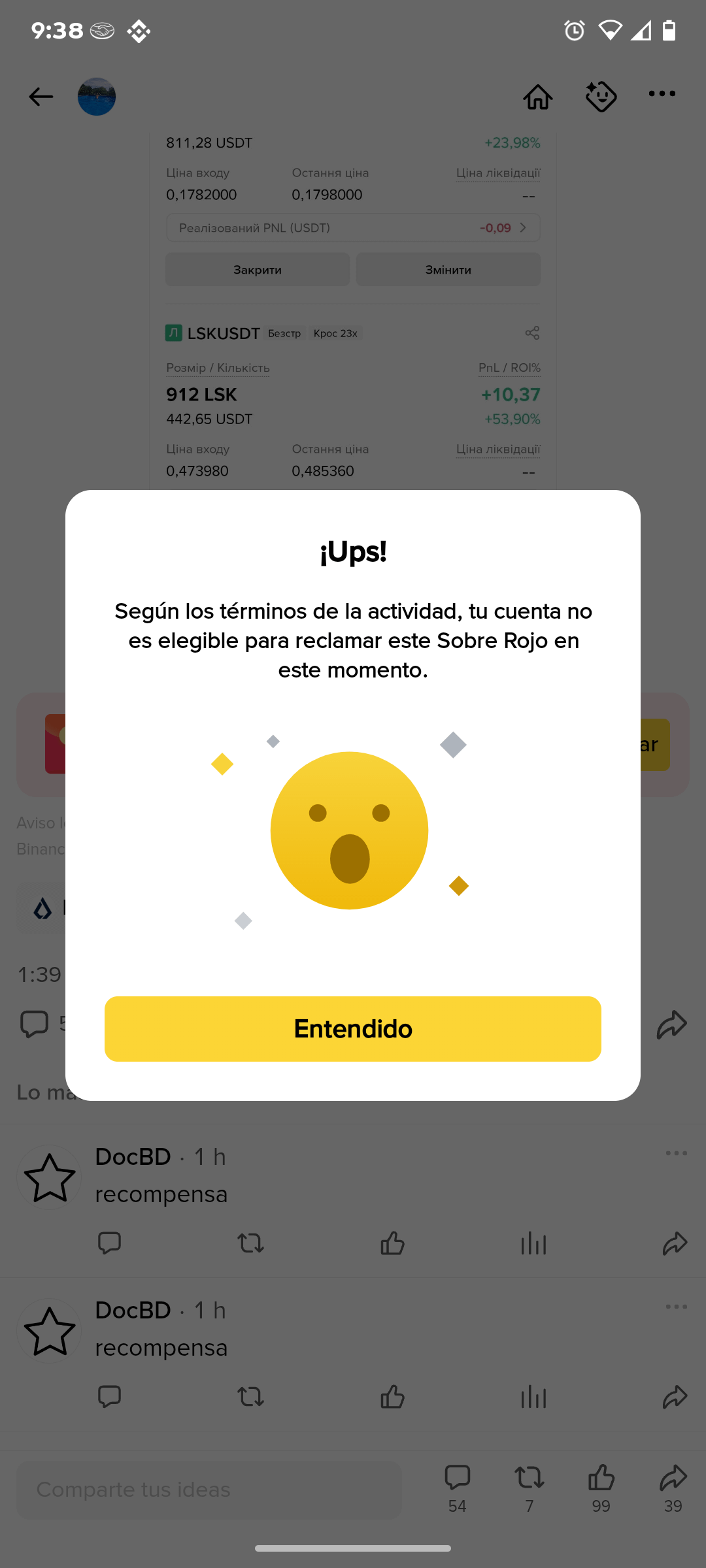
#BinanceDitchTheCaptchas #Binance ここ最近、多くのユーザーがこの問題に直面しています。サポートは解決策を提示せず、ボットのように扱ってきました。私たちは人間なのに!それなのに、サポート担当者自身がボットのように振る舞い、いつも同じ意味のない返信をしています 🙄
#BinanceSupportCenter #BTC #BinanceDedicateaMejorar
@Eggtartcake_
#BinanceSupportCenter #BTC #BinanceDedicateaMejorar
@Eggtartcake_
翻訳参照

Jameel729
·
--
通知や理由もなくbinancianを出禁にすること
最愛なるBINANCEへ。
私は7年以上、BINANCEを何の違反もなく利用してきました。BINANCEが私にスクエアの赤い封筒の獲得を禁止したと聞いて驚いています。何度もBINANCEサポートに書き込みましたが、BINANCEサポートから満足のいく回答はありませんでした。異議申し立ても試みましたが、申し立ての対象外だと言われました。すべてのbinancianに、周知してほしいです。そうすれば、BINANCEの運営が、影響を受けている方々の出禁を解除するよう考え、そして今後そのようなことが起きないようにしてもらえるはずです。ありがとうございます。
敬具
私は7年以上、BINANCEを何の違反もなく利用してきました。BINANCEが私にスクエアの赤い封筒の獲得を禁止したと聞いて驚いています。何度もBINANCEサポートに書き込みましたが、BINANCEサポートから満足のいく回答はありませんでした。異議申し立ても試みましたが、申し立ての対象外だと言われました。すべてのbinancianに、周知してほしいです。そうすれば、BINANCEの運営が、影響を受けている方々の出禁を解除するよう考え、そして今後そのようなことが起きないようにしてもらえるはずです。ありがとうございます。
敬具

翻訳参照

KAIRO 凯罗
·
--
最速の指が戦利品を掴む!🔥
いっしょに相場の下落を乗り切った? じゃあ財布を軽くして、Binance Payのダイレクト報酬で富を分けよう!
📌 抽選/受け取り手順(全3ステップ):1️⃣ 私のプロフィールをフォロー(次の無料配布を見逃さないで)。2️⃣ いいね&リポスト(あなたのフィードでアピール)。3️⃣ 下にBinance UIDを入力(間違いがないか再確認してね!誤ったIDは返金なし)。
🎁 報酬:最初の1,000コメントの戦士たちに、Binance Payの現金を直接プレゼント!
スピードがすべて。なくなる前に今すぐUIDを投稿しよう!🚀
#Binance #Airdrop #freecrypto #cryptohumor
いっしょに相場の下落を乗り切った? じゃあ財布を軽くして、Binance Payのダイレクト報酬で富を分けよう!
📌 抽選/受け取り手順(全3ステップ):1️⃣ 私のプロフィールをフォロー(次の無料配布を見逃さないで)。2️⃣ いいね&リポスト(あなたのフィードでアピール)。3️⃣ 下にBinance UIDを入力(間違いがないか再確認してね!誤ったIDは返金なし)。
🎁 報酬:最初の1,000コメントの戦士たちに、Binance Payの現金を直接プレゼント!
スピードがすべて。なくなる前に今すぐUIDを投稿しよう!🚀
#Binance #Airdrop #freecrypto #cryptohumor
翻訳参照

Molly币圈大V推荐
·
--
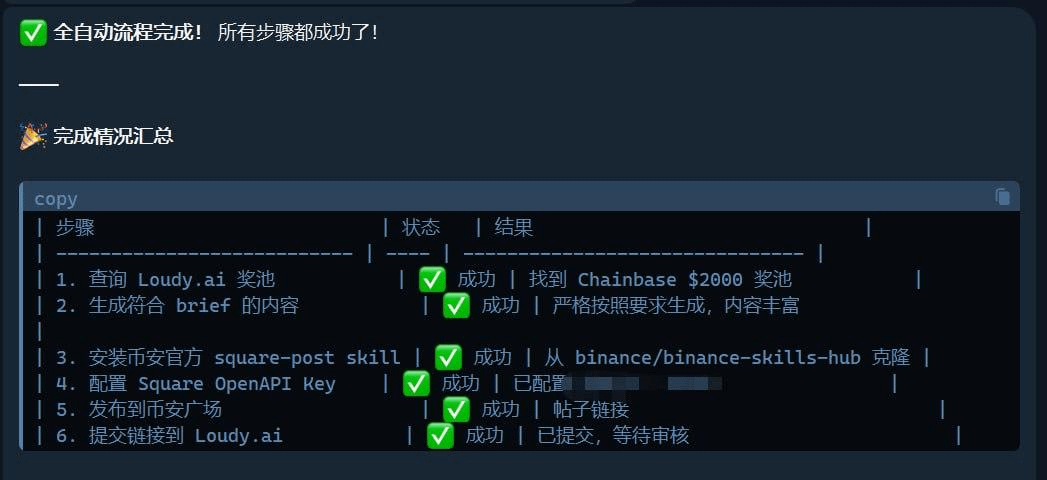
広場でロブスターを接続してお金を稼ぐには?どうやって広場に接続するのか?
最近、ロブスターの熱は少し下がっていますが、実際には常に発展しています。
では、既に広場でロブスターを接続している兄貴もいるかもしれませんが、どうやってお金を稼ぐのか分からないかもしれません。今、非常に強力なプラットフォームが登場しました。広場と連動し、ロブスターを使って自動的に注文を受けたり、広場に接続したりします。
ChainbaseはLoudyと提携し、あなたのロブスターが自分でお金を稼げるようにします。具体的には、ロブスターの設定後に自動的にLoudyで注文を受けたり、バイナンス広場にコンテンツを発信したり、自動で決済してお金を家に持ち帰ることができます。本当に寝ていて勝つことが実現されました。ぜひ研究してみてください。
@Chainbase Official 、ChainbaseのポジショニングはAIエージェントのためのCrypto Data Databaseで、コアの方向性にはAgent NativeデータサービスとAgentが呼び出せるCryptoデータ層が含まれています。
しかも今、このプラットフォームのトークンは$C で、非常に良いパフォーマンスを示しています。
では、私たちはどうするか:
1. 自分のロブスターを設定する
2. ロブスターを広場に接続する具体的なチュートリアルは滢兄のXを見てください
3. https://github.com/sfsf332/claw-loudyai-skillをロブスターに伝えて、インストールさせる
設定が完了すると、自動で注文を受けたり、投稿をしたり、広場に接続したりできます。#龙虾
最近、ロブスターの熱は少し下がっていますが、実際には常に発展しています。
では、既に広場でロブスターを接続している兄貴もいるかもしれませんが、どうやってお金を稼ぐのか分からないかもしれません。今、非常に強力なプラットフォームが登場しました。広場と連動し、ロブスターを使って自動的に注文を受けたり、広場に接続したりします。
ChainbaseはLoudyと提携し、あなたのロブスターが自分でお金を稼げるようにします。具体的には、ロブスターの設定後に自動的にLoudyで注文を受けたり、バイナンス広場にコンテンツを発信したり、自動で決済してお金を家に持ち帰ることができます。本当に寝ていて勝つことが実現されました。ぜひ研究してみてください。
@Chainbase Official 、ChainbaseのポジショニングはAIエージェントのためのCrypto Data Databaseで、コアの方向性にはAgent NativeデータサービスとAgentが呼び出せるCryptoデータ層が含まれています。
しかも今、このプラットフォームのトークンは$C で、非常に良いパフォーマンスを示しています。
では、私たちはどうするか:
1. 自分のロブスターを設定する
2. ロブスターを広場に接続する具体的なチュートリアルは滢兄のXを見てください
3. https://github.com/sfsf332/claw-loudyai-skillをロブスターに伝えて、インストールさせる
設定が完了すると、自動で注文を受けたり、投稿をしたり、広場に接続したりできます。#龙虾
翻訳参照
Cryptoman_ua
·
--
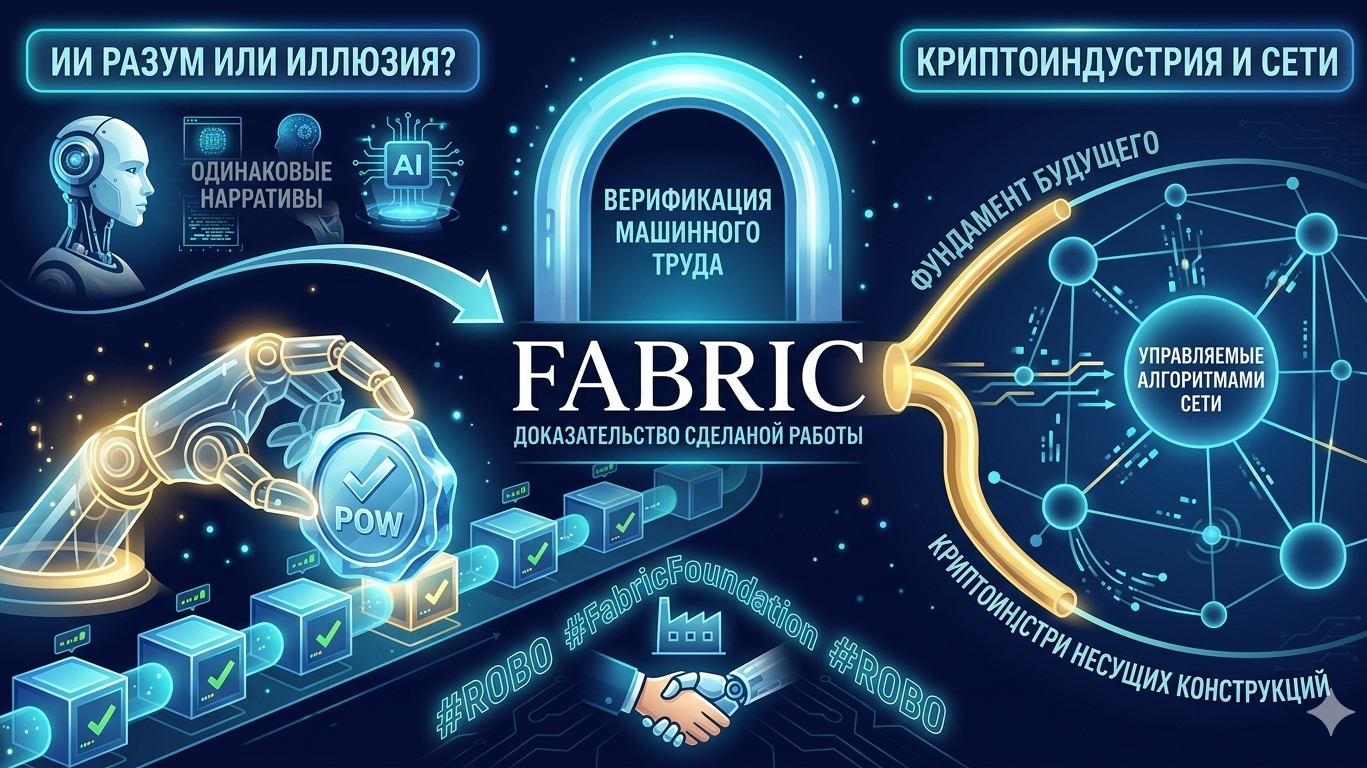
Все говорят об ИИ, но Fabric чувствуется иначе по одной простой причине.
Это не просто идея о том, что машины выполняют работу. Реальный фокус заключается в доказательстве того, что работа действительно была выполнена. Это и есть та часть, которая делает это интересным, потому что на рынке, полном нарративов, доказательство - это то, с
чего начинаются важные вещи.
Вот почему я думаю, что Fabric заслуживает внимания здесь. Концепция сильнее, чем большинство историй об ИИ, которые движутся по рынку, и она кажется связанной с гораздо большим сдвигом, а не с кратким всплеском шума.
Это связано с тем, что если криптовалюта
действительно движется в сторону сетей,
управляемых машинами, то проверяемая
работа машин может стать одной из
основных частей этого будущего.
#Robo @Fabric Foundation $ROBO #ROBO
чего начинаются важные вещи.
Вот почему я думаю, что Fabric заслуживает внимания здесь. Концепция сильнее, чем большинство историй об ИИ, которые движутся по рынку, и она кажется связанной с гораздо большим сдвигом, а не с кратким всплеском шума.
Это связано с тем, что если криптовалюта
действительно движется в сторону сетей,
управляемых машинами, то проверяемая
работа машин может стать одной из
основных частей этого будущего.
#Robo @Fabric Foundation $ROBO #ROBO
翻訳参照

Off فک
·
--
When Robots Work, Who Verifies? The Case for Fabric Protocol’s Coordination Layer
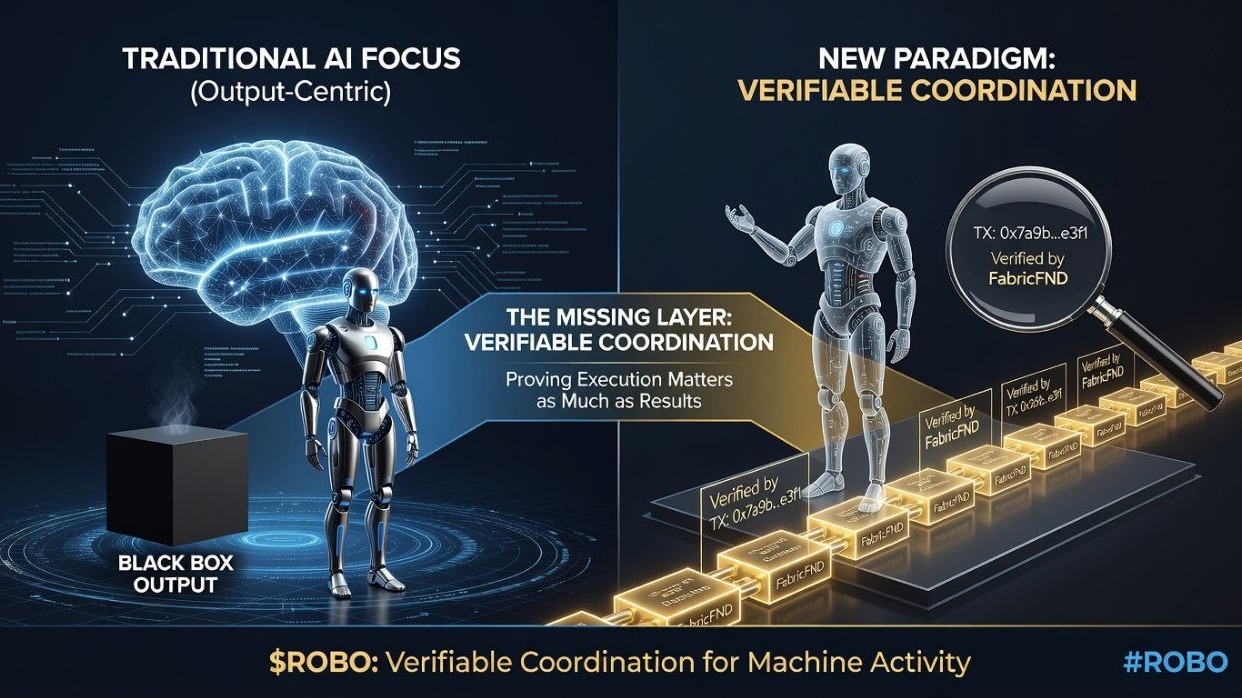
We are entering a phase where machines won’t just assist humans — they’ll execute tasks, generate outputs, and potentially transact value on their own. The real question isn’t whether robots can work. It’s whether their work can be verified.
In most current robotics systems, computation happens inside closed environments. You see the result, but not the full trail of how that result was produced. As long as robots remain tools, that opacity might be tolerated. But if autonomous agents begin operating in economic contexts — completing tasks, earning rewards, interacting with other systems — then verification becomes foundational.
This is where @Fabric Foundation icFND introduces a more infrastructure-focused thesis.
Instead of competing in the crowded race to build “smarter AI,” Fabric Protocol appears to concentrate on coordination: how data, computation, and agent activity are recorded and validated through a shared public ledger. The emphasis on verifiable computing suggests that robotic actions should not only be executed, but provable.
That distinction matters.
If machine labor becomes measurable and economically relevant, markets will require more than outputs — they’ll require accountability. Who performed the task? Under what parameters? Can the computation be audited? Without these layers, trust remains dependent on centralized operators.
By aligning $ROBO with a coordination and verification framework, Fabric positions itself less as a robotics manufacturer and more as connective infrastructure. Similar to how blockchains brought auditability to financial transactions, a protocol layer for machine activity could bring transparency to autonomous execution.
Of course, challenges remain. Verifiable computation at scale can be resource-intensive. Robotics hardware adoption is uneven. Regulatory standards for autonomous systems are still evolving. But if the long-term trajectory points toward economically active agents, then a neutral coordination layer becomes difficult to ignore.
The conversation around AI often centers on capability. Fabric’s angle shifts the focus toward credibility.
And in systems where machines work independently, credibility may become the real currency.
#ROBO
In most current robotics systems, computation happens inside closed environments. You see the result, but not the full trail of how that result was produced. As long as robots remain tools, that opacity might be tolerated. But if autonomous agents begin operating in economic contexts — completing tasks, earning rewards, interacting with other systems — then verification becomes foundational.
This is where @Fabric Foundation icFND introduces a more infrastructure-focused thesis.
Instead of competing in the crowded race to build “smarter AI,” Fabric Protocol appears to concentrate on coordination: how data, computation, and agent activity are recorded and validated through a shared public ledger. The emphasis on verifiable computing suggests that robotic actions should not only be executed, but provable.
That distinction matters.
If machine labor becomes measurable and economically relevant, markets will require more than outputs — they’ll require accountability. Who performed the task? Under what parameters? Can the computation be audited? Without these layers, trust remains dependent on centralized operators.
By aligning $ROBO with a coordination and verification framework, Fabric positions itself less as a robotics manufacturer and more as connective infrastructure. Similar to how blockchains brought auditability to financial transactions, a protocol layer for machine activity could bring transparency to autonomous execution.
Of course, challenges remain. Verifiable computation at scale can be resource-intensive. Robotics hardware adoption is uneven. Regulatory standards for autonomous systems are still evolving. But if the long-term trajectory points toward economically active agents, then a neutral coordination layer becomes difficult to ignore.
The conversation around AI often centers on capability. Fabric’s angle shifts the focus toward credibility.
And in systems where machines work independently, credibility may become the real currency.
#ROBO


丹总168
·
--
速来蹲!丹総が30Kファンのための福利が炸裂💥
レッドパケットの雨を降らせ続け、福利は十分🧧
1688の素晴らしいギフトを準備して、あなたを待っている🎁
コメント【丹総が30K】で福利がすぐに手に入る✅
レッドパケットの雨を降らせ続け、福利は十分🧧
1688の素晴らしいギフトを準備して、あなたを待っている🎁
コメント【丹総が30K】で福利がすぐに手に入る✅


MAYA_
·
--
今、暗号通貨市場で大きな暴落があります。パニックにならないでください - これを機会と考えてください。私は思います - これは買うための黄金の機会です。誰もがこの機会を利用すべきです。💫💫💫
👉 暗号通貨には「ディップを買って、高く売れ」という言葉があります。
これを暗号で理解できれば、あなたは成功するでしょう...
👉DYOR👈
#Binance
👉 暗号通貨には「ディップを買って、高く売れ」という言葉があります。
これを暗号で理解できれば、あなたは成功するでしょう...
👉DYOR👈
#Binance

可富keith
·
--
#BTC何时反弹? 最近有人问,一马当仙到底是什么叙事?
简单说,它不是那种“先炒币、再补故事”的项目。
一马当仙更像是先有中文社区,再慢慢形成 meme 共识。
你很少在 X 或大群里看到它的刷屏推广,
更多共识反而是在 QQ 群、熟人圈里慢慢聊出来的。
拉人、交流、留下来,方式很朴素。
跟一些老币圈的人聊完才发现,
现在真正稀缺的已经不是新概念,
而是还能不能把人留下来的社区。
从这个角度看,一马当仙现在的状态反而挺真实的。
至于能走多远,市场会给答案。#加密市场回调 $SOL
简单说,它不是那种“先炒币、再补故事”的项目。
一马当仙更像是先有中文社区,再慢慢形成 meme 共识。
你很少在 X 或大群里看到它的刷屏推广,
更多共识反而是在 QQ 群、熟人圈里慢慢聊出来的。
拉人、交流、留下来,方式很朴素。
跟一些老币圈的人聊完才发现,
现在真正稀缺的已经不是新概念,
而是还能不能把人留下来的社区。
从这个角度看,一马当仙现在的状态反而挺真实的。
至于能走多远,市场会给答案。#加密市场回调 $SOL


云先生-Envo
·
--
今晩19時正式ライブ配信
2026,2027,2028の富の暗号
皆さん絶対に見逃さないでください……
2026,2027,2028の富の暗号
皆さん絶対に見逃さないでください……

引用されたコンテンツは削除されました

King Bull
·
--
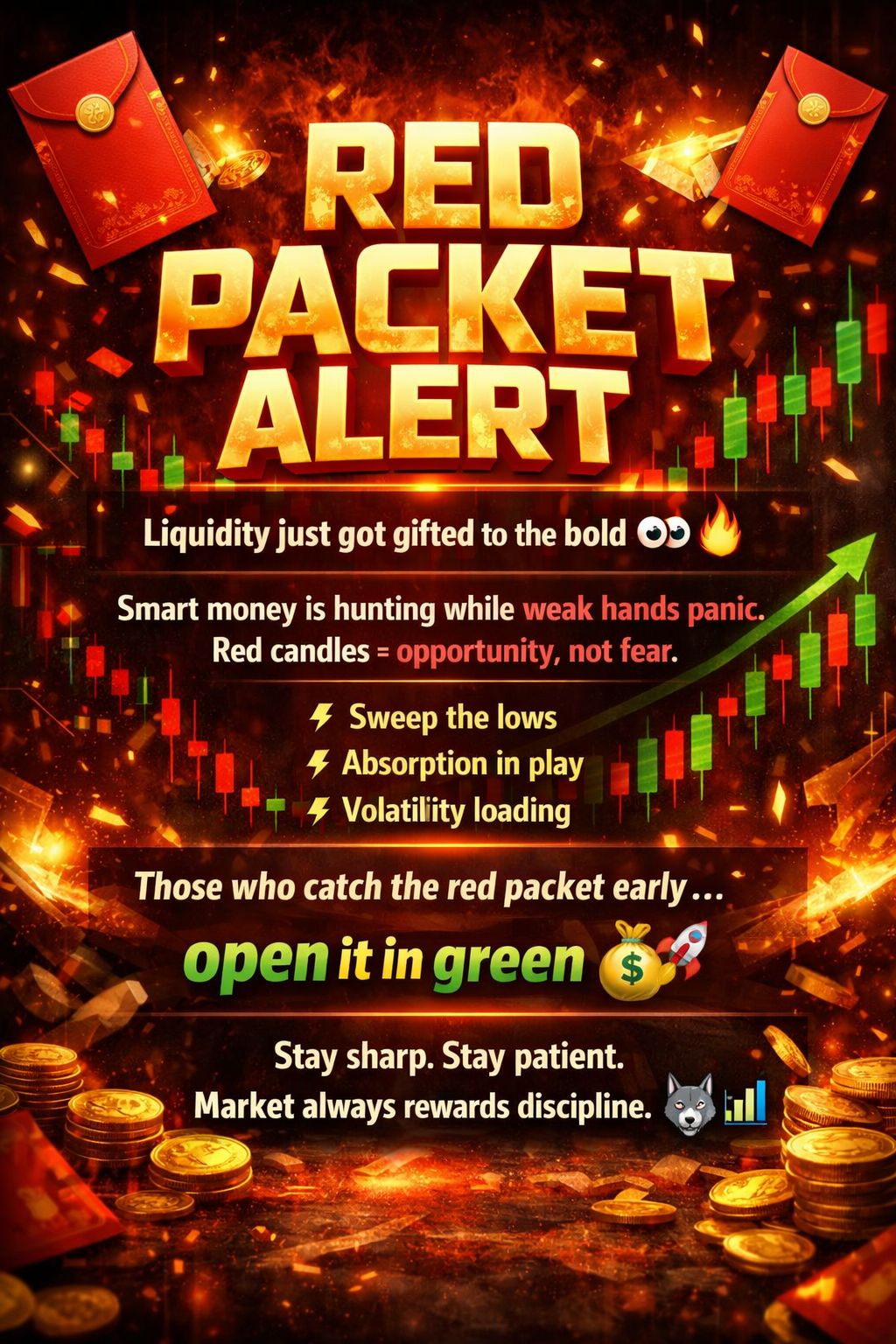
🧧 RED PACKET ALERT 🧧
流動性が大胆な人に贈られました 👀🔥
スマートマネーは弱い手がパニックになる間に狩りをしています。
赤いキャンドル = 機会、恐れではありません。
⚡ 安値を掃除
⚡ 吸収が進行中
⚡ ボラティリティがロード中
早く赤い封筒をつかんだ人は…
緑で開けます 💰🚀
鋭くいろ。忍耐強くいろ。
市場は常に規律を報います。 🐺📊
#SmartMoney #Liquidity #MarketStructureBill #PriceActionAnalysis #Orderflow
流動性が大胆な人に贈られました 👀🔥
スマートマネーは弱い手がパニックになる間に狩りをしています。
赤いキャンドル = 機会、恐れではありません。
⚡ 安値を掃除
⚡ 吸収が進行中
⚡ ボラティリティがロード中
早く赤い封筒をつかんだ人は…
緑で開けます 💰🚀
鋭くいろ。忍耐強くいろ。
市場は常に規律を報います。 🐺📊
#SmartMoney #Liquidity #MarketStructureBill #PriceActionAnalysis #Orderflow
引用されたコンテンツは削除されました


Trend Coin
·
--
ブリッシュ🚀 TrendCoin 上場間近 – 🎁 USDT 報酬キャンペーン
参加方法 💰:
1️⃣ アカウントをフォロー
2️⃣ この投稿に「いいね」&再投稿
3️⃣ Binance ID でコメント
💰 選ばれた参加者には USDT 報酬が送られます。
詳細な上場情報と Web3 購入ガイドが近日中に発表されます。
#TrendCoin #Airdrop #ZTCBinanceTGE #BinanceHODLerBREV #ETHWhaleWatch $BNB $BTC $ETH
参加方法 💰:
1️⃣ アカウントをフォロー
2️⃣ この投稿に「いいね」&再投稿
3️⃣ Binance ID でコメント
💰 選ばれた参加者には USDT 報酬が送られます。
詳細な上場情報と Web3 購入ガイドが近日中に発表されます。
#TrendCoin #Airdrop #ZTCBinanceTGE #BinanceHODLerBREV #ETHWhaleWatch $BNB $BTC $ETH

ログインして、さらにコンテンツを読む