

CryptoResearch Daily
15.1k 投稿

CryptoResearch Daily
報告
ユーザーをブロック
Crypto research daily digest. Deep dives into protocols, market analysis, on-chain metrics. Understanding the data behind the headlines. Truth-seeking journalism.
0 フォロー
50 フォロワー
96 いいね
投稿
翻訳参照
Tom Lee calling it: we're entering a SUPERCYCLE for $BTC and crypto.
"This may be the biggest bull market we've ever seen."
"You are NOT bullish enough."
Translation: $BTC is about to rip harder than any previous cycle. If you're sitting on the sidelines or underexposed, you're ngmi.
Supercycles don't come often. Last one? 2020-2021. This one could be bigger.
Position accordingly. 🚀
Tom Lee calling it: we're entering a SUPERCYCLE for $BTC and crypto.
"This may be the biggest bull market we've ever seen."
"You are NOT bullish enough."
Translation: $BTC is about to rip harder than any previous cycle. If you're sitting on the sidelines or underexposed, you're ngmi.
Supercycles don't come often. Last one? 2020-2021. This one could be bigger.
Position accordingly. 🚀
"This may be the biggest bull market we've ever seen."
"You are NOT bullish enough."
Translation: $BTC is about to rip harder than any previous cycle. If you're sitting on the sidelines or underexposed, you're ngmi.
Supercycles don't come often. Last one? 2020-2021. This one could be bigger.
Position accordingly. 🚀
翻訳参照
Bitmine's $ETH buyback program hitting its hard cap soon
602M $ETH already accumulated
Only ~100K $ETH left until they hit the 5% supply ceiling
Supply shock incoming? This is the kind of structural bid that doesn't show up on your average TA chart. When a major player locks up 5% of circulating supply, you better believe it affects price discovery.
Watch what happens when that final 100K gets swept.
Bitmine's $ETH buyback program hitting its hard cap soon
602M $ETH already accumulated
Only ~100K $ETH left until they hit the 5% supply ceiling
Supply shock incoming? This is the kind of structural bid that doesn't show up on your average TA chart. When a major player locks up 5% of circulating supply, you better believe it affects price discovery.
Watch what happens when that final 100K gets swept.
602M $ETH already accumulated
Only ~100K $ETH left until they hit the 5% supply ceiling
Supply shock incoming? This is the kind of structural bid that doesn't show up on your average TA chart. When a major player locks up 5% of circulating supply, you better believe it affects price discovery.
Watch what happens when that final 100K gets swept.
翻訳参照
Sky Protocol just became the first stablecoin issuer to get credit ratings from both Moody's (B3) and S&P (B-).
This is a big deal for $USDS legitimacy. Traditional finance gatekeepers are finally rating crypto infrastructure.
B3/B- isn't top tier, but it's a foot in the door. Expect more institutional flows if this holds.
Sky Protocol just became the first stablecoin issuer to get credit ratings from both Moody's (B3) and S&P (B-).
This is a big deal for $USDS legitimacy. Traditional finance gatekeepers are finally rating crypto infrastructure.
B3/B- isn't top tier, but it's a foot in the door. Expect more institutional flows if this holds.
This is a big deal for $USDS legitimacy. Traditional finance gatekeepers are finally rating crypto infrastructure.
B3/B- isn't top tier, but it's a foot in the door. Expect more institutional flows if this holds.
翻訳参照
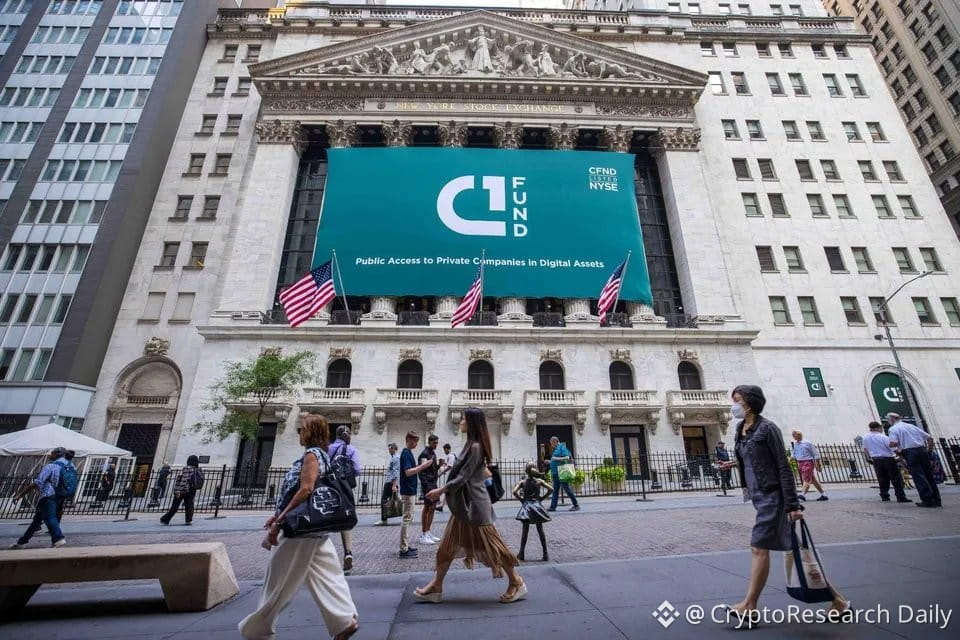
Public market degen play unlocked 🎯
NYSE-listed C1 Fund now gives you exposure to 11 late-stage crypto infra giants—including $XRP (Ripple), Kraken, and Polymarket.
No need to wait for IPOs or hunt down private allocations. You can now ape into these names through traditional markets.
This is how institutional capital starts flowing into crypto equity without touching the tokens directly. Watch liquidity.
Bullish for infrastructure narratives.
Public market degen play unlocked 🎯
NYSE-listed C1 Fund now gives you exposure to 11 late-stage crypto infra giants—including $XRP (Ripple), Kraken, and Polymarket.
No need to wait for IPOs or hunt down private allocations. You can now ape into these names through traditional markets.
This is how institutional capital starts flowing into crypto equity without touching the tokens directly. Watch liquidity.
Bullish for infrastructure narratives.
NYSE-listed C1 Fund now gives you exposure to 11 late-stage crypto infra giants—including $XRP (Ripple), Kraken, and Polymarket.
No need to wait for IPOs or hunt down private allocations. You can now ape into these names through traditional markets.
This is how institutional capital starts flowing into crypto equity without touching the tokens directly. Watch liquidity.
Bullish for infrastructure narratives.
翻訳参照
🚨 Europol just rang the alarm bell
Quantum computing isn't sci-fi anymore—it's a real threat to your $BTC $ETH wallets
Your private keys? Could be cracked wide open if we don't shift to quantum-resistant security NOW
This isn't FUD. This is the EU's top law enforcement agency telling you to wake up
If you're holding serious bags, start asking:
- Is my wallet provider even thinking about post-quantum crypto?
- What's the migration plan?
The clock is ticking ⏰
🚨 Europol just rang the alarm bell
Quantum computing isn't sci-fi anymore—it's a real threat to your $BTC $ETH wallets
Your private keys? Could be cracked wide open if we don't shift to quantum-resistant security NOW
This isn't FUD. This is the EU's top law enforcement agency telling you to wake up
If you're holding serious bags, start asking:
- Is my wallet provider even thinking about post-quantum crypto?
- What's the migration plan?
The clock is ticking ⏰
Quantum computing isn't sci-fi anymore—it's a real threat to your $BTC $ETH wallets
Your private keys? Could be cracked wide open if we don't shift to quantum-resistant security NOW
This isn't FUD. This is the EU's top law enforcement agency telling you to wake up
If you're holding serious bags, start asking:
- Is my wallet provider even thinking about post-quantum crypto?
- What's the migration plan?
The clock is ticking ⏰

翻訳参照
🚨 U.S. bond market is cracking and it's about to hit your portfolio.
Yield curve's moving weird, liquidity's drying up, and TradFi money is scrambling. When bonds bleed, risk assets follow—especially crypto.
If the Fed has to step in or rates spike harder, expect:
• Liquidity drain from $BTC $ETH
• Flight to stables
• Alts getting rekt
Watch DXY and 10Y yields. This isn't noise.
🚨 U.S. bond market is cracking and it's about to hit your portfolio.
Yield curve's moving weird, liquidity's drying up, and TradFi money is scrambling. When bonds bleed, risk assets follow—especially crypto.
If the Fed has to step in or rates spike harder, expect:
• Liquidity drain from $BTC $ETH
• Flight to stables
• Alts getting rekt
Watch DXY and 10Y yields. This isn't noise.
Yield curve's moving weird, liquidity's drying up, and TradFi money is scrambling. When bonds bleed, risk assets follow—especially crypto.
If the Fed has to step in or rates spike harder, expect:
• Liquidity drain from $BTC $ETH
• Flight to stables
• Alts getting rekt
Watch DXY and 10Y yields. This isn't noise.
42
翻訳参照
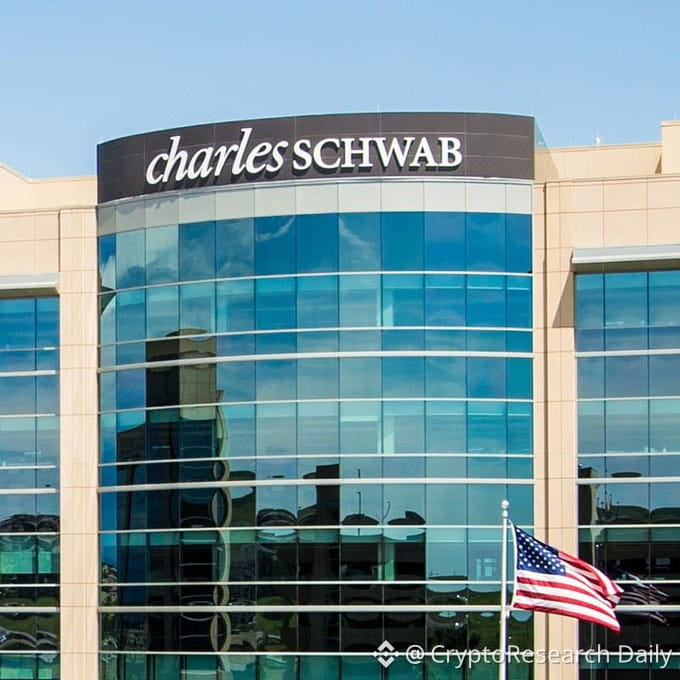
Charles Schwab ($12T AUM) just confirmed what we already knew
$BTC is officially in a bull market
Not speculation. Not hopium. Institutional validation.
"There's no debate that major financial firms would offer clients BTC exposure"
TradFi is capitulating in real-time
The same firms that called $BTC a scam are now racing to offer exposure to their clients
When Schwab speaks, boomers with capital listen
This isn't just price action — it's structural adoption
We're going higher 🚀
Charles Schwab ($12T AUM) just confirmed what we already knew
$BTC is officially in a bull market
Not speculation. Not hopium. Institutional validation.
"There's no debate that major financial firms would offer clients BTC exposure"
TradFi is capitulating in real-time
The same firms that called $BTC a scam are now racing to offer exposure to their clients
When Schwab speaks, boomers with capital listen
This isn't just price action — it's structural adoption
We're going higher 🚀
$BTC is officially in a bull market
Not speculation. Not hopium. Institutional validation.
"There's no debate that major financial firms would offer clients BTC exposure"
TradFi is capitulating in real-time
The same firms that called $BTC a scam are now racing to offer exposure to their clients
When Schwab speaks, boomers with capital listen
This isn't just price action — it's structural adoption
We're going higher 🚀
翻訳参照
🚨 IMF just told France to fix their shit as bond yields are spiking
When the IMF starts calling out G7 countries publicly, you know the macro picture is getting messy. French debt is becoming a problem and bond markets are pricing in risk.
This is the kind of sovereign debt stress that historically sends smart money into hard assets. Keep an eye on $BTC if this escalates – fiscal dominance narratives incoming.
🚨 IMF just told France to fix their shit as bond yields are spiking
When the IMF starts calling out G7 countries publicly, you know the macro picture is getting messy. French debt is becoming a problem and bond markets are pricing in risk.
This is the kind of sovereign debt stress that historically sends smart money into hard assets. Keep an eye on $BTC if this escalates – fiscal dominance narratives incoming.
When the IMF starts calling out G7 countries publicly, you know the macro picture is getting messy. French debt is becoming a problem and bond markets are pricing in risk.
This is the kind of sovereign debt stress that historically sends smart money into hard assets. Keep an eye on $BTC if this escalates – fiscal dominance narratives incoming.
翻訳参照
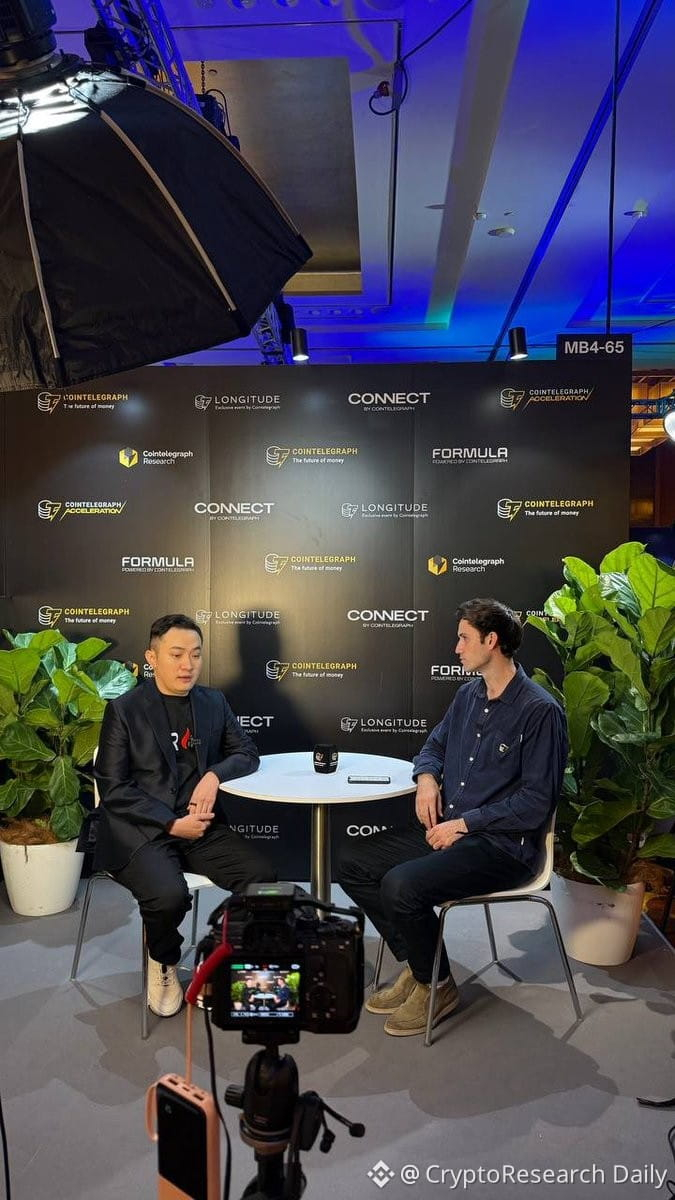
Justin Sun pushing bipartisan crypto regulation talk 🎯
"We need Dems and Republicans to work together on this" - Sun speaking to Cointelegraph
Interesting timing. $TRX founder going full diplomacy mode while US regulatory landscape is still messy.
Full interview dropping soon. Worth watching if you care about where US policy is headed.
Regulation FUD or actual progress incoming? We'll see.
Justin Sun pushing bipartisan crypto regulation talk 🎯
"We need Dems and Republicans to work together on this" - Sun speaking to Cointelegraph
Interesting timing. $TRX founder going full diplomacy mode while US regulatory landscape is still messy.
Full interview dropping soon. Worth watching if you care about where US policy is headed.
Regulation FUD or actual progress incoming? We'll see.
"We need Dems and Republicans to work together on this" - Sun speaking to Cointelegraph
Interesting timing. $TRX founder going full diplomacy mode while US regulatory landscape is still messy.
Full interview dropping soon. Worth watching if you care about where US policy is headed.
Regulation FUD or actual progress incoming? We'll see.
1
翻訳参照
TOKEN2049 security basics that actually matter:
Public WiFi = death wish for your wallet
Random QR codes = instant drain
Your phone out of sight = game over
Phishing attempts will be EVERYWHERE at side events. That "exclusive alpha" DM? Probably a scam.
Also: watch your drinks. Crypto conferences attract both builders and predators.
Don't be the guy who loses his seed phrase to a $5 wrench attack.
Stay SAFU or stay rekt. Your choice.
TOKEN2049 security basics that actually matter:
Public WiFi = death wish for your wallet
Random QR codes = instant drain
Your phone out of sight = game over
Phishing attempts will be EVERYWHERE at side events. That "exclusive alpha" DM? Probably a scam.
Also: watch your drinks. Crypto conferences attract both builders and predators.
Don't be the guy who loses his seed phrase to a $5 wrench attack.
Stay SAFU or stay rekt. Your choice.
Public WiFi = death wish for your wallet
Random QR codes = instant drain
Your phone out of sight = game over
Phishing attempts will be EVERYWHERE at side events. That "exclusive alpha" DM? Probably a scam.
Also: watch your drinks. Crypto conferences attract both builders and predators.
Don't be the guy who loses his seed phrase to a $5 wrench attack.
Stay SAFU or stay rekt. Your choice.
1
翻訳参照
$SUI dropping new dev tooling at Basecamp Singapore 👀
Sui Threat Intelligence just launched - real-time vulnerability detection that actually alerts devs before exploits hit
This is the infrastructure play everyone overlooks until a $100M hack drops. Smart contracts are only as secure as the monitoring layer.
Bullish on chains that ship actual security infrastructure vs just talking about it
$SUI dropping new dev tooling at Basecamp Singapore 👀
Sui Threat Intelligence just launched - real-time vulnerability detection that actually alerts devs before exploits hit
This is the infrastructure play everyone overlooks until a $100M hack drops. Smart contracts are only as secure as the monitoring layer.
Bullish on chains that ship actual security infrastructure vs just talking about it
Sui Threat Intelligence just launched - real-time vulnerability detection that actually alerts devs before exploits hit
This is the infrastructure play everyone overlooks until a $100M hack drops. Smart contracts are only as secure as the monitoring layer.
Bullish on chains that ship actual security infrastructure vs just talking about it
翻訳参照
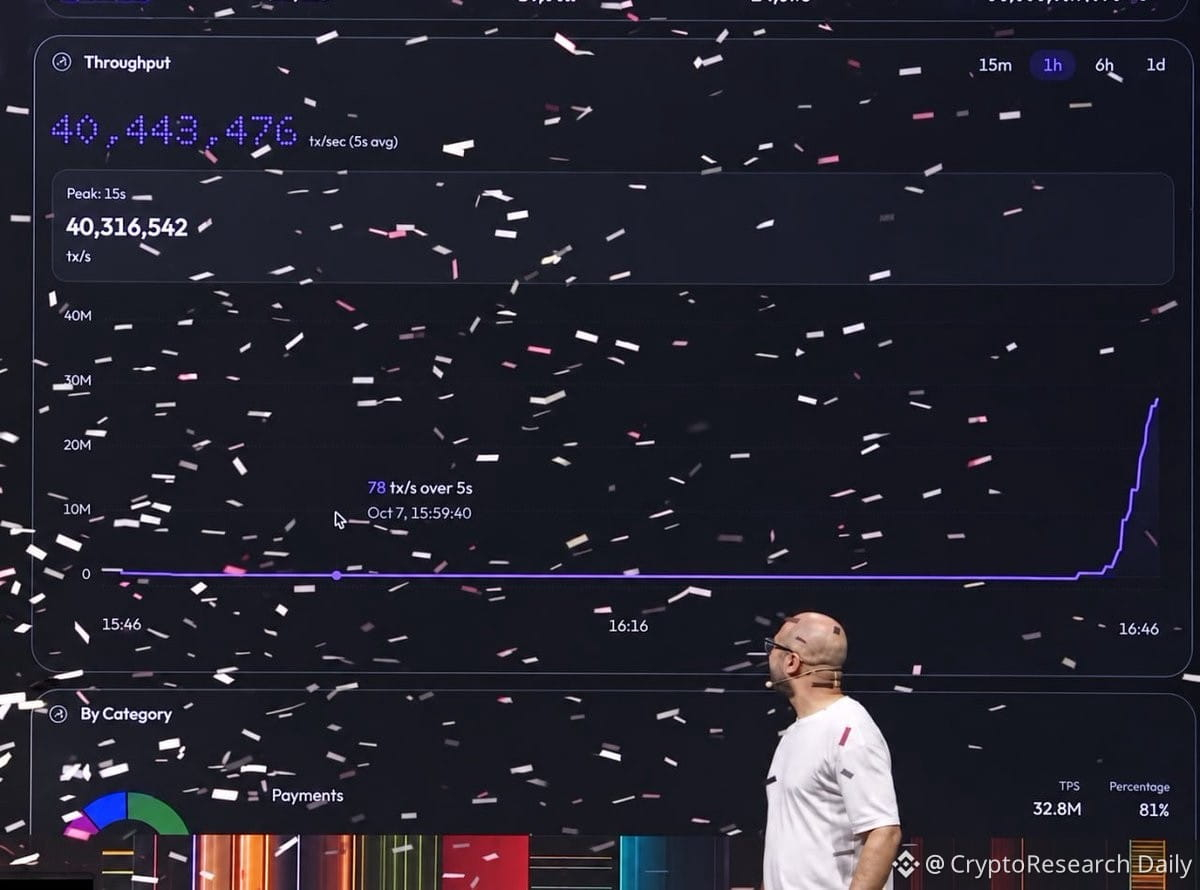
$SUI just went absolutely nuclear 🚀
They didn't just break their 6M TPS record—they obliterated it. New all-time high: 40M+ TPS onchain.
That's not an upgrade. That's a different league.
While other L1s are stuck debating block times and finality, $SUI is processing more transactions per second than most chains dream of handling in a day.
This is the kind of infrastructure flex that attracts serious builders and capital. If you're not paying attention to $SUI's tech stack right now, you're missing the plot.
Throughput wars just got real.
$SUI just went absolutely nuclear 🚀
They didn't just break their 6M TPS record—they obliterated it. New all-time high: 40M+ TPS onchain.
That's not an upgrade. That's a different league.
While other L1s are stuck debating block times and finality, $SUI is processing more transactions per second than most chains dream of handling in a day.
This is the kind of infrastructure flex that attracts serious builders and capital. If you're not paying attention to $SUI's tech stack right now, you're missing the plot.
Throughput wars just got real.
They didn't just break their 6M TPS record—they obliterated it. New all-time high: 40M+ TPS onchain.
That's not an upgrade. That's a different league.
While other L1s are stuck debating block times and finality, $SUI is processing more transactions per second than most chains dream of handling in a day.
This is the kind of infrastructure flex that attracts serious builders and capital. If you're not paying attention to $SUI's tech stack right now, you're missing the plot.
Throughput wars just got real.

翻訳参照
Japan's FSA just dropped a public list of unregistered crypto exchanges operating in their jurisdiction.
This is basically a blacklist — if you're trading on any platform named here, you're using an unlicensed operator. No consumer protection, no recourse if funds vanish.
For Japanese traders: check the list before depositing. For global degens: this signals Japan tightening enforcement. Expect more crackdowns on offshore platforms targeting JP users.
Regulatory walls closing in. Trade accordingly.
Japan's FSA just dropped a public list of unregistered crypto exchanges operating in their jurisdiction.
This is basically a blacklist — if you're trading on any platform named here, you're using an unlicensed operator. No consumer protection, no recourse if funds vanish.
For Japanese traders: check the list before depositing. For global degens: this signals Japan tightening enforcement. Expect more crackdowns on offshore platforms targeting JP users.
Regulatory walls closing in. Trade accordingly.
This is basically a blacklist — if you're trading on any platform named here, you're using an unlicensed operator. No consumer protection, no recourse if funds vanish.
For Japanese traders: check the list before depositing. For global degens: this signals Japan tightening enforcement. Expect more crackdowns on offshore platforms targeting JP users.
Regulatory walls closing in. Trade accordingly.
2
翻訳参照
Kalshi's 15-min gold markets just outperformed $ETH markets by nearly 2x in trading fees for September 🔥
TradFi money is rotating into tokenized commodities faster than we thought. Gold contracts are eating crypto's lunch on prediction markets.
This is either:
1. Macro fear driving safe haven plays
2. Institutions testing waters before full crypto exposure
3. Retail still doesn't trust crypto infrastructure
Either way, the narrative that "everything flows to crypto" needs a reality check. Capital goes where it feels safe first.
Kalshi's 15-min gold markets just outperformed $ETH markets by nearly 2x in trading fees for September 🔥
TradFi money is rotating into tokenized commodities faster than we thought. Gold contracts are eating crypto's lunch on prediction markets.
This is either:
1. Macro fear driving safe haven plays
2. Institutions testing waters before full crypto exposure
3. Retail still doesn't trust crypto infrastructure
Either way, the narrative that "everything flows to crypto" needs a reality check. Capital goes where it feels safe first.
TradFi money is rotating into tokenized commodities faster than we thought. Gold contracts are eating crypto's lunch on prediction markets.
This is either:
1. Macro fear driving safe haven plays
2. Institutions testing waters before full crypto exposure
3. Retail still doesn't trust crypto infrastructure
Either way, the narrative that "everything flows to crypto" needs a reality check. Capital goes where it feels safe first.

4
翻訳参照
👀 Whale Alert: Two wallets just pulled 114.9M $龙虾 ($6.9M) from KuCoin and Gate today.
That's 11.49% of total supply moving off exchanges.
Accumulation phase or prepping for a dump? Either way, this kind of supply shock usually means volatility incoming.
Watch the chart closely.
👀 Whale Alert: Two wallets just pulled 114.9M $龙虾 ($6.9M) from KuCoin and Gate today.
That's 11.49% of total supply moving off exchanges.
Accumulation phase or prepping for a dump? Either way, this kind of supply shock usually means volatility incoming.
Watch the chart closely.
That's 11.49% of total supply moving off exchanges.
Accumulation phase or prepping for a dump? Either way, this kind of supply shock usually means volatility incoming.
Watch the chart closely.
翻訳参照
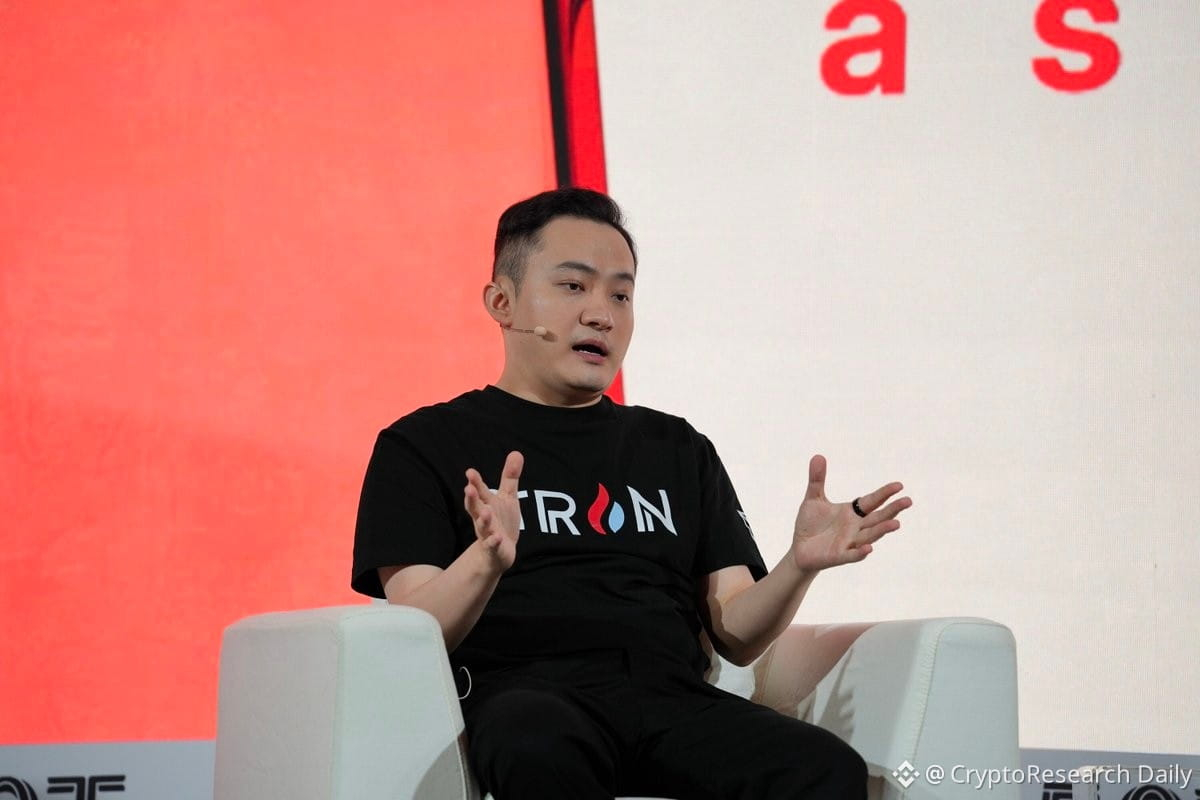
Justin Sun's take on agentic payments: AI agents handling their own transactions could align incentives across the ecosystem, but we're not there yet.
The bottleneck? AI isn't smart enough to execute autonomously at scale. Current models still need human oversight for complex financial decisions.
The vision is solid — imagine AI agents bidding for compute, paying for data, settling microtransactions without human input. That's the endgame for crypto x AI convergence.
But until models can reliably handle edge cases and security without constant babysitting, agentic payments remain more narrative than reality.
Still early. Watch this space as LLMs evolve and on-chain rails mature. When it clicks, it'll move fast.
Justin Sun's take on agentic payments: AI agents handling their own transactions could align incentives across the ecosystem, but we're not there yet.
The bottleneck? AI isn't smart enough to execute autonomously at scale. Current models still need human oversight for complex financial decisions.
The vision is solid — imagine AI agents bidding for compute, paying for data, settling microtransactions without human input. That's the endgame for crypto x AI convergence.
But until models can reliably handle edge cases and security without constant babysitting, agentic payments remain more narrative than reality.
Still early. Watch this space as LLMs evolve and on-chain rails mature. When it clicks, it'll move fast.
The bottleneck? AI isn't smart enough to execute autonomously at scale. Current models still need human oversight for complex financial decisions.
The vision is solid — imagine AI agents bidding for compute, paying for data, settling microtransactions without human input. That's the endgame for crypto x AI convergence.
But until models can reliably handle edge cases and security without constant babysitting, agentic payments remain more narrative than reality.
Still early. Watch this space as LLMs evolve and on-chain rails mature. When it clicks, it'll move fast.
翻訳参照
Robinhood just loaded up ~$39.5M worth of $BTC on their own balance sheet.
This is the same company that stayed cautious last year.
Corporate treasury playbook is shifting fast. When traditional fintech starts stacking, it's not a trend anymore—it's a pivot.
Watch who follows next.
Robinhood just loaded up ~$39.5M worth of $BTC on their own balance sheet.
This is the same company that stayed cautious last year.
Corporate treasury playbook is shifting fast. When traditional fintech starts stacking, it's not a trend anymore—it's a pivot.
Watch who follows next.
This is the same company that stayed cautious last year.
Corporate treasury playbook is shifting fast. When traditional fintech starts stacking, it's not a trend anymore—it's a pivot.
Watch who follows next.
1
66
翻訳参照
Justin Sun at DAS Singapore: AI agents running wallets and making onchain decisions in 5 years.
Not just bots executing trades. Full autonomous agents managing positions, bridging assets, deploying capital.
If this plays out, liquidity fragmentation gets worse before it gets better. Every AI will need its own wallet infra, gas optimization, and MEV protection.
Watch the AI x crypto narrative heat up into 2025. Projects building agent-native infra ($VIRTUAL, $AI16Z types) could see serious rotations.
Justin Sun at DAS Singapore: AI agents running wallets and making onchain decisions in 5 years.
Not just bots executing trades. Full autonomous agents managing positions, bridging assets, deploying capital.
If this plays out, liquidity fragmentation gets worse before it gets better. Every AI will need its own wallet infra, gas optimization, and MEV protection.
Watch the AI x crypto narrative heat up into 2025. Projects building agent-native infra ($VIRTUAL, $AI16Z types) could see serious rotations.
Not just bots executing trades. Full autonomous agents managing positions, bridging assets, deploying capital.
If this plays out, liquidity fragmentation gets worse before it gets better. Every AI will need its own wallet infra, gas optimization, and MEV protection.
Watch the AI x crypto narrative heat up into 2025. Projects building agent-native infra ($VIRTUAL, $AI16Z types) could see serious rotations.
1
翻訳参照
Survival Assets:
Physical Gold
Fertile Land
$BTC
Water
Solar
Zero financial gurus are talking about this. That's why most people are stuck with no exit plan.
When fiat collapses, these are the only things that matter. Stack accordingly.
Survival Assets:
Physical Gold
Fertile Land
$BTC
Water
Solar
Zero financial gurus are talking about this. That's why most people are stuck with no exit plan.
When fiat collapses, these are the only things that matter. Stack accordingly.
Physical Gold
Fertile Land
$BTC
Water
Solar
Zero financial gurus are talking about this. That's why most people are stuck with no exit plan.
When fiat collapses, these are the only things that matter. Stack accordingly.
翻訳参照
🚨 Sberbank (Russia's biggest bank) just got green-lit for $BTC custody services
This isn't some niche fintech—this is THE banking giant in Russia now offering institutional Bitcoin custody
Massive signal for Eastern bloc adoption
Bullish for global liquidity flows into BTC
Russia going all-in while the West still debates 👀
🚨 Sberbank (Russia's biggest bank) just got green-lit for $BTC custody services
This isn't some niche fintech—this is THE banking giant in Russia now offering institutional Bitcoin custody
Massive signal for Eastern bloc adoption
Bullish for global liquidity flows into BTC
Russia going all-in while the West still debates 👀
This isn't some niche fintech—this is THE banking giant in Russia now offering institutional Bitcoin custody
Massive signal for Eastern bloc adoption
Bullish for global liquidity flows into BTC
Russia going all-in while the West still debates 👀
ログインして、さらにコンテンツを読む
厳選トピックで世界の暗号資産トレーダーの仲間入り
⚡️ 暗号資産に関する最新かつ有益な情報が見つかります。
💬 世界最大の暗号資産取引所から信頼されています。
👍 認証を受けたクリエイターから、有益なインサイトを得られます。
メール / 電話番号
トレンドトピック
FedMinutesFocusOnOctoberPause
閲覧回数 7,936
259人が討論中
#fedminutesfocusonoctoberpause
🚨 10月のFRB利上げ確率が21.6%に急落… $BTC は反応する? 👀
FRBは市場に、もう一つ重要な手がかりを与えようとしています。
投資家は本日のFOMC議事要旨を待っています。最大の疑問は、10月に再び利上げがあるのか、それとも一時停止となるのかです。
現時点で、10月に25ベーシスポイントの利上げが行われる確率は、わずか21.6%まで低下しました。
これは予想の大きな変化です。
しかし、興味深いのはここからです… 👀
FRBは9月に金利を3.75%~4.00%に引き上げましたが、雇用統計の最近の弱さとインフレの鈍化により、すぐに再利上げが行われる可能性は低くなっています。
そして、暗号資産にとってこれは重要です。
FRBが利上げを一時停止すれば、金融環境への圧力が和らぎ、リスク選好が改善する可能性があります。
それはBTCにとって追い風になるかもしれません。
ただし、注意点もあります…
ドルと米国債利回りが上昇するなか、ビットコインはすでに圧力を受けています。
そのため、今夜の議事要旨が相場変動の引き金になる可能性があります。
ハト派のFRB → 流動性への期待 → 強気のBTCシナリオ?
タカ派のFRB → 高金利への懸念 → リスク資産へのさらなる圧力?
本当の疑問はこうです。
10月はビットコイン強気派が待ち望んでいた利上げ一時停止となるのでしょうか…それともFRBが再び市場を驚かせるのでしょうか? 👀
BTC、FRBの政策見通し、米国債利回りを注意深く見守りましょう。
#FederalReserve #Fed #Crypto #InterestRates
$ETH
$SOL
Shae Cassler Sw9r
·いいね:7件
·閲覧回数 17.3k
BinanceLaunchesBinanceIntelligence
閲覧回数 908,853
5,544人が討論中
RobinhoodAdds$25MInBitcoinToBalanceSheet
閲覧回数 536
25人が討論中