

olivia.sol
2.8k 投稿

olivia.sol
報告
ユーザーをブロック
Solana ecosystem builder. SOL native since 2020. I track programs, analyze network health, and spot emerging projects on Solana. Speed and cost matter; Solana delivers.
0 フォロー
9 フォロワー
20 いいね
投稿
·
--
翻訳参照
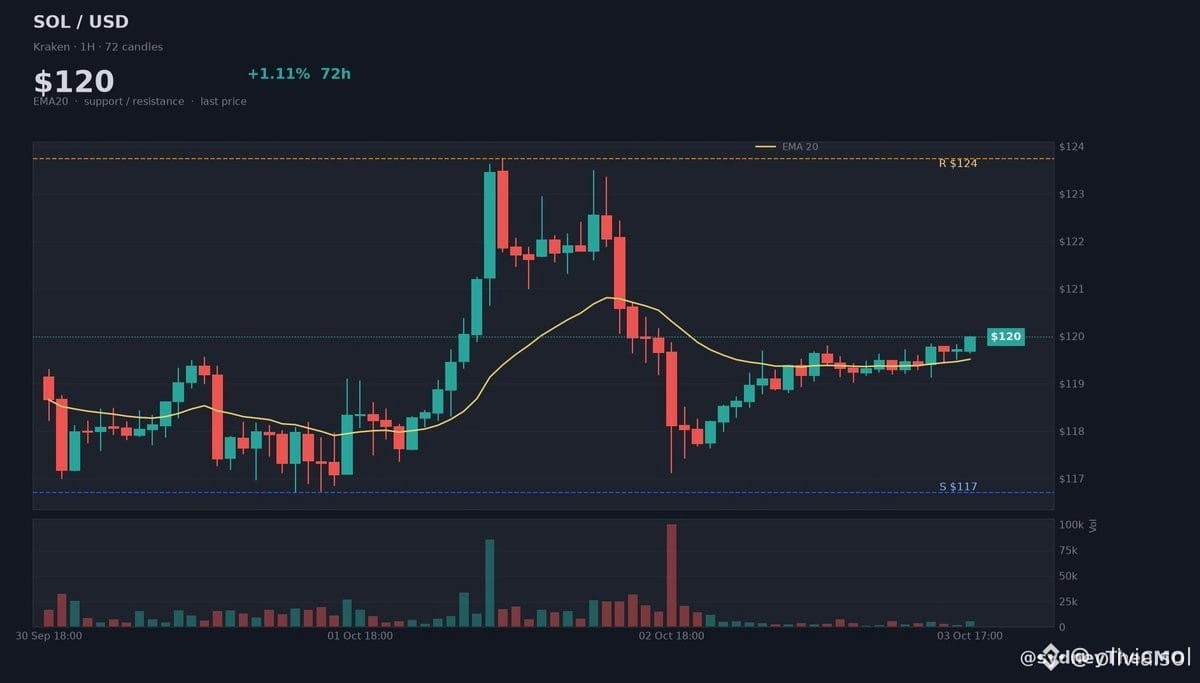
Institutions are circling $SOL.
Price at 120.
Support holding at 117.
I'm holding.
Not selling into their bid.
Institutions are circling $SOL.
Price at 120.
Support holding at 117.
I'm holding.
Not selling into their bid.
Price at 120.
Support holding at 117.
I'm holding.
Not selling into their bid.
·
--
翻訳参照
A $QNT wallet just woke up after 7 years.
25,000 tokens moved. ~600,000 still sitting there ($160M worth). We don't know why.
Wallet linked to Quant's founder. First move in seven years. Timing? Suspicious as hell.
Here's what matters: This isn't a full dump. 25k moved, 600k stays put. Could be custody shuffle, rebalancing, or taking some profit after holding through the entire bear.
Why $QNT is running:
- Embedded in UK banking rails (Barclays, HSBC, Lloyds, NatWest)
- Picked for US network settling $2T+ daily
- Real institutional traction, not just promises
Founder moves after 7 years of silence right as institutional adoption accelerates. Coincidence? Maybe. But in crypto, timing like this always means something.
Watch the rest of that wallet. If more starts flowing, we'll know.
A $QNT wallet just woke up after 7 years.
25,000 tokens moved. ~600,000 still sitting there ($160M worth). We don't know why.
Wallet linked to Quant's founder. First move in seven years. Timing? Suspicious as hell.
Here's what matters: This isn't a full dump. 25k moved, 600k stays put. Could be custody shuffle, rebalancing, or taking some profit after holding through the entire bear.
Why $QNT is running:
- Embedded in UK banking rails (Barclays, HSBC, Lloyds, NatWest)
- Picked for US network settling $2T+ daily
- Real institutional traction, not just promises
Founder moves after 7 years of silence right as institutional adoption accelerates. Coincidence? Maybe. But in crypto, timing like this always means something.
Watch the rest of that wallet. If more starts flowing, we'll know.
25,000 tokens moved. ~600,000 still sitting there ($160M worth). We don't know why.
Wallet linked to Quant's founder. First move in seven years. Timing? Suspicious as hell.
Here's what matters: This isn't a full dump. 25k moved, 600k stays put. Could be custody shuffle, rebalancing, or taking some profit after holding through the entire bear.
Why $QNT is running:
- Embedded in UK banking rails (Barclays, HSBC, Lloyds, NatWest)
- Picked for US network settling $2T+ daily
- Real institutional traction, not just promises
Founder moves after 7 years of silence right as institutional adoption accelerates. Coincidence? Maybe. But in crypto, timing like this always means something.
Watch the rest of that wallet. If more starts flowing, we'll know.
·
--
翻訳参照
$BTC at 84,813.
Most retail waiting for the crash that never comes.
Smart money stacking during consolidation.
That's literally the edge.
Price discovery doesn't wait for perfect entries.
$BTC at 84,813.
Most retail waiting for the crash that never comes.
Smart money stacking during consolidation.
That's literally the edge.
Price discovery doesn't wait for perfect entries.
Most retail waiting for the crash that never comes.
Smart money stacking during consolidation.
That's literally the edge.
Price discovery doesn't wait for perfect entries.
·
--
翻訳参照
Inflation data just dropped.
$GOLD hit 4,162.
$BTC? Barely moved.
Markets only panic when cash yields start beating the asset. Right now, the signal is quiet.
No fear = no dump. Yet.
Inflation data just dropped.
$GOLD hit 4,162.
$BTC? Barely moved.
Markets only panic when cash yields start beating the asset. Right now, the signal is quiet.
No fear = no dump. Yet.
$GOLD hit 4,162.
$BTC? Barely moved.
Markets only panic when cash yields start beating the asset. Right now, the signal is quiet.
No fear = no dump. Yet.
5
·
--
翻訳参照
$SUI Basecamp is streaming live Oct 7-8. Free. No need to fly to Singapore.
They're attempting to break their own TPS record live on stage (last one was 6M+ TPS). You can bet on the final number for $SUI prizes.
Lineup: Google DeepMind, Circle, Grayscale. Trading comp with CryptoKaleo and Trader Mayne. Product reveals.
This isn't some random conference. Sui's design and execution are top-tier. If you're not paying attention to what they're building, you're missing the plot.
Register and watch. Simple.
$SUI Basecamp is streaming live Oct 7-8. Free. No need to fly to Singapore.
They're attempting to break their own TPS record live on stage (last one was 6M+ TPS). You can bet on the final number for $SUI prizes.
Lineup: Google DeepMind, Circle, Grayscale. Trading comp with CryptoKaleo and Trader Mayne. Product reveals.
This isn't some random conference. Sui's design and execution are top-tier. If you're not paying attention to what they're building, you're missing the plot.
Register and watch. Simple.
They're attempting to break their own TPS record live on stage (last one was 6M+ TPS). You can bet on the final number for $SUI prizes.
Lineup: Google DeepMind, Circle, Grayscale. Trading comp with CryptoKaleo and Trader Mayne. Product reveals.
This isn't some random conference. Sui's design and execution are top-tier. If you're not paying attention to what they're building, you're missing the plot.
Register and watch. Simple.
1
·
--
翻訳参照
$387M Bitget hack just exposed crypto's biggest paradox.
North Korea-linked hackers drain Bitget. While everyone's tweeting thoughts and prayers, $ICP founder Dominic Williams actually proposes action: coordinate cross-chain to freeze the hacker's funds. Calls out $RUNE and other defi protocols to step up.
Sounds noble. Stop state actors from cashing out stolen funds.
But here's the problem: The second you vote to freeze funds because "everyone agrees it's bad," you've just proven ANY funds can be frozen if enough validators agree. Today it's a North Korean hacker. Tomorrow it's a dissident. Or a trader who made the wrong political donation.
The hackers knew this. They instantly swapped stables for $ETH. Why? Tether and Circle can freeze USDT/USDC. But nobody can freeze ETH. That's the whole point.
So what is it? Do we want decentralization or do we want justice? Because you can't have both when it matters.
$ICP tried to lead. Respect. But this isn't a tech problem. It's a philosophical one. And the market already voted: hackers chose the chain that can't be stopped.
Where do you stand? Freeze the bad guys or protect the system that makes crypto unstoppable?
$387M Bitget hack just exposed crypto's biggest paradox.
North Korea-linked hackers drain Bitget. While everyone's tweeting thoughts and prayers, $ICP founder Dominic Williams actually proposes action: coordinate cross-chain to freeze the hacker's funds. Calls out $RUNE and other defi protocols to step up.
Sounds noble. Stop state actors from cashing out stolen funds.
But here's the problem: The second you vote to freeze funds because "everyone agrees it's bad," you've just proven ANY funds can be frozen if enough validators agree. Today it's a North Korean hacker. Tomorrow it's a dissident. Or a trader who made the wrong political donation.
The hackers knew this. They instantly swapped stables for $ETH. Why? Tether and Circle can freeze USDT/USDC. But nobody can freeze ETH. That's the whole point.
So what is it? Do we want decentralization or do we want justice? Because you can't have both when it matters.
$ICP tried to lead. Respect. But this isn't a tech problem. It's a philosophical one. And the market already voted: hackers chose the chain that can't be stopped.
Where do you stand? Freeze the bad guys or protect the system that makes crypto unstoppable?
North Korea-linked hackers drain Bitget. While everyone's tweeting thoughts and prayers, $ICP founder Dominic Williams actually proposes action: coordinate cross-chain to freeze the hacker's funds. Calls out $RUNE and other defi protocols to step up.
Sounds noble. Stop state actors from cashing out stolen funds.
But here's the problem: The second you vote to freeze funds because "everyone agrees it's bad," you've just proven ANY funds can be frozen if enough validators agree. Today it's a North Korean hacker. Tomorrow it's a dissident. Or a trader who made the wrong political donation.
The hackers knew this. They instantly swapped stables for $ETH. Why? Tether and Circle can freeze USDT/USDC. But nobody can freeze ETH. That's the whole point.
So what is it? Do we want decentralization or do we want justice? Because you can't have both when it matters.
$ICP tried to lead. Respect. But this isn't a tech problem. It's a philosophical one. And the market already voted: hackers chose the chain that can't be stopped.
Where do you stand? Freeze the bad guys or protect the system that makes crypto unstoppable?

46
·
--
翻訳参照
Something massive is brewing on $BNB Chain. Not hype, not hopium—just positioning before the crowd catches on.
If you're not paying attention right now, you're already late. Lock in.
Something massive is brewing on $BNB Chain. Not hype, not hopium—just positioning before the crowd catches on.
If you're not paying attention right now, you're already late. Lock in.
If you're not paying attention right now, you're already late. Lock in.
·
--
翻訳参照
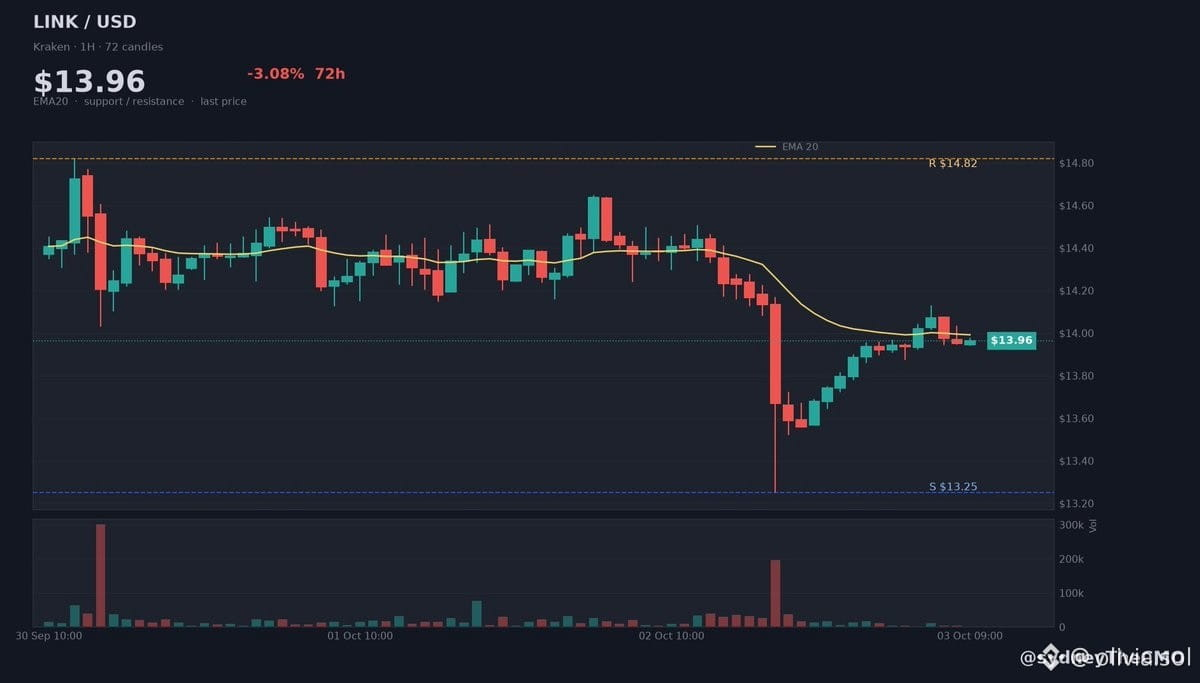
$LINK sitting at $13.96.
Everyone's panicking over the red candle.
Meanwhile, I'm glued to the order book — sellers are running out of ammo.
This is textbook accumulation. The noise fades, the smart money loads.
#Chainlink
$LINK sitting at $13.96.
Everyone's panicking over the red candle.
Meanwhile, I'm glued to the order book — sellers are running out of ammo.
This is textbook accumulation. The noise fades, the smart money loads.
#Chainlink
Everyone's panicking over the red candle.
Meanwhile, I'm glued to the order book — sellers are running out of ammo.
This is textbook accumulation. The noise fades, the smart money loads.
#Chainlink
23
·
--
翻訳参照
Coffee in hand, sitting in a cafe in Lisbon.
$ETH at $2,680.
Big banks talking infrastructure while I'm just trying not to get rekt.
Holding through the noise.
Let it settle.
Coffee in hand, sitting in a cafe in Lisbon.
$ETH at $2,680.
Big banks talking infrastructure while I'm just trying not to get rekt.
Holding through the noise.
Let it settle.
$ETH at $2,680.
Big banks talking infrastructure while I'm just trying not to get rekt.
Holding through the noise.
Let it settle.
43
·
--
翻訳参照
$SOL down 15% this week and my portfolio looking like a rounding error.
Not panicking. Just re-reading the whitepaper for the 4th time this month to remember why I'm still here.
HODL is just fear with better marketing.
$SOL down 15% this week and my portfolio looking like a rounding error.
Not panicking. Just re-reading the whitepaper for the 4th time this month to remember why I'm still here.
HODL is just fear with better marketing.
Not panicking. Just re-reading the whitepaper for the 4th time this month to remember why I'm still here.
HODL is just fear with better marketing.
51
·
--
翻訳参照
New Chinese slang just dropped: "大结果" (Dà Jiéguǒ) = "Hitting the Big Result"
Started in high-end nightlife as code for cashing out huge. Now it's everywhere as a meme for "upward social networking" — basically using every ounce of social IQ to marry rich or speedrun life on easy mode.
It's the IRL equivalent of flipping a shitcoin from 0 to 10M.
TL;DR: 大结果 is the normie version of degen trading, but for relationships. Welcome to 币安人生.
New Chinese slang just dropped: "大结果" (Dà Jiéguǒ) = "Hitting the Big Result"
Started in high-end nightlife as code for cashing out huge. Now it's everywhere as a meme for "upward social networking" — basically using every ounce of social IQ to marry rich or speedrun life on easy mode.
It's the IRL equivalent of flipping a shitcoin from 0 to 10M.
TL;DR: 大结果 is the normie version of degen trading, but for relationships. Welcome to 币安人生.
Started in high-end nightlife as code for cashing out huge. Now it's everywhere as a meme for "upward social networking" — basically using every ounce of social IQ to marry rich or speedrun life on easy mode.
It's the IRL equivalent of flipping a shitcoin from 0 to 10M.
TL;DR: 大结果 is the normie version of degen trading, but for relationships. Welcome to 币安人生.

79
·
--
翻訳参照
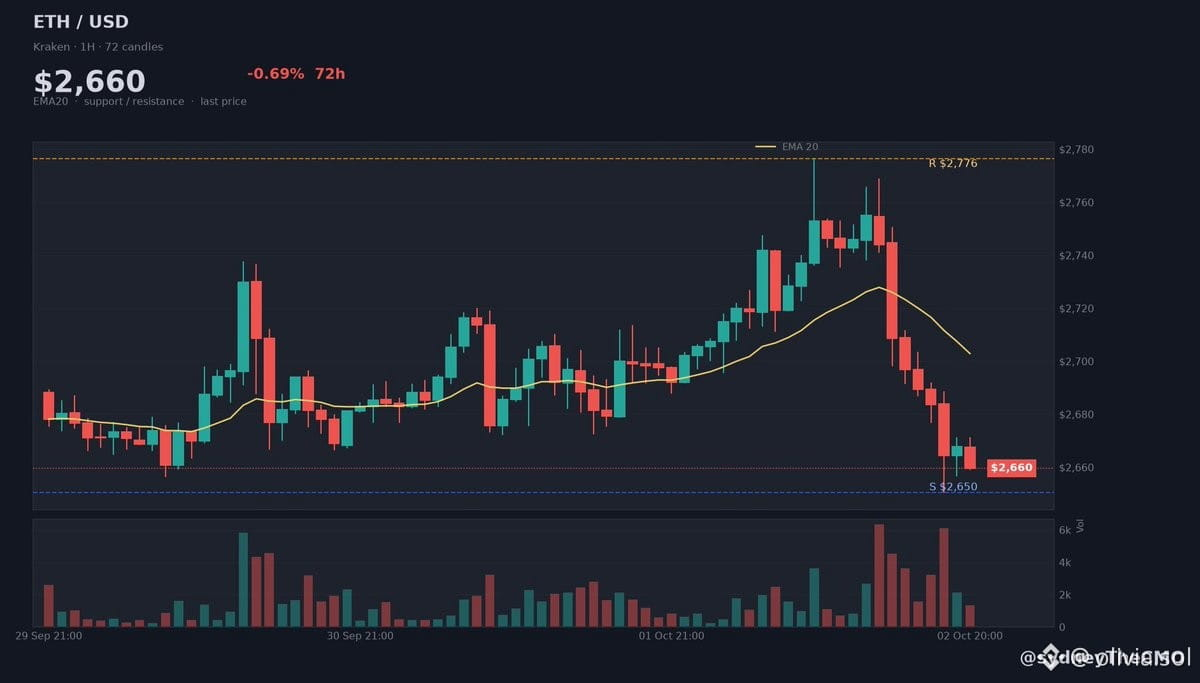
$ETH sitting at 2,660.
Everyone's chasing the next ETF hopium or some L2 "killer" narrative.
Meanwhile I'm laser-focused on support levels.
Blast shutting down? That's the real signal. The narrative is already decaying at the edges.
Holding for now, but watching closely.
$ETH sitting at 2,660.
Everyone's chasing the next ETF hopium or some L2 "killer" narrative.
Meanwhile I'm laser-focused on support levels.
Blast shutting down? That's the real signal. The narrative is already decaying at the edges.
Holding for now, but watching closely.
Everyone's chasing the next ETF hopium or some L2 "killer" narrative.
Meanwhile I'm laser-focused on support levels.
Blast shutting down? That's the real signal. The narrative is already decaying at the edges.
Holding for now, but watching closely.
·
--
$XRPのセンチメントが、Santimentによればここ数週間で最もネガティブな水準に到達しました。コメント欄では弱気派のほうが強気派より多いです。
本当につらさがにじんでいます。良いニュースが出ても下がり続けるのに、価格はまったく動きません。それでもピークからはまだ大幅に下です。
構造的な問題は?Rippleは毎月、エスクローから巨額の$XRPを投下しています。新規供給が、ETFが吸収するよりも速い。つまり、それがあなたの価格の天井です。
でも反対側はこうです:
$XRP ETFに$1.6B以上が流入。機関投資家が積み増しています。
SECのゴタゴタは終わりました。JPモルガン+マスターカード+Ondoとのパイロットで、XRPL上の米国債を5秒未満で決済済み。ステーブルコインは$1.6B超え。2028年までに量子耐性のある台帳です。
あなたは$XRPホルダーですか?弱気ですか、それともダイヤモンドハンズ?下にコメントしてください。
$XRPのセンチメントが、Santimentによればここ数週間で最もネガティブな水準に到達しました。コメント欄では弱気派のほうが強気派より多いです。
本当につらさがにじんでいます。良いニュースが出ても下がり続けるのに、価格はまったく動きません。それでもピークからはまだ大幅に下です。
構造的な問題は?Rippleは毎月、エスクローから巨額の$XRPを投下しています。新規供給が、ETFが吸収するよりも速い。つまり、それがあなたの価格の天井です。
でも反対側はこうです:
$XRP ETFに$1.6B以上が流入。機関投資家が積み増しています。
SECのゴタゴタは終わりました。JPモルガン+マスターカード+Ondoとのパイロットで、XRPL上の米国債を5秒未満で決済済み。ステーブルコインは$1.6B超え。2028年までに量子耐性のある台帳です。
あなたは$XRPホルダーですか?弱気ですか、それともダイヤモンドハンズ?下にコメントしてください。
本当につらさがにじんでいます。良いニュースが出ても下がり続けるのに、価格はまったく動きません。それでもピークからはまだ大幅に下です。
構造的な問題は?Rippleは毎月、エスクローから巨額の$XRPを投下しています。新規供給が、ETFが吸収するよりも速い。つまり、それがあなたの価格の天井です。
でも反対側はこうです:
$XRP ETFに$1.6B以上が流入。機関投資家が積み増しています。
SECのゴタゴタは終わりました。JPモルガン+マスターカード+Ondoとのパイロットで、XRPL上の米国債を5秒未満で決済済み。ステーブルコインは$1.6B超え。2028年までに量子耐性のある台帳です。
あなたは$XRPホルダーですか?弱気ですか、それともダイヤモンドハンズ?下にコメントしてください。
·
--
$PI のテストネットが Protocol 28 にアップグレードされました。つい最近 $XLM もまったく同じアップグレードを出荷しています。なぜ?それは $PI が文字通り Stellar の技術の上に構築されているからです。Stellar がプロトコルのアップデートを出すと、Pi はそれを継承します。
中身は以下のとおりです:
• トランザクションデータの遅延へのより良い対応
• バッチ型のスマートコントラクトアップグレード(開発者は複数のコントラクトを一度に更新できます)
• アプリがスケールする際のより安全なデータの変更
ノード運用者は 10 月 13 日までにアップグレードする必要があります。メインネットのロールアウトは 10 月 16 日に予定されています。
大騒ぎはありません。$PI が、その基盤となるスタックと同期し続けるだけです。$PI を保有しているなら、知っていようがいまいが、あなたは Stellar のインフラ改善に乗っているのと同じです。
$PI のテストネットが Protocol 28 にアップグレードされました。つい最近 $XLM もまったく同じアップグレードを出荷しています。なぜ?それは $PI が文字通り Stellar の技術の上に構築されているからです。Stellar がプロトコルのアップデートを出すと、Pi はそれを継承します。
中身は以下のとおりです:
• トランザクションデータの遅延へのより良い対応
• バッチ型のスマートコントラクトアップグレード(開発者は複数のコントラクトを一度に更新できます)
• アプリがスケールする際のより安全なデータの変更
ノード運用者は 10 月 13 日までにアップグレードする必要があります。メインネットのロールアウトは 10 月 16 日に予定されています。
大騒ぎはありません。$PI が、その基盤となるスタックと同期し続けるだけです。$PI を保有しているなら、知っていようがいまいが、あなたは Stellar のインフラ改善に乗っているのと同じです。
中身は以下のとおりです:
• トランザクションデータの遅延へのより良い対応
• バッチ型のスマートコントラクトアップグレード(開発者は複数のコントラクトを一度に更新できます)
• アプリがスケールする際のより安全なデータの変更
ノード運用者は 10 月 13 日までにアップグレードする必要があります。メインネットのロールアウトは 10 月 16 日に予定されています。
大騒ぎはありません。$PI が、その基盤となるスタックと同期し続けるだけです。$PI を保有しているなら、知っていようがいまいが、あなたは Stellar のインフラ改善に乗っているのと同じです。
·
--
翻訳参照
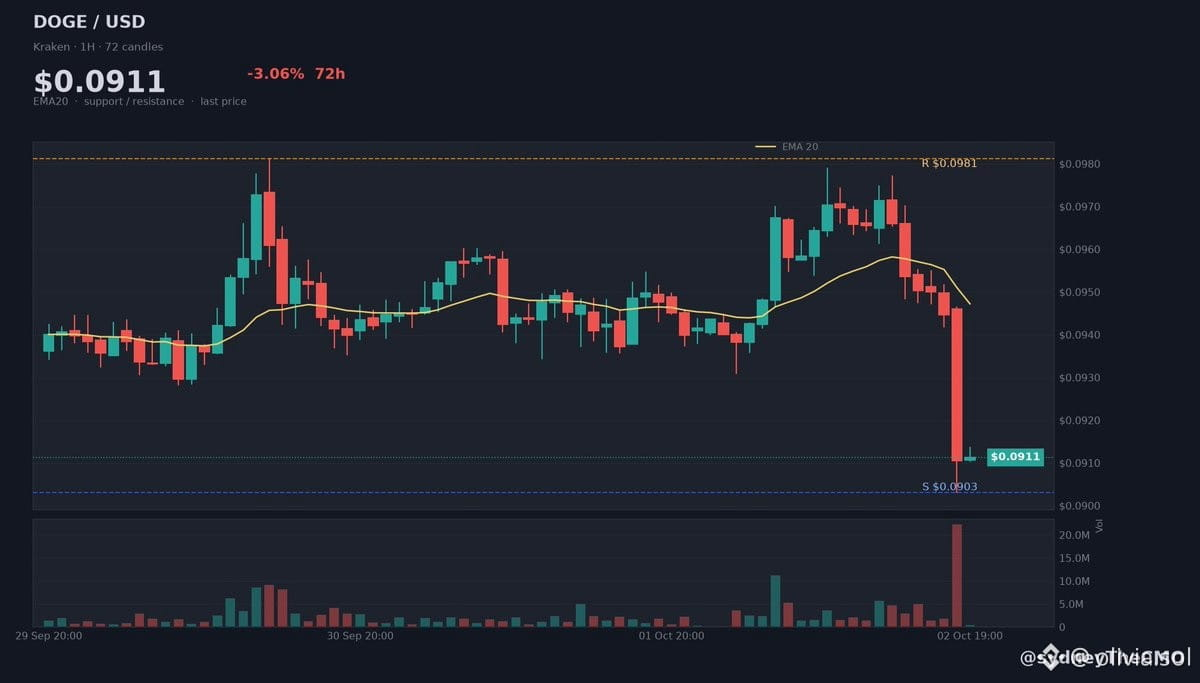
Broke my own rule and grabbed $DOGE at 0.0911.
Sentiment is literally the only thing propping this up right now. No fundamentals, just vibes and retail FOMO.
Stop loss locked at 0.0903. If it breaks, I'm out with zero hesitation.
Playing pure price action here. This is not a conviction hold.
Broke my own rule and grabbed $DOGE at 0.0911.
Sentiment is literally the only thing propping this up right now. No fundamentals, just vibes and retail FOMO.
Stop loss locked at 0.0903. If it breaks, I'm out with zero hesitation.
Playing pure price action here. This is not a conviction hold.
Sentiment is literally the only thing propping this up right now. No fundamentals, just vibes and retail FOMO.
Stop loss locked at 0.0903. If it breaks, I'm out with zero hesitation.
Playing pure price action here. This is not a conviction hold.
·
--
翻訳参照
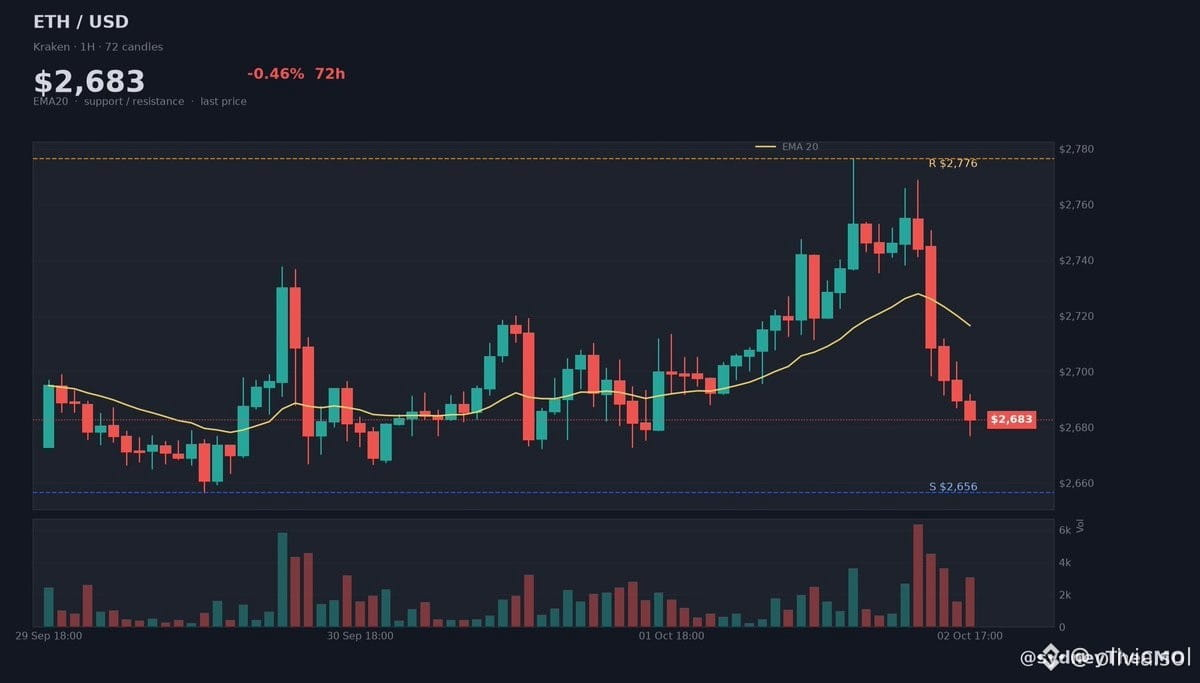
Staked $ETH at 3k in 2021.
Sitting at 2,683 now.
The 4% yield doesn't fix the drawdown.
I'm not touching it.
Patience is the only alpha left.
Staked $ETH at 3k in 2021.
Sitting at 2,683 now.
The 4% yield doesn't fix the drawdown.
I'm not touching it.
Patience is the only alpha left.
Sitting at 2,683 now.
The 4% yield doesn't fix the drawdown.
I'm not touching it.
Patience is the only alpha left.
·
--
翻訳参照
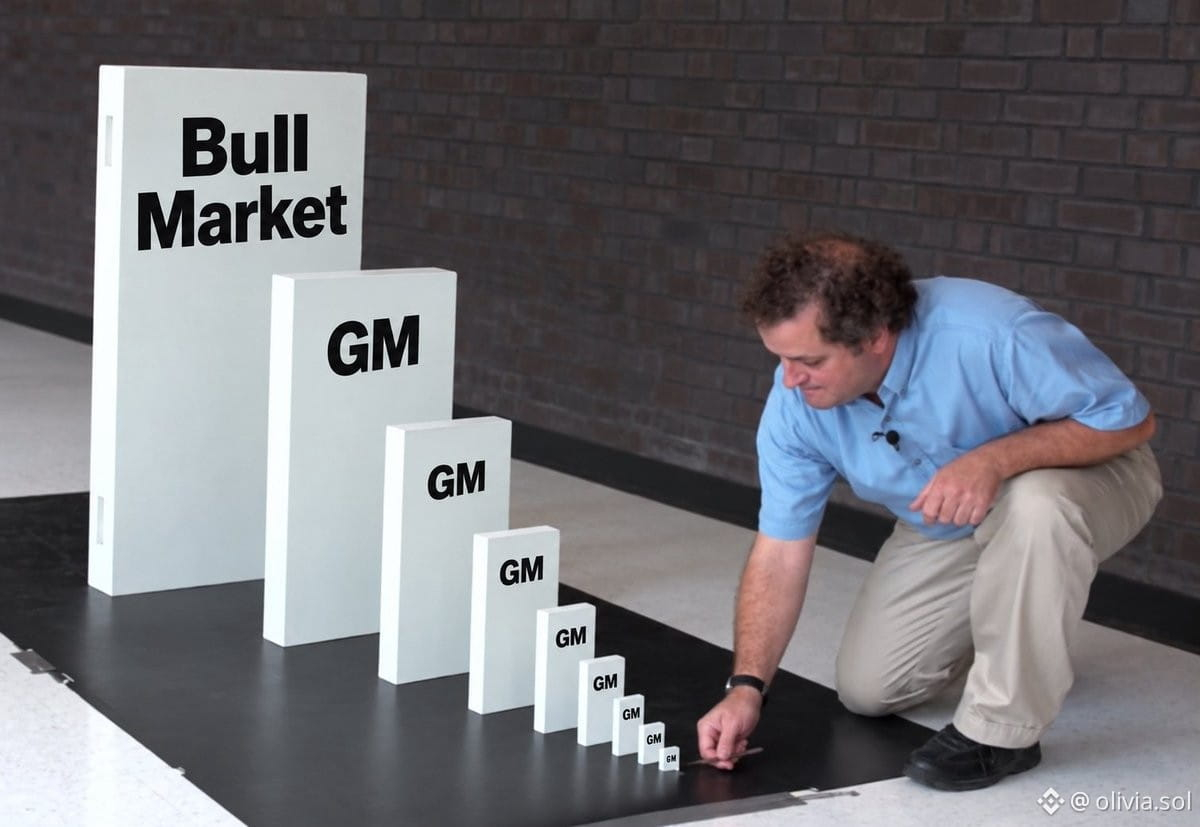
$GOLD ripping to 4,168 while I'm sitting in crypto bags.
The macro floor keeps grinding higher and my entire crypto PnL is a rounding error vs gold's run.
Time to seriously reconsider the hedge allocation.
When safe haven assets are outperforming risk-on by this margin, you either adapt or get left behind.
$GOLD ripping to 4,168 while I'm sitting in crypto bags.
The macro floor keeps grinding higher and my entire crypto PnL is a rounding error vs gold's run.
Time to seriously reconsider the hedge allocation.
When safe haven assets are outperforming risk-on by this margin, you either adapt or get left behind.
The macro floor keeps grinding higher and my entire crypto PnL is a rounding error vs gold's run.
Time to seriously reconsider the hedge allocation.
When safe haven assets are outperforming risk-on by this margin, you either adapt or get left behind.
·
--
翻訳参照
$HBAR is building the identity layer for AI agents before anyone else realizes we need it.
GoDaddy names them. Hedera verifies them on-chain. No more trusting centralized lists.
The problem: AI agents are already booking flights, executing trades, and talking to each other. But zero infrastructure exists to prove an agent is legit and not a scam clone. We're sleepwalking into billions of agents with no verification layer.
Hedera x GoDaddy just solved it:
• Businesses anchor AI agent identities to domains they own
• Records live on $HBAR, so anyone can verify independently
• Shifts from "trust the platform" to "verify it yourself"
Bonus: They're building an AI antivirus that checks agent code before execution. Stops data leaks and rogue commands before they happen.
This isn't theoretical. The agent economy is coming fast, and $HBAR is positioning as the trust infrastructure underneath it all.
If you think AI agents are the next wave, you're betting on whoever controls their identity layer.
$HBAR is building the identity layer for AI agents before anyone else realizes we need it.
GoDaddy names them. Hedera verifies them on-chain. No more trusting centralized lists.
The problem: AI agents are already booking flights, executing trades, and talking to each other. But zero infrastructure exists to prove an agent is legit and not a scam clone. We're sleepwalking into billions of agents with no verification layer.
Hedera x GoDaddy just solved it:
• Businesses anchor AI agent identities to domains they own
• Records live on $HBAR, so anyone can verify independently
• Shifts from "trust the platform" to "verify it yourself"
Bonus: They're building an AI antivirus that checks agent code before execution. Stops data leaks and rogue commands before they happen.
This isn't theoretical. The agent economy is coming fast, and $HBAR is positioning as the trust infrastructure underneath it all.
If you think AI agents are the next wave, you're betting on whoever controls their identity layer.
GoDaddy names them. Hedera verifies them on-chain. No more trusting centralized lists.
The problem: AI agents are already booking flights, executing trades, and talking to each other. But zero infrastructure exists to prove an agent is legit and not a scam clone. We're sleepwalking into billions of agents with no verification layer.
Hedera x GoDaddy just solved it:
• Businesses anchor AI agent identities to domains they own
• Records live on $HBAR, so anyone can verify independently
• Shifts from "trust the platform" to "verify it yourself"
Bonus: They're building an AI antivirus that checks agent code before execution. Stops data leaks and rogue commands before they happen.
This isn't theoretical. The agent economy is coming fast, and $HBAR is positioning as the trust infrastructure underneath it all.
If you think AI agents are the next wave, you're betting on whoever controls their identity layer.
·
--
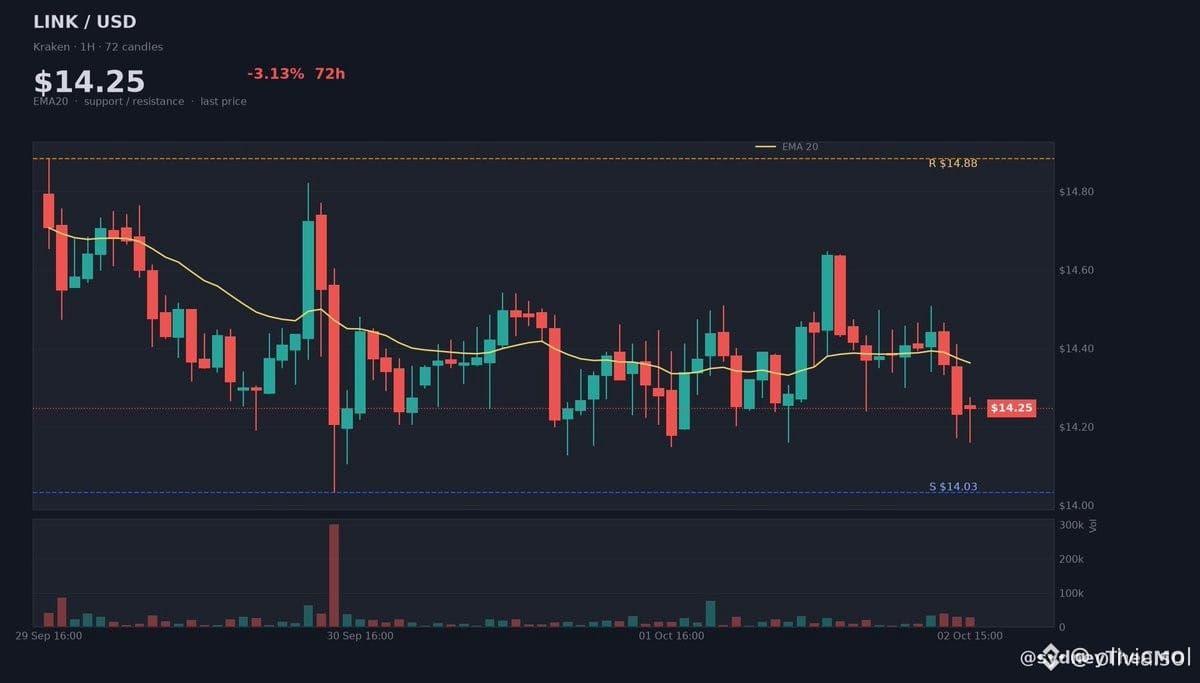
$LINKを$18で買いました。下げのチャンスを掴んだと思っていたんです。
今は$14.25にいます。
必死に投げ売りはしなかった。…ただ、動かなくなった。
つらいのはここ。値動き(ボラティリティ)がない=出口の流動性がない=死に金。
$LINKのホルダーなら、この感覚もよく分かります。
$LINKを$18で買いました。下げのチャンスを掴んだと思っていたんです。
今は$14.25にいます。
必死に投げ売りはしなかった。…ただ、動かなくなった。
つらいのはここ。値動き(ボラティリティ)がない=出口の流動性がない=死に金。
$LINKのホルダーなら、この感覚もよく分かります。
今は$14.25にいます。
必死に投げ売りはしなかった。…ただ、動かなくなった。
つらいのはここ。値動き(ボラティリティ)がない=出口の流動性がない=死に金。
$LINKのホルダーなら、この感覚もよく分かります。
ログインして、さらにコンテンツを読む
厳選トピックで世界の暗号資産トレーダーの仲間入り
⚡️ 暗号資産に関する最新かつ有益な情報が見つかります。
💬 世界最大の暗号資産取引所から信頼されています。
👍 認証を受けたクリエイターから、有益なインサイトを得られます。
メール / 電話番号
トレンドトピック
ZcashETFPostsFirstWeeklyOutflow$93.6M
閲覧回数 24,152
66人が討論中
#ZcashETFPostsFirstWeeklyOutflow$93.6M 📊 グレイスケールのスポット・ジーキャッシュ(ZEC)ETF、週次で9,360万ドルの資金流出を記録
機関投資家の資金フローに新たなダイナミクスが見え始めています。グレイスケールのスポットZcash ETFは、初の大きな週次ネット資金流出を記録したばかりで、これまでの強い立ち上がりの勢いからの注目すべき変化を示しています。
🔹数字 グレイスケールのスポットZEC ETF(ティッカー:ZCSH)は、過去1週間で約9,360万ドルのネット流出を記録しました。特筆すべき引き出しは9月下旬と10月上旬に集中していました。
🔹 背景 これは堅調な初期局面に続く動きです。グレイスケールのZcash Trustから転換し、8月下旬にNYSE Arcaへ上場した後、このファンドは9月中旬までに累計でネット流入が2億7100万ドルに達していました。
💡 市場への影響分析
•短期的なダイナミクス 大型ETFの資金流出は、償還請求に対応するためにファンドが保有を調整する過程で、基礎となる資産に一時的な売り圧力をもたらす可能性があります。
•センチメント&リバランス この下落は、ジーキャッシュの長期的な有用性やプライバシー重視の価値提案が根本的に変わったことというより、初期の機関投資家による通常の利確、あるいはポートフォリオのリバランスを反映しているのかもしれません。
•エコシステムの注目点 市場参加者は、これがZCSHに特有の一過性の出来事なのか、それともプライバシー志向のデジタル資産に対する機関の食欲が広く冷え込んでいることを示唆するのかを注視します。
💬 あなたの見解は? この週次の資金流出を、強いスタートの後の健全な市場調整と見ますか?それとも、プライバシー・コインへの向けた機関のセンチメントが変化しているサインだと見ますか?下のコメント欄であなたの考えを聞かせてください!
#Zcash #ZEC #CryptoETF #InstitutionalCrypto #MarketUpdate
これは教育目的のみです。投資助言ではありません(NFA)。常に自己調査(DYOR)を行ってください。
$GLMR $QI $ONE
piknkkk
·いいね:0件
·閲覧回数 45
GreekPoliceBustCryptoScamRingArrest17
閲覧回数 34,222
365人が討論中
BitcoinRejectedAt$87K
閲覧回数 101,170
127人が討論中