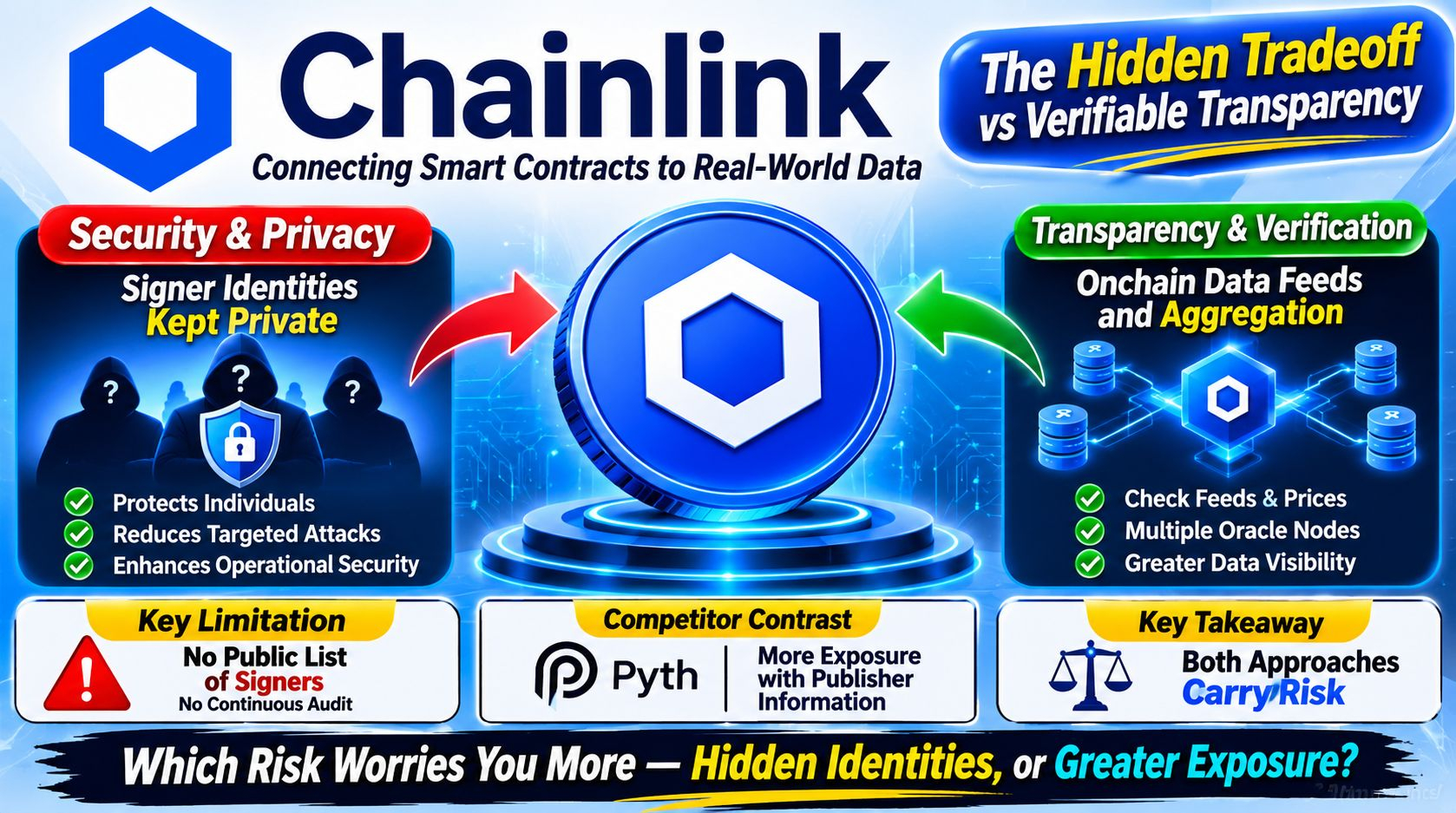
Chainlink's LINK token powers one of the largest decentralized oracle ecosystems, connecting smart contracts to real-world data. But Chainlink does not publicly disclose the identities of its multisig signers. That's not an oversight. It's a stated choice.
The reason is operational security. Chainlink says revealing signer identities could expose individuals to phishing, targeted attacks, and social engineering. The tradeoff is clear: holders lose the ability to independently identify every person responsible for important administrative approvals.
What can users verify? Chainlink Data Feeds publish aggregated answers through onchain smart contracts. Users can inspect feed addresses, reported prices, update timestamps, and minimum oracle requirements. Multiple independent node operators contribute to the final result. However, signer identities remain undisclosed, and there is no single named audit firm or fixed network-wide attestation schedule for LINK itself. This is not a reserve-backed asset. Onchain visibility does not mean continuous verification of every operational decision. Chainlink Documentation +2
Pyth Network takes a different approach, highlighting institutional data publishers and publishing publisher-level information such as contribution counts and confidence metrics. More exposure, in exchange for greater visibility into data contributions. Pyth Network +1
Neither approach removes counterparty risk. Chainlink limits identity exposure but requires trust in undisclosed signers. Pyth offers more publisher-level visibility but still depends on external data providers.
Chainlink chose operational secrecy, leaning on decentralized infrastructure, aggregation, and security controls.
Which risk worries you more — hidden operational identities, or greater exposure of the people and infrastructure p