Stablecoin Payments Don't End at the Blockchain
What stands out to me about Asia's stablecoin growth is that the biggest payment challenge may exist outside the blockchain itself.
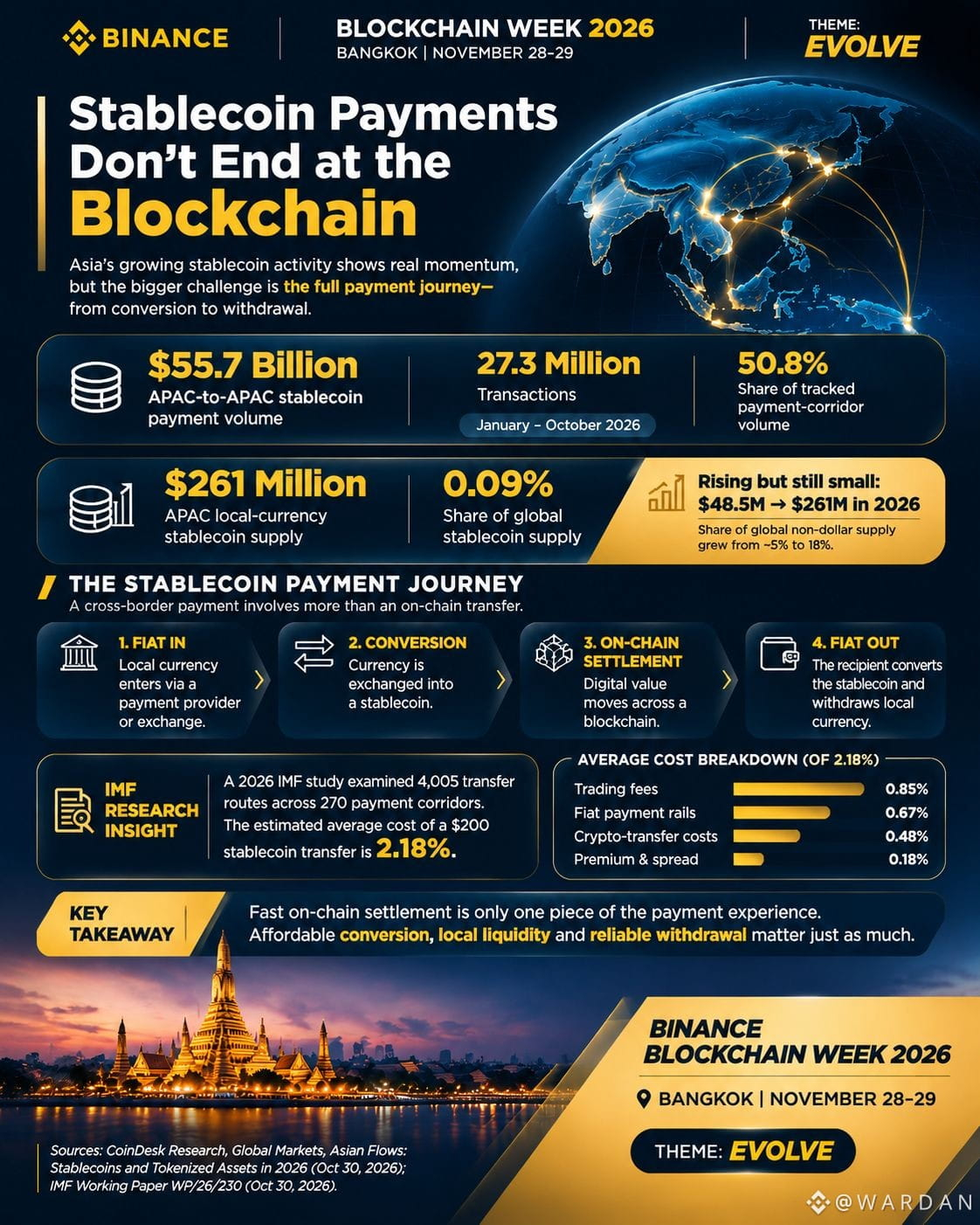
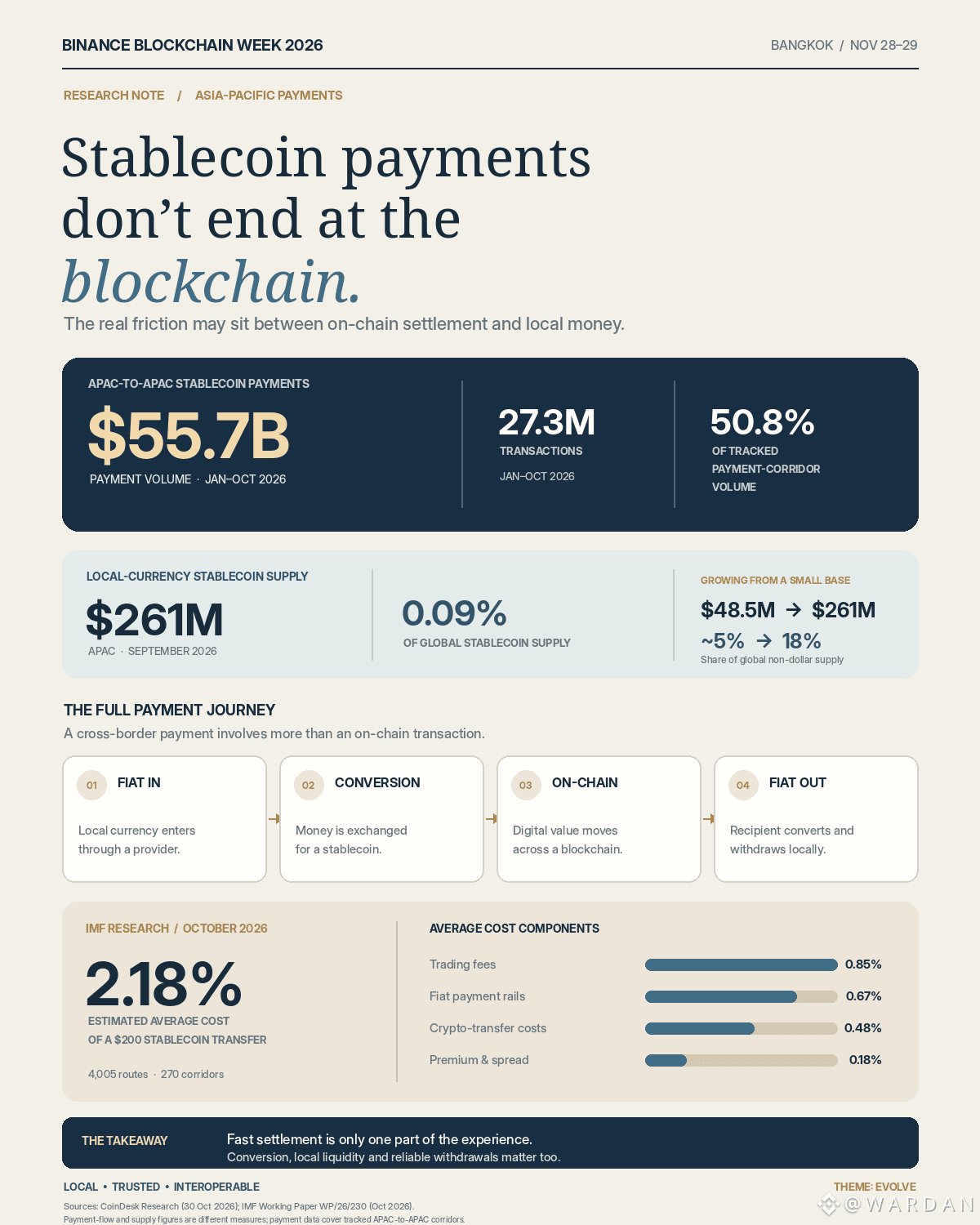
CoinDesk Research reports that APAC-to-APAC stablecoin payments reached $55.7 billion across 27.3 million transactions between January and October 2026, representing 50.8% of tracked corridor volume.
Meanwhile, APAC local-currency stablecoin supply reached $261 million in September, just 0.09% of global stablecoin supply. Interestingly, it grew from $48.5 million earlier in the year, increasing its share of global non-dollar stablecoin supply from approximately 5% to 18%.
These figures measure different things: payment flows and outstanding supply. But together, they reveal an important infrastructure opportunity.
An October 2026 IMF study examined 4,005 complete stablecoin transfer routes across 270 payment corridors. Its estimated average cost for a $200 transfer was 2.18%.
The surprising part? Trading fees and fiat payment rails contributed more to the average cost than crypto-transfer charges.
My takeaway: Fast blockchain settlement is only one piece of the payment experience. Affordable conversion, local liquidity, reliable redemption and accessible withdrawals matter just as much.
That's why I'm particularly interested in the discussion at Binance Blockchain Week 2026:
Are Stablecoins the Future of Payments, or Just the Rails?
I believe the next evolution should focus on connecting digital assets with financial infrastructure people can actually use.
What should evolve first: local liquidity, affordable conversion or fiat payment access?
#EvolveAtBinanceBlockchainWeek