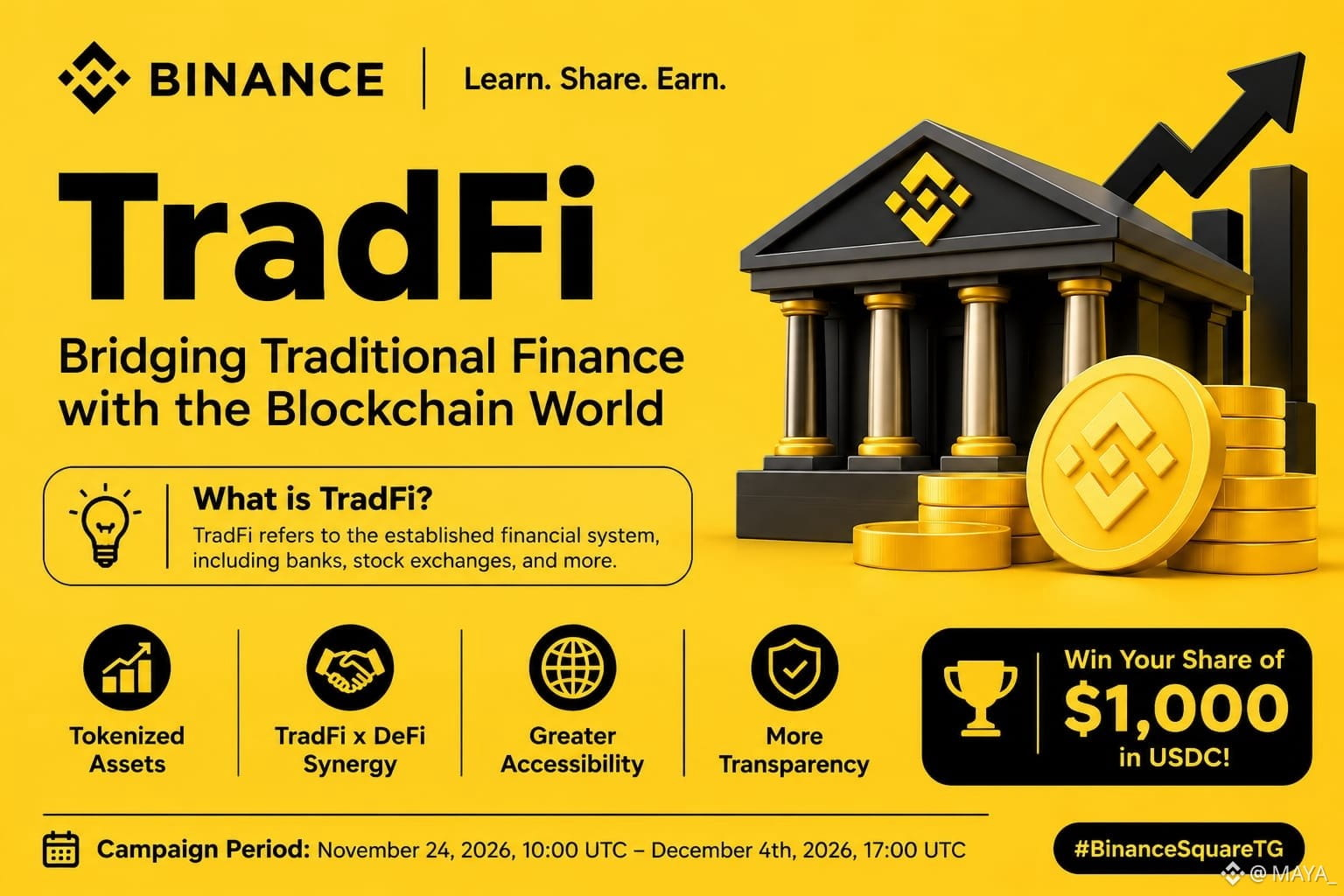

Hmm, "TradFi" (traditional finance) refers to the established financial system, which includes banks, stock exchanges, investment firms, and regulated financial markets. On the other hand, DeFi utilizes blockchain technology and smart contrcts to provide financial services without relying entirely on traditional intermediaries.
Through tokenization, traditional assets such as stocks, bonds, commodities, and real estate can be digitally represented on a blockchain. This creates new possibilities regarding ownership, transparency, settlement, and access to financial markets.
For investors: Tokenized financial assets can open new pathways to traditional investment opportunities via digital platforms.
For financial institutions: Blockchain technology can improve settlement processes, record-keeping, and the transparency of asset ownership.
For the digital economy: Tokenization can link traditional financial instruments with blockchain-based applications, potentially making financial markets more accessible and interconnected.
Another compelling aspect is the growing relationship between crypto assets and traditional financial markets. Assets like $BNB demonstrate how blockchain-based ecosystems can support a broader digital financial landscape, even though crypto tokens and traditional securities serve different purposes.
However, this transition also brings certain challenges. Regulation, investor protection, liquidity, custody, and compliance remain critical considerations. Technology alone cannot solve every problem within the financial system. What makes TradFi compelling today is not the idea of replacing the traditional financial system entirely with blockchain; rather, it is about exploring how both systems can work together while mintaining trust, transparency, and robust financial safeguards. The future of the financial system might not belong entirely to either TradFi or DeFi. The real opportunity could lie in the intersection of these two worlds.... hmm, 100% 🤔
#BinanceSquareTG #Binance @Yi He @CZ @Binance Blockchain Week $SOXSB $XAG