$ZRO: ZRO: When a Crowd Arrives Late
$ZRO: ZRO shows a down hourly direction while volume is not above baseline, prompting the question: does a late‑arrival crowd change the trade picture? Imagine a popular restaurant that suddenly sees a line form after the kitchen has already prepared most meals. The diners arriving later must share the already‑cooked dishes, which can thin the portion size and increase waiting time. In a crypto market, a similar crowd may join after price has moved, forcing participants to share existing liquidity rather than creating fresh depth.
A hypothetical decision might be to enter a position based on the observed down move, assuming the crowd will provide enough buyers to catch a rebound. The analogy helps illustrate that the late crowd does not add new liquidity; it merely reallocates the existing pool. If the kitchen (order book) cannot expand, the price may continue to drift downward despite the appearance of interest.
However, the analogy fails when market makers step in with fresh limit orders, effectively restocking the kitchen. In that case, the late crowd could be absorbed without major price impact. A counterexample would be a token that spikes upward on similar volume conditions because new limit orders flood the book.
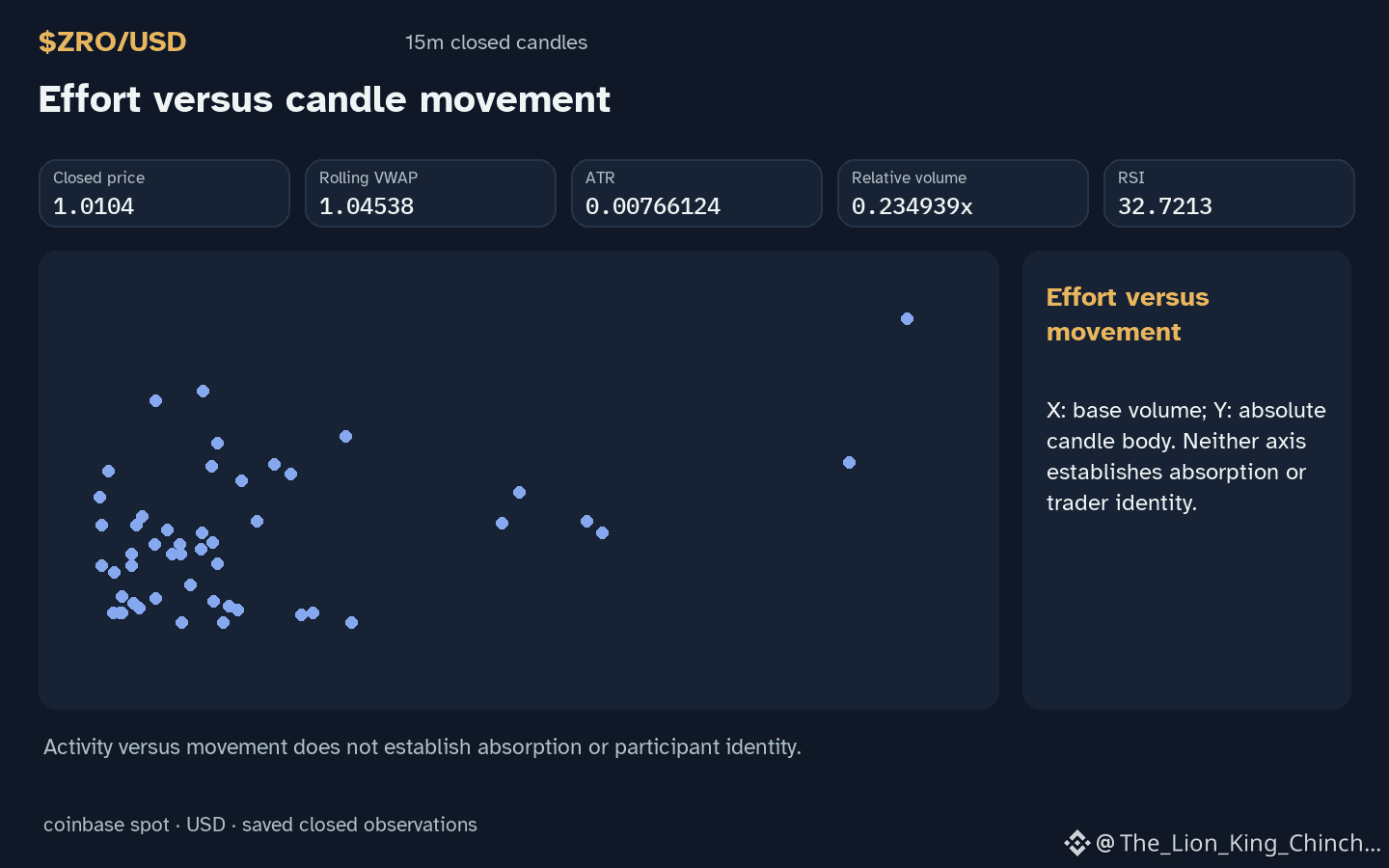
Self‑check: monitor the next hourly candle for a change in relative volume 0.23x and a shift in RSI 32.7. If volume jumps above baseline and RSI moves out of oversold territory, the late‑arrival hypothesis weakens and the trade narrative should be reassessed.
Probabilistic market research, not a recommendation or guaranteed return.
#ZRO #CryptoEducation #CryptoLearning