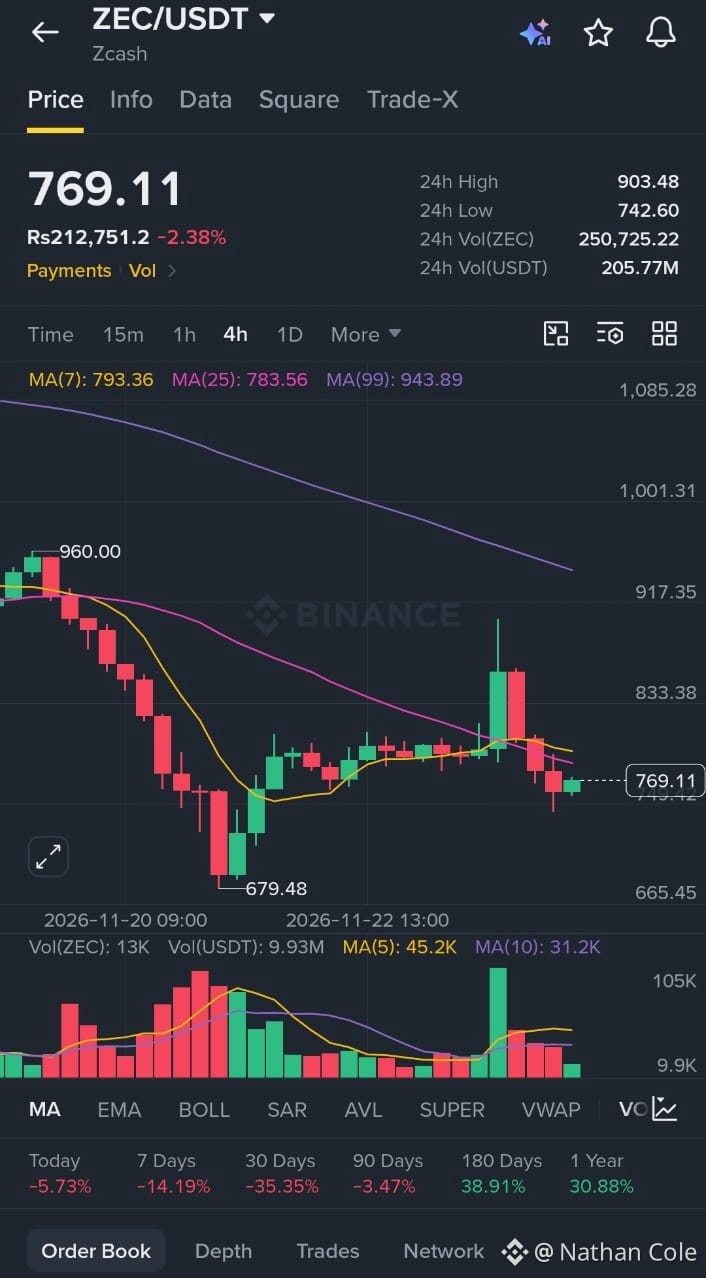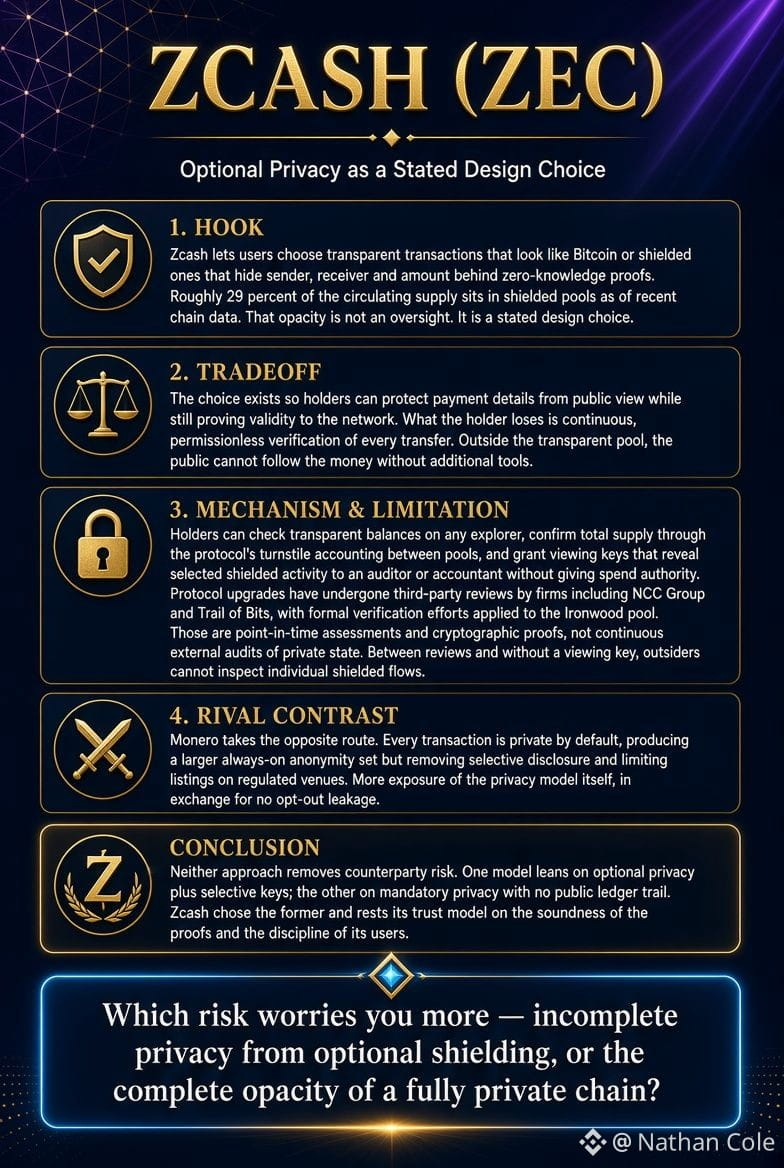
$ZEC Zcash lets users choose transparent transactions that look like Bitcoin or shielded ones that hide sender, receiver and amount behind zero-knowledge proofs. Roughly 29 percent of the circulating supply sits in shielded pools as of recent chain data. That opacity is not an oversight. It is a stated design choice.
The choice exists so holders can protect payment details from public view while still proving validity to the network. What the holder loses is continuous, permissionless verification of every transfer. Outside the transparent pool, the public cannot follow the money without additional tools.
Holders can check transparent balances on any explorer, confirm total supply through the protocol’s turnstile accounting between pools, and grant viewing keys that reveal selected shielded activity to an auditor or accountant without giving spend authority. Protocol upgrades have undergone third-party reviews by firms including NCC Group and Trail of Bits, with formal verification efforts applied to the Ironwood pool. Those are point-in-time assessments and cryptographic proofs, not continuous external audits of private state. Between reviews and without a viewing key, outsiders cannot inspect individual shielded flows.
Monero takes the opposite route. Every transaction is private by default, producing a larger always-on anonymity set but removing selective disclosure and limiting listings on regulated venues. More exposure of the privacy model itself, in exchange for no opt-out leakage.
Neither approach removes counterparty risk. One model leans on optional privacy plus selective keys; the other on mandatory privacy with no public ledger trail. Zcash chose the former and rests its trust model on the soundness of the proofs and the discipline of its users.
Which risk worries you more — incomplete privacy from optional shielding, or the complete opacity of a fully private chain?
#NVIDIAReinstatesJensenHuangasCEO #WillMarketsStageAThanksgivingReliefRally? #WillOctCorePCEShiftFedHikeExpectations?