Microsoft 365 went down. Hackers saw a business opportunity.
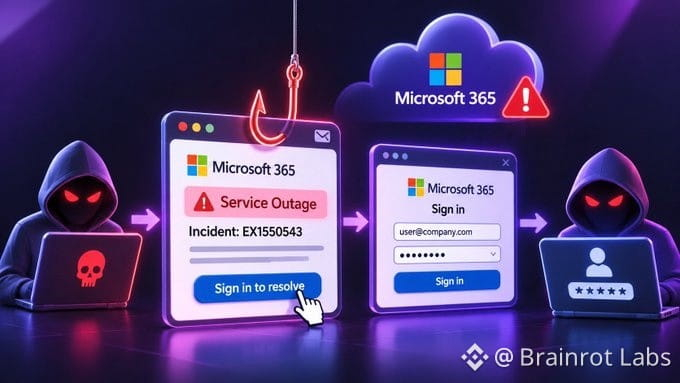
Microsoft has uncovered a large-scale phishing campaign exploiting its recent Microsoft 365 service disruption to steal user credentials.
Here’s how the attackers operated:
- Sent fake Microsoft 365 service health notification emails.
- Used the real incident reference EX1550543 to make their messages look legitimate.
- Customized sender display names for different organizations.
- Used subject lines beginning with “Outage -”, followed by a six-character code.
- Microsoft detected the campaign on November 13.
My take: The service goes down, users panic, and hackers show up pretending to be customer support.
Imagine waiting for Microsoft to fix your account, only to hand your password directly to the people making your day worse.
The outage was temporary. A stolen login can be a much longer nightmare.
Remember: Check service alerts through official Microsoft channels. Never trust an unexpected link asking you to sign in.
Microsoft has uncovered a large-scale phishing campaign exploiting its recent Microsoft 365 service disruption to steal user credentials.
Here’s how the attackers operated:
- Sent fake Microsoft 365 service health notification emails.
- Used the real incident reference EX1550543 to make their messages look legitimate.
- Customized sender display names for different organizations.
- Used subject lines beginning with “Outage -”, followed by a six-character code.
- Microsoft detected the campaign on November 13.
My take: The service goes down, users panic, and hackers show up pretending to be customer support.
Imagine waiting for Microsoft to fix your account, only to hand your password directly to the people making your day worse.
The outage was temporary. A stolen login can be a much longer nightmare.
Remember: Check service alerts through official Microsoft channels. Never trust an unexpected link asking you to sign in.