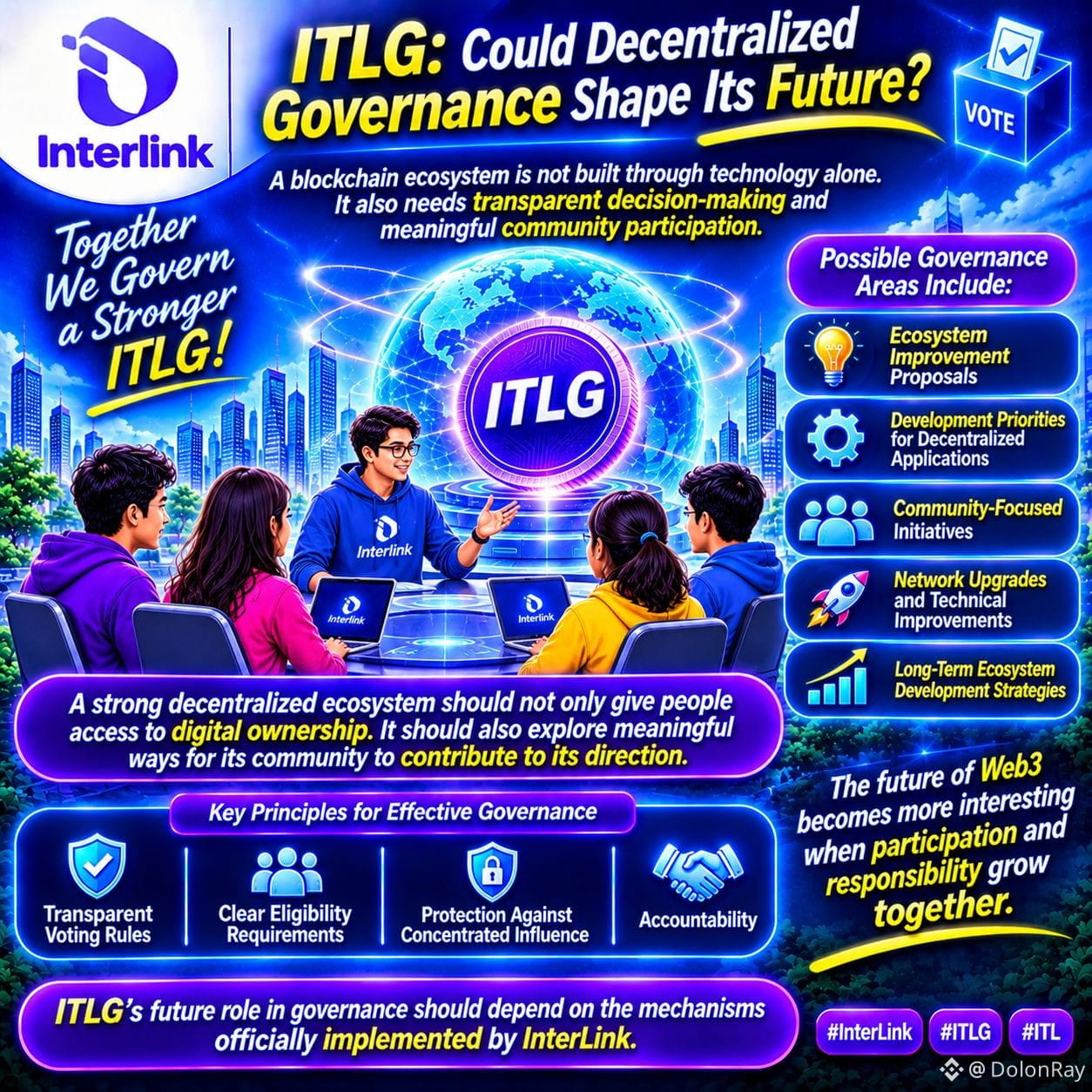
🏛️ 𝗜𝗧𝗟𝗚: 𝗖𝗼𝘂𝗹𝗱 𝗗𝗲𝗰𝗲𝗻𝘁𝗿𝗮𝗹𝗶𝘇𝗲𝗱 𝗚𝗼𝘃𝗲𝗿𝗻𝗮𝗻𝗰𝗲 𝗦𝗵𝗮𝗽𝗲 𝗜𝘁𝘀 𝗙𝘂𝘁𝘂𝗿𝗲? 🌐
A blockchain ecosystem is not built through technology alone.
It also needs transparent decision-making and meaningful community participation.
As the InterLink ecosystem develops, decentralized governance could become an interesting area to explore for the future of ITLG.
Imagine a system where eligible community members could potentially participate in discussions and decisions concerning ecosystem development.
Possible governance areas could include:
🔹 Ecosystem improvement proposals.
🔹 Development priorities for decentralized applications.
🔹 Community-focused initiatives.
🔹 Network upgrades and technical improvements.
🔹 Long-term ecosystem development strategies.
However, governance requires more than simply holding a token.
A well-designed system needs transparent voting rules, clear eligibility requirements, protection against concentrated influence, and accountability.
ITLG's future role in governance should depend on the mechanisms officially implemented by InterLink.
A strong decentralized ecosystem should not only give people access to digital ownership. It should also explore meaningful ways for its community to contribute to its direction.
The future of Web3 becomes more interesting when participation and responsibility grow together.
#InterLink #ITLG #ITL