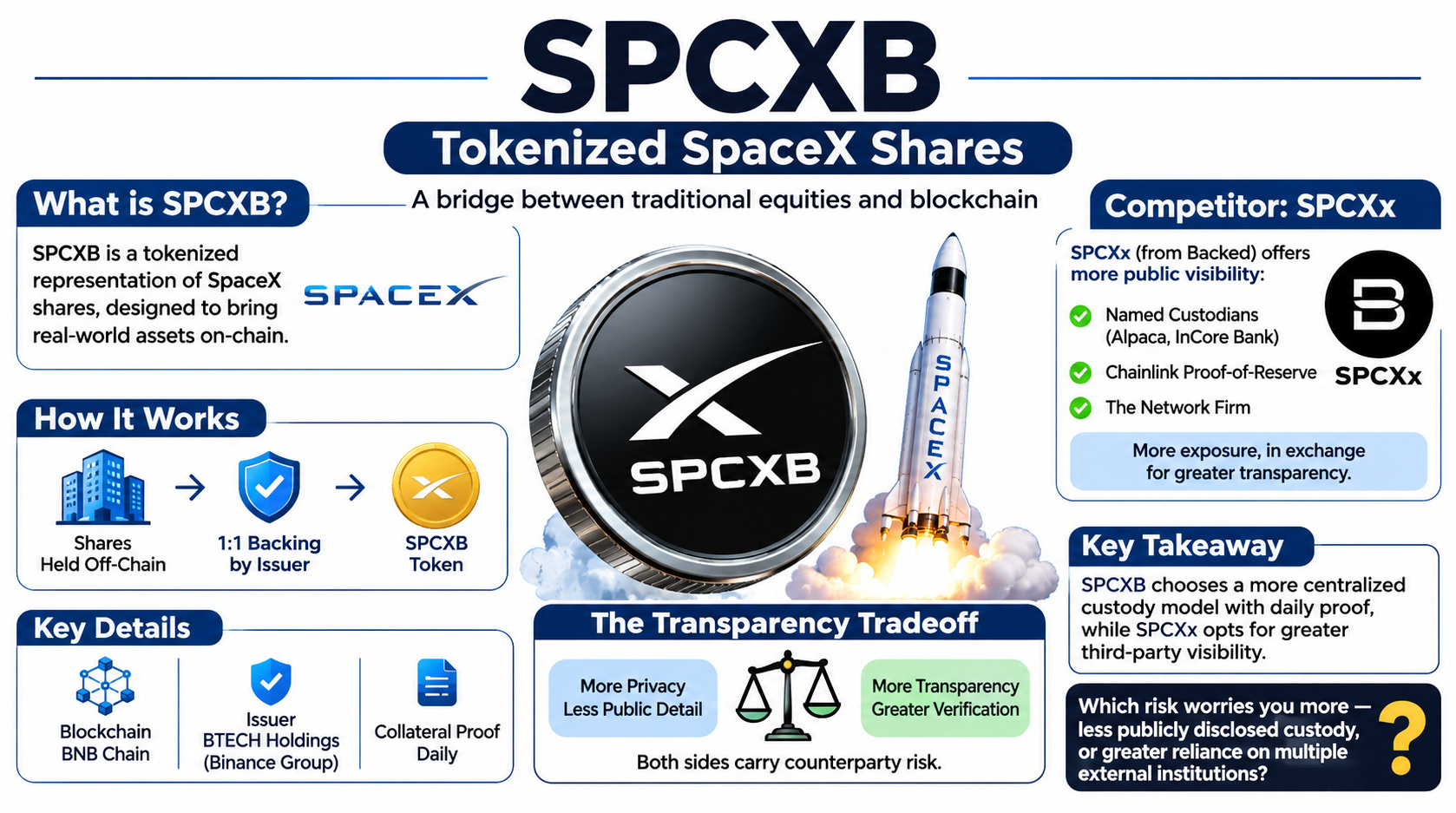
SPCXB is a tokenized representation of SpaceX shares, not a native cryptocurrency. Its central trust question is whether holders can independently verify the underlying share collateral, rather than simply rely on the issuer's backing claims.
SPCXB uses an issuer-led custody model. BTECH Holdings Limited, a Binance group affiliate, says the tokens are backed 1:1 by underlying shares held in segregated custody. The specific custody arrangement is less publicly detailed than some competing products. That's not an oversight. It's a stated structural choice. bStocks Docs +1
Centralized custody can reduce public exposure of sensitive operational details and simplify administration. But holders surrender some ability to independently scrutinise the full custody chain and the institutions responsible for safeguarding the shares.
Holders can check SPCXB's BNB Chain contract, token supply and publicly verifiable daily proof of collateral. The issuer also operates under an ADGM-approved prospectus framework. However, no named independent reserve-attestation firm or continuous independent reserve audit is clearly identified in the disclosures reviewed. Daily proof is not continuous independent verification. ,binance bstocks +1
Compare SPCXx, the rival SpaceX token from Backed. It identifies custodians including Alpaca Securities, InCore Bank and Maerki Baumann, alongside Chainlink proof-of-reserve infrastructure and The Network Firm. More exposure, in exchange for greater visibility into custody and verification. Backed Assets +1
Neither approach removes counterparty risk. SPCXB relies more heavily on issuer-controlled collateral reporting. SPCXx offers more visible third-party verification, but still depends on custodians and service providers.
Which risk worries you more — less publicly disclosed custody arrangements, or greater dependence on multiple external i