$TAO: Understanding Liquidity and Why Volume Can Mislead
Liquidity is the hidden engine that lets a token change hands without large price swings. Imagine a busy market square where dozens of stalls sell the same apple. If a buyer walks in with a handful of coins, the seller can hand over an apple at the expected price because many other stalls are ready to match the trade. In crypto, each order book level acts like a stall; the depth of those levels determines how much volume can be absorbed before the price moves.
When an observation notes an hourly direction up with volume above baseline, the first thought is that buying pressure is strong. However, the shape of liquidity matters. A thin order book with a few large market orders can create a smooth-looking rise, while the underlying spread remains wide. The spread is the gap between the best bid and ask, and it reflects the cost of immediate execution. A narrow spread signals healthy competition, whereas a wide spread suggests that a few participants control the price.
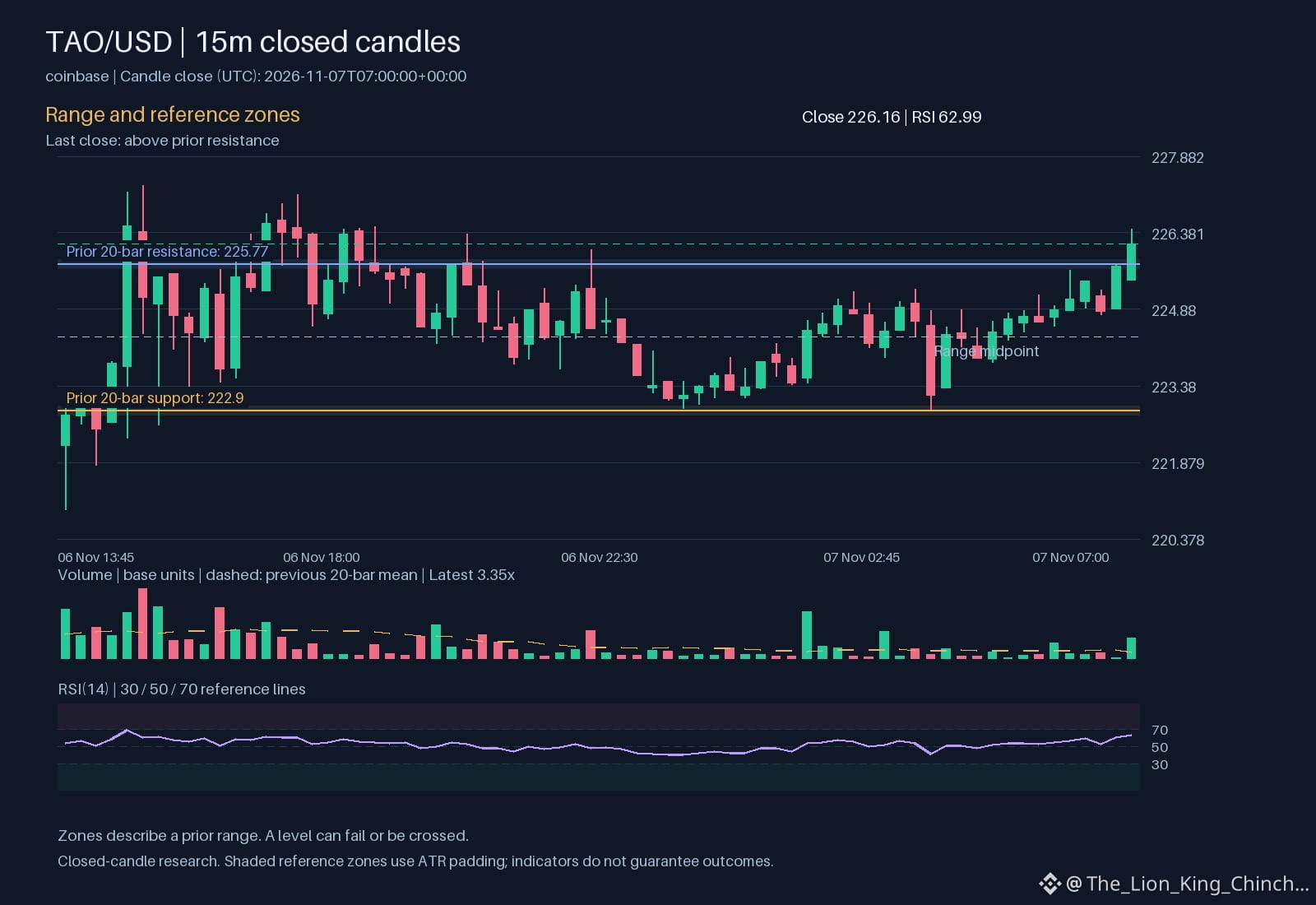
To test the robustness of the move, check the relative volume 3.35101 and compare it to the recent quote volume 4.55795e+06. Then look at the depth by observing how close the price sits to the recent support 222.9 and resistance 225.77 levels. If the price is near resistance but the spread stays wide, the upward move may be fragile. By assessing both volume and liquidity, traders can avoid mistaking a temporary surge for a sustained trend.
What would you verify before trusting a smooth-looking price move?
Probabilistic market research, not a recommendation or guaranteed return.
What would you check before trusting a smooth-looking price move?
#TAO #CryptoEducation #CryptoLearning