A Temporary LST Discount Shouldn't Automatically Trigger a Liquidation.
DIA's Liquid Staking Map reports:
294 protocols
144 networks
$62.6B in TVL
4.73% median yield
But there is a problem with how liquid staking tokens are sometimes valued in DeFi.
During market volatility, stETH or LRTs can temporarily trade below their underlying staking value on DEX pools.
If a lending protocol blindly follows that DEX price, borrowers could face liquidations based on a temporary liquidity discount rather than the underlying collateral value.
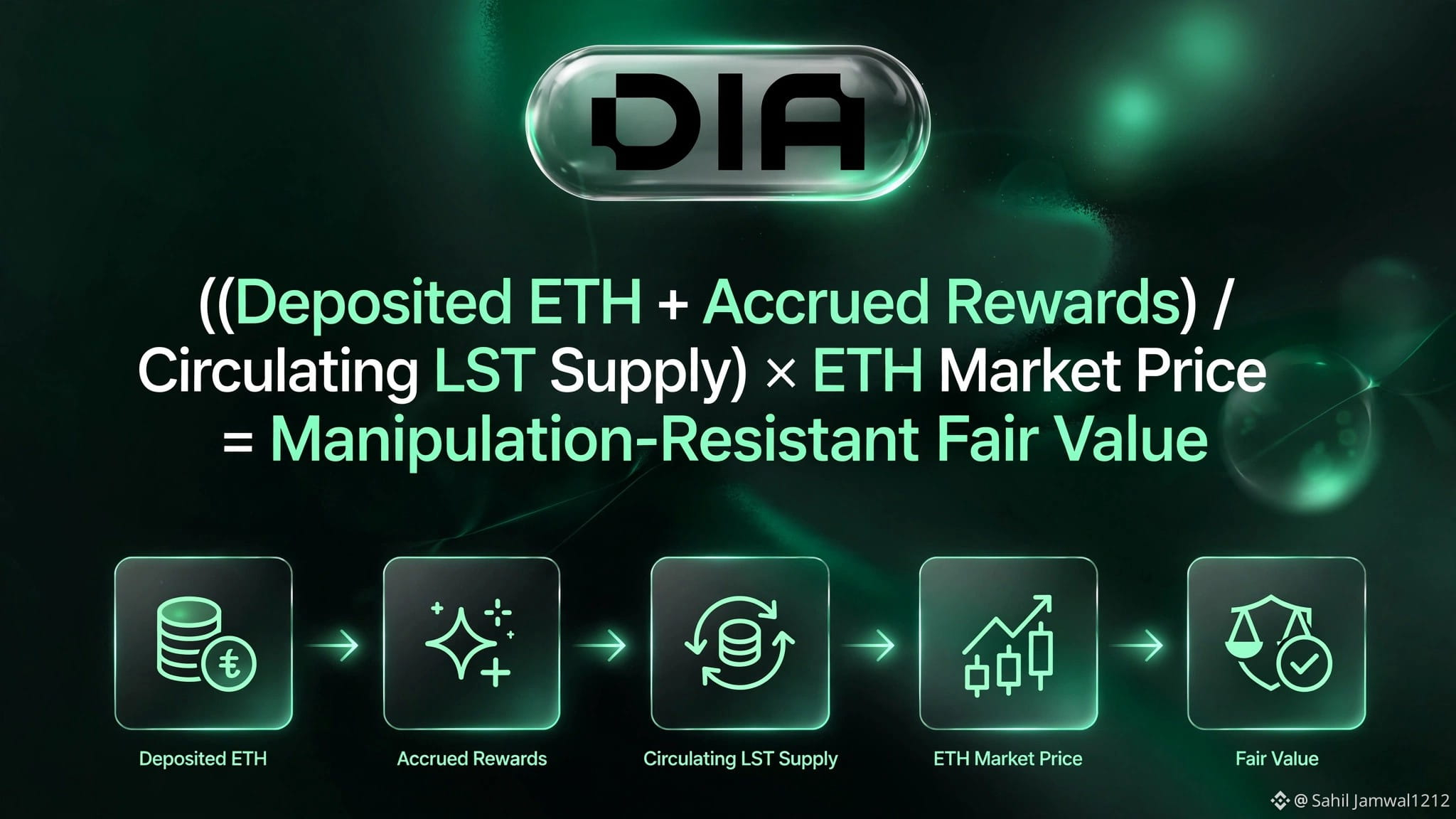
$DIA 's xLSD (Collateral-Ratio Fair Value) methodology takes a different approach.
It calculates the underlying value per LST using:
Deposited underlying assets plus accrued rewards.
Divided by circulating LST supply.
Multiplied by the verified market price of the underlying asset.
This provides a backing-based valuation instead of relying exclusively on the latest DEX trading price.
DIA's integrations include:
Vector Reserve for vETH and svETH.
Origin Protocol for OUSD and OETH.
This does not remove slashing, redemption, liquidity, or smart contract risks. But it offers lending protocols another way to assess liquid staking collateral.
In DeFi, the market price and the underlying value are not always identical. Oracles need to understand the difference.
DIA's Liquid Staking Map reports:
294 protocols
144 networks
$62.6B in TVL
4.73% median yield
But there is a problem with how liquid staking tokens are sometimes valued in DeFi.
During market volatility, stETH or LRTs can temporarily trade below their underlying staking value on DEX pools.
If a lending protocol blindly follows that DEX price, borrowers could face liquidations based on a temporary liquidity discount rather than the underlying collateral value.
$DIA 's xLSD (Collateral-Ratio Fair Value) methodology takes a different approach.
It calculates the underlying value per LST using:
Deposited underlying assets plus accrued rewards.
Divided by circulating LST supply.
Multiplied by the verified market price of the underlying asset.
This provides a backing-based valuation instead of relying exclusively on the latest DEX trading price.
DIA's integrations include:
Vector Reserve for vETH and svETH.
Origin Protocol for OUSD and OETH.
This does not remove slashing, redemption, liquidity, or smart contract risks. But it offers lending protocols another way to assess liquid staking collateral.
In DeFi, the market price and the underlying value are not always identical. Oracles need to understand the difference.