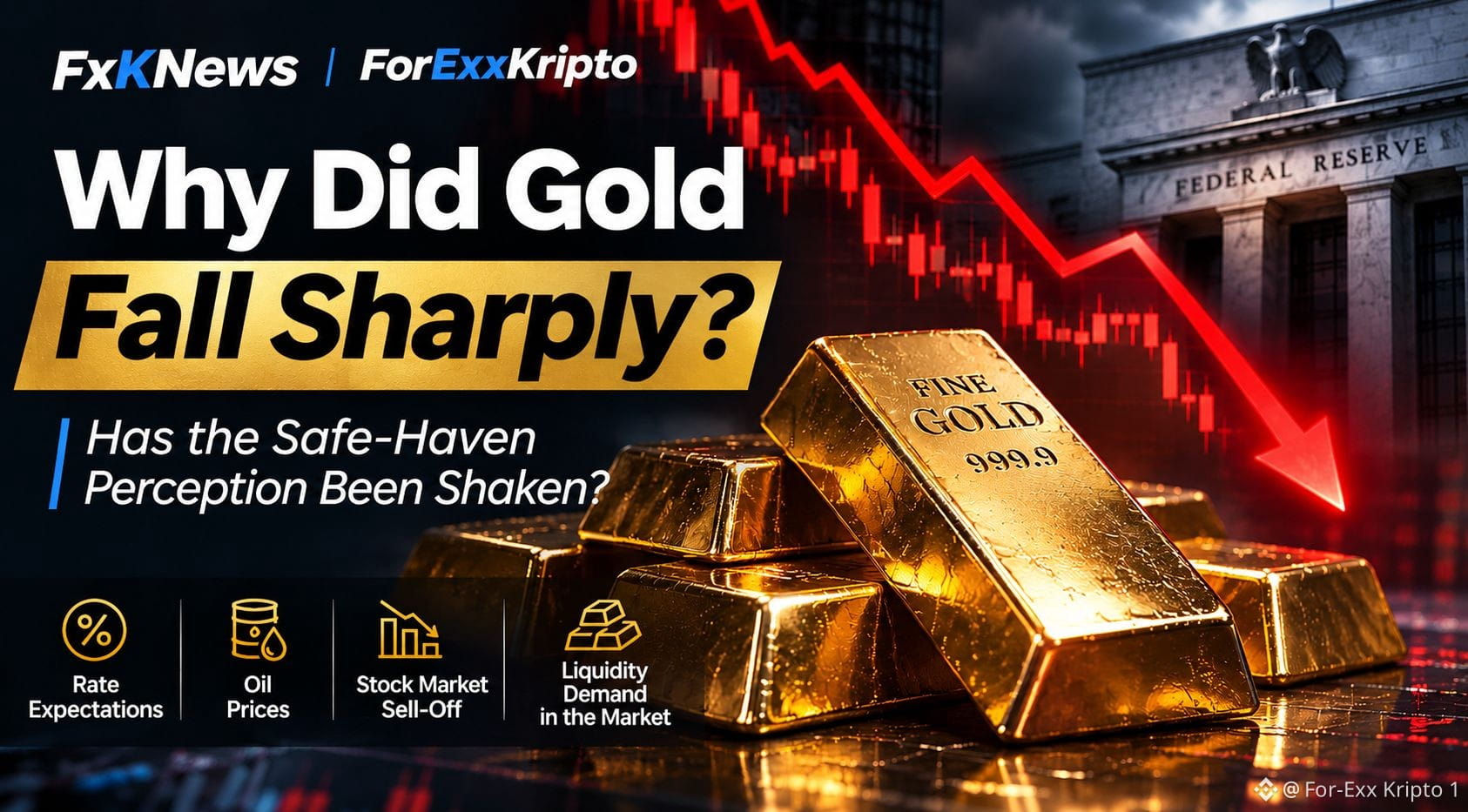
# Why Did Gold Plunge? Is Its Safe-Haven Status at Risk?
Gold’s sharp selloff challenged its safe-haven image. In late October, it fell below $3,900; on Oct. 30, it dropped 3.5% to its lowest since October 2025. Silver fell over 6%, below $50.
# Drivers of the Selloff
Inflation, Fed expectations, energy prices and equity losses converged. US September PCE rose 0.5% monthly and 3.6% annually; core PCE increased 3.1%. Persistent inflation revived December rate-hike expectations,despite the Fed holding rates in October.
Higher rates raise gold’s opportunity cost and make interest-bearing assets more attractive.
Brent topped $113 amid Middle East tensions and Hormuz risks. Geopolitical stress can support gold, but higher energy costs may keep rates elevated,offsetting safe-haven demand.
Technology losses and AI-spending concerns increased cash needs. Investors facing margin calls may sell liquid assets,including gold. This does not prove gold has lost its safe-haven role.
# Is Gold Still a Safe Haven?
Gold does not rise during every shock. Tight liquidity, rate repricing and forced selling can weigh on prices. The World Gold Council reported ~$10B (67 tonnes) of global gold ETF inflows in September despite falling prices,while futures positioning contracted.
# What Turkish Investors Should Watch
Gram gold reflects global prices and USD/TRY. A weaker ounce price may be offset by a rising exchange rate; if both fall, gram gold faces greater pressure. Local spreads matter.
Watch Treasury yields, the dollar,Fed expectations,oil,central-bank purchases and ETF/futures flows.
Gold fell from its January record near $5,595 to below $3,900 in October,~30% lower. Whether pressure persists depends on temporary liquidations or a lasting demand shift. Lower rates,a weaker dollar and central-bank buying could support prices; persistent inflation and tight policy could weigh on gold.
Even safe havens are not immune to global liquidity. $XAUt $XAG