


Bitcoin’s recovery is facing a test of conviction as sentiment weakens and recent holders’ profit cushions nearly disappear.
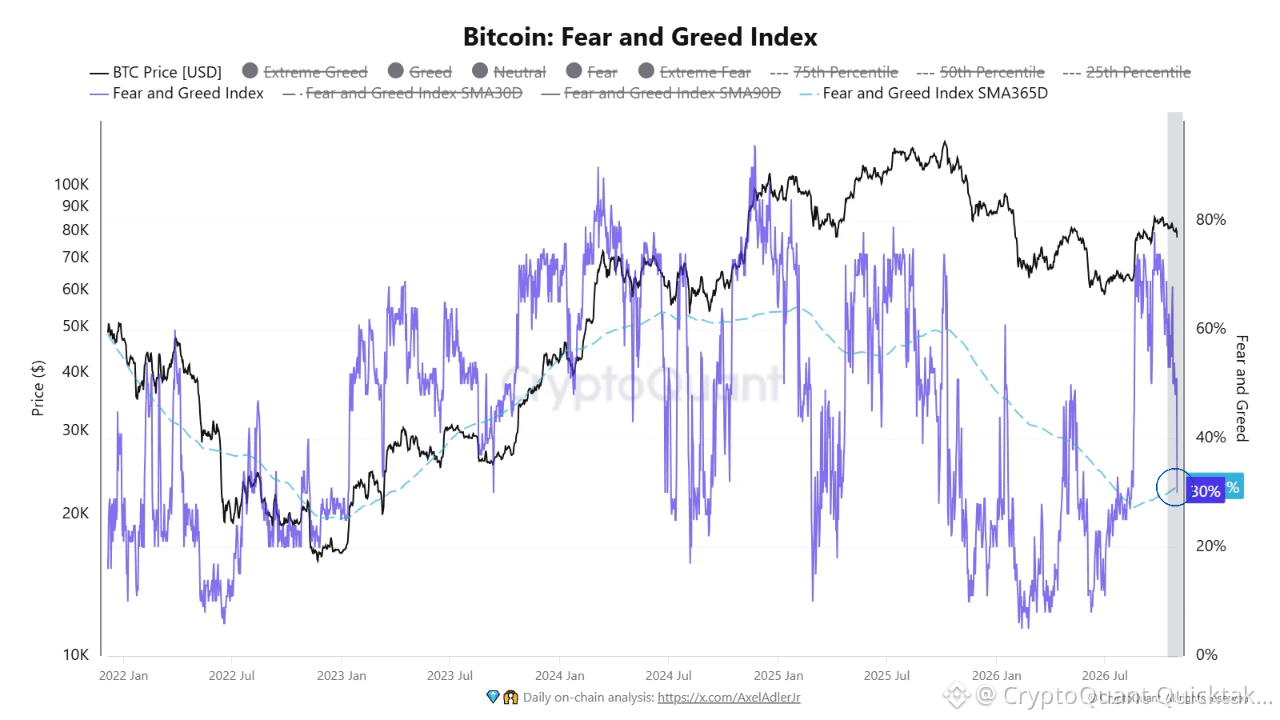
The Fear and Greed Index has retreated to around 30, converging with its 365-day average after briefly recovering toward 70–75. Optimism has faded back to the baseline of a year dominated by caution. This is a return to fear, even though sentiment now matches its annual average.
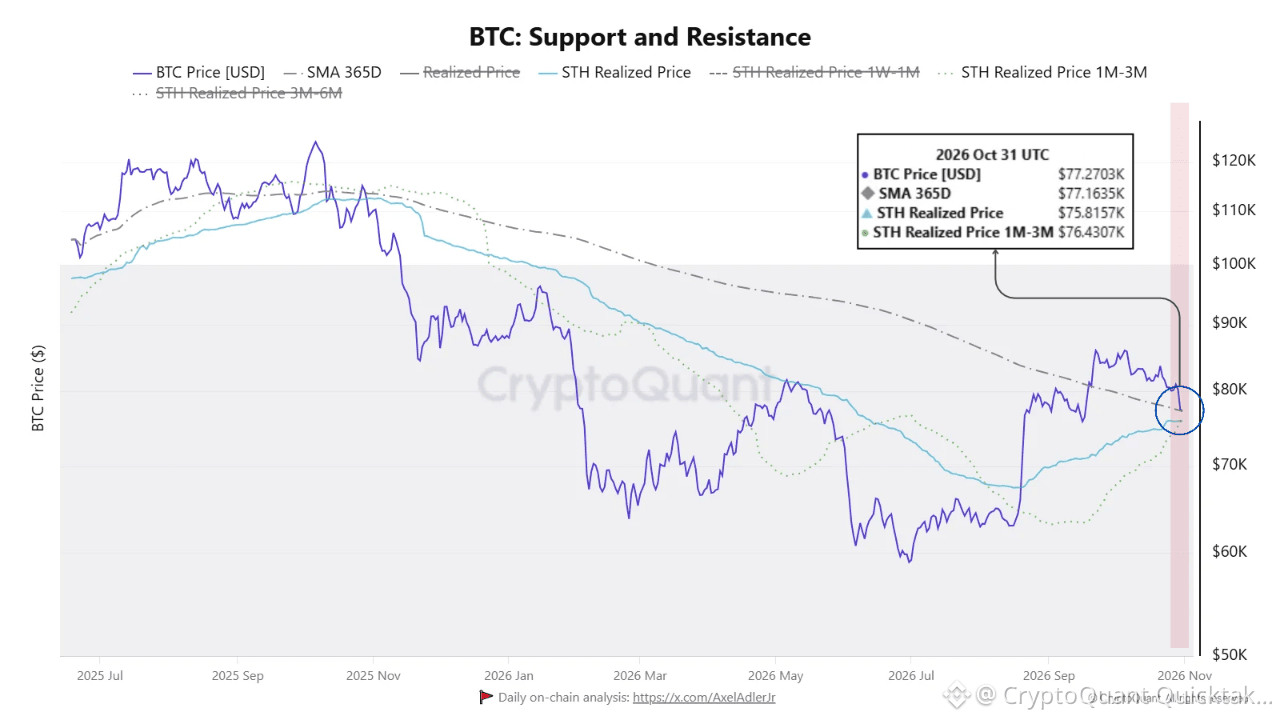
The cost-basis chart gives that psychological reset an economic anchor. Bitcoin trades near $77.27K, barely above its declining 365-day price average at $77.16K. Below sit the 1–3 month holder realized price at $76.43K and the broader short-term holder realized price at $75.82K.
These cohorts retain aggregate unrealized gains of only about 1.1% and 1.9%, respectively. That leaves little room for further weakness before recent holders move into loss. Investors who previously had a comfortable profit cushion are now approaching a decision: maintain exposure through uncertainty or exit close to breakeven.
The two annual averages serve different purposes. The sentiment average describes the prevailing emotional backdrop; the price average frames the longer-term trend. Their simultaneous tests become more meaningful because recent holders’ cost bases are clustered immediately below price.
Historically, the sentiment chart shows both recoveries and failed rebounds around its annual average. Persistence and price response matter more than the initial touch.
Holding the $75.8K–$77.2K area while sentiment stabilizes would suggest the recovery can withstand renewed caution. Losing it and failing to reclaim it would leave recent holders underwater, potentially turning subsequent rebounds into breakeven exits. Improving spot demand and STH-SOPR holding above 1 would strengthen the constructive case; rising realized losses would weaken it.
Written by MorenoDV_