
The Nasdaq has suffered a sharp pullback recently, leaving many investors questioning the outlook for semiconductors, the backbone of the US tech market. Intel (INTC) became the trigger for this market selloff. Its disappointing quarterly guidance, prolonged weakness in the PC market and production losses from its Israeli factory incident made investors re-examine the profitability of the entire semiconductor and AI supply chain.
Alphabet (GOOGL, Google) also tumbled alongside Intel. The market is growing skeptical whether its massive AI capital spending can eventually translate into stable profits. For years, investors bet heavily on the AI story, pushing up valuations of growth stocks listed on the Nasdaq. Now the market is shifting its focus: investors want real cash flow instead of just optimistic growth narratives.
Macroeconomic factors are adding more pressure to US stocks. Crude oil prices are climbing higher, reviving inflation fears. This pushes back market expectations for Federal Reserve interest rate cuts and keeps US Treasury yields elevated. High yields are particularly harmful to high-growth tech and semiconductor stocks, as their value relies heavily on future earnings. Gold, the classic safe-haven asset, is also caught in this complicated environment. When the market prices in “higher rates for longer”, gold often struggles, even amid rising geopolitical risks.
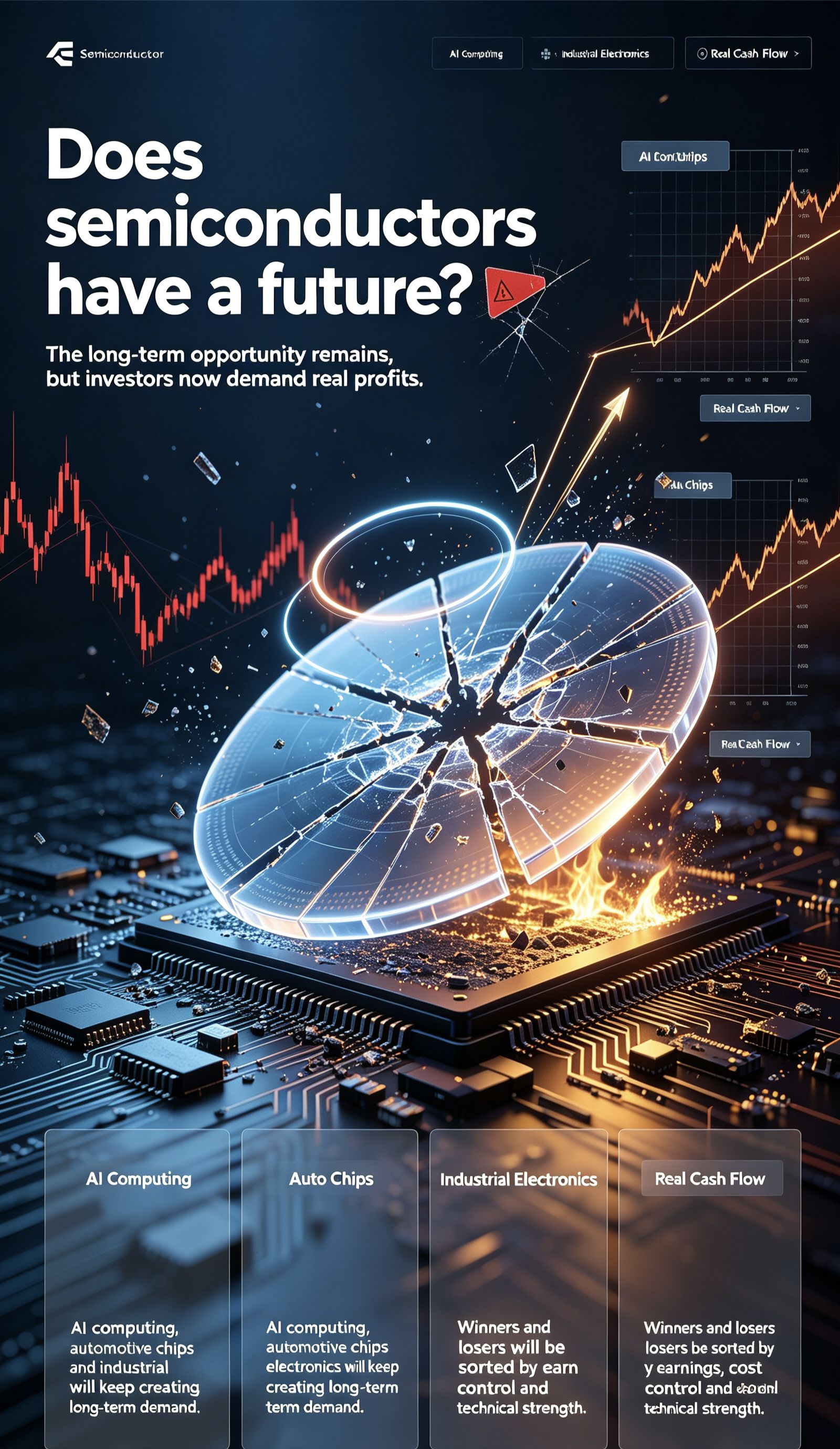
So does the semiconductor industry still have a future? The short answer is yes, but the easy rally period is over. AI computing, automotive chips and industrial electronics will keep creating long-term demand for semiconductors. However, the sector will no longer enjoy universal price gains. Investors will distinguish winners and losers strictly by earnings, cost control and technical strength.
Volatility will stay high for the Nasdaq and US stocks. Oil, gold and Fed policy will continue to swing market sentiment. This is not the end of semiconductors, but the start of a more rational, profit-driven era for tech investing.