

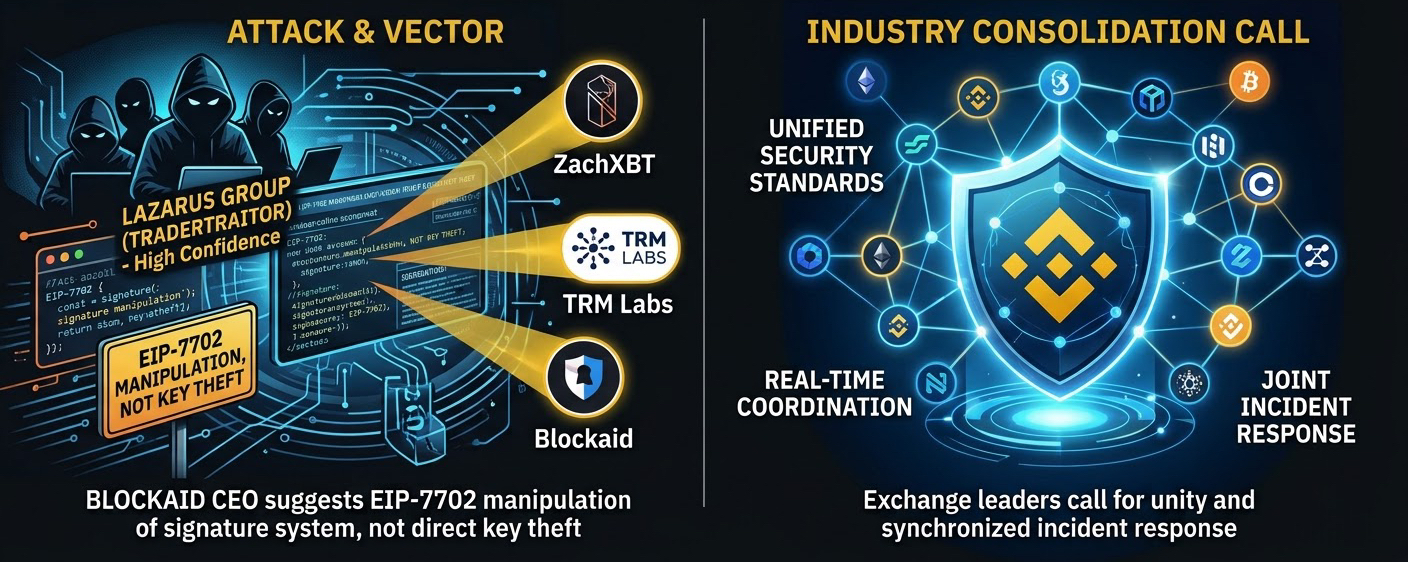

Security in Web3 is a constant confrontation with a strong opponent. According to ZachXBT and TRM Labs, the North Korean group Lazarus (TraderTraitor), known for the largest hacks in the crypto industry, is confident behind the recent attack on Binance.
🔎 Attack vector: EIP-7702
Important: there was no direct theft of Binance private keys.
According to the CEO of Blockaid, hackers manipulated the signature system through authorization using the EIP-7702 protocol. The focus of attackers shifts from direct hacking of servers to the exploitation of complex on-chain mechanics and account abstraction standards. By improving UX and introducing new technologies, the industry must at the same time lay preventive protection for them.
🚨 A challenge for the entire crypto industry
It is impossible to cope with threats at the state level alone. Binance management and market leaders call for immediate consolidation:
Uniform standards: End-to-end rules for checking signatures and auditing smart contracts for all Web3 platforms.
Real-time response: Instant exchange of Threat Intelligence data between exchanges to intercept attacks.
Synchronous blocking: Joint freezing of stolen assets together with analysts and stablecoin issuers.