



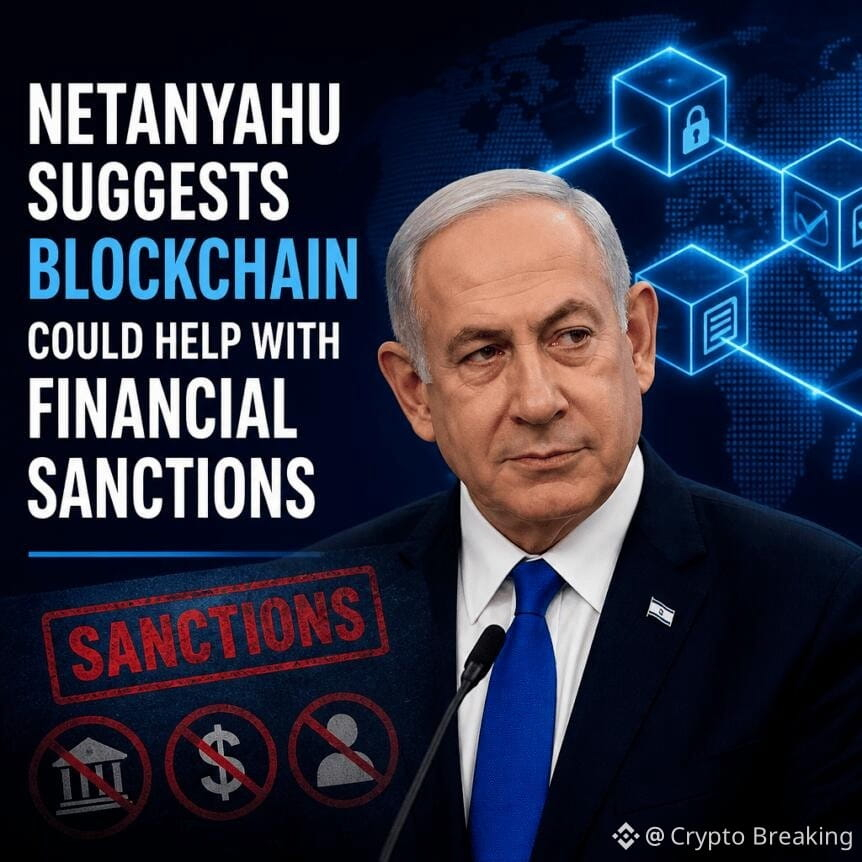
Israel’s election campaign has spilled into crypto policy after Prime Minister Benjamin Netanyahu suggested the country could lean on blockchain and cryptocurrencies to withstand the economic pressure of possible international sanctions.
Speaking to Israel’s Channel 10 economic network on Friday, Netanyahu said Israel is exploring blockchain technology and digital currencies as a way to reduce “strains on the economy” that could result from any further sanctions, framing blockchain as an “alternative to sanctions.” The remark has immediately drawn pushback from regulators, opposition politicians, and major media voices.
Key takeaways
Netanyahu told Channel 10 that Israel is considering blockchain and cryptocurrency to help manage the fallout of potential sanctions.
The Bank of Israel rejected the idea, saying cryptocurrencies cannot be used to bypass sanctions.
Opposition candidates and commentators warned that “crypto as sanctions evasion” could pose security and economic risks.
Economists and industry figures have previously cautioned that sanctions targeting settlements could expand to affect Israel’s wider economy.
From investment to “economic defense”
Until now, discussion of crypto in Israeli political circles has often focused on investment, industry growth, and how to regulate digital assets. Netanyahu’s comments appear to shift the framing toward resilience under external financial constraints, describing blockchain as a “national strategic tool.”
His rationale ties directly to the risk of sanctions. A dozen Western countries have already announced measures targeting goods associated with Israeli settlements in the West Bank, citing Jewish settler attacks on Palestinians and an increase in settlement construction approved by Netanyahu’s right-wing government. According to The Times of Israel, those steps could broaden to cover Israel proper, with economists and industry figures warning that the impact would not remain limited to the settlements sector.
Bank of Israel: crypto can’t route around sanctions
Netanyahu’s proposal was met with immediate skepticism from the country’s central bank. In a statement, the Bank of Israel said cryptocurrencies “cannot be used as a route for bypassing sanctions.” The response directly undercuts the idea that digital assets offer a reliable escape hatch from international compliance regimes.
In parallel, opposition figures attacked the concept as a national security threat. Yashar party leader Gadi Eisenkot wrote on X that the “BibiCoin vision is a threat to national security,” using a play on Netanyahu’s nickname.
Criticism spreads from rallies to mainstream commentary
The controversy quickly moved beyond official institutions. At an anti-government rally in Tel Aviv on Saturday evening, attendees discussed the blockchain statement in pointed terms, with one rallygoer arguing that an economy depending on “the dark web” would leave Israel no better than its adversaries. Another participant suggested that the Bank of Israel would be forced to respond, implying that regulators should not allow illegal financial workarounds.
Media commentators were similarly direct. Yediot Ahronot columnist Nadav Eyal wrote on X that digital currencies can move value outside some traditional banking channels, but argued they are not a substitute for a national financial system. He added that cryptocurrencies do not provide credit lines to banks, do not replace access to international capital markets, and do not persuade foreign companies to violate sanctions that bar them from doing business with Israel.
CryptoJungle founder Ben Samocha also pushed back. In remarks to Cointelegraph on Sunday, he argued that crypto and blockchain-based solutions are not the right tool for bypassing sanctions. He pointed to precedent from the US Treasury’s enforcement efforts against Iran, saying that blockchain investigation can help track illicit funds, block the fiat on-ramps, and enable freezing actions.
Why the debate matters for investors and policymakers
While the comments are political, they carry practical implications for anyone operating in or around Israel’s financial system. If policymakers treat cryptocurrencies as a sanctions-evasion instrument, it could change how banks, payments firms, and compliance teams approach risk—potentially tightening scrutiny rather than easing access to international financial rails.
Just as importantly, the Bank of Israel’s rejection highlights a core tension: blockchain transparency can make certain illicit flows easier to trace, even if digital assets can move value across networks. That means the “workaround” narrative may collide with enforcement capabilities—especially when sanctions regimes are designed around economic chokepoints like correspondent banking and regulated on-ramps.
For markets, the episode also illustrates how quickly crypto can become intertwined with geopolitics. Netanyahu’s remarks arrive amid concerns—raised previously by observers including The Times of Israel—that sanctions targeting settlements could broaden and affect the broader economy. In such scenarios, investors typically pay close attention not only to statements about adoption, but to whether regulators signal that crypto will be constrained, supervised, or treated as an unacceptable channel for sanction evasion.
As Israel approaches the Oct. 27 election, the key uncertainty is whether Netanyahu’s “blockchain as alternative to sanctions” framing will translate into policy proposals—or remain campaign rhetoric—while the Bank of Israel’s position sets the likely compliance boundary. Readers should watch for follow-up actions from regulators and for how other candidates articulate their stance on digital assets, especially around the practical question of whether crypto can be used in ways that international partners and domestic authorities will tolerate.
This article was originally published as Netanyahu Suggests Blockchain Could Help With Financial Sanctions on Crypto Breaking News – your trusted source for crypto news, Bitcoin news, and blockchain updates.