🏪 𝐂𝐚𝐧 𝐑𝐞𝐚𝐥 𝐁𝐮𝐬𝐢𝐧𝐞𝐬𝐬 𝐓𝐫𝐚𝐧𝐬𝐚𝐜𝐭𝐢𝐨𝐧𝐬 𝐒𝐮𝐩𝐩𝐨𝐫𝐭 𝐃𝐢𝐠𝐢𝐭𝐚𝐥 𝐓𝐨𝐤𝐞𝐧𝐬?
Most real world asset tokenization focuses on property, commodities or financial assets.
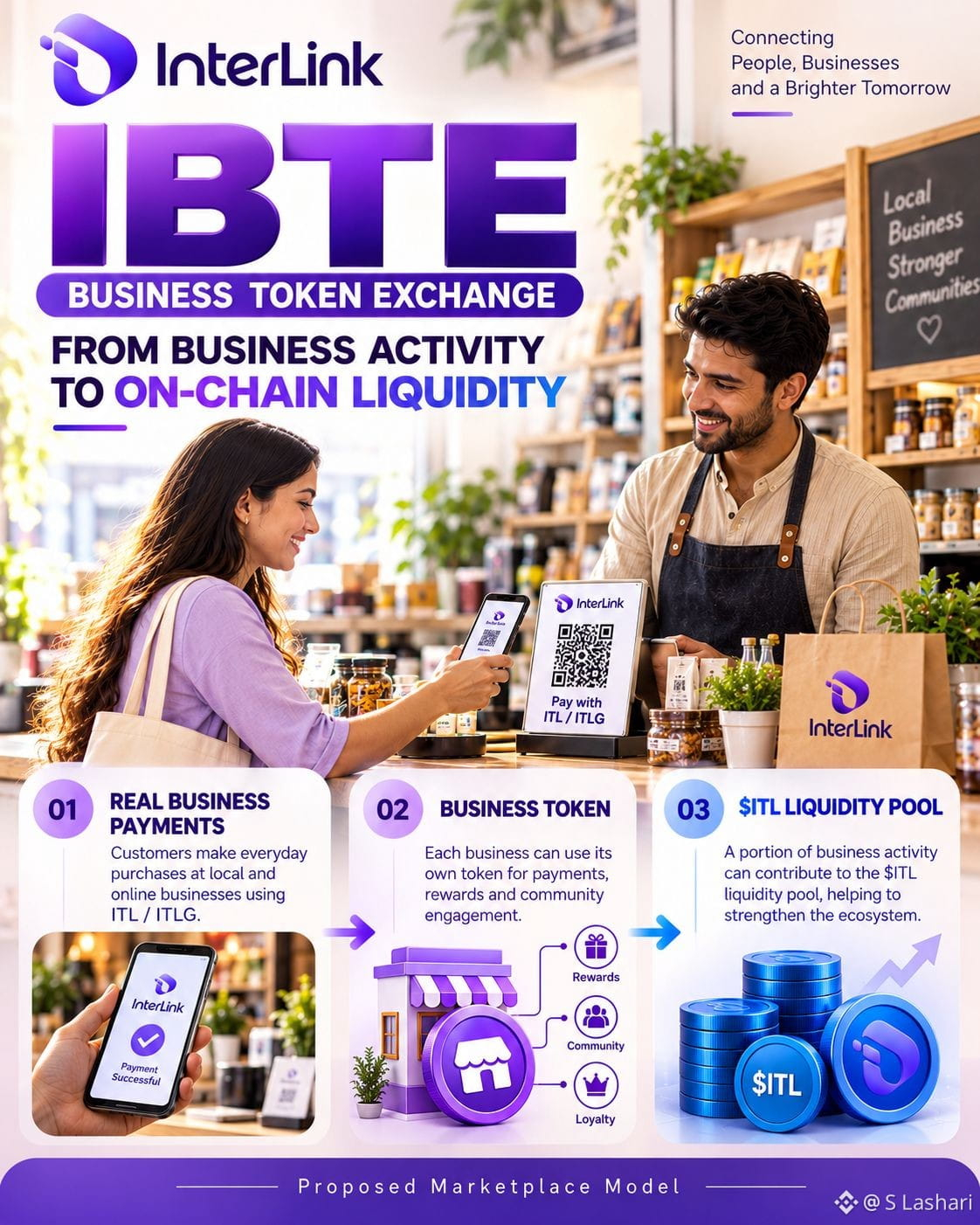
InterLink's proposed Business Token Exchange (IBTE) explores a different approach: connecting digital tokens with everyday business activity.
Here's how the model is designed to work:
🔹 Business Tokens: Verified businesses issue tokens representing their economic activity.
🔹 Liquidity Pools: Each Business Token is paired with $ITL.
🔹 Transaction Activity: Under the published protocol design, 5% of payments processed through the infrastructure would be directed toward the corresponding Business Token's liquidity pool.
🔹 Token Holder Rights: Business Tokens do not represent company shares or guarantee dividends.
The key question is whether real transaction volume can create sustainable liquidity over time.
IBTE remains in development, and its full marketplace launch date has not been confirmed.
Disclosure: InterLink Community Ambassador. Educational content only.
#InterLink #ITLG #ITL