


Bitcoin’s recovery is facing a liquidity problem: USDT, which accompanied several of its strongest advances, is struggling to return to sustained expansion.
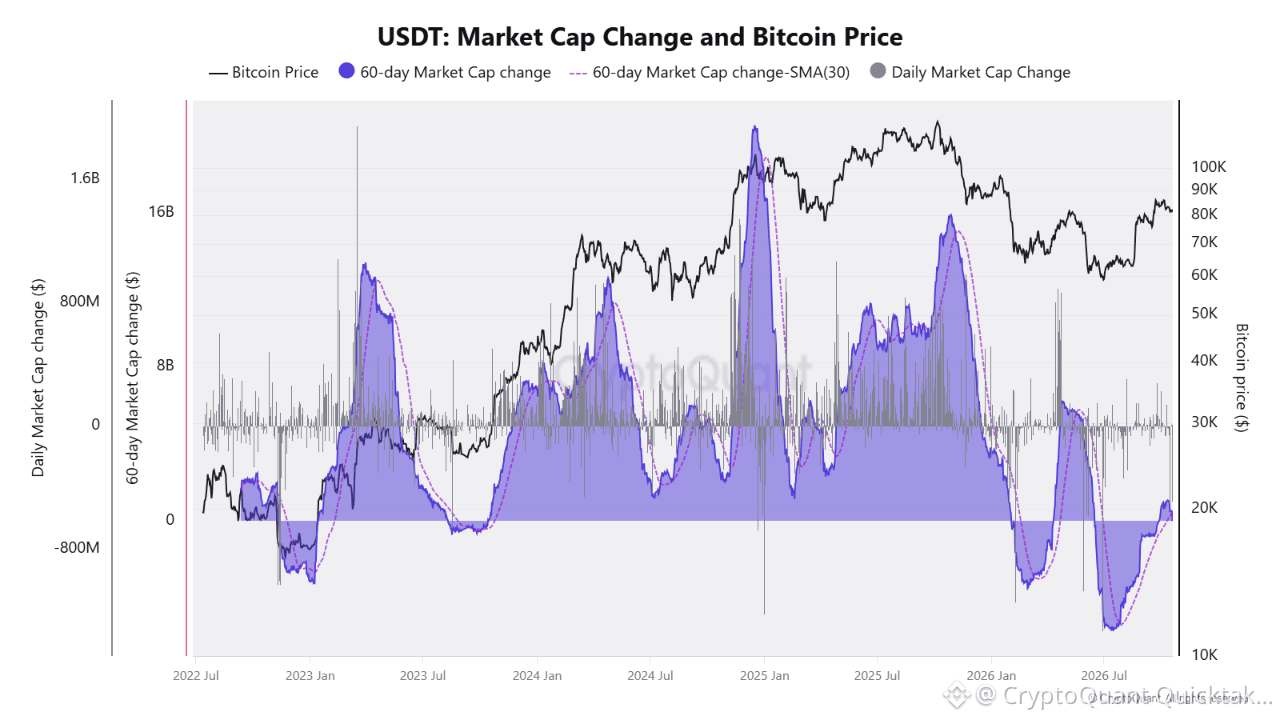
During the 2024–2025 rallies, USDT’s market capitalization repeatedly grew by billions of dollars over 60-day periods. That expansion increased the pool of dollar liquidity available for trading and absorbing sell pressure. Issuance alone did not guarantee BTC purchases, but it provided a more supportive backdrop for demand.
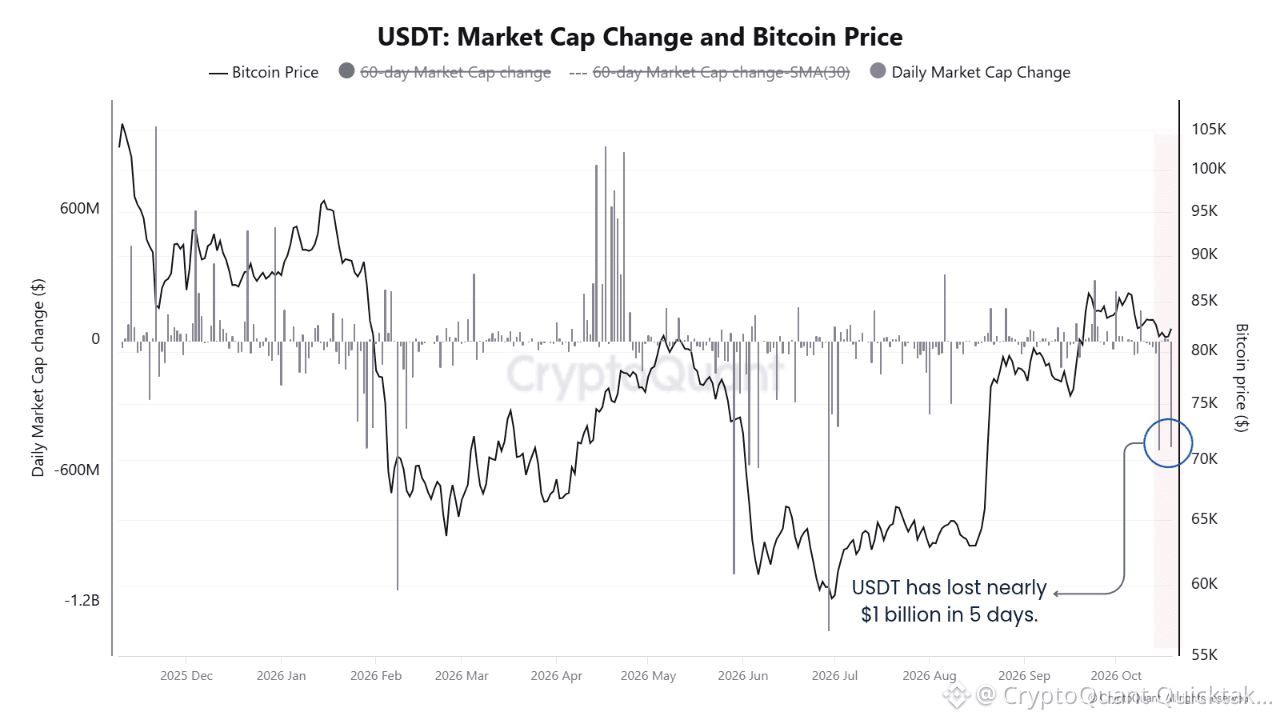
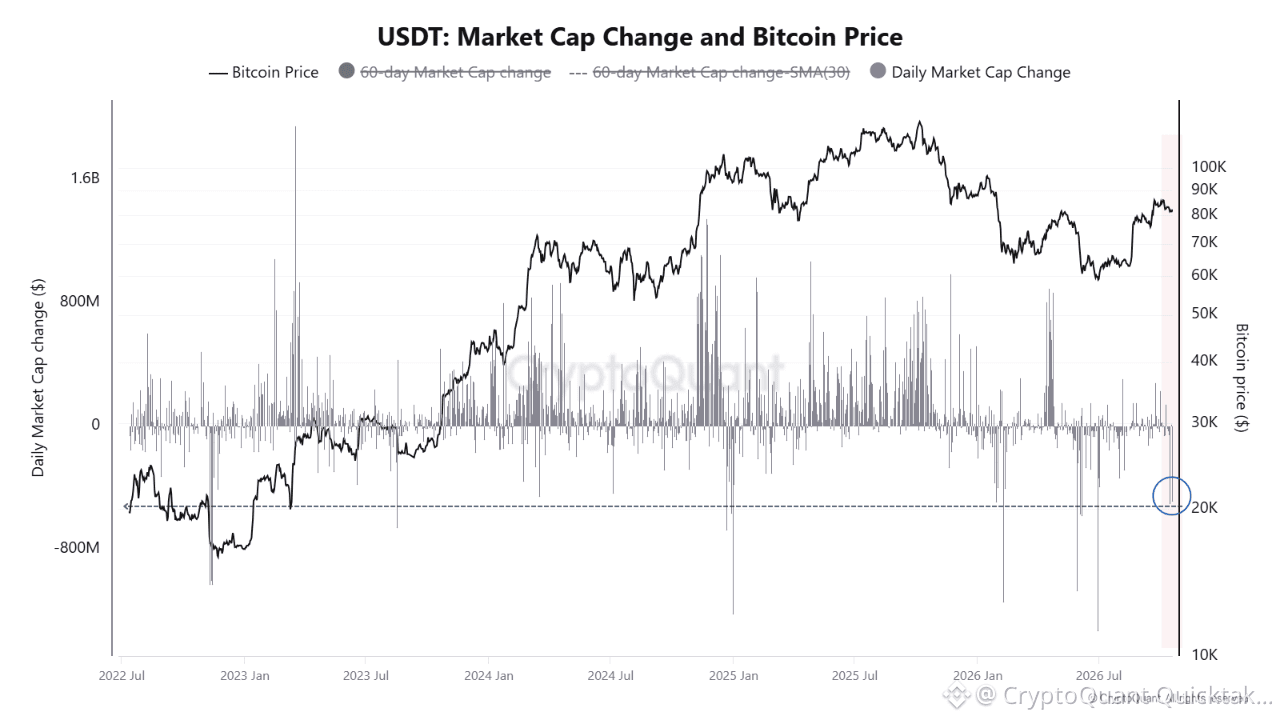
In 2026 expansion has become less persistent, interrupted by deep contractions. Although the 60-day change has recently recovered toward zero from its midyear lows, USDT has now lost nearly $1 billion in market capitalization over five days. The longer-term improvement is therefore being tested by renewed short-term withdrawals.
This matters because a recovery from contraction is only the first step. Bitcoin can rebound as selling fades or existing capital rotates back into the market. Extending that rebound becomes harder when fresh liquidity fails to build alongside it, particularly if higher prices encourage holders to take profits.
The underlying tension is that BTC has recovered faster than its USDT liquidity backdrop. One source of fuel that supported previous advances is contributing much less, leaving the market more dependent on existing buying power and alternative demand channels.
USDT alone cannot establish a market-wide capital drain: liquidity may migrate into other stablecoins, while ETF demand can reach Bitcoin through a separate route. Nevertheless, renewed USDT contraction weakens the case that this recovery is developing into a broad liquidity-driven expansion.
The next test is whether daily contractions fade and the 60-day change moves decisively above zero, supported by stronger spot buying. If supply keeps shrinking while BTC stalls, the risk is that the recovery loses momentum before demand becomes strong enough to absorb renewed selling.
Written by MorenoDV_