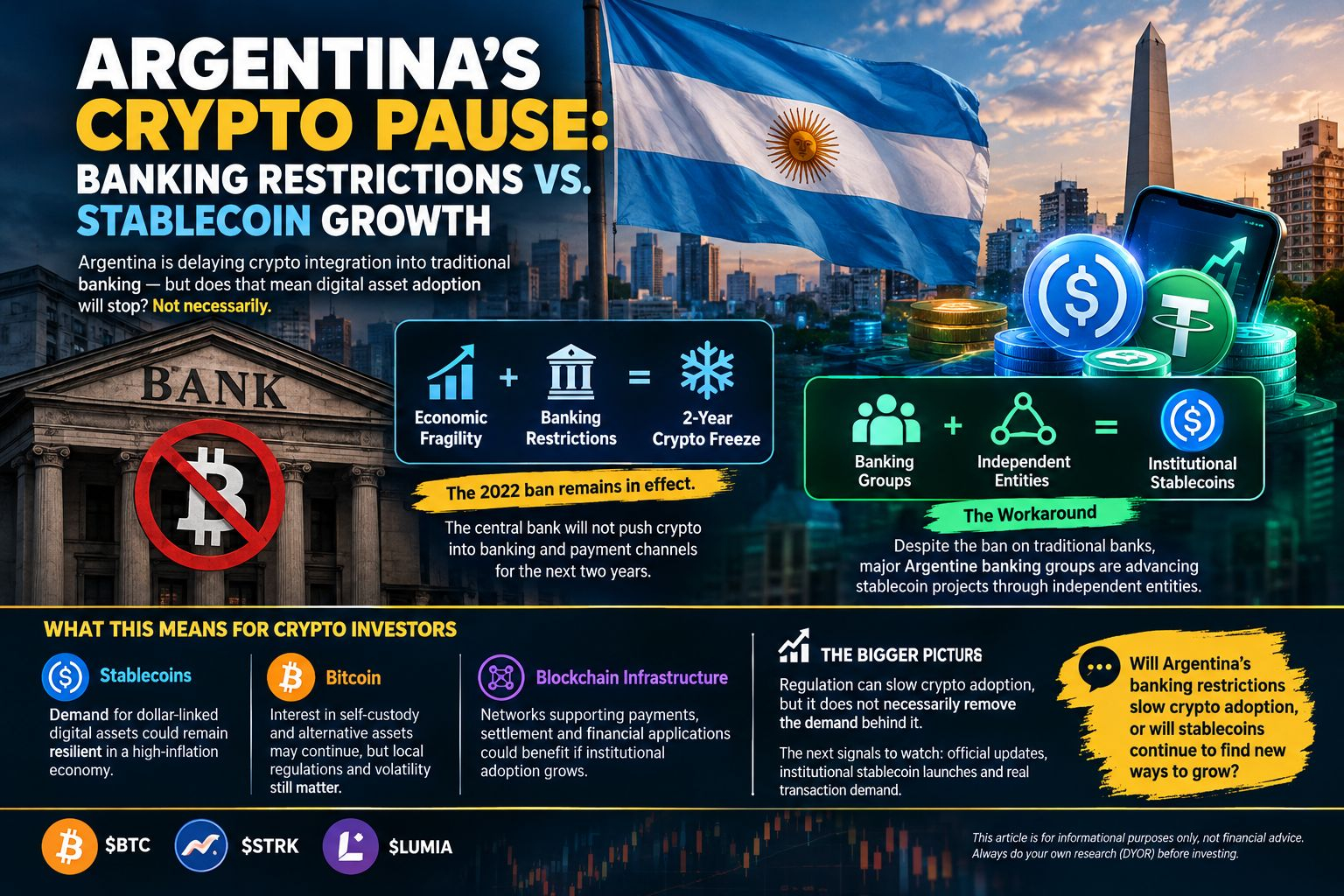

Argentina is delaying crypto integration into traditional banking—but does that mean digital asset adoption will stop? Not necessarily.
Argentina’s central bank has maintained restrictions on financial institutions offering cryptocurrency services, keeping the regulatory divide between traditional banking and digital assets firmly in place. The reported two-year pause highlights how economic instability can influence crypto policy, even as demand for alternative financial tools continues to attract attention.
🔍 The Regulatory Equation
Economic Fragility + Banking Restrictions = Delayed Crypto Integration
Argentina’s 2022 regulatory framework restricted banks from facilitating cryptocurrency services. The latest reported position indicates that broader integration into banking and payment channels will remain on hold for two years.
The key issue is financial stability. In an economy affected by persistent inflation and currency uncertainty, regulators may prefer a cautious approach rather than introduce additional risks to the banking system.
However, restrictions on banks do not automatically eliminate access to digital assets through every other legal channel.
💵 The Stablecoin Workaround
Independent Entities + Institutional Demand = Potential Stablecoin Growth
While traditional banks face regulatory limits, independent companies and financial technology businesses may still explore stablecoin-related services, subject to applicable laws.
For Argentine users, dollar-pegged stablecoins can offer a way to access digital dollars without directly holding physical US currency. For institutions, they may provide opportunities in digital payments, settlement and cross-border transfers.
But there is an important distinction: a stablecoin project operated by an independent entity is not the same as a bank officially offering crypto services. Regulatory approval, reserve transparency, liquidity and redemption mechanisms remain critical.
📊 What This Means for Crypto Investors
Argentina’s situation highlights three trends worth watching:
Stablecoins: Demand for dollar-linked digital assets could remain resilient where local currency confidence is weak.
Bitcoin: Continued interest in self-custody and alternative assets may support adoption, although local regulations and market volatility still matter.
Blockchain infrastructure: Networks supporting payments, settlement and financial applications could benefit if institutional adoption expands over time.
For $BTC , $STRK and $LUMIA , Argentina’s regulatory stance is not a direct bullish catalyst. Their investment outlook depends on broader market liquidity, network adoption, token demand and project-specific fundamentals. Investors should avoid treating a local policy development as proof that these tokens will rise.
⚖️ The Bigger Picture
Regulation can slow crypto adoption, but it does not necessarily remove the demand behind it.
Argentina presents a compelling test of whether traditional banking restrictions can coexist with growing interest in digital dollars and blockchain-based financial services. The next signals to watch are official regulatory updates, institutional stablecoin launches and evidence of real transaction demand—not just announcements.
The opportunity may lie in the long-term growth of digital financial infrastructure, but execution, regulation and liquidity will determine which projects benefit.
What do you think? Will Argentina’s banking restrictions slow crypto adoption, or will stablecoins continue to find new ways to grow?
#Argentina #Stablecoins #ArgentinaCentralBankWillNotPushCryptoIntoBankingForTwoYears #Lumia #strk