

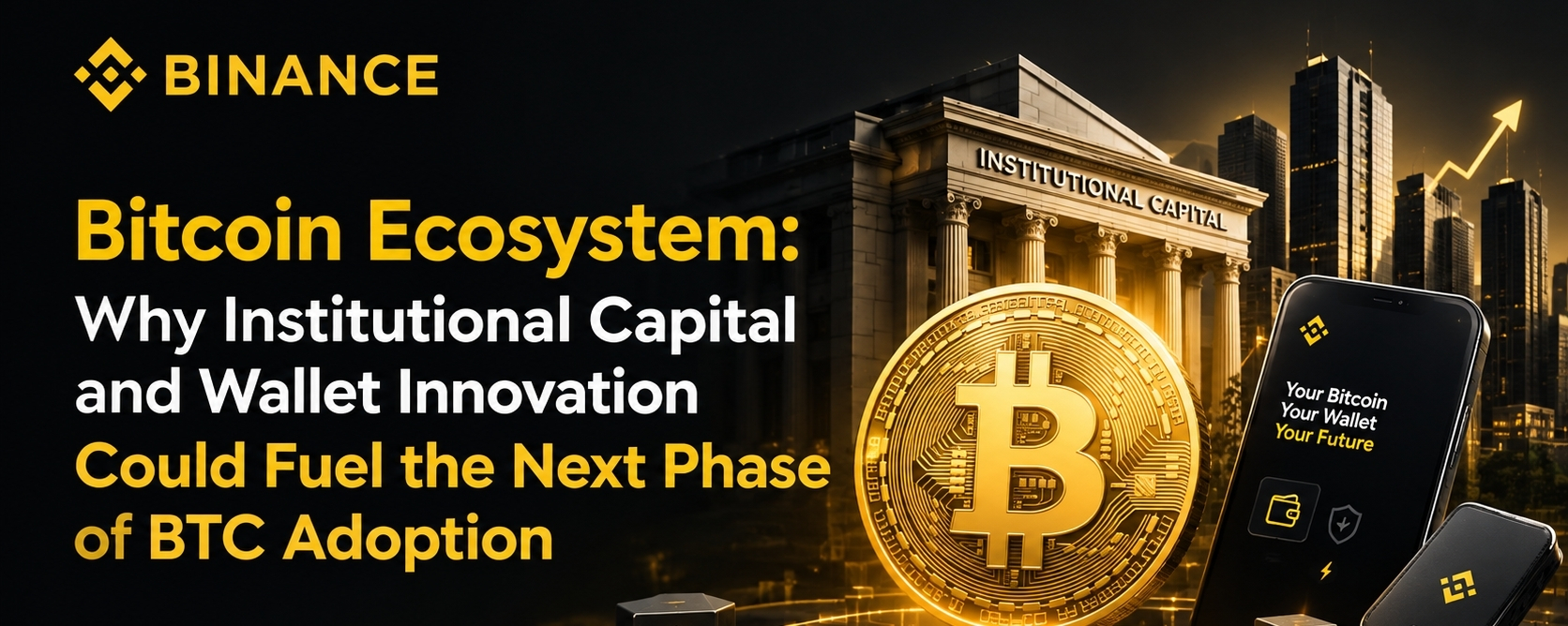

Bitcoin Ecosystem (+4.24% over 30 days): Institutional ETF flows and self-custody innovation are reshaping Bitcoin’s long-term growth narrative.
Bitcoin’s story is evolving. What once began as a decentralized peer-to-peer payment network has grown into a global financial ecosystem attracting institutional investors, developers, and individuals seeking greater control over their digital assets.
The reported 4.24% 30-day gain highlights renewed market strength, but the more important question is whether Bitcoin’s underlying ecosystem can sustain this momentum beyond short-term price movements.
1. Institutional ETF Flows: A Powerful Market Signal
Spot Bitcoin ETFs have created a more accessible route for traditional investors to gain exposure to BTC without directly managing private keys or using cryptocurrency exchanges.
When ETF inflows strengthen, they can reflect rising institutional demand and potentially support market liquidity and investor confidence. However, flows are not always consistent. Recent outflows remind us that institutional participation can shift with market conditions, interest-rate expectations, and changing risk appetite.
The key takeaway? Bitcoin’s long-term trajectory depends not only on demand during bullish periods but also on how resilient that demand remains during market uncertainty.
2. Wallet Innovation Is Expanding Bitcoin’s Utility
Institutional capital is only one side of the equation. The user experience is equally important.
Products such as Block’s Bitkey hardware wallet demonstrate how the industry is working to make Bitcoin self-custody more accessible. By simplifying key management and introducing recovery-focused security features, hardware wallet innovations can help users take greater control of their BTC without relying entirely on centralized custodians.
This matters because Bitcoin adoption is not just about buying and holding an asset. It is also about making ownership safer, easier, and more practical for everyday users.
As self-custody tools improve, Bitcoin’s ecosystem could become more attractive to people who value financial independence and direct control over their assets.
3. Why These Two Trends Matter Together
Institutional ETFs and self-custody wallets serve different purposes, yet they contribute to Bitcoin adoption in complementary ways.
ETFs: Offer traditional investors a familiar investment vehicle.
Self-custody wallets: Give individuals more direct control over their Bitcoin.
Ecosystem innovation: Can improve accessibility, security, and confidence across different user groups.
Together, these developments support a broader Bitcoin narrative: capital can enter through traditional financial channels while technological improvements strengthen the experience of owning and using BTC.
Nevertheless, adoption does not automatically translate into higher prices. Bitcoin remains volatile, ETF outflows can persist, and wallet security still depends on users following safe practices.
4. What Should Bitcoin Investors Watch Next?
Rather than focusing exclusively on daily candles, market participants can monitor several important indicators:
ETF net flows: Are inflows becoming more consistent, or are investors continuing to reduce exposure?
Long-term holder behavior: Are experienced holders accumulating, distributing, or remaining inactive?
Wallet adoption: Are self-custody products becoming easier to use without compromising security?
Macroeconomic conditions: How might interest rates, liquidity, and global risk sentiment influence demand for BTC?
Tracking these factors together can provide a more balanced perspective than relying on a single price movement.
Final Thoughts: Bitcoin’s Growth Is About More Than Price
Bitcoin’s reported 4.24% gain over 30 days is an interesting performance signal, but the deeper story lies in the combination of institutional access and ongoing product innovation.
ETF flows can influence market demand, while products such as Bitkey illustrate the continued effort to improve Bitcoin ownership and self-custody. Neither trend guarantees a sustained rally, but both are relevant to understanding how the Bitcoin ecosystem is developing.
My perspective: Bitcoin’s next major phase of adoption may depend on how effectively it connects traditional capital with secure, accessible tools for individual ownership.
The real question is no longer simply whether Bitcoin can attract more capital. It is whether the ecosystem can continue making Bitcoin more accessible, secure, and useful across different market cycles.
What do you think will have the biggest impact on Bitcoin’s next growth phase: institutional ETF demand or self-custody innovation? Share your perspective in the comments.
#Bitcoin #BTC #Binance #CryptoMarket #BitcoinEcosystem #ETF #Bitkey #CryptoEducation $BTC $BNB
