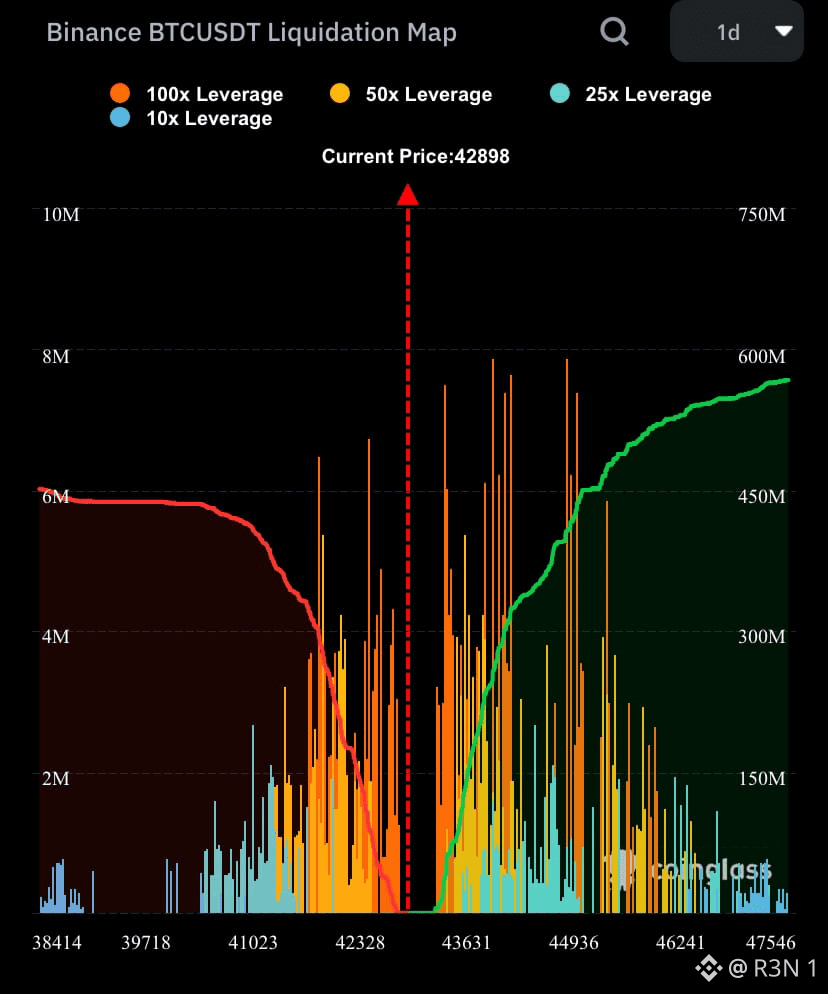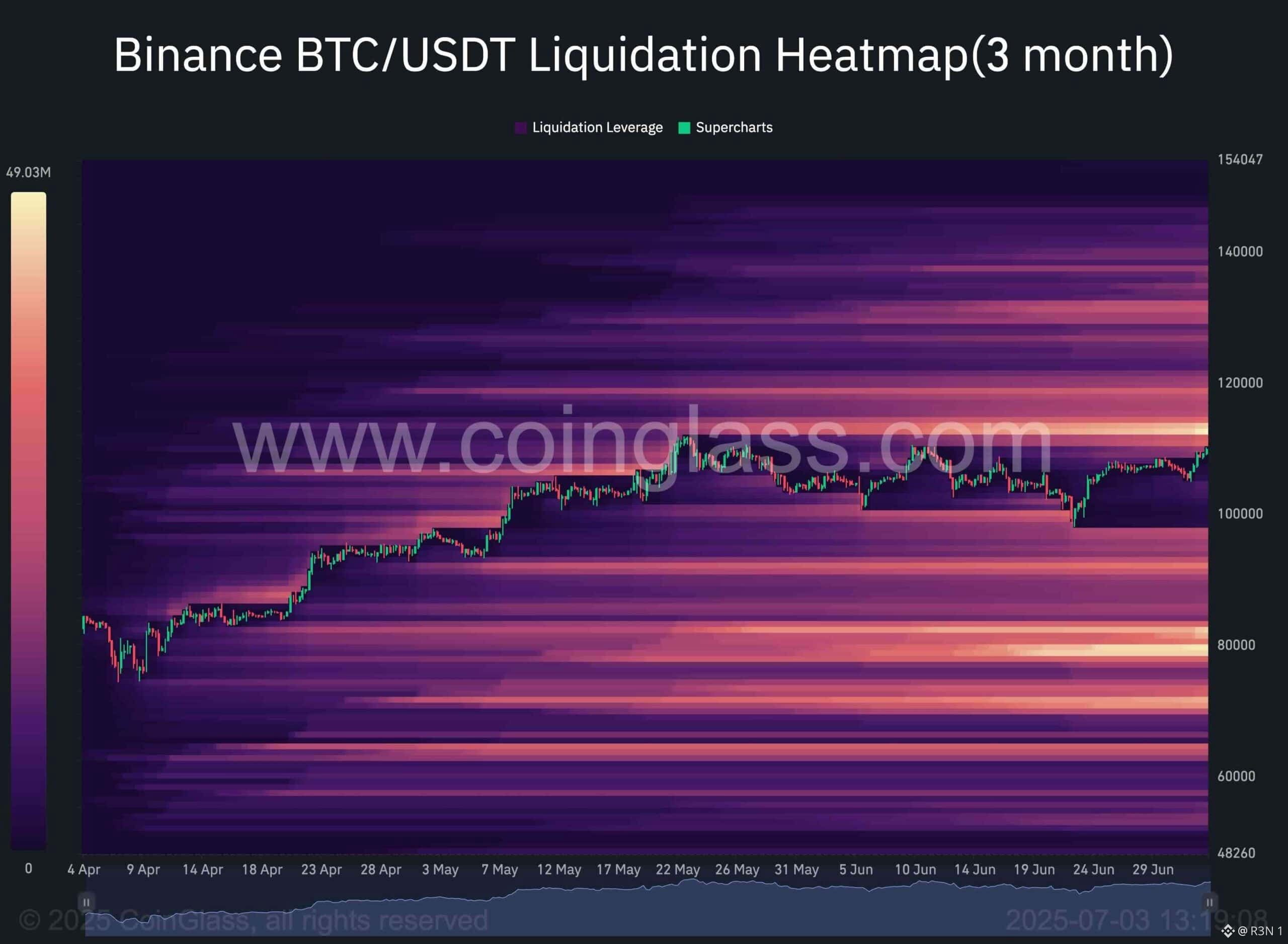
BTC falling 3% from current levels, roughly $84K down to about $81,500, puts price right inside the exact zone Coinglass flags as the trigger point, not near it, inside it. Per Coinglass, a break below $82,125 would set off $2.734 billion in cumulative long liquidations across mainstream exchanges. That's the leveraged long side, the crowd using margin to amplify this rally, and it's a genuinely large number relative to BTC's recent daily liquidation events this month, most of which have run in the hundreds of millions, not billions. Here's the detail that actually answers your question though. ETF buyers aren't in this liquidation conversation at all, structurally can't be. Spot ETF shares represent direct ownership, no leverage, no margin call, no liquidation price. The $999 million that came in on September 24 and the broader $2.4 billion Zhang cited entering ETFs this month sits completely outside this mechanism. A 3% dip doesn't force BlackRock's IBIT to sell anything, it might just mean slower inflows or modest outflows the next day, a demand question, not a forced liquidation event. So the honest answer is leveraged longs get liquidated first, and by a wide margin, ETF holders don't get liquidated in this scenario at all. The real risk for ETF buyers isn't forced selling, it's whether that $2.734 billion long liquidation cascade creates enough downside velocity that it changes sentiment and slows the inflow pace that's been supporting price. Worth noting the asymmetry above current price too, a break above $90,669 would trigger $1.122 billion in short liquidations, meaningfully smaller than the downside number. That imbalance itself is informative, the market's pricing more leveraged long exposure sitting below price than short exposure above it right now, which is exactly what you'd expect after a short-squeeze-driven rally like September's. #BTC Price Analysis# $BTC