



Every crypto cycle eventually brings back the same question: when does altseason start?
Some traders watch Bitcoin dominance. Others watch global liquidity, stablecoin supply or Ethereum. And many simply wait until social media starts exploding with screenshots of small-cap coins doing 5x or 10x.
The reality is that altseason usually isn’t triggered by one thing. It tends to appear when several conditions line up and capital becomes willing to move further out on the risk curve.
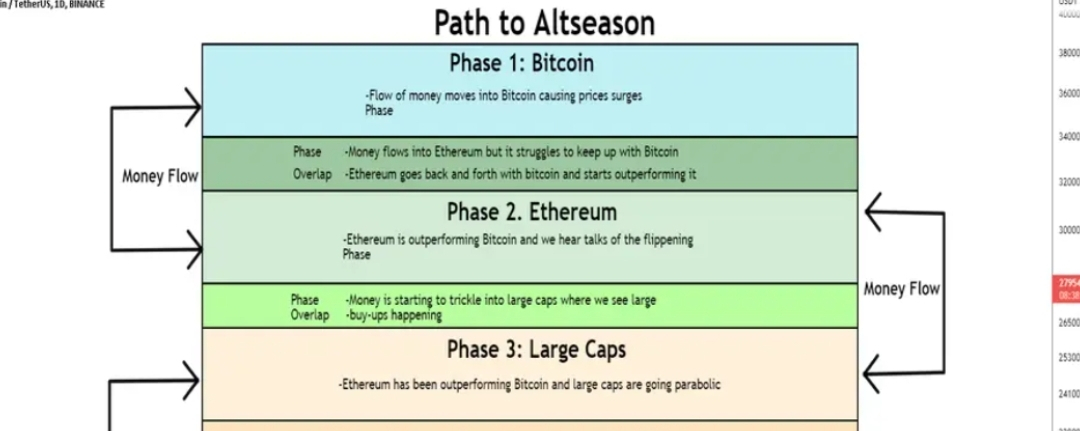
Bitcoin Usually Opens the Door
Bitcoin often moves first.
When BTC is rallying aggressively, it can absorb a huge amount of crypto liquidity and attention. Traders may prefer Bitcoin because it has the strongest liquidity and is generally viewed as the benchmark crypto asset.
The more interesting phase for altcoins can arrive after Bitcoin makes a major move and then begins consolidating.
Instead of leaving crypto completely, some traders rotate profits into Ethereum and larger altcoins. If confidence keeps growing, capital can gradually move toward mid-caps, smaller projects and eventually highly speculative tokens.
That rotation is one reason Bitcoin dominance is watched so closely during potential altseasons.
But Liquidity Is the Fuel
Bitcoin may open the door, but liquidity can determine how far the party goes.
Crypto is a risk-sensitive market. When financial conditions become easier and investors have greater appetite for risk, speculative assets can benefit disproportionately.
Stablecoins are especially interesting here because they represent capital that can move around crypto markets quickly.
The stablecoin market has grown substantially, with total supply reaching record territory during 2026. More stablecoins do not automatically guarantee higher altcoin prices, but a larger pool of on-chain capital can create better conditions for market activity.
This is why traders shouldn't look only at individual charts. Sometimes the bigger clue is whether fresh capital is actually entering the crypto ecosystem.
Then Comes Retail FOMO
Retail FOMO often becomes most visible later.
At the beginning of a move, the market can still feel boring. Bitcoin may be climbing while many smaller coins barely react.
Then a few altcoins start outperforming.
Suddenly screenshots appear everywhere. Search interest rises. Meme coins start running. Traders begin searching for the “next 100x.”
That can create a feedback loop.
Higher prices attract attention. Attention attracts new buyers. New buying pushes prices higher, which attracts even more attention.
But this is also where risk increases dramatically. By the time everyone is talking about altseason, some coins may already have made much of their move.
Ethereum Could Be the Bridge
Ethereum is another asset worth watching.
Historically, traders have often looked for a transition from Bitcoin strength toward ETH and then the broader altcoin market. It isn't a fixed sequence that must happen every cycle, but ETH outperforming BTC can indicate that investors are becoming more comfortable taking additional crypto risk.
If Ethereum begins gaining strongly while Bitcoin remains relatively stable, traders often start paying much more attention to the rest of the altcoin market.
This Altseason Could Look Different
There is another important possibility: the next altseason might not lift everything.
Crypto now contains an enormous number of tokens competing for the same attention and capital. At the same time, institutional participation through products such as spot ETFs has increased the importance of Bitcoin and Ethereum within the market.
That could make capital rotation more selective.
Instead of hundreds of random altcoins rising together, money could concentrate around specific narratives such as AI, tokenized real-world assets, DeFi, infrastructure or whichever sectors gain genuine momentum.
That would create something closer to several smaller “sector seasons” than one giant altseason.
So What Actually Starts Altseason?
Think of it as a chain reaction.
Bitcoin creates confidence. Liquidity provides the fuel. Capital rotation spreads the money. Retail FOMO can accelerate the final stages.
None of those signals guarantees an altseason by itself.
The more interesting moment comes when Bitcoin remains strong, BTC dominance begins weakening, Ethereum and large-cap altcoins start outperforming, liquidity expands and speculative activity spreads across the market.
That is when the question may stop being “When is altseason?”
It becomes:
“Has the rotation already started while everyone was waiting for an announcement?”