

Patel5600
29 投稿

Patel5600
報告
ユーザーをブロック
Markets. Data. Conviction. Quietly doing the work.
高頻度トレーダー
2.5年
6 フォロー
19 フォロワー
19 いいね
投稿
すべて
引用
PINNED
·
--
記事
翻訳参照
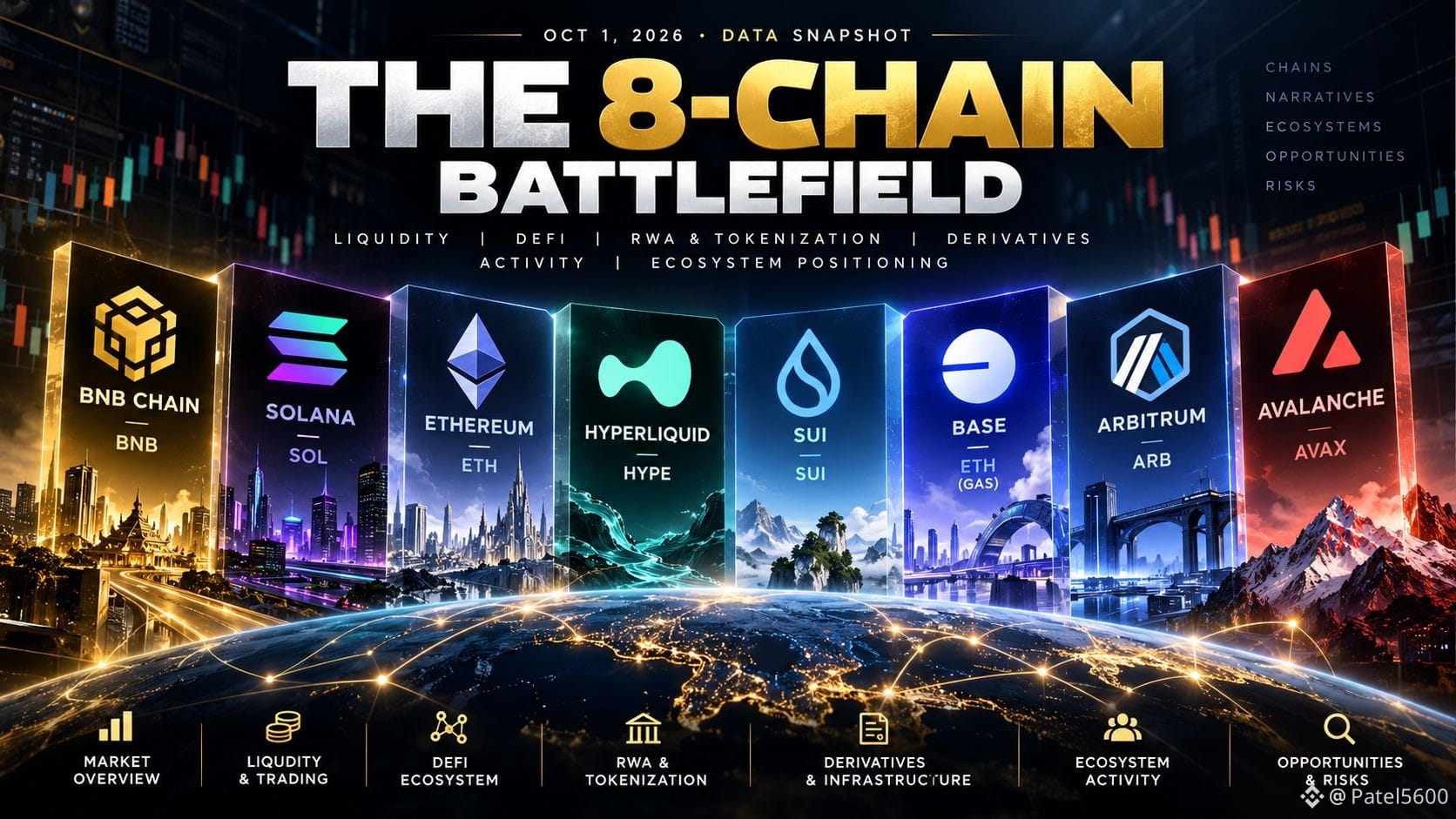
The 8-Chain Battlefield: Where Crypto Liquidity, RWA and Trading Are Moving — October 1, 2026THE 8-CHAIN BATTLEFIELD
October 1, 2026 — Deep market and infrastructure snapshot
Eight ecosystems. Eight different bets on where onchain finance goes next.
The old chain race was simple: faster blocks, cheaper gas, more transactions.
That game is changing.
Today the real competition is for liquidity, stablecoins, tokenized assets, derivatives, applications, institutional settlement and actual users.
This report tracks eight ecosystems that matter in that race: BNB Chain, Solana, Ethereum, Hyperliquid, Sui, Base, Arbitrum and Avalanche.
All market and DeFi figures below are snapshots for October 1, 2026 and can move continuously. TVL, RWA and volume methodologies differ by provider, so cross-chain figures should be treated as comparable indicators—not perfectly interchangeable accounting numbers.
━━━━━━━━━━━━━━━━━━
01 — BNB CHAIN | BNB
━━━━━━━━━━━━━━━━━━
THE CORE THESIS
BNB Chain is increasingly positioning itself as a high-throughput financial distribution layer: Binance-linked liquidity, stablecoins, DeFi, tokenization and institutional infrastructure.
LIVE SNAPSHOT
• BNB: ~$764.69
• DeFi TVL: ~$5.70B
• Stablecoin market cap: ~$13.29B
• RWA active AUM: ~$4.86B on DefiLlama
• DEX volume: ~$1.38B / 24h
• Active addresses: ~2.47M / 24h
• Transactions: ~18.03M / 24h
The RWA figure deserves context. BNB Chain's own RWA page currently advertises $3.4B of RWA TVL, while DefiLlama reports $4.86B of RWA active AUM. Those figures use different methodologies, so the correct takeaway is the direction: tokenized assets have become a major part of the BNB ecosystem rather than a side narrative.
WHAT CHANGED
BNB Chain recently appointed Thomas Chen as Chief Business Officer, with an explicit mandate around institutional partnerships, capital markets, stablecoins, trading/liquidity and ecosystem distribution.
At the infrastructure level, the Pasteur hard fork introduced BEP-675 and a new block-building architecture. BNB Chain reports roughly 98% of blocks using the new path in its latest three-day window and says BidBlock V2 is averaging 28% more gas per block than Bid V1 under live mainnet traffic. Validators are also raising the gas-limit target toward 70M.
BNB Chain is simultaneously pushing tokenized-stock development: its September tokenized-stocks hackathon runs through October 11, with a $20,000 prize pool.
MARKET READ
BNB is not merely competing on transaction cost. The bigger bet is distribution: can exchange liquidity, stablecoins, RWA issuance and DeFi reinforce one another strongly enough to keep more financial activity on BNB Chain?
RISK
The Binance connection is an advantage for distribution but also creates concentration and regulatory exposure. RWA numbers are methodology-sensitive, and ecosystem growth still has to translate into durable liquidity and fees.
━━━━━━━━━━━━━━━━━━
02 — SOLANA | SOL
━━━━━━━━━━━━━━━━━━
THE CORE THESIS
Solana remains one of the deepest high-throughput venues for trading, DeFi and consumer applications, while increasingly moving into payments and institutional tokenization.
LIVE SNAPSHOT
• SOL: ~$118.12
• DeFi TVL: ~$6.56B
• Stablecoin market cap: ~$16.10B
• RWA active AUM: ~$2.42B
• DEX volume: ~$2.29B / 24h
• Perps volume: ~$1.54B / 24h
• Active addresses: ~3.02M / 24h
• Transactions: ~114.94M / 24h
The numbers show where Solana's current strength sits: activity and market liquidity. Its DEX volume is materially larger than BNB Chain's in this snapshot, while perps activity is also significant.
WHAT CHANGED
Solana's September 28 infrastructure update says the network is now producing slots with a 250ms target, down from 400ms. That is a concrete example of the chain continuing to optimize latency rather than resting on its throughput reputation.
Institutional tokenization is another major thread. Solana announced Project Harmonia, connecting Allfunds—described by Solana as having about €1.9T under administration—to tokenized funds on Solana.
MARKET READ
Solana's competitive moat is increasingly about liquidity density and application depth. The question is not whether Solana can process transactions; it is whether trading, payments, consumer apps and tokenized financial products continue to compound on the same liquidity base.
RISK
High activity can be reflexive. DEX volume can surge without creating equally durable economic value, and competition for liquidity from Base, BNB Chain and specialized trading networks is intense.
━━━━━━━━━━━━━━━━━━
03 — ETHEREUM | ETH
━━━━━━━━━━━━━━━━━━
THE CORE THESIS
Ethereum remains the settlement and liquidity heavyweight. Its advantage is not raw transaction count; it is the scale of capital, stablecoins, DeFi, liquid staking, institutional assets and the L2 ecosystem anchored to Ethereum.
LIVE SNAPSHOT
• ETH: ~$2,695
• DeFi TVL: ~$53.33B
• Stablecoin market cap: ~$146.26B
• RWA active AUM: ~$13.90B
• DEX volume: ~$1.33B / 24h
• Perps volume: ~$441M / 24h
• Active addresses: ~590K / 24h
Ethereum's TVL is an order of magnitude larger than any of the other ecosystems in this eight-chain set. That does not automatically make it the fastest-growing venue, but it shows the scale of capital already anchored to the network.
WHAT CHANGED
The Ethereum Foundation announced the Glamsterdam testnet schedule. Sepolia activation is planned for October 6, 2026. The upgrade combines Amsterdam execution-layer work with Gloas consensus-layer work, including enshrined proposer-builder separation and block-level access lists. Mainnet activation has not yet been decided.
MARKET READ
Ethereum's strategic role is evolving from “the chain that does everything” toward “the settlement layer underneath a large family of specialized execution environments.” Base and Arbitrum are important parts of that model.
RISK
The trade-off is obvious: Ethereum has enormous capital depth, but much of user activity is increasingly distributed across L2s. The key question is how effectively value and liquidity accrue back to ETH and the Ethereum settlement layer.
━━━━━━━━━━━━━━━━━━
04 — HYPERLIQUID | HYPE
━━━━━━━━━━━━━━━━━━
THE CORE THESIS
Hyperliquid is the specialist in this group: it is building a chain around trading infrastructure, especially perpetuals, rather than trying to become a generic everything-chain first.
LIVE SNAPSHOT
• HYPE: ~$89
• Combined TVL: ~$7.33B
• 24h perp volume: ~$4.70B
• 7d perp volume: ~$45.42B
• Open interest: ~$8.21B
• 30d protocol fees: ~$72.18M
• 30d protocol revenue: ~$55.89M
• 24h HYPE volume: ~$1.20B
These figures are the reason Hyperliquid belongs in the same strategic conversation as much larger chains. Its perp market is a serious onchain trading venue, and its economics are directly tied to activity.
The latest DefiLlama snapshot puts HYPE around $89, with a market capitalization near $19.8B. HYPE remains below its September 23 all-time high of $97.96.
MARKET READ
Hyperliquid represents a different architecture of competition: instead of winning by becoming the biggest general-purpose chain, it can win by becoming the place traders prefer to trade.
That is a powerful thesis if onchain derivatives continue taking market share.
RISK
Perpetual trading is highly cyclical and leverage-sensitive. Open interest and volume can expand rapidly and reverse just as rapidly. A strong trading business is not the same thing as stable long-term application demand.
━━━━━━━━━━━━━━━━━━
05 — SUI | SUI
━━━━━━━━━━━━━━━━━━
THE CORE THESIS
Sui is pushing a high-performance L1 strategy centered on trading infrastructure, payments, programmable assets and fast settlement.
LIVE SNAPSHOT
• SUI: ~$1.18
• DeFi TVL: ~$554.5M
• Stablecoin market cap: ~$474M
• RWA active AUM: ~$36M
• DEX volume: ~$65.5M / 24h
• Active addresses: ~82K / 24h
• Transactions: ~37.5M / 24h
• 7d DEX volume: ~$497M
Sui is smaller than BNB, Solana or Ethereum in capital scale, but its recent development activity is unusually concentrated around financial-market infrastructure.
WHAT CHANGED
DeepBook App launched on September 24. Sui says the shared order book behind the app has processed more than $20B in trading volume, with more than 150,000 traders on the waitlist before launch. The app combines spot trading with a prediction product.
Sui also announced gasless stablecoin transfers and continued work around Bitcoin access, institutional settlement and agentic commerce. Its developer stack is moving toward real-time GraphQL subscriptions, and the Sui Foundation says JSON-RPC is being deprecated in favor of gRPC and GraphQL.
MARKET READ
Sui is attempting something strategically important: making market infrastructure a native part of the chain experience instead of leaving every application to rebuild liquidity from scratch.
RISK
The ecosystem is still much smaller than the leading chains, and TVL/volume can be sensitive to incentives and market cycles. SUI also has a large fully diluted valuation relative to current DeFi scale, making token supply and valuation important variables.
━━━━━━━━━━━━━━━━━━
06 — BASE | ETH GAS
━━━━━━━━━━━━━━━━━━
THE CORE THESIS
Base is the Ethereum L2 in this group, and importantly it does NOT have a separate native gas token. ETH is the gas asset.
LIVE SNAPSHOT
• Gas asset: ETH
• DeFi TVL: ~$6.30B
• Stablecoin market cap: ~$5.12B
• RWA active AUM: ~$165M
• DEX volume: ~$1.51B / 24h
• Perps volume: ~$205M / 24h
• Active addresses: ~396K / 24h
• Transactions: ~10.55M / 24h
Base's numbers make it one of the most relevant Ethereum scaling environments in the current market. Its DEX volume is above $1.5B/day in the latest snapshot, and stablecoin liquidity is above $5B.
WHAT CHANGED
Base's current developer environment shows the network continuing to push performance and programmable assets. The Base chain snapshot was updated September 30, while the Base status history records the Cobalt upgrade as completed.
Tokenized equities are another major strategic direction. Base announced in September that tokenized stocks issued by Coinbase were live on Base for eligible non-US users, positioning programmable equities as a new application category.
MARKET READ
Base is not trying to compete by issuing another speculative L2 token. Its model is distribution through Ethereum and Coinbase, combined with trading, payments and consumer applications.
RISK
Base's lack of a separate token changes the investment narrative around the ecosystem. Activity can grow substantially without creating direct token demand for a Base asset. The value-accrual question therefore sits largely around ETH, Coinbase's ecosystem and application-level assets.
━━━━━━━━━━━━━━━━━━
07 — ARBITRUM | ARB
━━━━━━━━━━━━━━━━━━
THE CORE THESIS
Arbitrum remains a major Ethereum L2 with a particularly strong position in DeFi and onchain derivatives.
LIVE SNAPSHOT
• ARB: ~$0.20
• DeFi TVL: ~$1.44B
• Stablecoin market cap: ~$3.73B
• RWA active AUM: ~$853M
• DEX volume: ~$149M / 24h
• Perps volume: ~$3.65B / 24h
• Active addresses: ~136K / 24h
• Transactions: ~1.71M / 24h
The standout metric is derivatives: roughly $3.65B in 24-hour perps volume in the latest DefiLlama snapshot, with a 7-day figure above $20B.
WHAT CHANGED
Arbitrum's ArbOS Elara upgrade went live in August, bringing compliance filtering and customizable priority fees to dedicated chains, plus base-fee efficiency improvements on Arbitrum One. Arbitrum is also advancing ZK settlement infrastructure.
MARKET READ
Arbitrum's competitive position is increasingly specialized: deep Ethereum liquidity, mature DeFi infrastructure and a strong derivatives footprint.
RISK
Its TVL is far below Ethereum and Base, and DEX volume has been weaker on the latest weekly window. Arbitrum therefore needs continued application growth and liquidity retention while Base and other L2s compete for Ethereum activity.
━━━━━━━━━━━━━━━━━━
08 — AVALANCHE | AVAX
━━━━━━━━━━━━━━━━━━
THE CORE THESIS
Avalanche is taking a more modular, institution-facing route, with customizable chains, payments, RWA infrastructure and validator economics as major themes.
LIVE SNAPSHOT
• AVAX: ~$11.10
• DeFi TVL: ~$640.8M
• Stablecoin market cap: ~$1.39B
• RWA active AUM: ~$994M
• DEX volume: ~$197M / 24h
• Active addresses: ~36.6K / 24h
• Transactions: ~290K / 24h
The most striking number is RWA active AUM: close to $1B in the latest DefiLlama snapshot, with BUIDL accounting for a substantial share.
WHAT CHANGED
Avalanche's Helicon upgrade went live on September 22. It introduced Continuous Execution on the C-Chain, auto-renewed staking, a higher validator uptime requirement, shorter minimum staking durations, dynamic minimum gas pricing and changes to staking economics.
Avalanche is also continuing to push customized L1s. Recent ecosystem work includes a telco deployment described as reaching more than 169M users through an Avalanche L1 partnership.
MARKET READ
Avalanche is increasingly interesting as infrastructure for specialized financial networks rather than only as another general-purpose L1.
RISK
Its current DeFi TVL remains much smaller than Ethereum, Solana, BNB or Base. Institutional/RWA announcements must ultimately translate into sustained onchain liquidity, users and revenue.
━━━━━━━━━━━━━━━━━━
THE CROSS-CHAIN BATTLE
━━━━━━━━━━━━━━━━━━
The eight ecosystems are not actually fighting the same war.
BNB Chain is fighting for Binance-linked liquidity, stablecoins, RWAs and high-throughput DeFi.
Solana is fighting for trading, consumer applications, payments and institutional tokenization.
Ethereum is fighting to remain the deepest settlement and collateral layer.
Hyperliquid is fighting for the derivatives trader.
Sui is fighting to make high-performance financial primitives native to the chain.
Base is fighting to bring Ethereum liquidity and Coinbase distribution into a consumer-facing onchain economy.
Arbitrum is fighting to retain deep Ethereum DeFi and derivatives activity.
Avalanche is fighting for specialized networks and institutional/RWA deployments.
The battlefield is therefore fragmenting by use case.
━━━━━━━━━━━━━━━━━━
THE NUMBERS THAT MATTER
━━━━━━━━━━━━━━━━━━
Ethereum remains the capital heavyweight with ~$53.3B DeFi TVL and ~$146B in stablecoins.
Solana is the high-activity heavyweight among these L1s, with ~$2.29B in daily DEX volume and more than 3M active addresses in the latest snapshot.
BNB Chain combines ~$5.7B TVL with ~$13.3B in stablecoins and ~$4.9B RWA active AUM according to DefiLlama.
Base is already at roughly $6.3B TVL and ~$1.5B daily DEX volume despite being an L2 without its own gas token.
Hyperliquid is the outlier in derivatives: ~$4.7B daily perp volume and ~$8.2B open interest.
Arbitrum is another derivatives-heavy ecosystem, with roughly $3.65B daily perps volume.
Avalanche's RWA figure is approaching $1B, while Sui is building specialized market infrastructure around a smaller but rapidly developing liquidity base.
━━━━━━━━━━━━━━━━━━
WHAT COULD DEFINE THE NEXT PHASE
━━━━━━━━━━━━━━━━━━
1. TOKENIZED EQUITIES & RWA
This is moving from narrative to infrastructure. BNB Chain, Base, Solana, Ethereum, Avalanche and Sui are all building or hosting pieces of the tokenized-asset stack.
The next question is not “can a stock be tokenized?” It is whether tokenized assets can achieve deep secondary liquidity, reliable pricing, compliance, composability and real demand.
2. DERIVATIVES
Hyperliquid and Arbitrum demonstrate that derivatives can become an ecosystem's economic center. Solana and BNB Chain also have meaningful derivatives activity through their application layers.
3. STABLECOINS
Stablecoin liquidity is becoming the base layer of onchain markets. Ethereum remains dominant in absolute scale, while BNB, Solana and Base are building meaningful secondary liquidity pools.
4. DISTRIBUTION
Technology alone does not distribute liquidity. Binance, Coinbase and established wallets/exchanges can change the speed at which an ecosystem acquires users.
5. VALUE ACCRUAL
This may become the most important investor question. A chain can have enormous activity without that activity translating proportionally into demand for its native token.
Base is the clearest example: it has no separate network token and uses ETH for gas. Hyperliquid, BNB, Solana, Sui, Arbitrum and Avalanche have different relationships between network usage and token economics.
━━━━━━━━━━━━━━━━━━
FINAL MARKET MAP
━━━━━━━━━━━━━━━━━━
The next chain cycle is unlikely to be a simple winner-takes-all race.
It looks more like a specialization race.
ETH owns enormous settlement and collateral depth.
SOL owns major high-frequency application and trading activity.
BNB owns powerful exchange-linked distribution and an increasingly serious RWA push.
HYPE owns a rapidly expanding derivatives economy.
SUI is building native market infrastructure and fast settlement.
BASE is turning Ethereum + Coinbase distribution into an onchain consumer/financial platform.
ARB remains a major DeFi and derivatives L2.
AVAX is pushing specialized chains and institutional/RWA infrastructure.
The real signal is where capital keeps returning after incentives fade.
Watch TVL.
Watch stablecoins.
Watch DEX and perp volume.
Watch active users.
Watch fees and revenue.
Watch RWA liquidity—not just announced issuance.
And most importantly: watch whether usage becomes durable.
DATA NOTE
All numerical figures in this article are dated October 1, 2026 snapshots, primarily from DefiLlama and CoinGecko. Chain-specific development claims are sourced from official ecosystem documentation and blogs. Metrics can change continuously, and methodologies differ across providers. This is research, not financial advice.
SOURCES
DefiLlama chain dashboards; CoinGecko market data; BNB Chain official blog and RWA documentation; Solana official news; Ethereum Foundation; Sui official blog/docs; Base official blog/status; Arbitrum official blog/status; Avalanche Builder Hub; Hyperliquid data via DefiLlama.
The 8-Chain Battlefield: Where Crypto Liquidity, RWA and Trading Are Moving — October 1, 2026
THE 8-CHAIN BATTLEFIELD
October 1, 2026 — Deep market and infrastructure snapshot
Eight ecosystems. Eight different bets on where onchain finance goes next.
The old chain race was simple: faster blocks, cheaper gas, more transactions.
That game is changing.
Today the real competition is for liquidity, stablecoins, tokenized assets, derivatives, applications, institutional settlement and actual users.
This report tracks eight ecosystems that matter in that race: BNB Chain, Solana, Ethereum, Hyperliquid, Sui, Base, Arbitrum and Avalanche.
All market and DeFi figures below are snapshots for October 1, 2026 and can move continuously. TVL, RWA and volume methodologies differ by provider, so cross-chain figures should be treated as comparable indicators—not perfectly interchangeable accounting numbers.
━━━━━━━━━━━━━━━━━━
01 — BNB CHAIN | BNB
━━━━━━━━━━━━━━━━━━
THE CORE THESIS
BNB Chain is increasingly positioning itself as a high-throughput financial distribution layer: Binance-linked liquidity, stablecoins, DeFi, tokenization and institutional infrastructure.
LIVE SNAPSHOT
• BNB: ~$764.69
• DeFi TVL: ~$5.70B
• Stablecoin market cap: ~$13.29B
• RWA active AUM: ~$4.86B on DefiLlama
• DEX volume: ~$1.38B / 24h
• Active addresses: ~2.47M / 24h
• Transactions: ~18.03M / 24h
The RWA figure deserves context. BNB Chain's own RWA page currently advertises $3.4B of RWA TVL, while DefiLlama reports $4.86B of RWA active AUM. Those figures use different methodologies, so the correct takeaway is the direction: tokenized assets have become a major part of the BNB ecosystem rather than a side narrative.
WHAT CHANGED
BNB Chain recently appointed Thomas Chen as Chief Business Officer, with an explicit mandate around institutional partnerships, capital markets, stablecoins, trading/liquidity and ecosystem distribution.
At the infrastructure level, the Pasteur hard fork introduced BEP-675 and a new block-building architecture. BNB Chain reports roughly 98% of blocks using the new path in its latest three-day window and says BidBlock V2 is averaging 28% more gas per block than Bid V1 under live mainnet traffic. Validators are also raising the gas-limit target toward 70M.
BNB Chain is simultaneously pushing tokenized-stock development: its September tokenized-stocks hackathon runs through October 11, with a $20,000 prize pool.
MARKET READ
BNB is not merely competing on transaction cost. The bigger bet is distribution: can exchange liquidity, stablecoins, RWA issuance and DeFi reinforce one another strongly enough to keep more financial activity on BNB Chain?
RISK
The Binance connection is an advantage for distribution but also creates concentration and regulatory exposure. RWA numbers are methodology-sensitive, and ecosystem growth still has to translate into durable liquidity and fees.
━━━━━━━━━━━━━━━━━━
02 — SOLANA | SOL
━━━━━━━━━━━━━━━━━━
THE CORE THESIS
Solana remains one of the deepest high-throughput venues for trading, DeFi and consumer applications, while increasingly moving into payments and institutional tokenization.
LIVE SNAPSHOT
• SOL: ~$118.12
• DeFi TVL: ~$6.56B
• Stablecoin market cap: ~$16.10B
• RWA active AUM: ~$2.42B
• DEX volume: ~$2.29B / 24h
• Perps volume: ~$1.54B / 24h
• Active addresses: ~3.02M / 24h
• Transactions: ~114.94M / 24h
The numbers show where Solana's current strength sits: activity and market liquidity. Its DEX volume is materially larger than BNB Chain's in this snapshot, while perps activity is also significant.
WHAT CHANGED
Solana's September 28 infrastructure update says the network is now producing slots with a 250ms target, down from 400ms. That is a concrete example of the chain continuing to optimize latency rather than resting on its throughput reputation.
Institutional tokenization is another major thread. Solana announced Project Harmonia, connecting Allfunds—described by Solana as having about €1.9T under administration—to tokenized funds on Solana.
MARKET READ
Solana's competitive moat is increasingly about liquidity density and application depth. The question is not whether Solana can process transactions; it is whether trading, payments, consumer apps and tokenized financial products continue to compound on the same liquidity base.
RISK
High activity can be reflexive. DEX volume can surge without creating equally durable economic value, and competition for liquidity from Base, BNB Chain and specialized trading networks is intense.
━━━━━━━━━━━━━━━━━━
03 — ETHEREUM | ETH
━━━━━━━━━━━━━━━━━━
THE CORE THESIS
Ethereum remains the settlement and liquidity heavyweight. Its advantage is not raw transaction count; it is the scale of capital, stablecoins, DeFi, liquid staking, institutional assets and the L2 ecosystem anchored to Ethereum.
LIVE SNAPSHOT
• ETH: ~$2,695
• DeFi TVL: ~$53.33B
• Stablecoin market cap: ~$146.26B
• RWA active AUM: ~$13.90B
• DEX volume: ~$1.33B / 24h
• Perps volume: ~$441M / 24h
• Active addresses: ~590K / 24h
Ethereum's TVL is an order of magnitude larger than any of the other ecosystems in this eight-chain set. That does not automatically make it the fastest-growing venue, but it shows the scale of capital already anchored to the network.
WHAT CHANGED
The Ethereum Foundation announced the Glamsterdam testnet schedule. Sepolia activation is planned for October 6, 2026. The upgrade combines Amsterdam execution-layer work with Gloas consensus-layer work, including enshrined proposer-builder separation and block-level access lists. Mainnet activation has not yet been decided.
MARKET READ
Ethereum's strategic role is evolving from “the chain that does everything” toward “the settlement layer underneath a large family of specialized execution environments.” Base and Arbitrum are important parts of that model.
RISK
The trade-off is obvious: Ethereum has enormous capital depth, but much of user activity is increasingly distributed across L2s. The key question is how effectively value and liquidity accrue back to ETH and the Ethereum settlement layer.
━━━━━━━━━━━━━━━━━━
04 — HYPERLIQUID | HYPE
━━━━━━━━━━━━━━━━━━
THE CORE THESIS
Hyperliquid is the specialist in this group: it is building a chain around trading infrastructure, especially perpetuals, rather than trying to become a generic everything-chain first.
LIVE SNAPSHOT
• HYPE: ~$89
• Combined TVL: ~$7.33B
• 24h perp volume: ~$4.70B
• 7d perp volume: ~$45.42B
• Open interest: ~$8.21B
• 30d protocol fees: ~$72.18M
• 30d protocol revenue: ~$55.89M
• 24h HYPE volume: ~$1.20B
These figures are the reason Hyperliquid belongs in the same strategic conversation as much larger chains. Its perp market is a serious onchain trading venue, and its economics are directly tied to activity.
The latest DefiLlama snapshot puts HYPE around $89, with a market capitalization near $19.8B. HYPE remains below its September 23 all-time high of $97.96.
MARKET READ
Hyperliquid represents a different architecture of competition: instead of winning by becoming the biggest general-purpose chain, it can win by becoming the place traders prefer to trade.
That is a powerful thesis if onchain derivatives continue taking market share.
RISK
Perpetual trading is highly cyclical and leverage-sensitive. Open interest and volume can expand rapidly and reverse just as rapidly. A strong trading business is not the same thing as stable long-term application demand.
━━━━━━━━━━━━━━━━━━
05 — SUI | SUI
━━━━━━━━━━━━━━━━━━
THE CORE THESIS
Sui is pushing a high-performance L1 strategy centered on trading infrastructure, payments, programmable assets and fast settlement.
LIVE SNAPSHOT
• SUI: ~$1.18
• DeFi TVL: ~$554.5M
• Stablecoin market cap: ~$474M
• RWA active AUM: ~$36M
• DEX volume: ~$65.5M / 24h
• Active addresses: ~82K / 24h
• Transactions: ~37.5M / 24h
• 7d DEX volume: ~$497M
Sui is smaller than BNB, Solana or Ethereum in capital scale, but its recent development activity is unusually concentrated around financial-market infrastructure.
WHAT CHANGED
DeepBook App launched on September 24. Sui says the shared order book behind the app has processed more than $20B in trading volume, with more than 150,000 traders on the waitlist before launch. The app combines spot trading with a prediction product.
Sui also announced gasless stablecoin transfers and continued work around Bitcoin access, institutional settlement and agentic commerce. Its developer stack is moving toward real-time GraphQL subscriptions, and the Sui Foundation says JSON-RPC is being deprecated in favor of gRPC and GraphQL.
MARKET READ
Sui is attempting something strategically important: making market infrastructure a native part of the chain experience instead of leaving every application to rebuild liquidity from scratch.
RISK
The ecosystem is still much smaller than the leading chains, and TVL/volume can be sensitive to incentives and market cycles. SUI also has a large fully diluted valuation relative to current DeFi scale, making token supply and valuation important variables.
━━━━━━━━━━━━━━━━━━
06 — BASE | ETH GAS
━━━━━━━━━━━━━━━━━━
THE CORE THESIS
Base is the Ethereum L2 in this group, and importantly it does NOT have a separate native gas token. ETH is the gas asset.
LIVE SNAPSHOT
• Gas asset: ETH
• DeFi TVL: ~$6.30B
• Stablecoin market cap: ~$5.12B
• RWA active AUM: ~$165M
• DEX volume: ~$1.51B / 24h
• Perps volume: ~$205M / 24h
• Active addresses: ~396K / 24h
• Transactions: ~10.55M / 24h
Base's numbers make it one of the most relevant Ethereum scaling environments in the current market. Its DEX volume is above $1.5B/day in the latest snapshot, and stablecoin liquidity is above $5B.
WHAT CHANGED
Base's current developer environment shows the network continuing to push performance and programmable assets. The Base chain snapshot was updated September 30, while the Base status history records the Cobalt upgrade as completed.
Tokenized equities are another major strategic direction. Base announced in September that tokenized stocks issued by Coinbase were live on Base for eligible non-US users, positioning programmable equities as a new application category.
MARKET READ
Base is not trying to compete by issuing another speculative L2 token. Its model is distribution through Ethereum and Coinbase, combined with trading, payments and consumer applications.
RISK
Base's lack of a separate token changes the investment narrative around the ecosystem. Activity can grow substantially without creating direct token demand for a Base asset. The value-accrual question therefore sits largely around ETH, Coinbase's ecosystem and application-level assets.
━━━━━━━━━━━━━━━━━━
07 — ARBITRUM | ARB
━━━━━━━━━━━━━━━━━━
THE CORE THESIS
Arbitrum remains a major Ethereum L2 with a particularly strong position in DeFi and onchain derivatives.
LIVE SNAPSHOT
• ARB: ~$0.20
• DeFi TVL: ~$1.44B
• Stablecoin market cap: ~$3.73B
• RWA active AUM: ~$853M
• DEX volume: ~$149M / 24h
• Perps volume: ~$3.65B / 24h
• Active addresses: ~136K / 24h
• Transactions: ~1.71M / 24h
The standout metric is derivatives: roughly $3.65B in 24-hour perps volume in the latest DefiLlama snapshot, with a 7-day figure above $20B.
WHAT CHANGED
Arbitrum's ArbOS Elara upgrade went live in August, bringing compliance filtering and customizable priority fees to dedicated chains, plus base-fee efficiency improvements on Arbitrum One. Arbitrum is also advancing ZK settlement infrastructure.
MARKET READ
Arbitrum's competitive position is increasingly specialized: deep Ethereum liquidity, mature DeFi infrastructure and a strong derivatives footprint.
RISK
Its TVL is far below Ethereum and Base, and DEX volume has been weaker on the latest weekly window. Arbitrum therefore needs continued application growth and liquidity retention while Base and other L2s compete for Ethereum activity.
━━━━━━━━━━━━━━━━━━
08 — AVALANCHE | AVAX
━━━━━━━━━━━━━━━━━━
THE CORE THESIS
Avalanche is taking a more modular, institution-facing route, with customizable chains, payments, RWA infrastructure and validator economics as major themes.
LIVE SNAPSHOT
• AVAX: ~$11.10
• DeFi TVL: ~$640.8M
• Stablecoin market cap: ~$1.39B
• RWA active AUM: ~$994M
• DEX volume: ~$197M / 24h
• Active addresses: ~36.6K / 24h
• Transactions: ~290K / 24h
The most striking number is RWA active AUM: close to $1B in the latest DefiLlama snapshot, with BUIDL accounting for a substantial share.
WHAT CHANGED
Avalanche's Helicon upgrade went live on September 22. It introduced Continuous Execution on the C-Chain, auto-renewed staking, a higher validator uptime requirement, shorter minimum staking durations, dynamic minimum gas pricing and changes to staking economics.
Avalanche is also continuing to push customized L1s. Recent ecosystem work includes a telco deployment described as reaching more than 169M users through an Avalanche L1 partnership.
MARKET READ
Avalanche is increasingly interesting as infrastructure for specialized financial networks rather than only as another general-purpose L1.
RISK
Its current DeFi TVL remains much smaller than Ethereum, Solana, BNB or Base. Institutional/RWA announcements must ultimately translate into sustained onchain liquidity, users and revenue.
━━━━━━━━━━━━━━━━━━
THE CROSS-CHAIN BATTLE
━━━━━━━━━━━━━━━━━━
The eight ecosystems are not actually fighting the same war.
BNB Chain is fighting for Binance-linked liquidity, stablecoins, RWAs and high-throughput DeFi.
Solana is fighting for trading, consumer applications, payments and institutional tokenization.
Ethereum is fighting to remain the deepest settlement and collateral layer.
Hyperliquid is fighting for the derivatives trader.
Sui is fighting to make high-performance financial primitives native to the chain.
Base is fighting to bring Ethereum liquidity and Coinbase distribution into a consumer-facing onchain economy.
Arbitrum is fighting to retain deep Ethereum DeFi and derivatives activity.
Avalanche is fighting for specialized networks and institutional/RWA deployments.
The battlefield is therefore fragmenting by use case.
━━━━━━━━━━━━━━━━━━
THE NUMBERS THAT MATTER
━━━━━━━━━━━━━━━━━━
Ethereum remains the capital heavyweight with ~$53.3B DeFi TVL and ~$146B in stablecoins.
Solana is the high-activity heavyweight among these L1s, with ~$2.29B in daily DEX volume and more than 3M active addresses in the latest snapshot.
BNB Chain combines ~$5.7B TVL with ~$13.3B in stablecoins and ~$4.9B RWA active AUM according to DefiLlama.
Base is already at roughly $6.3B TVL and ~$1.5B daily DEX volume despite being an L2 without its own gas token.
Hyperliquid is the outlier in derivatives: ~$4.7B daily perp volume and ~$8.2B open interest.
Arbitrum is another derivatives-heavy ecosystem, with roughly $3.65B daily perps volume.
Avalanche's RWA figure is approaching $1B, while Sui is building specialized market infrastructure around a smaller but rapidly developing liquidity base.
━━━━━━━━━━━━━━━━━━
WHAT COULD DEFINE THE NEXT PHASE
━━━━━━━━━━━━━━━━━━
1. TOKENIZED EQUITIES & RWA
This is moving from narrative to infrastructure. BNB Chain, Base, Solana, Ethereum, Avalanche and Sui are all building or hosting pieces of the tokenized-asset stack.
The next question is not “can a stock be tokenized?” It is whether tokenized assets can achieve deep secondary liquidity, reliable pricing, compliance, composability and real demand.
2. DERIVATIVES
Hyperliquid and Arbitrum demonstrate that derivatives can become an ecosystem's economic center. Solana and BNB Chain also have meaningful derivatives activity through their application layers.
3. STABLECOINS
Stablecoin liquidity is becoming the base layer of onchain markets. Ethereum remains dominant in absolute scale, while BNB, Solana and Base are building meaningful secondary liquidity pools.
4. DISTRIBUTION
Technology alone does not distribute liquidity. Binance, Coinbase and established wallets/exchanges can change the speed at which an ecosystem acquires users.
5. VALUE ACCRUAL
This may become the most important investor question. A chain can have enormous activity without that activity translating proportionally into demand for its native token.
Base is the clearest example: it has no separate network token and uses ETH for gas. Hyperliquid, BNB, Solana, Sui, Arbitrum and Avalanche have different relationships between network usage and token economics.
━━━━━━━━━━━━━━━━━━
FINAL MARKET MAP
━━━━━━━━━━━━━━━━━━
The next chain cycle is unlikely to be a simple winner-takes-all race.
It looks more like a specialization race.
ETH owns enormous settlement and collateral depth.
SOL owns major high-frequency application and trading activity.
BNB owns powerful exchange-linked distribution and an increasingly serious RWA push.
HYPE owns a rapidly expanding derivatives economy.
SUI is building native market infrastructure and fast settlement.
BASE is turning Ethereum + Coinbase distribution into an onchain consumer/financial platform.
ARB remains a major DeFi and derivatives L2.
AVAX is pushing specialized chains and institutional/RWA infrastructure.
The real signal is where capital keeps returning after incentives fade.
Watch TVL.
Watch stablecoins.
Watch DEX and perp volume.
Watch active users.
Watch fees and revenue.
Watch RWA liquidity—not just announced issuance.
And most importantly: watch whether usage becomes durable.
DATA NOTE
All numerical figures in this article are dated October 1, 2026 snapshots, primarily from DefiLlama and CoinGecko. Chain-specific development claims are sourced from official ecosystem documentation and blogs. Metrics can change continuously, and methodologies differ across providers. This is research, not financial advice.
SOURCES
DefiLlama chain dashboards; CoinGecko market data; BNB Chain official blog and RWA documentation; Solana official news; Ethereum Foundation; Sui official blog/docs; Base official blog/status; Arbitrum official blog/status; Avalanche Builder Hub; Hyperliquid data via DefiLlama.
October 1, 2026 — Deep market and infrastructure snapshot
Eight ecosystems. Eight different bets on where onchain finance goes next.
The old chain race was simple: faster blocks, cheaper gas, more transactions.
That game is changing.
Today the real competition is for liquidity, stablecoins, tokenized assets, derivatives, applications, institutional settlement and actual users.
This report tracks eight ecosystems that matter in that race: BNB Chain, Solana, Ethereum, Hyperliquid, Sui, Base, Arbitrum and Avalanche.
All market and DeFi figures below are snapshots for October 1, 2026 and can move continuously. TVL, RWA and volume methodologies differ by provider, so cross-chain figures should be treated as comparable indicators—not perfectly interchangeable accounting numbers.
━━━━━━━━━━━━━━━━━━
01 — BNB CHAIN | BNB
━━━━━━━━━━━━━━━━━━
THE CORE THESIS
BNB Chain is increasingly positioning itself as a high-throughput financial distribution layer: Binance-linked liquidity, stablecoins, DeFi, tokenization and institutional infrastructure.
LIVE SNAPSHOT
• BNB: ~$764.69
• DeFi TVL: ~$5.70B
• Stablecoin market cap: ~$13.29B
• RWA active AUM: ~$4.86B on DefiLlama
• DEX volume: ~$1.38B / 24h
• Active addresses: ~2.47M / 24h
• Transactions: ~18.03M / 24h
The RWA figure deserves context. BNB Chain's own RWA page currently advertises $3.4B of RWA TVL, while DefiLlama reports $4.86B of RWA active AUM. Those figures use different methodologies, so the correct takeaway is the direction: tokenized assets have become a major part of the BNB ecosystem rather than a side narrative.
WHAT CHANGED
BNB Chain recently appointed Thomas Chen as Chief Business Officer, with an explicit mandate around institutional partnerships, capital markets, stablecoins, trading/liquidity and ecosystem distribution.
At the infrastructure level, the Pasteur hard fork introduced BEP-675 and a new block-building architecture. BNB Chain reports roughly 98% of blocks using the new path in its latest three-day window and says BidBlock V2 is averaging 28% more gas per block than Bid V1 under live mainnet traffic. Validators are also raising the gas-limit target toward 70M.
BNB Chain is simultaneously pushing tokenized-stock development: its September tokenized-stocks hackathon runs through October 11, with a $20,000 prize pool.
MARKET READ
BNB is not merely competing on transaction cost. The bigger bet is distribution: can exchange liquidity, stablecoins, RWA issuance and DeFi reinforce one another strongly enough to keep more financial activity on BNB Chain?
RISK
The Binance connection is an advantage for distribution but also creates concentration and regulatory exposure. RWA numbers are methodology-sensitive, and ecosystem growth still has to translate into durable liquidity and fees.
━━━━━━━━━━━━━━━━━━
02 — SOLANA | SOL
━━━━━━━━━━━━━━━━━━
THE CORE THESIS
Solana remains one of the deepest high-throughput venues for trading, DeFi and consumer applications, while increasingly moving into payments and institutional tokenization.
LIVE SNAPSHOT
• SOL: ~$118.12
• DeFi TVL: ~$6.56B
• Stablecoin market cap: ~$16.10B
• RWA active AUM: ~$2.42B
• DEX volume: ~$2.29B / 24h
• Perps volume: ~$1.54B / 24h
• Active addresses: ~3.02M / 24h
• Transactions: ~114.94M / 24h
The numbers show where Solana's current strength sits: activity and market liquidity. Its DEX volume is materially larger than BNB Chain's in this snapshot, while perps activity is also significant.
WHAT CHANGED
Solana's September 28 infrastructure update says the network is now producing slots with a 250ms target, down from 400ms. That is a concrete example of the chain continuing to optimize latency rather than resting on its throughput reputation.
Institutional tokenization is another major thread. Solana announced Project Harmonia, connecting Allfunds—described by Solana as having about €1.9T under administration—to tokenized funds on Solana.
MARKET READ
Solana's competitive moat is increasingly about liquidity density and application depth. The question is not whether Solana can process transactions; it is whether trading, payments, consumer apps and tokenized financial products continue to compound on the same liquidity base.
RISK
High activity can be reflexive. DEX volume can surge without creating equally durable economic value, and competition for liquidity from Base, BNB Chain and specialized trading networks is intense.
━━━━━━━━━━━━━━━━━━
03 — ETHEREUM | ETH
━━━━━━━━━━━━━━━━━━
THE CORE THESIS
Ethereum remains the settlement and liquidity heavyweight. Its advantage is not raw transaction count; it is the scale of capital, stablecoins, DeFi, liquid staking, institutional assets and the L2 ecosystem anchored to Ethereum.
LIVE SNAPSHOT
• ETH: ~$2,695
• DeFi TVL: ~$53.33B
• Stablecoin market cap: ~$146.26B
• RWA active AUM: ~$13.90B
• DEX volume: ~$1.33B / 24h
• Perps volume: ~$441M / 24h
• Active addresses: ~590K / 24h
Ethereum's TVL is an order of magnitude larger than any of the other ecosystems in this eight-chain set. That does not automatically make it the fastest-growing venue, but it shows the scale of capital already anchored to the network.
WHAT CHANGED
The Ethereum Foundation announced the Glamsterdam testnet schedule. Sepolia activation is planned for October 6, 2026. The upgrade combines Amsterdam execution-layer work with Gloas consensus-layer work, including enshrined proposer-builder separation and block-level access lists. Mainnet activation has not yet been decided.
MARKET READ
Ethereum's strategic role is evolving from “the chain that does everything” toward “the settlement layer underneath a large family of specialized execution environments.” Base and Arbitrum are important parts of that model.
RISK
The trade-off is obvious: Ethereum has enormous capital depth, but much of user activity is increasingly distributed across L2s. The key question is how effectively value and liquidity accrue back to ETH and the Ethereum settlement layer.
━━━━━━━━━━━━━━━━━━
04 — HYPERLIQUID | HYPE
━━━━━━━━━━━━━━━━━━
THE CORE THESIS
Hyperliquid is the specialist in this group: it is building a chain around trading infrastructure, especially perpetuals, rather than trying to become a generic everything-chain first.
LIVE SNAPSHOT
• HYPE: ~$89
• Combined TVL: ~$7.33B
• 24h perp volume: ~$4.70B
• 7d perp volume: ~$45.42B
• Open interest: ~$8.21B
• 30d protocol fees: ~$72.18M
• 30d protocol revenue: ~$55.89M
• 24h HYPE volume: ~$1.20B
These figures are the reason Hyperliquid belongs in the same strategic conversation as much larger chains. Its perp market is a serious onchain trading venue, and its economics are directly tied to activity.
The latest DefiLlama snapshot puts HYPE around $89, with a market capitalization near $19.8B. HYPE remains below its September 23 all-time high of $97.96.
MARKET READ
Hyperliquid represents a different architecture of competition: instead of winning by becoming the biggest general-purpose chain, it can win by becoming the place traders prefer to trade.
That is a powerful thesis if onchain derivatives continue taking market share.
RISK
Perpetual trading is highly cyclical and leverage-sensitive. Open interest and volume can expand rapidly and reverse just as rapidly. A strong trading business is not the same thing as stable long-term application demand.
━━━━━━━━━━━━━━━━━━
05 — SUI | SUI
━━━━━━━━━━━━━━━━━━
THE CORE THESIS
Sui is pushing a high-performance L1 strategy centered on trading infrastructure, payments, programmable assets and fast settlement.
LIVE SNAPSHOT
• SUI: ~$1.18
• DeFi TVL: ~$554.5M
• Stablecoin market cap: ~$474M
• RWA active AUM: ~$36M
• DEX volume: ~$65.5M / 24h
• Active addresses: ~82K / 24h
• Transactions: ~37.5M / 24h
• 7d DEX volume: ~$497M
Sui is smaller than BNB, Solana or Ethereum in capital scale, but its recent development activity is unusually concentrated around financial-market infrastructure.
WHAT CHANGED
DeepBook App launched on September 24. Sui says the shared order book behind the app has processed more than $20B in trading volume, with more than 150,000 traders on the waitlist before launch. The app combines spot trading with a prediction product.
Sui also announced gasless stablecoin transfers and continued work around Bitcoin access, institutional settlement and agentic commerce. Its developer stack is moving toward real-time GraphQL subscriptions, and the Sui Foundation says JSON-RPC is being deprecated in favor of gRPC and GraphQL.
MARKET READ
Sui is attempting something strategically important: making market infrastructure a native part of the chain experience instead of leaving every application to rebuild liquidity from scratch.
RISK
The ecosystem is still much smaller than the leading chains, and TVL/volume can be sensitive to incentives and market cycles. SUI also has a large fully diluted valuation relative to current DeFi scale, making token supply and valuation important variables.
━━━━━━━━━━━━━━━━━━
06 — BASE | ETH GAS
━━━━━━━━━━━━━━━━━━
THE CORE THESIS
Base is the Ethereum L2 in this group, and importantly it does NOT have a separate native gas token. ETH is the gas asset.
LIVE SNAPSHOT
• Gas asset: ETH
• DeFi TVL: ~$6.30B
• Stablecoin market cap: ~$5.12B
• RWA active AUM: ~$165M
• DEX volume: ~$1.51B / 24h
• Perps volume: ~$205M / 24h
• Active addresses: ~396K / 24h
• Transactions: ~10.55M / 24h
Base's numbers make it one of the most relevant Ethereum scaling environments in the current market. Its DEX volume is above $1.5B/day in the latest snapshot, and stablecoin liquidity is above $5B.
WHAT CHANGED
Base's current developer environment shows the network continuing to push performance and programmable assets. The Base chain snapshot was updated September 30, while the Base status history records the Cobalt upgrade as completed.
Tokenized equities are another major strategic direction. Base announced in September that tokenized stocks issued by Coinbase were live on Base for eligible non-US users, positioning programmable equities as a new application category.
MARKET READ
Base is not trying to compete by issuing another speculative L2 token. Its model is distribution through Ethereum and Coinbase, combined with trading, payments and consumer applications.
RISK
Base's lack of a separate token changes the investment narrative around the ecosystem. Activity can grow substantially without creating direct token demand for a Base asset. The value-accrual question therefore sits largely around ETH, Coinbase's ecosystem and application-level assets.
━━━━━━━━━━━━━━━━━━
07 — ARBITRUM | ARB
━━━━━━━━━━━━━━━━━━
THE CORE THESIS
Arbitrum remains a major Ethereum L2 with a particularly strong position in DeFi and onchain derivatives.
LIVE SNAPSHOT
• ARB: ~$0.20
• DeFi TVL: ~$1.44B
• Stablecoin market cap: ~$3.73B
• RWA active AUM: ~$853M
• DEX volume: ~$149M / 24h
• Perps volume: ~$3.65B / 24h
• Active addresses: ~136K / 24h
• Transactions: ~1.71M / 24h
The standout metric is derivatives: roughly $3.65B in 24-hour perps volume in the latest DefiLlama snapshot, with a 7-day figure above $20B.
WHAT CHANGED
Arbitrum's ArbOS Elara upgrade went live in August, bringing compliance filtering and customizable priority fees to dedicated chains, plus base-fee efficiency improvements on Arbitrum One. Arbitrum is also advancing ZK settlement infrastructure.
MARKET READ
Arbitrum's competitive position is increasingly specialized: deep Ethereum liquidity, mature DeFi infrastructure and a strong derivatives footprint.
RISK
Its TVL is far below Ethereum and Base, and DEX volume has been weaker on the latest weekly window. Arbitrum therefore needs continued application growth and liquidity retention while Base and other L2s compete for Ethereum activity.
━━━━━━━━━━━━━━━━━━
08 — AVALANCHE | AVAX
━━━━━━━━━━━━━━━━━━
THE CORE THESIS
Avalanche is taking a more modular, institution-facing route, with customizable chains, payments, RWA infrastructure and validator economics as major themes.
LIVE SNAPSHOT
• AVAX: ~$11.10
• DeFi TVL: ~$640.8M
• Stablecoin market cap: ~$1.39B
• RWA active AUM: ~$994M
• DEX volume: ~$197M / 24h
• Active addresses: ~36.6K / 24h
• Transactions: ~290K / 24h
The most striking number is RWA active AUM: close to $1B in the latest DefiLlama snapshot, with BUIDL accounting for a substantial share.
WHAT CHANGED
Avalanche's Helicon upgrade went live on September 22. It introduced Continuous Execution on the C-Chain, auto-renewed staking, a higher validator uptime requirement, shorter minimum staking durations, dynamic minimum gas pricing and changes to staking economics.
Avalanche is also continuing to push customized L1s. Recent ecosystem work includes a telco deployment described as reaching more than 169M users through an Avalanche L1 partnership.
MARKET READ
Avalanche is increasingly interesting as infrastructure for specialized financial networks rather than only as another general-purpose L1.
RISK
Its current DeFi TVL remains much smaller than Ethereum, Solana, BNB or Base. Institutional/RWA announcements must ultimately translate into sustained onchain liquidity, users and revenue.
━━━━━━━━━━━━━━━━━━
THE CROSS-CHAIN BATTLE
━━━━━━━━━━━━━━━━━━
The eight ecosystems are not actually fighting the same war.
BNB Chain is fighting for Binance-linked liquidity, stablecoins, RWAs and high-throughput DeFi.
Solana is fighting for trading, consumer applications, payments and institutional tokenization.
Ethereum is fighting to remain the deepest settlement and collateral layer.
Hyperliquid is fighting for the derivatives trader.
Sui is fighting to make high-performance financial primitives native to the chain.
Base is fighting to bring Ethereum liquidity and Coinbase distribution into a consumer-facing onchain economy.
Arbitrum is fighting to retain deep Ethereum DeFi and derivatives activity.
Avalanche is fighting for specialized networks and institutional/RWA deployments.
The battlefield is therefore fragmenting by use case.
━━━━━━━━━━━━━━━━━━
THE NUMBERS THAT MATTER
━━━━━━━━━━━━━━━━━━
Ethereum remains the capital heavyweight with ~$53.3B DeFi TVL and ~$146B in stablecoins.
Solana is the high-activity heavyweight among these L1s, with ~$2.29B in daily DEX volume and more than 3M active addresses in the latest snapshot.
BNB Chain combines ~$5.7B TVL with ~$13.3B in stablecoins and ~$4.9B RWA active AUM according to DefiLlama.
Base is already at roughly $6.3B TVL and ~$1.5B daily DEX volume despite being an L2 without its own gas token.
Hyperliquid is the outlier in derivatives: ~$4.7B daily perp volume and ~$8.2B open interest.
Arbitrum is another derivatives-heavy ecosystem, with roughly $3.65B daily perps volume.
Avalanche's RWA figure is approaching $1B, while Sui is building specialized market infrastructure around a smaller but rapidly developing liquidity base.
━━━━━━━━━━━━━━━━━━
WHAT COULD DEFINE THE NEXT PHASE
━━━━━━━━━━━━━━━━━━
1. TOKENIZED EQUITIES & RWA
This is moving from narrative to infrastructure. BNB Chain, Base, Solana, Ethereum, Avalanche and Sui are all building or hosting pieces of the tokenized-asset stack.
The next question is not “can a stock be tokenized?” It is whether tokenized assets can achieve deep secondary liquidity, reliable pricing, compliance, composability and real demand.
2. DERIVATIVES
Hyperliquid and Arbitrum demonstrate that derivatives can become an ecosystem's economic center. Solana and BNB Chain also have meaningful derivatives activity through their application layers.
3. STABLECOINS
Stablecoin liquidity is becoming the base layer of onchain markets. Ethereum remains dominant in absolute scale, while BNB, Solana and Base are building meaningful secondary liquidity pools.
4. DISTRIBUTION
Technology alone does not distribute liquidity. Binance, Coinbase and established wallets/exchanges can change the speed at which an ecosystem acquires users.
5. VALUE ACCRUAL
This may become the most important investor question. A chain can have enormous activity without that activity translating proportionally into demand for its native token.
Base is the clearest example: it has no separate network token and uses ETH for gas. Hyperliquid, BNB, Solana, Sui, Arbitrum and Avalanche have different relationships between network usage and token economics.
━━━━━━━━━━━━━━━━━━
FINAL MARKET MAP
━━━━━━━━━━━━━━━━━━
The next chain cycle is unlikely to be a simple winner-takes-all race.
It looks more like a specialization race.
ETH owns enormous settlement and collateral depth.
SOL owns major high-frequency application and trading activity.
BNB owns powerful exchange-linked distribution and an increasingly serious RWA push.
HYPE owns a rapidly expanding derivatives economy.
SUI is building native market infrastructure and fast settlement.
BASE is turning Ethereum + Coinbase distribution into an onchain consumer/financial platform.
ARB remains a major DeFi and derivatives L2.
AVAX is pushing specialized chains and institutional/RWA infrastructure.
The real signal is where capital keeps returning after incentives fade.
Watch TVL.
Watch stablecoins.
Watch DEX and perp volume.
Watch active users.
Watch fees and revenue.
Watch RWA liquidity—not just announced issuance.
And most importantly: watch whether usage becomes durable.
DATA NOTE
All numerical figures in this article are dated October 1, 2026 snapshots, primarily from DefiLlama and CoinGecko. Chain-specific development claims are sourced from official ecosystem documentation and blogs. Metrics can change continuously, and methodologies differ across providers. This is research, not financial advice.
SOURCES
DefiLlama chain dashboards; CoinGecko market data; BNB Chain official blog and RWA documentation; Solana official news; Ethereum Foundation; Sui official blog/docs; Base official blog/status; Arbitrum official blog/status; Avalanche Builder Hub; Hyperliquid data via DefiLlama.
1
132
·
--
翻訳参照
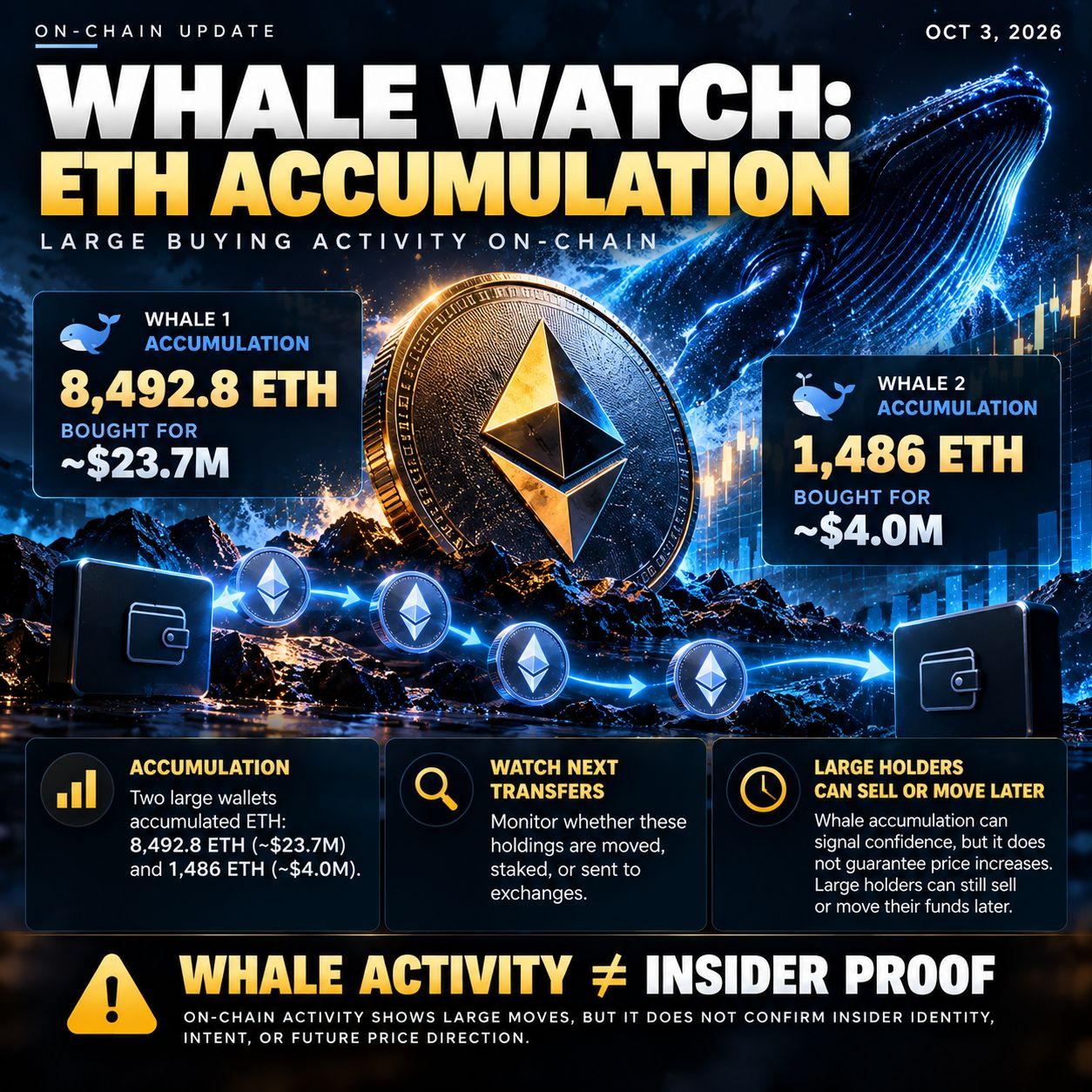
🐋 **WHALE WATCH: $ETH ACCUMULATION**
Fresh on-chain reports show large ETH buying activity:
• **8,492.8 ETH** accumulated for roughly **$23.7M**
• Another wallet accumulated **1,486 ETH** for roughly **$4M**
These figures are reported on-chain activity, not proof of an insider or institution.
**MY READ**
The interesting signal is the size and direction of the flows — but the next transactions matter more than the headline.
If these wallets hold, stake or move the ETH to non-exchange custody, it can point to longer-term positioning. If the funds move toward exchanges, the interpretation changes.
The market shouldn't automatically read whale accumulation as “ETH is going up.” Large holders can accumulate for many reasons and can still sell later.
**FACT:** Large ETH accumulation has been reported.
**ANALYSIS:** The next wallet movements will provide more information than the initial purchase.
**RISK:** Wallet ownership and intent are not independently verified.
Watch the wallets, not the hype.
OCT 3, 2026 | ON-CHAIN / WHALE WATCH
#ETH #Crypto #WhaleWatch
🐋 **WHALE WATCH: $ETH ACCUMULATION**
Fresh on-chain reports show large ETH buying activity:
• **8,492.8 ETH** accumulated for roughly **$23.7M**
• Another wallet accumulated **1,486 ETH** for roughly **$4M**
These figures are reported on-chain activity, not proof of an insider or institution.
**MY READ**
The interesting signal is the size and direction of the flows — but the next transactions matter more than the headline.
If these wallets hold, stake or move the ETH to non-exchange custody, it can point to longer-term positioning. If the funds move toward exchanges, the interpretation changes.
The market shouldn't automatically read whale accumulation as “ETH is going up.” Large holders can accumulate for many reasons and can still sell later.
**FACT:** Large ETH accumulation has been reported.
**ANALYSIS:** The next wallet movements will provide more information than the initial purchase.
**RISK:** Wallet ownership and intent are not independently verified.
Watch the wallets, not the hype.
OCT 3, 2026 | ON-CHAIN / WHALE WATCH
#ETH #Crypto #WhaleWatch
Fresh on-chain reports show large ETH buying activity:
• **8,492.8 ETH** accumulated for roughly **$23.7M**
• Another wallet accumulated **1,486 ETH** for roughly **$4M**
These figures are reported on-chain activity, not proof of an insider or institution.
**MY READ**
The interesting signal is the size and direction of the flows — but the next transactions matter more than the headline.
If these wallets hold, stake or move the ETH to non-exchange custody, it can point to longer-term positioning. If the funds move toward exchanges, the interpretation changes.
The market shouldn't automatically read whale accumulation as “ETH is going up.” Large holders can accumulate for many reasons and can still sell later.
**FACT:** Large ETH accumulation has been reported.
**ANALYSIS:** The next wallet movements will provide more information than the initial purchase.
**RISK:** Wallet ownership and intent are not independently verified.
Watch the wallets, not the hype.
OCT 3, 2026 | ON-CHAIN / WHALE WATCH
#ETH #Crypto #WhaleWatch
48
·
--
🐋 実在のクジラ動き:$SOL WALLETが約1億1600万ドルの担保を解除
大規模な未知のウォレットが、Whale Alertのデータ(Lookonchainが引用)によって**956,610 SOL**を**アンステーク(担保解除)**したばかりです。価値は約**$115.6M**とされています。
これはオンチェーン上の実際の動きですが、**そのウォレットがインサイダー、ファンド、または既知の組織に属する**という**検証済みの証拠はありません**。
私の見解:
重要なシグナルは「クジラが売った」ということではありません。
そのウォレットは**アンステーク**しました。つまりSOLは今後すぐに流動化されますが、**売りが来ることを証明するものではありません**。
次に注目すべき点:
→ ウォレットがそのSOLを取引所へ移すか?
→ リデリゲートするか、別のコールドウォレットへ送金するか?
→ スポット売りが実際に見えてくるか?
これらのステップが起きるまでは、弱気と判断するのは時期尚早です。
事実:956,610 SOLがアンステークされた。
事実:約の価値:$115.6M。
事実:ウォレットの身元は不明。
意見:**次の取引を見てください。見出しではありません。** 資金が取引所に入れば、市場シグナルは大きく変わります。別の非取引所ウォレットへ移すだけなら、単なるステーキング/財務(トレジャリー)の組み替えの可能性もあります。
#SOL #Crypto
🐋 実在のクジラ動き:$SOL WALLETが約1億1600万ドルの担保を解除
大規模な未知のウォレットが、Whale Alertのデータ(Lookonchainが引用)によって**956,610 SOL**を**アンステーク(担保解除)**したばかりです。価値は約**$115.6M**とされています。
これはオンチェーン上の実際の動きですが、**そのウォレットがインサイダー、ファンド、または既知の組織に属する**という**検証済みの証拠はありません**。
私の見解:
重要なシグナルは「クジラが売った」ということではありません。
そのウォレットは**アンステーク**しました。つまりSOLは今後すぐに流動化されますが、**売りが来ることを証明するものではありません**。
次に注目すべき点:
→ ウォレットがそのSOLを取引所へ移すか?
→ リデリゲートするか、別のコールドウォレットへ送金するか?
→ スポット売りが実際に見えてくるか?
これらのステップが起きるまでは、弱気と判断するのは時期尚早です。
事実:956,610 SOLがアンステークされた。
事実:約の価値:$115.6M。
事実:ウォレットの身元は不明。
意見:**次の取引を見てください。見出しではありません。** 資金が取引所に入れば、市場シグナルは大きく変わります。別の非取引所ウォレットへ移すだけなら、単なるステーキング/財務(トレジャリー)の組み替えの可能性もあります。
#SOL #Crypto
大規模な未知のウォレットが、Whale Alertのデータ(Lookonchainが引用)によって**956,610 SOL**を**アンステーク(担保解除)**したばかりです。価値は約**$115.6M**とされています。
これはオンチェーン上の実際の動きですが、**そのウォレットがインサイダー、ファンド、または既知の組織に属する**という**検証済みの証拠はありません**。
私の見解:
重要なシグナルは「クジラが売った」ということではありません。
そのウォレットは**アンステーク**しました。つまりSOLは今後すぐに流動化されますが、**売りが来ることを証明するものではありません**。
次に注目すべき点:
→ ウォレットがそのSOLを取引所へ移すか?
→ リデリゲートするか、別のコールドウォレットへ送金するか?
→ スポット売りが実際に見えてくるか?
これらのステップが起きるまでは、弱気と判断するのは時期尚早です。
事実:956,610 SOLがアンステークされた。
事実:約の価値:$115.6M。
事実:ウォレットの身元は不明。
意見:**次の取引を見てください。見出しではありません。** 資金が取引所に入れば、市場シグナルは大きく変わります。別の非取引所ウォレットへ移すだけなら、単なるステーキング/財務(トレジャリー)の組み替えの可能性もあります。
#SOL #Crypto
81
·
--
翻訳参照
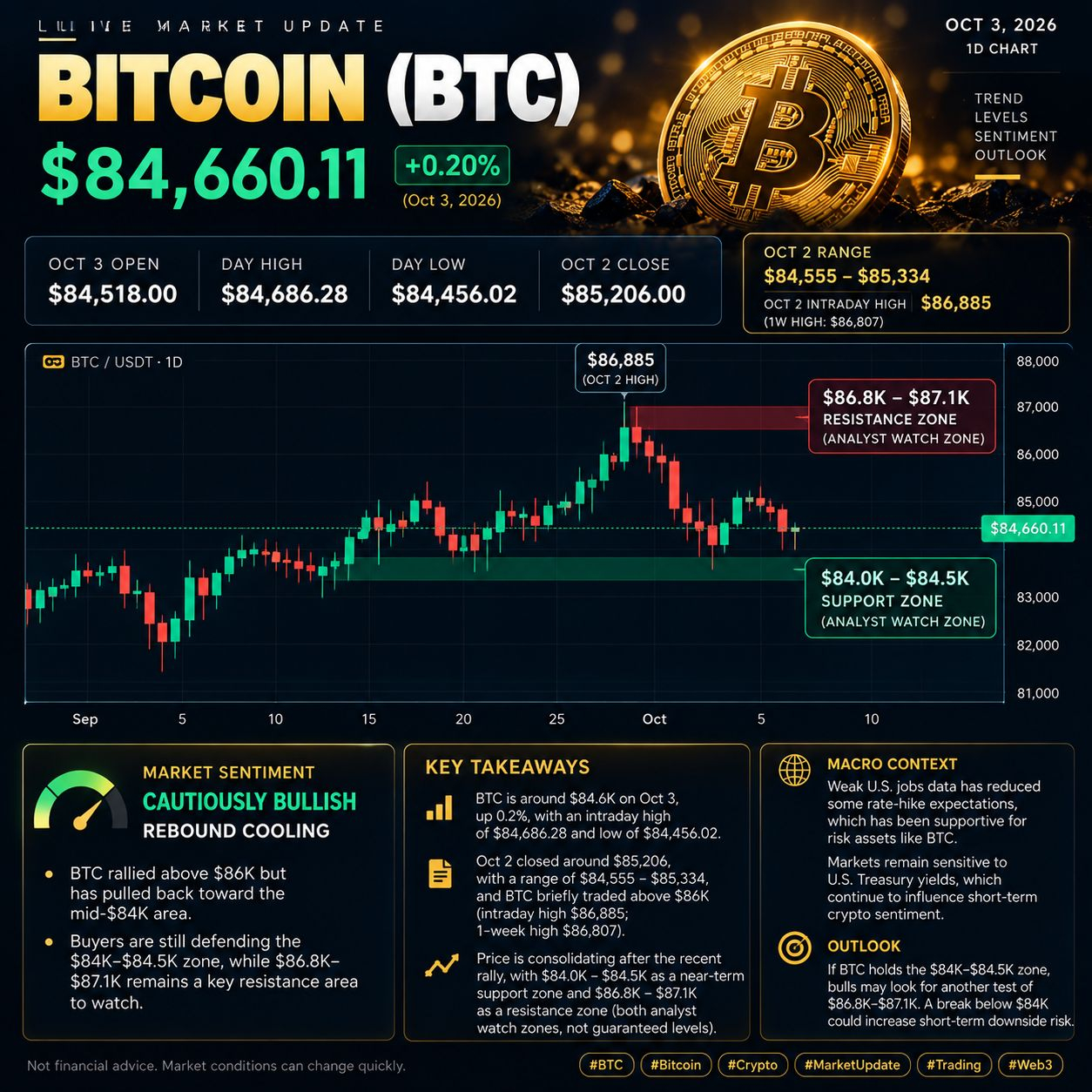
📊 $BTC LIVE MARKET READ — OCT 3
BTC is trading around **$84.66K**, up about **0.2%** on the Oct. 3 session. The market is cooling after yesterday’s push above $86K.
MY MARKET READ:
🟢 **Sentiment: cautiously bullish**
The rebound is still intact, but momentum has cooled. BTC needs to reclaim the $86.8K–$87.1K area to show that buyers are taking control again.
🟡 **Support:** ~$84.0K–$84.5K
🔴 **Resistance:** ~$86.8K–$87.1K
These are analyst watch zones, not guaranteed support/resistance levels.
WHY I'M WATCHING THIS:
If $BTC holds the mid-$84K area, the rebound structure remains constructive. Lose it decisively, and the market could shift back into range/retest mode.
**OPINION:** This doesn't look like a clean breakout yet. It looks like a market testing whether $85K can become a base rather than another rejection zone.
#BTC #Crypto #MarketUpdate
📊 $BTC LIVE MARKET READ — OCT 3
BTC is trading around **$84.66K**, up about **0.2%** on the Oct. 3 session. The market is cooling after yesterday’s push above $86K.
MY MARKET READ:
🟢 **Sentiment: cautiously bullish**
The rebound is still intact, but momentum has cooled. BTC needs to reclaim the $86.8K–$87.1K area to show that buyers are taking control again.
🟡 **Support:** ~$84.0K–$84.5K
🔴 **Resistance:** ~$86.8K–$87.1K
These are analyst watch zones, not guaranteed support/resistance levels.
WHY I'M WATCHING THIS:
If $BTC holds the mid-$84K area, the rebound structure remains constructive. Lose it decisively, and the market could shift back into range/retest mode.
**OPINION:** This doesn't look like a clean breakout yet. It looks like a market testing whether $85K can become a base rather than another rejection zone.
#BTC #Crypto #MarketUpdate
BTC is trading around **$84.66K**, up about **0.2%** on the Oct. 3 session. The market is cooling after yesterday’s push above $86K.
MY MARKET READ:
🟢 **Sentiment: cautiously bullish**
The rebound is still intact, but momentum has cooled. BTC needs to reclaim the $86.8K–$87.1K area to show that buyers are taking control again.
🟡 **Support:** ~$84.0K–$84.5K
🔴 **Resistance:** ~$86.8K–$87.1K
These are analyst watch zones, not guaranteed support/resistance levels.
WHY I'M WATCHING THIS:
If $BTC holds the mid-$84K area, the rebound structure remains constructive. Lose it decisively, and the market could shift back into range/retest mode.
**OPINION:** This doesn't look like a clean breakout yet. It looks like a market testing whether $85K can become a base rather than another rejection zone.
#BTC #Crypto #MarketUpdate
82
·
--
🚨 JUST IN: $BNB チェーンが主要なRWAマイルストーンを突破しました。
BNBチェーンは、**トークン化された株式とETFで10億ドル($1 BILLION)を超えた最初のブロックチェーン**になりました。
これは、別のTVLの見出しよりも大きいニュースです。
BNBチェーンは、トークン化株式・ETF・現実世界の市場へのより広範な推進と並んで、**伝統的な金融資産へのオンチェーン・アクセス**のレースに直接参加することになります。
私見:
見出しの数字は重要ですが、次の問いのほうがさらに重要です:
**BNBチェーンは、トークン化資産10億ドルを、深く継続的なオンチェーン流動性へと変えられるのでしょうか?**
トークン化株式が活発に取引され、合成可能な担保としてDeFiに統合されるなら、発行だけの規模よりも市場機会ははるかに大きくなります。
事実: BNBチェーンは、トークン化株式+ETFで10億ドルを突破しました。
分析: RWAは「将来の物語」から、測定可能なオンチェーンの市場インフラへと移行しており、BNBチェーンはその移行における重要な舞台になりつつあります。
リスク: トークン化資産の価値は、取引流動性と同じではありません。次に、出来高、アクティブ保有者、セカンダリーマーケット、DeFi統合を確認しましょう。
2026年10月3日 | BNB / RWA
#BNB #BNBChain #RWA #Tokenization #Crypto
🚨 JUST IN: $BNB チェーンが主要なRWAマイルストーンを突破しました。
BNBチェーンは、**トークン化された株式とETFで10億ドル($1 BILLION)を超えた最初のブロックチェーン**になりました。
これは、別のTVLの見出しよりも大きいニュースです。
BNBチェーンは、トークン化株式・ETF・現実世界の市場へのより広範な推進と並んで、**伝統的な金融資産へのオンチェーン・アクセス**のレースに直接参加することになります。
私見:
見出しの数字は重要ですが、次の問いのほうがさらに重要です:
**BNBチェーンは、トークン化資産10億ドルを、深く継続的なオンチェーン流動性へと変えられるのでしょうか?**
トークン化株式が活発に取引され、合成可能な担保としてDeFiに統合されるなら、発行だけの規模よりも市場機会ははるかに大きくなります。
事実: BNBチェーンは、トークン化株式+ETFで10億ドルを突破しました。
分析: RWAは「将来の物語」から、測定可能なオンチェーンの市場インフラへと移行しており、BNBチェーンはその移行における重要な舞台になりつつあります。
リスク: トークン化資産の価値は、取引流動性と同じではありません。次に、出来高、アクティブ保有者、セカンダリーマーケット、DeFi統合を確認しましょう。
2026年10月3日 | BNB / RWA
#BNB #BNBChain #RWA #Tokenization #Crypto
BNBチェーンは、**トークン化された株式とETFで10億ドル($1 BILLION)を超えた最初のブロックチェーン**になりました。
これは、別のTVLの見出しよりも大きいニュースです。
BNBチェーンは、トークン化株式・ETF・現実世界の市場へのより広範な推進と並んで、**伝統的な金融資産へのオンチェーン・アクセス**のレースに直接参加することになります。
私見:
見出しの数字は重要ですが、次の問いのほうがさらに重要です:
**BNBチェーンは、トークン化資産10億ドルを、深く継続的なオンチェーン流動性へと変えられるのでしょうか?**
トークン化株式が活発に取引され、合成可能な担保としてDeFiに統合されるなら、発行だけの規模よりも市場機会ははるかに大きくなります。
事実: BNBチェーンは、トークン化株式+ETFで10億ドルを突破しました。
分析: RWAは「将来の物語」から、測定可能なオンチェーンの市場インフラへと移行しており、BNBチェーンはその移行における重要な舞台になりつつあります。
リスク: トークン化資産の価値は、取引流動性と同じではありません。次に、出来高、アクティブ保有者、セカンダリーマーケット、DeFi統合を確認しましょう。
2026年10月3日 | BNB / RWA
#BNB #BNBChain #RWA #Tokenization #Crypto
44
·
--
🚨 バイナンス・スクエアがNEARについて語っています——そして価格よりもセキュリティの観点が重要です。
今日、バイナンス・スクエアで最も話題になっているライブトピックの一つが、NEAR Intentsのインシデントです。攻撃で推定約**$3.8M**の被害が出た後、サービスは復旧しました。報道によると、今回のエクスプロイトはOmniの入出金インフラとNEAR Intentsの相互作用が関与しており、影響はBSC上のUSDTに限定されたとのことです。NEARの中核プロトコルやNEARトークン自体は侵害されたと報告されておらず、影響を受けたユーザーには補償が見込まれます。
私見:
面白いのは、単に$NEAR が落ちたことだけではありません。
重要なのは、クロスチェーン・インフラがWeb3における最も重要——そして最も脆い——レイヤーの一つになりつつあることです。
ユーザーは、どのブリッジ、どのルーター、どの相互運用レイヤーが失敗したのかには関心がありません。資金が安全に届くかどうかを気にします。
つまり、インテント/相互運用プロトコルの次の競争優位は、取引速度よりも**セキュリティ・アーキテクチャ、障害の隔離、そして復旧保証**にあるかもしれません。
事実:サービスは復旧しました。
事実:報告された損失は約$3.8M。
事実:報告された影響はBSC上のUSDTに限定された。
意見:このようなセキュリティ・インシデントは、「チェーン・アブストラクション」がスケールしたときに価値を持つのは、抽象化レイヤー自体がレジリエントである場合に限る、という教訓です。
インフラを見てください——トークンのチャートだけではなく。
2026年10月2日 | バイナンス・スクエア バイラル・テイク
#NEAR #Crypto #Web3
🚨 バイナンス・スクエアがNEARについて語っています——そして価格よりもセキュリティの観点が重要です。
今日、バイナンス・スクエアで最も話題になっているライブトピックの一つが、NEAR Intentsのインシデントです。攻撃で推定約**$3.8M**の被害が出た後、サービスは復旧しました。報道によると、今回のエクスプロイトはOmniの入出金インフラとNEAR Intentsの相互作用が関与しており、影響はBSC上のUSDTに限定されたとのことです。NEARの中核プロトコルやNEARトークン自体は侵害されたと報告されておらず、影響を受けたユーザーには補償が見込まれます。
私見:
面白いのは、単に$NEAR が落ちたことだけではありません。
重要なのは、クロスチェーン・インフラがWeb3における最も重要——そして最も脆い——レイヤーの一つになりつつあることです。
ユーザーは、どのブリッジ、どのルーター、どの相互運用レイヤーが失敗したのかには関心がありません。資金が安全に届くかどうかを気にします。
つまり、インテント/相互運用プロトコルの次の競争優位は、取引速度よりも**セキュリティ・アーキテクチャ、障害の隔離、そして復旧保証**にあるかもしれません。
事実:サービスは復旧しました。
事実:報告された損失は約$3.8M。
事実:報告された影響はBSC上のUSDTに限定された。
意見:このようなセキュリティ・インシデントは、「チェーン・アブストラクション」がスケールしたときに価値を持つのは、抽象化レイヤー自体がレジリエントである場合に限る、という教訓です。
インフラを見てください——トークンのチャートだけではなく。
2026年10月2日 | バイナンス・スクエア バイラル・テイク
#NEAR #Crypto #Web3
今日、バイナンス・スクエアで最も話題になっているライブトピックの一つが、NEAR Intentsのインシデントです。攻撃で推定約**$3.8M**の被害が出た後、サービスは復旧しました。報道によると、今回のエクスプロイトはOmniの入出金インフラとNEAR Intentsの相互作用が関与しており、影響はBSC上のUSDTに限定されたとのことです。NEARの中核プロトコルやNEARトークン自体は侵害されたと報告されておらず、影響を受けたユーザーには補償が見込まれます。
私見:
面白いのは、単に$NEAR が落ちたことだけではありません。
重要なのは、クロスチェーン・インフラがWeb3における最も重要——そして最も脆い——レイヤーの一つになりつつあることです。
ユーザーは、どのブリッジ、どのルーター、どの相互運用レイヤーが失敗したのかには関心がありません。資金が安全に届くかどうかを気にします。
つまり、インテント/相互運用プロトコルの次の競争優位は、取引速度よりも**セキュリティ・アーキテクチャ、障害の隔離、そして復旧保証**にあるかもしれません。
事実:サービスは復旧しました。
事実:報告された損失は約$3.8M。
事実:報告された影響はBSC上のUSDTに限定された。
意見:このようなセキュリティ・インシデントは、「チェーン・アブストラクション」がスケールしたときに価値を持つのは、抽象化レイヤー自体がレジリエントである場合に限る、という教訓です。
インフラを見てください——トークンのチャートだけではなく。
2026年10月2日 | バイナンス・スクエア バイラル・テイク
#NEAR #Crypto #Web3
96
·
--
🇰🇷 韓国、トークン化証券を主流へ
韓国は、トークン化された**株式、債券、ファンド**のための規制枠組みを準備しており、システムの目標は**2027年2月**です。
FACT
• トークン化証券の枠組みは、株式、債券、ファンドを対象とする。
• 公的なパブリック・コンサルテーションは2026年11月11日まで実施。
• 個人向けの店頭(OTC)購入は、取引所ごとに年間の上限が適用される可能性。
• 枠組みは、規制された発行と取引インフラを中心に設計されている。
ANALYSIS
これは重要なRWA(実世界資産)開発です。単に資産をオンチェーンに載せることから、それらの周りに規制された市場インフラを構築することへと重点が移っているからです。
次の論点は流動性です。トークン化証券は、深いセカンダリー市場を発展させ、やがてステーブルコインやより広範なオンチェーン金融と結びつくことができるのでしょうか?
RISK
規制枠組みは採用を保証しません。発行、活発な投資家、セカンダリー市場の取引量、決済の活動が、見出しのトークン化数よりも重要になります。
2026年10月2日 | WEB3 / RWA
#RWA #Tokenization #Web3
🇰🇷 韓国、トークン化証券を主流へ
韓国は、トークン化された**株式、債券、ファンド**のための規制枠組みを準備しており、システムの目標は**2027年2月**です。
FACT
• トークン化証券の枠組みは、株式、債券、ファンドを対象とする。
• 公的なパブリック・コンサルテーションは2026年11月11日まで実施。
• 個人向けの店頭(OTC)購入は、取引所ごとに年間の上限が適用される可能性。
• 枠組みは、規制された発行と取引インフラを中心に設計されている。
ANALYSIS
これは重要なRWA(実世界資産)開発です。単に資産をオンチェーンに載せることから、それらの周りに規制された市場インフラを構築することへと重点が移っているからです。
次の論点は流動性です。トークン化証券は、深いセカンダリー市場を発展させ、やがてステーブルコインやより広範なオンチェーン金融と結びつくことができるのでしょうか?
RISK
規制枠組みは採用を保証しません。発行、活発な投資家、セカンダリー市場の取引量、決済の活動が、見出しのトークン化数よりも重要になります。
2026年10月2日 | WEB3 / RWA
#RWA #Tokenization #Web3
韓国は、トークン化された**株式、債券、ファンド**のための規制枠組みを準備しており、システムの目標は**2027年2月**です。
FACT
• トークン化証券の枠組みは、株式、債券、ファンドを対象とする。
• 公的なパブリック・コンサルテーションは2026年11月11日まで実施。
• 個人向けの店頭(OTC)購入は、取引所ごとに年間の上限が適用される可能性。
• 枠組みは、規制された発行と取引インフラを中心に設計されている。
ANALYSIS
これは重要なRWA(実世界資産)開発です。単に資産をオンチェーンに載せることから、それらの周りに規制された市場インフラを構築することへと重点が移っているからです。
次の論点は流動性です。トークン化証券は、深いセカンダリー市場を発展させ、やがてステーブルコインやより広範なオンチェーン金融と結びつくことができるのでしょうか?
RISK
規制枠組みは採用を保証しません。発行、活発な投資家、セカンダリー市場の取引量、決済の活動が、見出しのトークン化数よりも重要になります。
2026年10月2日 | WEB3 / RWA
#RWA #Tokenization #Web3

55
·
--
🚨 米国の借入コストが急騰
米国の債券市場が重大な圧力ポイントに到達しました。
• 30年固定住宅ローン金利:**7.6%**(Mortgage News Dailyによると、2023年後半以来の高水準)
• 10年国債利回り:**5.342%**(2002年初頭以来の高水準)
• 30年国債利回り:**5.65%超**(これも2002年頃以来の高値圏)
• 10年利回りは第3四半期に**87.1bp上昇**しており、1994年以来で最も急な四半期の上げ幅です。
なぜ重要か
より高い国債利回りは、経済全体で資本コストを押し上げます。住宅ローン、企業の借入、政府の資金調達はいずれも圧力を受けます。
市場にとっては、これは住宅だけの話ではありません。10年国債はリスク価格設定の世界的な指標です。そのため、利回りが5%を超える状態が続くと、株式、クレジット、暗号資産にまで金融環境が引き締まり得ます。
FACT:国債利回りは数十年ぶりの高水準です。
ANALYSIS:暗号資産にとっての重要変数は、高い長期金利が流動性/リスク選好を引き続き吸い取っていくのか、それとも最終的に十分に魅力的な利回りの代替先が生まれて、資本配分を変えるのかどうかです。
RISK:金利上昇は、短期金利が別の動きをしている局面でも継続する可能性があります。国債の長期側(イールドカーブの長い部分)に注目してください。
2026年10月1日 | マクロ / 市場
#Macro #Bitcoin #Crypto #TreasuryYields
🚨 米国の借入コストが急騰
米国の債券市場が重大な圧力ポイントに到達しました。
• 30年固定住宅ローン金利:**7.6%**(Mortgage News Dailyによると、2023年後半以来の高水準)
• 10年国債利回り:**5.342%**(2002年初頭以来の高水準)
• 30年国債利回り:**5.65%超**(これも2002年頃以来の高値圏)
• 10年利回りは第3四半期に**87.1bp上昇**しており、1994年以来で最も急な四半期の上げ幅です。
なぜ重要か
より高い国債利回りは、経済全体で資本コストを押し上げます。住宅ローン、企業の借入、政府の資金調達はいずれも圧力を受けます。
市場にとっては、これは住宅だけの話ではありません。10年国債はリスク価格設定の世界的な指標です。そのため、利回りが5%を超える状態が続くと、株式、クレジット、暗号資産にまで金融環境が引き締まり得ます。
FACT:国債利回りは数十年ぶりの高水準です。
ANALYSIS:暗号資産にとっての重要変数は、高い長期金利が流動性/リスク選好を引き続き吸い取っていくのか、それとも最終的に十分に魅力的な利回りの代替先が生まれて、資本配分を変えるのかどうかです。
RISK:金利上昇は、短期金利が別の動きをしている局面でも継続する可能性があります。国債の長期側(イールドカーブの長い部分)に注目してください。
2026年10月1日 | マクロ / 市場
#Macro #Bitcoin #Crypto #TreasuryYields
米国の債券市場が重大な圧力ポイントに到達しました。
• 30年固定住宅ローン金利:**7.6%**(Mortgage News Dailyによると、2023年後半以来の高水準)
• 10年国債利回り:**5.342%**(2002年初頭以来の高水準)
• 30年国債利回り:**5.65%超**(これも2002年頃以来の高値圏)
• 10年利回りは第3四半期に**87.1bp上昇**しており、1994年以来で最も急な四半期の上げ幅です。
なぜ重要か
より高い国債利回りは、経済全体で資本コストを押し上げます。住宅ローン、企業の借入、政府の資金調達はいずれも圧力を受けます。
市場にとっては、これは住宅だけの話ではありません。10年国債はリスク価格設定の世界的な指標です。そのため、利回りが5%を超える状態が続くと、株式、クレジット、暗号資産にまで金融環境が引き締まり得ます。
FACT:国債利回りは数十年ぶりの高水準です。
ANALYSIS:暗号資産にとっての重要変数は、高い長期金利が流動性/リスク選好を引き続き吸い取っていくのか、それとも最終的に十分に魅力的な利回りの代替先が生まれて、資本配分を変えるのかどうかです。
RISK:金利上昇は、短期金利が別の動きをしている局面でも継続する可能性があります。国債の長期側(イールドカーブの長い部分)に注目してください。
2026年10月1日 | マクロ / 市場
#Macro #Bitcoin #Crypto #TreasuryYields
·
--
🚨速報:イリノイ州が暗号資産の税制を延期—ただし法的争いはまだ続いている。
イリノイ州と暗号資産業界の代表者は、州の0.2%のデジタル資産税を、2027年1月1日から2027年7月1日へ延期することに合意した。これは裁判所の承認を条件とする。
この税は、法律の売上基準を満たす企業による「対象となるデジタル資産活動」に適用される。個人のトレーダーの利益・損失に単純に課す税ではない。
重要な理由
延期により、双方は法律の合憲性および執行可能性をめぐる裁判闘争に対して、より多くの時間を確保できる。イリノイ州はまた、草案の規則を公表しており、10月30日までパブリックコメントを受け付けている。
事実:0.2%税。
事実:2027年7月1日までの実施延期が提案されている。
事実:裁判所の承認が依然として必要。
分析:大きなシグナルは規制上の前例だ。これが通れば、他の州も同様の「取引ベース」のデジタル資産税を検討する可能性がある。通らなければ、判決は州が暗号資産の課税にどう取り組むかに影響を与え得る。
リスク:延期は廃止ではない。根本の法律は、依然として法的争いの一部として残っている。
2026年10月1日 | 米国 暗号資産規制
#Crypto #Illinois #DigitalAssets
🚨速報:イリノイ州が暗号資産の税制を延期—ただし法的争いはまだ続いている。
イリノイ州と暗号資産業界の代表者は、州の0.2%のデジタル資産税を、2027年1月1日から2027年7月1日へ延期することに合意した。これは裁判所の承認を条件とする。
この税は、法律の売上基準を満たす企業による「対象となるデジタル資産活動」に適用される。個人のトレーダーの利益・損失に単純に課す税ではない。
重要な理由
延期により、双方は法律の合憲性および執行可能性をめぐる裁判闘争に対して、より多くの時間を確保できる。イリノイ州はまた、草案の規則を公表しており、10月30日までパブリックコメントを受け付けている。
事実:0.2%税。
事実:2027年7月1日までの実施延期が提案されている。
事実:裁判所の承認が依然として必要。
分析:大きなシグナルは規制上の前例だ。これが通れば、他の州も同様の「取引ベース」のデジタル資産税を検討する可能性がある。通らなければ、判決は州が暗号資産の課税にどう取り組むかに影響を与え得る。
リスク:延期は廃止ではない。根本の法律は、依然として法的争いの一部として残っている。
2026年10月1日 | 米国 暗号資産規制
#Crypto #Illinois #DigitalAssets
イリノイ州と暗号資産業界の代表者は、州の0.2%のデジタル資産税を、2027年1月1日から2027年7月1日へ延期することに合意した。これは裁判所の承認を条件とする。
この税は、法律の売上基準を満たす企業による「対象となるデジタル資産活動」に適用される。個人のトレーダーの利益・損失に単純に課す税ではない。
重要な理由
延期により、双方は法律の合憲性および執行可能性をめぐる裁判闘争に対して、より多くの時間を確保できる。イリノイ州はまた、草案の規則を公表しており、10月30日までパブリックコメントを受け付けている。
事実:0.2%税。
事実:2027年7月1日までの実施延期が提案されている。
事実:裁判所の承認が依然として必要。
分析:大きなシグナルは規制上の前例だ。これが通れば、他の州も同様の「取引ベース」のデジタル資産税を検討する可能性がある。通らなければ、判決は州が暗号資産の課税にどう取り組むかに影響を与え得る。
リスク:延期は廃止ではない。根本の法律は、依然として法的争いの一部として残っている。
2026年10月1日 | 米国 暗号資産規制
#Crypto #Illinois #DigitalAssets

1
·
--
暗号資産トレンドマップ:BTCが回復、バイナンスはトークン化を推進暗号資産のトレンドマップ: リスク選好が改善しているが、ブレイクアウトはまだ未確認。
市場
• BTC: $83.44K | +0.12% 24時間
• BNB: $763.85 | +0.57% 24時間
• BTC 高値: $85.65K
• BNB 高値: $779.42
• 心理: 強欲(グリード)。極端な強欲ではない
いま注目のトレンド
1. BTCは、弱いPCEの動きの後に調整(もみ合い)している。
2. BNBは比較的堅調だが、上値の重要な目安は$779のまま。
3. バイナンスはトークン化株式インフラとマージン支援を拡大している。
4. RWA/トークン化が、より広い暗号資産市場のテーマになりつつある。
暗号資産トレンドマップ:BTCが回復、バイナンスはトークン化を推進
暗号資産のトレンドマップ: リスク選好が改善しているが、ブレイクアウトはまだ未確認。
市場
• BTC: $83.44K | +0.12% 24時間
• BNB: $763.85 | +0.57% 24時間
• BTC 高値: $85.65K
• BNB 高値: $779.42
• 心理: 強欲(グリード)。極端な強欲ではない
いま注目のトレンド
1. BTCは、弱いPCEの動きの後に調整(もみ合い)している。
2. BNBは比較的堅調だが、上値の重要な目安は$779のまま。
3. バイナンスはトークン化株式インフラとマージン支援を拡大している。
4. RWA/トークン化が、より広い暗号資産市場のテーマになりつつある。
市場
• BTC: $83.44K | +0.12% 24時間
• BNB: $763.85 | +0.57% 24時間
• BTC 高値: $85.65K
• BNB 高値: $779.42
• 心理: 強欲(グリード)。極端な強欲ではない
いま注目のトレンド
1. BTCは、弱いPCEの動きの後に調整(もみ合い)している。
2. BNBは比較的堅調だが、上値の重要な目安は$779のまま。
3. バイナンスはトークン化株式インフラとマージン支援を拡大している。
4. RWA/トークン化が、より広い暗号資産市場のテーマになりつつある。
58
·
--
翻訳参照
Morning Crypto Setup: BTC Consolidates, BNB Holds Firm☀️ MORNING CRYPTO SETUP
BTC is consolidating after yesterday’s move toward $85.65K, while BNB is holding relatively firm near $768.
MARKET DATA
• BTC: $83,484 | +0.13% 24h
• BTC range: $82,956–$85,650
• BNB: $768.46 | +0.80% 24h
• BNB range: $756.17–$779.42
KEY LEVELS
BTC → $85.65K resistance | $82.96K recent support
BNB → $779.42 resistance | ~$756 support
X / NARRATIVE
Overnight X discussion remains noisy. No fresh, well-supported CZ/BNB announcement was found that justifies treating speculation as news. The recurring themes are Binance ecosystem activity, BNB strength and broader market recovery.
TRADER READ
The cleaner setup is BTC consolidation + BNB relative strength, not a headline-driven trade. BNB is holding above its recent range floor but still needs a break above $779.42 for stronger price confirmation.
RISK
Without a verified catalyst, chasing social speculation adds unnecessary risk. Price confirmation matters more this morning.
FACT: BTC is consolidating; BNB is +0.80% over 24h.
ANALYSIS: BNB is showing relative strength, but the breakout is not confirmed.
Morning Crypto Setup: BTC Consolidates, BNB Holds Firm
☀️ MORNING CRYPTO SETUP
BTC is consolidating after yesterday’s move toward $85.65K, while BNB is holding relatively firm near $768.
MARKET DATA
• BTC: $83,484 | +0.13% 24h
• BTC range: $82,956–$85,650
• BNB: $768.46 | +0.80% 24h
• BNB range: $756.17–$779.42
KEY LEVELS
BTC → $85.65K resistance | $82.96K recent support
BNB → $779.42 resistance | ~$756 support
X / NARRATIVE
Overnight X discussion remains noisy. No fresh, well-supported CZ/BNB announcement was found that justifies treating speculation as news. The recurring themes are Binance ecosystem activity, BNB strength and broader market recovery.
TRADER READ
The cleaner setup is BTC consolidation + BNB relative strength, not a headline-driven trade. BNB is holding above its recent range floor but still needs a break above $779.42 for stronger price confirmation.
RISK
Without a verified catalyst, chasing social speculation adds unnecessary risk. Price confirmation matters more this morning.
FACT: BTC is consolidating; BNB is +0.80% over 24h.
ANALYSIS: BNB is showing relative strength, but the breakout is not confirmed.
BTC is consolidating after yesterday’s move toward $85.65K, while BNB is holding relatively firm near $768.
MARKET DATA
• BTC: $83,484 | +0.13% 24h
• BTC range: $82,956–$85,650
• BNB: $768.46 | +0.80% 24h
• BNB range: $756.17–$779.42
KEY LEVELS
BTC → $85.65K resistance | $82.96K recent support
BNB → $779.42 resistance | ~$756 support
X / NARRATIVE
Overnight X discussion remains noisy. No fresh, well-supported CZ/BNB announcement was found that justifies treating speculation as news. The recurring themes are Binance ecosystem activity, BNB strength and broader market recovery.
TRADER READ
The cleaner setup is BTC consolidation + BNB relative strength, not a headline-driven trade. BNB is holding above its recent range floor but still needs a break above $779.42 for stronger price confirmation.
RISK
Without a verified catalyst, chasing social speculation adds unnecessary risk. Price confirmation matters more this morning.
FACT: BTC is consolidating; BNB is +0.80% over 24h.
ANALYSIS: BNB is showing relative strength, but the breakout is not confirmed.
80
·
--
翻訳参照
BNB vs SOL: the real competition is liquidity, apps and distribution.
BNB is holding ~$768 after testing $779.42 today. SOL is around $118.42. Short-term price action currently favors BNB, but the bigger ecosystem race is more interesting.
DATA
• BNB: $767.74 | +1.51% 24h
• BNB/USDT Binance volume: ~$96.4M | ~598K trades
• SOL: $118.42 | -0.87% 24h
• SOL/USDT Binance volume: ~$318.4M | ~976K trades
WHY IT MATTERS
BNB Chain's edge is tightly connected to Binance's distribution, liquidity and user base.
Solana's competitive case is more application- and liquidity-driven, with strong positioning in high-throughput trading and consumer applications.
The next battleground is broader than BNB vs SOL: DEX liquidity, stablecoins, RWAs, tokenization and the next wave of on-chain applications.
FACT
BNB is outperforming SOL over the latest 24h window, while SOL/USDT has materially higher Binance spot volume and trade count.
ANALYSIS
Price strength alone doesn't settle the ecosystem race. Distribution, liquidity and sustained application demand matter more over time.
RISK
Do not treat social-media chain comparisons as proof of ecosystem dominance. Many circulating TVL, volume and RWA figures are unattributed or stale.
No clean BNB breakout yet: $779.42 remains the immediate price reference.
BNB vs SOL: the real competition is liquidity, apps and distribution.
BNB is holding ~$768 after testing $779.42 today. SOL is around $118.42. Short-term price action currently favors BNB, but the bigger ecosystem race is more interesting.
DATA
• BNB: $767.74 | +1.51% 24h
• BNB/USDT Binance volume: ~$96.4M | ~598K trades
• SOL: $118.42 | -0.87% 24h
• SOL/USDT Binance volume: ~$318.4M | ~976K trades
WHY IT MATTERS
BNB Chain's edge is tightly connected to Binance's distribution, liquidity and user base.
Solana's competitive case is more application- and liquidity-driven, with strong positioning in high-throughput trading and consumer applications.
The next battleground is broader than BNB vs SOL: DEX liquidity, stablecoins, RWAs, tokenization and the next wave of on-chain applications.
FACT
BNB is outperforming SOL over the latest 24h window, while SOL/USDT has materially higher Binance spot volume and trade count.
ANALYSIS
Price strength alone doesn't settle the ecosystem race. Distribution, liquidity and sustained application demand matter more over time.
RISK
Do not treat social-media chain comparisons as proof of ecosystem dominance. Many circulating TVL, volume and RWA figures are unattributed or stale.
No clean BNB breakout yet: $779.42 remains the immediate price reference.
BNB is holding ~$768 after testing $779.42 today. SOL is around $118.42. Short-term price action currently favors BNB, but the bigger ecosystem race is more interesting.
DATA
• BNB: $767.74 | +1.51% 24h
• BNB/USDT Binance volume: ~$96.4M | ~598K trades
• SOL: $118.42 | -0.87% 24h
• SOL/USDT Binance volume: ~$318.4M | ~976K trades
WHY IT MATTERS
BNB Chain's edge is tightly connected to Binance's distribution, liquidity and user base.
Solana's competitive case is more application- and liquidity-driven, with strong positioning in high-throughput trading and consumer applications.
The next battleground is broader than BNB vs SOL: DEX liquidity, stablecoins, RWAs, tokenization and the next wave of on-chain applications.
FACT
BNB is outperforming SOL over the latest 24h window, while SOL/USDT has materially higher Binance spot volume and trade count.
ANALYSIS
Price strength alone doesn't settle the ecosystem race. Distribution, liquidity and sustained application demand matter more over time.
RISK
Do not treat social-media chain comparisons as proof of ecosystem dominance. Many circulating TVL, volume and RWA figures are unattributed or stale.
No clean BNB breakout yet: $779.42 remains the immediate price reference.
83
·
--
BNB:CZの憶測が現実のRWAストーリーと交錯BNBは$779.42をテストした後、現在$768付近で取引されています。一方でCZ/BNBチェーンの会話は、トークン化へとシフトしています。
マーケットデータ
• BNB/USDT: $767.77
• 24時間: +1.69%
• 24時間 高値 / 安値: $779.42 / $753.67
• 24時間 出来高: 127,280 BNB(約$97.5M)
• 24時間 取引: 約604K
X / コミュニティ・シグナル
最新のBNB中心のXの議論は、主に3つのテーマに集約されつつあります。CZのトークン化の主張、BNBチェーンのRWA(現実世界資産)分野での活動、そしてバイナンス・エコシステムの次に何が来るのかという憶測です。
重要: 取得したXデータは、新たなCZ発表を“裏付ける”ものではありません。「Soon」などの文言を、近々のBNBの追い風(触媒)につながるとして解釈する投稿は、憶測の域を出ていません。
BNB:CZの憶測が現実のRWAストーリーと交錯
BNBは$779.42をテストした後、現在$768付近で取引されています。一方でCZ/BNBチェーンの会話は、トークン化へとシフトしています。
マーケットデータ
• BNB/USDT: $767.77
• 24時間: +1.69%
• 24時間 高値 / 安値: $779.42 / $753.67
• 24時間 出来高: 127,280 BNB(約$97.5M)
• 24時間 取引: 約604K
X / コミュニティ・シグナル
最新のBNB中心のXの議論は、主に3つのテーマに集約されつつあります。CZのトークン化の主張、BNBチェーンのRWA(現実世界資産)分野での活動、そしてバイナンス・エコシステムの次に何が来るのかという憶測です。
重要: 取得したXデータは、新たなCZ発表を“裏付ける”ものではありません。「Soon」などの文言を、近々のBNBの追い風(触媒)につながるとして解釈する投稿は、憶測の域を出ていません。
マーケットデータ
• BNB/USDT: $767.77
• 24時間: +1.69%
• 24時間 高値 / 安値: $779.42 / $753.67
• 24時間 出来高: 127,280 BNB(約$97.5M)
• 24時間 取引: 約604K
X / コミュニティ・シグナル
最新のBNB中心のXの議論は、主に3つのテーマに集約されつつあります。CZのトークン化の主張、BNBチェーンのRWA(現実世界資産)分野での活動、そしてバイナンス・エコシステムの次に何が来るのかという憶測です。
重要: 取得したXデータは、新たなCZ発表を“裏付ける”ものではありません。「Soon」などの文言を、近々のBNBの追い風(触媒)につながるとして解釈する投稿は、憶測の域を出ていません。
65
·
--
本人確認中
翻訳参照
BTC reacts to softer PCE — but the move needs confirmationBTC: softer inflation, but the breakout still needs confirmation.
DATA
• August U.S. PCE: 3.4% YoY vs 3.7% expected
• Core PCE: 3.0% YoY vs 3.3% expected
• BTC spiked above $85.6K after the release
• Latest Binance BTC/USDT: ~$83.9K, +0.5% on 24h
• Today’s Binance range: ~$82.96K–$85.65K
CONTEXT
The softer inflation print reduced near-term pressure for another Fed hike. Reuters reports markets cut October tightening expectations, while noting strong consumer spending and still-elevated inflation keep further tightening on the table.
MARKET IMPLICATIONS
The initial BTC reaction was clearly positive, but the pullback from the intraday high matters. A sustained reclaim of the $85.6K area would show buyers can hold the post-PCE move; failure to do so leaves the market vulnerable to another range test.
RISK / UNCERTAINTY
One cooler inflation report is not a new trend. The PCE methodology revisions also lowered prior inflation readings, while strong spending and elevated yields remain potential headwinds.
FACT: PCE cooled and BTC reacted higher.
ANALYSIS: The macro impulse is supportive, but price confirmation is still missing.
BTC reacts to softer PCE — but the move needs confirmation
BTC: softer inflation, but the breakout still needs confirmation.
DATA
• August U.S. PCE: 3.4% YoY vs 3.7% expected
• Core PCE: 3.0% YoY vs 3.3% expected
• BTC spiked above $85.6K after the release
• Latest Binance BTC/USDT: ~$83.9K, +0.5% on 24h
• Today’s Binance range: ~$82.96K–$85.65K
CONTEXT
The softer inflation print reduced near-term pressure for another Fed hike. Reuters reports markets cut October tightening expectations, while noting strong consumer spending and still-elevated inflation keep further tightening on the table.
MARKET IMPLICATIONS
The initial BTC reaction was clearly positive, but the pullback from the intraday high matters. A sustained reclaim of the $85.6K area would show buyers can hold the post-PCE move; failure to do so leaves the market vulnerable to another range test.
RISK / UNCERTAINTY
One cooler inflation report is not a new trend. The PCE methodology revisions also lowered prior inflation readings, while strong spending and elevated yields remain potential headwinds.
FACT: PCE cooled and BTC reacted higher.
ANALYSIS: The macro impulse is supportive, but price confirmation is still missing.
DATA
• August U.S. PCE: 3.4% YoY vs 3.7% expected
• Core PCE: 3.0% YoY vs 3.3% expected
• BTC spiked above $85.6K after the release
• Latest Binance BTC/USDT: ~$83.9K, +0.5% on 24h
• Today’s Binance range: ~$82.96K–$85.65K
CONTEXT
The softer inflation print reduced near-term pressure for another Fed hike. Reuters reports markets cut October tightening expectations, while noting strong consumer spending and still-elevated inflation keep further tightening on the table.
MARKET IMPLICATIONS
The initial BTC reaction was clearly positive, but the pullback from the intraday high matters. A sustained reclaim of the $85.6K area would show buyers can hold the post-PCE move; failure to do so leaves the market vulnerable to another range test.
RISK / UNCERTAINTY
One cooler inflation report is not a new trend. The PCE methodology revisions also lowered prior inflation readings, while strong spending and elevated yields remain potential headwinds.
FACT: PCE cooled and BTC reacted higher.
ANALYSIS: The macro impulse is supportive, but price confirmation is still missing.
82
·
--

記事
$NIGHTと機密ブロックチェーンシステムの未来ミッドナイトネットワークは、従来のブロックチェーンの根本的な制限であるプライバシーの欠如に対処することにより、Web3スペースにおける重要な革新として浮上しています。ほとんどの既存ネットワークは完全な透明性に基づいて構築されており、これは信頼にとって有益ですが、機密データを扱う際には深刻な課題を生み出します。 @MidnightNetwork は、機密スマートコントラクトと制御されたデータ共有を可能にするプライバシー優先のインフラストラクチャを導入することにより、この問題に異なるアプローチを取ります。
このエコシステムの中心には、$NIGHT があり、これは取引だけでなく、ネットワークのプライバシーメカニズム、ガバナンス、および安全な相互作用を強化するために設計されたトークンです。多くのトークンが純粋に投機に依存しているのとは異なり、$NIGHT は、分散化と機密性のバランスを維持する機能的役割を果たします。これにより、プライバシーが不可欠な実世界のユースケースにより適合したネットワークになります。
$NIGHTと機密ブロックチェーンシステムの未来
ミッドナイトネットワークは、従来のブロックチェーンの根本的な制限であるプライバシーの欠如に対処することにより、Web3スペースにおける重要な革新として浮上しています。ほとんどの既存ネットワークは完全な透明性に基づいて構築されており、これは信頼にとって有益ですが、機密データを扱う際には深刻な課題を生み出します。 @MidnightNetwork は、機密スマートコントラクトと制御されたデータ共有を可能にするプライバシー優先のインフラストラクチャを導入することにより、この問題に異なるアプローチを取ります。
このエコシステムの中心には、$NIGHT があり、これは取引だけでなく、ネットワークのプライバシーメカニズム、ガバナンス、および安全な相互作用を強化するために設計されたトークンです。多くのトークンが純粋に投機に依存しているのとは異なり、$NIGHT は、分散化と機密性のバランスを維持する機能的役割を果たします。これにより、プライバシーが不可欠な実世界のユースケースにより適合したネットワークになります。
このエコシステムの中心には、$NIGHT があり、これは取引だけでなく、ネットワークのプライバシーメカニズム、ガバナンス、および安全な相互作用を強化するために設計されたトークンです。多くのトークンが純粋に投機に依存しているのとは異なり、$NIGHT は、分散化と機密性のバランスを維持する機能的役割を果たします。これにより、プライバシーが不可欠な実世界のユースケースにより適合したネットワークになります。
13
·
--
ブリッシュ
ミッドナイトネットワークは、今日のWeb3における最大の制約の一つ、分散型システムにおける真のプライバシーの欠如に取り組んでいます。機密性のあるスマートコントラクトと選択的開示を実現することで、@MidnightNetwork はユーザーや機関がセンシティブなデータをオンチェーンで公開することなく、安全にインタラクトできるようにします。
$NIGHT がエコシステムを支えていることで、ネットワークは透明性と機密性のバランスを作り出し、実際の採用に向けて非常に実用的です。これは単に個人のためのプライバシーの問題ではなく、データ保護が重要なエンタープライズユースケースを解放することに関するものです。
Web3が進化するにつれて、ミッドナイトネットワークのようなプライバシー優先のインフラは、選択肢ではなく必須となる可能性があります。
#night
ミッドナイトネットワークは、今日のWeb3における最大の制約の一つ、分散型システムにおける真のプライバシーの欠如に取り組んでいます。機密性のあるスマートコントラクトと選択的開示を実現することで、@MidnightNetwork はユーザーや機関がセンシティブなデータをオンチェーンで公開することなく、安全にインタラクトできるようにします。
$NIGHT がエコシステムを支えていることで、ネットワークは透明性と機密性のバランスを作り出し、実際の採用に向けて非常に実用的です。これは単に個人のためのプライバシーの問題ではなく、データ保護が重要なエンタープライズユースケースを解放することに関するものです。
Web3が進化するにつれて、ミッドナイトネットワークのようなプライバシー優先のインフラは、選択肢ではなく必須となる可能性があります。
#night
$NIGHT がエコシステムを支えていることで、ネットワークは透明性と機密性のバランスを作り出し、実際の採用に向けて非常に実用的です。これは単に個人のためのプライバシーの問題ではなく、データ保護が重要なエンタープライズユースケースを解放することに関するものです。
Web3が進化するにつれて、ミッドナイトネットワークのようなプライバシー優先のインフラは、選択肢ではなく必須となる可能性があります。
#night

47
·
--
MLBがPolymarketを公式予測市場プラットフォームとして指定した決定は、ブロックチェーンベースの予測を主流のスポーツエコシステムに統合する方向への広範なシフトを示しています。CFTCとの覚書を締結することで、リーグは市場の整合性を維持するための規制調整とデータ共有メカニズムを通じて、予測市場を合法化しようとしています。
しかし、この動きは米国の規制におけるより深い構造的対立を露呈しています。予測市場は金融商品とギャンブル製品の間のグレーゾーンに位置しています。CFTCはそれらをデリバティブや商品として捉えていますが、アメリカGaming Associationは州が管理するスポーツベッティングフレームワークに該当すると主張しています。この管轄権の対立は、Polymarketの運営に直接影響を与える可能性がある継続的な不確実性を生み出します。
契約に終了条項が含まれていることは、このパートナーシップがいかに脆弱であるかを浮き彫りにしています。もし裁判所が予測市場が州レベルのギャンブル法に違反すると判断した場合、MLBは関与を解除せざるを得ず、制度的採用に向けた勢いを実質的に停止させることになります。これは単なる法的な技術的問題ではなく、分散型予測市場が従来の規制システムと共存できるかどうかのテストケースです。
もしPolymarketがこの環境をうまくナビゲートできれば、情報、確率、そして市場センチメントがリアルタイムでどのように価格付けされるかを再定義することができるでしょう。しかし、規制の圧力が強まれば、米国での予測市場のスケーリングを妨げてきた既存の障壁を強化する可能性があります。
MLBがPolymarketを公式予測市場プラットフォームとして指定した決定は、ブロックチェーンベースの予測を主流のスポーツエコシステムに統合する方向への広範なシフトを示しています。CFTCとの覚書を締結することで、リーグは市場の整合性を維持するための規制調整とデータ共有メカニズムを通じて、予測市場を合法化しようとしています。
しかし、この動きは米国の規制におけるより深い構造的対立を露呈しています。予測市場は金融商品とギャンブル製品の間のグレーゾーンに位置しています。CFTCはそれらをデリバティブや商品として捉えていますが、アメリカGaming Associationは州が管理するスポーツベッティングフレームワークに該当すると主張しています。この管轄権の対立は、Polymarketの運営に直接影響を与える可能性がある継続的な不確実性を生み出します。
契約に終了条項が含まれていることは、このパートナーシップがいかに脆弱であるかを浮き彫りにしています。もし裁判所が予測市場が州レベルのギャンブル法に違反すると判断した場合、MLBは関与を解除せざるを得ず、制度的採用に向けた勢いを実質的に停止させることになります。これは単なる法的な技術的問題ではなく、分散型予測市場が従来の規制システムと共存できるかどうかのテストケースです。
もしPolymarketがこの環境をうまくナビゲートできれば、情報、確率、そして市場センチメントがリアルタイムでどのように価格付けされるかを再定義することができるでしょう。しかし、規制の圧力が強まれば、米国での予測市場のスケーリングを妨げてきた既存の障壁を強化する可能性があります。
しかし、この動きは米国の規制におけるより深い構造的対立を露呈しています。予測市場は金融商品とギャンブル製品の間のグレーゾーンに位置しています。CFTCはそれらをデリバティブや商品として捉えていますが、アメリカGaming Associationは州が管理するスポーツベッティングフレームワークに該当すると主張しています。この管轄権の対立は、Polymarketの運営に直接影響を与える可能性がある継続的な不確実性を生み出します。
契約に終了条項が含まれていることは、このパートナーシップがいかに脆弱であるかを浮き彫りにしています。もし裁判所が予測市場が州レベルのギャンブル法に違反すると判断した場合、MLBは関与を解除せざるを得ず、制度的採用に向けた勢いを実質的に停止させることになります。これは単なる法的な技術的問題ではなく、分散型予測市場が従来の規制システムと共存できるかどうかのテストケースです。
もしPolymarketがこの環境をうまくナビゲートできれば、情報、確率、そして市場センチメントがリアルタイムでどのように価格付けされるかを再定義することができるでしょう。しかし、規制の圧力が強まれば、米国での予測市場のスケーリングを妨げてきた既存の障壁を強化する可能性があります。


20
·
--

記事
ミッドナイトネットワーク:Web3の欠けていたプライバシーレイヤーミッドナイトネットワークは、ブロックチェーンインフラがプライバシー、セキュリティ、リアルワールドの使いやすさにアプローチする方法において重要なシフトを表しています。既存のほとんどのネットワークは透明性をコア原則として優先していますが、これは機密データの取り扱いにおいて制限を生じることがよくあります。
は、分散化を犠牲にすることなく、機密スマートコントラクトと選択的データ共有を可能にするプライバシーファーストのアーキテクチャを導入することで、この課題を克服するように設計されています。
このエコシステムの中心には$NIGHT があり、ネットワークの運用を支え、ガバナンスをサポートし、アプリケーション間での安全なインタラクションを可能にしています。多くのトークンが主に投機のために存在するのに対し、$NIGHT はネットワークの機能に組み込まれており、プライバシーを保護するメカニズムがスケールで効率的に動作することを保証します。これにより、ユーザーと開発者が重要な情報を公開することなくブロックチェーン技術とインタラクトできるシステムが生まれます。
ミッドナイトネットワーク:Web3の欠けていたプライバシーレイヤー
ミッドナイトネットワークは、ブロックチェーンインフラがプライバシー、セキュリティ、リアルワールドの使いやすさにアプローチする方法において重要なシフトを表しています。既存のほとんどのネットワークは透明性をコア原則として優先していますが、これは機密データの取り扱いにおいて制限を生じることがよくあります。
は、分散化を犠牲にすることなく、機密スマートコントラクトと選択的データ共有を可能にするプライバシーファーストのアーキテクチャを導入することで、この課題を克服するように設計されています。
このエコシステムの中心には$NIGHT があり、ネットワークの運用を支え、ガバナンスをサポートし、アプリケーション間での安全なインタラクションを可能にしています。多くのトークンが主に投機のために存在するのに対し、$NIGHT はネットワークの機能に組み込まれており、プライバシーを保護するメカニズムがスケールで効率的に動作することを保証します。これにより、ユーザーと開発者が重要な情報を公開することなくブロックチェーン技術とインタラクトできるシステムが生まれます。
は、分散化を犠牲にすることなく、機密スマートコントラクトと選択的データ共有を可能にするプライバシーファーストのアーキテクチャを導入することで、この課題を克服するように設計されています。
このエコシステムの中心には$NIGHT があり、ネットワークの運用を支え、ガバナンスをサポートし、アプリケーション間での安全なインタラクションを可能にしています。多くのトークンが主に投機のために存在するのに対し、$NIGHT はネットワークの機能に組み込まれており、プライバシーを保護するメカニズムがスケールで効率的に動作することを保証します。これにより、ユーザーと開発者が重要な情報を公開することなくブロックチェーン技術とインタラクトできるシステムが生まれます。
45
·
--
ブリッシュ
ミッドナイトネットワークは、ブロックチェーンの最大のギャップの1つであるプライバシーに取り組むことで、Web3の進化において重要なレイヤーとして浮上しています。ほとんどのパブリックブロックチェーンは透明性を優先しますが、機密データを保護するメカニズムを提供することに失敗しています。@MidnightNetwork は、機密スマートコントラクトと選択的データ開示を可能にすることで、これを解決するように設計されています。これにより、ユーザーや機関はすべてを公開することなく、オンチェーンで相互に作用できます。
このエコシステムの中心には$NIGHT があり、ネットワークのセキュリティ、トランザクションの促進、ガバナンスのサポートにおいて重要な役割を果たしています。さらに重要なのは、プライバシーとコンプライアンスが共存できるシステムを動かしていることです。これは、現実の世界での採用にとって不可欠なものです。ミッドナイトネットワークは、分散化と規制の間でトレードオフを強いるのではなく、両者を整合させるインフラを構築しています。
これは、さまざまな業界での真剣な可能性を開きます。機密トランザクションを必要とする金融サービスから、機密ユーザーデータを扱う企業アプリケーションに至るまで、ミッドナイトネットワークは、プライバシーを損なうことなくブロックチェーンを最終的に利用できるフレームワークを作ります。開発者は、ユーザー情報を保護しながら、分散化の利点を活用できるアプリケーションを構築できます。
Web3が成熟するにつれて、プライバシーを保護するソリューションの需要はますます高まるでしょう。@MidnightNetwork は$NIGHT を核にして、この次のフェーズの基盤レイヤーとして自らを位置づけ、安全でコンプライアンスに準拠したスケーラブルな分散システムが例外ではなく標準となることを目指しています。#night
#night $NIGHT
ミッドナイトネットワークは、ブロックチェーンの最大のギャップの1つであるプライバシーに取り組むことで、Web3の進化において重要なレイヤーとして浮上しています。ほとんどのパブリックブロックチェーンは透明性を優先しますが、機密データを保護するメカニズムを提供することに失敗しています。@MidnightNetwork は、機密スマートコントラクトと選択的データ開示を可能にすることで、これを解決するように設計されています。これにより、ユーザーや機関はすべてを公開することなく、オンチェーンで相互に作用できます。
このエコシステムの中心には$NIGHT があり、ネットワークのセキュリティ、トランザクションの促進、ガバナンスのサポートにおいて重要な役割を果たしています。さらに重要なのは、プライバシーとコンプライアンスが共存できるシステムを動かしていることです。これは、現実の世界での採用にとって不可欠なものです。ミッドナイトネットワークは、分散化と規制の間でトレードオフを強いるのではなく、両者を整合させるインフラを構築しています。
これは、さまざまな業界での真剣な可能性を開きます。機密トランザクションを必要とする金融サービスから、機密ユーザーデータを扱う企業アプリケーションに至るまで、ミッドナイトネットワークは、プライバシーを損なうことなくブロックチェーンを最終的に利用できるフレームワークを作ります。開発者は、ユーザー情報を保護しながら、分散化の利点を活用できるアプリケーションを構築できます。
Web3が成熟するにつれて、プライバシーを保護するソリューションの需要はますます高まるでしょう。@MidnightNetwork は$NIGHT を核にして、この次のフェーズの基盤レイヤーとして自らを位置づけ、安全でコンプライアンスに準拠したスケーラブルな分散システムが例外ではなく標準となることを目指しています。#night
#night $NIGHT
このエコシステムの中心には$NIGHT があり、ネットワークのセキュリティ、トランザクションの促進、ガバナンスのサポートにおいて重要な役割を果たしています。さらに重要なのは、プライバシーとコンプライアンスが共存できるシステムを動かしていることです。これは、現実の世界での採用にとって不可欠なものです。ミッドナイトネットワークは、分散化と規制の間でトレードオフを強いるのではなく、両者を整合させるインフラを構築しています。
これは、さまざまな業界での真剣な可能性を開きます。機密トランザクションを必要とする金融サービスから、機密ユーザーデータを扱う企業アプリケーションに至るまで、ミッドナイトネットワークは、プライバシーを損なうことなくブロックチェーンを最終的に利用できるフレームワークを作ります。開発者は、ユーザー情報を保護しながら、分散化の利点を活用できるアプリケーションを構築できます。
Web3が成熟するにつれて、プライバシーを保護するソリューションの需要はますます高まるでしょう。@MidnightNetwork は$NIGHT を核にして、この次のフェーズの基盤レイヤーとして自らを位置づけ、安全でコンプライアンスに準拠したスケーラブルな分散システムが例外ではなく標準となることを目指しています。#night
#night $NIGHT
1
·
--
記事
Fabric Foundation: AI-Web3レイヤーの構築Fabric Foundationは、今日の最も変革的な二つの技術、すなわち人工知能と分散型インフラストラクチャの交差点に自らを位置付けています。ほとんどのWeb3プロジェクトが静的なスマートコントラクトとユーザー駆動のインタラクションの限界内でまだ運営されている間、
は、自律エージェントがエコシステムの一級の参加者となるモデルを推進しています。これは単なるツールのアップグレードではなく、ブロックチェーンネットワークの機能における構造的な変化です。
このシステムの核心には、機械駆動経済のための調整層として機能するものがあります。単なる投機的トークンではなく、$ROBO はオンチェーンで動作するインテリジェントエージェント間のアイデンティティ、実行、価値の交換を可能にします。これにより、AIシステムが取引、協力、さらには分散型環境で競争できるフレームワークが生まれ、人間の監視が常に必要ではなくなります。簡単に言えば、Web3を「ユーザーがアプリを使用する」から「システムがシステムと相互作用する」へと移行させています。
Fabric Foundation: AI-Web3レイヤーの構築
Fabric Foundationは、今日の最も変革的な二つの技術、すなわち人工知能と分散型インフラストラクチャの交差点に自らを位置付けています。ほとんどのWeb3プロジェクトが静的なスマートコントラクトとユーザー駆動のインタラクションの限界内でまだ運営されている間、
は、自律エージェントがエコシステムの一級の参加者となるモデルを推進しています。これは単なるツールのアップグレードではなく、ブロックチェーンネットワークの機能における構造的な変化です。
このシステムの核心には、機械駆動経済のための調整層として機能するものがあります。単なる投機的トークンではなく、$ROBO はオンチェーンで動作するインテリジェントエージェント間のアイデンティティ、実行、価値の交換を可能にします。これにより、AIシステムが取引、協力、さらには分散型環境で競争できるフレームワークが生まれ、人間の監視が常に必要ではなくなります。簡単に言えば、Web3を「ユーザーがアプリを使用する」から「システムがシステムと相互作用する」へと移行させています。
は、自律エージェントがエコシステムの一級の参加者となるモデルを推進しています。これは単なるツールのアップグレードではなく、ブロックチェーンネットワークの機能における構造的な変化です。
このシステムの核心には、機械駆動経済のための調整層として機能するものがあります。単なる投機的トークンではなく、$ROBO はオンチェーンで動作するインテリジェントエージェント間のアイデンティティ、実行、価値の交換を可能にします。これにより、AIシステムが取引、協力、さらには分散型環境で競争できるフレームワークが生まれ、人間の監視が常に必要ではなくなります。簡単に言えば、Web3を「ユーザーがアプリを使用する」から「システムがシステムと相互作用する」へと移行させています。
14
ログインして、さらにコンテンツを読む
厳選トピックで世界の暗号資産トレーダーの仲間入り
⚡️ 暗号資産に関する最新かつ有益な情報が見つかります。
💬 世界最大の暗号資産取引所から信頼されています。
👍 認証を受けたクリエイターから、有益なインサイトを得られます。
メール / 電話番号
トレンドトピック
BitcoinRejectedAt$87K
閲覧回数 22,314
56人が討論中
$BTC 更新 🚨 🐼 この警告を無視するのは自己責任です ⚠️
BTCが87Kに“もう自分の場所だ”と言わんばかりにノックしています 😂 強気派は目を覚ましている…でもBTCは本当の値動きの前に、数人をふるいにかけるのがいつもの流れです。
全体として、BTCはブレイクを進めていて、上位足の見通しはまだ強気です。4Hとデイリーの構造は堅く、価格は主要移動平均線の上で推移しており、勢いもこの動きを支えています。
83Kは正直、とても綺麗な買い場でした。リスク/リワードが理にかなっていたゾーンです。そこを買った人はもう利益を楽しんで座っているはず
さあ本題へ
BTCは直前の高値付近87Kのすぐ下に位置しています。なので、まずは軽い下方向の流動性を取りに行き、遅れて入ったロングを一度投げさせてから、BTCが本当のブレイクをするかどうか判断するのではないかと思っています。
今日のスキャルプのために、これが私のプラン 👇
BTC SHORT スキャルプ エントリー: 86,550–86,900
TP1: 85,650
TP2: 84,850
TP3: 84,050
SL: 87,800
高値付近で“きちんと拒否”が出た場合のみこの戦略が好きです。盲目的にショートはしません。
より大きな見通しとしては、82.5K〜83Kのゾーンが維持されている限り私はまだ強気です。もしBTCが87.4Kの上でクリーンにブレイクして、受け入れ(定着)を始めるなら、このショートの考えは無効になり、次の強気の上昇局面のほうがずっと面白くなります。
つまり、基本的に——10月のビットコインの歴史は強気月です。
必ずDYOR
Panda Traders
·いいね:31件
·閲覧回数 12.9k
FedOctoberRateHikeOddsFallTo17%
閲覧回数 14,648
284人が討論中
NvidiaHitsRecordHighUp2.4%
閲覧回数 3,659
186人が討論中