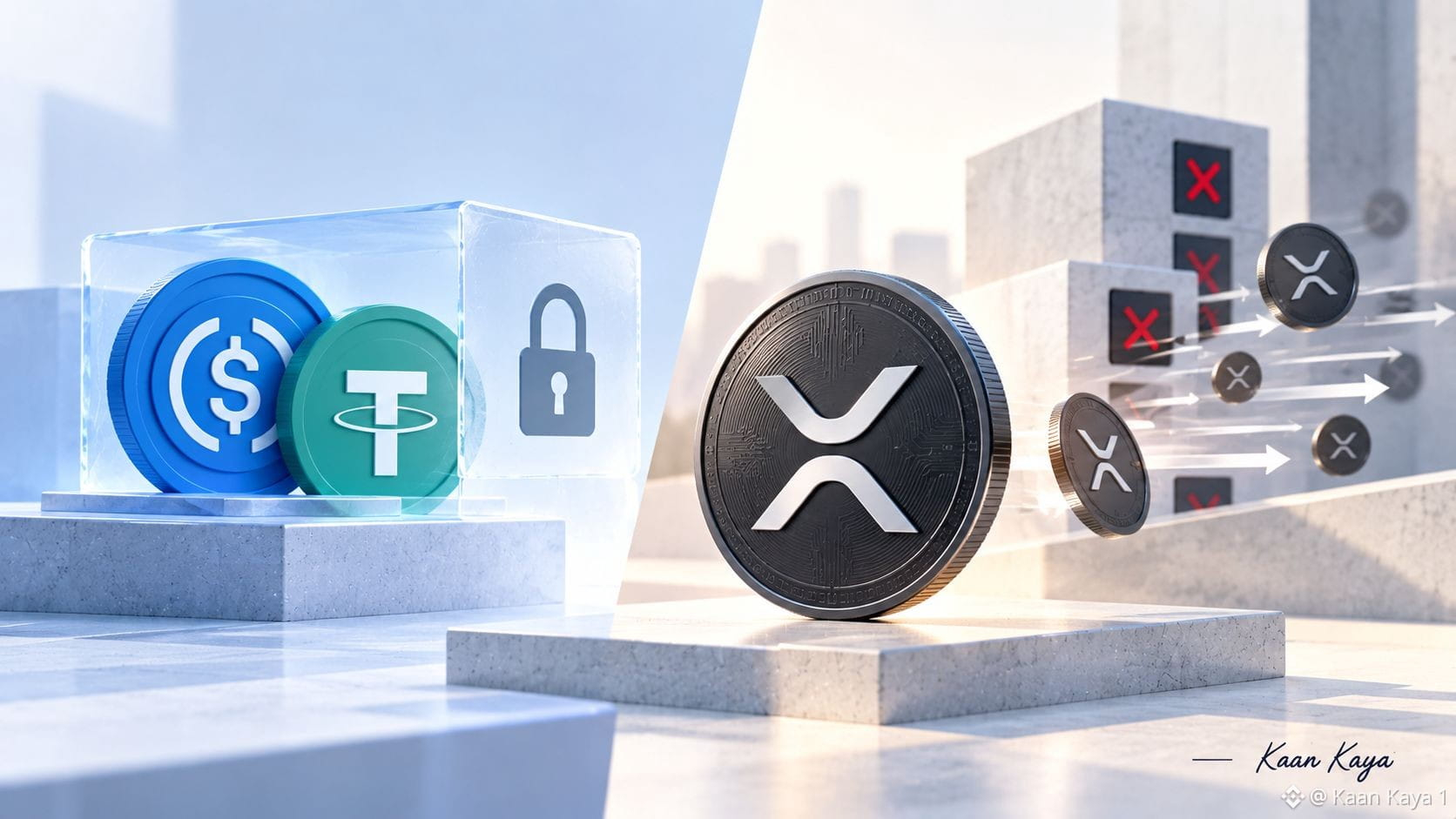
$XRP Just Gave Us a Pretty Clear Lesson in What “Freezeable” Really Means After the recent Bitget breach, the attacker moved about $83 million worth of $XRP from several holding wallets. Roughly $75 million remained in the original accounts at the time of reporting, but there’s an important detail here: Ripple itself can’t simply freeze native XRP sitting in a wallet controlled by the attacker. That’s very different from how issuer-controlled stablecoins work. Circle and Tether were able to freeze about $320,000 in related stablecoins because those tokens include controls that can blacklist addresses. Native $XRP doesn’t work that way; exchanges can restrict accounts that receive stolen funds, but the network doesn’t give Ripple a built-in switch to stop the attacker from moving the coins. I think this distinction gets blurred a lot whenever people talk about “centralized” versus “decentralized” assets. The more useful question is usually much narrower: who actually has the authority to stop a transfer once the asset is in a wallet? In this case, the answer depends heavily on the asset itself. That’s a much more practical difference than the labels people usually argue about. #Macro Insights# #Altcoin Season#