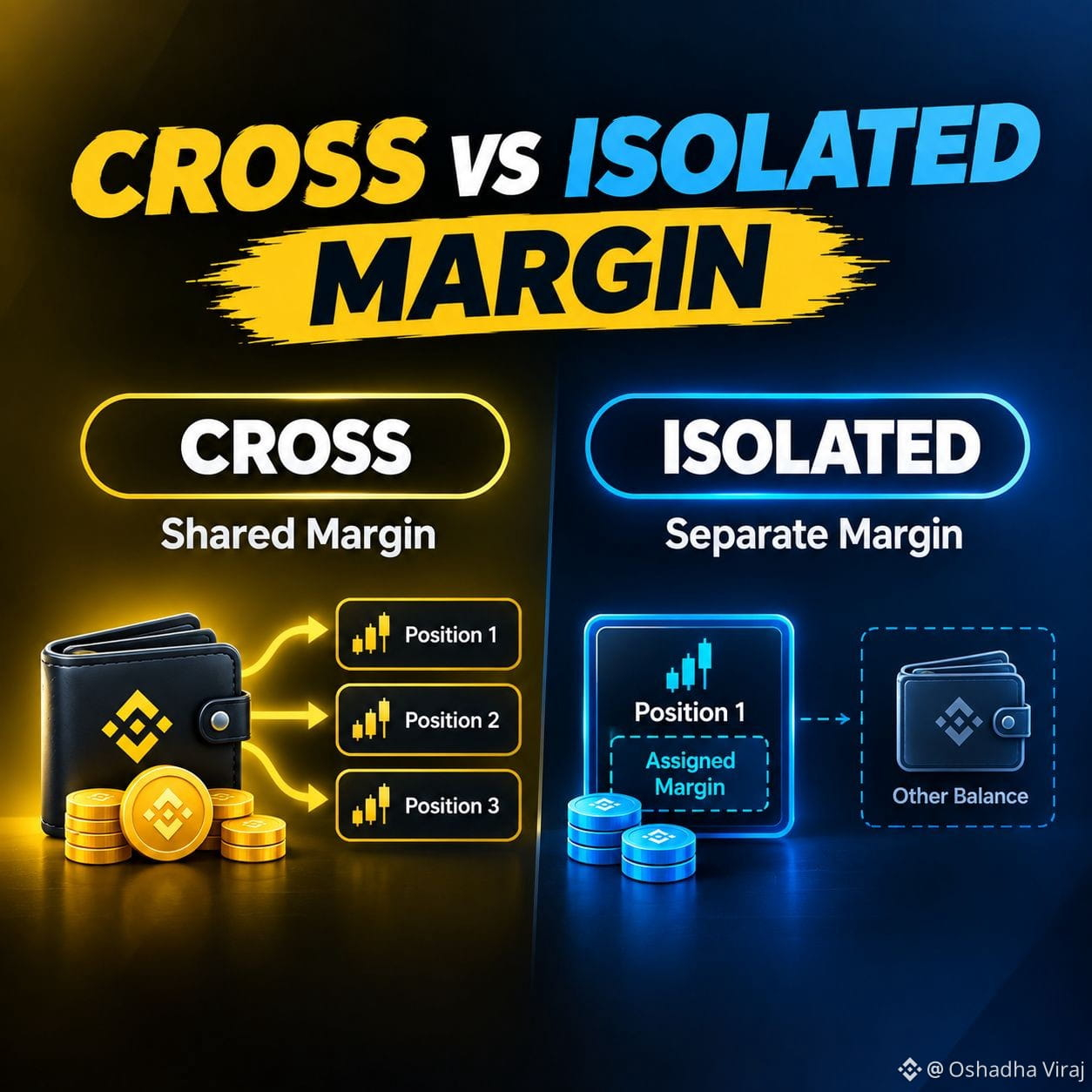
Cross vs Isolated Margin: Explained Simply
Before opening a Futures position, understanding your margin mode is essential. Cross and Isolated Margin manage risk differently.
1. Cross Margin
• Uses available Futures balance as shared margin across open positions.
• More margin can help a position stay open longer before liquidation.
• Main risk: Losses can affect more of your available Futures balance.
2. Isolated Margin
• Assigns a specific amount of margin to an individual position.
• The position’s risk is separated from the rest of your Futures balance.
• Main risk: The position can be liquidated when its allocated margin is exhausted.
Key Risk-Management Point:
Margin mode does not eliminate risk. Leverage, position size, volatility, entry price, and stop-loss strategy all matter.
If you're new to Futures, understand liquidation and leverage before increasing your position size.
Which margin mode do you use most often: Cross or Isolated?
$BTC $ETH $BNB
#BinanceSquare #CryptoEducation #FuturesTrading #RiskManagement #DYOR
Before opening a Futures position, understanding your margin mode is essential. Cross and Isolated Margin manage risk differently.
1. Cross Margin
• Uses available Futures balance as shared margin across open positions.
• More margin can help a position stay open longer before liquidation.
• Main risk: Losses can affect more of your available Futures balance.
2. Isolated Margin
• Assigns a specific amount of margin to an individual position.
• The position’s risk is separated from the rest of your Futures balance.
• Main risk: The position can be liquidated when its allocated margin is exhausted.
Key Risk-Management Point:
Margin mode does not eliminate risk. Leverage, position size, volatility, entry price, and stop-loss strategy all matter.
If you're new to Futures, understand liquidation and leverage before increasing your position size.
Which margin mode do you use most often: Cross or Isolated?
$BTC $ETH $BNB
#BinanceSquare #CryptoEducation #FuturesTrading #RiskManagement #DYOR