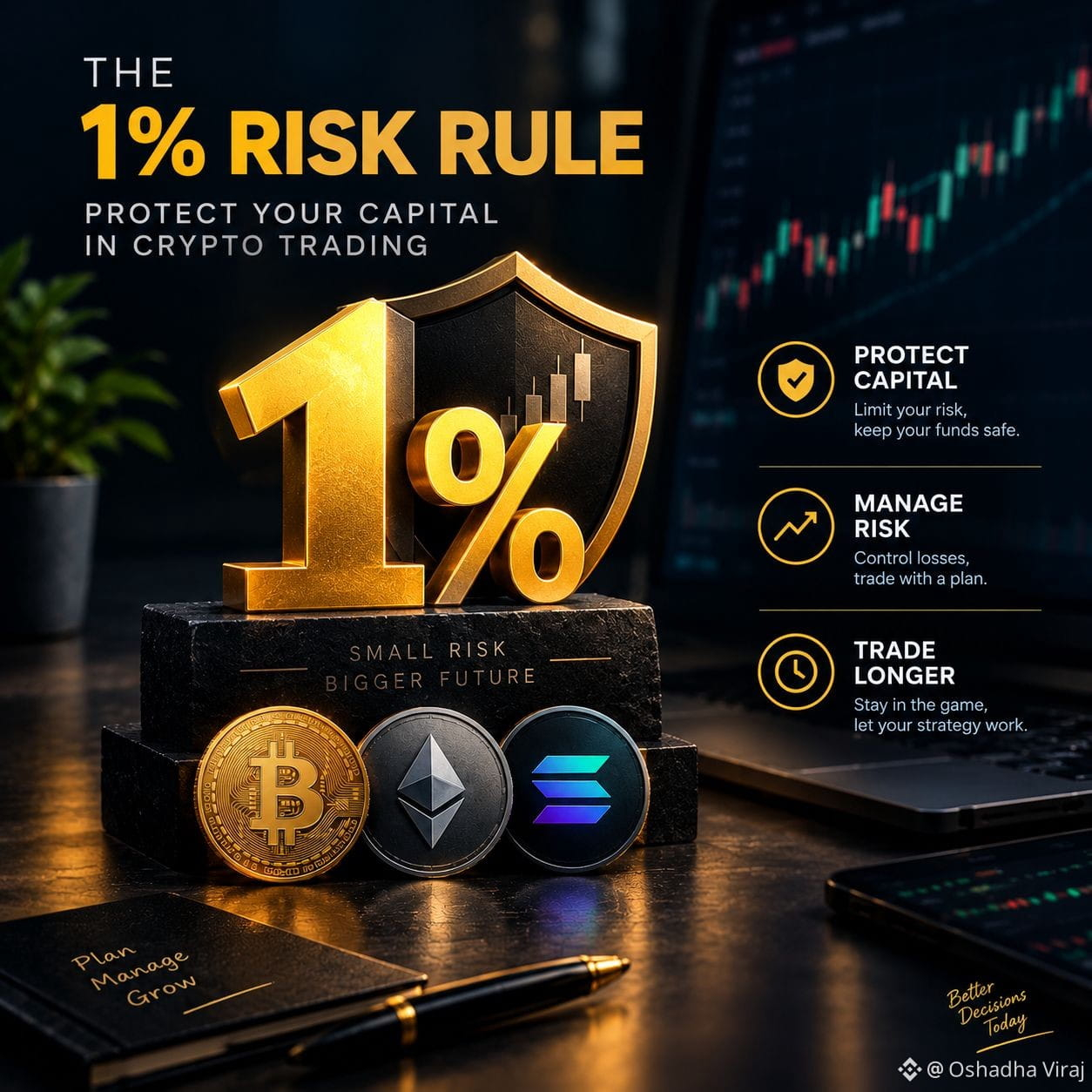
The 1% Risk Rule: Protect Your Capital in Crypto Trading
One of the most important principles in trading is capital preservation.
Before focusing on potential profits, traders should focus on managing risk and protecting their capital.
What Is the 1% Risk Rule?
The 1% risk rule is a common risk-management approach where a trader limits the amount they are willing to lose on a single trade to around 1% of their total account balance.
For example:
Account Balance: $1,000
Maximum Planned Risk: $10
If the trade reaches the stop-loss, the planned loss would be limited to approximately $10, assuming the stop executes as expected.
Why Does Risk Management Matter?
1. Emotional Control
Having a predefined risk limit can help reduce emotional decision-making.
2. Longevity
Managing downside risk can help traders withstand periods of market volatility and a series of losing trades.
3. Consistency
A structured risk-management plan can help traders maintain consistent position sizing and avoid taking excessive risks.
The 1% rule is not a guarantee of success or a fixed rule that every trader must follow. It is simply a common framework for managing risk and protecting trading capital.
Successful trading is not about winning every trade. It is about managing risk, protecting your capital, and staying disciplined over the long term.
What risk-management rule do you follow in your trading?
$BTC $ETH $SOL
#BinanceSquare #CryptoEducation #RiskManagement #TradingStrategy #Crypto
One of the most important principles in trading is capital preservation.
Before focusing on potential profits, traders should focus on managing risk and protecting their capital.
What Is the 1% Risk Rule?
The 1% risk rule is a common risk-management approach where a trader limits the amount they are willing to lose on a single trade to around 1% of their total account balance.
For example:
Account Balance: $1,000
Maximum Planned Risk: $10
If the trade reaches the stop-loss, the planned loss would be limited to approximately $10, assuming the stop executes as expected.
Why Does Risk Management Matter?
1. Emotional Control
Having a predefined risk limit can help reduce emotional decision-making.
2. Longevity
Managing downside risk can help traders withstand periods of market volatility and a series of losing trades.
3. Consistency
A structured risk-management plan can help traders maintain consistent position sizing and avoid taking excessive risks.
The 1% rule is not a guarantee of success or a fixed rule that every trader must follow. It is simply a common framework for managing risk and protecting trading capital.
Successful trading is not about winning every trade. It is about managing risk, protecting your capital, and staying disciplined over the long term.
What risk-management rule do you follow in your trading?
$BTC $ETH $SOL
#BinanceSquare #CryptoEducation #RiskManagement #TradingStrategy #Crypto