I checked a lending pool rate on my phone this morning in Rawalpindi, the same one I'd looked at three days ago, and the APY had already shifted enough that my mental math from before was off. I assumed a good rate I find once just stays roughly where it is, so parking funds somewhere decent was basically a one time decision.
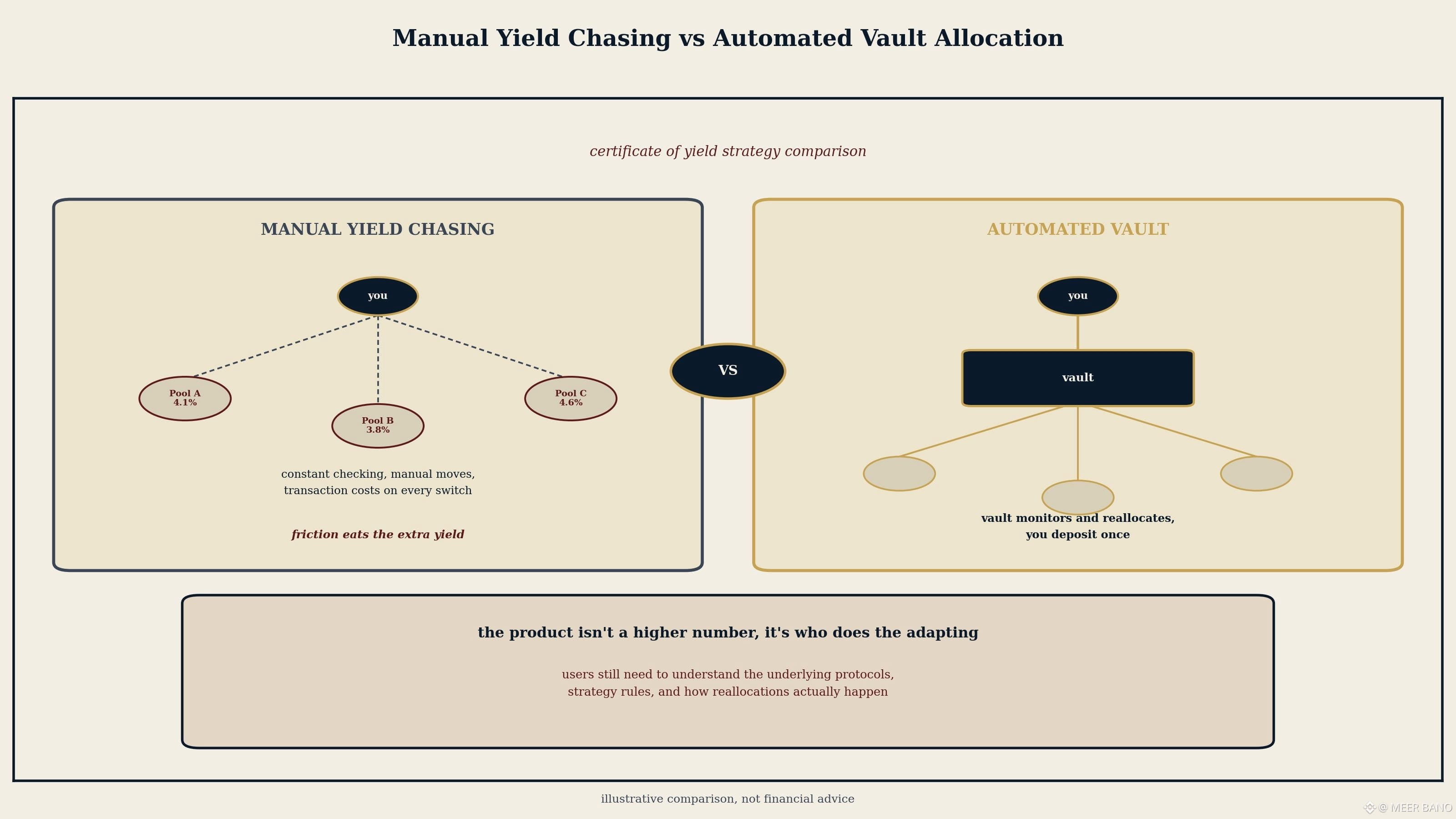
That's not how lending markets actually behave. Rates move as liquidity shifts and incentives get adjusted, so a pool that looked attractive last week isn't guaranteed to still be the best option today. Managing that manually means constantly comparing markets, timing moves, and eating transaction costs every time you reallocate, which quietly eats into whatever extra yield you were chasing in the first place.
What actually shifted my thinking here is realizing the value of a vault like Haedal isn't the number on the APY display. It's that the adaptation work itself gets automated, spreading exposure across supported markets and adjusting allocation as conditions change, instead of a person manually re-deciding this every few days. Automating the adjusting is the actual product, not a marginally higher yield figure.
What isn't clear to me is exactly how often reallocations happen or what specific rules trigger them, that level of detail matters for understanding real risk and I don't have it confirmed.
The real test here is whether the vault's strategy rules stay transparent enough that users can actually verify what's happening with their funds, not just trust the outcome.
Has anyone here actually tracked Haedal's reallocations closely enough to see the
pattern?
@Haedal Protocol #Haedal $HAEDAL
$LSK $BROCCOLI714
That's not how lending markets actually behave. Rates move as liquidity shifts and incentives get adjusted, so a pool that looked attractive last week isn't guaranteed to still be the best option today. Managing that manually means constantly comparing markets, timing moves, and eating transaction costs every time you reallocate, which quietly eats into whatever extra yield you were chasing in the first place.
What actually shifted my thinking here is realizing the value of a vault like Haedal isn't the number on the APY display. It's that the adaptation work itself gets automated, spreading exposure across supported markets and adjusting allocation as conditions change, instead of a person manually re-deciding this every few days. Automating the adjusting is the actual product, not a marginally higher yield figure.
What isn't clear to me is exactly how often reallocations happen or what specific rules trigger them, that level of detail matters for understanding real risk and I don't have it confirmed.
The real test here is whether the vault's strategy rules stay transparent enough that users can actually verify what's happening with their funds, not just trust the outcome.
Has anyone here actually tracked Haedal's reallocations closely enough to see the
pattern?
@Haedal Protocol #Haedal $HAEDAL
$LSK $BROCCOLI714