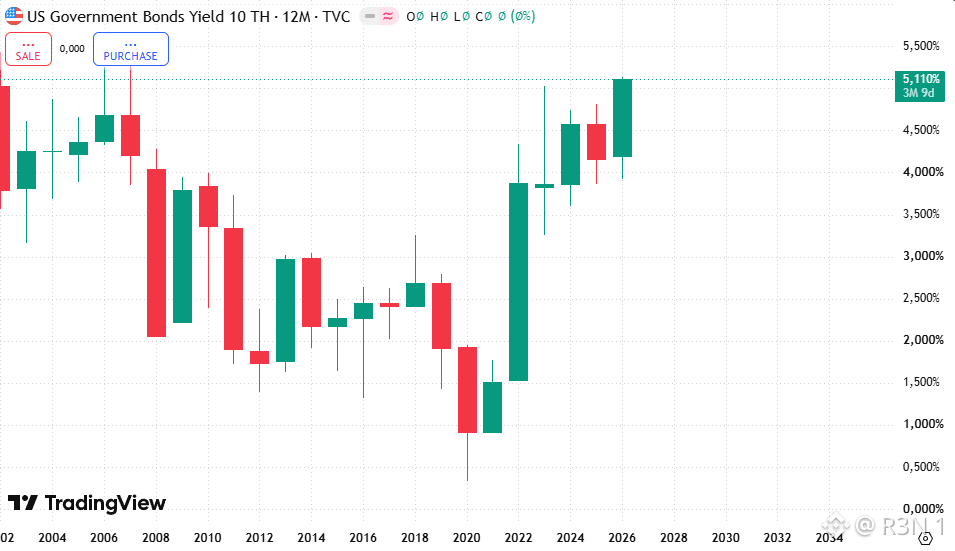
US Treasury yields have surged to the highest since 2007. The 10-year just made its sharpest one-day move in nearly 18 months, and it's happening the same week markets are pricing another Fed hike. That combination is the actual story, not the 2007 comparison alone. The 10-year climbed as high as 5.13% today, the highest since 2007, with the 30-year touching 5.4% and even the 5-year crossing 5% for the first time since before the financial crisis. Not an isolated spike either, yields already hit this same milestone eight days ago on September 15, retreated, and are now breaking fresh highs on top of that. What's driving today specifically is a stack of hawkish inputs landing together. Business activity data came in hotter than expected, the fastest pace in over five years per S&P Global, Fed governor Michael Barr said more hikes are needed, and oil pushed back above $103 a barrel. Trump backing a ban on US diesel exports added to supply concerns. Markets now price a 70% chance of another hike in October. Worth separating structural from acute here. Treasury Secretary Bessent has defended the bond buyback program as limiting how much worse this could've been, and he's running a separate operation propping up the yen specifically to stop Japan selling US debt, which would push yields even higher. Real intervention already happening, not hypothetical. What stands out to me is the mortgage pass-through, the 30-year fixed rate jumped to 7.26% today, highest since January 2025. That's the mechanism connecting a bond market story to actual household costs, and it moves faster than most realize. The open question isn't whether the Fed hikes again in October, close to priced in already. It's whether Treasury's interventions can keep pace with a selloff that's moved this sharply twice in eight trading days, since propping up demand on the margin is a different scale of problem than a one-time spike. #BTC Price Analysis# $BTC #BTC Price Analysis# $XAUt #Meme Alpha#