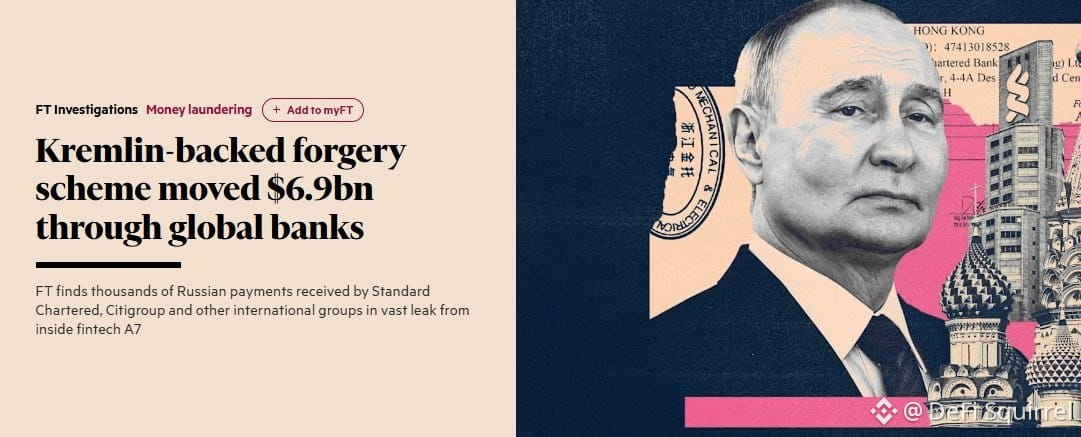
Saw a piece in the FT that caught my eye — different angle on how A7 dodges sanctions. Most coverage lately zeroes in on stablecoins, especially their own $A7A5, as the main workaround. Fair enough, crypto rails are slippery.
But the FT flipped the script. They're pointing at big traditional banks — Standard Chartered, Citi, First Abu Dhabi, DBS — saying A7's been moving dirty money through those accounts, not just crypto.
The real vibe here? It's not a stablecoin problem or a crypto problem. It's a money laundering problem. Always has been. Forgeries keep getting sharper, compliance theater gets thicker, sanctions pile up... and the money just finds a new route. You can't really "fix" this with one regulation or one crackdown. It's whack-a-mole with better moles.
Kinda reminds me of the old days when everyone blamed hawala networks or offshore shells. Same dance, different decade. The tools change, the game stays the same.
But the FT flipped the script. They're pointing at big traditional banks — Standard Chartered, Citi, First Abu Dhabi, DBS — saying A7's been moving dirty money through those accounts, not just crypto.
The real vibe here? It's not a stablecoin problem or a crypto problem. It's a money laundering problem. Always has been. Forgeries keep getting sharper, compliance theater gets thicker, sanctions pile up... and the money just finds a new route. You can't really "fix" this with one regulation or one crackdown. It's whack-a-mole with better moles.
Kinda reminds me of the old days when everyone blamed hawala networks or offshore shells. Same dance, different decade. The tools change, the game stays the same.