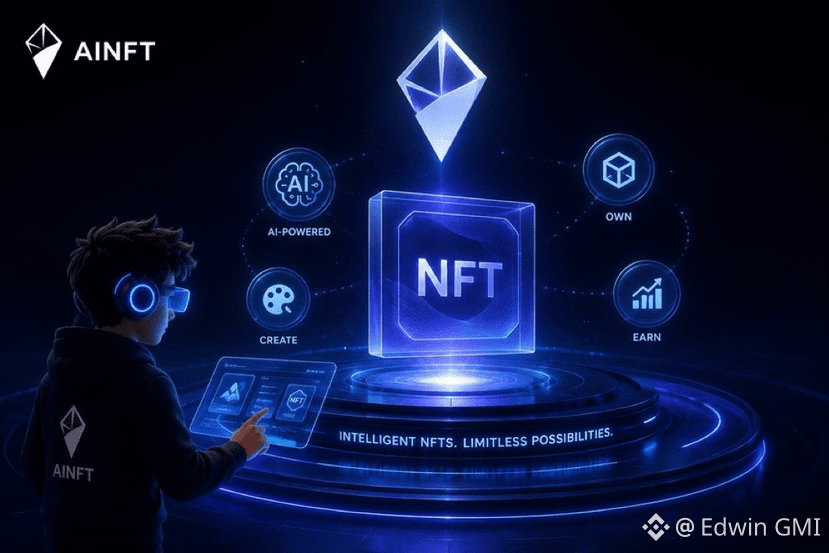
𝗡𝗙𝗧𝗦 𝗪𝗘𝗥𝗘 𝗢𝗡𝗖𝗘 𝗔𝗕𝗢𝗨𝗧 𝗢𝗪𝗡𝗜𝗡𝗚 𝗔 𝗗𝗜𝗚𝗜𝗧𝗔𝗟 𝗔𝗦𝗦𝗘𝗧.
𝗧𝗛𝗘 𝗡𝗘𝗫𝗧 𝗦𝗧𝗘𝗣 𝗜𝗦 𝗠𝗔𝗞𝗜𝗡𝗚 𝗧𝗛𝗔𝗧 𝗔𝗦𝗦𝗘𝗧 𝗠𝗢𝗥𝗘 𝗨𝗦𝗘𝗙𝗨𝗟.
This is where the intersection of AI and NFTs becomes interesting.
Traditional NFTs established a new model for digital ownership.
But ownership doesn't have to mean an asset remains static forever.
What happens when a digital asset can interact with its environment, respond to users, generate content, or become part of an application?
That's where AINFT is exploring a much bigger design space.
␥ AI-powered content generation
␥ Interactive digital assets
␥ Intelligent agent experiences
␥ Integration with decentralized applications
␥ Personalized interactions and automation
The important shift is from:
𝗦𝗧𝗔𝗧𝗜𝗖 𝗢𝗪𝗡𝗘𝗥𝗦𝗛𝗜𝗣 → 𝗜𝗡𝗧𝗘𝗟𝗟𝗜𝗚𝗘𝗡𝗧 𝗨𝗧𝗜𝗟𝗜𝗧𝗬
Instead of thinking about an NFT only as something you own, imagine digital assets becoming programmable interfaces between people, applications, and AI systems.
Creators could build experiences around them.
Developers could integrate them into applications.
Collectors could interact with assets in ways that go beyond simply viewing them.
And communities could build entirely new experiences around intelligent digital ownership.
This also creates an interesting question about the future of digital identity.
If AI agents become more capable, they may eventually need persistent identities, permissions, reputation, and ways to interact with digital economies.
Blockchain can provide infrastructure for ownership and verifiable records.
AI can provide intelligence and interaction.
Together, they create a completely different possibility.
@justinsuntron
#TRONEcoStar @TRON DAO
𝗧𝗛𝗘 𝗡𝗘𝗫𝗧 𝗦𝗧𝗘𝗣 𝗜𝗦 𝗠𝗔𝗞𝗜𝗡𝗚 𝗧𝗛𝗔𝗧 𝗔𝗦𝗦𝗘𝗧 𝗠𝗢𝗥𝗘 𝗨𝗦𝗘𝗙𝗨𝗟.
This is where the intersection of AI and NFTs becomes interesting.
Traditional NFTs established a new model for digital ownership.
But ownership doesn't have to mean an asset remains static forever.
What happens when a digital asset can interact with its environment, respond to users, generate content, or become part of an application?
That's where AINFT is exploring a much bigger design space.
␥ AI-powered content generation
␥ Interactive digital assets
␥ Intelligent agent experiences
␥ Integration with decentralized applications
␥ Personalized interactions and automation
The important shift is from:
𝗦𝗧𝗔𝗧𝗜𝗖 𝗢𝗪𝗡𝗘𝗥𝗦𝗛𝗜𝗣 → 𝗜𝗡𝗧𝗘𝗟𝗟𝗜𝗚𝗘𝗡𝗧 𝗨𝗧𝗜𝗟𝗜𝗧𝗬
Instead of thinking about an NFT only as something you own, imagine digital assets becoming programmable interfaces between people, applications, and AI systems.
Creators could build experiences around them.
Developers could integrate them into applications.
Collectors could interact with assets in ways that go beyond simply viewing them.
And communities could build entirely new experiences around intelligent digital ownership.
This also creates an interesting question about the future of digital identity.
If AI agents become more capable, they may eventually need persistent identities, permissions, reputation, and ways to interact with digital economies.
Blockchain can provide infrastructure for ownership and verifiable records.
AI can provide intelligence and interaction.
Together, they create a completely different possibility.
@justinsuntron
#TRONEcoStar @TRON DAO